





Devin Wilkins walks around with a huge smile. If you ask him why, he’ll tell you it’s because he’s doing what he loves in the city he grew up in, for the community that inspires him every day. Wilkins is a former civil servant turned art entrepreneur, community leader, event organizer, and, for at least another year, a proud UMBC student pursuing a Master’s in Community Leadership.
“The community leadership program is committed to partnering with, and learning from, Baltimore individuals, communities, and organizations,” says Sally Scott, director of Community Leadership Graduate Programs. “Devin’s decision to pursue his master’s brings this commitment to life!”
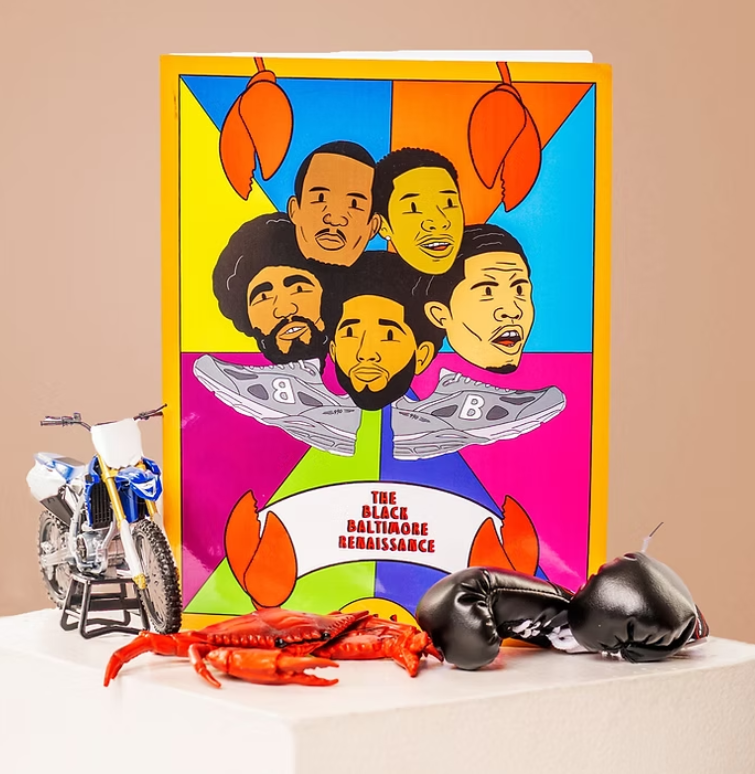
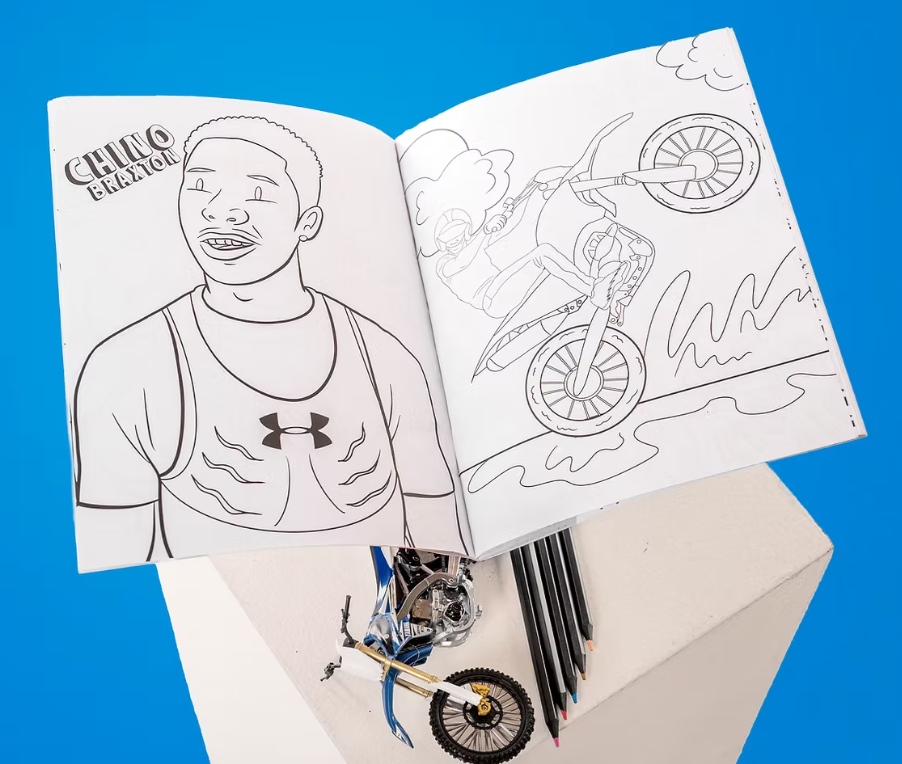
Devin has also become Baltimore’s resident coloring-book author, creating the Black Baltimore Renaissance Coloring Book—which gives children and the young at heart a reason to color inside the lines while exploring the key figures, places, history, culture, and arts that make Baltimore special. From coloring books to community events, Devin has found a way to turn his love for Baltimore into work that celebrates and uplifts its people. Take it away, Devin!
Q: What was your journey to UMBC?
A: In 2021, I had the idea for The Black Baltimore Renaissance Coloring Book, which I released in 2022 to highlight Baltimore’s culture, artists, entrepreneurs, creatives, and the youth and community work I was doing. That led me to work with the Waterfront Partnership of Baltimore on one of their local music and makers festival series called Baltimore by Baltimore. I produced the Black Baltimore Renaissance of Love for Our City event as part of the festival, where Baltimore’s Black artists, musicians, businesses, and community came together to celebrate their culture and creativity.
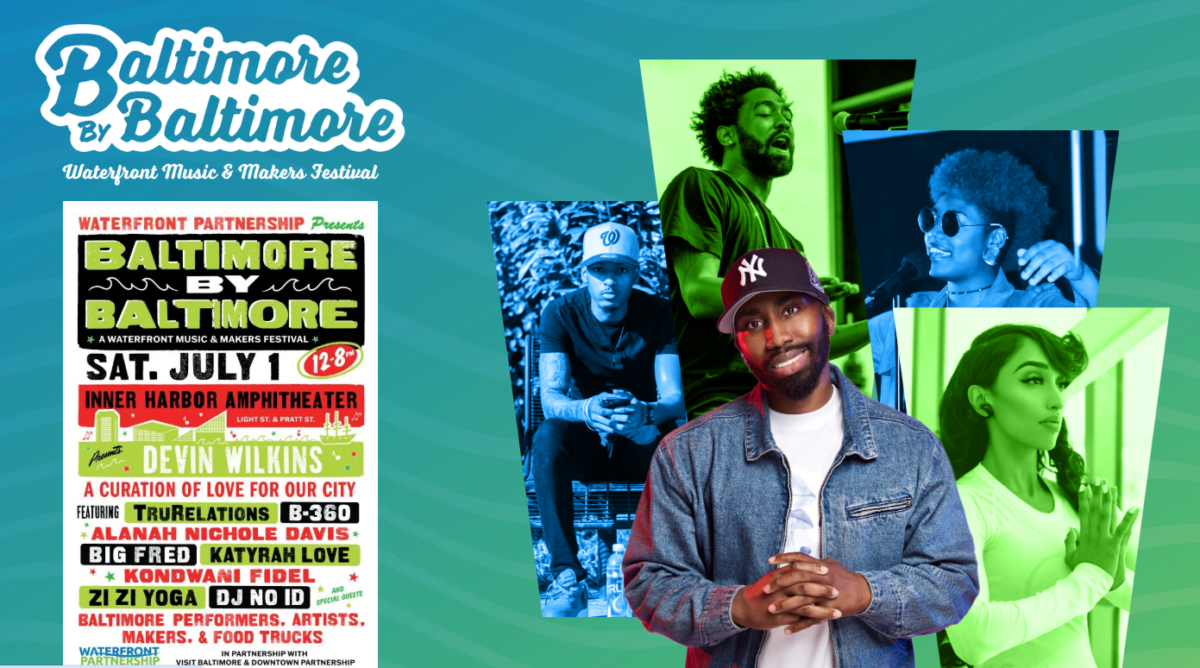
Through that work, I met Sally and Joby Taylor, Ph.D. ’05, language, literacy, and culture, assistant vice provost and co-director of the Shriver Center. They created Reimagining the Harbor, a community-based initiative that works with the Waterfront Partnership of Baltimore to revitalize Baltimore’s Inner Harbor. Sally and Joby always had a table at Baltimore by Baltimore with information about the community leadership programs that UMBC offers.
I’d been out of school for 12 or 13 years. I always said I would only go back if it was something I truly wanted to be involved in. Then I took the Digital Storytelling Skills course—and I got the bug. By my mid-30s, I’d found my purpose: community work and pouring into other people. I realized my events could be more than just fun; they could have purpose and passion behind them. UMBC gave me the academic context for the community leadership work I was already doing in Baltimore. Now, it’s not just what I feel—it’s something I can study, understand, and build upon.
Q: What inspired you to switch careers?
A: It’s growth. I feel like now, age means something to me. I had a child when I graduated my senior year of college, and I had another child, my youngest son, when I was about to be 30. So that was the beginning of two times—entering my 20s and leaving my 20s. I wasn’t fulfilled. I was navigating being a Black man, and I wasn’t happy. I get if you have financial restrictions, obligations, people dependent on you, but I felt that I can’t be a great father, a great man, a great anything, if I’m stuck in an unfulfilling life
The COVID-19 quarantine really put me in that mindset that it was a time for me to reset. When quarantine ended, many people returned to doing the same thing because they felt it created stability. I didn’t experience a pandemic to continue to do the same hustle and bustle day in and day out just because I needed to survive. It was a lot of inner work. That was just the growth that I had. I’m not chasing dollars that don’t make sense to me. I had to stand for what I believe in. At the end of the day, I have to live this life. I have to be in this body. I want to make sure I enjoy my life to the fullest and do everything that I want to do, and not what someone else told me to do.
I took the leap of faith, and ever since, there have been opportunities, growth, expansion, and maturity as well. That’s what these past 36 months have been about.
Q: What advice do you have for students in search of a path?
A: To find your passion and purpose, you have to do that inner work yourself. My passion led me here. Sit with yourself, block out the noise, and find what you want—a master’s, a doctorate, or a different path. I understand some students have pressure from their families to follow a specific career path like engineering or medicine. Find something within those careers that speaks to who you are, who you want to be. That’s the only way you can be successful. You can’t live your life for anybody else.
I didn’t want to go back to school just for a degree or for something I didn’t enjoy. I took 15 years to find this new path. The next 15 years will lead me to being a 50-year-old man. I’ve learned to live by four pillars: family, school, my work with the Waterfront Partnership, and my business, Meeting You Where You Are. Whether I’m driving my children to school, being a graduate assistant, managing an event at the Inner Harbor, or developing more coloring books, I’m always me. Everything I do is tied to these four pillars. I’m my own brand. I don’t have to be anybody but me in every way. If an opportunity doesn’t align with these four pillars, then I don’t need to pursue it.
Q: What is your vision for Baltimore’s future?
A: The vision I have for Baltimore is about freedom—being able to be real, be yourself, and live without all the things that hold people back. Honestly, I think we need to do away with some of these old ideas around power and who gets to make decisions for our communities. I envision a city where the people actually run the community, where we’re not constantly dependent on money and funding from somebody who, in some ways, may be trying to oppress us, while we’re still taking those same resources. I look at it as people being the people. You see that in Baltimore’s Latinx community, where people have built systems to support their community.
Baltimore is majority Black and brown, so why shouldn’t the people who live in these communities have more control over what happens in them? I see companies that are not from Baltimore coming into the city and making money off the trauma and struggles that our communities experience. I want to see that change. I want Baltimore to be for Baltimoreans, for the people who live here—not a place where people are constantly performing for somebody else or playing games for power. We are the power. Once you realize that, you start moving differently.
Q: What is the Baltimore you envision for Baltimore’s youth?
A: The most important thing I want them to understand is to know your worth, know who you are, and be whoever you want to be. Don’t feel like you have to perform a certain version of yourself just because that’s what people expect from you or because that’s what the media presents as their version of life in Baltimore. You don’t have to stay in that box. We can do anything and everything. People say it’s cliché to say anything is possible, but I really believe that. When I think about the future of Baltimore, I see something limitless, authentic, and, by all means, free.
* * * * *
UMBC’s greatest strength is its people. When people meet Retrievers and hear about the passion they bring, the relationships they create, the ways they support each other, and the commitment they have to inclusive excellence, they truly get a sense of our community. That’s what “Meet a Retriever” is all about.


