All posts by: UMBC News Staff


Graduating Retrievers Forge Strong Bonds With Baltimore Communities

Graduating Retrievers forge strong bonds with Baltimore communities

By: Catalina Sofia Dansberger Duque
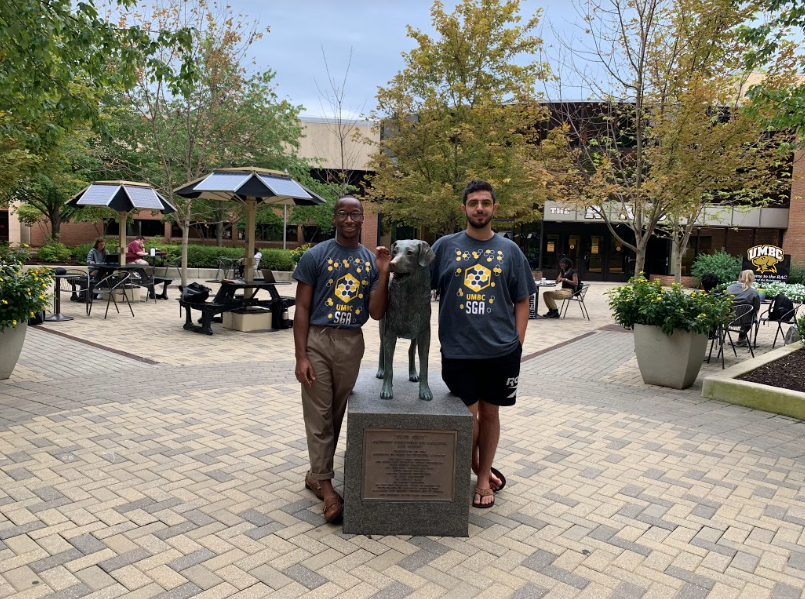
Two adults wearing black t-shirts, stand with a bronze sculpture of a dog at UMBC.
Gray (l) with former SGA President, Mehrshad Devin ’21, biology, and M.P.S ’22, entrepreneurship, innovation, and leadership. (Image courtesy of Gray)

Joshua Forlotta Gray ‘22, takes as his compass in life a 1968 quote by Dr. Martin Luther King, Jr.: “Everybody can be great because everybody can serve.” When taking on a new project, job, or student activity, Gray, a dance and media and communication studies major, asks himself, “Will the work uplift and support others?” 

When he was presented with the opportunity to contribute to Charm City Connection’s economic community development work the answer was an emphatic yes. He was equally thrilled to join three of UMBC’s Alternative Spring Breaks in Baltimore City looking at access to the arts, transformative justice, and decarceration.

Gray’s focus – in both academics and community engagement – is understanding processes that create change. He sees work with communities as intrinsically multicultural, multilingual, and international, as it must serve the needs of many. “I’m invested in the process of creating access and social change through learning, teaching, and leading,” says Gray. “The essence of the work energizes me.”

“He is talented, demonstrates academic excellence, and has prioritized civic-minded engagement during his time at UMBC,” Liz Patton, associate professor of media and communication studies and a mentor, says of Gray. “In other words, he is grit in action.”

Supporting immigrant youth

For Gray and other UMBC students focused on community engagement, Baltimore is more than a place to volunteer. It is a city with tremendous assets that draws students from all over the world. 

Melisa Argañaraz Gomez, Ph.D. ’22, geography and environmental systems, moved to Maryland from Spain to work with Baltimore’s Latin American immigrant youth. CASA of Maryland and Centro Sol, groups that provide resources and services to Latin American immigrant families, were two of the organizations that welcomed her as a volunteer. 

“Immigrating from Argentina to Spain when I was thirteen, and then to the U.S. as a graduate student, I know how challenging the immigrant experience can be, to start from zero, especially as a teenager,” says Argañaraz Gomez. 

She forged strong bonds. Several young Latina students enthusiastically worked with Argañaraz Gomez to create the award-winning project PARqueología Migrante, a community-outreach website highlighting their immigrant experience in Baltimore. 

“The students had internalized anti-immigrant messages. They didn’t see themselves as being able to be leaders and researchers and felt that their voice and work did not matter in Baltimore,” says Argañaraz Gomez. Through PARqueología Migrante, participants realized that their voices and work matter and can transform their lives and those of other immigrant youth.

Collective strength

The project reached well beyond those directly participating. Community leaders, schools, and institutions actively supported the project with resources and guidance, valuing the students’ work. What had started out as a small project with students became the work of many. 

“The students and I were moved that community leaders and researchers alike valued their point of view, skills, and research,” says Argañaraz Gomez. These insights confirmed for her the transformative power that space and place can have in the process of belonging for immigrant teens.

Argañaraz Gomez also connected with a local collective of Latinas and participated in social justice work around immigration. There she met fellow community member and creator of “Moving Stories: Latinas in Baltimore,” Tania Lizarazo, associate professor of modern languages, linguistics, and intercultural communication and global studies. Lizarazo supported her in navigating academic spaces. 

“Being in community with other Latinas is essential for learning how to navigate institutions, and obscure processes such as the job market, especially as an international or first-generation student,” says Lizarazo. “Supporting Latin American students benefits the whole Latin American community on and off-campus, and contributes to making UMBC more welcoming for all.”

Baltimore’s greatness

Keenan Hickman, M.P.S. ’22, community leadership, sees Baltimore’s greatness as a part of his personal story. Hickman’s roots are in Baltimore, but at the beginning of COVID he was living in California, working alone from his home office. He realized that in every job he’d had, wherever he lived, and in all the countries he had visited, he always found time to volunteer in communities working towards racial equality. He wanted that to be a more central part of his life.

Hickman moved back home to Baltimore, surrounding himself with his family and fellow Returned Peace Corps Volunteers. Ready to make his passion for community service his life’s work, Hickman enrolled in UMBC’s master’s in community leadership through the Shriver Peaceworker Fellows Program.

“Keenan is rich with reflection and values,” says Joby Taylor Ph.D. ’05, language, literacy, and culture, director of UMBC’s Shriver Peaceworker Program. “When he shares ideas or stories or questions in our classes, I learn a new and often powerful perspective.”

The program gave him a fresh perspective as well. He learned that equity and racial justice work is not only about volunteering with social change organizations. It is also about diversifying access to and leadership in equity work. 

Hickman saw this in action in his work with Baltimore Corps. Their purpose is to draw underrepresented talent through equitable fellowships and professional networks, developing a pipeline of innovative social justice leaders dedicated to Baltimore’s future. 

“My life is in, about, and for Baltimore,” says Hickman. “I’m part of a growing social justice entrepreneurial community reimagining equity and access for an even greater Baltimore.” 
Returning Students

UMBC provides supportive pathways for returning students to claim their futures

Story by Charis Lawson ’20, English, and additional UMBC staff.

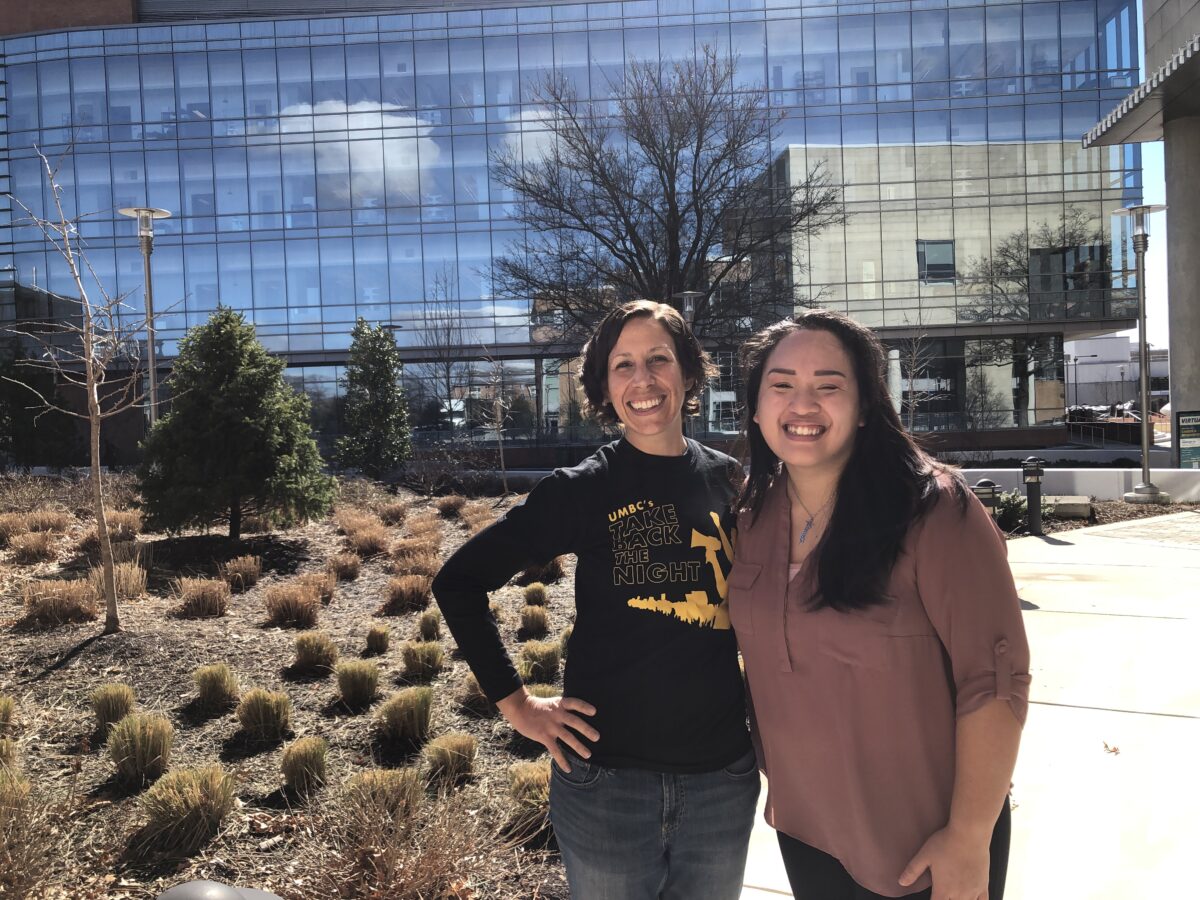
Two women smiling outside in front of glass-paneled building.
Image courtesy of UMBC Women’s Center

Charles Harris’s college degree is a labor of love that began in the 1970s. He will be 80 years old when graduates this month, adding a B.A. in sociology to a powerful list of achievements, including a career in child welfare and opening his home, with his wife of 50 years, to raise over 100 children. As someone who supported so many others before accessing support through a UMBC academic advocate to complete his own degree, he knows the value of community. And he particularly values the close-knit, supportive, diverse community that UMBC offers.

“Students can come to UMBC and get a whole new experience of working with different types of people on different levels, and it is a great experience,” he says. “I’m very proud to be part of the school.” 

While Harris’s story is unique, many UMBC graduates are returning college students or started their journey after beginning careers and growing their families. Their resilience is bolstered by the knowledge that they are not on their journey alone—students connect them with community, staff offer resources, and faculty help them progress along their academic path. 

Strengthening UMBC

It’s also essential for nontraditional students to recognize the valuable experiences and attributes they bring to UMBC, and how they strengthen the university community, says Jane De Hitta ‘22, social work.

In addition to being a returning student, De Hitta is a social work intern with the UMBC Women’s Center, working closely with others who have returned to complete their undergraduate degrees. When they express self-doubt or uncertainty, she reminds them, “You have something to offer to the UMBC community that others don’t. Your lived experience before returning to school will inform what you learn and how you receive that, and also will add to class discussions.”

“Balancing several different roles and identities and parts of your life is really important and valuable,” she notes. This is something that some other students “might not have learned yet and would benefit from hearing about.” 

“You’ve got this”

Although it’s natural for returning students to feel nervous about being back on a university campus, Sheila Abellano ‘22, psychology, says that, after over a decade of raising a family and starting two small businesses, those feelings quickly dissipated at UMBC. She encountered welcoming staff who provided the resources and support she needed to create a plan for completing her remaining graduation requirements. Abellano was also encouraged by the welcome she received from faculty and students. 

“I’ll always remember the great energy at UMBC,” Abellano adds, “from President Freeman Hrabowski, who always said hello to me when I saw him, to the faculty, staff, and students who said, ‘You’ve got this.’”

For these returning students, UMBC provided opportunities to begin their next chapter. It also connected them to a community they will be part of long after they receive their diplomas.

Community Empowerment

UMBC’s newest grads continue to grow spirit of community empowerment, impact

By: David Hoffman and Romy Hübler

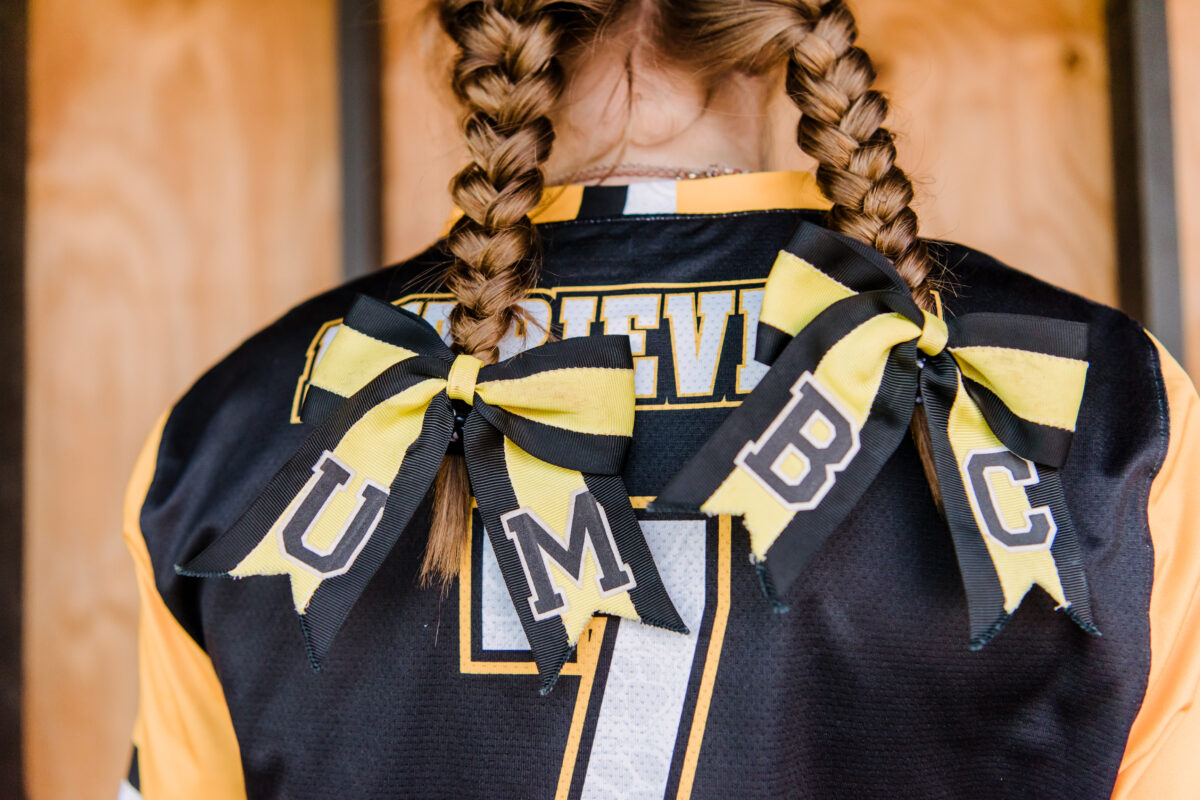
View of softball player's braided hair from behind with ribbons spelling "UMBC"
Courtney Coppersmith shows off her UMBC pride.

Members of the Class of 2022 have experienced college in a period of multiple overlapping crises, including a global pandemic, continuing racial injustices, climate disasters, international conflict, and threats against democracy. The scale and scope of these challenges can be daunting, but UMBC students, including this year’s graduates, have responded with vision and action. 

Their approach: promoting inclusion and belonging right where they are, and building mutually empowering relationships that can change the world. 

Inspired by personal experience

Courtney Coppersmith ‘22, chemistry and molecular biology, is one of many UMBC grads who has leveraged their own stories and experiences to make meaningful civic contributions on campus. A star pitcher for UMBC’s championship-winning softball team who also excels academically, she struggled with depression during a busy first year on campus. After her essay about her experiences won a national contest, the America East conference, Major League Baseball, and ESPN shared her story widely. 

Teammates and competitors reached out to Coppersmith to say how her message had resonated with them and helped them recognize that they were not alone. She has continued to support UMBC athletes through advocacy and personal encouragement. She has also helped them get involved with campus and community organizations, building networks of support and a sense of connection.

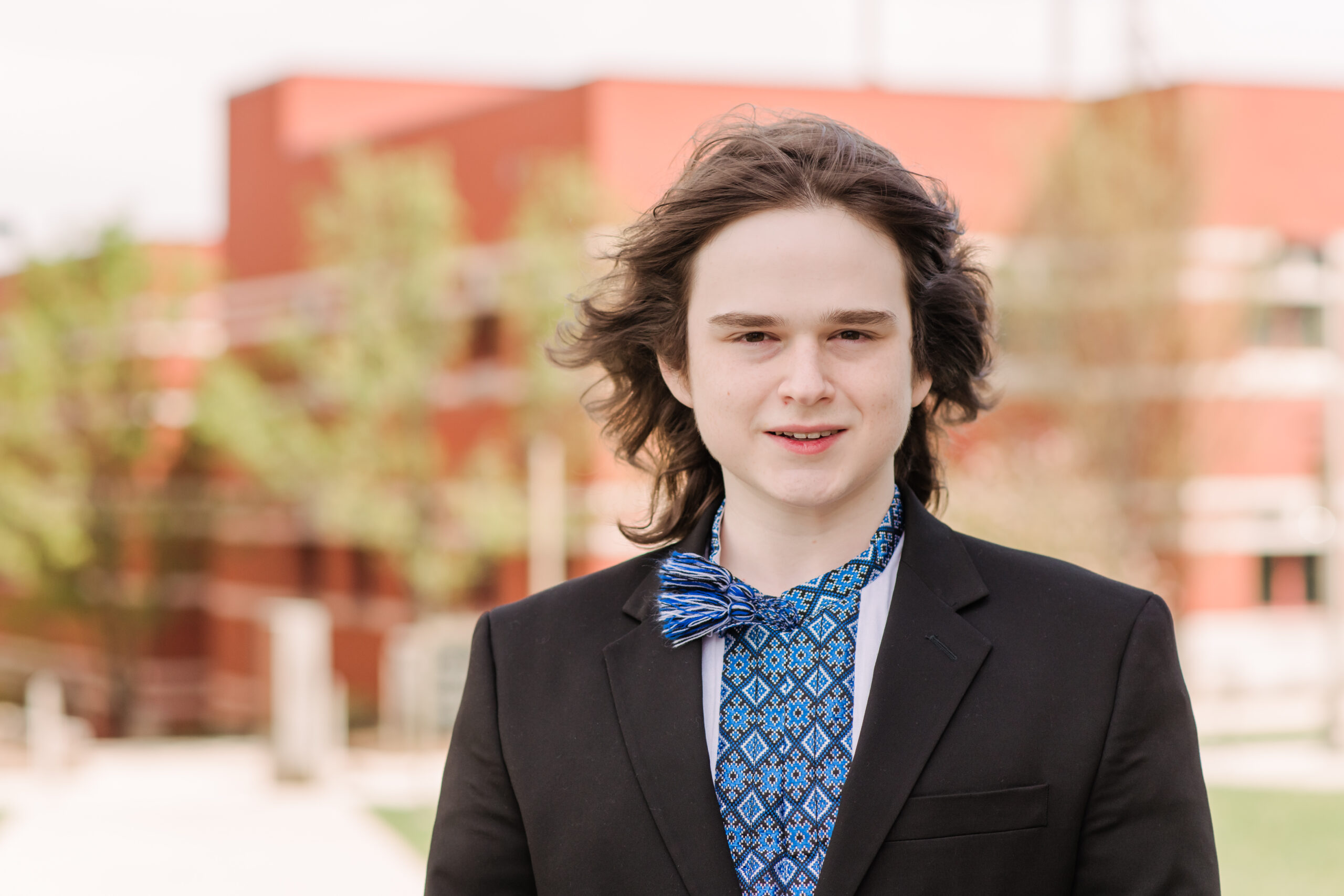
Danylo Leshchyshyn ‘22, history and political science, arrived at UMBC looking for disability support he sometimes had lacked in middle school and high school. He helped to establish the Autism Spectrum Student Association as a connection point and advocacy group for students on the autism spectrum, and worked with peers and staff in Student Disability Services to revive UMBC’s chapter of Delta Alpha Pi, a national honor society for high-achieving students with disabilities. 

Leshchyshyn’s UMBC civic legacy also includes speaking about the impact of Russia’s invasion of Ukraine on his family.

Of his time on campus he shares, “You can get anywhere you want from here, and you know you’ll get there as a better person than when you came into UMBC.”

Sharing resources, building connections

Gabby Khan ‘22, computer science, has strengthened the UMBC community in part by paying forward the kindness and care she experienced from peers and mentors in the Honors College and at the Academic Success Center. Some of the students with whom she has worked as a resident assistant and tutor have sent her appreciative messages. Hearing that she was able to help other students at times when they were really struggling has been more than gratifying – it’s also shaped her outlook on what a supportive community can and should do.

Khan now describes her contribution to UMBC’s empowering and supportive culture as part of a “cycle of learning.” “UMBC has been a really welcoming place that I got to learn from, especially from the people around me,” she says. “It never stops at academics.”

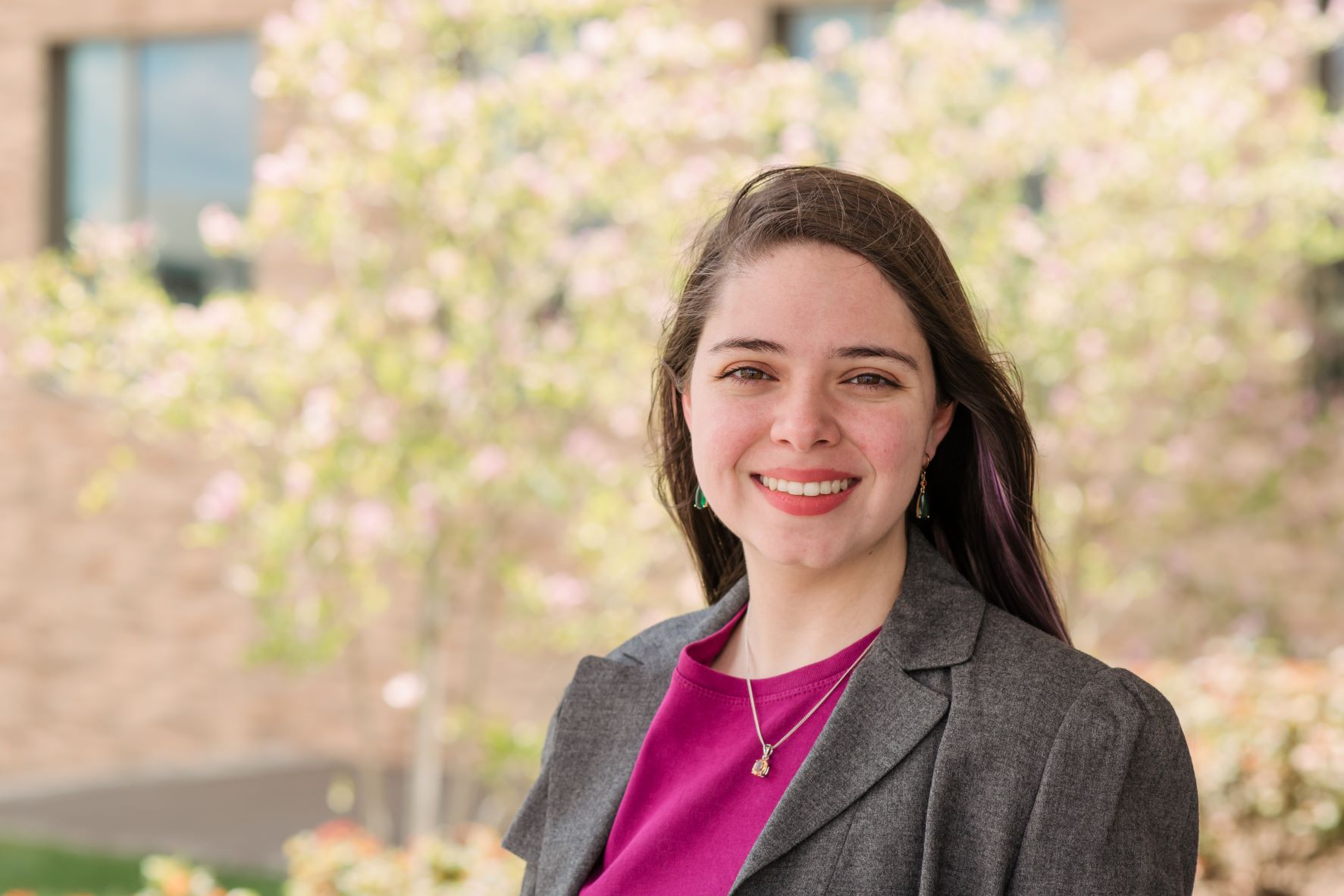
For Tess McRae ‘22, individualized study, participating in UMBC’s immersive STRiVE leadership for social impact program opened the door to deep involvement on campus. “It was the first time in my life that I truly learned and understood that I had a story; that my story mattered; that my characteristics and habits and quirks were sources of insight; and that I was not alone in my experiences and feelings,” she says. 

After joining the Center for Democracy and Civic Life’s founding staff in 2018, McRae facilitated and contributed to the design of dozens of its programs, including STRiVE. Always on her mind was how to liberate and empower participants in the ways the immersive program had done for her.

Among her UMBC civic legacies is the Co-Create UMBC video tour, which she produced and narrated as a way of inspiring UMBC students to believe in themselves and envision their own contributions to the campus community.

Long line of innovators

While each of these students has had a unique experience and impact, they are also following the legacy of UMBC’s pioneer classes of the 1960s and 1970s. Those early UMBC students established a culture in which they viewed themselves as co-creators of the UMBC community. 

In the program for the first UMBC commencement exercises in 1970, graduate Diane Juknelis (now Diane Juknelis Tichnell) reflects, “The present class of graduates is the first in a long line of innovators who are not to be considered products of UMBC, but rather constant producers of all that gives it character and quality.”

Each students’ civic legacy is specific to a time, place, people and organizations. And it is also much broader – over time shaping UMBC as a warm, inclusive, engaging environment in which to learn and grow.

Scholar-athlete shines a light on mental health

Courtney Coppersmith

Degree: B.S., Biochemistry and Molecular Biology
Minors: Philosophy and Emergency Health Services
Hometown: York, PA
Plans: Graduate degree in chemistry

“I still talk to professors I had in my freshman year, which I think is really cool and speaks to the fact that this really is a community among faculty, staff, and students.”

Courtney Coppersmith, ‘22, biochemistry and molecular biology, experienced UMBC as a welcoming community on her first visit, and she has devoted her time on campus to paying that welcoming spirit forward.

She is one of the top softball pitchers in the nation. She has set several university records through the championship-winning UMBC softball team, including for strikeouts in a single game. But behind the stardom, her early success and involvement in nearly a dozen campus and community organizations created pressures that felt overwhelming at times.

Coppersmith responded by writing an essay about her experiences with depression, which won the Jackie Robinson Breaking Barriers national essay contest. Soon, teammates and competitors were reaching out to her to say how her story had resonated with them and helped them recognize that they were not alone. 

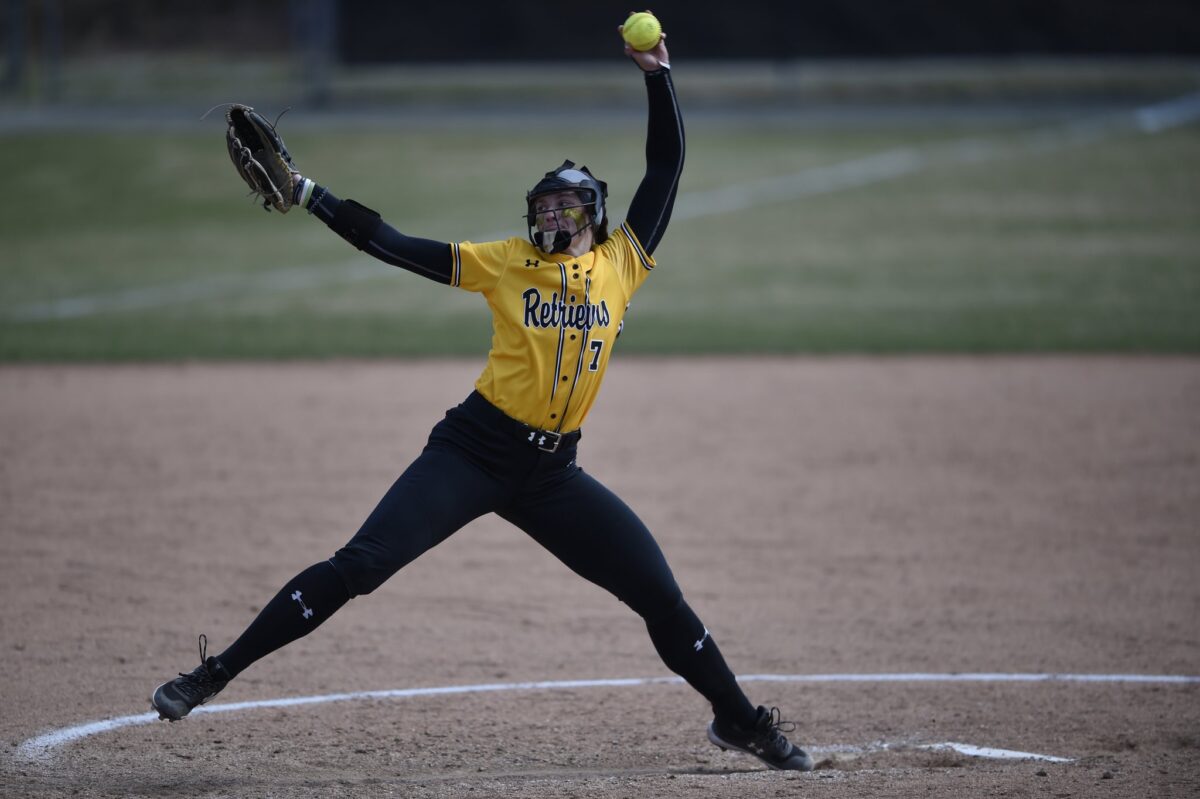
Courtney Coppersmith prepares to throw a strike. Photo courtesy of Coppersmith.

Coppersmith has continued to support fellow UMBC student-athletes and the broader UMBC community, particularly through mental health and food security initiatives. She has also served as a chemistry tutor and active volunteer in Baltimore. 

Courtney Coppersmith in The College Tour video.

Coppersmith looks forward to pursuing a graduate degree in chemistry. She aspires to help develop medications to fight cancer.


Learn more about Coppersmith’s experience and advocacy in a new feature story in The Baltimore Sun.

Story written by David Hoffman, Ph.D. ’13, language, literacy, and culture (LLC), director of the Center for Democracy and Civic Life, and Romy Hübler ’09, modern languages and linguistics, M.A. ’11, intercultural communication, Ph.D. ’15, LLC, assistant director of the Center for Democracy and Civic Life.

Advocate for self-discovery and inclusion 

Danylo Leshchyshyn

Degree: B.A., History and Political Science (certificate in Security Studies)
Hometown: Columbia, MD
Plans: M.A. in History, University of Toronto

“The most valuable part of my UMBC experience has been learning that I can succeed at what I do—not only that I can succeed academically, but that I can succeed in the social aspects that I struggled with in high school. I can build meaningful relationships. I can even be president of a club. I can do whatever I set my mind to.”

Danylo Leshchyshyn ‘22, history and political science, came to UMBC hoping to receive the support he would need to succeed. He found it in the form of friendly staff members with Student Disability Services, and in strong connections he formed with other students. He remembers “life changing conversations, which I will be forever grateful for” with friends in the Humanities Scholars Living Learning Community. He also found a path to involvement in campus life through a mythology-themed Dungeons and Dragons campaign organized by the Ancient Studies Council of Majors. 

Leshchyshyn quickly became a supportive community-builder in his own right. He helped revive UMBC’s chapter of Delta Alpha Pi, a national honor society for high-achieving students with disabilities. He also co-founded the Autism Spectrum Student Association and actively participated in several other organizations.

Leshchyshyn’s grandparents came to North America from Ukraine after WWII. He is a fluent Ukrainian speaker and still has relatives living in Ukraine.

In the months since Russia launched its full-scale invasion of its neighbor, he has connected with others at UMBC who have Ukrainian connections and spoken at a campus program, “Russia’s Invasion of Ukraine: Historical, Political, and Personal Perspectives.” He plans to pursue a master’s degree in history at the University of Toronto, focusing on Ukraine and Eastern Europe.

Story written by David Hoffman, Ph.D. ’13, language, literacy, and culture (LLC), director of the Center for Democracy and Civic Life, and Romy Hübler ’09, modern languages and linguistics, M.A. ’11, intercultural communication, Ph.D. ’15, LLC, assistant director of the Center for Democracy and Civic Life.

Right opportunity, right time: Entrepreneur returns to finish her UMBC degree

Sheila Abellano

Degree: B.A., Psychology
Hometown: Silver Spring, MD
Plans: Master’s in clinical psychology

“I didn’t feel judged for being an older student at UMBC—I felt like I belonged.”

Sheila Abellano ‘22 never doubted she would return to finish her UMBC degree one day, but when she received a letter in the mail about the university’s Finish Line program, she knew it was time. After leaving UMBC in 2009, she raised a family and started two small businesses. Reading that Finish Line would waive her readmission fee and offer support with enrollment, financial aid, and academics, she saw a great opportunity.

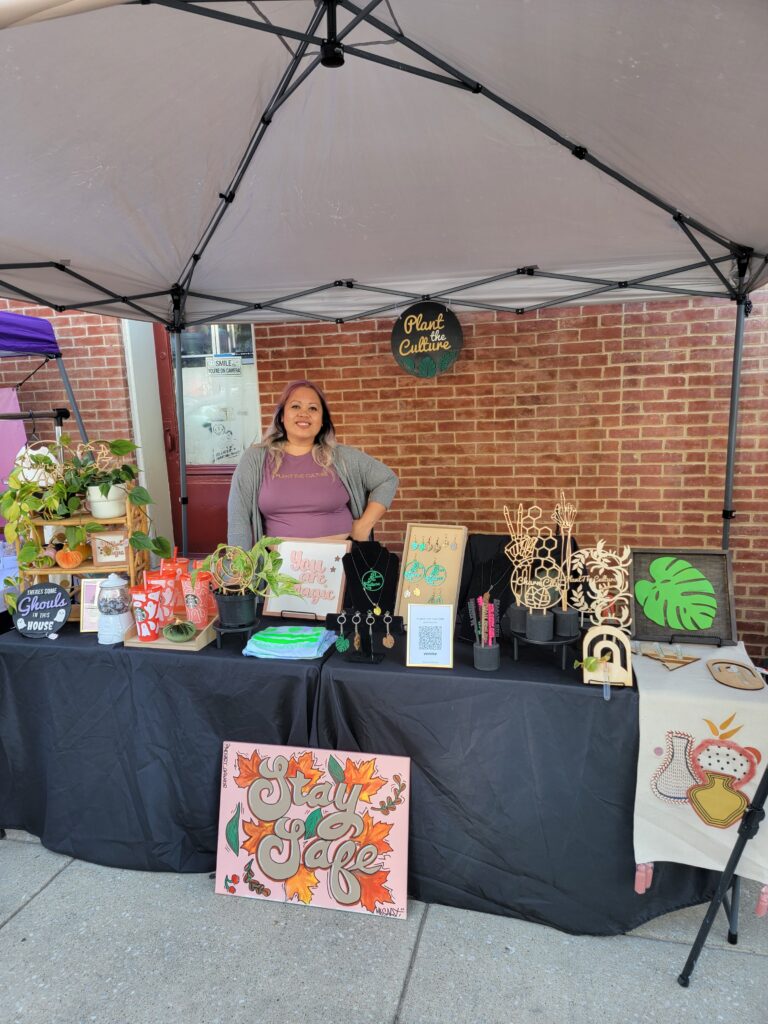
Woman smiling standing at a table with plant-themed art and jewelry
Sheila Abellano at a local market promoting her business, Plant the Culture. (Image courtesy of Abellano)

Just prior to her return in fall 2021, a therapist diagnosed Abellano with ADHD, which helped her better understand her earlier academic struggles and feel more prepared to take advantage of the opportunity to return to the classroom.

Debbie Paul, Abellano’s academic advisor, and the Finish Line team connected her with both a community and resources. “The Finish Line team constantly reached out to remind me that they were available if I needed help,” says Abellano. “Just knowing that UMBC had created a program for returning students like me, gave me the motivation I needed to keep going.” 

Abellano was also encouraged by the welcome she received from faculty and students, which helped her feel that she belonged at UMBC. She notes that Thomas Robinson, assistant professor of Africana Studies, was “amazing,” in going out of his way to ensure she felt engaged and comfortable in his class.

Abellano’s advice to other prospective returning students is to follow their dream, and know that the UMBC community is here to help make that dream happen. Next, Abellano hopes to become a therapist and work to reduce the stigma associated with mental health challenges, especially in her Filipino community.

World traveler finds future in data science at UMBC

Tchuissi Mbu Nyamsi

Degree: MPS in Data Science
Hometown: Paris, France 
Plans: Data science consultant at CrossCountry Consulting

“Thanks to the UMBC program and the support of the Career Center and others, I feel well prepared to enter the workforce in the U.S. and to bring [my] unique perspective.”

While working at Sodexo, a food services company, Tchuissi Mbu Nyamsi ’22 realized that there were data problems she wanted to solve. “I realized it was something I really wanted to have more knowledge in and I wanted to sharpen my skills,” she says. So she enrolled in UMBC’s master’s program in data science at the Universities at Shady Grove.

Mbu Nyamsi had only recently come to the United States from her home country of France to work at Sodexo, a French company, after having lived in several other countries around the world. “I wanted to experience this entrepreneurship mindset in the U.S. and have a new kind of international experience,” she says.

With her passion for math, knowledge of data science, and intercultural communication skills, Mbu Nyamsi looks forward to working as a consultant in data science. “It’s a big strength,” she notes, “to be able to combine my technical, language, and soft skills.”

Story written by Karen Stysley.

Computer science grad carries forward UMBC’s positive energy

Gabby Khan

Degree: B.S., Computer Science (Game Development track)
Hometown: Olney, MD
Plans: Computer scientist, T. Rowe Price

“I see how much drive and passion students have, and it helps me become a more driven and passionate person. So I really just value the people around me in the community who are striving to improve themselves, because it helps me improve as well.”

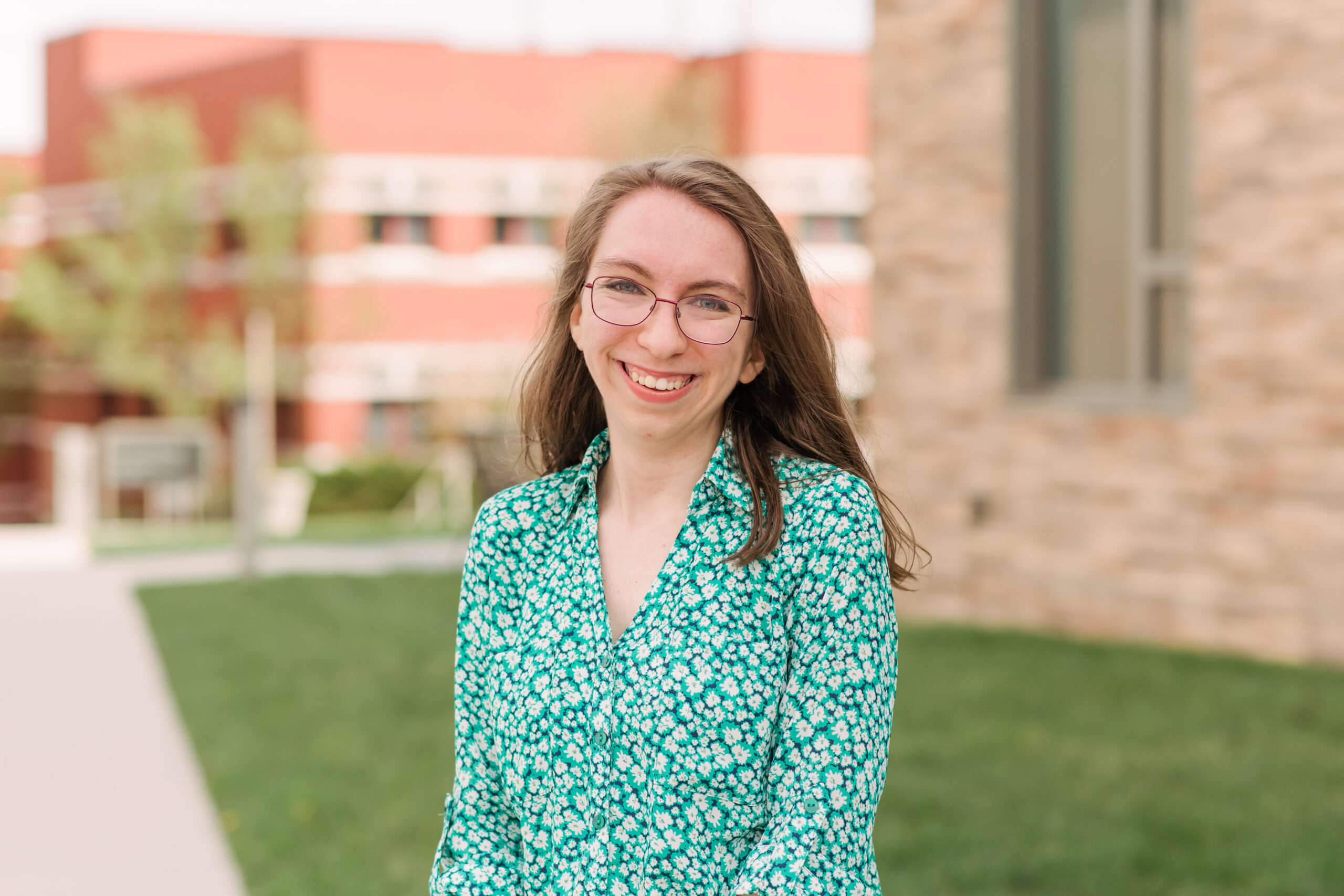
Gabby Khan ‘22 came to UMBC to study computer science and game development. What she found when she arrived was a warm, supportive community. “Everyone was welcoming and felt responsive, like humans,” she says. “People in administration who I’d call with questions were welcoming and friendly.” 

When she ran into challenges in her physics and calculus classes during her first year, Khan sought help from UMBC’s free tutoring resource, now known as the Academic Success Center. After a student mistook her for a tutor and a Center staff member overheard the conversation, she was offered a job. She eventually became a tutor mentor, helping other tutors build their skills. 

Gabby Khan in The College Tour video.

Khan approached her Academic Success Center work in the same way she eventually approached being a resident assistant for the Honors College Living Learning Community and a leader in the Honors College Council: as an opportunity to pay forward the kindness and support she received from other members of the UMBC community.

“I feel like whenever you give a sense of excitement or passion to people, they usually do reciprocate it,” she says. “Even if you don’t see it yourself, they’ll find ways to share it with other people.”

Soon after graduation she will join the computer science team at T. Rowe Price.

Story written by David Hoffman, Ph.D. ’13, language, literacy, and culture (LLC), director of the Center for Democracy and Civic Life, and Romy Hübler ’09, modern languages and linguistics, M.A. ’11, intercultural communication, Ph.D. ’15, LLC, assistant director of the Center for Democracy and Civic Life.

Ukrainian graduate aims to bring people together

Kateryna Yakusheva

Degree: B.A., Global Studies; B.A. Economics
Hometown: Kherson, Ukraine
Plans: Work in an intercultural role before graduate school

“Studying at UMBC helped me see the value of intercultural communication and helped me learn from other cultures as well.”

Kateryna Yakusheva ’22, global studies and economics, looks forward to working on the international stage, with an organization like the World Bank or International Monetary Fund. Wherever her career takes her, she knows she wants to help different groups come together to manage risks, address conflicts, and build new futures.

This vision for her future is inspired by her intercultural college experience in the U.S. Yakusheva came to Maryland from Ukraine eight years ago. She has focused on gaining exposure to many different cultures. 

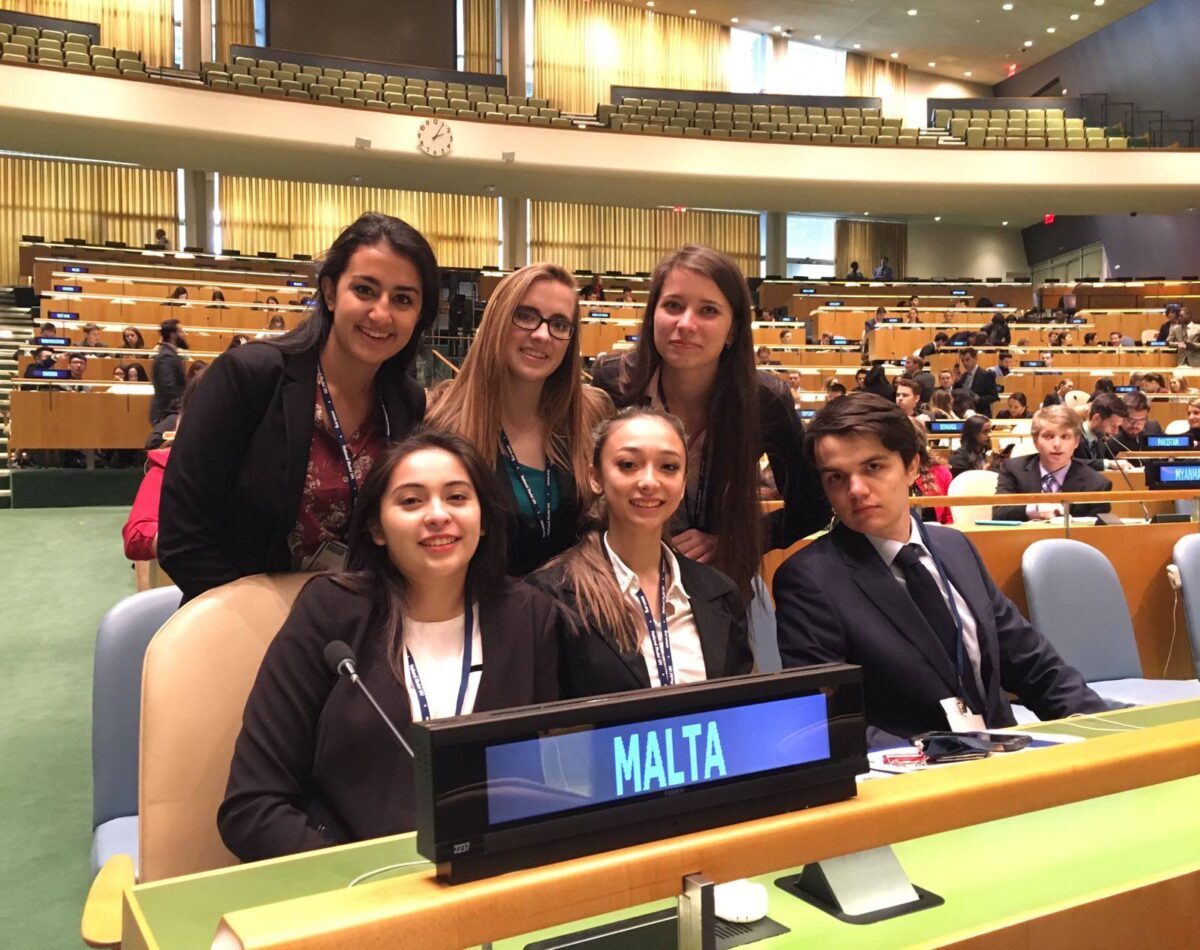
Six students sitting together in professional clothing in front of a sign designating "Malta"
Kateryna Yakusheva (upper row, right) at a National Model United Nations tournament. (Image courtesy of Yakusheva)

While a student at Montgomery College, she was a delegate for the National Model United Nations. After transferring to UMBC she took courses in Chinese, adding to her language skills in Russian, Ukrainian, and French. The Chinese language courses added another dimension to her coursework in global studies. “It really opened my mind to doing things in a different way,” she says.

Yakusheva recommends that everyone get experience with other peoples’ ways of doing things. “There are so many clubs at UMBC where you can contribute and come to learn about other cultures,” she says, so students should “definitely participate in as many activities as they can.”

Story written by Karen Stysley

Language enthusiast wants to broaden his perspective

Caleb Ruck

Degree: B.A., Modern Languages & Linguistics (Spanish and German)
Minors: Anthropology and Latin American Studies, certificate in Intercultural Communication
Hometown: Ellicott City, MD
Plans: M.A., Intercultural Communication at UMBC 

“I like that grittiness we have at UMBC—that you chose to be here and everyone is here because they’re just into what they study and want to grow.”

An aspiring polyglot, Caleb Ruck ’22, modern languages and linguistics, collected languages like Pokemon when he was young. No college felt right, however, until the day he toured UMBC. He knew right away that it was where he belonged. “I genuinely think that UMBC is the best possible fit that I could have gotten,” he says, “it has a very deliberate underdog spirit.”

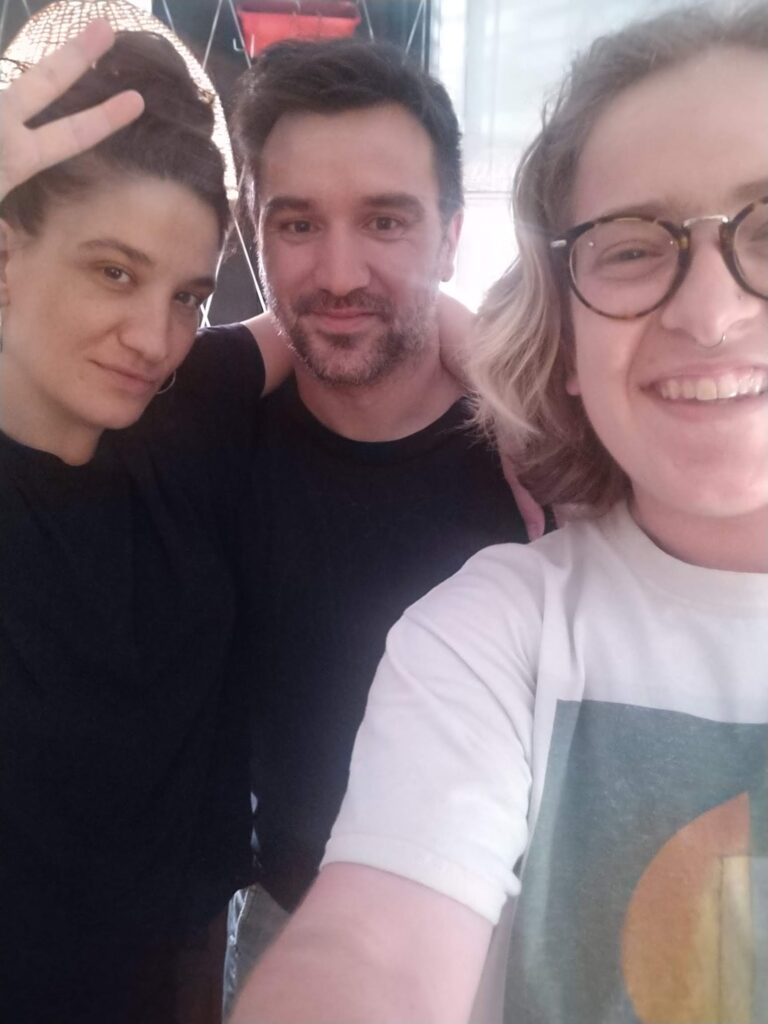
Boy smiles for a selfie with another two individuals while in Argentina studying language.
Caleb Ruck with host family in Argentina. (Image courtesy of Ruck)

Soon he began to find that the cultural aspects of language were just as appealing as the mechanics. His advisor Elizabeth Arévalo-Guerrero, who he calls his “main cheerleader,” pointed out that he could earn an intercultural communication certificate with just a few more classes, so he decided to go for it. Ruck delved into how people use language and never looked back. 

In Fall 2019 he studied abroad in Argentina, which gave him “a taste of communicating with people who experience the world in a very different way.” Back at UMBC, he went on to do a research project and presentation focused on understanding differences in the perceived prestige of native English-speaking bilinguals versus English language learners on social media. 

Ruck looks forward to continuing his studies with a master’s degree in intercultural communication, a field he describes as “vital” for broadening perspectives and opening doors.

Story by Karen Stysley.

Future dentist values her U.S. college experience

Nastaran Azar

Degree: B.S., Biological Sciences
Hometown: Tabriz, Iran
Plans: M.S., Applied Molecular Biology at UMBC, followed by dental school

“I knew that if I came to UMBC I wouldn’t be alone, I would join a community of international students.”

As a child in Iran, Nastaran Azar ’22, biological science, was afraid when she saw her grandmother take out her dentures, but her brother’s explanation of what had happened to her grandmother’s original teeth gave Azar a life goal. “Teeth play a really important role in our lives,” she says. She plans to help others take care of theirs when she eventually becomes a dentist. 

Before dental school, however, Azar had to get an education in biology. She came to UMBC from Iran, knowing that UMBC has a community of diverse students that would help her feel welcome. She would go on to extend that welcome to others through UMBC’s Global Ambassadors program.

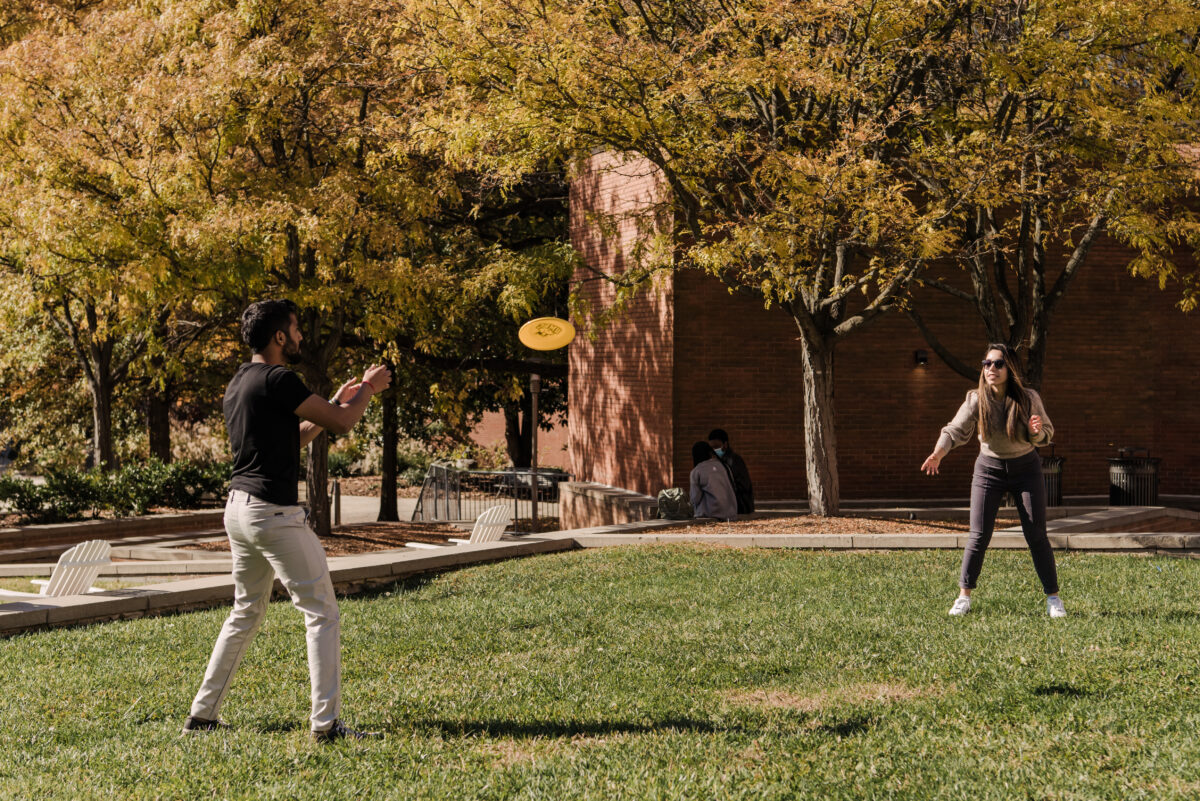
Two students throw a frisbee on a lawn
Nastaran Azar playing frisbee on campus. (Image by Marlayna Demond ’11/UMBC)

Beyond enjoying the chance to meet students from all over the world, she was amazed at some of the differences in her academic experience as a student in the U.S. rather than Iran. These differences ranged from more frequent quizzes rather than high-stakes exams to the lab’s abundance of pipettes. “I really enjoyed that we have access to all of the technology and supplies,” says Azar. 

She sees her decision to go abroad for college as one of the best choices she has made. “You get a chance to learn much more” when you are in a new environment with all different kinds of people, she says.

Story written by Karen Stysley

Poet of democratic practices

Tess McRae

Degree: B.A., Individualized Study: Civic Renewal and Creative Expression
Hometown: Columbia, MD
Plans: Coordinator for Civic Design, UMBC’s Center for Democracy and Civic Life

“The lesson I have learned from STRiVE and from the Center for Democracy and Civic Life’s work, and from all of the people I’ve met at UMBC who have held up undistorted mirrors for me, is that I am worthy as my authentic self. That has radically altered everything I thought I knew about myself and the world, and has profoundly deepened my sense of community, connection, and purpose. And that clarity and sense of belonging are indescribably empowering and healing, even in moments of doubt.”

Tess McRae ‘22, individualized study, grew up hearing stories about her mother’s campus involvement as a UMBC student in the 1980s. She visited the campus several times as a teenager, and says “I was always entranced by how beautiful it was and how clearly I could imagine myself thriving here.” 

McRae spent a week at STRiVE, UMBC’s immersive leadership for social impact program, during her first year, and joined the Center for Democracy and Civic Life’s staff when it launched in 2018. For the next four years, she played a leading role in developing and leading the Center’s workshops and programs, weaving in her insights as an artist and as a person familiar with the kind of self-doubt that can inhibit participation in communities and social change projects. 

Tess McRae (r, standing) facilitates a session at STRiVE. Image courtesy of McRae.

Along the way, she designed her own major in civic renewal and creative expression and produced the Co-Create UMBC virtual tour. And her paintings of UMBC spaces that have been co-created by students have appeared in exhibits both on campus and at the OCA Mocha coffee shop in nearby Arbutus.

McRae’s immediate post-graduation plan is to work professionally at the intersection of civic engagement and the arts. She aims to “continue co-creating an ethos of agency, self confidence, and communion felt deeply by people around the world” in ways that allow her to indulge and draw on her identity as a poet, visual artist, musician, and aspiring theater-maker.

Story by David Hoffman, Ph.D. ’13, language, literacy, and culture (LLC), director of the Center for Democracy and Civic Life, and Romy Hübler ’09, modern languages and linguistics, M.A. ’11, intercultural communication, Ph.D. ’15, LLC, assistant director of the Center for Democracy and Civic Life.