All posts by: UMBC News Staff


UMBC’s 2023 Cybersecurity Exploratory Project Awardees Announced

UMBC’s Cybersecurity Leadership Task Force has recently awarded funding to seven exploratory projects on cybersecurity education and research, with a goal of enhancing UMBC’s role as a leader in cybersecurity. 

Proposals were submitted by teams from all three academic colleges and several of UMBC’s research centers and institutes, covering a broad range of topics. Recipients were awarded up to $25,000 in funding, beginning May 1, 2023 through January 31, 2024. 

The selected exploratory projects include: 

  • “To Create a Course on the History of Cybersecurity and Cyberwarfare,” led by Mary Laurents, associate professor of history, and Amy Froide, chair and professor of history.
  • “Policy Integrated Blockchain to Automate HIPAA Part 2 Compliance Applied to Medicaid Data,” led by Jim Clavin, chief technology and compliance officer at the Hilltop Institute, and Karuna Joshi, associate professor of information systems.
  • “Post-Quantum Cryptography: Will Quantum Memories help?” led by Todd Pittman, professor of physics.
  • “CyberCELL: Cybersecurity Curriculum Express Learning Library,” led by Ida Ngambeki, assistant professor of information systems, and Deborah Kariuki, director and clinical faculty of computer science education.
  • “Vulnerable Populations’ Perspectives on Data Security and Privacy of Mental Health Technologies,” led by Helena Mentis, professor of information systems.
  • “The UMBC Ethical Software Lab (ESL),” led by Mohammad Samarah, professor of information systems, and Melissa Morris, professor of information systems.
  • “Investigating Cybersecurity Educational Initiatives to Support Older Adults,” led by Ravi Kuber, associate professor of information systems. 

New cybersecurity courses, research, and outreach will result from these projects. This internal funding opportunity was created by the Cybersecurity Leadership Task Force, co-led by Keith J Bowman, dean of the College of Engineering and Information Technology (COEIT), and Karl V. Steiner, vice president for research and creative achievement.

The task force is composed of cross-disciplinary members with diverse perspectives and extensive working knowledge across the UMBC community. It was established to conduct the ongoing search for the inaugural Director of the UMBC Cybersecurity Leadership Institute, and to review and approve exploratory projects on Cybersecurity Research and Education. Funding for the exploratory projects was provided by the Office of the Provost, with partial funding provided by COEIT.

Visit UMBC’s internal funding opportunities website for more information on open calls for proposals.

Thank you to the COVID-19 Health Team!

Dear Colleagues,
We have reached an important milestone in our three-year response to COVID-19. With the end of the federal Public Health Emergency for COVID-19 on May 11 and the resulting change from emergency response to our routine protocols for infectious disease education, prevention, and response, we have now ended our online reporting. The COVID-19 subgroup Health Team that has led our response holds its last regular meeting this week. We know that COVID-19 will remain a part of our community, and we will be ready to implement safety measures as needed in the future. But this is, indeed, a significant moment, and it is an occasion to reflect on and express gratitude for the incredible work of so many members of our community.
To say the last three years have been challenging is certainly an understatement. The Health Team worked diligently throughout the pandemic to keep our community safe and informed and to minimize the impact of the pandemic on our community members and our educational experience. This has been an enormous lift for everyone, and I am grateful to you all for your collective efforts.
Today, I extend my sincere gratitude to all members of the Health Team: Vic Madrid, Bruce Herman, Damian Doyle, Kim Leisey, Marie Lilly, Samantha Smith, Lucy Wilson, and, of course, Nancy Young. And an extra thanks to the COVID-19 Planning and Coordinating Committee (CPCC), led by Provost Philip Rous and Vice President for Information Technology and CIO Jack Suess, and the members of the other subcommittees who contributed so greatly to this effort. 
On behalf of the entire UMBC community, thank you for your tireless dedication and care for our community.
Sincerely,
President Valerie Sheares Ashby 

Political crowdfunding does more than raise money – it can also rile up opponents

Sanorita Dey, Assistant Professor of Computer Science and Electrical Engineering, UMBC

The success of politicians in the U.S. largely depends on the amount of funding they receive from various sources. Although political action committees contribute considerably to elections, a recent survey showed that grassroots contributions – gifts under US$200 – are equally crucial and contribute a sizable amount. Donald Trump’s 2016 presidential campaign raised 69% of its funding from small donors.

Traditionally, volunteers went door to door to solicit donations from individuals. Today, politicians use social media to encourage their supporters to donate and eventually vote for them. Many politicians such as senators Bernie Sanders and Ted Cruz have turned to this sort of political crowdfunding.

The primary objective of political crowdfunding is to assist politicians in raising funds directly from individual donors. However, it’s also crucial for assessing the acceptance of politicians’ political agendas among potential supporters. Crowdfunding can reach and create loyalty from a much broader group than a party’s usual base, while minimizing the party’s and donors’ time and effort.

Although political crowdfunding is potentially becoming a way to build a strong sense of community, the impact of these campaigns may go far beyond that. These campaigns often focus on socially divisive partisan issues such as gun control and climate change. Discussions on these issues can influence potential supporters to develop highly polarized opinions on partisan issues.

As a computer scientist who researches social media and persuasion, I’ve studied whether casual exposure to political crowdfunding campaigns might create a long-lasting sense of disapproval on partisan issues, even when those issues are not being discussed as part of a political fundraising campaign.

My colleagues and I found that casual exposure to these campaigns can influence people’s opinions on politically sensitive issues such as climate change. These influences can stay active for many days and can influence people’s decisions on the same topic, even when it is not discussed by a politician in a political campaign.

Lasting influence of political crowdfunding campaigns

Our team recruited subjects from Amazon Mechanical Turk, an online platform for hiring people according to various criteria. We hired them in two groups: the first group supported the Democratic Party, and the other group supported the Republican Party.

We first showed all of our subjects a political crowdfunding campaign of a politician from the political party that they did not support. This process allowed us to present the argument about climate change from a particular perspective we believed the subjects would not naturally support because of their political ideology.

A webpage showing a photograph of a young man holding a sign
Crowdfunding pages like this one can help raise money from people who support climate action, but they can also energize opponents. screenshot by Sanorita Dey, CC BY-ND

After this casual exposure to a political crowdfunding campaign, we notified the subjects that the study was completed. In reality, we recruited the same group of people after 10 days as part of a new study, and this time they were asked to consider an online charitable event indirectly related to climate change.

Subjects who supported the Democratic Party were asked to guess a donation amount that they would be comfortable to pledge for a movement where organizers were trying to help people who lost their jobs in closed coal mines because of the climate action law. Supporters of the Republican Party were asked to do the same task of guessing the appropriate donation amount, but the movement was about planting trees in Central America to stop the effects of severe deforestation.

Both groups refused to donate any money to their assigned cause. Initially, we found this result disappointing but not surprising, considering that we were challenging their fundamental beliefs on climate change. However, we decided to take a second look at our findings when our team did the same experiment one more time with a new group of people.

This time we did not show a political crowdfunding campaign to any of the subjects. Instead, we showed them a news article about a politician, although the article did not show any information about the donation amount received by the politician from the supporters. All other details of these two experiments were the same. This time, to our surprise, subjects did not hesitate to donate a sizable amount to charitable movements irrespective of their political ideology.

This made us wonder whether and how the casual exposure to the political crowdfunding campaign influenced the first group of subjects who took a rather challenging decision of not donating anything to the charitable movements. After close observation, we concluded that it was not the content. Rather, it was the structure of the political crowdfunding campaigns that left a long-lasting influence on our subjects.

The political crowdfunding campaign not only presented the perspective of the politician on climate change but also showed how much money had been donated to that campaign. The clear signal of a significant amount of support for a politician from the supporters of the opposition party influenced their future actions, including decisions to donate, related to climate change movements. Although the news article presented the same arguments about climate change, it did not noticeably influence the second group of subjects because it did not show a direct signal of support in the form of monetary donations.

Why it matters

Political crowdfunding is widely considered a new and convenient medium for raising funding from grassroots supporters. Most studies on crowdfunding have focused on strategies that can raise more money from a diverse audience. Our study examined the impact of such campaigns on people’s opinions on partisan topics.

Our research suggests that people’s opinions can become polarized based on information they see in surprising places, and that impact can last for an extended period of time. The implications of our findings are critical because they suggest that people can double down on their views rather than considering the merits of a position when they are processing information from online platforms – especially on sensitive and divisive issues such as climate change.

Sanorita Dey, Assistant Professor of Computer Science and Electrical Engineering, University of Maryland, Baltimore County

This article is republished from The Conversation under a Creative Commons license. Read the original article.

Returning Students

UMBC provides supportive pathways for returning students to claim their futures

Story by Charis Lawson ’20, English, and additional UMBC staff.

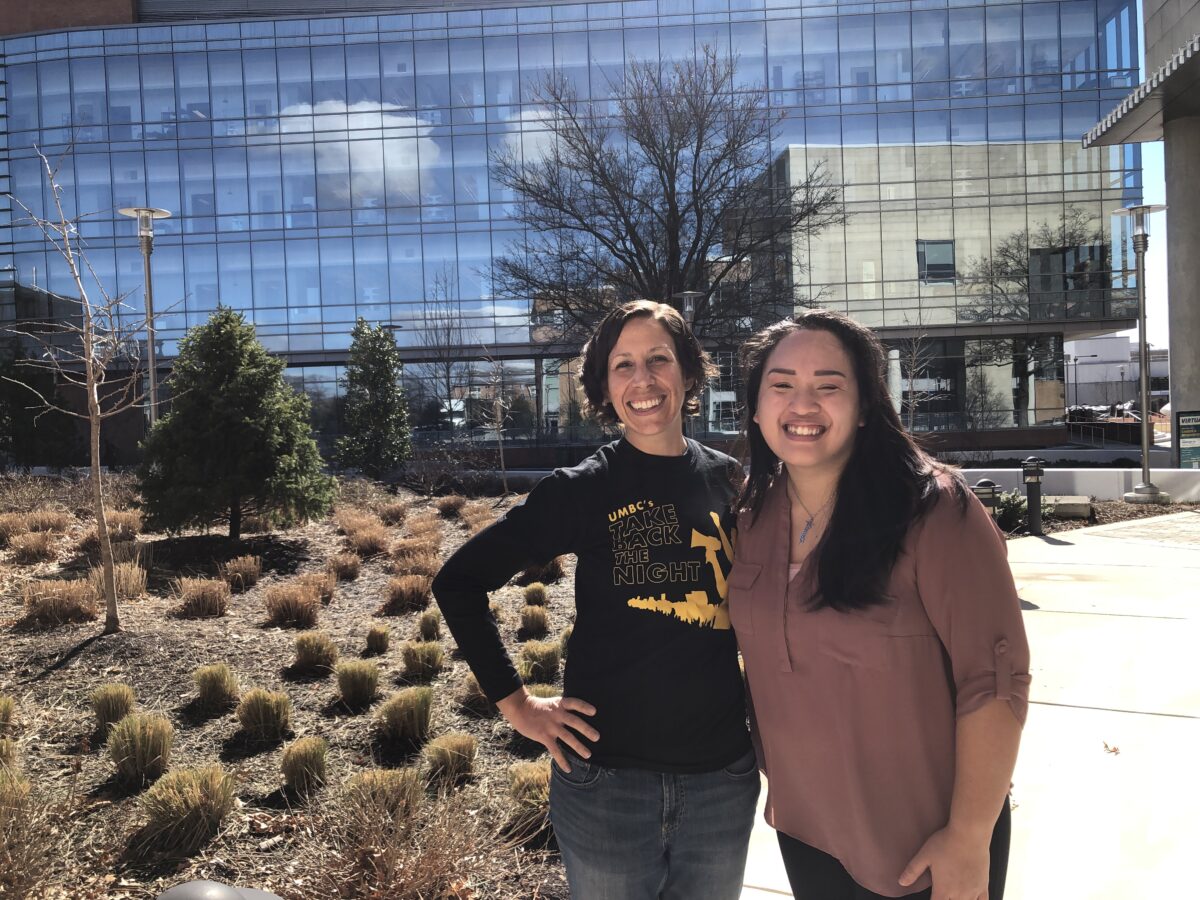
Two women smiling outside in front of glass-paneled building.
Image courtesy of UMBC Women’s Center

Charles Harris’s college degree is a labor of love that began in the 1970s. He will be 80 years old when graduates this month, adding a B.A. in sociology to a powerful list of achievements, including a career in child welfare and opening his home, with his wife of 50 years, to raise over 100 children. As someone who supported so many others before accessing support through a UMBC academic advocate to complete his own degree, he knows the value of community. And he particularly values the close-knit, supportive, diverse community that UMBC offers.

“Students can come to UMBC and get a whole new experience of working with different types of people on different levels, and it is a great experience,” he says. “I’m very proud to be part of the school.” 

While Harris’s story is unique, many UMBC graduates are returning college students or started their journey after beginning careers and growing their families. Their resilience is bolstered by the knowledge that they are not on their journey alone—students connect them with community, staff offer resources, and faculty help them progress along their academic path. 

Strengthening UMBC

It’s also essential for nontraditional students to recognize the valuable experiences and attributes they bring to UMBC, and how they strengthen the university community, says Jane De Hitta ‘22, social work.

In addition to being a returning student, De Hitta is a social work intern with the UMBC Women’s Center, working closely with others who have returned to complete their undergraduate degrees. When they express self-doubt or uncertainty, she reminds them, “You have something to offer to the UMBC community that others don’t. Your lived experience before returning to school will inform what you learn and how you receive that, and also will add to class discussions.”

“Balancing several different roles and identities and parts of your life is really important and valuable,” she notes. This is something that some other students “might not have learned yet and would benefit from hearing about.” 

“You’ve got this”

Although it’s natural for returning students to feel nervous about being back on a university campus, Sheila Abellano ‘22, psychology, says that, after over a decade of raising a family and starting two small businesses, those feelings quickly dissipated at UMBC. She encountered welcoming staff who provided the resources and support she needed to create a plan for completing her remaining graduation requirements. Abellano was also encouraged by the welcome she received from faculty and students. 

“I’ll always remember the great energy at UMBC,” Abellano adds, “from President Freeman Hrabowski, who always said hello to me when I saw him, to the faculty, staff, and students who said, ‘You’ve got this.’”

For these returning students, UMBC provided opportunities to begin their next chapter. It also connected them to a community they will be part of long after they receive their diplomas.

Intercultural Experiences

New UMBC grads share how intercultural experiences have shaped their journeys

By Karen Stysley

Kateryna Yakusheva (upper row, right) at a National Model United Nations tournament. (Image courtesy of Yakusheva)

As Kateryna Yakusheva ’22, global studies, spoke to fellow UMBC students about Ukraine this past March, it was hard to deal with all the emotions of the war in her homeland. Nevertheless, it was important, she says. “We need to speak to as many people as we can so they understand what people in another world are going through,” she notes, since “it’s hard to relate when there is something like this going on very far from you and maybe not directly involved with your family.” 

This year’s UMBC graduates demonstrate how cultivating those intercultural relationships is a key part of the UMBC experience, whether it’s in the classroom, with friends, or through work, like Yakusheva’s job at the UMBC Bookstore. She says she believes that even students in other majors should take Introduction to Global Studies because it “definitely helps you open your mind and broaden your perspective on the world.”

Another approach is education abroad, where students get to have an up-close, personal look at life in a different country. While Caleb Ruck ’22, modern languages and linguistics, was in Argentina, he saw a wonder of the world, improved his Spanish, and attended a pride festival. But what really sticks with him is a newfound confidence. He says that he learned, “I can do things that are out of the box and make me nervous…I can embarrass myself and then get over it.” 

Global Ambassadors

Some UMBC students come to the U.S. from other countries for the same reason. Nastaran Azar ’22, biological sciences, came to UMBC from Iran because “I enjoyed the culture and it was a really diverse community.” Even so, she had to navigate the occasional instance culture clash. For example, saying something that might be considered respect for someone’s privacy or time in the U.S. can be considered rude elsewhere, she said. 

Students new to the U.S. also have to contend with complications like getting a visa as well as the language barrier, says Tchuissi Mbu Nyamsi ’22, data science, who is originally from France and has also traveled the world. 

To help other international students through that process, both Azar and Mbu Nyamsi joined UMBC’s Global Ambassadors program. One of Azar’s favorite memories from UMBC was helping the new international students when they first arrived. “All of them were stressed and we were saying, ‘you will be fine.’ I really enjoyed that,” she said. 

Valuable skills

Often, students with such intercultural experience aren’t just fine – they excel, thanks to the skills and knowledge they’ve gained. “Learning multiple languages is a big strength and it allows me to adapt myself to any cultures,” Mbu Nyamsi says. She plans to use this skill at her job as a consultant with a business advisory firm. 

Yakusheva also has found intercultural experiences to be a bonus during interviews for internships and jobs. Companies “understand that when you have people from different backgrounds in the workplace you’re going to have some moments where cultures are going to clash,” she says, but she can provide insight on how to use those experiences as learning opportunities and end up with better work products as a result.

Understanding different perspectives also is a big part of growing empathy and helping people to interact smoothly. “It’s truly helpful to not judge people based on what they are doing because you don’t know what’s truly happening, what they’re really thinking about,” Azar says.

Similarly, Yakusheva says that her intercultural experiences have opened her mind, and “I realized that the way I’m used to doing things is not the only way, and it’s not necessarily the right way. There are several ways of doing things.”

Growing empathy and awareness

Ruck also got a new perspective back home at UMBC while volunteering at the Esperanza Center, a resource center that helps immigrants in Baltimore. “I became bilingual as a hobby,” he says, in contrast to the people he was supporting at the center who were “becoming bilingual in order to work and to survive.”

Gaining personal insight may be the most important part of intercultural experiences, Yakusheva suggests. “It’s not only about learning about food or music, but also just how to handle yourself in different situations,” she notes. “It helps me be more tolerant and more understanding of others and myself.” 

In many ways, the world is getting smaller, with rapid travel and communications, says Mbu Nyamsi, but building personal connections and seeing things for yourself still has immense value. “Sometimes when you go abroad, you can put everything into perspective and have a better big picture view of the world.”


UMBC students interested in studying abroad can learn more about opportunities and financial support through the education abroad office.

Mentors

Mentors help UMBC’s graduating students access unique career opportunities

By: Megan Hanks Mastrola

Each year, UMBC students access a broad range of internships and research opportunities, and work alongside mentors who guide and support them in their interests. Students in UMBC’s Class of 2022 have used these opportunities to explore their passions and to take important first steps in their careers.

Hands-on leadership experience

When she was exploring her college options, Logan Hawker ‘22, mechanical engineering, had a clear sense of what she was looking for. “I wanted to have a career as an engineer, and I wanted to play softball,” she says. “UMBC was one of the only places where I knew I could pursue both at a high level.”

Hawker came to UMBC in the fall of 2019 and by summer 2020 she was interning as an F-18 flight test engineer for the Navy at the Naval Air Station Patuxent River, MD. She developed flight test plans and briefed pilots, then monitored test flight data from a control room.

As an intern, Hawker says that she had several mentors who “took me under their wing,” and their support paid off. Hawker was able to write and implement her own test plan as a final project. The project culminated when her primary mentor was out of town, but by then Hawker felt confident briefing the test pilots and delivering the final test report to more than 50 people on her own.

After graduation, Hawker will begin working full-time as a flight test engineer at the Naval Air Station at Patuxent River.

Making the most of each opportunity

When Audrey Houck ‘22, financial economics, transferred to UMBC from Drexel University, she knew she wanted to take advantage of all of the resources and opportunities that UMBC has to offer. An opportunity came knocking when one of her financial economics professors offered the top three students in the class the chance to interview with T. Rowe Price for a possible summer internship. 

To prepare for the interview, Houck connected with Christine Routzahn, director of UMBC’s Career Center. The interview prep paid off, as did knowing “I had a network of people behind me,” she says.

She was hired as an associate analyst intern at T. Rowe Price in summer 2021. There, a mentor at the company helped guide her every step of the way, offering context to better understand the company and her role, and make the most of her internship experience, her first position in the industry. “The opportunity allowed me to apply knowledge from my undergraduate courses to the corporate world,” Houck says.

After completing the internship, Houck decided to apply for the highly competitive T. Rowe Price Investment Fellowship program. She knew Routzahn would be there to help her prepare for the interview and put her best foot forward. “The constant communication, and knowing that someone is there to meet me halfway and make sure I am successful, was meaningful,” she shares.

Houck will participate in the T. Rowe Price Investment Fellowship program after graduation, completing four six-month rotations with various teams within the company. 

Bridging arts and tech

Bryan Castillo ‘22, business technology administration, transferred to UMBC from Howard Community College in fall 2020, in the midst of the COVID-19 pandemic. He knew that he had to be intentional about connecting with classmates and professors in a virtual environment. 

In spring 2021, he began searching for internship opportunities, and he connected with the UMBC Career Center and attended several career fairs. The Career Center worked to understand his interests and goals, and supported him as he navigated the interview and application processes as a first-generation college student. Castillo was hired for an internship at the information technology help desk at the University of Maryland Medical System (UMMS), where he focused on database management. 

That experience was an important stepping stone to his next opportunity, which more closely aligned with his interest in the arts: a highly competitive internship at the Whitney Museum of American Art in New York City. As an intern at the Whitney Museum, he has worked remotely four days a week managing museum databases, while completing his degree. 

During UMBC’s spring break, Castillo decided to spend the week in New York City so he could meet his mentors and connect with fellow interns in person. The internship also gave him an opportunity to connect regularly with senior leadership at the Whitney Museum, giving him the confidence to pursue a technical position in a museum after graduation.

Seeking fresh perspectives

Arjun Trivedi ‘22, M30, mechanical engineering, is passionate about research and about connecting with people outside of his major. His experience as a Meyerhoff Scholar, he shares, has taught him the value of being part of a diverse, supportive community and exploring issues from a range of perspectives.

“Interdisciplinary connections are important,” he explains. “Finding those connections and being able to take advice from everyone around you helps you grow.”

He found research alongside Deepa Madan, assistant professor of mechanical engineering, in the summer after his freshman year to be incredibly valuable, particularly his conversations with Madan and graduate students in the lab. But he was also interested in machine learning and computing and wasn’t quite sure how to bring it all together. His peer mentor in the Meyerhoff Scholars Program suggested he consider a computer science minor and see what doors that would open.

In summer 2021, Trivedi learned about a summer research opportunity that combined mechanical engineering and machine learning. He remembers immediately thinking “this is me” and reaching out to Ankit Goel, assistant professor of mechanical engineering, to apply. That led to an exciting research experience with Goel and Meilin Yu, associate professor of mechanical engineering. 

Preparing for his career after graduation, Trivedi reached out to the UMBC Career Center for interview and skill test support. Now, he has accepted a job offer at the Johns Hopkins University Applied Physics Lab, focused on maritime robotics – automating underwater vehicles. 

Mentors in the lab and the field

When Aiman Raza ‘22, biological sciences, met Kevin Omland, professor of biological sciences, to discuss the possibility of doing research in his lab, she thought she might feel nervous. But, she says, “I didn’t feel intimidated joining the lab. I felt very supported in the work I was doing.” 

“My first year in Dr. Omland’s lab, he would give me great feedback on the work I was doing,” Raza says. “He encouraged me to get things done and get in the habit of doing a little bit of work each day. That mentoring style has been very helpful to me.” 

In addition to working on the Omland Lab’s Bahama Oriole Project, she received a UMBC undergraduate research award (URA) to study and track mockingbirds on campus–her first independent field research. 

Raza also grew her skills through internships, found via the UMBC Career Center. She focused on DNA sequencing at the Institute of Marine and Environmental Technology in Baltimore’s Inner Harbor during summer 2019. In summer 2020, she completed a virtual internship with the Smithsonian Environmental Research Center, focused on oyster restoration.

After graduation, Raza will pursue her master’s in biological sciences at UMBC as part of the Interdisciplinary Consortium for Applied Research in the Environment (ICARE) program. She will work with Tamra Mendelson, professor of biological sciences, to study brook trout populations in the Chesapeake Bay using environmental DNA.

Youth Engagement

New UMBC grads already paying it forward, supporting area youth

By: Sarah Hansen M.S. ’15

Student raises her hand while seated in class, surrounded by other students, with teacher at the front of the room.
Gustavo Sanabria ’22, American studies, and current Sherman Scholar, is completing a certificate in elementary education while serving as a long-term 4th-grade substitute teacher.

The children at the Walden Circle Community Center in Woodlawn, Maryland were rambunctious, even a little irritable, on a hot afternoon in September. Micah Thorpe ’22, mechanical engineering, a student coordinator for an after school program at the community center, knew just what to do: introduce a rocket-building project.

“Immediately, all the kids locked in on their mission to make sure the rocket took off,” Thorpe remembers. “Just getting them excited about science and engineering, and letting them know that they could be building rockets one day if they really wanted to—that’s what’s kept me coming back and wanting to serve.”

Thorpe is one of many UMBC students who regularly spend their time with local youth, both in the children’s communities and on UMBC’s campus. UMBC students offer tutoring, guidance for the college search and application process, strategies for managing emotions, and more.

Thorpe has worked with local students in various programs every semester during his time at UMBC, eventually taking on leadership roles with Walden Circle and the UMBC chapter of the National Society of Black Engineers. “Especially for underrepresented minorities in STEM, I want to help expose them to what they could pursue,” he says.

Mindful teaching

Ashley Delgado ’22, psychology, and a Sherman STEM Teacher Scholar, has focused her energy on working with pre-kindergarten and second grade students through two semester-long internships at Maree G. Farring Elementary/Middle School in Baltimore City. UMBC’s work with Maree G. Farring and other city schools is supported by the Sherman Family Foundation, which recently invested an additional $21 million in UMBC’s education partnerships, scholars programs, and research. 

Delgado also conducted research with Jennifer Mata-McMahon, associate professor of early childhood education, from whom she learned about ways to use meditation and breathing techniques in an educational setting. Right away, Delgado taught the techniques to her students.

The strategies helped the children “express emotions appropriately, because at such a young age, they are feeling a lot of things they don’t know how to express, and sometimes they do so in a way that hurts themselves or hurts others,” Delgado says. Especially during pandemic disruptions, “It was very beneficial for my students, because of some things they were going through at home and just the environment they were in.”

Delgado has chosen to center her career on teaching young children, accepting a position for fall 2022 as a teacher at Lakeland Elementary/Middle School. She’s looking forward to teaching in culturally responsive ways, and creating opportunities for her students to share their backgrounds and personal stories. This emphasis will fit right in at Lakeland, which implemented a dual-language program in collaboration with UMBC faculty in 2018.

Lifting up others

Similar to Thorpe, Favour Nwagugo ’22, biological sciences, has found meaning in supporting younger students through the CHOICE Program and his UMBC peers as a peer health educator.

One of Nwagugo’s most rewarding experiences was as a student coordinator for the CHOICE Program, which, among other activities, brings local youth to UMBC’s campus for educational and recreational activities led by UMBC students. 

“Through the process of being a leader I developed organizational and communication skills,” he says. And because the program was offered online beginning in March 2020, when the COVID pandemic began, “I also got better at finding new creative ways of engaging people.”

Especially when the CHOICE sessions were in person, “I would always leave there excited,” Nwagugo says. “It feels so good to help people.” It was particularly rewarding to see quiet students gradually open up and begin to see themselves at UMBC, he shares.

Helping fellow students through the peer health education program has also been rewarding. “Students come to college and they’re in the middle of a lot of stuff. They’re trying to figure themselves out,” Nwagugo says. As peer health educators, “We’re here to give them the tools to have that experience in a healthy and positive way, to have a quality life at UMBC.”

“I’m really excited for the next chapter after UMBC,” Nwagugo says. While he is heading to the National Cancer Institute for a postbac program, he also looks forward to finding new opportunities to support local youth.

Gratitude in action

Kaitlynn Lilly has also turned gratitude for her UMBC experience into efforts to support younger students and her peers. As a volunteer with the Arbutus Achievers program at Arbutus Middle School, she tutored students in math. Later, as the program’s student coordinator, she organized other volunteers and led reflection sessions, ensuring both tutors and their students were getting the most out of the experience.

Involvement with the Arbutus Achievers “has just been such a positive experience for me,” Lilly says. “I really love being at the leadership level, because not only do I still get to have a direct impact on students, but I also get to help UMBC college students understand the impact that they can have on other people.”

Lilly also advised students at Hereford High School through the process of creating a hydroponic farm as a peer advisor with the Society for Women Engineers – NEXT High School chapter. “It was really cool to be able to work with them and show them that you can make your ideas come to life,” she shares. Lilly also serves as a First Generation Peer Mentor for UMBC students.

“I’ve been so fortunate at UMBC to have such great mentorship, in the Meyerhoff Scholars Program, the Honors College, and from Dr. Justin Webster,” assistant professor of mathematics, with whom Lilly has conducted research since her first year.

Lilly plans to continue participating in outreach as her career progresses. Like many of her peers who contribute to the local community, her sense of appreciation for support she’s received drives her commitment. “At every level, I’ve been so grateful for what people have given to me,” Lilly says, “and I want to be able to keep giving that back.”

Graduating Retrievers Forge Strong Bonds With Baltimore Communities

Graduating Retrievers forge strong bonds with Baltimore communities

By: Catalina Sofia Dansberger Duque

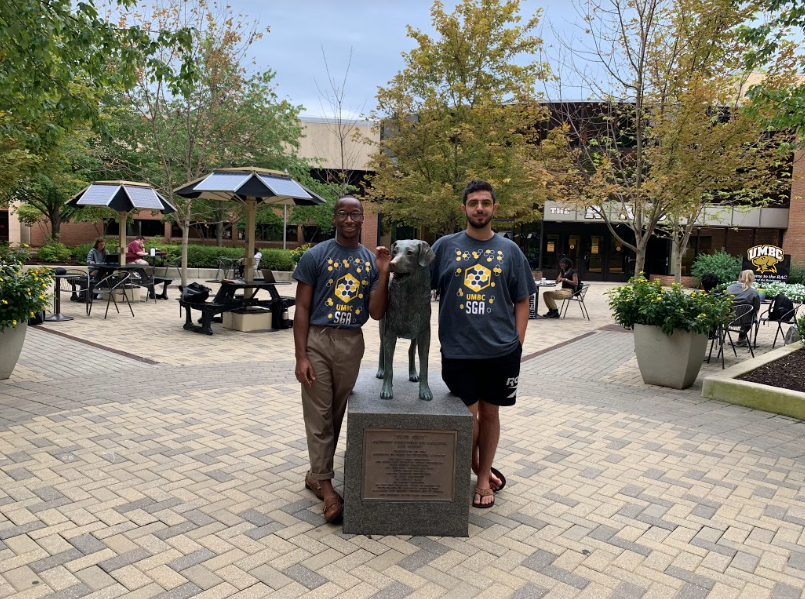
Two adults wearing black t-shirts, stand with a bronze sculpture of a dog at UMBC.
Gray (l) with former SGA President, Mehrshad Devin ’21, biology, and M.P.S ’22, entrepreneurship, innovation, and leadership. (Image courtesy of Gray)

Joshua Forlotta Gray ‘22, takes as his compass in life a 1968 quote by Dr. Martin Luther King, Jr.: “Everybody can be great because everybody can serve.” When taking on a new project, job, or student activity, Gray, a dance and media and communication studies major, asks himself, “Will the work uplift and support others?” 

When he was presented with the opportunity to contribute to Charm City Connection’s economic community development work the answer was an emphatic yes. He was equally thrilled to join three of UMBC’s Alternative Spring Breaks in Baltimore City looking at access to the arts, transformative justice, and decarceration.

Gray’s focus – in both academics and community engagement – is understanding processes that create change. He sees work with communities as intrinsically multicultural, multilingual, and international, as it must serve the needs of many. “I’m invested in the process of creating access and social change through learning, teaching, and leading,” says Gray. “The essence of the work energizes me.”

“He is talented, demonstrates academic excellence, and has prioritized civic-minded engagement during his time at UMBC,” Liz Patton, associate professor of media and communication studies and a mentor, says of Gray. “In other words, he is grit in action.”

Supporting immigrant youth

For Gray and other UMBC students focused on community engagement, Baltimore is more than a place to volunteer. It is a city with tremendous assets that draws students from all over the world. 

Melisa Argañaraz Gomez, Ph.D. ’22, geography and environmental systems, moved to Maryland from Spain to work with Baltimore’s Latin American immigrant youth. CASA of Maryland and Centro Sol, groups that provide resources and services to Latin American immigrant families, were two of the organizations that welcomed her as a volunteer. 

“Immigrating from Argentina to Spain when I was thirteen, and then to the U.S. as a graduate student, I know how challenging the immigrant experience can be, to start from zero, especially as a teenager,” says Argañaraz Gomez. 

She forged strong bonds. Several young Latina students enthusiastically worked with Argañaraz Gomez to create the award-winning project PARqueología Migrante, a community-outreach website highlighting their immigrant experience in Baltimore. 

“The students had internalized anti-immigrant messages. They didn’t see themselves as being able to be leaders and researchers and felt that their voice and work did not matter in Baltimore,” says Argañaraz Gomez. Through PARqueología Migrante, participants realized that their voices and work matter and can transform their lives and those of other immigrant youth.

Collective strength

The project reached well beyond those directly participating. Community leaders, schools, and institutions actively supported the project with resources and guidance, valuing the students’ work. What had started out as a small project with students became the work of many. 

“The students and I were moved that community leaders and researchers alike valued their point of view, skills, and research,” says Argañaraz Gomez. These insights confirmed for her the transformative power that space and place can have in the process of belonging for immigrant teens.

Argañaraz Gomez also connected with a local collective of Latinas and participated in social justice work around immigration. There she met fellow community member and creator of “Moving Stories: Latinas in Baltimore,” Tania Lizarazo, associate professor of modern languages, linguistics, and intercultural communication and global studies. Lizarazo supported her in navigating academic spaces. 

“Being in community with other Latinas is essential for learning how to navigate institutions, and obscure processes such as the job market, especially as an international or first-generation student,” says Lizarazo. “Supporting Latin American students benefits the whole Latin American community on and off-campus, and contributes to making UMBC more welcoming for all.”

Baltimore’s greatness

Keenan Hickman, M.P.S. ’22, community leadership, sees Baltimore’s greatness as a part of his personal story. Hickman’s roots are in Baltimore, but at the beginning of COVID he was living in California, working alone from his home office. He realized that in every job he’d had, wherever he lived, and in all the countries he had visited, he always found time to volunteer in communities working towards racial equality. He wanted that to be a more central part of his life.

Hickman moved back home to Baltimore, surrounding himself with his family and fellow Returned Peace Corps Volunteers. Ready to make his passion for community service his life’s work, Hickman enrolled in UMBC’s master’s in community leadership through the Shriver Peaceworker Fellows Program.

“Keenan is rich with reflection and values,” says Joby Taylor Ph.D. ’05, language, literacy, and culture, director of UMBC’s Shriver Peaceworker Program. “When he shares ideas or stories or questions in our classes, I learn a new and often powerful perspective.”

The program gave him a fresh perspective as well. He learned that equity and racial justice work is not only about volunteering with social change organizations. It is also about diversifying access to and leadership in equity work. 

Hickman saw this in action in his work with Baltimore Corps. Their purpose is to draw underrepresented talent through equitable fellowships and professional networks, developing a pipeline of innovative social justice leaders dedicated to Baltimore’s future. 

“My life is in, about, and for Baltimore,” says Hickman. “I’m part of a growing social justice entrepreneurial community reimagining equity and access for an even greater Baltimore.” 

Community Empowerment

UMBC’s newest grads continue to grow spirit of community empowerment, impact

By: David Hoffman and Romy Hübler

View of softball player's braided hair from behind with ribbons spelling "UMBC"
Courtney Coppersmith shows off her UMBC pride.

Members of the Class of 2022 have experienced college in a period of multiple overlapping crises, including a global pandemic, continuing racial injustices, climate disasters, international conflict, and threats against democracy. The scale and scope of these challenges can be daunting, but UMBC students, including this year’s graduates, have responded with vision and action. 

Their approach: promoting inclusion and belonging right where they are, and building mutually empowering relationships that can change the world. 

Inspired by personal experience

Courtney Coppersmith ‘22, chemistry and molecular biology, is one of many UMBC grads who has leveraged their own stories and experiences to make meaningful civic contributions on campus. A star pitcher for UMBC’s championship-winning softball team who also excels academically, she struggled with depression during a busy first year on campus. After her essay about her experiences won a national contest, the America East conference, Major League Baseball, and ESPN shared her story widely. 

Teammates and competitors reached out to Coppersmith to say how her message had resonated with them and helped them recognize that they were not alone. She has continued to support UMBC athletes through advocacy and personal encouragement. She has also helped them get involved with campus and community organizations, building networks of support and a sense of connection.

Danylo Leshchyshyn ‘22, history and political science, arrived at UMBC looking for disability support he sometimes had lacked in middle school and high school. He helped to establish the Autism Spectrum Student Association as a connection point and advocacy group for students on the autism spectrum, and worked with peers and staff in Student Disability Services to revive UMBC’s chapter of Delta Alpha Pi, a national honor society for high-achieving students with disabilities. 

Leshchyshyn’s UMBC civic legacy also includes speaking about the impact of Russia’s invasion of Ukraine on his family.

Of his time on campus he shares, “You can get anywhere you want from here, and you know you’ll get there as a better person than when you came into UMBC.”

Sharing resources, building connections

Gabby Khan ‘22, computer science, has strengthened the UMBC community in part by paying forward the kindness and care she experienced from peers and mentors in the Honors College and at the Academic Success Center. Some of the students with whom she has worked as a resident assistant and tutor have sent her appreciative messages. Hearing that she was able to help other students at times when they were really struggling has been more than gratifying – it’s also shaped her outlook on what a supportive community can and should do.

Khan now describes her contribution to UMBC’s empowering and supportive culture as part of a “cycle of learning.” “UMBC has been a really welcoming place that I got to learn from, especially from the people around me,” she says. “It never stops at academics.”

For Tess McRae ‘22, individualized study, participating in UMBC’s immersive STRiVE leadership for social impact program opened the door to deep involvement on campus. “It was the first time in my life that I truly learned and understood that I had a story; that my story mattered; that my characteristics and habits and quirks were sources of insight; and that I was not alone in my experiences and feelings,” she says. 

After joining the Center for Democracy and Civic Life’s founding staff in 2018, McRae facilitated and contributed to the design of dozens of its programs, including STRiVE. Always on her mind was how to liberate and empower participants in the ways the immersive program had done for her.

Among her UMBC civic legacies is the Co-Create UMBC video tour, which she produced and narrated as a way of inspiring UMBC students to believe in themselves and envision their own contributions to the campus community.

Long line of innovators

While each of these students has had a unique experience and impact, they are also following the legacy of UMBC’s pioneer classes of the 1960s and 1970s. Those early UMBC students established a culture in which they viewed themselves as co-creators of the UMBC community. 

In the program for the first UMBC commencement exercises in 1970, graduate Diane Juknelis (now Diane Juknelis Tichnell) reflects, “The present class of graduates is the first in a long line of innovators who are not to be considered products of UMBC, but rather constant producers of all that gives it character and quality.”

Each students’ civic legacy is specific to a time, place, people and organizations. And it is also much broader – over time shaping UMBC as a warm, inclusive, engaging environment in which to learn and grow.

Scholar-athlete shines a light on mental health

Courtney Coppersmith

Degree: B.S., Biochemistry and Molecular Biology
Minors: Philosophy and Emergency Health Services
Hometown: York, PA
Plans: Graduate degree in chemistry

“I still talk to professors I had in my freshman year, which I think is really cool and speaks to the fact that this really is a community among faculty, staff, and students.”

Courtney Coppersmith, ‘22, biochemistry and molecular biology, experienced UMBC as a welcoming community on her first visit, and she has devoted her time on campus to paying that welcoming spirit forward.

She is one of the top softball pitchers in the nation. She has set several university records through the championship-winning UMBC softball team, including for strikeouts in a single game. But behind the stardom, her early success and involvement in nearly a dozen campus and community organizations created pressures that felt overwhelming at times.

Coppersmith responded by writing an essay about her experiences with depression, which won the Jackie Robinson Breaking Barriers national essay contest. Soon, teammates and competitors were reaching out to her to say how her story had resonated with them and helped them recognize that they were not alone. 

Courtney Coppersmith prepares to throw a strike. Photo courtesy of Coppersmith.

Coppersmith has continued to support fellow UMBC student-athletes and the broader UMBC community, particularly through mental health and food security initiatives. She has also served as a chemistry tutor and active volunteer in Baltimore. 

Courtney Coppersmith in The College Tour video.

Coppersmith looks forward to pursuing a graduate degree in chemistry. She aspires to help develop medications to fight cancer.


Learn more about Coppersmith’s experience and advocacy in a new feature story in The Baltimore Sun.

Story written by David Hoffman, Ph.D. ’13, language, literacy, and culture (LLC), director of the Center for Democracy and Civic Life, and Romy Hübler ’09, modern languages and linguistics, M.A. ’11, intercultural communication, Ph.D. ’15, LLC, assistant director of the Center for Democracy and Civic Life.

Advocate for self-discovery and inclusion 

Danylo Leshchyshyn

Degree: B.A., History and Political Science (certificate in Security Studies)
Hometown: Columbia, MD
Plans: M.A. in History, University of Toronto

“The most valuable part of my UMBC experience has been learning that I can succeed at what I do—not only that I can succeed academically, but that I can succeed in the social aspects that I struggled with in high school. I can build meaningful relationships. I can even be president of a club. I can do whatever I set my mind to.”

Danylo Leshchyshyn ‘22, history and political science, came to UMBC hoping to receive the support he would need to succeed. He found it in the form of friendly staff members with Student Disability Services, and in strong connections he formed with other students. He remembers “life changing conversations, which I will be forever grateful for” with friends in the Humanities Scholars Living Learning Community. He also found a path to involvement in campus life through a mythology-themed Dungeons and Dragons campaign organized by the Ancient Studies Council of Majors. 

Leshchyshyn quickly became a supportive community-builder in his own right. He helped revive UMBC’s chapter of Delta Alpha Pi, a national honor society for high-achieving students with disabilities. He also co-founded the Autism Spectrum Student Association and actively participated in several other organizations.

Leshchyshyn’s grandparents came to North America from Ukraine after WWII. He is a fluent Ukrainian speaker and still has relatives living in Ukraine.

In the months since Russia launched its full-scale invasion of its neighbor, he has connected with others at UMBC who have Ukrainian connections and spoken at a campus program, “Russia’s Invasion of Ukraine: Historical, Political, and Personal Perspectives.” He plans to pursue a master’s degree in history at the University of Toronto, focusing on Ukraine and Eastern Europe.

Story written by David Hoffman, Ph.D. ’13, language, literacy, and culture (LLC), director of the Center for Democracy and Civic Life, and Romy Hübler ’09, modern languages and linguistics, M.A. ’11, intercultural communication, Ph.D. ’15, LLC, assistant director of the Center for Democracy and Civic Life.

Right opportunity, right time: Entrepreneur returns to finish her UMBC degree

Sheila Abellano

Degree: B.A., Psychology
Hometown: Silver Spring, MD
Plans: Master’s in clinical psychology

“I didn’t feel judged for being an older student at UMBC—I felt like I belonged.”

Sheila Abellano ‘22 never doubted she would return to finish her UMBC degree one day, but when she received a letter in the mail about the university’s Finish Line program, she knew it was time. After leaving UMBC in 2009, she raised a family and started two small businesses. Reading that Finish Line would waive her readmission fee and offer support with enrollment, financial aid, and academics, she saw a great opportunity.

Woman smiling standing at a table with plant-themed art and jewelry
Sheila Abellano at a local market promoting her business, Plant the Culture. (Image courtesy of Abellano)

Just prior to her return in fall 2021, a therapist diagnosed Abellano with ADHD, which helped her better understand her earlier academic struggles and feel more prepared to take advantage of the opportunity to return to the classroom.

Debbie Paul, Abellano’s academic advisor, and the Finish Line team connected her with both a community and resources. “The Finish Line team constantly reached out to remind me that they were available if I needed help,” says Abellano. “Just knowing that UMBC had created a program for returning students like me, gave me the motivation I needed to keep going.” 

Abellano was also encouraged by the welcome she received from faculty and students, which helped her feel that she belonged at UMBC. She notes that Thomas Robinson, assistant professor of Africana Studies, was “amazing,” in going out of his way to ensure she felt engaged and comfortable in his class.

Abellano’s advice to other prospective returning students is to follow their dream, and know that the UMBC community is here to help make that dream happen. Next, Abellano hopes to become a therapist and work to reduce the stigma associated with mental health challenges, especially in her Filipino community.