All posts by: UMBC News Staff


Alan Byrd Named Vice Provost of Enrollment Management at UMBC

Alan Byrd has been appointed as the next vice provost for enrollment management for the University of Maryland, Baltimore County (UMBC), effective August 3. Byrd joins UMBC from George Mason University where he has served as the dean of admissions since 2020. 

Byrd brings more than 25 years of experience in college admissions and enrollment management to UMBC. He has an extensive track record of implementing successful recruitment and retention initiatives, and he consistently increased enrollment, improved academic profiles, expanded diversity, and enhanced student success at the institutions where he has served. 

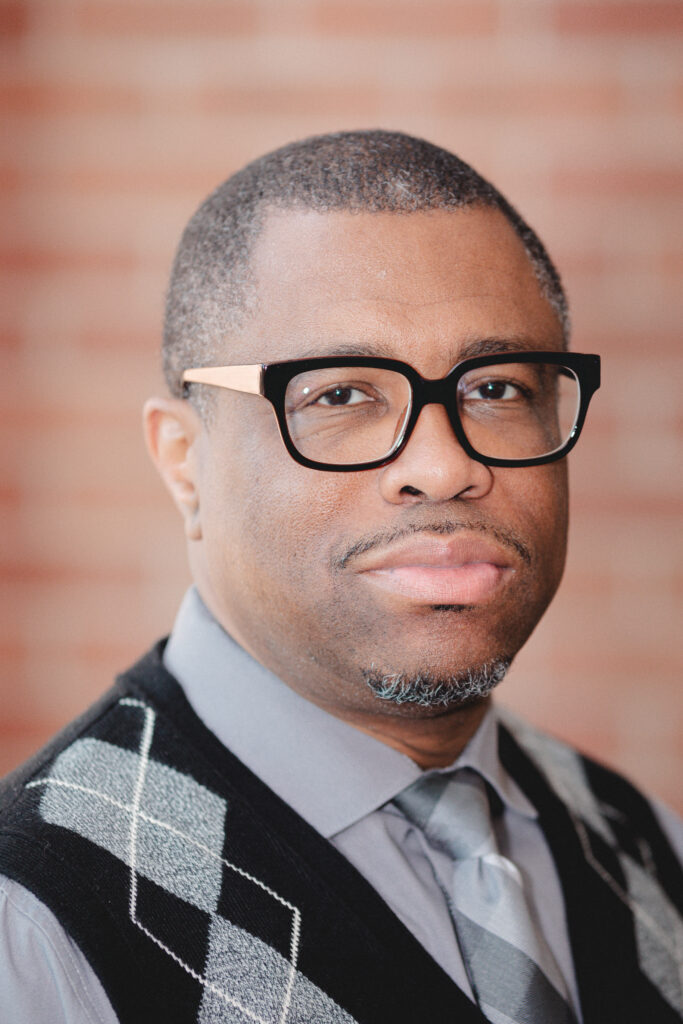
Alan Byrd, Vice Provost for Enrollment Management, poses for a portrait

Byrd’s commitment to college access, affordability, and student success has defined his lifetime of work as an enrollment manager. Prior to arriving at George Mason, he was vice provost of enrollment management at the University of Missouri-St. Louis where he led the university to several milestones for total enrollment, the academic profile and diversity of the student body, and graduation rates. Removing financial barriers for students was central to his accomplishments in St. Louis, where he developed innovative financial aid programs such as the UMSL Grant, Triton Emergency Grant, and the Senior Degree Completion Program. These flexible need-based programs helped eliminate equity gaps in degree completion for Pell grant recipients and reduce their average debt at graduation. 

Byrd earned a bachelor’s degree in communication from Southeast Missouri State University, a master’s degree in higher education administration from Southeast Missouri State University, and a doctorate in education leadership and policy studies at the University of Missouri-St. Louis. His dissertation research examined noneconomic persistence barriers for low-income students at large public universities.

Important Federal Updates for the UMBC Community

Dear UMBC Community,

We write to you today on behalf of the Federal Orders and Actions Core Team to update you on some recent federal government actions and how they will or may impact UMBC.

OMB Proposed Regulation for Federal Assistance

On May 29, 2026, the Office of Management and Budget (OMB) proposed the Regulation for Federal Financial Assistance to substantially revise the federal grants framework. OMB’s proposed “Regulation for Federal Financial Assistance” is the most significant update to the Uniform Guidance in decades, impacting over $60 billion in federal research and social assistance programs, such as Medicaid and FEMA. The proposed rule expands executive branch authority and incorporates several executive orders—including restrictions on DEI and gender-affirming care funding.

The 320-plus proposed revisions to the Uniform Guidance would fundamentally alter the awarding and monitoring of federal grants. For higher education and research institutions, these changes threaten to increase administrative and compliance burdens, shift more costs to recipients, and expand institutional liability. Ultimately, these revisions risk slowing the pace of U.S. scientific discovery and innovation.

The significant changes in this proposal were highlighted in a three-page joint statement recently issued by the Association of American Universities (AAU), the Association of Public and Land-grant Universities Council on Research (APLU-COR), and the Council on Government Relations (COGR).

The proposed rules are prompting coordinated responses nationwide. We are in regular contact with colleagues across the University System of Maryland (USM) regarding these proposed changes and are discussing options for an institutional response in coordination with other USM institutions to inform our federal congressional delegation of the potential impact should these proposed regulations become law.

The proposal is currently open for public comment through July 13, 2026, with a stated intent for the regulation to become effective October 1, 2026. We are also actively reviewing the proposed revisions, monitoring updates from AAU, and contributing to and benefitting from the national conversation through APLU-COR and COGR.

We will continue to update you as the situation with this proposed rule evolves. 

Update on USCIS Adjudicative Hold on Applications and $100,000 H1-B Policy

There have been developments in two federal policy court cases as outlined below. 

  • U.S. Citizenship and Immigration Services (USCIS) Adjudicative Hold on Applications for Certain Immigration Benefits Struck Down by District Court

On January 1, 2026, USCIS issued an updated policy memorandum, expanding on its December 2, 2025, memorandum, directing USCIS personnel to place a hold on all pending immigration benefit applications submitted by nationals of countries and territories included in the Trump administration’s travel ban. It also called for a review of previously approved applications.

On June 5, 2026, the U.S. District Court for the District of Rhode Island issued a memorandum and order declaring the USCIS Global Asylum Hold Policy, the Comprehensive Re-Review Policy, and the Country-Specific Factors Policy unlawful. 

On June 12, 2026, USCIS confirmed that it would follow the terms of the court’s order pending possible further judicial review.

The Trump administration has indicated that it intends to appeal the court’s decision, but unless and until that happens, UMBC students, faculty, and staff from travel ban countries and territories should no longer be subject to adjudicative holds or reviews of approvals previously made by USCIS.

  • $100,000 H-1B Fee Policy Vacated by District Court, However Vacate Order is Temporarily Paused to Allow an Appeal

Last September, President Trump issued a proclamation, “Restriction on Entry of Certain Nonimmigrant Workers,” requiring employers to make payment of a $100,000 government fee per each individual H-1B employee seeking to enter the United States, unless an exception is granted. In response, the State of Maryland joined a coalition of 19 other states in suing over this policy. UMBC filed a declaration supporting this multi-state suit.

On June 8, 2026, the U.S. District Court for the District of Massachusetts ruled that the $100,000 fee created a tax for which the president did not have the authority to impose. However, on June 12, 2026, the district court temporarily paused its order vacating that fee because the government is requesting an appeal. The district court has given the government until June 18, 2026, to file its appeal. If the government does not file their appeal by that deadline, the lower court’s vacate order will be reinstated.

While the vacate order is paused, USCIS is permitted to require the $100,000 fee for petitions that are filed for or require consular processing.

We recognize that the unpredictability of federal rulemaking and policy can be distressing for members of our UMBC community. Please be assured that we are doing everything we can to stay ahead of the shifting landscape and communicate to our community about what we are doing in response. We appreciate your partnership and understanding as our campus community navigates the current environment. 

Regards,

Karl V. Steiner
Vice President for Research and Creative Achievement and Chief Research Officer

David L. Di Maria
Vice Provost for Global Engagement

Seigar Named Dean of the College of Natural and Mathematical Sciences

Marc Seigar, Ph.D., has been appointed the next dean of the College of Natural and Mathematical Sciences (CNMS) at the University of Maryland, Baltimore County (UMBC), effective August 3, 2026. Seigar joins UMBC from the University of Toledo where he serves as the dean of the College of Natural Sciences and Mathematics.

Marc Siegar, incoming dean of College of Natural and Mathematical Sciences, poses for a portrait

Seigar brings a strong background in academic leadership to his new role at UMBC. Prior to his leadership at the University of Toledo, he served as a rotating program director in the Division of Astronomical Sciences at the National Science Foundation and as an associate dean in the Swenson College of Science and Engineering and head of the Department of Physics and Astronomy at the University of Minnesota Duluth. His administrative work has focused on developing programs that attract new students, grow research, and promote engagement and academic success through student-centered systems. 

Seigar earned his Ph.D. in astrophysics from the Liverpool Astrophysics Research Institute and his bachelor of science in physics from Imperial College London. He began his career as an assistant professor at the University of Arkansas at Little Rock.

An accomplished scholar, Seigar has published more than 100 articles on galaxy structure and dynamics, supermassive black holes, and dark matter distribution in galaxies. His articles are widely cited. Seigar is the author of two books. His work has been supported by federal funding agencies including NASA and NSF, as well as private foundations.

Seigar is a Fellow of the Royal Astronomical Society and an associate of the Royal College of Science. He is also a member of the American Astronomical Society and the Sigma Xi honors society. He has served in editorial roles for journals in his field and currently serves on the editorial board of the Effective Practices for Physics Programs project, a project that is led by the American Physical Society and the American Association of Physics Teachers.

Seigar succeeds William LaCourse, Ph.D., as dean of CNMS. LaCourse, who will return to the faculty following a research leave, served as CNMS dean for 15 years.

Recent Updates to Immigration and Employee Travel

Dear Colleagues,

I am writing to update you regarding recent changes to federal immigration and visa policies.

Please remember that each individual’s circumstances are different, and this communication is provided for informational purposes only. It should not be construed as legal advice on any subject matter. If you have specific questions and hold F-1, H-1B, or J-1 immigration status, please contact the Center for Global Engagement. If you have specific questions and hold another immigration status, including legal permanent residency, please consult with a private immigration attorney. As a reminder, UMBC employees have access to free consultations with qualified attorneys via the Employee Assistance Program.

1. Major Change to the Green Card Application Process

On May 21, 2026, U.S. Citizenship and Immigration Services (USCIS) issued a policy memorandum reminding its officers and the public that adjustment of status to permanent residence under the Immigration and Nationality Act (INA) is a matter of discretion and administrative grace and is not designed to supersede regular consular processing of immigrant visas. The new guidance highlights that the adjustment of status process is a grant of “extraordinary relief” from consular processing.

Please note that the memo issued on May 21, 2026, applies specifically to the filing of adjustment of status to permanent residence and does not affect the earlier steps in the green card process, whether self-petitioned or employer-sponsored.

The final step in the permanent residence process is completed by filing Form I-485 (Application to Register Permanent Residence or Adjust Status). The preliminary stages may still be prepared and filed while the beneficiary is physically present in the United States.

If you are sponsored by UMBC, the preliminary stages may include the Prevailing Wage Determination (Form ETA-9141), the PERM labor certification process (Form ETA-9089), and the immigrant petition (Form I-140). These steps can be completed while you remain in the U.S.

If you are self-petitioning, please continue to communicate with your personal immigration counsel so they can best advise you on your particular case.

What Changed?

Foreign nationals living in the U.S., such as employees holding H-1B visas, have historically been able to complete their entire green card application without leaving the country. This new policy does not prohibit foreign nationals from applying for adjustment of status from within the U.S. nor does it remove the ability of USCIS officers to approve these petitions. It does, however, place renewed emphasis on consular processing outside of the U.S. 

  • The New Standard (“Consular Processing”): Certain applicants will be required to travel outside the U.S. to interview and receive their green card at a U.S. Embassy or Consulate in another country.

  • Applying from Within the U.S. is Still Possible: While it is still technically possible to apply for adjustment of status without leaving the U.S., it is no longer the default route. The memo places the burden of proof on applicants to prove that their petition is both extraordinary and highly deserving.

  • Stricter Screening: USCIS officers have been formally instructed to be much tougher when reviewing these inside-the-U.S. requests. They will review all positive and negative factors, including family ties, immigration status and history, moral character, and any other factor deemed relevant for determining whether the applicant warrants a favorable exercise of discretion.

What Does This Mean for UMBC International Employees and Their Departments?

If your department is sponsoring an employee for a green card, or if you are an employee currently in the process of applying or planning to apply for adjustment of status, please note the following: 

  • It is Still Very Early: Over the coming days and weeks, we anticipate that USCIS will release greater detail on how this policy will be implemented. Additionally, there could be litigation that pauses or limits the effect of the policy. 

  • Plan for Travel: Both the employee and their department should factor international travel into scheduling plans. The availability of visa appointments and consular processing times varies significantly from country to country, so it is possible that some employees may be delayed abroad.

  • You Still Have Support: The Center for Global Engagement (CGE) and UMBC’s authorized outside immigration counsel, Fragomen, will continue to help departments and employees navigate the steps for adjustment of status. We will provide further updates once it becomes clearer how this new policy will impact adjustment of status applications going forward. If you are an employee who self-petitioned for adjustment of status, please reach out to your personal immigration counsel. If you are an employee for whom UMBC sponsored your adjustment of status petition, please contact Diane Zeenny Ghorayeb at dianezg@umbc.edu.

2. Arrival Restrictions Related to Ebola

Because of the recent Ebola outbreak, the U.S. Government has implemented new travel restrictions for anyone arriving from, or who was otherwise present in, the Democratic Republic of the Congo (DRC), South Sudan, or Uganda.

If you are planning to travel internationally, please be aware that entry and exit restrictions for the U.S. and other countries can change without warning.

Who is Restricted from Entering the U.S.?

The CDC has temporarily banned entry into the U.S. for anyone who has traveled from—or even just passed through—the DRC, South Sudan, or Uganda within the last 21 days.

  • Foreign Nationals: A 30-day ban is currently in effect for foreign nationals (starting May 18, 2026).

  • Green Card Holders: Starting May 27, 2026, this travel ban will be officially extended to include Legal Permanent Residents, also known as Green Card holders.

Note: The government may choose to extend these bans beyond the initial 30-day window.

Mandatory Flight Rerouting

As a precaution, the Department of Homeland Security (DHS) is requiring any flight carrying passengers who have recently been in the DRC, South Sudan, or Uganda to land only at designated airports, which currently include Hartsfield-Jackson International Airport (ATL) in Atlanta, George Bush Intercontinental Airport (IAH) in Houston, and Washington Dulles International Airport (IAD) in Virginia. 

What University Employees Need to Do

The Center for Global Engagement (CGE) is monitoring these Ebola-related travel restrictions very closely.

If you are traveling abroad on university business, you must follow these steps:

  • Get Pre-Approval: All international business trips must be approved ahead of time using Concur and the International Travel Registry. 

  • Register Your Full Itinerary: If you are mixing personal vacation time with your business trip, you must include your entire itinerary in the system. This ensures UMBC knows where you are and can alert or assist you if borders suddenly close or emergencies arise. If your trip is solely a personal vacation with no university business, then you should not register it with UMBC.

If you have any questions related to the updates shared in this message, please contact CGE’s Office of International Students & Scholars

Additional information and resources related to immigration and other federal policy updates are available on UMBC’s Federal Orders and Actions Page.

Sincerely,

David L. Di Maria
Vice Provost for Global Engagement

Isabel Kendall ’26—Honors College mentor, visual artist, and study abroad enthusiast

Isabel Kendall ’26, modern languages and linguistics, is described by Julie Oakes, assistant director of curriculum and retention in UMBC’s Honors College, as someone who “truly represents what is best about well-rounded humanities folks.” This comes as no surprise, given her time at UMBC, where she took on mentorship roles in the Honors College, created art installations, and traveled abroad to multiple countries. She is ready to apply her artistic and creative spirit to a fulfilling career where she can see the impact of her work, after taking the time to travel around the world. 

Q: What led you to be so involved in different leadership and mentor roles?

A: I didn’t start out being super involved in mentorship or leadership roles or even extracurriculars. For my first two years, I was super focused on just the academic side of things. But in the Honors College, the first class that you take is called Honors Forum, and with that, there are team leaders who are like mentors slash teaching assistants for the first-year class. And at the end of my sophomore year, I applied for a team leader position. Once I had that job, I was like, ‘Oh my gosh, this is like everything I love.’ It’s connecting with people, it’s being a mentor—which is a really rewarding role to have—and also you’re just connecting with people and the freshman class, which is cool to see them ushered into UMBC. 

Q: Tell us about your senior project.

A: It was so challenging, and so rewarding. I wanted my senior project to be multidisciplinary and just visual and creative. I did the honors independent study, and that’s where I did my whole senior project. I really pushed myself to make something I had never made before. It was actually just displayed at URCAD [Undergraduate Research and Creative Achievement Day], and it was an art installation of ten six-foot by three-foot panels of paintings. It was super fun. I’m happy it’s over because it was so much work, but it was very rewarding. 

A student stand smiling next to two six-foot panels she painted
Kendall with her special exhibit “Missionary Position: Power and Cultural Mediation Through the Lens of 16th-Century Missionaries and Postwar Sex Workers.” (Photo courtesy of UMBC’s History Department)

Q: How long did each of those paintings take? 

A: It really varied because it was also multi-modal. So some of the paintings took over a month for each stage. There were just a lot of layers to it, and then some of them I painted in an afternoon. It really varied depending on the medium I was using. 

Q: Do you have any plans for after graduation?

A: I’ve applied for a program called TAPIF, which is an English teaching program in France, and I’m still waiting to hear back about that. It’s basically teaching English at elementary levels and secondary levels. That’s on the horizon. I also really want to travel once I graduate. I’ve traveled in Europe because I studied abroad in Europe, and also in Japan. But I’ve barely seen the U.S. So I’d like to perhaps see California and do a road trip, or maybe travel down South. 

A girl smiles behind a table sitting down with Italian food.
Kendall enjoys a meal and the views while in Spain.

Q: Do you have any advice for any students who are thinking about studying abroad, but they’re still unsure? 

A: It’s such a good experience to get to know yourself outside of your comfort zone and build your own resiliency. And also, you just meet such cool people when you’re abroad. It’s such a wonderful experience, and I urge everyone to study abroad. It’s so worth it in every way. 

Q: Do you have any idea what you want your future career to look like?

A: Honestly, I’m not sure. I would love to continue my artistry, whatever that looks like. But I also love teaching, and that’s something I’m very passionate about. I think for the immediate future, it’s probably just dipping my toes in different things and seeing what works best for me and what I want. I think that’s one thing that I feel like I need to see the impact of my work; that’s important.

Q: In your time here at UMBC, who’s been the biggest influence in your studies?

Two students stand back to back with their feet up and touching
Kendall gets some support from friends who have her back!

A: I would say Dr. Julie Oakes, my research mentor. I’ve taken three classes with her at this point, not including the honors independent studies classes I have taken with her. She’s such a wonderful and brilliant professor and especially with my senior project, her support of my vision and my ideas was so unwavering, and I couldn’t have asked for a better mentor for that. Additionally, her classes were just some of the most fascinating history classes I’ve ever taken. 

Q: What part of UMBC do you think will have the biggest impact on you post-graduation?

A: The Honors College has been such a core part of my studies. My time in the Honors College has connected me with some of the best people, some of the best professors, and the best peers. I feel like I’ve gotten to know people that I’m going to know forever and people that I want to know forever. The Honors College make you feel very supported. It feels very all-encompassing like if you need something, the Honors College is there to help you. 

Q: Is there anything else you would like to share about yourself with the community? 

A: UMBC has just been a really wonderful experience, and I feel like I’ve gotten to grow so much. The interdisciplinary nature of my studies and my senior project and all the projects that I’ve undertaken have been so rewarding. That interdisciplinarianism is not only a core component of the Honors College, but also I feel like it’s valued at UMBC. I would urge anyone to lean into being interdisciplinary in their work and exploring that. 

Story written by Jason Conti, UMBC Library IT support associate. All photos courtesy of Kendall unless otherwise noted.

Read more stories about the Class of 2026.

Strategic Planning Update and Next Steps

Dear UMBC Community,

Today, I am very pleased to share the Strategic Plan Steering Committee’s significant progress this semester towards completion of the UMBC strategic plan.

As a reminder, the strategic plan will be built on five pillars: cultivating organizational innovation and vitality; redefining excellence in research and creative achievement; strengthening Maryland and its communities; advancing student opportunity and success; and transforming teaching and learning. 

Earlier this academic year, the Strategic Plan Steering Committee formed five subgroups, each dedicated to creating a plan for a pillar. The subgroups included committee members and additional campus community members who have experience and expertise in the areas that each pillar is designed to address. Each of the five subgroups has now drafted a plan for its respective pillar. These drafts incorporate your valuable and insightful feedback gathered through:

  • engagements with stakeholder groups this semester;

  • the spring campus-wide Strategic Plan survey;

  • the 2025 Campus Climate survey;

  • website feedback forms;

  • the 2024 Core Values survey;

  • the fall 2023 Shared Governance survey; and

  • the Bold Conversations held in early 2023.

President Sheares Ashby and I, and the steering committee, thank every community member who generously contributed their ideas in group sessions and conversations, and through the extended pillar subgroups. We also are grateful to those who took time to complete the surveys and shared feedback via the website form. This is the UMBC community’s strategic plan. Your participation in the engagements and surveys supports all of our community members seeing themselves in the final strategic plan.

President Sheares Ashby and I also extend our gratitude to the dedicated, hard-working members of the Strategic Plan Steering Committee. Their time and talent over the past year have been vital in reaching this pivotal moment. Please join us in thanking this committee, who so beautifully represented our UMBC campus community.

With the pillar plans finished, we are now drafting the full strategic plan for a September 2026 launch around the same time that we celebrate the 60th anniversary of UMBC opening its doors. Details on plan rollout activities and resources will follow early next academic year.

Thank you, everyone, for your commitment to UMBC’s future.

Sincerely,

Charissa S. L. Cheah
Professor, Psychology and Asian Studies Affiliate Faculty
Chair, Strategic Plan Steering Committee

Next Year’s Budget and Long-Term Budget Planning Efforts

Dear Faculty and Staff,

I am writing to share additional information on the university’s budget outlook for the coming fiscal year, as well as our long-term work to enhance our budget-planning capabilities. 

As we shared with you last month, the State of Maryland has set an operating budget of $70.8 billion for Fiscal Year 2027. Following significant reductions in the state’s allocation to the University System of Maryland in FY26, the new budget does not contain any direct cuts to our institution and provides a modest increase of $7 million, or 0.3 percent, to the system overall. The state’s allocation to UMBC for FY27 will be approximately $210 million. 

I invite you to learn more about the higher education-related outcomes from this year’s legislative session by reading the USM’s 2026 Legislative Session Report, which provides detailed information on budget and policy actions taken this year. We are grateful for the state’s continued support of higher education, keeping the USM’s operating budget whole even as the state grappled with a $1.5 billion shortfall. 

Meanwhile, we are engaged at UMBC in important work to better understand how resources are allocated and managed across the university and to develop a clear, straightforward, and more sustainable budget-planning model for the years ahead. That work involves thorough analysis of expenditures, operations, staffing, and long-term financial projections across academic and administrative units. 

In light of the state’s allocation and this ongoing long-term work, we will maintain a flat operating budget for FY27. We believe this is the most thoughtful and responsible approach as we gather more complete information, strengthen our financial planning processes, and develop the tools and projections necessary to support future decisions.

The state’s budget provides $35.7 million toward a 1.5 percent cost-of-living-adjustment (COLA) for state-funded employees across all USM institutions, effective July 1. That allocation will not cover the full cost of the increase for UMBC employees; we will absorb the remaining cost centrally to be able to provide the 1.5 percent COLA to all employees. We recognize that such support for faculty and staff is critical in the current challenging economic environment. 

Indeed, these continue to be challenging times for many individuals, families, and for the sector of higher education. Many colleges and universities, including UMBC, are navigating significant financial pressures, including challenges related to evolving federal priorities and research funding; rising operational costs, including utilities and benefits; enrollment pressures; and broader economic uncertainty.

All of this underscores the need to improve our budget planning and to ensure that our resources align with our strategic priorities. Over the past year, we have taken a number of strategic steps to help manage financial pressures, including carefully evaluating vacant positions and choosing not to refill some positions when doing so would not negatively affect core operations or student support. These decisions, while not always easy, have helped reduce immediate financial strain and position us more thoughtfully for the future.

As you know, we also are making great strides in our strategic planning process. In a time of financial pressure, it is essential that we think carefully and create strategies to remain focused on our highest priorities. Strategic planning helps us clarify our priorities, identify where we can have the greatest impact, and inform where to focus our resources to advance UMBC’s mission and future. Our strategic plan will help guide decision-making about what we sustain and strengthen and provide clarity about what we cannot or should not do. 

I look forward to setting this course with all of you with a new strategic plan in the fall. As we proceed on that path and in our budget-planning work, we will keep you informed. We are committed to collaboration, transparency, and thoughtful decision-making as we build a stronger long-term financial model and a bright future for UMBC.

With appreciation,

President Valerie Sheares Ashby

Happy Monday: Celebrating Our Graduates

Dear UMBC Community,

Commencement is almost upon us! The first day of classes and Commencement are my favorite days of the year, and this year is no exception. We have so much to celebrate this year as we honor the graduates who will receive their bachelor’s, master’s, and doctoral degrees later this week. 

The road has not been easy, of course, and the contexts for our graduating students continue to be challenging, whether individual or global in nature. Commencement ceremonies, though, are a joyful occasion reflecting on the work and growth of our graduates and the contributions they have made to their chosen fields, to UMBC, and to the world beyond. Commencement also is a chance to express our gratitude to all who have accompanied students on their journeys—their families and friends, fellow students, mentors, advisors, and so many faculty and staff members. 

This year feels even more meaningful for me as I celebrate the undergraduate Class of 2026, most of whom began their UMBC journeys at the same time I did, in the fall of 2022. It has been an honor to walk this path with you. Happy Commencement week to us all! 

Sincerely, 

President Valerie Sheares Ashby

Yash Bhatt ’26—A legacy of service: Building skills, community, and impact at UMBC

Major: Engineering Management (M.S.)
Hometown: Gujarat, India
High School: St. Xaviers High School, India

Turning experience into impact

Over his two years of graduate study at UMBC, Yash Bhatt has given back as much as he’s gained, contributing meaningfully to both the university and the greater Baltimore community. As a graduate student, Bhatt arrived at UMBC with an undergraduate degree and professional experience, but he says he was not yet the confident leader he is today. Over his two years as an engineering management graduate student, Bhatt developed his leadership skills through hands-on learning, collaboration, and real-world application.

A student plays pool in a game room while other students wait their turn
Bhatt lines up his perfect shot in UMBC’s Game Room.

Learning through experience

Bhatt credits his advanced project management course—which he says every engineering management student should take—as one of the most impactful parts of his academic experience. Through the Maryland New Venture Program at bwtech@UMBC, Bhatt contributed as a project manager for SphereHub, an AI-driven platform designed to help international students navigate housing and logistical challenges while studying in the U.S. Not only did Bhatt gain valuable practical experience and the satisfaction of providing tangible assistance to the project, but the opportunity also led to a meaningful summer internship.

A group of students sit around a table with a blue tablecloth and various food items
Bhatt and friends enjoy a fall meal.

Giving back to the community

Bhatt also served as a graduate assistant for both the Division of Professional Studies (DPS) and the Volunteer Income Tax Assistance (VITA) program. He credits his experience with VITA, where he was trained alongside other volunteers to help low-income Marylanders prepare their taxes, with giving him the confidence to talk to anyone and the sense of purpose that comes from making a real difference in people’s lives. The experience also deepened his understanding of life in the United States and in Maryland specifically, as community members welcomed him into their lives and trusted him with their financial situations, sometimes simply appreciating that someone cared enough to listen. Through his work with DPS, Bhatt is also involved in the Baltimore Waterfront Re-Imagining Project, in which UMBC is serving as a coalition partner in creating an Inner Harbor that better serves the needs of Baltimore residents.

Contributing to campus life

Outside of the classroom, Bhatt dedicated himself to enhancing student life. As a member of the Indian Graduate Student Association and the Black and Gold Student Advisory Board, he advocated for international students and contributed to university decision-making. Bhatt also joined two Alternative Spring Break experiences. Starting as a participant and returning as a program leader, Bhatt immersed himself in what he considers a genuine “American student experience,” building local friendships and making connections within local government and community organizations, in addition to the service the participants provided to the community.

Two students stand in front of large block SASA letters at a community celebration
The South Asian Student Association celebrates with its members.

A legacy of service

In finishing his two years of graduate studies, Bhatt leaves UMBC not just with a master’s degree in engineering management, but with a supportive local community and a wealth of experience spanning high-level project management, community advocacy, and campus leadership. While Bhatt arrived seeking to grow as a professional, he will graduate as a confident leader who has enriched the community as much as it has enriched him.

“The best part of my UMBC experience has been the people and the sense of community. UMBC has this unique balance—it’s diverse and full of opportunity like a larger university, yet still close-knit enough that you truly feel seen and supported,” he says.

All photos courtesy of Bhatt. Story by Sharon Brown, international recruitment coordinator in the Center for Global Engagement.

Playing softball and excelling in the hard sciences, Emily Riggs ’26, is knocking it out of the park 

Emily Riggs came to UMBC from Lancaster, Pennsylvania, to study mechanical engineering while playing for UMBC’s championship-level softball team. She was rewarded for her decision early on—in her first year, she was named to the America East All-Rookie team and helped the Retrievers win their fourth-straight America East championship. In the following NCAA Tournament game against Nebraska, Riggs hit UMBC’s first home run in an NCAA Tournament game in 21 years, and the program’s second ever overall. She’s a two-time Academic All-District Honoree and was named to the 2025 America East All-Conference First team after she batted .343 with 11 homers in 49 games.

Q: What’s your experience at UMBC been like, balancing academics and athletics?

A: It’s busy and it means a lot of time management because my days are pretty booked. Usually this means classes in the morning, then practice, and then come home. Maybe I take an hour or two break and then do a bunch of homework. It’s tough but manageable.

Q: What difficulty does your major add because of the technical course load?

A: In my junior and senior years, I’ve had quite a few intensive projects. I’m in a capstone class right now, and we’re making an intelligent convoy system. So it’s coordinating team meetings, extra work, making requirement documentation, and more. 

Q: What would you say your favorite class has been here and why?

A: My mechanical engineering capstone class. We’re part of actually making the intelligent convoy vehicles, and then there’s two other teams that are focusing on software design. It’s been really cool to see all the stuff that I’ve been learning in school kind of all come together and apply to this one project.

Q: What do you plan to do after you graduate?

A: Get a job in the field of engineering, specifically mechanical engineering. Luckily, there are a lot of options around here! They range anywhere from aerospace to design to construction. So I’m just trying to find somewhere that fits me right now.

Q: How has UMBC helped you get ready for that job after college?

A: Many of our major courses, especially at the 400 level, are structured like a corporation. For example, you’ll have documents that you have to present. It’s still graded, but the professors will have a conversation with you: “Hey, here are the standards that we’re seeing in the real world right now, and here’s how you can meet it.”

Four women pose, showing off their team rings

Q: What would you say your favorite athletic moment has been?

A: Winning the America East softball championship my freshman year, and playing in the NCAA Tournament at Oklahoma State

Q: Do you have a mentor who has helped you while at UMBC

A: This year, I’m with my capstone professor—Dr. E.F. Charles LaBerge—the whole year around, and he’s been really helpful and has focused on preparing us for the real world. He’s there to answer questions, whether they’re about school or not about school.

Q: What opportunities stand out to you from your four years at UMBC? 

A: I’ve learned a lot. I’ve had opportunities working here in the Athletics Department helping keep in-game statistics for soccer, volleyball and basketball. I didn’t think that I was going to do that. I got an internship last year through UMBC, I worked in field service engineering with Beckman Culture Life Sciences. It allowed me to travel around the region and work on a bunch of automation systems. I definitely feel grateful for the academic opportunities I’ve had here.

Visit UMBC Athletics for more information on what our athletes are getting up to.

All photos courtesy of Riggs. Story by Zach Seidel ’12, media and communication studies, director of digital media for UMBC athletics.

End of Semester Update from the Federal Orders and Actions Core Team

Dear UMBC Community,

We write today to share key information and reminders as the semester winds down. Thank you for your questions and feedback throughout the academic year as we worked to keep you informed about U.S. government orders and policy actions.

END OF ACADEMIC YEAR AND SUMMER TRAVEL CONSIDERATIONS

We recognize that many members of our community may have travel plans that include travel outside of the United States. We understand that travel is a personal decision, and we are writing today to equip you with information to help guide your planning. 

General Guidance 

Before traveling abroad, make certain that your passport and any required visas or other authorizations are valid for the destination(s) you intend to visit as well as for reentry into the United States. For more information on entry and exit requirements, please consult the Embassy or Consulate of the country to which you intend to travel or transit through. 

U.S. Visas 

Anyone applying for a new visa at a U.S. Consulate or Embassy should be prepared for the possibility of enhanced screening and/or processing delays. 

If you are planning to travel abroad and will require a new visa in order to reenter the United States, it is strongly recommended that you secure your visa appointment in advance to ensure there is time for processing before you intend to return to the United States. In addition to expanded screening and vetting of online presence, visa applicants should also be aware that the Washington Post recently reported that U.S. Secretary of State Marco Rubio directed consular officers to ask all nonimmigrant visa applicants two new questions: 

  1. “Have you experienced harm or mistreatment in your country of nationality or last habitual residence?” and 

  2. “Do you fear harm or mistreatment in returning to your country of nationality or permanent residence?”

If you have any questions about whether you need a new visa to reenter the United States, please contact the Center for Global Engagement at 410-455-2831.

Travel Bans 

President Trump’s proclamations 10949 and 10988, which established nationality-based full and partial travel bans, are still in effect. These proclamations include entry restrictions for certain immigrants and nonimmigrants from 39 countries and individuals traveling with Palestinian Authority-issued documents. 

We strongly encourage you not to travel internationally if you are impacted by one of these bans as doing so could result in an inability to return to the United States while the bans are in effect. The list of countries subject to either the full or partial travel ban can be found here.

Duration of Status

The U.S. government is planning to change how long international students and exchange visitors can stay in the country. The proposed rule will affect F-1 international students and J-1 exchange students and scholars.

What are the proposed changes?

  • The current rule (flexible): Right now, most international students (F visas), exchange visitors (J visas), and foreign media (I visas) are allowed to stay in the U.S. for as long as it takes to finish their academic programs or research. This is known as “duration of status.”

  • The new rule (strict time limits): The government wants to replace this flexible system with a fixed time limit. Under the new rule, impacted individuals would generally be allowed to stay for a maximum of four years.

  • Needing more time: If a student or researcher needs more than four years to finish their objectives due to a change in their major, unexpected research delays, etc., they will have to formally apply to U.S. Citizenship and Immigration Services (USCIS) for permission to extend their stay.

  • Cap on intensive English study: Students primarily studying English as a second language will be capped at 24 months. 

  • Prohibition on lateral or reverse matriculation: F-1 visa holders will be prohibited from pursuing a program at the same or lower educational level than one already completed.

  • Shorter grace period: F-1 students are currently allowed a grace period of 60 days following completion of their studies or training to prepare for departure, change status, or file for an extension. The new rule would shorten this period to 30 days.

Why mention a proposed rule now? 

While this rule is not yet official, it is moving forward quickly. When it goes into effect after it is entered into the Federal Register, we will notify our community. In the meantime, we want to ensure international students and researchers are prepared for two main reasons:

  • It is close to becoming final: On May 5, 2026, the U.S. Department of Homeland Security submitted the final draft of this rule for government review. This is one of the very last steps before a new rule becomes official.

  • It could impact summer travelers: The rule is expected to take effect this summer. If it does, any affected international student or researcher who travels abroad and returns to the U.S. after the effective date will be placed on the new, strict timeline rather than the current, flexible one.

FOR FACULTY: IMPACT OF EXECUTIVE ORDERS AND FEDERAL ACTIONS ON PROMOTION AND TENURE REVIEWS

Faculty Affairs has shared “Updates on Impact of Executive Orders and Federal Actions on Promotion and Tenure Reviews,” with guidelines for the AY 2026 – 27 promotion cycle. We wanted to ensure that all potentially impacted faculty members have reviewed this information. 

In summary, modified promotion and tenure protocols for the AY 26 – 27 cycle remain in effect. These protocols address the impact of federal actions—including changes to research funding and DEIA initiatives—on faculty research, teaching, and service. This guidance will be integrated into all levels of the promotion and tenure review process, from department deliberations to the provost’s annual instructions.

RESEARCH AND CREATIVE ACHIEVEMENT

National Science Foundation (NSF)

On April 24, 2026, the Trump administration fired all 22 members of the National Science Board (NSB), the independent body overseeing the $9 billion National Science Foundation. We actively continue to monitor the impacts of this and many other federal actions on a continuing basis and will update the UMBC community as we learn more about potential impacts of upcoming federal changes.

REMINDERS ABOUT RESOURCES

Federal immigration enforcement cards, published in English and Spanish, are available in offices and divisions across campus, including the Center for Global Engagement and the Mosaic Center. The card and related FAQs are available on our Federal Orders and Actions website

The Office of General Counsel has provided a guide for supervisors and employees regarding U.S. Citizenship and Immigration Services (USCIS) site visits. These visits verify information in employment-based visa petitions (like H-1B) and may involve reviewing documents, inspecting workspaces, or interviewing staff. It is important to note that these are fact-finding visits, not ICE enforcement operations. Please consult the guide for instructions on handling a USCIS visit.

Finally, the Latin Hispanic Faculty Association (LHFA) recently shared requests for additional protocols and guidance related to federal immigration enforcement. The university administration is working with the LHFA to develop additional guidance and resources that will be made available to our community when ready.

We will continue to monitor developments and serve as a resource throughout the summer. We wish every member of the UMBC community a safe, enjoyable, and peaceful summer.

Regards,

The UMBC Federal Orders and Actions Core Team

Valerie Sheares Ashby, President
Manfred H. M. van Dulmen, Provost and Senior Vice President, Academic Affairs
Tanyka M. Barber, Vice President, Institutional Equity and Chief Diversity Officer
Kacey Hammel, Chief of Staff to the President
Renique T. Kersh, Vice President, Student Affairs
Paul A. Meggett, Vice President and General Counsel
D. Paul Monteiro, Vice President, Government Relations and Community Affairs
Karl V. Steiner, Vice President, Research and Creative Achievement
Lisa K. Van Riper, Vice President, University Communications and Marketing
David L. Di Maria, Vice Provost, Global Engagement
Yvette Mozie-Ross ’88, Vice Provost, Enrollment Management and Planning
Ana Oskoz, Vice Provost, Faculty Affairs

Last Day of Classes!

Dear UMBC Community,

Happy Last Day of Classes! To our students: I wish you all the best on your final exams, papers, and projects—you are almost there, and I know you can finish strong. To our faculty and staff: Thank you for your dedication to our students and to your work across all departments and every corner of our campus.

To our entire campus community: Congratulations on all you have achieved during this semester and throughout the academic year. I know it has been challenging on many fronts; I hope you all take time to pause and reflect on what you have accomplished and the positive difference you have made for others.

I look forward to joining you in celebrating our graduating students at Spring Commencement next week!

Sincerely,

President Valerie Sheares Ashby