

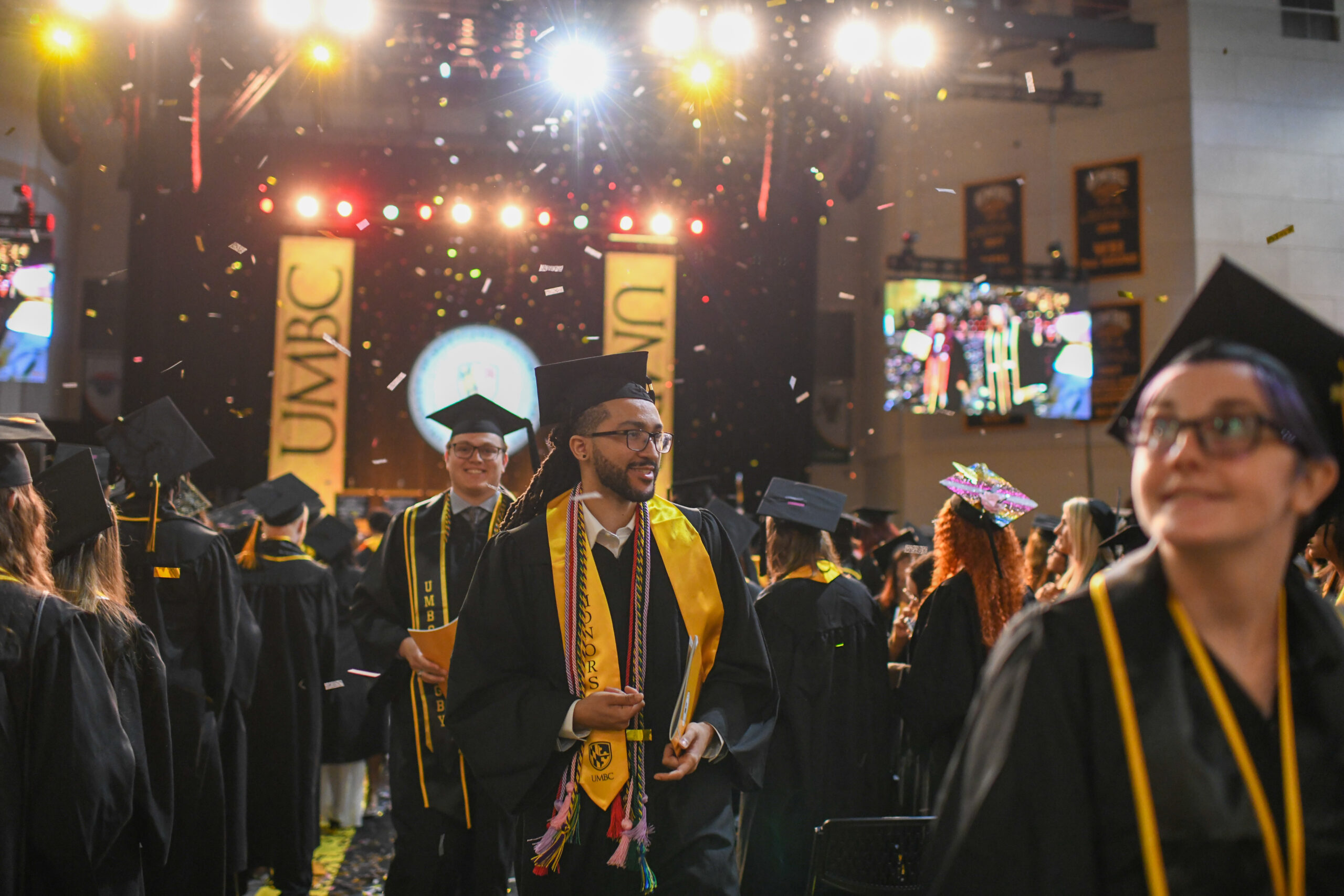
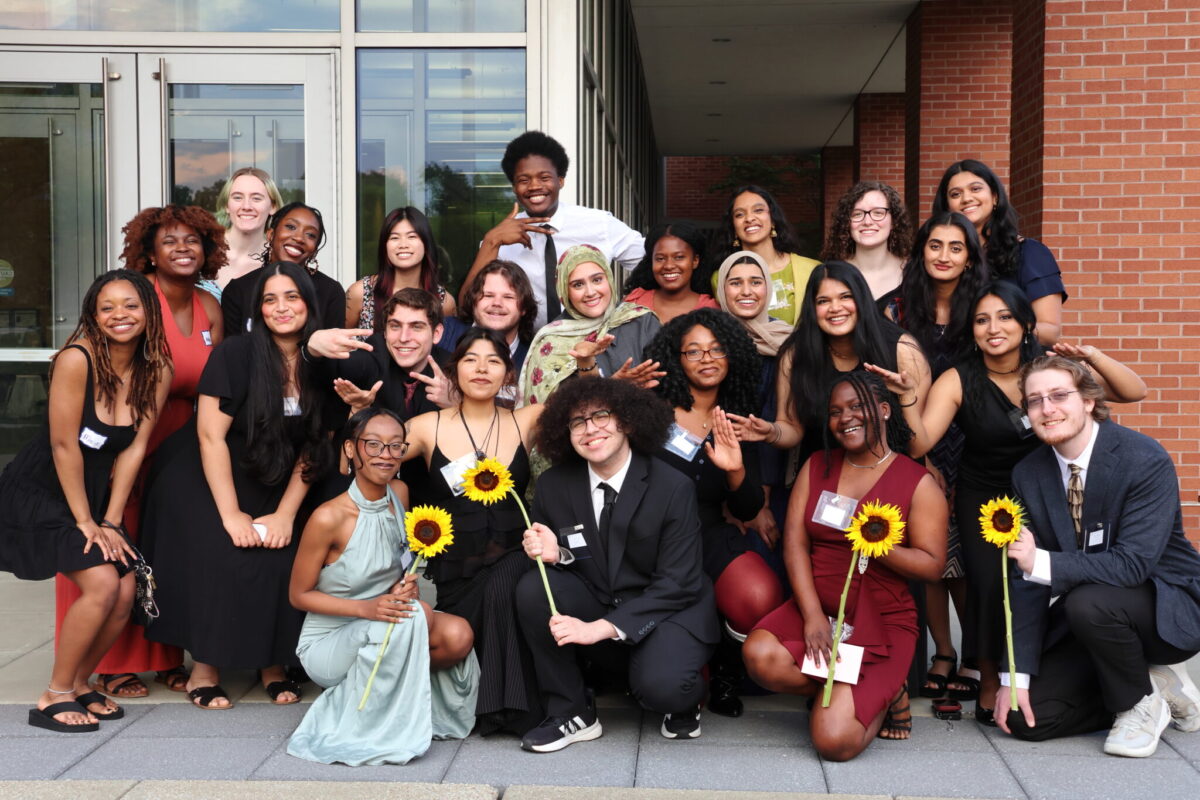
If you surveyed UMBC’s Class of 2026 and generated a word cloud, the word “community” would instantly dominate the screen. You might be tempted to dismiss it as a buzzword until you see how many graduating students highlight the communities they found and the communities they made as their defining experience of being a student at UMBC. “I can be myself here and I’m not going to be judged. Community is truly the word to describe UMBC,” says Shawn Bearam, Jr., computer science.
Who are the graduates of the Class of 2026?
It’s safe to say they contain multitudes: There’s an engineering management graduate student from India who devoted time to helping Marylanders complete their taxes; an English and political science student who volunteered as an educational and workforce advocate for Baltimore City youth; a mathematician—and Survivor hopeful—teaching game theory and disease modeling to students in Rwanda while also helping them understand the U.S. college admissions process.
What do they have in common? If you meet a Retriever from the Class of 2026, you will walk away from the encounter feeling hopeful for the future. These leaders and educators and entertainers and researchers are making room in the world for each person’s voice to be heard and heeded. We can’t wait to see where they take it from here!
“It’s the people”
If community is the key takeaway from the Class of 2026, where are students finding their niche groups? Vunnathi Ankem, psychology, saw a way to bridge multiple areas together. As a resident assistant, a researcher, and a multifaceted student leader, she has spent her four years both building community and studying its impact on the human experience. From hosting public-service retreats in Baltimore to interviewing members of the South Asian diaspora for her thesis, Ankem’s work bridges the gap between community- centered research and heartfelt advocacy.
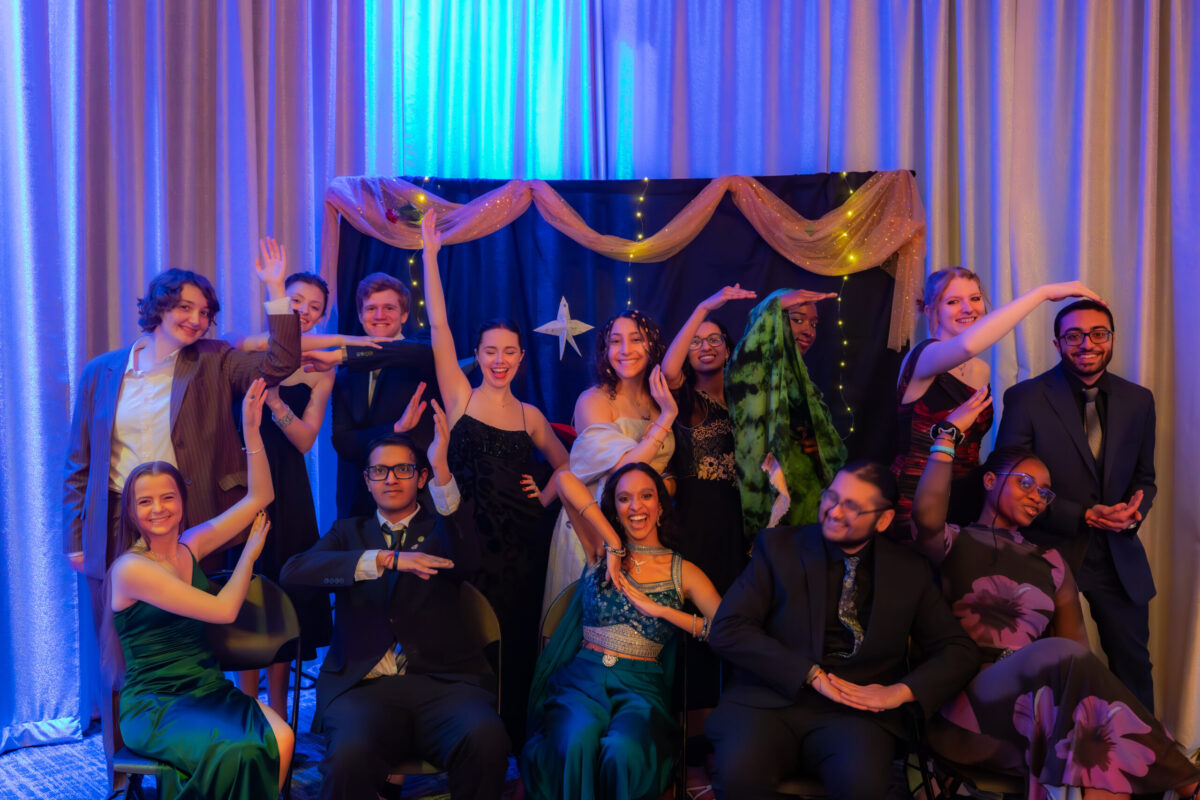
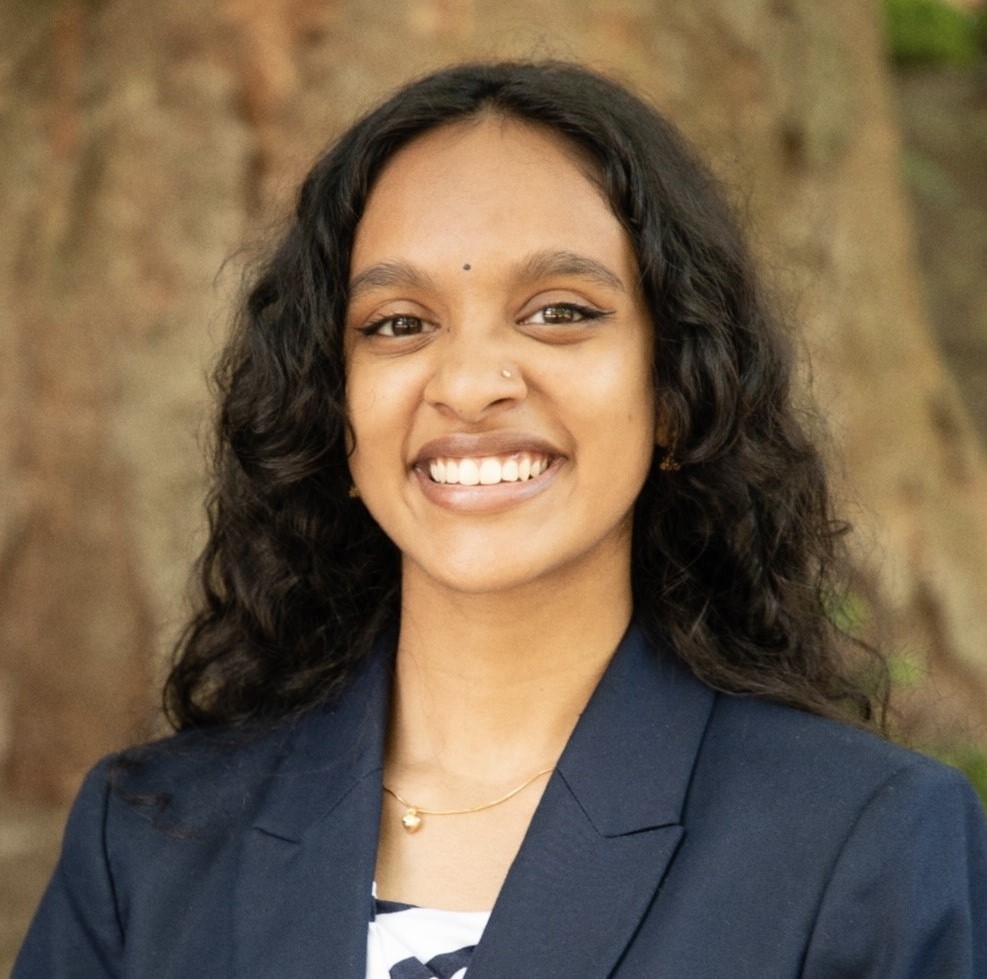
As a newly awarded Fulbright Scholar to India, Ankem leaves behind a campus made stronger by her leadership and a personal roadmap focused on healing, mentorship, and global research. “When I think about what I’m proud of, it’s not the awards, it’s the people,” says Ankem. “I remember all the people who were there when I needed support—those people meant more to me than any accomplishment. My advice would be to think about what you’ll look back on. It will most likely be community—the people who were there when you weren’t at your best.”
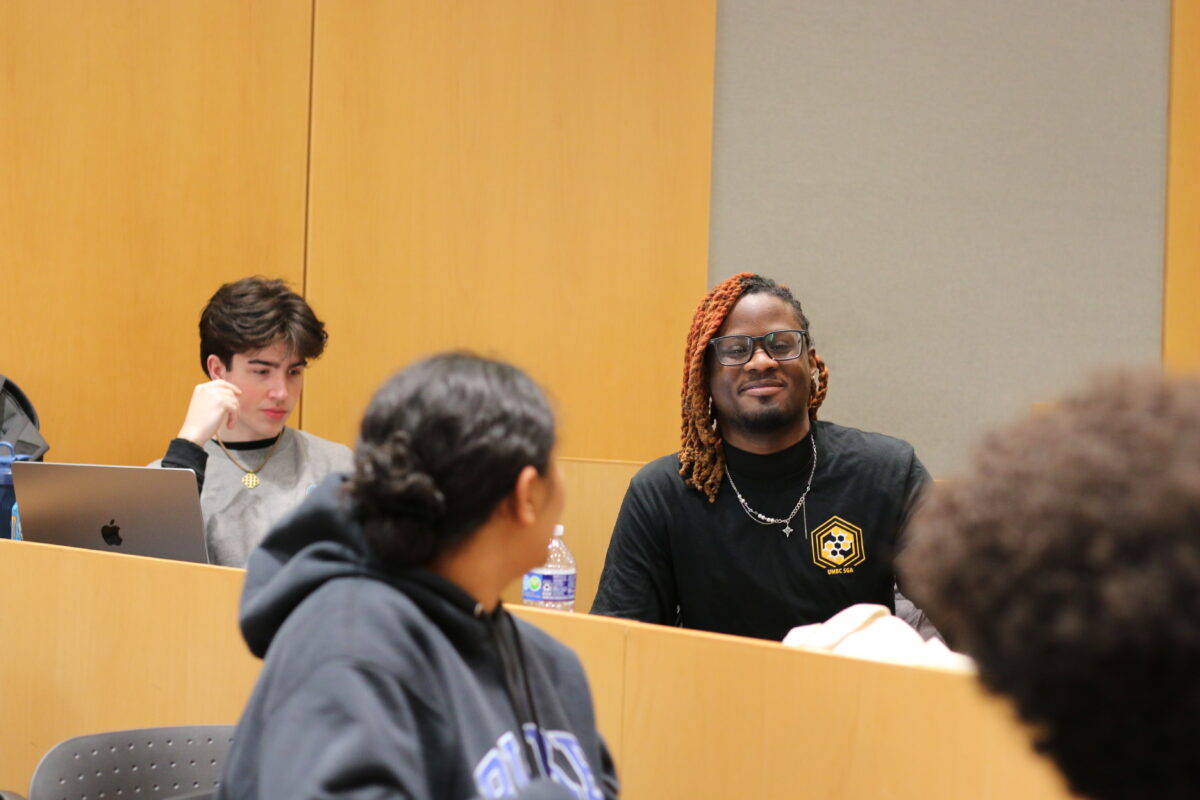
Bearam in computer science was not content to confine himself to one campus community. He puts it plainly: “I found communities where it seemed that everyone was having fun together, and I wanted to be a part of that,” he says. He had roles with the events staff in Athletics, at UMBC’s research and technology park, bwtech@UMBC, and working as a lead
office assistant for the vice president of student affairs. If that wasn’t enough, he also served as a lead resident assistant and a first-year ambassador for the Student Government Association.
“I started to see that I was able to learn so much here,” says Bearam. “I saw people who looked like me in different spaces, and I knew they would be able to understand me, so I wanted to get involved.”


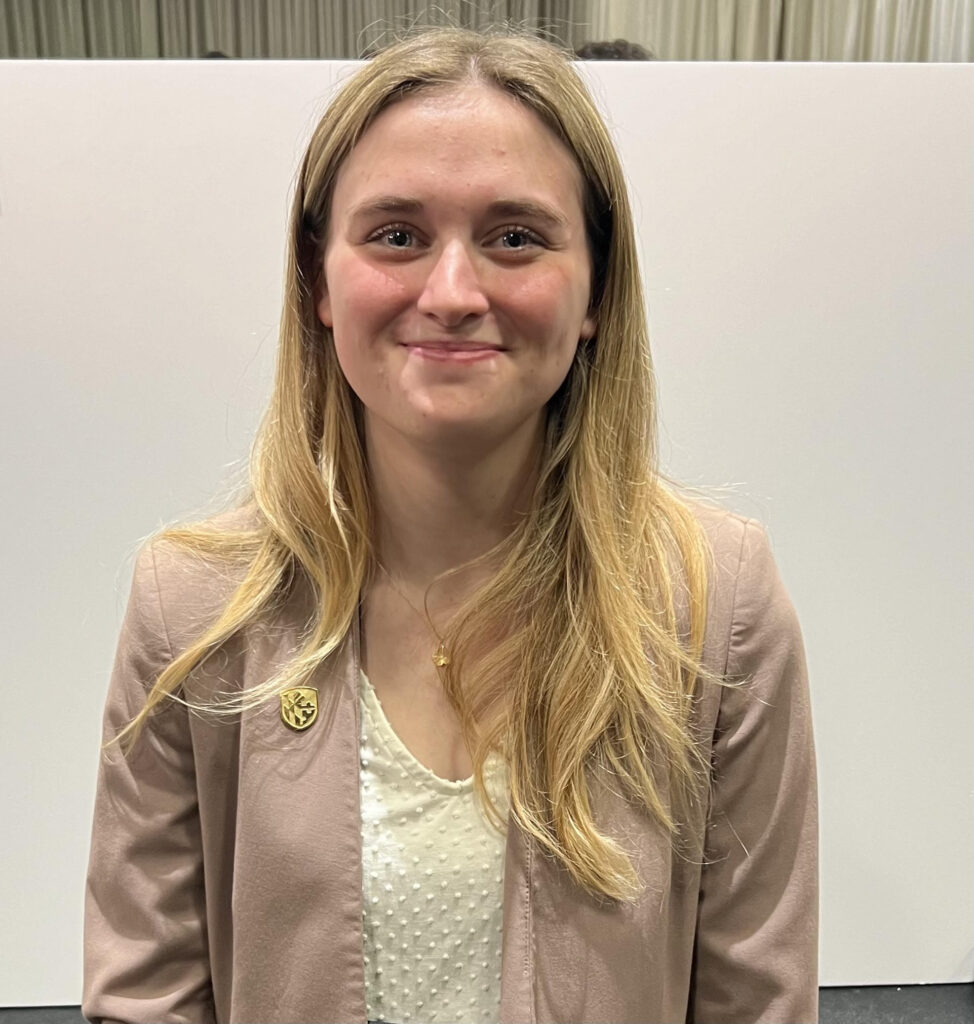
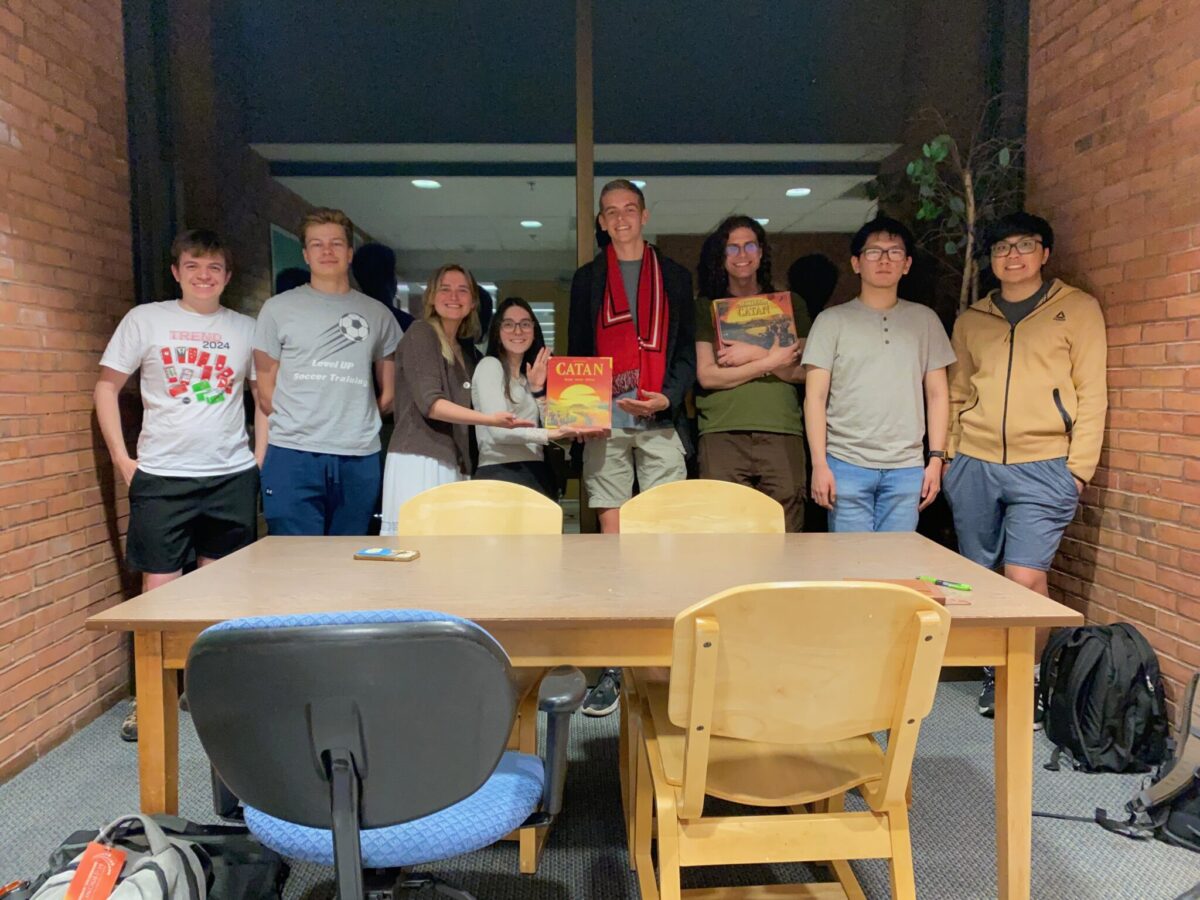
Rileigh Mansfield, mathematics, also made it her goal to build connections across a variety of UMBC communities. As a Meyerhoff Scholar, she served as a peer advisor and conducted research with multiple math professors, “but honestly,” she shares, “some of my most meaningful involvement has been more informal. Last spring, I was having a tough semester when I got invited to join a group from the math lounge to play the board game Catan on Tuesdays. It became a little community and something to look forward to every week—a much-needed step back from school and work. I actually play in competitive Catan tournaments now, and I’m even hosting an official tournament this spring through the math honors society.”
“Just see it through”
Often, the defining moment in a student’s successful academic trajectory is a challenge that they can point back to. When Chinonso Ezeobi decided to pack up his life in Nigeria and come to the United States to pursue his Ph.D. in electrical engineering at UMBC, he was thrilled at the prospect of finding a program that would bring him fulfillment. However, financial struggles and the impact of the COVID-19 pandemic quickly threatened Ezeobi’s plans for the future.
“Once I navigated through one challenge, another one came in,” he says. “But at the end of the day, it was worth it. I was able to pull through all of those challenges. I was also able to transition from being an international student to having a green card through self-petition and self-advocacy, so I’m able to graduate without the additional pressure of thinking about my visa status while looking for jobs. My faith and the community at UMBC were essential in navigating through all challenges. The motivation was that I had a community of people who wanted my success, people who I felt would advocate for me even when I’m not in the room.”
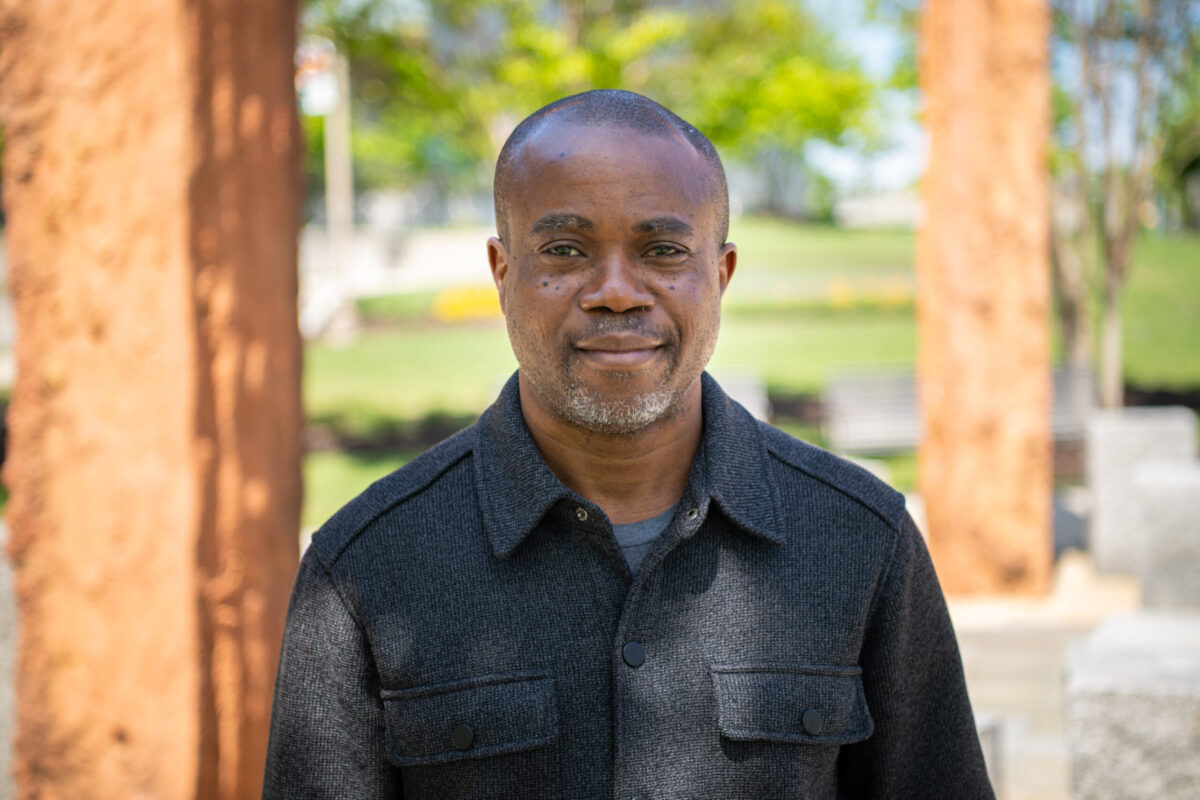
Never one to be derailed, Ezeobi found mentors across campus who made it their mission to keep him on the path to his Ph.D. Ezeobi recognized how invaluable their support was and found his own ways to give back to the place and people who gave him so much, including keeping his door open to any students who may need an advocate on their side.
At one point, Maia Turman Cooke, English and political science, was thinking about backing out of her scholar’s program opportunity. In the end, though, she was surprised by how the McNair Scholars Program changed her life. “At the beginning of the application process, it seemed like a lot, and I wanted to quit—I didn’t want to join. The director of the McNair Scholars Program, Dr. Michael Hunt [’06, Ph.D. ’25], called me and said, ‘Just see it through, see it out. If you don’t like it when you get more involved, then you can leave.’”


Turman Cooke processed the expectations of the programs—like pursuing graduate school—while recognizing she had so much to learn about how research worked. “I was so overwhelmed because I thought I had to solve every world problem. But my peers convinced me to stay. Soon, that work became a normal part of my schedule. I had no idea what research was, and now it’s something I’m super passionate about,” says Turman Cooke, who starts her Ph.D. in English at the University of Maryland, College Park this fall.
“A person who needs a path”
Sometimes the way forward is clearly marked, and other times Retrievers forge their own way. Kayla Nemirovsky, mathematics and financial economics, had a love for international travel and a scholarship with the Sondheim Public Affairs Scholars Program but wasn’t sure how those interests combined with her majors.
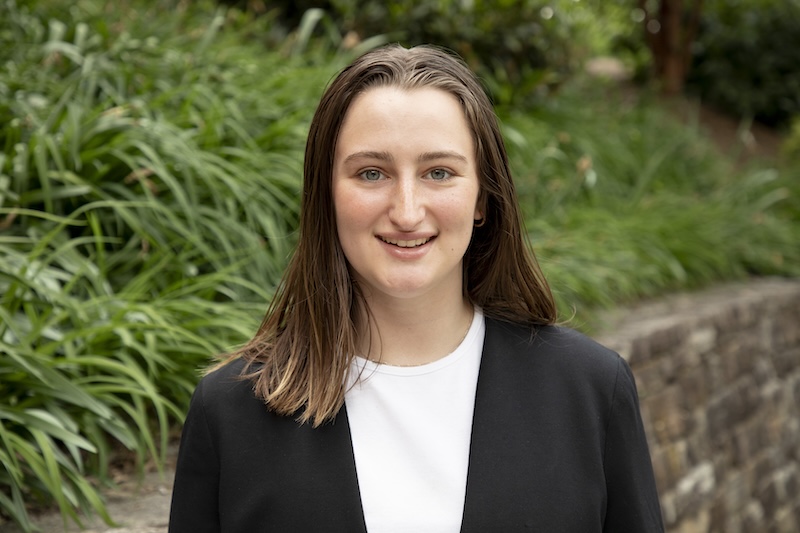


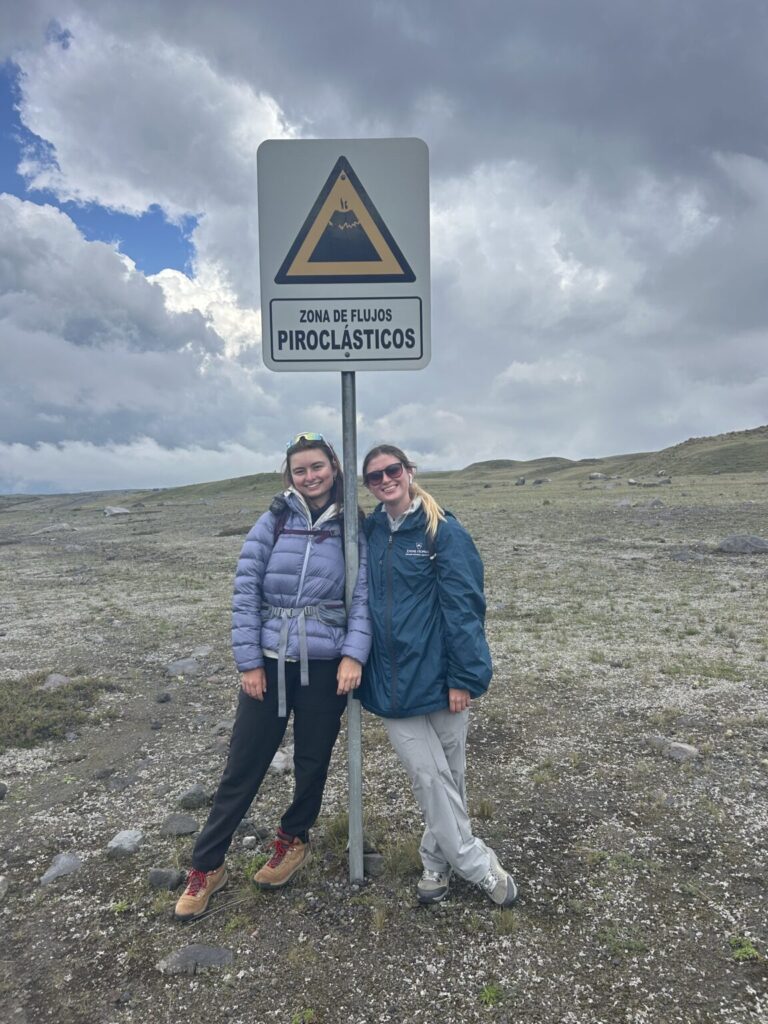
Nemirovsky, who is staying at UMBC to pursue her master’s degree in teaching, charted her own route at UMBC as an Education Abroad ambassador, sharing widely with her peers the importance (and accessibility) of studying abroad for any major. Her Sondheim mentors connected her with an internship at the Maryland State Department of Education, and this experience helped her solidify her interest in math education curriculum and policy.
“I’m a person who needs a path,” says Nemirovsky, who has traveled to more than 30 countries and counting. “I realized once I got to college that there’s kind of no more path—I have to make my own. At was really scary to me, so having mentors who can help me make this path…give
me advice and offer suggestions, that was extremely helpful. I really believe you have to choose the people you look up to and kind of aspire to be them.”
Over his two years of graduate study at UMBC, Yash Bhatt, M.S., engineering management, saw his time at UMBC as much bigger than “just earning a degree.” He charted a path to contribute meaningfully to both the university and the greater Baltimore community. As a graduate student, Bhatt arrived at UMBC with an undergraduate degree and professional experience, but he says he was not yet the confident leader he is today.
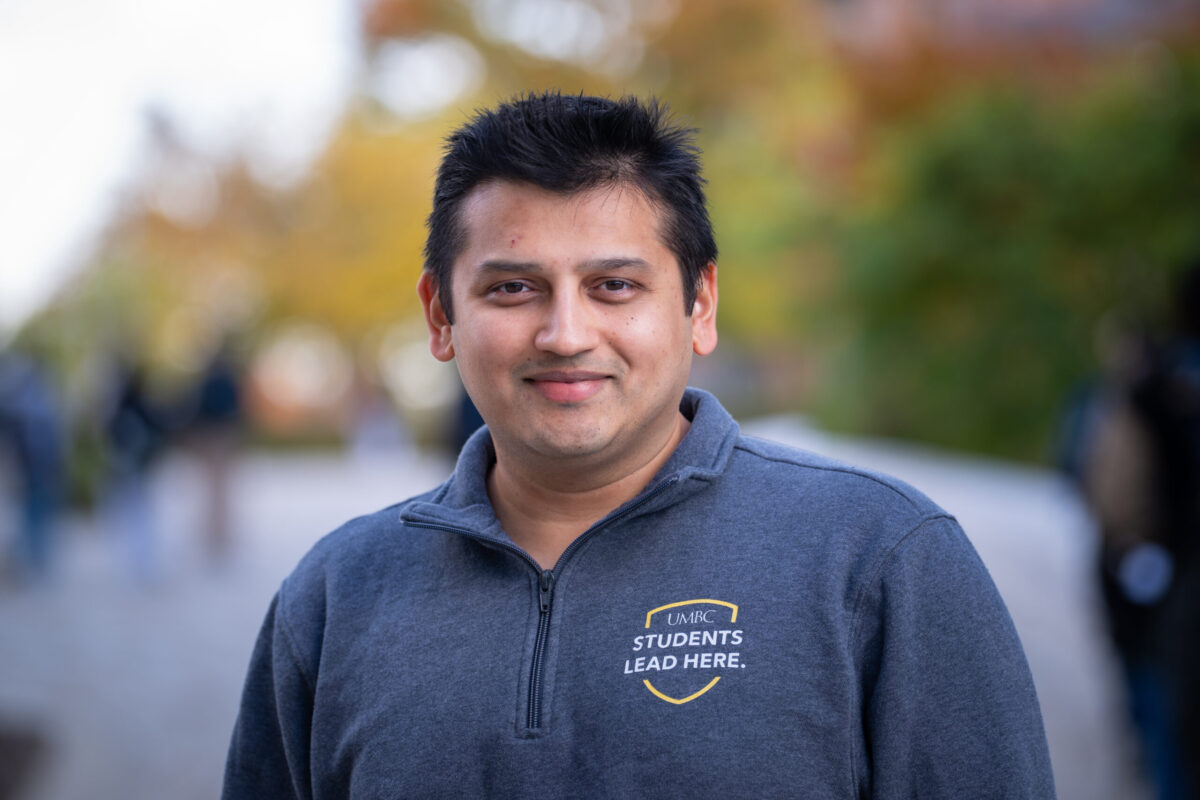

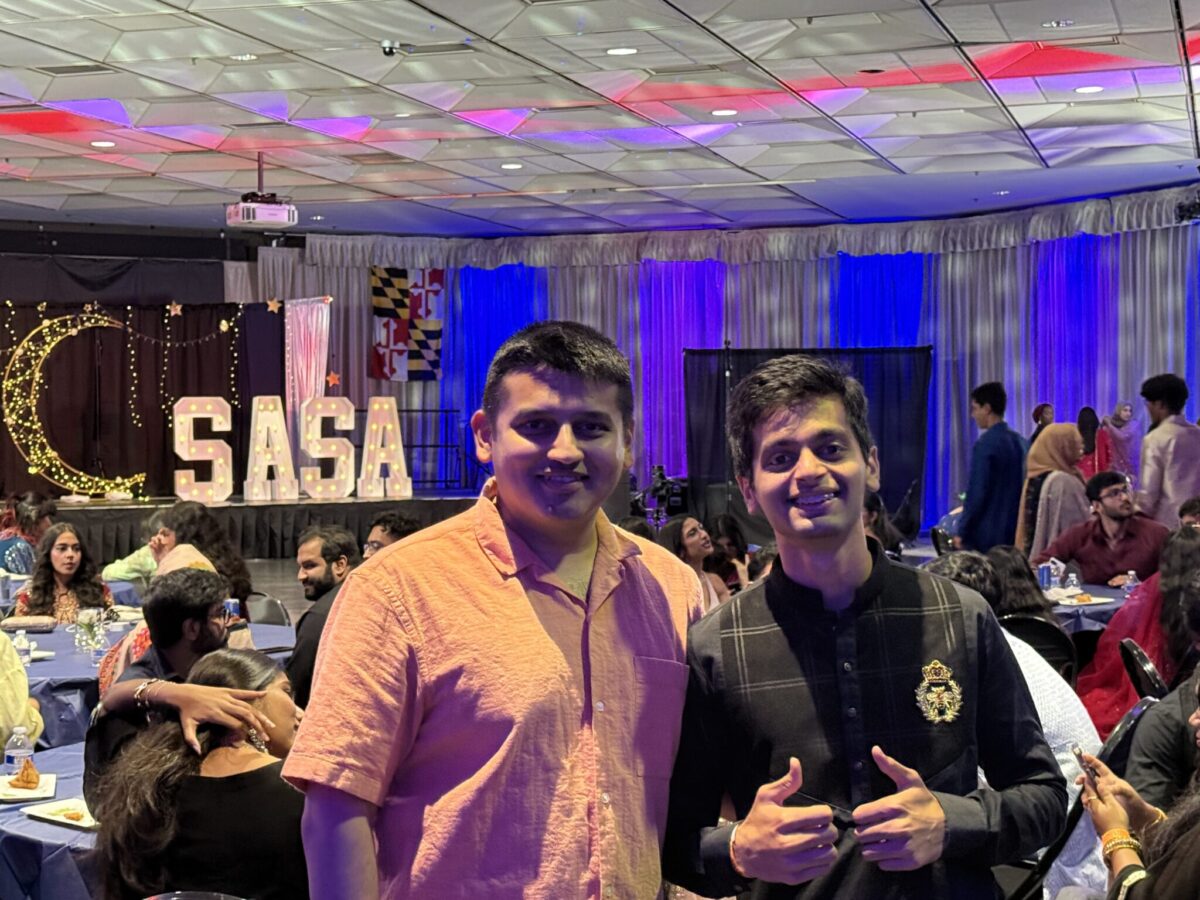
Outside of the classroom, Bhatt dedicated himself to enhancing student life for his classmates. As a member of the Indian Graduate Student Association and the Black and Gold Student Advisory Board, he advocated for international students and contributed to university decision-making. Bhatt also joined two Alternative Spring Break experiences. Starting as a participant and returning as a program leader, Bhatt immersed himself in what he considers a genuine “American student experience,” building local friendships and making connections within local government and community organizations, in addition to the service the participants provided to the community.
“The best part of my UMBC experience has been the people and the sense of community,” says Bhatt. “UMBC has this unique balance—it’s diverse and full of opportunity like a larger university yet still close-knit enough that you truly feel seen and supported.”