





An airplane does not simply fly in one continuous arc; pilots or software flip between modes like climb, cruise, or land. A humanoid robot’s leg swings continuously through the air as it walks, but when its foot strikes the ground, the forces acting on it change abruptly. A swarm of drones can glide smoothly into the shape of a letter, then switch strategies to form the next one.
These are all what are called “hybrid systems”—where smooth, continuous motion mixes with discrete changes or decisions. They are more realistic than purely continuous or discrete systems but also harder to analyze. However, it’s important to develop tools to do so accurately, because “in my view, most systems are really hybrid,” says Matthew Kvalheim, an assistant professor of mathematics at UMBC.

Even classical continuous systems (like a football flying through the air) and discrete systems (like computer code made up of only zeros and ones) can be tricky to analyze, so mathematicians have developed robust tools to simplify how they are modeled. Hybrid systems, however, lack these tools. That’s a challenge Kvalheim aims to address with support from a highly competitive award from the Air Force Office of Scientific Research (AFOSR) Young Investigator Program (YIP).
Kvalheim will deploy the $448,000 grant, divided across three years, to develop new mathematical tools that will make complex, hybrid systems—such as robots, drones, or manned aircraft—easier to understand and control.
Do the space warp
“I want to figure out ways to simplify hybrid systems, because even continuous and discrete systems are so complicated, you need ways of simplifying them to understand what they’re doing,” he says. One approach is called “dimensionality reduction.” It involves discovering when a system that looks like it has a large number of parameters is actually behaving as if it has far fewer. For example, a humanoid robot may be able to move its arms in any direction, but if it is walking straight, the arms swing in a predictable pattern that reduces the total variability in the system.
Another approach intentionally warps the mathematical space in which the system exists. Imagine a bunch of dots on a sheet stretched out flat—that’s the original mathematical space. Now pull the corners to twist the sheet; the dots might line up in a neater way across this new space. When that lineup happens, complex dynamics become much simpler (ideally representable by linear equations, which are much easier to solve), and therefore much easier to predict and control.
![A humanoid robot walks through the UMBC campus while students observe and take photos [mathematical tools]](https://umbc.edu/wp-content/uploads/2026/09/strange-dance-partners-dance-robotics-0058-1200x800.jpg)
Kvalheim is especially interested in proving when these simplifying transformations are even possible. “I’m interested in answering the question of when in principle can you succeed in simplifying a system and when can’t you,” he says. Knowing the answer in advance gives researchers “a license to look” for a solution, as Kvalheim says—or the confidence to stop looking when the math says success is impossible, saving finite resources for other projects. As more teams start using machine learning to hunt for this kind of transformation automatically, better methods like the kind Kvalheim proposes to develop will streamline the process.
Practical mathematical tools
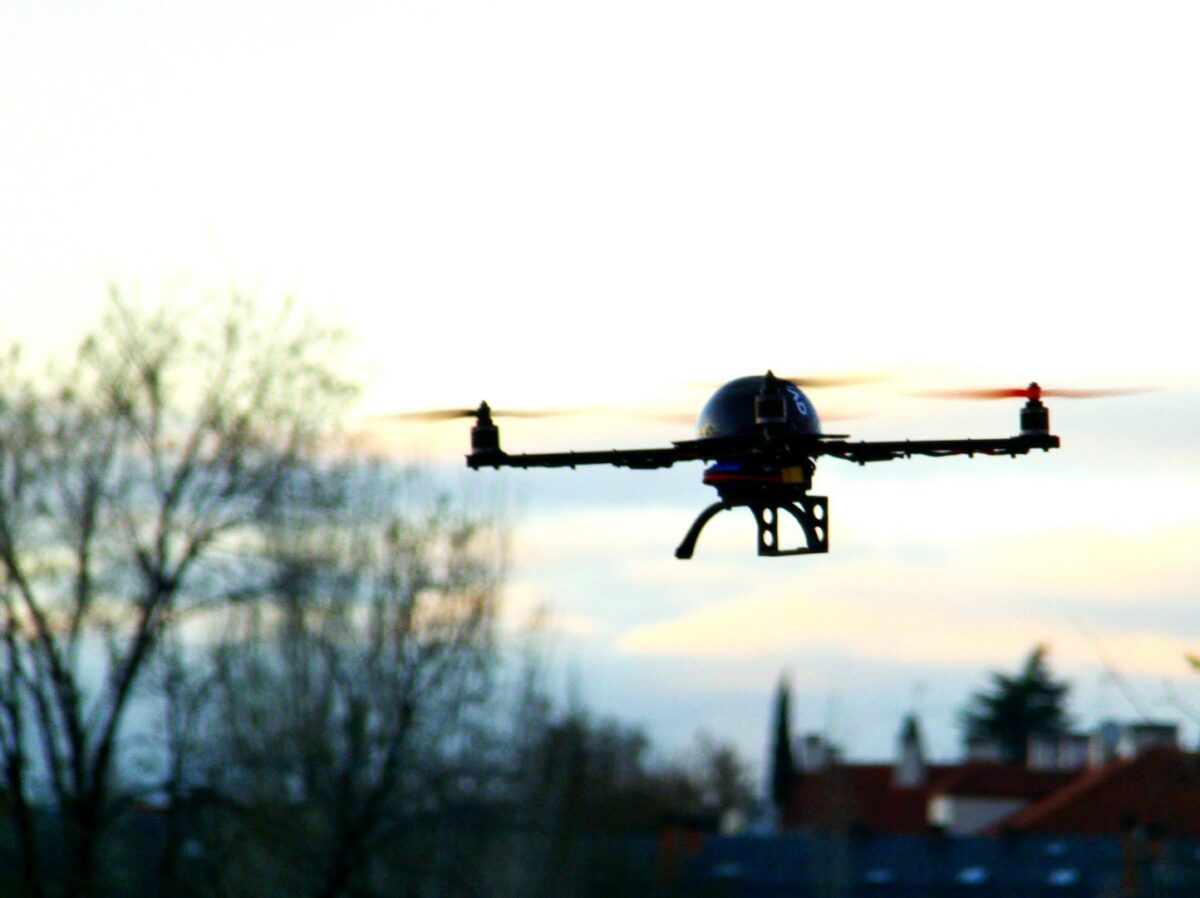
It may sound abstract, but the ultimate outcome of Kvalheim’s work will be practical. Treating a hybrid system as if it were purely continuous introduces errors that often render the results mostly useless, and existing tools designed for hybrid systems are limited. Better hybrid modeling methods should yield more accurate results and allow researchers to ask questions they couldn’t hope to answer with existing techniques. That research could help Air Force engineers keep a spacecraft stable, coordinate a drone swarm, or help roboticists design more reliable devices—really, it could help researchers understand any system that mixes continuous physics with discrete decisions, which encompasses almost any physical system that affects human life.
The new award builds on Kvalheim’s earlier AFOSR grant on continuous systems and questions of stability and safety. That earlier work asked when it is fundamentally possible or impossible to keep a system behaving the way designers want. The new project broadens the toolkit so those questions can be asked of the hybrid systems that dominate real applications.
The new funding will also support applied mathematics Ph.D. student Josh McCarter. McCarter is already collaborating with Kvalheim; the award will allow him to focus more of his time on the project.
Kvalheim’s reaction to the award is a mix of gratitude and responsibility. “I feel like gratitude is the only appropriate response. I’m really grateful that they liked my ideas enough that they thought it was worthy to fund,” he says. “I also feel a sense of responsibility now to do my best to deliver on what I promised to do.”
Learn more about applied mathematics programs at UMBC.


