All posts by: UMBC News Staff


Summer fellowships awarded to UMBC faculty across disciplines to pursue impactful research

The Office of the Vice President for Research (OVPR) has awarded Summer Faculty Fellowships (SFFs) to 11 faculty across disciplines. The SFF program supports non-tenured, tenure-track UMBC faculty pursuing research and scholarly projects during the summer. Supplemental funding for the program was provided by the College of Arts, Humanities, and Social Sciences (CAHSS) for an additional 11 awards. OVPR funded seven awards for CAHSS, two for the College of Natural and Mathematical Sciences (CNMS), and two for the College of Engineering and Information Technology (COEIT).

“UMBC is excited about the impactful scholarship which our Summer Faculty Fellowship recipients will be pursuing this summer,” says Vice President for Research Karl Steiner. “I am confident that many of these projects will lead to externally funded, long-term endeavors which will contribute significantly to the recipients’ respective disciplines.”

A brief description of each 2016 SFF project is found below:

Jasmine Abrams, assistant professor of psychology, will research how stress influences cardiovascular disease (CVD) risk among black women, a group that is disproportionately affected by the disease, to inform future research and prevention strategies.

Ian Anson, assistant professor of political science, was awarded SFF funding to investigate how media narratives shape citizens’ attributions of responsibility for national economic conditions.

William Blake, assistant professor of political science, will examine voting behavior on ballot measures and state constitutions to broaden theories of economic voting behavior.

Colleen Burge, assistant professor of marine biotechnology, was awarded funding through the SFF program to measure oyster immune responses to an emerging disease to be used a biomarkers for oyster health.

Eric Campbell, assistant professor of philosophy, received support to publish a journal article that explains subjectivism, the idea that a person’s reasons for action are justified by their desires and attitudes, is ultimately a question about how to conduct ethical discourse and explores why the quasi-realist strategy to save moral discourse is self-undermining.

Chris Curran, assistant professor of public policy, received SFF funding to study the influence of states, school boards, principals, teachers, and other stakeholders on school discipline policies while assessing variations across school populations. The results will inform policymakers as they work to improve equality in disciplinary outcomes for students.

Thania Muñoz Díaz, assistant professor of modern languages, linguistics, and intercultural communication, was awarded funding to support research on the representation of Mexican migration from the perspective of women, translation, and cultural memory.

Matthew Fagan, assistant professor of geography and environmental systems, received SFF funding to use aerial and satellite imagery from NASA’s G-LiHT imager to improve the ability to predict how forest structure and composition will respond to landscape fragmentation.

Bronwyn Hunter, assistant professor of psychology, received support to examine discrimination and rejection experiences among formerly incarcerated adults.    

Renée Lambert-Brétière, assistant professor of modern languages, linguistics, and intercultural communication, was awarded funding through the SFF program to write a book that aims to empower indigenous people of Quebec to develop, manage, and maintain their own language documentation projects.

Jiyoon Lee, assistant professor of education, received SFF funding to investigate U.S. public school teachers’ knowledge, understanding, and competencies related to assessment in K-12 classrooms.

Tania Lizarazo, assistant professor of modern languages, linguistics, and intercultural communication, was awarded funding to reimagine and develop a digital storytelling project she collaborated on with activist women to capture visual narratives about survival in Columbia.

Daniel Lobo, assistant professor of biological sciences, will use SFF funding to address the problem of discovering bacterial integrated regulatory-metabolic networks involved in the degradation of carbon sources.

Susan McCully, assistant professor of theatre, received support to write a companion piece to her critically acclaimed production of Kerrmoor to be performed as a stand-alone tragedy, or as the second act of the longer play.

Elizabeth Patton, assistant professor of media and communication studies, was awarded SFF funding to research the politics of media representations of family, privacy, race, gender and class, the politics of media practices in relation to work and play, and the politics of space.

Bryce Peake, assistant professor of media and communication studies, received funding to complete a book project that examines the ways that media sciences and listening practices are historically implicated in British colonial forms of masculinity in Gibraltar.

Hamed Pirsiavash, assistant professor of computer science and electrical engineering, received an SFF to build a machine learning tool that can map sensory data from modalities such as natural images, clip art,  and spatial text into a common semantic representation.

Sarah Sharp, assistant professor of visual arts, was awarded SFF funding to develop the “Whole Earth Codex,”  a multi-component interactive sculptural artwork that complicates understanding of utopian communities.

Nathaniel Sinnot, assistant professor of theatre, received support to research methods to enhance the theatrical design process through computer programming and innovation.

Michelle Stites, assistant professor of education, was awarded funding through the SFF program to study mathematical interventions for students with learning disabilities.

Christine Yee, assistant professor of economics, received SFF funding to assess the impact of school accountability on the mental health of youth.

Meilin Yu, assistant professor of mechanical engineering, received support to understand the impact of turbulent flow physics on mechanisms of drag reduction in efficient fish locomotion.

For more information about the Summer Faculty Fellowship program, visit the SFF website.

Image: Bryce Peake presents his research at a Dresher Center Faculty Micro Talks event. Photo by Marlayna Demond ’11 for UMBC. 
UMBC Mock Trial advances to Opening Round Championships

Note: This story has been updated from the original February 3 version.

UMBC Mock Trial has earned its second consecutive bid to the American Mock Trial Association’s Opening Round Championships (ORCs). The major accomplishment comes after the team earned the second overall bid out of 24 teams at the Baltimore Regional Tournament held February 27-28 at the University of Maryland.

In addition to the team’s overall success, “A” Team attorney Kayla Smith and witness Zachary Garmoe earned All-Region Awards, and “B” Team witness Lily Felber also earned an All-Region Award for her portrayal of the defendant. The “B” Team also won or tied on multiple ballots and had several close rounds against strong national competition.

“What the UMBC students accomplished this past weekend is nothing short of extraordinary,” shares UMBC Mock Trial Coach Ben Garmoe ’13, political science. “The students worked as a team on a level I had not seen this year; simply put, they found another gear. I am beyond excited for the future of the team and program.”

The ORCs will be held in Washington, D.C. on March 19-20 at the E. Barrett Prettyman Federal District Courthouse. UMBC Mock Trial will join teams from around the region to compete for a bid to the National Championship Round.

Earlier this year, UMBC Mock Trial’s “A” team finished in 1st place at the inaugural Charm City Classic Mock Trial Invitational, held January 30-31 at Stevenson University. The tournament included teams from UMBC, Stevenson, Johns Hopkins University, and the University of Maryland.

UMBC Mock Trial 2016

“The Charm City Classic is exciting not just for the results – this was the first time that UMBC hosted a mock trial tournament. We co-hosted the Classic with Stevenson University, and the plan is to make this a yearly event. Hosting an invitational will continue to grow UMBC Mock Trial on a national level as we seek to improve and achieve,” shared UMBC Mock Trial President Cheyenne Smith ’16, biology and psychology after the tournament.

The UMBC Mock Trial “B” Team also competed in the tournament and won the Spirit of the American Mock Trial Association (AMTA) award, an honor given to the team that best exemplifies the spirit of collegiality and professionalism at a tournament.

Additional honors for the “B” team included an Outstanding Witness award given to witness Lily Felber, in her first year of mock trial, for her portrayal of the defendant. “A” team members Kayla Smith and Zachary Garmoe also won Outstanding Witness awards.

For more information on the Charm City Classic and to view additional photos, read “Stevenson, UMBC host inaugural Charm City Classic Invitational Tournament” on Stevenson University’s news site.

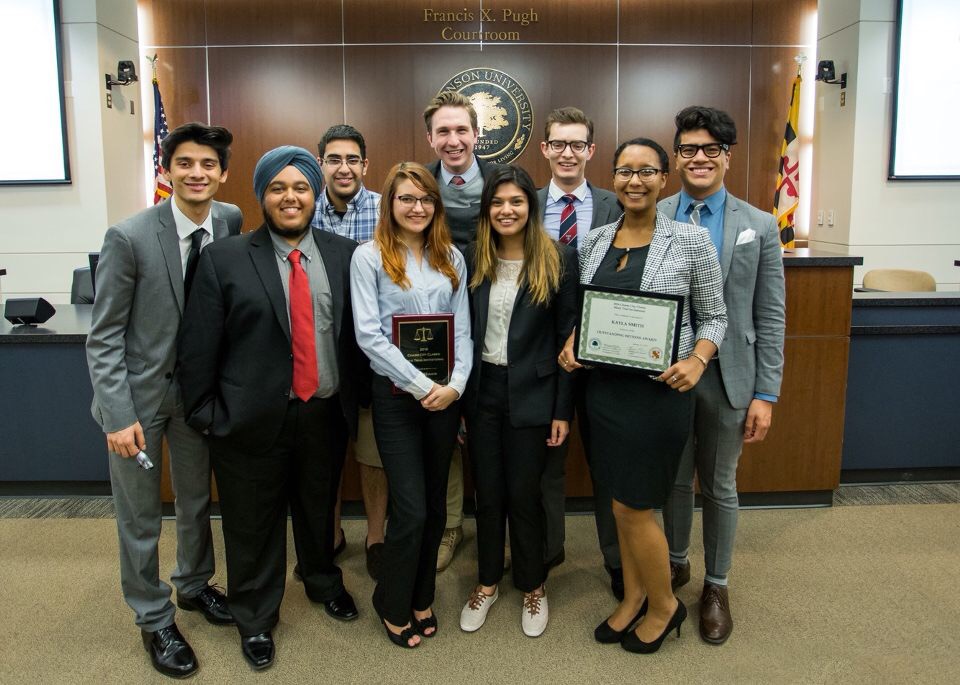
Header Image: UMBC Mock Trial “A” team at the Baltimore Regional Tournament. Photo courtesy Ben Garmoe. 

Public policy and political science faculty provide analysis on U.S. Senate race and Baltimore mayoral election

With Maryland’s primary just two months away, UMBC faculty are being turned to as experts and analysts for elections across the state.

Donald Norris

School of Public Policy Director Donald Norris spoke with WYPR about the Baltimore mayoral election and candidate positioning in the polls. From his perspective, he stated that State Senator Catherine Pugh, although trailing in the polls, is in good position due to her campaign’s finances.

Norris also appeared on WJZ-TV to discuss Maryland’s U.S. Senate race to replace retiring Senator Barbara Mikulski. The last poll showed Congresswoman Donna Edwards just two points ahead of Congressman Chris Van Hollen, but Norris said there’s still plenty of campaigning left.

“We’ve had two back to back polls within a month or so of each other which show them essentially tied,” said Norris, adding, “the two candidates have a lot of opportunity between now and late April which is two months away to convince people to vote for them.”

Ian Anson

Political Science Assistant Professor Ian Anson told the Capital Gazette that recent political mischief among campaign websites that redirects visitors to alternate candidate websites has questionable impact.

“Most citizens don’t have the time, resources or interest in politics to visit candidate websites at all; the ones who do are likely members of a highly sophisticated subset of the American population — especially during a Senate primary race,” Anson said, but, he added, “this doesn’t mean that such a strategy can’t have an effect on citizens or campaigns. If a URL redirect catches the attention of journalists or content creators on social media platforms, widely shared critiques of the strategy could damage a candidate’s carefully constructed image,” he said.

Read the complete news coverage below:

Mayor’s race: Can anyone catch Dixon? (WYPR)
Poll: Md. Senate primary tight for Edwards, Van Hollen (WJZ-TV)
Maryland Senate race sees web mischief (Capital Gazette)

Image: Public Policy building. Photo by Marlayna Demond ’11 for UMBC. 
John Rennie Short argues cities are key to U.S. economic growth and social justice

The economy has been a prominent issue during the presidential campaign with a range of ideas for how to spur growth and development across the country. In a new article published in The Conversation, School of Public Policy Professor John Rennie Short examines the value of growing urban economies as a key element in addressing this issue.

In his article “Want the economy to grow? It’s time to look at cities and efficiency,” Short writes that enhancing American metropolitan areas with better infrastructure, land use, and smarter technology are important steps to increase productivity.

“Metro areas in the U.S. now house 83 percent of the population and are the main site for innovation and job growth. The 100 largest metro areas hold 69 percent of all jobs and are responsible for three-quarters of the nation’s GDP,” explains Short. “If we are serious about growing our economy, then getting our cities to work better is just as important as tax reform or wage policy. The problem is that cities tend to be discussed in terms of redistributional issues, such as welfare or race relations, but rarely as a platform for addressing the ‘economy.’”

Considering making cities larger and more dense as a way to improve economic performance, Short writes about promoting increased public transportation use as an important tool in boosting the economy.

“There are significant cost savings in increasing the ridership of mass transit systems compared with constructing expensive new systems. Even small-scale policy changes have rolling consequences. Improving traffic light sequencing, for example, reduces travel times, emissions, fuel consumption and road accidents.”

In his column, Short also examines social issues and data as other contributing factors in improving efficiency. Read the full article on The Conversation website.

Image: John Rennie Short. Photo by Marlayna Demond ’11 for UMBC. 
Humanities students launch collaborative digital exhibition with American Antiquarian Society

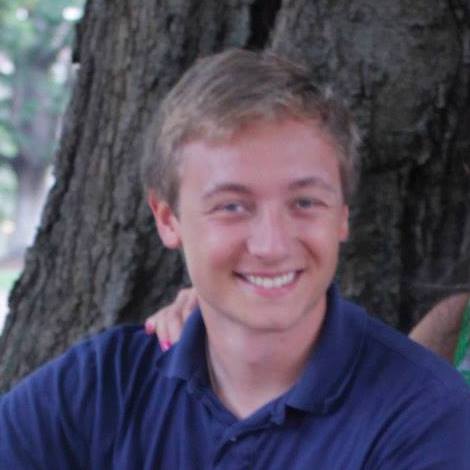
After an intensive semester-long research project, students in Lindsay DiCuirci’s seminar on women and periodicals created a digital exhibition about what life was like for women working in American textile mills during the nineteenth century. The exhibition lives permanently on the American Antiquarian Society (AAS) website and serves as invaluable resource for scholars and members of the public.

DiCuirci, an assistant professor of English, led a 15-week research process last semester in which students pored over digital archives, periodical publications, databases, and other relevant material exclusively from nineteenth-century magazines and newspapers. They uncovered society’s views on women working in textile mills during this time period and the working environments they encountered to create the digital exhibition “Mill Girls in Nineteenth-Century Print.”

Students and AAS captured this in a powerful description on the exhibition homepage: “These ‘mill girls,’as they came to be known, produced valuable cloth in massive quantity, and what they received in return was something of a double-edged sword. Through the independence offered by self-sustaining employment, they came into contact with commonly oppressive working environments, both dangerous and unfair. Yet, despite the power of the industrial machine and their diminutive name, the mill girls managed to form a coalition and community of their own in response.”

Mill Girls exhibition

Throughout the research process, “students studied core themes such as working conditions, culture, organized resistance, and labor activism and reform,” explains DiCuirci. “They began by searching hundreds of documents and by the end of the project ended up with around 50 items.”

Working closely during the semester with Molly Hardy, AAS digital humanities curator, students quickly discovered that the popularity of mill girls was largely due to their representation in print. By researching articles in labor magazines such as Voice of Industry to literary publications such as Harper’s, students gained a better understanding of the culture and working conditions in the mills and steps women took to better their lives during the time period.

“The exhibition sheds light on women’s emerging independence during this time, as well as the shift from rural to urban centers that accompanied this first wave of industrialism. From this understanding, the exhibition is not simply about an isolated class of people, but how the mill girls simultaneously witnessed and instigated a notable turning point in American history,” says Elizabeth Chen ’16, English, a student in the class.

“A big part of the importance of the research lies in women’s working conditions today,” shares Brittney Kramer ’16, English. “We might live in an entirely different time period, but women still face similar problems in the workforce.”

Through her research for the exhibition, Kramer found that women were paid less than men and were faced with difficult working conditions in the mills which still exist in areas around the world today. However, she also discovered the fascinating stories that were written by mill girls to illustrate how they viewed the nineteenth century labor movement among young women.

“We can look at the writing that comes from the mill girls themselves and see how there was also liberation in being able to work,” says Kramer. “The phenomenon of so many mill girls publishing pieces of writing, fiction, and poetry is amazing…as a community they really came together and created an entire body of work.”

DiCuirci says the exhibition can serve as an important resource for K-12 teachers, organizations studying labor issues, and scholars.

“This is an example of a project where digital humanities meets pedagogy, and this project can serve as a model for other digital humanities and literature classes.”

To view the complete digital exhibition, visit the American Antiquarian Society’s website.

Images: Photos from “Mill Girls in Nineteenth-Century Print” exhibition, American Antiquarian Society website. Header image: From Ballou’s Pictorial Drawing-Room Companion (1855). Courtesy of the American Antiquarian Society.  

Fusion: Ekiben takes an interdisciplinary approach to the restaurant biz

[wpvideo aHnk3EIN]

On a typical Saturday, in the wee hours of the morning — we’re talking two or three a.m. — Nikhil Yesupriya ’13, biological sciences, Steve Chu ’12, economics, and Ephrem Abebe ’13, information systems, are in the kitchen of Chu’s father’s restaurant in Pikesville, chopping, mixing, steaming. By 7:30, they’ve set up shop at the Fells Point Farmers Market, serving up their take on Asian fusion cuisine at the Ekiben food stand.

Ekiben got its start slinging steamed buns and rice bowls at the farmers’ market, and now, roughly a year and a half later, they’re opening a brick-and-mortar location at 1622 Eastern Avenue in Fells. The name refers to the elegant boxed lunches served on Japanese bullet trains, and on the morning we visited, the stand was serving up chicken meatballs seasoned with soy and five-spice powder, pork vindaloo with local veggie salsa, and tofu curry dotted with green peas.

They’ve made a few other notable appearances in the region since they started, in places like DC’s Emporiyum festival, TEDx Baltimore, and UMBC’s own Homecoming carnival. Their story — three college guys getting together on Friday nights to cook for Habitat for Humanity bake sales before combining their unique talents and interests to start a successful business — is a uniquely UMBC tale of entrepreneurship.

Ekiben’s cuisine was inspired, in part, by the many cultural events they were able to attend as undergrads. “We’d go to all these cultural shows, any dinner that SASA [South Asian Student Association] or FASA [Filipino American Student Association] or the Asian Student Association was having, and we just loved eating their food,” says Yesupriya.

“It sounds like kind of a college thing to do…you want free food, you go to wherever there is free food. But we really enjoyed going to these places and experiencing the food and making friends with these people and cooking with them,” he adds.

Combining their experiences cooking for themselves, for their friends, and in real restaurants, the three incorporated a business and opened the stand in August 2014. Chu, in addition to being the son of a restaurateur, used to manage a Chipotle, and worked for a time for a chef in New York. He’s now Ekiben’s executive chef. Abebe is the logistics guy, making sure the booth is set up and running properly at the farmers’ market and other venues. Yesupriya is responsible for marketing the stand and engaging with customers.

With two out of the three pursuing graduate study at UMBC, and with their permanent location set to open soon, the guys have been running the stand with the help of a small cadre of interns, including Bona Lee ’09, psychology and sociology, one of their old friends from Habitat for Humanity. Lee works full time at a payroll office and helps out at Ekiben in her spare time, drawing the day’s specials on the chalkboard and helping to prep, plate, and serve the food. “[It’s a] labor of love,” she says.

Love for the food, love for the customers, and love for the city of Baltimore.

—Julia Celtnieks ’13
Video by Elena DeBold ’10

Connect with Ekiben on Facebook or Instagram

You Help Our Students Change the World: Celebrating The Hilltop Society

Guests enjoyed dances choreographed and performed by UMBC students.

There is no question that one of the secrets to UMBC’s incredible success is our dedicated donors. This past fall, we took an evening to say a special thank you to a very important group of our supporters, the Hilltop Society. These generous leadership donors support the university annually with gifts of $1,000 or more, providing powerful support for research, teaching, student activities, financial aid, and more. Their leadership gifts make an incredible difference to the University—and to every student at UMBC.

In November, we invited Hilltop Society members to join us in the new Performing Arts and Humanities Building. That night, they had the opportunity to meet the students and faculty they are supporting. They also enjoyed dances that were choreographed by some of our talented UMBC students.

Dr. Freeman Hrabowski visits with donors Joy and Kingsley Achikeh and scholarship recipient Marta Stachorowski.

Two UMBC students, Markus Proctor, interdisciplinary studies, and Emily Grace, English, shared their stories with donors. Grace, a humanities scholar, shared her experiences as a member of UMBC’s Engineers Without Borders, a program that gives students a chance to create a more stable and prosperous world by addressing people’s basic human needs, such as clean water, power, sanitation, and education.

Proctor, recipient of the Joseph and Freida Faiman Eisenberg/VPC, Inc. Scholarship, told donors that after a stellar high school career that included captaining robotics teams and internships at NASA’s Goddard Space Flight Center, he set his sights on college. Although many schools offered Proctor admission, UMBC was the only school that also offered him much-needed financial aid.

Markus Proctor, scholarship recipient, shares his story.

That support and UMBC’s culture turned out to be just what Proctor wanted. “UMBC is not too big or too small, but it is the right size to build truly amazing relationships with professors and administrators,” says Proctor. He went on to share that his current and future successes—and those of so many UMBC students—hinged on the support of our donors.

“I have to admit, it is difficult to put into words how thankful I am for your support, however, just know, the magnitude of your impact on our campus is appreciated by every student,” Proctor said, echoing the sentiments of all our UMBC scholarship recipients.

—Meredith Purvis

The Choice Program at UMBC expands its jobs program through new cafe at UB School of Law

Two university presidents and Baltimore city youth joined hands to cut a cake bedecked in a giant red ribbon celebrating the grand opening of the city’s first Flying Fruit Cafe.

The cafe is part of a job training program out of The Choice Program at UMBC that serves 200 local youth each year. Located on the sixth floor of the University of Baltimore (UB) John and Frances Angelos Law Center, it offers year-round job training and employment skills development for Baltimore area youth, with coaching, mentoring, and structured engagement activities provided by AmeriCorps members, all based in a vibrant university environment.

Flying Fruit Cafe

UMBC President Freeman Hrabowski and University of Baltimore President Kurt Schmoke presented remarks during the ribbon cutting ceremony held on February 18, 2016. AmeriCorps Opportunity Youth Matt Smith and Daesha Johnson shared their personal experiences with The Choice Program and the profound impact it has had on their lives.

Daesha described how the Choice Program provided a support network for her as she worked toward completing her high school diploma and helped put her on a path toward college and a career in nursing.

“Choice gave me that support…by allowing me to have the opportunity to be a leader among my peers and awareness of being a good example,” shared Daesha.

Matt explained how the Choice Jobs Program helped him confront and overcome challenges, and realize his potential.

“I never thought I’d find myself in this line of work, working with youth as an AmeriCorps Opportunity Youth, providing job training to kids like me when I was growing up,” said Matt. “I must say, The Choice Program has changed my commitment to serve my city.”

The Choice Program currently operates a Flying Fruit smoothie stand at Camden Yards during the baseball season and a Flying Fruit kiosk at the Inner Harbor behind the Maryland Science Center from April to October.

“Having a job and the skills to be successful in a work environment are essential,” says LaMar Davis, director of The Choice Program. “Most of us can remember how important our first job felt. Our youth need access to the opportunities that match their potential. This cafe offers a year-round on-the-job supported employment training model that helps young people enter into the world of work, building confidence and competencies.”

“UB has been pleased to partner with UMBC’s Choice Program to establish the Flying Fruit Cafe at the law school,” says Victoria Schultz, associate dean for administration at the UB School of Law. “The cafe is a wonderful addition to UB that builds community in so many ways.”

The Choice Program at UMBC is a nationally recognized model for community-based intervention that has served more than 20,000 youth and their families from Maryland’s highest risk communities for more than 27 years. Fifty AmeriCorps Community Service-Learning Fellows provide critical contact, mentoring, and advocacy to young people involved in the juvenile justice and social services systems.

The program’s partnership with the Maryland Department of Juvenile Services (DJS) extends for more than 25 years. Focus areas of intervention include education, employment, family involvement, and community supervision. The program works within high poverty communities to reduce external obstacles to youth and family success. Last year, 92% of participating youth completed the program and were not adjudicated with new charges.

“We need to provide young people with pathways to become contributing citizens to their community,” affirms Davis. “By using a cascading model of service, The Choice Program at UMBC is launching youth leaders who understand the challenges and have the tools to impact their community’s most pressing issues. When we give the right supports and structure, our youth and families can transform their world.”

Images: Dawn Kirstaetter, Baltimore deputy mayor; President Hrabowski; Matt Smith; Daesha Johnson; LaMar Davis; UB President Kurt Schmoke. Official ribbon cutting of cafe. Photos by Marlayna Demond ’11 for UMBC. 

Retriever Love Week: The Big Wedding Scene at the End

For our final Retriever Love Week 2016 post, we’d like to share a story told to us by Jen Dress, UMBC’s Assistant Director of Student Life. Jen works closely with students throughout their college careers through organizations like (seb), and when these students become alumni, they will occasionally ask her to officiate their weddings. She’s married no less than five couples at this writing, and is preparing for a sixth next spring.

Dress (center) officiated the Bricklemyers’ wedding in 2011. (Photo courtesy of Jen Dress).

“I started creating wedded bliss a little bit by chance.  I had a former student and student then turned staff member from some pretty different family and religious backgrounds who said, hey we got engaged, so can you marry us?  And the internet said I could and it just sort of snowballed from there.  Basically you can go online and submit your name to be able to file paperwork for folks and become an officiant.  My first wedding was Ryan and Sameeha Bricklemyer [who were featured on the blog on Wednesday].  

“I also officiated for Jay Lagorio ’08, computer science, and Cassie Lagorio ’09, political science and psychology; Beth and Simon Reilly; and Morgan Simonds ’12, psychology, and John Privot ’12, psychology and environmental studies. […]  I officiated for former staff member Stephanie Hemling and her husband Steven Palinkas as well.  Stephanie was such a fan of the soap opera Days of Our Lives, so we made sure to incorporate that into the ceremony script.  In some ways writing the stories for the wedding script has been a fairly easy task because I spent so much time working with and growing with these people at UMBC.  To be able to tell their stories in front of their families and friends really brings things full circle for me.  

“The weddings are such a stumble down memory lane.  I meet them when they are 18 and now they are headed down this path of marriage and family and all that goes with it.  To see how their lives have unfolded and the UMBC friendships they have maintained […] speaks to the power of this place.  They make friends here and sometimes meet their person here!  I love my job because I get to be part of these major transitions for our students every single day.  And at face value I work with the fun stuff, but it’s so much more than that.  The stories and memories and moments and growth are so hard to even capture in words.  For that connection to remain and to be with them, standing by them at such a critical point in their lives is humbling.  I love doing it and feel so incredibly lucky to be asked.  

The Lagorios, who met during a UMBC Musical Theatre Club production in 2008, were married by Dress in 2014. (Photo courtesy of Cassie Lagorio.)

“I have a million memories and there are a ton of alums at these events, but one of my favorite memories is from Jay and Cassie Lagorio.  Jay worked with the Commons Operations staff and my team and was instrumental in supporting large scale concerts on campus.  Concerts always have credentials, these lanyards that allow you access backstage, etc.  Jay had credentials created for his wedding party was pretty funny.  We all wore the lanyards to ‘work his wedding.'”

Read about all the couples we’ve featured this year here!

Retriever Love Week: Day 6

Surprise, folks! We got so many responses to our call for your UMBC love stories that we’re extending Retriever Love Week 2016 EVEN FURTHER into the weekend. Feel all of the love!

Stefanie Thomas Commins ’06, mathematics,
says that her husband John Commins ’06, information systems, was one of the first people she met at UMBC, through the track and cross country teams. During their junior year, when Stefanie and John started spending more time together, they found that their feelings for each other had deepened, and decided to pursue a relationship.

On the night of Stefanie’s last final exam — she says it was a stressful one — John took her to a relaxing dinner, drove her home, and proposed. She said yes, and shortly after they graduated together in December 2006, they got married. They are now the parents of five: daughter Katie was born in 2008, only son Caleb arrived in 2010, and in 2013, the family grew even more with the birth of identical triplets Rebekah, Sarah, and Kylie.

Stefanie says that she and John continue to balance their professional careers with the responsibilities of parenthood. The family lives in a Catonsville house that John and Stefanie would run past in college, “just a mile from where we first met.” (Photo courtesy of Stefanie Commins.)

—

Brad Borowy ’11, environmental science, and Tori Chanda ’13, psychology, went on their first date on November 11, 2010, after a mutual friend set them up. On July 2, 2015, they were on their way to a friend’s house when Brad asked Tori if she wanted to stop by campus, to see how much it had changed since they graduated.

They walked around for a while, and when they came to the statue of True Grit in front of the RAC, Brad told Tori to rub the dog’s nose for good luck, as is customary before exams. She did, and when she turned around, Brad was down on one knee with a ring in his hand. A November 12, 2016, wedding is planned, and Tori writes, “…we are looking forward to what the future holds.

“UMBC was more than an education to us. The memories will last a lifetime.” (Photo courtesy of Brad Borowy and Tori Chanda.)

—

Jon Kerr ’10, ancient studies, and Jessica Ruth Baker ’12, theatre, began dating during Snowpocalypse 2010. “We had been friends for a while, having both worked at the Chesapeake Front Desk, but we started hanging out more and more as the snow fell, and we never stopped spending all of our time together!” writes Jessica.

“Now, six years later, we have moved across the country to Portland, Oregon, to seek new experiences and adventure. We have only been here a few months, and miss Baltimore terribly, but we are so excited for our new life out here on the West Coast!” (Photo courtesy of Jessica Ruth Baker.)

—

Jennifer Mack Abrams ’97, mathematics, and her now-husband, Ed Abrams ’97, psychology, were both involved in Greek life during their time at UMBC (Delta Phi Epsilon and Sigma Phi Epsilon, respectively). They met in 1995, got married in 1999, and live in Catonsville with their two children.

—

Jenna Poland ’12, modern languages and linguistics, met her fiance, James Mortensen, at UMBC in 2008. They will be getting married in October.

Read about all the couples we’ve featured this year here!

Retriever Love Week: Day 5

Well, fellow romantic Retrievers and interested onlookers, the end is almost here…the end of Retriever Love Week 2016, that is. We hope you’ve enjoyed reading these stories as much as we’ve enjoyed putting them together. We’ve also compiled a UMBC couples photo album on Facebook, which can be found here. If you’d like to see yourself and your significant other featured there, send us your story and a photo at retrievernet@umbc.edu. 

Watch Tim and Salma’s wedding video, produced by Monachetti.

Salma Warshanna Sparklin ’11, English, says that she and her husband, Timothy Sparklin ’09, history and interdisciplinary studies, have UMBC to thank for their marriage, and that “[culture], food, writing, and poetry brought [them] together.”

“We used to run into each other at the AOK Library. Without knowing the other person was doing it, we each changed our usual study spot to run into the other person more often,” she writes. “We started studying together and taking long walks around campus.”

Soon after their friendship began, Tim graduated, and Salma left for a semester abroad in Wales. They kept in touch by exchanging six-to-eight-page letters transatlantically, and they made their relationship official when Salma returned.

In 2012, while walking along one of the first trails they’d ever walked together, Tim proposed to Salma under what they called the Giving Tree, after the Shel Silverstein book of the same name. Their August 2013 wedding was, as Salma describes it, “a mash-up of Polish, American, and Middle Eastern cultural traditions.” They held the ceremony at the Islamic Society of Baltimore (the mosque President Obama visited earlier this year), and a reception at the Musket Ridge Golf Course in Frederick County.

The Sparklins now live in Catonsville. Salma currently works as a writer at the Johns Hopkins Bloomberg School of Public Health. Tim is a nursing student at the University of Maryland, Baltimore, and he still frequents the RAC as an aikido instructor. It seems that a connection to UMBC runs in the family: Tim’s father, Timothy Sparklin ’81, sociology, works in the university’s Office of Research Protections and Compliance.

—

When it comes to love stories, there’s “meet cute,” and then there’s “rescue the prince.” Raven Gronsbell ’15, emergency health services, had to do exactly that for a Search and Rescue course back in 2011, searching for her student TA, Michael Miller ’14, emergency health services, in the woods of New Germany State Park.

The attraction, Raven says, was immediate, but the pair didn’t really start getting to know each other until the following semester, while she was studying abroad in Peru. “Once we started building a relationship, we counted down the days until I got back to the U.S. and started dating immediately after,” she says. The day she landed in Baltimore, they went on their first date to the National Aquarium.

The couple have been together ever since, and have returned as staff to the Search and Rescue course every year. They saw each other through an intensive paramedic training program, and are now paramedics on the Eastern Shore. (Photo courtesy of Raven Gronsbell.)

—

And now, in her own words, a story from Morgan Thomas ’13, political science, about how she met Ricardo Francis ’13, M21, biochemistry and molecular biology:

“My mom, [Valerie Thomas, UMBC’s Associate Vice President for Human Resources,] looked at me one day and said, ‘I had a dream about you last night.’

I was in high school at the time, and terribly sarcastic, so I looked over at her with a smirk and said ‘Oh really? What was it about?’

She said, ‘I had a dream that you went to UMBC and [were] dating a Meyerhoff.’

Thinking this was a ploy to get me to go, I challenged her. ‘Oh really, what did he look like? What was his name?’

She said she didn’t know the answer to either of my questions but the look on her face was serious and somewhat mystified. ‘All I know is he was a Meyerhoff.’

Flash forward about a year later, when I moved into Susquehanna Hall for the beginning of my freshman year. I ran into this guy with an accent and I asked him where he was from.

‘Jamaica! Can’t you tell?!’ his friend chided me. The guy just laughed and the two walked off. Turns out that was my Meyerhoff. The guy with the Jamaican accent that laughed at me when I couldn’t pinpoint it. His name: Ricardo Francis.

Flash forward to the summer before junior year, when I was doing research for Dr. Tyson King-Meadows and taking summer classes. I was at home one night on Facebook and saw that he was online. I sent him the casual ‘hey’ and we started chatting, and chatting turned into a scheduled first date.

The first date turned into another and we just kind of fell into it. None of our friends saw it coming. But here we are, almost 5 years later, still together and still happy. We’ve now transitioned into a long-distance relationship. I’m in my third year nearing graduation at University of Maryland Francis King Carey School of Law and he is in his third year at Baylor University, pursuing a Ph.D. in chemistry.

We’re not sure what’s next, but the story continues…” 

(Photo courtesy of Morgan Thomas.)

Read more about all the couples we’ve featured this year here!

Political scientist Roy Meyers analyzes the negotiations over President Obama’s final budget

In a new article in The Conversation, Political Science Professor Roy Meyers writes that President Obama’s final budget proposal highlights the growing divide between political parties and shines a light on recent efforts at budget reform.

The article “Obama may be a lame duck, but his final budget isn’t,” examines why Americans should explore the budget process and what is actually behind the president’s proposals. Meyers reinforces that compromise is essential for government budgeting because the executive and legislative branches share power in the budget process.

“The Constitution grants the legislative branch the “power of the purse”; thus, Congress’ assent is necessary to change most spending priorities,” adding “in the end, the president has a veto over appropriation bills, and can insist that executive priorities be included in those bills along with the legislature’s priorities,” Meyers writes.

Looking more closely at areas of disagreement between the two parties, highlighted by the 2013 government shutdown, Meyers notes that a bipartisan effort to reform the budget process is becoming increasingly important.

“To be successful, reforms will have to restore norms of good budgeting, including that the two branches take each other seriously. While the odds are still long, it is possible that over the next year or two a major reform package will be developed that will be acceptable to both parties.”

Read the full article in The Conversation.

Image: U.S. Capitol. Photo by Kevin Burkett, CC by-SA 2.0.