Spitz presented her talk “Children, Music, Art, and Hope” at the BCA Center in Burlington. The Brundibár Lecture Series aimed to provide context and historical analysis to honor the memory of those who first created and performed this children’s opera in the Terezin concentration camp near Prague, 1942-44. Spitz’s presentation helped to illuminate the profound impact of Brundibár, and she emphasized that itis important to remember that, of the 15,000 school-aged children who passed through the camp, only 100 survived; the others were murdered at Auschwitz.
“Today, with few exceptions, the presence and cultivation of the arts have diminished in schools nationwide, while cognitive subjects are taught and endlessly tested,” Spitz said during her talk. “Brundibár speaks to the value of the arts for children in extreme circumstances. All children need the arts, and the power of Brundibár testifies to that need, not just wish regard to children helplessly caught in dire situations, but to all the world’s children.”
During her talk, Spitz presented many detailed images and drawings that were made by children and artists who were confronted with desperate circumstances. She explained that through their artwork, they kept their happy memories alive through art and music. Emphasizing the importance of the arts, Spitz also drew parallels with current political situations.
“It is so important for all children to have opportunities to express themselves in the arts,” she said. “One very important element about the arts is communication.”
View the full presentation, which was broadcast on Vermont Public Television.
Image: Poster for performance of Brundibár, Theresienstadt, 1944. Author unknown, public domain image via Wikimedia Commons.
Nearly 200 educators, students, artists, and administrators attended the 10th Annual Arts Integration Conference on Saturday, March 5 at UMBC. The event was hosted by UMBC’s Department of Education in cooperation with The Shriver Center. This year’s conference, titled The Heart of Arts: Building Community through Arts Integration, focused on how integrating visual arts, dance, music, and theatre into P-12 curricula can help build cultural awareness, enhance community engagement, and provide opportunities for students to become advocates for social justice.
The conference was developed for P-12 teachers, teacher candidates, youth leaders, and others who work with students through the arts. The event included an interactive general session, 14 hands-on workshops, and an art show where conference attendees interacted with Baltimore City student artists.
Many UMBC alumni participated in the conference, including presentations and remarks by Kevin Maxwell ’02, Ph.D., language, literacy, and culture, CEO of Prince George’s County Public Schools, and Margaret Weber ’12, M.A.T., art education, New York City Public Schools visual arts teacher. Weber shared best practices for producing engaging lessons that address cultural relevancy through her interactive presentation “Hallway as Canvas: Bringing Graffiti Art Techniques into the Classroom.” Other presenters included Fabiola Rodriguez ’16, M.A.T., and her UMBC PDS mentor, Sara Murphy.
Frank Anderson, assistant director of The Choice Program at UMBC, led an interactive general session titled “Giving Students a Choice through Socially Engaged Art.” Choice Program youth shared how their arts-based visual, music, and dance projects have helped them engage with their community, including a shared mosaic created with the Baltimore City Police Department and an audio recording of a community sound collage. Meghann Shutt, assistant director of the Shriver Center Peaceworker Program, and several Shriver Center Peaceworkers provided readings from Voices of a People’s History.
Many UMBC interns and students, UMBC Professional Development School (PDS) teachers, teachers from six Maryland school districts and Washington, D.C., and students and faculty from the University of Maryland, College Park and Towson University participated in the conference.
“I believe our record-breaking attendance this year was due to the relevance of the topic. Teachers understand the importance of building community in their classrooms, their schools, and the neighborhoods in which their students live,” explains Barbara Bourne, clinical instructor and director of elementary education and arts coordinator in the education department. “Conference presenters demonstrated how the arts – music, drama, visual art, and dance – are powerful tools for building communities from within and for linking one community to another. Hopefully, participants discovered new strategies for using arts integration as a means to connect their students with others in their classes, schools, neighborhoods, and global communities.”
On March 22, The Atlanticpublished an in-depth story examining the visibility of churches in black-and youth-led political activism of the last several years compared to the Civil Rights Movement of the 1960s. George Derek Musgrove ’97, history, associate professor of history, was quoted extensively in the article and provided historical context for why the church doesn’t play as central a role today as it did during the sixties.
During the civil rights era, Musgrove told The Atlantic that churches provided a natural venue for people to come together to share messages. However, the article states, fewer young African Americans attend church now compared to the sixties.
“The main resources were bodies,” he said. “The church was the organizational center of the community. You were guaranteed to see a certain number of people every Sunday, and a lot of those people were going to be participating in church activities throughout the week. You could get access to them.”
Musgrove went on to explain that recent civil rights and social justice movements in Baltimore largely reflect what is taking place across the country. “Baltimore is a local representation of a national concern,” he said. “The Black Lives Matter movement is, to a certain degree, a reaction to the bitter disappointment of the Obama years…These folks have come to political maturity at a time when … there was this real hope that Obama would create a new era. And they have seen that the aftermath of that claim that things have, in many cases, gotten worse.” He shared that the current generation of young black activists are building social movements through institutions outside the context of the church.
Earlier this month, a report was released by the West Baltimore Community Commission on Police Misconduct and The No Boundaries Coalition based off of a quantitative study of 1,500 Sandtown-Winchester residents about their interactions with police. The report, titled Over-Policed, Yet Underserved: The People’s Findings Regarding Police Misconduct in West Baltimoreis released at a time when the U.S. Justice Department is conducting investigations into police misconduct within many urban police forces.
Charles Cange, a visiting lecturer in health, administration, and policy, is a research consultant for the commission and classified the data that was collected during the study. The report received widespread media coverage in both national and local news outlets. A complete list can be found below.
Cange told The New York Timesthat the interviewers in the study “identified ‘common themes,’ including perceptions of racism in law enforcement and feelings of resentment toward the police.” He explained to The Guardianthat the study is “purposive sampling, based on the purpose of the research which is very different than random sampling. We’re going out to find people who have these stories, because that’s the research question.”
The findings from the report will be released to the U.S. Department of Justice as it completes an investigation into the city’s police department and is one of the first community-led reports that will be included. As part of the study, Cange worked closely with Nick Jacobsen, a master’s student in sociology, who provided analytic support during the research process.
Robert L. Caret, Chancellor of the University System of Maryland, has appointed UMBC alumnus J. Thomas Sadowski as the system’s vice chancellor for economic development. Sadowski ’89, political science and public administration and policy, is a member of UMBC’s Public Policy Advisory Board and is currently the president and CEO of the Economic Alliance of Greater Baltimore (EAGB). He will join the USM team on May 2, 2016.
“The vice chancellor for economic development is a new position that was created to build on USM’s success as a major driver of the state’s economic development and to enable the system to focus its expertise, programs, and resources even more sharply and strategically on the state’s economic development priorities,” said Chancellor Caret in a statement.
As a member of UMBC’s Public Policy Board, Sadowski has helped make meaningful connections between public policy initiatives at UMBC and policymaking in the state and region. Last fall, he was a panelist at the School of Public Policy Forum on Urban Sustainability in Baltimore and emphasized the importance of public-private partnerships in addressing pressing social and economic challenges.
“For over twenty-five years, Tom has been a staunch advocate for workforce and business development, and we are thrilled that he will be utilizing his talents to support our institutions and the economy,” says UMBC President Freeman Hrabowski. “It is important to have someone with Tom’s expertise in this position as universities work to meet workforce needs. Tom understands the critical role of universities as assets to the State. We are proud of him, and we look forward to working with him in his new position.”
See the University of Maryland System website for the official press release and additional details. Media coverage of the announcement can be found below.
As we send this year’s group of Alternative Spring Breakers off on their service learning trips, we thought we’d take the time to spotlight one of the wonderful people who donated to ASB. Kirsten Brinlee, program manager for the Baltimore Collegetown Network and friend of UMBC, tells us about how she decided to give, and why the cause is so close to her heart.
What is your relationship to UMBC, and how did you become involved with us?
When I first moved to Maryland in 2012, I was working for Johns Hopkins University in service-learning, and one of my job responsibilities was to serve on the Service-Learning and Civic Engagement conference. In 2013, UMBC served as the host institution. I would attend planning meetings and many of my first colleagues and friends were from the staff at UMBC. In 2014, I made the transition to my current role as Program Manager at Baltimore Collegetown Network, where I collaborate with 14 institutions, including UMBC.
Can you share a favorite memory from your time here?
Being a member of the 2013 Service-Learning and Civic Engagement conference is one of my top memories at UMBC. I remember being so impressed by the passion and values-focused keynote address given by Dr. Freeman Hrabowski.
What made you decide to give to Alternative Spring Break, specifically?
My first exposure to Alternative Spring Break was when I worked at the University of North Texas’ Center for Leadership and Service. I had never experienced ASBs at my undergraduate institution, but in my work at UNT, our office managed all of the ASBs for the university. I went on my first ASB to St. Louis and we worked with youth. It was one of my most memorable experiences from UNT. When I moved to Baltimore, I was attracted to my position at JHU because it included ASB management. What I loved about JHU’s program was that they were all locally focused. It helped me learn about my community and realize that meaningful service doesn’t have to take place far away from your own community, and in fact it’s more sustainable and impactful to work with your own community.
For this specific ask, one of my Collegetown LeaderShape students reached out to let me know she was participating in an ASB program at UMBC. Collegetown LeaderShape asks students to identify their passions, create a vision, and impact their communities. An ASB is a direct way for students to get involved in service and their community and I want to support those initiatives.
How do you hope your support will impact students?
I hope that my support demonstrates how I continue to live my own values around service and meaningfully engaging with the community.
Why do you think it’s important to give back?
It’s important to give back because it was other people’s generosity and kindness that created opportunities for me. I want to be able to pay forward the experiences I’ve been able to have for another generation.
UMBC is featured in the Baltimore Sun‘s latest education section as a leading university in breaking down barriers traditional in discipline-based liberal arts education. CAHSS Dean Scott Casper highlights UMBC’s strengths in liberal arts and interdisciplinary education in the article and advocates for the value in studying both STEM and liberal arts subjects.
“The two areas of education are inseparable. The skills and knowledge gained through classes in arts and humanities transcends the choice of major,” explains Casper. “Strong liberal arts education is at the core of UMBC, emphasized and valued across all disciplines and embodied in the almost two years of general education requirements. No matter what students major in, they still need to communicate well, write well, and think creatively about the challenges they’ll face in the future.”
Dean Casper also notes that UMBC has changed some of its institutional teaching practices to reflect what students will confront when they enter the workforce after graduation. The emphasis has been placed more on seminar style courses that promote interaction and collaboration as opposed to lecture-based teaching.
“For the rest of their lives, they will not be in large halls listening to someone lecture,” he explains. “We’re more mindful now of how our students learn and how well they learn.”
Last year, a group of UMBC students and alumni combined their expertise in engineering, art, and design to build the Kraken Upcycle, a plastic behemoth on wheels that took home the grand prize in Baltimore’s Kinetic Sculpture Race. (We wrote about them last summer at UMBC Magazine, and you can take a peek here.)
The next step in their incredible journey is the Kinetic Grand Championship in Arcata, California, this May…and they need your help to get there.
When you give to UMBC’s Kinetic Sculpture Race team, you’re not just supporting this one project — you’re helping UMBC build its reputation as a hub for innovative undergraduate teaching, where project-based collaborative learning leads to great achievements and great discoveries.
You’ll also help fund graduate teaching assistantships for the INDS 430 course, called “The Upcycle,” where students will pool their talents to design and build sustainable installations for events like the KSR, Artscape, and Light City.
Every so often, we chat with a young alum about what they do and how they got there. Today, we’re talking with Stephen Ho ’14, business technology administration. Stephen, who played for UMBC’s Final Four soccer team as a student here, is nowdirector of logistics and customer service at Hungry Harvest, a startup that recovers “ugly” produce from grocery stores and delivers it to subscribers weekly, donating food to the hungry for every box sold. Hungry Harvest gained national recognition after being featured on ABC’s Shark Tank earlier this year, and the company is now looking to expand from the Baltimore-Washington area into other locations on the East Coast.
Name: Stephen Ho
Job Title/Employer: Director of Logistics and Customer Service at Hungry Harvest, LLC
Major/Minor: Business Technology Administration
Grad Year: 2014
Describe your path to Hungry Harvest. How did you end up working there? After graduating from UMBC, I was not exactly sure what I wanted to do [besides] play soccer. Once that road had closed, I had a friend give me an opportunity at Hungry Harvest. I was not really sure what I was in for but enjoy working each day.
Talk me through a typical day at a startup like Hungry Harvest. Atypical day at Hungry Harvest includes early mornings and late nights. We work at the Maryland Center of Entrepreneurship and are in the office from 9 a.m. to 7 p.m. on a daily basis and even later at times. While the workload is a lot, it is very necessary to keep growing the startup. With that being said, we have a very fun work environment and we enjoy working at the office with our small group of employees.
Your company was recently featured on Shark Tank. How has that changed things for your business? Since Shark Tank aired, we have doubled our deliveries and have hundreds of people on the waitlist from all over the country and world. We recently just expanded to Philadelphia as well.
How has your UMBC experience affected your career path? Which professors or classes stood out? While attending UMBC I had no idea I would end up in this position or role but nothing can take away from the experience and memories I had [here]. Playing soccer there is something I will never forget and I could say that my coaches and all my teachers stood out.
Knowing what you know now, what advice would you give an incoming UMBC student? Knowing what I know now, I would tell incoming UMBC students to take advantage of every day that they have there and to actually stay on campus on weekends. College will fly by and you’ll miss it once it’s all done with.
Every so often, we chat with a young alum about what they do and how they got there. Today, we’re talking with Stephen Ho ’14, business technology administration. Stephen, who played for UMBC’s Final Four soccer team as a student here, is nowdirector of logistics and customer service at Hungry Harvest, a startup that recovers “ugly” produce from grocery stores and delivers it to subscribers weekly, donating food to the hungry for every box sold. Hungry Harvest gained national recognition after being featured on ABC’s Shark Tank earlier this year, and the company is now looking to expand from the Baltimore-Washington area into other locations on the East Coast.
Name: Stephen Ho
Job Title/Employer: Director of Logistics and Customer Service at Hungry Harvest, LLC
Major/Minor: Business Technology Administration
Grad Year: 2014
Describe your path to Hungry Harvest. How did you end up working there? After graduating from UMBC, I was not exactly sure what I wanted to do [besides] play soccer. Once that road had closed, I had a friend give me an opportunity at Hungry Harvest. I was not really sure what I was in for but enjoy working each day.
Talk me through a typical day at a startup like Hungry Harvest. Atypical day at Hungry Harvest includes early mornings and late nights. We work at the Maryland Center of Entrepreneurship and are in the office from 9 a.m. to 7 p.m. on a daily basis and even later at times. While the workload is a lot, it is very necessary to keep growing the startup. With that being said, we have a very fun work environment and we enjoy working at the office with our small group of employees.
Your company was recently featured on Shark Tank. How has that changed things for your business? Since Shark Tank aired, we have doubled our deliveries and have hundreds of people on the waitlist from all over the country and world. We recently just expanded to Philadelphia as well.
How has your UMBC experience affected your career path? Which professors or classes stood out? While attending UMBC I had no idea I would end up in this position or role but nothing can take away from the experience and memories I had [here]. Playing soccer there is something I will never forget and I could say that my coaches and all my teachers stood out.
Knowing what you know now, what advice would you give an incoming UMBC student? Knowing what I know now, I would tell incoming UMBC students to take advantage of every day that they have there and to actually stay on campus on weekends. College will fly by and you’ll miss it once it’s all done with.
When Christine Mallinson asked her students to find a new way to highlight UMBC’s linguistic diversity, she knew they’d get creative. In fact, they made waves in the education world with a video that viewers across the country have praised as “inspiring” and “fascinating.”
Mallinson, an associate professor of language, literacy, and culture (LLC), taught a graduate seminar in fall 2015 titled “Language in Diverse Schools and Communities.” As part of the course, students collaborated with Frankie Films, a video production company headed by Francesca Cerquetti ’14, visual arts, to produce “Voices of UMBC.” The video features students from across the university sharing their experiences and celebrating linguistic diversity as a cultural resource.
“We knew we wanted to maximize the visibility of linguistic diversity in the film, so we tried to make sure we had many languages represented,” explains Mallinson. “It didn’t just have to be foreign language diversity, it’s also diversity within English, and we knew we wanted sign language represented as well.”
Students in the seminar wrote and shared their linguistic autobiographies and discovered a deep sense of pride and connection to their linguistic heritage. When they started the video production process, they sought to shed light on the educational and social benefits that students experience when they share connections with people from varying language backgrounds.
“Because language gives us a different way of describing, knowing, and interacting with the world, we can gain new insights and perspectives through our interactions with people of diverse language backgrounds,” says Kimberly Feldman, a Ph.D. student in LLC who worked on the film. “I think the film captures some of the joy people feel about their language heritage as well as the excitement of being around and engaging with people who speak other languages and dialects.”
The student filmmakers crafted questions, recruited students to interview, and edited the film to emphasize the voice and individual experiences of each participant. Beyond capturing linguistic diversity at UMBC, the finished film speaks to larger themes, particularly the growing demand for interactions with people of diverse linguistic and cultural backgrounds as the world becomes more globalized and cross-cultural communication skills become more essential.
“Language diversity is such an important resource to have as 21st-century learners,” shares May Chung, a Ph.D. student in LLC who worked on the film. “We need to build a communicative competence…it’s all part of being a global citizen, and I am pleased to pioneer our project at UMBC.”
Mallinson presented “Voices of UMBC” at the Linguistic Society of America (LSA) annual meeting in January, where it was very well received. She says linguists are beginning to do more research and outreach on bringing awareness of diversity to higher education, and UMBC is emerging as a leader in this field.
“One person during the [LSA meeting] comment session said ‘UMBC students get it.’ The film exemplifies the fact that we understand what it is to celebrate diversity,” Mallinson shares.
“All too often we talk about diversity in a superficial way without really delving into what the word actually means,” says Deanna Cerquetti, a Ph.D. student in LLC who worked on the film. “By allowing people the opportunity to talk about their linguistic backgrounds, we begin to paint the picture of who they really are and where they come from.”
Mallinson and her students are scheduled to present “Voices of UMBC” at the upcoming SouthEastern Conference on Linguistics later this month in New Orleans. There they plan to further demonstrate a leading model for how language outreach can occur on a college campus—the UMBC model. The students will also present the video at UMBC’s Graduate Research Conference on March 23, 2016.
Note: Other project collaborators include LLC students Ron Collins and Tissa Thomas, and Mercedes Lopez, a master’s student in text, technologies, and literature.
Image: (From left to right) Deanna Cerquetti, Kimberly Feldman, May Chung, and Christine Mallinson. Photo by Marlayna Demond ’11 for UMBC.
For the last three years, UMBC students and faculty have been working on a project to safeguard the heritage of the Sparrows Point Steel Mill community and to amplify the voices and stories of the people who worked there.
As part of the ongoing project, Michelle Stefano, visiting assistant professor of American studies, Bill Shewbridge, professor of the practice of media and communication studies, and their students have recorded interviews with Sparrows Point workers and community members. The work has transformed into a documentary in response to feedback from the community to contextualize the individual steelworker stories and to build a broader narrative about what life was like at Sparrows Point.
The documentary Mill Storieshas been screened at film festivals both domestically and internationally. Most recently, On March 6, the film was screened in Baltimore at the Museum of Industry and it was covered in the local news media by WYPR’s Maryland Morning and the Baltimore Sun.
“It’s about promoting and keeping alive this living heritage,” Stefano told WYPR’s Tom Hall. “The significance of the mill and its history lives on in the minds and hearts of those who knew it.”




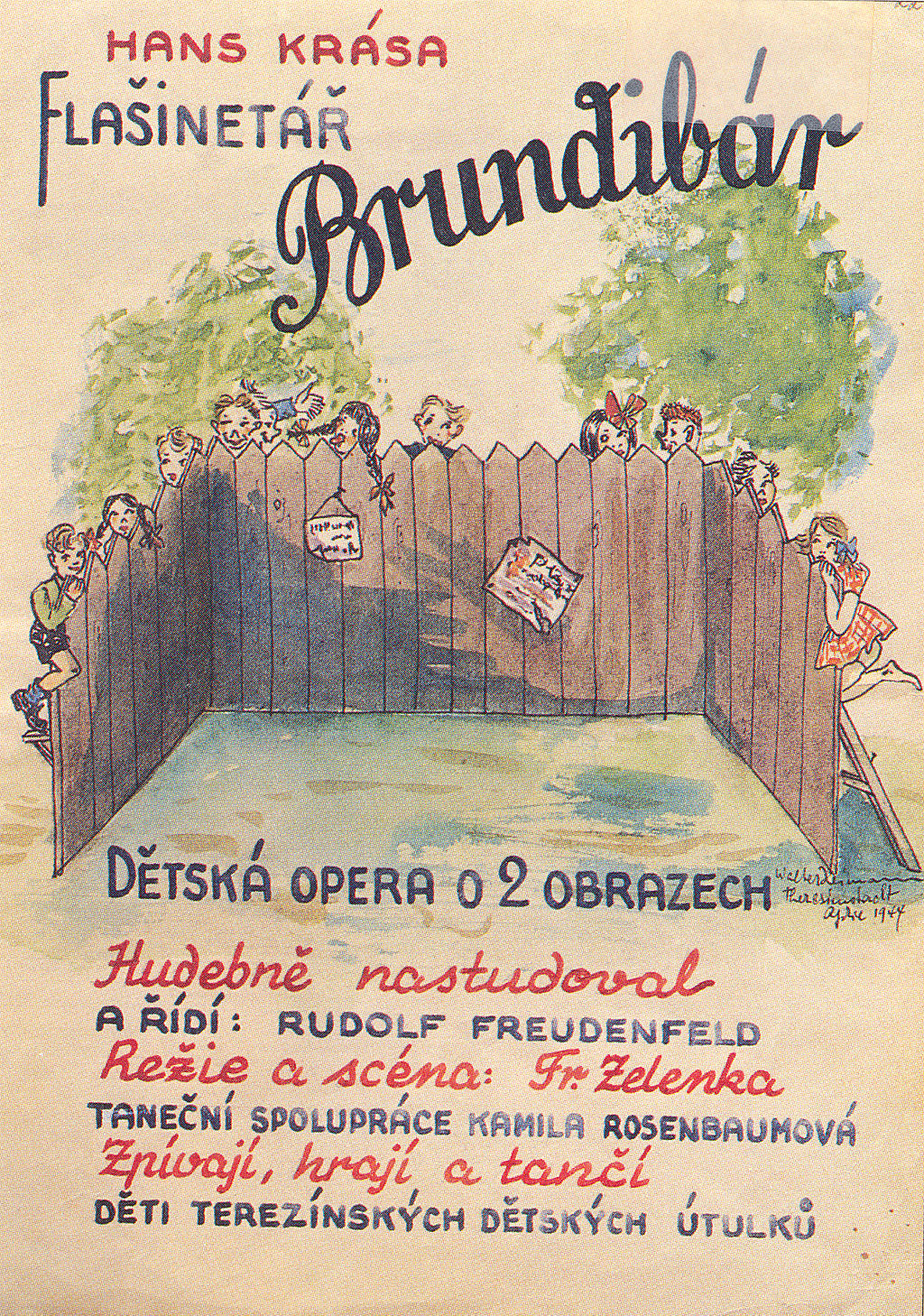 Honors College Professor Ellen Handler Spitz recently presented a powerful talk on her work and research about the value of the arts for children across the world. Spitz was invited to present her work as part of The Brundibár Lecture Series sponsored by the Theatre Kavanah in Burlington, Vermont.