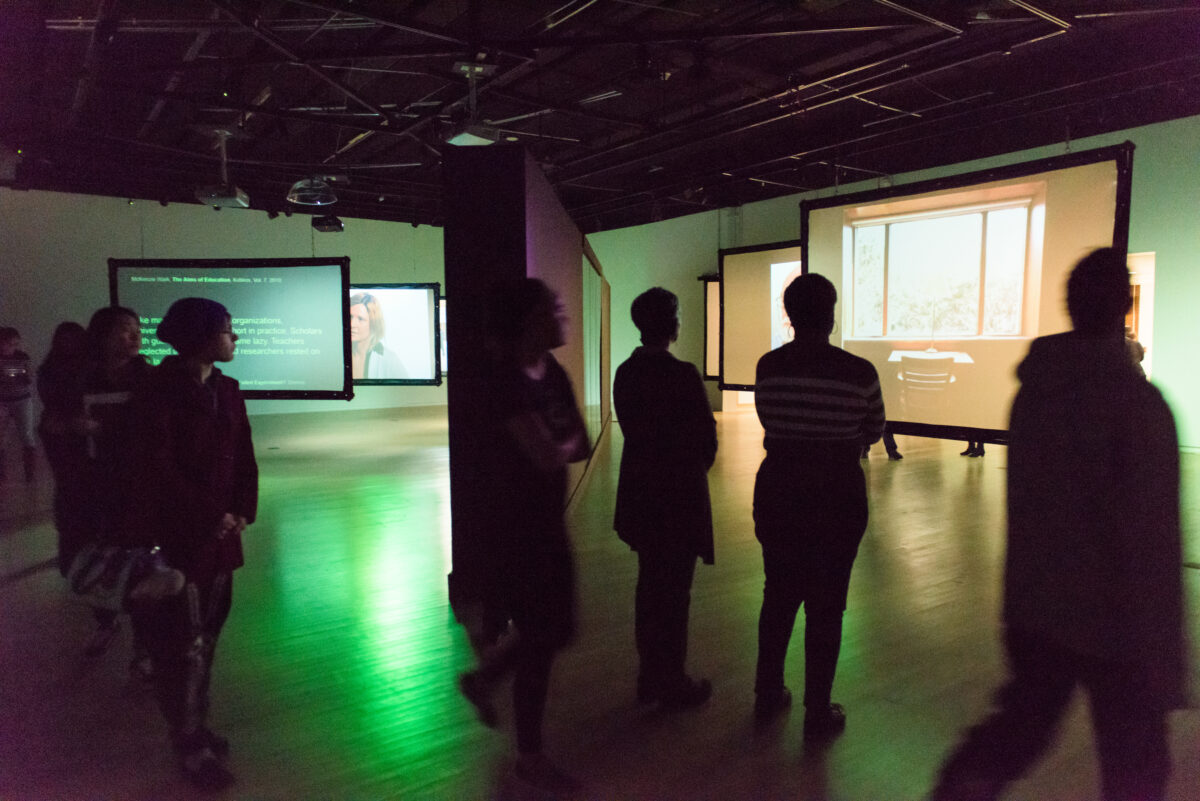
All posts by: Rahne Alexander, M.F.A. '21


Baltimore-based international animation festival Sweaty Eyeballs returns with a visual feast

“Sweaty Eyeballs” was born out of a Baltimore summer. The humid words hung in the air when animator Phil Davis, M.F.A. ’07, imaging and digital arts, was putting his plans into place in summer 2012 for the first edition of the animated film festival that now bears the moniker.

“I liked how they sounded, they felt like a memorable name,” Davis says. “And after watching 92 animated shorts in a weekend, your eyes will feel like they’ve been through a workout!”
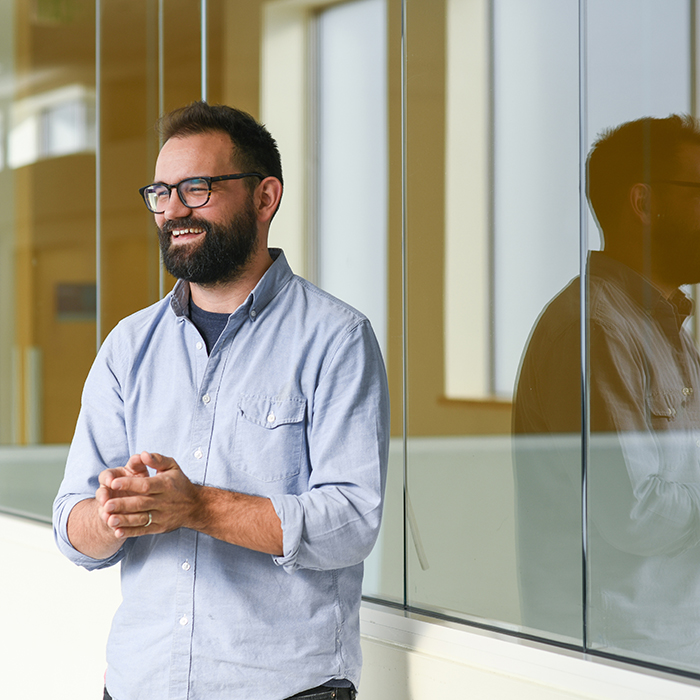
headshot of a bearded man with glasses smiling with a blue collared shirt on
Headshot of Phil Davis, M.F.A. ’07, courtesy of Towson University.

Davis, now a professor at Towson University’s Department of Art + Design, is an animator whose own hand-drawn, stop motion and digital animations have screened around the world. “Animation has the ability to tap into so many human emotions, it’s part of why I love it so much—its expressive potential is boundless,” he says. 

The 13th edition of Sweaty Eyeballs runs October 18 – 20 at several Baltimore venues, including MICA’s Falvey Hall and Towson’s Van Bokkelen Hall Theatre. The festival showcases 92 short films from around the world, featuring four international competition blocks, as well as a Baltimore showcase that runs on the opening night, which will feature numerous works from UMBC creators.

From its inception through 2018, the Sweaty Eyeballs Animation Festival existed as a one-night-only invitational offering a diverse array of animated narrative, documentary, music video, and experimental work that pushed the boundaries of art, craft, and technology. Over the years, the festival partnered with theaters across Baltimore, including the Creative Alliance, The Charles and The Parkway, as well as theaters run by local Baltimore universities. In 2019, Sweaty Eyeballs emerged as a full-fledged film festival in its own right, and its steady growth continues.

A platform for world-class programming

While submissions to the festival span the continents, many of them originate close to home. From UMBC’s visual arts program, recent graduate Carter Gray ’24 and senior Mariel Chavez are featured in the Baltimore Showcase Competition, among many other faculty and staff. “Carter Gray’s film Tempus is a really cool short animation that has an environmental bent, and it’s basically the history of the world and how humans are kind of destroying the earth,” says Davis. “Mariel Chavez’s The Beautiful Pain of Trichotillomania is very short, beautifully animated drawings on paper.”

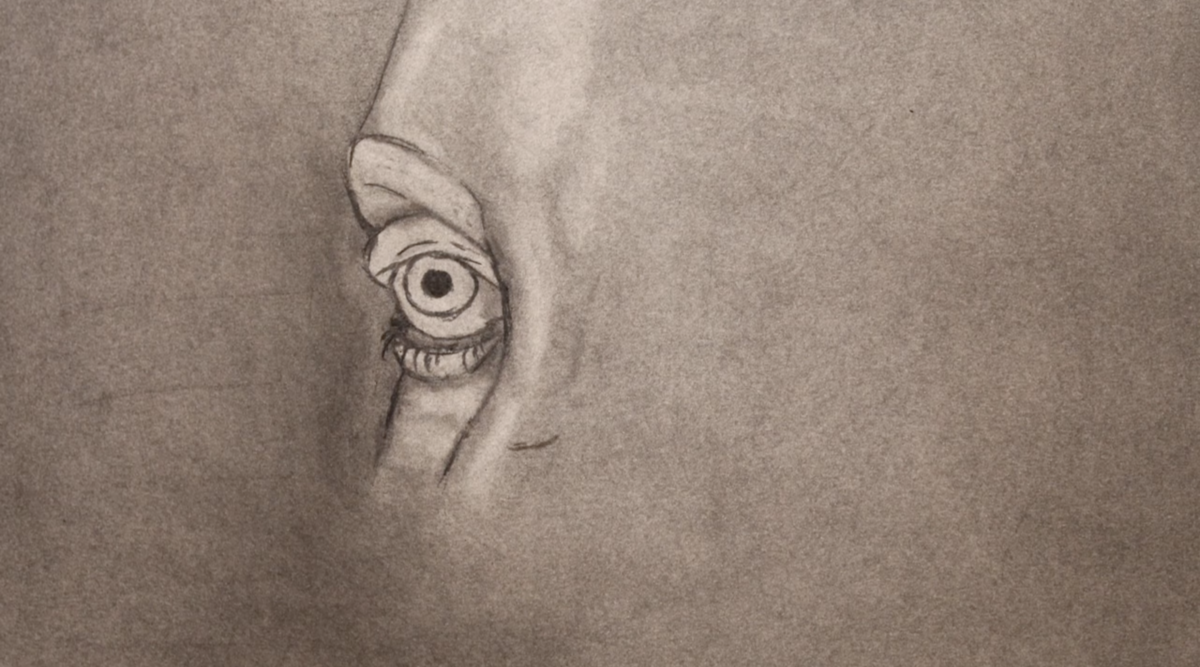
Left: a still from Carter Gray’s animated “Tempus.” Right: a still from Mariel Chavez’s “The Beautiful Pain of Trichotillomania.”

UMBC faculty and staff with work featured in the 2024 Sweaty Eyeballs lineup include Tima Aflitunov (Earthlings), Jim Doran (Magus Incognito), Eric Millikin (The Dance of the Nain Rouge), and SKRFF by Corrie Francis Parks and Daniel Nuderscher. (Parks, an associate professor of visual arts, also serves this year as curator of a concurrent gallery exhibition, Sweaty Eyeballs: Animation Adjacent).

“Corrie’s new film is amazing,” says Davis, “It’s sort of deconstructing graffiti art on this wall that’s had graffiti on it for years and years and years. And Eric Milliken’s is a really mesmerizing piece utilizing these custom-made AI training sets to create imagery.”

Expanding animation

Festival programming will also include a young audiences program featuring kid-appropriate animation, as well as an animation workshop for kids.

Los Angeles-based animator and production designer Miguel Jiron, who worked as head-of-story on the Spider-Man: Into the Spider-Verse movies, will give an industry talk at the festival on October 19. Jiron will also offer a Story Development Masterclass at UMBC on October 18.

In addition to the more traditional theatrical screenings presented, this year Sweaty Eyeballs has expanded to include a cornucopia of free events and exhibitions.

Sweaty Eyeballs: Animation Adjacent, the exhibition curated by Corrie Francis Parks, opened September 13 and runs through October 20, features artists from the Baltimore, Philadelphia, and Washington, D.C., metropolitan areas, spanning aspects of animation from the earliest forms of animation such as praxinoscopes and zoetropes—mechanical devices that created the illusion of motion—through modern digital techniques.
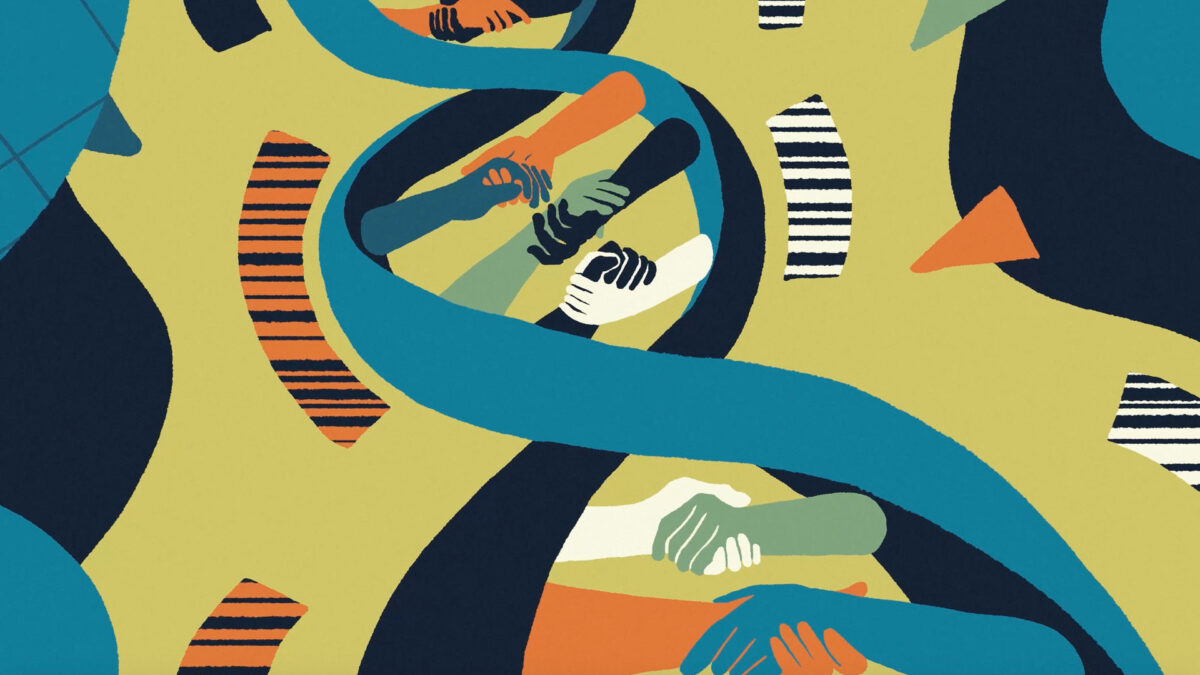
an illustrated DNA helix
A still from UMBC production coordinator Tima Aflitunov’s animation “Earthlings.”

“I wanted to highlight the ways that animation can stand outside the picture and in different formats, and show the approaches of different artists who incorporate animation into their practice,” Parks says. ”There are a lot of artists practicing ‘expanded animation,’ that expands outward in different modes and mediums, work that necessarily needs to be in a different space.”

An animator who has exhibited her work around the globe, Parks notes that Sweaty Eyeballs stands out as a unique event in U.S. film programming. “I’ve really been thankful for Sweaty Eyeballs,” she says. “There are few other cities in the United States where you would get such good animation programming in an actual festival devoted to animation.”

Numerous UMBC-affiliated artists are featured in Animation Adjacent’s programming, including Jim Doran, an AOK Library staff member who presents an assemblage of fragmental stories contained in small containers, and Kelley Bell, associate professor of visual arts, whose installation Enchanted Jangle is the epic cardboard fort your five-year-old self dreamed of. Adjunct professor Kat Navarro taps family history and diasporic longing to present The view from my childhood window.
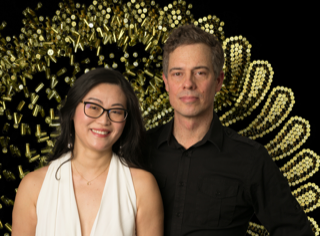
headshot of a woman wearing white standing in front of a man wearing black
Jiayin Shen and Eric Dyer as Duo Kinetica. They combine zoetropes with a live piano score.

The show includes two interactive, generative installations by Timothy Nohe, visual arts professor, and McCoy Chance ’19, music technology and media and communication studies. “Both artists use sound translated into electronic signals as the catalyst for animation,” says Parks, “and invite the viewer to be the ‘animator’ by activating the works with their voice.”

On October 11, Area 405 will host a free Animation Adjacent Variety Show and Film Screening, featuring eclectic performances and short animations by exhibition artists pushing the boundaries of animation as an artform. One featured act will include Baltimore musicians Bonnie Lander and Shelly Purdy interacting with Nohe’s Entr’acte-Interact.

Closing the festival on October 20, UMBC visual arts professor Eric Dyer—named by Creative Capital as “The Modern Master of the Zoetrope”—will offer a live performance with Jiayin Shen as Duo Kinetica, combining zoetropes with a live piano score.
Music education helps others find the right note

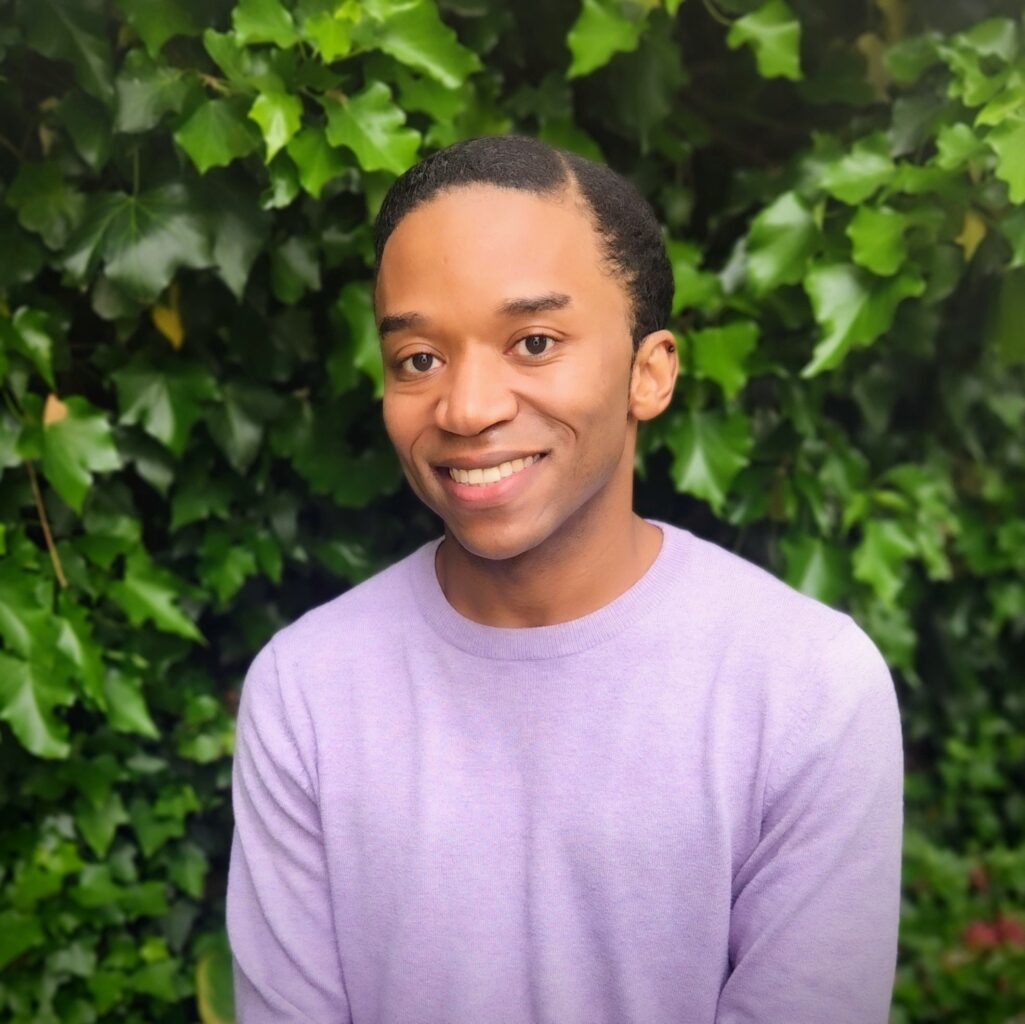
Headshot of James Dorsey in a lavender sweater in front of greenery
Headshot of James Dorsey.

When James Dorsey arrived at UMBC in 2002 to major in music performance and composition, becoming an educator was not the original plan. But when opportunity knocked, Dorsey answered the call to teach. 

In the intervening years, Dorsey’s interactive, empowering methods of teaching music to kids have made him popular, and this fall he marks his 19th year of teaching music and performance to the elementary school students in the Prince George’s County Public School system. And if that wasn’t enough, Dorsey ’05, music, is back at UMBC, sharing his pedagogical experience with a new generation of musicians and educators.

“I didn’t have pedagogy as part of my undergrad experience when I started at UMBC. The music education department was just beginning, so there were things that I just missed,” says Dorsey, who will receive UMBC’s 2023 alumni award for the performing and visual arts this Thursday, October 26. “But it’s great to enter education from a non-traditional pathway, because I really had to rely on my artistry, to help me connect with young learners and help them grow musically.”

A detour-turned-career

Dorsey entered the resident teacher program with Prince George’s County while still an undergrad at UMBC. After six years of apprentice teaching and taking summer classes, he was certified, launching an esteemed career that has made him a sought-after resource in musical education—and a key to that success has been in helping students tap into their creativity.

“Throughout my teaching career, as I have studied pedagogy and methods more carefully, I’m consistently working with people through the lens of ‘How can I help them create and connect with the world around them?’” says Dorsey. “How can I help them understand that music is a way to respond to what’s happening around them?”

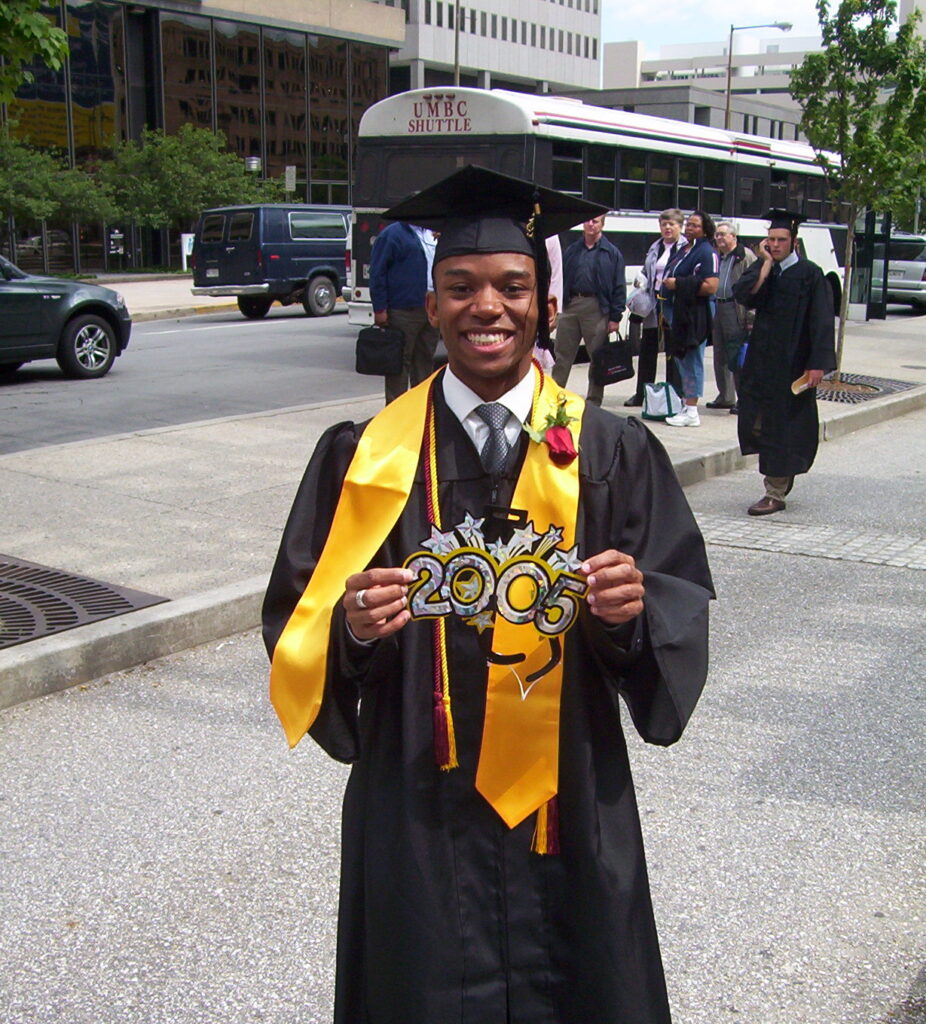
a student in a grad cap and gown stands with a 2005 sign
Dorsey at his 2005 UMBC Commencement at which he sang the National Anthem.

With this approach to musical pedagogy, Dorsey has expanded his reach beyond the elementary classroom. In addition to his ordinary course load in the Prince George’s County school system, Dorsey also teaches music educators at Loyola—where he received his master’s degree—and back at UMBC, where Brian Kaufman, director of the UMBC Wind Ensemble, invited to Dorsey to coach the ensemble in creating original music for their programs.

“It’s really a full circle moment,” Dorsey says. “I’ve gotten to reimagine what music education looks like in elementary and secondary settings, and now I’m working with teachers who want to help their students create. I get to be a facilitator to help other people through that program, and not only am I helping them pedagogically, I also feel like I’m growing as a person and as an artist.”

“Making Music That Sounds Like Me”

Dorsey believes that a key to his success in teaching music to young people is allowing them room to fully express themselves. Every year, rather than selecting and rehearsing an existing musical play, Dorsey guides his students in writing and producing an original musical, a process which he finds to be both effective in teaching students how to be artists, and in honing his own craft.

“I don’t think of creativity as something that belongs to only a select group of people. I think creativity is something that everyone deserves to do,” Dorsey says. “And I’m included in that. Teaching has really taught me how to be a better artist.”

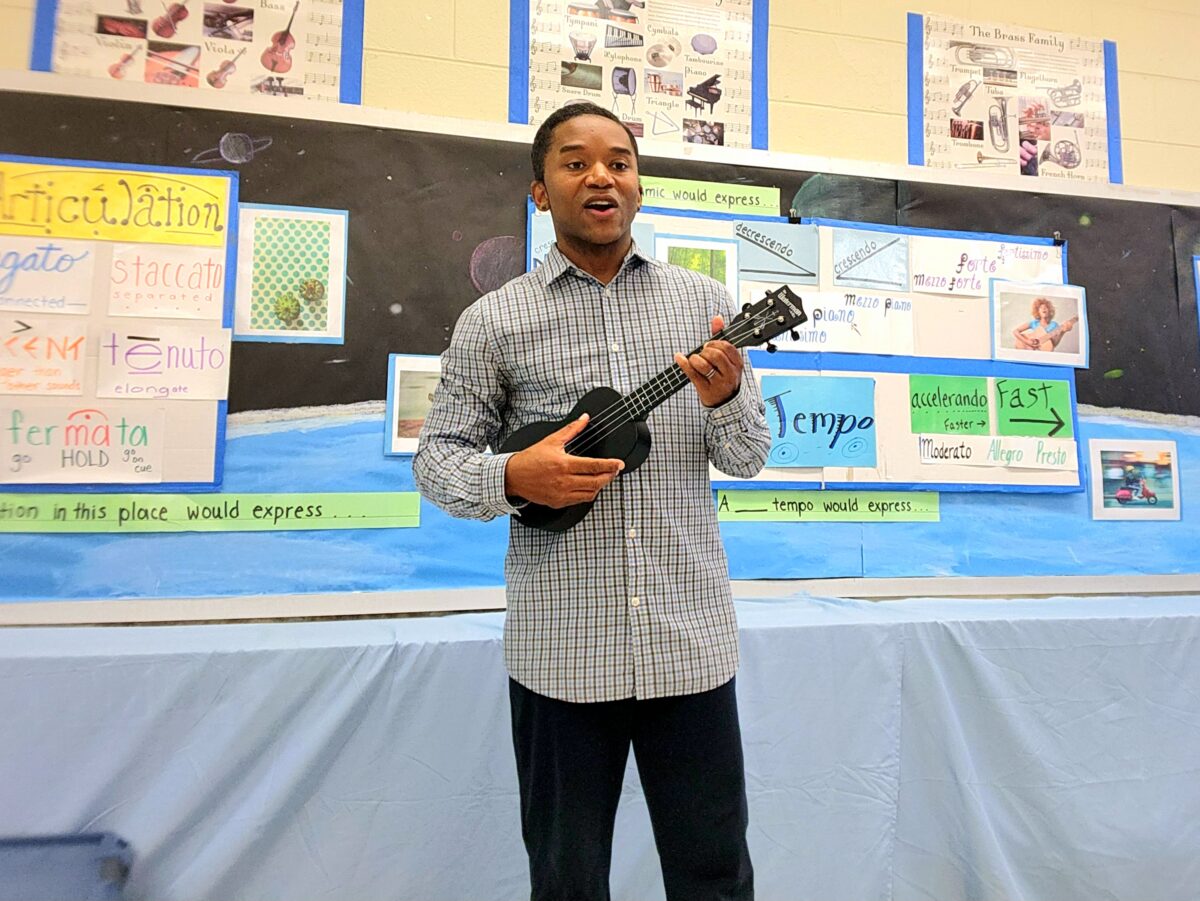
A teacher plays a ukulele in front of a classroom
Dorsey leads students to create music using a variety of instruments, including ukuleles.

By putting the tools of creating a musical into the hands of his students, Dorsey has enjoyed watching them flourish, while exercising his compositional skills to create original electronic music with their direction. 

“When people think of a musical, they have an idea of what that’s supposed to sound like,” he says. “But with the musicals we create, I really get the chance to make music that I enjoy and that students really relate to, organized around prevalent rhythms and the style and vocal delivery that goes with it. They can say, ‘I got to make music that sounds like me.’ Just by teaching, I have seen so much evidence that trusting the process and making decisions based on an idea is a comfortable pathway to going from idea, to creating, and then realizing, ‘I can do that.’”

Dorsey’s pedagogical successes caught the attention of the Maryland State Department of Education Fine Arts office, who tapped him to begin offering professional development classes for other teachers centered around the creative process. To this end, he currently serves as a roster artist for Maryland Centers for Creative Classrooms (MC3), supporting arts educators in developing skills and knowledge in providing quality arts-based instruction.

In this role, Dorsey facilitates sessions for instructors to think through their teaching strategies for helping people create, and along the way, they get the chance to create something. The result is powerful, says Dorsey. ”They know from their own experience creating music what they need to do to help other people feel comfortable. We really need to give everyone a chance to express their ideas through what they create.”

Find out more about the 2023 Alumni Awards and past award winners.

From nurture to apocalypse (and back again) —The Mundane Afrofuturism of multimedia artist Safiyah Cheatam  

Safiyah Cheatam, M.F.A. ’21, intermedia and digital arts, always has her hands in something.

In just the past few years, the multidisciplinary conceptual artist has exhibited work at The Peale and VisArts. She co-produced OBSIDIAN, a Rubys Grant-funded Afrofuturist podcast, with alum Adetola Abdulkadir ’17, and served as curatorial research assistant at the Smithsonian’s National Museum of African American History and Culture for the special exhibition Afrofuturism: A History of Black Futures. This summer, Cheatam is also serving as a juror for the Hamiltonian Artists Fellowship

Cheatam devotes her days to providing programming for teen artists as the assistant manager of teen programs at the Walters Art Museum. Over the last decade, she’s led arts programming for young artists at a variety of institutions, including the Baltimore Museum of Art, Wide Angle Youth Media, the University of Maryland, College Park, and UMBC.

“My grandmother, almost everybody in my family, is an educator, so I’m in a long line of educators,” says Cheatam. “One of the things that I decided after undergrad was I wanted to do museum programming; I wanted to lead in a good alternative learning space like the museum.”

Cheatam notes that an attractive aspect of working as a museum educator is the level of engagement.

“I’ve been lucky to get kids who actually want to be there,” she says. “Nobody goes to a museum unless they want to, and so the students come and want to learn what I have planned for them. It’s a good feeling.”  

Safiyah Cheatam teaches at a
Artist Safiyah Cheatam runs a workshop with students through the Baltimore Museum of Art. Photo courtesy of Cheatam.

What Happens When We Nurture

Last year, Cheatam co-founded Islam & Print with her husband, Dan Flounders. A community print fellowship that champions diverse Muslim experiences housed at Maryland Art Place, Islam & Print celebrated its inaugural year with an exhibition at Black Artist Research Space.

This exhibition, What Happens When We Nurture, features the work of 2022 artist fellows Suldano Abdiruhman, Tayyab Maqsood, Anysa Saleh, and Leili Arai Tavallaei, and will be on view through July 30. Cheatam and Flounders designed the exhibit to center on the work each artist developed as part of the Islam & Print cohort as they learned the techniques and processes of printmaking.

“We want people who come to the show to know that Islamic art is not monolithic. You’re not going to see much geometric patterning or Arabic calligraphy; it’s not that kind of show,” says Cheatam. “We don’t even really like to say Islamic art—it’s just Muslims making work. The goal is that they have a community where they can critique with artists who come from a similar understanding.”

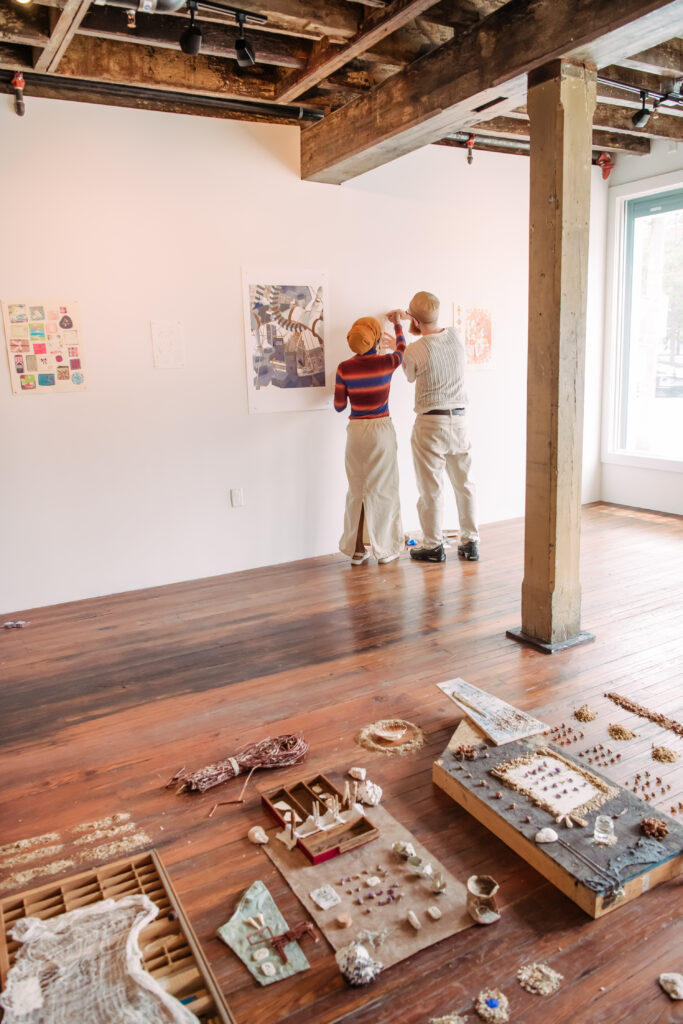
Cheatam, left, and Flounders put the finishing touches on their show. Photo by Marlayna Demond '10, for UMBC Magazine.
Cheatam and Flounders put the finishing touches on their show. (Marlayna Demond ’11/UMBC)

When Islam & Print initially launched, Cheatam and Flounders received applications from across the country, but ultimately decided to focus on artists in the DMV region for the first year. The size of the show and existing exhibition calendars initially presented a hurdle for finding a venue for What Happens When We Nurture, Cheatam says. But when they began talking with Black Artist Research Space founder Rhea Beckett—faculty with MICA’s Curatorial MFA program—things clicked into place.

“I’m very grateful and excited that we’ve gotten to this place,” says Cheatam. “At first I wasn’t going to pitch it to them because only one person in our cohort is Black and I didn’t want to disrupt the integrity of the space, but Rhea was open to it. She clarified that her space is open to making cultural connections between different races and ethnicities, and she was very interested to talk about the long and important history of Muslims in Baltimore.”

Left: Visitors enjoy the opening reception of What Happens When We Nurture. Photo by Timothy Nohe. Right: Cheatam and her husband and co-curator Dan Flounders outside their exhibit. (Marlayna Demond ’11/UMBC)

The Rhetoric of Apocalypse

After the exhibition closes, Cheatam and Flounders will begin planning the next cohort for Islam & Print. And while they plan, Cheatam will spend August and September as a fellow at Baltimore’s Waller Gallery, where she will produce a new, large body of work—larger than her current studio space can hold—based in the history of American apocalyptic religious messaging.

“We’ve been going to my husband’s family’s house in Allentown, Pennsylvania, and driving a lot of country roads. You see these Christian propaganda billboards, like ‘Jesus now before you die.’ And you know, I found that the Nation of Islam has a similar kind of rhetoric,” Cheatam says.

It’s a body of work that is still in development, so Cheatam is coy about what the end product will look like. 

“No spoilers, but for this series I’m going to explore the imagery and texts from the Nation of Islam,” Cheatam says. “I’m interested in the history of literacy within Black Muslims in America, how design and literature is to Muslims. Because almost a third of the enslaved Africans brought here were Muslim, so there’s a rich history of literacy with Black Muslims in America that I want to investigate.”

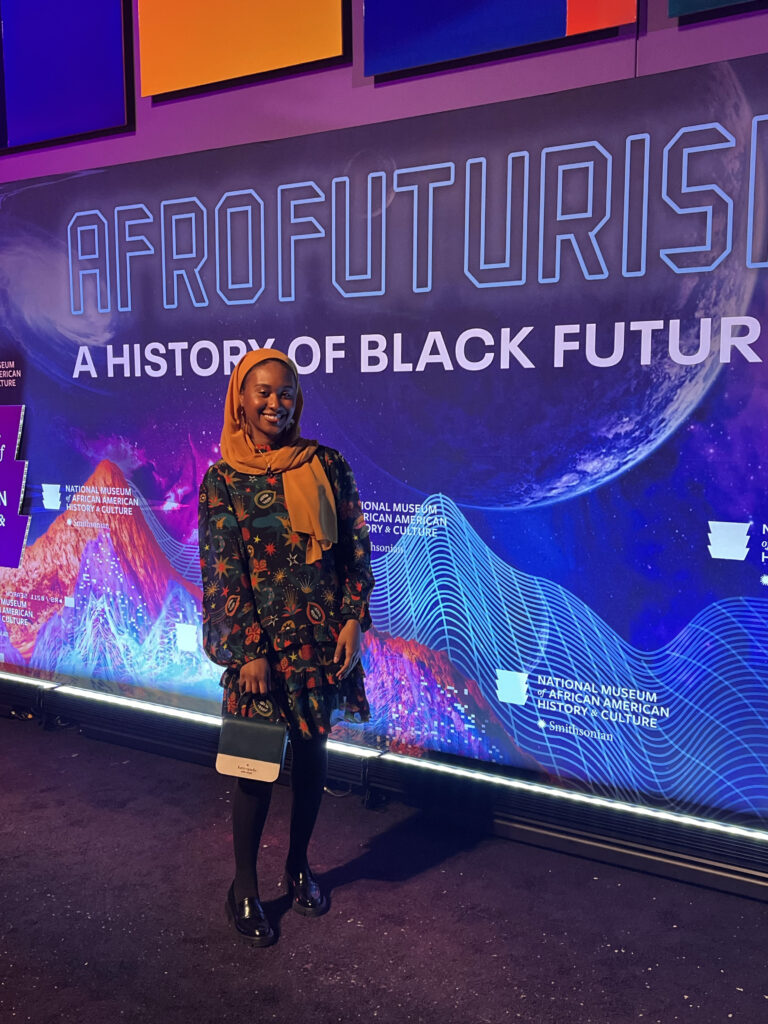
Cheatam at the opening reception of the Smithsonian’s National Museum of African American History and Culture exhibit Afrofuturism: A History of Black Futures, with which she assisted. Photo courtesy of Cheatam.

Cheatam began research for this new body of work delving into the archives of Muhammad Speaks, which was published between 1960 and 1975 as the official newspaper of the Nation of Islam. 

“They’re very alarming in their speech sometimes, and I know they have a bad rap with a lot of people, but I really wanted to lean in and learn more about their messaging,” Cheatam says. “And one of the things I noticed about their newspapers is that their headlines are saying things that people, even non-Muslims, feel today.”

During her Waller Gallery fellowship, Cheatam will be making work investigating the underpinning of this messaging, filtering through the Mundane Afrofuturist lens that unites her work.

“I am a big sci-fi enthusiast, and I love disaster movies. I’m obsessed with apocalypses,” says Cheatam.  “I like to see how people portray human nature in disaster times and look at how they answer questions like, do we help each other? Do we hurt each other? What does sustainability look like after the apocalypse? How are we taking care of each other?”

* * * * * * *
Learn more about Cheatam’s ongoing work.

Apply to UMBC’s Imaging and Digital Arts M.F.A. program.

The Enduring Legacy of Ola Belle Reed

New exhibit showcases Appalachian music legend in memorabilia, music, and film

Ask your favorite old-time music aficionado to name the most important musicians working in the 20th century, and odds are you’re going to hear Ola Belle Reed’s name.

A singer/songwriter who rose to national prominence in the 1960s performing traditional Appalachian music with her powerful voice and signature clawhammer banjo, Reed’s songs (including “High on the Mountain” and “I’ve Endured”) are now considered part of the country and folk canon. High profile artists regularly pay tribute to Reed; Robert Plant and Alison Krauss covered Reed’s “You Led Me to the Wrong” for their 2021 collection Raise the Roof. While Reed is now widely recognized among the most influential bluegrass and folk musicians, it was not always the case.

“It was incredibly difficult for a woman singer/songwriter in the ‘60s to get their work out and be heard,” says media and communication studies Professor Bill Shewbridge ’80, history, who is completing a documentary on Reed’s legacy. “Her music is still very relevant today. It’s very much of her time, but she speaks to our time as well, often in really profound ways.”

A new exhibition, Ola Belle Reed: I’ve Endured, on view at the Albin O. Kuhn Library Gallery at UMBC through June 30, traces and contextualizes Reed’s achievements through the lens of her migration from her Southern roots to the mid-Atlantic states where she rose to renown. Drawn from UMBC’s Maryland Traditions Archive, the exhibition collects photographs, concert flyers, instruments, audio, video, and memorabilia spanning Reed’s career. Ola Belle Reed: I’ve Endured is co-curated by Shewbridge with curator of exhibitions Emily Cullen and music scholar Tim Newby (Baltimore: The Hard Drivin’ Sound & its Legacy).

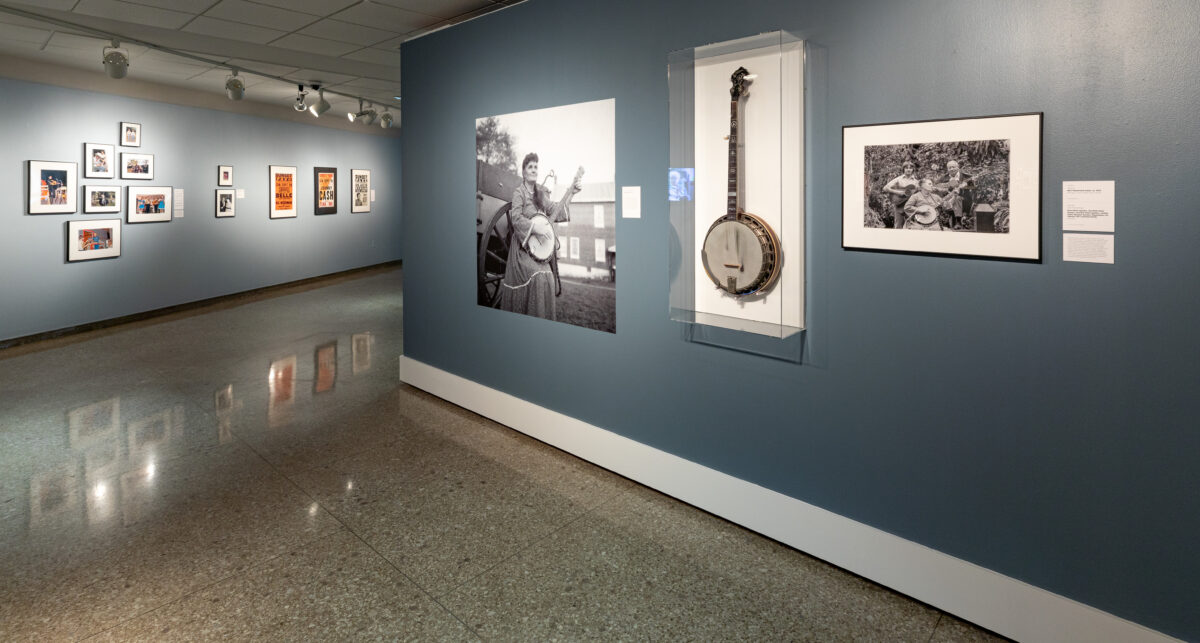
A view of a gallery exhibit showing photos and musical instruments belonging to Ola Belle Reed.
Ola Belle Reed: I’ve Endured is on show at UMBC’s Albin O. Kuhn Library Gallery through June 30. Photo courtesy of Research Graphics at UMBC.

Tributes in Film and Performance 

The exhibition will also feature special events, including a concert and a preview screening of Shewbridge’s work-in-progress documentary, I’ve Endured: The Music and Legacy of Ola Belle Reed. The documentary screens May 11 at 5 p.m. in the AOK Library Gallery. The screening is free and open to the public, followed by a reception.

“A lot of her story hasn’t been told,” says Shewbridge. “When I started, I thought this was going to be a 15 minute film, but it’s now 45 minutes. I didn’t think it would be hard to breathe life into this, and it’s still evolving.”

Featuring some 17 interviews with musicians, scholars, and Reed’s contemporaries, the documentary is nearing completion. Shewbridge expects to add footage before calling the film complete and sending it on the festival circuit in the coming months—including footage from the upcoming tribute concert to be held June 2 in Earl and Darielle Linehan Concert Hall.

Musicians and family members who worked with Reed will join an all-star band to celebrate Reed’s musical legacy. This special event will be free and open to the public, and will feature music by Cathy Fink & Marcy Marxer, The Honey Dewdrops, Hugh Campbell, and Dave Reed, with remarks from Cliff Murphy, director of the Smithsonian’s Center for Folklife and Cultural Heritage.

For those yearning for more, Shewbridge says there is no shortage of material about Reed available.

“We dug up a lot, and there is so much that never made it into the film. We put a lot of extra material online,” he says. Indeed, the Ola Belle Reed Project website contains hours of footage, including interviews, live music performances, and vintage clips.

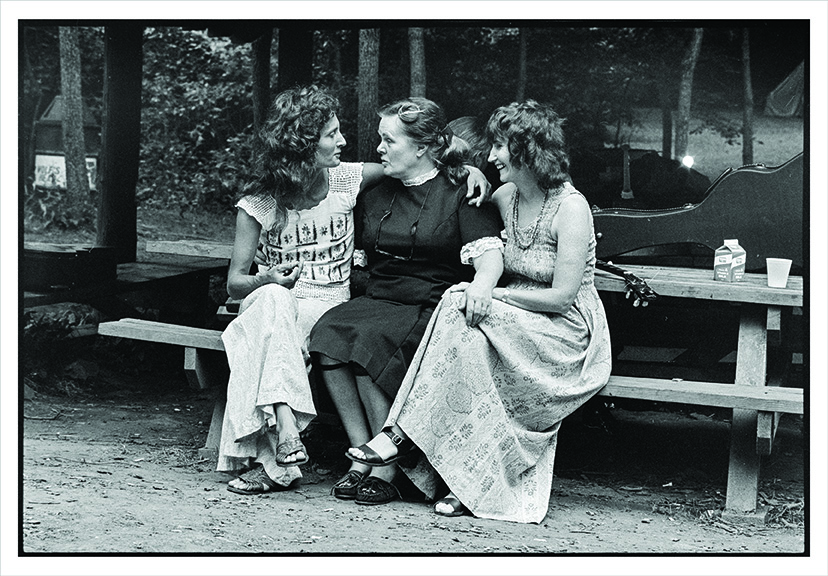
Alice Gerrard, Ola Belle Reed, and Hazel Dickens at the Brandywine Mountain Music Convention, Chadds Ford, Pennsylvania, 1974. Courtesy the photographer.
Alice Gerrard, Ola Belle Reed, and Hazel Dickens at the Brandywine Mountain Music Convention, Chadds Ford, Pennsylvania, 1974. Courtesy of Carl Fleischhauer.

Reed’s Enduring Maryland Legacy

Reed’s musical journey began the 1930s, when she joined the North Carolina Ridge Runners. As a teenager, in the wake of the Great Depression, Reed left her Appalachian home to resettle in the North—first in Pennsylvania, and then Maryland—bringing her music with her. During this time, an estimated two million migrants left Appalachia to find work in northern industrial centers, bringing along cultural and musical traditions that helped shape the cultures of their adopted homes.

By the 1950s, she was working with a new band, The New River Boys; and meanwhile she and her brother Alex founded and operated popular country music parks, including the famed New River Ranch in Rising Sun, Maryland. Their parks hosted the biggest names in country music, including Johnny Cash, Ernest Tubb, Bill Monroe and the Louvin Brothers, not to mention Hank Williams and Dolly Parton, drawing faithful audiences from D.C., Pennsylvania, Baltimore, and beyond.

As the folk revival of the 1960s gained steam, Reed broke out as a solo artist and began to make her name known. And like many folk singers of the era, Reed was devoted to advancing social justice and civil rights causes via her music.

“She was very interested in social justice,” Shewbridge says. “In the film, Marcy Marxer characterizes her as a civil rights songwriter. So many of her works are about the community and bringing people together.”

Before Reed passed in 2002, she had been awarded an honorary doctorate from the University of Maryland, an NEA National Heritage Fellowship, and a Distinguished Achievement Award from International Bluegrass Music Association. In 2019, the Library of Congress added her 1973 album Ola Belle Reed to the National Recording Registry, securing her legacy for generations to come.

* * * * * *

Learn more about UMBC’s Ola Belle Reed: I’ve Endured exhibit and related programming. The exhibit will be on view at the Albin O. Kuhn Library Gallery through June 30. The premiere screening of the 45-minute documentary “I’ve Endured”: The music and legacy of Ola Belle Reed will be held May 11 at 5 p.m.​​ “I’ve Endured,” a concert honoring the music and legacy of Ola Belle Reed, will be held on June 2 at 8 p.m. in Linehan Concert Hall.

UMBC’s galleries deliver interactive and thoughtful art

UMBC’s art galleries are already in full bloom for the spring. With exhibits showcasing historic and innovative 20th century photography, interactive hip-hop data visualization, and the legacies of political resistance as seen through Black hair, the university’s exhibition spaces are bountiful with thought-provoking work.

Hip-Hop and Data at CADVC

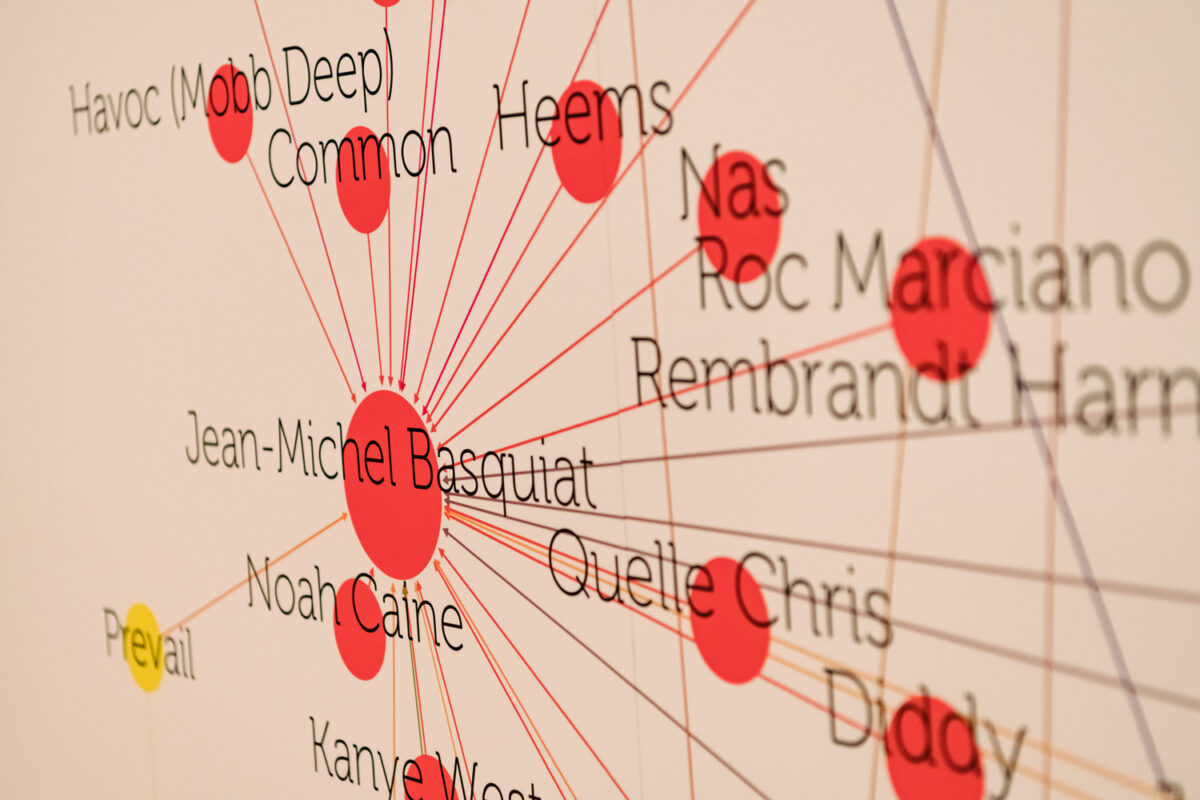
Tahir Hemphill: Rap Research Lab runs at the Center for Art, Design, and Visual Culture (CADVC) through March 18. In this exhibition, Tahir Hemphill, the inaugural Fellow for Faculty Diversity in the Visual Arts at UMBC, presents a collection of interactive works that explore what he calls “the hybrid area between art, technology, social engagement, and interdisciplinary research.”

Visitors are invited to participate in Hemphill’s design and research process through evolving artworks, including “Visualisation of Authority,” a kinetic sculpture drawing on Library of Congress research data, and “Mapper’s Delight,” an interactive augmented reality-based middle-school curriculum Hemphill designed in collaboration with Verizon Innovative Learning.

a web of data interconnects different musical artists names in an interactive art exhibit by Tahir Hemphill
Data visualization from Hemphill’s Rap Research Lab at the CADVC. (Marlayna Demond ’11/UMBC)

Hemphill is using the exhibition space for teaching as well. In a course offered in collaboration between Visual Arts and the UMBC Image Research Center (IRC) students have the opportunity to mine the “Rap Almanac,” Hemphill’s expansive dataset of rap lyrics, to produce work in an internship-based research practicum.

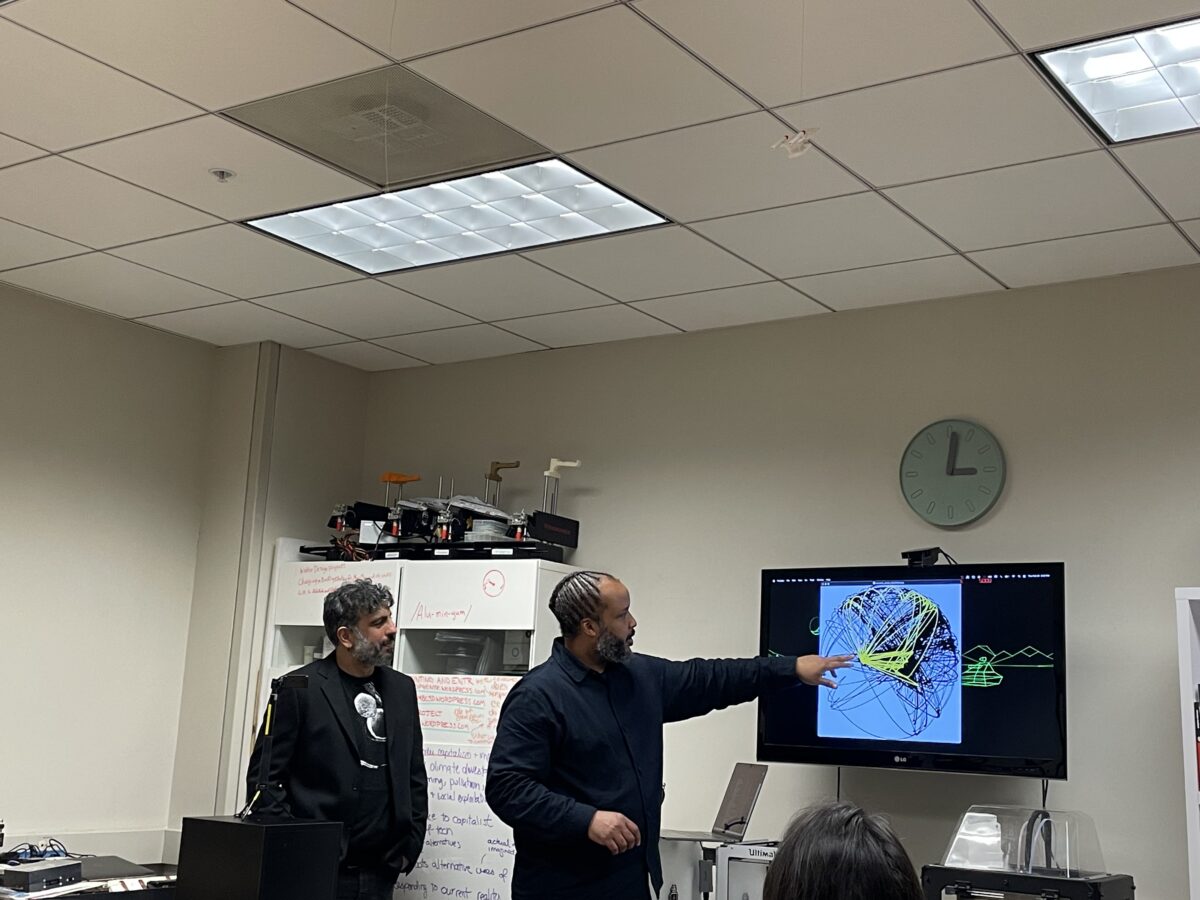
Two professors explain their data research, one points to a visualization on a screen
Hamidi, left, and Hemphill, right, talk through data visualization. (Marlayna Demond ’11/UMBC)

“CADVC operates as an art gallery and research center dedicated to scholarship and experimentation in art and culture,” says CADVC Director Rebecca Uchill. “This exhibition demonstrates a terrific range of scholarly inquiries, by Hemphill and his collaborators, into many facets of cultural history and the power of creative data visualization strategies. It is very exciting to watch this research develop in a public-facing presentation!”

Additional programming for the exhibition will include a series of public events such as a choreographed activation of a programmable robot arm, a partnership project with assistant professor Foad Hamidi from the Human-Centered Computing program in Information Systems, and a series of pop-up events.

Historic Hair and Formative Photography at AOK

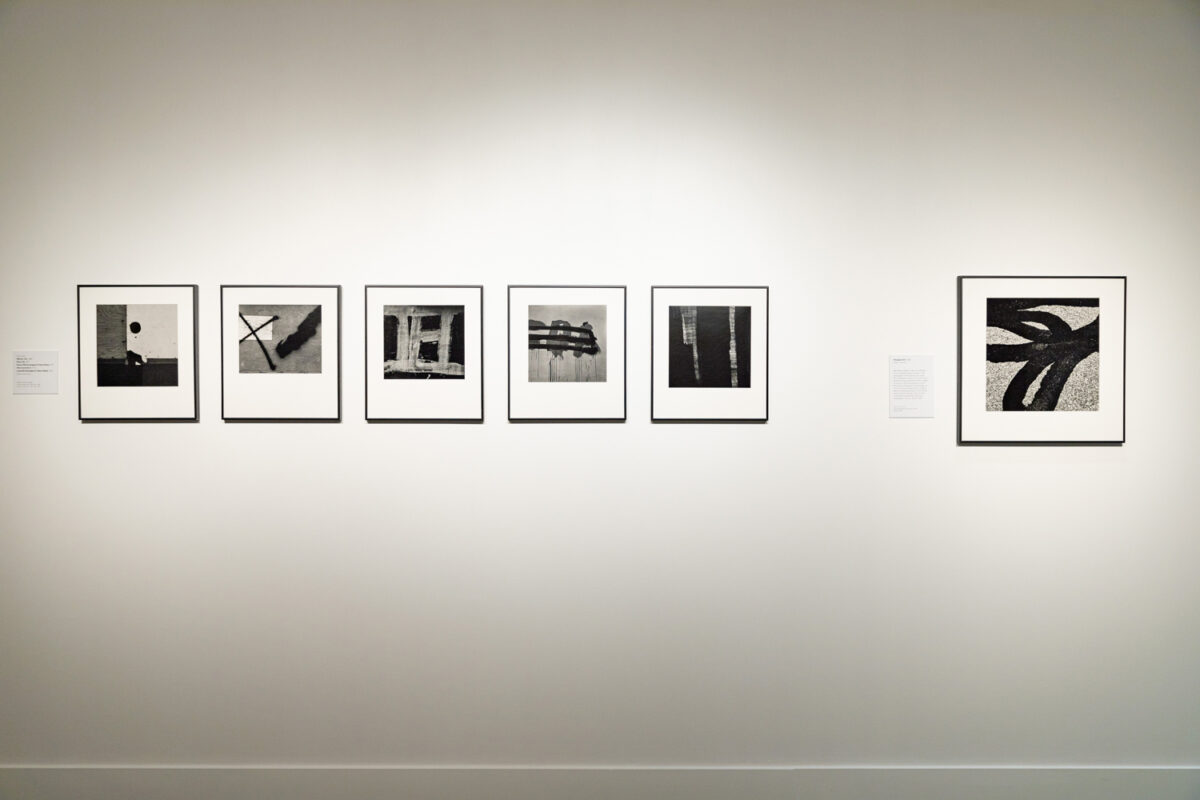
The Albin O. Kuhn Library Gallery currently features two shows—Aaron Siskind: Formations and Sonya Clark: Hair/Craft—both on view through March 12.

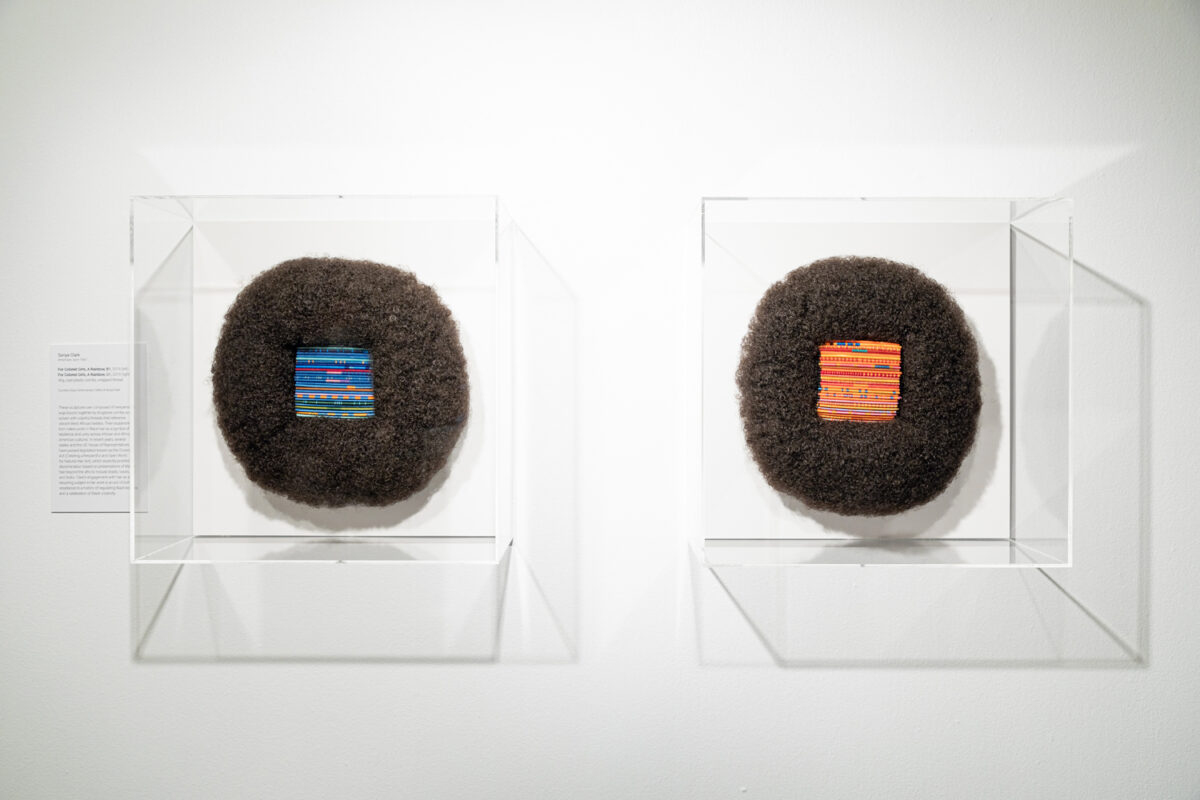
Multidisciplinary artist Sonya Clark presents five works made with human hair and fiber art techniques to explore Black visibility and identity, and to examine the ways Black hair has been employed as an instrument of political resistance across the African diaspora. Clark, whose work explores issues of identity, race, cultural heritage, and collective memory, engages everyday objects and craft traditions to examine narrative threads connecting modern issues with historical origins, including the Black national anthem “Lift Every Voice and Sing” and the biography of Madam C. J. Walker, who became the first female self-made millionaire by selling hair care products to Black women.

Sonya Clark's Hair/Craft exhibit at the AOK Library Gallery.
Sonya Clark’s Hair/Craft exhibit at the AOK Library Gallery. (Melissa Penley Cormier, M.F.A. ’17, for Research Graphics)

Influential photographer Aaron Siskind is celebrated through 55 works spanning his prolific career, all part of UMBC’s Photography Collections. Beginning with early documentary works Siskind made as part of the New York Film and Photo League in the 1930s and his groundbreaking abstract works of the 1940s and 1950s, the exhibition continues through phases of architectural studies, travel photography, and Siskind’s famous series focused on divers suspended in mid-air, “Terrors and Pleasures of Levitation.”

six black and white photographs on an exhibit wall
The Aaron Siskind exhibit in the AOK Library Gallery. (Melissa Penley Cormier, M.F.A. ’17, for Research Graphics)

Mind’s Eye in Toronto

With Mind’s Eye: The Psychic Photographs of Ted Serios, UMBC’s Special Collections has gone international. The Image Centre of Toronto Metropolitan University invited UMBC’s Curator of Exhibitions Emily Cullen to curate a show featuring one of AOK’s more fascinating collections, the Jule Eisenbud Collection on Ted Serios and Thoughtographic Photography.

Serios claimed to have the ability to psychically transfer his thoughts onto Polaroid film, a process called “thoughtography.” Chicago psychiatrist Jule Eisenbud investigated these claims, experimenting with Serios for several years in the mid-1960s, and the archive of those results is now part of UMBC’s permanent collection.

The exhibit showcases Serios’ psychic photographs alongside ephemera and experimental data, prompting questions about the limits of the human psyche, the objectivity of photography and the notions of scientific neutrality. Mind’s Eye is on display in Toronto at The Image Centre through April 1. A publication on the exhibit is due later this spring from Atelier Editions, featuring contributions from UMBC’s professor of visual arts Mark Alice Durant, Emily Cullen, and Beth Saunders, curator and head of Special Collections and Gallery, and others.

Coming Soon: Ola Belle Reed

I’ve Endured: The Music of Ola Belle Reed opens at the AOK Library Gallery March 27 and runs through June 30. A legendary “mountain music” singer/songwriter known for her influential bluegrass banjo picking style, Reed’s life and work will be showcased in a multimedia exhibition co-curated by AOK’s Emily Cullen with media and communications studies Professor Bill Shewbridge and Tim Newby, author of Bluegrass in Baltimore: The Hard Drivin’ Sound and Its Legacy.

This multimedia exhibition will include contemporary and archival recordings of Reed’s performances as well as photographs and ephemera tracing her early life in North Carolina through her later years in Maryland as she rose to prominence as one of the most influential female bluegrass and folk musicians of all time.

Supplemental programming will include a free public concert and a screening of Shewbridge’s documentary film I’ve Endured: The Music and Legacy of Ola Belle Reed and a free public concert. Dates to be announced on the gallery website.

Coming Soon: Student Showcases

Each year, the CADVC celebrates the work of outgoing students with showcases of graduate and undergraduate work.

Intermedia + Digital Arts MFA students Liza Aleinikova, Anna Kroll, and Fahmida Hossain will exhibit their thesis works in Mind Over Matter, which opens April 11 and runs through May 3. Mind Over Matter will be followed by the annual UMBC Senior Art Exhibition, featuring a wide variety of work from the undergraduate class of 2023. The Senior Art Exhibition will open May 24 and run through June 17.

To visit any of these exhibits or explore upcoming shows, check out the CADVC line up as well as the AOK Library Gallery’s schedule of events

Historical Lens: Preserving the photography of social documentarian Lewis Hine

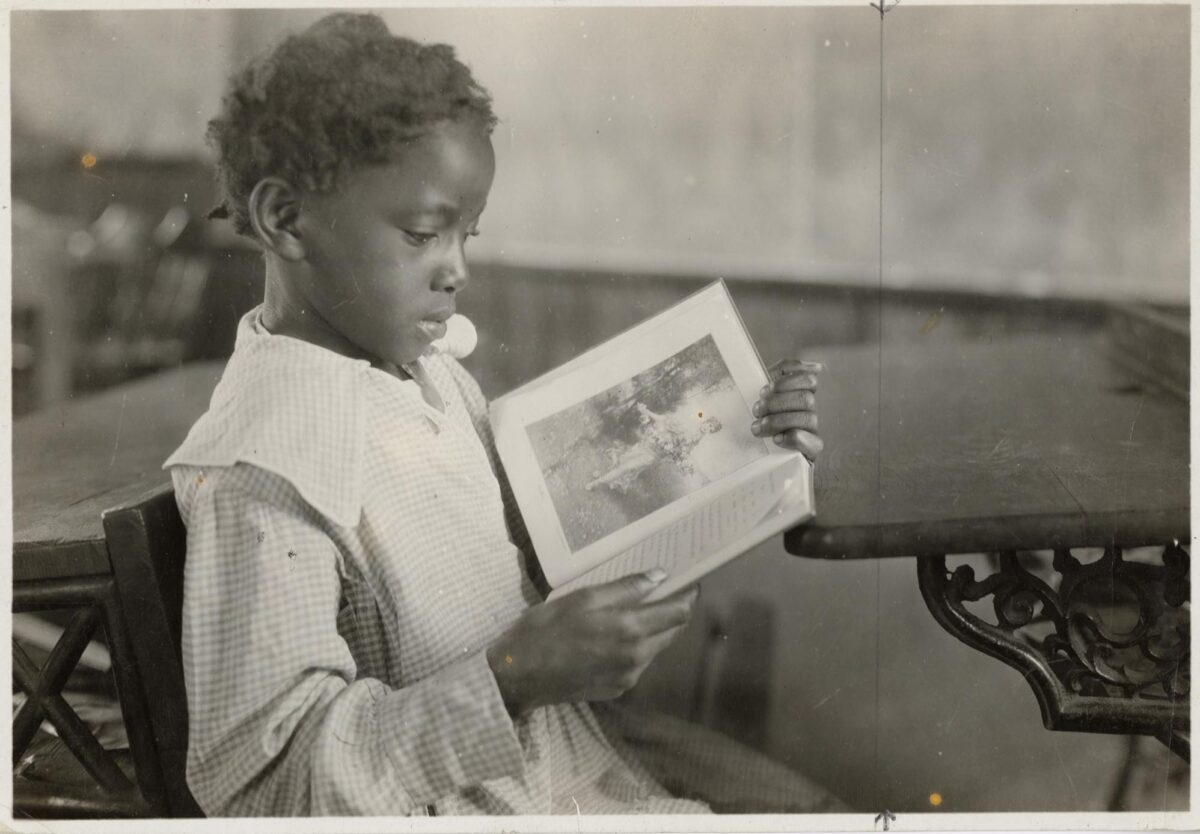
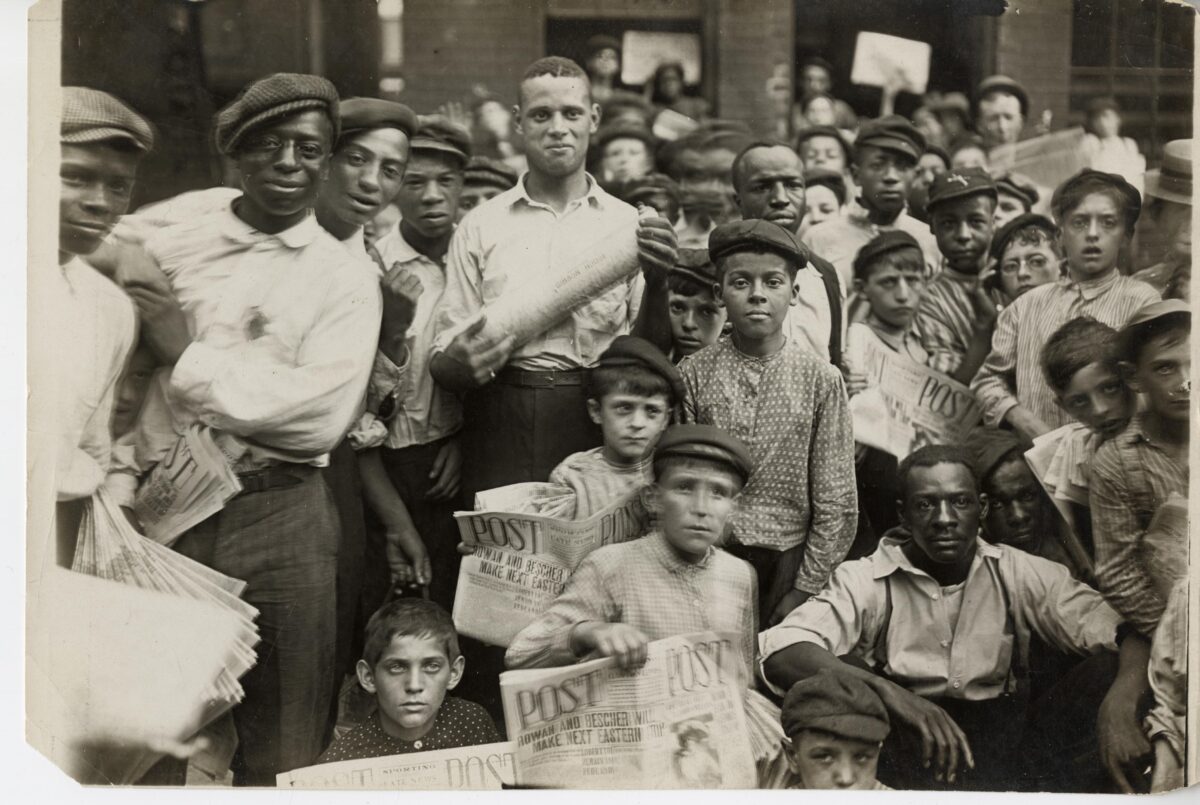
The photographer Lewis Hine secured a place in history as a documentarian of early 20th century life, including a transformational investigation into the conditions for child laborers. 

From 1908 through 1930, Hine worked closely with the National Child Labor Committee (NCLC), an organization devoted to preventing the exploitation of children in the workplace. Hine criss-crossed the U.S., creating portraits of a diverse array of children working in fields and factories. 

Hine’s body of work was revelatory and immensely impactful in the efforts to implement child labor laws in U.S., and continues to be a relevant resource for researchers working in the intersections of art, history, politics, and more. 
For nearly 50 years, UMBC Special Collections has been the caretaker of the Lewis Hine Collection, comprising some 5,400 photographs taken by Hine during his career. This year, the Special Collections team at UMBC’s Albin O. Kuhn Library received a Preservation Assistance Grant from the National Endowment for the Humanities to support conservation of this groundbreaking collection. 

“Our set is particularly important because it’s an almost complete collection of the photographs Hine made for the NCLC. It is very rare to have this incredible collection as a whole body,” says Beth Saunders, head of special collections. “It’s one of our most important and most used collections, and it was in immediate danger.”

Preserving the work of Lewis Hine

For many decades, the photographs in the collection were protected in envelopes, held in place with adhesive strips. With age, the adhesive has begun to deteriorate, putting the collection at risk. 

“If the glue migrates and the photographs are stuck, you have the risk of tearing, discoloration, all the terrible things,” Saunders says. “They’re not mounted, so the versos—the backs—are visible. All of the original inscriptions, notations by Hine or other folks at NCLC, extended captions, those are all intact.” 

Part of the current preservation effort will include photographing the detail written on the backs of the photographs, which have until now never been officially digitized. 

“It was an opportunity to record the versos of the photographs. We needed to build a new overhead camera setup, and we’re very grateful that Melissa Cormier [M.F.A. ’17] with UMBC’s office of Research Graphics helped us to get that going,” says Saunders, who notes that while the behind-the-scenes work of preservation is unglamorous, the work requires a dedicated multidisciplinary team across the university community. 

“My colleagues, Lindsey Loeper [’04] and Susan Graham [’98] have just written an essay about the teaching exercises that they’ve developed out of the Hine collections,” Saunders says. “Lindsey runs our instruction program, and Susan is the mastermind of this project. She’s been the one troubleshooting, setting the standards, and training everybody to do the work.”

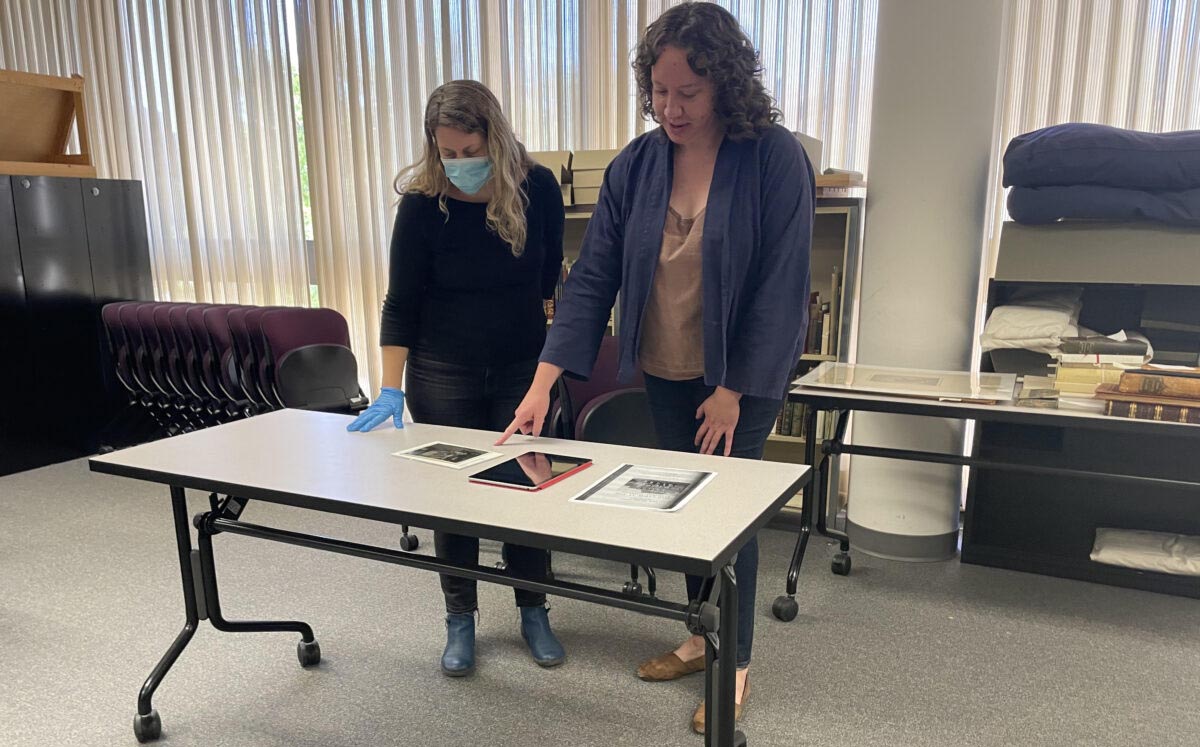
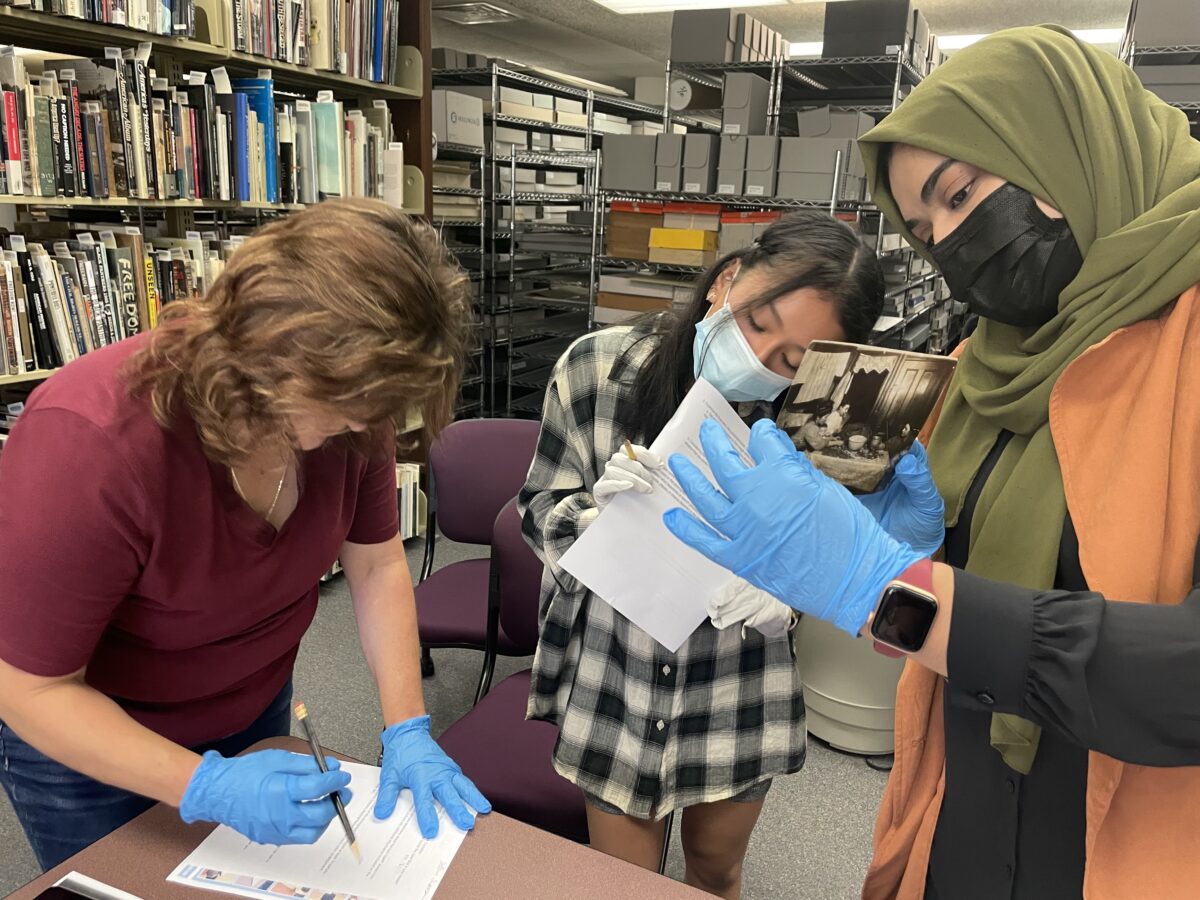
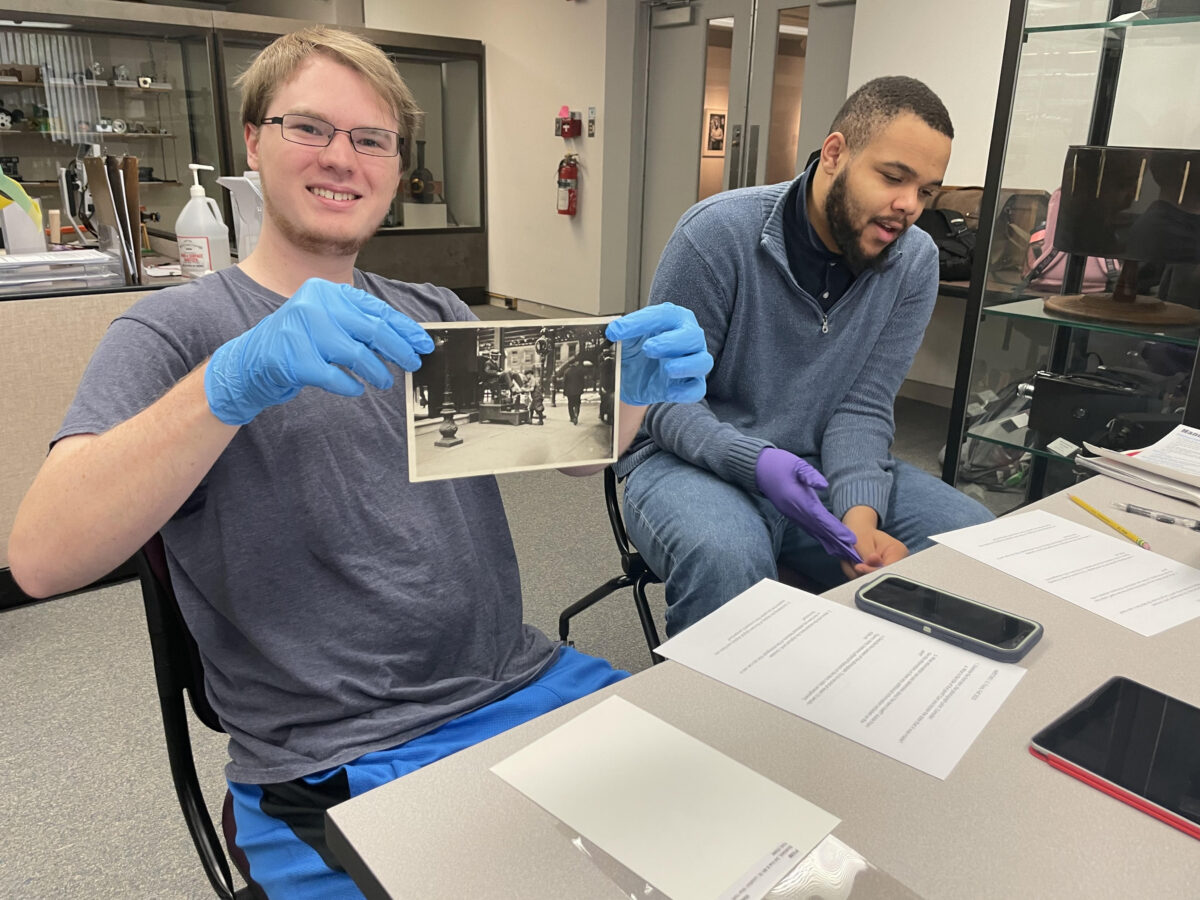
Library staff share Lewis Hine photos
Special Collections staff Susan Graham ’98 and Lindsey Loeper ’04 share pieces of the Lewis Hine collection with students.

Learning from our past

Meredith Power, a graduate student in UMBC’s historical studies program who has been interning with the preservation project, notes the power Hine’s images still possess. 

“Some are heartbreaking, some are thought-provoking, while others made me stop short and smile as I pulled them from their storage folder to photograph them,” Power says. “From the bright, sad eyes of the young boys who spent their days underground opening and closing gates inside coal mines, to the cheerful joy on the face of a girl who sold eggs as she hugs her beloved hen, the collection still manages to evoke an emotional response. It’s that emotional connection, the shared sense of experiencing something.” 

Next year, the Special Collections department will celebrate its 50th anniversary. The Hine collection was among the inaugural collections for UMBC’s Special Collections, leading in turn to a specific focus on photography in the collection. 

In 1974, the Hine collection was acquired by the then new Special Collections program from the NCLC, facilitated by former Library Director Antonio Raimo and Jerry Stephany, a photographer in the visual arts department who had once worked at the George Eastman Museum in Rochester.  

“Jerry really saw the importance of a teaching collection of photography,” says Saunders. “The idea behind collecting this particular body of work was to show photography’s relationship to a variety of social issues and the way that photography can be used as a tool of visual communication across disciplines.”

Power, who is currently working towards an M.A. in UMBC’s historical studies program, researching solitary fourteenth-century religious Englishwomen, notes the interdisciplinary power of the Hine collection and the need to preserve it. 

“On the surface, photographs of early twentieth century American child laborers have very little in common with my own academic research,” Power says. “However, as we’ve all learned since COVID-19’s arrival, physical access to research or archival material is sometimes impossible. In those cases, digitized resources and online information about them are invaluable. This is just as true for materials related to medieval religious history as it is for those who are looking into U.S. child labor reform.”

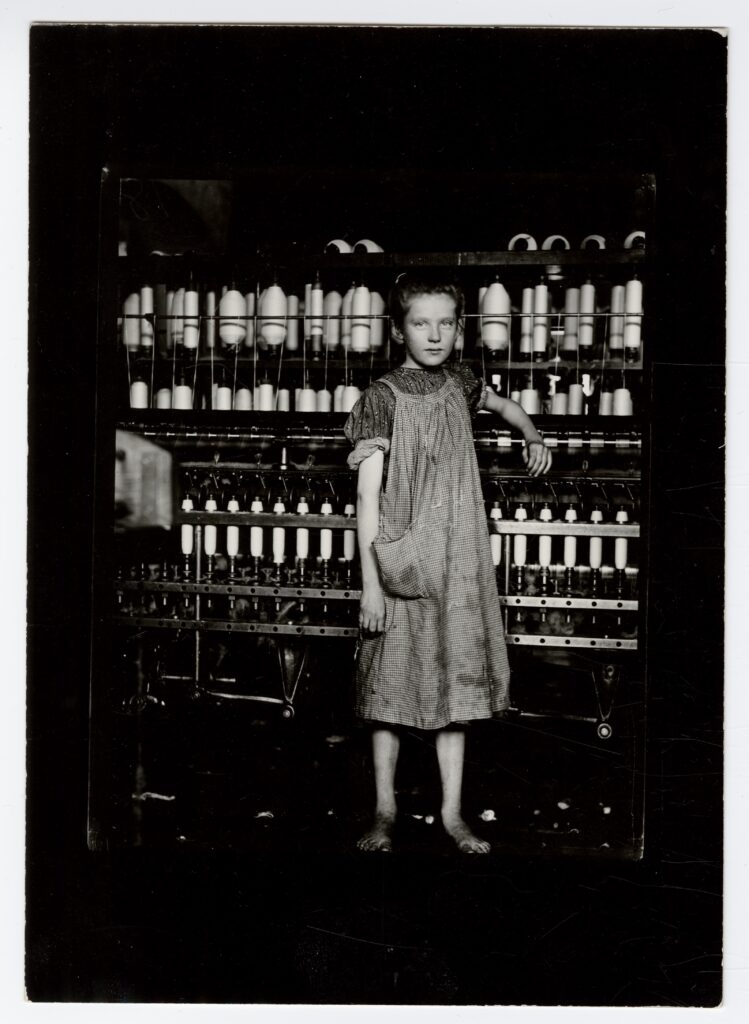
Lewis Hine,  Anaemic Little Spinner in North Pownal Cotton Mill, Vermont, 1910. Gelatin silver print, 5 x 7 in. The Photography Collections, University of Maryland, Baltimore County (P1050)

A shared history

Today, UMBC Special Collections holds an estimated three million photographs stretching back to 1840, including the Baltimore Sun archive. 

“There is a strong emphasis on documentary photography, which kind of came out of the Hine collection,” says Saunders. “We’re also particularly strong in Maryland history, including the Maryland Traditions archive, the state folklore archive.” 

Additionally, Special Collections holds the collection of radical literature from the Alternative Press Center, an extensive collection of historic science fiction, the UMBC archive, and the new Eileen J. Garret Parapsychology Foundation Collection.

Art, Life, and Spirit—Oletha DeVane Retrospective at The CADVC

Artist retrospectives have been a significant part of the history of the Center for Art, Design and Visual Culture. Since opening on the UMBC campus more than 30 years ago, the CADVC has delivered retrospectives of visionary artists like Fred Wilson, Adrian Piper, Kate Millett, and more. 

This fall, multidisciplinary artist Oletha DeVane joins these esteemed ranks with a new retrospective of her work, Oletha DeVane: Spectrum of Light and Spirit, now on view at the CADVC through December 17. It’s an exciting show for DeVane, a prolific artist and educator who has been a staple of Maryland’s cultural landscape for more than 50 years.  

“I’m honored, and I don’t think it was expected,” says DeVane. “There was a real sense of commitment [by the CADVC] to do the work, and, that’s what I felt was important — the commitment to to take on a project like this. It’s not simple when you have so many variables and mediums happening in a space.” 

The myriad artworks in Spectrum of Light and Spirit span DeVane’s prolific career, including paintings, works on paper, video artworks, and interactive sculpture. Curator Lowery Stokes Sims worked closely with the CADVC to bring all the pieces together into a cohesive whole, and to develop the interactive elements allow visitors to participate directly in the development of some of the artworks – and occasionally with DeVane herself.    

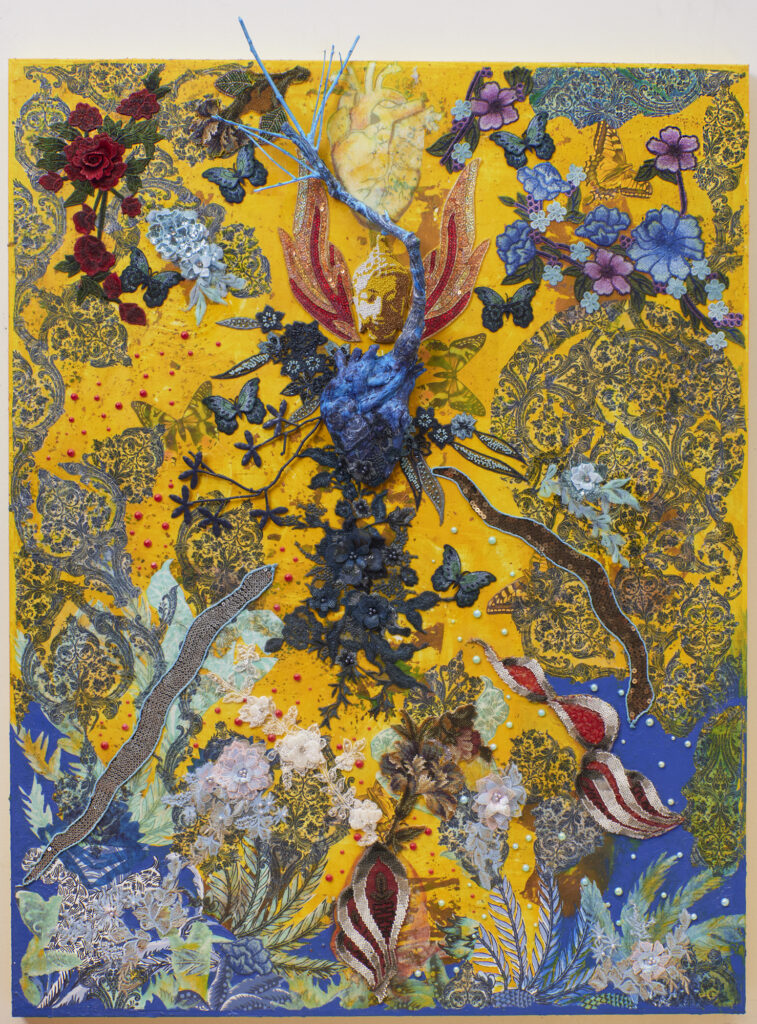
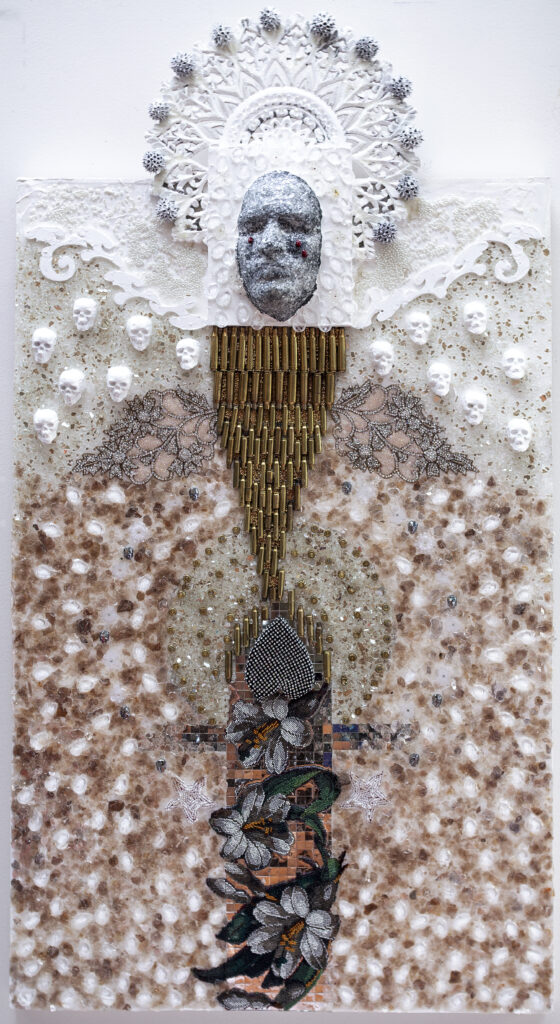
Garden of the Heart, 2021, mixed media, 47 x 36 inches. Photo by Mitro Hood.

“Lowery is a curator who’s worked extensively with African American subjects and artists, and she’s a good friend as well,” says DeVane. “I’m so glad I asked her to curate, because she was able to carry the through line of what the work itself has been about over the last 50 years, and that was good for me.”

Sims’ curatorial perspective makes powerful connections between DeVane’s works in the gallery space. 

“Oletha DeVane is a way finder and a storyteller,” Sims says. “Over the last five decades as she has traveled in Asia, Africa, and the Caribbean, she has been inspired by the stories and characters she encounters, bringing the unexpected to light, while finding new nuances in the old and familiar, and unexpected correlations among those varied cultures.”

Art and outreach

Spectrum of Light and Spirit marks the first exhibition at the CADVC under the guidance of newly-appointed director Rebecca Uchill, who took over after the retirement of long-time director Symmes Gardner. 

“It is a true honor for me to have joined CADVC as this important exhibition came into being,” Uchill says. “Oletha DeVane is an artist of incredible vision and artistic range, and a key figure in art and education in our region. We have much to look forward to in the robust exhibition programming, which will include a series of activations of Nkisi Woman-Universal Nkisi, a community-engaged sculptural project by DeVane on view in the CADVC amphitheater.”

A nkisi is a power figure rooted in Congolese culture, imbued with sacred energy by the community where it is created. Over the course of the exhibition, visitors to DeVane’s large-scale nkisi sculpture will be invited to add beads to its surface. DeVane herself will periodically participate in these activations, including hour-long sessions slated for October 6, 8, and 29.

Subsumed by Whiteness, 2020, mixed media, 56 x 40 inches. Photo by Mitro Hood.

“The concept of nkisi to me is about power figures, and a female power figure is sometimes unusual,” says DeVane. “The idea is that they are oriented towards community, you know, in terms of how one begins this whole process of healing. How do you achieve justice in a community? How do you approach nature? What is it that we value? All those questions to me were a part of the nkisi spirit.”

In addition to the sculptural and painting works in the exhibit, DeVane’s video works, Beyond Bars: Prison Women Speak, created in collaboration with writer and media personality Tadia Rice, have been updated for this exhibition. The videos make for a profound dialogue with Prison Nation, the photography show on view across campus at the Albin O. Kuhn Library Gallery through October 14. 

“[Prison Nation] is pretty phenomenal. I was really impressed because the black and white photos are just beautiful,” says DeVane. “Ours is a little different. I chose to set up the photographs and the videos with the idea that the women would be interviewed from the past, the present and the future. It’s really about setting up an opportunity for people to understand that these women are in situations where they’re incarcerated, and happen to have had lives prior, and would like to go back to those lives. Just as our society begins to grapple with the issues around how our prison system works, we have to continue this work.”

* * * * *

Spectrum of Light and Spirit is on view at the CADVC through December 17.  For more information about the exhibit and associated events, visit the CADVC website at  https://cadvc.umbc.edu/oletha-devane/

Sparking History at The Peale

The commonly-told histories of the American Civil War don’t usually include any Asian stories, although Asian Americans were certainly engaged with the war to end slavery.

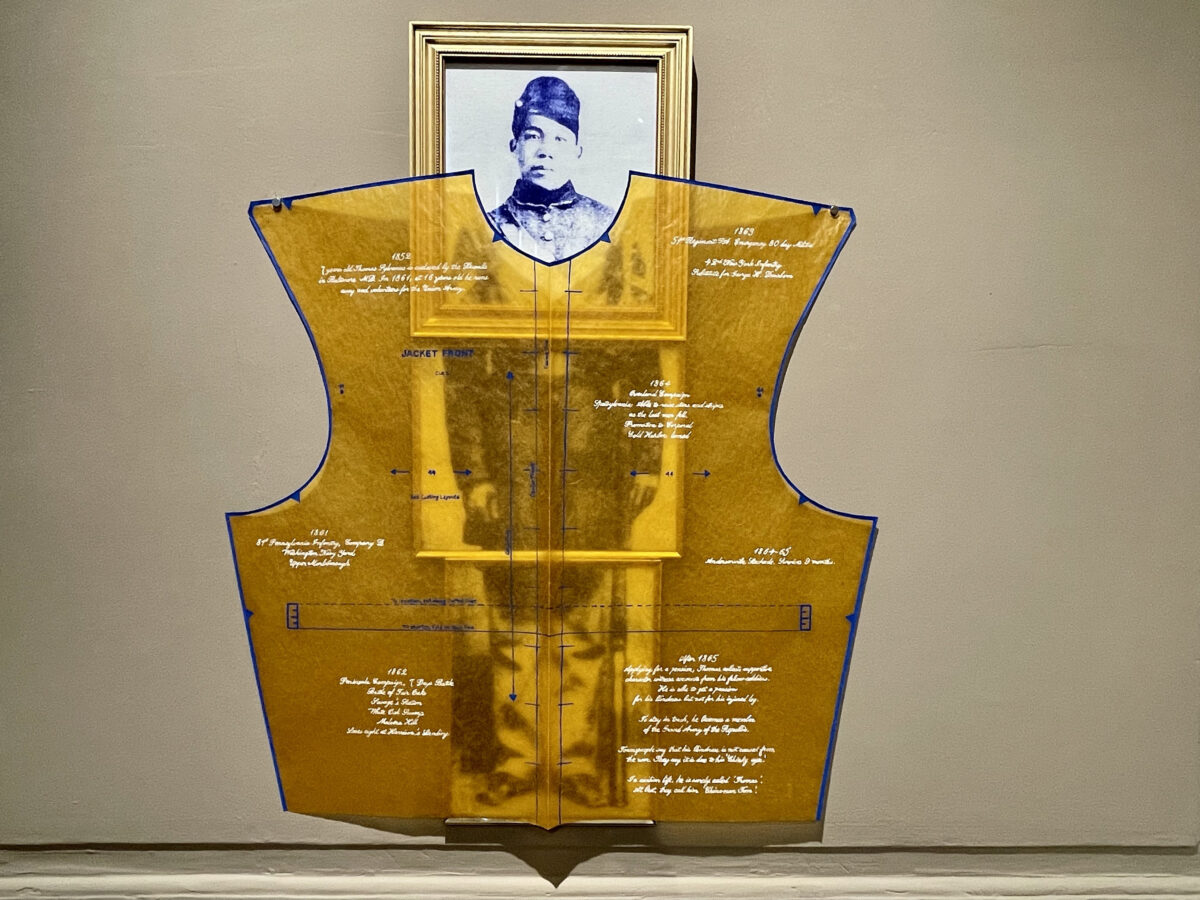
“Thomas Sylvanus (aka Ching Lee, Ye Way Lee, Ah Yee Way), was born in Hong Kong, brought as an orphaned child to America for schooling in 1852, but was enslaved in Baltimore,” says Irene Chan, an associate professor of visual arts at UMBC. “He ran away at age 16 to join the Union Army and served all the war years. His story, along with many 19th-century Chinese in America, has been forgotten.”

Chan’s new six-part intermedia work, “The Thomas Project,” is devoted to telling Sylvanus’ story in many mediums: fabric silkscreens, paper lithography, drawing, hand lettering, embroidery, and book arts, and debuts in August as part of SPARK: New Light at The Peale in downtown Baltimore. 

SPARK, an annual group exhibition of works by faculty, staff, alumni, and students at UMBC and Towson University curated by Catherine Borg, returns for its fifth edition August 13-September 25. SPARK: New Light features work from 24 artists, and opens concurrently with the Founder’s Day Grand Reopening of The Peale, a celebration of the completion of extensive renovations to the historic facility. Each of the annual SPARK exhibits has been made possible through a partnership with PNC Bank, which also helped secure the venue.

Photos of a Chinese soldier covered in paper resembling a uniform at UMBC's Spark exhibit
Irene Chan, Thomas in the War, 2022.  Paper lithography, in three frames, with hand-drawn overlay with calligraphy on golden yellow glassine. Photo by Catherine Borg.

Community spark

The Peale, the first museum building in the United States, was established in Baltimore in 1814 by the artist Rembrandt Peale. Over the course of its nearly 200 years, The Peale has seen many incarnations before landing on its current role as a center devoted to celebrating the unique history of Baltimore, and telling the stories of the city’s people and buildings. 

“The Peale is Baltimore’s community museum,” says Chan. “I have had the Peale space in mind throughout the development of ‘The Thomas Project,’ and this exhibit uses the unique architectural features of the room to tell part of Thomas’ story, starting with living his early American life in Baltimore.”

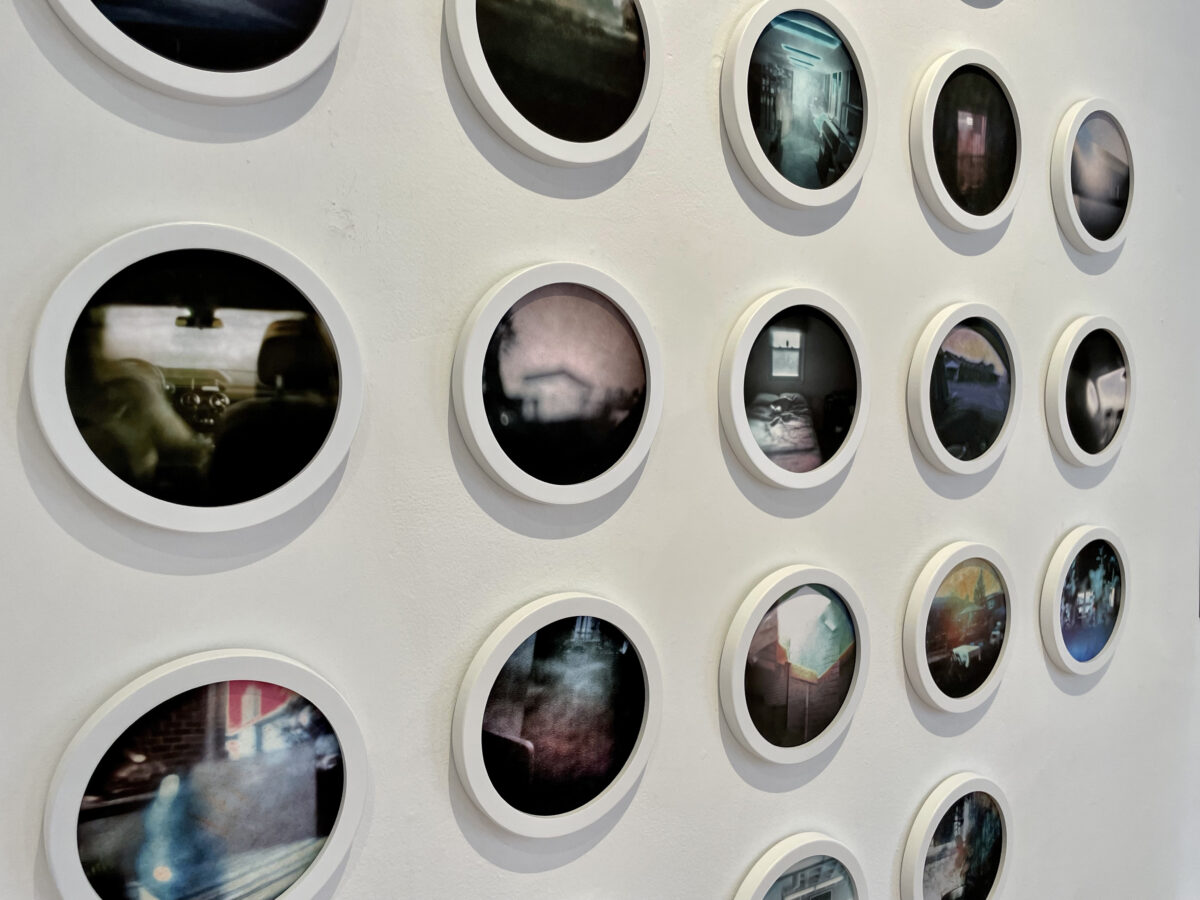
Chris Peregoy ’81, M.F.A. ’99, a photographer who manages the photo and print facilities for the Visual Arts department, also incorporated The Peale’s architecture into “Time Capsules,” his new work for SPARK: New Light. 

“Working with The Peale, I placed pinhole cameras on windowsills in east, south and west facing windows for six weeks in May and June,” Peregoy says. “The results capture the streak of the sun and the accumulated light that had fallen on the scene during the long exposure.”

a collection of circular images on a wall for Spark show
Chris Peregoy, detail of Time Capsules, 2021-2022. Archival pigment prints, 8” diameter each. Photo by Catherine Borg.

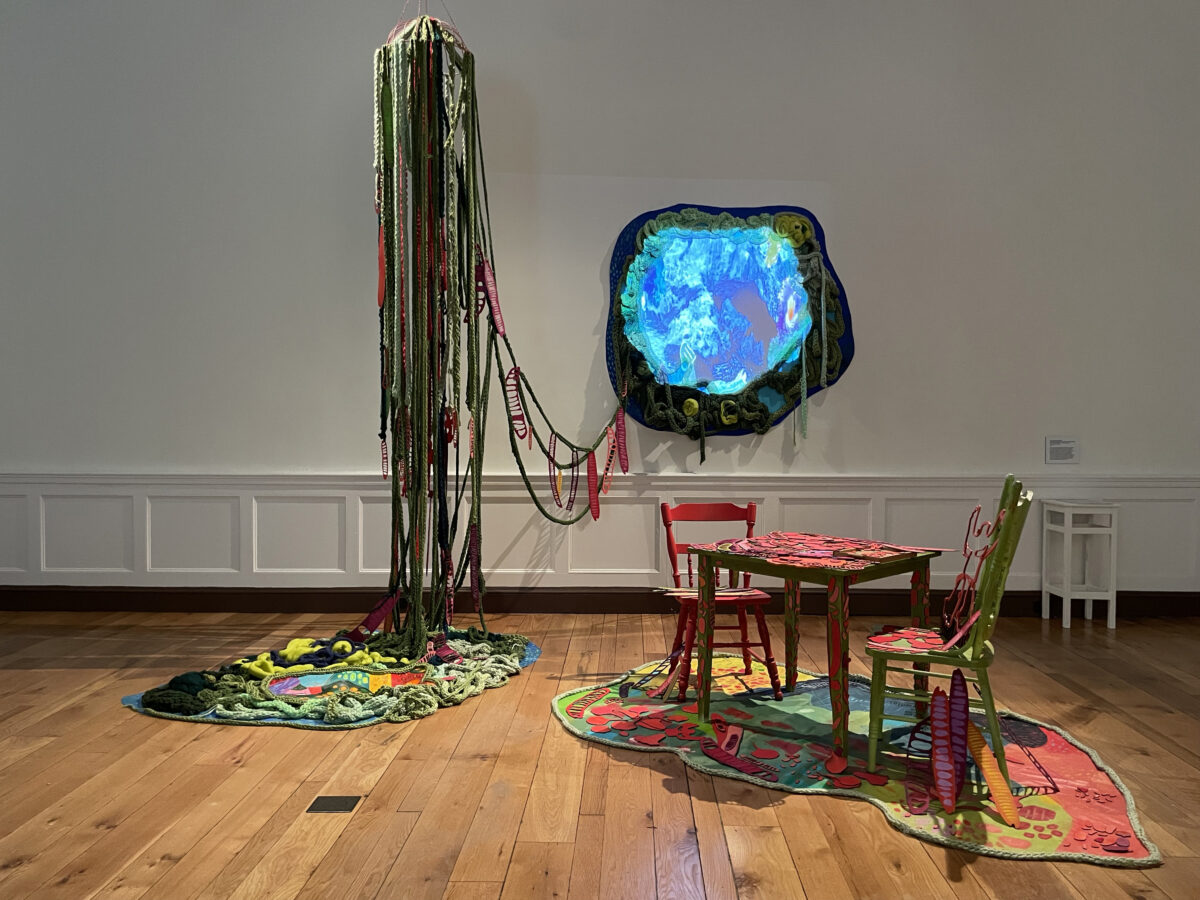
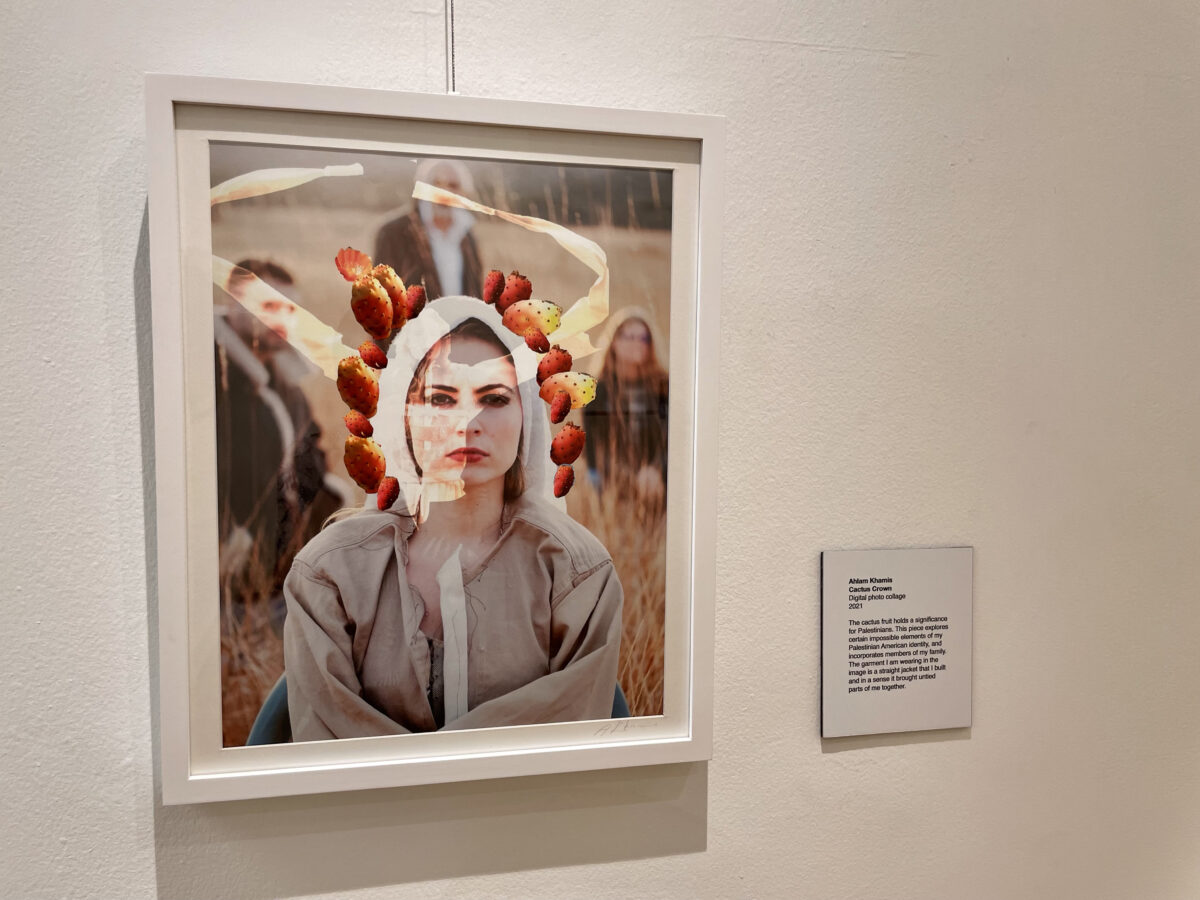
In all, 24 artists are exhibiting new work in SPARK: New Light. UMBC contributors include Chan and Peregoy as well as Lynn Cazabon, Adam Droneberg, M.F.A. ’22, Kathy Marmor (with Penny Rheingans), Lisa Moren (with Tsvetan Bachvaroff, Dan Deacon, and Woody Lissauer), Timothy Nohe, Corrie Francis Parks, Foster Reynolds-Santiago, M.F.A. ’22, and current IMDA graduate students Ahlam Khamis and Fahmida Hossain

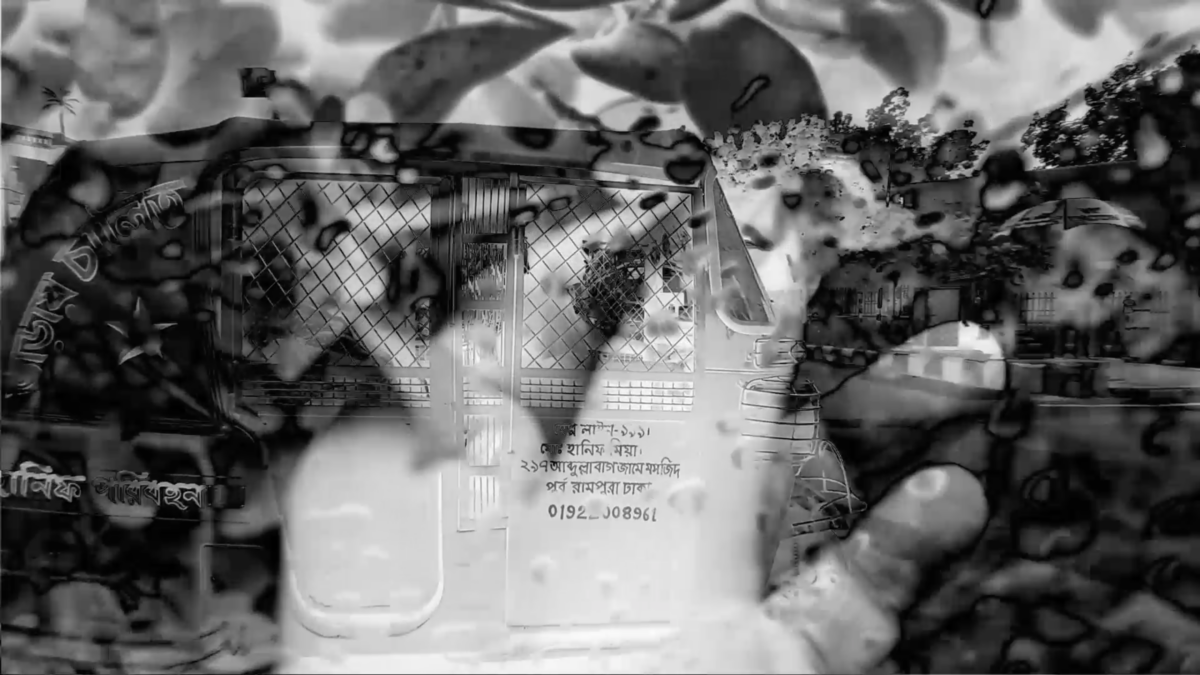
Hossain’s video work, “Touch,”  focuses on the artist touching different objects in the context of urban life in her hometown, Dhaka, expressing the yearning for physical contact with loved ones and her friends.

“I am always curious about touching objects around me and feeling their textures, but the recent pandemic made us fearful of handling things,” says Hossain. “This work represents my visualization of the human brain, which is a subconscious world where we can have different personalities and experiences, like the changing abstract shapes in my video.”

Participating artists from Towson University include Mark Burchick, Grace Doyle, Carrie Fucile, Alexandra Garove, Danielle Hawk, Jinyoung Koh, Diane Kuthy, Jenee Mateer, Kat Navarro, Sookkyung Park, Lynn Tomlinson, and J. Yablonsky.

Black and white collaged image for Spark show
Fahmida Hossain, still from Touch, 2020. Digital video collage, 1 minute, 9 seconds.

Sparking creativity

Additional events will include an artist reception on the evening of September 7, and a cameraless photography workshop by Peregoy on the afternoon of September 11. 

The exhibition will draw to a close with a series of projected artworks by visual arts associate professor Kelley Bell, M.F.A. ’06, and performances by the Towson Percussion Ensemble, the UMBC Percussion Ensemble (a group featuring UMBC faculty and alumni), and the Umbilicus percussion ensemble over the weekend of September 23–25.

* * * * *

SPARK: New Light opens August 13 and will run through September 25, 2022.  Opening festivities run from 10 a.m.–4 p.m. on August 13. Tickets are free of charge, and masks will be required to attend. Learn more at the UMBC Arts & Culture Calendar or by following The Peale.

A Season of Change for the CADVC 

For more than 30 years, Symmes Gardner has worked with the Center for Art, Design and Visual Culture (CADVC) at UMBC, and in that time helped transform the gallery into an internationally-recognized hub for art, research, and technology on the UMBC campus. 

Gardner retires this month having hosted historic retrospectives of artists like Adrian Piper, Kate Millett, and Fred Wilson, while simultaneously supporting annual student and faculty exhibitions. Notably, every major CADVC exhibition has been accompanied by a catalog designed in collaboration with Visual Arts faculty. A majority of these catalogs remain available through the CADVC website

Rebecca Uchill, who has served as director of community engagement initiatives at the College of Visual and Performing Arts at UMass Dartmouth, will begin as director of CADVC on July 1, bringing with her a commitment to carry on CADVC’s tradition of exceptional art and engagement.

Guests enjoy the Antoni Muntadas — Activating Artifacts: About Academia exhibit in 2017. (Marlayna Demond ’11/UMBC)

Putting the CADVC on the map

Gardner’s tenure with the CADVC began in 1989, and he took over directorial responsibilities after founding director David Yager left for a position at UC Santa Cruz. 

“I feel really fortunate and lucky,” Gardner says. “We had had a good team from the beginning, and were allowed a fair degree of autonomy to investigate and grow.” 

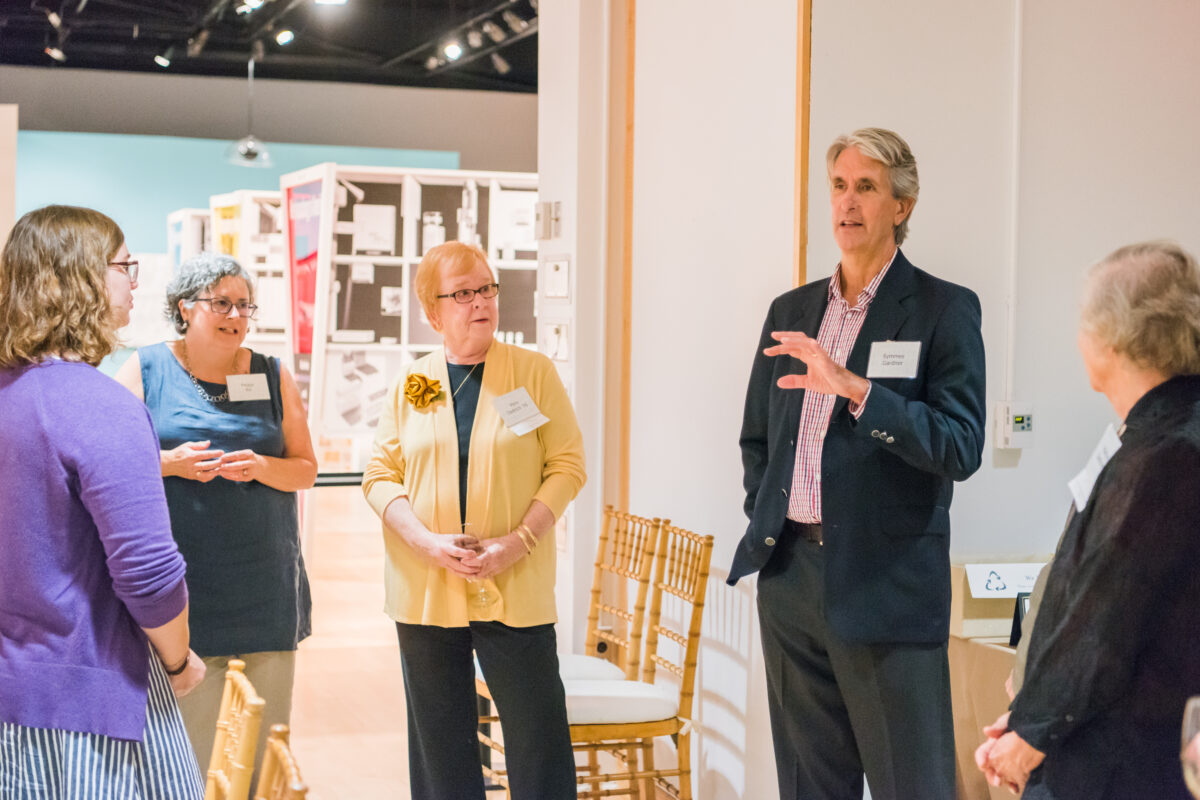
Symmes Gardner, center right, outgoing director of CADVC, shares a behind-the scenes look at an exhibit with UMBC alumni. (Marlayna Demond ’11/UMBC)

Gardner’s team included the curatorial contributions of Maurice Berger, the influential art historian whose work radically advanced the dialogue about the ways museums and archives dealt with race prior to his death in March 2020. Berger’s numerous contributions to the CADVC included curating For All The World To See: Visual Culture and the Struggle for Civil Rights, which came to the CADVC in 2012-2013 after opening at the Smithsonian, and later traveled around the United States. This legendary exhibition remains available to view via the CADVC website

“Maurice really challenged us to bring together traveling exhibitions that were incredibly timely,” says Gardner. “That really helped the CADVC and put us on the map, and the university allowed us to conduct ourselves like we’re in a laboratory.”

Under Gardner’s guidance, the CADVC also expanded its reach beyond its gallery walls, including numerous touring exhibitions as well as the Joseph Beuys Sculpture Park, created in 2001 as a tribute to Beuys’ 7000 Oaks project on the south side of the UMBC campus. 

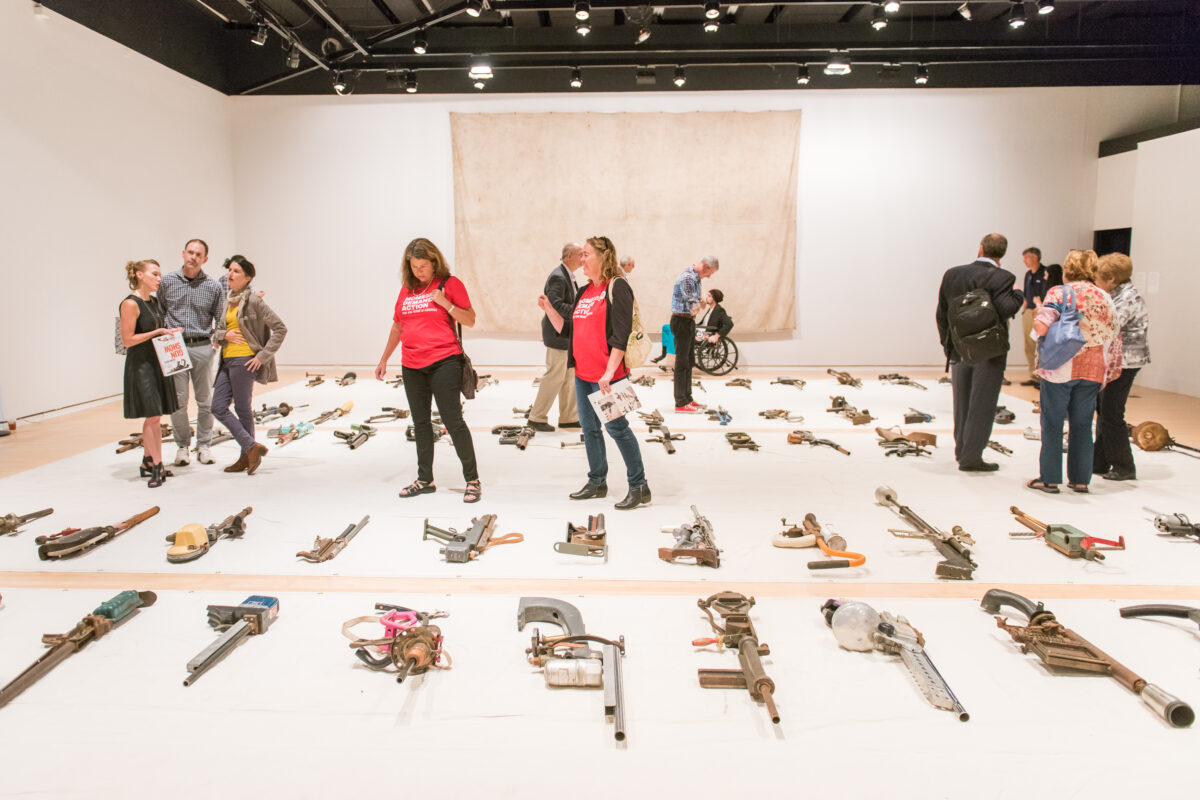
At 2017’s Gun Show, artist David Hess presented dozens of life-size sculptures of assault rifles made from what he calls “rescued” objects – ranging from an old black sneaker and vintage turquoise sewing machine, to a raggedy crutch and pink Barbie bike frame – to foster dialogue around gun violence.

Room to grow

Gardner’s departure leaves the CADVC’s legacy in good hands. Rebecca Uchill, an art historian and curator who most recently served as director of community engagement initiatives at UMass Dartmouth, arrives this summer ready to build on an already impressive career. 

Last year at UMass Dartmouth, Uchill curated a celebration of the life and work of renowned multimedia artist Nancy Holt, complete with the first posthumous presentation of Holt’s 1982 immersive work Electrical System in the United States and presenting new research into Holt’s 1991 public sculpture Spinwinder. 

Rebecca Uchill (Courtesy of Uchill)

To recreate Holt’s elaborate Electrical System, the Nancy Holt: Massachusetts team included electrical engineering students who took on the project as a capstone project, bending conduit to showcase the infrastructure of electricity via Holt’s darkened gallery environment.

Uchill worked with the National Park Service in revitalizing Holt’s Spinwinder sculpture on the UMass Dartmouth campus through a new tour that connected Holt’s legacy with the Massachusetts textile industry. 

“I am interested in what the public presentation of art and visual culture can mean to a university campus environment,” says Uchill. “I think it’s an important part of any academic, interdisciplinary, social, community minded public-facing discussion that work is accessible for a broader general public.”

Previously, Uchill was a Mellon Postdoctoral Fellow with the Center for Art, Science & Technology (CAST) at MIT, where she co-edited two publications: Experience: Culture, Cognition, and the Common Sense (2016) and Being Material (2019).

Uchill has curated exhibitions at Harvard University, the Indianapolis Museum of Art, and MASS MoCA. Her publication CV includes serving as editor of Art Journal Open, as well as scholarly publications in Architectural Theory Review, Journal of Art Historiography, and Journal of Curatorial Studies.

“UMBC is a cool, nerdy place, and I really thrive in that kind of environment,” says Uchill. “CADVC is part of that culture, and builds on that research-centered mission, which excites me. I wouldn’t be in the business of working in the arts if I didn’t think that they were the most important tools for reflecting on and understanding what’s happening in the world.”

Learn more about upcoming events at CADVC here.

Beyond Midlife: Kathy Marmor’s new artwork explores memory and embodiment for women in midlife

Western culture remains terrified of aging, particularly for women, but that fear doesn’t stop any of us from actually aging. Kathy Marmor, associate professor of visual arts at UMBC, delves into the heart of these anxieties with a pair of innovative collaborative works, collectively titled Beyond Midlife: What’s Lost, What’s Gained, on view at the Center for Art, Design and Visual Culture (CADVC) on the UMBC campus through March 12. 

Marmor’s new work appears as part of the CADVC’s Spectrum: 2022 Visual Arts Faculty exhibition, which also features works by UMBC visual arts faculty Lisa Moren and Lynn Cazabon

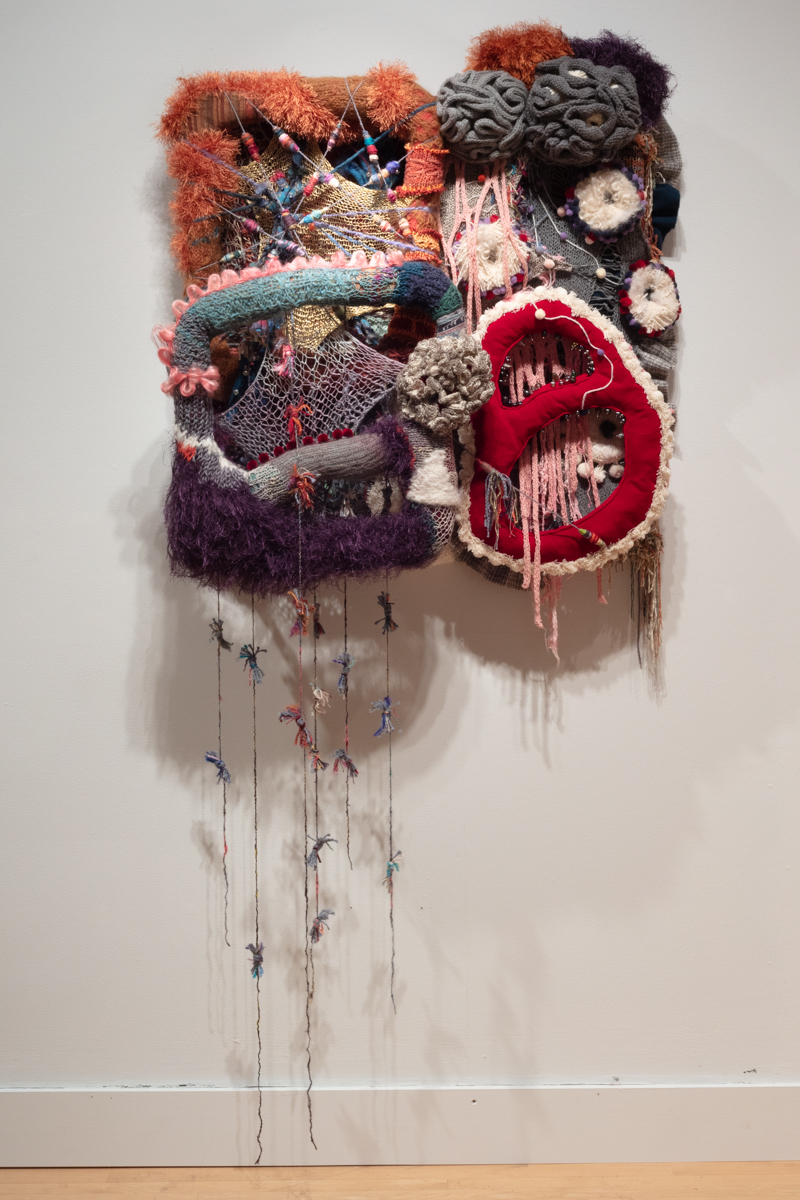
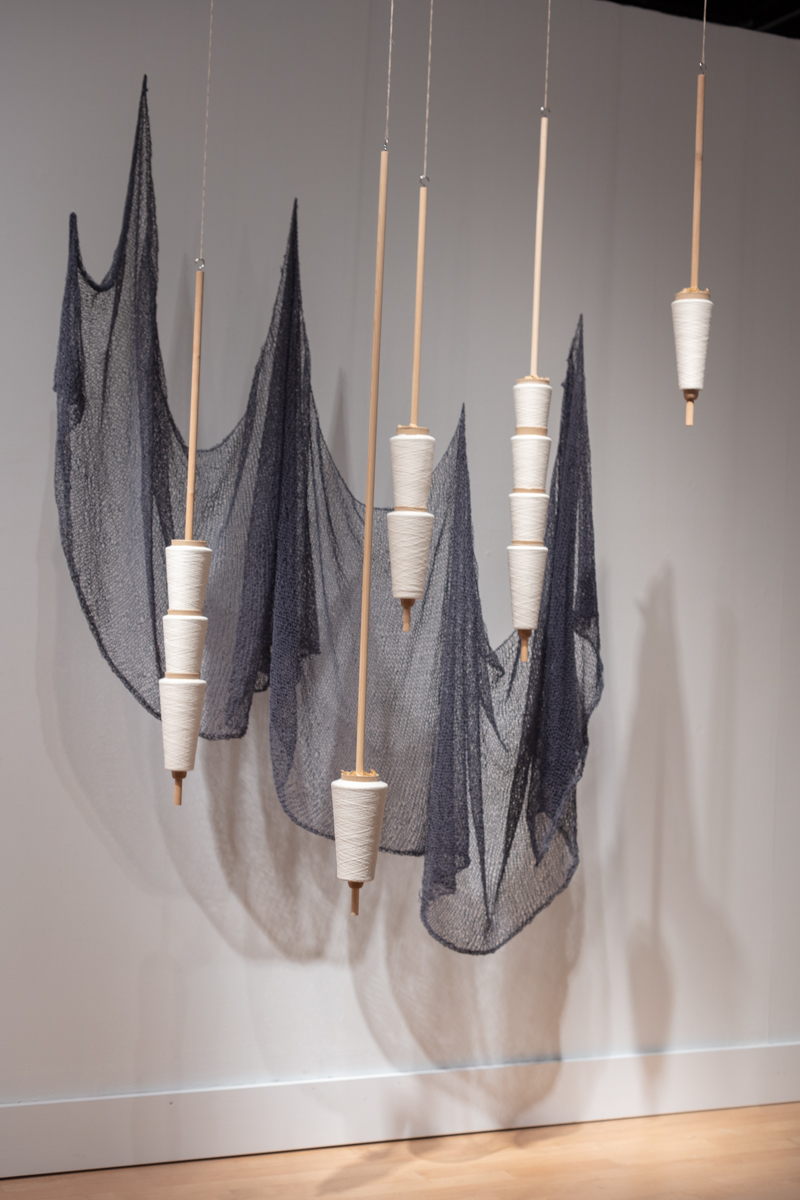
Unspooling  Cognition. Photo by Heather Braxton.

While Marmor typically works alone, in recent years she’s begun a series of collaborations. “I thought it would be interesting to work with women from UMBC. [Penny Rheingans] and I had talked about working together when I first came to UMBC, but timelines didn’t work out.” Marmor said. “I knew Robin [Farabaugh] as a writer and I really wanted to work with a writer because I often use text in my work. The timing was good for them both.”  

Unspooling is a textile-based installation created with Rheingans—a former professor of computer science and director of the Center for Women in Technology at UMBC who is now on the faculty at the University of Maine. 

“I’ve worked for a long time with technology, using computers to mediate the environment, using sensors and interaction with people’s presence,” said Marmor. “This new work is a pause or break from technology. We wanted people to come in and get a different sense of the body. We see that there’s a decay, or a sense of unspooling, and unwrapping of daily life.”

Rheingans, an accomplished knitter, added new dimensions to the work. 

Unspooling   Self. Photo by Heather Braxton.

“She’s a fabulous knitter, and a dedicated collector,” said Marmor. “She gave me all these materials to work with. I fell in love with yarn. It’s a really accessible material, fun to work with and it hinged on craft. My work has always been tactile and sculptural, but this was change for me.” 

Comprising four vivid mixed-media sculptures, the piece charts vulnerabilities of aging women, including cognition, reproduction, appearance, self and autonomy. Echoing Suzanne Valadon’s “The Blue Room,” which depicts a middle-aged woman reclining on a day bed, together the pieces form an abstract portrait of a complete body. 

“The Blue Room’ is one of my favorite paintings by a woman about being a woman, present and in her body,” Marmor says. 

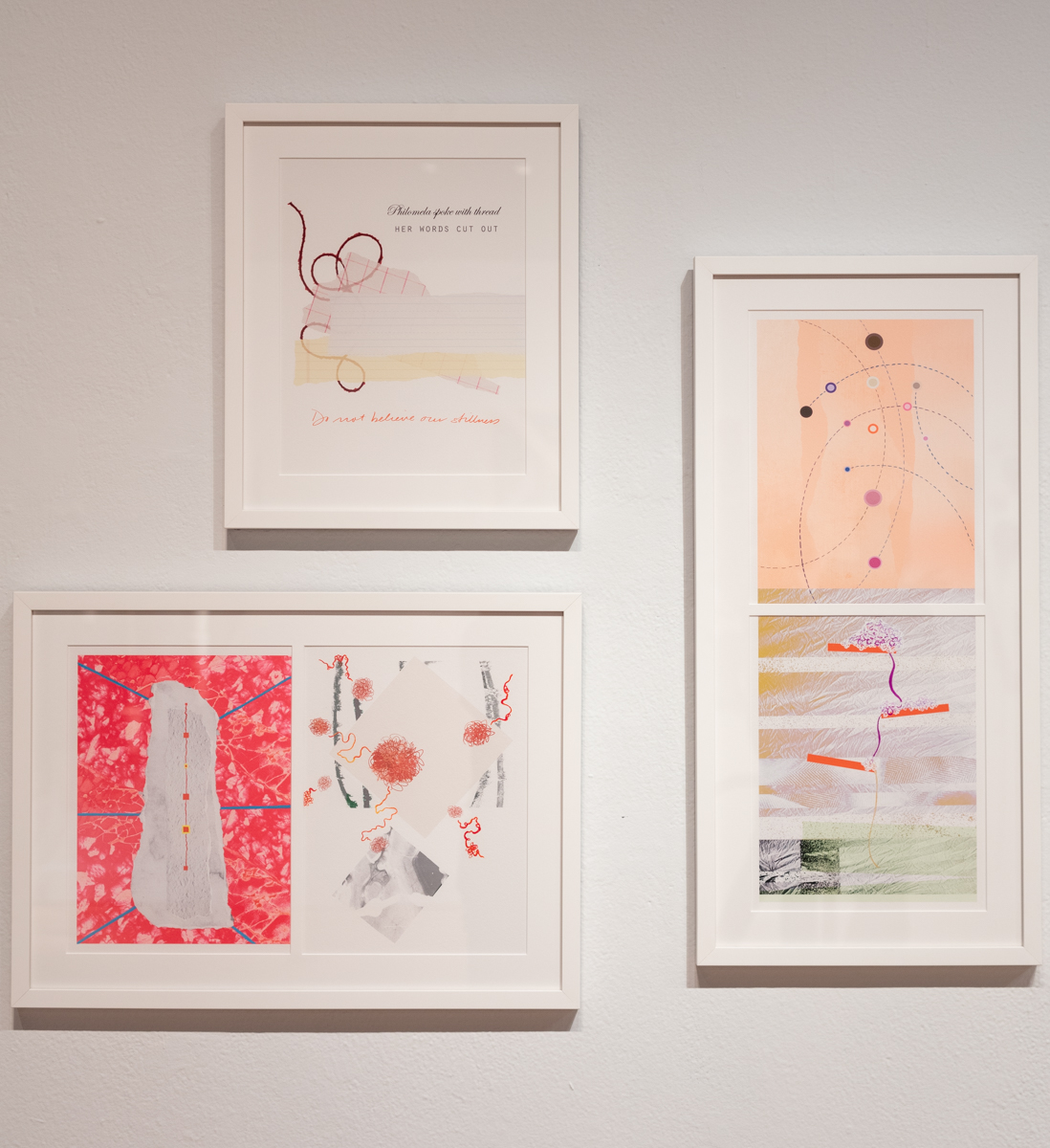
The second piece, Philomela’s Thread: a Commonplace book, was created with Robin Farabaugh, an essayist and former senior lecturer in UMBC’s English department. Consisting of ten prints and a single channel video, the pieces draw on the classic Greek tragedy of Philomela, a princess who was violently silenced. 

“I really wanted to work with a writer because I often use text in my work,” said Marmor. “[Farabaugh] had never worked with a visual artist before, so it was an adventure.” 

Historically, commonplace books were kept by men as personal compendiums of knowledge. Notable men like John Locke and Thomas Jefferson were famous for their commonplace books as reference works and historical documents. Women, Marmor notes, also kept commonplace books, but they tended to serve a different purpose. 

“Women were taught to read, but not allowed to go on with education, so one way in which women taught themselves and had a sense of themselves is by keeping commonplace books,” said Marmor. “They’d put many things in them, recipes, letters, scriptures, writings and poems they would come across, these miscellanies of their lives. That’s how women understood themselves.”

A close up of three prints from Philomela’s Thread: a Commonplace Book. Photo by Heather Braxton.

The ten prints in Philomela’s Thread combine abstract images that simultaneously recall Hilma af Klint and Alexander Calder, peppered with Farabaugh’s text. 

“Robin wrote these beautiful words which we distilled so that each one is about paper, thread and voice through the centuries,” said Marmor. “I really wanted to make it clear that the way in which women have recorded the stories of their lives has changed over time. We depicted the digital stylus to ask how will the life experiences of women be preserved now in this contemporary digital age?”

The four-minute video loop that stands as the centerpiece of Philomela’s Thread takes a more linear narrative form, centering on a story of love and loss. 

“It’s moving through the story of a woman’s desire for her sexuality, getting older, and then the loss of her family. I think it really captures our understanding of the world, like a memory, or an inner space,” said Marmor. 

Marmor’s work remains on display through March 12, with a closing reception 5 p.m. to 7 p.m. March 10. For those who are unable to visit the gallery in person, the entire Spectrum 2022 exhibition can be viewed via the CADVC website

Header image: Philomela’s Thread: a Commonplace Book — 10 gouache and giclee prints that depict a multiplicity of threads that make up a woman’s life and a single channel video that voices to her inner thoughts. Photo by Heather Braxton.

Jules Rosskam’s Desire Lines awarded a 2021 Creative Capital prize

Filmmaker Jules Rosskam, assistant professor in the Department of Visual Arts at UMBC, was awarded a prestigious Creative Capital Award in 2021 to support production of his new feature film, Desire Lines

One of the most sought-after prizes in the art world, each year Creative Capital distributes awards to artists to fuel significant projects. Creative Capital recipients are a who’s-who of the art world, including artists like Wu Tsang, Cassils, Barbara Hammer, and Meredith Monk receiving up to $50,000 to fund new works. In 2021, 42 artists and 35 projects spanning all disciplines were awarded Creative Capital awards.

Building on Rosskam’s body of work devoted to examining liminal spaces—the margins inhabited by trans people and artists blurring boundaries in genre and method—Desire Lines explores the ways that trans men emerge into gay sexual attractions during transition, and the ways that these narratives have historically been suppressed.  

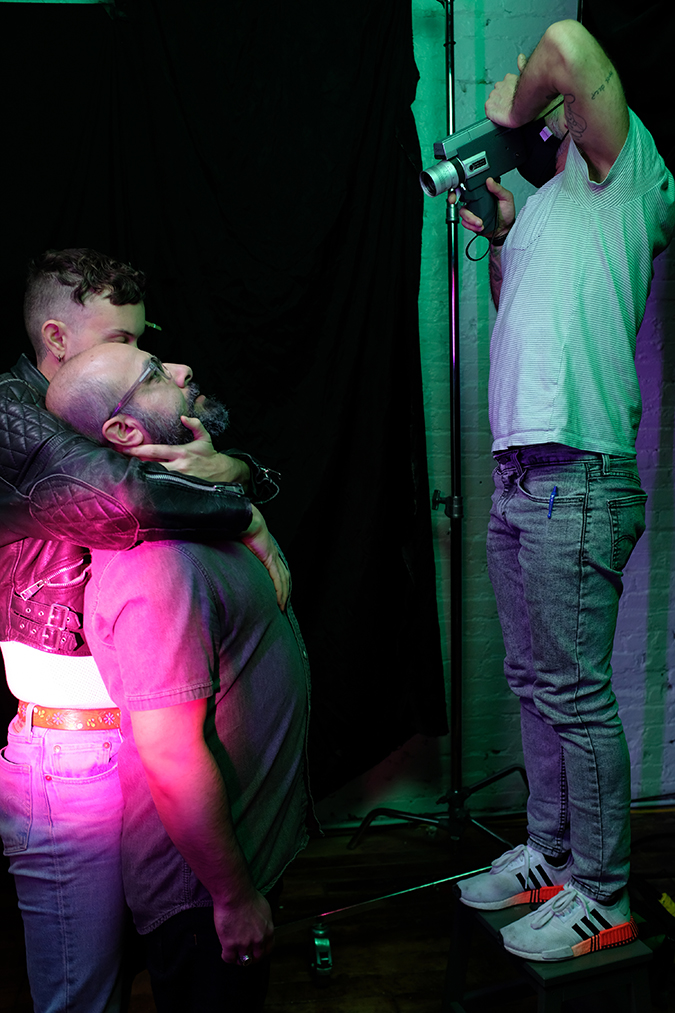
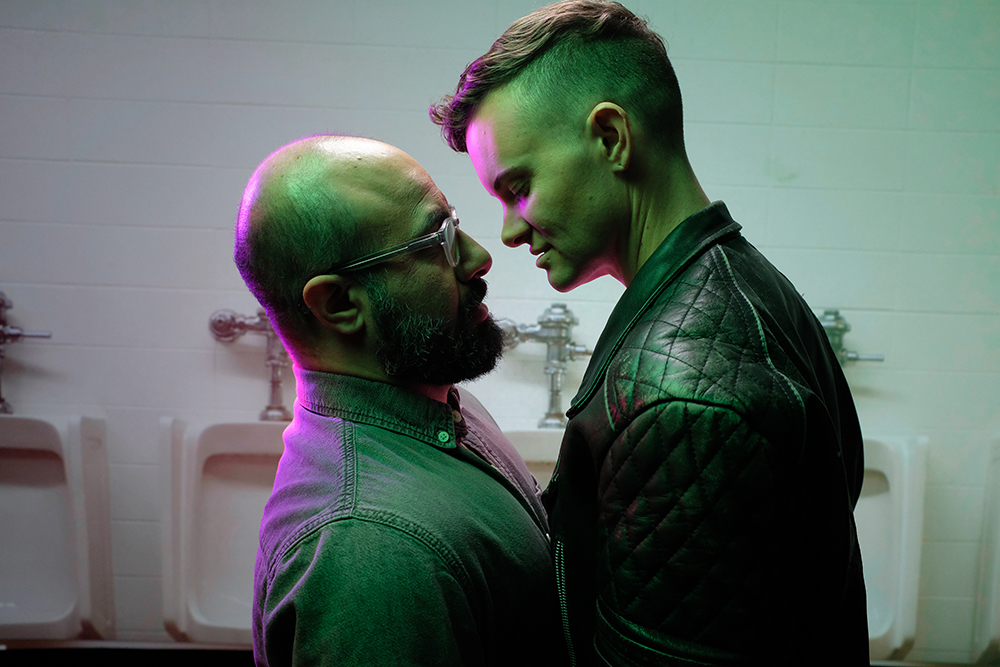
Behind the scenes, filming Desire Lines, Jules Rosskam (top right), Aden Hakimi, and Cyd Nova; photographer Emilia Aghamirzai.

Examining the Margins

“Trans people, people of color, queer people, we are so often written out of history, and [struggle] through those silences, and institutions not feeling like our lives are worth documenting,” Rosskam says.  

According to the 2015 U.S. Transgender Survey, 23 percent of trans people identify as exclusively gay/lesbian, with 48 percent identifying as queer or bisexual. Only 23 percent of trans people define themselves as heterosexual—meaning that trans men attracted to other men is a common experience, even though the histories of this phenomenon have been hidden. 

“The impetus is that for the last 20 years I’ve been watching the trans community, and seeing when folks come out as trans men and develop an attraction for other men. It’s felt like no one was having, like, a meaningful dialogue about it, and I, honestly, for the last 10 years have been waiting for someone else to make the film about this,” says Rosskam. “Finally, I said, okay, I’ve been thinking about this for 20 years, I think I have to make a film about it.”

Desire Lines centers its narrative on a gay-identified trans man seeking information on these hidden histories and begins the search by delving into researching archives. 

“I think many trans and queer people can relate to searching for evidence of their own existence,” says Rosskam. “We go with him into this archive, and engage a lot of different material about trans masculinity and queer culture and bathhouses—and find people like Lou Sullivan, who, to the best of our knowledge, was the first gay-identified trans man in North America.”

Indeed, Lou Sullivan looms as a significant historical transgender figure. Sullivan, who died in 1991 from AIDS-related complications, left behind 30 years of diaries detailing his transitional journey, and these diaries were published to great fanfare in 2019. A pair of recent short films have helped elevate greater awareness of Sullivan’s life. 

Aden Hakimi (as Ahmad) and Cyd Nova (as Stranger) in Desire Lines, photographer Emilia Aghamirzai

Hybrid storytelling

While Rosskam brings Sullivan into the picture, Desire Lines resists the urge to become a traditional documentary. 

“I typically describe my work as experimental nonfiction. I am almost always working in a hybrid space between fiction and nonfiction, because that to me feels very trans, and I think it’s important in the work to unsettle that line. People think the line between fiction and reality is so clear—when in fact, it’s not,” Rosskam says, indicating that speculative fiction methods play into the film’s narrative. 

“In the process of our character researching his own existence, he writes himself into history. Throughout the film, he actually creates evidence of his own existence by simply engaging with the past. And so it begs this question about the ways I think trans people experience time in a nonlinear fashion, where the past is always influencing the present. We have to be able to imagine ourselves into existence in order to exist. It’s about the power of fantasy and desire to make real,” says Rosskam. “The space that the film exists in is both a kind of hybrid space of an archive, and a bath house.”

While bath houses may seem like a distant memory for some, they remain a significant site of community building for many gay-identified people, including trans men.  

“In those early conversations I was having with people, I was rather surprised to find out how many of them talked about going to gay bath houses, and how big of a role going to the bath house had played, like coming to accept their bodies as trans men. It’s a place where many men go to have sex with other men, trans or cis, but it’s also a community space where people would connect.”

The bath house also looms as a sort of archive in Rosskam’s perspective, providing communication of intergenerational experience. 

“As queer and trans people, our histories are generally passed from person to person, and there’s a lot of emphasis on intergenerational relationships, and so younger people really are learning how to be themselves through close contact with people who are older than them. As a trans masculine person. I know a lot of young trans people, but I personally know [only] two transmasculine people who are over the age of 60. I don’t feel like I ever got that mentorship from older trans people.”

Desire Lines is currently in production, with documentary footage being shot in Chicago this winter and an expected release date of early 2024.