
All posts by: UMBC News Staff


AIRS Takes to the Sky

New Approaches to Real-World Problems

AQUA, NASA's latest Earth observing satellite, successfully launched from California's Vandenberg Air Force Base carrying the Atmospheric Infared Sounder (AIRS), developed in part by Larrabee Strow's Atmospheric Spectroscopy Laboratory at UMBC.
AQUA, NASA’s latest Earth observing satellite, successfully launched from California’s Vandenberg Air Force Base carrying the Atmospheric Infared Sounder (AIRS), developed in part by Larrabee Strow’s Atmospheric Spectroscopy Laboratory at UMBC.

“AIRS Takes to the Sky”
At 2:55 a.m. Pacific time on May 4, the world’s understanding of the mystery of global climate change and the art of improved weather prediction took a great leap forward, thanks in part to the ingenuity of a team of researchers led by UMBC Professor of Physics Larrabee Strow.
As AQUA, NASA’s latest Earth observing satellite, successfully launched from California’s Vandenberg Air Force Base, it carried the Atmospheric Infrared Sounder (AIRS), a “Cadillac” of satellite instrumentation developed in part by Strow’s seven-person research group, the Atmospheric Spectroscopy Laboratory.
AIRS’ job is to take the most accurate measurements to date of our planet’s air and surface temperature, humidity and clouds. In about two months, AIRS data will begin helping the National Weather Service, National Oceanic and Atmospheric Administration  and weather services in the United Kingdom, France and other European Union countries to make better prediction models.
“The big hope is to increase the quality of long-range, four to five day forecasts,” says Strow. “It should also help with hurricane prediction and lowering the number of forecast busts.”
UMBC Assistant Professor of Physics Wallace McMillan is working with the AIRS team to validate the instrument data, and scientists from UMBC’s Joint Center for Earth Systems Technology (JCET) are also involved. The AQUA team is a global one, with members from Brazil, France, Italy and Australia. AQUA is part of NASA’s Earth Science Enterprise, a long-term research project to determine how manmade and natural changes are affecting our global environment.


Making Meaning Move

Hands-On From the Start

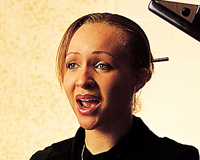
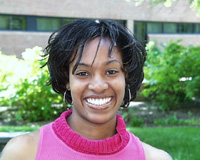
Jenafer Herling is a dance major at UMBC.

“Making Meaning Move”
In UMBC’s dance department, students engage in research by developing their own choreographic work—with the studio as their laboratory—both on campus and at dance festivals across the country.
Dance major Jenafer Herling is one of approximately 50 undergraduates who will present research at the Sixth Annual Undergraduate Research and Creative Achievement Day on April 17 (Graduate Research Day is April 19). She will discuss the creation of Picking Up the Pieces, which she choreographed after participating in the Bates Dance Festival last summer. At the festival, she had the opportunity to work with noted choreographers Liz Lerman and Nancy Stark Smith.                          
Doug Hamby, associate professor of dance, says, “I strongly suggest that dance majors study at internationally recognized summer workshops such as the Bates and American Dance Festivals. In this way, students can see what a full-time dance life is like, compare their abilities with other college students and network.”
Herling says the festival experience was very important to the development of her dance. “My research objectives were accomplished through the intensive study of both contact improvisation technique—a form of partnering—and a full investigation into the different ways to generate movement. For example, Liz Lerman taught an exercise where one person interviews another, and takes note of the gestures used by the interviewee. Naturally the interview is about the subject matter that the dance is exploring. This allows the chorographer to reveal meaning about a particular issue without being overly literal or theatrical. Exercises like this allow one to use dance to speak about concepts and social issues.
“My extensive studies of partnering at Bates Dance Festival, as well as my previous training at UMBC, gave me the skills to safely use risky partnering in Picking Up the Pieces,” she adds.
Respected dance professionals at The American College Dance Festival (ACDF) recently adjudicated Picking Up the Pieces. Herling says ACDF was a great opportunity to disseminate her research findings to a large audience, and to gain insight into the success of her research. Picking Up the Pieces was said to be “intriguing, effective and enigmatic.”


Answers in the Sky and the Classroom

A Place to Learn Together

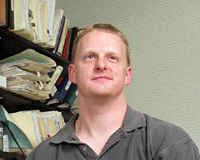
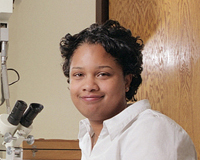
Michele McCourt, atmospheric physics Ph.D. student and GEST fellow at UMBC.

“Answers in the Sky and the Classroom”
Michele McCourt, atmospheric physics Ph.D. student, looks to the sky to understand the physics of carbon monoxide produced on earth. McCourt is a GEST (Goddard Earth Sciences and Technology) fellow in atmospheric physics at UMBC.
For her dissertation, McCourt studies the effects of biomass burning in southern Africa on the earth’s troposphere. “Fires burning to clear fields for cropland in the southern hemisphere produce roughly as much troposphere carbon monoxide as cars and industrial parks do in the northern hemisphere,” she says. McCourt analyzes data collected from the international Southern Africa Regional Science Initiative (SAFARI 2000) to examine the correlation between carbon monoxide and biomass burning to better understand how these small scale but widespread fires affect the overall global climate.
McCourt first became interested in physics during a basic physics class she took as an undergraduate at Lenoir-Rhyne College in Hickory, N.C. “At the time, I wanted to be a high school math teacher,” says McCourt. “I enrolled in the required physics class for non-majors, and my professor encouraged me to take the calculus-based physics class instead. I just kept taking more classes.” In the end, she graduated with a double major in mathematics and physics.
Today, McCourt asks, “How can you not be interested in physics? It’s something everyone uses every day of their lives.” Her goal is to continue her research on the environment and in the process make her findings and subject matter more accessible.
“After I graduate I would like to obtain a faculty position at a university. I want to teach the basic physics classes for non-physics majors. There are a lot of students who are frustrated by physics. There is so much that can be done to encourage more students, especially women, to study physics,” McCourt says. At UMBC, the physics department makes a conscious effort to recruit women into the program. The national average for women students in graduate physics programs is 10 percent; at UMBC it is roughly 25 percent.
Her first year at UMBC, she was a teaching assistant for her advisor W. Wallace McMillan, assistant professor of physics and an affiliate JCET professor. “He taught the basic physics lecture for non-majors with over 70 students in the class. Not only did he know their names, but also how each of them was doing in the course. He made physics fun. That’s the kind of teacher I want to be,” says McCourt.


Learning from Post World War II Germany

Connecting Ideas

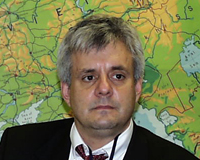
Rebecca Boehling is researching denazification in post-WW II Germany.

“Learning from Post-World War II Germany”
UMBC faculty are recognized for creating new perspectives in history and often help shape the present and future by serving as advisors to governmental and organizational programs.
Rebecca Boehling, associate professor and graduate director in the Department of History, is researching denazification in post-World War II Germany under Allied occupation. Denazification was an important part of the Allies’ program to transform Germany from an authoritarian state into a democratic nation that would again cooperate in international life. Boehling proposes that because there was not a structural change-oriented, consistent approach to denazification during the U.S. occupation period, there were lasting repercussions for postwar German society as well as for the victims of Nazism and the international community.
She is currently serving on an historians’ advisory panel to the U.S. government that helps oversee the declassification of U.S. government documents related to Nazi and Imperial Japanese war crimes committed during World War II. This declassification project is based on the Nazi War Crimes Disclosure Act that former President Clinton signed into law in January 1999.
In the fall of 2000, Boehling received a fellowship at the Center for Advanced Holocaust Studies, part of the United States Holocaust Museum in Washington, D.C. She says, “The invited lecture that I gave on denazification prior to my fellowship drew a considerable audience. In fact, it was this experience and the many follow-up inquiries from the audience, journalists and Justice Department officials that convinced me this was a topic that Americans wanted and needed to understand better. That was why I decided to apply for the fellowship.”
Boehling was able to help museum staff answer inquiries from Holocaust survivors and their families about the denazification process itself as well as about where records of individual denazification proceedings could be found. After starting the research there, she went on last summer to begin the primary research in archives in Germany, where she hopes to return this summer.
Boehling’s work on denazification is intended to result in a book that compares the practice in the three Western zones (British, French, U.S.) of occupied Germany from 1945 until 1952.


A Fresh Start for High-Risk Children

New Approaches to Real World Problems

UMBC Ph.D. student Christina Reiner Hess helps high-risk children get a fresh start at life.

“A Fresh Start for High-Risk Children”
Christine Reiner Hess, a Ph.D. student in UMBC’s applied developmental psychology graduate program, helps high-risk children get a fresh start at life.
Hess has always had a strong interest in child psychology. When she read about the child intervention work that Douglas Teti, professor of psychology at UMBC, was conducting, she knew she wanted to work in applied developmental psychology.
At the time, Teti was studying how mothers adjusted after giving birth to infants hospitalized in a neonatal intensive care unit due to prematurity and low birth weight. “I was fortunate to be able to join the project and complete my master’s thesis from the findings,” says Hess. For her thesis, Hess examined the role of personal and professional support in mothers’ adjustment to their medically at-risk infants, and the moderating effect of child characteristics in predicting maternal adjustment.
“The applied developmental psychology program at UMBC has helped me gain valuable clinical and research experience through my practicum and research opportunities. The program is flexible; I’m able to choose specialty classes and experiences that allow me to learn about and work with high-risk populations of children,” says Hess.
The program’s focus on in-depth practicum experiences gives students such as Hess opportunities to define their areas of interests through hands-on, applied research experiences. Currently, Hess works with infants and toddlers in the Neonatal Intensive Care Unit Follow-up Clinic at the University of Maryland Medical System (UMMS). She conducts developmental assessments with high-risk, preterm and low-birth-weight infants and toddlers.
For her dissertation, Hess is examining whether a biological versus environmental risk index is a better predictor of child development in the first few months of life for medically at-risk infants. In addition, she is examining how maternal confidence and maternal knowledge of infant development predict the quality of mother-infant play interactions. After receiving her Ph.D. in May, Hess plans to continue her work with at-risk children at UMBC through a post-doctoral research position.


UMBC’s First Division I Champion

A University That Knows How to Win

Cleopatra Borel won the women's shot put in the NCAA Division I Track and Field Championships.
Cleopatra Borel won the women’s shot put in the NCAA Division I Track and Field Championships.

“UMBC’s First Division I Champion”
UMBC Retrievers know how to win both on and off the field.
Senior Cleopatra Borel won the women’s shot put in the NCAA Division I Track and Field Championships, held at the University of Arkansas’ Randal Tyson Track Center on March 9. Borel’s next-to-last throw, a personal best of 17.50 meters (57’5″), outdistanced Kansas State’s Austra Skujyte (55’9″) and Iowa State’s Lisa Griebel (54’10.25″) to capture UMBC’s first Division I national title.
“Last year was my first time competing in the national championships, and I was nervous. But the competition is a lot of fun, something I always look forward to,” said Borel, who is an academic star as well, maintaining a 3.4 GPA.
A native of Trinidad and Tobago, Borel earned a pair of All America citations last season, with top eight finishes in the shot put at both the indoor and outdoor championships. She credits preparation as the key to her success.
Borel is an interdisciplinary studies major focusing on “Studies in Health Psychology.” She plans on attending graduate school after leaving UMBC, but may have to delay while she trains for the 2004 Olympics in Athens, Greece.
ESPN2 aired Borel’s winning throw on Sunday, March 10. Hear an interview with Borel at http://www.sportscastproductionsinc.com/Media/WSP.htm.


20 Years of Women’s Studies at UMBC

became director of the Center for Women & Information Technology. McCann is known for her scholarly contributions to the history of American reproductive politics in the 20th century, and her book Birth Control Politics in the United States, 1916-1945 (Cornell University Press, 1994), was the first to place the birth control debate in the wider political context of the period. McCann is working on a follow-up, Birth Control, Eugenics and the Foundations of Demography, under contract with the University of Pennsylvania Press, which examines gender and race in international population politics after 1945. This year, Routledge will publish McCann’s Feminist Theory Reader: Local and Global Perspectives, co-edited with Seung-kyung Kim of the University of Maryland College Park.


The Power of Geography

Outstanding Results by Any Measure

 
Sari Bennett, director of geographic education, works with educators to strengthen the teaching of geography.

“The Power of Geography”
  

For more than a decade, Sari Bennett has worked with educators in Maryland to strengthen the teaching of geography in grades K-12.  “All too often students think of geography only as maps or the memorization of place names. We’re working to show teachers and students the power of geography in understanding the world around us.”

As head of the Maryland Geographic Alliance, an initiative funded by the National Geographic Society (NGS) and the State of Maryland, Bennett has provided professional development programs for more than 8,000 teachers, including summer geography institutes at UMBC. Currently, she has a Grosvenor Grant from NGS to produce CD-ROMs with interactive activities for students to learn and apply important geographic concepts. These CD-ROMs and related activities will be disseminated to elementary teachers throughout Maryland.

A geography department faculty member since 1974, Bennett is the director of the Center for Geographic Education. She also served two years as “Geographer-in-Residence” at the National Geographic Society.


A Collaborative Approach to Improving Eldercare

A Place to Learn Together

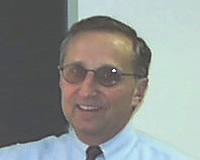
Kevin Eckert, professor of sociology and anthropology, is a prominent scholar in the field of gerontology.

“A Collaborative Approach to Improving Eldercare”
  

Kevin Eckert, professor of sociology and anthropology, and co-director (with Jay Magaziner) of the new interdisciplinary Gerontology Doctoral Program with University of Maryland Baltimore, frequently works with other prominent scholars to advance the field of gerontology. Most recently, he has co-authored a new book, Assisted Living: Needs, Practices, and Policies in Residential Care for the Elderly (with S. Zimmerman and P.D. Sloane of UNC Chapel Hill), published by Johns Hopkins University Press.
Additionally, he is embarking on a new four-year, $1.7 million study — with UMBC sociology professors Robert Rubinstein and Leslie Morgan and UNC Chapel Hill’s Cheryl Zimmerman — titled “Transitions from Assisted Living: Sociocultural Aspects” and funded by the National Institute on Aging. Combined funding for the sociology department’s new Center for Aging Studies now exceeds $3 million.
In 1999, Eckert’s numerous collaborative projects led the University System of Maryland Board of Regents to honor him with a Regents Faculty Award for Excellence in Collaboration. Through his partnerships with the University of Maryland School of Medicine, Eckert has illuminated the medical and functional outcomes of long-term care for the elderly in assisted-living facilities.
In addition to the new doctoral program in gerontology, he also was instrumental in developing the interdisciplinary Ph.D. program in language, literacy and culture, which involves five departments at UMBC and faculty from four other University System of Maryland (USM) campuses. His contribution included the course “Cyberspace, Culture and Society,” developed out of his interest in the effects of electronic technologies on culture and society.
   

An Advocate for the Liberal Arts

Outstanding Results by Any Measure

Jay Freyman has inspired a tradition of mentoring at UMBC.

“An Advocate for the Liberal Arts”
  

Ancient studies professor Jay Freyman, a member of the faculty since 1968 and director of the Honors College, is a tireless advocate for the liberal arts and a role model, personal counselor, career advisor, and mentor to hundreds–if not thousands–of UMBC students. His actions have inspired a tradition of mentoring at UMBC, and he was instrumental in UMBC’s successful application for Phi Beta Kappa, serving as the chapter’s first president. In 1999, he received one of the University System of Maryland Board of Regents’ highest honors, a Regents Faculty Award for Excellence in Mentoring.
As director of the Honors College, Freyman visits Maryland high schools to recruit students for the Honors College and the ancient studies program. His mentoring and service also extends to the community, including working with The Associated Jewish Community Federation of Baltimore assisting Russian immigrants with the development of conversational English skills.
   

Teaching That Makes a Difference

Outstanding Results by Any Measure

Clinical Associate Professor of Education John Lee works with teachers enrolled in Project SUPPORT, UMBC's urban teacher-training program.
Clinical Associate Professor of Education John Lee works with teachers enrolled in Project SUPPORT, UMBC’s urban teacher-training program.

“Teaching That Makes a Difference”
  

UMBC is a leader in assisting Maryland’s most troubled public schools through Project SUPPORT (School-University Partnership to Prepare Outstanding Responsive Teachers), a remarkably successful federally funded program that will ultimately place 1,100 teachers in Baltimore City and hundreds more in Anne Arundel and Baltimore Counties.
“Our school-university partnerships will break a tradition of neglect by recruiting, preparing, mentoring and retaining the high-quality teachers necessary to improve student learning and achievement,” says UMBC Clinical Associate Professor of Education John Lee, who heads the project.
The program is a win-win for public school students, their schools and UMBC’s urban teachers-in-training. UMBC’s teacher trainees receive tuition support for their master’s level studies and undertake apprenticeships with veteran teachers in the school system. By year-end, UMBC will have 150 urban teacher graduates.
In turn, the program’s public school partners are promised that UMBC teacher candidates will sign on for five years. As a result, teacher attrition in many of these schools is down. Moreover, in schools where UMBC has provided academic services, student achievement has soared.
   

An Eye on Air Quality

Outstanding Results by Any Measure

Economist Virginia McConnell's teaching and research reflect her interest in the intersection of urban and environmental problems.
Economist Virginia McConnell’s teaching and research reflect her interest in the intersection of urban and environmental problems.

“An Eye on Air Quality”
  

As a environmental economist focusing on transportation issues, Virginia McConnell knows a lot about cars and trucks – more specifically, the impact of policies to reduce air pollution through vehicle emissions regulations, inspection and maintenance programs, fuel regulations, emission taxes and land use changes. She became interested in the intersection of urban and environmental problems as a graduate student, and has taught and pursued research in these areas ever since. Her recent work is on differential fuel taxes for introducing cleaner fuels, and land use policy changes and their impact on air quality. She enjoys working on these projects with students in the Economics department’s new M.A. in Economic Policy Analysis. 
An economics department faculty member at UMBC since 1982, McConnell also serves as a senior fellow in the Quality of the Environment Division of Resources for the Future, where she works with other environmental economists on air pollution policies. She recently served on a National Academy of Sciences panel examining vehicle emissions policies, and is currently a member of several Environmental Protection Agency advisory committees.