
All posts by: UMBC News Staff


Exploring the Neurosciences

Hands-On From the Start

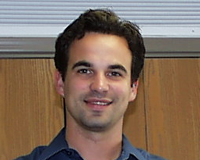
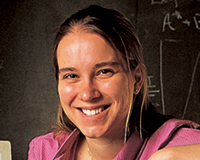
  Shahza Somerville
Shahza Somerville is a Ph.D. student in UMBC’s Neurosciences and Cognitive Sciences Ph.D. Program and a Meyerhoff Graduate Fellow.

“Exploring the Neurosciences”

“Neuroscience is a relatively new area and the more I read the more I realize how much research needs to be done. I feel like it’s my calling to advance this field that could help so many people. I’m interested in both biology and psychiatry, so to be able to merge the two is wonderful,” says Shahza Somerville, a Ph.D. student in UMBC’s new Neurosciences and Cognitive Sciences Ph.D. Program (NACS) and a Meyerhoff Graduate Fellow.

A graduate of Morgan State University, Somerville was impressed with the opportunities her sister Karla received at UMBC as a Meyerhoff Graduate Fellow. (Karla graduated in December with a Ph.D. in chemistry.) Fellows receive tuition, yearly stipends and health benefits and are mentored by faculty who are leaders in their fields. Before her first semester, Somerville completed the NIH Meyerhoff Summer Bridge Program for Graduate Fellows, which she says was especially helpful as she began her UMBC career. “Because I took a class and completed one lab rotation during the Summer Bridge Program, by the time my first semester at UMBC began I had already met other students and started my research. I felt like I was part of the campus and had a sense of direction about my work,” she explains.   

Somerville says she chose UMBC’s tri-institutional NACS Ph.D. program because she could also access courses at its partner schools—the University of Maryland Baltimore (UMB) School of Medicine and the University of Maryland, College Park—and take advantage of a wide range of research and training opportunities. UMBC’s campus is in close proximity to the Maryland Psychiatric Research Center (MPRC), part of the Department of Psychiatry at UMB. MPRC faculty offer NACS students relevant coursework and graduate training opportunities.

Somerville is conducting research on schizophrenia with Dr. Rosalinda Roberts at the MPRC. Studies show that there is a lower metabolism in the frontal lobe and striatum of schizophrenic patients that has been linked to auditory hallucinations. Somerville is looking at the morphology of mitochondria—energy producing organelles—to see if it is altered in schizophrenic postmortem tissue. She hopes to present a paper on her research at this year’s Society for Neuroscience conference, which draws scientists from around the world.

She is also interested in pharmaceutical research and neurodegenerative diseases such as Alzheimers and Parkinsons, as well as teaching. There are a lot of career decisions to be made, but Somerville says she’ll focus on “whatever way I can make the greatest impact.”


Broadway Bound

Hands-On From the Start

Kriste Belt is a music major and Linehan Artist Scholar at UMBC.

“Broadway Bound”
 
Kriste Belt has a passion for performance. “I’ve always wanted to be on Broadway – that’s my number one aspiration,” she says. “Being a well-rounded person will help me achieve that dream.”
Belt selected UMBC after visiting top-notch universities and conservatories across the country. “I chose UMBC because of the incredible faculty and the amount of care they give to help students grow,” she explains. “I get a solid liberal arts education, and the intimacy of the campus helps me learn about many disciplines, including music, dance and theatre.”
As a music major and a Linehan Artist Scholar, a program for UMBC students pursuing a degree in the visual and performing arts, Belt has the opportunity to participate in both performance and research. She worked with the music department’s Collegium Musicum Ensemble on a scholarly study of two compositions by George Handel, and will embark on new research this year.
Most recently, Belt spent three months as an apprentice for the Broadway Theatre Project in Tampa, Florida, where she took workshops and participated in special performances with world-renowned actors, directors and choreographers. “It was the single most amazing experience of my life,” she explains. “I worked one-on-one with performers such as Ann Reinking, Gregory Hines, Ben Vereen, George Hamilton, Dave Clemmons and Debbie McWaters.”
In addition to being an active member of the UMBC Gospel Choir, Belt also performs in several shows a year with the Stephanie Powell Dance Company, the Maryland Arts Festival and the Columbia Community Players.
After graduation, Belt plans to continue her education and pursue a master’s degree with an emphasis on vocal performance. “I want to continue to take classes at the graduate level to prepare myself for Broadway,” she says.


The Art and Science of Research

Outstanding Results by Any Measure

Kevin Griffith, who received a M.S. in applied molecular biology and a Ph.D. in molecular and cell biology from UMBC, is on his way to a post-doctoral fellowship at MIT.

“The Art and Science of Research”
 
When Kevin Griffith came to UMBC for a master’s in 1996, he didn’t expect to stay for another six years. But after completing the one-year program in Applied Molecular Biology (AMB), which prepares students for high-level technical positions in the biotechnology industry, Griffith was hooked on research and entered UMBC’s Molecular and Cell Biology doctoral program. (The MOCB Ph.D. program was designed in part with such students in mind, since the AMB program fulfills many of the course requirements.)
“Research is challenging,” says Griffith, “yet very rewarding.” In addition to the challenge, Griffith also likes the freedom it offers, both in the work environment (“it’s not like work really, it’s more like an exciting game”) and in the intellectual pursuit (“understanding the complexities of ‘mother nature’ is intriguing to me…one never really knows which direction the research will turn next”).
In Griffith’s case, it has led him to MIT, where he will be working as a post-doctoral fellow in the lab of Dr. Alan Grossman, whom he first met at a national meeting where Griffith presented a paper on his recent research. His advice for other Ph.D. students seeking post-doctoral positions in prestigious universities?  “Work hard; start your search for a post-doc early; share the information you’ve learned through publications; and never give up!”
Griffith, a first author on four papers, the most of any student in Dr. Rick Wolf’s lab at UMBC, initially focused his research on a genetic system that bacteria use to defend themselves against toxic forms of oxygen, some of which are formed during normal metabolic processes. But, as happens sometimes in science, work aimed at solving one problem can lead to unexpected discoveries of far greater impact and importance.  Such was the case with Griffith as his studies of SoxS, the mediator of the defense response against superoxide, led to the discovery of a new mechanism of transcription activation.  This was quite surprising because mechanisms of transcription activation in bacteria have been studied for more than thirty years. Thus, Griffith’s work has contributed not only to understanding the cell’s defense against toxic forms of oxygen, but also to the broader field of basic mechanisms of gene regulation. Moreover, extensions of his work may lead to the design of new forms of antibiotics.


The Dynamics of International Terrorism

A Place to Learn Together

John Munro teaches "Dynamics of International Terrorism" at UMBC.
John Munro teaches “Dynamics of International Terrorism” at UMBC.

“The Dynamics of International Terrorism”
 
For some students, summer session is traditionally a time for “lighter” coursework. But since the events of September 11, a course taught by political science professor and terrorism expert John Munro has students filling up the classroom and poring through books like Holy War, Inc. and Who Becomes a Terrorist and Why in an effort to better understand what has become the most important topic of our times.
Munro teaches “Dynamics of International Terrorism: National Policy Responses and Evolving Challenges.” He originally conceived the course to focus on domestic terror like the Oklahoma City bombing and the growth of para-military groups in the U.S. However, after September 11, Munro changed the format so that his students — many of who plan careers in politics, national security, law enforcement, or sociology — could focus on the international picture and how global terrorism is affecting American political institutions and everyday life.
He recently retired from Oak Ridge National Laboratory (ORNL) where he was a policy analyst focusing on environmental, nuclear waste and energy issues. His interest in terrorism began several years ago while working for ORNL on the demilitarization of chemical weapons. “I saw containers of extremely dangerous chemicals that were stored in locations that could be vulnerable to terrorist attack,” says Munro. “I was amazed that weapons with such a lethal potential were so poorly protected in some cases.”
Munro’s goal is to take students beyond the current war to the primary historical, political and economic causes of terrorism around the globe, and how the U.S. is rushing to adapt to this new breed of conflict. “Cold War era organizational compartmentalization and separation of the FBI, CIA and NSA helped to deter spying against us as we fight this new enemy. We’re in a mode of prevention and detection that requires analyzing and understanding information more quickly and getting it to the decision makers in real time. The problem now is not a lack of information, but the capacity to analyze and interpret data so that it is useful for intelligence purposes.”
An important facet of the class is being sure not to stereotype entire cultures based on a small minority, but also seeing the world from a different point of view.
“It’s my hope that young people will take from this class the knowledge of why terrorism happens and perhaps a better perspective on creative ways to help alleviate its causes,” says Munro. “The last thing we need is a never-ending series of wars that expend our youth and our natural resources. Education, critical minds are our Nation’s best defense against both terrorism and the potential of excesses in our war against terrorists.”


A New Approach to Teaching

Outstanding Results by Any Measure

Phillip Sokolove, professor of biological sciences, turned an introductory Biology 100 section into a lab for studying learning.

“A New Approach to Teaching”
 
Phillip Sokolove, professor of biological sciences, took time out from his own successful research to investigate ways to improve student learning. Based on his reputation as an outstanding teacher, Sokolove was invited to become UMBC’s representative in the Maryland Collaborative for Teacher Preparation, funded by the National Science Foundation. The goal was to develop a new approach to pre-service teaching training in science and mathematics that would produce teachers prepared to implement new best-practice teaching methods in upper elementary and middle school classrooms in Maryland.
With help and guidance from Susan Blunck in the education department, Sokolove turned an introductory Biology 100 section into a laboratory for studying learning, using peer interaction and problem solving in small learning groups; whole classroom discussions accomplished via wireless mics; name badges; short research papers; an emphasis on student questioning; and content driven by student interest. The result? High praise from students and academics alike.
Former student Jason Baker says, “Without question, Dr. Sokolove has been one of my finest teachers. I have benefited from his teaching in a variety of capacities: as a student in his Biology 100: Concepts of Biology course, as a research assistant and as an undergraduate teaching assistant. In my opinion, the bulk of his effectiveness lies in his cultivation of what he appropriately terms ‘active learning.’
“During the course of writing several investigative papers, we learned how to collaborate with our teams, find reliable sources of information and make informed conclusions,” Baker adds. “The lectures themselves were dynamic. He regularly incorporated visual elements and lively classroom activities. He related biology to everyday life. And his reputation for this in particular is what prompted so many non-science majors to take Biology 100.”
Sokolove, who recently received a Regents’ Faculty Award for Excellence in Teaching, is working with Lark Claassen on an NSF-funded comparative study of the investigative and traditionally taught Biology 100 classes. Sokolove’s short term studies with postdoctoral research assistant Gili Marbach-Ad resulted in a series of articles in education journals and presentations at national meetings.
“I’m glad that I could represent UMBC as one of the recipients of a Regents’ Award,” says Sokolove. “The fact that I was nominated by my peers was the most meaningful part of it. I was touched that they recognized the work I am doing.”


Close to Home

A Place to Learn Together

Rich Sponaugle, earned both a B.S. and an M.S. in information systems from UMBC.

“Close to Home”
Rich Sponaugle ’95 and ’97, B.S. and M.S. information systems, has come full circle. He is an instructor and the undergraduate program director for UMBC’s information systems program at the Shady Grove Center. The Universities at Shady Grove brings programs from eight universities in the University System of Maryland to the center in Rockville, Md. UMBC offers daytime, upper division classes at Shady Grove that lead to bachelor’s degrees in information systems and social work.
UMBC’s programs at Shady Grove offer transfer students, many of whom have earned associate’s degrees at Montgomery College, an opportunity to attain their educational goals close to home. A full-time information systems teacher and advisor, Sponaugle attended Montgomery College and transferred to UMBC where he earned both his bachelor’s and master’s degrees.
It was here at UMBC where Sponaugle started teaching as a graduate student. For several years, he taught seminars and gave presentations with the federal government; his colleagues noticed his ability to make technical topics understandable to a non-technical staff. This recognition encouraged Sponaugle to become more involved with internal education programs at his agency. And, what he discovered was pure enjoyment.
“Teaching has been an amazing experience both professionally and personally. It is very rewarding to watch students go through the process of learning new material,” says Sponaugle.
When UMBC joined the Universities at Shady Grove, Sponaugle saw an opportunity to teach. Not only did he have the convenience of location living and working in Montgomery County, but also a connection with his first generation college students who juggle family, studies and part-time job responsibilities.
“Had UMBC at Shady Grove been around when I was a student, it would have been the perfect fit for me,” says Sponaugle. At Shady Grove, the smaller class size and close associations with the faculty provide a unique, convenient opportunity for students who want to get a quality education right in their own backyard.”


A Master Teacher

Outstanding Results by Any Measure

Ed Orser, professor of American studies, at the Cowdensville A.M.E. Church. One of Orser's popular Community Studies Projects focused on the historic Cowdensville community.
Ed Orser, professor of American studies, at the Cowdensville A.M.E. Church. One of Orser’s popular Community Studies Projects focused on the historic Cowdensville community.

“A Master Teacher”
 
Professor of American Studies Edward Orser’s dedication to teaching always leaves an impression on his students. “He is the kind of teacher you want to do your best for. He is not only a role model for those who one day wish to teach, he also is an exemplar of what a teacher could and should be,” says alumna Donna Neutze.
A member of the faculty since 1969 and a 1998 UMBC Presidential Teaching Professor, Orser was recently recognized with a Regent’s Faculty Award for Excellence in Teaching. He credits his teaching with contributing in important ways to his own research. “I’m thrilled with the Regents Award because it affirms the emphasis we place at UMBC upon the importance of undergraduate teaching in the context of a research university,” he explains.
Orser’s Community Studies Projects provide American studies students with important research and fieldwork experiences. “The Community Studies Projects bring together the teaching, research and service missions of UMBC,” Orser says. “Students working with me have investigated social and cultural aspects of nearby communities, including those in the Patapsco Valley, Catonsville, Cowdensville (adjacent to the UMBC campus), Gywnns Falls and Leakin Parks, and Irvington, and we’ve presented  our findings in a variety of ways—public programs, exhibits and books and other publications. To me, this represents ‘applied American Studies,’ which goes beyond the classroom to engage in research and interpretation in socially meaningful ways—and with tremendous educational benefit!”
“There is no doubt Ed Orser is a master teacher,” says Patrice McDermott, chair of the Department of American Studies. “His courses are very well designed to balance lectures, discussions and a variety of writing, fieldwork and research opportunities. His core American studies courses have recruited and engaged many majors, while his community courses are always filled and are the envy of urban scholars across the country. Over the years, our department has received many notes and letters testifying to his lasting impact on our graduates’ lives—perhaps the best test of a teacher’s effectiveness.”


A Passion for Service

New Approaches to Real-World Problems

Victoria Vargas is a Shriver Peaceworker.

“A Passion for Service”
 
What do Idaho, Mozambique and UMBC all have in common? They all have played a vital role in the life of Victoria Vargas, a member of the Shriver Peaceworker Program, established by UMBC’s Shriver Center.
Born and raised in Twin Falls, Idaho, Vargas is the daughter of a migrant farm worker who believed that success for his eight children would come through hard work and a commitment to education. She has always had a passion for service and in 1998 she was accepted in the Peace Corps and traveled to Mozambique, where she taught English to eighth graders. “I like to travel, meet new people and experience new cultures. Seeing the world first hand is a great way to learn and grow,” Vargas says.
As Shriver Peaceworkers, Returned Peace Corp volunteers pursue graduate degrees while simultaneously working in a community service placement. Vargas is a research assistant with the Choice Program, a Baltimore community based intervention program that works with adjudicated youth from the ages of 9-18.  She has assisted Choice in designing an evaluation and is currently assisting the program in conducting a pilot study that focuses on resiliency. 
In May 2002, Vargas received her Master’s in Policy Sciences from UMBC. She was one of two UMBC graduates to be accepted into the Presidential Management Intern Program and has since accepted a position as with the Department of Housing and Urban Development where she will be working in the Southwest Border, Colonias and Migrant/Farmer Communities Section.
Of her Peaceworker experience, Vargas says, “When you oil the key of life with a quality education, every door of opportunity can be unlocked and a whole new world can be opened up for you to experience.”
On June 18, Vargas and returned Peace Corps Fellows from across the U.S. will be on campus to attend the annual Peace Corps Fellows Conference, designed to bring the Fellows together to facilitate idea generation and collaboration between community service programs.


Bringing New Insights to the Stage

Outstanding Results by Any Measure

 
Pictured left to right: Sarah Cassel (Cobweb), Sarah Painter (Moth) and Jillian Byrnes (Peablossom) from the Maryland Stage Company production of A Midsummer Night’s Dream.

“Bringing New Insights to the Stage”


The Maryland Stage Company (MSC) has gained renown—not just in the United States, but also in Europe—for its unique and elegant blend of theatrical stagecraft and research. Founded in 1987 by its artistic director and professor of theatre, Xerxes Mehta, the Maryland Stage Company is the professional resident theatre company at UMBC. It has been called “the UMBC miracle” by TheaterWeek magazine, and in 2000, during one of its two European tours, a German critic wrote in the Berliner Tagesspiege, “Anyone who missed these performances and who loves theatre should consider jetting to Baltimore, Maryland to see these astounding theatre artists on their home turf.” The Baltimore Sun has called the Maryland Stage Company’s physical production “stunning.” 

In 1997, Mehta arranged for the Maryland Stage Company to perform during the summer months at Center Stage in downtown Baltimore. There, to great acclaim, the company staged Tartuffe, The Seagull and Six Degrees of Separation. This month, the Maryland Stage Company returns to Center Stage with a production of Shakespeare’s comedy A Midsummer Night’s Dream. The production opens on June 20 and runs through July 7.

Mehta cites two driving forces for the founding and growth of the Maryland Stage Company. “Firstly, there was the need on the part of the professional faculty in our department—actors, directors, designers—to work with fellow professionals to create theatre, and to do it in a non-commercial way that would honor our training and pay respect not only to our own ideals but to the ideals of our profession at its best. Secondly, we were impatient with much of the professional work we saw around us. Many of us were trained in other parts of the world and most of what we saw in area theatres struck us as bland, risk-averse stagings of second-rate material that either avoided the great works in the literature altogether or staged them perfunctorily with little intellectual understanding and even less emotional courage. We wanted to do the research in our discipline that we were trained to do, which in our view meant taking a major work (old or new), tearing it apart in search of its core, and then presenting that in a way that would reinvent the work for a contemporary audience. In this way, we felt that we could stay fresh as artists, enrich the place where we live, serve as examples to our students, and most centrally, help to keep our art form alive.”

As always, many of UMBC’s alumni, faculty, staff and students lend their talents to this year’s production. Alumni on stage include John Wellmann, Sarah Painter, and Ben Thomas; alumni participating in the crew include Kate Revelle, Greggory S. Schraven, Jordan Best, Amanda Grandel, Kristina Huie, Stacy Teague, Rhoda Disbrow and Karen Foltz. While Wendy Salkind, chair of the Department of Theatre, is the sole member of the faculty on stage, many other faculty and staff are working behind the scenes, including Elena Zlotescu, William-John Tudor, Lynn Watson, Catherine Kafer and Shelley Steffens Joyce. UMBC students also have a hand in this production, with Matthew McGloin, Beverly Shannon, Olugbemiga Idowu, Sarah Cassel and Jillian Byrnes on stage, with Benjamin Pohlmeier, Paul Kelm, Jina Kim, Damon Meledones, Rob Kauzlarich, Greg Lemich, Angela Klecker, Eric Whitt Hilker, Zarah Roberts, Alycia Lillie, Erica Smith and Kathryn Pregenzer working on staff and backstage.

A Midsummer Night’s Dream is one of the great classics of Western theatre. “We are trying to bring out all the clashing colors in this dazzling work,” Mehta says, “a charming and gossamer creation that finally celebrates love and marriage in the most deeply uplifting way and that yet, en route, plunges into those regions of nightmare and chaos that uncontrolled passion can lead to. To find the right balances between laughter and terror, reality and magic, is extremely difficult—and yet a thrilling challenge.”


Learning Success

Outstanding Results by Any Measure
Todd Brace is a student in UMBC's M.A. in Instructional Systems Development Program.
Todd Brace is a student in UMBC’s M.A. in Instructional Systems Development Program.

“Learning Success”

As the Internet, distance education and eLearning change today’s workplace, professionals who decide to incorporate new skills or change careers find UMBC’s M.A. in Instructional Systems Development helps them meet their goals. Todd Brace, a current student in the program and a training manager for Provident Bank, has added new techniques to his many years of experience in training and human performance development.

Brace actively got into the field of workforce development and training by creating, delivering and ultimately managing a variety of federally funded job training programs throughout Maryland through the community college system. From hot dog factories to companies that manufacture Olympic medals, Brace has acquired a great deal of experience in his field.

“The ISD Program has given me a model for re-thinking what I do. Even though I have experience in training and development, I have learned a tremendous amount about the foundational knowledge which has enabled me to do things such as lead my organization through the selection and deployment of an online learning management system (LMS).”

“For the first time in my career, I found a program that has given me the professional knowledge I need to succeed,” says Brace. “It takes a comprehensive approach to training and development, and is the only program in the Baltimore/Washington area to offer all of the elements I was looking for. In reviewing over other schools, only UMBC’s program contained the entire instructional design model, including theoretical education and learning issues, the technical aspects of ISD, the emergence of human performance technology and appropriate program evaluation concepts.”

The program offers a master’s degree and three graduate certificates: computer/Web-based instruction, instructional systems development and distance education. Brace completed his computer/Web-based certificate first. “What I’ve learned in the computer/Web-based courses is a strong technical foundation—a foundation that includes assessing content and determining appropriate authoring software needed to partner with our Tech Management Department which I am already applying as my company takes its first steps into the world of eLearning. I use something [on the job] from virtually every class I have taken at UMBC thus far,” says Brace.

Brace is currently just past the half-way point in the program, and is pleased with the success of his studies. “The immediate results and impact of the ISD Training and Development Program on my job have made every class a great investment.”

From UMBC to Oxford

Outstanding Results by Any Measure

Nieshia Williams is headed to Oxford University.

“From UMBC to Oxford University”
Nieshia Williams, a Meyerhoff scholar graduating with a B.A. in chemistry, is headed to Oxford University (UK) for graduate studies as a National Institutes of Health Oxford-Cambridge scholar.
 
A native of Ft. Washington, MD, Williams is one of only a handful of U.S. undergraduates chosen to participate in this prestigious Ph.D. program. She will have an opportunity to work at both the NIH and Oxford and will be co-mentored by a research investigator at NIH and a faculty member at University of Oxford who work together on a collaborative project in which Williams will carry out her research.
 
The University of Oxford is one of the world’s most prestigious universities and the training institution of Rhodes Scholars. While at the University of Oxford Williams will stay in one of the Oxford Colleges and be immersed in Oxford student community life. While at NIH, she will be working alongside more than 1,200 investigators and 3,600 postdoctoral fellows who do basic, clinical, and translational research in some of the top research facilities in the world.
 
Williams says that her time at UMBC has made her ready for the challenge. “UMBC professors demand a high quality of work and ethics from all their students. I am confident I am well prepared for any of my future endeavors.”
More Class of 2002 student profiles
 

UMBC 2002 Valedictorian Ian Stucky

/a>

“UMBC Valedictorian Ian Stucky”

Ian Stucky, a 19-year-old UMBC Humanities Scholar, began his studies at UMBC at age 16 and is graduating this year with a B.A. in Modern Languages and Linguistics (German and Spanish) and an M.A. in Intercultural Communication.

The 19-year-old is one of the first recipients of the Jack Kent Cooke Scholarship. Worth approximately $50,000 per year, the scholarship is considered the most generous award of its kind in the U.S. One of only fifty recipients chosen from an applicant pool of nearly 700 students, Stucky will attend the William and Mary School of Law next year on the full scholarship.

Stucky plans to pursue a Juris Doctorate with a concentration on the relationship between law and ethics. “I plan to then use my training in languages, linguistics, cultures, and societies in combination with my forthcoming legal education to work as a jurist either in the United States or in the international courts,” said Stucky.

He is a member of the Ford Motor Company/Golden Key International Honor Society, a USAA All-American Scholar and a Rhodes Scholar Semi-Finalist for Maryland/D.C. He is also co-founder of the Modern Languages and Linguistics Theatre Club and a champion diver on UMBC’s NCAA Division I Swimming & Diving Team.

Read a Baltimore Sun story about Stucky.

More Class of 2002 student profiles