All posts by: Megan Hanks Mastrola


UMBC’s Baja SAE team finishes with second highest total points in program’s 30-year history

Each year, UMBC’s Baja SAE team designs and constructs a vehicle that is built to withstand challenging terrain and weather, while also keeping budget, vehicle weight, and agility in mind. The team ended this year’s season strong, finishing in the top 12 overall at each of three competitions across the country.

“After placing eighth in the world in 2018, the team aimed to build a lighter, faster car that would allow us to finish the year with a higher overall finish,” says Rob Sherwood ‘20, mechanical engineering, a member of the team. “The biggest challenge we faced this season was the increased level of competition among the top-tier schools.”

UMBC’s team, now celebrating its 30th season, competes against institutions from across the country that have strong Baja SAE teams and innovative vehicles. While many of the students who have worked with Baja SAE over the years come from engineering backgrounds, team have also included members from other majors, making it a truly interdisciplinary project. 

Leading up to the first competition, the team dedicates hours to making adjustments to the vehicle to prepare for the season. At each competition, teams are scored based on a range of criteria including cost, design, sales, and endurance. Their performance in the cost categories at each competition proved to be their strongest.

“While we know the car had the potential to do even better, we are still extremely happy with our results,” says Sherwood. “We had the second most successful season since our establishment in 1989.”

The first competition of the 2019 season was held in Tennessee, April 11-14. The team finished fifth overall, and earned first place in the cost category.

On the west coast, the team competed in California in May. The team’s strength in developing a cost-effective vehicle was recognized again, earning them second place in the category, and 11th overall out of the 99 teams from across the country that participated.

The final competition of the season was held in Rochester, NY, in June. UMBC’s team again earned second place in the cost component of the competition, and 12th overall. 

Sherwood shares that the team finished the season with 2,337 points, the second highest number of points in the history of the UMBC Baja SAE team. “The team is young and has a lot of potential,” he says, adding that he is looking forward to next season. 

Banner image: A member of the Baja team working on a part of the vehicle. Photo by Marlayna Demond ’11 for UMBC.

UMBC partners with five universities in the US, UK, and Japan to launch International Cybersecurity Center of Excellence

UMBC has partnered to create a global university network dedicated to securing critical systems against cyber threats: the International Cybersecurity Center of Excellence (INCS-CoE). 

The INCS-CoE has its foundations in a 2018 cybersecurity collaboration that included UMBC, Keio University in Japan, and Royal Holloway University of London. That initial group has now formally expanded to include Northeastern University, Kyushu University in Japan, and Imperial College London. 

The INCS-CoE will support the efforts of the participating universities as they work together to address cybersecurity challenges facing society. The collaboration focuses on cybersecurity for critical national infrastructures including information technology, public transit, and financial services. Additionally, the Center of Excellence will include research, advocacy, and education components.

“Trust is one of the key pillars for a free and interconnected world, for commerce and for exchange of information, be it in the real world or in the digital world,” says Karl V. Steiner, UMBC’s vice president for research. “In order for machines to communicate well with each other, we need to put in place policies and technologies that establish a trust basis.”

He explains, “The INCS-CoE is built on a similar strong layer of trust among six institutions from three different continents. This first-of-its-kind global Center of Excellence will enable us to rapidly exchange ideas and find solutions to developing issues in an increasingly networked world.”

In the future, INCS-CoE may expand to include government and corporate partners, says Steiner. 

“The challenges this first-of-its-kind partnership aims to solve span a complex set of cybersecurity issues,” said David Luzzi, senior vice provost for research at Northeastern.

Each academic institution has specific strengths and areas of expertise that they bring to the partnership. UMBC’s Center for Cybersecurity and Center for Accelerated Real Time Analytics will be instrumental in contributing to INCS-CoE’s goals for UMBC.

Learn more about the INCS-CoE.

Banner image: Representatives from the partnering institutions at UMBC. Photo by Marlayna Demond ’11 for UMBC.

Ellen Hemmerly Retires from UMBC after Leading bwtech for over 24 Years

One wall in Ellen Hemmerly’s office in bwtech@UMBC North is home to a large aerial photo of UMBC’s campus before bwtech was built in 1989; next to it is an image taken from a similar angle that shows the completed research park just outside the campus loop. 

On a conference call, Hemmerly efficiently works through a document with her team, making notes on a folded sheet of paper and delegating tasks to the group. As the executive director of bwtech, Hemmerly is responsible for every facet of the research park’s success and requires the ability to switch between tasks at a moment’s notice. She does so exuding patience, a sense of calm, and intentionality. 

For more than two decades, Hemmerly has led UMBC’s technology park—the first-university-affiliated research park in Maryland—as it has grown and expanded to encompass start-up companies in industries including cybersecurity, the life sciences, information technology, and clean energy. Over the years, she has accumulated dozens of awards for her leadership and business acumen. At the end of June, Hemmerly will retire as executive director, leaving a healthy outlook for the park and a lasting legacy on Maryland’s economy.

“Ellen has set the standard for what it means to be an economic development professional,” says Greg Simmons, M.P.P. ’04, vice president for institutional advancement at UMBC. “She has that rare balance of vision and pragmatism that has allowed her to see the big picture vision for bwtech and UMBC, while using her considerable expertise to focus on the myriad of details required to build a park, engage partners, negotiate leases, host industry leaders, and build an innovation community.”

History of bwtech@UMBC

bwtech@UMBC is unique because it is both a department within the university and a 501c3 organization, which speaks to the impact that entrepreneurship and innovation has had on the university. “It has been a wonderful and rewarding experience leading bwtech and witnessing its growth and success,” says Hemmerly of her time at UMBC. “The interactions with colleagues from UMBC and the local entrepreneurial community have been especially fulfilling.” 

Among those partnerships are the businesses Hemmerly helped build from the ground up. A few years after Delali Dzirasa 04, computer engineering, graduated from UMBC, he was accepted into one of bwtech’s incubators to grow his software company Fearless Solutions. With support and mentorship from Hemmerly, the company took off.

“Ellen has shown us the importance of being friendly and, most importantly, being fearless. She’s taught us that kindness and business should go hand in hand; that businesses are most successful when you build strong relationships and partnerships along the way,” shares Dzirasa. “Ellen is unassuming and deeply generous, and she’s been there to give us help every single time we’ve needed it. And we’ll always be grateful to her for that.”

Today, Fearless Solutions employs nearly 75 people. Dzirasa says that Hemmerly has influenced how he leads his company. “Ellen has been instrumental to Fearless’ success since we first got started in our cube as a company of one. She’s been there for us in every stage of our growth, and she has always been resourceful and gracious in getting us the help we need,” Dzirasa explains. “Beyond general business guidance, she also supported our growth through networking and connections. Ellen regularly introduced us to potential customers, partners, and mentors, and we could always count on her to be our cheerleader.”

Currently, bwtech@UMBC is home to about 130 companies in its north and south research parks. These incubator companies and incubator-affiliated companies have nearly 1,800 employees, significantly contributing to economic development in the state of Maryland. Through programming, networking, and resources, businesses at bwtech are able connect with other companies, researchers, academic institutions, and potential investors to foster collaborations. They are also able to take advantage of the university’s resources, and bwtech’s affiliation with UMBC has helped boost its reputation as UMBC’s name is shared, explains Hemmerly.  

Growing Maryland businesses 

Under Hemmerly’s leadership, bwtech has helped drive economic growth in the Baltimore region and across the state of Maryland. bwtech@UMBC has supported hundreds of companies in growing their businesses by providing access to professional opportunities and mentors.

In 2018, bwtech@UMBC supported more than 3,200 jobs and contributed $700 million in labor income and business sales. Additionally, bwtech@UMBC contributed $5.5 million in taxes to Greater Baltimore and $12.4 million in taxes to Maryland in 2018. Like Fearless, many of the companies that have graduated from bwtech’s incubators have remained in the state, says Hemmerly, and she’s proud that more than half of the companies in bwtech are owned and operated by either women or underrepresented minorities, contributing to increased diversity within tech companies in the region. 

Hemmerly has played a crucial role in helping the leaders of companies make connections across the state, and in promoting initiatives and programs at bwtech@UMBC. “I am most proud of the success of the many companies which have been part of bwtech and the increased visibility over time of bwtech’s brand,” Hemmerly says. “bwtech is considered an important asset to UMBC, the local entrepreneurial ecosystem, and our regional economic development partners.”

The research park at bwtech is currently at capacity, and the demand for space continues to increase. UMBC and bwtech leaders are working with local and state officials to identify and explore possible expansion opportunities, Hemmerly explains. 

Over the years, bwtech has launched several initiatives to expand its impact across the region, country, and abroad, including the iCyberCenter@bwtech which supports companies from around the world, including the United Kingdom, as they establish themselves in Maryland. bwtech has received Regional Institution Strategic Enterprise (RISE) Zone designation from the Maryland Department of Commerce, a designation that supports existing companies, new companies, and UMBC faculty interested in commercializing their work.

A legacy of loyal leadership 

Detail person that she is, Hemmerly is quick to share how she is approaching the transition out of the role that she has long held. To ensure that nothing falls through the cracks, Hemmerly is working with her team to turn over projects that will need to continue after she retires, and to tie up loose ends, renew leases and contracts, and set next year’s budget. Her calendar may not be as packed as it has been in the past, but Hemmerly says that it is a positive change. 

“It’s nice to be able to think proactively about what needs to be done,” she explains, smiling.

Hemmerly is proud of what she has helped build, and how bwtech@UMBC has significantly impacted the Maryland economy, as well as helped put Maryland on the map as a cybersecurity hub. Simmons notes that these accomplishments wouldn’t have happened without such a strong leader at the helm.

“She has led with grace and integrity, and UMBC couldn’t be more appreciative of all she has accomplished,” he says. 

Learn more about bwtech’s partnerships and projects.

*****

All photos by Marlayna Demond ’11 for the UMBC Magazine.

Urgent Care

This is what it looks like when researchers push beyond band-aid solutions and design better answers to pressing medical and mental-health issues.

The Patapsco Valley might not bring to mind the disruption of the technology industry the way Silicon Valley has defined itself, but UMBC student and faculty researchers are aggressively tackling disparities related to health care and changing the way people around the world access health technologies.

As a public university, UMBC’s scientific community is actively researching ways to alleviate public-health problems. In some labs this means changing the focus of research to address a more pressing medical issue, like Ph.D. student Mustafa Al-Adhami did when he veered away from studying water purification to address sepsis, a life-threatening condition that strikes over a million Americans each year.

Another example is UMBC faculty member Govind Rao, who feels a sense of urgency in addressing critical challenges that are impacting people’s quality of life. Rao, a professor of chemical, biochemical, and environmental engineering, and director of UMBC’s Center for Advanced Sensor Technology (CAST), sees UMBC students and professors using their skills and interests to make health technologies more equitable, more affordable, and more sustainable. A central focus of Rao’s collaborative work is creating health-care solutions that are not restrained by cost or geography, like an award-winning cardboard incubator his lab produced, accessible for communities with limited resources.

Rao refers to his research and the technologies he’s developed as “disruptive innovations,” and he’s not the only UMBC researcher who is working to help people change how they approach and access medical care. These developments offer novel solutions to challenges facing the world, and faculty and staff at UMBC are changing the way people receive medical care and support from medical providers.

“If I can empower students to think and come up with solutions that have a green footprint and are lower cost and sustainable, I think we can bend the curve,” explains Rao.

Treating sepsis with more accuracy

Mustafa Al-Adhami, M.S ’15, Ph.D. ’19, mechanical engineering, credits a conversation with his wife Stephanie Al-Adhami, a nurse, in changing the focus of his research. At the time Al-Adhami was working to develop a device to determine whether water was safe to consume, but after discovering devices on the market that could already filter most water to make it potable, he shifted his work to address another prevalent challenge that people around the world are facing. “We just pivoted from water to actual blood with this specific application,” he says.

Sepsis is a serious blood infection that, if not treated properly and promptly, can lead to serious complications and even death in mere days. Those at highest risk are the most vulnerable: infants, children, the elderly, and those already facing severe medical problems. According to the Centers for Disease Control and Prevention, more than one million people fight sepsis each year and about a quarter of these cases are fatal. Discouragingly, the number of sepsis cases each year is also on the rise. Al-Adhami and others are working to reverse the trend.

Brucie Rosch illustration

The challenge for physicians isn’t determining whether a person has sepsis, explains Al-Adhami, but rather identifying which antibiotics to administer to the patient. “With every one hour without proper treatment, there is a 7% less chance of survival,” he says.

Working with faculty and student researchers in CAST, Al-Adhami developed a rapid bacterial-detection test that can determine whether a patient has an infection within an hour and helps physicians determine which specific antibiotics should be administered to help fight the infection. Al-Adhami’s device, ASTEK, costs a fraction of the price of the current antibiotic susceptibility test, can reduce the duration of hospital stays, and can prevent antibiotic resistance by avoiding unnecessary antibiotic use.

In addition to its cost effectiveness, ASTEK only requires one milliliter of blood to be run. This is a breakthrough in detecting sepsis in young children. “For [traditional] blood cultures, they take four bottles of blood. Each one is eight milliliters,” explains Al-Adhami. “Because we don’t need this much blood, it could be used for newborns…the concentration of bacteria is much higher in infants.”

The device has successfully been tested in mice, and Al-Adhami hopes that it will be ready for human testing in the next couple of years. If the device is approved for human use, it has the potential to save thousands of patients each year by speeding up the process of diagnosing and administering the correct antibiotics.

Understanding behavior through social media analytics

According to the U.S. Department of Health and Human Services, more than 130 people die from opioid-related overdoses each day, and there are over 14,000 substance abuse facilities across the U.S. that treat people facing these addictions. The opioid epidemic affects every region of the country, and those watching loved ones go through the cycle of substance abuse are seeking any new ways to halt this disease in its tracks.

Brucie Rosch illustrationShimei Pan, assistant professor of information systems, is studying human behavior in the context of monitoring, preventing, and treating substance-abuse by analyzing how people with substance use disorders behave on social media. “On social media, there is a lot of information about each individual. Some are related to substance use, like drinking, smoking, and illicit drug use,” she says.

Pan and her collaborator Warren Bickel, a well-known behavior scientist at the Virginia Tech Addiction Treatment Center, are employing large-scale social media analytics to better understand addiction and help medical professionals provide personalized treatment to people facing addiction and substance abuse.

The clues Pan and Bickel are looking for in social media data are subtle, but have the potential to alter the way substance abuse is identified and subsequently treated. “Sometimes, people explicitly mention substance use in their social media posts,” she shares. “These are useful signals. But there are other signals in social media, sometimes even stronger than explicit mentions of substances. Substance abuse is frequently linked to mental disorders such as depression, anxiety and impulsivity. As a result, social media behavior signals related to depression, anxiety and impulsivity can also be very useful in helping us detect and understand substance abuse”

Since substance abuse could be explained by both genetic and environmental factors, with large-scale social media analytics it is possible to identify distinct patterns in its manifestation on social media, says Pan. “We want to see whether we can find those behavioral markers of addiction on social media. By identifying these markers, we can understand substance abuse a little bit better.”

Pan and her collaborators plan to continue conducting basic research, and hope to help develop new screening, diagnostic, and intervention tools in the futureanother way of building a bridge to proper health care access for all.

Studying stigma and pain

Another UMBC faculty member studying human behavior is Shawn Bediako, associate professor of psychology, who focuses on the psychosocial impact of sickle cell disease. Bediako is using new technologies to assess sickle cell patients’ pain and experiences.

Previously, Bediako and his collaborators collected data using paper surveys that were sent to patients and required that patients mail them back each week. “We didn’t know when they filled [the surveys] out,” he says. “All we knew is that they would send us a packet back.”

The development of a new app-based tool, however, lessened the lag in survey responses. This new approach gives researchers a more accurate picture by providing data with integrity. Bediako explains that the app allows patients to submit their experiences directly and enables researchers like him to pose bold, new questions to patients. Each night at 7 p.m., the patients automatically receive a survey to fill out by midnight. The rapid turnaround and ease of completing the survey also “cut down on data contamination,” he says.

“Now that data analytics has expanded the range of online behaviors that we can examine, researchers like me can think about the links between health care and health outcomes in a different way,” Bediako explains.

Bediako, who is also the facilitator for UMBC’s Collaborative for the Interdisciplinary Promotion of Health Equity Research (CIPHER), hopes that his work bridges the gap between people who are doing research on sickle cell disease and people who are studying how innovative technologies can be utilized to help people with the disease. “I’m currently integrating information from history, policy, sociology, psychology, and medicine to better understand the genetics of sickle cell pain,” he says, adding this requires some “out-of-the-box type thinking.”

Like Pan, Bediako is interested in how people’s social media use differs depending on whether they are in pain versus not in pain. “Now that data analytics has expanded the range of online behaviors that we can examine, researchers like me can think about the links between health care and health outcomes in a different way,” he explains.

Supporting first responders

In a broad collaboration to understand how the stressful situations first responders encounter in their jobs can lead to anxiety and other mental health issues, UMBC faculty in emergency health services (EHS) and information systems are using existing technologies to tackle the task. Principal investigator Andrea Kleinsmith, assistant professor of information systems, is collaborating with J. Lee Jenkins, associate professor and chair of emergency health services; Helena Mentis, associate professor of information systems and associate dean in the College of Engineering and Information Technology; and Gary Williams, acting paramedic director in emergency health services.

Trainees and first responders on the job may experience an array of physiological responses when they are in a situation that is tense or challenging. UMBC students in their third and fourth years of the emergency health services program move through a series of often intense scenarios in the simulation lab in Sherman Hall to prepare them for a range of situations they may encounter on the job. Involuntary bodily reactions such as increased heart rates or perspiration are tracked by wearable devices, and allow the instructors and trainees the opportunity to assess and manage stress and improve the preparedness for future emergency scenarios. 
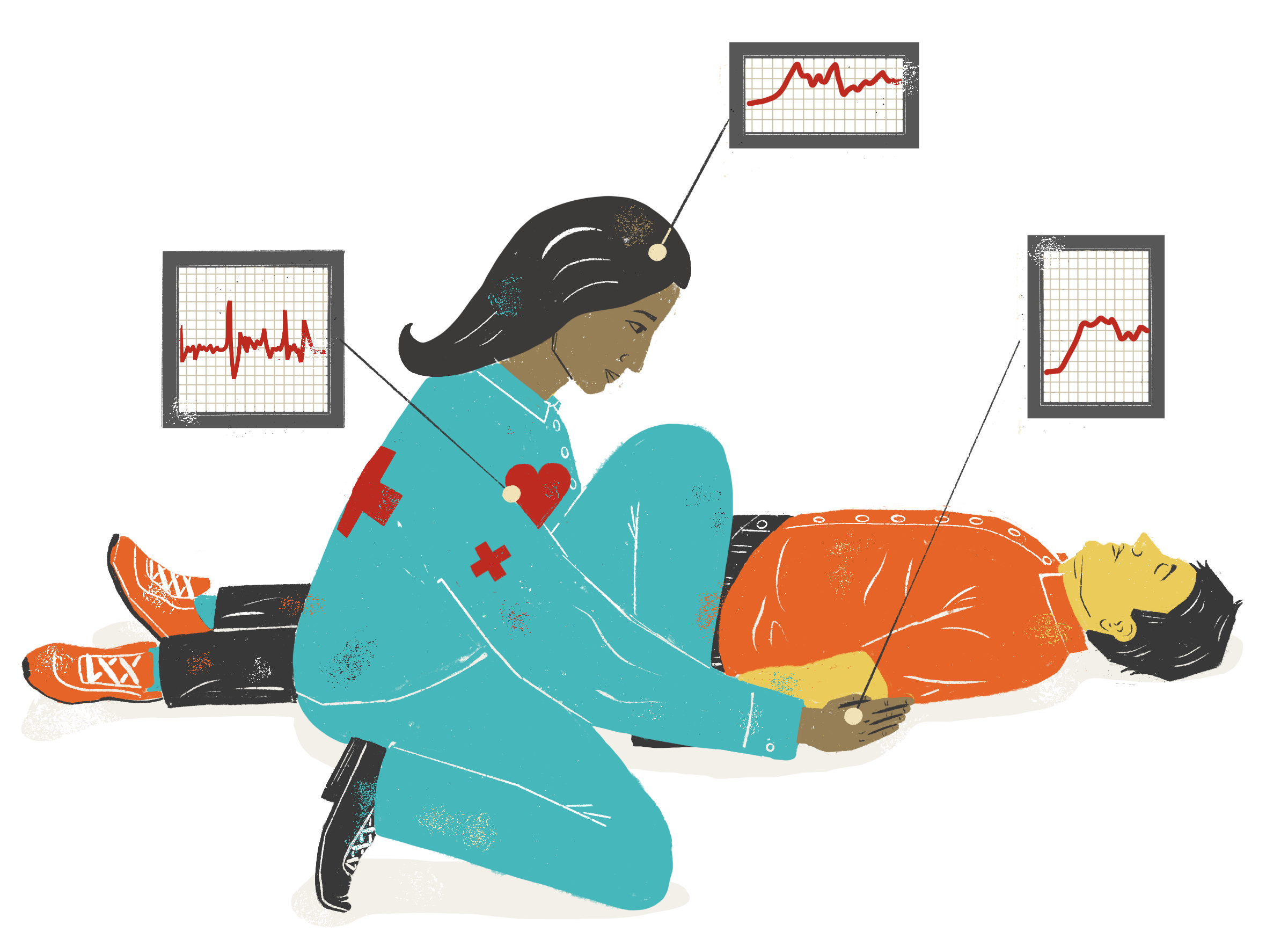
 

Brucie Rosch illustration

Working with student researchers, the faculty members design, develop, and evaluate the system to assess how discussions and intentional in-class reflections on stressful situations can help trainees implement stress management strategies during their work. The team is studying how a Team Stress Reflection system can be used by paramedic trainees to “understand the events that trigger stress increases and their ability to mitigate that stress,” according to the grant proposal. This technology allows the students to identify and better understand the correlations between stressful situations and their physiological responses.

Stress, explains Kleinsmith, can lead to errors during care and long-term health concerns for medical personnel, including emergency health professionals. Williams says that it’s important for students to debrief and reflect on the simulation to make sure that they can address any stressors or points that caused them to have strong physiological responses.

“The ability to monitor and manage stress in medical personnel has the potential to improve medical care provided in stressful situations,” explains Kleinsmith.

Understanding the physiological responses during training exercises is important for trainees, explains Williams, because it allows them to improve how they cope with stress in situations that they may encounter on the job. This research is being funded by a three-year grant from the National Science Foundation, which supports the faculty in collecting data from the EHS students and developing the interface to help the students come to their own conclusions about the correlation between physiological measurements and stress to understand their stress triggers. The interface also helps facilitate the team’s discussion about stress.

Motion sensors to inform treatment

Brucie Rosch illustration

Helena Mentis is also using activity trackers and other motion sensors to assess movement and inform treatment for patients with Parkinson’s disease. In collaboration with faculty at the University of Maryland Parkinson Disease and Movement Disorders Center, Mentis designed and developed a sensor using Leap Motion devices to track and assess the movement of patients with Parkinson’s disease during deep brain stimulation.

One observation that Mentis and her collaborators made was that the presentation of data collected from the sensors impacted how the data was interpreted and used to develop customized treatment plans for patients. In 2017, Mentis presented a paper at the Association for Computing Machinery Special Interest Group on Computer-Human Interaction Conference. The paper explains that the data collected by the patients’ activity trackers led to more informed conversations between the patient with Parkinson’s and their physician.

In a well-researched disease like Parkinson’s, there’s still always room for improvements in care and access to care. Researchers have been studying Parkinson’s disease and treatment options for people with Parkinson’s since the 1960s, but there is still work to be done. Every advancement leads to better outcomes and an increased quality of life for Parkinson’s patients. Mentis and her collaborators are now using self-tracking technologies to help physicians customize treatment plans and advocate for patients.

“Determining how sensor data can be incorporated in shared decision-making is fundamental to effective patient-centered care,” explains Mentis. “Even more so for low-resource and marginalized communities, where sensor data could easily be used by medical caregivers to argue for diagnoses or treatments that are based on assumptions and biases. The sensor data in itself does not embody truth and instead should be taken into account alongside a holistic understanding of the patient and their circumstances.”

Doing good through “disruptive innovations”

Through his work, Rao focuses on addressing critical challenges by answering the fundamental question: “How can we help them?”

“These are real lives, real people who are living in desperate conditions,” Rao says, noting that he aims to empower his students to think about how they can make positive changes through their work. Rao explains that his multidisciplinary approach to research has allowed him and his colleagues and students to make tremendous impacts related to health technology. CAST allows him to work with faculty and students from a range of disciplines, and he believes it is important for engineers, scientists, sociologists and psychologists, and policymakers to have a seat at the table, because each perspective is so valuable.

Brucie Rosch illustration

“Disruptive innovation” refers to technologies and other developments that offer novel solutions to challenges facing the world. Like Bediako and other colleagues at UMBC, Rao challenges his students to consider new approaches to addressing challenges and needs in the health technologies space.

While Rao leads this research, he is quick to point out that the collaborative nature of the work and the contributions of his students are crucial to its success. “It’s not about me,” he says. “I’m just privileged enough to have such an amazing team across several disciplines and backgrounds. It’s just a blast.”

With funding and support from federal agencies, including the Defense Advanced Research Projects Agency, Rao has developed a bioreactor or “biomod” that fits inside a suitcase and allows pharmaceuticals to be produced on demand and with limited resources and time. The device was developed with soldiers in conflict zones in mind because it allows them to quickly create customized medicines to save lives based on the needs of the patient.

Additionally, Rao and his colleagues have developed low-cost incubators to support premature babies in communities with limited resources and in areas that do not have access to robust medical facilities. His research team was presented with the 2019 Global Health Research Award at the Pediatric Academic Societies Meeting in Baltimore.

The question “What have you done for others?” is the driving force behind Rao’s lab. He says that many of the health technologies that are currently available are only affordable to a small group of people, and are only helping the people who can afford them. “Just spending five to 10 minutes a day thinking about what they [students] can do with their skill set to improve the lives of others, that’s all it takes to change the world,” Rao says.


*****

All illustrations by Brucie Rosch.

Festive COEIT Celebration honors achievement, service, and community

The COEIT Celebration has quickly become a defining annual event for the community of faculty, staff, and students in UMBC’s College of Engineering and Information Technology (COEIT). The celebration showcases the achievements of COEIT’s numerous highly active student organizations and senior capstone projects. It’s also an opportunity for COEIT Dean Keith J Bowman to reflect on the year and to honor those whose work has been essential to the College’s impact and growth.

Throughout the year, innovative research and strong teaching have contributed to student success, and have also helped faculty establish new connections and opportunities. “The COEIT Celebration allows our community to acknowledge the tremendous accomplishments of our faculty, students, and staff at all levels,” Bowman says.

Student achievements

Each academic program recognized students who have demonstrated strong leadership during their time at UMBC.

Information systems recognized Victor Cho and Musarrat Khan as Superior Students. Noah Owens and Michael Piccinini, both in business technology administration; computer science’s Aditya Kaliappan; and Edward Hanson, computer engineering, received Student Leadership Awards. Chemical, biochemical and environmental engineering (CBEE) recognized Elizabeth Tan and mechanical engineering honored Shannon Clancy with Student Leadership Awards as well.

Two departments also presented special named awards. Information systems honored Jana Burns with the Vijay Jose Award for exceptional involvement in student life. CSEE presented Emily C. McGovern with the Manoharshyam Joshi Award for a computer science student who has demonstrated exemplary achievement in a multitude of areas across academics, service, and leadership.

Beyond these specific awards, the College and Provost’s Office recognized nearly a hundred graduating seniors for their outstanding achievements in academics and research.

Faculty and staff honors

During the COEIT Celebration, the Provost’s Office presented five COEIT faculty members with awards for their commitment to excellence. Jeffrey Ray, a graduate faculty member in the systems engineering program through the Division of Professional Studies, and William Ryan, an adjunct faculty member in information systems, received Adjunct Faculty Excellence Awards.

Jianwu Wang, assistant professor of information systems, received the Early Career Faculty Excellence Award, and Carolyn Seaman, associate professor of information systems and interim director of UMBC’s Center for Women in Technology, was presented with the Mid-Career Faculty Excellence Award. During the Celebration, Mariajosé Castellanos, senior lecturer in CBEE, was recognized for her innovative pedagogical approach with the Excellence in Teaching Award.

The COEIT Dean’s Office also honored staff members for their dedication and service. Joshua Abrams, assistant director and advisor of COEIT’s Undergraduate Student Services; Lina Chung, program management specialist in information systems; and Michael Frizzell, engineering technician in CBEE, were recognized with 2019 Staff Awards for Superior Service.

“The COEIT Celebration is a day of fun for students, faculty, and staff. It is truly a celebration, and a chance for graduating students to share the festivities with family, friends, and mentors,” says Catherine Bielawski, assistant dean for undergraduate student services in the College. “This annual spring event exposes underclassmen to the breadth of opportunities offered at UMBC.”

Read more stories of COEIT student achievement on UMBC News, on students who have had transformative study abroad experiences; who have created their own highly unique UMBC paths; who have found inspiration in their life experiences; and who have come to UMBC from abroad and found meaningful personal connections on campus.

All photos by Chris Ferenzi Photography.

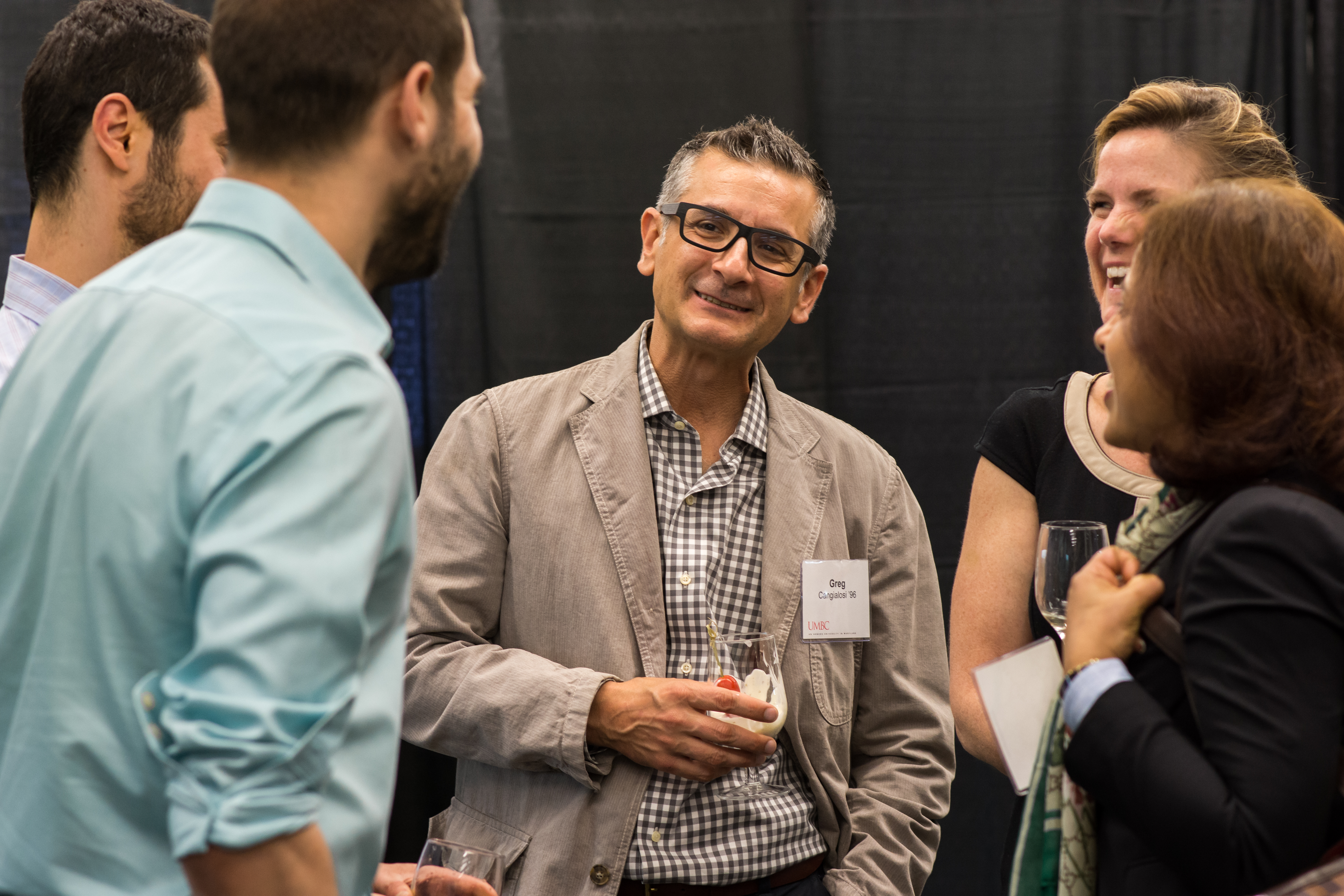
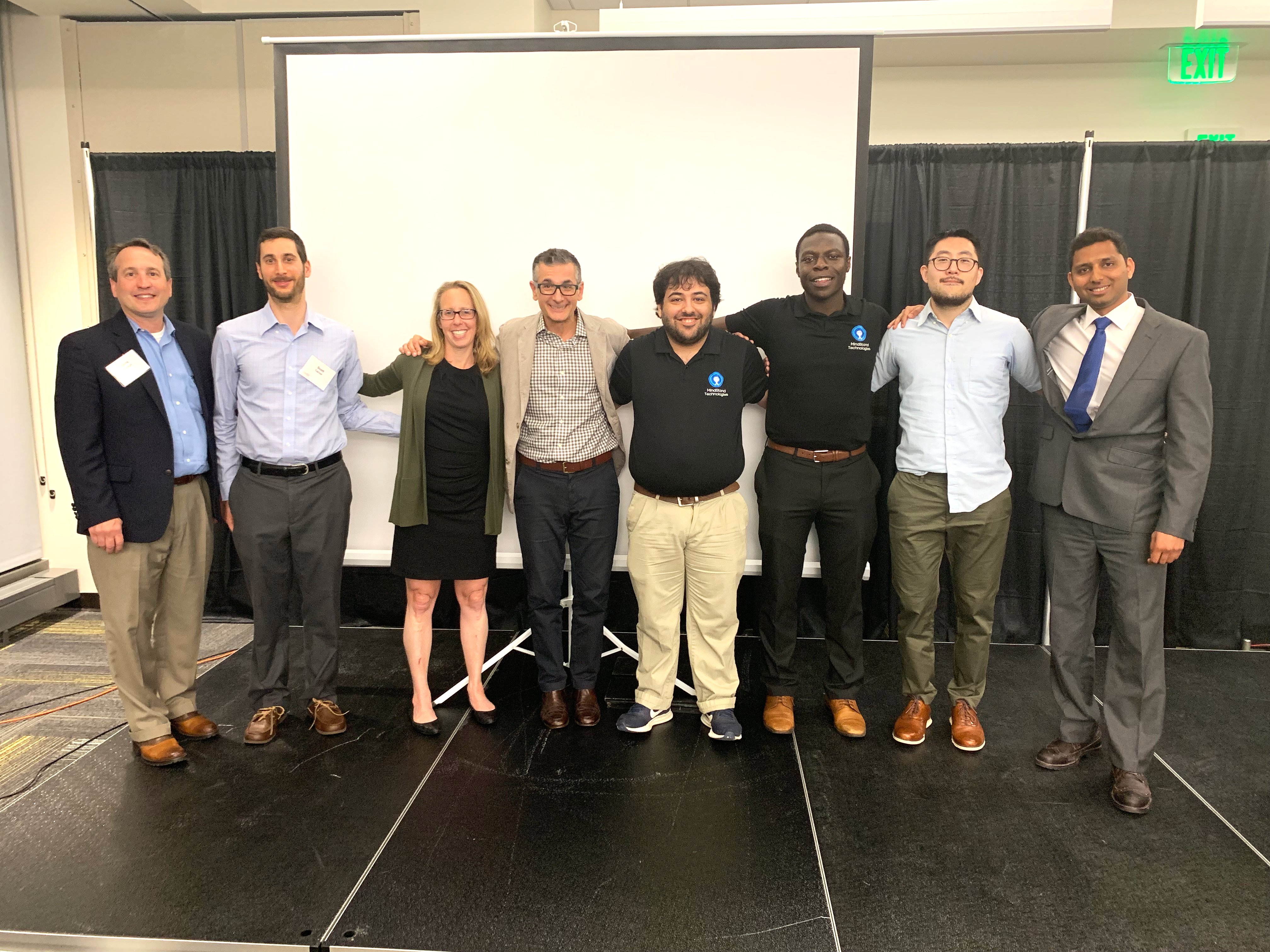
Pitch perfect: 2019 Cangialosi Business Innovation Competition standouts

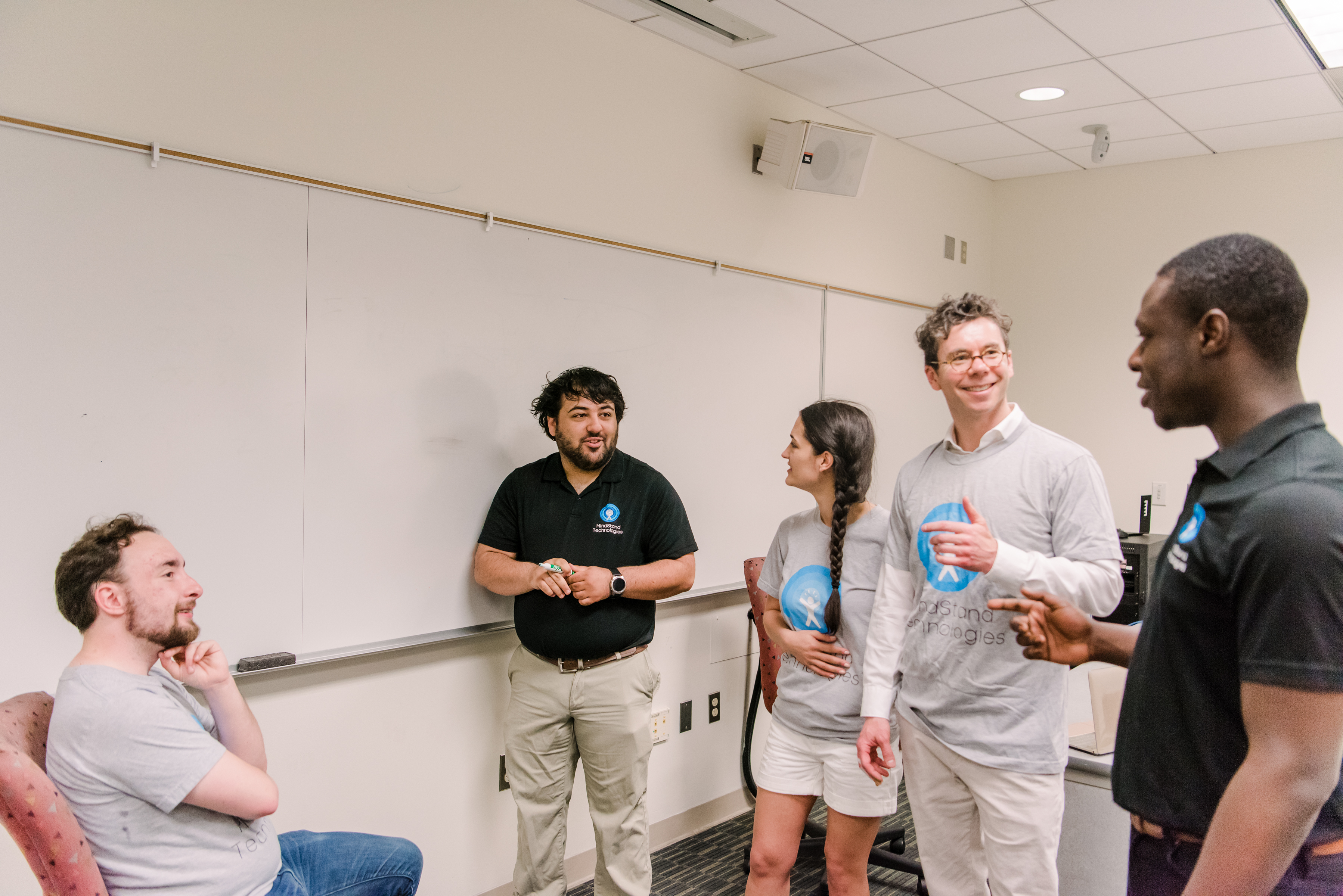
At a hackathon last year, two UMBC students took a stand against online harassment through tech innovation, forming a partnership that would become MindStand Technologies. Founders Michael Ogunsanya ‘20, M28, economics, and Eric Solender ‘20, computer science, believe there is such tremendous potential to make headway on this problem that, as Ogunsanya explains, “We want people to connect with the idea before they connect with the company.”

Together, they’ve developed a tool that can detect troubling online behaviors, like cyberbullying. It provides an interactive dashboard and real-time alerts based on a powerful algorithm that is already gaining attention.

To get to this point, they’ve taken advantage of support from UMBC’s entrepreneurship programs. Last fall, MindStand Technologies earned second place in UMBC’s 2018 Idea Competition, hosted by the Alex. Brown Center for Entrepreneurship, confirming for the team that their idea could really take off and have a positive impact. Now, they’ve won second place at UMBC’s sixth annual Cangialosi Business Innovation Competition (CBIC).

Connecting student entrepreneurs with mentors

The Shark Tank-style CBIC is an annual opportunity for undergraduate and graduate students who are serious about starting a business, and have already begun realizing their ideas, to present to a panel of judges before an audience of community members, including faculty, staff, alumni, and corporate partners. Ahead of the event, each team is paired with an industry mentor who provides guidance and professional advice.

The structure of the event and its focus on mentorship are inspired by the vision of entrepreneur Greg Cangialosi ‘96, English. Throughout the process, the teams have access to support from Cangialosi and Vivian Armor ‘73, American studies, director of UMBC’s Alex. Brown Center for Entrepreneurship.

Using technology to address challenges across industries

First prize in the competition went to Dan Lee ‘19, computer science, for Dentuit Imaging, which he hopes will help dentists diagnose patients with challenging conditions. The technology will identify and annotate possible problems on patients’ dental images.

Lee is working with collaborators, including Joe Weissman, a Virginia Tech Ph.D. student focusing on machine learning, to develop a prototype that he hopes will be available in the summer. One key part of the work will be training the system to identify potential dental issues. “The more labeled images there are, the better,” Lee explains.

Akshay Peshave, M.S. ‘14, Ph.D. ‘19, computer science, earned third place for Karotene, which works to connect researchers in fields from medicine and physics to computing with information and data needed to do their work. The technology, explains Peshave, allows researchers to more easily address pain points as they are conducting research, including challenges related to collaborating with people across the country and around the world.

Peshave will use the funding that he earned through CBIC to finalize the legal paperwork needed to officially launch the company. He is also working to build Karotene’s advisory board, while refining the product for market release.

Utilizing networking opportunities at UMBC

MindStand Technologies, the second place winner, has already begun moving forward in significant ways. Ogunsanya and Solender have secured office space in bwtech@UMBC’s North campus. There, they spend time each week working to advance their technology and grow their business.

Ogunsanya and Solender are particularly focused on connecting with experts beyond tech fields who can provide insights essential to making their tool effective and ensuring it is used in thoughtful, ethical ways. Project collaborator Pamela Rakhshan Rouhakhtar Ph.D. ‘22, psychology, describes MindStand Technologies as a “true multidisciplinary team.”

Jason Schiffman, professor of psychology, provides valuable mentorship to help the group keep their mission, ethics, and philosophy at top of mind at all times asking if each decision is both correct and good. Rouhakhtar and Solendar met while working in Schiffman’s psychology lab. They share that he often talks about the importance of working at the intersection of what you love and what you are good at, and that this is what MindStand Technologies is all about.

Taking advantage of the networking and skills-building opportunities at UMBC has been key to his company’s success, Ogunsanya says. He encourages future student-entrepreneurs to not shy away from “using all of UMBC’s channels” to turn their ideas into a reality.

Banner image: The MindStand Technologies team. Photo by Marlayna Demond ’11 for UMBC.

UMBC makes intro computing courses available to students in any major through X + Computing pilot

Computing and coding skills are becoming integral to many jobs and industries, but students outside of computing disciplines are not always exposed to these fundamentals. UMBC is working to change that with new learning pathways for non-computer science majors.

The pilot “X + Computing” program named for the way it combines computer science with other fields is funded by a nearly $300,000 award from the National Science Foundation. Leading the initiative are UMBC President Freeman Hrabowski; Katharine Cole, vice provost and dean of undergraduate academic affairs; and Anupam Joshi, professor and chair of computer science and electrical engineering. Susan Mitchell, lecturer of computer science and electrical engineering, and David Chapman, assistant professor of computer science and electrical engineering, are also part of the grant.

Demystifying computer science

The first course in the series was piloted in spring 2018, teaching computer science fundamentals through projects on real-world topics of interest to students from a broad range of majors. The second course (launching in fall 2019) will enable students to gain a deeper understanding of the Python programming language through examples that are relevant for non-majors.

Mitchell is the instructor of the first course, which is now in its third semester. She shares that the course has gained traction, with 18-22 students enrolling each semester, half of whom identify as women. Mitchell notes that students in the computer science for non-majors course have also demonstrated the same mastery of the material as those in the traditional introductory computer science course.

“I love to see when I have demystified computer programming for non-majors,” says Mitchell. “We assume that all students somehow know what programming is, but that’s certainly not true. What I have seen is that non-majors are just as motivated and succeed at the same rate as majors.”

Gaining traction

Jeremy Keaton ‘19, music, was curious about the computer science for non-majors course because he had an interest in computing but had not explored the topic. “I enjoyed the amount of hands-on programming the course had, and the large projects gave us valuable experience designing functional programs,” he says. “I found it interesting and useful, so I am continuing to take computer science courses and I added a minor in computer science.”

Keaton shares, “I find that what I’ve learned in computer science classes often relates to things in everyday life, from big ideas like logic to specifics like noticing structures and data types while using programs like Excel or browsing the internet.”

Expand computing education at UMBC

Joshi is excited about the opportunity reach a broader set of students through the X + Computing program. He notes that some students in other majors can feel deterred by the math and science prerequisites for traditional computer science courses. “The current design of most computer science classes thus misses out on this more diverse set of students interested in computing,” Joshi explains.

Increasing access to computing skills is an important priority for Joshi and for his department. He hopes X + Computing will appeal to both students who want to add a computer science or computing minor to their non-computing major, and students who want to shape a major around interests rooted in computing. In the future, it’s possible that existing courses will be combined to create a minor in computing that would be open to students in majors across campus.

This program is one of several initiatives the College of Engineering and Information Technology and UMBC more broadly are exploring to expand opportunities for students from all backgrounds to grow their technical knowledge and experience.

“Finding ways to enable expertise in digital proficiency and experience in engineering design for all students, including students in any UMBC major, is essential for our college to help fulfill Maryland’s goals for its future workforce,” explains Keith J Bowman, dean of UMBC’s College of Engineering and Information Technology.

Banner image: UMBC’s Information Technology and Engineering building. Photo by Marlayna Demond ’11 for UMBC. 

UMBC’s newest grads share what inspired their unique paths

When students come to UMBC, they bring with them life experiences that shape the program they choose, the mentors they find, the research questions they ask, and the communities they build on campus. Here, five UMBC students earning their degrees this month share stories of those connections in their own lives, and how chance encounters and deep moments of inspiration alike opened exciting new paths.

Student-athlete researches Alzheimer’s disease treatment

When Laura Simpson arrived at UMBC as an undergraduate, she knew that she was interested in a broad range of scientific topics, but she didn’t yet have a clear picture of what her career path might look like. An internship at NASA and her own experiences as a student-athlete changed that.

At NASA Simpson became intrigued with how the human body is affected by space. As a record-setting varsity pole vaulter, she experienced joint and ligament injuries that resulted in surgeries with challenging recoveries. Together, these experiences sparked her interest in biomedical engineering, combining her curiosity about how the human body works with, as she describes, “the applicability of the engineering knowledge.”

Simpson earned her bachelor’s degree in biological sciences in 2013. Encouraged by her mentor, Jennie Leach, associate professor of chemical, biochemical, and environmental engineering, she applied to UMBC’s chemical engineering Ph.D. program. Now, nearly a decade after stepping onto UMBC’s campus for the first time, Simpson will soon officially earn that Ph.D.

As a graduate student in Leach’s lab, Simpson has researched treatment options for Alzheimer’s disease. “There’s no cure and no preventive treatments for Alzheimer’s disease, and the drugs that are out are just to try to help symptoms, but it doesn’t slow…the progression of the disease,” Simpson explains.

Simpson notes that the most recent unique drug for treating people with Alzheimer’s disease was approved in 2003. The gap in new drugs being released is not due to a lack of drug development, but issues with drug performance and approval by the Food and Drug Administration. She explains that Alzheimer’s drugs are typically studied using mice or cells on a plate, which have limitations.

When her research mentors, Leach and Theresa Good (who is now at NSF), suggested that perhaps the 3D environment was affecting how the beta amyloid protein, which is thought to cause Alzheimer’s disease, was acting, Simpsons dissertation topic was born. She has studied how 3D environments impact the beta amyloid protein associated with neurotoxicity in Alzheimer’s patients, and her work has been groundbreaking. “The 3D has a major affect not only on the protein but on the structure of the cells,” Simpson says.

To describe her findings, Simpsons compares the movement of cells and proteins to how people are able to move in space. In wide open spaces, movement is unrestricted, but in a small space, like a closet, people lose their range of motion. Similarly, cells and proteins function differently when they occupy different kinds of 3D spaces.

Simpson’s work has the potential to significantly impact the treatment options available for people with Alzheimer’s. After graduating, she will begin a career in Maryland’s biotech industry.

Returning Women Scholar explores paths, builds confidence

Life as a student who is also a parent can be complicated, and also tremendously rewarding, says Alexis Ashcroft ‘19, psychology. Inspired to finish her degree after her daughter was born, Ashcroft earned her associate’s at Anne Arundel Community College before transferring to UMBC.

Ashcroft has successfully juggled many responsibilities while pursuing her degree, from her class and work schedules, to involvement with student orgs and research opportunities, to her commitments as a parent. Ashcroft found mentorship and a community at UMBC as a Returning Women Scholar and a Newcombe Scholar, through the UMBC Women’s Center.

Returning Women Scholars have the opportunity to attend workshops and programs that focus on academic, personal, and professional aspects of life, in addition to having the support of peers, faculty, and staff. “Being a Returning Women Scholar has been such a great experience for me,” says Ashcroft. “The program and the people in it have helped me so much. From the teaching events they hold, to the one-on-one meetings, and of course the scholarships, the program has taken a lot of burden and stress off of my shoulders.”

When she first arrived at UMBC, Ashcroft was considering a career in law. Her time on campus broadened her sense of the kinds of careers that could fit her interests in the law, health, and social issues. “After taking a psychology of law class, I found myself intrigued by the mental and emotional components of health and wellness,” she recalls. “I realized I could combine my love for the law and social sciences into a career.”

Ashcroft explored the possibilities through every avenue she could find. She served as a student justice on UMBC’s Hearing Board as well as the nontraditional students project manager on UMBC’s Student Government Association executive board, and in roles with other groups. “My involvement with UMBC clubs and organizations forced me to get outside of my comfort zone and open up,” she says. “I became more confident in speaking up, debating, and learned how to communicate better.”

Ashcroft also conducted research with Jasmine Abrams, assistant professor of psychology, focused on health disparities impacting black women. This year, she has worked on a qualitative study examining the sexual attitudes, practices, and beliefs of young black women. She has also supported Abrams’s highly collaborative research aiming to reduce the stigma surrounding HIV/AIDS in Haiti.

Artist examines the history of a community and herself

Aimi Chinen Bouillon M.F.A.‘19, intermedia and digital arts, spent two months in her hometown of Okinawa, Japan to explore the history and long-standing relationships between Americans and people from Okinawa. That deep study results in her thesis: “The Colonized and the Colonizer Within Me: Finding Ryukyu Language of My Matrilineal Ancestors on a Militarized Island.”

During World War II, nearly 30 percent of Okinawa’s population was killed in a devastating battle. Today, a large U.S. military base is located on Okinawa. Bouillon’s mother is from Okinawa and her father is a retired U.S. Marine. Bouillon grew up in Okinawa and lived there until she was 16, when she moved with her family to Ohio.

Bouillon was interested in developing a better understanding of Okinawa’s history, and also in examining how that history lives on and is reinterpreted in the present. She aimed to create a visual and textual dialogue around the often polarizing topic of the colonization of Okinawa through her work.

As I get older, I’m confirmed that I was a born artist. I am interested in many materials and need to make and make and make,” she explains. She reflects that while she’s always had the drive to be an artist, the resources she’s been able to access as an MFA student at UMBC have helped her accomplish so much more.

Bouillon was drawn to pursue her M.F.A. at UMBC after her partner joined the program and she had a chance to meet the faculty a get a sense of the department’s “family feel.” Once enrolled, she quickly connected with mentors Lynn Cazabon, Kathy O’Dell and Chris Peregoy, all of visual arts. She’s enjoyed how they have learned about Okinawa alongside her and have encouraged her to balance learning experiences inside and outside the classroom and studio.

The classroom is amazing in that it can be a place to share opinions and studies,” Bouillon says. “The outside experiences are where everyday people as a whole live and navigate daily and that is a very important space for inspiration.”

After graduation, Bouillon plans to create an artist residency in Okinawa to “act as a bridge for deeper dialogue and exchange for the Ryukyu culture, language, and history.”

From an Iraqi Internet cafe to Baltimore waterways

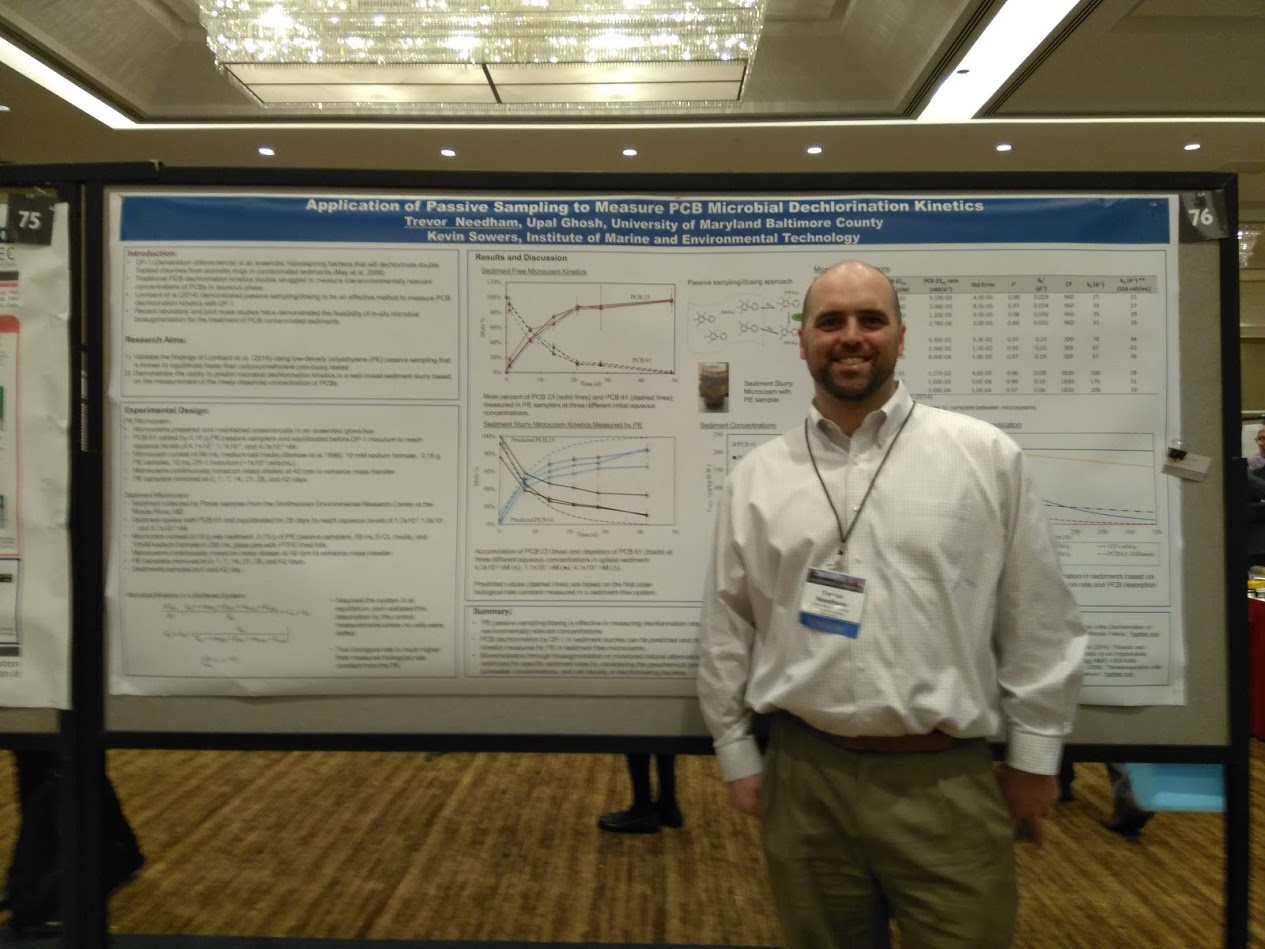
Trevor Needham, Ph.D. ‘19, environmental engineering, learned about UMBC at an internet cafe in Iraq during a 15-month deployment. Needham had planned to pursue a Ph.D. for years, but those plans were temporarily put on hold as he fulfilled his ROTC scholarship commitment with the Army.

Needham recalls sitting in front of that computer in Iraq and searching for environmental engineering Ph.D. programs. One of the search results was the lab of UMBC’s Upal Ghosh, professor of chemical, biochemical, and environmental engineering. He reached out to Ghosh to find out more about his work.

When Needham returned to the U.S. from Iraq, he earned his master’s in environmental engineering from Missouri University of Science and Technology. He was then accepted into UMBC’s environmental engineering Ph.D. program and began working with Ghosh in 2014 to study polychlorinated biphenyl (PCBs), a legacy environmental contaminant.

Needham explains that PCBs were engineered to never break down, and today they are found in fish and in people. The problem of PCB contamination is compounded by the fact that the cost of removing PCBs is very high.

During his first year at UMBC, Needham was given the opportunity to explore his interests in a broad range of projects. He was particularly fascinated by his work at a wastewater treatment facility, where he learned how PCBs travel to urban watersheds in the Chesapeake Bay region. “UMBC has been a great place to transition my professional career and pursue cutting edge science to solve real environmental problems that face the Chesapeake Bay.”

Needham is currently working at the U.S. Geological Survey, located at in UMBC’s Research Park. After graduation, he will continue working at USGS as a hydrologist.

Listening to women’s powerful stories

The underrepresentation of women in research on health outcomes after strokes inspired Iona Johnson to pursue her Ph.D. in gerontology. Johnson is a medical speech-language pathologist who currently is a clinical faculty member at Towson University. She finds inspiration for her work in both her personal and professional experiences.

“I have worked with stroke survivors throughout my career as a clinician, and have been running a stroke support group for survivors and caregivers for many years,” says Johnson. She also served as a caretaker for a close family member who experienced a stroke while she was pursuing her Ph.D.

Johnson often finds herself dispelling misconceptions about gerontology. “It is about the aging process, and we are all aging every day,” she says. “People are living longer lives, and the more we know about aging, the more we can help society and help ourselves across the lifespan.”

At UMBC, Johnson has worked with Leslie Morgan, professor of sociology and anthropology. “Her guidance, expertise, and patience have been invaluable,” Johnson says.

In addition to valuing the mentorship she’s received, Johnson has been honored for her commitment to mentoring students as a faculty member at Towson. In 2017, she received the University System of Maryland’s Board of Regents Award for Excellence in Mentoring. She describes, “Mentoring is my superpower. I believe that I am a role model for letting students see that they can reach for and accomplish big goals throughout life.”

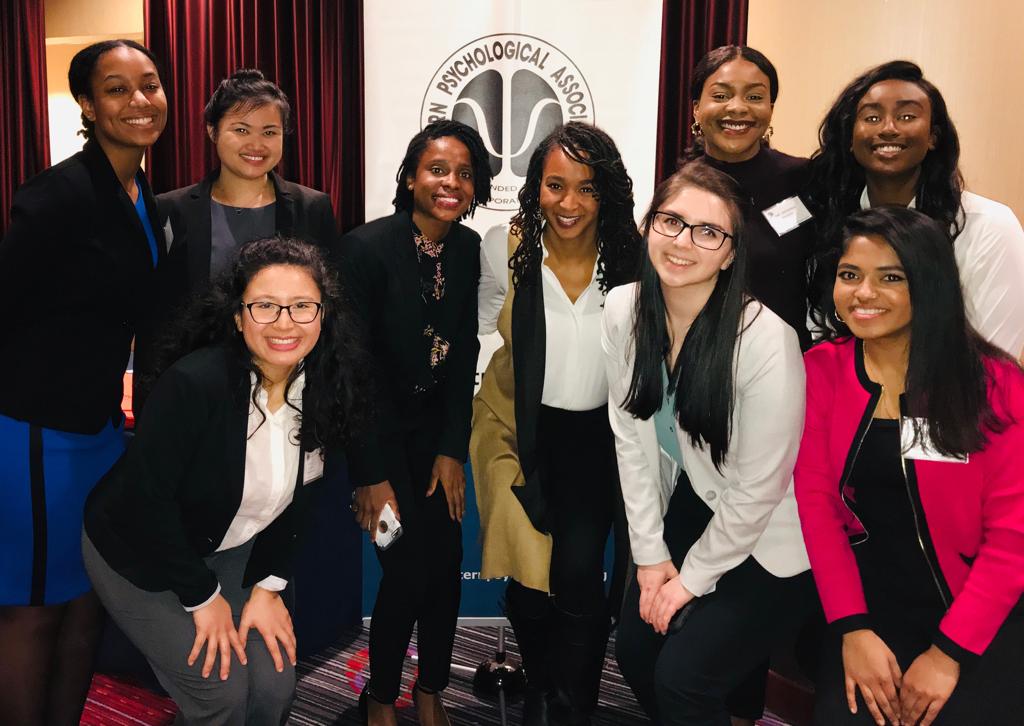
Looking back on the path to her Ph.D., Johnson says that it was one of the most challenging things she has done, but one of the best decisions she’s ever made. “Doing my research for my dissertation changed me,” she explains. “Listening to the stories of women who were bold and gracious enough to share with me made me reflect on where I am in my life.”

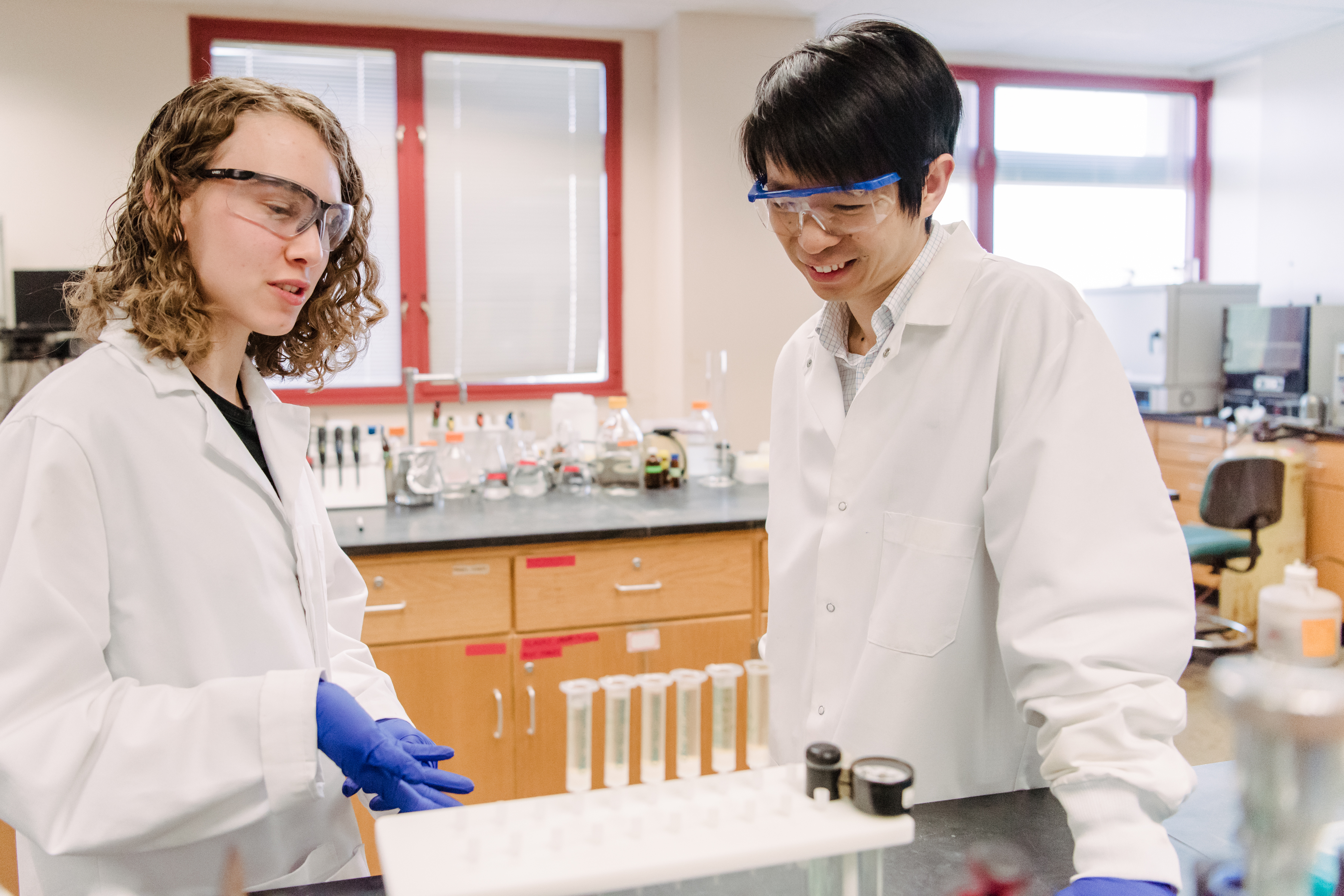
Banner image: Laura Simpson, right, working in the lab. Photo courtesy of Marlayna Demond ’11 for UMBC.

“Researching” to “researcher”: UMBC students share why mentoring is the key

UMBC’s annual Undergraduate Research and Creative Achievement Day allows students to reflect on a year or more of work intensively focused on a project, often with close guidance from a faculty mentor. These mentors have deep and long-lasting impacts on the students who work with them, and the students’ creativity and fresh perspectives inspire their mentors.

Like many faculty across UMBC, Greg Szeto, assistant professor of chemical, biochemical, and environmental engineering, has guided undergraduate and graduate students to achieve a deeper understanding of their discipline. “Being a mentor is the most impactful thing we can do with our time,” he says.

“It’s a mentor’s job to provide comprehensive and diverse experiences that are customized to fit different individuals’ goals and stage of development and to consistently fine-tune those experiences over time,” Szeto explains. “We help provide a safe environment where students can explore their interests in research and determine what the right path is for their future.”

Engineering solutions to health challenges

When Nicole Couturier ‘19, chemical engineering, began exploring options to get involved with research, she wasn’t sure which direction to take. She was intrigued to learn about the interdisciplinary approach to Szeto’s lab, which combines engineering, biology, and human health.

Couturier, a MARC scholar, began working in Szeto’s lab in spring 2017, studying the properties of gold nanoparticles that can potentially be used as immunotherapy agents. She explains that these nanoparticles can “offer an alternative approach to traditional treatment methods by carrying drugs inside their core.” The nanoparticles also have molecules attached to their surfaces that direct them to specific sites within the body, Couturier adds.

Szeto has encouraged Couturier to explore and expand the scope of her work. “Because I have been able to participate in different projects with a range of focuses, I have been able to learn about many different areas of research both inside and outside the field of immunology,” she says. She adds that Szeto had helped her keep her expectations in check, sharing, “One of the most helpful pieces of advice that Dr. Szeto has shared is to remind me that it’s okay at the end of the day if I still don’t know the answer to something.”

For other students seeking research mentors, Szeto suggests, “The fit between a student and a mentor is even more important than finding a perfect intellectual match with research topic at most career stages.”

He notes that strong mentoring relationships benefit everyone, but are particularly important for people early in their careers. “Having supportive mentors and advocates invested in your success as an undergraduate can fundamentally change someone’s perspective on career goals, and their decision to pursue a Ph.D. or career in research,” Szeto says.

From doing research to becoming a researcher

Conducting research in Szeto’s lab has allowed Kojo Bonsu ‘18, chemical engineering, to think about how chemical engineering can address health challenges in new ways.

“I was always interested in applying chemical engineering principles and methodologies to research in biology and medicine, but did not think about doing so by approaching the problems from the immune system,” Bonsu says. “After meeting with Dr. Szeto, I clearly saw how chemical engineering could provide new solutions to long-standing problems in biotechnology and human health.”

Bonsu joined Szeto’s lab in fall 2017. With a strong background in research, he was looking for opportunities to do more independent work. Szeto worked with Bonsu to develop a research experience that included experimental design, data analysis, and project troubleshooting. Bonsu says that this time in Szeto’s lab challenged him to think about possible solutions to obstacles in creative ways.

“This experience truly allowed me to see myself as a researcher and spurred my desires to go to graduate school to further expand upon my knowledge of engineering solutions to a host of problems,” Bonsu says.

Creating a supportive environment for women in STEM

Karla Negrete ‘19, mechanical engineering, a Hill-Lopes Scholar, was drawn to Deepa Madan’s lab after she took a course about the chemical and physical aspects of materials.

Madan has guided Negrete through research on the materials and design of batteries. She focuses on preparing an efficient and safe electrolyte layer for batteries, to avoid the pitfalls of hazardous materials, short lifespan, and susceptibility to damage that are common to conventional designs.

Negrete is exploring how to replace the liquid in batteries with gel polymer electrolytes while avoiding the challenge of crystallization. “Our research seeks to…introduce the use of novel nanofiber cellulose, which is extracted from wood, as the main constituent in preparing our thin gel electrolytes,” she says.

“Dr. Madan has been a mentor to me in many ways,” Negrete reflects, “but the most important has been her ability to believe in me and stand behind me.”

That active interest, encouragement and confidence-building are central to Madan’s mentoring approach.“I believe the likelihood of students achieving their immediate and possibly long-term career goals can be significantly increased if students believe their mentors are genuinely interested in student success, and students see the activity and engagement as a stepping stone for their successful careers,” Madan says.

Negrete has also been mentored by Aswani Poosapati, Ph.D. ‘23, mechanical engineering, and she says that being a part of a supportive research team has been empowering. “The most rewarding part of working with Dr. Madan has been the welcoming environment that she creates in her lab,” says Negrete. “From the beginning, Dr. Madan and Aswani Poosapati have taught me, challenged me, guided me, and trusted me to be a part of this research.”

Much of Madan’s work with students like Negrete focuses on the nuts and bolts of research: how to conduct a literature review, how to access networking opportunities, and how to use research opportunities as steps toward achieving research goals. At another level, she also sees tremendous value in serving as a resource and sounding board for young women beginning careers in STEM fields.

“I feel my research experiences and story motivate our female students to come and talk to me about their research interests, which I feel some are hesitant to share,” she says. “Many of them are flourishing and are positively surprised by how well their research is progressing in a discipline that once appeared so intimidating.” In a field where women are underrepresented, Madan notes, “It’s not surprising to me that more than half of the students working in my lab are female students.”

Gaining confidence through challenges

Anna Feerick ‘19, chemistry, remembers standing outside the door to Lee Blaney’s lab. Blaney worked in a different department (chemical, biochemical, and environmental engineering), but Feerick was fascinated by how his lab applied chemistry to major environmental challenges.

“While reading the research posters outside of the lab, I could see the passion this lab has toward discovery and innovation,” recalls Feerick. “I wanted to match their enthusiasm with my own and was willing to work as hard as needed to get there.”

The research conducted in Blaney’s lab is interdisciplinary, and involves undergraduate and graduate students. In addition to working with Blaney, Feerick has had an opportunity to work closely with Ke He, Ph.D. ‘17, chemical engineering, and Ethan Hain, Ph.D. ‘23, chemical engineering.

When Feerick first joined the lab, she spent time measuring salts for water samples, freeze-drying and measuring sediment samples, and measuring tissue from oysters from the Chesapeake Bay. These tasks showed her the importance of carefully following lab protocols to ensure that contaminant levels were accurately analyzed.

Over time, Feerick was able to take on increasingly challenging work in the lab, which she found to be highly rewarding. “[Blaney] balances the difficulty of the task with our ability to overcome it,” she says. “His confidence in my ability gives me the determination needed to complete it.”

Supporting this growth over time is the core of how Blaney sees mentoring. “Unlike many undergraduate and graduate courses, research involves open-ended questions without known answers,” he points out. “This scenario can be daunting for many students.”

“I think the real importance of mentors stems from their ability to help students make the transition from homework and exam problems to complex, long-term research projects,” Blaney explains. “Mentors play a critical role in contributing to the personal and professional growth of students at every step of that journey.”

Banner image: Karla Negrete, right, working alongside Deepa Madan in the lab. All photos by Marlayna Demond ’11 for UMBC unless otherwise noted.

Huang named Maryland’s Small Business Person of the Year

The U.S. Small Business Administration recently recognized a UMBC information systems alumnus among its 2019 Small Business Persons of the Year winners.

Zhensen Huang, M.S. ‘00, Ph.D. ‘04, information systems, was the winner of the award for Maryland. He is the CEO of Precise Software Solutions, Inc., a company that supports government agencies’ information technology needs by offering innovative solutions.

Huang explains that he has always wanted to use technology to impact people’s lives, and as an entrepreneur he’s been able to make that a reality. “I am both honored and humbled to receive this Person of the Year recognition,” he says.

In 2013, Huang started Precise and began attracting talented professionals to his company. He says that he wanted to address technological challenges and “deliver elegant technical solutions to the health and science industry’s most complex problems.” He credits the high caliber work of his team at Precise for recognition from the Small Business Administration.

The winners will attend a ceremony in Washington, D.C. in early May during National Small Business Week, where they will receive their awards. The Small Business Administration recognizes winners from each state, plus the District of Columbia, Puerto Rico, and Guam. During the ceremonies, the Small Business Administration will announce the 2019 National Small Business Person of the Year from the 53 winners from across the U.S. and territories. 

UMBC celebrates 2019 Presidential Faculty and Staff Award winners

UMBC’s Presidential Faculty and Staff Awards offer the campus community an opportunity to reflect on the essential contributions of university employees to making UMBC a supportive and successful learning community. This year’s ceremony, on April 3, recognized eight members of the UMBC community for their commitment to inclusive excellence.

Passion for pedagogy

Carolyn Forestiere, associate professor and chair of political science, received the Presidential Teaching Professor Award in recognition of her exemplary teaching, mentorship, and pedagogical innovation. She is known for challenging students to develop a deeper understanding of course material and to apply their learning through real-world examples. Her approach to guiding students through the process of writing a research paper, outlined in the 2017 textbook Beginning Research in Political Science, has been adopted across departments.

In accepting her award, Forestiere focused on the importance of educators actively connecting students with the subjects they are teaching by modeling excitement for each topic. “Show genuine enthusiasm in any subject that you teach…The key is to find what you’re passionate about and to try to give that to our students,” she says. “It’s that enthusiasm that engages our students.”

Sarah Leupen, senior lecturer in biological sciences, is the 2019 recipient of the University System of Maryland Board of Regents’ Faculty Award for Excellence in Teaching. Her creativity and innovation in teaching have extended far beyond her own classroom, inspiring faculty across UMBC and the world.

When she arrived at UMBC, Leupen launched a Biology Teaching Circle as a space for faculty to explore and discuss pedagogy that could be implemented in classrooms across campus. She has also been involved with UMBC’s Faculty Development Center, leading workshops on a range of topics and techniques. In 2016, she received a Fulbright Award to extend her work abroad. She spent the year at Charles University in the Czech Republic, training medical school faculty in the use of evidence-based teaching practices.

In receiving her award, Leupen thanked her students for teaching her something new each day. She also echoed Forestiere’s remarks, sharing that being enthusiastic for her students takes their classroom engagement to the next level.

Innovative research

Govind Rao, professor of chemical, biochemical, and environmental engineering and director of the Center for Advanced Sensor Technology, is this year’s Presidential Research Professor. Rao is known for the collaborative nature of his work and for bringing together student and faculty researchers from across disciplines to produce innovative solutions to challenges. 

Rao described the question, “What have you done for others?” as the driving force behind his work. His lab has created low-cost sensors to monitor bioprocesses and provide crucial medical care to people in remote places and in communities with limited resources.

Lorraine Remer, research professor for the Joint Center for Earth Systems Technology, received the 2019 UMBC Research Faculty Excellence Award. A leader in the field of remote sensing, Remer has received numerous accolades and awards recognizing her significant contributions to the atmospheric sciences. Recently, she was a named a Fellow of the American Geophysical Union and one of the most cited researchers in her field.

Remer came to UMBC seven years ago after 21 years at NASA and a successful career in the private sector. She serves as CEO and owner of Airphoton LLC, a start-up company founded in 2012 at bwtech@UMBC business incubator.

Supporting students and promoting well-being

Liz Steenrod, program management specialist for the Language, Literacy, and Culture doctoral program, was recognized with the Presidential Distinguished Non-Exempt Staff Award. Steenrod has advanced the program throughout the past six years — a time of tremendous growth, with the program expanding to serve more than 75 doctoral students.

Steenrod has implemented new processes and practices that support faculty and students in the program, particularly tools to help graduate students see their progress and stay on track to reach key milestones. In her remarks, Steenrod highlighted how helpful and supportive people at UMBC are and the ways dedicated and hardworking colleagues have inspired her work.

Jessica Hammond-Graf, senior associate athletic director and senior woman administrator for student-athlete well-being, received the Jakubik Family Endowment Award. During her more than 15 years of leadership at UMBC, she has led the advising and support of hundreds of student-athletes. Her efforts have significantly reduced the number of student-athletes earning below a 2.0 GPA. Today, more than 50 percent student-athletes earn a 3.0 GPA or higher each semester.

Hammond-Graf also created the Retriever Leadership Institute, which brings student-athletes together to develop and strengthen their leadership skills. Students focus on effective teamwork, managing conflict, and recognizing their roles as leaders at UMBC. Groups across UMBC have modeled other programs on the Retriever Leadership Institute.

In speaking at the awards ceremony, Hammond-Graf shared how the leaving things better than you find them is a value that resonated with her as a child, and that continues to motivate her work through today. “By leaving it better than you found it, you continue to move yourself, others, and the organization along a path of growth,” she says.

Shelly Graham, executive administrative assistant for student affairs, received the Karen L. Wensch Endowment Award for Outstanding Non-Exempt Staff. A member of the UMBC community for over 30 years, Graham is often the first person that people connect with when they are reaching out to Student Affairs. She provides training and support for people across campus, and handles delicate and confidential situations with professionalism and compassion.

Valerie Thomas, chief human resources officer and associate vice president for human resources, and a member of the UMBC community for 17 years, received the Presidential Distinguished Staff Award. During her time at UMBC, she has implemented several initiatives to promote the wellbeing of university employees. This includes, among other projects, growing work-life balance initiatives and co-chairing a committee that was responsible for implementing UMBC’s smoke-free campus policy.

President Freeman Hrabowski thanked the honorees by highlighting common themes in their remarks that particularly resonated with him: staff and faculty supporting each other and the passion and excitement that are core to the UMBC community. “We are celebrating…the people who make UMBC such a special community,” he said. “It’s your collective contributions that are the UMBC experience and story. You are what makes UMBC, UMBC.”

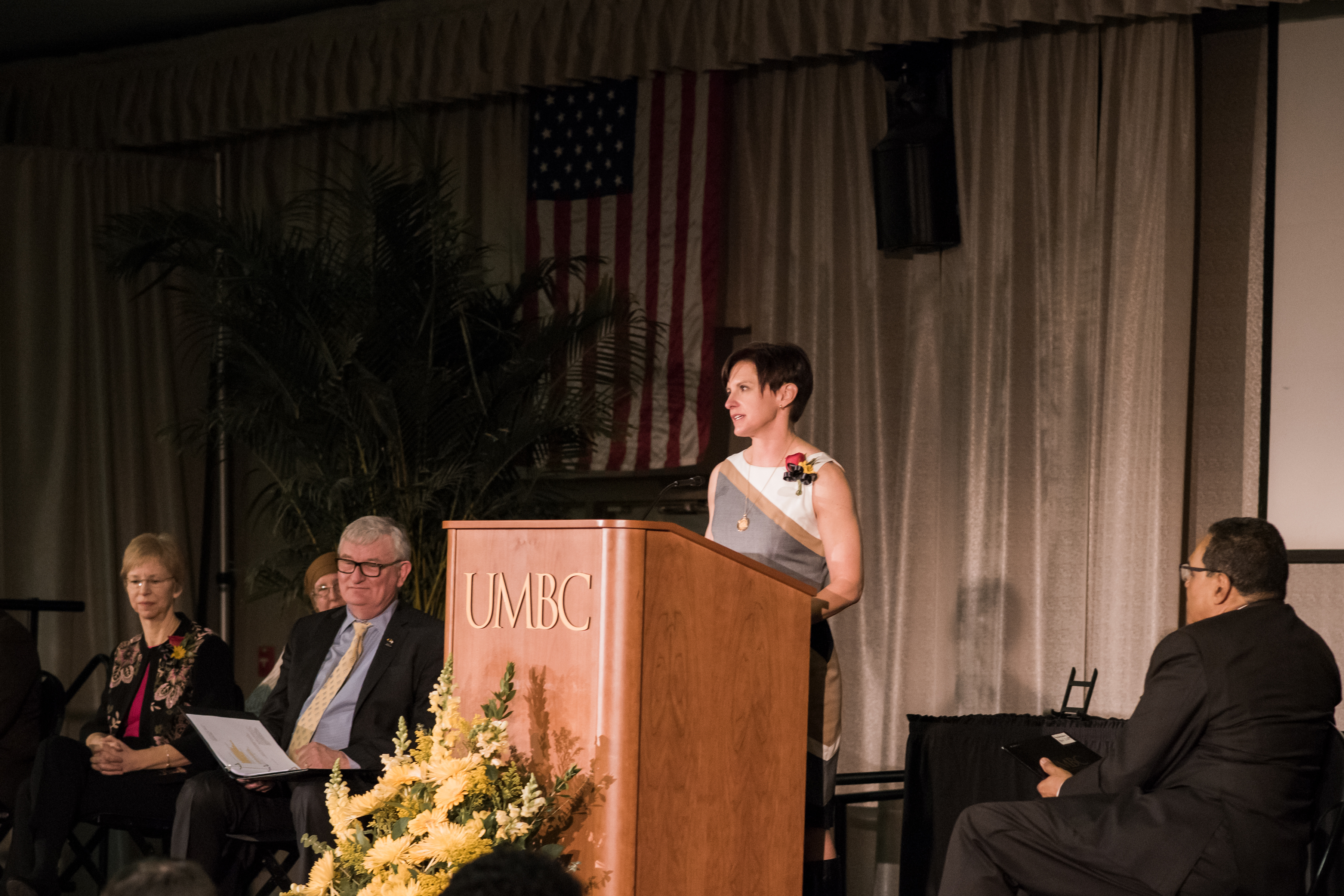
Banner image: Govind Rao speaking during the Presidential Faculty and Staff Award event. All photos by Marlayna Demond ’11 for UMBC.

UMBC welcomes Donna Ruginski as executive director for cybersecurity initiatives

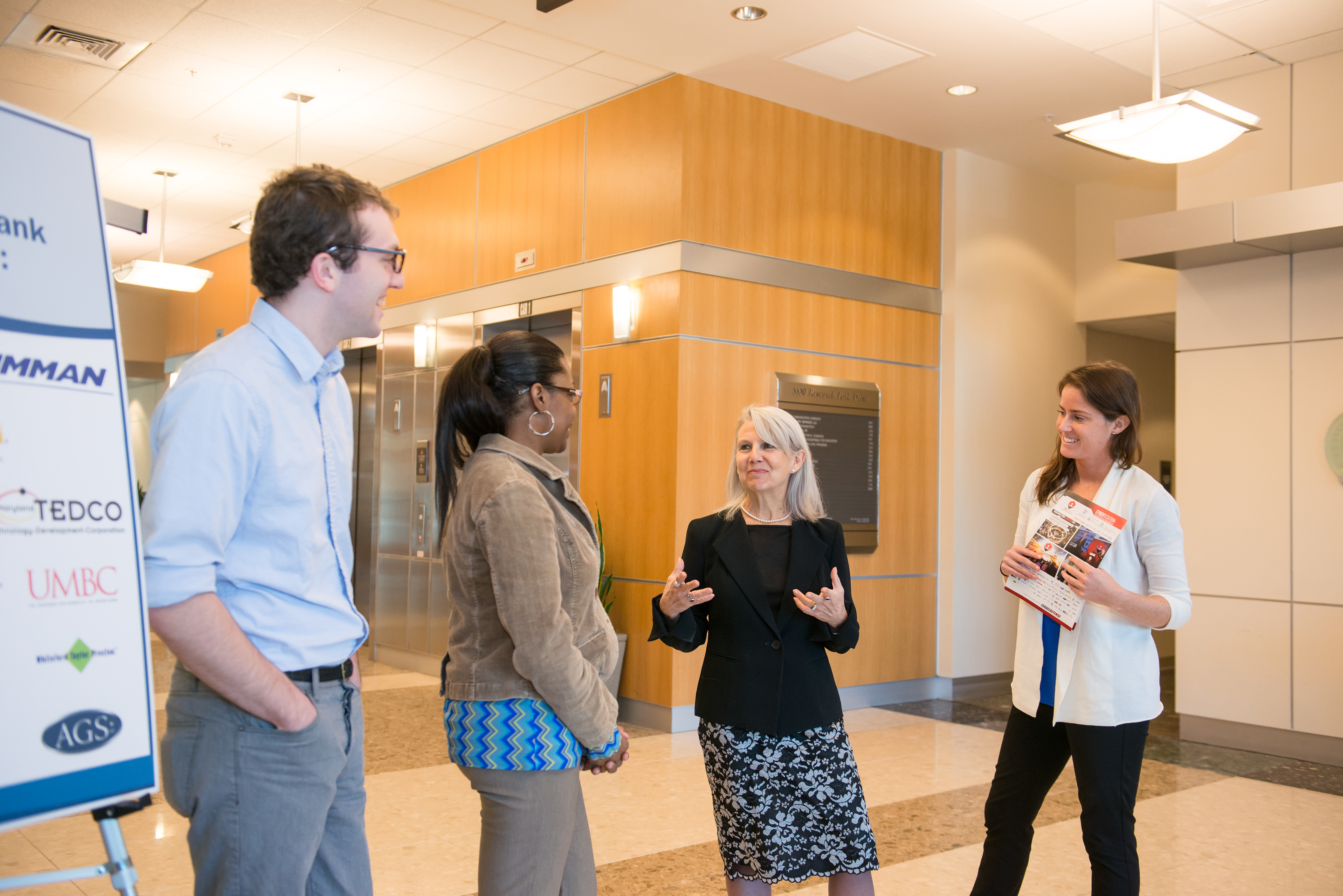
“Cybersecurity research is important because we live in a connected world. As a society, we have an expectation to conduct professional business in a safe and secure technology environment,” says Donna Ruginski, UMBC’s new executive director for cybersecurity initiatives. “Research is thriving at UMBC, and some of the nation’s leading cybersecurity research is being conducted at UMBC.”

Ruginski joins the Office of the Vice President for Research as the first campus leader to hold this partnership-focused cybersecurity role.

“I am delighted to join the UMBC community and to work with its visionary leadership and extraordinary faculty and staff,” she says. “UMBC’s capabilities and resources in cybersecurity contribute to the region’s economic development through a comprehensive cybersecurity focus on academic education, research, workforce development, technology incubators, and entrepreneurship. UMBC truly offers the complete package, making it an exciting place to be.”

Ruginski brings significant experience in cybersecurity to her new role at UMBC. She holds a master’s degree in computer science from Johns Hopkins University and has founded and served as a senior technology executive at software companies over the course of her career.

Karl V. Steiner, vice president for research at UMBC, says Ruginski’s role is important for UMBC, for Maryland, and for the United States. “UMBC is already recognized for its strength in the growing field of cybersecurity and through our strong relationships with federal agencies and the private sector,” Steiner explains. “Ruginski comes to us with an exceptional background and strong skill set that will enable our community to thrive and successfully pursue exciting new opportunities in the years to come.”

In her new role, Ruginski will work to enhance awareness of UMBC’s broad portfolio of cybersecurity initiatives and expand research partnerships with public and private organizations, says Steiner.

“Expanding cybersecurity research at UMBC will offer additional opportunities for faculty and students at all levels,” says Ruginski. “I’m excited to supportUMBC’s growing reputation as a leading research institution.”

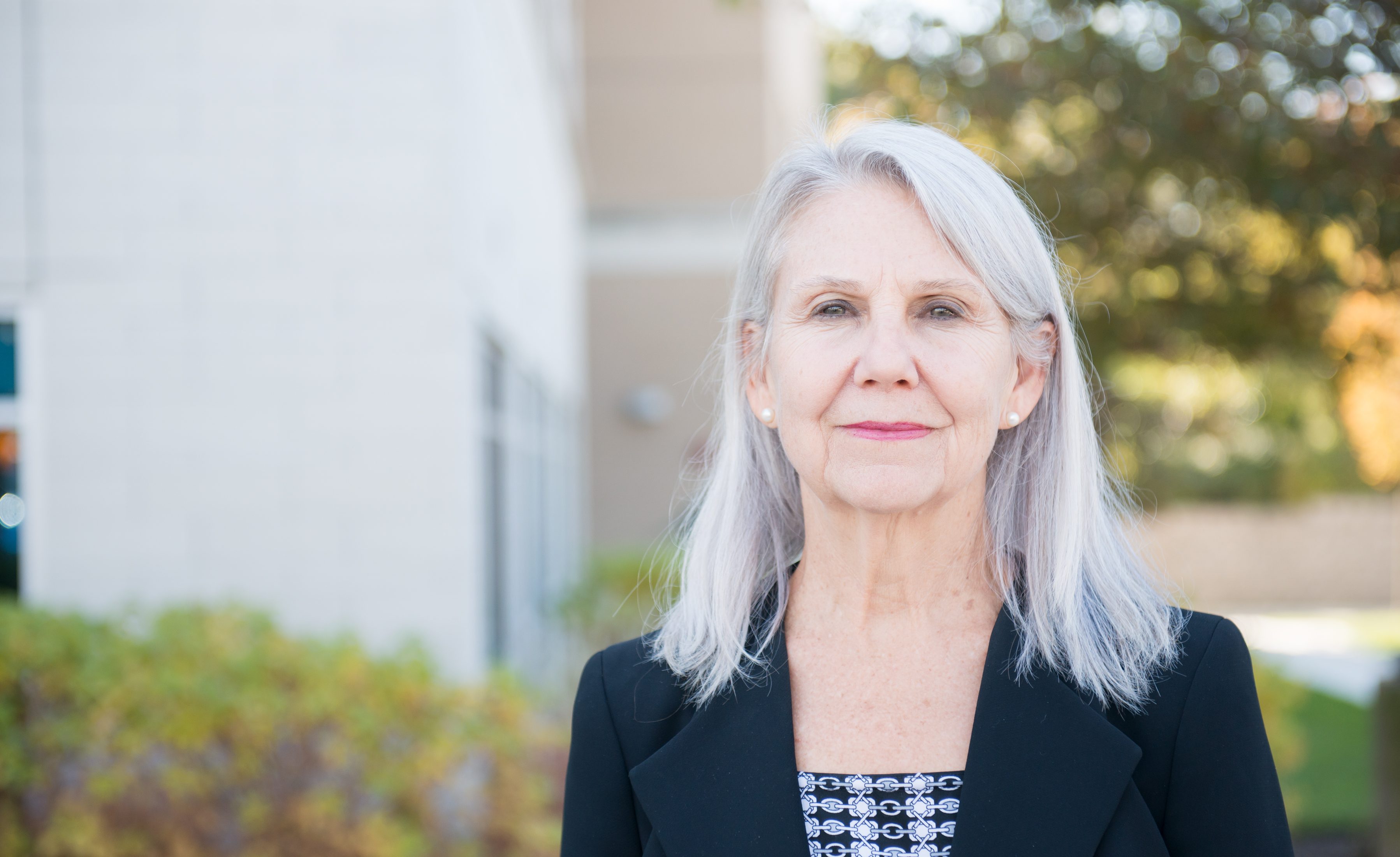
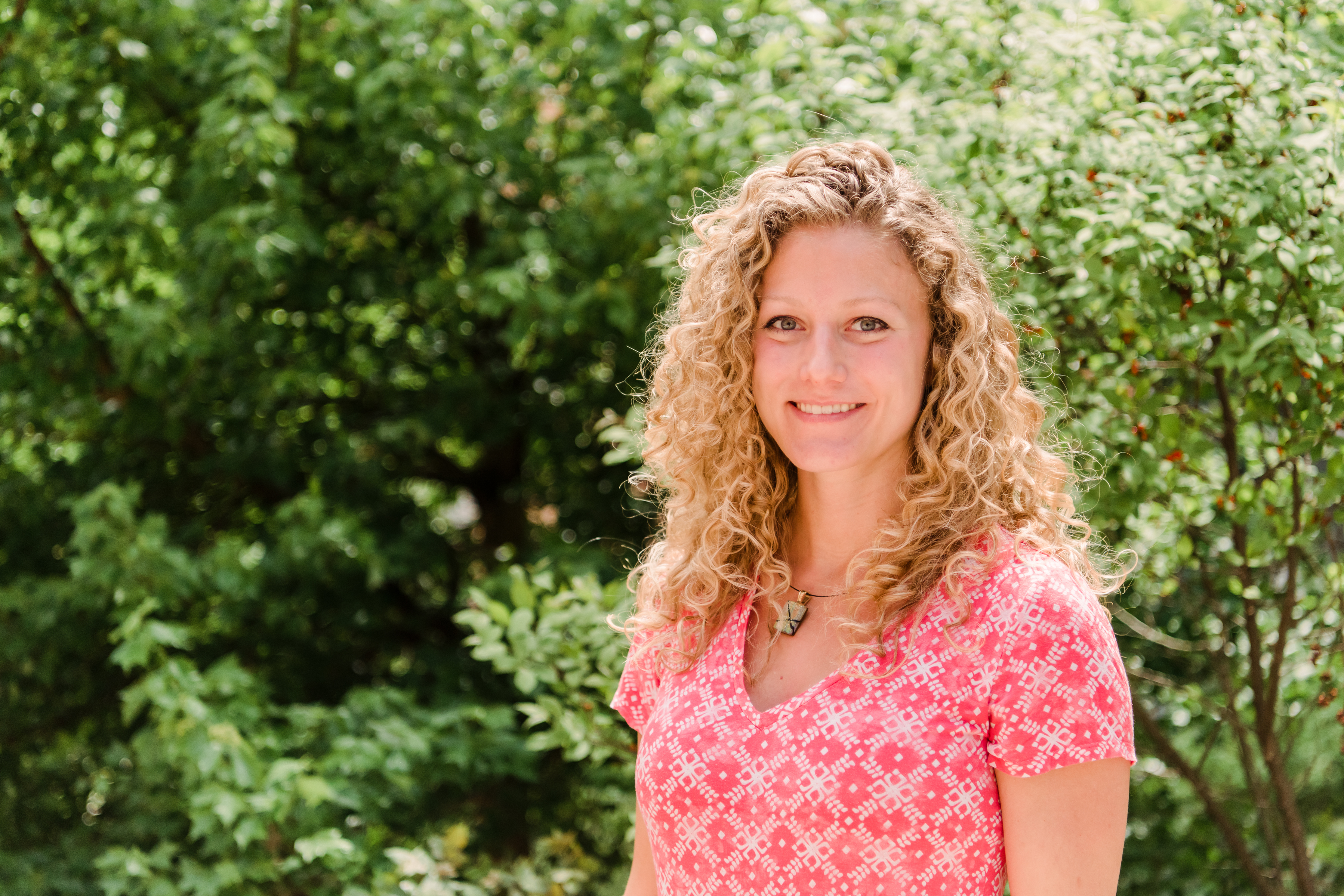
Banner image: Donna Ruginski. Photo by Marlayna Demond ’11 for UMBC.