Last weekend, four UMBC students earned second prize in the national Jeopardy competition hosted virtually by the American Institute of Chemical Engineers (AIChE). The team competed against 12 other teams at the national level after winning the Mid-Atlantic regional competition in October.
UMBC’s team included Cameron Sloan ‘21, Nicholas Balasus ‘21, Ellie Vonderhorst ‘22, and Chris Ashby ‘21, all chemical engineering majors. Sloan is chair of the Jeopardy project in UMBC’s student chapter of AIChE, the professional organization for chemical engineers. He explains that participating in the competition was an important moment for the group, though the move to an online format wasn’t ideal.
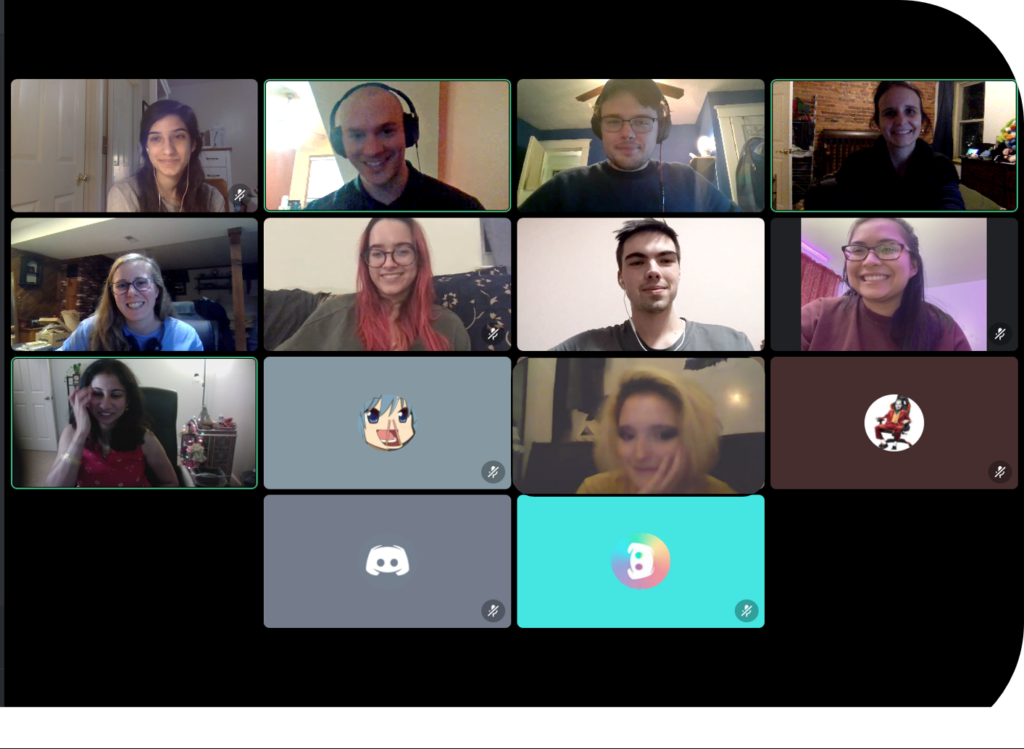
Members of the AIChE team preparing for the virtual competition with faculty advisors and peers. Photo courtesy of Mariajose Castellanos.
“Competing virtually had its challenges, for sure, but all in all it was a fantastic experience,” says Sloan. “I wish we would have had the opportunity to meet our competitors and be able to speak to them, rather than just seeing their digitized faces on our screens.”
Preparing for virtual competition
To prepare for the national competition, each team member created a board featuring unique chemical engineering questions. Their goal was to get exposure to a diverse range of question types on a broad range of topics. Faculty in chemical, biochemical, and environmental engineering (CBEE) also submitted questions to help the team practice.
Mariajose Castellanos, senior lecturer in CBEE, is the faculty advisor for the UMBC chapter of AIChE. She calls UMBC’s second-place finish at the national level “an extraordinary accomplishment” and also notes that this was actually UMBC’s first time at the national competition. They competed against both the University of Southern California (2019 winner) and Iowa State University (2019 finalist).
“I am rejoicing in the grit and greatness shown by our chemical engineering students,” says Castellanos, “during a semester that has challenged us at many different levels.”
Banner image: The UMBC campus in the fall. Photo by Marlayna Demond ’11 for UMBC.
Over the past several months, the topic of online voting has been top of mind for millions of Americans and has been widely debated. Supporters often highlight how it would increase voter turnout through improved accessibility and convenience. Privacy and election integrity are among the top concerns about implementing an online voting system.
Researchers from UMBC and xx.network have been working to design an online voting system that is resistant to coercion and would provide a secure way for people to cast their ballots from computers, tablets, and smartphones in the future. Alan Sherman, professor of computer science and electrical engineering, is developing the system, VoteXX, with David Chaum, a cryptographer known for his work on privacy-centered technology, and Richard Carback ‘05, M.S. ‘08, Ph.D. ‘10, computer science, who has spent his career deflecting would-be hackers.
Mitigating vulnerabilities
The security of devices that voters might use to cast their ballot is a significant concern, notes Sherman. He explains that malware on the devices that voters use might change the votes or spy on the voter.
Alan Sherman, right, talking with Rick Forno on campus in 2018. Photo by Marlayna Demond ’11 for UMBC.
As described in the researchers’ new whitepaper, VoteXX allows voters to confirm that their ballots were accurately cast, collected, and counted, without revealing how they voted. This system uses ideas from an earlier system, Remotegrity, that the collaborators developed and used in a municipal election in Takoma Park, Maryland, in 2010. Voters received secret vote codes on a scratch-off card via traditional mail, which they used to hide their votes from the software and hardware.
To address the issue of coercion, VoteXX enables voters to cancel or change their vote up to a certain deadline.
Studying voting issues
The collaborators are also urging Congress to create a non-partisan National Research Center for the Technologies of Democracy. The center would study elections, voting systems, ballot design, usability, and accessibility, in addition to other topics. They suggest the center be created as part of the existing National Cybersecurity Federally Funded Research and Developments Center.
Sherman shares that the applications of this work are widespread and significant. “The techniques developed in the VoteXX project can enhance the security of all forms of remote voting,” he notes, “including Internet voting and vote-by-mail.”
Banner image: A person typing on a computer. Photo by Marlayna Demond ’11 for UMBC.
Last Thursday, UMBC’s Lee Blaney was honored for his impact as a chemistry educator and mentor who closely involves students of all levels in collaborative research.
Blaney is an associate professor of chemical, biochemical, and environmental engineering. He received the 2020 George L. Braude Award from the Maryland section of the American Chemical Society. Blaney was nominated for the award by Mark Marten, chair of chemical, biochemical, and environmental engineering at UMBC. During the virtual meeting of the society, Blaney presented his research on the occurrence of contaminants of emerging concern in the Chesapeake Bay.
Past and future mentors
Blaney shared that he was honored and humbled to receive the Braude Award for his efforts to mentor undergraduate and graduate students in research. During his lecture, he emphasized the impact of his own mentors on his mentoring approach.
Arup SenGupta (Lehigh University), Desmond Lawler (University of Texas at Austin), and Lynn Katz (University of Texas at Austin) changed his life through their mentorship, Blaney said. He has incorporated their advice and his own experiences into his mentoring approach at UMBC.
“Seeing my students succeed is the most gratifying aspect of being a professor,” he reflects.
Although the event could not be held in person due to the COVID-19 pandemic, many of Blaney’s students were able to attend the virtual lecture. He noted that the presence of his students made the celebration even more special. Upon receiving the Braude Award, Blaney emphasized to his students, “This is our award.”
Lee Blaney, left, receiving his award from Louise Hellwig of Morgan State University. Photo courtesy of Hellwig.
Mamatha Hopanna Ph.D. ‘22, environmental engineering, conducts research in Blaney’s lab and attended the virtual lecture. “I am amazed by how much he cares to support each student’s learning style and needs, she said. “I have always felt his sincerity, commitment, and enthusiasm towards his students’ success”
She continued, “It is so encouraging to see Dr. Blaney celebrate each of his achievements as our achievements. I, personally, aspire to be a mentor to inspire and motivate other students in the same way as Dr. Blaney has inspired me.”
Combining research and student success
The Braude Award honors professors from institutions in Maryland who involve students and postdoctoral fellows in exceptional research in particularly notable ways. The award was created in memory of George Braude, who served as chair of the Maryland section of the ACS.
This latest award follows several other honors which have enabled Blaney to further his innovative research. In 2017, Blaney received an NSF CAREER Award, which focuses on how contaminants of emerging concern impact the environment. Later that year, he was recognized by the Maryland Science Center with the 2017 Outstanding Young Engineer Award.
Blaney is the third UMBC faculty member to receive the Braude Award. In 2006, then-UMBC professor Catherine Fenselau, former chair of chemistry and biochemistry, received the award. Michael Summers, distinguished professor of chemistry and biochemistry and Robert E. Meyerhoff Chair for Excellence in Research and Mentoring, received the award in 2010. Summers is internationally known for his HIV research and his work with UMBC’s Meyerhoff Scholars Program.
An editorial announcing Blaney’s award notes, “He is considered a leading researcher with a broad vision, innovative research ideas, and an outstanding commitment to developing a sustainable research program that is diverse and focused on grand challenges.”
Banner image: Lee Blaney. Photo by Marlayna Demond ’11 for UMBC.
Nearly 100 industry experts and entrepreneurs gathered virtually for Cybertini 2020, hosted by bwtech@UMBC, UMBC’s research and technology park, on October 15. The annual event offers a unique opportunity for entrepreneurs to learn from industry professionals and experts in academia, and this year focused on cybersecurity related to elections. This is the second of three Cybertini events scheduled for this year.
UMBC’s Rick Forno, assistant director of the UMBC Center for Cybersecurity, joined Ron Gula, president of Gula Tech Adventures, and Sarah Lenti, executive director of the Lincoln Project, for the panel discussion. In the context of a highly contentious 2020 U.S. election season, panelists shared their perspectives on the particular cybersecurity challenges the U.S. electoral system faces today.
Gula grounded the conversation with a key point: that elections are now considered to be part of critical infrastructure, but that challenges to its security are unique. Megan Wahler, director of entrepreneurial services at bwtech@UMBC, moderated the event.
Continuous attention to security
Forno and Gula both argued that it’s important to continuously look at the security of information sharing broadly, rather than focusing on security when an election comes around.
Rick Forno. Photo by Marlayna Demond ‘11 for UMBC.
“I think you don’t look at it in the context of securing an election,” said Forno. “I think you need to look at it as securing an information ecosystem over time, not just every two or four years.” This means there will always be a need for expertise and innovations related to securing information, he noted.
Gula similarly emphasized that it is important for leaders to take cyber hygiene and data security seriously in order to protect companies, governments, and elections from vulnerabilities in the long term. “If we can educate [people running for office] before they get into office, then they’re going to make better cyber policy decisions for all of us,” he said.
Electronic voting and misinformation
The speakers also discussed how to ensure the security of future electronic voting platforms, a particularly hot-button issue in the context of the COVID-19 pandemic. Gula explained that it’s possible to develop a secure electronic voting system, but that this security might be dependent on maintaining a paper trail. Forno cautioned that the U.S. electoral system also poses particular challenges, given that each state and territory has its own process for running elections.
Ron Gula. Photo courtesy of Gula.
Returning to the present election, Forno discussed how securing information shared on social media also plays a role in elections, even if people are still voting through traditional means. He suggested that social media companies must play a major role in identifying and preventing the spread of misinformation. By blocking inaccurate information from being posted or shared online, these companies can thwart efforts to bad actors to influence elections. UMBC faculty, students, and alumni are currently working on artificial intelligence and cybersecurity technologies to address these issues.
Sarah Lenti. Photo courtesy of Lenti.
Further discussing vulnerabilities of the current election, Lenti described her organization’s work to track voter suppression efforts, to hold leaders accountable to maintaining a secure and accessible electoral process. The Lincoln Project recently announced a partnership with See Say 2020, which allows people to report acts of voter suppression and election interference in real time.
“The Lincoln Project’s role is to basically shine a light on these activities with the hopes of it leading to some remedy and creating a deterrent,” Lenti said.
Forno reflected that looking at the broad ways in which cybersecurity plays a role in current and future elections shows how “cyber touches every aspect of society.”
Banner image: The entrance to bwtech@UMBC. Photo by Marlayna Demond ‘11 for UMBC.
UMBC Vice President for Information Technology Jack Suess will soon receive one of the highest national recognitions offered to professionals in his field: the EDUCAUSE Leadership Award.
EDUCAUSE is a nonprofit association that focuses on information technology (IT) in higher education and includes more than 2,300 member colleges, universities, and groups. Suess ‘81, mathematics, M.S. ‘94, information systems, will receive the award during the EDUCAUSE Annual Conference, which will be held virtually this month.
“This is a tremendous honor for me. Given that my entire career has been at UMBC, it also is testament to the innovative and collaborative culture of the UMBC community,” Suess says. “In particular, I want to highlight the technology leadership of my Division of Information Technology colleagues. Through all of their efforts, UMBC is looked at as a model for the use of technology in higher education.”
Collaborative leadership
Suess was nominated and selected to receive the Leadership Award for his commitment to innovation and advancing research and scholarship in technology. He is also being honored for creating a culture of collaboration and opportunity among faculty, staff, students, and other higher education stakeholders, and for his work in diversity, equity and inclusion.
“Leaders around the country admire Jack’s valuable contributions to IT and higher education. He is a fine example of enlightened leadership,” says UMBC President Freeman Hrabowski. “We all know Jack leads effectively by serving selflessly. What makes him most extraordinary is that his emotional intelligence matches his impressive technical skills.”
Career of service
Suess has been involved with EDUCAUSE for more than two decades, serving on a variety of committees before joining the board of directors in 2014 and serving as chair of the board in 2018. Currently, Suess serves on the IMSglobal Board of Directors, which he chaired from 2015 to 2020. He is a former member of the Internet2 Board of Directors, where he received the inaugural Internet2 Presidential Leadership Award in 2011.
At UMBC, Suess has previously received the UMBC Presidential Staff Award (2004) and the UMBC Alumni Volunteer Award (2000). He served on the inaugural advisory board for UMBC’s Center for Women in Technology from 1998 to 2013.
Banner image: Jack Suess. Photo by Marlayna Demond ’11 for UMBC.
After years of gradual expansion, telemedicine has grown dramatically during the COVID-19 pandemic, allowing patients to consult with medical professionals from a distance, without traveling to an office or hospital. But the availability of telemedicine has not yet risen to meet demand, says UMBC’s Helena Mentis, associate professor of information systems (IS).
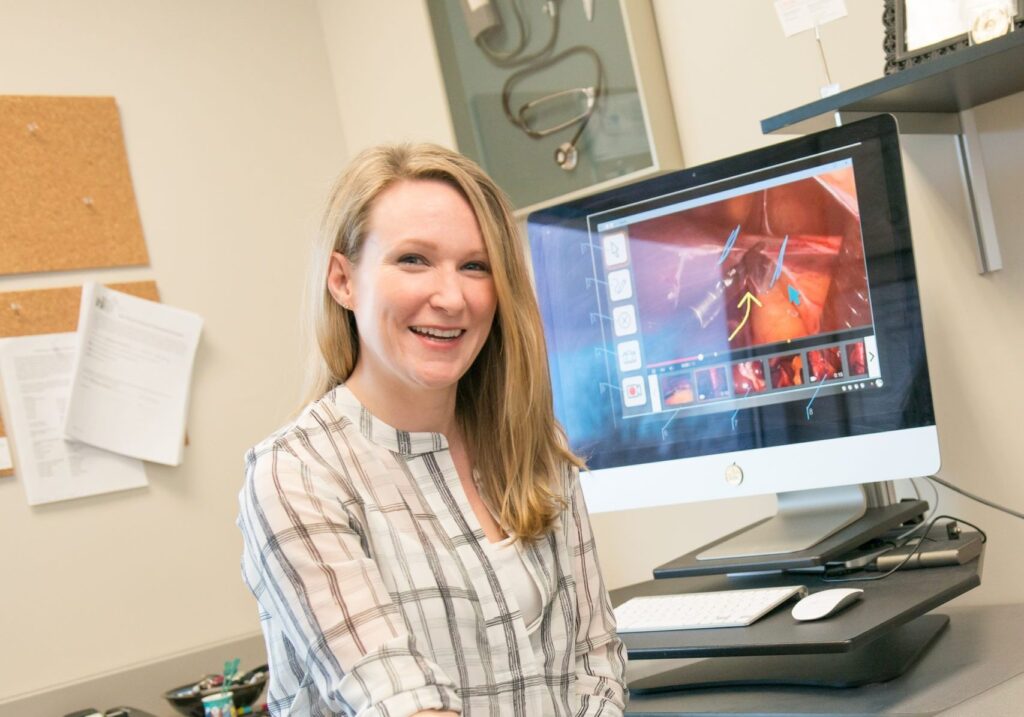
Helena Mentis. Photo by Marlayna Demond for UMBC.
New strategies are needed to scale-up telemedicine, and more entry-level medical professionals require training on how to provide care to patients virtually. Such training is particularly challenging when clinicians sharing their knowledge are in different locations than the people being trained. A UMBC team is taking on these challenges.
UMBC researchers have received a nearly $150,000 planning grant from the National Science Foundation (NSF) to study how telemedicine can be scaled more effectively, including meeting the complex training needs of medical professionals. Mentis, who is also an associate dean in the College of Engineering and Information Technology, is the principal investigator (PI) on the grant. She will work with Andrea Kleinsmith, assistant professor of IS; Anita Komlodi, associate professor of IS; Gary Williams, clinical coordinator in emergency health services; and Christine Yee, former assistant professor of economics, now an economist at Boston University and the Partnered Evidence-based Policy Resource Center, who are all co-PIs.
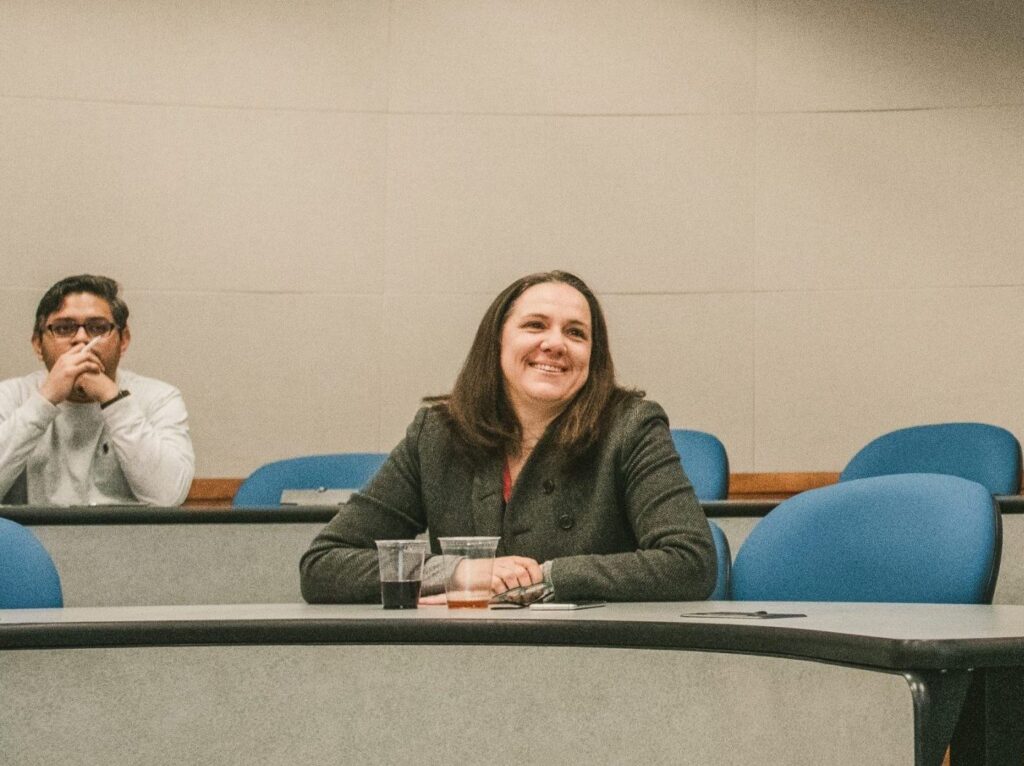
Anita Komlodi at an event in February 2020. Photo by Britney Clause ’11.
Mentis explains that this grant is an extension of her work on surgical telemedicine, which was the focus of her NSF CAREER award in 2016. “Whereas my prior work was on one physician communicating with one physician, this grant is looking at how we can scale the benefits of telemedicine with a hub and spoke model,” she says.
Addressing big ideas
The grant is part of NSF’s Big Ideas initiative, which focuses on “ten bold, long-term research and process ideas that identify areas for future investment at the frontiers of science and engineering.” Mentis explains that this research is specifically related to the Future of Work at the Human-Technology Frontier.
The research team will begin building a framework to better understand telemedicine through three approaches. First, they will develop and host a workshop for emergency healthcare leaders and educators, people who develop telemedicine systems, and health economists to discuss existing telemedicine challenges and identify possible innovative solutions.
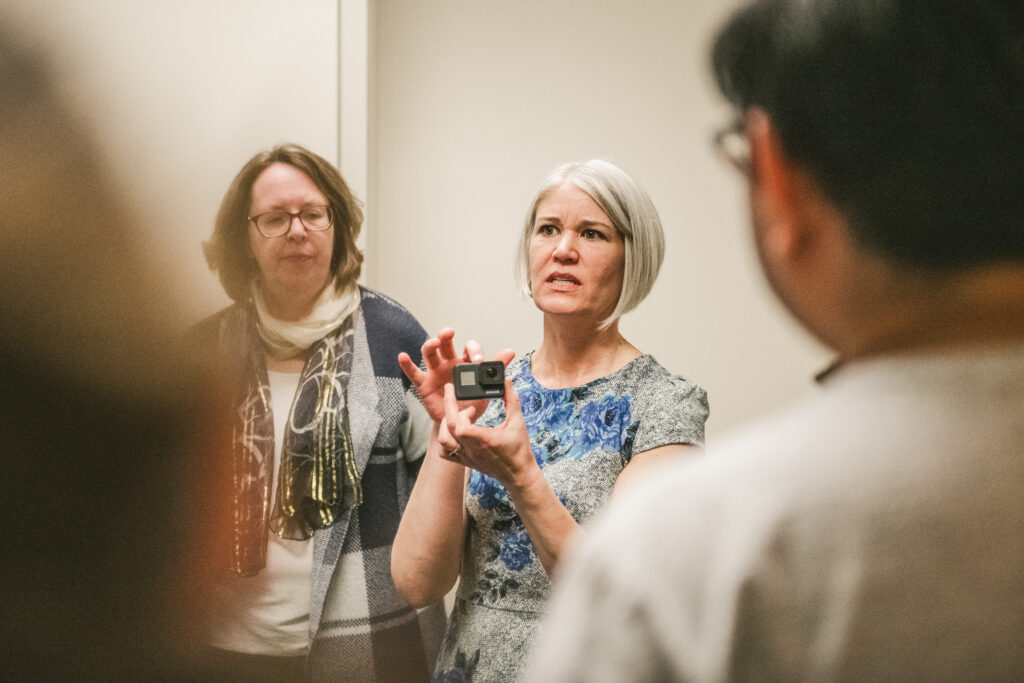
Andrea Kleinsmith gives a tour of the Perception Lab in February 2020. Photo by Britney Clause ’11.
Second, they will complete an exploratory study to assess the cognitive, communicative, and affective loads experienced by telemedicine professionals in the field and by seasoned clinicians as they lead telemedicine training. Interviews with emergency medical services (EMS) professionals from the greater Baltimore region will provide data for this component.
The final element of this work will be for the research team to connect with community partners to understand the challenges of telemedicine-at-scale. They will also examine how expanding telemedicine could impact the EMS workforce and healthcare costs
Yee explains that through the grant, there will be interviews conducted with EMS managers to find out how they identified and hired their current workforce. “We hope to learn about the expenses related to the current practice of off-site emergency services and transportation to hospitals and other medical institutions,” she says. “We also will be interviewing current and potential EMTs and paramedics about their considerations regarding the EMS career path, including training, burnout, compensation, and risks.”
Developing scalable solutions
The researchers will interview EMS professionals in greater Baltimore to learn about the challenges they face when providing care through telemedicine. They will also examine how telemedicine might offer an entry-level pathway for high school graduates who are interested in pursuing a healthcare career.
Gary Williams. Photo courtesy of Williams.
Williams explains that in early 2019, EMS 2050 was released. This guide informs EMS leaders and educators about the future of the field, and one of the guiding principles is a focus on being adaptable and innovative. “The document speaks specifically about telemedicine and EMS and how we improve patient care by bringing this technology to the forefront,” he says. “The timing is perfect with receiving this grant and the release of EMS 2050. We need this type of research to start making changes and finding new ways to provide patient care to everyone, no matter where they live.”
The existing EMS infrastructure and educational pathways explored through this process will inform the team’s recommendations for scaling telemedicine. By finding new ways to meet high demand for telemedicine services, the team hopes to relieve some of the strain on emergency medical technicians and other healthcare providers who are stretched beyond capacity.
“We began this work with the intention to impact healthcare in the far off future, but as we have seen in the past 6 months, that future is here now,” says Mentis. “Equitable, scalable, and affordable healthcare are of paramount importance and this grant is a huge step in working with our healthcare partners to identify sustainable change.”
Banner image: Telemedicine consultation equipment. Photo by Sergio Santos, used under CC 2.0.
Today, bwtech@UMBC, UMBC, and the University System of Maryland (USM) announced receiving a major grant from the U.S. Department of Commerce’s Economic Development Administration to create the Maryland New Venture Fellowship for Cybersecurity. The grant totals more than $1.3 million, with nearly $600,000 in federal funding, which will be used over a three-year period.
The Fellowship will support the development of cybersecurity companies in Maryland, and will increase connections among technologists, mentors, and faculty at institutions across the state.
This new program will enable cybersecurity entrepreneurs to work together to create technologies and other cyber solutions that impact society, including utilities, infrastructure, and critical information systems. These entrepreneurs will include teams composed of graduate students interested in entrepreneurship, experienced entrepreneurs serving as mentors, and faculty from Maryland universities.
The north campus of bwtech@UMBC.
Bringing new talent into a thriving sector
Maryland is home to major U.S. innovation centers in cyber and data science including the National Security Agency, Defense Information Systems Agency, and U.S. Cyber Command. This program will capitalize on cyber research and development that is already happening in Maryland. It will also work to identify and address gaps, including the need for well-trained entrepreneurs with an innovative mindset and fresh perspectives, essential to Maryland maintaining its position as a leader in cybersecurity.
With these needs in mind, bwtech and USM have designed the program to empower and support diverse entrepreneurs and researchers who will create new technologies and ideas to secure the nation’s interests, and create economic opportunities and jobs.
“Cybersecurity is one of Maryland’s most important industry sectors and a great source of economic strength for our state,” said Maryland Commerce Secretary Kelly M. Schulz. “This new initiative will support entrepreneurship and provide more incredible talent to the state’s cybersecurity workforce.”
Immersive entrepreneurial experience
During the first year of the grant, the Fellowship will focus on commercializing technologies at several universities within USM, including UMBC.
“The Fellowship provides a much needed entrepreneurial resource to the faculty and technologists developing cybersecurity tools, while providing an immersive entrepreneurial experience for graduate students at UMBC and across the University System of Maryland,” says Megan Wahler, director of entrepreneurial services at bwtech@UMBC.
“Across our region, there are incredible technologies being developed in our universities to protect our infrastructure, supply chains, and our national security and we must do all we can ensure they succeed,” says Baltimore County Executive Johnny Olszewski, Ph.D. ‘17, public policy.
The Fellowship program will then expand to include other Maryland institutions in the second year. In the third year, it will begin connecting with people who work at federal agencies.
“Maryland is home to some of the world’s greatest minds in cybersecurity,” says J. Thomas Sadowski ‘89, political science, USM vice chancellor for economic development. He notes, “this program will help leverage this talent, foster collaboration, facilitate new venture creation and get our ideas to market.”
Banner image: the entrance to bwtech@UMBC. Photos by Marlayna Demond ’11 for UMBC.
Mark Marten, professor and chair of chemical, biochemical, and environmental engineering, is collaborating with researchers at the University of Connecticut and the University of Manitoba to study how fungal cells respond to stress and repair their cell walls. Marten and his collaborators identified three coordinated pathways involved in the response to cell wall stress in filamentous fungi.
Numerous species of filamentous fungi are pathogens that can make people sick, especially people who are immunocompromised. Different species of fungi play an important role in the development of pharmaceuticals and enzymes, and agriculture, where fungi can help improve the quality of soil and make nutrients more readily available for crops, explains Marten. By understanding how cells work and respond to stress, researchers can reverse-engineer processes that could have a broad range of applications.
A photo of Marten’s lab in fall 2019. Photo by Melissa Penley Cormier.
Understanding how cells respond to stress
Marten and his collaborators Ranjan Srivastava, University of Connecticut, and Steven Harris, University of Manitoba, recently received over $1.2 million in grant funding from the National Science Foundation (NSF) to further explore how filamentous fungi repair their cell walls when exposed to stressors. This work will build upon previous NSF-supported research completed by the team. Molecular and Cellular Proteomicshas just published their findings on critical cellular processes triggered when cells respond to environmental stress. Cynthia Chelius, Ph.D. ‘19, chemical engineering, is the first author on the paper.
Mark Marten. Photo courtesy of Marten.
To understand how the fungal cell walls respond to environmental stressors, Marten and his team studied what he describes as the cell’s “software”—rules that control how the cell behaves. When fungi experience stress, Marten’s team found an increase in the number of septa created. Like bulkheads in a ship, septa prevent catastrophic loss of cellular cytoplasm if there’s a break in the cell wall. “When you stress cells, they sense it and try to protect themselves,” Marten explains. He adds that fungi try to repair damage to their cell walls so that they can resume normal growth and function.
The study used a multi-omic methodology, which researchers say can be applied to studying how signaling networks in cells work in general. The methodology allowed researchers to get a more detailed understanding of how cells respond to stressors. They found that when cell walls experience stress, there is a coordinated response through various pathways. By combining short time-scale phosphoproteomic sampling and longer scale transcriptomic sampling, the researchers were able to see a broader view of how cells respond to stress.
Gene regulation
Moving forward, the team looks forward to examining how the parts of the fungal cell are assembled and how fungal gene regulatory networks function. They hope to understand how proteins in cells interact with each other, and how cells can turn on and off certain parts of their DNA to respond to stress.
“We were excited to see the results from this paper, as they both revealed a novel connection between different aspects of gene regulation in fungi and served as the basis for a new hypothesis regarding gene regulation in our most recent NSF Collaborative Research Award,” says Marten.
Banner image: UMBC’s Engineering building, left, and ITE building. Photo by Marlayna Demond ’11 for UMBC.
Dipanjan Pan, professor of chemical, biochemical, and environmental engineering at UMBC, and collaborators have published a seminal study in Nature Communications that demonstrates for the first time a method of biosynthesizing plasmonic gold nanoparticles within cancer cells, without the need for conventional bench-top lab methods. It has the potential to notably expand biomedical applications.
Conventional laboratory-based synthesis of gold nanoparticles require ionic precursors and reducing agents subjected to varying reaction conditions such as temperature, pH, and time. This leads to variation in nanoparticle size, morphology and functionalities that are directly correlated to their internalization in cells, their residence time in vivo, and clearance. In order to avoid these uncertainties, this work demonstrates that biosynthesis of gold nanoparticles can be achieved efficiently and directly inside cancer cells without requiring conventional laboratory methods.
The researchers examined how various cancer cells responded to the introduction of chloroauric acid to their cellular microenvironment by forming gold nanoparticles. These nanoparticles generated within the cell can potentially be used for various biomedical applications, including in x-ray imaging and in therapy by destroying abnormal tissue or cells.
Expanding biomedical applications
In the paper, Pan and his team describe their new method of producing these plasmonic gold nanoparticles within cells in minutes, within a cell’s nucleus, using polyethylene glycol as a delivery vector for ionic gold. “We have developed a unique system where gold nanoparticles are reduced by cellular biomolecules and those are able to retain their functionality, including the capacity to guide the remaining cluster to the nucleus,” says Pan.
They also worked to further demonstrate the biomedical potential of this approach by inducing in-situ biosynthesis of gold nanoparticles within a mouse tumor, followed by photothermal remediation of the tumor. Pan explains that the mouse study exemplified how “the intracellular formation and nuclear migration of these gold nanoparticles presents a highly promising approach for drug delivery application.”
“Gold is the quintessential noble element that has been used in biomedical applications since its first colloidal synthesis more than three centuries ago,” Pan notes. “To appreciate its potential for clinical application, however, the most challenging research ahead of us will be to find new methods of producing these particles with uncompromised reproducibility with functionalities that can promote efficient cellular binding, clearance, and biocompatibility and to assess their long-term term effects on human health. This new study is a small but important step toward that overarching goal.”
In addition to his appointment at UMBC, Pan is a professor of diagnostic radiology and nuclear medicine and pediatrics at the University of Maryland School of Medicine (UMSOM) as part of his dual appointment with the University of Maryland, Baltimore. Coauthors on the paper are affiliated with the University of Illinois, Urbana-Champaign; UMSOM; and Cytoviva, Inc.
Banner image: UMBC’s Interdisciplinary Life Sciences Building. Photo by Marlayna Demond ’11 for UMBC.
UMBC’s Tulay Adali, professor of computer science and electrical engineering (CSEE) and distinguished university professor, has received the prestigious Humboldt Research Award. The Alexander von Humboldt Foundation describes the award as presented to scholars “whose fundamental discoveries, new theories, or insights have had a significant impact on their own discipline and who are expected to continue producing cutting-edge achievements in the future.”
Tulay Adali. Photo courtesy of Adali.
Adali is director of UMBC’s Machine Learning for Signal Processing Lab. Her research focuses on developing flexible methods for data fusion. These innovative methods enable researchers to extract powerful features from multi-modal data by letting them fully interact with and inform each other.
A main application area of her work has been medical image analysis, where these features are used in diagnosis as well as treatment planning and evaluation. Adali and her research collaborators are also exploring applications of these methods in remote sensing, misinformation detection, and gesture and video analysis.
A years-long research collaboration
Humboldt Award recipients spend up to one year conducting collaborative research at institutions in Germany. Adali plans to continue to work with her longtime collaborator Peter Schreier, who is based in Paderborn University. Through a research connection that has spanned many years, Adali says that her lab and Schreier’s continue to have wonderful synergy.
Together, Adali and Schreier have worked to address problems such as data-driven discovery of relationships in multi-modal data, and in particular, when the sample sizes are small. “This is a key practical problem in many applications, especially in the medical domain,” Adali shares. She notes that this provides an important starting point for their current work.
“Things are moving along, even though I could not travel this summer, as we started having weekly research meetings between our groups,” Adali says. “This is a valuable experience for my students. In the past, we had hosted Schreier and his students here at UMBC, some of my students had met Schreier and his students at conferences before, and these initial physical connections matter. I am hoping we will all be able to travel again, soon.”
Receiving the award
As a Humboldt Award recipient, Adali was invited to attend a gathering in June with her fellow awardees, hailing from universities around the world. Due to COVID-19, the event was moved online. Awardees had an opportunity to meet the German president virtually as part of the event.
While she wishes the event could have been held in person, Adali says that it gave her an exciting opportunity to connect with other Humboldt awardees and learn more about scientist and explorer Alexander von Humboldt.
In 2015, Curtis Menyuk, professor of CSEE, received a Humboldt Award.
Banner image: Tulay Adali, fourth from left, with the members of her lab. Photo courtesy of Adali.
Five months after moving classes online due to the COVID-19 pandemic, the UMBC community is preparing for a fall semester unlike any before. UMBC has been gradually transitioning to limited on-campus research and creative activity since June. When the fall semester starts on August 27, a small proportion of Retrievers will live, study, and work on campus, after completing detailed health and safety requirements. Most classes and work continue to progress remotely, using tools and approaches enhanced throughout the summer months.
To create a roadmap for the fall, UMBC has relied on a strong tradition of community collaboration, bringing together committees of faculty, staff, and students to address every aspect of campus activity. In this way, UMBC can continue to live out its strong commitment to inclusive excellence and provide a distinctive academic and social experience during this unprecedented time. UMBC leaders are also in regular communication with the University System of Maryland (USM), and local and state leaders, about new policies guiding campus health and safety efforts.
For Joshua Gray ’22, dance, who will be living on campus during the fall semester, knowing that so many people have been involved in discussions about community health and safety, as well as supporting student success, is reassuring. “I could tell that no decision was made without many people in the room,” Gray says.
COVID-19 testing and symptom tracking
All students, faculty, and staff who are approved to return to campus for the fall semester are required to take a COVID-19 test and submit their results prior to the start of the semester. They are also required to complete daily online symptom tracking beginning 14 days before arriving on campus. Symptom tracking will continue throughout the semester.
Signage on campus reminding people to wear face coverings. Photo by Marlayna Demond ‘11 for UMBC.
In addition to these University System of Maryland requirements, UMBC is also requiring all returning Retrievers to complete an online health and safety training. Students will also be required to read and sign a new community agreement focused on actions to decrease the risk of COVID-19 transmission on campus.
Health and safety protocols
At a virtual town hall for UMBC staff held on July 1, Lenn Caron, assistant vice president for Facilities Management, described several measures UMBC is taking to minimize the spread of COVID-19.
UMBC’s Facilities Management office has been working closely with campus leadership and ABM, the custodial company contracted by UMBC, to ensure that spaces and buildings are continually sanitized. This includes cleaning all high-touch surfaces multiple times per day, such as restrooms, elevators and elevator buttons, handrails, and doorknobs.
ABM staff have received specialized training on how to safely and effectively sanitize and disinfect spaces on campus. They also are supplied with masks, gloves, and other protective gear in order to protect themselves from possible contact with COVID-19.
Signage on campus about preventing the spread of COVID-19. Photo by Marlayna Demond ‘11 for UMBC.
In preparation for additional Retrievers to be on campus this fall, Facilities Management has also installed dozens of hand sanitizing and cleaning stations. New signage will remind those on campus to wear a mask and to physically distance.
In addition to the total number of people on campus being limited, UMBC is limiting the number of people allowed in specific lab, office, and classroom spaces, and modifying spaces as needed to support physical distancing. UMBC is also providing masks to all staff who are required to be on campus to complete their jobs.
Preparing to learn online
This fall, 89 percent of courses will be held fully online, 9 percent will be hybrids (including one or more in-person class sessions) and 2 percent will be in-person. No classes will be held on-campus after Thanksgiving break. Previously on-campus courses will resume virtually after that time. Residence halls will also not reopen after Thanksgiving break, as a safety precaution.
Tirzah Khan ’20, information systems, is looking forward to the fall semester, but also knows she will have to implement a new routine and boundaries so she can minimize interruptions and distractions while studying at home. Khan typically commutes to campus, but this semester will be taking classes online. She says that she is used to living with her parents and brother, but she misses her commute. Before the pandemic, that travel time helped her set mental boundaries between school and home.
Khan explains that she’s approaching the fall semester with the mindset that she can’t fully prepare herself for the semester. Because there is so much unknown about how COVID-19 will unfold in the coming months, she is focusing on being adaptable.
The Welcome Week boxes. Photo by Marlayna Demond ‘11 for UMBC.
As an information systems major, Khan explains that many of her classes had online components even when classes were in person. However, the second half of the spring 2020 semester, when classes moved online abruptly in response to the pandemic, posed challenges. Khan says it took thought and creativity to find new ways to stay in touch with friends and classmates and to connect with faculty.
The importance of building connections has shaped UMBC’s in-person, hybrid, and online course offerings for the fall, as well as strategies to support students.
Preparing to teach online
Several criteria helped campus leaders determine which courses would be held in-person, online, or as a hybrid this fall. These factors included whether courses required special spaces, equipment, or material that could not be reproduced in an online environment. Other considerations included whether courses involved research projects or creative activities that would require in-person work. Some community-building classes, like First-Year Seminars, will also be held fully or partially in-person.
All instructors teaching in-person or hybrid courses will have plans in place to accommodate students who are unable to come to campus, or do not feel comfortable doing so.
Last spring, UMBC faculty had to rapidly shift courses that were originally designed for face-to-face instruction to a remote format in a matter of days. In contrast, fall online classes have been intentionally designed for online instruction, and faculty have been building their online teaching skills throughout the summer.
Hundreds of faculty across all departments have participated in UMBC’s Planning Instructional Variety for Online Teaching (PIVOT) training this summer. PIVOT training helps instructors take a deliberate approach to preparing effective and engaging online courses and creating collaborative classroom experiences.
“Since May, we have engaged well over 300 faculty who took the PIVOT training program, which is based on nationally recognized Quality Matters Standards for effective online course design,” says Sarah Shin, associate provost for academic affairs. “About 450 instructors are participating in more intensive, and discipline-based PIVOT+ learning communities that are facilitated by expert faculty.”
In addition, Shin notes, “our faculty are supported by our Faculty Development Center and Division of Information Technology with expertise in online and hybrid instructional technology, course design, and assessment.”
Building community
UMBC’s residence halls will be at less than 50 percent capacity during the fall semester and on-campus events will be designed with strict safety measures in mind. Still, UMBC is focused on providing a robust student experience beyond the classroom, and community-building is key.
“At each point in planning for the fall, we’ve been very thoughtful about the decisions we’re making and how they impact the community,” says Nancy Young, vice president for student affairs. “Our ability to work across offices, and look at our students’ mental, physical, emotional, and spiritual health as a whole, has been crucial.”
Continuing to build community among students is important to Khan, Gray, and Tess McRae ’21, individualized studies, who are each involved in groups on campus that facilitate connections.
McRae is an intern in UMBC’s Center for Democracy and Civic Life, and has been thinking about what the Center’s community-focused events might look like this coming semester. Staff and students in the Center for Democracy and Civic Life (CDCL) have met regularly throughout the summer to plan meaningful events that will be held online during the fall. These include events related to the 2020 election and online Change Makers Dinners that will create space for community conversations among students and local leaders.
Gray, who is also involved in the CDCL, agrees that creating opportunities for students, faculty, and staff to connect with each other is an important element of the UMBC experience. Khan is involved in CDCL and is also the vice president for design for UMBC’s Student Events Board (seb). She shares that (seb) is actively discussing how to engage both students who are living on campus and students who are completing their courses virtually, through positive community experiences.
Collaboration and innovation
Staff in UMBC Campus Life, CDCL, Off-Campus Student Services, Residential Life, and Identity, Inclusion & Belonging areas have similarly been working to develop events and activities that will engage all students, in person and online. To support virtual events throughout the semester, UMBC’s Division of Information Technology has integrated WebEx teams into the myUMBC platform. This will allow student organizations, as well as offices across UMBC, to engage with community members and stay connected throughout the semester.
Behind the scenes of the student experience, faculty and staff have been working throughout the summer to support all aspects of the UMBC community while navigating pandemic-related challenges. Most faculty and staff members will continue to work remotely during the fall semester, with many juggling care for children and other family members. Human Resources has responded with information and resources to support flexibility for faculty and staff balancing these commitments, including the Families First Coronavirus Response Act (FFCRA).
Through collaboration and innovation, the UMBC community is prepared for a semester that will focus on supporting and celebrating all community members. Relationships are more important than ever, emphasized President Freeman Hrabowski at the latest faculty and staff town hall event, held on August 19. “I want to thank all of you for all that you’re doing,” he said. “Being part of a community means that you’re connected to everyone else.”
Banner image: Black and gold confetti. Photo by Marlayna Demond ’11 for UMBC.
Each summer, hundreds of UMBC students complete summer internships to get hands-on experience related to their majors and career goals. The COVID-19 pandemic has moved many networking opportunities and jobs online, including some internships. Still, undergraduate and graduate students from across the University have spent the summer developing their skills and connections virtually.
UMBC’s Career Center continues to offer students a range of services for each stage of their journey. This includes virtual career coaching appointments to discuss topics such as possible career paths and how to gain work experience or prep for an interview. Students are invited to participate in ongoing events and programs including UMBC’s Virtual Fall Career & Internship Fair, Industry Inside Scoop Panels, online networking opportunities with companies, and skill-building webinars about branding, virtual interviews, and the job search process.
“Although life is different in this economy, our UMBC students are continuing to engage in various applied learning experiences and remaining proactive in their job and internship searches,” says Christine Routzahn, director of the UMBC Career Center. “We, as a UMBC community, are all committed to students’ career success. Our team is looking forward to the fall semester start and working with amazing employer partners and alumni to connect UMBC student talent to opportunities to support their career journeys ahead.”
Kacie Lawrence, associate director of internships and employment in UMBC’s Career Center, says that it’s always important for students to have experiences related to their specific career goals, but that it’s becoming even more so during the pandemic. “Now more than ever, it’s crucial that recent graduates enter the job market with career-relevant experience,” she says. “Employers are getting creative as they adapt their internship, co-op, and research programs to online platforms. The Career Center is here to help students make the most of these virtual opportunities.”
UMBC News sat down with students completing internships in the arts, business, tech, law, and elsewhere to learn more about how embracing new formats is allowing them to learn and connect with mentors and peers in creative ways.
Sharing expertise with local businesses
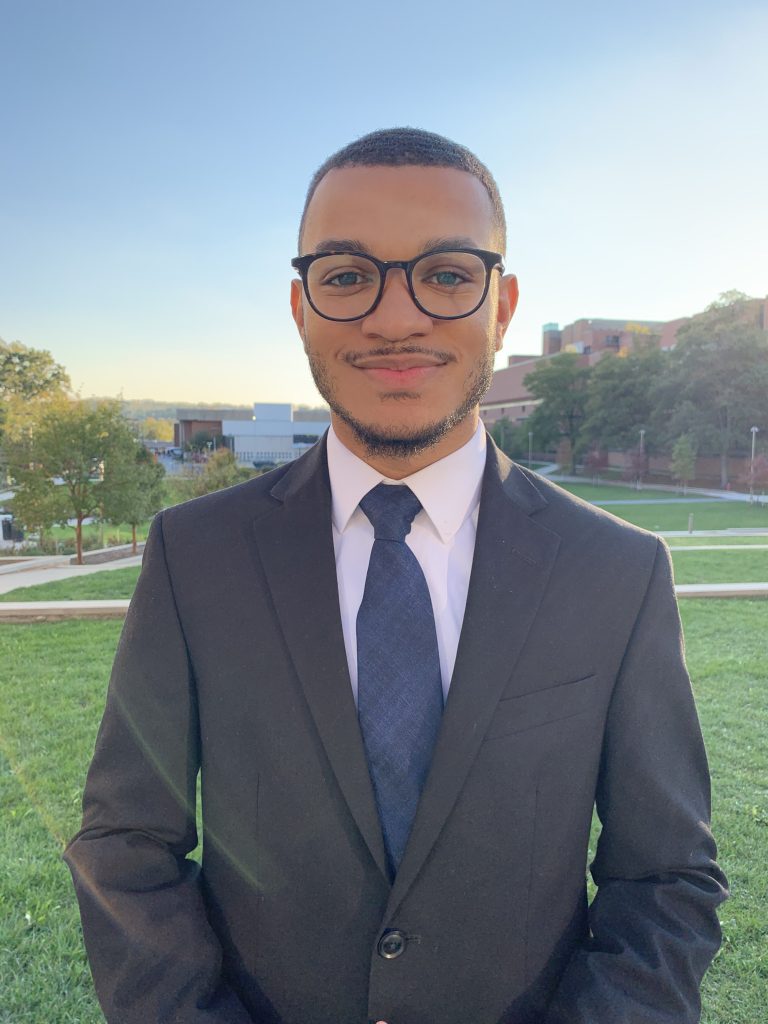
Thomas Southerland ‘22, financial economics, was eager to pursue an internship at JPMorgan Chase & Co. after he came across several opportunities there while exploring his options last year. This summer, Southerland is working virtually as an apprentice in JPMorgan’s Advancing Black Pathways Apprenticeship Program, which he learned about through the company’s website. After graduation, he plans to work in consulting or in the financial service industry.
Thomas Southerland. Photo courtesy of Southerland.
UMBC News: Can you talk about what your internship experience has been like?
Southerland: My internship program was designed to keep us engaged and informed regardless of if it was virtual or not. Although it is incredibly difficult to sit in front of a screen for eight hours a day, the program managers have done an excellent job keeping us busy and engaged. The on-boarding process was also simple; we needed to get acclimated to the new JPMorgan system and the desktop we would be working on. Due to the pandemic, I wasn’t able to work in their Plano, Texas location and I wasn’t able to meet the rest of the apprentices in person.
UMBC News:What has been the most rewarding part of your internship so far?
Southerland: During these last four weeks, we have worked on a business case project where we served as consultants for The Harbor Bank of Maryland to give them recommendations on how they could increase adoption for their electronic banking products. After our research, we presented in front of a panel of judges from JPMorgan and Harbor Bank. My group and I spent a lot of time working on the project and making sure we were ready to present in front of the judges. It took hours after work and time on the weekends to prepare, and we did very well. Seeing everything come together after all of our hard work was incredibly rewarding. I was also given the opportunity to speak about my experience with the project manager during our virtual celebration at the end of the program.
Using learned skills in industry settings
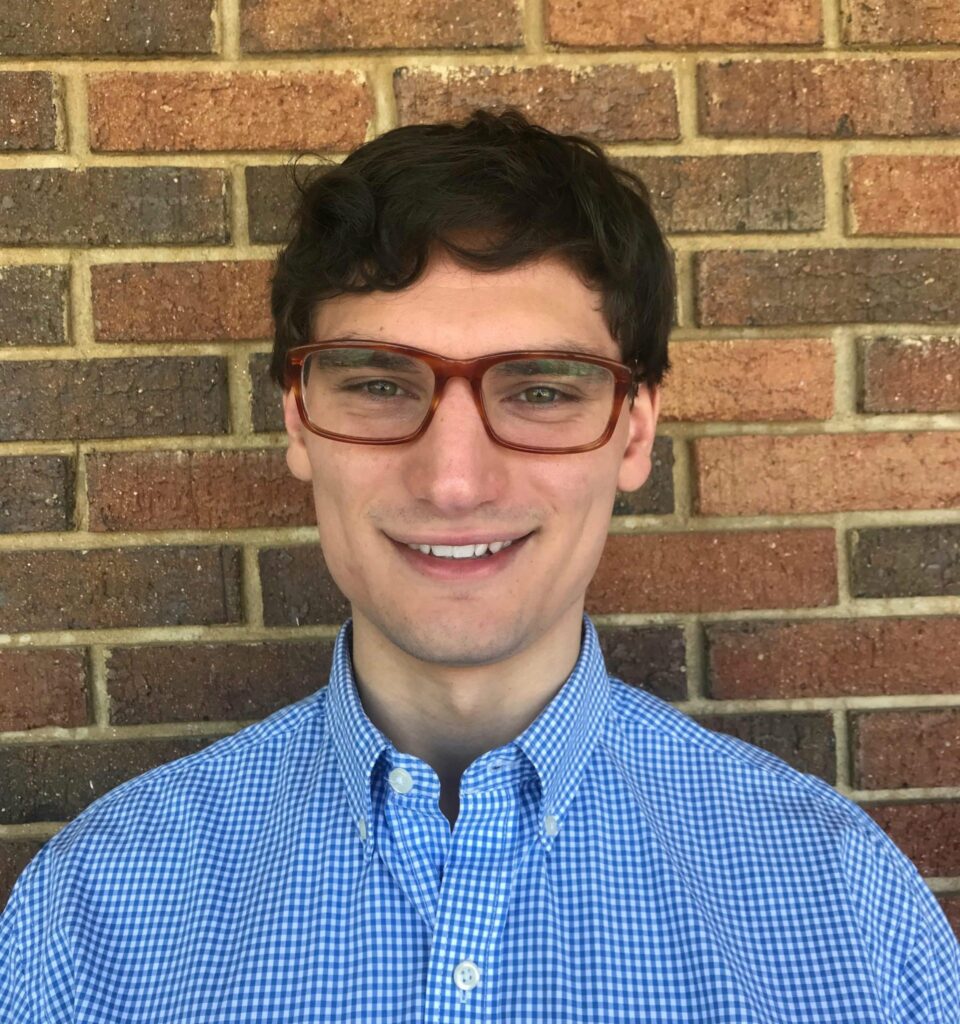
Themi Cologer ‘20, computer science, completed an internship at T. Rowe Price last summer, and was eager to complete another internship to advance his skills in data science. This summer, he finds himself interning virtually for T. Rowe Price, which he found out about and applied to through Handshake. As an intern, Cologer is relying on his knowledge of C#, SQL, and React Javascript to build a website that creates an interface and environment that is easy for T. Rowe Price employees to access.
Themi Cologer. Photo courtesy of Cologer.
UMBC News: How does this internship connect to your major and career goals?
Cologer: I am a computer science major with a focus in data science. Being able to do front-end development in a professional setting really is sharpening my coding skills and teaching me how to present code in a corporate environment.
UMBC News: What’s it been like to intern virtually? Cologer: My experience so far has been excellent! It can be a little harder to communicate effectively in a virtual environment. Networking is definitely different as it’s harder to coordinate a time to meet over email then being able to ask someone to grab lunch or coffee in person. Luckily, I am in a field where I am able to work effectively in a telework environment.
UMBC News: What has been the most rewarding part of your internship so far?
Cologer: I’m enjoying being able to work for a great company, and learn more about the world of software development.
Fostering connections in Baltimore’s art community
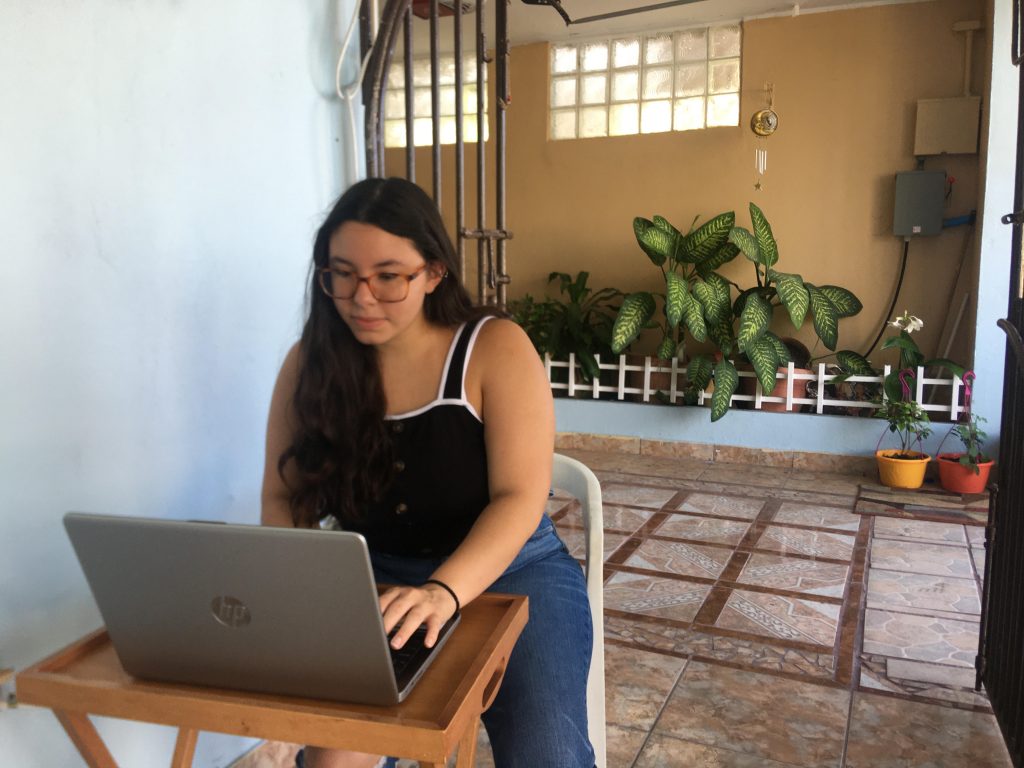
Amelia Torres ‘22, media and communications studies, is interning at Maryland Art Place (MAP) in Baltimore, where she is helping with everything from communications and web upkeep, to assisting with the behind-the-scenes organization of virtual exhibits. Torres is responsible for helping draft social media posts, which are important for keeping local artists aware of opportunities that MAP and other galleries in Baltimore offer.
Amelia Torres working at her virtual internship from her grandparents’ house. Photo courtesy of Torres.
Her internship is entirely virtual, but she says that her supervisor has made community-building a priority among the interns. Torres learned about the internship at MAP from Kacie Lawrence. After graduation, Torres plans to combine her passion for organization and communication in a career in public health policy. She is considering pursuing a master’s degree in social work.
UMBC News: What kinds of projects did you work on during your internship?
Torres: The task of creating and organizing Google documents and folders was very important because it helped MAP keep track of all the artists that have participated in exhibitions during 2020. I also was able to help my fellow interns, and Caitlin Gill, program manager and registry coordinator at MAP, with cross-checking artist information for [MAP’s] “Out of Order” online auction. It was important to make sure that artists’ names were spelled correctly and that there were dimensions for their artwork so people bidding online knew exactly where they could put their newly purchased artwork! Lastly, I was also able to research artist opportunities to keep the Resource Bulletin on the MAP website updated for August.
UMBC News:How has completing your internship virtually impacted the connections that you’ve been able to establish?
Torres: This internship was conducted entirely online, which left out the opportunity to meet my fellow interns, but Gill utilized Google Chat, which allowed us to help each other and to communicate whenever we needed. The on-boarding process included watching training videos that helped me learn how to edit and update our website, and how to link external sources when posting on the Resource Bulletin. I find that the pandemic changed this internship slightly because if I was physically at MAP, I would have been able to help greet guests and even help Gill when she was taking photos of the exhibits.
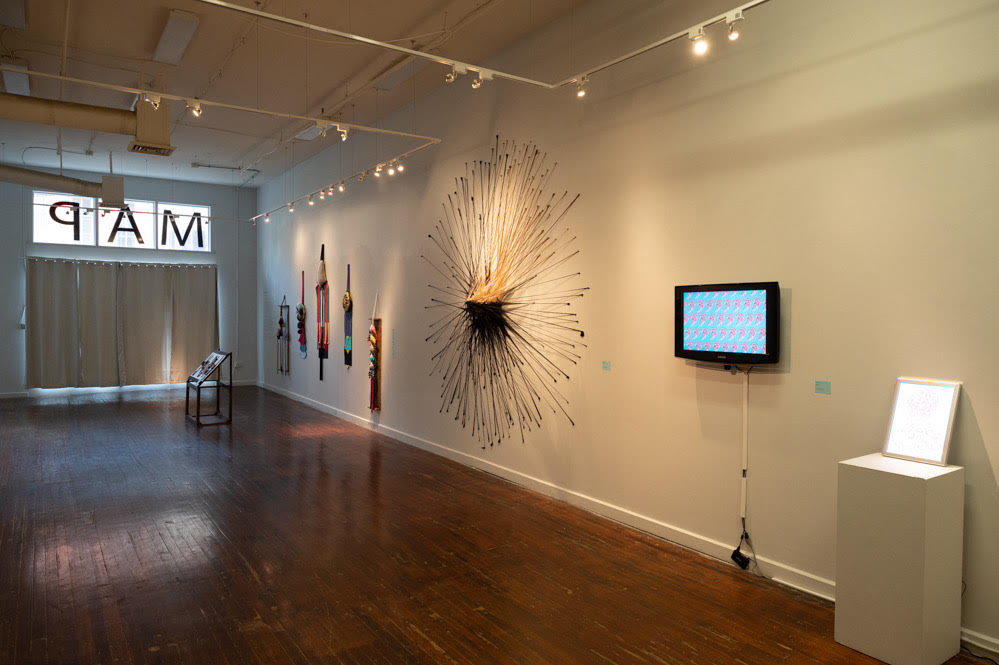
The lobby of the Maryland Art Place (MAP). Photo courtesy of Torres.
UMBC News: What was the most rewarding part of your internship?
Torres: I find the most rewarding part of this internship was being a part of an organization that is diverse and inclusive. MAP is creative in the kinds of exhibitions it presents such as “Merkin Dream” or the “SEEN: 20 Years of Baltimore Music Photography” exhibition. MAP shares history in a modern way and I was totally psyched to be a part of that. It’s also an organization that supports Baltimore artists and other art galleries in Baltimore. I also feel it is important to mention that Gill really helped modify the internship to my interests…[like] looking into opportunities that local artists can participate in.
Exploring the machine learning industry
As a graduate student, Hao Chen, Ph.D. ‘20, electrical engineering, is spending the summer interning at Intel Corporation. He was supposed to be in California, but due to COVID-19 he is working remotely from Baltimore. At UMBC, Chen’s research focuses on machine learning and signal processing. The internship at Intel appealed to Chen because he wanted to see what machine learning looks like in the industry.
Hao Chen. Photo courtesy of Chen.
UMBC News: What tasks and projects are you working on during your internship? Chen: During the internship, I have two tasks: one is building the data generation model related to radar, wireless sensing, and signal processing systems; the other one is doing some research on developing state-of-the-art deep learning algorithms and implementing them. In other words, math and coding are important to this position.
UMBC News: Can you talk about what your internship has been like? How has completing the internship virtually impacted the connections that you’ve been able to establish with folks where you’re interning?
Chen: The most valuable experience is, when I fell behind in the schedule, I learned how to get better teamwork to make up the lost time. Because of this remote-working situation, I did not communicate well with my mentor at the beginning.
Not only my mentor, but the whole team, is very supportive and gives me suggestions. That is very surprising and encouraging to me. In this virtual internship, I learned the importance of contacting the mentor more frequently. There would be very little interaction, and they cannot see you, if you are quiet.
UMBC News: What has been the most rewarding part of your internship so far?
Chen: This internship helped me understand industrial teamwork better and cowork with others better. The managers/team leaders in the industry play an important role in the team. They need to be strict with the results and give a clear direction on how to get the product. The team members cooperate with each other and make the most of the time.
Expanding skills to prepare for a career in medicine
Sarron Seyoum ‘21, biological sciences, is eager to learn as much as she can about research. Over the summer, she interned at the Institute of Marine and Environmental Technology (IMET), a University System of Maryland research institute that includes faculty from UMBC, the University of Maryland, Baltimore, and the University of Maryland Center for Environmental Science.
Seyoum learned about this internship opportunity during a meeting with Susan Hindle, assistant director of internships and employment at the UMBC Career Center. After graduation, Seyoum plans to pursue a career in medicine.
Sarron Seyoum. Photo courtesy of Seyoum.
UMBC News: What tasks and projects are you working on during your internship?
Seyoum: Right now we are working on determining the biodiversity of both prokaryotic and eukaryotic species in Baltimore’s Inner Harbor by using both sequence and video data. I was using COXI DNA barcodes to determine the biodiversity of the metazoic population within the Baltimore Harbor in hopes of learning their role in the harbor. The general practical use of determining biodiversity would be to better understand the harbor and its ecological problems so, in the long run, we could come up with solutions to clean up the harbor using natural means.
UMBC News: How did your internship change due to the pandemic?
Seyoum: Due to the pandemic our internship has been moved online which means we do not get to experience sequencing or data collection in the wet labs, so instead we get to do bioinformatics. We perform most of our work through daily Zoom meetings along with various websites that help us determine the taxonomy of our sequences.
UMBC News: What has been the most rewarding part of your internship so far?
Seyoum: Our mentors have especially been extremely patient and considerate of the different levels of education everyone has. I’m hoping to continue working alongside them during the fall and maybe spring semester as this has been a great experience and I believe I can learn more.
Banner image: A person typing on a computer. Photo by Marlayna Demond ’11 for UMBC.