UMBC’s Carlos Romero-Talamas is leading a group of researchers in designing and building a machine to produce nuclear fusion energy. The project is one of just 15 new initiatives selected for support through the U.S. Department of Energy’s Advanced Research Projects Agency-Energy program. The researchers will use the $4 million grant to develop and build a centrifugal mirror that can conduct electricity and will generate energy from fusion reactions.
The team’s goal is to use what is essentially a rotating magnetic mirror machine to produce energy from nuclear fusion, explains Romero-Talamas, associate professor of mechanical engineering. “This type of nuclear energy is considered the ‘holy grail’ of energy sources because of its inexpensive and abundant fuel supply,” he says. He adds that fusion energy does not emit greenhouse gases.
Design and fabrication
The research team includes researchers from both UMBC and the University of Maryland, College Park (UMD). The device they will design and build will fill a large laboratory at UMD’s Energy Research Facility.
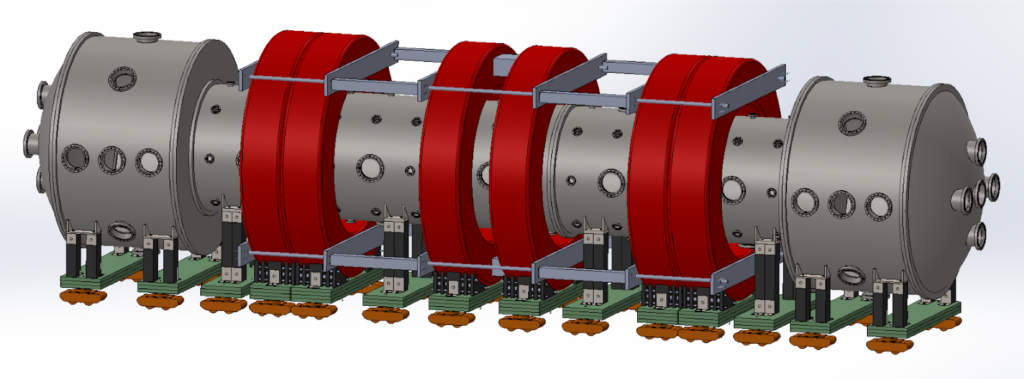
Romero-Talamas explains that the power system will consist of hundreds of large, high-voltage capacitors and electromagnets. It will also include active controls to prevent the magnets from overheating. There will also be a separate space for machine controls, because researchers will not be in the equipment room while conducting experimental runs, as a safety precaution.
The preliminary design of the vessel and supports. Image courtesy of Romero-Talamas.
The research team will design the vacuum chamber and coils, which will be fabricated by experienced suppliers. The vacuum chamber will be approximately the length of two midsize cars. However, it will weigh a lot more than that, Romero-Talamas explains. The entire structure will be more than seven feet tall.
Solving long-standing questions
Romero-Talamas will collaborate with Adil Hassam, Tim Koeth, Brian Beaoduin, and Ian Abel, all UMD faculty serving as co-PIs. He and the team will also work with undergraduate and graduate students from both universities.
As the PI, Romero-Talamas will direct the research project, and will play a significant role in the engineering design and construction of the technology. UMD faculty and students will take the lead on equipment safety and certification.
Carlos Romero-Talamas presenting at an event. Photo by Marlayna Demond ’11 for UMBC.
“Our efforts are aimed at not only solving long-standing physics questions regarding the possibility of confining thermonuclear plasmas with centrifugal mirrors, but to help in the technology transfer to market and make fusion energy a commercial reality,” Romero-Talamas says.
The researchers will measure the density of the particles, specifically how many particles the team is able to make rotate at a high speed inside the vacuum chamber. They will also measure the temperature and speed of the particles.
Impact in fusion energy field
Romero-Talamas says that he has been interested in fusion energy since he was a graduate student at Caltech. “Initially, I wanted to work in plasma rocket engines, but when I took a plasma physics class, fusion energy seemed very exciting, important, and urgent to me,” he recalls. “Since then, the study of plasma physics aimed toward helping fusion energy become a reality has been central to my research.”
In nuclear fusion, energy is released when two nuclei collide at high speeds. Romero-Talamas points out that the act of fusing nuclei is difficult to accomplish. Like magnets, when ions are brought close to one another they begin to repel, which makes the high-speed collision important to overcome the repulsion and make fusion energy a success, he says.
Fusion energy can be generated from water and lithium, and doesn’t require many additional resources. It requires a small amount of material compared to traditional energy extraction methods, like burning fossil fuels, says Romero-Talamas. When a fusion reactor launches particles at each other at a high speed, their collisions can generate temperatures that are nearly 10 times hotter than the center of the sun.
Romero-Talamas and his research team will also work with experts at Virginia Tech and the Princeton Plasma Physics Laboratory on simulations needed for this work. And students will be involved in every step of the research, from design and construction to presenting findings at conferences and in peer-reviewed journal articles.
This effort, which we call the Centrifugal Mirror Fusion Experiment, is an important step towards the realization of commercial fusion energy, Romero-Talamas explains. “A commercial reactor based on our concept would be relatively compact with respect to other fusion contenders, lowering the cost and time to market,” he says. “While there will be important materials and engineering questions that will need to be addressed before scaling up to a commercial reactor, we will address the most important physics questions that could put us in a path to a demo reactor in years, not decades. We are very excited to be working on a truly transformational technology that will enable a virtually inexhaustible energy source with very small impact to our planet.”
Banner image: Carlos Romero-Talamas. Photo by Marlayna Demond ‘11 for UMBC.
Earlier this summer, the University System of Maryland (USM) COVID-19 Task Force invited members of the USM community to develop mobile apps that would help Maryland residents respond to the COVID-19 pandemic. Among the six winning teams just announced are two groups from UMBC. One team developed an app to support the healthcare of people with COVID-19. The other focused on connecting residents with dining options and restaurant policies as they change during the pandemic.
Community participation
Each of the six winning teams received a $3,000 award, provided by UMBC’s Alex. Brown Center for Entrepreneurship. The apps submitted were reviewed by a panel of judges from large corporations, start-up companies, and academia.
Undergraduate and graduate students were invited to participate, as well as university staff, faculty, postdoctoral researchers, members of USM-affiliated startup companies and small businesses. Winners hailed from UMBC, University of Baltimore, Towson University, and University of Maryland, College Park.
Tracking health conditions of COVID-19 patients
Kirubel Tolosa. Photo courtesy of Tolosa.
Pradeep Prakash. Photo courtesy of Prakash.
Raghav Deivachilai. Photo courtesy of Deivachilai.
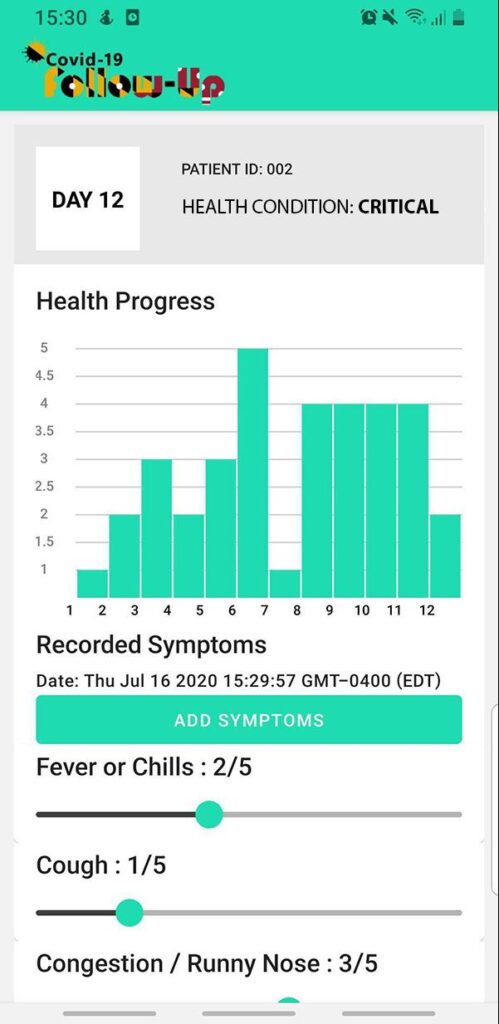
In the community category, Kirubel Tolosa M.S. ‘23, information systems; Pradeep Margasahayam Prakash M.S. ‘21, information systems; and Raghav Deivachilai M.S. ‘23, computer science, created an app called Follow-up. The app enables healthcare providers to track the condition of people with COVID-19 who are isolating at home. By receiving regular symptom updates, physicians and nurses are able to more easily follow-up with their patients as needed.
The Follow-up app interface. Image courtesy of the Follow-up team.
The Follow-up team entered the app challenge with the goal of developing an app that would help address the spread of the virus and its impact on affected individuals. At the same time, they knew they had to design and prototype their app in a short time frame, so their scope and requirements had to be manageable.
“This challenge has taught us the value of teamwork and collaboration,” said Tolosa, on behalf of the group. “We are looking forward to working on this app further to put it to use in a real-world setting.”
Supporting restaurants during COVID-19
The app Snuggrub, developed by Emily Sullivan ‘21, computer science, and Dominic Crofoot ‘19, computer science, was a winner in the student category. Sullivan and Crofoot focused on the way that many formerly full-service restaurants shifted to pick-up only service or outdoor dining during the pandemic. At the same time, dining regulations, guidance, and options began changing frequently. They developed a way for users to stay up-to-date on information about nearby restaurants without needing to contact individual businesses to ask the same questions repeatedly.
Emily Sullivan. Photo courtesy of Sullivan.
Dominic Crofoot. Photo courtesy of Crofoot.
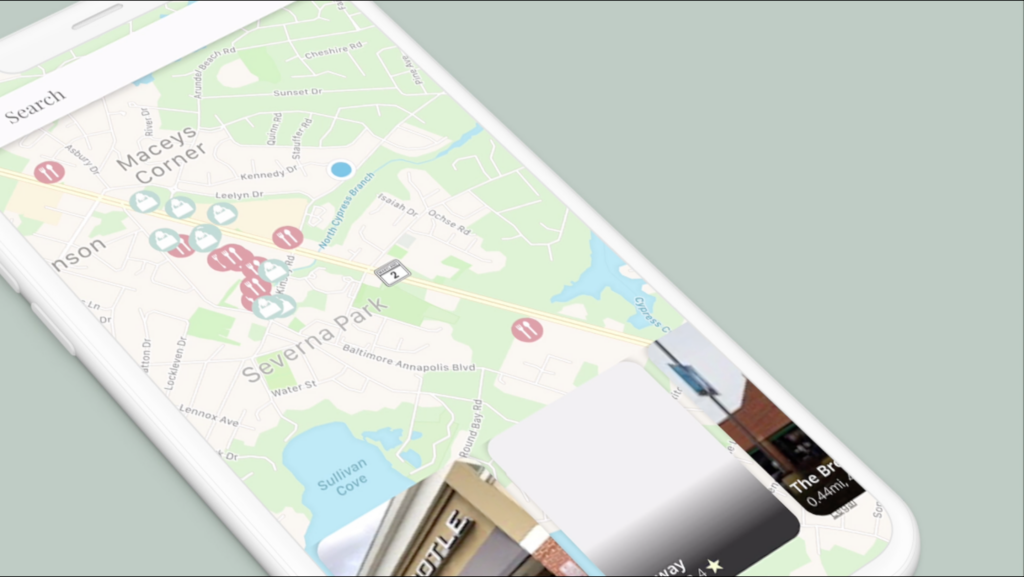
The app allows users to stay informed and receive real-time updates, while making decisions based on current information. It also supports restaurants in connecting with customers and providing them with the information they need to dine safely.
Sullivan shares that the idea for Snuggrub came from wanting to support small businesses that were facing challenges due to isolation during COVID-19. “During the time when restaurants were just opening back up for indoor or outdoor dining, it was messy trying to figure out if the hours and information posted online were accurate and updated. The only way to figure it out was to call them directly, which is time-consuming for both us and the restaurant,” she says. “So Snuggrub became a way to have all that information in one place and have it easy to understand.”
The Snuggrub app interface. Image courtesy of the Snuggrub team.
The opportunity to develop an app to help address a challenge facing people across the state was appealing to Sullivan and Crofoot because it allowed them to put their skills to the test. They met when they were both interns at the Anne Arundel County Office of Information Technology. While Sullivan is still a UMBC student (and interning with the federal government), Crofoot is currently a full stack developer for Anne Arundel County.
“Dominic and I both have experience creating applications from our jobs, but this process was totally different since we were creating something from the ground up and we were doing it with such a small team and short deadline as well,” says Sullivan. “This definitely was a learning experience in personal discipline and timeline management.”
Banner image: UMBC’s ITE building. Photo by Marlayna Demond ’11 for UMBC.
During the COVID-19 pandemic, internet access has become more critical, with people relying on it to work, learn, and connect with family and friends. However, the internet is not equally accessible to all people. UMBC’s Foad Hamidi recently received a collaborative Rapid Response Research (RAPID) grant from the National Science Foundation (NSF) to increase high-speed wireless internet access to communities in Baltimore.
Not having access to the internet has heightened existing inequities during the pandemic, says Hamidi, assistant professor of information systems. “It impacts families in different ways, whether it’s related to education, employment, or social connections,” he explains.
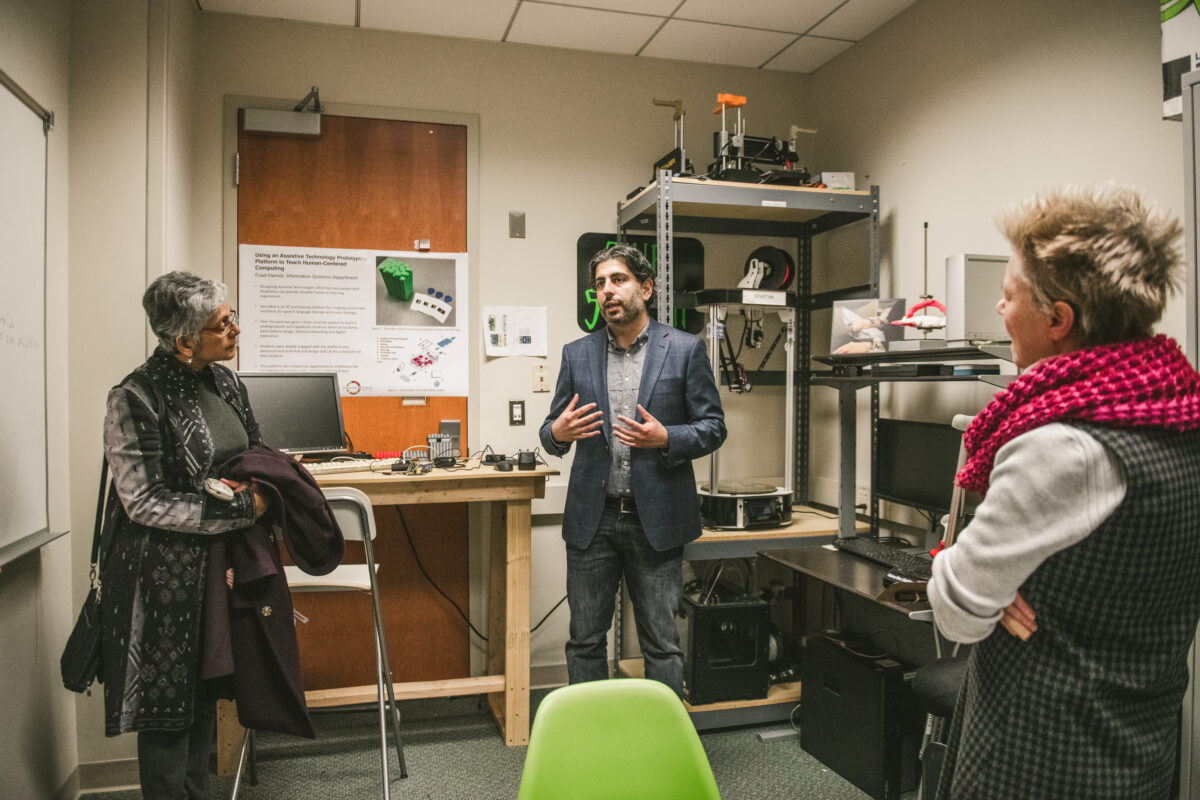
Hamidi will collaborate with the Digital Harbor Foundation, Project Waves, and other community groups to increase the accessibility of wireless internet that is both free and secure.
Building and sustaining networks
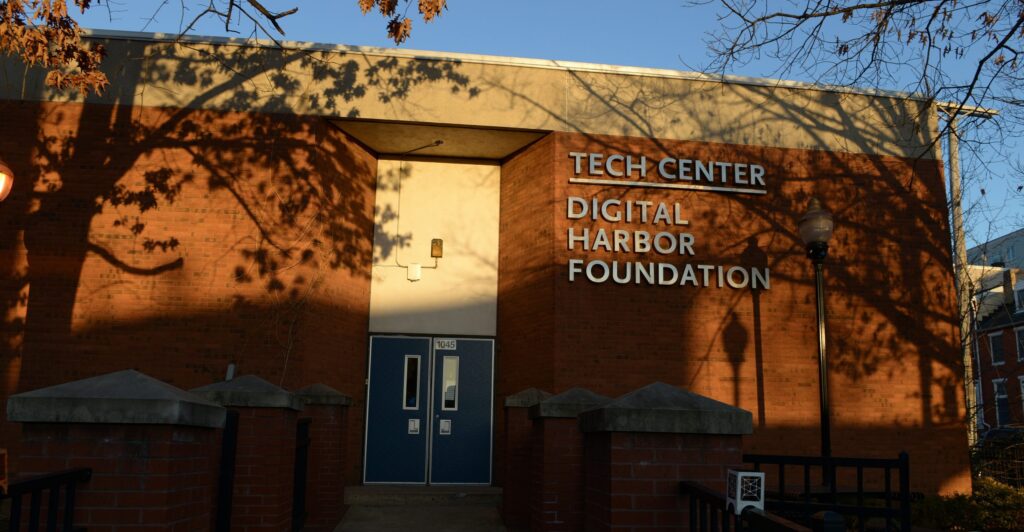
The Digital Harbor Foundation (DHF) is a Baltimore-based tech center that enables youth to learn about technology through hands-on learning, including through a well-equipped makerspace. Project Waves is a non-profit organization that provides pay-what-you-can broadband internet to communities in need. Their work with Hamidi will focus on supporting residents who want to get internet access set up in their homes and to study the impact of having this access.
The Digital Harbor Foundation in Baltimore. Photo by Maryland GovPics, used under CC 2.0.
Hamidi and his collaborators will work with other groups to amplify free and secure wireless internet in accessible spaces, such as libraries and community centers. For some groups, this work will be new. For others, the grant will allow them to speed up work they’ve already been doing.
Importantly, Hamidi notes, the community organizations will help sustain these networks over time. “The pandemic has amplified the need for internet access, but it will continue after the crisis,” he says.
“The COVID-19 crisis is a complex and multifaceted phenomenon that amplifies the inequities already present in our societies,” explains Hamidi. “In this project, we are taking into account both the social and technical aspects of providing free and secure internet access to low-income communities. More broadly, we look forward to better understanding how participatory approaches to internet access can address issues of inequity arising from the digital divide in our cities.”
Increasing access to computing skills
Hamidi’s project is also part of a larger effort, based at UMBC, to expand access to basic computing skills among students in Baltimore City as well as nearby Montgomery County. This is the goal of Megean Garvin, director of research and assessment for the Maryland Center for Computing Education (MCCE).
The COVID-19 pandemic has pushed the issue of computing education to the fore, as more and more students and educators recognize the value of computing skills in this time of physical distancing. However, Garvin says, the teaching workforce needs professional development to not only use technology, but be able to create their own computer science curricula and classroom resources.
The MCCE, initially funded by Maryland in 2018, has worked to provide professional development in computing for teachers across the state and has begun to transform teacher preparation as well. By the 2021 – 2022 school year, all public high schools in Maryland will be required to offer a high quality computer science course, and elementary and middle schools will be expected to integrate computer science into their curricula. The MCCE is working to help teachers and schools reach that target and have confidence in the quality of their computer science offerings.
Foad Hamidi connecting with colleagues in his lab. (Britney Clause ’11)
To ensure teachers can be successful in providing students with computing education, Garvin notes, it is essential to take into account the “digital divide,” particularly in Baltimore City. Even with the most advanced training and support, computing teachers can’t be effective if their students can’t access computing devices and, as Hamidi’s work highlights, the internet.
Computing education ecosystem
In response to this challenge, the MCCE and partners created the Baltimore City Computing Education Ecosystem Workgroup. This partnership includes the University System of Maryland, UMBC, University of Baltimore, Baltimore City Community College, Morgan State University, and Towson University, plus Baltimore City-based organizations such as the Digital Harbor Foundation and Code in the Schools. Their goal is to develop and deliver on strategies for a robust computing education for students from pre-kindergarten to high school, in the context of COVID-19 and remote learning.
In addition to the grant Hamidi has received to work in this area, Garvin has been awarded a two-year grant from the Spencer Foundation to study the Baltimore Urban Computing Education Ecosystem’s response to COVID-19.
The Engineering and Computing Education Program in UMBC’s College of Engineering and Information Technology has also developed a similar computing education partnership in Montgomery County. There, UMBC at the Universities at Shady Grove is working closely with Montgomery College and Montgomery County Public Schools to support a culture shift in computing education. As in Baltimore, they hope to provide technology access and learning opportunities in computing for all students.
“Access to reliable and affordable internet connectivity has become a new necessity in our dynamic and information-rich century,” says Hamidi. “We need to investigate conditions necessary for communities to have an active role in shaping, creating and taking ownership of the technologies they need.”
Banner image: Foad Hamidi. Photo by Britney Clause.
Dipanjan Pan, professor of chemical, biochemical, and environmental engineering, has received two new grants from the National Institutes of Health to support research poised to improve COVID-19 testing.
Pan and his team recently developed an experimental diagnostic test to rapidly detect the novel coronavirus causing COVID-19, potentially as early as the first day of infection. The test shows results visually, through a color change visible with the naked eye when the virus is present. Their preliminary results were published in the journal ACS Nano, and the biosensors behind this work have generated substantial academic and commercial interest.
Pan received funding from the National Institute of Biomedical Imaging and Bioengineering (NIBIB) to support the development of a mediated colorimetric biosensor. This technology greatly reduces the possibility of misinterpreting the results of COVID-19 sensing tests.
“These awards are very timely. Two back-to-back grants from NIBIB will help me to further develop and optimize the technology and help cover the cost for conducting a clinical study for validation purposes,” says Pan. “The key here is the fine balance between the accuracy of the results and the ability of the testing platform to provide a rapid response.”
The second grant will support Pan’s work to develop a COVID-19 diagnostic platform that will work like a home-based glucometer. Currently, with limitations in sample collection and transportation, it often takes several days for patients to receive their COVID-19 test results. The delay between when the test is taken and when the results are available can lead to the continued spread of the virus.
To reduce the time between when a person takes a COVID-19 test and receives their results, Pan will develop a test that includes an electrochemical biosensor that can detect the virus in about 3 minutes. If patients can receive their results within minutes of taking the test, Pan notes, they can quickly self-isolate and avoid exposing others to the virus.
Pan explains that the test will limit the possibility for inaccurate results. “We adopted a molecularly targeted approach to detect RNA from the virus. Since every living organism has unique RNA, targeting a distinctive genetic material of COVID-19 causative virus SARS-CoV-2 ensures remarkable accuracy and specificity,” he says.
In addition to his appointment at UMBC, Pan is a professor of diagnostic radiology and nuclear medicine and pediatrics at the University of Maryland School of Medicine as part of his dual appointment with the University of Maryland, Baltimore.
Banner image: UMBC’s Interdisciplinary Life Sciences Building. Photo by Marlayna Demond ’11 for UMBC.
UMBC researchers will collaborate with the Chicago-based MxD to develop a curriculum and online platform for manufacturing professionals to increase their cybersecurity skills and to protect manufacturing plants from cyber breaches. The work is funded by a $650,000 grant from the Office of Economic Adjustment, under the U.S. Department of Defense.
MxD is one of 14 federally-supported institutes known collectively as Manufacturing USA. It has awarded millions of dollars to research and development projects across 35 states to advance U.S. manufacturing practices and increase global competitiveness. This UMBC collaboration will be the first initiative focused on increasing manufacturing workers’ knowledge of cybersecurity.
The content of this program is completely new, as there are no existing platforms that focus on the intersection of cybersecurity and manufacturing, says Nilanjan Banerjee, principal investigator on the grant.
Banerjee, professor of computer science and electrical engineering (CSEE) at UMBC, shares, “The program will accelerate training of practitioners in the manufacturing industry in cybersecurity. It will also expand UMBC’s impact on cybersecurity education in the manufacturing sector.”
Intersection of cyber and manufacturing
Banerjee will collaborate with a number of colleagues at UMBC to develop a curriculum tailored for people who already work in the manufacturing industry. Project co-PIs include Donna Ruginski, executive director of cybersecurity initiatives at UMBC, and Keith J Bowman, dean of UMBC’s College of Engineering and Information Technology. Alan Sherman, professor of CSEE; Linda Olivia, assistant professor of education; and Megean Garvin, director of research and assessment for the Maryland Center for Computing Education, will assess the curriculum developed to ensure it meets program goals.
Donna Ruginski. Photo by Marlayna Demond ’11 for UMBC.
Bowman helped establish the connections between UMBC and MxD, and is eager to watch the work develop. “This project fully leverages MxD, UMBC Training Centers, and UMBC assets in cybersecurity, manufacturing, and training,” says Bowman. “I have known MxD team members, including Federico Sciammarella, president and chief technology officer of MxD, ever since its origins, and I look forward to building on this collaboration.”
The first step of the multi-phased project will identify the skills most needed to protect manufacturing facilities from cyberattacks on their computer systems and machinery. UMBC and MxD will create a short-term training program for manufacturing professionals to develop these skills.
“People will come out of this program with a certification that shows they have the tools to be successful in a cybersecurity role in manufacturing,” said Lizabeth Stuck, senior director of MxD Learn, the institute’s workforce development arm. “This has the dual benefit of upskilling workers who may be sidelined during the COVID-19 crisis and increasing the security of U.S. manufacturers from cyber-attacks.”
Addressing current needs
Banerjee explains that the recent COVID-19 pandemic has led to increased unemployment and a need for more opportunities for workers to quickly expand their skill sets. With this in mind, the program will be designed for workers to complete in less than a year and through a web-based format.
For maximum flexibility, the platform will offer both synchronous and asynchronous material. It will be launched and led by UMBC Training Centers, a not-for-profit owned by UMBC that offers professional and technical training in areas such as cybersecurity, project management, and leadership and innovation. The platform will likely launch in late January 2021.
“This program will have a direct impact on the Defense Industrial Base Supply Chain,” says Ruginski. “It will create a robust workforce that has the cybersecurity skills required to assist companies in staying secure in the fast-paced cybersecurity manufacturing industry.”
Banner image: Nilanjan Banerjee. Photo by Marlayna Demond ’11 for UMBC.
Ellicott City, a town about five miles from UMBC, suffered devastating flooding in 2016 and 2018. These events left residents and officials wondering how technology could help predict future severe weather events, potentially saving lives and property.
In response to the 2016 flood, UMBC’s Nirmalya Roy, associate professor of information systems, received funding from the National Science Foundation to develop a rapid flood warning system for Ellicott City. The research was scheduled to conclude in August 2019, but Roy and his team decided to continue this work with the support of an extension from NSF.
They received multiple sensor systems from Howard County’s Stormwater Management Division to deploy in Ellicott City. Since installing the sensors in fall 2019, they have moved on to the next phase—testing their performance, to prepare for the possibility of another flood hitting the city.
Combining sensor data and social media
Roy has worked closely with Bipendra Basnyat M.S. ‘17, Ph.D. ‘23, information systems, to build and install a network of wireless sensors in Ellicott City to monitor rainfall levels. Aryya Gangopadhyay, professor of information systems and co-PI on the grant, and Neha Singh, Ph.D. ‘23, information systems, are working alongside Roy and Basnyat. They call the network Flood Bot.
They’ve also developed predictive algorithms and communication systems to provide real-time information to government officials about flood threats. And the researchers can now compare data collected by the sensors with information from social media, to confirm they are telling the same story.
“Collaborating with multiple vendors who are designing and developing commercial flood monitoring systems helped the team understand the real challenges in the field,” says Roy. “This helped drive the research in the lab to make meaningful impacts on the Ellicott City community.”
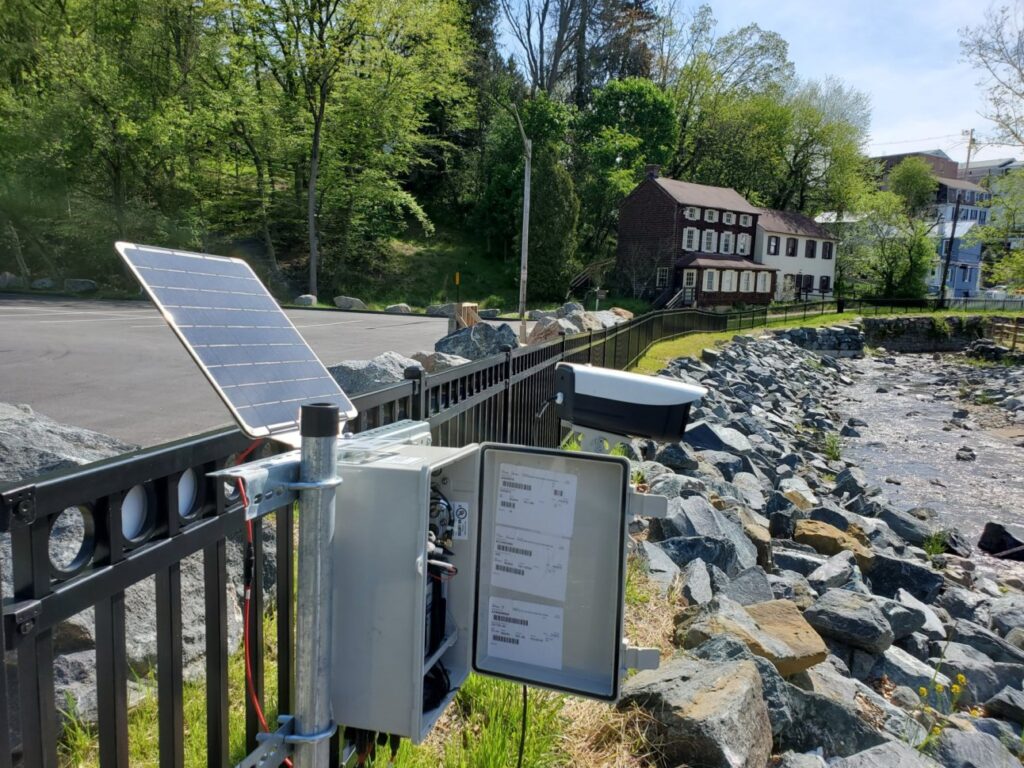
The Flood Bot sensors detect and monitor water levels of the river, as well as information about weather, rainfall, and water levels at other nearby locations in the area.
One of the sensors installed in Ellicott City. Photo courtesy of Basnyat.
The data being collected is available to the public through a Twitter account that is automatically updated twice each day. “The transmitted data from physical sensors are then combined with tweets from in and around Ellicott City to postulate the severity of the flash flood in the area,” says Roy.
Ongoing improvements
To build the group of sensors, Basnyat customized a Raspberry Pi, a small computer that is roughly the size of a credit card. The current system is camera-based and requires time and labor to deploy and maintain. Basnyat continues to look at improvements that could make it smarter and more automated, while maintaining accuracy.
The goal is for the system to notify people as early as possible of a potential flood event, to support the safety of the community. Roy explains that the team is continuously improving and refining the alert system so that people can trust the sensors and use their findings to make informed decisions about protecting people, homes, businesses.
Basnyat shares that his physical proximity to Ellicott City plays a role in energizing him to be a part of this collaborative work. This work is contributing to the local region, since UMBC is so close to Ellicott City, he adds.
“The most exciting part of this work for me is to go back in time and see how Ellicott City streams and surrounding areas performed during different rainfall events,” he says. “Ultimately we seek to build predictive models that put our analytics at the forefront of such rainfall events, to forecast the flooding conditions and integrate them into the community’s disaster risk and reduction plan.”
Community investment and impact
After experiencing such devastating damage from back-to-back floods, the Ellicott City community is invested in this work. Local officials, like Brian Cleary, hope it will help prevent future weather events from having catastrophic impacts on the town.
Cleary is an engineering specialist for the Stormwater Management Division of the Howard County Department of Public Works. He says that working with Roy and his team has not just been beneficial in getting the gauges set up; the collaboration will also support the community for years to come.
“These gauges will help verify conditions and provide valuable data in ongoing research,” says Cleary. “It will also assist in verifying models” that will be used to protect the area from flooding moving forward.
Roy hopes to someday deploy the flood monitoring systems in other areas of Maryland and beyond. Scaling the system will require developing ways to handle “hundreds of queries from commuters and community members”—a challenge he looks forward to solving.
Banner image: Nirmalya Roy. Photo by Marlayna Demond ’11 for UMBC.
A research team from UMBC and the University of Maryland School of Medicine (UMSOM) has received a Rapid Response Research (RAPID) grant from the National Science Foundation to detect COVID-19 infections earlier through computing. Aryya Gangopadhyay, professor of information systems at UMBC, is PI on the grant. He explains that this work will use machine learning to improve the speed and accuracy of COVID-19 diagnosis, helping to limit spread of the disease.
Developing highly accurate screening tool and synthetic datasets
Through the year-long grant totaling approximately $150,000, researchers will design, build, and train deep neural networks to detect cases of COVID-19. Gangopadhyay says this approach has a proven track record. Deep neural networks have already been used effectively in diagnosing pneumonia.
Aryya Gangopadhyay. Photo by Marlayna Demond ’11 for UMBC.
This research will combine the power of AI and medical imaging to solve a critical problem in infectious diseases with pandemic potential, including COVID-19 and others, explains Gangopadhyay. “Our focus for this research is COVID-19. The research is an example of multidisciplinary data science that combines expertise in different fields, such as medicine and computational research,” he says.
Research team
Gangopadhyay notes that the research will benefit from the infrastructure, research strength, and industrial partnerships of UMBC’s Center for Accelerated Real Time Analytics (CARTA).
UMBC’s team includes Yelena Yesha, distinguished professor of computer science and electrical engineering (CSEE) and director of CARTA; Yaacov Yesha, professor of CSEE; Phuong Nguyen, research assistant professor of CSEE; David Chapman, assistant professor of CSEE; and computer science Ph.D. students Sumeet Menon and Jayalakshmi Mangalagiri. Eliot Siegel, professor and vice chair of radiology at UMSOM and chief of imaging service at the VA Maryland Healthcare System, will contribute to the research.
The team plans to work quickly and hopes to have some results available by August. Then, the researchers will work with clinicians to validate their models and data to ensure that the tools are highly accurate in predicting COVID-19.
“We are very committed to this work,” Gangopadhyay says, recognizing the incredible potential of the research.
Collaboration during public health crisis
This is UMBC’s second NSF RAPID Grant responding to COVID-19. In early March, UMBC’s Charissa Cheah, professor of psychology, and Shimei Pan, associate professor of information systems, and Cixin Wang, assistant professor of school psychology at University of Maryland, College Park, received a grant to examine the intensified discrimination experienced by Chinese-Americans in the time of COVID-19.
Cheah shared, “Knowledge from this RAPID grant will help educators, health care providers, and policymakers to proactively support targeted marginalized groups and the larger public during future emergency events.”
Both UMBC awards demonstrate the necessity to move quickly and to collaborate strategically on research related to this public health crisis.
Banner image: UMBC’s Information Technology and Engineering building. Photo by Marlayna Demond ’11 for UMBC.
A team led by UMBC’s Dipanjan Pan has developed an experimental diagnostic test to rapidly detect the novel coronavirus causing COVID-19, potentially as early as the first day of infection. Researchers designed the test to show results visually, through a color change visible with the naked eye when the virus is present. Unlike other tests, it does not require advanced laboratory techniques or tools. The American Chemical Society recently published their paper on the technique in the journal ACS Nano.
Dipanjan Pan. Photo courtesy of the University of Illinois at Urbana-Champaign.
Pan is both a professor of chemical, biochemical, and environmental engineering at UMBC and professor of diagnostic radiology and nuclear medicine and pediatrics at the University of Maryland School of Medicine (UMSOM). His co-authors included UMSOM Pan Lab researchers Parikshit Moitra and Maha Alafeef, and UMBC faculty research assistant Ketan Dighe. The work also included Matthew B. Frieman, a UMSOM faculty member from the Virology Institute.
From sample to results in ten minutes
Like some other diagnostic tests, this one starts with a nasal swab or saliva sample. After the sample is retrieved, a technician extracts RNA from it through a 10-minute process. This process then uses a biosensor molecule attached to gold nanoparticles to detect a particular protein unique to the virus. When the molecule attaches to the protein, the gold nanoparticles respond by causing a chemical used in the test to turn blue.
As recent media reports have revealed, current tests that are used to diagnose COVID-19 are not always reliable, with high rates of false negatives and false positives. Pan hopes the design of this new diagnostic test will avoid some of these pitfalls.
“Many of the diagnostic tests currently on the market cannot detect the virus until several days after infection. For this reason, they have a significant rate of false negative results,” he explains. A test that can detect the presence of the virus sooner after infection would avoid this issue.
Holistic approach
“We are taking a holistic approach for sensing COVID-19 virus,” says Pan. “My lab is developing highly specific technologies for rapid sensing of the virus. A different variant of such can be deployed in the hospital settings, community-based centers, and even at home.”
Pan notes, “Our immediate goal is to continue to analyze clinical samples to confirm the laboratory-based sensitivity results with the clinical cases. If successful, this rapid detection technology will be a significant advancement in early detection of the virus.”
Pan is now pursuing emergency use authorization for the test through the U.S. Food and Drug Administration, as he develops it for commercial application.
Pan is the chief technology officer and co-founder of KaloCyte, Inc., a biotechnology company that is developing a synthetic substitute for red blood cells. KaloCyte, Inc. recently received a $300,000 investment from the University System of Maryland Momentum Fund. Pan is also a co-founder of Innsight Tech, Inc. an Illinois spin-off for developing technologies for ocular disease. His third start-up company, VitruVian Bio, has recently been formed to translate COVID-19-based biosensing technologies.
Banner image: UMBC’s Interdisciplinary Life Sciences Building, right. Photo by Marlayna Demond ’11 for UMBC.
Like many new UMBC students, Jana Burns ‘20, information systems, was interested in so many topics when she stepped on campus that choosing a major initially proved challenging. When she transferred to UMBC from Brown’s Town Community College in Jamaica, she thought she wanted to study psychology and art. But she had also taken several programming courses and began to see the significant ways that technology impacts how people live.
The connections she made on campus led her to become a Cyber Scholar, which then opened more doors. She accessed the right opportunities at the right moments, and is now graduating with an exciting position in her field and a support network to carry her forward.
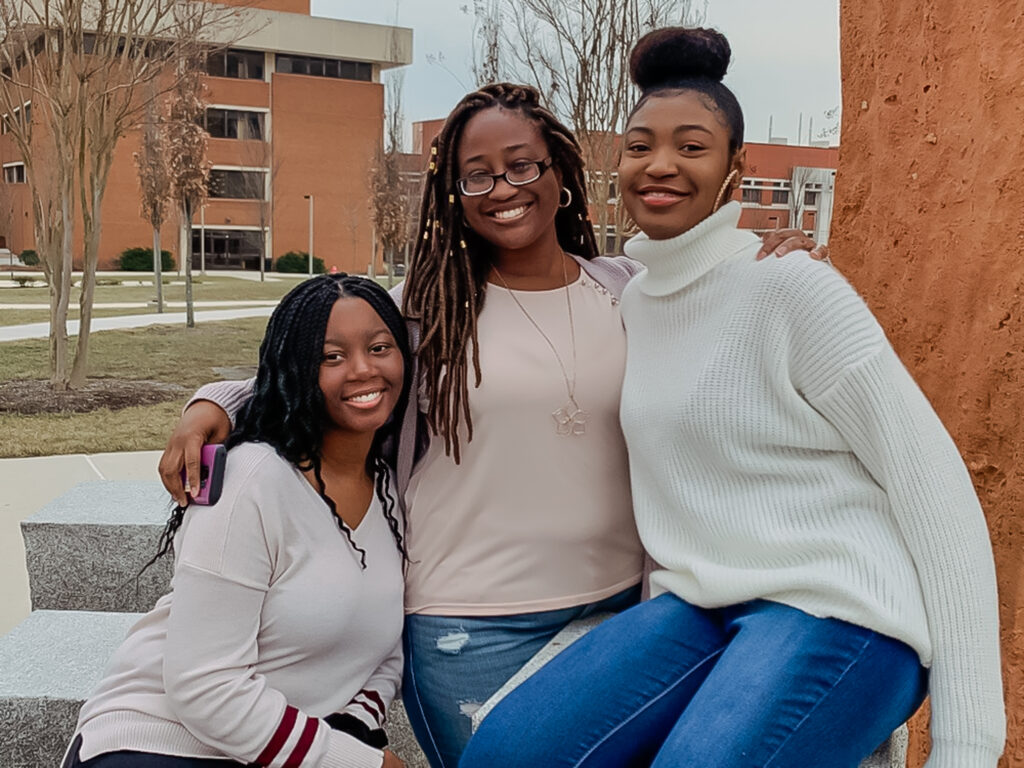
Jana Burns, center, with two of her sorority sisters. Photo courtesy of Burns.
This experience is one many UMBC students share—building relationships that expand possibilities, for careers and for life.
Right mentors, right internship
Burns chose UMBC after experiencing the university’s welcoming and friendly environment during a campus tour. Once she became a Cyber Scholar, she connected with students and mentors on a new level through the Center for Women in Technology. “It seemed like a family,” she says.
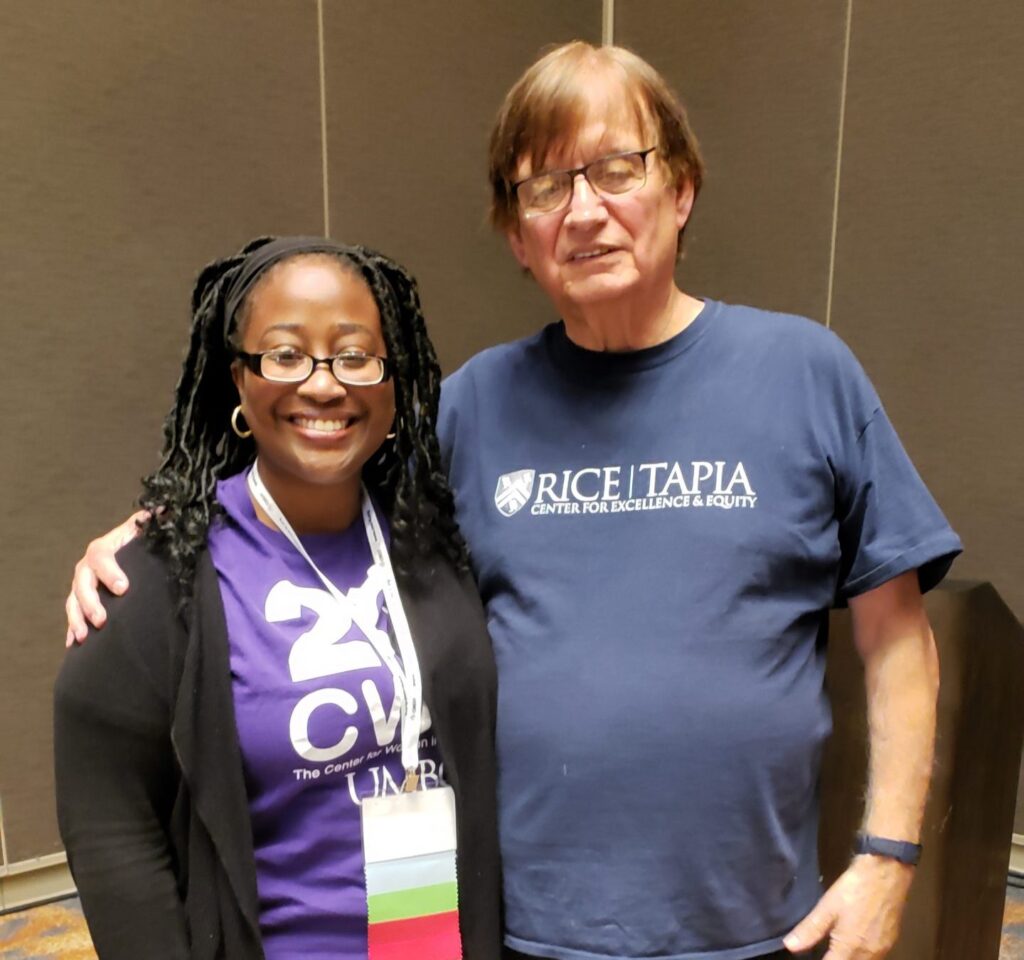
Jana Burns with Richard Tapia at the Tapia Conference. Photo courtesy of Burns.
As a first-generation college student, says Burns, her UMBC community has been essential to her success in her academics, research, and personal life. “I was put in touch with people who I would not have met otherwise,” she shares, adding that she regularly texts with her industry mentor, Kijafa Saunders ‘02, information systems, M.S. ‘11, engineering management.
On campus, Burns has formed close connections with Vandana Janeja, professor and interim chair of information systems, and Cindy Greenwood, assistant director of the Cyber Scholars Program. They are always there and always supportive, says Burns.
Her experience in the Cyber Scholars Program has also encouraged her to become a leader in other communities on campus. She is the secretary and an executive board member of the Alpha Sigma Alpha sorority. She’s also a member of the UMBC Caribbean Student Council, which she calls her “cultural home on campus.”
Learning with a team
Last summer, as Burns began to take concrete steps toward her career after graduation, she completed an internship at Booz Allen Hamilton, a leading management and IT consulting firm. Burns was connected to the internship through Saunders, who had worked at Booz Allen as an associate systems engineer.
There, Burns worked alongside about 60 other interns from other institutions across the country. She had the opportunity to collaborate with a small group of other students to create an image change detection application for surveillance drones. Together, they tested and presented their work.
After graduation, Burns will work at Northrop Grumman as a systems engineer in the company’s rotational program—a program she learned about fromGreenwood. She will have the opportunity to work in different departments to learn which areas interest her most.
Community of support within the lab
Harper Montgomery ‘20, biochemistry, knew he wanted to be an entomologist since he was seven years old. He became fascinated by insects through spending time outdoors in Southern California, where he lived before moving to Howard County.
Once at UMBC, Montgomery began looking for the right research opportunity—something that would prepare him for a career studying the creatures he found so intriguing. Through another student, he heard about Mercedes Burns and her work on arachnids and daddy long legs, which is close to his interest in entomology. He reached out to Burns, assistant professor of biological sciences, was invited for an interview to work in her lab, and the rest is history.
Mercedes Burns. Photo by Marlayna Demond ’11 for UMBC.
Montgomery shares that the lab has provided him with much more than the opportunity to do research. “I absolutely love my lab. It’s my home in the sciences,” he says. “The way that Burns approaches research and mentoring is one of the best that I’ve ever seen. She is a fantastic mentor who pushes her students.”
Not only does Montgomery get to work alongside Burns, but he says that the graduate students in the lab have been mentors to him. And everyone encourages each other to pursue unique opportunities and take their research to the next level.
Exploring different angles
Even as an undergraduate, Montgomery had the opportunity to present a poster, with two other students, at the American Arachnological Society meeting. He’s also presented his research at UMBC’s Undergraduate Research and Creative Achievement Day in 2019 and 2020.
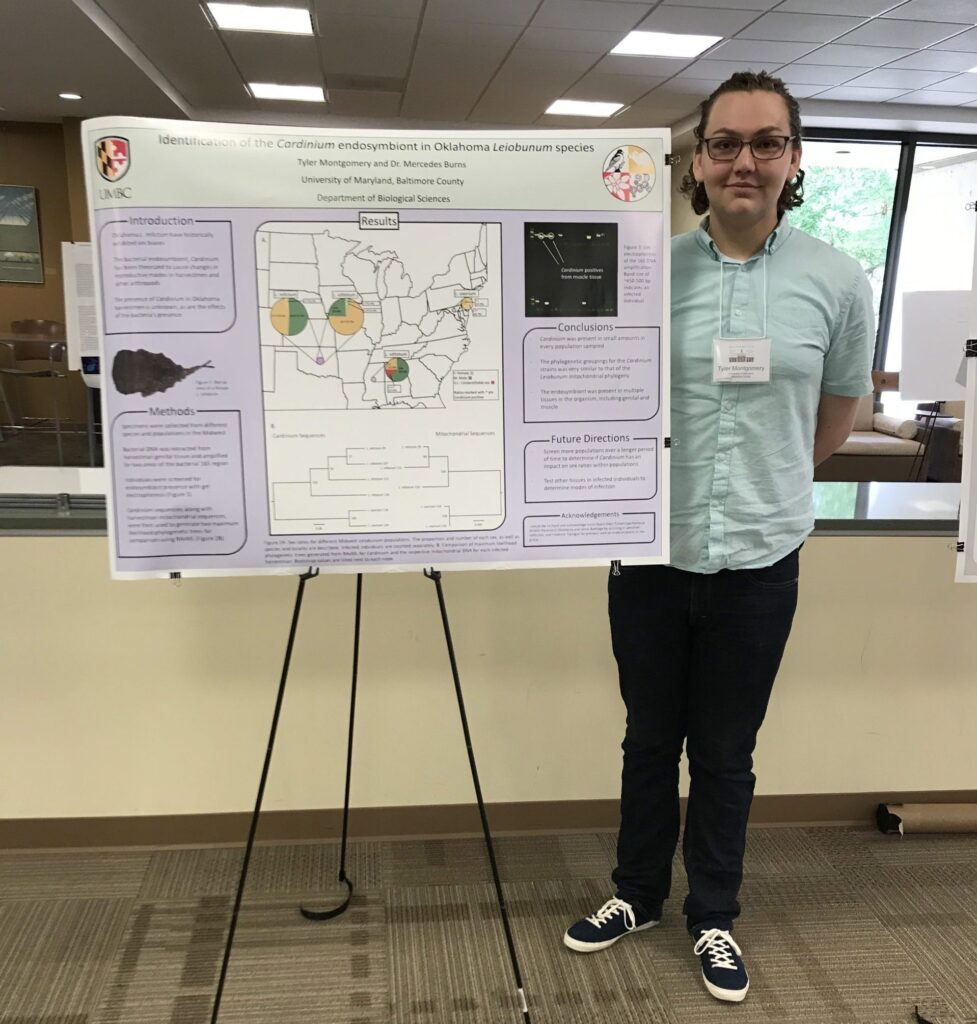
Montgomery presenting at the 2019 American Arachnological Society Conference. Photo by Genevieve Ahearn.
And like Jana Burns, Montgomery has accessed particular opportunities that have opened doors for his developing career.
Through a high school classmate, Montgomery was connected with an internship with the U.S. Department of Agriculture. For two summers, he was involved with genetics research focused on the microbiology of soybeans. Looking back at the experience, Montgomery says the internship inspired him to take a microbiology course at UMBC, and also enabled him to become well-versed on a broader range of biology topics, which has proven useful in connecting with mentors and industry professionals.
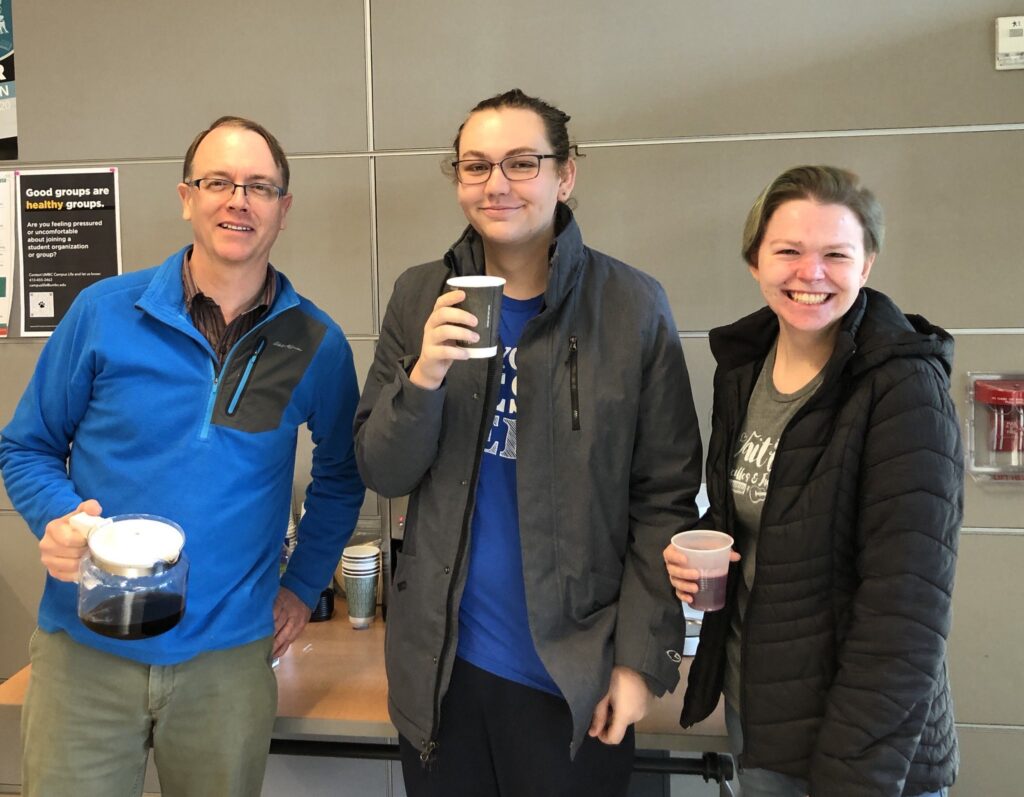
Montgomery, center, with Kevin Omland, professor of biology, and a classmate. Photo courtesy of Rojin Najmabadi.
After graduation, Montgomery will pursue a Ph.D. in entomology at the University of California, Riverside, a top program. He consulted with Burns during the application and decision process, and describes her mentorship and support “invaluable.”
A nurturing network
Olusayo Adeleye ‘20, M28, mathematics, looks back on her experience during the summer bridge program of UMBC’s Meyerhoff Scholars Program fondly. She was drawn to the program because of its emphasis on community and supporting students academically and personally. “It was one of the best decisions that I made before college,” Adeleye says.
When Adeleye arrived on campus, she planned to major in mechanical engineering, but was drawn to mathematics and economics. She was eager to connect with people on topics that impact decisions they make every day.
Mentorship has played a significant role in her UMBC experience, and will continue to be a part of her academic journey after she graduates. Her mentors include Ivanna Abreu, program coordinator of the Meyerhoff Scholars Program, Mitsue Wiggs, assistant director of the Meyerhoff Scholars Program, as well as other students, particularly Anna Gifty Opoku-Agyeman, M26, ‘19, mathematics.
When Adeleye changed her major to math, Opoku-Agyeman quickly began introducing her to contacts on and off campus. She also recommended internship opportunities that she should apply for.
“Lifting others as I climb”
Eventually, Adeleye joined Opoku-Agyeman as a member of the organizing committee that launched the Sadie Collective. The group’s inaugural Sadie Tanner Mossell Alexander Conference for Economics and Related Fields, in 2019, was the first conference for black women economists in the United States.
Adeleye says that the Sadie Collective enabled her to develop important “soft skills” that she hadn’t focused on much before, in leadership, teamwork, and communication. “I believe so much in the goal of the Collective,” she explains. By being part of a group designed to support and increase the number of black women in economics, she says, “I am lifting others as I climb.”
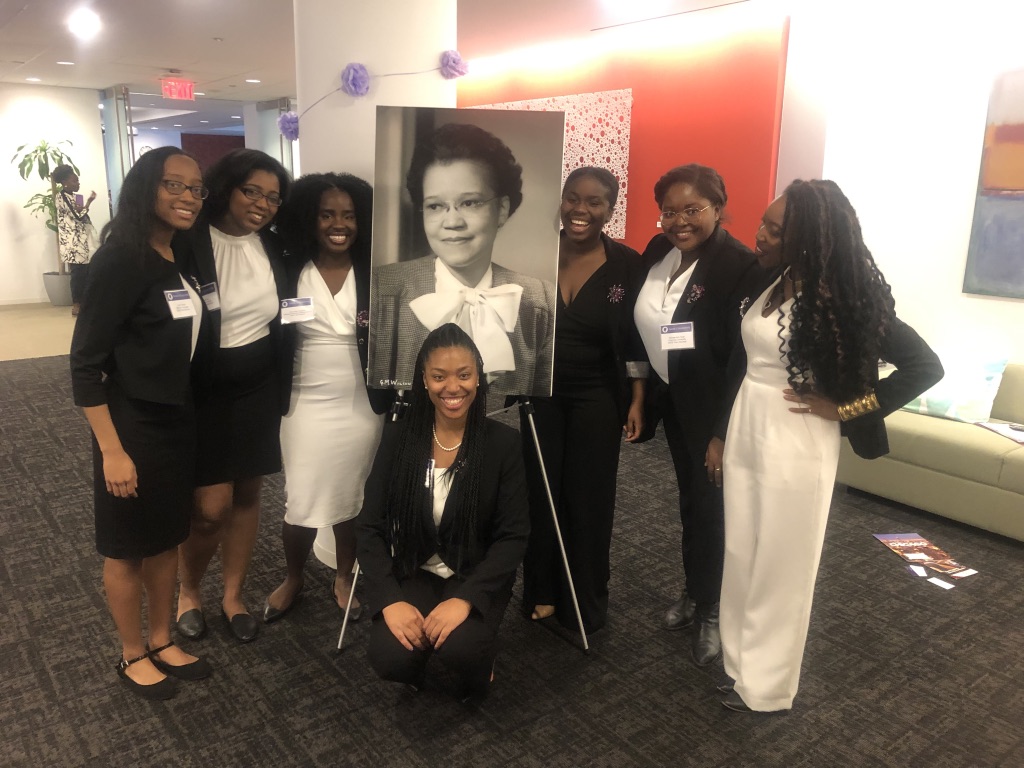
Olusayo Adeleye, third from right, with her friends after the first Sadie T.M Alexander Conference for Economics and Economics Related Fields. Photo courtesy of Adeleye.
Adeleye attended the American Economic Association’s annual conference in San Diego this year, where she connected with leading economics researchers.
Building on these unique, impactful experiences, Adeleye has earned a highly selective predoctoral fellowship at NYU’s Stern School of Business. The fellowship is supported by the Alfred P. Sloan Foundation, which provided funding to UMBC beginning in 2017 to support underrepresented students at the highest levels of economics.
Adeleye will be one of just two students selected for the program. She will be mentored by economist Peter Henry, who is the former dean of the NYU Stern School of Business. After her pre-doctoral fellowship, Adeleye plans to pursue her Ph.D. in business with a focus on corporate social responsibility and corporate strategy.
Banner image: Jana Burns in the ILSB. Photo courtesy of Burns.
Danilo Symonette, Robin Bailey, and Hye-Jin Park are earning their UMBC degrees this month having researched in top labs and being invited to present their findings to colleagues across the country. They sound like phenomenal Ph.D. students, but they’re actually all undergraduates.
Symonette ‘20, computer science, has earned one of the most prestigious graduate fellowships in the U.S. after completing years of research in artificial intelligence. Bailey ‘20, biological sciences, conducted research at Harvard Medical School’s Joslin Diabetes Center. Hye-Jin Park ‘20, psychology, researched the experiences of Asian immigrants in the United States, including discrimination and resilience.
Their interests vary greatly, but each celebrates the impact that UMBC mentors have had on their college careers, including the chance to access incredible opportunities.
Finding a community
When Symonette transferred to UMBC from the College of Southern Maryland in La Plata, Maryland, he knew he wanted to study computer science and conduct research on artificial intelligence, which he sees as a “revolutionary” field. He quickly found a supportive community of friends and mentors at UMBC, and became a McNair Scholar.
UMBC’s McNair Scholars program is a Federal TRIO program that supports students from disadvantaged and underrepresented groups in preparing for graduate education. The program emphasizes intensive research experiences and mentoring. Symonette’s McNair mentors helped him define and achieve his goals and navigate challenges along the way.
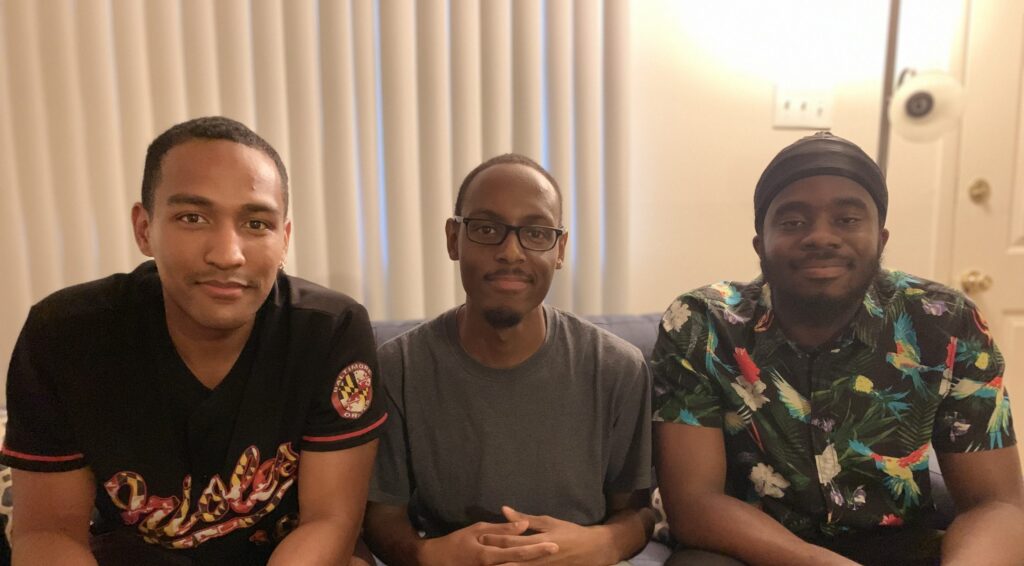
Danilo Symonette, left, and two of his friends at UMBC. Photo courtesy of Symonette.
“Being a McNair Scholar has entirely shaped my experience at UMBC and given me the community I needed to support my ambitions and pursue opportunities,” says Symonette. The program also introduced him to some of his favorite people at UMBC.
The value of mentorship
Don Engel, assistant vice president for research, is Symonette’s advisor on the award that supports his artificial intelligence work. He has been one of his most impactful mentors over the years. “Don Engel gave me the freedom to explore any and all of my ideas,” says Symonette. “He advised me on career decisions, wrote countless letters of recommendation, and always supported and believed in me no matter how lofty my goals seemed.”
Engel connected Symonette with the neuro-AI lab at the Johns Hopkins Applied Physics Lab, where Symonette is currently interning. Symonette accepted a full-time job offer to work at APL starting in June. This allowed him to explore his interests at the intersection of computer science, neuroscience, and psychology, and further refine his graduate school career goals.
“Danilo is one of the most talented and motivated students with whom I’ve had the pleasure to work. He has been a wonderful teammate to a broad range of student, faculty, and external research collaborators,” shares Engel. “I’m looking forward to following Danilo’s career, which I’m sure will be exciting and impactful.”
Symonette has also found mentors outside his discipline who have helped him develop a well-rounded perspective. They include Simon Stacey, director of the Honors College; former UMBC professor Marie DesJardins, now a dean at Simmons College; and Christy Ford Chapin, associate professor of history. Symonette says that Chapin helped him elevate his grad school essays and fellowship applications “to the highest level they could be.”
Exploring opportunities beyond UMBC
In addition to connecting Symonette with mentors, the McNair Scholars program also provided him with travel funding to visit several graduate schools across the country.
In 2018, he completed the Louis Stokes Alliances for Minority Participation (LSAMP) summer research program and focused on machine learning. The following year, he attended the NSF Graduate Research Fellowship Program at the Institute on Teaching and Mentoring, which was sponsored by the Southern Regional Education Board. “I saw a slew of Ph.D. students from underrepresented backgrounds come on stage and encourage me to pursue graduate education,” Symonette shares.
In 2019, he headed to MIT and studied models that detect confusion in features that rely on voice. His work was used as a foundation to develop sensors for a teacher education platform, to make it more effective.
“That experience equipped me with the inspiration, motivation, and knowledge to plan my next steps,” he says. Over the next 18 months, Symonette explains, “I was accepted to the top computer science Ph.D. programs in the world and won the NSF Graduate Research Fellowship.”
Today, he describes the LSAMP and McNair programs as “the vehicles through which I arrived at many of the pivotal moments in my journey.”
Inspiring younger students
While focusing on his courses and research at UMBC, Symonette also enjoyed gaining early experience as an educator. He served as a teaching assistant for Computer Science 202, inspired by his own earlier challenges with the course.
“I struggled a lot in CS202 when I came from community college,” Symonette recalls. “Seeing all the errors and mistakes troubling students during office hours and being able to help them through those same situations…was extremely rewarding.”
Symonette also found ways to connect with younger students, to encourage them to pursue degrees and careers in computing. He served as the head of outreach for UMBC’s Computer Science Education Club, establishing strong partnerships with local high schools.
“I wanted to expand our outreach efforts so that more people could volunteer,” he says. He connected with Lori Hardesty, associate director for applied learning and community engagement at UMBC’s Shriver Center, to ensure the program would have the structure to be successful in the long term.
“We managed to get a consistent group of students volunteering at Landsdowne High School last semester and supporting the high school’s computer science and robotics club,” says Symonette. “It’s been great to connect with high school students, especially at a school like Landsdowne. There are students from similar backgrounds as me that I have a chance to inspire. It continues to motivate me to do research in AI and education.”
After working at APL for a year, Symonette will begin a Ph.D. program in computer science at Stanford University in fall 2021, with the goal of becoming a professor. “I’m looking forward to broadening my perspective, accessing opportunities, and developing as a researcher and educator—everything that comes with studying in a top-tier Ph.D. program,” he says. “I can’t wait to bring all of that back to my community.”
The importance of connections
Like Symonette, Bailey is a transfer student who found support within a scholars program. When she transferred to UMBC from Howard Community College, she was eager to find a welcoming group of friends and mentors. She found that community in the MARC U*STAR Scholars program.
The MARC program is designed to increase diversity and inclusion in the biomedical research field, with an emphasis on preparing undergraduate students for Ph.D. programs. “I was the only transfer student to enter my cohort, and feared I would feel like the new kid,” she shares. “Fortunately, the MARC community welcomed me with open arms and treated me as though I had always been at UMBC.”
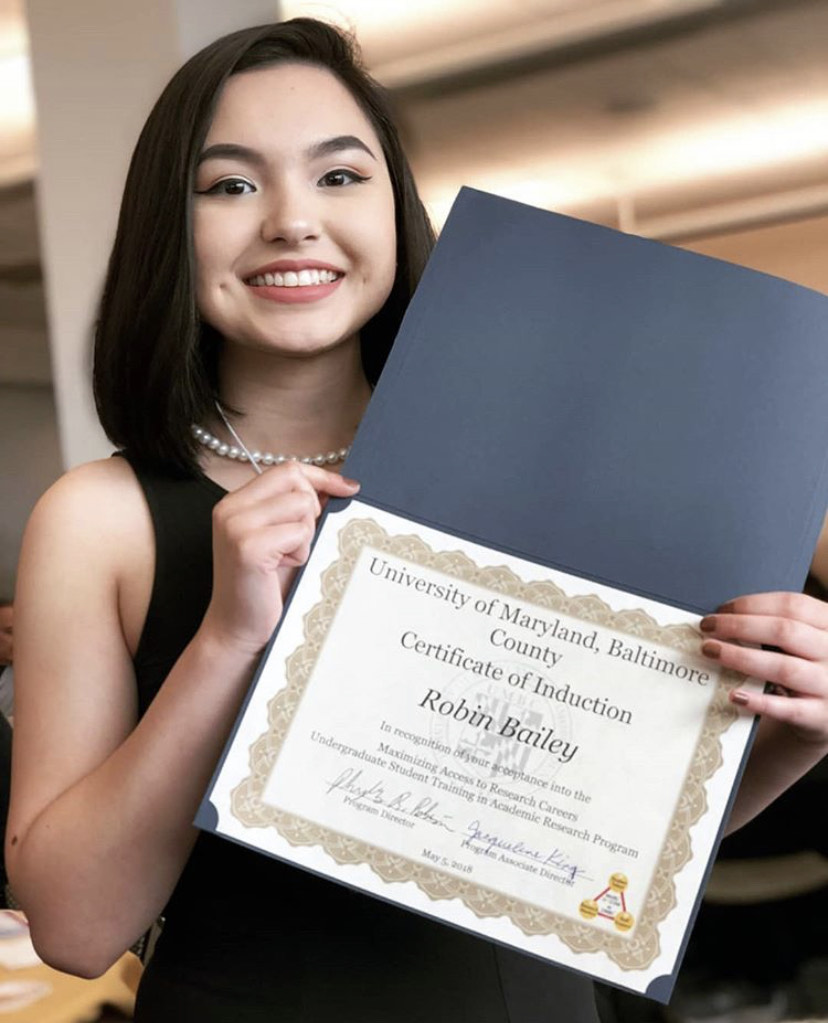
Robin Bailey with an award from UMBC. Photo courtesy of Bailey.
The MARC program connected Bailey with faculty across campus who supported her during her UMBC career. Phyllis Robinson, professor of biological sciences and director of the MARC program, is one of Bailey’s research mentors, who has provided her with a safe space to share her worries.
“Dr. Robinson has been an unwavering pillar of support in my journey at UMBC,” Bailey says. “She pushes me to be the best I can be in my education and in my personal life.”
Jacqueline King, assistant director of the MARC program, has also supported Bailey’s academic career. “She always encourages me to get out of my comfort zone,” Bailey explains.
Bailey has found a mentor Juan Valdez ‘12, M.S. ‘13, Ph.D. ‘20, biological sciences, as well. “Juan never fails to remind me that I am capable of doing anything I set my mind to,” she says. “He has unconditionally supported me even when I doubt myself.”
From UMBC to Harvard and UPenn
Bailey also valued the chance to connect MARC U*STAR Scholars at other institutions. This includes participating in the 2018 Annual Biomedical Research Conference for Minority Students in Indianapolis, Indiana. There, she received an award for her oral presentation on light-sensitive retinal proteins.
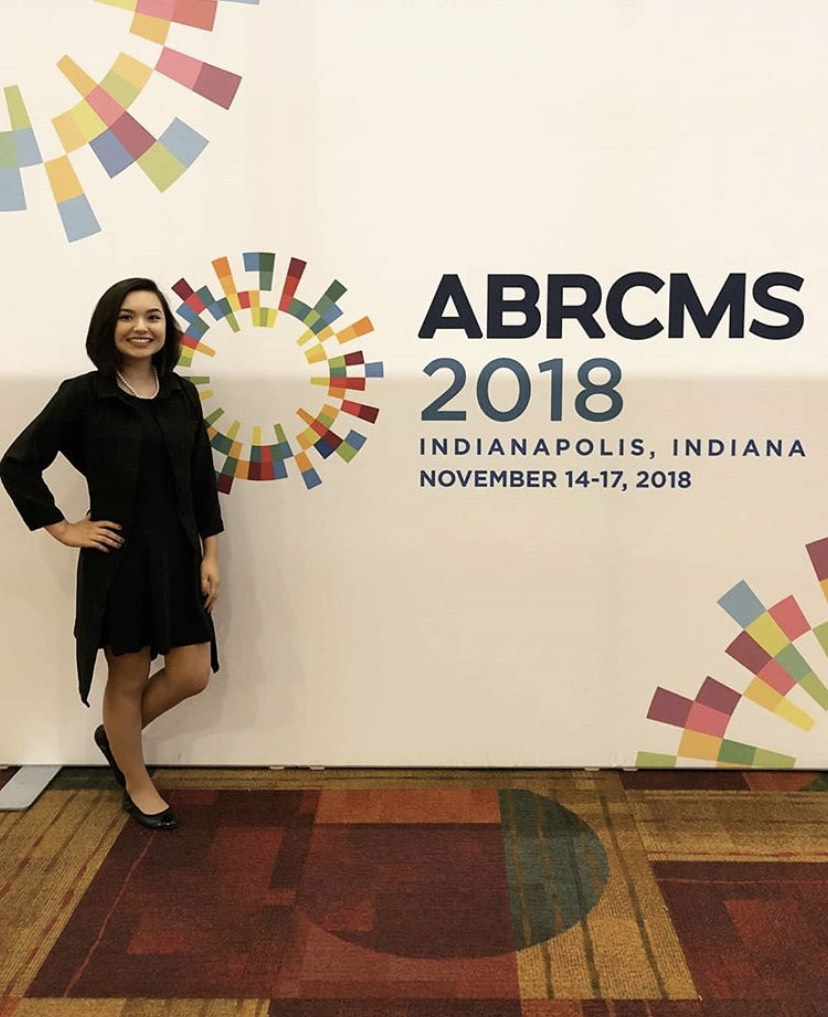
Robin Bailey at the Annual Biomedical Research Conference for Minority Students. Photo courtesy of Bailey.
She was invited to participate in a summer internship at Harvard Medical School. There she conducted research at the Joslin Diabetes Center under Alexsandar Kostic, an assistant professor of microbiology. She and research technician Melissa Tran investigated the role of bacteria in pancreatic development.
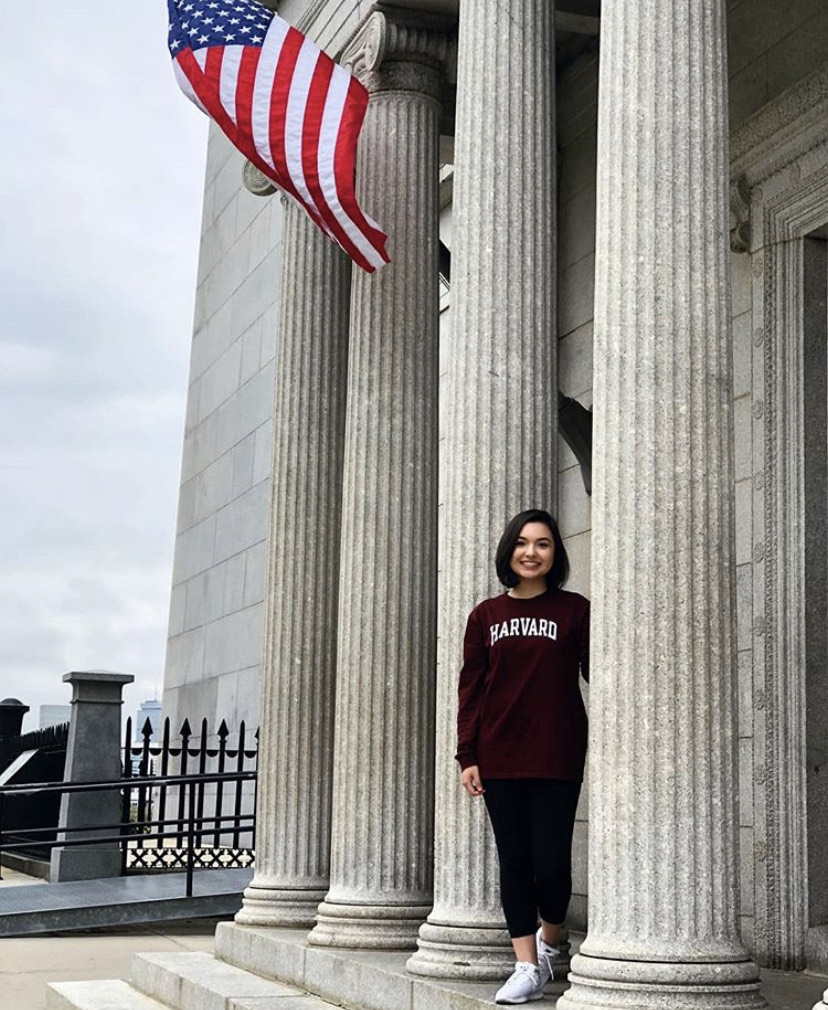
Robin Bailey at Harvard. Photo courtesy of Bailey.
Through that experience, Bailey learned new research techniques that helped prepare her for a future career in science. “The friendships in the Kostic lab made Boston feel like a home away from home,” she says.
Bailey will graduate with departmental honors in recognition of her thesis, based on research she conducted in the Robinson lab. She will also receive the Faculty Award for Excellence in Biological Sciences. After graduation, Bailey will pursue her Ph.D. in cellular and molecular biology with an emphasis on gene therapy and vaccines at the University of Pennsylvania’s Perelman School of Medicine.
Finding your own path
Hye-Jin Park initially connected with UMBC through her sister, Hyun Jung Lee ‘16, visual arts, an alumna. She recalls coming to UMBC, noticing the diversity of the campus, and being excited to make friends, but also feeling incredibly shy. After a few months of accompanying her sister to meetings for groups on campus, she realized she was ready to branch out and explore her own interests.
One of these interests was psychology, which Park became fascinated with through a high school AP psychology course. She heard a graduate student talk about research being conducted in the lab of Charissa Cheah, professor of psychology, on the experiences of Asian immigrants. Her interest was piqued—she had to apply.
Conducting meaningful research
Born in Korea, Park and her family immigrated to the United States when she was about five years old. Her Korean heritage played a big role in her UMBC experience, including as a researcher, in an unexpected way.
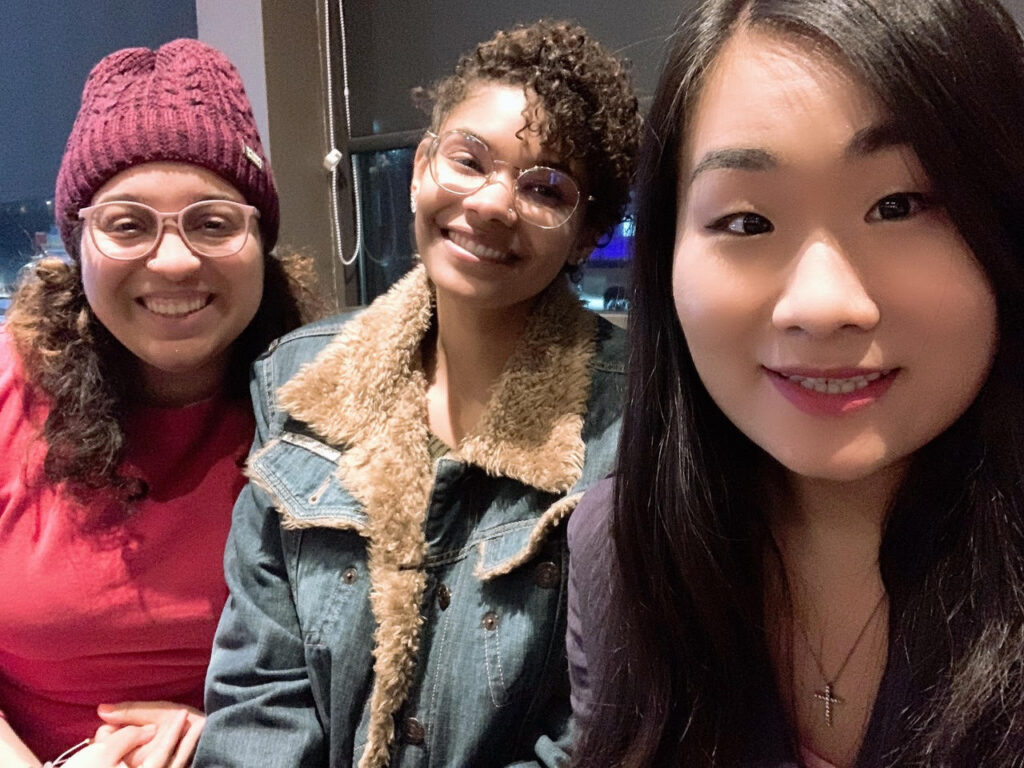
Hye-Jin Park, right, spending time with two friends on campus. Photo courtesy of Park.
When she started working in Cheah’s lab, Park had not spoken the Korean language regularly in about 15 years. She was no longer fluent in Korean and couldn’t read or recognize the Korean alphabet, but she knew that speaking Korean would be a great asset in her research. She decided to teach herself Korean, relying on her mom and sisters to re-learn the basics.
As a freshman, Park supported the lab’s research through data entry, but her responsibilities quickly grew. Before long, she was administering behavioral tasks to children and interviewing parents for data collection.
By her junior year, Cheah had become one of Park’s closest mentors and a guide to meeting others in her field. “Dr. Cheah has been the biggest influence in my UMBC experience,” she says.
Building confidence, growing impact
Park’s experience in the lab also helped her build confidence and a commitment to supporting younger students. She worked as a writing fellow in the psychology department, helping other students develop their skills writing and formatting academic papers. She joined CRU, a Christian student group, and became a member of Psi Chi, the international honors society for psychology.
Park also presented research at UMBC’s Undergraduate Research and Creative Achievement Day in both 2019 and 2020, after earning Undergraduate Research Awards each year.
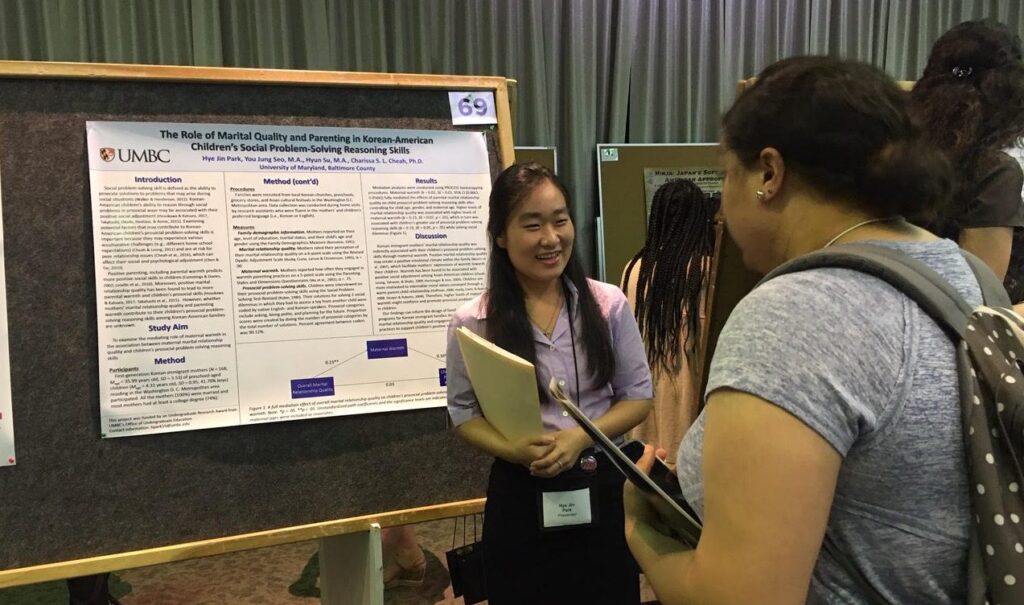
Hye-Jin Park presenting at URCAD. Photo courtesy of Park.
Off campus, Park completed an internship at Verbal Beginnings, an organization that provides applied behavioral analysis therapy and teaches various skills to children on the autism spectrum. This experience gave her an opportunity to plan lessons and learn from a professional team coordinator how to modify plans to meet the children’s needs.
Park was recently selected for the 2020 Society for Research on Adolescence Undergraduate Scholars Program. This honor would have funded her participation in the group’s annual conference in San Diego, set for March 2020 prior to the COVID-19 pandemic. “It was an honor to be accepted into the program. Even though the program got canceled due to the pandemic, I was able to connect with my mentors in the program,” she shares.
After graduation, Park will pursue her Ph.D. in human development at Michigan State University.
Banner image: Danilo Symonette, right, with his friends at a restaurant. Photo courtesy of Symonette.
Naghmeh Karimi is the most recent UMBC faculty member to receive a prestigious CAREER Award from the National Science Foundation (NSF). The grant, totaling approximately $500,000 over five years, will support her work to investigate how device-aging related risks compromise the security of cryptographic devices.
Karimi explains that cryptographic chips offer continued advances in authenticating messages and devices as well as preserving the integrity and confidentiality of sensitive information. They do so by implementing cryptographic algorithms in hardware. These chips combine the benefits of cryptographic applications with the speed and power advantage of hardware implementations.
Despite their significant benefits, cryptographic chips can be compromised by adversaries who have gained physical access to the chips. Current protections against such attacks do not consider the aging of devices, which can shift device parameters over time.
Addressing security vulnerabilities
Aging makes cryptographic chips operate slower and, ultimately, results in their malfunction, says Karimi. She explains that the typical lifetime of integrated circuits is 7 to 8 years. As the devices age, their performance decreases. Karimi is exploring the specific security vulnerabilities of aged devices and how they can be protected.
“We want to preserve the security of devices over their lifetime,” Karimi says.
Karimi and her research team will study whether the success of the side-channel analysis and fault-injection attacks increase in older devices. Karimi will create and test several countermeasures to protect devices against such attacks.
Connecting students with opportunities in tech security
The CAREER Award funding will support several UMBC undergraduate and graduate student researchers working with Karimi to develop long-lasting security solutions for hardware platforms.
At the same time, Karimi will also develop and launch a new course in UMBC’s computer science and electrical engineering department on cryptography, hardware security, and testing. She will also work with the UMBC Cyber Scholars Program to connect students with internship opportunities focused on hardware security, to give them additional hands-on experience in the field.
“The success of this project will enable us to develop long-lasting security for trusted hardware platforms,” Karimi says. “This will result in aging-resistant security solutions that benefit society through devices that remain secure over their lifetime.”
Banner image: UMBC’s ITE building. Photo by Marlayna Demond ’11 for UMBC.
Four UMBC student groups vied for the top prize in the finals of this year’s Cangialosi Business Innovation Competition (CBIC), held entirely online for the first time on April 30. Their projects ranged across industries, from fashion to artificial intelligence.
A pair of judges from the Baltimore Angels selected the finalists from among nearly 20 ideas submitted earlier in the semester. In advance of the event, each team prerecorded a seven-minute-long pitch video. They then participated in a live online Q&A with the judges.
The first prize winner was a familiar team, which first drew attention after winning the Alex. Brown Center for Entrepreneurship’s Idea Competition in the fall. After that early recognition for their project concept, they grew it into a prototype that once again captured the judges’ imaginations.
Helping kids communicate
The $3,000 first prize went to Octotalk, presented by Emma Neubert ‘21 biochemistry, and Scott Hart ‘22, visual arts. Neubert and Hart developed an interactive tool in the form of a plush octopus that children who are nonverbal can use to communicate their needs, thoughts, and feelings. Neubert hopes Octotalk will help children interact with people in a simple, comforting, and effective way.
Holding a prototype in her pitch video, Neubert explained Octotalk’s eight buttons, one on each tentacle. There are buttons for “yes,” “no,” and “I don’t know” responses. The other five buttons can be programmed through an app. The system is built in the Arduino platform. It is easily customizable, which allows teachers to change the options as a child’s needs and abilities change and grow, Neubert says.
The Octotalk team thinks this fills an important gap in the market because there is no similar communication device that is soft, friendly, and affordable. Most assistive communication devices for children are expensive electronics, like tablets, Neubert explains.
Next, Hart and Neubert hope to work with child development experts to optimize Octotalk. “We hope to have psychologists and counselors working with us to bring the greatest possible interactive experiences to the children using them, before moving them to homes and other caregiving situations,” explains Hart.
Connecting communities with healthy food
Second-place winners Laura Holland ‘22, computer science,and Niky Sicilia ‘21, business technology administration, joined forces after presenting individual projects at UMBC’s Idea Competition in fall 2019. Together, they developed Greater Plate, an app that helps people find healthier and more affordable meal alternatives to fast food in their local areas.
Niky Sicilia and Laura Holland. Photo courtesy of the Alex. Brown Center for Entrepreneurship.
Greater Plate helps address food insecurity in Baltimore City, where many low-income people do not have a grocery store within a quarter mile of their home, and don’t have transportation to access a store, says Holland. Connecting people with nourishing food options is essential to improving community health, she explains.
Through Greater Plate, local businesses will offer reduced price meals to app users, who can then select meals that fall within a set price range. Users will also be able to pre-order meals and purchase meal plans, which could offer additional cost savings. “For all of the meal plans, the cost per meal will be roughly equivalent to the cost of an average fast food meal,” explains Holland. “The meals will be as convenient as fast food, but they will be better quality.”
“With Greater Plate, we also want to lead the way in connecting people in Baltimore City with better ways to support and engage in local business,” Holland says.
To ensure vendors have a steady stream of income, they’ll have the option to sell market-rate priced meals in addition to reduced-price meal options. This will also help meet the needs of a range of users, whether they are driven primarily by convenience, supporting local businesses, eating healthy, or accessing affordable meals. They hope to work with other local groups already working on local dining and food access issues.
Affordable modest fashion
Third-place winner Noha Darwish ‘20, psychology, pitched Madina Girl, a modest fashion company. The concept is inspired by her experience as a Muslim woman who has trouble finding clothing that is stylish, comfortable, modest, and affordable.
“Growing up, I always expressed myself through fashion but I always felt limited because there weren’t options for me on the market,” says Darwish. “I felt invisible in the eye of mainstream fashion, so I started to create clothes for myself, and people loved my designs, which was how Madina Girl was born.”
Darwish calls the challenge of finding clothes that meet her needs “the compensating game.” For every clothing item bought, she will often have to purchase another item to pair it with, to reach the level of modesty she’s seeking. “Madina Girl was created so that modestly-dressing women do not have to choose between modesty and style,” explains Darwish
In her pitch for Madina Girl, Darwish noted that the modest fashion market is expected to reach $300 billion in 2022. Many of the companies already in this space, she suggests, don’t necessarily meet the needs of Muslim women in the United States. “At Madina Girl, we pride ourselves on our American designs, that are created for the American girl by the American girl.”
“It brings me so much fulfillment to know that my team and I are creating something that people really need and that brings them joy,” she says.
Identifying pain points in research
Akshay Peshave, M.S. ‘14, Ph.D. ‘20, computer science, earned fourth place for Karotene, a platform that connects researchers with information and data they need to do their work. The project is inspired by his Ph.D. research, which focuses on how machines can be taught to gather knowledge like people. Peshave explained that researchers often face challenges when searching for information to support their work. “Every time I have an idea in my head of what I am looking for, I need to translate it into a language that the search engine understands,” Peshave says. Then, once those results appear, he has to manually filter the results based on his needs.
To alleviate some of this time and frustration, Peshave developed Karotene. This tool combines artificial intelligence with natural language queries to streamline the process of searching for information, and it can connect with any textual search engine Pershave will use the CBIC funding to help support cloud costs for a pilot of Karotene.
“It was very important that we continue to offer this competition this year even though it could not be held in person,” says Vivian Armor ‘73, American Studies, director of the Alex. Brown Center for Entrepreneurship. “These student entrepreneurs are serious about their business ideas and the competition provided both seed funding to help them launch and also valuable feedback from experienced judges. Going forward, the Alex. Brown Center will continue to provide ongoing support to assist them in making their dreams a reality.”
Banner image: Noha Darwish with the Madina Girl logo. Photo courtesy of Darwish.