UMBC and Georgia State University have received a $3 million five-year grant from the National Institute of Mental Health (NIMH) for research supporting the diagnosis of mood disorders. Tulay Adali, professor of computer science and electrical engineering (CSEE) and distinguished university professor, will lead UMBC’s portion of the research, which will receive about $870,000 in support.
Tulay Adali. Photo courtesy of Tulay Adali.
Mental illnesses and mood disorders are complicated and can be challenging to identify, says Adali. Diagnoses are often made based on symptoms that a person experiences, rather than using quantifiable measures, and descriptions of symptoms can be quite variable and subjectively observed and evaluated.
The research team hopes to improve doctors’ ability to diagnose mood disorders through more quantitative, consistent measures. They will develop dynamic approaches to understanding how the continuously changing state of the brain is affected by mental illness. And their recommendations will include data from a range of sources, to more accurately reflect the complexity of mental illness.
Neuroimaging collaboration
Adali will work with her former graduate student Vince Calhoun, Ph.D. ‘02, electrical engineering. Calhoun is currently the director of the Center for Translational Research in Neuroimaging and Data Science (TReENDS) at Georgia State University. Adali and Calhoun have worked together on multiple research grants in the past.
In this project, the UMBC group led by Adali will focus on diagnostic methods, particularly the use of medical imaging data, including functional magnetic resonance imaging (fMRI). Adali and her team will develop multivariate data-driven models to help capture changes over time and space. They will apply these models to large datasets to evaluate their performance as diagnostic tools. The researchers will assess the reproducibility and replicability of the methods that are developed.
“I am especially excited about our proposal to identify homogeneous subgroups of subjects in a completely data-driven manner from neuroimaging data,” says Adali. “We hope this will enable us to better define subtypes of mental disorders, and will help inform effective and personalized forms of therapy.”
Banner image: The Information, Technology, and Engineering building at UMBC. Photo by Marlayna Demond ’11 for UMBC.
Ramin Ayanzadeh, Ph.D. ’20, was awarded a spot in the selective Computing Innovation Fellows program, designed to help recent Ph.D. graduates continue research despite COVID-19.
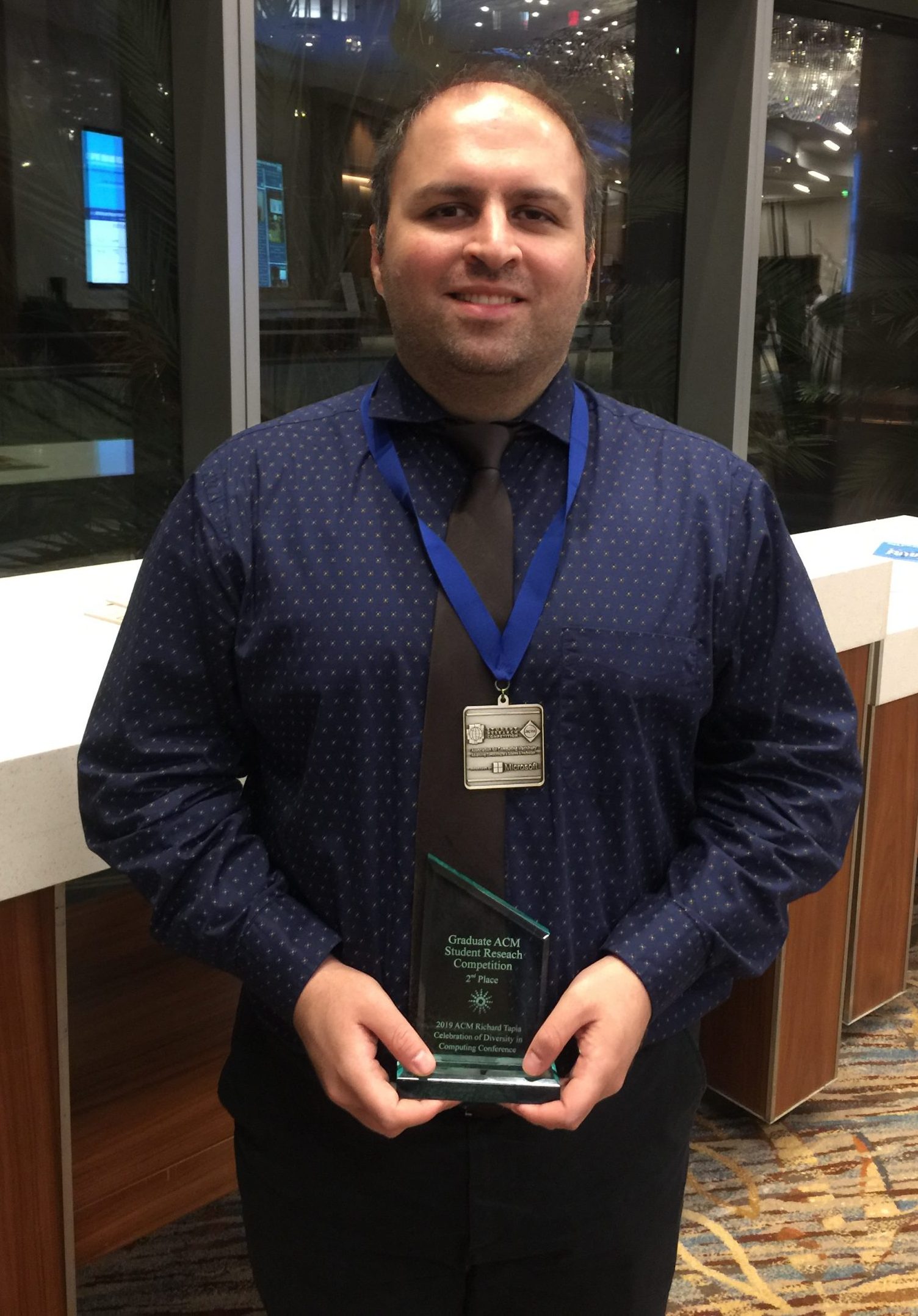
Ayanzadeh received second place at the 2019 ACM Student Research Competition. Photo courtesy of Ayanzadeh.
When he began his Ph.D. studies in computer science in Iran, Ramin Ayanzadeh, Ph.D. ’20, computer science, never imagined that he’d travel more than 6,000 miles away from home to restart his doctoral program—losing his eyesight along the way—but never losing track of his ultimate goal to continue his research in quantum computing, which in Ayanzadeh’s words, helps solve problems that ordinary computers cannot solve.
Quantum computing has applications in cybersecurity, quantum chemistry, machine learning, weather forecasting, and in the development of pharmaceuticals as it supports exponentially faster problem-solving. Ayanzadeh notes that quantum computers do not replace current computers, but rather complete more complex or time-consuming tasks.
Ayanzadeh—who was recently awarded a position in the selective 2020 National Science Foundation Computing Innovation Fellows postdoc program—began his UMBC degree as quantum computing was becoming increasingly popular. Two UMBC faculty researchers who are leaders in AI and high-performance computing took the new doctoral student under their wing.
Tim Finin, professor of computer science and electrical engineering (CSEE), and Milton Halem, research professor of CSEE, encouraged Ayanzadeh to combine research in artificial intelligence (AI) with quantum computing. His Ph.D research and dissertation focused on using AI to advance quantum computing and teach computers how to solve problems that supercomputers are not able to complete.
Determined to adjust
When Ayanzadeh was diagnosed with retinitis pigmentosa, a genetic condition that causes eyesight to deteriorate overtime, he left Iran to live with an uncle in Maryland. He was determined to continue his studies, so he began researching programs that would allow him to continue his Ph.D. in cognitive science. After meeting with Finin and learning about his research, Ayanzadeh decided to completely change his dissertation topic from machine intelligence to AI and quantum computing, which meant that he would have to restart his PhD.
In fall 2013, Ayanzadeh was adjusting to new living arrangements and a new research topic, while facing a health challenge that required him to create adaptive tools and advocate for himself.
Ayanzadeh, who is now legally blind, says that his advisors and the CSEE department were supportive and helpful as he navigated the situation. He says that everyone wanted to help but they were not sure the best way to assist. As Ayanzadeh faced these challenges, he was very resourceful, says Finin, adding that he spent time finding solutions to meet his needs.
Building a support network
“He worked diligently to continue his graduate education and made steady progress,” says Finin. “Ayanzadeh has been very resourceful in acquiring assistive technologies that help and in building up a support network within the university community and beyond. His optimism, drive, and resourcefulness are inspirational, both to his fellow students and our faculty.”
During his final semester at UMBC, Ayanzadeh developed and instructed a seminar on programming quantum computers. Finin says that he was impressed by Ayanzadeh’s ability to spearhead the course, adding that he will be well-prepared for a career in academia.
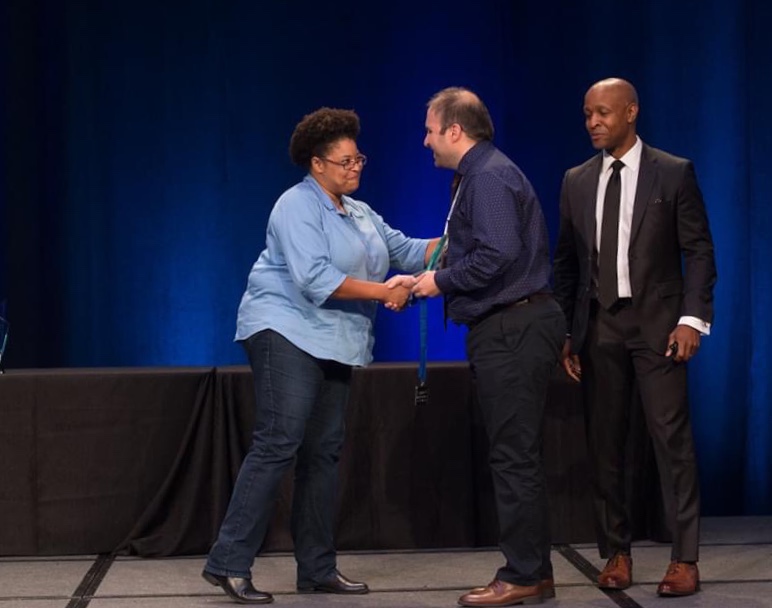
Ayanzadeh accepts his award at the 2019 ACM Student Research Competition, sponsored by Microsoft. Photo courtesy of Ayanzadeh.
“Academia is the place for me, even though industry is [better] equipped to accommodate me,” Ayanzadeh explains. “I always swim against the water.”
Nipun Ramagiri,M.S. ’22, computer science—one of the 23 students that Ayanzadeh taught—says that Ayanzadeh encouraged students to be engaged with the discussions and ask questions. Ayanzadeh was always willing to meet with students individually outside of class time, says Ramagiri, to answer additional questions or review material.
Ramgiri appreciated that Ayanzadeh took the extra step of inviting industry experts to talk to the class about how the course’s topics were connected to work being done by companies. “This made me get more involved in the open-source contributions being done in the field, which ended up getting me an internship at IBM Quantum,” says Ramagiri.
Computing Innovation Fellows program
As Ayanzadeh was finishing his Ph.D., the COVID-19 pandemic was impacting institutions across the country, and many companies and institutions were delaying hiring. Ayanzadeh knew that he wanted to pursue a career in academia, and with the ripple effects of the pandemic, he was not sure what his next steps would be. While he considered pursuing a career in industry, Ayanzadeh says that he decided that academia was a better fit because of the resources available to people with disabilities. He found out about the highly selective National Science Foundation’s Computing Innovation Fellows (CIFellows) program from Finin. About 550 people applied to the CIFellows program, and 59 were accepted into the 2020 class.
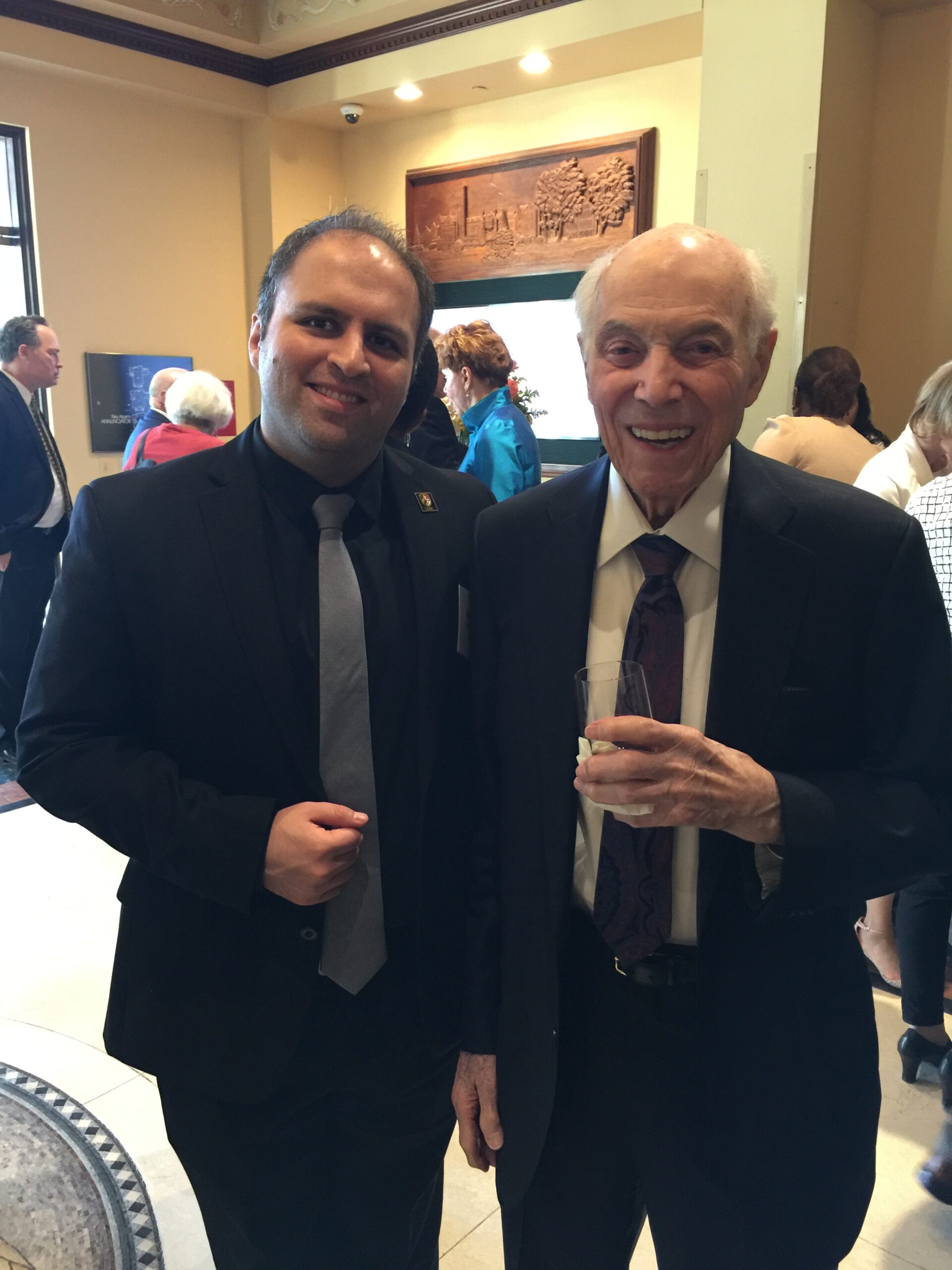
Ayanzadeh with philanthropist Robert Meyerhoff, who founded the Meyerhoff Scholars Program. Photo courtesy of Ayanzadeh.
With less than two months until the CIFellow program application was due, Ayanzadeh still needed to find a mentor who was accepting post-docs in their lab. Eventually, his application to work with Moinuddin Qureshi, professor of computer science at Georgia Tech, was accepted by the CIFellows program—ensuring Ayanzadeh a position for the next few years.
During his postdoc, Ayanzadeh plans to improve the accuracy and precision of near-term quantum computers. He will apply artificial intelligence to mitigate errors and enhance the performance of noisy quantum computers.
The CIFellows program, which is funded by the Computing Research Association and the Computing Community Consortium, was created in response to the COVID-19 pandemic, to assist recent Ph.D. graduates facing unexpected challenges in securing research positions. Previously, the CIFellows program was open for applications between 2009 and 2011 when the economy was in a recession.
Like UMBC, most work at Georgia Tech is being conducted remotely, which impacts when Ayanzadeh will be able to begin conducting his research on campus. For now, he shares, he will be working remotely. When he is able to relocate to Georgia, Ayanzadeh says that he will likely face challenges navigating a new location, especially if he doesn’t have a strong support system like he has in Maryland. However, he says that he is eager to meet new people, and mentor undergraduate and graduate students when he is physically on campus.
Ayanzadeh received a Google Lime Scholarship in 2018, and participated in the Meyerhoff Graduate Fellows Program in 2019, which supported his research at UMBC for one year.
“The CIFellows program is an excellent opportunity for me to network with experts in computer science, who are leading the program, and rising leaders who will define the future of computer science,” says Ayanzadeh. “I also think that by participating I will be well-prepared for an academic position.”
*****
Header image: Ramin Ayanzadeh, seated left, in 2018 with other members of the Center for Accelerated Real Time Analytics (CARTA), a National Science Foundation-funded partnership to develop next-generation computing hardware to solve major infrastructure challenges. Photo by Marlayna Demond ’11.
When Balaji Viswanathan’s grandfather was injured in a fall at a senior care facility a few years ago, he committed to seeing what he could do to prevent it from happening again, to his grandfather or other older adults. Viswanathan, M.S ‘06, Ph.D. ‘21, computer science, developed Invento, a technology that analyzes movement patterns to determine fall risk and notify caregivers if a fall seems likely, helping caretakers prevent injuries from falls.
Balaji Viswanathan. Photo courtesy of Viswanathan.
Invento earned first place in the technology track of UMBC’s eighth annual Cangialosi Business Innovation Competition hosted by the Alex. Brown Center for Entrepreneurship. The event was held virtually on April 29, with one track focused on technology and the other focused on social impact ideas beyond tech.
Vivian Armor ‘73, American studies, director of the Alex. Brown Center for Entrepreneurship, explains that the two tracks offered this year allowed students to propose a broader range of ideas. “Special thanks to entrepreneurial alums Khuram Zaman ‘05, political science, and Asif Khan ‘04, information systems and computer science, co-founders of FifthTribe, for reaching out to support the new social impact track this year. It’s a wonderful addition to the competition originally founded by Greg Cangialosi ‘96, English, in 2014,” says Armor. “It’s very rewarding to see our Retriever alums generously give back to help develop the next wave of entrepreneurs for the future.”
The competition provides opportunities for students interested in entrepreneurship to connect with alumni and advisors. “The CBIC competition is a great platform for startups to get discovered by investors,” Viswanathan says. “We participated in the competition, winning the top prize in our category. And through that we got a key advisor and also connected with investors.”
Affordability and sustainability
Second place in the technology track went to Edullo, led by Esha Vangara ‘23, economics. Vangara explains that Edullo offers affordable and personalized tutoring that is fast for students to access. The system is structured differently than traditional tutoring companies. All of the tutors are also students, tutoring is fully online, and students who access tutoring aren’t required to sign up for subscriptions or to sign longer-term contracts.
Kayleigh Nelson ‘23, global studies, presented Digitize My Closet, which placed third on the technology track. Rather than producing physical clothing, Digitize My Closet produces digital clothing for users to “wear” while on video calls. The clothing moves with the model on screen, providing users with a way to wear clothing that they may only need for a singular event without needing to purchase new pieces. This approach, explains Nelson, is a more environmentally and financially sustainable way for people to expand their wardrobes.
Innovation with social impact
In the social impact category, Mariah Qureshi ‘23, computer science, took first place with a proposal to grow codeHer. Qureshi is an executive board member of codeHer, a nonprofit organization that works to address the gender gap in STEM fields by empowering women and providing them with tools to help them succeed in computing and science.
Mariah Qureshi. Photo courtesy of Qureshi.
CodeHer plans to expand the course offerings in and around Baltimore, explains Qureshi, to support underserved youth who are interested in STEM disciplines. She says that they plan to develop after-school programs for high school and middle school students, as well as provide personalized mentoring to students.
Kelvin Johnson M.P.S. ‘21, entrepreneurship, innovation, and leadership, presented Businessaire and earned second place. Businessaire is a board game that increases financial literacy by teaching business principles and information about the economy.
Sotonye Koko ‘21, information systems, and Yvann Tientcheu ‘21, information systems, earned third prize for EndeaVR. They propose using virtual reality technology to provide online services such as job training, to address high recidivism rates among people in the U.S. prison system.
Through this annual competition, winners receive funding to continue to advance their idea. They also access the opportunity to connect with local entrepreneurs who serve as mentors and help connect them with Baltimore’s entrepreneurship community.
“CBIC was an enriching experience that I’d recommend for every UMBC student who is entrepreneurship-oriented. I’m grateful for the immense help provided by the competition mentors and coordinators, even during COVID-19,” says Qureshi. “I learned of several different ways to further my own social venture, and have had many professional and personal takeaways from this experience.”
Banner image: The UMBC Albin O. Kuhn Library in spring 2017. Photo by Marlayna Demond ’11 for UMBC.
Kiaron Bailey will soon become the very first graduate of UMBC’s new master’s degree program in community leadership, a path she hadn’t envisioned for herself while working in finance just a few years ago. “From a very young age, my parents instilled in me the importance of giving back. I just didn’t realize that I could pursue that passion and actually sustain myself,” Bailey says. In deciding to make the career shift, “I kind of had a heart-to-heart with myself,” and she realized that entrepreneurship and community impact can go hand in hand.
Bailey learned about the program when she connected with Sonya Crosby at her place of worship. Today, Crosby is assistant vice provost for applied and off-campus programs, but at the time she was director of the Office of Professional Programs, which offered the new master’s degree. Crosby told Bailey about the practical emphasis of the program—how it combined coursework community-based service-learning—and Bailey knew it was what she was looking for.
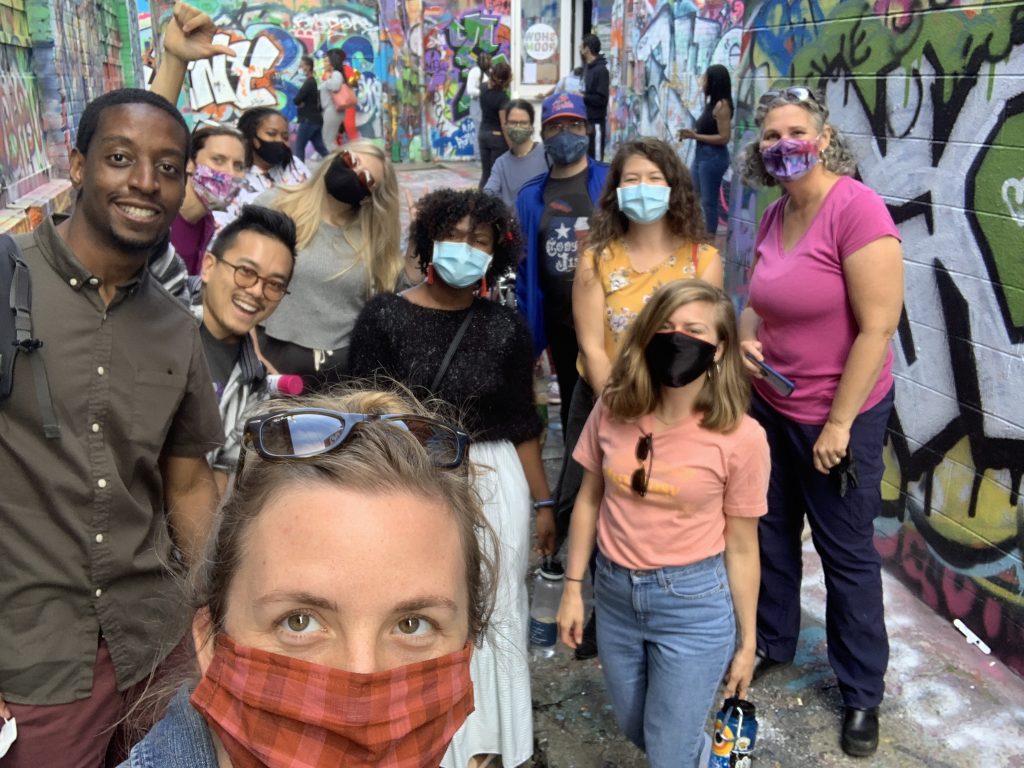
Bailey, second from left in second row, and her classmates in a virtual class. Photo courtesy of Bailey.
Appreciating the nuances
As someone who studied finance as an undergraduate—where one plus one equals two—Bailey found the nuanced world of community leadership a bit shocking, she says, laughing. She particularly enjoyed connecting with nonprofits in Baltimore City, using her skills to support their missions while learning more about running community-based organizations.
Next One Up helps Black male youth in their academics, including preparing for the SATs and other college prep. The nonprofit did not yet have a physical space, and Bailey researched possible locations, preparing them to strengthen their services and community connections post-pandemic.
Bailey, second from right, with her classmates in Baltimore. Photo courtesy of Bailey.
She also worked with The Lazarus Rite, which helps formerly incarcerated people prepare for jobs, obtain gainful employment, learn about budgeting, and develop soft skills to support their success. Bailey developed a survey to help the organization prepare to apply for a grant, and analyzed the survey data.
UMBC’s community leadership program, “definitely helped me get a holistic perspective of what it actually takes to run an organization and the type of tenacity and creativity you need,” she says. Bailey currently works for the Interagency Commission on School Construction for the State of Maryland, and also serves as an administrator of programs and finance, and the liaison for the Maryland Board of Education. She plans to continue that while starting to build a nonprofit supporting physical, mental, and financial wellness.
Creative problem solver
When Princess Sara Njemanze ‘21, chemical engineering, came to UMBC as a freshman, she knew that she wanted to find opportunities to build and to support communities. She started by joining the Shriver Center’s Living Learning Community, a residential floor bringing together students focused on meaningful social change. The experience proved so significant that she remained connected to the group for four years, transitioning through roles as a peer mentor and then as a resident assistant. “It’s my life,” she says, smiling.
Njemanze, second from right in second row, with her fellow Orientation Peer Advisors in 2018. Photo by Marlayna Demond ’11 for UMBC.
As she explored possibilities for her degree and career paths, Njemanze knew she enjoyed fixing problems through science and engineering and that she loved connecting with people. After meeting Vivian Armor ‘73, American studies, director of the Alex. Brown Center for Entrepreneurship, Njemanze decided to register for an entrepreneurship class. There, she got a chance to partner with students from all different majors and to come up with a product to pitch for a Shark Tank-style presentation. Before long, she added minors in both computer science and entrepreneurship to her degree.
As a France-Merrick Fellow, Njemanze worked with a group of her peers to create initiatives that work to address challenges in Baltimore City and Baltimore County. “Something that I’m really proud of that we worked on and saw the fruits was hosting a leadership program for high school students at Lansdowne High School,” she explains, adding that they asked the students to envision their ideal communities.
Njemanze, fifth from right, and the France-Merrick 2018-2019 cohort. Photo by Raquel Hamner ’20.
The high school students came to UMBC for a day-long leadership training and created art that was displayed at OCA Mocha, a coffee shop and community gathering space in downtown Arbutus. Njemanze says the opportunity to connect with younger students was meaningful to her and impacted her UMBC experience.
Njemanze, second from right in front row, with her classmates in Introduction to Intercultural Communication class. Photo courtesy of Njemanze.
During her time at UMBC, Njemanze interned at the Naval Surface Warfare Center, where she was offered a job that will begin after graduation, combining her passion for engineering and creative problem solving. Her long-term vision is creating a nonprofit to support underserved communities gain access to knowledge and skills such as financial literacy, college readiness, and leadership development.
Supporting mental health through tech
Tristan King ‘21, individualized studies, created his own path at UMBC after transferring from Howard Community College (HCC), where he earned an associates degree in computer science. While King was at HCC, he met Joshua Massey ‘14, individualized studies, who was teaching an entrepreneurship course. By talking with Massey during his office hours King learned that at UMBC he could design his own major, and he began to explore the possibilities.
King shares that his personal mental health struggles led him to create a major at UMBC that focused on how technology could support mental health and wellbeing. Through an emerging field called digital therapeutics, he explains, some health care providers are prescribing apps and websites to provide support and resources to people with depression and other mental health challenges.
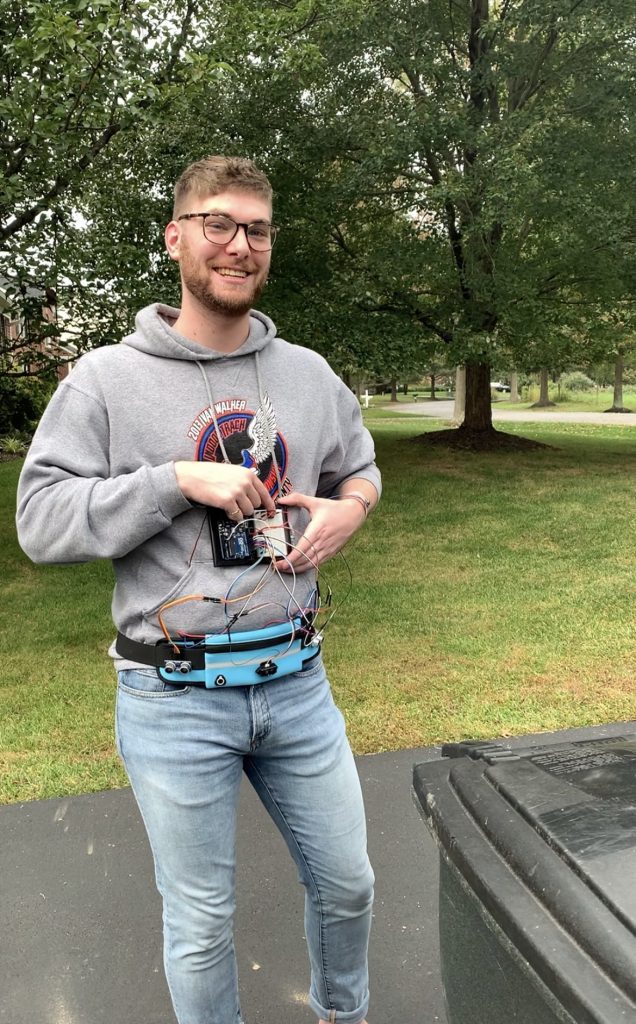
King testing the UMBC-UCI-Toyota research prototype. Photo by Sarah King.
At UMBC, King began learning more about tech and accessibility. He worked with Ravi Kuber, associate professor of information systems, on creating obstacle-detection tools so that blind runners could complete their runs independently and safely (research supported by Toyota). King also worked with Lee Boot, director of UMBC’s Imaging Research Center, on data visualization research.
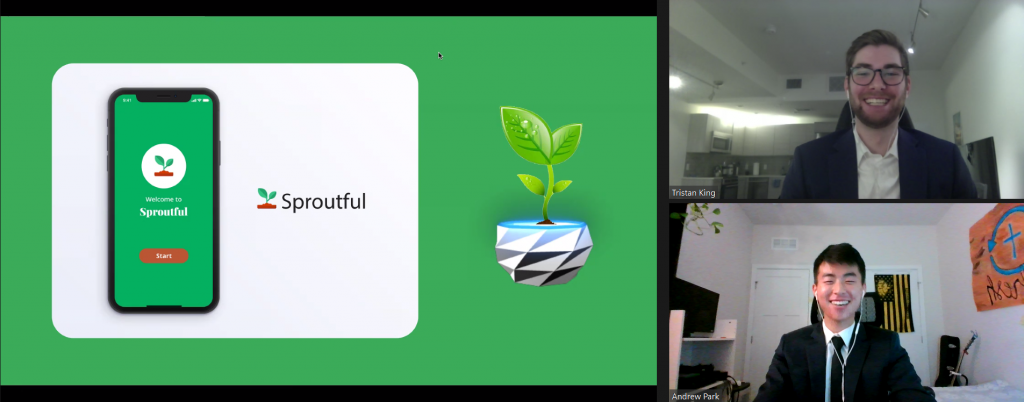
In 2020, he participated in UMBC’s annual Idea Competition through the Alex. Brown Center for Entrepreneurship. His team earned second place for the Sproutful System, which includes a plant container outfitted with sensors that transmit to a phone app, helping the user know what their plant needs to thrive. The app also features daily guided meditations. The idea is that a person will care for themselves and their plant in a daily meditative practice that is both relaxing and rewarding.
King, top, and his collaborator Andrew Park ’21, individualized studies, presenting at the Idea Competition in 2020.
King’s senior capstone project uses virtual reality to translate metaphor therapy to an immersive environment. “It looks at how people describe depression and anxiety, and sort of visualizes it,” he says. The project combined what he learned through health psychology coursework with his computer science skills, interest in supporting mental health, creativity, and ingenuity to yield a thought-provoking tool.
Energy and commitment
When Amina Mahmood ‘21, computer science, was younger, she would routinely get viruses on her family’s desktop computer while playing online games. Her computing skill set has certainly grown and changed over the years, but her passion for the field remains the same.
As she was applying to colleges, Mahmood focused on institutions with strong resources for students pursuing computer science. She felt elated when offered a spot in UMBC’s Cyber Scholars program, housed within the Center for Women in Technology. She wanted to make the most of each and every opportunity that came her way.
Mahmood, right, at a CWIT event. Photo courtesy of Mahmood.
That is how Mahmood, as a new freshman at UMBC, found herself at the UMBC Career Center’s campus career fair, 10 copies of her resume in hand. She didn’t yet have work experience in computing, and wasn’t quite sure of the protocol, but she committed to handing out each one of those resumes before she left.
Before the end of the day, Mahmood connected with Huntress Labs, a start-up company based in bwtech@UMBC. Huntress Labs offered her an internship, and she worked there part-time through her sophomore year.
She also went on to complete internships at Parsons, a company that develops digital solutions in the security, defense, and infrastructure industries; Systems and Tech Research; and the Johns Hopkins University Applied Physics Lab. There, she will soon begin a full-time job as a cyber engineer, where she will focus on reverse engineering, one of her computing-related passions.
A world of opportunities
While completing her courses and interning, Mahmood took advantage of unique learning opportunities. She received a scholarship to attend the Grace Hopper Celebration, the world’s largest gathering of women in technology. She also studied abroad in the United Kingdom in spring 2020, traveling to Paris and London before the program ended early due to the emergence of COVID-19.
Mahmood in Paris. Photo courtesy of Mahmood.
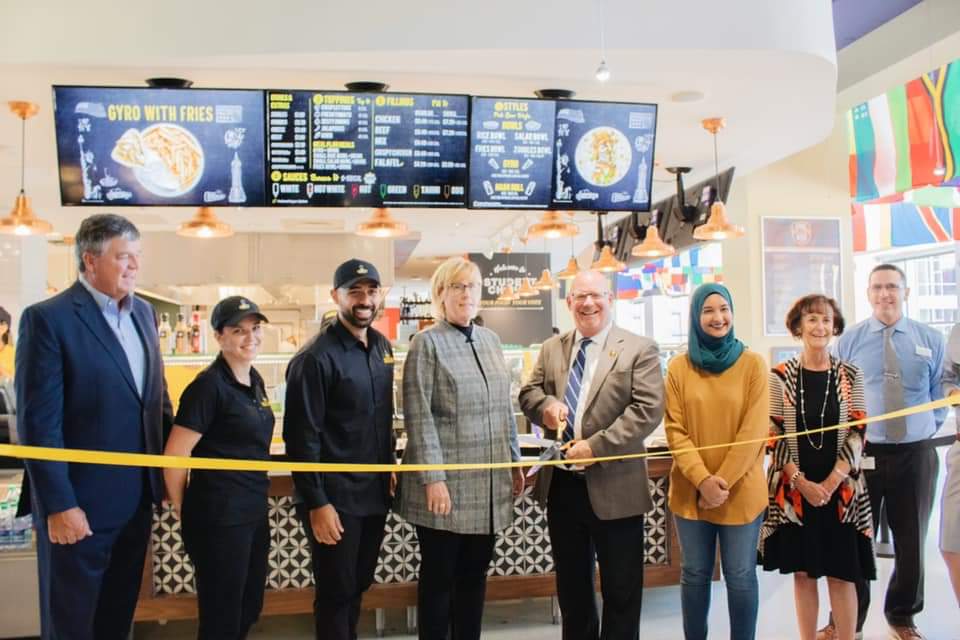
Mahmood’s approach of taking on new challenges with energy and commitment extended to other aspects of her life at UMBC. When she found that UMBC offered limited on-campus halal dining options, she worked with the Student Dining Advisory Committee to expand those options. In her junior year her tenacity paid off. UMBC opened Halal Shack as a permanent halal dining option in The Commons, also popular with vegetarian and vegan diners.
Mahmood, third from right, at the ribbon cutting event opening Halal Shack in The Commons. Photo by UMBC Dining.
Knowing the potential of her organizing to positively impact other people motivated Mahmood to push forward the work until it became a reality. “I’m the youngest in my family, but what if I have a daughter or a nephew and they come to UMBC, what would I want them to experience?” she asked herself. “I just want to use my skill set and whatever I can do to be beneficial to other people.”
Gaining confidence as entrepreneur
Jason Jozwiak, M.S. ‘21, information systems, came to UMBC with a bachelor’s degree in fine arts, a decade working as a software developer, and two years teaching English in Ukraine through the Peace Corps. As a Peaceworker Fellow with UMBC’s Shriver Center, he had an opportunity to pursue his master’s degree in information systems while working part-time with Baltimore City’s Department of General Services, and completing a social change leadership program.
Jozwiak (in blue hat) and fellow Peaceworkers in Baltimore, 2020. Photo by Charlotte Keniston.
Jozwiak began working with the City of Baltimore before the COVID-19 pandemic began, developing software to help his department digitize records. During the pandemic, the City began using that same software to record COVID-19 data to support contact tracing efforts.
That experience broadened his sense of the kinds of community impacts he could have through a career in computing. After graduation, he plans to expand his software development work in partnership with another emerging entrepreneur.
Jozwiak giving a presentation related to his work with Baltimore City. Photo by James Trimarco of the Department of General Services.
“UMBC helped open my eyes to the possibilities and opportunities that are available,” says Jozwiak. “Entrepreneurship is something that I’ve been interested in for a long time. There are inherent risks involved and it’s kind of scary trying to piece it together. But I learned that I know what I’m doing. It helped give me the confidence.”
Finding community
Jameka Wiggins ‘21, chemical engineering, remembers when representatives from UMBC’s Center for Women in Technology (CWIT) visited her high school in Prince George’s County, Maryland. They offered a glimpse into the kind of experience she might have as a CWIT Scholar, including a tight-knit community of mutual support. She was accepted into the scholars program and says, simply, “CWIT was my community coming into UMBC. They always made sure we had a community of supporters, that we were engaged in the program, and that we felt welcome at the university.”
That community proved particularly important when Wiggins struggled with the transition to college life, worrying that she didn’t belong. Working through that challenging time motivated her to shift from focusing on lab research to engineering education itself as a career path.
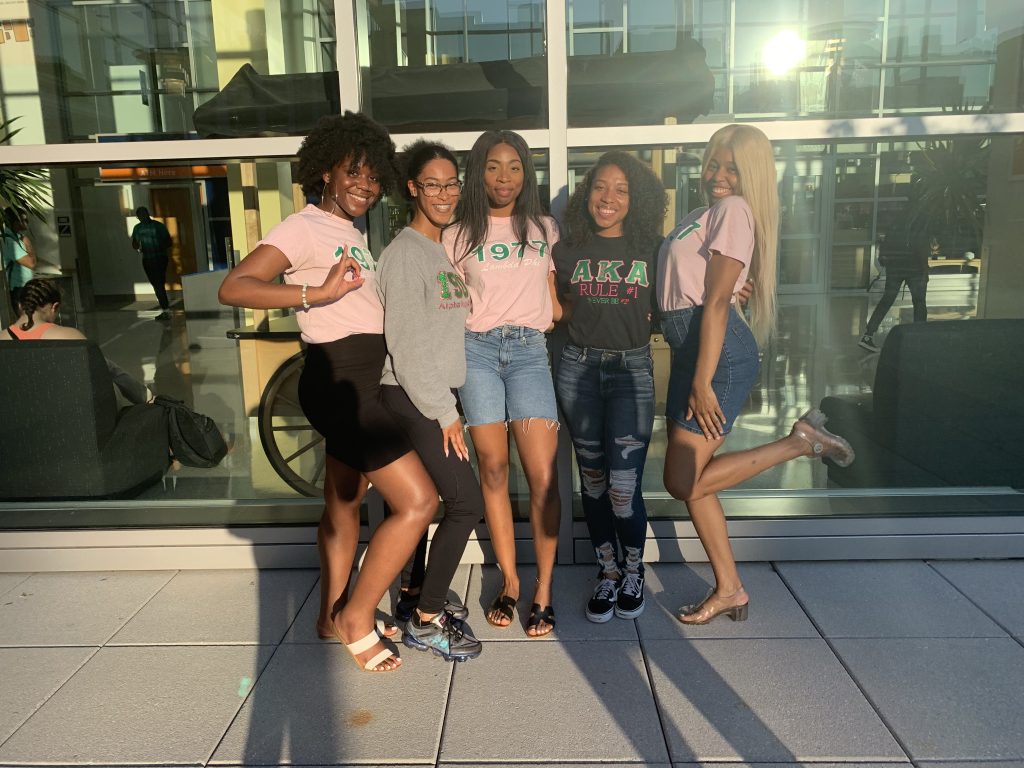
Wiggins, second from left, with Elfreda Atoe ’19, political science; Krystal Ogun, ’19, information systems; Alayla Stone-Abernathy ’20, health administration and policy; and Cheyenne Oliver ’20, biological sciences, at an event for The Lambda Phi Chapter of Alpha Kappa Alpha Sorority, Incorporated. Photo courtesy of Wiggins.
During her sophomore year, Wiggins, who is also a member of the UMBC chapter of the National Society of Black Engineers, decided that she wanted to gain research experience. She applied to the NSF’s Louis Stokes Alliance for Minority Participation (LSAMP) program, which supported her summer research on optimizing oleaginous yeast cell factories in UMBC’s chemical, biochemical, and environmental engineering department.
The next year she accessed a very different kind of experience as a Shattuck Fellow through the UMBC Career Center and as a participant in the Maryland Technology Internship Program for Entrepreneurship. These initiatives allowed her to intern multiple semesters for the start-up Athena Environmental Sciences, with Sheldon Broedel, associate director of UMBC’s master’s in professional studies in biotechnology program.
As she was exploring these opportunities, Wiggins realized that she was not the only student who would benefit from academic support outside of the classroom. She and a group of her peers worked with the UMBC Academic Success Center to provide tutors for upper-level engineering courses. And she also began looking at career pathways in engineering that were focused on community and belonging.
Change agent
In fall 2020, Wiggins, also a McNair Scholar, began working with Jamie Gurganus, associate director of engineering education, on a project that would shape her trajectory. They conducted research on the engineering mindset and experiences of Black first-year students, including those who are and are not in scholars programs.
Wiggins and Gurganus explored how to foster a sense of community among these students, which has been demonstrated to support resilience and degree attainment. Their study found that participants experienced particular challenges during the COVID-19 pandemic, such as isolation and difficulty finding their footing in classes.
Wiggins, second from right, with Delegate Samuel Rosenberg, second from left, in Annapolis as a bill hearing. Photo courtesy of Wiggins.
In addition to her interest in supporting college students, Wiggins committed time to supporting younger students as well. She volunteered for the Refugee Youth Project’s College Journey Upward Mentoring Program (College JUMP), where she mentored a high school student in Baltimore City and helped her with the college admissions process. This experience led Wiggins to become a leader in the program, creating curricula for students and supporting mentors.
She also worked with some of her peers to create the LIFT Mentoring Program, which connects upper-level students with underclassmen in the same or similar majors to support informal mentorship and guidance outside of the classroom.
And along the way, she took on other leadership roles through UMBC’s Truth, Racial Healing, and Transformation Center and UMBC’s Inclusion Council.
These research, mentoring, and leadership experiences have inspired Wiggins to pursue a Ph.D. in engineering education. Her emphasis will be on developing undergraduate student support services to increase the retention and representation of underrepresented populations in engineering. “I will serve as a change agent,” she says.
Banner image: Kiaron Bailey, second from right, with her classmates in Baltimore. Photo courtesy of Bailey.
UMBC’s Cyber Dawgs took first place in the Mid-Atlantic Collegiate Cyber Defense Competition (MACCDC) earlier this month. The team participated in the competition virtually, working to protect their networks from simulated cyber threats and attacks. The Cyber Dawgs earned their win against teams including George Mason University and the University of Pittsburgh.
The team advanced to the national competition, vying for the title against Rochester Institute of Technology; the University of Texas at Austin, the University of Central Florida, and others. While UCF brought home the national title this year, RJ Joyce ‘18, M.S. ‘20, Ph.D. ‘23, computer science, says the team is already preparing for the next competition.
“This is my fourth year competing in the Collegiate Cyber Defense Competition and my first as team captain. I’m incredibly proud of my team, who put in countless hours of preparation, adapted quickly to unexpected situations during the competition, and placed 7th out of the 168 teams who competed across the nation,” he says. “We’re already making plans for how to improve next year!”
The Cyber Dawgs team includes Henry Budris ‘22, computer science; Nikola Bura ‘21, computer science; Rob Shovan ‘23, information systems; Richard Baldwin ‘23, computer science; Robert Joyce ‘18, M.S. ‘20, Ph.D. ‘23, computer science; Chris Hamer ‘22, mathematics; Adam Sachsel ‘21, computer science; and Chris Skane ‘21, computer science. Their advisors are Charles Nicholas, professor of computer science and electrical engineering (CSEE), and Rick Forno, senior lecturer in CSEE.
UMBC has recently been named a global leader in two prominent international university rankings—one focused on economic and social impact and the other on research influence, academic distinction, and alumni leadership. Times Higher Education just named UMBC one of the world’s top 100 universities in efforts toward several sustainable development priorities. And today, the Center for World University Rankings (CWUR) included UMBC in the top 3.7% of its 2021-22 list.
“These impressive global rankings confirm something Marylanders have known all along, which is that UMBC is a world-class university,” says David Di Maria, associate vice provost for international education. “UMBC not only benefits the state of Maryland, but also benefits the world by working to address some of the most pressing challenges facing our planet.”
Advancing equity and sustainability
The Times Higher Ed Impact Rankings assess universities against the United Nations’ Sustainable Development Goals—17 global goals to move toward a better and more sustainable future. UMBC ranks among the top 200 universities overall and is one of the world’s top 100 universities in the areas of eliminating poverty (#63) and hunger (#91), improving gender equity (#46), improving clean water access and sanitation (#98), reducing inequalities in education (#55), supporting sustainable cities and communities (#83), responsible consumption and production (#23), and supporting land-based (#38) and aquatic (#15) ecosystems.
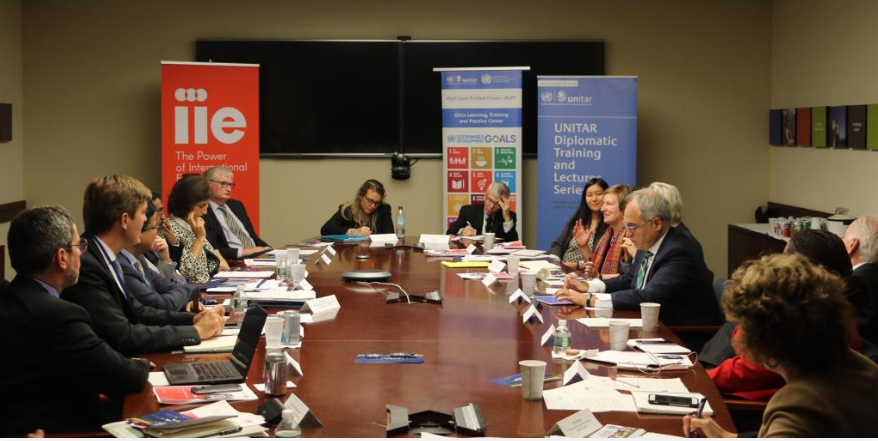
UMBC is participating in international conversations about how higher education can support sustainable development through education, research, and service. Prior to the COVID-19 pandemic, Provost Philip Rous attended a meeting with leaders of other public research universities and senior officials of the United Nations in New York City to discuss this topic. This is just one piece of UMBC’s international partnership work, which also includes collaborations in more than 50 countries.
Prior to the COVID-19 pandemic, Provost Philip Rous, on left side of table at the back, attended a meeting with leaders of other public research universities and senior officials of the United Nations. Photo by Jonas Haertle at the United Nations Institute for Training and Research.
Looking specifically at U.S. institutions committed to this work, UMBC ranks 10th in the Times Higher Ed Impact Ranking. Nationally, UMBC ranks #4 in gender equity, #5 in supporting decent work and economic growth, and #5 in reducing inequalities in education. In environmental measures, UMBC ranks #2 among U.S. institutions for responsible consumption and production, #3 for supporting aquatic ecosystems, and #5 for supporting land-based ecosystems.
Faculty and alumni leadership
The Center for World University Rankings include nearly 20,000 universities around the world, listed based on their academic performance. UMBC landed at 727 in the world, in the top 3.7% of higher education institutions rankings worldwide. In the U.S., UMBC was ranked at 175.
The ranking is based on a combination of four factors: quality of education, alumni employment, quality of faculty, and research performance. CWUR looks at metrics like alumni who have earned major academic distinctions and held top executive positions, and faculty research appearing in top-tier and highly influential journals.
“I am extremely proud of our UMBC community for earning this global recognition,” says Di Maria.
Banner image: Kevin Omland, rear, and his students birdwatch on campus. The Omland Lab focuses on avian evolution, behavior, and conservation. They study the critically endangered Bahama Oriole in close collaboration with the Bahamas National Trust.Photo by Marlayna Demond ’11 for UMBC.
Four UMBC students have been named 2021-2022 Goldwater Scholars, setting a new university record for the most Retrievers to earn this prestigious undergraduate award in a single year. They are Joshua Slaughter ‘22, computer engineering; Kaitlynn Lilly ‘22, physics and mathematics; Gerson Kroiz ‘22, mathematics; and Karan Luthria ‘22, bioinformatics. Their awards make UMBC one of the highest-producing universities for Goldwater Scholars in the nation, directly alongside Harvard, MIT, and Johns Hopkins.
The goal of the Barry Goldwater Scholarship and Excellence in Education Program is to provide the United States with “a continuing source of highly qualified scientists, mathematicians, and engineers” to move the nation forward. UMBC’s prior Goldwater Scholars, including Rhodes Scholar Naomi Mburu ‘18, chemical engineering, have gone on to top graduate programs and promising research careers.
That four UMBC students won awards, from over 1,250 STEM student applicants across the country is remarkable, notes April Householder ’95, director of undergraduate research and prestigious scholarships at UMBC. “Winning the Goldwater means that Slaughter, Lilly, Kroiz, and Luthria join a legacy of scholars who have gone on to become this country’s leading scientists, engineers, and mathematicians,” she says.
“The impact that these students will have in their respective fields is immense,” Householder shares, “and they are ready for the challenge. All four of them had their research internships moved online because of COVID, and they have proved that they are resilient.”
Joshua Slaughter, left, Kaitlynn Lilly, center, and Karan Luthria on campus.
Slaughter, Lilly, Kroiz, and Luthria are among the 410 winners selected this year from a highly competitive national pool of applicants. They will receive substantial scholarship funding that advances their undergraduate work and supports their educational paths.
The students met each other early in their UMBC careers and are close friends, all involved in the Meyerhoff community—Slaughter, Lilly, and Luthria as scholars, and Kroiz as an affiliate.
The impact of algorithms
Joshua Slaughter actually began doing research at UMBC when he was in high school, starting in environmental science. As he explored his interests, he discovered his fascination with using machine learning to evaluate the replicability and reproducibility of algorithms.
Joshua Slaughter
Currently, Slaughter works with Distinguished University Professor Tulay Adali, computer science and electrical engineering (CSEE). Their machine learning research has applications in fields like neuroimaging, which uses data-driven algorithms to identify features of neurological disease. Slaughter says that it’s essential to diversify the field of machine learning and that people of all backgrounds need to be involved in the development of algorithms.
“Machine learning algorithms will be crucial in future decision-making. If they are developed without intersectionality being considered, we will have nightmarish outcomes for certain underrepresented populations,” he explains. “That’s a huge reason why I’m pursuing machine learning.”
When Slaughter applied to UMBC, he already had his sights set on the Goldwater. He was researching in the lab when he learned he won the scholarship—working alone due to COVID-19 restrictions. “I screamed,” he said, overjoyed by the news.
In addition to being a Meyerhoff Scholar, Slaughter is in the UMBC Honors College, and a member of the URISE program, which supports undergraduate juniors and seniors who are majoring in the science, engineering and mathematics. He is a member of the National Society of Black Engineers and Tau Beta Pi, the engineering honors society. He has completed research internships at Princeton University and Carnegie Mellon University, has presented his research at conferences, and has published two scientific papers.
Slaughter looks forward to pursuing a Ph.D. after his senior year, and says that receiving the Goldwater Scholarship proves to him that he can succeed in a research career. He’s thankful to UMBC for guiding him, from providing an Undergraduate Research Award to connecting him with internship opportunities.
“UMBC does a great job of putting students first,” says Slaughter. He’s already paying that forward by mentoring high school students in Baltimore and as a CSEE teaching fellow.
STEM role models matter
Kaitlynn Lilly actually applied to the Goldwater program as a sophomore but didn’t receive the award—an experience shared by Slaughter. She says the feedback she received from UMBC faculty and staff throughout the process was instrumental in her resilience and continued growth as a researcher, and earning the scholarship this year was all the more gratifying.
Kaitlynn Lilly
Lilly’s research focuses on using partial differential equations to understand how large structures, such as bridges, interact with air flow and are impacted by aerodynamics. Lilly currently conducts research with Justin Webster, assistant professor of mathematics. Webster himself received a Goldwater Scholarship in 2007 and knows the impact of receiving the award.
Webster and Lilly are also collaborating with researchers at Carnegie Mellon University. Lilly also has experience working with Carnegie Mellon researchers through an enriching virtual internship last summer, secured after her internship at MIT’s Lincoln Lab was cancelled due to COVID-19.
In addition to conducting research at Carnegie Mellon and UMBC, she has completed internships at the Johns Hopkins Applied Physics Lab and University of Hawaii. This summer, Lilly plans to conduct research at the University of Leiden in the Netherlands.
Beyond the lab, Lilly is committed to volunteering at the local Arbutus Middle School, supporting students one-on-one who need extra help in STEM classes. “I’m a first-generation college student, and having someone that has gone through it tell you that you can do it really matters,” she says. “Being that inspiration for someone else has been very rewarding.”
Lilly, who is also a member of the Honors College, explains that receiving the Goldwater Scholarship confirms to her that “what I’m doing matters.” She plans to pursue her Ph.D. in applied mathematics when she graduates from UMBC next year.
Safer cancer treatment through math
Gerson Kroiz began his UMBC undergraduate experience at 16 years old, passionate to pursue research with public impact. He had his eye on the Goldwater Scholarship early, knowing the doors it could open. Receiving the Goldwater “really validates where I am at, and the hard work that I’ve put into my academic path,” as well as the value of UMBC support for undergraduate researchers, he says.
Gerson Kroiz. Photo courtesy of Kroiz.
Kroiz has refined his research interests through experiences at institutions across the country. This past summer, he completed a virtual internship at UCLA, adding to his resume of internships at the National Institute of Standards and Technology and UMBC.
Today, Kroiz’s research focuses on using machine learning techniques to improve real-time imaging for safer cancer treatments. The technology he studies will help physicians treat people with cancer by “reducing possible side-effects from common cancer treatment methods,” Kroiz explains.
In addition to being an affiliate of the Meyerhoff Scholars program, Kroiz is a member of the Honors College and won an Undergraduate Research Award. He volunteers with UMBC’s Creative Coders program at Arbutus Middle School. There, he helps middle school students learn about computer science through hands-on applications such as game design.
He is also a teaching assistant in mathematics, working with Matthias Gobbert, professor of mathematics and statistics. And Kroiz is vice president of the Korean Student Association, ready to serve as president in the 2021-2022 academic year.
Kroiz plans to pursue his Ph.D. in applied mathematics with a focus in high-performance computing and big data after graduating next year.
Public impact research
As an undergraduate who aspires to become a physician-scientist, Karan Luthria is inspired by the profound impact that lab research can have on patients’ treatment and health outcomes. His research focuses on studying similarities between diseases hoping to identify new avenues for drug repurposing.
Karan Luthria
Luthria explains that he is looking at “how previously developed drugs can be used to treat different conditions.” Although he has been working on this research since freshman year, and has presented his findings at conferences around the country, he says COVID-19 has brought much attention to the value of drug repurposing.
On the day that the Goldwater Scholarship recipients were announced, Luthria refreshed the award page, awaiting the results. When he finally saw his name appear, “I was humbled,” he says. “Just seeing how I have the potential to make a difference in science and to have my research recognized by the Goldwater Committee is exciting.”
Luthria has held several internships, including at Harvard Medical School, the National Institutes of Health (NIH), and the Johns Hopkins Applied Physics Lab. Maricel Kann, associate professor of biological sciences, is his research mentor at UMBC. He says that Kann and his mentors at Harvard and at the NIH played a particularly important role in supporting him to achieve his career goals and throughout the Goldwater application process.
Outside of the lab, Luthria is a teaching assistant in math and biology, and a tutor in the Chemistry Tutorial Center. He is also the logistics director for HackUMBC, a student organization that plans 24-hour-long hackathons for students to develop technological solutions to problems that matter to them. As a member of HackUMBC, Luthria connects with corporations and campus partners to secure funding that supports the annual event, sharing his passion for collaborative public impact research.
Banner image: Karan Luthria, left; Kaitlynn Lilly, center; and Joshua Slaughter. All photos by Marlayna Demond ’11 for UMBC unless otherwise noted.
When Ashwag Alasmari, M.S. ’15, Ph.D. ’21, information systems, was pursuing her undergraduate degree in Saudi Arabia, she was breaking new ground in many ways. The computer science department at King Khalid University had just opened to women. Alasmari herself was one of the first women in her family to seek a degree.
Two things stuck out to Alasmari as she blazed this path: she noticed how few opportunities existed for her to connect with her peers outside of the classroom and she realized that as “the first” in so many of her endeavours, she would have a hard time finding like-minded mentors.
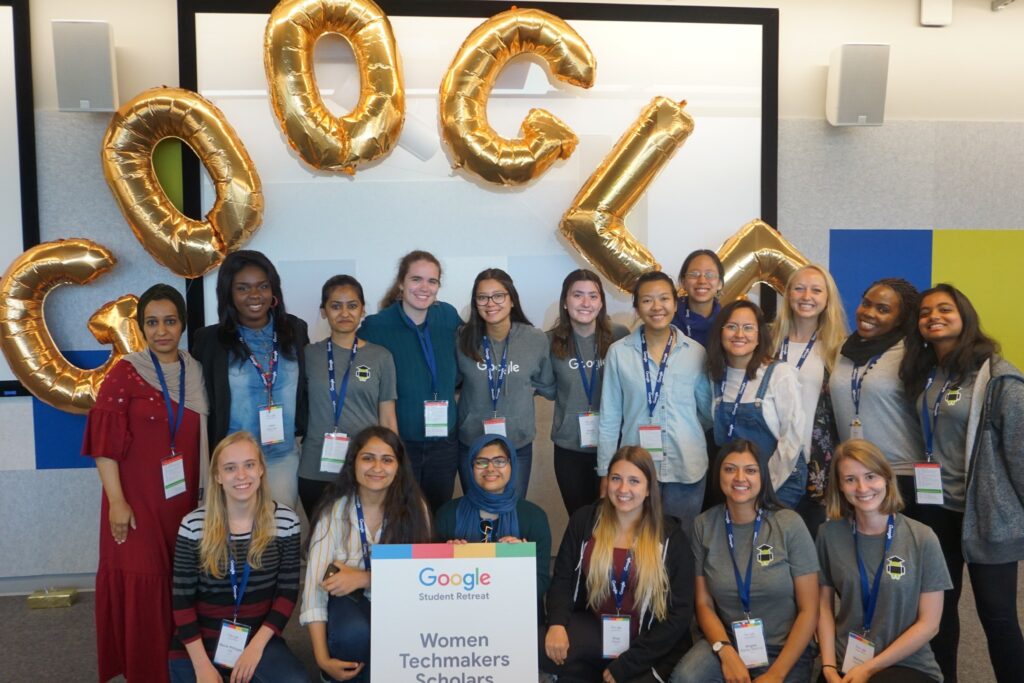
Alasmari attended a Google student retreat where she was part of the “Women Techmakers Scholars” group.
At her university, Alasmari wanted to find a supportive community of women with similar interests and goals, but programming to encourage this among students did not exist. Alasmari says there wasn’t really a reason to spend time on campus except to go to classes—which were separated by gender. “I think at that time the most significant obstacle I encountered was a lack of role models and mentors who could inspire me,” she says, looking back on her time as an undergraduate student.
Now only a few months away from finishing her Ph.D. at UMBC, Alasmari says her experience as a student in Saudi Arabia inspired her to build an online community for women pursuing computer science degrees as a way to facilitate connections and hopefully build paths to mentorship.
In October 2020, the American Association of University Women—one of the world’s oldest leading supporters of graduate women’s education—awarded Alasmari an international fellowship for her work in leading innovative community projects to empower women and girls.
Connections and community
As a master’s student at UMBC, Alasmari found that an important element of the academic experience was being a part of the community and making connections with her peers and instructors.
Alasmari was drawn to UMBC not only for its geographic location near Baltimore and Washington D.C., but also because of the range of courses in computer science, health informatics, and human-centered computing that she could take as a student. UMBC’s proximity to many regional hospitals, federal agencies, and prominent research organizations was also appealing to Alasmari, who was eager to conduct research related to patient care and use of technology.
In 2013 and 2016, Alasmari attended the Grace Hopper Celebration, an annual conference that brings women in tech together for presentations, panels, and professional development events that highlight the contributions of women to computing. She was struck by how valuable the networking opportunities were at these events. Most importantly, it was there that Alasmari learned the organization was looking to expand and establish chapters around the world, including in the Middle East. With her interest piqued, she was inspired to get involved and make a difference where she grew up.
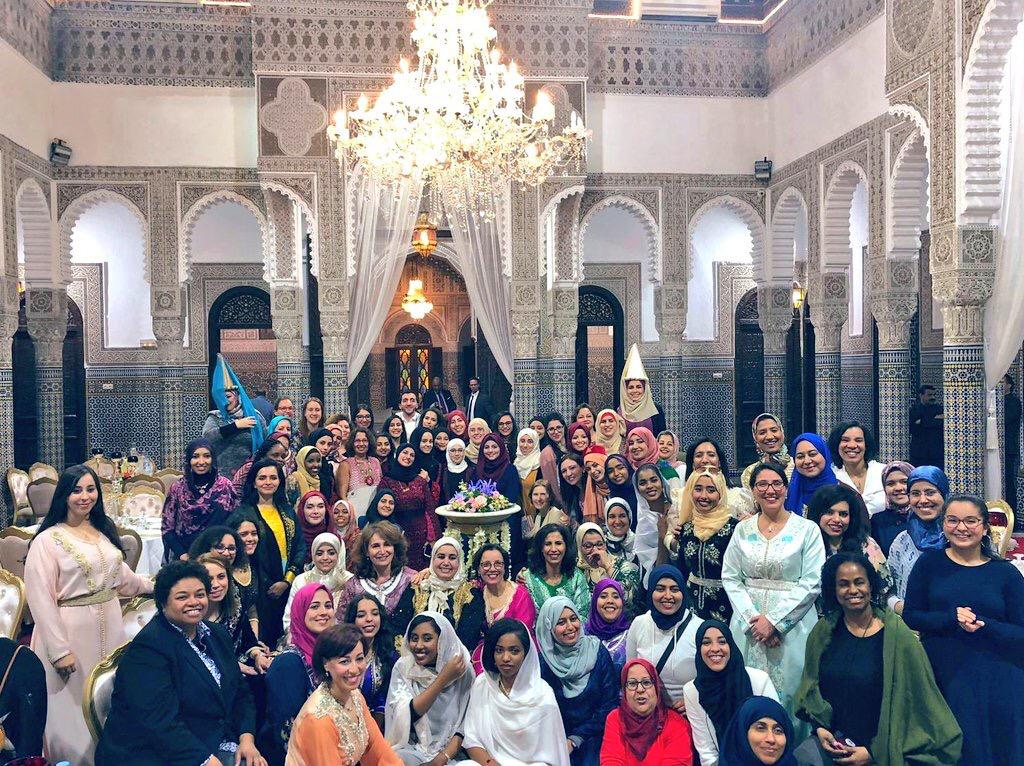
ArabWIC leaders at the 6th ArabWIC conference in Morocco.
Today, Alasmari manages the online Women in Computing in Saudi Arabia community, which is now 3,000 members strong. “I appreciate that I am part of this work,” she says, adding, “I’ve been growing with the community.”
The Women in Computing in Saudi Arabia chapter officially launched in December 2015 with a one-day event at Badir Technology Incubators at King Abdulaziz City for Science and Technology in Riyadh, Saudi Arabia. The event, which Alasmari organized, featured women from academia and industries who shared their experiences and knowledge with attendees.
“Our organization helped to bridge the gap between local context and the international community,” she says, noting that the community provides support to members through funding to attend conferences, and annual meetings highlight the important work being done by women in computing in Saudi Arabia.
Passion for human computer interaction
While Alasmari continues to brainstorm ways to connect women in tech, her dissertation focuses on how people with multiple chronic conditions share information in online health information portals, combining her interest in human computer interaction and information retrieval. “I seek to understand how patients formulate their health-related information needs on online questioning and answering communities such as WebMD and PatientsLikeMe, and what factors significantly contribute to the quality of the information needs,” Alasmari explains, adding that she focuses primarily on kidney disease and COVID-19.
At UMBC, Alasmari is advised by Anita Komlodi, associate professor of information systems (IS) at UMBC, and Lina Zhou, a former IS faculty member who is now at the University of North Carolina at Charlotte. She says that they both provide mentorship to her and give her room to grow as a student. It was under their guidance—the very thing Alasmari was seeking in Saudi Arabia—that she began to understand how leadership and community involvement were integral to the academic experience.
Representation in computing
As a female computer science student at King Khalid University, Alasmari had access to few scholastic resources outside of the classroom. Her only opportunity to access the internet was through one-hour increments she signed up for in advance. But things will be different for the current generation of students—Alasmari has paved the way for change. Her program Women in Computing continues to grow a larger audience, providing mentors and support to women across Saudi Arabia interested in technology.
Alasmari explains that her specific background has helped shape her character, and impacted her path. “Those unique experiences always inspire me and spark my motivation to elevate the status of women in my own country and the entire world,” says Alasmari.
“I hope the community will grow into more collaboration with international and regional tech organizations. I hope for a more inclusive and diverse environment within the field of computing that especially supports the participation of women and underrepresented minorities.”
*****
All images, including header, provided by Ashwag Alasmari.
UMBC’s newest graduates in computing and data science fields include students at all stages in their education and careers. Undergraduates, master’s students seeking to access new career opportunities, and Ph.D. students completing high-impact research have thrived at UMBC. Many cite the university’s strong academics, accessible faculty, research opportunities, and connections across disciplines as drawing them to UMBC. Connections with mentors and communities of support have helped carry them over the finish line to earn their degrees.
Impacting communities through service-learning
Fikir Ejigineh ‘20, information systems, remembers feeling intrigued by UMBC in high school, when she first heard about the university’s living learning communities (LLCs). Before long, she moved into UMBC’s Shriver Center LLC, a residential floor for students committed to civic engagement, service, and community-building.
Fikir Ejigineh. Photo courtesy of The Shriver Center.
As an information systems student focused on community-based problem-solving, she was selected for UMBC’s CoLab program in 2018. Ejigineh formed the Race and Social Justice CoLab with two other students. Together, they worked with new mapping software from UMBC’s Imaging Research Center, creating a 3D space to collect and share the multimedia stories of people living in Baltimore. The purpose of the project was to highlight voices that are oftentimes suppressed by the media’s representation of Baltimore City, Ejigineh explains.
As a France-Merrick Scholar through the Shriver Center, Ejigineh helped develop a creative art contest and leadership day for Baltimore youth that posed the question, ‘How do you envision your community?’. The project was another chance for her to work on a team with students from a broad range of majors. Together, they helped launch a display of youth artwork for the grand opening of OCA Mocha, a coffee shop and community gathering space in downtown Arbutus, founded by UMBC alumni.
Ejigineh has also served as vice-president of UMBC’s Ethiopian-Eritrean Student Association. A cultural organization that aims to support philanthropic causes by hosting annual events like the Awareness Banquet.
After graduation, Ejigineh will work as a business administrator at Alakrity, an IT startup company. In the future, she looks forward to combining her technical skills and creativity by furthering her education in user experience design.
Fikir Ejigineh, third from right, meeting with her CoLabs group and mentors in 2018. Photo by Marlayna Demond ’11 for UMBC.
Her advice to incoming students is to focus not just on excelling in the classroom, but also finding opportunities to connect with students in other fields, and with communities on and off campus. “I’ve had a great UMBC experience because of what I’ve made out of it,” she says. “I would never be where I am now if I hadn’t gotten involved.”
Building connections
As an undergraduate at UMBC, Fabiha Mahmood ‘18, political science, M.P.S. ‘20, cybersecurity, knew that it was important to establish networks right away. “When I was visiting colleges, the one thing that really struck me about UMBC was how close-knit and diverse the community is,” she says. “For me, it’s really important to have interpersonal relationships with my professors.”
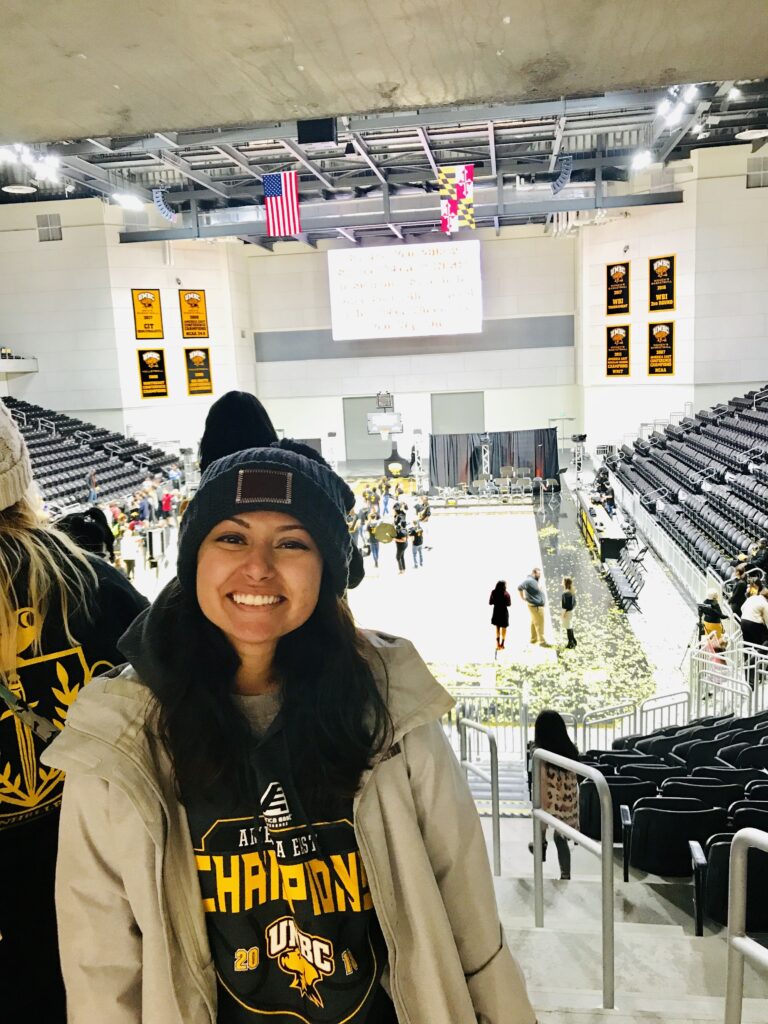
Mahmood at the 16 over 1 UMBC Basketball Celebration in the UMBC Event Center in 2018. Photo courtesy of Mahmood.
Mahmood was undecided about what major to pursue, but after meeting with Eric Brown, a lecturer in the individualized studies program, she was eager to begin a first-year seminar in security studies. “He was so invested in my journey here, and from that first interaction, I knew that UMBC was different,” she shares.
That trend of building close connections in the classroom and across campus continued. Mahmood went on to support UMBC students as a resident assistant and president of UMBC’s Panhellenic Association.
After completing her bachelor’s degree, Mahmood found that she was interested in careers that required technical skills that she didn’t yet have. She identified UMBC’s cybersecurity M.P.S. program as a strong complement to her political science degree.
In January 2020, Mahmood joined Residential Life again, this time as a graduate assistant, where she supervised resident assistants, and began a “whirlwind of a semester” in her new program. While she had no idea that the experience would involve a pandemic, she says that her mentors in Residential Life helped her stay motivated and feel connected when many things moved online. “I could tell that they genuinely cared about me, and can confidently say that I wouldn’t have gotten that anywhere else,” she says.
Fabiha Mahmood, second from right in front row, at the Division of Student Affairs Holiday Party in 2019. Photo courtesy of Mahmood.
Mahmood plans to pursue a career as an intelligence analyst, combining her knowledge of political science and cybersecurity.
Opening doors in a high-demand field
Like Mahmood, Matthew Griff ‘17, mathematics, M.P.S. ‘20, data science, also found a UMBC master’s program to complement his undergraduate degree and open up doors in a high-demand field. After earning his bachelor’s degree, Griff completed a finance internship at the American Psychological Association. A master’s in data science was his “logical next step”—helping him explore impactful ways to apply knowledge from his mathematics courses.
Griff has enjoyed connecting with the data science program’s accessible faculty. He shares that Ergun Simsek, professor of practice and graduate program director for data science, was easy to approach and has served as a mentor for him. Building this one-on-one connection has helped him feel prepared for his next steps.
How tech impacts lives
William Easley took his first course on human-computer interaction as a curious undergraduate at UMBC. Ravi Kuber, associate professor of information systems, piqued his interest in how technology impacts peoples lives, particularly for people with disabilities. Easley, who has a visual impairment, went on to complete an M.S. in human-centered computing in 2015, and is now earning his Ph.D. in the field.
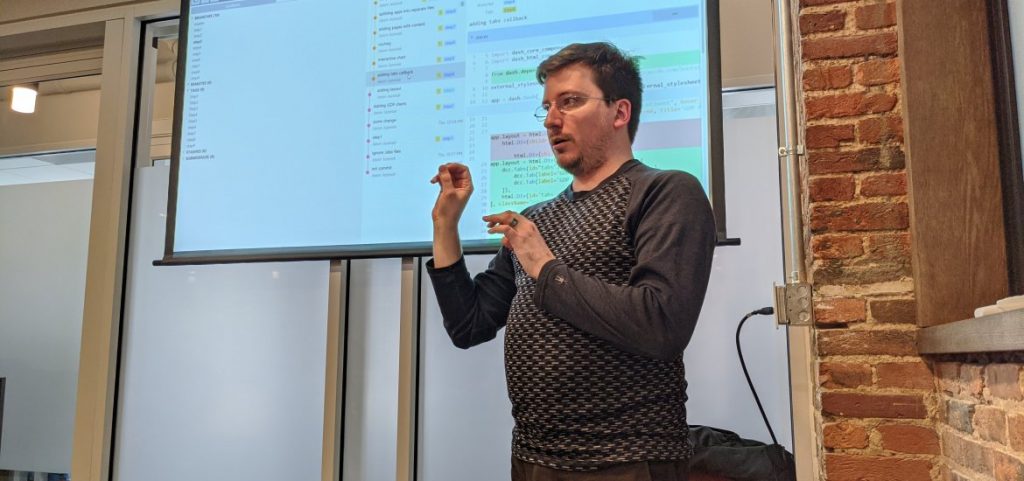
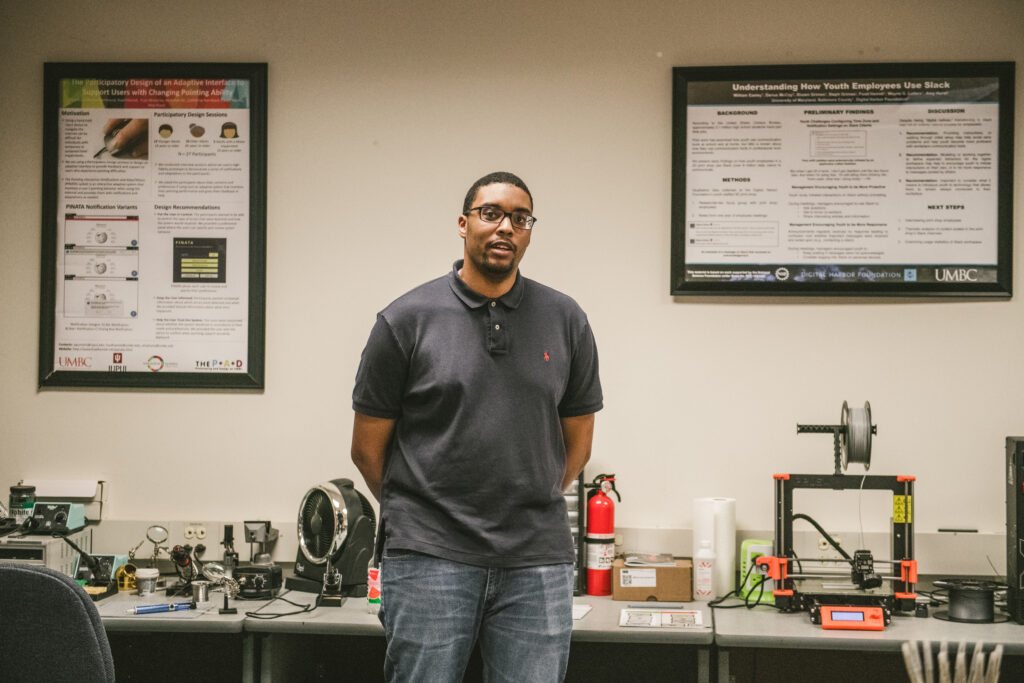
William Easley talking about his work at event introducing UMBC’s User Studies Lab in January 2020. Photo by Britney Clause ’11.
Easley loves that as a researcher he is now on the cutting edge of “creating knowledge.” “The idea of designing and building technologies to help people with disabilities is super exciting to me. It’s something that’s worthwhile and meaningful,” he explains.
But Easley wasn’t always aware of the opportunities available to him through research. He recalls how much it meant to him as an undergraduate when mentors encouraged him to get involved with research and pursue his master’s degree. They included leaders like UMBC President Freeman Hrabowski and Renetta Tull, former associate vice provost for strategic initiatives at UMBC.
3D print shop creates opportunity
As a master’s student, Easley connected with Amy Hurst, former associate professor of information systems at UMBC, known for her high-impact community-engaged research. Hurst worked with the Digital Harbor Foundation’s 3D print shop in Baltimore City, helping youth develop technical skills that would serve them in future careers.
That experience and the connections he built over the years encouraged Easley to stay at UMBC to pursue his Ph.D. His work with youth at Digital Harbor became three years of dissertation research. Two youth from the first group continued to work in the print shop for all three years and took on more senior roles. Eventually, one of the youth became the shop manager, which Easley was excited about.
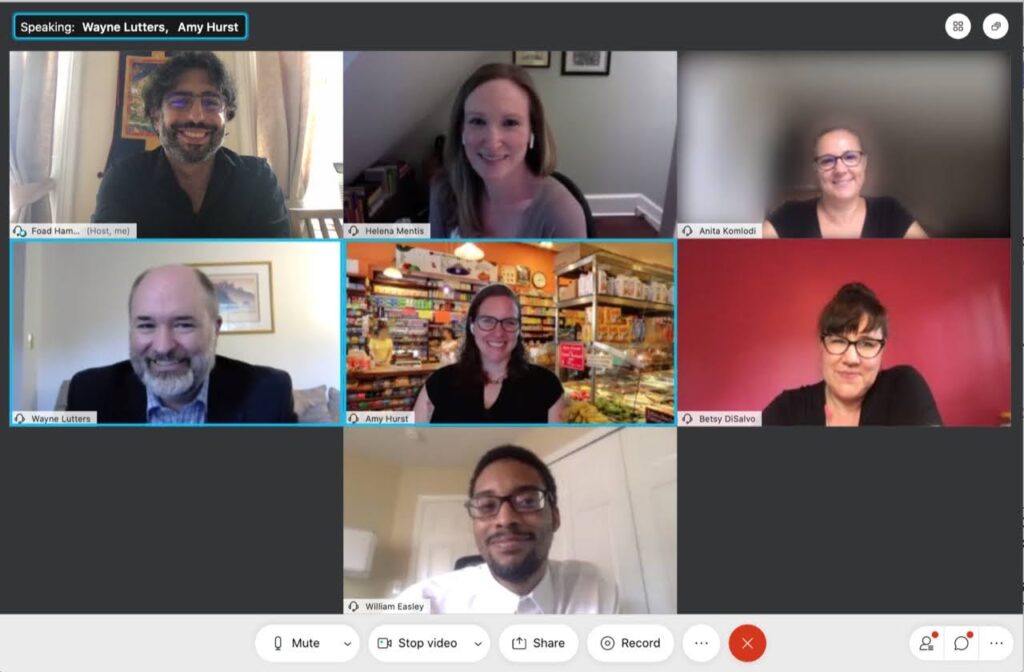
William Easley, bottom center square, with his dissertation committee after he defended his dissertation in September 2020. Photo courtesy of Easley.
Throughout his time at UMBC, Easley says that support from faculty was important to his development as a researcher. Hurst helped him find opportunities to travel to present his research and connected him with fellow researchers in human-centered computing. Easley also worked closely with Helena Mentis, associate professor of information systems, and associate dean in the College of Engineering and Information Technology. Mentis and Foad Hamidi, assistant professor of information systems, were Easley’s co-advisors for his dissertation.
“Everyone that I worked with played a big role in helping me get to the finish line,” he says.
The COVID-19 pandemic shifted Easley’s final months at UMBC. He successfully defended his dissertation virtually in September, and interviewed and accepted a job as a human factors design engineer at Apple, and is currently working remotely.
Banner image: William Easley works with youth in the makerspace at the Digital Harbor Foundation in 2017. Photo by Marlayna Demond ’11 for UMBC.
This fall, the student-organized TEDxUMBC gave ten speakers the opportunity to share their stories, experiences, and expertise with the world. Surprisingly, the theme, “Unmasking Uncertainty,” was actually conceived far before COVID-19 surged globally.
Tirzah Khan ‘20, information systems, led the TEDxUMBC team in organizing the event. When the planning committee chose their theme, she says, they did not anticipate the global pandemic, the resurgence in demands for racial justice, and a divisive election. “In these unprecedented circumstances, TEDxUMBC seeks to provide answers and build community,” Khan reflects.
A bumpy road to study in the U.S.
One of the speakers was Sahara Ali, Ph.D.‘26, information systems. She shared her path from Pakistan to the United States for graduate study and explained how it changed the way she approaches challenges.
Sahara Ali. Photo courtesy of Ali.
At age 21, Ali had graduated with her bachelor’s degree in computer science in Pakistan. She was eager to begin pursuing her Ph.D. at UMBC and to marry her U.S.-based fiancé. But it took over a year for Ali to obtain her visa from the U.S. Embassy. The delay changed her marriage plans and she feared it would make international graduate study impossible as well.
Facing a long and uncertain wait, Ali dedicated herself to her work in Pakistan. But just days after deciding to move on, she received her visa. She had to start over with her U.S. plans, rethinking how she would get to Maryland, where she would live, and what the experience would be like.
Ali says this situation taught her about her resilience and using creativity to work through unexpected obstacles. “Uncertainty can lead to something exciting, something innovative,” she shared, even if it means learning something “in an unconventional way.”
Today, Ali is pursuing her Ph.D. in information systems full-time at UMBC. She is working alongside Jianwu Wang, assistant professor of information systems, and collaborating with NASA scientists to study the causal effects of climate change.
Moving theater to a virtual space
Asif Majid ‘13, interdisciplinary studies, shared his passion for community theater and how he has adjusted his work (which previously depended on live, in-person audiences) to fit online formats.
Asif Majid. Photo courtesy of Majid.
Majid works at the intersection of Islam, media, marginality, and politics, and develops plays that focus on stories of racially and religiously marginalized communities. His TEDxUMBC talk took the audience back to the second week of March, when the COVID-19 pandemic first began impacting nearly every aspect of life.
At the time, Majid was in the final stages of producing a new play with a theater in Washington, D.C. Work had been underway since July 2019, and the show was scheduled to debut in front of an audience for the first time at the end of March 2020.
Majid was living with his older family members and became quite concerned that continuing to work in face-to-face settings could put his family members at risk. He decided that while the show needed to go on, it had to move to an online space.
In collaboration with the creative team, Majid figured out how the actors could perform from their own homes, and how attendees could watch the play remotely from around the world. “Over the course of two weeks, we learned about new technologies, rehearsed the tech to performance, and developed a new approach to making theater,” he said.
Ultimately, the performance attracted nearly eight times the number of people who would typically see a show in one night, and people tuned in from 18 countries.
Moving forward in uncertain times
Also featured in the event was Evangeline Kirigua ‘21, political science, who discussed the importance of empowering foreign-born nationals to engage in their communities without being able to vote. Haleemat Adekoya ‘23, political science, talked about being present in the moment, and how to face “what ifs” that can cause fear and uncertainty. Karis Barnett ‘21, chemistry, shared how to identify and address your internal critic to discover self-worth.
Other speakers gave a window into different fields. John Hebeler, a part-time lecturer in information systems, spoke about machine learning, including the impact that it is having on people now and will continue to have in the future. Maryam Elhabashy ‘21, anthropology, discussed the challenges around integrating ethnic studies into school curricula, and how attempts to celebrate diversity may inadvertently lead to otherization. Mike Spano ‘21, psychology, talked about theories related to sleep and dreams, and how to mold your dreams into reality.
Like Ali and Majid, speakers reflected on personal experiences. Rojin Najmabadi ‘21, biological sciences, discussed the decision to invest in herself on her path to success, even when that decision went against how she was raised by her family. Zareen Taj, Ph.D. ‘26, language, literacy, and culture, shared her personal story of empowerment and achievement as an Afghani woman who grew up in refugee camps.
Tess McRae ‘21, individualized studies, concluded the event by encouraging attendees to use the lessons and insights shared by the presenters in their own lives. The event coordinators plan to share the event recording on the TEDx YouTube channel so that the presenters’ messages can continue to be shared.
Banner image: UMBC’s campus in the fall. Photo by Marlayna Demond ’11 for UMBC.
Six student groups recently vied for the top prize in UMBC’s annual Idea Competition, presenting to a panel of alumni judges their innovative solutions to everyday challenges. The competition, hosted by UMBC’s Alex. Brown Center for Entrepreneurship, was held virtually for the first time due to the COVID-19 pandemic. This year’s winning ideas focused on physical and mental health and the environment.
“Even though we had to miss the excitement of an in-person competition this year, it was very important to hold the event to give our students the opportunity to showcase their creative ideas and get feedback from experienced entrepreneurs,” said Vivian Armor ‘73, American studies, director of the Alex. Brown Center for Entrepreneurship.
Vivian Armor. Photo by Marlayna Demond ’11 for UMBC.
Connection between physical and mental health
Yvann Tientcheu ‘21, information systems, and his collaborators earned first place in the competition for Strive, an app designed to support physical and mental health and wellbeing. The concept for Strive (currently a web-based demo) is that users can enter a simple sentence about their mood. The sentence is run through IBM Watson, a highly robust artificial intelligence system, to assess the person’s current mood. The app then provides the person with a specific workout that aligns with their mood.
Tientcheu explains that the app seeks to move past one-size-fits-all solutions by flexibly responding to how a user feels at a given moment. It will also allow users to connect with each other and build community, he notes, which can be important for sustaining health practices.
Beyond individual users, “Our target market is the medical community,” Tientcheu said in his presentation. “We’re hoping to provide [healthcare providers] with a constant, continuously updated steam of data that shows the connection between [patients’] mental and physical health.”
“Strive was initially planned as a tool to share mental health resources to deal with the mental exhaustion caused by COVID-19,” explains Tientcheu. “As the idea evolved, we realized that there would come a time where the pandemic would be over, that most adults don’t get the recommended amount of exercise, and that physical fitness seems to be linked to mental health. We decided to refocus on offering a brand new service that catered to both physical and mental health.”
Tientcheu describes the project as “something we felt had more long-term viability, and a usefulness that would never be outlived if the idea were properly executed.”
Growth companion
The second place winners, and recipients of the Best Presentation award, were Andrew Park ‘21, interdisciplinary studies, and Tristan King ‘21, interdisciplinary studies, for their idea Sproutful. Park and King are passionate about digital technology, and were inspired to create a unique and whimsical way for people to find healthy coping mechanisms and to prioritize mental health during the COVID-19 pandemic.
The Sproutful System includes a plant container outfitted with sensors that transmit to a phone app, which also features daily guided meditations. The idea is that a person will care for themselves and their plant in a daily meditative practice that is both relaxing and rewarding.
The app guides a user through a meditation and, at the conclusion of the meditation, the app prompts the user to water their plant with the push of a button. Sensors on the plant container monitor water levels in the soil and a water reservoir, and prevent the plant from being overwatered.
“Sproutful is your very own personal meditation and growth companion,” Park explained to the judges. The app “creates a powerful connection between nature and your living space,” said King. “As you grow in your meditation habits, your new plant grows alongside you.”
Looking out for the planet
Robin Paranilam ‘22, computer engineering, presented Terra, which earned third place in the competition. Many people want to protect the environment but don’t know the positive steps they can take, he said. “Terra is an app that acts as a one-stop-shop for eco-friendly living,” he explained. It offers personalized actions that each user can take to protect the world around them.
The Terra app focuses on four aspects of protecting the environment: alternative energy, sustainable living, reducing carbon footprints, and eco-friendly eating. Each category provides tips and resources that people can use to be mindful of how their actions impact the planet. The Terra app will not only tailor resources for individual users, but also will encourage them to connect with other nearby users to make a collective impact.
“The fact that the winning ideas focused on well-being, community, relationships, and the environment shows how much our students care about others and the world around them,” says Armor, “and how much they want to make a difference.”
The winning group received $750 to continue to develop their idea, and the second and third place groups received $500 and $250, respectively. The team that received the Best Presentation award received $250. Each spring, the Alex. Brown Center for Entrepreneurship hosts the Cangialosi Business Innovation Competition.
Banner image: UMBC’s campus in the fall. Photo by Marlayna Demond ‘11 for UMBC.
More than 1,000 students from institutions across the country and around the world—from as far away as Kazakhstan, Albania, Spain, and Nigeria—logged onto their computers for a 36-hour hackathon organized by UMBC students, November 13-15.
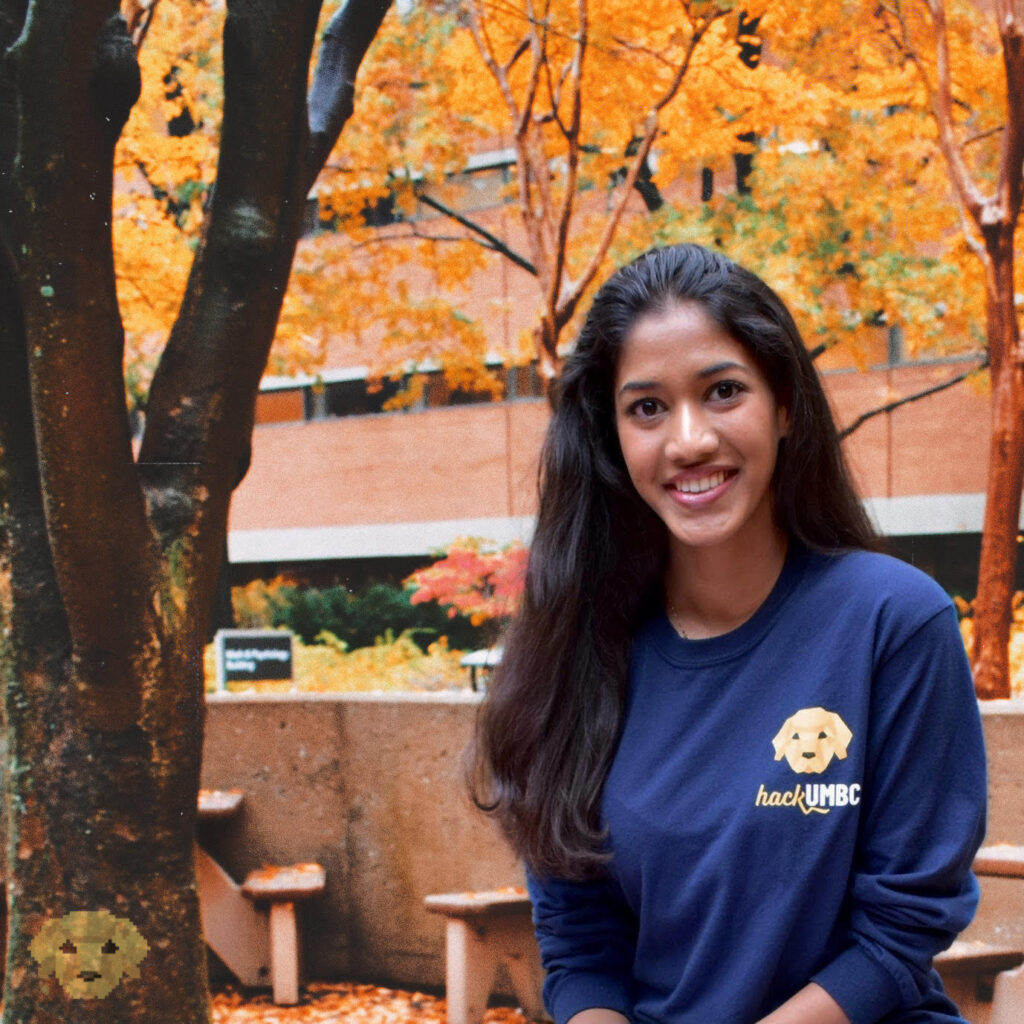
HackUMBC’s events typically draw huge crowds overflowing conference spaces. This year, the event was held virtually for the first time due to COVID-19. HackUMBC President Anuhya Challagundla ‘21, information systems, says that she was pleased to see participation remain so strong.
Anuhya Challagundla. Photo courtesy of Challagundla.
Challagundla explains that the HackUMBC team was able to connect participants with each other through the HackUMBC Discord channel launched the week before the event. There, they formed teams and discussed ideas for hacks under the themes of connection, healthcare, education, equity, and hobbies (as well as a general track to allow for limitless creativity).
Collaboration in virtual environments
Participants developed web, mobile, desktop, and hardware projects. While independent participants were allowed, students were encouraged to form teams of 2-4 people to make it a collaborative experience.
Perry Vinner ’21, information systems, an organizer on the HackUMBC team, created a virtual campus that was based on UMBC in the Gather.Town platform. The virtual UMBC featured tents and other spaces that allowed participants to move from one place to another easily. Over the course of the weekend, approximately 2,700 viewers tuned in to experience a livestream of the online event.
The event also featured an interactive online space to access resources and event elements beyond the competition, including a career fair, a hallmark of HackUMBC.
Innovative spirit
HackUMBC alumni judged entries based on 3-minute videos that each team submitted. They evaluated the projects’ creativity, technical difficulty, usefulness, and professional “polish.” The judges were able to speak directly with their top three teams to learn more about the hacks that they created and to determine the winners of each category.
A team of UMBC students developed Office Hour Bot, a streamlined way to hold online office hours when face-to-face meetings are not possible. The bot, which was created using Discord, allows people to take on various roles within the platform, like professor, teaching assistant, and student. Office Hour Bot allows faculty and teaching assistants to open and close their office hours, and prioritizes students in the queue depending on a range of criteria. It also prevents students not in a course from joining the office hours designated for that course.
Another student team developed a video calling platform that matches people into group calls in real-time. The Dinner for 4 Strangers app matches individuals based on mutual interests and allows them to connect via video calls. The app provides participants with prompts and ideas to guide conversations, as a way to establish connections and have meaningful interactions with each other. Creators of the app how it will help users combat loneliness and isolation, especially during the COVID-19 pandemic.
A third hack the judges recognized was Expen, a budgeting app that allows users to track and chart their income and expenses. Expen also allows users to scan barcodes of items, rather than having to manually enter product details, and to search for items that are already in the system.
Unique prize for collaboration tech
T. Rowe Price, one of HackUMBC’s top sponsors, invited students to develop a hack that addressed the theme of collaboration technology. Each member of the winning team in this category would receive a unique prize: a chance to connect with a professional in their field.
The Best Use of Collaboration Technology prize went to the Office Hour Bot team, including Gabby Khan ‘22, computer science; Oliver Dininno ‘22, computer science; and Eddie Nieberding ‘22, computer science. T. Rowe Price representatives had an opportunity to meet with Khan, Dininno, and Nieberding to learn about Office Hours Bot during HackUMBC. In early 2021, the company will schedule a personalized virtual meeting for each student with a member of their Technology Management Committee, based on areas of interest.
Benefits of hybrid event
Thanks to the student organizers’ innovative spirit and ability to pivot to an online format, Challagundla says, “It was a super fun and exciting event.” It also had unexpected benefits, allowing more students to participate and to establish connections with companies, regardless of where they or those employers were located.
Even if the event can be in person next year, she says, it will likely be a hybrid event to replicate the most valuable elements of the online format.
Banner image: The virtual UMBC town that the HackUMBC organizers created online.