We use cookies for analytics and, unless you opt out, advertising.
You can opt out of advertising at any time.UMBC uses essential cookies to run this site. With your permission we would also use analytics cookies (to understand how the site is used) and advertising cookies (to measure and target our ads on other platforms). Nothing else loads unless you accept. You can change your choice any time from Cookie Settings in the footer.Privacy Policy
EssentialRequired for the site to work (login, security, your cookie choice). Always on.
Joshua Slaughter ‘22, M30, has received the Marshall Scholarship, becoming the second student in UMBC history and the first in 29 years to be selected for the prestigious award. Slaughter is one 41 American students selected this year from institutions across the country for the Marshall Scholarship, which supports graduate study at institutions in the United Kingdom. He was also a finalist for the Rhodes Scholarship.
Slaughter, who is earning his degree in computer engineering, will pursue his Ph.D. in informatics at the University of Edinburgh. His goal is to advance equity in the developing field of personalized medicine.
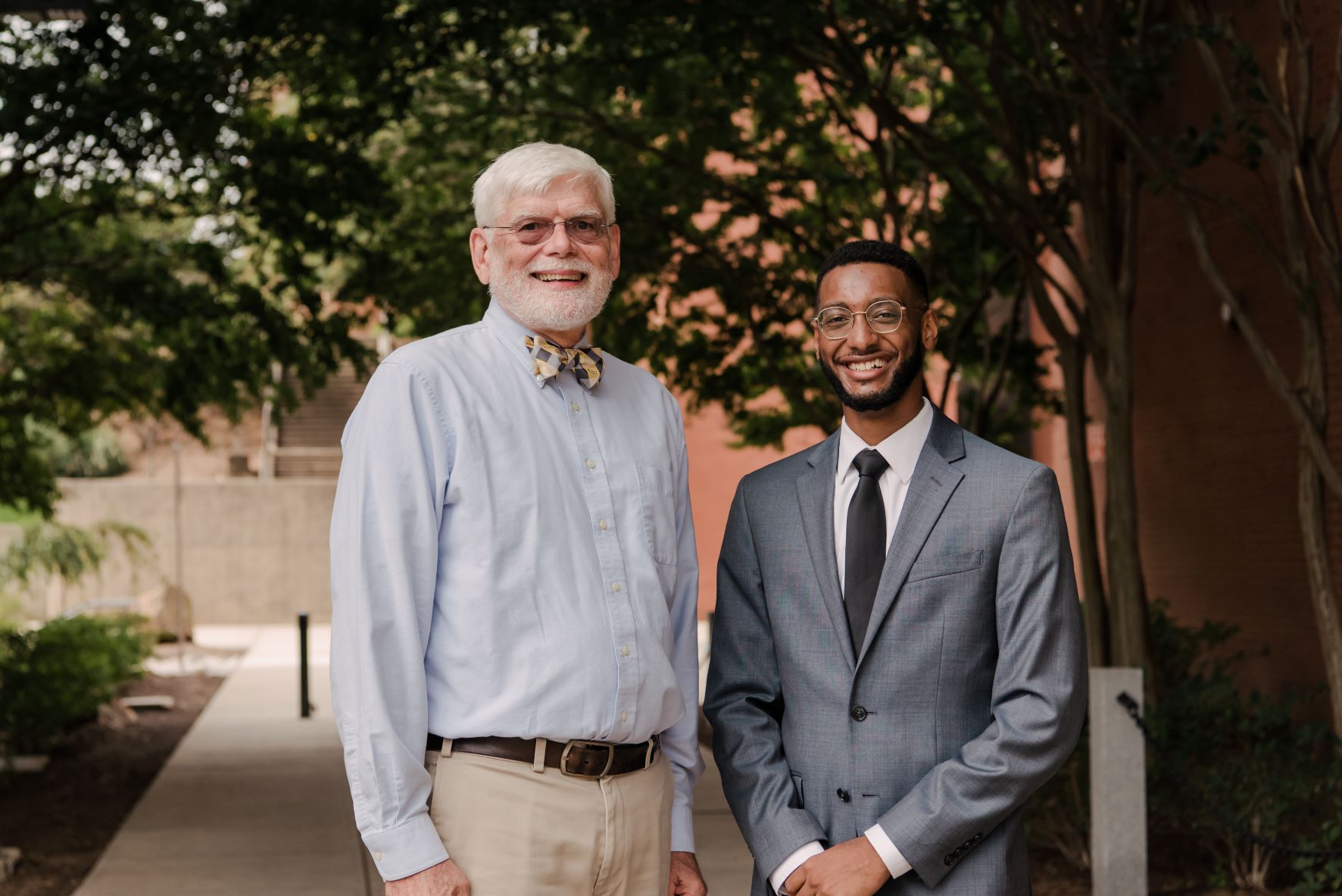
Joshua Slaughter with mentor Chuck LaBerge.
Applying for the Marshall and Rhodes Scholarships is something that Slaughter has had his eye on since he arrived at UMBC. The Marshall Scholarship aims to produce global change-makers who use their education to improve society. Becoming a finalist for the Marshall and Rhodes, and then being named a Marshall Scholarship recipient, has been “a dream come true,” he says, because his selection has affirmed that he can truly have a global impact.
“I am incredibly proud that, in the past four years, UMBC has produced finalists and awardees in some of the most competitive and prestigious international scholars programs, including both the Marshall and Rhodes,” says UMBC President Freeman Hrabowski. “Our rise on the global stage is continuing at a rapid pace thanks to our exceptional students, and the caring faculty and staff who support them.”
Support from students who have been there
One of the first things that Slaughter did when he found out that he was finalist for both awards was to text Naomi Mburu ‘18, M26, chemical engineering, who was the first UMBC student to be named a Rhodes Scholar. While Mburu was not allowed to offer guidance during the interview processes, she did offer more general words of encouragement.
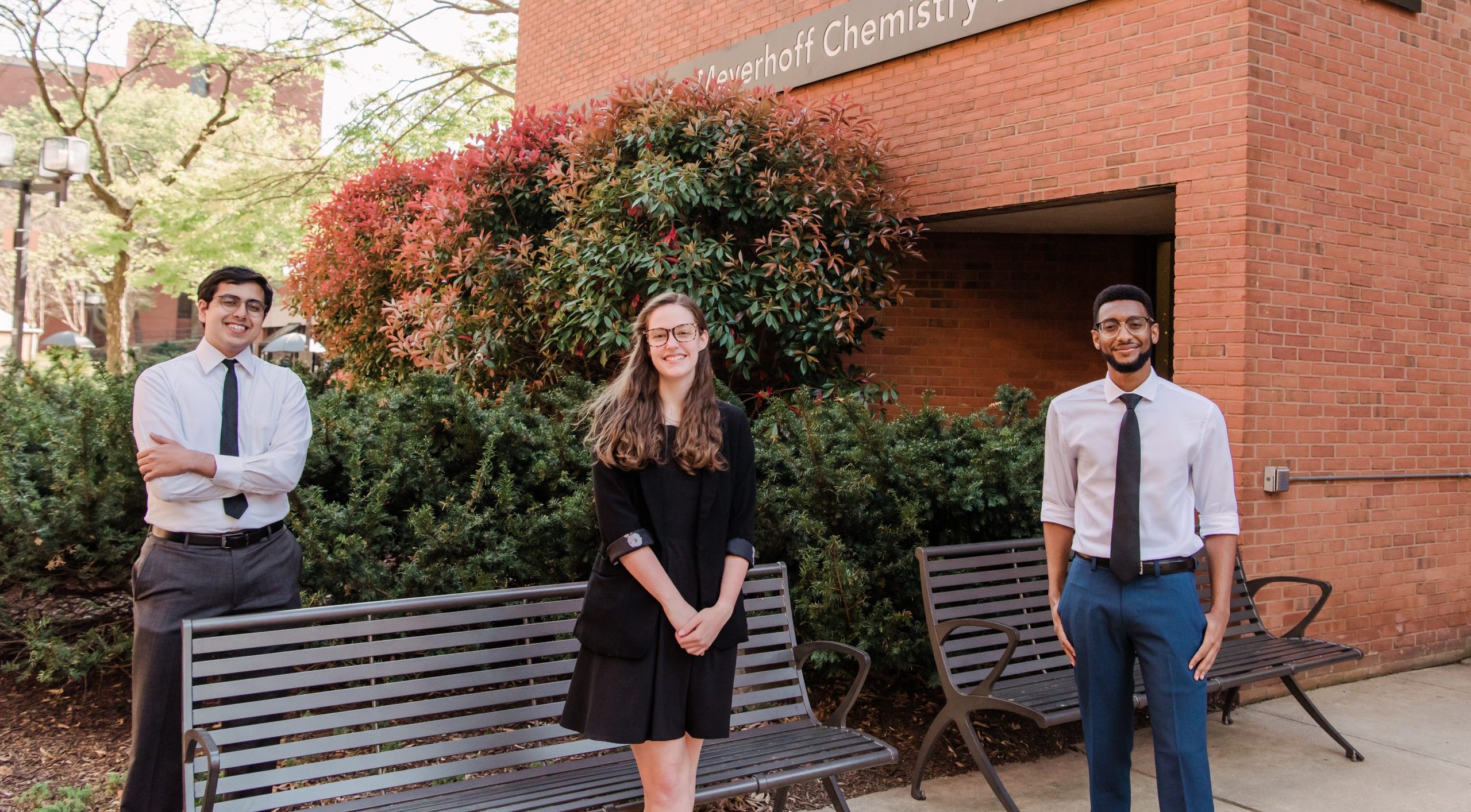
Joshua Slaughter, right, with his fellow Goldwater Scholarship recipients Karan Luthria, left, and Kaitlynn Lilly, center.
“It is exciting to see the great strides UMBC has been making all over the world in recent years,” says Mburu. “Slaughter is an amazing and dedicated student who I had the pleasure of mentoring through Meyerhoff Summer Bridge, the Goldwater Scholarship, and now the Rhodes and Marshall interviews. I look forward to welcoming him to the UK next fall.”
Slaughter has also received encouragement and support from Sam Patterson ‘21, M29, mathematics, statistics, and economics. Last year, Patterson became UMBC’s second Rhodes Scholar. He is currently pursuing his interest in transportation equity at Oxford.
Opportunities to grow
In addition to being a Meyerhoff Scholar, Slaughter is a member of the UMBC Honors College and the U-RISE program, an undergraduate research program that prepares students from underrepresented groups to pursue a Ph.D. in the biomedical sciences. He is the president of UMBC’s chapter of the National Society of Black Engineers, and Tau Beta Pi, the honors society for engineering students.
Earlier this year, Slaughter was one of four UMBC students named Goldwater Scholars. The goal of the Barry Goldwater Scholarship and Excellence in Education Program is to provide the United States with “a continuing source of highly qualified scientists, mathematicians, and engineers” to move the nation forward.
Learning to research from researchers
At UMBC, Slaughter conducts research with Distinguished University Professor Tulay Adali, computer science and electrical engineering (CSEE). They study machine learning applications in fields such as neuroimaging, which uses data-driven algorithms to identify features of neurological disease.
Slaughter explains that it’s essential to diversify the field of machine learning. People of all backgrounds need to be involved in the development of algorithms, he says, to help produce algorithms that reflect the diversity of society and have equitable impacts.
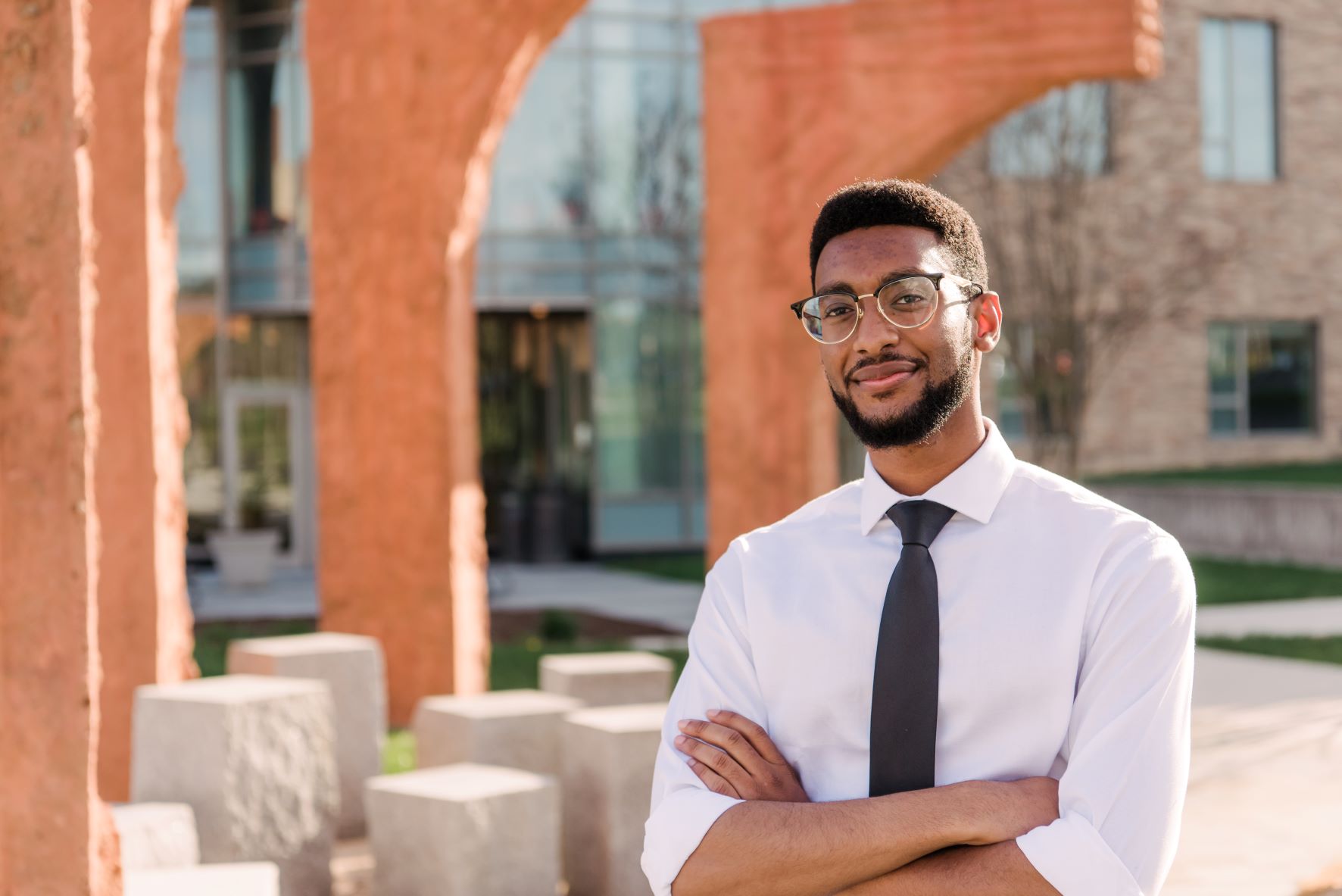
Joshua Slaughter.
In addition to conducting research at UMBC, Slaughter has completed research internships at Princeton University and Carnegie Mellon University, presented research at national conferences, and published two scientific papers.
His interest in research began when he was in high school. Slaughter connected with UMBC’s Matthew Fagan, assistant professor of geography and environmental systems, and began working in his lab several hours each week. While the focus of Slaughter’s research has shifted to computing, he says that Fagan provided important support that allowed him to see the impact that research can have on various communities.
When Slaughter came to UMBC, he took a class taught by Chuck LaBerge, professor of practice in CSEE. LaBerge went on to become one of Slaughter’s biggest supporters and mentors. He encouraged Slaughter and his classmates to examine real-world problems and envision success in engineering as using their skills and knowledge to create change in the world.
Research with public impact
April Householder, director of undergraduate research and prestigious scholarships, says that UMBC students’ success with earning prestigious international scholarships is inspiring for many reasons, but she is particularly excited that there is now a community of Retrievers pursuing graduate studies in the U.K. who can be there for each other. “Mburu, Patterson, and Slaughter are sharing this experience together, and supporting one another at the next level,” she says.
Householder also notes that, like UMBC’s prior prestigious scholarship winners, Slaughter cares deeply about UMBC’s values of equity and of inclusive excellence. “Slaughter is committed to changing computational methods to improve healthcare, particularly in underserved populations,” she notes. “He is a deep critical thinker, and he examines how asking questions about identities like race, gender, and class can help combat the biases inherent in biomedical research.”
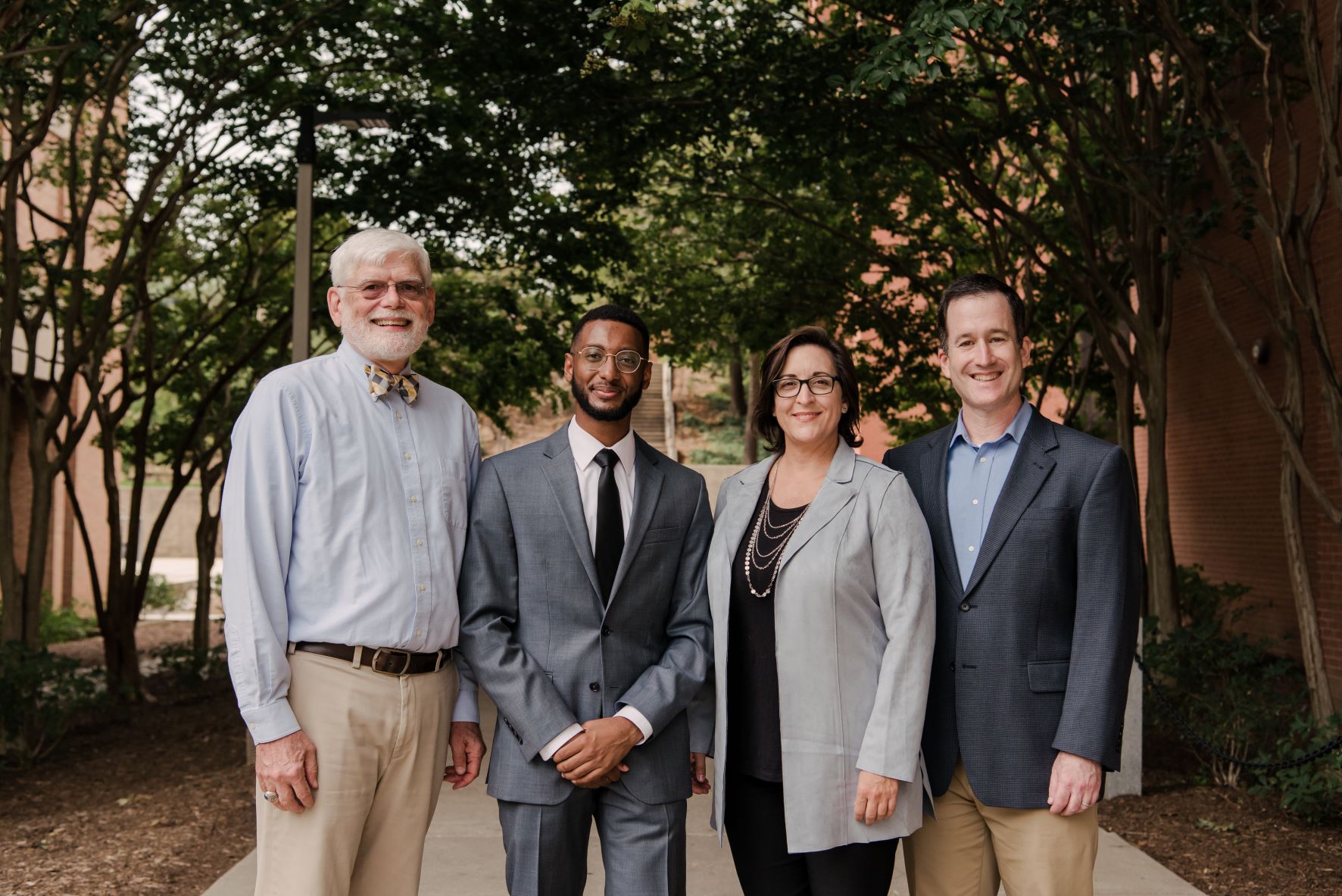
Slaughter with mentors Chuck LaBerge, April Householder, and David Hoffman.
Looking ahead, Slaughter is eager to get to the University of Edinburgh, but he says that UMBC has played an essential role in his journey. “Receiving the Marshall is a testament to all of the people who have come before me, and the amazing support group and environment that UMBC is. The support at UMBC is unmatched,” Slaughter says.
“I don’t think I could have done this anywhere else,” he shares. “It speaks volumes to the inclusive community that UMBC has fostered over the past 30 years.”
Banner image: Joshua Slaughter. All photos by Marlayna Demond ’11 for UMBC.
When a person experiences a trauma that leads to significant bleeding, the first few minutes are critical. It’s important that they receive intravenous medication quickly to control the bleeding, but delivering the medication at the right rate can prove challenging. Slower infusions can cause fewer negative reactions, but the medication might not work fast enough, particularly in the case of a serious trauma.
Four UMBC researchers have developed a unique way of modifying the surfaces of nanoparticles within these life-saving medications to provide infusions that can be delivered more quickly, but with a reduced risk of negative reactions. Infusion reactions can cause a range of symptoms, such as rashes and inflammatory responses. This can include anaphylaxis, a life-threatening respiratory failure. Up until this point, the seriousness of these reactions has limited the use of promising nanomedicines, and reducing the likelihood of adverse reactions could be game-changing.
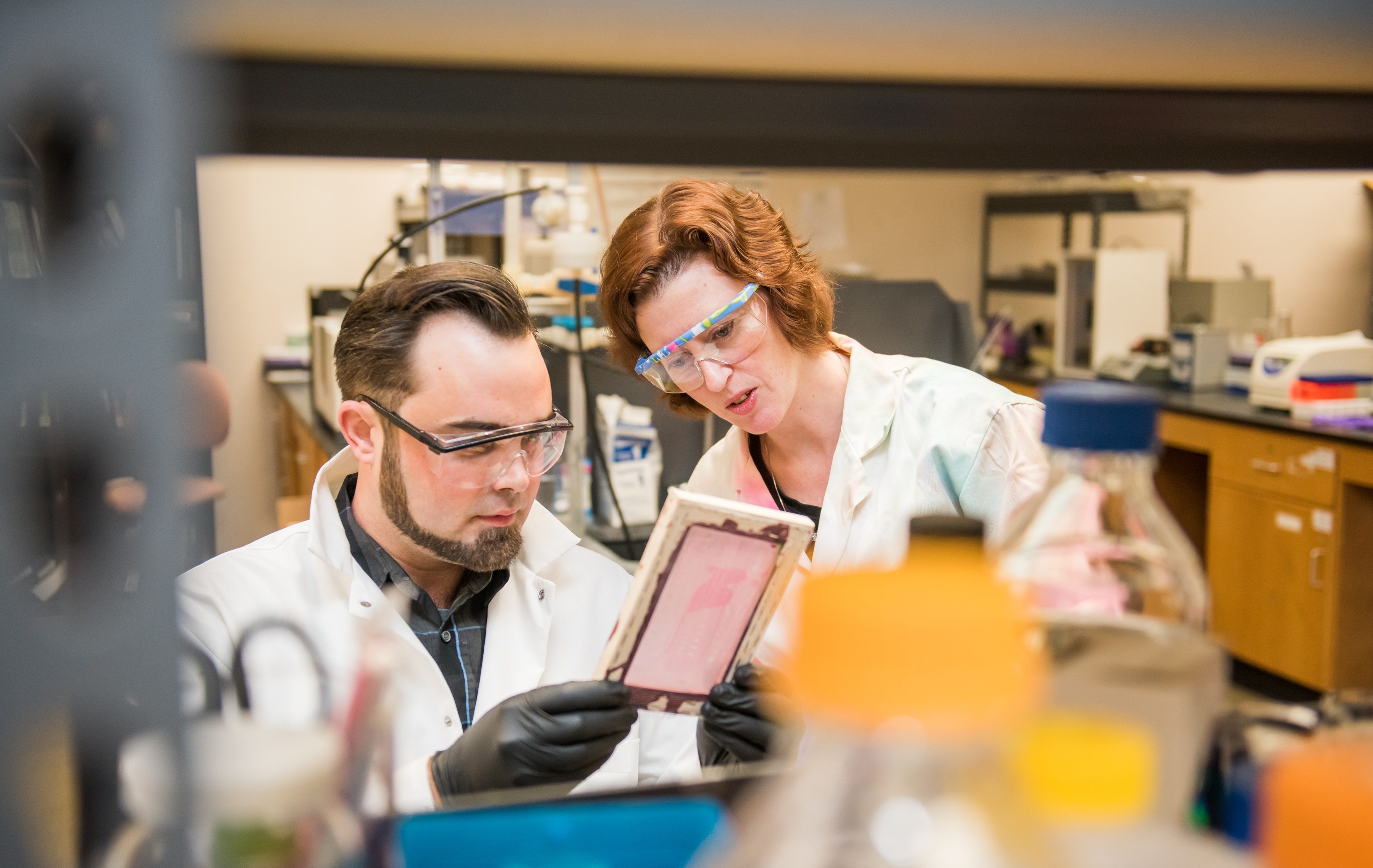
Erin Lavik (right) working in the lab with a student in 2018.
The core of the issue
In a paper recently published in Nano Letters, Erin Lavik, professor of chemical, biochemical, and environmental engineering; Chuck Bieberich, professor of biological sciences; Nuzhat Maisha, Ph.D. ‘21, chemical engineering; and Michael Rubenstein, M.S. ‘14, Ph.D. ‘22, biological sciences, discuss their novel approach to the research. They focused on the core material of the nanoparticles delivered to patients.
“We found that using a polyurethane core reduced the markers associated with infusion reactions,” explains Lavik, who is also the associate dean for research and faculty development in UMBC’s College of Engineering and Information Technology.
Currently, 7% of people experience infusion reactions, the authors note in their paper. “These reactions…limit the treatments available in a substantial portion of patients,” they explain.
Chuck Bieberich.
“We, like most of the field, have spent a lot of time trying to modify the surfaces of nanoparticles to modulate the reaction,” says Lavik. She shares that while that approach does help to a degree, going a step further by changing the core material appears to have a greater impact.
The research conducted by Lavik, Bieberich, and their colleagues lays the groundwork for future testing of preclinical models using nanocapsules to stop internal bleeding. Lavik explains that collaboration was an important element of this work, especially being able to conduct the research in UMBC’s Interdisciplinary Life Sciences Building.
The ILSB (at left) in the fall.
Banner image: Erin Lavik, left, working in the lab in 2018. All photos by Marlayna Demond ’11 for UMBC.
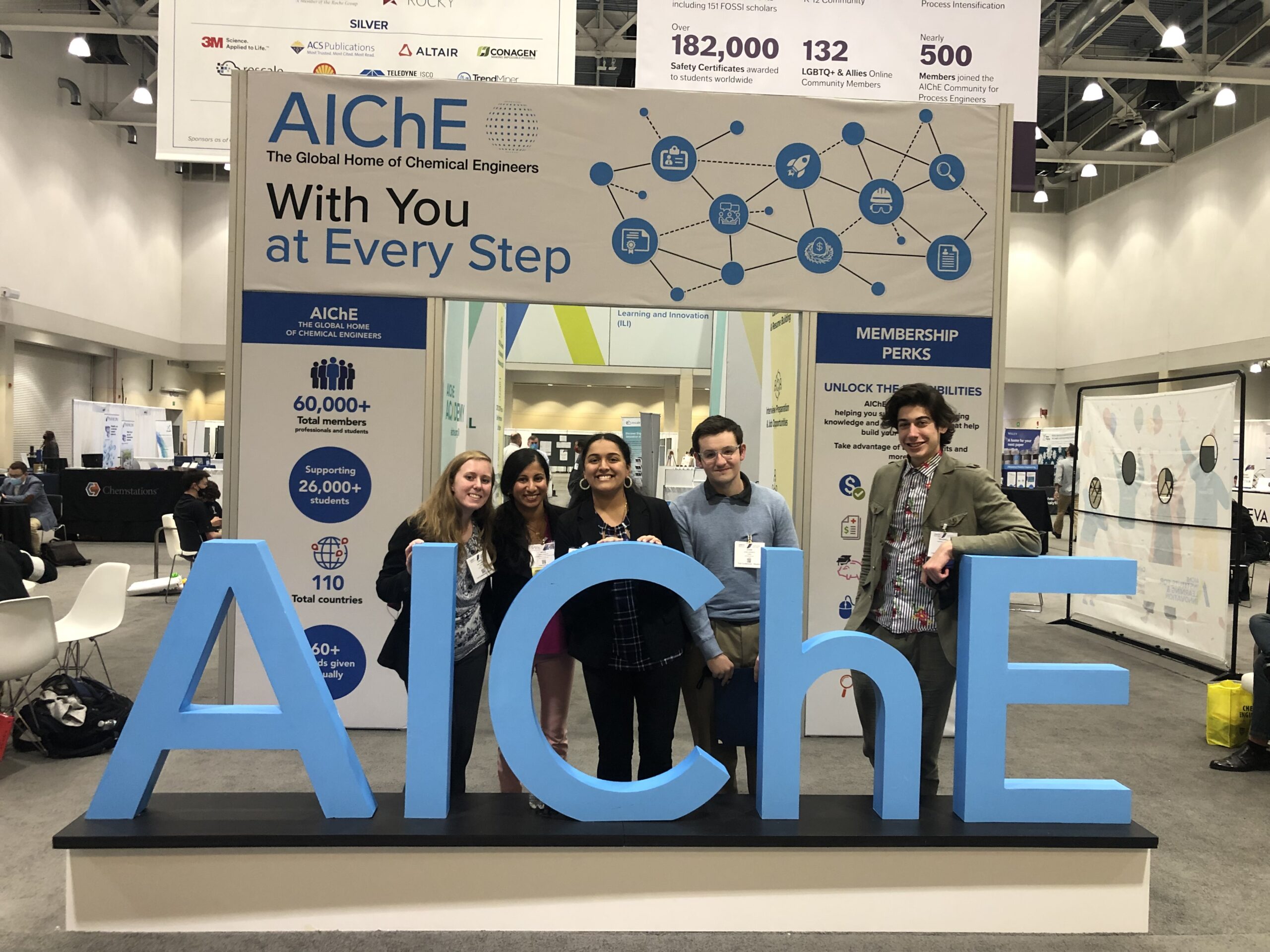
Last weekend, a team of four UMBC students earned second place in a national Jeopardy competition hosted by the American Institute of Chemical Engineers (AIChE). This year, the national competition took place in Boston at the 2021 AIChE Annual Student Conference.
UMBC’s team includes John Laporte ‘22, Sumana Peddibhotla ‘22, Erin Huber ‘22, and Max Bobbin ‘23, all chemical engineering majors. Laporte is the captain of the UMBC AIChE Jeopardy team, and Huber is the president of the UMBC chapter of AIChE.
The UMBC AIChE Jeopardy team with one of their advisors, Neha Raikar.
A competitive atmosphere
Huber explains that when she competed for the first time last year, the AIChE Jeopardy contest was completely virtual. “While it was fun participating virtually, getting to compete in-person this year was a lot more exciting,” she says. “There is definitely more of a competitive atmosphere when you are in the same room as all the people you are competing against.”
The UMBC team made it to the national competition after an intense round at the semi-final national competition against the University of Southern California (USC).
Huber says that she enjoyed connecting with students on other teams during the competition. “The semi-final was a super intense game, and both teams were competitive. Even after we won, both teams were so in awe of each other’s skills that we ended up hanging out and grabbing dinner together,” she shares. “The camaraderie among the students that attended both the competition and the conference is something that I will always remember.”
Earning their spot
Leading up to the national competition, the UMBC team regularly practiced virtually and in-person with fellow chemical, biochemical, and environmental engineering students. Laporte says that the team practices at least once a week, and as the competition approached, the team increased practices to three times each week, meeting twice in person and once online. They earned a spot at the national competition after winning the Mid-Atlantic Regional Competition in spring 2021. Approximately fifty teams competed from across the country this year, organized into nine AIChE student chapter regions.
In the national competition finals, UMBC competed against Iowa State University and the University of Iowa, which won the event. The UMBC ChemE Jeopardy team will continue practicing at least once a week to begin preparing for next year’s competition in January 2022.
The team is advised by Neha Raikar, lecturer of chemical, biochemical, and environmental engineering (CBEE), and Mariajose Castellanos, principal lecturer of CBEE.
Banner image: The UMBC AIChE Jeopardy team at the national competition in Boston. Photos courtesy of Huber.
Last weekend, nearly 1,400 students from 90 institutions across 26 countries, including Egypt, Switzerland, and Ethiopia, participated in hackUMBC’s annual fall hackathon. The 36-hour event encouraged students to collaborate with each other to develop projects addressing a range of real-world challenges.
Participants primarily connected with each other online, through Discord. UMBC students also had the opportunity to attend a limited number of in-person events, with social distancing and masking in place. They vied for a total of $7,300 in prize money through awards from Best Hack overall to Best Financial Hack, Best Data Driven Application, Best Use of Google Cloud, and more.
Karan Luthria. Photo by Marlayna Demond ’11 for UMBC.
HackUMBC President Karan Luthria ‘22, bioinformatics, was pleased with the event’s ability to attract both virtual and in-person participants from around the world. “It’s challenging to engage with virtual participants, but we did it successfully,” he says. This includes many first-time hackers curious to connect with a like-minded community, Luthria notes.
Inspired hacks
UMBC students participated in each of the three winning teams at the hackathon. The first place team developed Babel Fish, which allows people to use their phones to translate voice recordings into audio recordings in other languages. John Hair ‘24, computer engineering; Nolan Smith ‘24, mechanical engineering; Gerald Watson II ‘24, computer science; and Nyle Pope ‘24, computer science were inspired by a device in The Hitchhiker’s Guide to the Galaxy. They decided to try to create a simple version of this technology during the hackathon.
The hack that received second place is a social media app called Adventure Addict. The app allows people to create interactive stories, where readers can choose the path that the story takes at various points. According to a video overview, Adventure Addict “creates a connection between the author and the reader that is unparalleled.” As readers consume and interact more with stories and content, the app recommends additional authors, posts, and stories that the reader might find of interest. The Adventure Addict team includes UMBC student David House ‘16, psychology, M.P.S. ‘21, data science, as well as a Maryland high school student, and students studying at universities in India and Canada.
Students at hackUMBC. Photo courtesy of Luthria.
In third place was a team that developed Status Bar, a device that culls through the day’s headlines and displays top highlights on a table top screen. The Status Bar can also provide a range of other highlights of value to the user, from weather updates to the prices of popular video games, in real time. UMBC students Tamoor Hamid, Ezekiel Ajayi, Avi Singh, Craig Stone, all studying computer engineering and graduating in 2022, developed Status Bar.
Awards were provided through robust sponsorship from over a dozen companies, including diamond sponsors T. Rowe Price, Northrop Grumman, and General Dynamics Mission Systems.
Community connections
Beyond the top three prize winners, several notable projects focused on ideas for improving the UMBC community. For example, Retriever Helper provides an interactive map allowing users to more easily find locations (specific rooms, floors, and buildings) on UMBC’s campus, to view the operating hours of UMBC’s dining options, and to read a feed from UMBC’s student newspaper, The Retriever.
Kristina Eyombo ‘25, computer science, and Dan Hyatt ‘25, bioinformatics, collaborated on the project. Eyombo learned all the JavaScript, HTML, and CSS required to execute the project within that weekend.
“Something we aim for at hackUMBC is to welcome all first-time hackers, regardless of major or background, to bring out their creativity to find solutions to real-world problems,” Luthria shares.
The hackUMBC logo. Image courtesy of hackUMBC.
Another UMBC-focused project included Fetch&Retrieve, which hopes to decrease waste by helping students give away things they no longer need.
Whether they produce projects geared toward UMBC or broader issues, “It is always amazing to see students from across UMBC and the globe come together over a weekend for a time of learning, collaborating, and brainstorming,” says Luthria. “I hope hackUMBC inspires more students to be a part of the hackathon community and continue to spend their weekends bringing ideas to life.”
When COVID-19 upended daily life a year and a half ago, scientists and engineers worldwide responded with new research on detecting, tracking, and managing cases. UMBC’s Tinoosh Mohsenin, associate professor of computer science and electrical engineering, has partnered with Mohammad Sajadi, associate professor at the Institute of Human Virology at University of Maryland, Baltimore (UMB) to develop COVID-Matter. It’s a technology to identify respiratory disease, associated symptoms, and their severity.
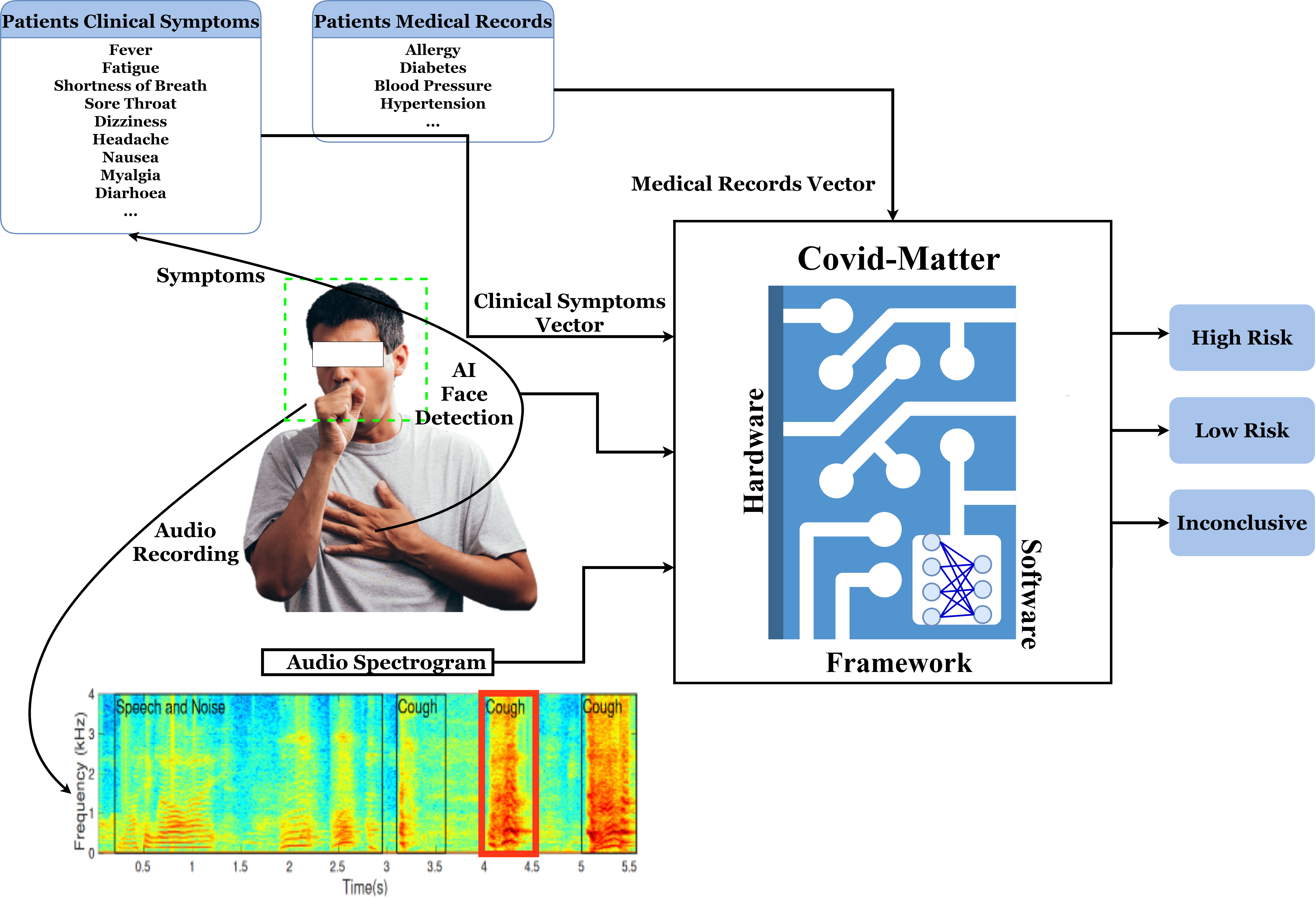
COVID-Matter collects a broad range of complex physiological data and then applies machine learning techniques to understand the data and assess the severity of a patient’s respiratory disease. The data collected include the sound and frequency of a patient’s speech, cough, and breathing sounds.
From these sounds, the tool can extract important information, such as breathing rate, used to identify shortness of breath. The framework can also include facial recognition and patients’ reported levels of fatigue and confusion, to further improve its accuracy.
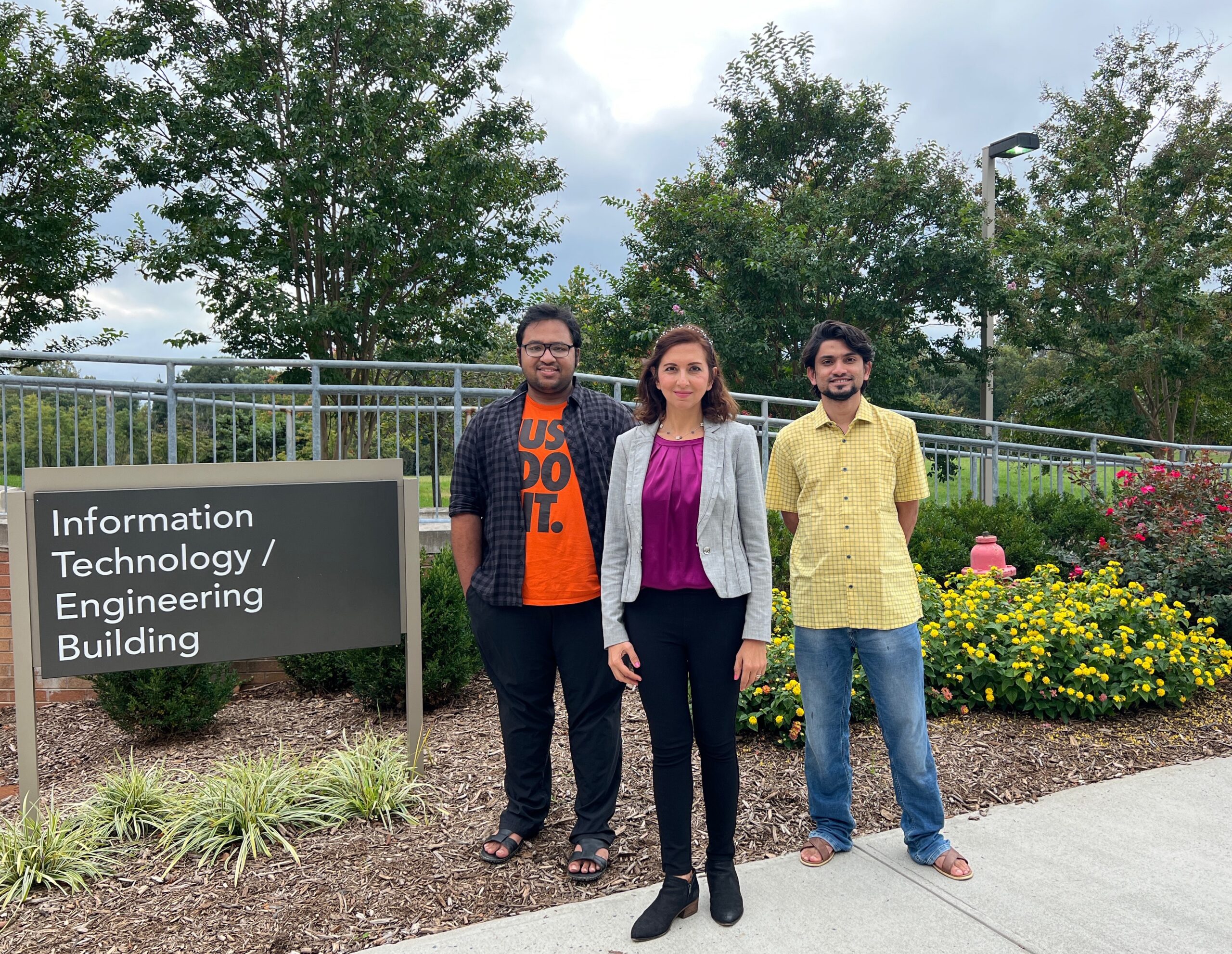
Tinoosh Mohsenin, center, with her two Ph.D. students who are working on COVID-Matter. Photo courtesy of Mohsenin.
Real-time, accessible solutions
The research team recently published a peer-reviewed conference paper describing their reconfigurable software-hardware machine learning framework for automatic detection of respiratory symptoms. They’ve also contributed a chapter in Healthcare Technology Solutions for Pandemics – A Roadmap, to be published by Springer Nature.
“Our vision is to provide a machine learning detection framework that can provide early detection for anyone and anywhere,” explains Mohsenin. “The globally collected data from such a framework can be used to study the spread of COVID-19 as well as other viral respiratory diseases among different populations and locations, and to inform and educate the population about how these diseases spread in real time.”
Sajadi says that this COVID-Matter technology will be helpful to him in his practice of medicine. “Being an infectious diseases physician, since the start of the pandemic I have fielded many questions from COVID-19 patients from around the world,” he explains. “When I am talking to a patient, one of my main concerns is determining when they should seek more intensive medical help such as a trip to the ER. A tool such as the one we are developing would be extremely helpful in these situations.”
Using AI to analyze symptoms
The technology will be accessible on smartphones and tablets, which will make it easier for patients to send real-time symptom updates to their physicians. By applying artificial intelligence to analyze symptoms and determine disease severity, physicians can determine if the patient’s symptoms need to be assessed in-person or if virtual care is more appropriate. This enables patients to avoid unnecessary doctor’s office visits, and could potentially help free up medical resources without negatively impacting patient care.
A diagram of the COVID-Matter technology. Image courtesy of Mohsenin.
“Our goal in this research is to allow machine learning models running on general computing processors, such as those found in smartphones and tablets, to assess patients in a way similar to what doctors do at triage and telemedicine,” says Mohsenin. “We want to use passively recorded audio and video and self-declared information to bring proactive healthcare to users’ fingertips. This tool will help users to estimate the urgency and necessity of whether they need to be further examined at a clinic or a specialized facility.”
Making this technology available independent of a medical facility “is critical for early assessment of respiratory symptoms,” she explains, which could help limit future disease spread.
Improving public health
The research team also includes researchers from the University of Maryland School of Medicine and received funding through the Accelerated Translational Incubator Pilot (ATIP) Program. Through a grant competition hosted by the UMB Institute for Clinical and Translational Research, the ATIP award provides seed funding for researchers at UMB and in the community to address issues related to COVID-19 and to improve public health.
ATIP brings together faculty at UMBC and UMB for high-impact multidisciplinary research collaborations. “This is the first time I am working with engineers and it has been an eye-opening experience, from learning the vocabulary to understanding the tremendous potential of AI-based projects. It is something I have enjoyed very much,” says Sajadi.
“With the inputs that we receive from Dr. Sajadi we have been able to improve our machine learning models and assess our overall goals,” says Mohsenin. “Together, we have made significant progress.”
Banner image: Tinoosh Mohsenin. Photo by Marlayna Demond ’11 for UMBC.
Kafui Dzirasa ‘01, M8, chemical engineering, recently earned two highly prestigious honors distinctive even among leaders in the medical and life sciences: an HHMI Investigator award and election to the National Academy of Medicine.
Dzirasa is the K. Ranga Rama Krishnan Associate Professor of psychiatry and behavioral sciences at Duke University. He earned both his MD and his PhD in neurobiology and neurosciences at Duke. Today, he examines the role of the brain’s electrical activity in psychiatric illness, including depression, bipolar disorder, and addiction, with the goal of creating mechanisms to disrupt these disorders.
Achievement and service
Dzirasa is one of 100 new members elected to the National Academy of Medicine this year. The announcement recognizes his “seminal contributions to the neuroscience of emotion and mental illness” as well as his pioneering research methods. It also honors his “contributions to society through science policy and advocacy, a commitment to mentoring, and support for efforts to build a diverse and inclusive scientific workforce,” carrying forward the values of UMBC’s Meyerhoff Scholars Program.
Election to the National Academy of Medicine recognizes leaders in health and medicine who have demonstrated both outstanding professional achievement and a commitment to service. The National Academy of Medicine has more than 2,200 elected members worldwide, with new members limited to 100 per year.
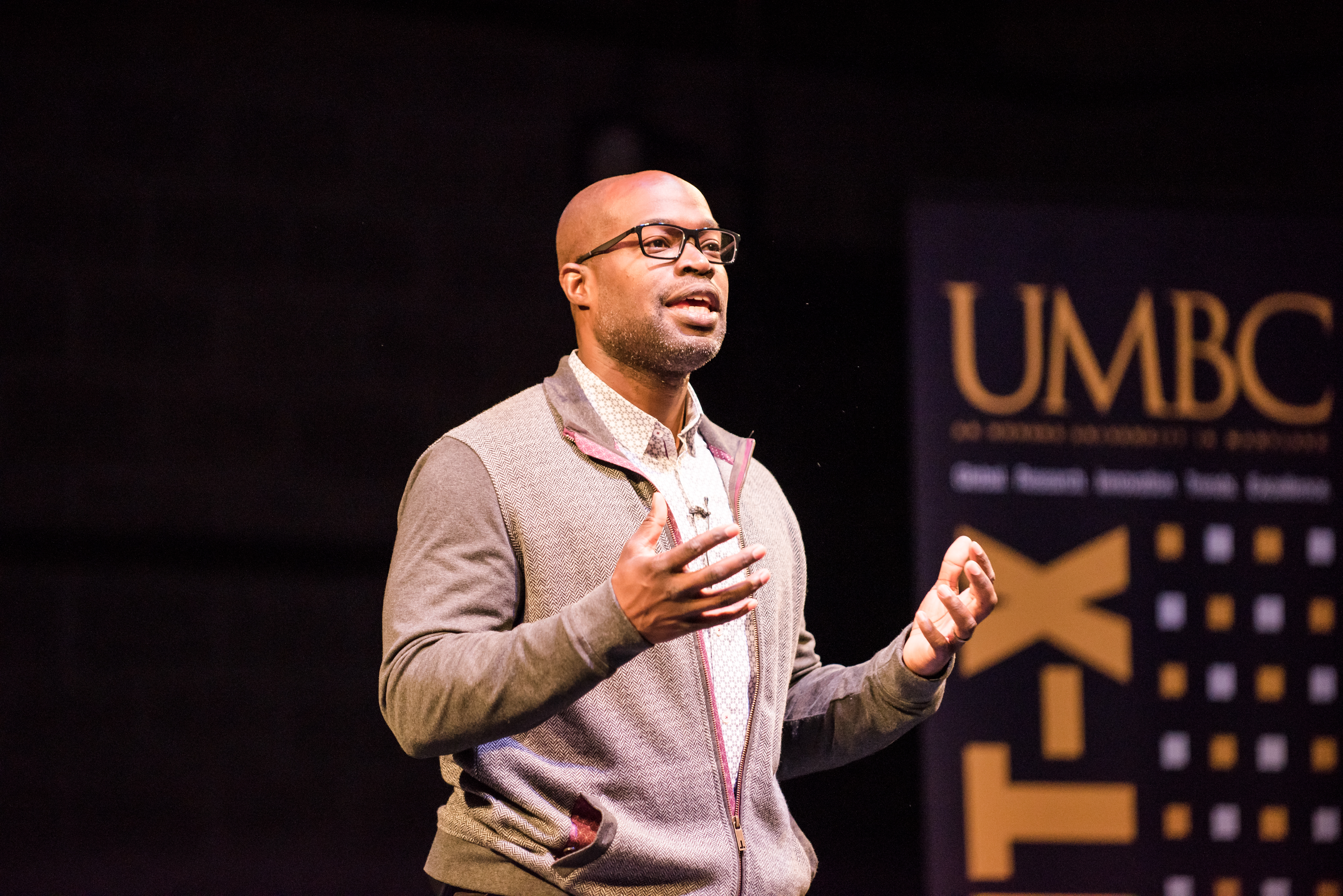
Kafui Dzirasa presents a GRIT-X talk at UMBC, 2017.
Answering tough questions
Last month, Dzirasa was also named a Howard Hughes Medical Institute (HHMI) Investigator. He joins a cohort of 33 new Investigators from across the U.S. Each was selected for their ability to “dive deep into tough questions” and address some of the most challenging issues in biomedical research.
Here is the 15min presentation about my vision to cure psychiatric disorders https://t.co/zrFqLMfJa3
HHMI is investing about $300 million in Dzirasa and the other members of the new cohort. The institute also recently announced a plan to invest $2 billion in work to accelerate inclusion and equity throughout the academic science pipeline—a goal championed by Dzirasa, other Meyerhoff alumni, and UMBC President Freeman Hrabowski.
There are approximately 250 HHMI Investigators across the U.S., including UMBC’s Michael Summers, Robert E. Meyerhoff Chair for Excellence in Research and Mentoring and Distinguished University Professor. His chemistry lab focuses on understanding how HIV-1 and other retroviruses assemble and how they package their genetic material. The long-term goal is to make possible new therapeutic approaches to treat AIDS and other diseases.
A hush fell over the excited audience in UMBC’s Proscenium Theatre last weekend, as Baltimore City Health Commissioner Letitia Dzirasa ‘03, biological sciences, stepped into the spotlight to present the first GRIT-X talk after a year hiatus for the event. Her topic particularly resonated in this moment: how data analysis is essential to addressing healthcare inequities.
Dzirasa was one of eight UMBC community members, including faculty and alumni, who spoke about their work, providing online and in-person audiences a glimpse of UMBC’s local, national, and global impact.
“We have such a diverse set of expertise within our UMBC community, with direct relevance to some of the most pressing issues within today’s society, including the impact of climate change on the environment, UMBC’s contribution to understanding and fighting the COVID-19 pandemic, and the importance of interpersonal human-to human interactions,” explains Karl V. Steiner, vice president for research at UMBC.
“We were especially thrilled to bring this showcase back to campus as part of this year’s homecoming activities, since last year the pandemic forced us to cancel the event,” Steiner shared. “It was great to be in the Performing Arts and Humanities Building.”
Watch the GRIT-X talks
More than a dashboard: The heightened role of data in driving equity
Dzirasa’s talk emphasized the interdisciplinary nature of her work, and how statistics and biological sciences play an important role in answering public health questions. She also described how data inform her work as a public health leader guiding Baltimore through the COVID-19 pandemic.
Nature needs culture: Conservation in the age of humans
Erle Ellis, professor of geography and environmental systems, discussed how human activity has transformed the world, and how the active human management of ecosystems is a defining feature of the past 12,000 years, not just the present. His talk dove into research he published earlier this year, with an international team, in the Proceedings of the National Academy of Sciences. The article and his talk emphasized the importance of empowering the environmental stewardship of Indigenous and local communities globally.
Fleximers: Bending over backwards for a cure
Kathie Seley-Radtke, professor of chemistry and biochemistry, has been studying coronaviruses since the early 2010s. Her GRIT-X presentation focused on her work to develop fleximers—distinctive compounds that interfere with virus replication, and whose flexible structure allows them to adjust shape and remain effective as viral variants evolve over time.
Stressing connections: Designing for affective awareness
Andrea Kleinsmith, associate professor of information systems, discussed her work to develop systems that support stress awareness and reflection, including with emergency responders. She shared a personal experience to illustrate the importance of addressing the effects and emotional impact of high stress situations.
Start small but start: The story behind a unique climate-observing site in Maryland
Belay Demoz, professor of physics, talked about an observation station in Beltsville, Maryland that conducts climate-related research. Demoz is known for his leadership in cultivating a diverse generation of climate scientists and prioritizing a culture of mentorship. He explained that who collects the data can impact research findings, which highlights the importance of collaboration among diverse researchers.
The math that explains the pandemic
Zoë McLaren, associate professor of public policy, is a health economist who uses statistical data analysis to inform health and economic policy, particularly related to combating infectious disease epidemics. In her GRIT-X talk, McLaren discussed “exponential growth” and “flattening the curve”—two concepts unfamiliar to much of the public prior to the COVID-19 pandemic, but which are now commonly used terms. These two concepts highlight the important role that mathematics and statistics play in understanding policies related to the pandemic.
Parenting: Looking for answers within and across cultural borders
Charissa Cheah, professor of psychology, presented her work understanding how parents around the world care for their children and teach them about culture. Culture is both big and abstract, as well as small and personal, Cheah explained, and parents have an important role in helping their children develop cultural competencies. Cheah is known for her research on how Chinese American parents and children have witnessed, experienced, and coped with discrimination due to COVID-19.
Saving our environment from the past: A story of chemicals and fish
Upal Ghosh, professor of chemical, biochemical, and environmental engineering, talked about his work understanding toxic pollutants and how they impact the environment. Even though some of the pollutants were banned from use 50 years ago, these contaminants can still be found in fish and wildlife today. Ghosh’s work also includes creative approaches to removing dangerous pollutants from waterways so they can’t cause further harm.
Jack Suess, vice president for information technology at UMBC, has received a 2021 Capital CEO of the Year ORBIE Award. Suess ‘81, mathematics, M.S. ‘94, information systems, has been part of the UMBC community for more than 40 years. As a university leader, he has spearheaded transformative technology initiatives. His work includes advancing the use of technology in courses, operational systems, and student success initiatives in ways that have fundamentally reshaped the UMBC experience for all community members.
“What makes this award special is that it truly recognizes the work of our entire Division of Information Technology (DoIT),” Suess says. “Our team’s work, particularly in helping the university quickly shift to remote learning last year, due to COVID, reflects a spirit of empathy and collaboration. This spirit has made IT true partners in the university’s success, not just technology experts.”
“I won this award as the leader of the division, but really this is an award that belongs to everyone in DoIT,” he shares.
Innovative solutions advance opportunities
Under Suess’s leadership, UMBC’s Division of Information Technology has developed innovative solutions to a very broad range of technology needs. The COVID-19 pandemic in particular significantly changed how faculty, staff, and students utilized and relied on technology to teach, work, and learn.
Jack Suess, right, at the 2021 Fall Opening Meeting.
“Our leadership relied on robust data Suess’s team had collected to provide the information and insights needed to safely reopen the campus for research and in-person learning opportunities,” says UMBC President Freeman Hrabowski. “Without his forethought and his team’s commitment and creativity, we could not have provided the level of education, innovation, and critical research for which UMBC is known.”
In 2020, Suess received the EDUCAUSE Leadership Award for his success as a leader in the field and for advancing UMBC’s reputation as leader in higher education.
Honoring a transformative online teaching initiative
DoIT’s instructional technology team recently received an award specifically recognizing this essential, innovative work during the transition to remote learning. The Online Learning Consortium (OLC) is honoring the team with an Effective Practice Award for the UMBC’s Planning Instructional Variety for Online Teaching (PIVOT) program.
Victor Adebanjo ’23, mechanical engineering, was a student worker in the Division of Information Technology during the pandemic.
The PIVOT program was developed last year in collaboration with faculty across all three colleges and UMBC’s Faculty Development Center to help faculty provide students with engaging online courses. The program guided faculty through the elements of course design for the virtual space, as well as how to teach effectively online. Faculty who participated in PIVOT also connected with peer mentors who provided insight into pedagogy and the technology used.
The OLC is recognizing the DoIT instructional technology team for developing digital educational tools that elevated UMBC’s efforts to continue to offer exceptional courses to students throughout the remote learning period of the pandemic. The Consortium evaluated UMBC’s PIVOT program against its five pillars of quality in digital education, and sought out peer reviews. They found that the PIVOT program was strong in all five areas: learning effectiveness, scale, access, faculty satisfaction, and student satisfaction. More than 70% of UMBC faculty utilized the program, and it received positive feedback from the participants.
Mariann Hawken, acting director of instructional technology, led PIVOT program development and will accept the award at the OLC Accelerate conference in October.
Banner image: Jack Suess, right, and a few of his colleagues. All photos by Marlayna Demond ’11 for UMBC.
In the Great Colleges to Work For rankings announced today, UMBC is not just featured on the Honor Roll, it has been recognized in every single award category. The Chronicle of Higher Education publishes this list each fall. This is UMBC’s 12th consecutive year on the list, and 10th year on the Honor Roll.
The 70 U.S. colleges and universities selected for recognition this year are those most highly rated by employees through a survey by ModernThink. The ten categories of achievement include:
job satisfaction and support
compensation and benefits
professional development
mission and pride
supervisor/department chair effectiveness
confidence in senior leadership
faculty and staff well-being
shared governance
faculty experience
diversity, inclusion and belonging
President Freeman Hrabowski, who recently announced his spring 2022 retirement, often speaks about UMBC’s strong sense of community and commitment to shared governance. “I have been so fortunate to be at a university that values people,” he recently shared with Inside Higher Ed.
Speaking to the importance of mutual respect, clear communications, and transparency, he said, “We need leaders who believe in their institutions and we need institutions who will believe in their leaders. That doesn’t mean that we always agree, but it means that we believe in authenticity and integrity and speaking the truth.”
“It is gratifying to witness UMBC’s continued recognition by Great College to Work For,” says Valerie Thomas, UMBC’s chief human resources officer. “It’s my belief that because we are intentional about our focus on respect for everyone, employees can do their best in their roles. One major strength is shared governance. Listening to every voice helps us retain talent. And, our continued recognition as a great employer helps us attract new talent.”
Reconnecting with each other
Over the past year and a half, UMBC has worked to maintain strong connections while many employees were working remotely. Now, as many faculty and staff have returned to campus, there is an emphasis on reestablishing partnerships, growing relationships, and better getting to know new team members hired during the remote work period.
UMBC staff and faculty at an event in 2019.
“As we enter into an exciting transition year at UMBC, it’s no surprise that we continue to be featured as a ‘Great College to Work For,’” says Jessica Wyatt, president of UMBC’s Professional Staff Senate and assistant director of alumni relations. “There are opportunities to vision new futures based on the traditions and successes of our past.”
During the pandemic, many faculty and staff connected with each other accessed essential resources and information through the UMBC Together group. Employees also actively worked through shared governance groups to contribute their voices to planning around COVID and to discuss other important and challenging issues.
Songon An and grad student Danielle Schmitt, Ph.D. ’17, biochemistry, working in the lab. Photo by Marlayna Demond ’11 for UMBC.
“As Faculty Senate President during the pandemic and the repeated instances of political and racial violence that took place in 2020 and 2021, I had the privilege of witnessing firsthand how the leadership came together to ensure that our community felt safe and to model a zero-tolerance approach to social and racial injustice,” says Orianne Smith, president of UMBC’s Faculty Senate and associate professor of English.
“I’ve always thought that UMBC is a great college to work for but this past year convinced me that UMBC goes above and beyond in prioritizing our people over and above all other considerations,” Smith says. “I feel lucky to work here.”
Sustaining the campus
Throughout the pandemic, a small but dedicated number of faculty and staff continued coming to campus. They helped sustain campus systems and services both for those students who did need to remain on campus during COVID and to be ready for the larger community’s return this fall.
These include employees from areas as diverse as dining services, residential life, UMBC Police, athletics, facilities management and UMBC Preschool. Also on campus were several researchers, carrying forward work related to COVID and beyond.
A UMBC staff member, left, welcomes students and families to campus during Move-in Weekend. Photo by Marlayna Demond ’11 for UMBC.
“It is not surprising to me that UMBC continues to be included in the Great College to Work For list,” says Melody Wright, president of UMBC’s Nonexempt Staff Senate and academic business services specialist in biological sciences. “I have worked for UMBC for 10 of those 12 years on the list. It is times like the ones we are experiencing right now—seeing people pull together for the common good of our campus, our work environment, our community—that remind me why I chose to work for UMBC in the first place.”
“It is not just a place to work, it is a community in which shared governance thrives,” says Wright, “and I am honored to be a part of it.”
Banner image: UMBC staff welcome students to campus during move-in weekend. All photos by Marlayna Demond ’11 for UMBC.
When COVID struck, students, families, and educators nationwide worried about the impact it would have on learning experiences and career opportunities. Throughout summer 2021, UMBC students have proven that with tenacity and support they can still access meaningful internships.
“We, as a UMBC community, are committed to the career success of our students,” says Christine Routzahn, director of the UMBC Career Center. “Internships provide students with opportunities to apply the skills, theories, and concepts they learn in the classroom while gaining valuable connections and career readiness. Working with our incredible employer partners and alumni, we’ve connected UMBC student talent with valuable, career-building experiences across industries.”
Goal #1: Secure that internship
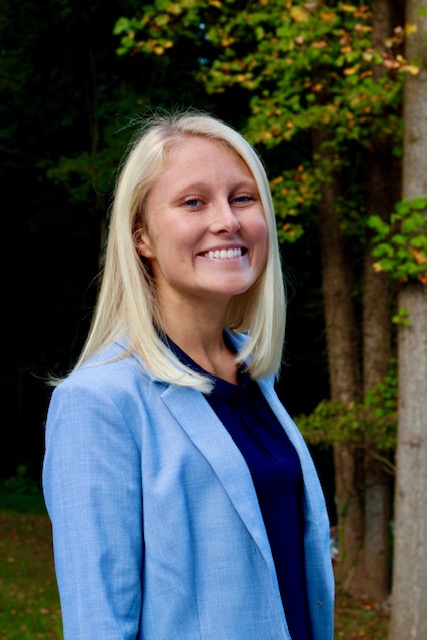
Sandra Naylor. Photo courtesy of Naylor.
When Sandra Naylor ‘21, financial economics, was looking to transfer from community college to a four-year university, she had her sights set on securing an internship at a well-known company where she could gain hands-on experience in finance. She knew that UMBC had a strong Career Center that could connect her with these opportunities and she jumped at every chance to get her name in front of hiring managers.
“I came to UMBC specifically because I knew that they have really good connections,” says Naylor. Her two top priorities were her grades and accessing career opportunities. She shares, “I started going to meet and greets, and coffee chats to get my face out there as much as possible.”
Naylor attended a workshop at Morgan Stanley, which highlighted the company’s core values, including diversity, and she knew it was a company that could be a great fit for her. With the Career Center’s support, she secured an internship.
Her experience has largely been online, but that hasn’t limited her chances to build skills and network. “I am constantly in meetings and connecting with people,” she says. That includes regular meetings with her mentor, who is an executive director at Morgan Stanley. Senior management has also invited interns to meet at the company’s Baltimore offices.
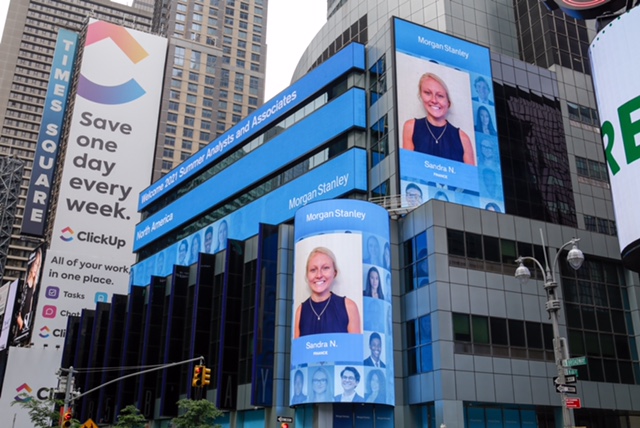
Sandra Naylor’s photo appears on the Morgan Stanley building in Times Square, New York City. Photo courtesy of Naylor.
As she’d hoped, Naylor says that her internship has expanded her understanding of the finance industry. She particularly enjoyed deep dives designed to help interns understand how their work connects to the firm’s larger goals and initiatives—the kinds of work she might pursue in a finance career.
Find mentors who help you shine
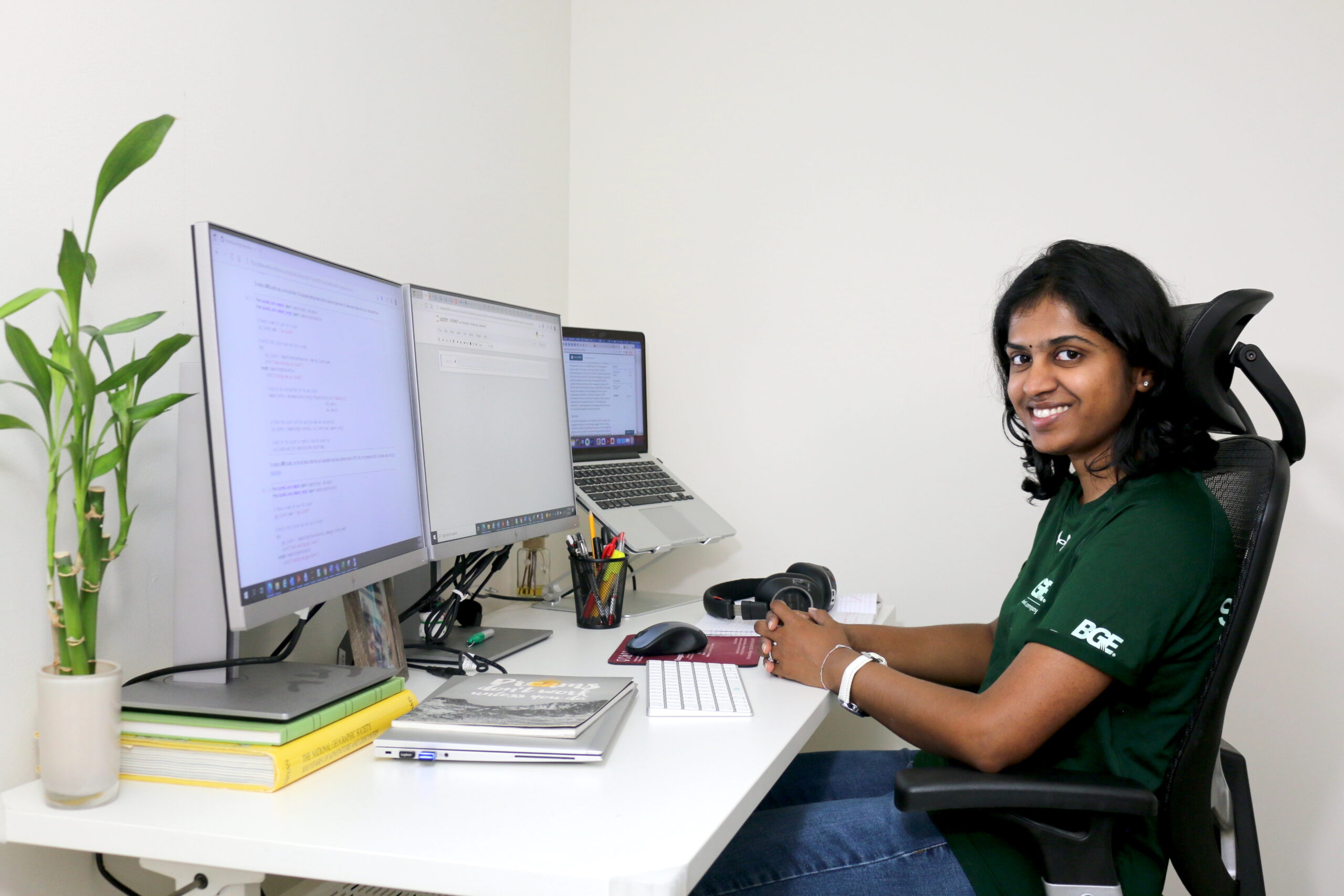
Monika Arumalla, M.P.S,‘21, data science, has spent more than six months interning at BGE in Baltimore, and she will continue her internship through the fall. Like Naylor, Arumalla was eager to utilize the UMBC Career Center’s strong connections. She uploaded her résumé to UMBCworks during her first semester.
Monika Arumalla. Photo courtesy of Arumalla.
The energy company BGE approached Arumalla, inviting her to interview for a co-op—a type of work-based opportunity popular in engineering and technical fields, that’s often full-time, with hands-on projects. A committee interviewed Arumalla, asking her technical questions to assess her knowledge and approach to data science.
After hiring Arumalla, BGE onboarded her virtually, due to COVID. Still, “I’ve had constant interactions with my supervisor,” she says. “From day one, they made sure I was getting what I needed,” including helping her learn the company’s systems and processes.
Arumalla has been impressed with BGE’s office culture, which she describes as prioritizing safety, diversity, and inclusion. She has been able to connect with managers and leaders on her team, who have given her a sense of support and access to the tools she needs to complete her work.
That work included one particular project where she had a major impact. BGE call center agents are currently scattered across the region, primarily working remotely. Arumalla was asked to help determine how to support these agents in the event that they are affected by power outages in their home areas. The BGE team wanted fresh eyes on the project, and Arumalla came up with a solution that impressed her team.
Monika Arumalla working in her office space at home. Photo courtesy of Arumalla.
A few weeks later, she presented her idea to senior leadership at BGE. “My supervisor gave me an opportunity to showcase the work, something I’ll cherish,” she says. “Even as an intern, they always help me shine.”
See the impact of your work
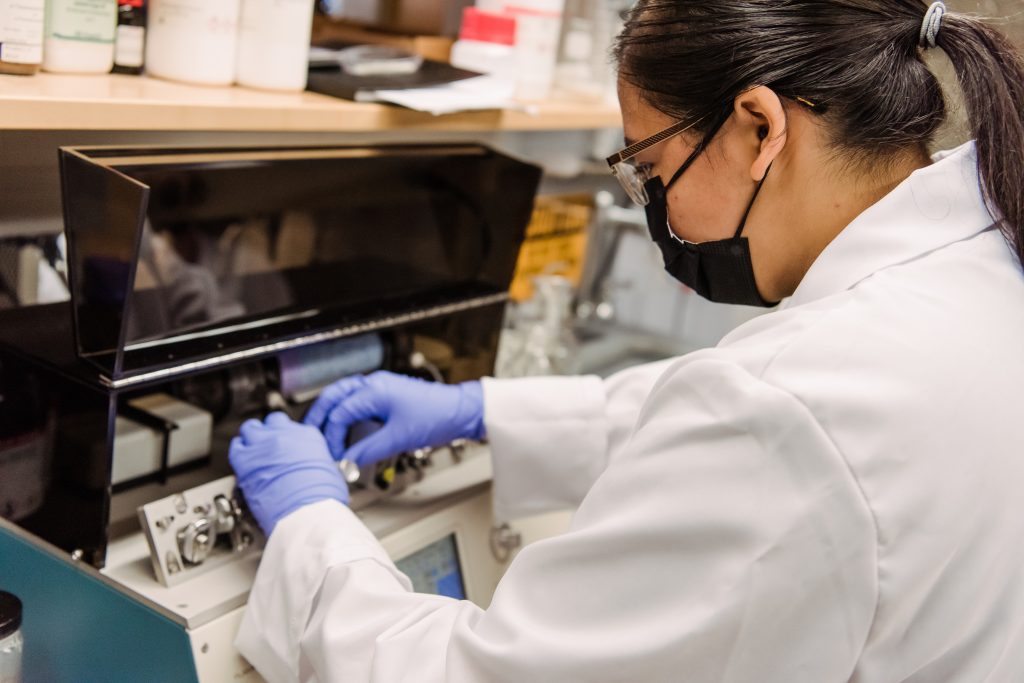
Grace Tugado ‘23, chemical engineering, has spent her summer interning at SeeTrue Technology, which develops microcapillary needles for a range of biomedical needs, from IVF therapy to stem cell research. SeeTrue Technology is located on the UMBC campus, and is supporting Tugado’s internship through the Maryland Technology Internship Program.
Tugado learned about the internship from a professor and was excited by the opportunity to expand her biotech skills. For the first few days at SeeTrue she shadowed her mentor through the process of making the needles, and asked questions along the way.
Grace Tugado working in the SeeTrue Technology lab. Photo by Marlayna Demond ’11 for UMBC.
“There was a little bit of a learning curve,” says Tugado, who will also be a McNair Scholar this fall. Thanks to her prior research through UMBC’s STEM BUILD Program, she was able to make the most of each new challenge as a learning experience, without feeling discouraged.
One of the most rewarding parts of her internship at SeeTrue has been connecting with scientists, including her mentor Kinneret Rand-Yadin, founder and CEO of SeeTrue Technology. She’s also had the opportunity to connect with people who are using the needles. Receiving their feedback has impacted how she sees her work.
“It’s rewarding to think that labs around the world could potentially use the needles I’ve created,” she says. Tugado plans to continue interning at SeeTrue Technology through the fall semester.
Learn from people who have been there
Leaving nothing to chance Chi-Chi Onyekonwu ‘22, economics, worked with the UMBC Career Center team to apply for several summer opportunities. She was thrilled to be placed in her top choice, an economics research internship through the University of Chicago’s Leadership Alliance Summer Research Early Identification Program (held virtually this year).
Chi-Chi Onyekonwu. Photo courtesy of Onyekonwu.
The program helps students prepare for a Ph.D. in economics, explains Onyekonwu. It fosters interns’ connections with economics Ph.D.s, supports their research, and organizes lectures and other events.
Onyekonwu has worked with a group of six other economics research interns, including Seth Thomas ‘22, financial economics and global studies, and Lexi Smith ‘23, history and economics, on a project about global economies. Onyekonwu’s group studied global corporate transparency, and she also pursued an individual project focused on Italy’s economy. In addition to writing a research paper, she presented her work at a national symposium in July.
One of Onyekonwu’s favorite aspects of the program was connecting with 40 other economics students from around the world who were research interns at the University of Chicago this summer. Onyekowu plans to pursue a Ph.D. in economics after graduating from UMBC, and she valued the chance to grow her network.
“The first-hand accounts from people who have already gone through the process of getting their Ph.D., and hearing the mistakes they have made and what things have worked for them, has been the best part of the program,” she says.
Jump on a good opportunity
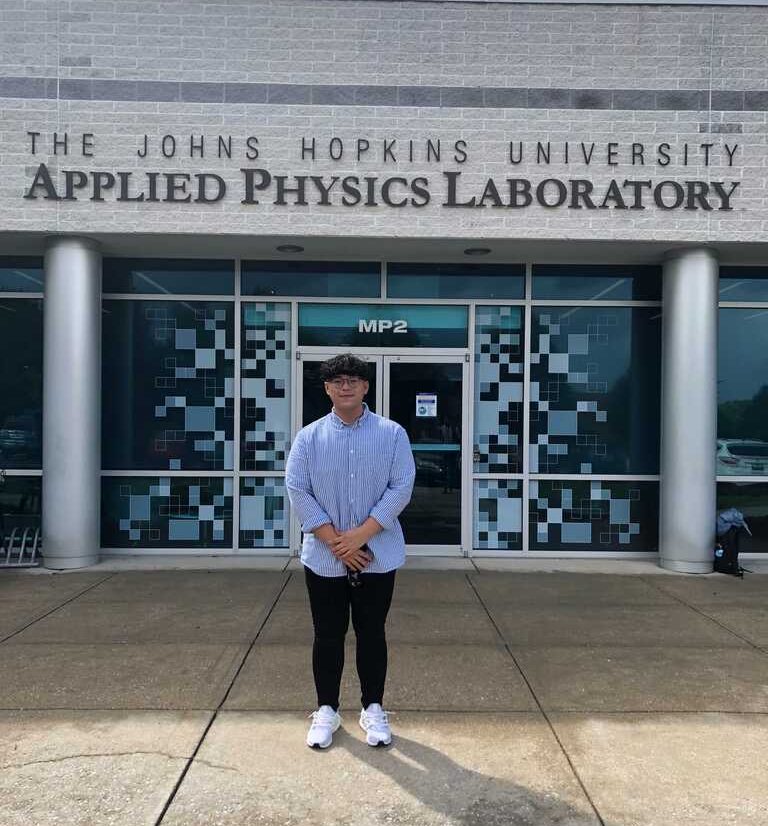
Terence Lesigues ‘23, biological sciences, first heard about interning at the Johns Hopkins University Applied Physics Laboratory (APL) through an email from UMBC’s Career Center in January. He’s glad he clicked on it. Within a few months, Lesigues was accepted into the program and identified a few particularly interesting projects to work on—not just during the summer, but for the coming year as well.
As a pre-med student with an interest in neuroscience, Lesigues joined a research group focused on brain analytics using machine learning. “We’re developing a deep learning algorithm to segment the brain at a micro level, including blood vessels and axons. With this, we can better understand the etiologies of neurological diseases, such as Alzheimer’s and schizophrenia,” he explains.
Terence Lesigues in front of the Johns Hopkins Applied Physics Lab. Photo courtesy of Lesigues.
“My lab at UMBC focuses on the neurobiological aspects of chemical sensory systems in the nose,” he notes. “This internship has allowed me to branch out and explore additional topics.”
While his internship is primarily virtual, Lesigues goes into APL once a week to meet with his cohort in person. Working remotely has not hindered his ability to make meaningful connections with professionals and his peers. Lesigues explains that he meets with his mentors each day, including for team-building activities, and also connects regularly with other interns.
Looking back, Lesigues says that he is grateful that he responded when the APL opportunity hit his inbox, and that he took the chance on applying. He encourages other students to keep an eye on Career Center messages and reach out to as many people as they can to get their foot in the door.
Gain experience in something you care about
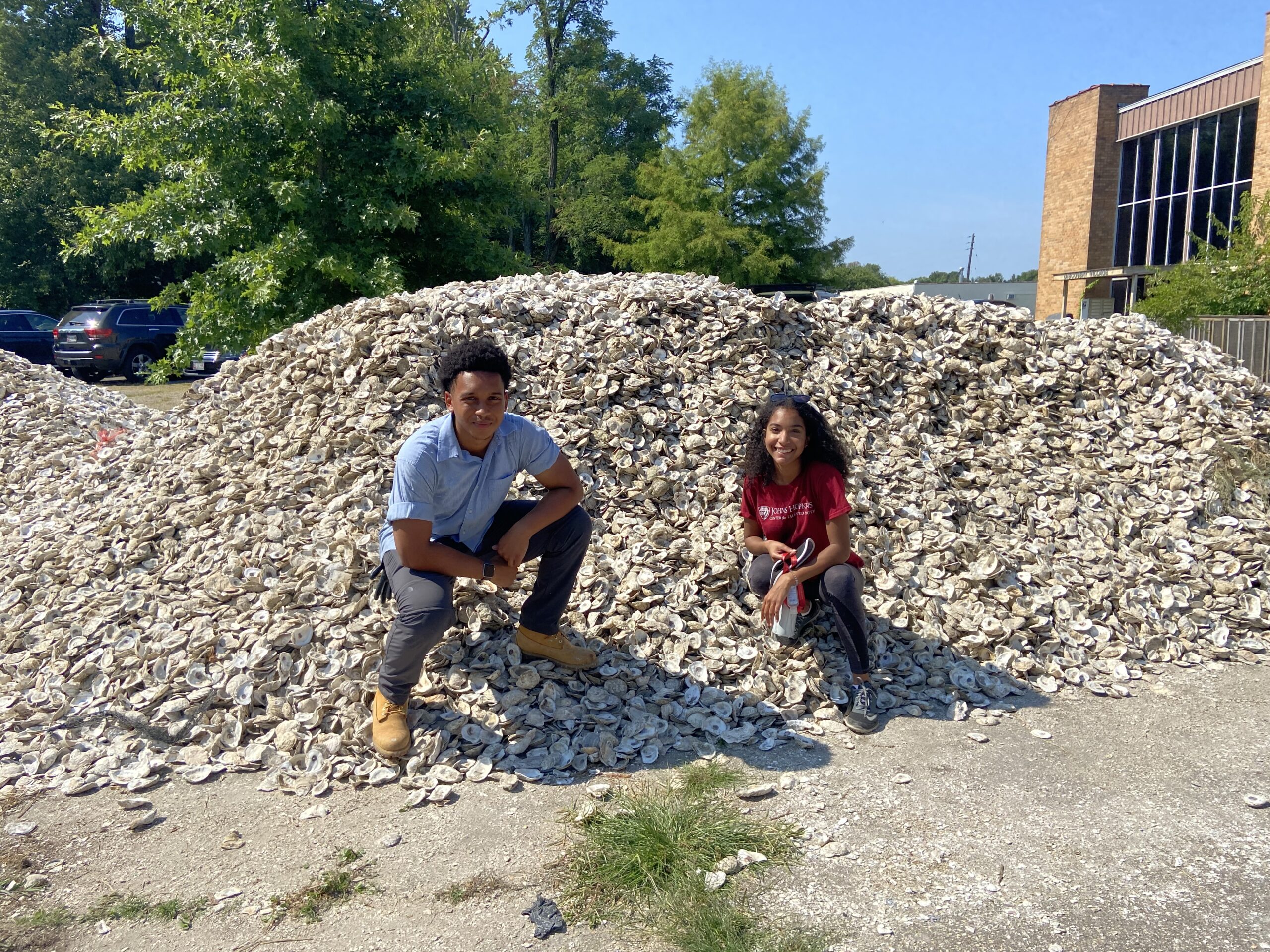
Jaden Burke ‘24, political science, and Samara Pyfrom ‘24, M32, environmental science and geography both interned with the Chesapeake Bay Foundation, which focuses on conserving and protecting the Chesapeake Bay.
Pyfrom is the foundation’s diversity, equity, inclusion, and justice intern—a position she found on UMBCworks. Within the department of human resources, she works to provide data to the Chesapeake Bay Foundation’s board to support their planning and decision-making. She has also developed events that allow her fellow interns to network and has traveled to engage with interns across the organization.
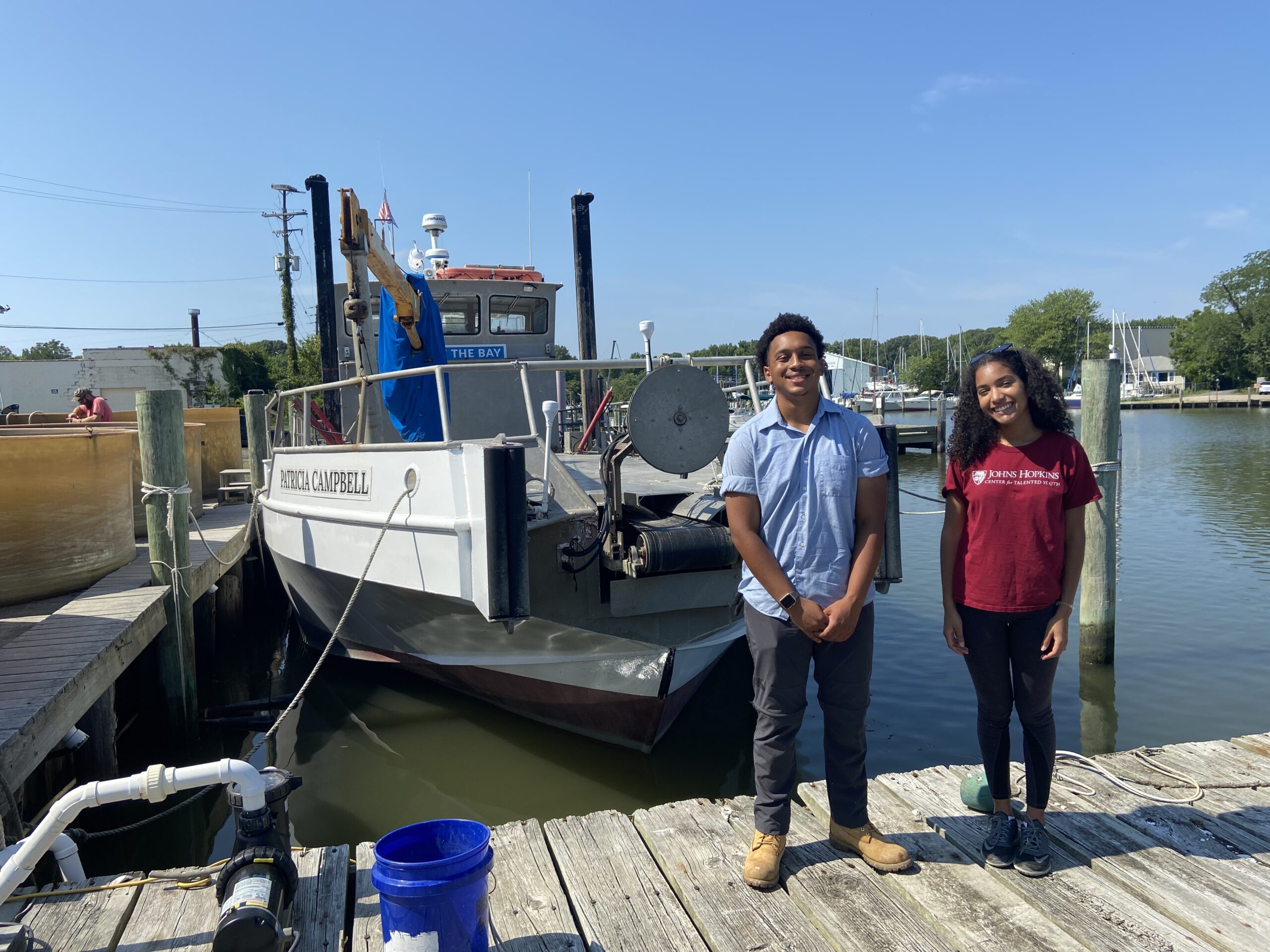
Samara Pyfrom and Jaden Burke in front of oyster shells. Photo courtesy of Pyfrom.
Pyfrom is interested in scientific and environmental justice. She notes that climate change disproportionately impacts communities of color in the United States.
“My mentor has really centered this internship around my passions and helping me grow,” she says. “I’ve met with some litigation lawyers at the Chesapeake Bay Foundation and learned about how they approach environmental justice and work with corporations that misuse communities.”
Jaden Burke and Samara Pyfrom. Photo courtesy of Pyfrom.
Burke has supported community environmental education programs through his internship, including facilitating a trip for high school teachers to learn about oysters. He spent one week at the foundation’s Clagatt Farm, which he describes as the most physically challenging week of his internship.
Clagatt Farm has a community-supported agriculture program offering produce baskets each week of the summer. The organic farm connects community members to the local environment in meaningful ways, and Burke valued the chance to contribute to their work. Plus, he shares, “The networking opportunities have been valuable.”
Dive into unique opportunities
Adam Lees ‘21, biological sciences, remembers the day that he received an email from Routzahn about a highly unique opportunity to intern aboard the OceanX marine research vessel while it traveled from Portugal to Norway. “This program definitely jumped to the top of my list,” Lees says.
Adam Lees aboard the OceanX marine research vessel. Photo courtesy of Lees.
Fast forward a few months later, and Lees found out that he was one of about 15 interns selected for the research voyage. “I couldn’t believe it,” he says. The international group of interns—half from the U.S.—included students focused on biology as well as science communications.
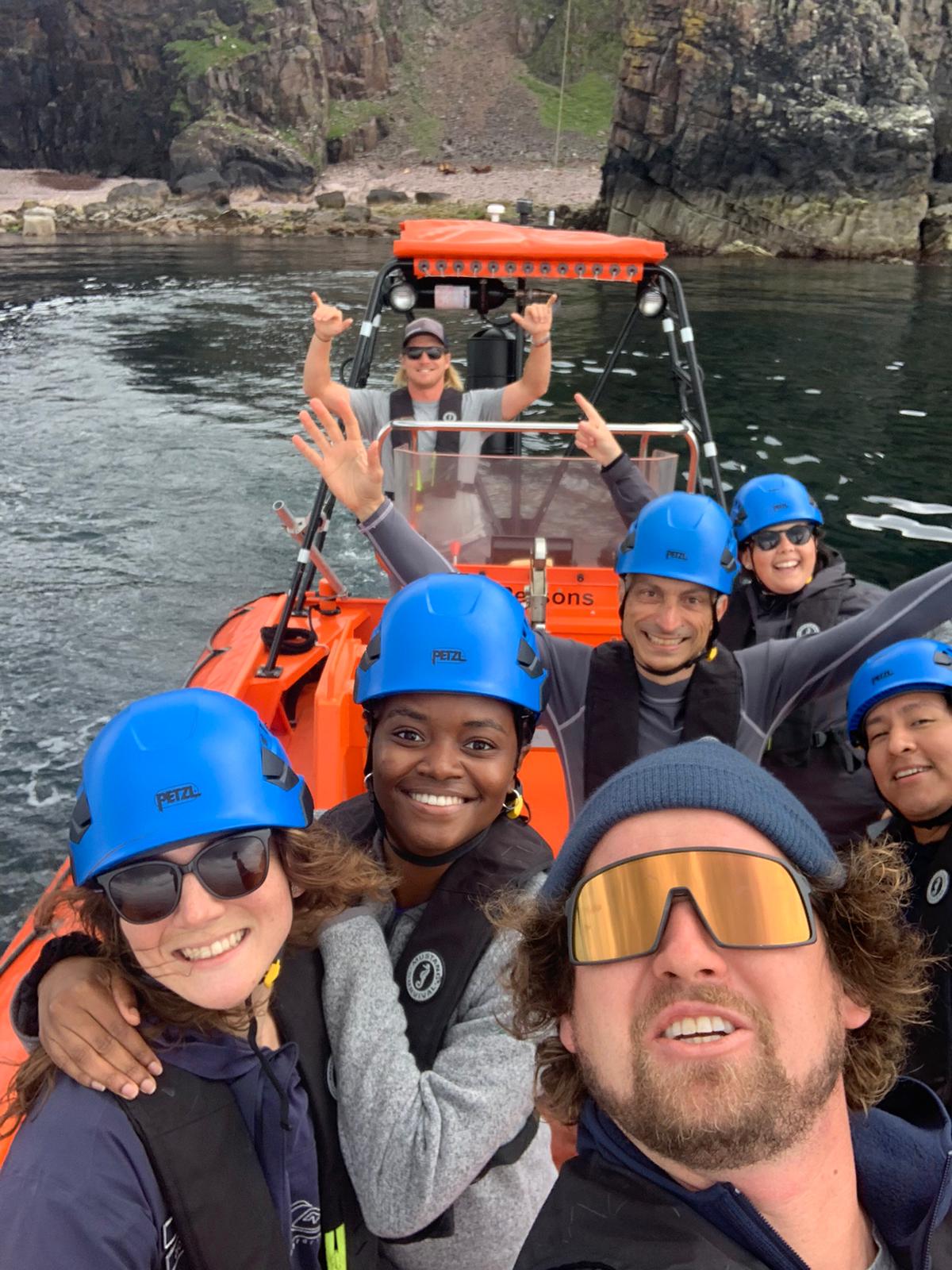
Adam Lees, right, and his fellow interns. Photo courtesy of Lees.
Aboard the OceanX, Lees supported marine biologists and other scientists conducting research. Each day, he would have breakfast with the other interns before heading to lectures and shadowing scientists. He particularly enjoyed hands-on opportunities to send cameras and data collection tools deep into the ocean to gather samples.
Lees found most rewarding the friendships and connections that he made with others aboard the OceanX, from institutions all around the world. “Talking to scientists on OceanX and seeing what they do, how long it took them to get here, and what they do day to day was so helpful for me,” Lees explains.
A water sample collected by OceanX. Photo courtesy of Lees.
The OceanX has three dry labs filled with computers and servers, and one large wet lab that scientists use to study live samples. In addition to the students and scientists, the boat included a crew of about 35, from a person in charge of the computers and servers to a chef.
The OceanX vessel. Photo courtesy of Lees.
“The internship was inspiring and motivating,” Lees says, particularly having a front-row seat to science being conducted for the first time. “I can’t wait to be in school again now that I know what’s out there and what I can continue to work toward.”
Banner image: Grace Tugado, right, working in the SeeTrue Technology lab with her mentor Kinneret Rand-Yadin. Photo by Marlayna Demond ’11 for UMBC.
Governor Larry Hogan yesterday announced the launch of the Maryland Institute for Innovative Computing (MIIC) at UMBC during a cybersecurity summit in Annapolis.
The MIIC will address pressing challenges related to computing, analytics, and workforce in state agencies, with a focus on cybersecurity, artificial intelligence, and data science. UMBC faculty, students and staff will work with MIIC partners to provide expertise on the complex process of recovering from cyberattacks. They will also offer technical guidance to inform policy decisions for leveraging data safely, securely, and ethically.
The partnership will also include talent from higher education institutions within the University System of Maryland and across the state, and partners in the public and private sectors.
“Maryland is showing the way by creating this innovative partnership that brings together experienced faculty and students who are eager to apply the knowledge they have acquired, with state agencies that need support facing pressing challenges,” says Anupam Joshi, director of UMBC’s Center for Cybersecurity, and professor and chair of computer science and electrical engineering. “UMBC is proud to lead the way in partnership with the state, staying true to our motto of inclusive excellence.”
As part of the MIIC, UMBC will utilize Computing Innovation Rapid Response Teams to develop real-time solutions to IT and data concerns in state agencies. These teams will include undergraduate and graduate students trained and deployed through internships and capstone courses.
Another component of the collaboration, the MIIC Innovation Lab and Challenge Fund, will use an evidence-based approach to understand how government agencies can innovate in the computing space and can replicate successful approaches.
The collaboration will also leverage the highly successful Maryland Technology Internship Program to develop a comprehensive computing and technology workforce development strategy.
Cybersecurity summit
The summit drew participation from top federal, state, and private sector cybersecurity leaders, includingAnne Neuberger, deputy assistant to President Biden and deputy national security advisor for cyber and emerging technology. The event opened with remarks fromGovernor Hogan. Three panels followed, focusing on the national cybersecurity agenda, the state cybersecurity ecosystem, and the role of the private sector.
UMBC President Freeman Hrabowski and Dean Keith J Bowman of UMBC’s College of Engineering and Information Technologymoderated panels. UMBC alumna Tina Williams-Koroma ‘02, computer science, president and CEO of TCecure, participated as a panelist.
.@UMBC President Freeman Hrabowski moderated our first panel on a national cybersecurity agenda and federal-state partnerships, which included perspectives from the White House, Congress, the NSA, and FBI. pic.twitter.com/wbcE3stuYg
— Governor Larry Hogan (@GovLarryHogan) July 29, 2021
“There is no greater threat to the safety and security of Americans right now than the cyber vulnerabilities of the systems that support our daily lives, from our drinking water and our power supply, to our railroads and air traffic controls,” said Governor Hogan, in a statement ahead of the summit. “As the cyber capital of America, Maryland is proud to host this summit,” including “an open and productive discussion of our coordinated cybersecurity goals and initiatives as we work to protect the American people.”
Developing cyber talent
Bowman described UMBC’s role in cybersecurity workforce development within Maryland, nurturing talent and giving students opportunities to pursue related careers. He highlighted the Maryland Center for Computing Education, which is housed at UMBC and works to engage K-12 students in computing and support teacher development.
“During my four years at UMBC, our College has benefited from support for both our academic programs and research from the Governor and state,” he said. “That support has enabled us to recruit, retain, and invest in outstanding faculty and staff that are developing Maryland’s next generation of engineering and computing professionals.”
Banner image: President Hrabowski (right) with Governor Hogan (center) and Anne Neuberger (left) at the July 2021 cyber summit. Photo by Maryland GovPics, Flickr CC by 2.0.
Two research teams led by UMBC engineering faculty are transforming COVID-19 testing technologies. Rather than making users choose either the fastest or most affordable COVID-19 test, or the most accurate test, they seek to offer tests that are rapid, accessible, and highly accurate, all in one.
One of these new innovations focuses on testing individuals for the virus causing COVID-19. The other focuses on collecting air samples in large spaces at risk for enabling COVID-19 transmission. Both teams behind this public impact research hope their innovations will help limit the spread of the disease as many U.S. and international jurisdictions rescind COVID-19 restrictions.
Bringing tech innovation to the public
A group of researchers led by Dipanjan Pan, professor of chemical, biochemical, and environmental engineering, developed two diagnostic tests that can rapidly, accurately, and affordably detect SARS-CoV-2 (the virus causing COVID-19) in individual patients.
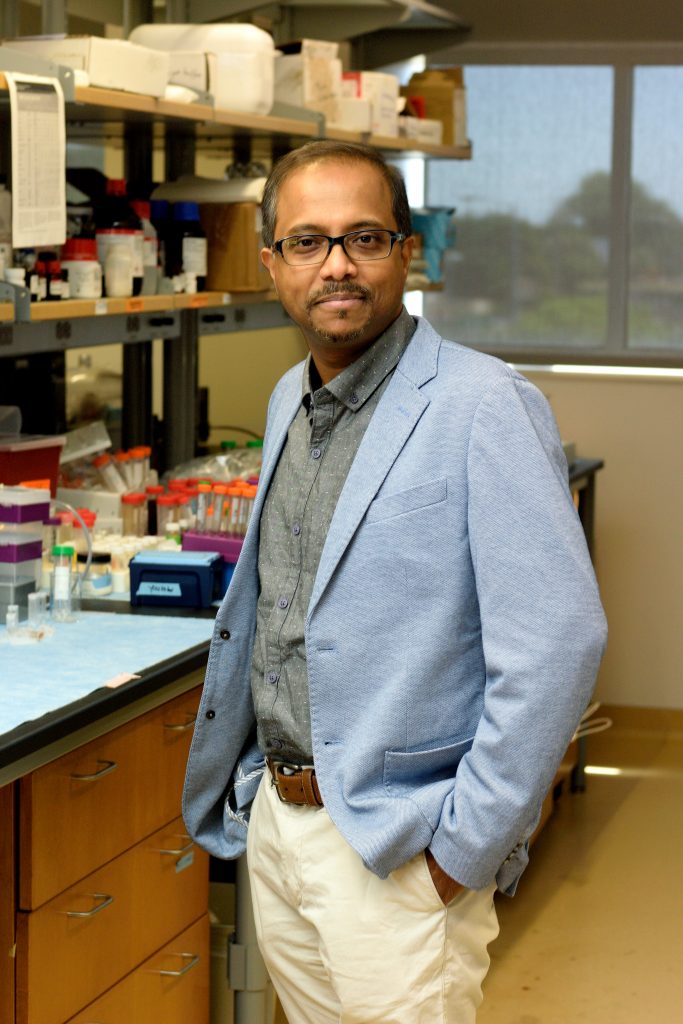
Dipanjan Pan. Photo courtesy of Pan.
The nano-amplified colorimetric test does not require RNA extraction, which many other tests rely on, making it much more accessible. Pan’s other testing technology works on the principle of electrochemical detection that can be used even at home by applying a simple hand-held device for the read-out. Both of these technologies were recently licensed by RNA Disease Diagnostics, Inc.
“I’m delighted to know that my lab has received FDA registration and certification as a development site for the electrochemical AntiSENSE COVID-19 Test. A leading global molecular diagnostic company, RNA Disease Diagnostics, Inc. has received a worldwide exclusive license from UMBC and the University of Maryland, Baltimore (UMB) to commercialize the test,” explains Pan. He notes that the results of this work have been published in several high-impact journals, including May 2020 and October 2020 articles in ACS Nano andan April 2021 article in Nature Protocol.
Pan’s multidisciplinary team includes Maha Alafeef, a graduate research assistant at the University of Maryland School of Medicine (UMSOM); Parikshit Moitra, a UMSOM faculty member; and Ketan Dighe, a faculty research assistant at UMBC.
“This commercialization is a significant achievement and testament to my team’s hard work and dedication,” Pan adds. “While the high impact publications confirm the quality of our science, the licensing agreement and FDA certification attests the translational value of this technology.”
Rapid diagnosis with gold nanoparticles
In fall 2020, Pan and his collaborators received two grants from the National Institutes of Health (NIH) to improve testing to detect SARS-CoV-2, supporting the development of this technology. From there, the research progressed rapidly.
A chief benefit of Pan’s plasmonic technology is that the test results can be detected qualitatively by the naked eye at the point of care, without special technologies. This is made possible due to highly specific antisense oligonucleotides, which are synthetic DNA fragments that bind to RNA molecules from the virus, and aggregate gold nanoparticles.
“For our electrochemical test the ultimate goal is to develop a tiny handheld device for determining the presence of the viral RNA in the nasal swab or saliva samples. Our early prototype involves a disposable test strip that the meter uses to calculate the viral load and then displays the level,” Pan explains.
Pan has a dual appointment at UMBC and UMB, where he serves as professor of diagnostic radiology and nuclear medicine and pediatrics at the University of Maryland School of Medicine. At UMBC, Pan is also affiliated with the department of computer science and electrical engineering (CSEE).
Detecting COVID-19 using readily available tools
A second group of interdisciplinary researchers created a simple way to determine whether SARS-CoV-2 is present in the air. This group is led by Govind Rao, professor of chemical, biochemical, and environmental engineering (CBEE) and director of the Center for Advanced Sensor Technology (CAST). The journal Biotechnology and Bioengineering published their findings last month.
Govind Rao. Photo by Marlayna Demond ’11 for UMBC.
The researchers found that they could collect samples of SARS-CoV-2 by using a simple portable dehumidifier. They successfully tested their collection process in several locations within a hospital, where people reported experiencing flu-like symptoms.
This unique way of identifying SARS-CoV-2 allows hospitals to use readily-available dehumidifiers to detect the virus, rather than buy new scientific equipment to capture air samples for analysis.
“This technology could find widespread use, as it is analogous to a smoke detector,” says Rao. “Once fully developed, it could potentially be deployed everywhere and empower people by giving them a direct readout of viruses and other biological threats in the air around them.”
Rao worked alongside Pan, Douglas Frey, Xudong Ge, and Dighe, all CBEE and CAST faculty. Also working on the research are Michael Tolosa, staff member in CAST; Aaron Thole, a graduate student in CBEE; Priyanka Ray, a postdoctoral researcher in CBEE; and Benjamin Punshon Smith, a graduate student in computer science and electrical engineering. Moitra is also contributing to this work. The UMBC team collaborated with Jim Chang, director of the University of Maryland Medical Center’s department of safety and environmental health, who arranged for deployment of the dehumidifiers at various locations in the hospital.
The research team also is developing a rapid and sensitive test for detecting pathogen signatures in minutes, to pair with the dehumidifier.
Banner image: UMBC’s Interdisciplinary Life Sciences Building. Photo by Marlayna Demond ’11 for UMBC.