We use cookies for analytics and, unless you opt out, advertising.
You can opt out of advertising at any time.UMBC uses essential cookies to run this site. With your permission we would also use analytics cookies (to understand how the site is used) and advertising cookies (to measure and target our ads on other platforms). Nothing else loads unless you accept. You can change your choice any time from Cookie Settings in the footer.Privacy Policy
EssentialRequired for the site to work (login, security, your cookie choice). Always on.
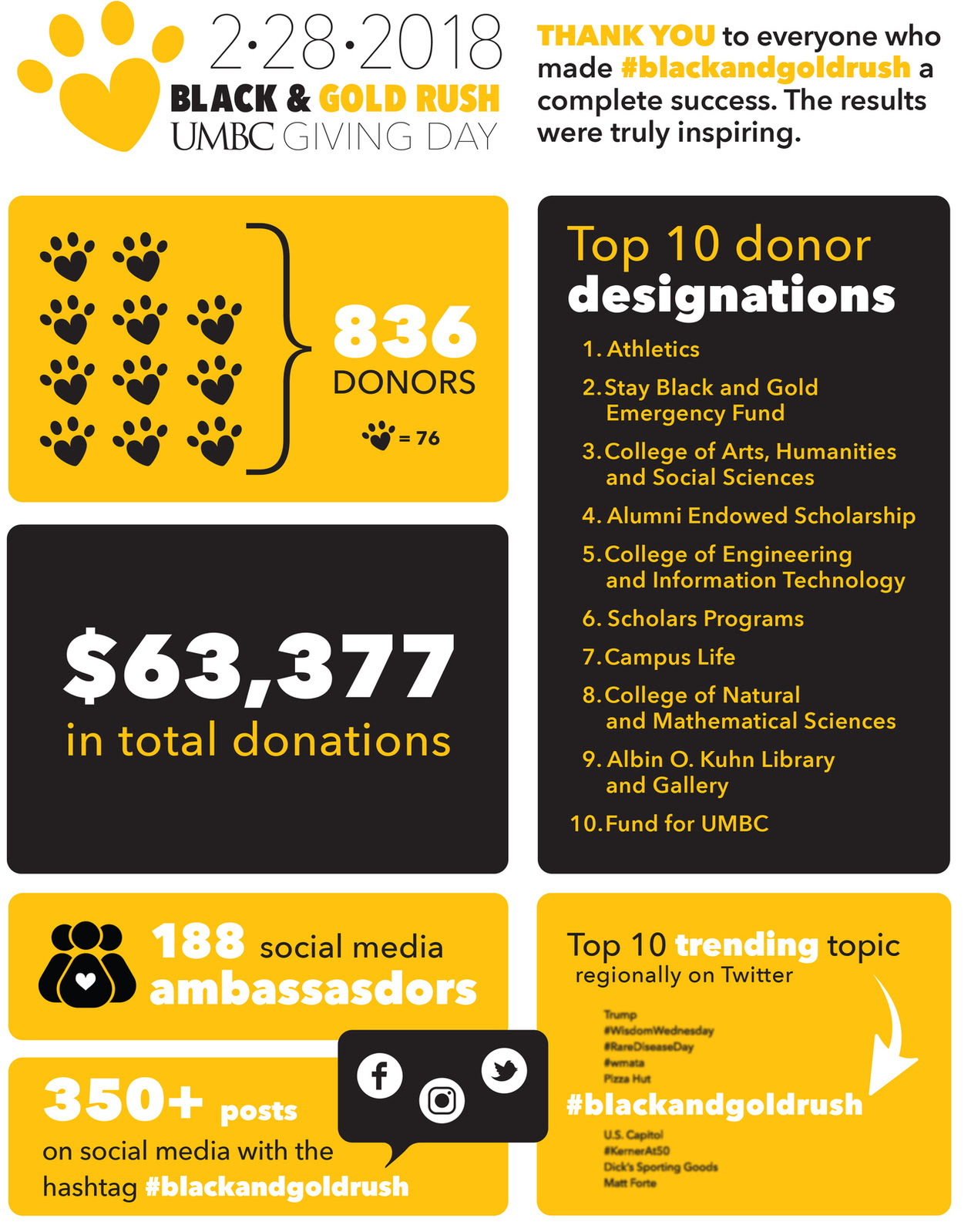
It is with great thanks to the UMBC community that the first UMBC Giving Day—Black and Gold Rush—was truly exceptional. We had more than 400 alumni, 240 faculty and staff, and 250 parents, students and friends support UMBC in 24 hours. Amazing!
A big thank you to everyone who supported #blackandgoldrush.
Sincerely,
Gregory Simmons ’04, Vice President for Institutional Advancement
It’s easy for a single person to feel helpless in the face of really big problems. That’s why UMBC students banded together this week as part of a national effort to tackle hunger.
In partnership with Cheerios and Ellen DeGeneres, and organized at UMBC by Chartwells, which manages Dining Services and True Grit’s dining hall, the “One Million Acts of Good” project made it easy and fun for students to “Matterboxes” with food essentials, notes of encouragement, and educational inserts. The 300 boxes will be shared with five area organizations — Southwest Emergency Services, Elkridge Food Pantry, Maryland Food Bank, Inc., Catonsville Emergency Assistance, and UMBC’s own Retriever Essentials, which runs a campus food pantry and other efforts to combat student food insecurity.
“Helping people is really wonderful,” said freshman Kristy Chan, biology, who cheerfully stuffed boxes alongside her friends, including fellow freshman Kusum Sharma, mechanical engineering.
“Knowing someone out there in the world is going to receive what we’re making is just so great,” agreed Sharma. “It feels good to help.”
As a youngster, Katie Kopajtic ’11 became interested in the stage thanks to the “Harry Potter” films. She acted in school plays while also becoming a strong swimmer at North Harford High School.
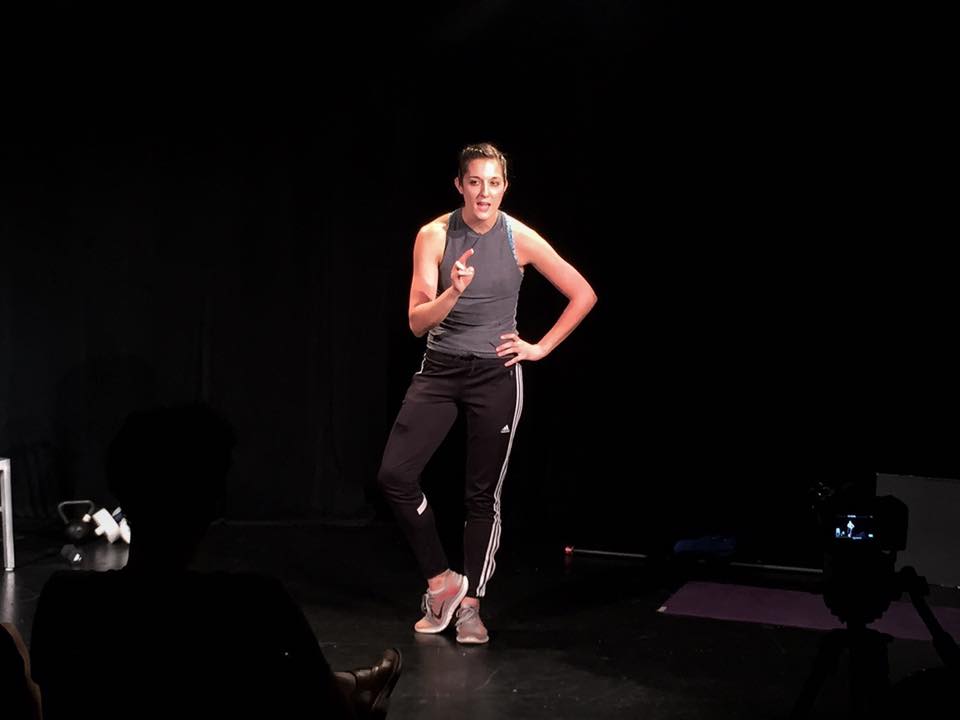
When she arrived at UMBC, she decided to focus solely on finding her voice in the theatre – but she never left her athletic life completely behind. This Sunday, the Brooklyn resident combines both interests in the form of her play “Confessions Of A Personal Trainer,” off-off-Broadway at “Ryan’s Daughter” on the Upper East Side.
Kopajtic said the show is about 40 minutes long and filled with stories about her experiences with clients she met as a luxury personal trainer in New York City, something she’s done for about six years.
“This is a show about loss and love and all the blurred lines of this professional relationship [we have],” said Kopajtic, who spent about two years creating the show. “You end up being a therapist. You end up being a friend. There’s no rule book.”
She premiered the play at the Edinburgh Fringe Festival (the world’s largest arts festival) in the United Kingdom, putting out 26 performances in 30 days and honing the show along the way. BroadwayBaby.com noted: “She’s immensely likeable and her monologues give a strong sense that she’s talking with an audience rather than at them. This whole show feels like catching up with an old friend.”
Coming up next will be a short film called “The Actor,” which Kopajtic wrote, directed, co-produced and starred in last year. Catherine Curtin and Lynn Cohen also appear, and Kopajtic hopes to premiere it at a festival this summer and obtain an online release later in 2018.
Kopajtic said her work at UMBC gave her a true foundation.
“I learned the basics, and then I learned how to act,” she said. “I got a lot of tough love in different ways. I didn’t know anything about choosing material. I’m like a girl from the country, and in one of my first college auditions, I chose a monologue from a play where it was a woman in her 40’s—and I was 18.”
She appeared in six plays at UMBC and credited professors like Eve Muson and Susan McCully with guiding her on and off the stage. Kopajtic said Muson was a director who accepted nothing less than your best work while McCully opened her eyes to how to read plays and understand the stories better – to set your ego aside and do the work.
McCully, who said she is delighted with the success Kopajtic has found, also helped her personally when she came out.
“She came and she talked to me, and I said that’s great that you know who you are,” McCully said. “She is one of those students who is able to combine talent with intelligence. I mean real intelligence, with curiosity and creativity. That’s a combination of a lot of things that make it capable for someone to be a writer, actor [and more].”
With that combination, this Retriever is ready for big things ahead.
With the runaway success of Marvel’s Black Panther movie, and the Women’s Center’s upcoming Knowledge Exchange about diversity in superhero media coming up this Thursday, we thought it might be nice to share this reflection by former Women’s Center staffer Prachi Kochar ’17, psychology, on her lifelong hobby of reading comic books and how how inclusive the comic book industry has been for women, particularly women of color.
I have been a superhero comic book fan, on and off, for about 13 years – beginning with checking out Spider-Man and Fantastic Four comics from the public library in elementary. At that young age, it didn’t occur to me in explicit terms that comic books, their industry, and their fans often excluded or mistreated women, people of color, and LGBT people. Instead, I felt a sense of shame and guilt whenever someone commented on my comic book reading, feeling like something was not “right” with me for being a young girl that loved comic book superheroes.
Imagine my joy when, on a whim, I decided to check out Runaways from the library. Runaways follows the story of a group of teenagers who band together after finding out that their parents are part of an ancient evil conspiracy and details their struggles to survive, a typical over-the-top comic book plot, but an entertaining one. In its pages, I found a diverse cast of characters with girls like me. Girls who could be superheroes, but could also be fully-rounded, human characters that weren’t just valued for their bodies or used only to further the plot of their male love interest. For example, the de facto leader of the team was Nico Minoru, an Asian-American teenager, and she was portrayed as a three-dimensional character with strengths and weaknesses that I could relate to. Although Runaways was definitely not perfect (and is there such a thing as a perfect form of media?), it helped me to feel more included in the world of comic book superheroes.
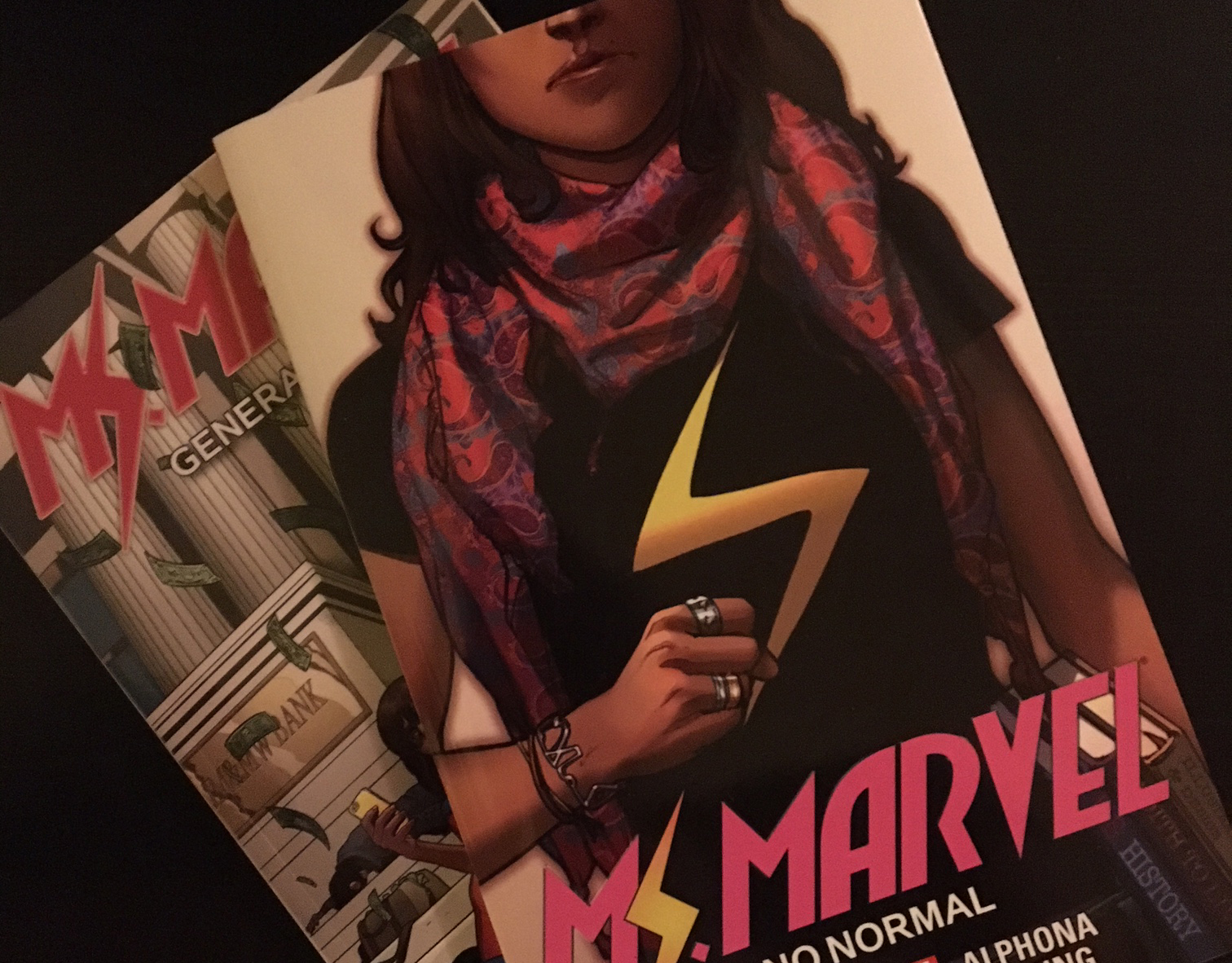
Kamala Khan, the title character of Ms. Marvel is proof of how powerful representation in superhero comics can be.
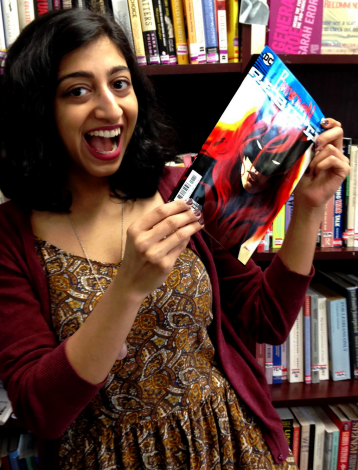
Even though I have consumed too many comic books to count over the course of the last 13 years, I have found that the stories that I keep coming back to are the ones that recognize and promote diversity and representation of marginalized groups. My personal favorites have been Runaways(2005), Batwoman: Elegy (2011) Young Avengers (2013), Ms. Marvel (2014), Midnighter (2015), and Black Panther (2016); however, there are several great series out there. There are also a few series I am looking forward to like the Rebirth Batwoman series and the new America Chavez series.
Especially in this political climate, immersing myself in stories that help me escape from the world but are also representative of the diversity of the real world can be a form of self-care. Conversely, reading story after story that objectifies or “fridges” women, draws on racist tropes, and/or mistreats LGBT characters is the opposite of a break from the real world, and can make readers like me feel even more downtrodden. Even though issues like comic books or video games may seem trivial, media can be very significant in shaping the way that we perceive the world around us, other people, and ourselves.
“It’s important to remember that these comics don’t exist in a vacuum, that they are created by writers and artists who live in the same sexist social systems we all do and that’s reflected by the characters and the stories.” – Feminist Frequency
Media can also become a platform through which marginalized people can express our voices and experiences. The diversity of comic book creators is an integral part of any conversation about diversity in comic books. Although this does not hold true for every single series, I have found that the stories with the strongest emotional impact and most realistic representation have creators that have had experiences similar to the characters they are writing. For example, the first run of Ms. Marvel, a series about a Pakistani-American Muslim teenage girl becoming a superhero, was written by an American Muslim woman and edited by a Pakistani-American woman, and the 2015 Midnighterseries, a series about an openly gay superhero, was written by a bisexual man. This ties into my earlier point about how marginalized people must be a part of media representation at all stages in the process.Diversity of characters on the page is not enough; we must also have diversity of thought (warning for a lengthy video, but hey, it’s Idris Elba).
One of my favorite heroes is Jessica Cruz, a Green Lantern and a woman of color who struggles with anxiety. It is refreshing seeing someone who faces similar struggles as me being the headliner on a mainstream book, and in-universe, being a superhero. (Green Lanterns #15 – 2017) – Click for enlarged pages!
If you want to get into comics, it can be a daunting task, especially on a budget. Going to a comic book store for the first time can be a scary experience due to misogyny among comic book fans. This tumblr lists comic book stores across the United States (including Maryland) that are inclusive of women, LGBT, and people of color fans. Philadelphia also hosts the only shop on the East Coast owned by a Black woman, that has been praised for how welcoming it is to fans, both old and new. The public library is also a great place to get older comic books, so break out those library cards! Comic books can also be consumed from the comfort of your own home. Comixology and Marvel Unlimited are two digital services that offer access to digital copies of comics for a price, but often have sales. Alternatively, you can order print editions or buy ebook editions from Amazon, which often has discounts. It can be hard to know where to start with the tangled continuities and relaunches of superhero comic books, but my advice is to just pick up something that looks interesting to you and then use Google/Wikipedia to fill in any gaps.
I am hopeful that as we continue to support stories about and by people with marginalized identities, superhero comic books will continue to become more inclusive and accurately represent the people that they inspire. Somewhere out there, there’s a little brown girl picking up her first comic book, seeing herself in Riri Williams or Kamala Khan, and being proud of her love of superheroes. Everyone deserves that feeling.
The Center for Art, Design and Visual Culture presents The Poet’s Brush: Chinese Ink Paintings by Lo Ch’ing, on display February 1 through March 17. The exhibition features paintings by Lo Ch’ing, a Chinese poet-painter who creates art simultaneously rooted in tradition and expressive of contemporary sensibility. His works describe a path between the strong currents of his own short past, the millennia-old past of the Chinese empire, and the demands of today’s postindustrial, consumer-driven and individualist global citizen.
The exhibition, curated by University of Maryland professor Jason Kuo, comprises 30 artworks and represents the artist’s first show in the United States in ten years. Representing four decades of the artistic activity, the selection of works ranges from smaller, poetic compositions of the late 1960s to monumental, post -modern landscapes of 2015. Working in the millennia -old tradition of Chinese ink art, Lo’s paintings include familiar landscape forms of the genre, such as mountains, clouds and river scenes, but he updates this hallowed pictorial language with his own idiosyncratic vocabulary—one that includes an array of modern symbols like airplanes, icons, asphalt and skyscrapers—and aerial views impossible in ancient times.
Critically acclaimed both in Taiwan and China for his painting and his poetry, Lo Ch’ing’s works have been shown internationally at venues such as the Saatchi Art Gallery and the British Museum in London.
From time to time, UMBC Magazine will highlight interesting research being done by Undergraduate Research Award (URA)-winning students. Today, we hear from Jolee Cohen, a Linehan Artists Scholar pursuing a BFA in Acting, who will graduate this spring. Her research involved participating in a Summer Shakespearean Study in London, England.
Describe your project: Over the summer, I studied at the London Academy of Music and Dramatic Art in London, UK, where I was introduced to classical acting and research techniques for working with and performing Shakespeare. Now, I take what I learned and hone the craft, implementing it into my own work and using it to help others.
Who is your mentor(s) for your project? My mentor is Professor Eve Muson of the Theatre Department and Head of the BFA Acting program. She is my adviser and also a professor I had worked with many times before in classes and in theatrical productions. After working with her so many times, and having her mentorship in finding the program, working with her seemed so obvious to me.
How did you become interested in this project? I had worked extensively with Shakespeare once before while here in the U.S., but I felt like I wanted more. The department here is lovely but the classical acting training is minimal, and I knew I’d be able to get that in London. With the nudging of my parents, friends, and advisers, I applied for the Shakespeare Short Course program.
How has being a URA scholar helped you to carry out this project? Mostly, I was able to afford to go do the program, along with the assistance of the Linehan Artist Scholars Summer Award. Without any of that help, I never would have been able to study with some of the best teachers in London and experience Shakespeare the way it was always meant to be experienced.
What has been the hardest part about your research/what was the most unexpected thing about being a researcher? I’ve so often thought of research as something strictly for STEM, and for a larger community instead of for an individual. Part of the challenge was understanding and articulating how my research has been impactful in a personal way, and physically recording what I was learning as it was happening, since theatrical/performance research is so focused on the physical and emotional experience.
What has been the most rewarding part? The most rewarding part was seeing how the classes and performances were impacting my peers in the program with me, because I knew it was also a reflection of how I was growing. Getting to use this as personal research but to also experience it with others was very exciting and fulfilling.
How will you disseminate your research? I will be doing a performance at URCAD on April 25, to reflect my experiences during the time I was in London, and afterwards. Also, I was able to incorporate some of the techniques I learned this summer at LAMDA in the UMBC Theatre Department’s recent production of Twelfth Night.
What is your advice to other students about getting involved in research? Don’t be afraid to ask questions. Do what seems the scariest. Write things down. Have an open heart and an open mind. And have fun.
What are your career goals? Simply, I want to be happy doing what I love. I want to make art that questions, confuses, and excites. And I hope to get work, no matter how long it takes for it to be something worthwhile.
Header photo: Jolee performing in the UMBC theatre department’s production of Twelfth Night by Marlayna Demond ’11 for UMBC. Inset photo and video provided by Jolee.
Olympians expect top-notch performance from their minds and bodies, but they get crucial advantages from the very best equipment for their sports and the weather conditions they’re competing in. Skis, for example, must stand up to near-constant changes in stress during races.
The ideal ski provides a stiff and rigid platform for skiers’ boots to attach to, flexes to carve through turns, doesn’t break under the pressure of jumps and landings and is light enough not to slow the athlete down. But that’s not all: Skis must resist damage from collisions, absorb vibrations from icy conditions and withstand the temperature extremes and intense sunlight common in mountain environments.
That’s a lot to ask of a single item. The first skis were made of strong, flexible ash wood, but technology has found ways to do much better. Today’s materials design and construction processes are closely guarded industrial secrets, specific to individual ski companies. But I and other materials experts know that the essential components and methods are very similar: All skis are like sandwiches, stacking separate layers of different materials with all those separate properties into a single item, a competition-class ski.
Ski technicians and technology help athletes do their best.
Advanced materials for extreme conditions
Ultra-high molecular weight polyethylene is a highly engineered plastic often used in high-strength ropes as well as in artificial hip and knee implants. It’s tough, bends and flexes a lot without breaking, resists scratches, retains its properties across a range of temperatures and has tiny microscopic pores across its surface. When it’s used as the base layer of a ski, those microscopic pores act like a sponge into which racing wax is melted to fine-tune the ski’s contact with whatever the snow conditions are.
The sides of the ski base are made of high-strength steel alloys that are heated and processed to meet the demanding conditions of skiing. These processes make the steel resistant to rust and able to be sharpened like a knife. The steel needs to hold its edge to carve through snow and ice while flexing with the rest of the ski without cracking or breaking.
Inside the ski
On top of the base is a complex layer in the ski sandwich, an element itself called a “sandwich panel,” made of similar materials and with the same techniques as those used to build spacecraft, aircraft and performance race cars. The center of the sandwich is a core material surrounded by fiber-reinforced composites.
The cores of ski sandwich panels can be lightweight titanium alloys, polymer foams similar to Styrofoam coffee cups or different kinds of woods – such as maple, oak, aspen or poplar. These different plastic, wood and metal materials are layered and combined to tune the ski to the desired levels of strength, stiffness, ability to twist and vibration-damping, all with as little weight as possible.
The outer layers of the sandwich panel are made from epoxy resins – high-performance glues – into and onto which are laid engineered fabrics like carbon fibers, fiberglass and Kevlar. These resin-fiber layers hold the sandwich core structure together and make all of the different material types work as one.
Like the core, these composite layers vary in thickness and makeup along the ski. They’re even applied at different angles to the ski itself to improve ski stiffness and strength.
The sandwich panel ski makes turning quicker and helps the ski ride smoothly over bumps and ruts in the terrain. It’s more responsive to the skier and more stable at high speeds than less advanced designs because it can take advantage of the best aspects of all its ingredients. Overall, the sandwich panel is built to be stiffest under the binding area where the boot attaches, and more flexible near the ski tips, to glide more easily over uneven terrain. Each ski’s sandwich panel is designed and built to optimize performance in a specific skiing event – such as downhill racing, snowcross or jumping – or even a particular skier’s preferences.
Rapid improvement
The ski industry, and particularly its competitive elements, are willing to take risks and push limits, exploring the most advanced materials concepts to achieve optimum performance. As a result, decades of research have improved Olympic skiers’ times significantly over the years.
That work has also spread benefits well beyond the Olympic medal podium and into the recreational market. Amateur skiers can explore more advanced terrain and more challenging slopes with help from the tuned spring response, vibration damping and light weight of their skis. Recreational skiers can also go faster in changing snow conditions and steer more easily through turns because their skis are adaptable and responsive to individual skiers’ strengths, as well as slope conditions. The materials advancements help recreational skiers ski well on terrain previously accessible only by superior athletes.
All these advances happen very quickly. Before the next Winter Olympic Games, consumers will likely be able to easily purchase the same kinds of skis and snowboards that the 2018 Olympians competed on – and the 2022 Olympians will be using even better materials that help them go faster, higher and stronger than ever before.
Local alumni welcomed UMBC professor, author and alumnus, Dr. George Derek Musgrove ’97 to discuss his new book Chocolate City: A History of Race and Democracy in the Nation’s Capital at a Bar Talk event on February 1 at Denizens Brewing Company in Silver Spring.During the talk, alums enjoyed one-on-one time with the author, whose book tells the tumultuous, four-century story of race and democracy in our nation’s capital.
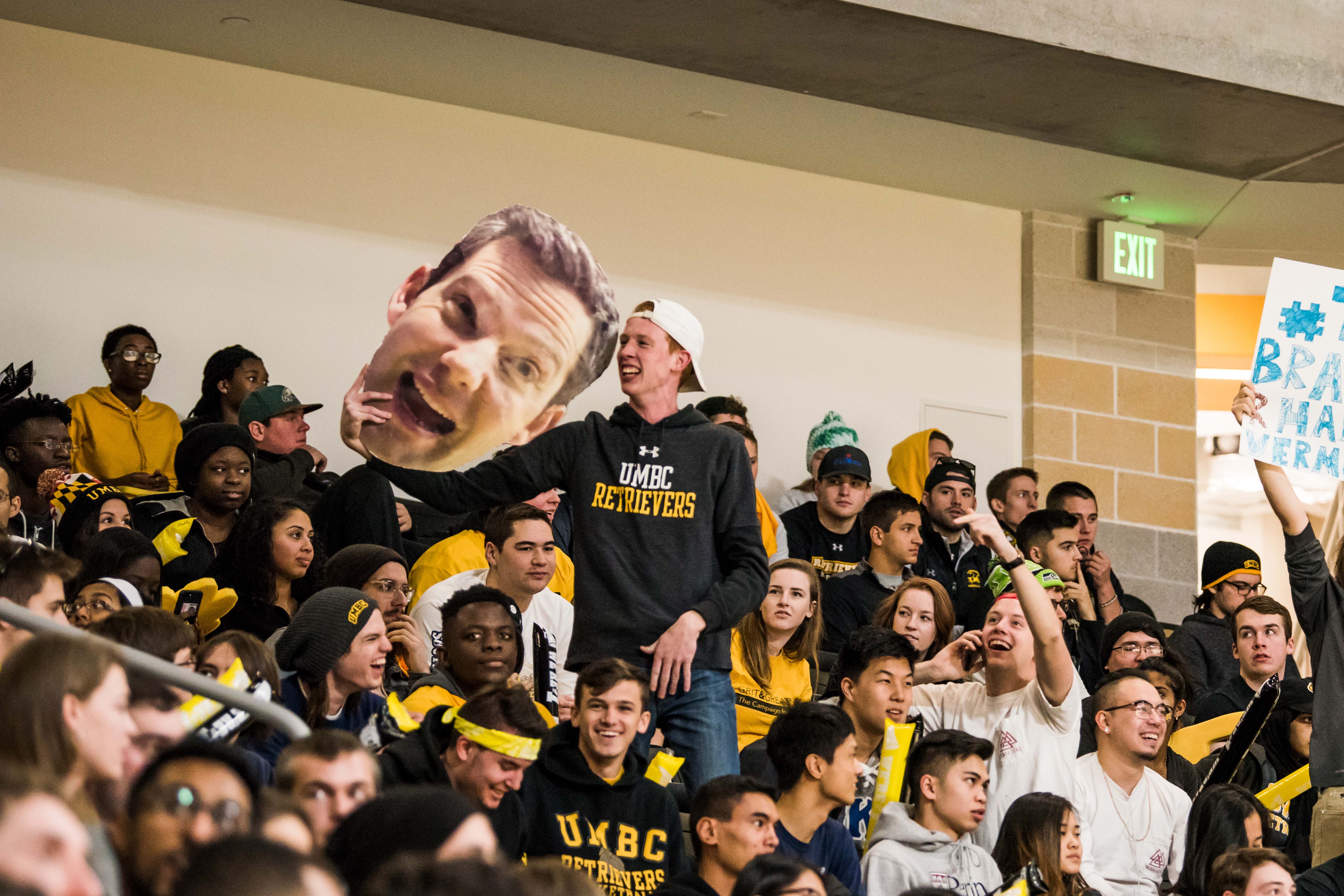
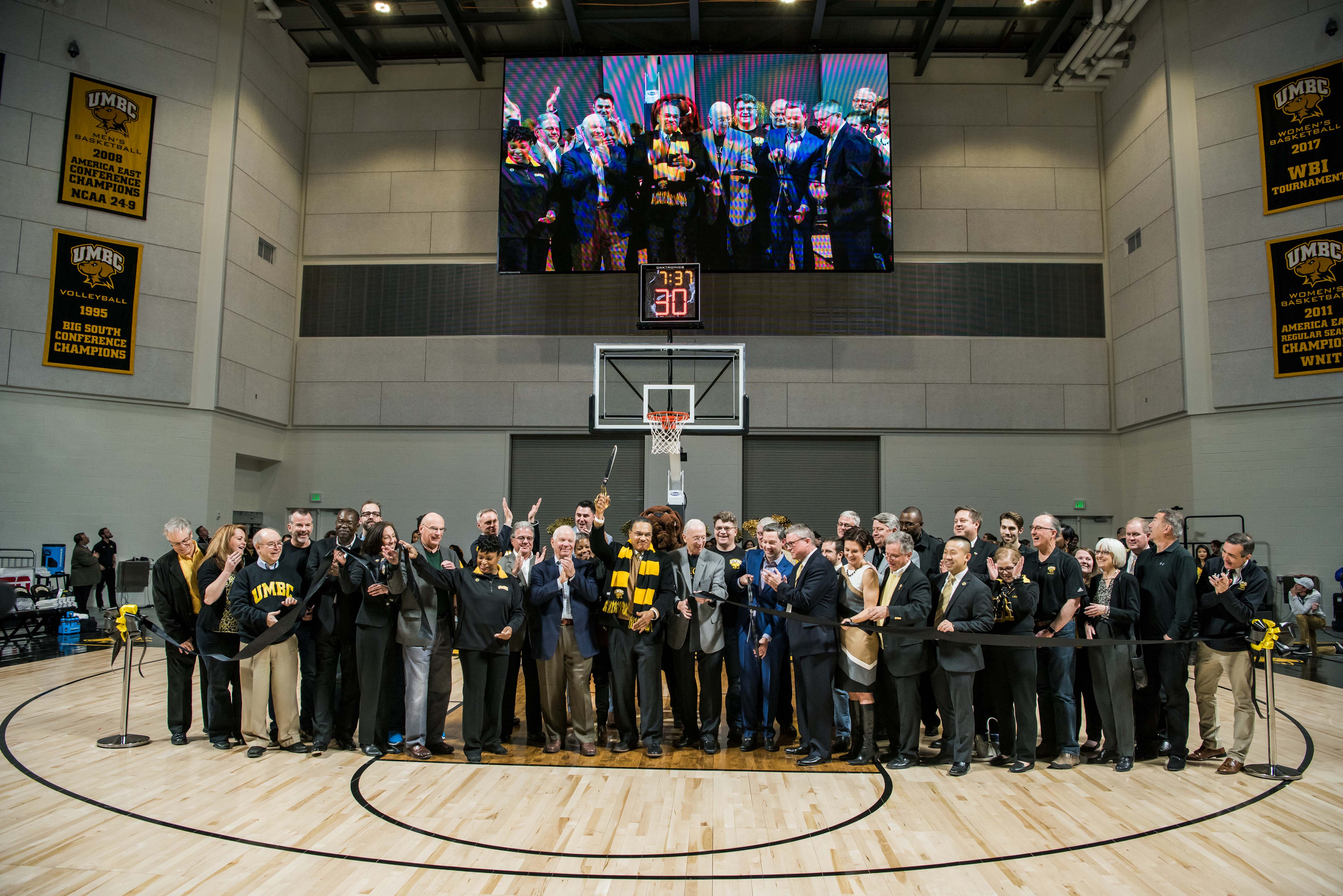
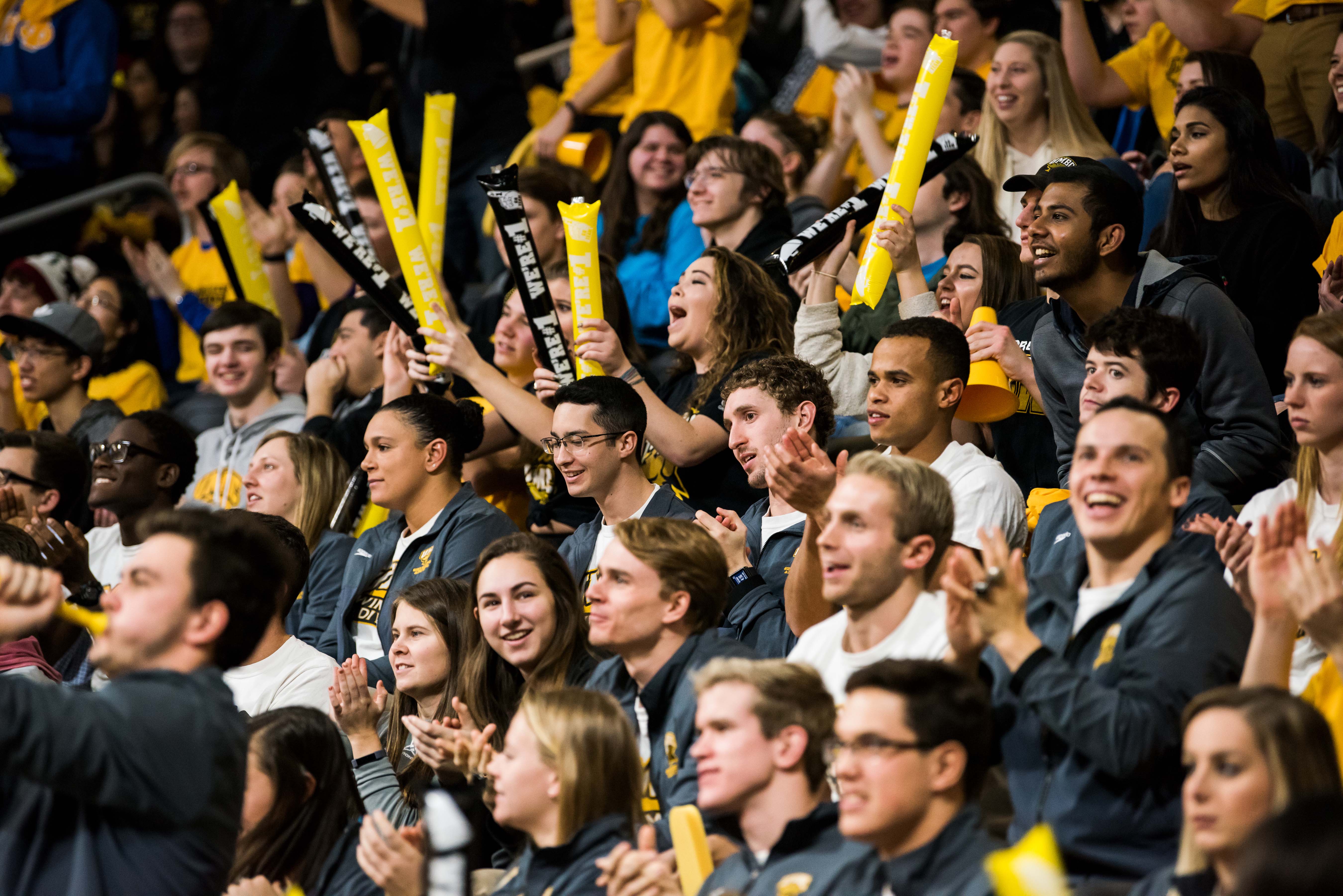
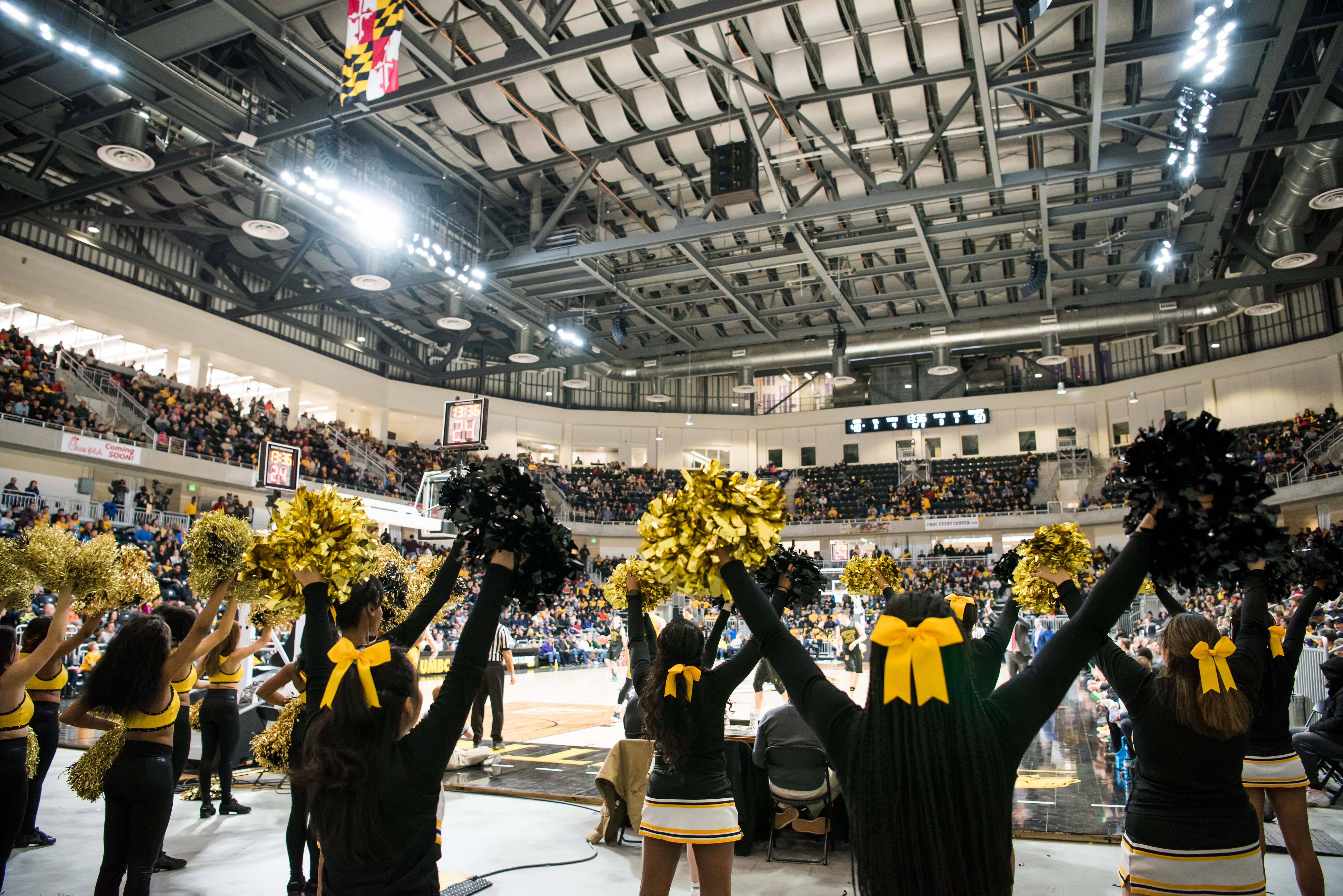
UMBC’s Retrievers officially moved into a new Dawg House Saturday, sharing the excitement of their first Event Center ballgame with a sold-out crowd of fans bedecked in black and gold. But despite a disappointing loss to rival Vermont (81-53), the stadium couldn’t contain the enthusiasm of the more than 4,700 Retriever Believers who helped usher in a new era of UMBC athletics.
“I thought it was awesome! It was really crowded and the facilities were great, and…it felt like we were coming together as a campus, as a school,” said Marissa O’Connor, a sophomore soccer player who enjoyed the men’s basketball game with her friends.
As the players’ sneakers squeaked across the wax of the shiny new court, fans in commemorative “Game 01” t-shirts cheered loudly, blowing horns and whipping colorful balloons to fill the stands with motion. One student held up a huge cut out of men’s basketball coach Ryan Odom.
Members of every part of Retriever Nation showed up Saturday to cheer the team on, including alumni athletes like Guy Cottman ’84, INDS, who played point guard on the men’s team as a student.
“This is really nice,” said Cottman above the roar of the crowds behind him. “We used to fill it, too. It’s always nice when you have a crowd.”
Juan Holcomb ’82, American studies, a longtime member of the Alumni Association board, and a former guard for men’s basketball, said he’s pleased to see UMBC embracing its athletic side.
“It’s good for the school, it shows growth, and sports is always a great way to bring people together, so this is an exciting time for UMBC,” he said. “I’m glad our president is embracing sports – academics first, of course, but sports are important, too.”
With great sadness I share with you that Dr. Walter K. Sherwin, a founding faculty member and a leader in the UMBC community, passed away on Tuesday, January 30, 2018.
Dr. Sherwin taught on campus for more than 40 years, from its opening in 1966 until his retirement in 2011. Early in his career at UMBC, he established what would later become the Ancient Studies Department, and after receiving a Fulbright grant to study in Rome in 1967, he developed the university’s first study abroad program — an opportunity for UMBC students that continues today.
Dr. Sherwin was widely admired by students, faculty, and staff for his energy and enthusiasm in the classroom, his commitment to classical studies, his kindness, and his sense of humor. He was an inspiring mentor, and many students in his program fondly remember him as a pivotal influence in the positive trajectory of their lives. A scholar of the classical tradition, his unique interdisciplinary approach to ancient studies introduced generations of students to the Latin language, Roman literature, and classical mythology. Dr. Sherwin tirelessly promoted ancient studies in the community as well, frequently lecturing and teaching in local schools and churches.
Beyond the classroom, Dr. Sherwin was a dedicated fan of UMBC men’s and women’s basketball teams. A former college athlete and season ticket holder, he could often be found at games cheering on his beloved Retrievers.
Viewing services for Dr. Sherwin will take place on Friday, February 2, 2018, 5–8 p.m. at Witzke Candle Light Funeral Home, 1835 Frederick Rd., Catonsville, MD 21228. A Mass of Christian Burial will take place on Saturday, February 3, 12 p.m. at Our Lady of Angels Chapel, Charlestown Retirement Community, 713 Maiden Choice Lane, Catonsville, MD 21228.
In lieu of flowers, the family requests memorial contributions to the UMBC Foundation Christopher Sherwin Fund in memory of Dr. Walter K. Sherwin. Please make your checks payable to the UMBC Foundation and note in the memo line your gift is in memory of Dr. Walter K. Sherwin. Send to:
UMBC Foundation
Christopher Sherwin Fund
8th Floor Admin. Building 1000 Hilltop Circle
Baltimore, Md. 21250
David Rosenbloom, Professor and Chair, Ancient Studies
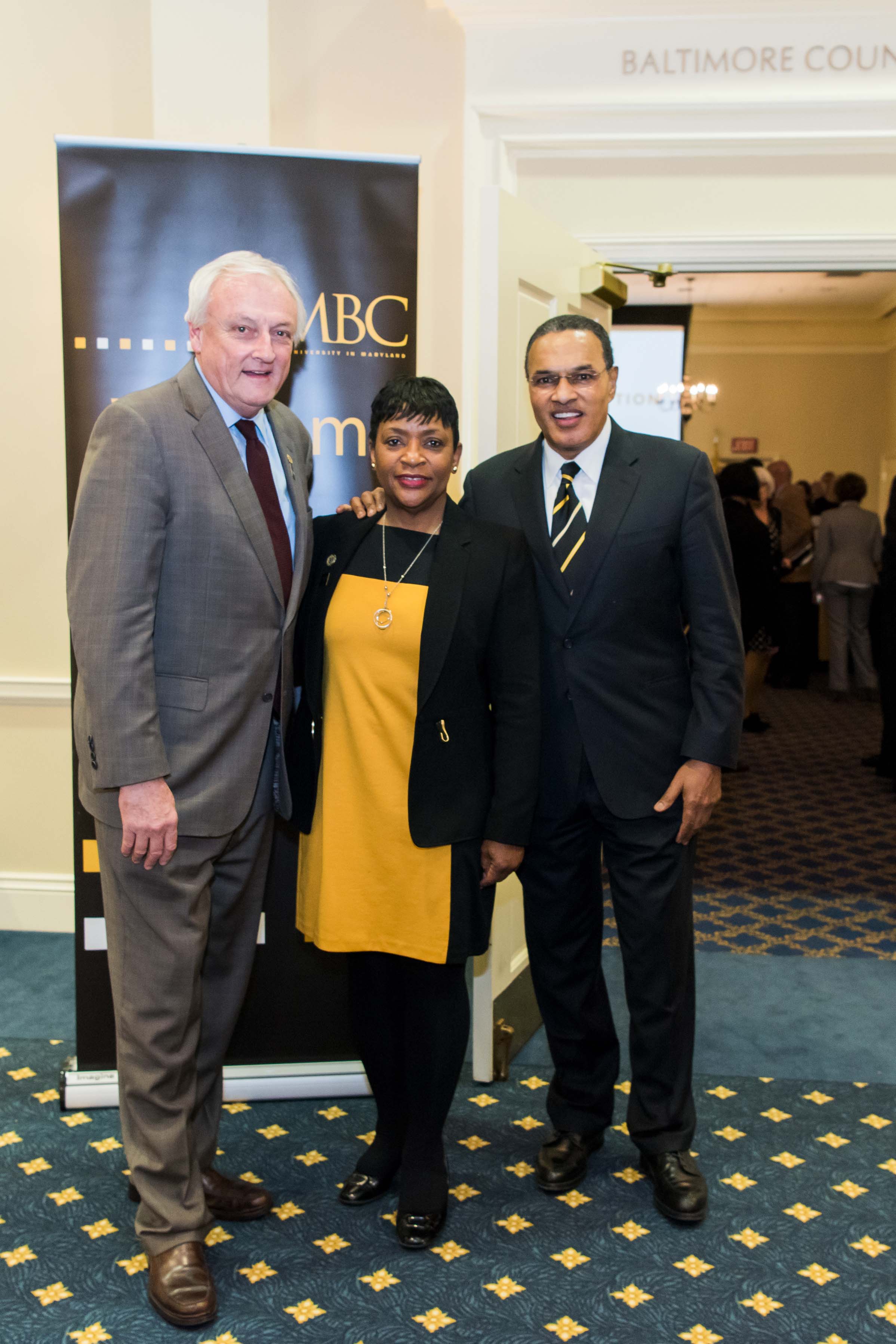
UMBC’s annual night in Annapolis celebrated alumni who work every day for the public good of Marylanders. Nearly 70 percent of UMBC’s more than 70,000 alumni live in Maryland and contribute to the State’s economy and civic life in a variety of ways.
Along with President Freeman Hrabowski, House of Delegates Speaker Pro Tem Adrienne A. Jones ’76, psychology, hosted the event along with Senator James Mathias ’74, political science; Delegate Haven Shoemaker ’87, political science; Delegate Mark Chang ’99, psychology; Delegate Charles Sydnor, III ’00, policy sciences; Matthew A. Clark ’00, history, Chief of Staff, Office of the Governor; and Tiffany Robinson ’97, political science, Deputy Chief of Staff, Office of the Governor.
“My co-hosts this evening perfectly represent the grit and greatness and inclusive excellence of UMBC,” said Jones. “They believe in the power of education. They are committed advocates for UMBC here in Annapolis. And they continue to be involved with the university as mentors for current students and ambassadors for UMBC in their communities.”
Over the course of the evening, the group heard from a number of current students, including UMBC’s very first Rhodes Scholar Naomi Mburu ’18. Hrabowski asked the alumni in the room to raise their hands proudly, and invited them to be mentors to current students.
“We are here tonight to celebrate the public service role each of you plays in our state,” he said. “We are so proud of you. We know how impressive you are – and we want to make sure you know each other and the powerful network you share for career opportunities and professional development.”
UMBC’s San Francisco Bay Area alumni got together last week for drinks and a warm welcome from their East Coast Retriever friends. Dr. Anupam Joshi, Director, UMBC Center for Cybersecurity Professor and Chair, Computer Science and Electrical Engineering, and UMBC’s Office of Alumni Relations staff greeted more than 50 alumni January 22 at Steins Beer Garden in Mountain View, CA. We hope you enjoy these photos from the event.