All posts by: Jenny O'Grady


Rhodes to Success

Becoming an academic superstar doesn’t happen overnight. It takes grit, character, and a community of true believers. Luckily for Naomi Mburu ’18 — UMBC’s very first Rhodes Scholar — she has all three.

by Jenny O’Grady

To read her resume, and to sense the shining future ahead of her, it would be easy to guess that Naomi Mburu was born an academic star. And, to a certain extent that is true.

In her senior year of studying chemical engineering, UMBC’s first Rhodes Scholar is predictably a whiz in the classroom and the lab. She’s also generous and patient, serving as a mentor to fellow engineering students and Meyerhoff Scholars, and a natural leader, exuding a quiet confidence beyond her years.

But, what makes Mburu special — and what has made her successful — is not some innate key to knowledge unattainable to others, but a deep desire to question the world around her, and the support system of family, professors, and friends at UMBC and elsewhere who have stoked and nurtured that flame from her earliest years.

As Mburu finishes out her final semester at UMBC, her packed schedule reflects the magnitude of her academic achievements — from an invitation to Washington, D.C., to hear the State of the Union Address, to a standing ovation at UMBC’s first basketball game in its new Event Center.

Amid all of the attention and interviews about the Rhodes, she and her family also continue to mourn the loss of her older brother, Nicholas, who unexpectedly passed away following a car accident just after the winter holiday. The loss shook them all, while also strengthening the bonds of her family and their local Kenyan community.

To handle so much takes strength, poise, and a true sense of self. One of her biggest fans, UMBC President Freeman Hrabowski — who told the Washington Post he cried upon hearing the news of her award in November — has watched her adjust these past months.

“What’s so impressive about Naomi is that she is as grounded as ever,” he said. “One senses her humility and authenticity in that great smile. She talks comfortably about the research that she’s done, about her future in England in nuclear engineering. She shows us the true Renaissance spirit.”

And in so many ways, this is just the beginning.

* * * * *

Over in the student apartments, Naomi Mburu ruins a pot of noodles.
It’s true: UMBC’s very first winner of “the oldest and most celebrated international fellowship awards in the world,” as defined by Rhodes, is still a bit wobbly with her cooking. She’s working on it, though, especially since hearing mixed reactions about the food options in England.
In the fall, she’ll continue her education in the Oxford lab of Dr. Peter Ireland studying heat transfer applications for nuclear fusion reactors. Over the summer, she’ll visit family in Kenya, and travel to Lindau, Germany, for an invitation-only Nobel conference. And in this, her final semester, where in addition to taking a full course load, she’s also TA-ing and coaching Lakeland Elementary students in math, and traveling many weekends for the National Society of Black Engineers, she’s also fielding media interviews, giving speeches — the whole nine yards.
Amid it all, she knows her weaknesses, and works to strengthen herself. Amid it all, she’s figuring out the noodles.

* * * * *
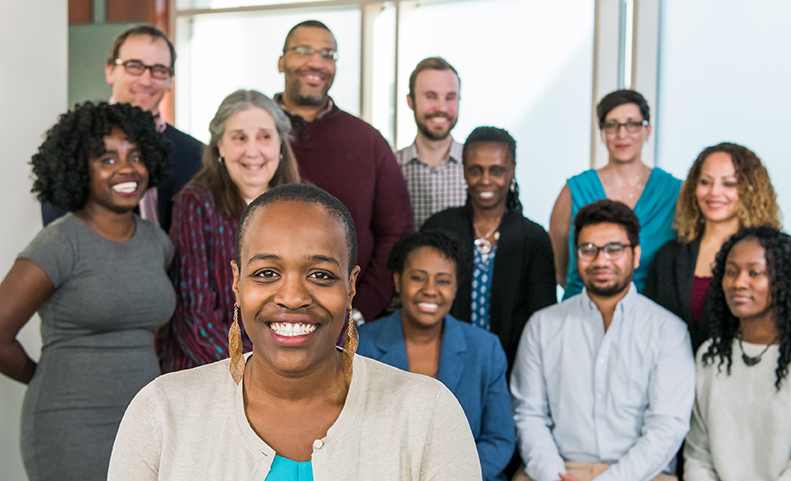
“She had to find herself. I think she knew she was intelligent, but she had to dig deep and see how much potential she had. Funny enough, sometimes it takes a math class for you to see it.” — Douraine Donaldson (left), with Naomi and fellow Mount Hebron High School teacher Mary Ann Sankey.

The Early Bird

As a kid, Mburu struggled with math. Like so many, she just “didn’t get it.” But instead of complaining, and instead of letting her studies lag, she got up extra early each day to meet with her teacher Mary Ann Sankey, who was in at 6 a.m. to start setting up for class.

Together, they hashed out the numbers. Even though she had no idea of what she’d be studying five years later, Mburu somehow already knew that math would be the key to so much more. In her teachers at Mount Hebron High School and beyond, she found people who not only believed in her, but pushed her to challenge herself.

“Naomi came in before school started, and she was into it, wholeheartedly,” said Sankey. “She didn’t just want to know what the answer was, but how and why it was working. It’s a wonderful thing to see in a student.”

As a little girl, Mburu had a few jobs in mind for herself: inventor, spy, or pediatrician (although she ditched the last idea when she realized she hated blood). As her teachers broadened her view of what was possible, they also helped her shape her questions and her study habits.

When Douraine Donaldson, Mburu’s AP Calculus teacher recently heard President Hrabowski mention the word “grit” in a speech, she immediately thought of her former student, who she recalls never shied away from asking anything.

“I saw that level of determination as it was starting to emerge…you know, the no-fear attitude, the ability to question and wonder why, and push the boundaries,” said Donaldson, who described Mburu as a center of inquiry, drawing other students in to discuss a range of topics. “I think it really started to emerge in her junior year. And by the time Naomi graduated, she was just ready to take it on and challenge things even more.”
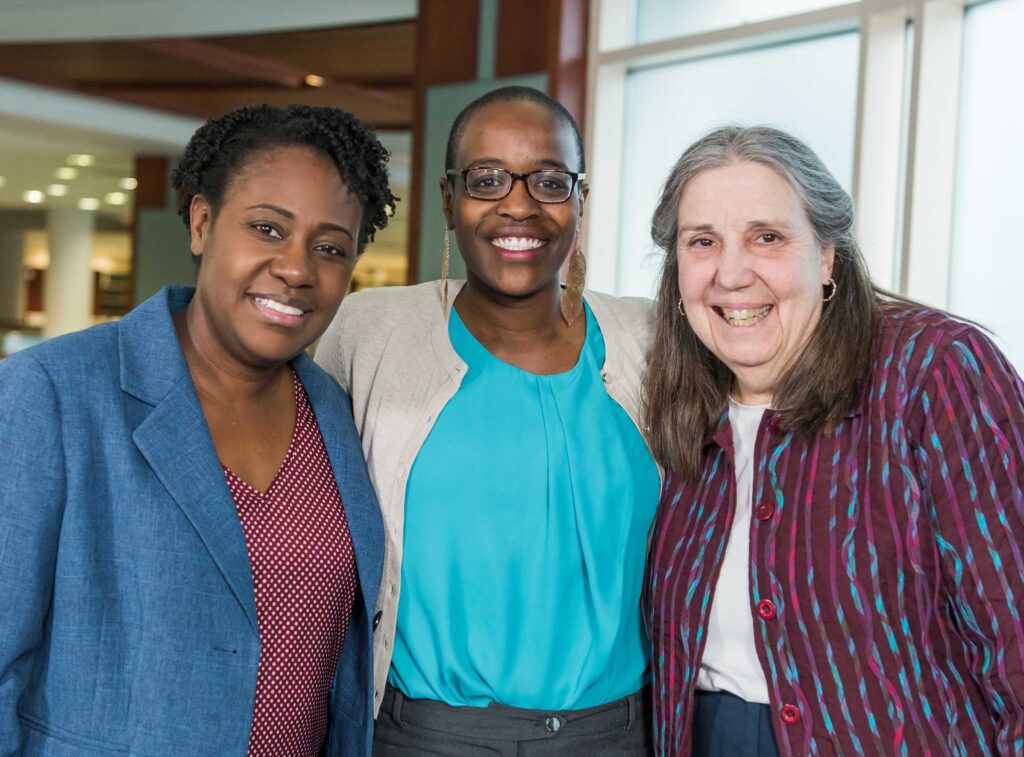
“One of the great things about Naomi is that she’s going to be a person that a lot of other young women and young black women look at as a role model and success story. I think she’s going to inspire a lot of people.” — Lee Blaney, associate professor of chemical, biochemical and environmental engineering

As she began to figure out what types of work she enjoyed, Mburu knew she wanted to get into a lab environment. As a junior in high school, she attended an admissions event at UMBC where she met now-retired professor of biological sciences Lasse Lindahl, who offered her a position in his lab that summer.

“There were a ton of freshmen in the lab and juniors, and they didn’t treat me any differently” as a high schooler, she said. “I had to read a lot for the first couple of weeks to understand what was going on, but after I had my grounding, they let me run experiments.” By the end of the summer, she was invited to present at the Summer Undergraduate Research Festival with her college-level colleagues — an experience that helped her get over a fear of talking about her work, she said.

It wasn’t long before Mburu was a freshman at UMBC, figuring out her next steps with the help of a new cast of teachers.

Unsure of her major choice and looking for more hands-on experience, she approached Gymama Slaughter, associate professor of computer science and electrical engineering, during her freshman year, and left the meeting with a permanent spot on Slaughter’s team. In that role, the lone undergraduate chemical engineer among graduate-level researchers, Mburu learned quickly to stretch herself as a questioner and communicator.

“She’s a go-getter, she always hits the ground running, and she’s never afraid of whatever you’re going to give her…she’s excited and ready to do it,” said Slaughter, who has encouraged Mburu to follow her imagination in terms of what she studies, and has watched her student learn as much from her missteps as her successes.

“We all do fail miserably at times,” laughed Slaughter. “It’s important to allow students to fail rather than give them the answer all time…or they’re not really learning. It’s nice when a student like Naomi comes to you and says, ‘I read this, and I think this will work for us’…and I say: ‘Sure. Let’s try it.’”

Even in college, some old habits die hard. When she had trouble wrapping her head around a concept in Lee Blaney’s class on chemical manufacturing type processes, Mburu showed up early for office hours — and stayed for a full hour and a half, he said.

“I could tell that if I had to call the office hours closed and not get to that closure point with her, that it would drive her crazy,” said Blaney, an associate professor of chemical, biochemical and environmental engineering. “She wouldn’t give up on it.”

Both professors agreed she has the spark to take her work far — both as a researcher and as someone who can change the face of science.

“It’s a wonderful and a fulfilling feeling to see somebody that works with you is able to make such huge leaps in their own academic career, and I think that having the Rhodes and having the opportunity to go to Oxford and work with people from all around the world is wonderful,” said Slaughter. “I am simply overjoyed.”
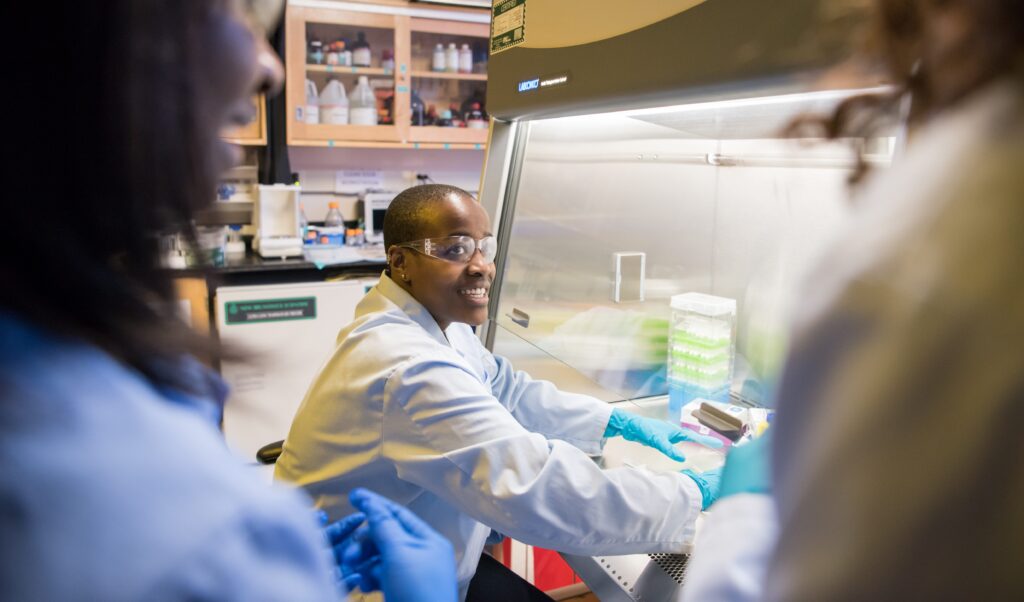
Women wearing protective clothing works in a lab with faculty mentors blurred in the foreground.
Naomi Mburu, Rhodes Scholar, with Gymama Slaughter

* * * * *

Last year, Naomi willingly enlisted in a 10-mile race called the Tough Mudder — an obstacle course filled with pits to cross, walls to climb, and mud as far as the eye can see. She and her friends came out of it covered from head to toe in dirt, tired but smiling like crazy.
If life is a race, Naomi is cool with it. She’s one of those people who genuinely loves the rush of air into the lungs. Running clears the mind, and keeps her level.
And if life is an obstacle course, she’s more than prepared for whatever challenges may come.

* * * * *

Keys To Success

The process of applying for the Rhodes Scholarship is nothing close to easy. It involves writing multiple essays, asking for up to eight letters of recommendation, and participating in a series of increasingly pressure-filled interviews spanning a range of knowledge beyond one’s chosen field.

Naomi Mburu and April Householder

So, last August, when Mburu told April Householder ’95, director of undergraduate research and head of UMBC’s then-brand-new office of prestigious scholarships, she wanted to apply for all three of the UK’s top prizes (the Rhodes, the Gates Cambridge, and the Marshall), Householder admits her first thought was, “You’re crazy.”

But Mburu pushed on, taking Householder’s challenge to think it over seriously. The following week, she returned to the office, paperwork in hand, ever more determined to get it done. In the weeks that followed, Mburu worked with Householder and staff in other campus offices to get her applications ready, practice mock interviews, and — in short — train for the marathon that is prestigious scholarship competition.

“One of the things that made her successful in this whole process is that she took every opportunity that UMBC had on offer and she followed through on it,” said Householder. And she did it so well that she actually won all three awards (though she could accept only one).

“She knows her worth, she knows herself, she’s taken the time to really get to know what she’s capable of,” said Jackie King, associate director of the MARC*U*STAR Program, in which Mburu participates. “So I was not surprised when she said, ‘I won the Rhodes.’ I said, ‘Of course you did.’”

Outside of the Rhodes, and despite the newness of UMBC’s specialized office, the university has a solid history of success with prestigious scholarships. In previous years, staff in the Honors College and elsewhere have coached applicants, many of whom have gone on to win the top UK prizes, as well as Fulbrights, Goldwaters, and others. (See “Serious Scholarship”.)

Simon Stacy, director of the Honors College, who has worked with a number of them over the years says that while many applicants to these top scholarships nationwide come from the Ivies — and with years of grooming for just such situations — UMBC students come to the table with grit and the willingness to quickly learn how to play the game.

“Naomi is open and self-confident, which I think is absolutely crucial for the Rhodes process because everybody is accomplished by the time they get to an interview, and an awful lot depends on the ability of an applicant to connect with the interviewers and to represent themselves as effective leaders — as someone like Naomi can,” he said. “Her ability to make herself known in a way that does her credit without seeming self-aggrandizing is such a striking thing.”

Add to that the four years of support and fellowship she’s received as part of the acclaimed Meyerhoff Scholars Program — which stands at the forefront of efforts to increase diversity among future leaders in science, technology, engineering, and related fields — and you can see how the community has truly stood behind her efforts. It’s a place where “we are all looking out for each other,” Mburu says.

“We always tell students there’s no limit to what they can do if they work hard, as long as they do their part to hold up a high personal standard of excellence,” said Keith Harmon, director of the Meyerhoff program. “The talent is here.”

* * * * *

Where do you find your strength?
For Naomi, it’s a combination of things: It’s her family and friends, who keep her grounded, who bring her joy. It’s the Kenyan community in and around her neighborhood experiencing the highs and lows of life together. And — above all — it’s her spirituality, her faith in God, that pushes her through the tough times.
“It’s a big part of who I am,” she says of her Christianity, her parents nodding beside her.

* * * * *

Naomi Mburu, Rhodes Scholar, with her parents.

Those Most Dear

At the very beginning of Mburu’s journey are Joseph and Joyce Mburu, her parents, who emigrated from Kenya in the 1980s. Kind and hardworking, they fell in love while students at the University of Baltimore, both earning multiple graduate degrees as they built a family with Naomi and her older brother, Nicholas, a 2016 financial economics alumnus.

In their comfortable home, mother and daughter wear matching bracelets woven to spell the word “Kenya.” As the parents have infused a love of their heritage and spirituality in their daughter, so have they nurtured a deep desire to learn.

Joyce’s parents were both teachers, and her father was a pastor; Joseph’s father was a businessman who wasn’t able to go to college, so “going to college was very important to him, and he did the best he could to send us to the best schools,” he said.

Mburu family photo

They try to be supportive without babying her, they laugh. When she started exploring prestigious scholarship options, they stood by her — even giving her a subscription to The Economist for Christmas to expand her world view — knowing full well a win would take their daughter to the other side of the Atlantic.

“You have to step away, but keep a watchful eye,” said Joseph. “You let her find her way — because that’s how they grow. That’s how they develop.”

“We are so proud of her,” agreed Joyce, who for years worked in the business office at UMBC and was able to be close to both of her children as they attended school.

When her brother, Nicholas, passed away in January, the family was comforted by the close-knit Kenyan community, both in Maryland and afar. But Naomi found herself dealing with an uncomfortable imbalance between the best and worst pieces of news of her life.

“I was flipping between those two emotions all the time — the extreme happiness about winning the scholarship, and then the sadness of him not being here,” she said, adding that he had looked forward to being interviewed for this article.

Through it all, Mburu’s friends have also proven a powerful positive force in her life, offering emotional support, laughter, late night snacks, and unflinching love. Her friend Anna Gifty Opoku-Agyeman, a math and econ major, uses the words of King Solomon to describe their friendship: “As iron sharpens iron, so does one sharpen another.”

The night Mburu found out she won the Rhodes, Anna and friends scooped her up and took her for her favorite meal — Kabab Hut — and some delicious Korean bakery treats. As they chowed down, her roommates and neighbors in the Hillside Apartments pulled together a surprise party for when she returned, complete with confetti, cake, and about a thousand hugs.

“They have all been just super, super, super supportive of everything I’ve done,” Mburu said of her friends. “We’re not competing necessarily against each other; we’re more so trying to make sure we’re getting better together.”

In fact, many of them played key roles in her Rhodes journey, providing serious feedback on her essays, and tossing potential interview questions back and forth between them. One of those people was Adrian Davey, who befriended Mburu the summer before their freshman year.

“I jumped with joy and yelled in my room,” he said, out of joy for his friend.

“The icing on the cake is that through it all, she remains humble,” said Olanike Awotunde, another friend from the Meyerhoff program.
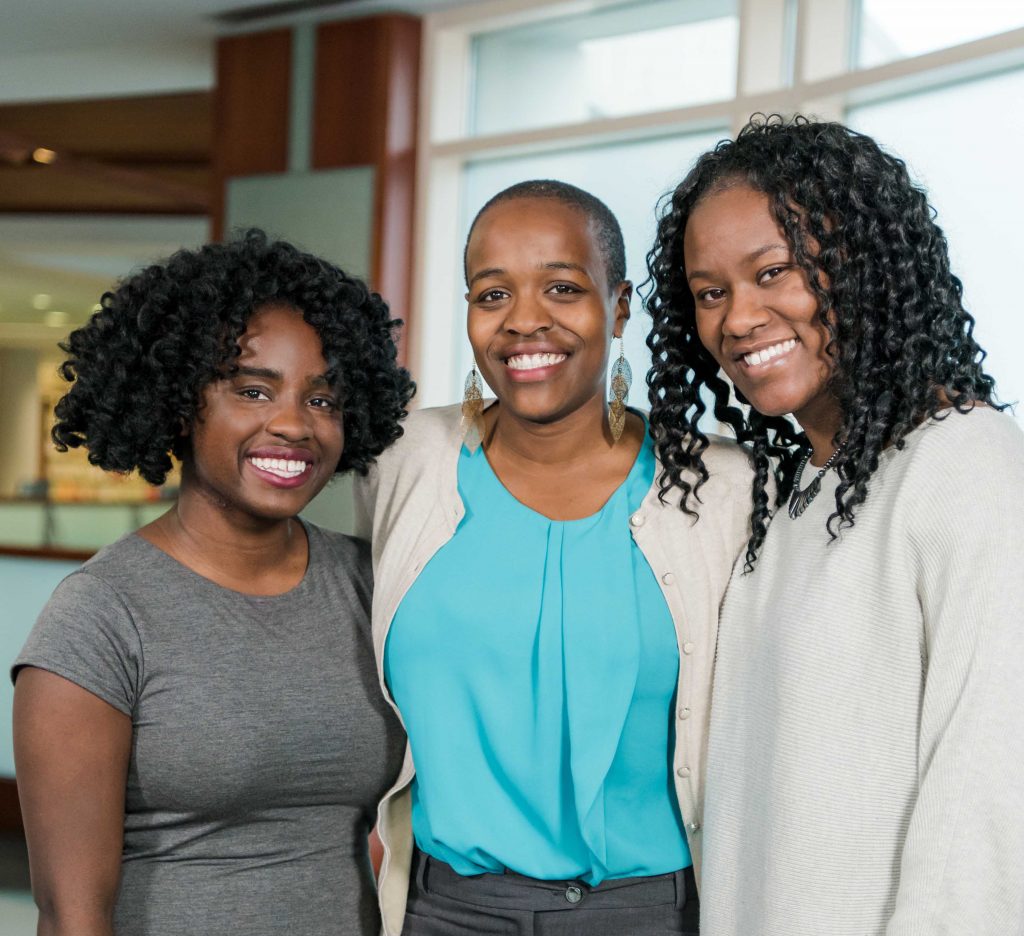
Naomi Mburu, Rhodes Scholar, with friends from UMBC.

* * * * *

The night UMBC opened its new Event Center, the seats were packed with fans. On the sidelines, behind the video cameras, Naomi stood waiting for her cue, decked out in a black t-shirt with gold paws across the front.
“Ladies and Gentlemen, UMBC Athletics would like to offer a special welcome to Naomi Mburu, the first Rhodes Scholar in UMBC History!” As she walks to the center of the court, the crowd erupts in applause and a full-on standing ovation, cheering wildly.
This is a very UMBC moment, and Naomi is very much a UMBC star.

* * * * *

The Big Picture

Speaking to a group of high schoolers from Baltimore City this spring, Mburu fields a common question: “Have you ever felt like you couldn’t do something?

“I guess sometimes it seems like, ‘Oh, this person’s never failed at anything, but I fail at things all the time,’” she reflects. “I really enjoy talking to them at their level and explaining that I struggle with things all the time. I’ve failed tests before…I still fail tests.”

This one-on-one is a huge part of who Mburu is, and who she hopes to be for others. Besides studying nuclear fission and trying to solve the energy crisis for future generations — no biggie, right? — she’s also hoping to act as a positive role model, just as so many of her teachers have for her.

“There are so many people who have helped me along the way,” she says. “I think it’s really important for people who aren’t in science to understand what’s going on in the scientific world — especially young people who are deciding what they want to do, because sometimes it can seem like a hurdle that they can’t surpass if they’ve never even had anyone to talk to about science in a way that they understood.”

Speaking of relatability, Mburu found out some exciting news about her new lab at Oxford: She’ll actually be the second Kenyan woman Rhodes there.

“I sent her an email and she emailed me back instantly,” she said, smiling. “I’m so excited.”

Soon she will be packing for her summer travels, and figuring out a new life in England. As she reflects on the last half a year, and thinks about all that lies ahead, she feels good. She’s on the right track.

“Sometimes it’s been exhausting having to go from thing to thing to thing, but I really enjoy what I’m doing,” she says. “I get excited to think that someone would think that my story is inspirational, and they could do the same thing, it it makes it all worth it.”

Brew Grit

In an industry that rewards ingenuity and thrives on comradery, hard working UMBC alums are making their alma mater proud — one pint at a time.

by Seth Sawyers ’99

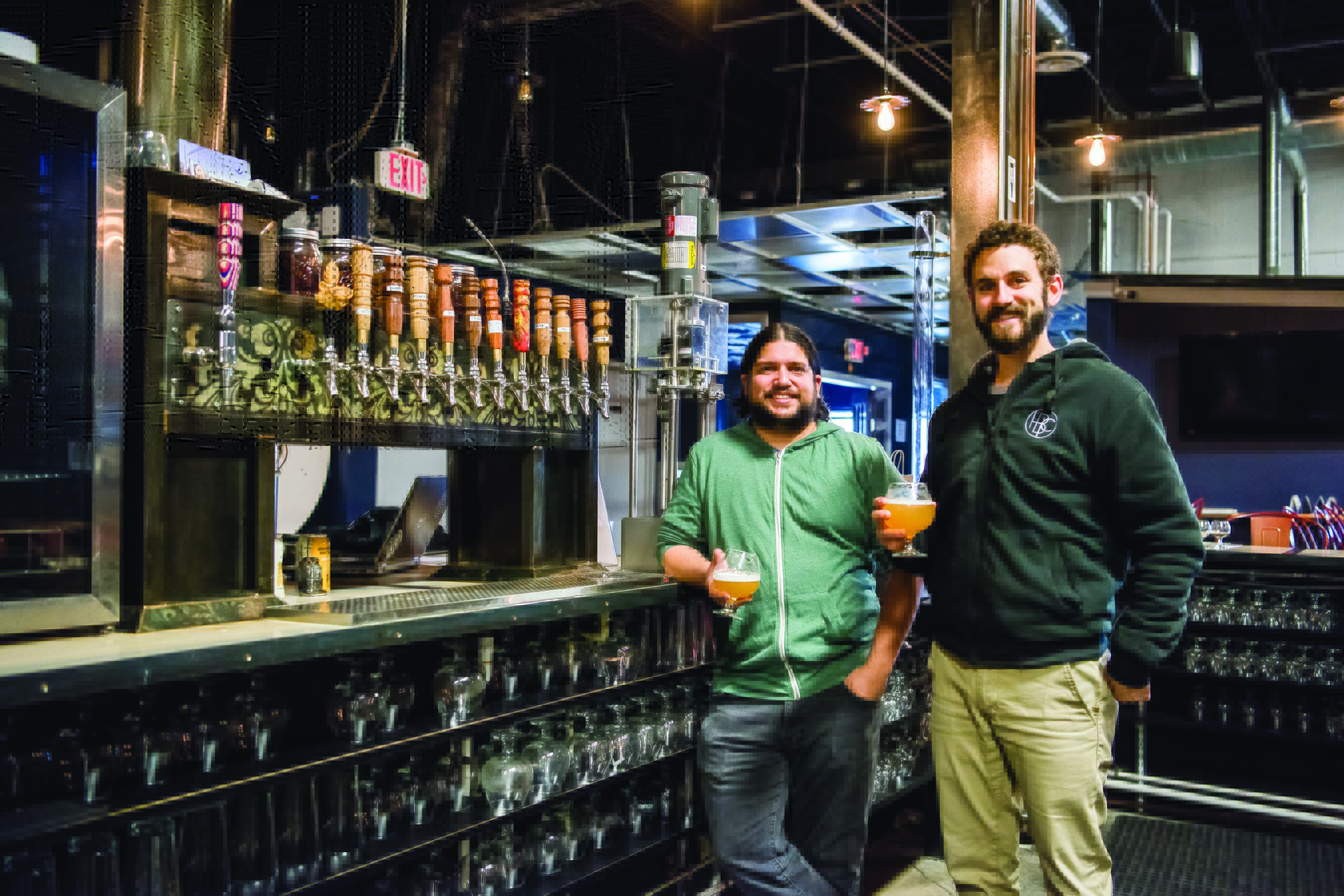
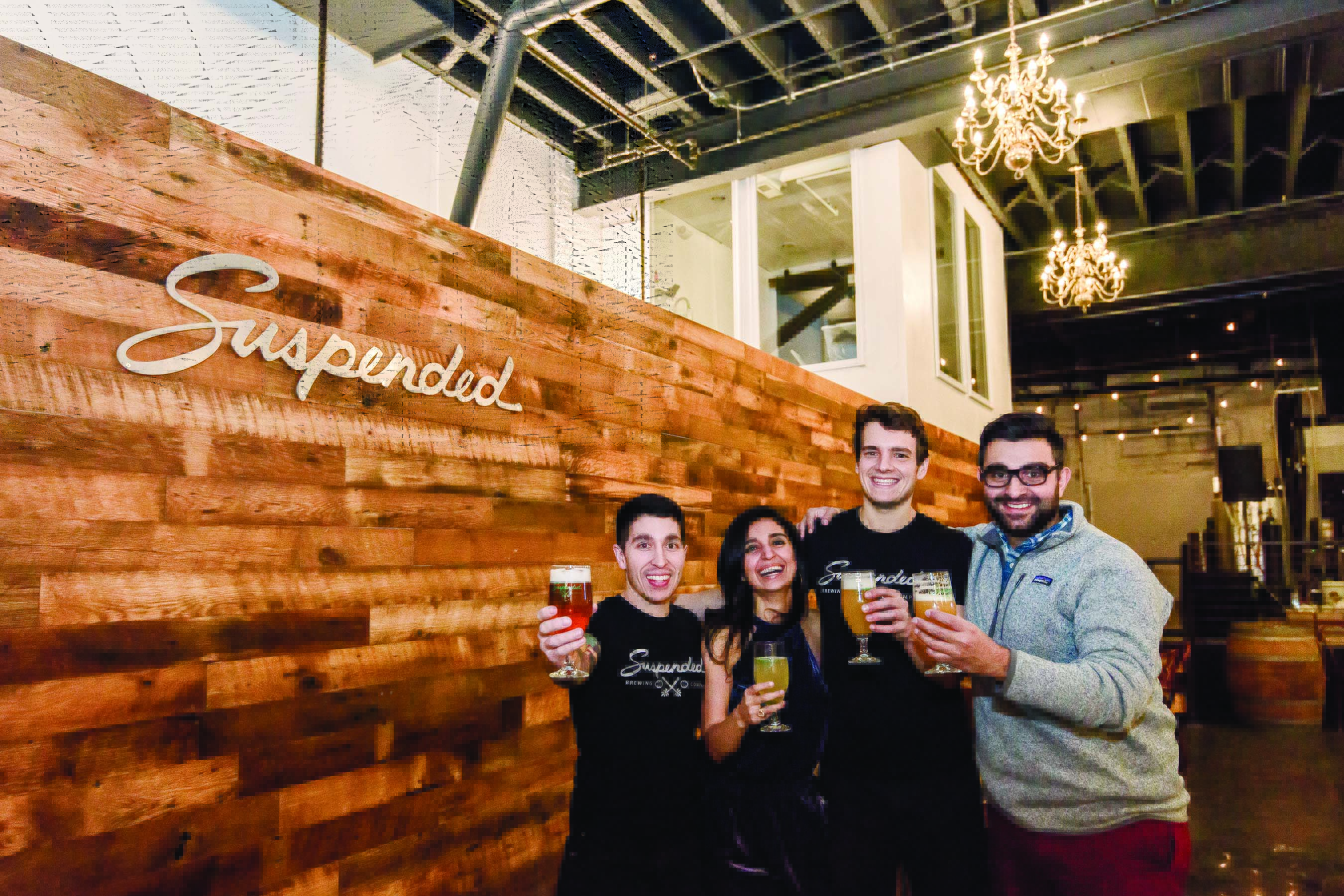
On a cold night in a converted Pigtown theater, Josey Schwartz ’11, interdisciplinary studies — one of two owners, brewers, bartenders, marketing managers, painters, and drywall hangers behind Suspended Brewing Company — wasn’t doing any of those jobs.

It was the end of a long day — one of many, many long days to come until they finally sold their first beer in their new home. With a low-key indie-rock mix as his only company, he was sweeping up.

“We’re everything,” Schwartz says, of the roles he and co-owner Yasmin Karimian ’11, political science, fill at their shop. “We’re the brewers, the bartenders, janitors, the taxmen. We don’t stop working. I’ve slept in the lab, voluntarily and involuntarily.”

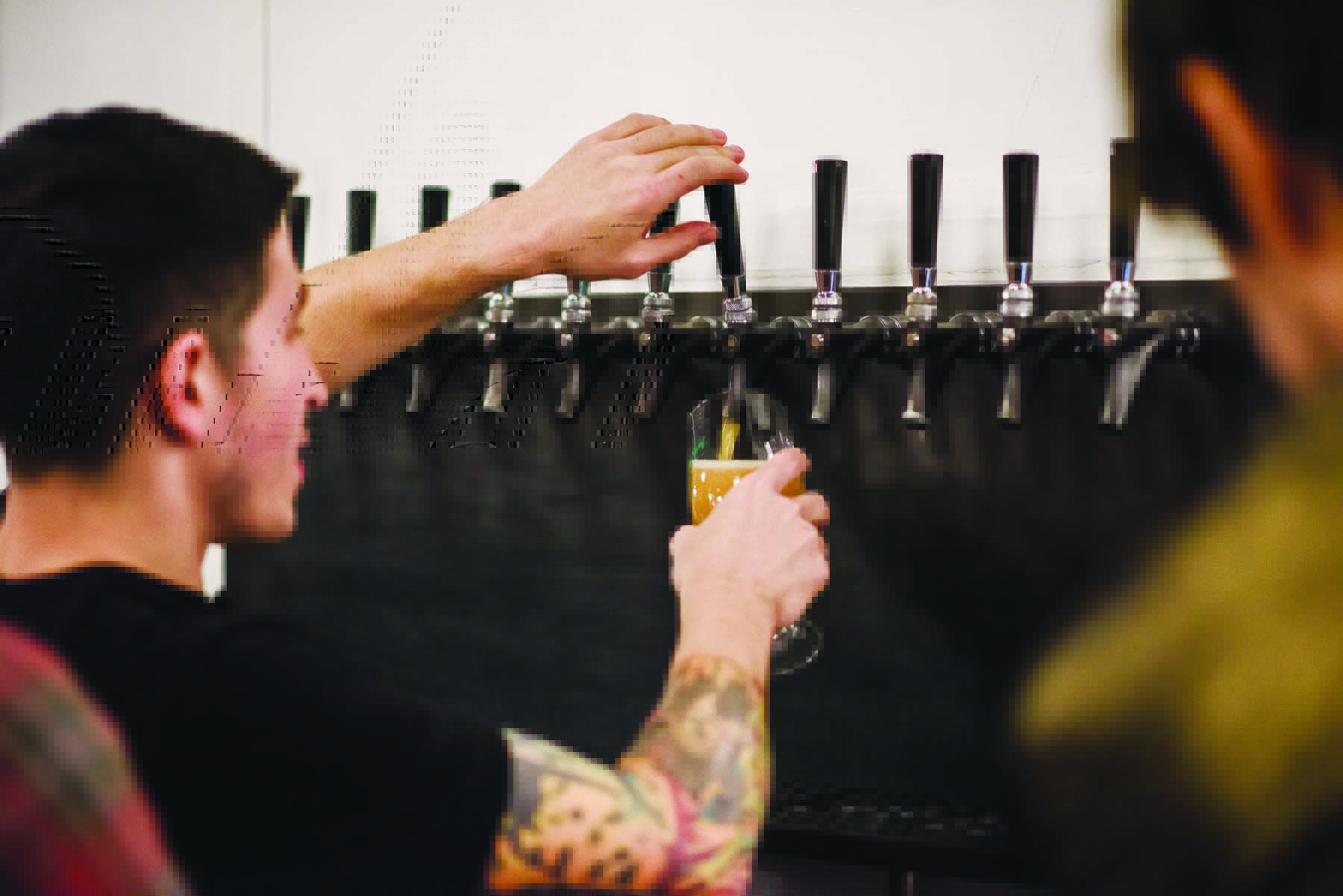
Many of us enjoy beer; some would even say we love it. But for a remarkable group of UMBC graduates who consider beer more of a calling are devoting their professional lives to beer, and specifically to craft beer — complex, interesting, sometimes far-out beer.

They brew it, yes, but that’s just the start. They also research it, and study it, and market it, and sell it, and package it, and obsess about it. All of which means that, increasingly, that next six pack you take home or pint you sip just may have been made by someone who’s spent some time in, say, Patapsco Hall.

Oh, and they love it, too. These UMBC graduates love beer. They really, really love beer. “Beer is incredible,” says Schwartz. “I could go on and on forever about ‘why beer.’”

“You should be a professor,” says Karimian, half-joking, herself by day a contracts attorney with Amazon. As if either of them needed even one more thing to do.

UMBC alumni in the small brew world

Not Your Dad’s Beer

This writer is old enough to remember the days, not so long ago, when restaurants divided their beers into two categories: “domestic” or “imported.” Domestic meant Budweiser, Bud Light, Miller Light, maybe Michelob. Imported, slightly more expensive, meant Heineken, Amstel Light, maybe a Molson.

Those days are long over. Now, as anyone who’s drank a beer in the past 15 years knows, the types and brands of beer available are as head-spinningly diverse as the UMBC campus itself. There are clean, light Kolsch styles and, on the other end, dark stouts fortified with coffee or chocolate. In between are lightly bitter pale ales, medium-bitter India pale ales, very bitter double India pale ales, beers brewed with cherries or watermelon or raspberries, beer brewed with Old Bay.

And while macro beer isn’t going anywhere — two huge companies, Anheuser-Busch InBev and MillerCoors, still produce 90 percent of the beer for the western market — the number of craft breweries increased by 600 percent between 2008 and 2016. Today, there are about 7,000 breweries nationwide, the vast majority of which are small operations, each run by a handful of people, putting out a keg here or a six-pack there of beer that might be called Snow Pants or Trolley Problem or Mistakes Were Made, and which are as alike to a National Bohemian as Camden Yards is to the grassy field behind your parents’ house.

The Right Recipe

Some people know at freshman orientation what they want to do with their lives. UMBC’s beer-brewing contingent is the other way around: young, high performers who tried this, tried that, and ultimately figured out they could throw everything they’d learned into beer.

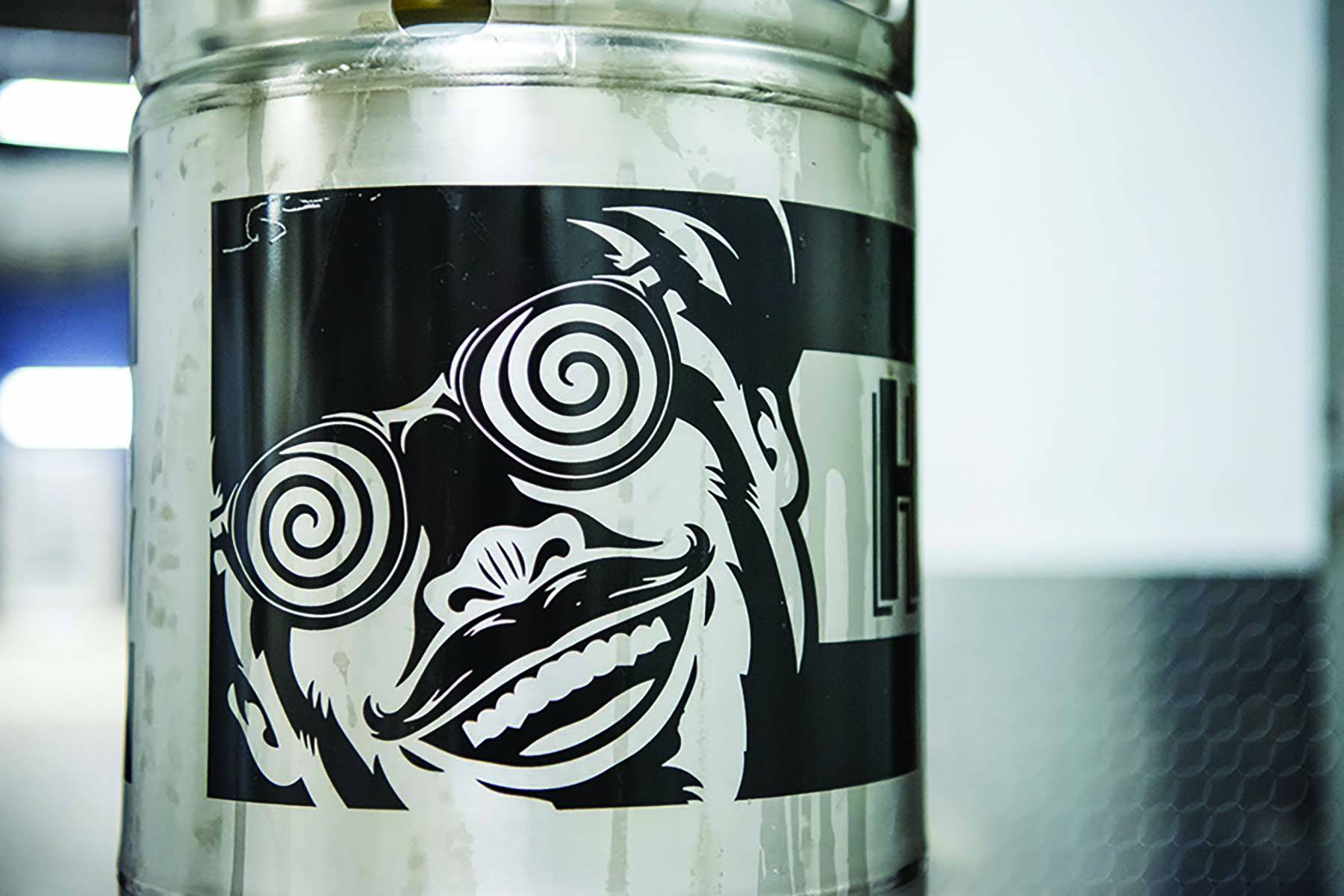
Twenty minutes southwest of Pigtown, in a Columbia industrial park, Zachary Michel ’09, spends his days figuring out how to let people know about another fledgling brewery. As Hysteria Brewing Company’s marketing manager, the Harford County native finds he’s able to draw upon his innate curiosity, a trait he feels was fostered by UMBC.

“I started out undeclared, then [studied] music for a bit, and I looked into journalism,” Michel says from Hysteria’s front room, a cozy space lined with shelves crammed with books and curated, antique gadgets. Eventually, a course called Environmental Science/Conservation with Professor Sandy Parker got him excited about geography. “He was so passionate and so knowledgeable that it just opened my eyes. UMBC totally opened my eyes to a lot of things. It allowed me to experience a little bit of everything.”

Jordan Baney and Zachary Michel '09 of Hysteria Brewing Company.

Michel, who one day might organize a cycling night, and the next work on can designs, among many other things, wound up a geography and environmental science major with an economics minor. “A direct line to brewing,” he jokes.

Listening to Michel is Jordan Baney, a partner at Hysteria, who has UMBC in his blood although a call to serve in the Army cut his days as an economics major short. He grew up in part in Arbutus, within earshot of Retriever lacrosse games. As a kid, he swam in the campus’s indoor pool and his uncle Tony makes and maintains glass instruments for the chemistry department to this day. Baney says that anyone getting into something like beer, which encompasses both business and culture, would benefit from a wide-ranging college experience.

“There’s this idea out there that [students] should be focusing more on one thing and doing less general education,” he says. “And I totally disagree. Unless we’re robots meant to work in one thing for the rest of our lives, which I don’t think we are. All of us benefit from knowing a little bit of history. All of us benefit from knowing a little bit of calculus.”

You can’t help but notice that it’s a group interested in things beyond beer. Karimian, of Suspended Brewing, was an SGA President who is deeply committed to community engagement, the environment, and social justice. She helped write a history of UMBC, went to law school, became a lawyer, and now co-owns a brewpub. Schwartz, Karimian’s partner in life and an Interdisciplinary Studies major, wrestled for UMBC’s club team and went on to business school at Stanford before deciding he wanted to make beer. A writer and theatre buff, Michel is a founder of the Charm City Fringe Festival. Baney served in Afghanistan as a staff sergeant in charge of logistics, getting food and ammunition and gear to where it needed to be.

Still, if beer itself is part chemistry and part biology, then some UMBC alumni are nothing if not ringers. Halethorpe-based Heavy Seas Beer and Baltimore-based Union Craft Brewing are two of the region’s bigger craft beer makers and it’s for the latter that Lynn Pronobis ’13, chemistry, has graduated from intern (she was the first hire by Union’s three founders) to brewer, to head of brewing operations, which means she oversees all things involving the actual brewing of the beer.

“It’s mentally and physically challenging, and you’re a part of the team, and I don’t have to walk into a cubicle every day,” says the former outfielder for UMBC’s softball team. “And we’re all fighting against the big guys.”

Small Batch, Small World

Brewing’s a small world, especially in a city nicknamed “Smalltimore.” Though UMBC’s brewing alumni didn’t all know each other while at UMBC, they certainly know each other now. That’s partly due to the growing Baltimore-DC-Maryland alumni network of a school that’s now 50 years old, but partly due to people like Brian Arnold ’05, English.

Arnold taught high school English in Baltimore City Public Schools for several years before he realized he needed a career change. Like many who wind up in craft beer, he began by brewing at home, which led to the 2013 opening of Nepenthe Homebrew, a kind of spiritual base for the region’s serious amateurs and professionals alike. Currently based in the Woodberry neighborhood of Baltimore, but set to move to a former meatpacking facility in Hampden, Nepenthe sells the raw goods of brewing: tanks, tubes, grains, hops.

“It’s awesome,” Arnold says of Baltimore’s brewing community. “I think we know, more or less, everybody in it. Quite a few stop in when they need something. We all know each other and help each other out.”

None seem concerned about having too many craft breweries — and there’s little in the way of the type of competition you might find with other types of business. “What’s there to fight about?” asks Schwartz. “We’re all drinking each other’s beer. We’re asking, how’d you work with dried fruit to extract this much color? Do you do a slurry or just drop in dry hops through the port?”

Flavor Innovators

For young people with such varied interests, such deep-seated curiosity, it’s no wonder they found themselves in an industry that rewards, and demands, near constant tinkering. Consider the kinds of beers they’re making, just at Hysteria alone: at least three kinds of IPAs, a barleywine that’s 11 percent alcohol, a “sour cherry Belgian Tripel” called Monasterium.

“Our mission is to push the boundaries,” says Hysteria’s Michel. “There’s no reason you can’t do an IPA in a gin barrel. Or a porter in a red wine barrel.”

Schwartz says he’s been thinking of “an American kettle sour using the same bacteria that’s in yogurt and then fruit added from Iran. Barberries. We get to talk about barberries, which are a staple of western Asia, in Iranian kitchens. We’re working on one beer but made seven different ways, with seven different yeast strains. There are so many variables. It’s not arithmetical, it’s logarithmic.”

While newer brewpubs like Hysteria and Suspended are focused on making new beers, more established breweries such as Union and DC’s Atlas Brew Works are at a slightly different place, business-wise. For Atlas, Sean Palmateer ’16, biochemistry and molecular biology, shows up to work at 4 a.m. and spends a lot of his time as a brewer on perfecting established, flagship beers.

Palmateer, who lives in Mount Vernon, has often helped out at Suspended, stopping by after work or on days off to help as they’ve worked to build their business. His enthusiasm for the nuts-andbolts of the industry, the actual brewing of beer, is sharp, as is Schwartz’s. These are two people who think about beer often, and deeply.

“I think about Sixpoint Brewery, whose motto is ‘Beer is culture,’” Palmateer says. “You look back at history and that’s how people delineate who they are. I’m interested in a lot of beer history. It encompasses history and science and philosophy in really interesting ways. And you can kind of get into it and take it any way you want to.”

And as long as the interest is there from the brewers — and their eventual customers — the sky seems to be the limit.

“I just saw there was a broker selling soy-sauce barrels,” Schwartz says, before sipping one of his sours. “And some brewer’s gonna figure out how to make a delicious beer out of it.”

[nivoslider slug=”how-to-make-beer”]

Serious Scholarship

For years, UMBC students have made a mark at the highest academic levels, winning many of the top prestigious scholarships available. With the assistance of staff and faculty in the Honors College, students from every discipline have impressed the judges with their subject expertise and broad world outlook. Here’s a quick look at some of our more than a hundred past student winners of prestigious scholarships.

Gates Cambridge Scholarship

Ian M. Ralby ’02, modern languages and linguistics, and M.A. ’02, intercultural communication, founder and CEO of the international consulting firm I.R. Consilium, is one of four UMBC winners of the Gates Cambridge. Even after completing a law degree at William and Mary and his M.Phil. and Ph.D. at the University of Cambridge, Dr. Ralby still regards the education he received at UMBC as “unequivocally first rate and world class.

Marshall Scholarship

Loren Siebert ’93, computer science, earned his master’s in computer science at the University of Manchester and did research on technology policy at the London School of Economics. His master’s research earned him a mention in The Economist and in New Scientist in the same week. He later developed LinguaStep, software that is used in Arabic language programs at over 30 different universities.

Truman Scholarship

Alicia L. Wilson ’04, political science, dreamed of becoming a lawyer since the age of 15. After graduating from UMBC, she earned her law degree from the University of Maryland School of Law. She is now Senior Vice President of Impact Investments and Senior Legal Counsel for Plank Industries.

Goldwater Scholarship

Daniel Ocasio ’17, chemical engineering, was a Meyerhoff Scholar, MARC U*STAR Scholar, Howard Hughes Medical Institute Scholar, and member of the Honors College at UMBC. He is currently pursuing a Ph.D. in environmental engineering at the University of California, Berkeley, where his research focuses on developing improved water treatment techniques and technologies.

Fulbright Scholarship

Jacqueline Wojcik ’17, visual arts, took an interdisciplinary approach to their research, combining animation, computer science, and history. They have spent the last academic year at the Viking Ship Museum in Oslo, Norway, exploring the role of game development in visualization, learning, and connecting people with history by modeling interactive environments based on the Gokstad ship.

Read more about UMBC’s very first Rhodes Scholar here.

To You – Letter From the Editor

Jenny with True Grit statue.
Me, rubbing True Grit’s nose just before the game versus Kansas State.

Dear Retrievers,
The day after the men’s basketball team made history with their surprise win over UVA, I unglued myself from my laptop and headed to the grocery store to pick up an ice cream cake for my five-year-old’s birthday party. Like so many staff members working behind the scenes that weekend, I was a bit of a sleep-deprived mess. (A happy mess, but a mess nonetheless.) I hadn’t showered, so I covered my hair with my trusty UMBC ballcap and ventured into town as I had a million times before, hoping to get in and out of the store without anyone noticing me.
Well, that didn’t happen.
On that particular Saturday, as I walked through the aisles, folks noticed that hat. Strangers carrying jugs of milk said, “Hey, UMBC!” and high fived me, as if I had anything to do with the win. A lady in line behind me mentioned that her husband, a UVA alumnus, was devastated by the upset — before confiding softly that she was really excited for us. And that was just day one.
I’m so glad they’re noticing, and that what they’re seeing goes so far beyond basketball. The nation is seeing a school that earnestly and playfully celebrates its wins — both athletic and academic, as we have on this issue’s cover. They’re seeing a community of people who know who they are, and who know what UMBC stands for beyond all the clever acronyms the “madness” gave us. And they’re understanding that using a hashtag like #RetrieverNation isn’t just a rallying cry for a few extra points on the scoreboard, but a show of solidarity between scholars and friends across the globe.
I’m glad the guys won; they deserve every bit of attention they’re getting. But, what excites me most is that the world is finally coming to understand the special place that is our University of a Million Brackets Crushed — er, home sweet home. It’s a win for us all.
— Jenny O’Grady
Editor, UMBC Magazine

Star-Struck: An Astronaut’s Pivotal Moment

Astronaut Scott Kelly Reads The Right Stuff at the Right Time

The path to success isn’t always written in the stars. But, if you’re willing to follow inspiration as it appears, you may just find yourself catapulting beyond your wildest dreams.

For astronaut and best-selling author Scott Kelly — who spent a short time as a Retriever in the 1980s — a small but pivotal spark happened on the UMBC campus. As he describes in his 2017 memoir Endurance: A Year in Space, A Lifetime of Discovery, Kelly happened to notice a copy of The Right Stuff in the window of the campus bookstore, then housed in the University Center. Until that point, he felt directionless, he writes.

“I bought the book and I lay on my unmade dorm room bed reading it for the rest of the day, heart pounding, Tom Wolfe’s hyperactive, looping sentences ringing in my head,” he writes in the book’s prologue. “This wasn’t just an exciting adventure story. This was something more like a life plan.”

Figuring Out Your Direction

The moment changed Kelly’s life forever. Years later, Kelly’s groundbreaking career includes four space flights and the command of a year-long expedition in the International Space Station. Success didn’t happen overnight, though, Kelly explains. You need an incremental plan.

“It was nearly impossible for an 18-year-old me at UMBC to understand the skills required to become an astronaut, but as a test pilot I could imagine the astronaut job, and as a fighter pilot being a test pilot was more realistic,” he says. “Back that up to college and I could understand what it would take to be commissioned as an Ensign in the U.S. Navy. Small steps add up to a giant leap. Also keep in mind people aren’t going to make your goals happen. You and only you can do that and it takes hard work. There’s no easy path.”

And don’t forget to keep your eyes open. You never know where the spark will hit you.

“Inspiration is critically important,” he says. “For me it came from the book The Right Stuff. You need to find yours.”

— Jenny O’Grady

Header image: Night Earth observation of Japan taken by Expedition 44 crewmember Scott Kelly, with a Soyuz Spacecraft connected to the Mini Research Module 1 (MRM1), and a Progress Spacecraft visible. Courtesy of NASA.

Celebrating the Class of 2018

UMBC celebrated its newest alumni last week with a May Grads Day celebration. Sheltered from a spring storm, more than 200 members of the Class of 2018 gathered for an evening of music and merriment — including a champagne toast. Congratulations to our new Retriever alumni!

Here are a few shots of the evening’s fun by Kiirstn Pagan ’11. See more, including photo booth photos, here.

The Right Place, the Right Wine

Spring time is the season of hope at Boordy Vineyards. Emerald shoots appear on the grapevines across rolling hills. In May, perfume from tiny flowers fills the air.

“Everything looks under control,” says Rob Deford ’93, geography, owner of Maryland’s oldest winery. “You suffer from irrational hope.”

Deford calls spring his favorite season, a time of promise. In the spring, he says he looks around and thinks, “I’m in the right business.” A month later, weeds appear, vines grow a foot at a time, and anxiety grows until harvest time.

He laughs about the process of growing grapes and turning them into wine, but he’s serious about it. So serious, in fact, that a few years ago, he ripped out all of his vineyards to plant new ones and tore down the winery to build a new state-of-the-art facility. The goal was the best wine Boordy could produce.

Early Beginnings

Deford grew up on the farm in Long Green Valley where Boordy is headquartered. Once the home of chickens, pigs, and cows, its fields are now covered in grapevines. His family began growing grapes in the 1960s to produce fruit for the Boordy winery, then owned by Philip Wagner. Wagner began Boordy in 1945; the Defords took it over in 1980.

Deford came to UMBC in a roundabout way, via Stanford University, a motorcycle trip to South America where he took more college classes, and then to wine school at the University of California, Davis. Already running Boordy, he decided he needed to go to business school — but he was still a few credits short of his bachelor’s degree.

“It was the best thing for a winemaker.” — Boordy Vineyards owner Rob Deford ’93, on studying geography at UMBC

“I kind of stumbled on UMBC,” Deford says. UMBC offered him a way to finish the degree started nearly two decades before. He intended to study economics until he sat in on a geography class with Andy Miller and later another with Sandy Parker.

“I fell in love with the geography department,” Deford says. He immediately switched majors and has been glad ever since. Everything to do with wine, he explains, is related to geography: the land, the soil, the weather, mapping. Wine-lovers discussing the “terroir” of a wine are considering all the factors that give a wine its flavor profile: soil type, topography, weather. In other words, geography.

“It was the best thing for a winemaker,” he says.

Lay of the Land

Not only was he prepared for his MBA studies at Loyola University Maryland, he had a whole new tool kit to use at the winery. He’s no geography expert, he adds. “What little I do know has dovetailed with the wine industry.”

Deford puts those concepts to work every day in the vineyards — sustainability, climate change, balance. “The better our balance with nature, the better our wines will be,” he says.

Boordy remains a family business. Deford and his wife Julie are co-owners with Deford’s sister Sally Deford Buck, and her husband R. Bayly Buck, and Deford’s son Phineas have joined the business. Although Boordy is 73 years old, in the world of winemaking, it’s still comparatively young.

“We are in our infancy,” Deford says. But the business is definitely growing up. In addition to fruity wines and drier wines known as the Chesapeake Landmark series, Boordy now offers the award-winning, estate grown Landmark Series. To produce the new wines, Deford did something breathtaking. In 2006, he began replanting all the vines at both the Long Green farm and the 50 acres Boordy leases in Burkittsville, on South Mountain. He then rebuilt the winery in 2013.

Winemaking is a competitive business but a collaborative one, too, says Deford, who has worked with other Maryland wineries to improve the value and quality of their products. The winemaking business has mushroomed in Maryland with some 70 wineries and nearly 1,000 acres planted in grapes, according to the Maryland Wineries Association, an organization Deford helped establish.

He recalls local wine trade shows of the 1980s when the quality wasn’t always so good, a time when “we were all learning,” Deford says. “Now you go from wine to wine and you say, ‘That’s really good.’”

— Mary K. Tilghman ’79

Ask the President – Spring 2018

Q: I was wondering if you had any advice for a finance student?

— Godwin Okoro, senior financial economics student

A: I think it’s really important that students work with our Career Center, where the staff members do a superb job of giving advice to students about opportunities. We have many employer partnerships. And I hope that you participated in the recent Career Fair where we had over 100 employers. It’s critical that students apply for internships beginning after their freshman year, because practical experience will give them increasing opportunities.

For a senior, the most important advice is to listen to the experts in the Career Center and talk with professors for general advice. It’s important not to be too specific in what you’re looking for. The most important tip to new graduates is to get broad experience that can shape their vision for the future.

Broad education always helps. And students need to understand the different tracks or paths one can take in financial institutions, from technology, data science, and cyber security to becoming analysts. I also recommend talking with the Career Center about connecting with UMBC alumni in those fields who can give specific advice to students.

Q: As we see expressions of hate and racism on college campuses around the country, how is UMBC addressing these issues?

— Maceo Thomas ’93, biochemistry and molecular biology, and a member of the Meyerhoff Scholars Program’s first cohort

A: UMBC regularly communicates our values and our support for all of our residents, students, faculty, and staff, and the larger community. We speak to the need to not accept prejudice of any kind, whether it’s racism, or homophobia, or religious intolerance, or sexism.

We have a number of forums sponsored by the College of Arts, Humanities, and Social Sciences and by student groups that provide opportunities to hear different perspectives on the divisive issues in our society. And I would say many of our courses across the disciplines address issues of prejudice at UMBC. We encourage open dialogue, and we encourage people to keep an open mind and listen to other perspectives.

If you look at social media and talk with our students, they appreciate our speaking out against these types of prejudice. And they want to know that we are prepared when acts of intolerance arise, whether involving sexism or racism or other issues. And we have a number of people on campus who are focused on giving our students support during these times. In my talks and a number of the talks of other administrators, we encourage students to get beyond their comfort zone and to get to know people different from themselves. While it’s important for each group to appreciate its own cultural roots, strengths, and challenges, we need as a society to encourage more robust dialogue across different groups. UMBC is constantly working to support that idea.

Click here to read UMBC’s statement after the unrest in Charlottesville, August 2017.

Do you have a question for UMBC President Freeman Hrabowski? Send it to magazine@umbc.edu, and it may appear in a future issue of UMBC Magazine.

New graduate program scholarship offered to all UMBC alumni

UMBC graduate programs are among the best nationwide, according to the 2019 U.S. News Best Graduate Schools rankings, which makes a new scholarship announced this March an even sweeter deal for alumni considering a return to school.

For the fall 2018 semester, all alumni starting a new master’s or certificate program at UMBC will qualify for a one-time $1,000 scholarship, which can be applied to any of the university’s 62 programs. New applicants can also receive a code to waive application fees.

“We want to thank our Retriever Nation for making us so proud, and celebrate our alumni so they can claim their future,” said Christopher Steele, Vice Provost, Division of Professional Studies.

The U.S. News rankings recognize a dozen UMBC master’s and Ph.D. programs including nine top-100 programs from a broad range of fields, with all three UMBC colleges represented. They are based on a survey of more than 20,500 academics and professionals, plus data on over 2,000 programs, indicating the quality of each school’s faculty, research, and students.

UMBC has recently launched several new programs at both the Catonsville and Shady Grove (Rockville) campuses, including master’s degrees in data science and technical management. The scholarship applies to all master’s degrees, which span the sciences, social sciences, and humanities.

“We want our alumni to think of UMBC as their destination for applied master’s and certificate programs no matter where they are in their careers,” said Janet Rutledge, Vice Provost and Dean of the Graduate School. “Our programs are built to take students to the next level.”

For more information about the scholarship, programs, and deadlines, visit gradschool.umbc. edu/retrievernation.

A Mother’s Day Gift will Support Arts at UMBC

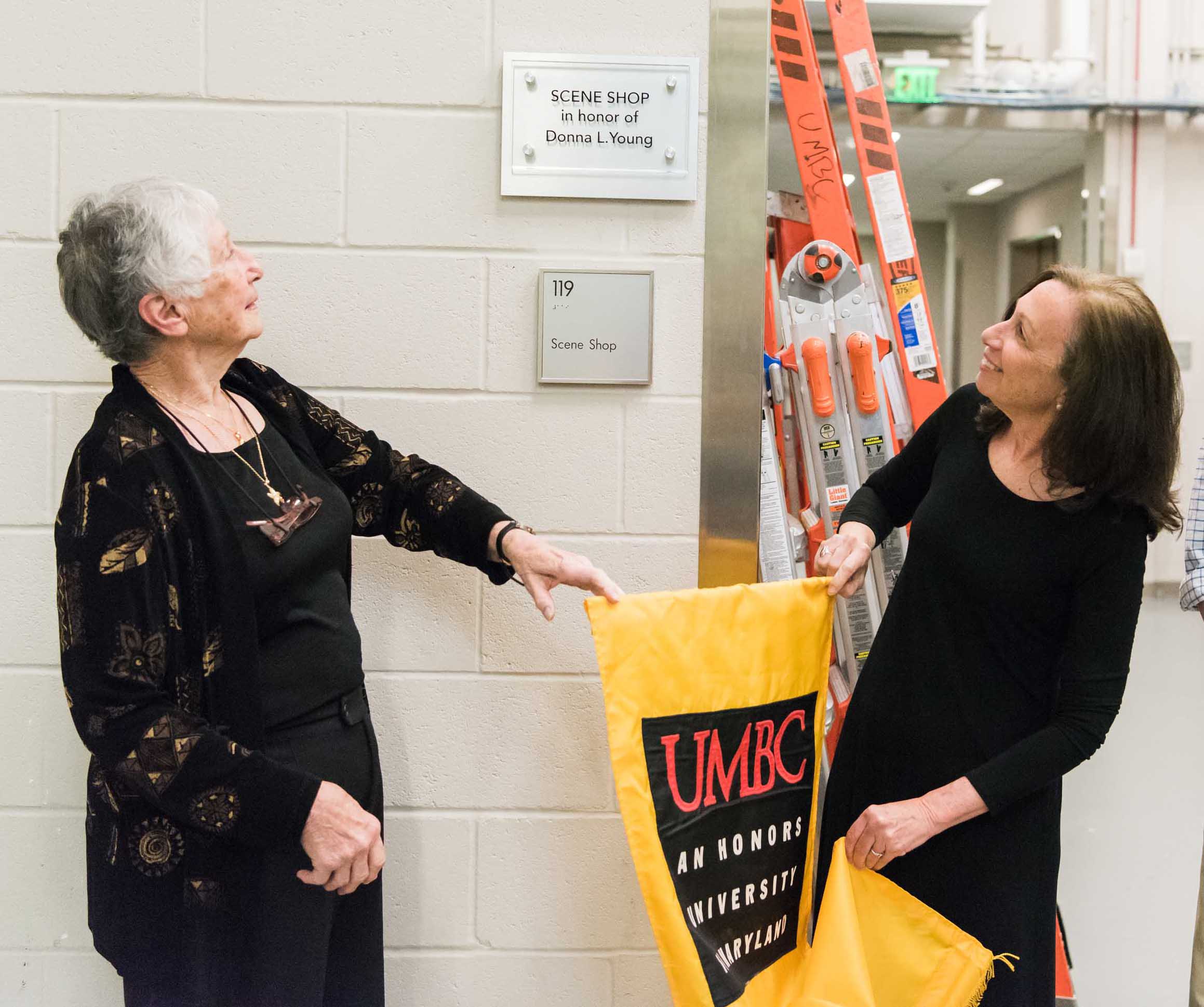
Donna L. Young (left) and her daughter, Dr. Nancy Young, Vice President for Student Affairs, unveil a plaque celebrating the naming of UMBC’s Scene Shop.

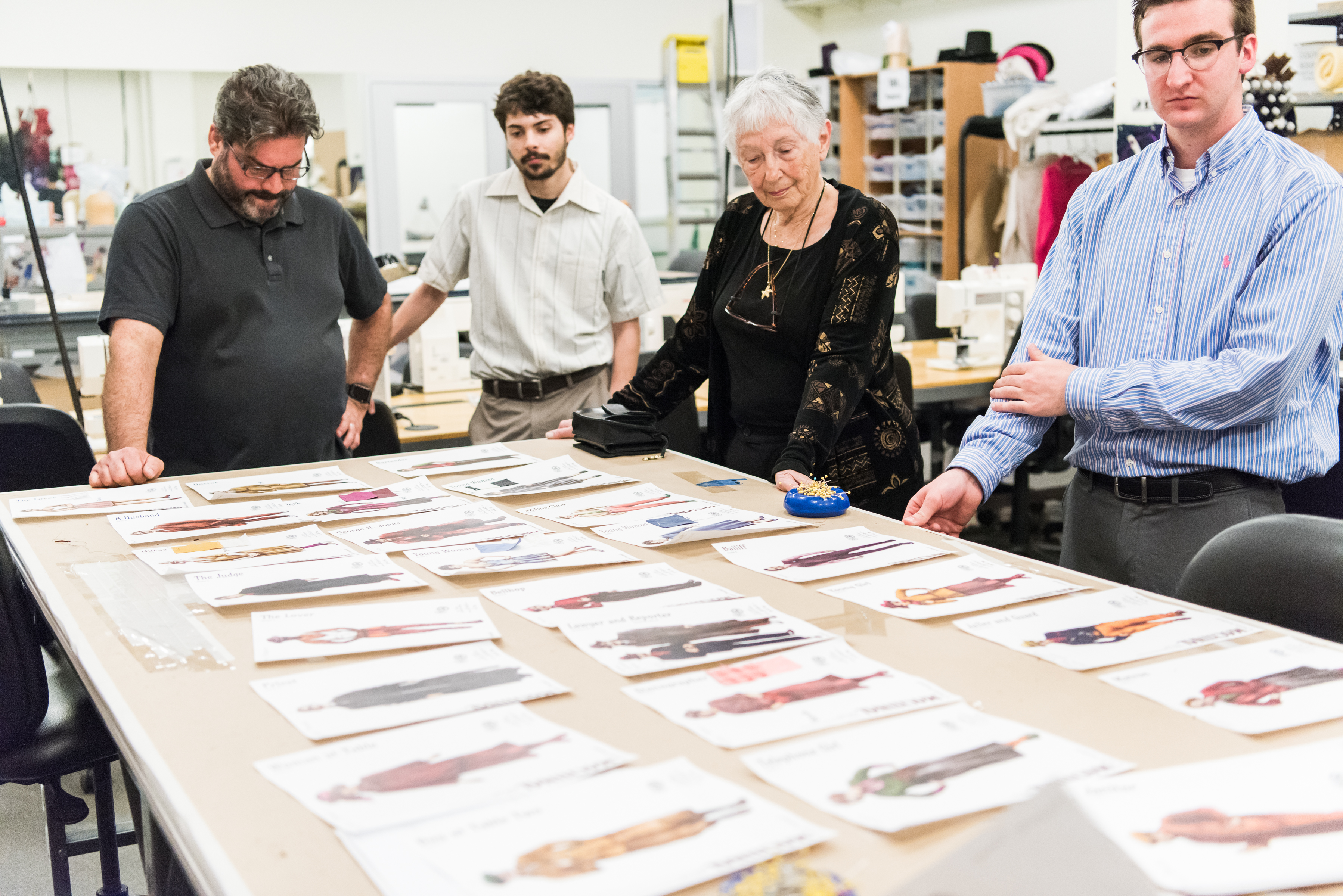
Mother’s Day came a week early for Donna L. Young when the campus celebrated the naming of the UMBC Scene Shop in her honor by her daughter, Nancy Young, Vice President for Student Affairs. The Youngs were joined by friends and students for an enlightening behind-the-scenes tour of the stage, as well as scene and costume shops inside the Performing Arts and Humanities Building (PAHB).

Opened in 2014, the PAHB was designed to enhance UMBC’s teaching, research, and public outreach, and to heighten the visibility of the arts and humanities as major components of campus and community life. Students who major in theatre, in particular, wind up getting a taste of every aspect of production, from lighting and costume-making, to scenery production and acting.

The honoree, who took a theatre minor at College Park and enjoyed her time behind the scenes there, told the students she met they were “unsung heroes.” Then she saw their work in action as guests ended the evening watching a riveting performance of Machinal (pictured above).

See an upcoming show at UMBC

Support UMBC’s theatre department or the university in general

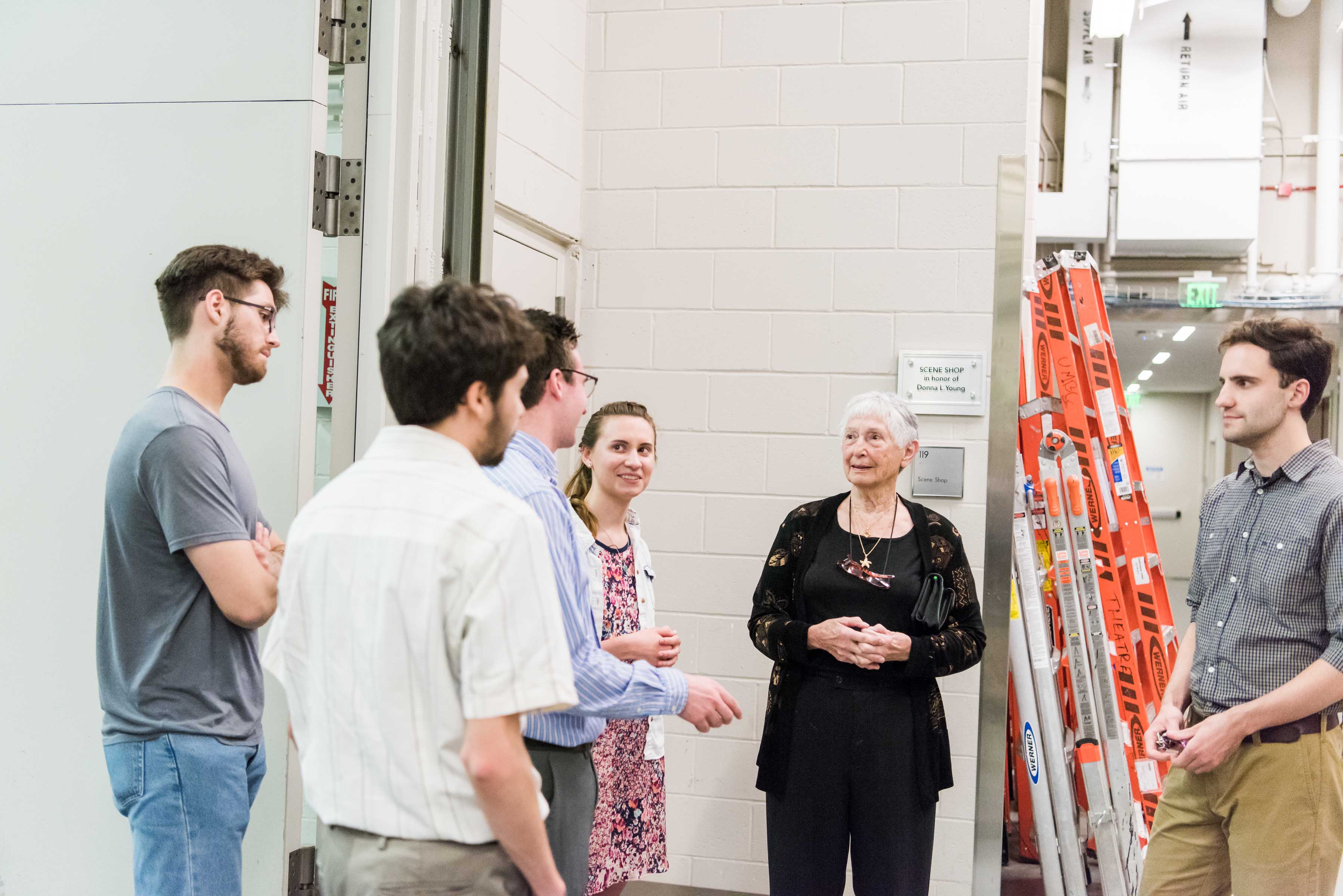
Donna L. Young talks with current theatre students about their work in the Scene Shop.

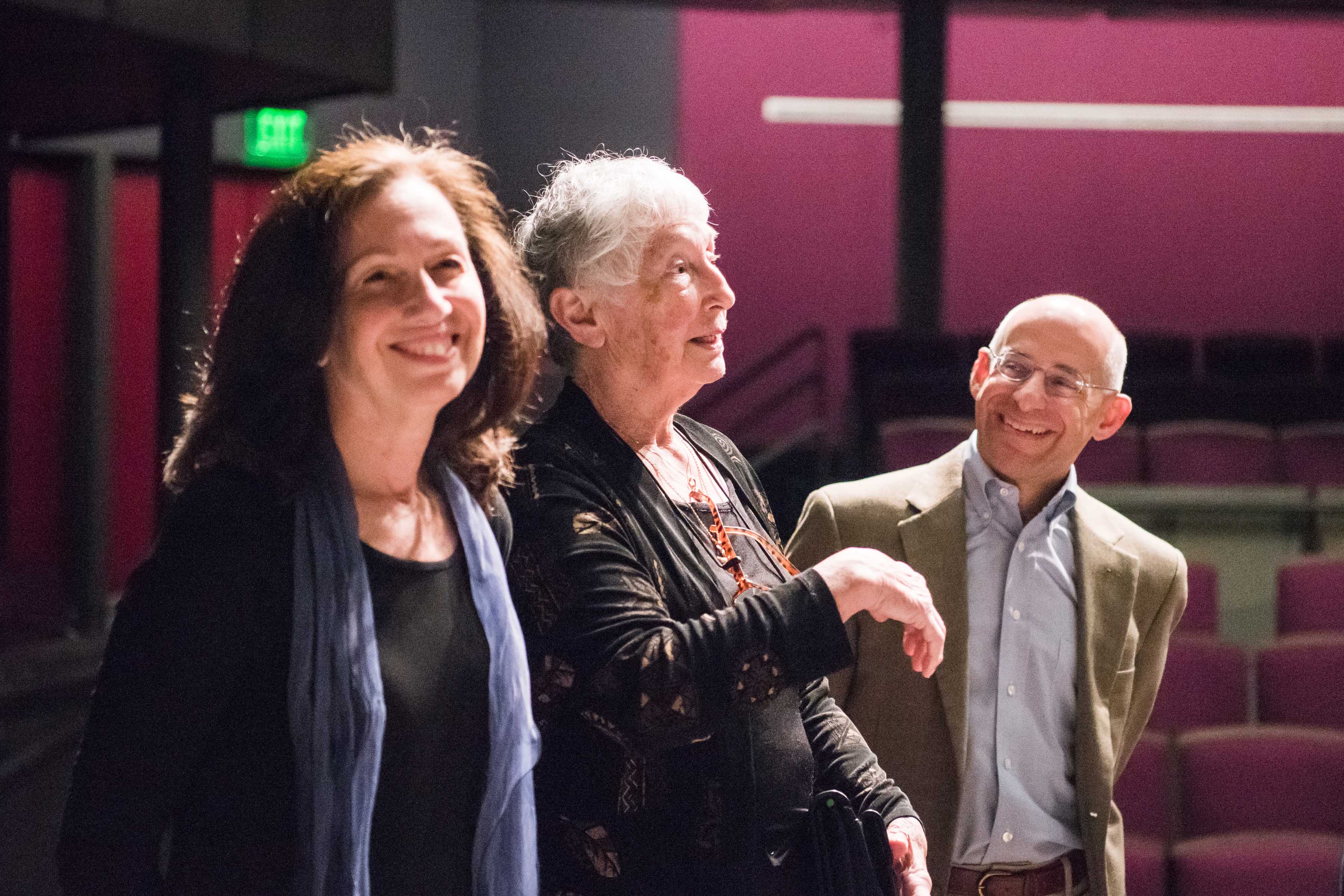
The Youngs and Scott Casper, dean of the College of Arts, Humanities, and Social Sciences, tour the theatre.

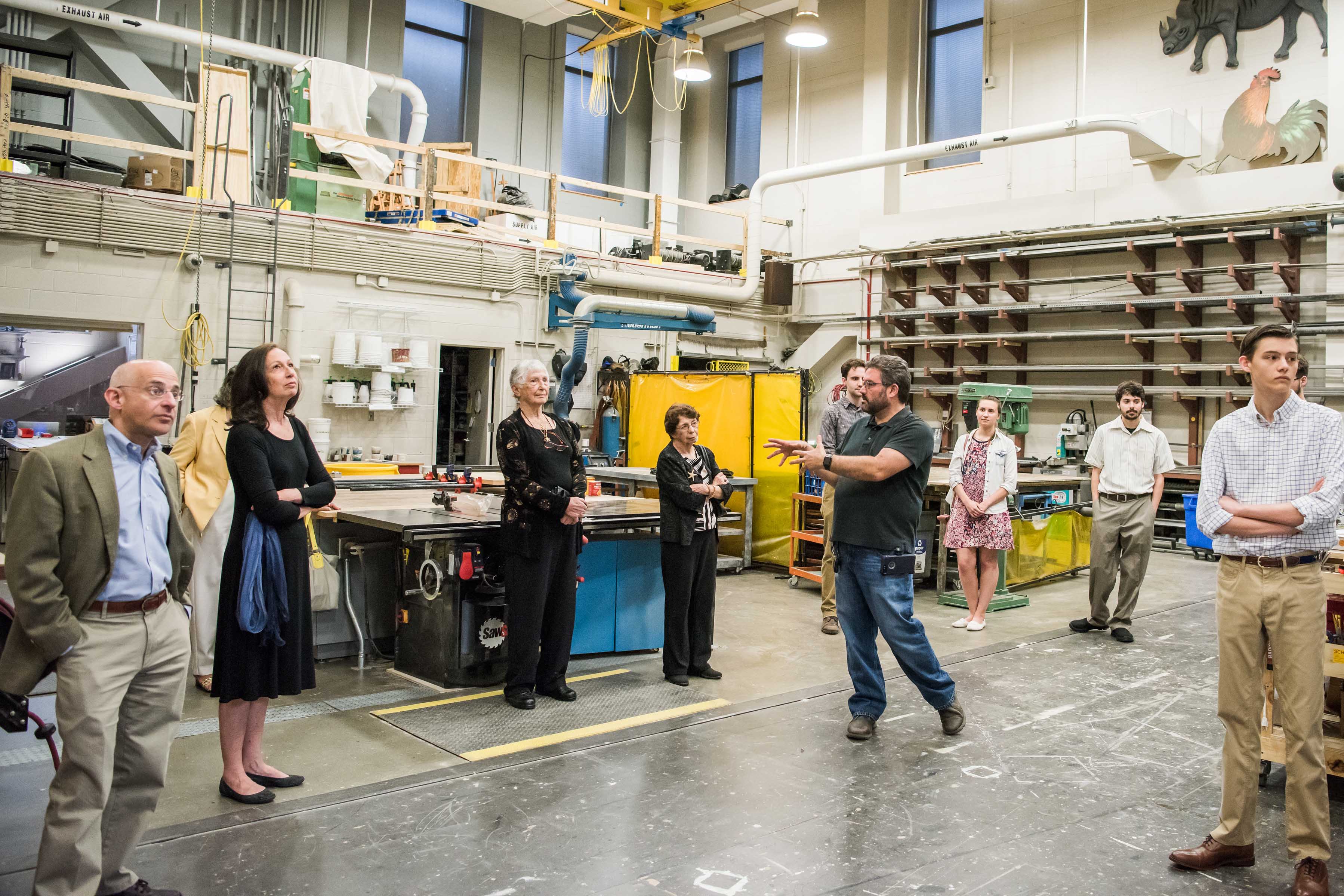
Gregg Schraven ’97, theatre, (center), tells guests about production capabilities in the Scene Shop. Schraven is Production Manager/Technical Director, and a lecturer at UMBC.

Guests get a close-up look at costume designs for a range of shows at UMBC.

Distance – Terri McCubbin Steel ’12, English

With memories of her mother to guide her, a daughter rides the Atlantic coast to help cure cancer

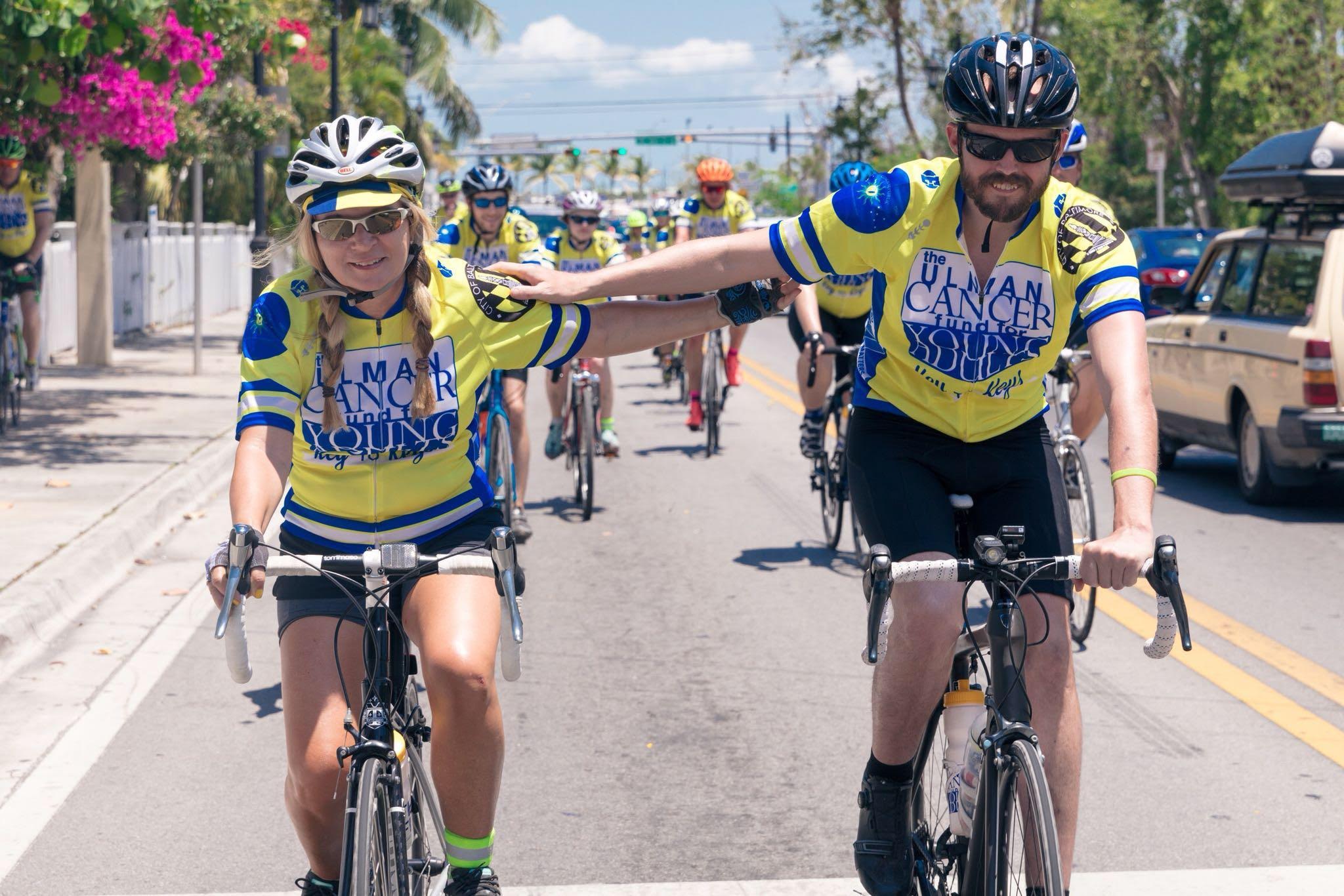
It’s a crisp April morning as I pedal through Baltimore’s back-roads with a band of strangers, a member of one of five teams that will hug the coast for eight days until we arrive at The Southernmost Point in Key West, Florida. I’m about to ride more than 1,200 miles as part of the annual Key2Key ride to benefit The Ulman Cancer Foundation. I grip the handlebars nervous and excited, keeping pace with the other cyclists and speed past my first home, what was once Wengert’s convenience store, and my elementary school, delighted by the trip down memory lane.

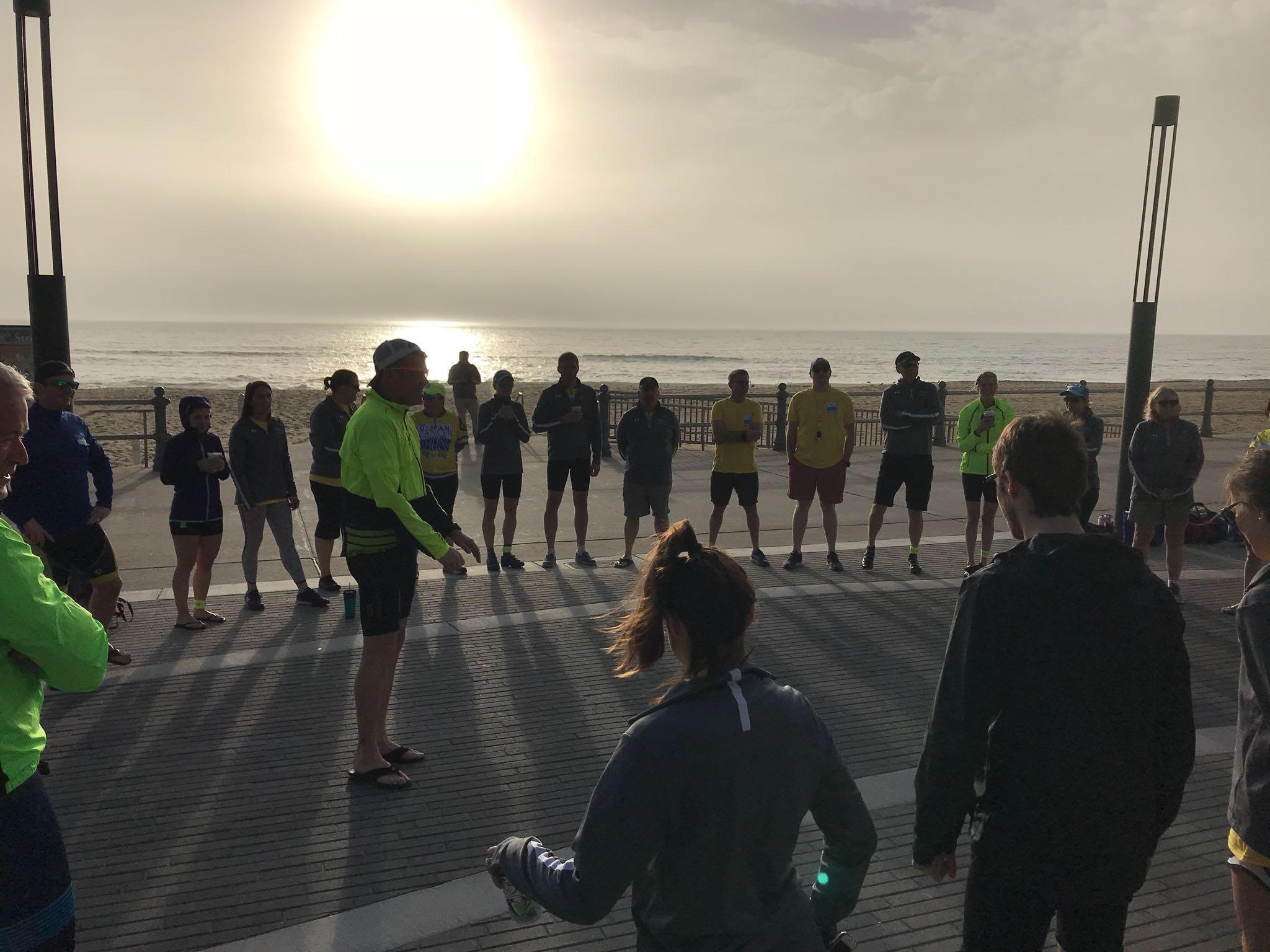
Earlier that morning, as the sun rose across the harbor and lit the Domino Sugar sign with its morning glow, we said goodbye to our loved ones and formed a circle of dedication, holding hands to recount why we chose to ride. I spoke of my mother who died of lung cancer when she was fifty-eight in five and a half short weeks. Each rider’s saga was sad, each true, each heart-breaking–every story different and yet the same–all of us desiring distance from our grief. Now it feels as if my mother is with me again, as I pass cherry blossoms under a canopy of green along the BWI bike trail, but I still don’t know where we’ll stop or how long we’ll ride. This would become one of the many rituals of the Key2Keys. “Trust the process” is our mantra, so I follow the others until our ride ends at Sandy Point Park, thirty-nine miles later. Drenched in sweat, we devour delicious sandwiches, rack our bikes with the assistance of two support drivers, and hop in the vehicle for a night in Virginia Beach.

K2K team 2018 forms a daily dedication circle at Virginia Beach


Our driver is Peter Grant, aka, Sweet Pete, an Ulman alumnus who lost his dear wife Gerry ten years ago, and he is joined by Josh Minton, a young, brave Army officer, forced to an early retirement because of his aggressive cancer. After hearing their stories, I realize it’s the emotional–not the physical– that will exhaust me. I wipe tears away as we pull up to the ocean-front hotel for a hot meal and restful night. I’m handed a key with my roommate assignment and told what to wear and when to show up. It’s a good thing, because I can barely think. Each day we rotate teams and roommates until all of us are one big family, formed under the brilliant direction of Brian Satola, the guy who keeps us on time and in line.

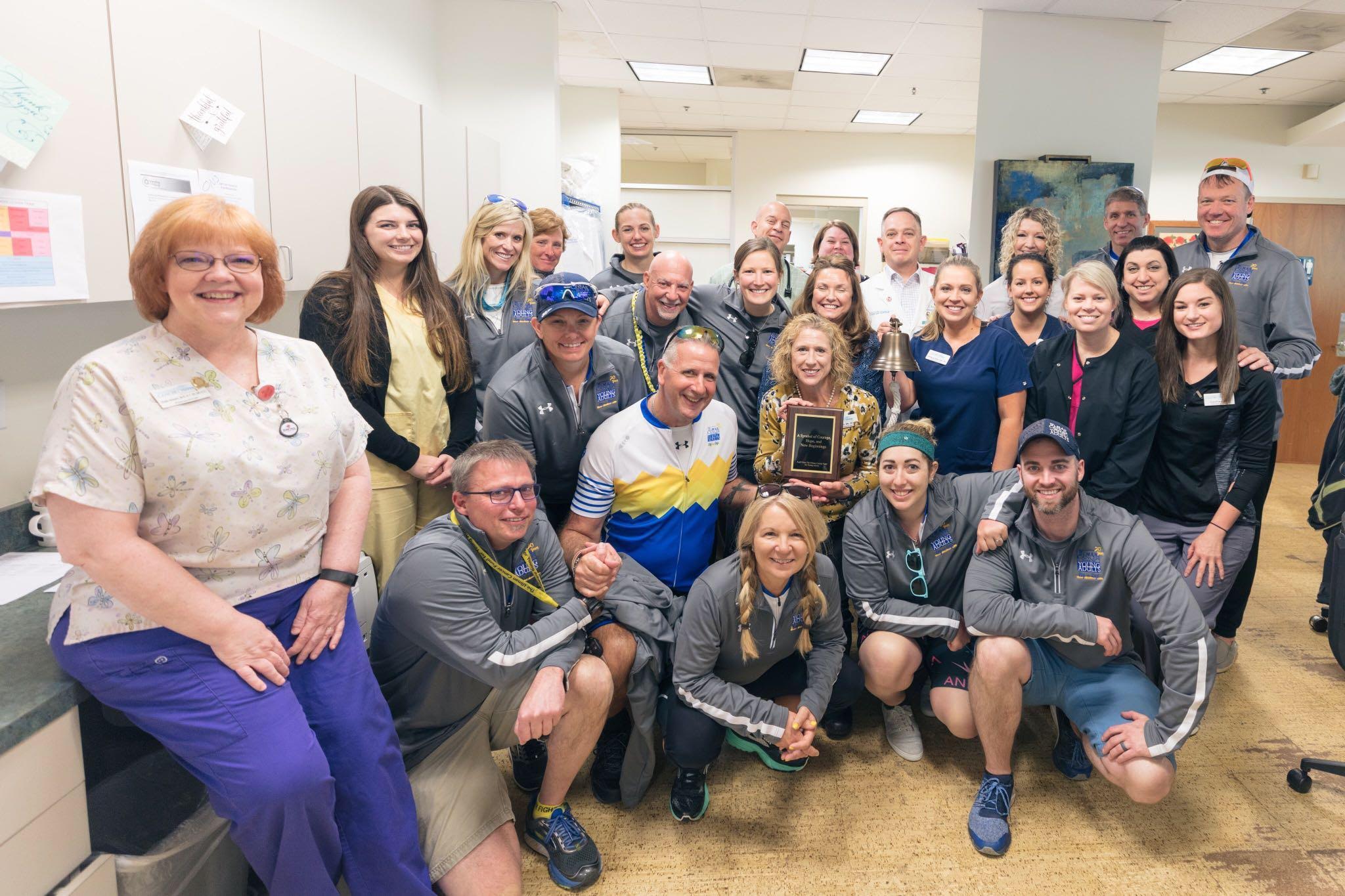
A wonderful day visiting a Charleston Cancer center


The Ulman Cancer Foundation serves the young adult cancer community, providing resources and funding, and with the new UCF house almost complete, free housing for 300+ patients and their families in the Baltimore area, annually. Each K2K rider commits to a $4500 fundraising minimum and riding 40-60 miles per day. Along our route we visit two cancer treatment centers, bringing care bags filled with toiletries and blankets. The staff and patients are excited to see us and have prepared gifts to us as well, and before we leave, one young woman rings the beautiful bell we have brought to signal her last chemo treatment–a sound I will always remember.

We whip through towns new to me: Moorehead City, NC; Charleston, SC; and Jacksonville, FL. Alligator Alley produces just what one presumes and this is where I pick up my pace as beady eyes peak out of the river. It’s our first warm day after cold, pelting, sideways rain and we are basking like the gators, enjoying the rays, but my body breaks down in Daytona Beach and I toss and turn all night, wondering if I’ll be able to ride in the morning. But Josh is on my team today so I urge myself to push those pedals harder than ever. Before I know it, I’m dining at Boston’s in Delray Beach, the sound of ocean waves soothing my soul.

Steel (left) arrives in Key West with retired Army officer Josh Minton


Key Largo is next, then the glorious seven-mile bridge. Distance no longer matters when we arrive in Key West’s Southernmost Point to cheers and champagne. As Sweet Pete declared at our wrap-up party, a huge smile spread across his face, “The best part is, this is just the beginning.” I couldn’t agree more. My journey began as a grieving daughter, but I’m leaving a grateful mother–with thirty-two new members of family.

End of the road at Southernmost Point, Key West


* * * * *

Terri McCubbin Steel ‘12, English, is a writer living and loving Baltimore City. Her work can be found in The Baltimore Fishbowl, Baltimore Style Magazine, Boating Times Magazine and the Welter Journal and this September she will present a panel on writing at Hippocampus Literary Conference in Lancaster, PA.

All photos by Alex Afzali.

Local governments’ cybersecurity crisis in 8 charts

Experts from UMBC’s School of Public Policy and Department of Computer Science & Electrical Engineering work together to understand how local governments practice cybersecurity.

By Donald Norris, University of Maryland, Baltimore County; Anupam Joshi, University of Maryland, Baltimore County; Laura Mateczun, University of Maryland, Baltimore County, and Tim Finin, University of Maryland, Baltimore County

* * * * *

Within the past few weeks, two large American cities learned that their information systems were hacked. First, Atlanta revealed that it had been the victim of a ransomware attack that took many of the city’s services offline for nearly a week, forcing police to revert to taking written case notes, hampering the Atlanta’s court system and preventing residents from paying water bills online. Then, Baltimore’s 311 and 911 dispatch systems were taken offline for more than 17 hours, forcing dispatchers to log and process requests manually. Both attacks could have been prevented. And they are more evidence of the poor, if not appalling, state of local government cybersecurity in the United States.

We know this because in 2016, in partnership with the International City/County Management Association, we conducted the first-ever nationwide survey of local government cybersecurity. Among other things, the survey data showed just how poorly local governments practice cybersecurity.

Under near-constant attack, but not fully aware

Nearly half – 44 percent – of all the respondents told us they experience cyberattacks at least daily. Based on prior research, we are confident that rate is actually much higher.

The volume of attacks isn’t dropping – and in some cases it’s increasing.

But even so, many communities didn’t know how frequently they are attacked, and most didn’t count or catalog initial attacks – though more than half did track more serious incidents and breaches.

More than half weren’t able to determine who was attacking their systems.

Unprepared to respond, and with not enough support

Certainly, there are local governments that do a commendable job with cybersecurity. If previous research into government information technology systems and electronic government can be a guide, they are most likely larger, more well-funded and more well-managed governments. However, the data from our more recent survey strongly suggest that at least some, and perhaps even a large fraction of, local governments may be unable to respond to electronic intrusions.

In part this is because few local officials are aware of the need for cybersecurity. Nearly two-thirds of the respondents to the survey, who were nearly all information technology or cybersecurity officials, said that top managers understood the need. However, among other groups in local governments, awareness dropped considerably. Perhaps as a result, support for cybersecurity efforts was also not as strong as Atlanta’s and Baltimore’s experiences suggest it should be.

With most local government officials and staff unaware and unsupportive, it is not surprising that cybersecurity is so poor among American local governments. Atlanta Mayor Keisha Lance Bottoms admitted that cybersecurity was not a high priority, although “it certainly has gone to the front of the line.”

And yet, crucial barriers remain, largely to do with how much money is allocated to cybersecurity efforts.

Getting more people in the know

If local officials are going to do a better job protecting their information assets, they’ll first need to know a lot more about what’s actually happening. The numbers of survey respondents who answered “Don’t know” to our questions was surprisingly high. No top local officials, whether elected or appointed, should be unaware of basic cybersecurity information, like whether their systems have been attacked or breached, or who’s attacking their systems and why.

The ConversationKnowing these answers will only become more critical as computing becomes more deeply embedded in systems running “smart” cities. If computers control traffic lights, sewage plants and electrical grids, then the consequence of attacks is more severe than just loss of information or computer services.

Donald Norris, Professor Emeritus of Public Policy, University of Maryland, Baltimore County; Anupam Joshi, Oros Family Professor and Chair, Department of Computer Science & Electrical Engineering, University of Maryland, Baltimore County; Laura Mateczun, Ph.D. Student in Public Policy, University of Maryland, Baltimore County, and Tim Finin, Willard and Lillian Hackerman Chair in Engineering and Professor of Computer Science and Electrical Engineering, University of Maryland, Baltimore County

Header photo by It Never Ends/Pixabay

This article was originally published on The Conversation. Read the original article.