We use cookies for analytics and, unless you opt out, advertising.
You can opt out of advertising at any time.UMBC uses essential cookies to run this site. With your permission we would also use analytics cookies (to understand how the site is used) and advertising cookies (to measure and target our ads on other platforms). Nothing else loads unless you accept. You can change your choice any time from Cookie Settings in the footer.Privacy Policy
EssentialRequired for the site to work (login, security, your cookie choice). Always on.
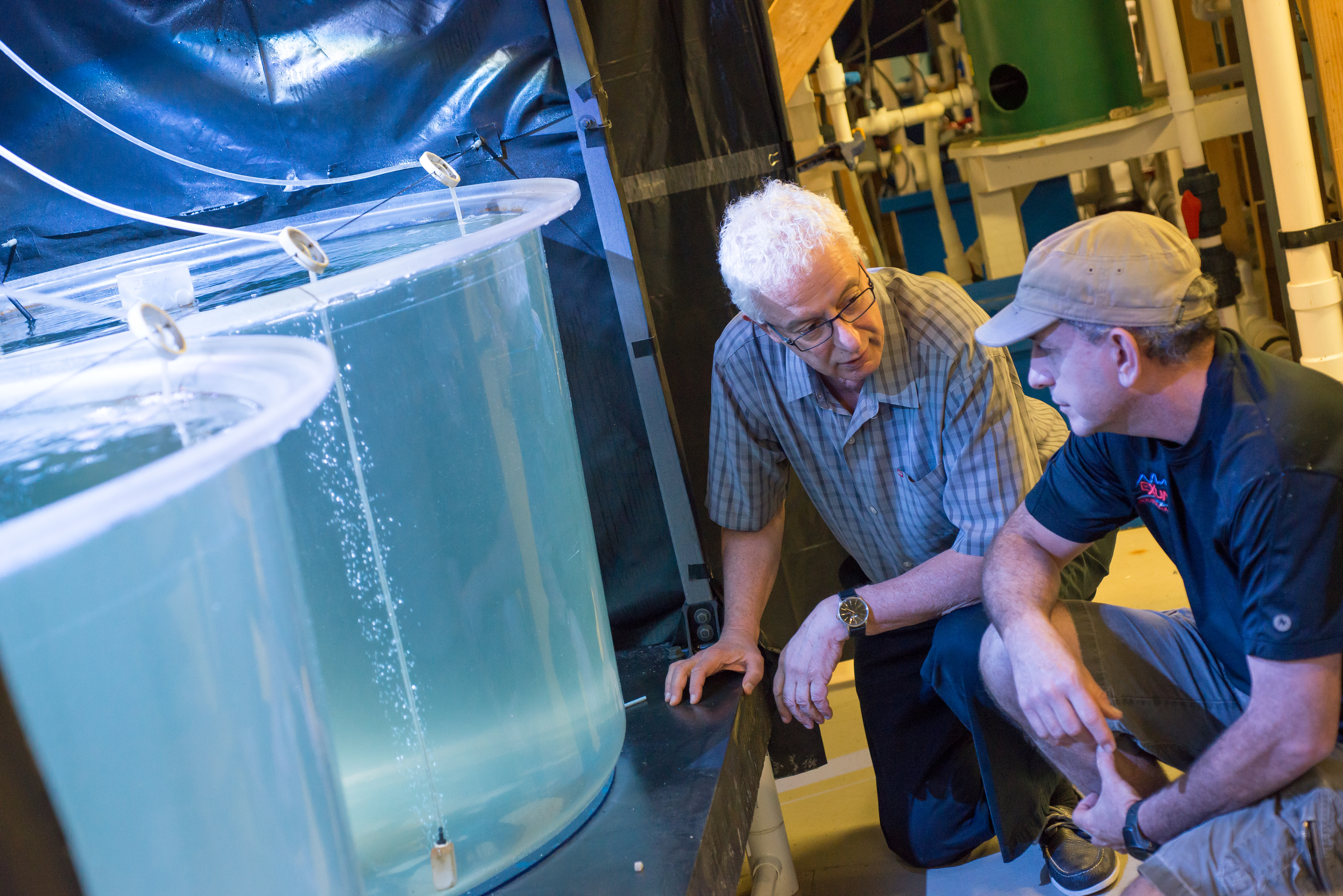
UMBC Professor Yonathan Zohar, chair of marine biotechnology, is featured in a new issue of The Economist focused on the future or agricultural technologies. Zohar’s research seeks to revolutionize the fish farming industry, removing many of the pitfalls of conventional methods and increasing environmental sustainability.
Zohar’s marine aquaculture system is land-based and completely self-contained, and it could dramatically change how millions of people access fish as a local food source.
“Fresh fish…would…become accessible to millions of landlubbers who must now have their fish shipped in from afar, deep-frozen,” writes Geoff Carr. “Old world species like sea bream and sea bass…could be delivered fresh to the table anywhere” without the threats of nonnative species escaping into local waters or wild fish being exposed to pathogens found in open water.
Localized systems reduce transportation costs and energy usage, and Zohar’s system includes several core features to maximize sustainability. The system puts bacteria to work to convert waste from the growing fish into either reusable or harmless compounds. Two sets of bacteria work in tandem to convert ammonia excreted by fish into inert nitrogen gas. A third set converts solid waste into methane that is put back to use powering the aquaculture operation.
“The upshot is a closed system that can be set up anywhere, generates no pollution and can be kept disease-free,” writes Carr.
Zohar has learned the hard way that it is difficult to grow in captivity some species that consumers most value, like bluefin tuna, yellowtail, and other marine fish. The system he and his colleagues have built at the Institute of Marine and Environmental Technology (IMET) enables fish to thrive, particularly in the early stages of life, by carefully mimicking factors like temperature, salinity, and oxygen conditions found in the species’ natural habitats. However, the optimal conditions initiating reproduction and nurturing juvenile fish to adulthood have proven more challenging to replicate.
“[Zohar] has spent decades studying the hormone system that triggers spawning and can now stimulate it on demand,” writes Carr. He has also carefully researched the needs of freshly-hatched larvae, and he is now focused on developing methods to effectively and reliably raise Bluefin tuna into adulthood.
Baltimore area restaurants have already enjoyed IMET’s locally grown fish, and Zohar is currently preparing for his system to undergo commercial-scale trials. “If he succeeds,” Carr writes, “…sushi lovers around the world will be forever in his debt.”
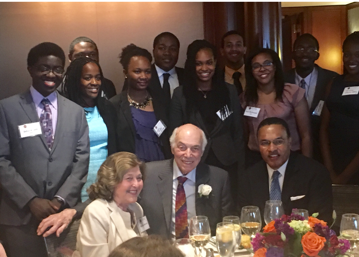
Robert Meyerhoff was one of 11 preeminent leaders inducted into the inaugural class of The Baltimore Sun’s Business and Civic Hall of Fame at a special event held in downtown Baltimore on June 9.
A special feature in The Baltimore Sun describes how Mr. Meyerhoff and UMBC President Freeman Hrabowski first connected in 1988 and began to envision an innovative program to educate a new generation of leading scientists, with a priority on diversity.
Today, the Meyerhoff Scholars Program is regarded as a national model, described by Science as “the gold standard for providing a path into academic research for groups…now underrepresented in the STEM (science, technology, engineering, and mathematics) fields.” UMBC has become the nation’s #1 producer of African American undergraduates who go on to complete M.D./Ph.D. programs. Additionally, the Meyerhoff Scholars Program model is being adapted at UNC-Chapel Hill and Penn State through a $7.75 million HHMI grant.
“What is so significant” about Mr. Meyerhoff from the very start of the program, Hrabowski told TheBaltimore Sun, “was that he gave not only money but also so much of himself. He has shown the kind of interest one shows when one cares deeply about people.” Meyerhoff took a personal interest in every student in the inaugural class, Hrabowski said.
That legacy continues in the Meyerhoff Scholars Program today. Students receive intensive mentorship from faculty, staff, and peers throughout their time at UMBC, including assistance with graduate school and career planning and access to challenging research experiences. At the recent Meyerhoff graduation dinner, students spoke to the transformative impact the program has had on their lives.
The Sun’s Hall of Fame is designated to honor individuals “who have consistently worked to improve Maryland through their business efforts, civic leadership and philanthropy” and “who have dedicated their lives to making the region thrive.” Through his leadership and generosity, Mr. Meyerhoff has had a profound impact on the lives over a thousand UMBC students—students who, as leading scientists and engaged alumni, are now supporting the next generation of scholars.
Images: (1) Robert Meyerhoff at 2014 Meyerhoff Scholars Program dinner. (2) Meyerhoff Scholars (top row) with Rheda Becker, Robert Meyerhoff, and Freeman Hrabowski (bottom row, l-r) at inaugural Baltimore Sun Hall of Fame dinner.
Rentzsch holds the UMBC record in the javelin throw, set at 74.28m during this year’s Raleigh Relays. He has represented UMBC in three NCAA Championships, the most for any Retriever competitor. In addition to competing in javelin, throughout his career he has also represented UMBC in the 60m dash, 60m hurdles, pole vault, long jump, shot put, and heptathlon.
Coming to UMBC from the Elite Sportschule Potsdam just outside Berlin, Germany, Rentzsch shares that the language barrier was the biggest challenge he initially faced in transitioning to life as a college athlete in the United States. Once acclimated, he excelled, and he attributes that success to support from Retriever coaches.
“Here, the coaches treat us like human beings, and for me, it is important to receive support to help you feel comfortable,” Rentzsch says. “[W]hen you feel comfortable, confidence and greater things can occur.”
Former teammate Yao Adantor ’15, psychology, says Rentzsch’s strong work ethic has been core to his success. “He has this undeniable force to keep going,” Adantor says. “From the classroom to the field, he feels that he can do anything he sets his mind to.”
Head coach David Bobb shares his pride at seeing Rentzsch progress over his four years at UMBC: “It is very impressive to see what he has done.”
As for Rentzsch, “It’s not just my accomplishment,” he says. “I am honored and grateful to represent the university at the championships.”
Learn more about Vincent Rentzsch in the UMBC Athletics article and video on his journey to the NCAA Championships.
Image: Vincent Rentzsch competes for UMBC in javelin. Photo courtesy of the America East Conference.
Thousands of friends, family members, faculty and staff gathered to celebrate the tremendous achievements of UMBC’s Class of 2016, nearly 2,000 strong, at the university’s commencement ceremonies, held May 18-19, 2016. Moving remarks by each ceremony’s speaker served as a powerful reminder of the value and impact of a UMBC degree.
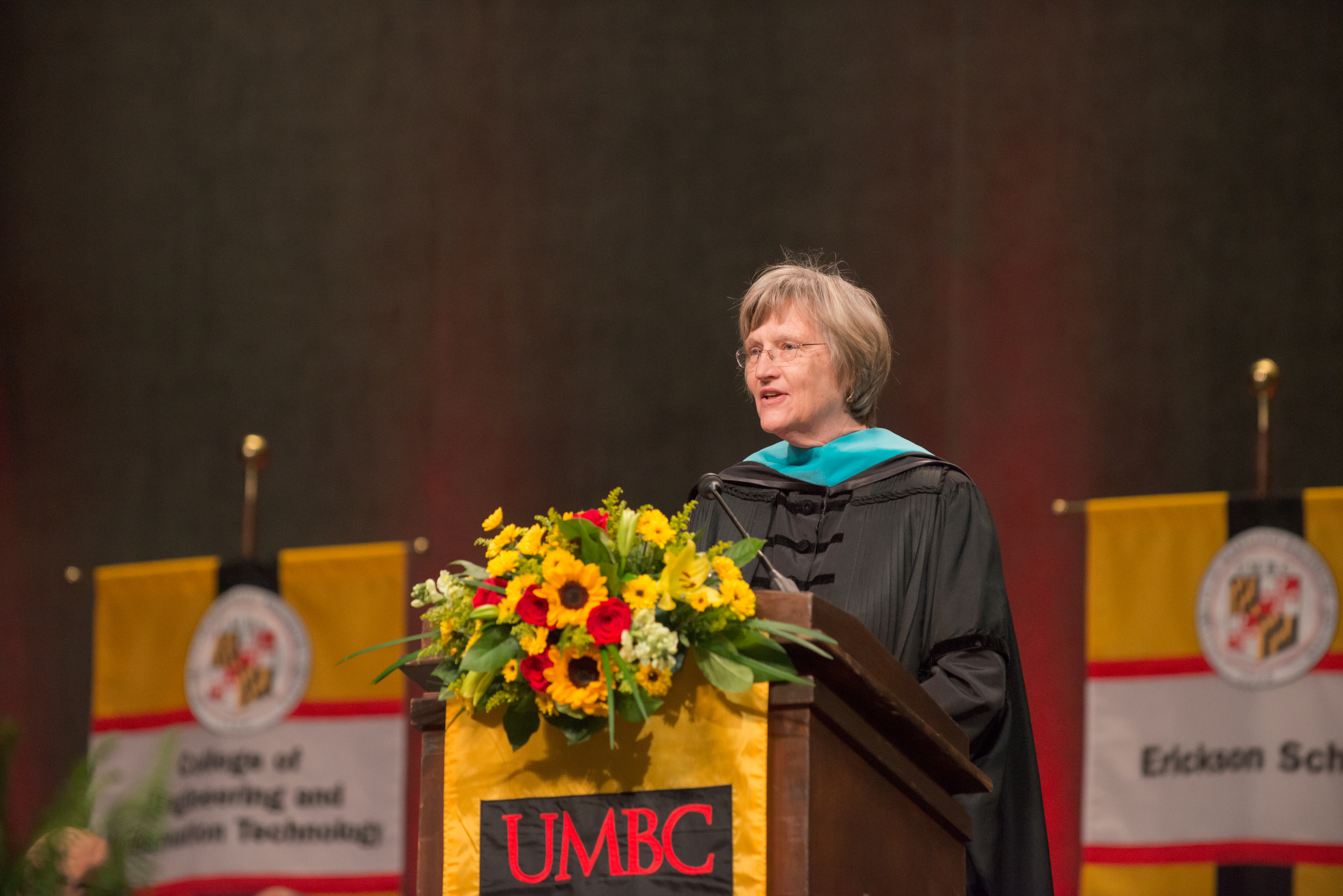
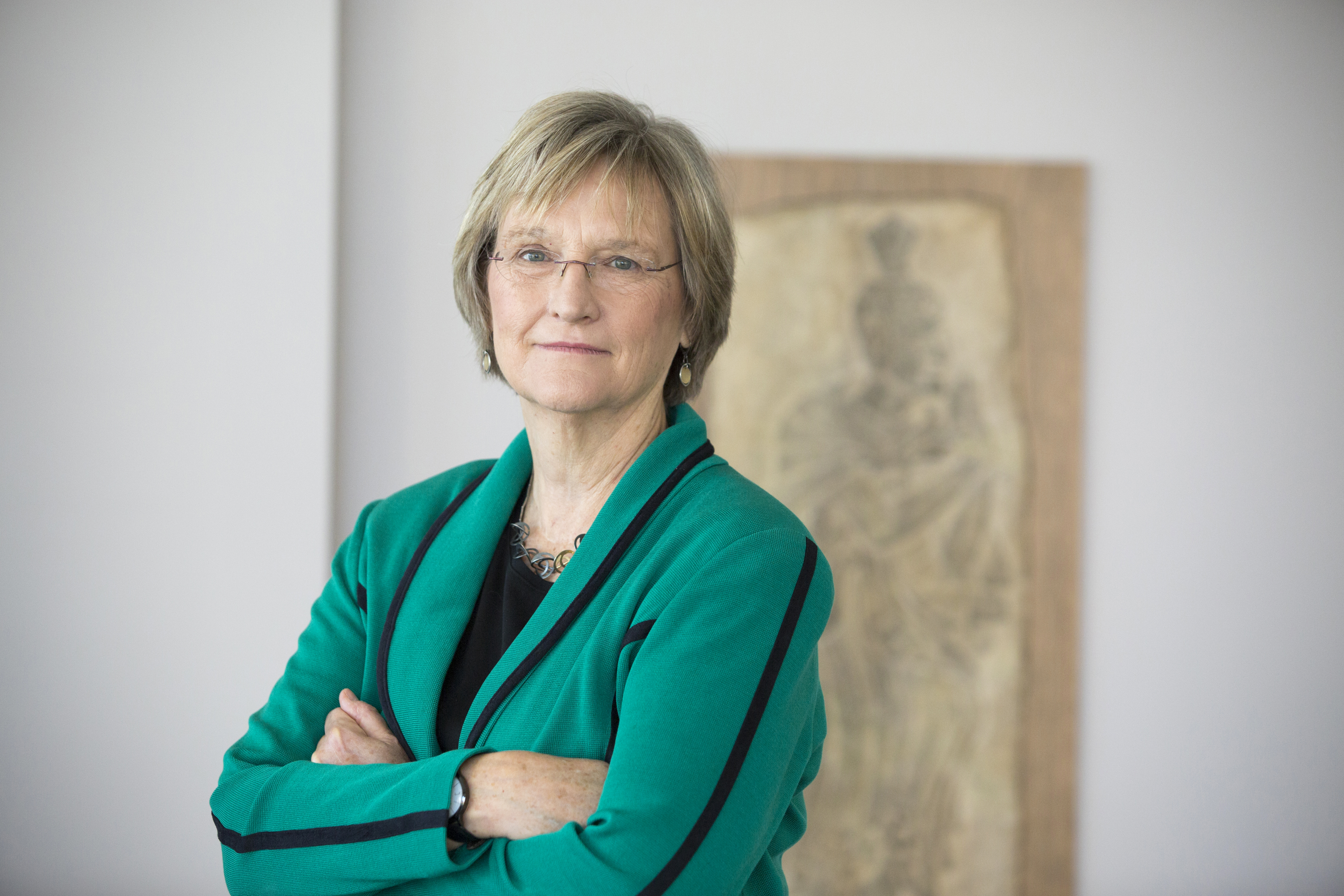
“Higher education can be a great equalizer in this country, and there is no further intervention as strong or as enduring as a college education for helping individuals and societies to thrive,” said Harvard President Drew Gilpin Faust during the undergraduate ceremony. “But many colleges, most of the colleges, have not figured out how to do as good a job as UMBC at enabling all students to reach their highest potential.”
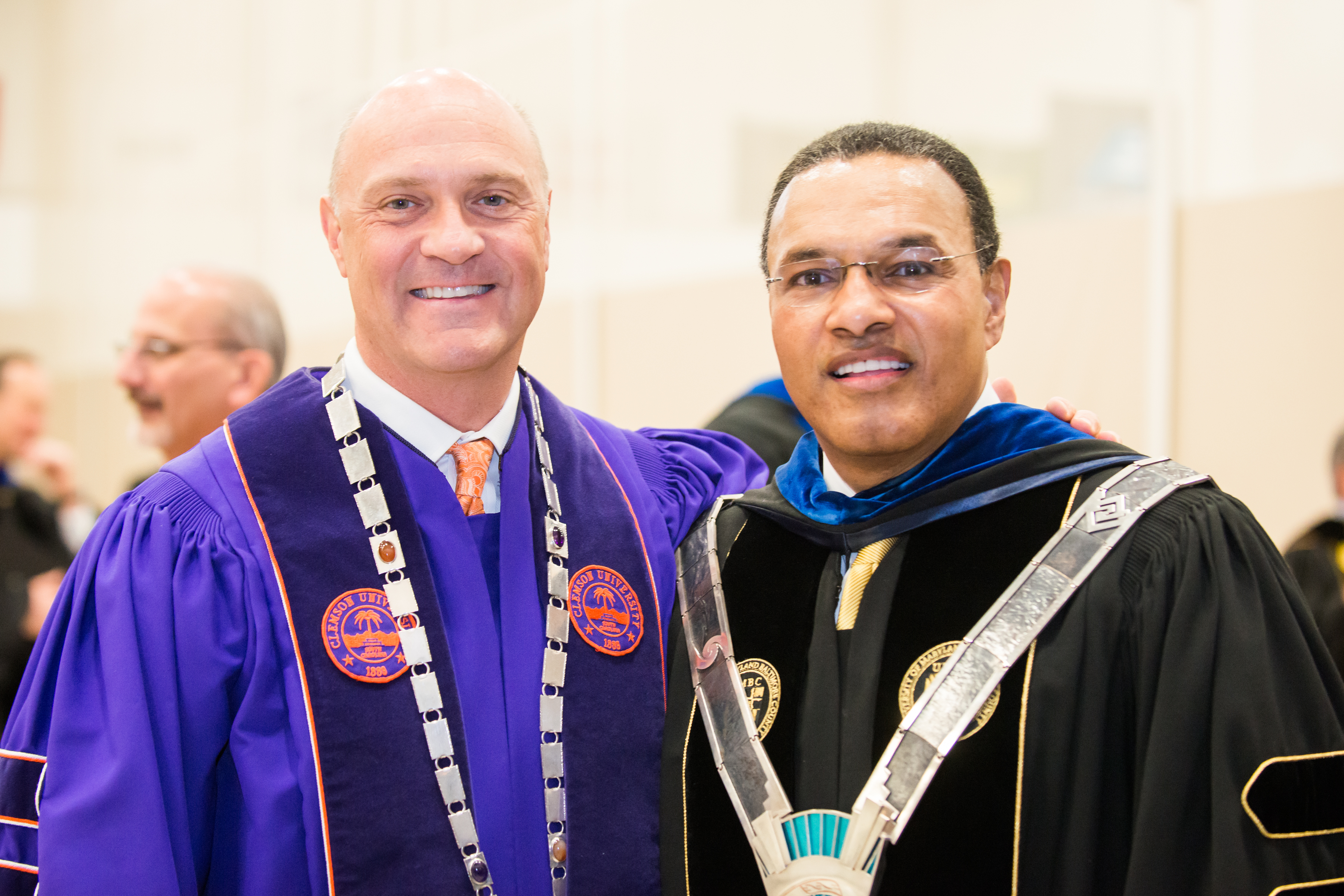
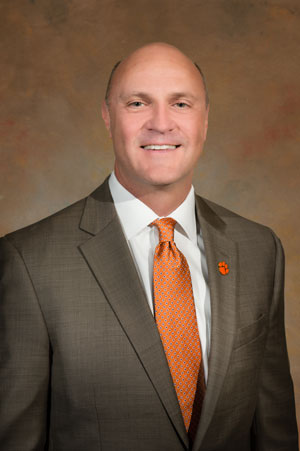
Clemson University President James Clements, a three-time alumnus of UMBC, shared a particularly personal reflection during graduate commencement. “It is actually difficult for me to put into words how much of an impact UMBC has had on my life,” said Clements.
President Clements described how his grandparents never graduated from high school and how he and his three siblings were the first in their family to attend college.
Between the four of us we earned eleven college degrees, and seven of those degrees came from this great university. And one of the happiest days in the lives of my parents was when my older brother and I graduated side-by-side with our Ph.D.s from UMBC. […] So this place not only gave my family a chance to receive a top-notch education, it literally transformed my entire family and gave us a path to a better life.
That experience also motivated President Clements to enter the field of higher education, to provide others with the opportunities he experienced. He told the graduating master’s and doctoral students:
With a degree from UMBC you can achieve anything that you set your mind to. You can even become the president of one of the top public universities in the country… But most importantly, use your degree and the knowledge you have acquired to have a positive impact on something that is important to you…to help tackle some of the most significant challenges facing society today. I know that you can, and will, make a difference.
President Faust echoed this thought in her remarks to UMBC’s undergraduates, telling them:
…you have the responsibility to pay it forward: to inspire others in their quest for knowledge just as you were inspired. To acknowledge the many people who invested in your journey by offering your help to others.
“So many of you are already embracing that responsibility,” said Faust, before honoring several UMBC graduates moving on to careers in public service. These students, she said, are “following in the footsteps of alumni like Shalonda Holt, the 2007 UMBC graduate who last month was named Washington Post’s 2016 Teacher of the Year. She is living the responsibility conferred by her UMBC education every day.”
Valedictorian Katelyn Seale ’16, biochemistry and molecular biology, reflected on her own UMBC experience, including how she became committed to meeting the needs of medically underserved populations and sensitive to patients’ diverse perspectives and life experiences. She told her classmates, “I thank you all for contributing to the open, intelligent, and compassionate community we share at UMBC.”
UMBC President Freeman Hrabowski offered special recognition to the highly accomplished scholar-athlete Tessa Seale ’16, biochemistry and molecular biology, Katelyn Seale’s twin sister, who will soon begin a Ph.D. in cellular molecular medicine at Johns Hopkins University. Tessa Seale competed as a sprinter on UMBC’s track team and was inducted into both the Chi Alpha Sigma National College Athlete Honor Society and Phi Beta Kappa Honor Society.
Several other graduates were honored for their academic achievement and dedication to public service throughout the ceremony, particularly in President Faust’s commencement remarks. A few include Gaurav Luthria ’16, bioinformatics, heading to a Ph.D. in bioinformatics and integrative biology at Harvard; CODE2040 alumnus Randi Williams ’16, computer engineering, who will begin a master’s in media, arts, and sciences at MIT; Cheyenne Smith ’16, psychology and biological sciences, who will work as an AmeriCorps Community Service Learning Fellow with The Choice Program at UMBC; and Sayre Posey ’16, history, who will soon begin teaching 9th grade U.S. history in Baltimore City.
The ceremony also recognized Jonathan “Shane” McNeil, who passed away prior to receiving his degree in psychology. President Hrabowski shared, “Our community feels a great sense of loss…To Shane’s family, I want to say, you will always be a part of the UMBC family.” Shane’s parents, Dr. John McNeil and Elizabeth Gordon-McNeil, received his degree in his honor as the full arena stood to recognize him.
Each graduate in UMBC’s Class of 2016 has a powerful story to tell, and departments across the university exuberantly congratulated their graduates on social media throughout the ceremony, from biological sciences to visual arts to American studies. The Women’s Center recognized graduating Newcombe Scholars including Carrie Cleveland ’16, social work, recently highlighted in The Baltimore Sun’s coverage of inspiring college graduates across greater Baltimore. Cleveland chose to complete a social work degree after her daughter was born with a congenital heart defect and a supportive social worker had a profound impact on her family’s experience. She told the Sun, “It took me finding what my passion was…to excel.”
Cleveland and her fellow graduates have already demonstrated exceptional personal achievement and made invaluable contributions to the UMBC community. Now they take their knowledge, experience, and passion to serve as leaders in graduate programs and careers across the globe.
As President Faust said, “Education challenges us with the obligation to be the best we can be for ourselves and for others every day. It shows us what we might be and it points the way.”
Learn more about UMBC’s Spring 2016 Commencement speakers on UMBC News. The Baltimore Sun offers coverage of President Faust’s remarks and the undergraduate ceremony, and Harvard University has provided her remarks in full. Clemson University offers details on President Clement’s commencement speech.
On the eve of UMBC’s 50th anniversary, the university will welcome two prominent higher education leaders as commencement speakers whose words will have particular significance in this milestone year.
Harvard University President Drew Gilpin Faust will speak to the Class of 2016 at UMBC’s undergraduate commencement ceremony. For UMBC—an innovative, young institution now recognized nationwide for redefining excellence in higher education—this connection with the esteemed leader of the oldest higher education institution in the nation is quite meaningful. Faust will receive an honorary degree of doctor of public service during the ceremony on Thursday, May 19, 2016.
Faust is the 28th president of Harvard University and the Lincoln Professor of History in Harvard’s Faculty of Arts and Sciences. As president of Harvard, Faust has expanded financial aid to improve access to Harvard College for students of all economic backgrounds and advocated for increased federal funding for scientific research. She has broadened the University’s international reach; raised the profile of the arts on campus; embraced sustainability; launched edX, an online learning partnership with MIT; and promoted collaboration across academic disciplines and administrative units. She is also the author of six books, including This Republic of Suffering: Death and the American Civil War (2008), which won the 2009 Bancroft Prize and was recognized by The New York Times as one of the “Ten Best Books of 2008.”
Numerous UMBC alumni have gone on to graduate studies and faculty and staff positions at Harvard. From UMBC’s newest class of graduates, Gaurav Luthria ’16, bioinformatics, will soon begin a Ph.D. in bioinformatics and integrative biology at Harvard. Graduating summa cum laude, Luthria previously interned at the Health Sciences and Technology Division, a joint initiative between MIT and Harvard, where he used social media data to study neurodevelopmental disorders.
Clemson University President James P. Clements, a three-time alumnus of UMBC, will speak at the graduate commencement ceremony on May 18, 2016, and will receive an honorary doctor of education degree. Clements ’85, computer science, and ’91 M.S. and ’93 Ph.D., operations analysis, has shared with UMBC Magazine how much he has enjoyed watching UMBC “skyrocket into one of the hottest universities in the country,” saying, “It has just continued to climb up and up and up.”
Clements is the 15th president of Clemson University. Under his leadership Clemson has reached several key milestones, including a record number of student applications and a record-breaking year in private fundraising. A nationally recognized leader in higher education, Clements previously served as the president of West Virginia University for nearly five years, and he is past chair of the board of directors for the Association of Public and Land-Grant Universities (APLU). He serves on the board of directors of the American Council on Education (ACE) and on the executive committee of the APLU’s Commission on Innovation, Competitiveness and Economic Prosperity. He also chairs the ACE Commission on Leadership and co-chairs the U.S. Department of Commerce’s National Advisory Council on Innovation and Entrepreneurship.
UMBC community members who aren’t able to attend the ceremonies can view them live through the commencement webcast, or follow them on Twitter @UMBC and through #UMBCgrad. Videos of the remarks will also be available online after the ceremonies.
Images: Spring 2015 UMBC commencement, photo by Marlayna Demond ’11 for UMBC; Harvard President Drew Faust is pictured in the Harvard Art Museums at Harvard University, photo courtesy of Stephanie Mitchell/Harvard Staff Photographer; Clemson President James Clements, photo courtesy of Clemson University.
As UMBC’s Class of 2016, nearly 2,000 strong, prepares to leave campus for graduate programs, fellowships, and career opportunities around the globe, we recognize their tremendous personal achievements and their invaluable contributions to our community.
Valedictorian Katelyn Seale ’16, biochemistry and molecular biology, will soon begin her M.D. at the University of Maryland School of Medicine. Seale shares, “I know that I am equipped to succeed in a medical career because of these experiences at UMBC.” This includes not just her rigorous coursework and time in the lab, but also opportunities to connect in meaningful ways with diverse communities. She’s learned that life experiences can dramatically shape medical needs and doctor-patient relationships. “With every conversation and interaction, I have had the opportunity to learn something new about people,” says Seale.
Salutatorian Ashby Henningsen ’16, political science and global studies, thanks his fellow Sondheim Public Affairs Scholars for building up a shared commitment to personal growth and public service. Henningsen has combined intensive academic opportunities, including the Public Policy and International Affairs Junior Summer Institute at Princeton University, with experiential learning and service, such as volunteering with the Refugee Youth Project and with Advocates for Survivors of Torture and Trauma. Henningsen will work with the International Justice Mission in Washington, D.C., as he awaits a Peace Corps placement.
Meyerhoff Scholar Randi Williams ’16, computer engineering, also graduating summa cum laude, shares, “UMBC has groomed me into a leader which, as a shy and nerdy freshman, I never imagined that I could be… Mentors placed me in the position to speak before the world and lead other students in promoting diversity in technology.” During her undergraduate studies, Williams has completed internships at the NASA Jet Propulsion Lab, MIT Media Lab, and Jawbone, a wearable technology company. It was the experience at Jawbone, through the prestigious CODE2040 Silicon Valley fellowship program, that inspired Williams to co-organize the first HackUMBC event. With a particular interest in creating wearable technology for people with disabilities, Williams will complete a master’s degree at MIT, working with the Personal Robots Group of the MIT Media Lab.
The Maryland Career Development Association (MCDA) has awarded the UMBC Career Center the 2016 MCDA Organizational Career Planning Award. The annual award, presented this year at the MCDA conference on April 29, recognizes an institution that has developed an exceptional program for career development.
“We are delighted UMBC is being recognized for its career development efforts,” says Christine Routzahn, director of the Career Center. “The Center was nominated for Career Crush, an innovative, month-long initiative that brings the UMBC campus community together to provide both undergraduate and graduate students with opportunities to develop their professional skills and explore their career options.”
UMBC’s 2016 Career Crush included an array of career presentations, professional development workshops, fairs, company site visits, and networking opportunities with alumni and employers. A clothing closet with over 2,000 apparel items was also set up to provide students with free professional clothing for job interviews and other career needs.
Inspired by games like Candy Crush, the program offered students “loot” in categories such as Networking, Developing Your Professional Image, and Discovering Career Options as they attended programs, encouraging them to take advantage of all the month had to offer.
“The program is now in its 9th year. We continue to utilize the expertise of alumni, employers, and university staff and faculty to increase student understanding of the career development process in academic and career decision-making,” says Sue Plitt, associate director of the Career Center. She notes, “Student participation continues to increase. Nearly 2,500 students attended this year’s events.”
The T. Rowe Price Foundation has funded this initiative since 2012 and employees of the company continue to partner with UMBC to donate their professional attire to the clothing closet.
Images (top-bottom): Career Crush 2016 job fair, Career Center Director Christine Routzahn and Associate Director Sue Plitt, and Sweeten Up Your Network event attendees. All photos by Marlayna Demond ’11 for UMBC.
The University Center Ballroom was humming on Wednesday, April 27, with the voices of hundreds of UMBC students presenting their research and creative work to proud long-time supporters and curious first-time visitors alike.
This year UMBC celebrated its 20th annual Undergraduate Research and Creative Achievement Day, a particularly special celebration for a university so focused on student-led projects and engaged learning experiences. As Diane Lee, dean of undergraduate education, said, reflecting on the anniversary, “Indeed, we know of no other university where so many students, faculty members, and staff gather to come and learn from the voices of undergraduate students.”
URCAD programming included performances, film screenings, exhibits, posters, and talks from all disciplines, as well as a large number of interdisciplinary partnerships.
Aakash Bajpai ‘18, mechanical engineering, and three partners presented a collaboration with the Baltimore City Department of Public Works on research to anticipate when aging city pipes will fail before those incidents occur. Their research is also helping to determine why these pipes are failing and how the failures can be prevented in the future. Bajpai says that this project can save Baltimore millions of dollars by minimizing the disruptions caused by emergency repairs, moving toward a more proactive and cost-effective infrastructure maintenance approach.
Joel Tyson ‘18, biochemical engineering, is studying probes to determine whether they are compatible with the chemistry of the human body, under the mentorship of Gymama Slaughter, assistant professor of computer science and electrical engineering. The probes will be used to simultaneously sense neurotransmitters and monitor the electrical activity in the brain. Analyzing the safety of the probes and how they interact with the body’s chemical composition will be essential for when the probes are tested on mice and, later, in human models. The sensor is being designed as a more effective, less invasive way to continuously monitor neurotransmitter release and the brain’s electrical activity in people with neurological disorders.
Elise Donkor ‘16, computer engineering, is developing more personalized software to better diagnose and treat patients experiencing heart arrhythmia. Unusual patterns in heart activity can be signs of conditions like diabetes or heart attacks. Current software designed to track heart activity is mass produced, Donkor explains, and personalization could make it a more effective tool. The algorithms that she has developed to detect abnormalities have shown a 97.8% level of accuracy in identifying arrhythmia patterns.
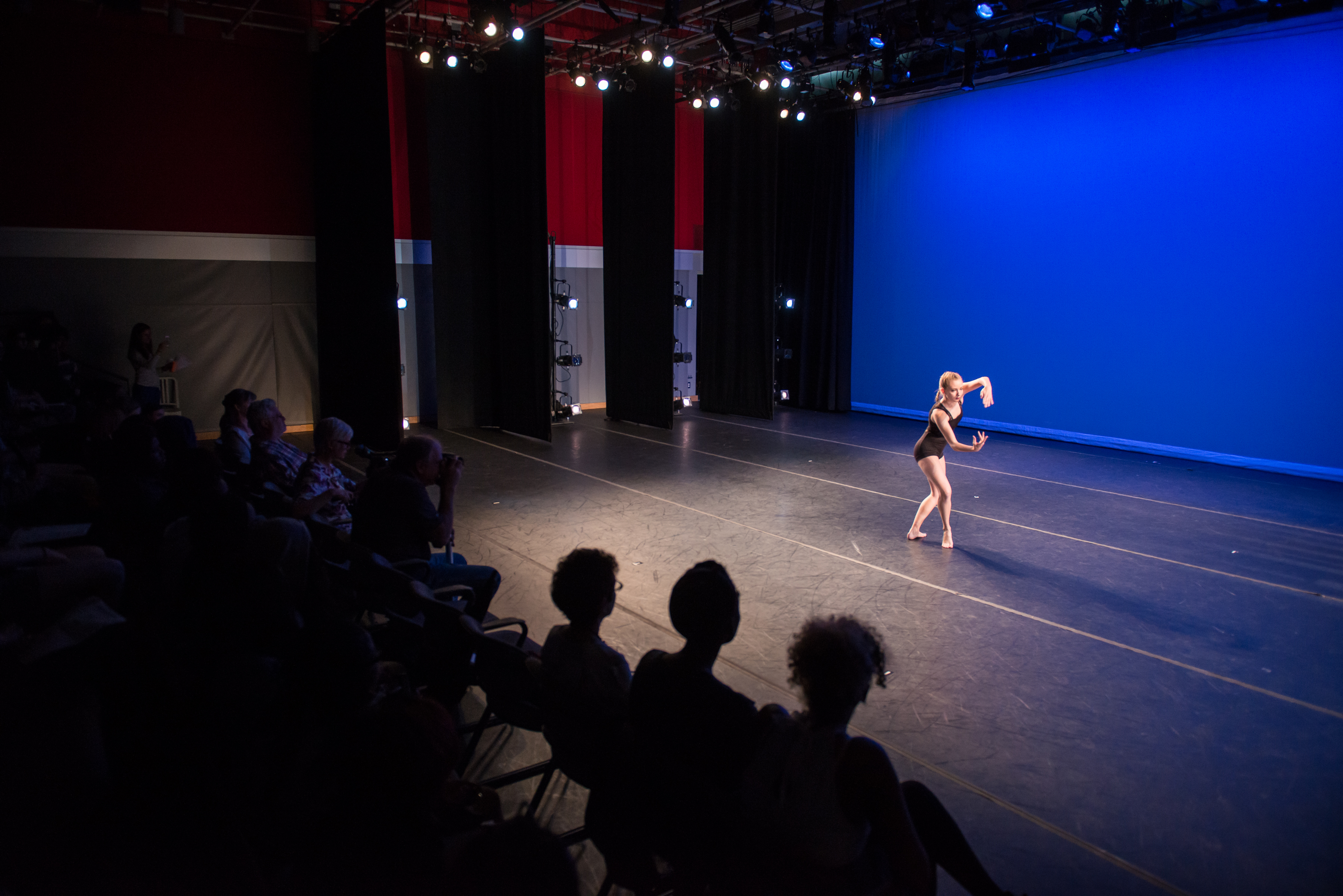
Nerissa Vasconcells ’16, dance, presented her solo dance performance Limitless. Her primary research focuses on modern dance and methods developed by such masters as Graham, Horton, and Limon, but Vasconcells also has studied ballet. She was motivated to create a work that “emphasized beauty as a classical ballet choreographer, while using choreographic methods commonly found in modern dance.” Vasconcells says, “classical ballet has its origins in the 18th and 19th centuries, emphasizing elegance, beauty, and regimentation, and has a choreographic process directly related to a musical score. Modern dance, a product of the 20th century, is often abstract and uses a wide variety of choreographic processes not linked to the musical score. Combining these varied techniques has been a personal challenge and a pursuit of self-exploration.”
Rachel Wolven ’16, visual arts,presented her time-lapse photography film, Light Inhibits Light, the culmination of a comparative study of the visibility of deep space objects and the Milky Way as affected by light pollution. Her film presented over a dozen night sky locations from Baltimore to Nova Scotia, with light pollution measurements and GPS coordinates noted to orient viewers. Her time-lapse photography captured sublime celestial movements across dark skies as well as starless, hazy summer city nights, highlighting both particle and light pollution. Wolven aims to “bring attention…to show what is missing from the skies above our cities.” She says, “To protect this natural resource, awareness must first be raised in order for people to want to make changes and work to fight the overabundance of light pollution.”
James Loy ’16, mathematics and physics, works with Matthew Pelton, assistant professor of physics, on “quantum dots,” which are nanoscale semiconductor crystals. The dots may eventually be used as a lower-cost alternative to silicon-based solar cells. Using “acceptor molecules” to grab the excited electrons released by the dots increases overall electrical current output. Loy’s work showed that more acceptor molecules increased the output linearly, which is encouraging for future work to optimize quantum dots for eventual commercial use in solar energy harvesting. “Working in Dr. Pelton’s lab was the best part of my college career,” Loy says, noting “I experienced research from the posing of the problem through to publication.” Loy will pursue a Ph.D. in physics at Princeton this fall.
Rebekah Rashford ’18, biological sciences, is studying how ribosomes, the cellular structures that build proteins, are put together. Ribosomes are made of both protein and RNA. The unnecessary parts of the initial RNA molecule need to be cut out before it can function in the ribosome, a process called “maturation.” Ribosomal proteins bind to the RNA throughout the maturation process. By taking snapshots of the RNA at different points in time, she’s creating a map of what happens when. This foundational research could eventually contribute to treating diseases caused by ribosomal defects. Rashford’s mentor, Lasse Lindahl, professor of biological sciences, has had a major impact on her UMBC experience and aspirations as a scientist. “He’s so excited about the research, and he gets me excited about it, too.” Rashford says. “When you’re motivated, your work will be that much better.”
Taisha Gainor ‘16,political science, and Asfiya Mariam ’16, biological sciences, researched how pop culture can influence citizens’ participation in politics. After coming across studies suggesting people who have read or watched Harry Potter are statistically more likely to participate in politics, they focused on exploring the series’ political elements. Gainor noted that she hopes her work will spur more engagement with the political system. “I think it’s a great way to get people involved in politics…relating it to something that they want to talk about and then showing how that actually relates to things in their everyday life.”
Deirdre Lohrmann ‘16,ancient studies and history, studied Roman glass production in antiquity with a specific focus on glassware from the Marie Spiro collection. Viewing a display during UMBC’s Ancient Studies Week sparked her interest in the project, and she says that studying artifacts from Ancient Rome has helped her develop a greater appreciation and understanding of the world around her. “We learn from our past,” she says, to understand the similarities between people in antiquity and people today.
Throughout the event, students shared the impact of mentors who served as guides through research and creative processes and as sounding boards on graduate school and career path possibilities inspired by their work.
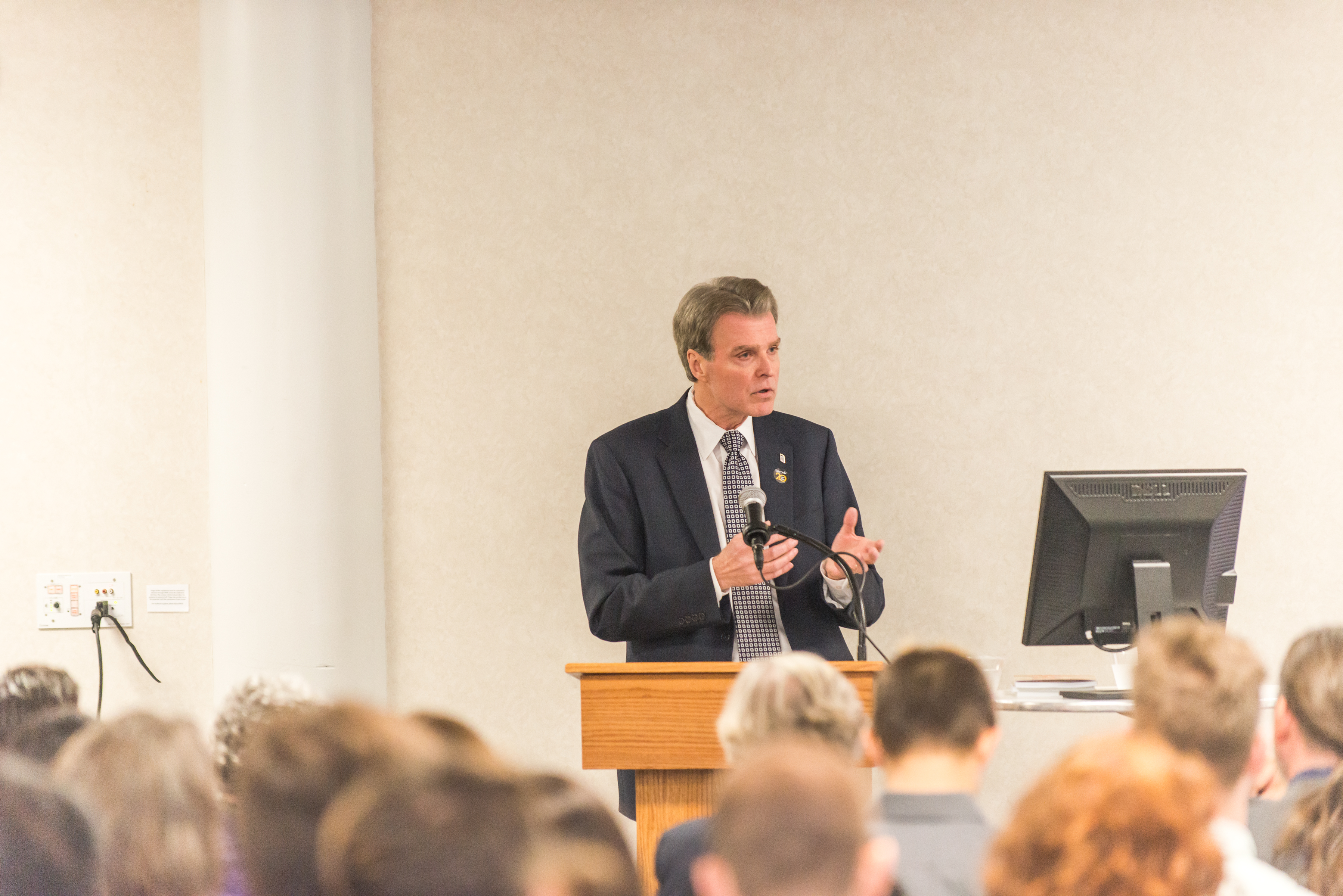
Featured URCAD speaker Mark Reynolds ‘78, ‘82 M.A., psychology, picked up on these themes. Reynolds, now dean of the University of Maryland School of Dentistry, shared how his undergraduate research experience paved the way for his career and how UMBC faculty mentors helped him develop a passion for teaching, learning, and supporting others.
“To students, please give back,” said Reynolds crediting his career success to the interest and mentorship of people who encouraged him during his student years. “It is so important,” he told the URCAD crowd, “…and you want to perpetuate that.”
**Update: Dean Scott Casper and Provost Diane Lee invite the university community to a campus forum on Thursday, May 12, at noon in the Albin O. Kuhn Library and Gallery, where students Zoe Wang and Riley Auer will present their poster, “Illustrating the Unseen: Analogy and Metaphor in an Ancient Gynecological Text.” This event follows a decision made to move the poster before URCAD began and a thoughtful conversation that followed, regarding the important issues of the nature of artistic, humanistic, and scientific research and representation; the presentation of research to academic and public audiences; and the meaning and centrality of academic freedom. In addition to the presenting students, several members of UMBC’s faculty, including Carole McCann, Preminda Jacob, Molly Jones-Lewis, and Stephen Freeland, will reflect on the issues that the poster and its presentation raise for scholarship and our academic community, and audience members will be welcomed to join in the dialogue.
Images: URCAD 2016 posters, performances, and presentations by (from top to bottom) Taisha Gainor ’16, political science; Elise Donkor ’16, computer engineering; Nerissa Vasconcells ’16, dance; and Mark Reynolds ’78, ’82 M.A., psychology. All photos by Marlayna Demond ’11 for UMBC.
For anyone needing an extra push to make it through the final few weeks of spring semester, UMBC’s annual Undergraduate Research and Creative Achievement Day offers a healthy dose of extra energy and a contagious sense of curiosity. This year, the must-see, campus-wide event celebrates its 20th anniversary on April 27th with a diverse array of performances, film screenings, exhibits, posters, and talks.
“Creating a vibrant community of scholars is a major goal at UMBC, and URCAD is a realization of that goal,” says Diane Lee, vice provost and dean of undergraduate education.
“Undergraduates in every field share the knowledge they have gained,” Lee explains. “Beyond the talks and performances we all look forward to, through conducting and sharing their research and creative work, our students develop habits of mind that will serve them well in the future.”
Andreas Seas ’17, chemical engineering, agrees wholeheartedly. “Being involved in this research has really shaped what I want to do after I graduate from UMBC,” he says. “It has provided clarity as well as given me something that I can channel my passion into.”
Seas’s research focuses on risk factors for strain to femoral arteries, as part of a larger project in collaboration with the University of Nebraska Medical Center (UNMC). Seas’s experience at the medical center combined research and clinical work. He says, “Working with UNMC has definitely helped me focus in on what I am passionate about—improving patient care by developing more effective treatment techniques.”
This Goldwater Scholar still has one more year as an undergraduate researcher before pursuing an M.D./Ph.D. degree. For now, he encourages all of his classmates to attend URCAD if they can: “Not only is it really cool to see what everybody is doing, you never know what will spark your interest or what you can contribute to someone’s work.”
Nneka Opara ’16, psychology, began attending URCAD as a freshman. “It’s been a very inspirational event to attend every year and see the [work] students just like me are doing. It left me with the sense that I could achieve just as much as they were if I put my mind to it.”
For many UMBC students, who want to tackle tough questions that reach across different fields, URCAD is a chance to see up close what interdisciplinary research looks like and to learn about opportunities to do research that has real, positive outcomes.
Brittney Kramer ’16, English, shares that URCAD “is a way for all of the disciplines to come together and see what everyone is doing. It’s a way of showing how much research impacts every aspect of our lives.”
“A lot of times when you go into an English major, you think research is something [for science students],” Kramer says, “but this is a chance to really see how [all kinds of] research has an impact.” This includes Kramer’s own contributions to building a digital exhibit on women working in American textile mills during the nineteenth century, in collaboration with the American Antiquarian Society.
Filmmaker Paul Oh ’17, visual arts, describes URCAD as a helpful opportunity for creative students who want to begin connecting with audiences, but can’t yet access big festivals or performance opportunities. “It’s great that URCAD displays undergraduate work and allows people like myself…to exhibit their work for other students and peers,” he says.
“Support is so important,” says URCAD presenter Austin Maduka ’17, biochemistry. “The support I received as an undergraduate pursuing my own research career has transformed my life,” he shares. For Maduka and his fellow student researchers, URCAD is a day to honor that transformation.
UMBC is celebrating its 50th anniversary this year. Though the university is still fairly young, our community is diverse and growing. You can find members of our almost 70,000 alumni all over the world, and every one of them has a UMBC story to tell.
So UMBC has created a new digital space called Retriever Stories. It is the place for alumni and others in the UMBC community to tell those stories. You can also use the website to share photos (past or present), and to reconnect with fellow Retrievers. Remind us who you were back then, or tell us where you are right now. Share your vision of where UMBC should go in its next 50 years.
A New Way to Tell Our UMBC Story
No matter when you attended UMBC, you’ll find something to explore on the new website that will speak to your time at the university.
Stories are tagged by decade, year, and subject matter for easy searching. Staffers at the Albin O. Kuhn Library & Gallery have digitized hundreds of old photos for you to search. They have also made the entire archives of The Retriever Weekly available. Find yourself in those photos and pages and post stories about them.
Retriever Stories is a 100% UMBC product. It was accomplished entirely in-house through a collaboration of UMBC’s award-winning Imaging Research Center (IRC), the university’s Department of Information Technology, and the Office of Institutional Advancement. UMBC students even wrote the code for the website.
A Sharing Network
From the earliest planning for Retriever Stories, we’ve included feedback from alumni and the university community in the design and execution of the website. One thing we heard was that no one needs another social network. That’s why Retriever Stories is accessible from a wide range of popular social networks: Facebook, Twitter, LinkedIn and Google+. If you work or study at UMBC now, just use your myUMBC account.
The Retriever Stories team made a short video to show you how it works:
Log in, look around, and tell us your story. Your story is our story. The UMBC story.
Image: Sharing a memory on Retriever Stories. Photo by Marlayna Demond ’11 for UMBC.
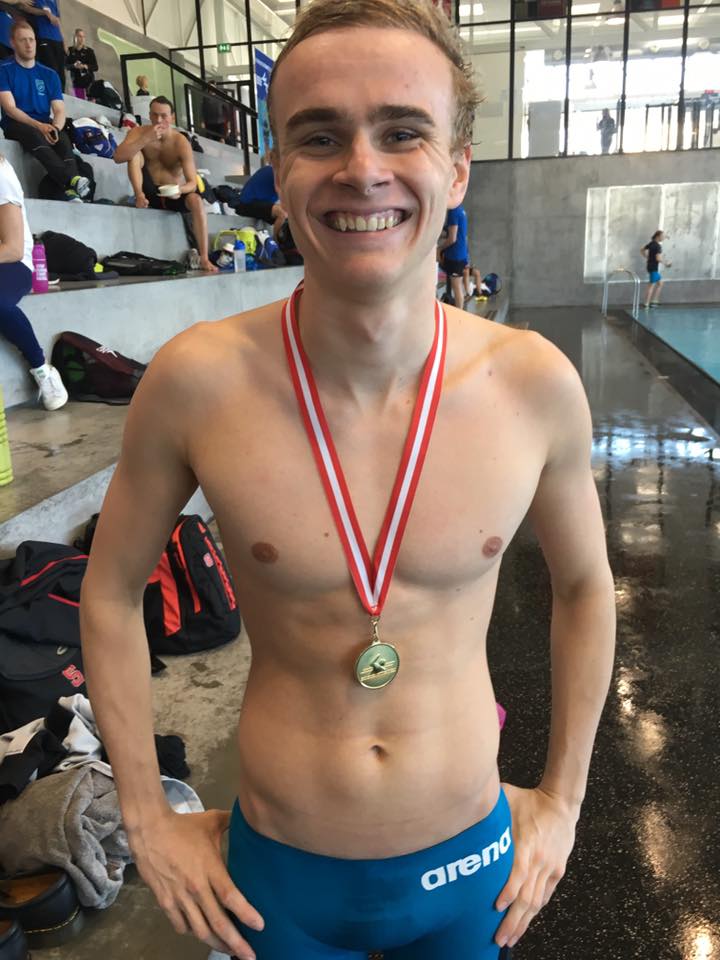
UMBC swimmer Alexander Gliese ’19, mechanical engineering, captured his first national title at the Danish Open by winning the 200m backstroke.
SwimSwam’s coverage of the men’s 200m notes, “The UMBC freshmen has Danish parents that currently live in the U.S., and is giving some hope to a country that has never had much to cheer for in this race. Gliese led all the way, fighting off a good effort from junior swimmer Andreas Elmgreen to claim the victory.”
In addition to his 200m backstroke win, with a time just two seconds off the Danish record, Gliese also placed fourth in the 50m backstroke.
“I could not be more proud of Alexander,” says Head Coach Chad Craddock ’97, psychology. “He is a hard worker and very focused, and all of his hard work paid off this week. The race was close and came down to the last length. Alexander had a strong last 25 to take the win from a hometown favorite.”
“It means a lot to be able to represent UMBC and my team,” Gliese shared after his win. “It is a good milestone to show how much I have progressed as a swimmer over the years.”
Maryland Secretary of Commerce Mike Gill visited UMBC on April 7, 2016, for an afternoon focused on UMBC research and entrepreneurship.
While at UMBC, Secretary Gill met with President Freeman Hrabowski and UMBC leaders focused on research and technology commercialization, including Ellen Hemmerly, executive director of the bwtech@UMBC Research & Technology Park. He also toured the lab of Govind Rao, director of the Center for Advanced Sensor Technology (CAST) and professor of chemical, biochemical, and environmental engineering (CBEE).
“I often say that economic development is a team sport, and an important player on Maryland’s team is UMBC,” says Secretary Gill. “Our higher education institutions foster the spirit of innovation and entrepreneurship that help drive Maryland’s industry sectors like cyber and life sciences. It was terrific seeing firsthand the great work that UMBC’s researchers and innovators are doing.”
“We were proud to share with Secretary Gill the strong record of our faculty in launching new companies and contributing to the Maryland economy,” says Karl Steiner, vice president for research. “UMBC and bwtech have been partnering successfully for a long time on creating and attracting businesses that match our scientific strengths in cybersecurity, life sciences and environmental technologies.”
Secretary Gill began his service in the Maryland Department of Commerce in January 2015, after four decades as an entrepreneur, tech executive, and investment banker. His work with UMBC extends back over a decade, through his service on the University System of Maryland Board of Regents, 2004-2009. Sec. Gill’s team includes Brady Walker ’08, political science, special assistant to the secretary.
Image: Maryland Secretary of Commerce Mike Gill, Brady Walker, and Prof. Govind Rao (left-right). Photo by Marlayna Demond ’11 for UMBC.