All posts by: Dinah Winnick


UMBC welcomes Ryan Odom as new head coach of men’s basketball

UMBC introduced Ryan Odom as the Retriever’s new head coach of men’s basketball at a press conference held on campus today, April 7, 2016. Odom joins the America East program as its 9th head coach.

“We are so happy to have Coach Odom join the UMBC family,” said UMBC Athletics Director Tim Hall. “The hiring of Odom is an important step in the future of UMBC athletics. We have found a fantastic fit for UMBC as Ryan Odom embodies and lives our values.”

Coach Odom has twenty years of coaching experience. He joins the UMBC program after leading the Lenoir-Rhyne (NC) University basketball team to a 21-10 record last season and the school’s first appearance in the NCAA Division II Regional Finals.

Prior to his success at Lenoir-Rhyne, he served on UNC Charlotte’s staff for five years and helped them earn a bid to the National Invitational Tournament (NIT) in 2013. Odom also held assistant coach positions at Virginia Tech, American, UNC Asheville, and Furman. He served as a graduate assistant at South Florida during the 1996-97 basketball season.

Odom graduated from Hampden-Sydney (VA) in 1996 with a bachelor’s degree in economics, where he was a four-year starting point guard on the men’s basketball team. He finished his career as the school’s leader in made 3-pointers and served as team captain his senior year. The team record was 80-30 during his time at Hampden-Sydney. They earned two bids to the NCAA Division III Basketball Tournament. Ryan is the son of retired South Carolina head coach, Dave Odom.

“I’m so excited to join the UMBC family and so grateful for the opportunity to lead the UMBC men’s basketball program. I look forward to developing lasting relationships throughout our campus and the greater Baltimore community,” said Odom. “My goal is to establish a winning culture and support our student athletes so that they perform at their best, on and off the court.”


Media coverage:
Baltimore Sun: “New men’s basketball coach Ryan Odom calls UMBC a ‘sleeping giant’
WBAL: “UMBC hires Ryan Odom as men’s basketball coach
PressBox: “UMBC Names Ryan Odom As New Head Coach For Men’s Basketball”

Images: UMBC Athletic Director Tim Hall and Ryan Odom, new head coach of men’s basketball, Photo by Marlayna Demond ’11 for UMBC.

Times Higher Education names UMBC one of the world’s top young universities for 5th year

For the fifth consecutive year, Times Higher Education (THE) has recognized UMBC as one of the world’s leading young universities. UMBC is one of just five U.S. universities to make the 2016 list, all in the top 100 of the “150 Under 50” ranking.

THE World University RankingsThe150 Under 50″ ranking system uses the same 13 performance indicators as the flagship World University Rankings, weighted through a formula that is designed with young universities in mind.

Those indicators are grouped into five categories: teaching (learning environment), research (volume, income, and reputation), citations (research influence), international outlook (staff, students, and research), and industry income (innovation). UMBC particularly excelled in research citations.

“So many universities in this ranking have shown they can match the ancient global elite and have proven that with the right drive, what others have developed over centuries can be achieved in a matter of decades,” Phil Baty, editor of THE, has said. “They are a truly exciting and dynamic group of institutions which should serve as a lesson to the rest of the world – that the traditional global world order is not unassailable and visionary young universities can break through.”

This past fall, THE also recognized UMBC as one of the top universities worldwide of any age. That larger list included 147 U.S. universities among the world’s top 800. Three were Maryland universities, including UMBC, Johns Hopkins University, and the University of Maryland, College Park.

See UMBC’s entry in the THE “150 Under 50.”

Image: UMBC Library. Photo by Marlayna Demond ’11 for UMBC.

UMBC grad students give memorable snapshots of research with impact

UMBC President Freeman Hrabowski pointed out something interesting about the Graduate Research Conference as he spoke to the hundreds assembled for this year’s event: it’s not just about the research. It’s about communicating why research matters.

“Today is important to develop a sense of self that allows you to stand up in front of people and speak with confidence,” Hrabowski told the students in the crowd. “You will become leaders, and people expect that of leaders,” he said, noting that communicating effectively is essential to helping the public and research funders understand not just a specific project, but “the value of research” for society.

UMBC’s 38th Graduate Research Conference, held on March 23, 2016, was jam-packed with presentations, professional development events, and a new Three-Minute Thesis (3MT) competition that challenged students to give clear and engaging bite-size descriptions of their research topics.

Combined, these events provided an incredible experience for participants. They also offered a glimpse into what Graduate School Dean Janet Rutledge described as how graduate research “adds to the academic richness of this university.”

Presentations throughout the day spanned all three UMBC colleges and a very broad range of topics.

Michael Abrams, a Ph.D. student in public policy, studied recent Food and Drug Administration (FDA) warnings for medications that treat depression, asthma, diabetes, and smoking addiction, and considered how media coverage of the warnings influenced medication usage. “Warnings matter,” explained Abrams, “and there is a good deal of evidence that news coverage matters.” Through qualitative and quantitative analysis, Abrams discovered strong evidence that FDA warnings led to decreased usage of medications in many instances, suggesting a greater focus by the FDA on communications could boost the impact of future warnings.

The role of social media in propelling the Black Lives Matter movement sparked Deborah Kadiri’s research project “The Hashtag as a New Genre: #BlackLivesMatter.” Describing her topic, Kadiri shared, “I wanted to find something that had personal interest for me as well as social, political, and historical relevance.” As a texts, technologies, and literature master’s student, Kadiri compared communications surrounding the Civil Rights Movement of the 1960s with the contemporary movement utilizing #BlackLivesMatter. She discovered that the hashtag often serves as a bridge between virtual and in-person conversations, and she highlighted how social media opens up spaces for new conversations about civil rights.

Daniel Orozco, a PhD student in atmospheric physics, studies the impact of humidity on aerosol particles, which are known to have serious health and climate impacts. Current technologies to measure aerosol particles are inexact when it comes to humidity variation, but Orozco’s presentation described how UMBC’s airplane-based Polarized Imaging Nephelometer (PI-NEPH) tool was designed to move past those limitations. His work seeks to improve aerosol sensing techniques and models that impact how scientists understand air quality and climate change.

Each year, the Delmarva region generates approximately seven million tons of poultry litter, leading to problematically high levels of phosphorus local bodies of water, like the Chesapeake Bay. To reduce the amount of phosphorus finding its way into bodies of water, Utsav Shashvatt, a PhD student in chemical, biochemical and environmental engineering (CBEE), is developing a process to recover nutrients, like phosphorus, from animal waste. Shashvatt notes that his work has “the potential of recovering about 120,000 tons of phosphorus.”

Amanda Lo, a master’s student in biological sciences, shared her research on the immune systems of fruit flies as the insects age. “I am looking at three specific genes to see if they have a critical role in the immune system,” she said. Lo injected one-week-old and five-weeks-old fruit flies with E. coli bacteria then plated and incubated the organisms. The resulting bacterial colonies indicated which genes led to a weaker or stronger immune system response. Her research may have future pharmaceutical applications.

Jeffrey Gangwisch ’18 M.F.A., Intermedia and Digital Arts presented “The Human Figure as Animal and Object,” which illustrated his research and experiments with “alternative methods of documenting, obscuring and interacting with the natural world.” He discussed his use of 3D scanning and printing through UMBC’s Prototyping and Design (PAD) Lab, meshing body scans together to explore remapping the human form and 3D technology itself as a tool to reconsider the art forms of photography, sculpture, drawing, and video.

“Iteration & Vestige” by Melissa Penley Cormier ’17, M.F.A., Intermedia and Digital Arts, was an introduction to the artist’s work mapping time through daily creative acts. Cormier explained her interest in the scientific method and her iterative process to archive and record mark-making and material experiments. Her most recent work has her “looking at her worries” with an array of apparati, from a child’s microscope to “magic lanterns.”

A presentation by William Klotz ’17 M.A.T., education, described his intermedia approach to researching the effects of activist action on national identity. His focus was on 39 years of weekly marches in the Plaza de Mayo by mothers of desaparecidos in Argentina. The culmination of his presentation was a dance he choreographed for a Spanish course on utopias and dystopias, performed by UMBC dance students Nikaela Bryan ’16, Rachel Lum ’16, and Samantha Siegel ’19.

Throughout the morning presenters competed in an initial round of the 3MT contest, vying for a spot in the finals where they would deliver their talks to an auditorium full of eager listeners, including President Hrabowski.

“We all were very excited about the competition, and so were the audience and participants,” says Sourabh Arsey ’16, M.S., information systems, conference chair and vice president of the Graduate Student Association. “It feels great to be part of something new and I thank the whole graduate community for supporting us.”

Emcee Dan Miller, Ph.D. student in atmospheric physics, noted that some disciplines have dissertations up to 80,000 words, so trimming that down to a jargon-free three-minute talk with just one visual aid would be quite a feat. The grand prize winner would earn a trip to the regional competition at the Council of Southern Graduate Schools, and second- and third-prize winners would receive monetary awards.

The speakers quickly impressed their audience with research ranging from addressing troubling vulnerabilities in our everyday internet use, to creating “cyberphysical systems” that can help people with limited mobility become more independent, to targeting HIV drugs in ways that can avoid drug resistance. The contest winner was Kiranmayi Mangalgiri, Ph.D. student in CBEE, who spoke about the role of dissolved organic matter in determining how UV light transforms antibiotics in water impacted by agricultural runoff.

“The worst thing you can say [in describing your research] is, ‘It’s too complicated,” President Hrabowski shared just before the 3MT finals began. The presenters took to heart his advice: “Be part of the bridge…to represent your discipline [in connecting] with the public.”

Image: Daniel Orozco, Ph.D. student in atmostpheric physics, presents his research at the 2016 UMBC Graduate Research Conference. Photo by Marlayna Demond ’11 for UMBC.

U.S. Dept. of Ed recognizes UMBC as a leader in supporting low-income students

A new report released by the U.S. Department of Education recognizes UMBC as a leader in supporting college opportunity for low-income students.

The report “Fulfilling the Promise, Serving the Need: Advancing College Opportunity for Low-Income Students” was released at today’s Conference Focused on Improving College Outcomes for Pell Students in Washington, D.C. It notes:

For our nation’s colleges and universities to serve as gateways to social mobility and economic opportunity, they must succeed in helping all hard-working students — regardless of their income, race, or parents’ education — to enroll in college, graduate, and go on to rewarding careers. The good news is that many institutions are doing impressive and inspiring work by increasing college access for low-income students, providing them with the aid and support they need, and sending them into the work place with high quality degrees.

In coverage of the report, The Baltimore Sun writes:

UMBC has substantially increased the number of students receiving Pell Grants, and those students are completing their degrees.

UMBC is one of just 55 U.S. colleges and universities, including two in Maryland, highlighted as model institutions for enrolling Pell Grant recipients in large numbers, as well as for attention to graduation rates and post-graduation job placement/earnings for Pell Grant recipients.

The report recognizes UMBC among 13 higher education institutions that have substantially increased Pell enrollment over the last five years, while demonstrating successful college degree attainment. “Without question,” the U.S. Department of Education notes, “these schools provide significant pieces of the puzzle as we work to increase the numbers of low-income students with high-quality degrees over the coming years.”

“For students from low- and moderate-income families, a college degree is the surest path to the middle class in our country,” U.S. Secretary of Education John B. King Jr. said in a statement. “I applaud the colleges and universities that have taken measurable steps to open up this pathway and make it a successful one for students from all backgrounds. But we need these types of efforts to become the rule and not the exception.”

More coverage of this announcement is available at Inside Higher Ed, The Hechinger Report, and WGBH’s On Campus blog.

Image: New UMBC entrance, March 2016. Photo by Marlayna Demond ’11 for UMBC.

UMBC heads to Light City Baltimore: festival of light, music, innovation

Baltimore’s history as the first U.S. city to be illuminated by gas lamps has inspired Light City Baltimore, a major new public festival celebrating innovation and creativity across technology and the arts.

Light City Baltimore will take place in the Inner Harbor, March 28-April 3, with 1.5 miles of glowing public artworks, free music, a free UMBC hospitality space, and a six-day ticketed innovation conference, Light City U. Named one of the top “intriguing things to see and do in the U.S. in 2016” by CNN, Light City Baltimore features artists, scientists, activists, and thinkers from around the globe, including several UMBC faculty, staff, students, and alumni.

Look for these exciting free exhibits and events highlighting members of the UMBC community:

  • “1,001 Lux,” a video installation by Symmes Gardner, director of the Center for Art, Design and Visual Culture
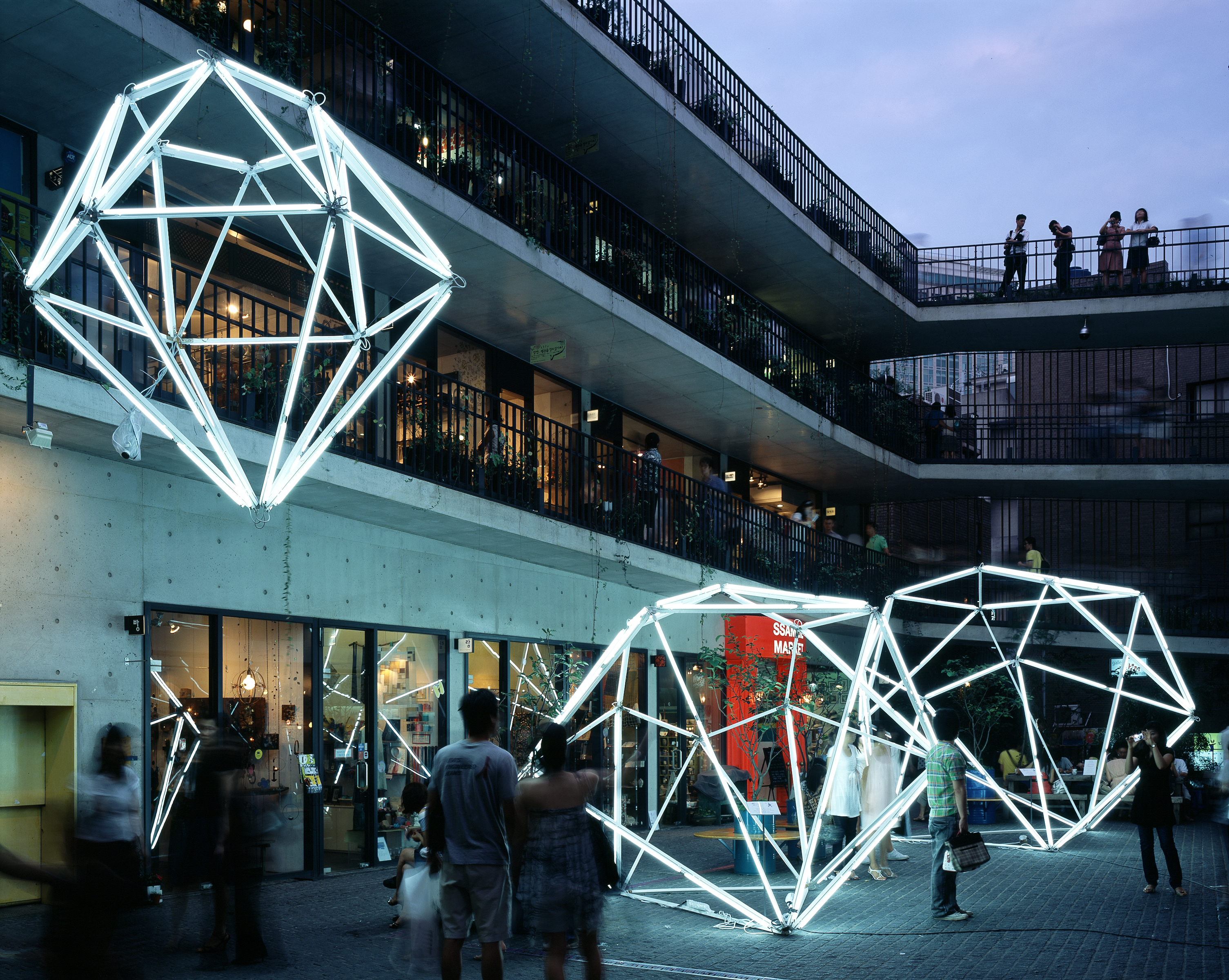
  • Diamonds Light Baltimore” light sculptures by Mina Cheon ’02 MFA, imaging and digital arts, and Gabriel Kroiz, with artist meet-and-greet April 2, 8:30-10:30 p.m., between Eastern Ave. and East Falls Ave. (watch video)

Diamonds: Will You Marry Me? light installation


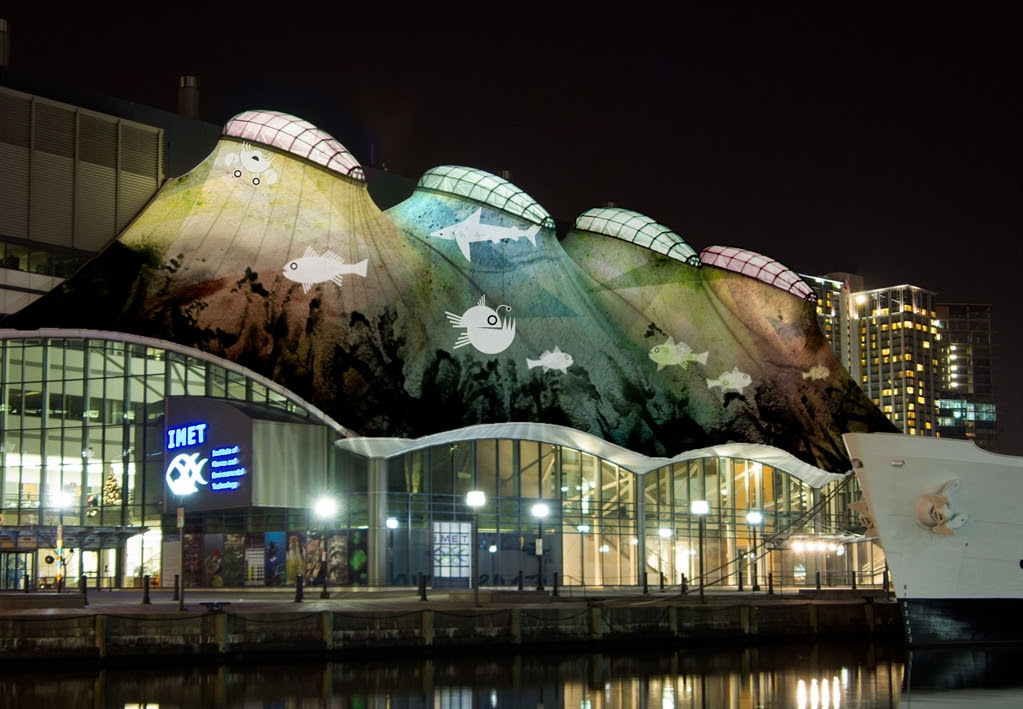
  • “Project Aquaculture,” a large-scale projected animation on the roof of the Columbus Center by visual arts faculty Kelley Bell ’06, MFA, and Corrie Parks that comments on the health of the Chesapeake Bay ecosystem (watch video)


  • Red Sammy band performance with Adam Trice ’04, English, on the Concert Stage at Harbor East
  • HydroPrismEchoChamber: Fluid Movement’s Ode to McKeldin Fountain including performers B. Simone Thompson, ’92, social work and psychology; Leah Marcus ’03 M.A., TESOL; Katie Leser ’04, theatre; and Delana Gregg ’04, M.A., instructional systems development, an academic advisor in the Honors College
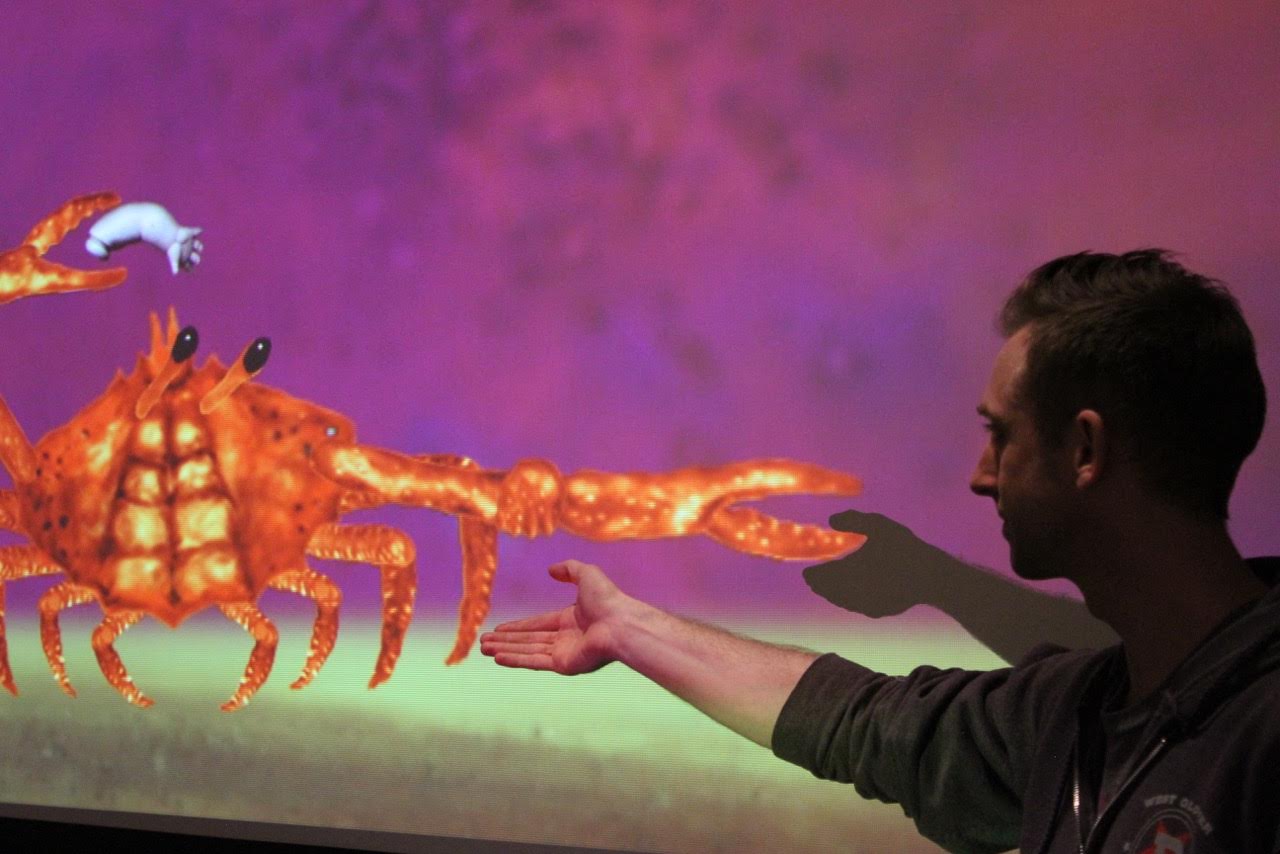
  • Performance by Colette Searls, theatre, combining animation, live theatre and puppetry on the Light Up the Night! stage

Kendra's bay - credit Colette Searls and Lynn Tomlinson
 
“Baltimore is shedding light on itself through media, social action, and art,” says Searls. “The festival emphasizes Baltimore as a generator of great art and a destination for lovers of great art.”

“Artistically, innovatively, I’m just so excited to have the opportunity to do this,” Cheon shares.

Light City visitors can stop by the UMBC Black and Gold Lounge in the Columbus Center, March 28-April 2, 6-9 p.m., for a complimentary beverage and free glow-in-the-dark UMBC gear (while supplies last). UMBC will host special alumni receptions for the visual and performing arts (March 28), IT and engineering (March 30), and the Honors College (March 31).

Black and Gold Lounge visitors will get a sneak peek of UMBC’s new Retriever Stories site, where members of the UMBC community can share their UMBC photos and experiences heading into the university’s 50th anniversary. The Black and Gold Lounge will also offer “buy one get one” coupons for Ekiben Buns, available during Light City at the Ekiben food truck, operated by UMBC alumni entrepreneurs Nikhil Yesupriya ’13, biological sciences, Steve Chu ’12, economics, and Ephrem Abebe ’13, information systems (site #2 on the official Light City map). For dessert, stop by the Harbor Flying Fruit smoothie kiosk operated by UMBC’s Choice Jobs Program.

UMBC is also a founding sponsor of Light City U, which includes conferences on social innovation (March 28-29), health innovation (March 30-31), sustainability innovation (March 30-31), and creative innovation (April 1-2), as well as the free Bright Lights Youth Festival.

Talithia Williams, associate professor of mathematics at Harvey Mudd College and current American Council of Education fellow based at UMBC, will present “Connecting African American Girls and Their Parents to STEM” on day one of the social innovation conference, on March 28, 11 a.m. Her talk will be followed by two conversations featuring UMBC alumni. Invested Impact founder Rodney Foxworth ’07, anthropology, will speak on “Collaboration and Unexpected Outcomes” at 11:25 a.m. Center for Urban Families CEO Joe Jones ’06, social work, will join Baltimore Police Commissioner Kevin Davis at 1:05 for a conversation on “safety and civility.”

President Freeman Hrabowski will deliver keynote remarks for day two of the social innovation conference, on March 29, 9 a.m. His talk “Holding Fast to Dreams” will focus on creating a learning environment and community that supports success for all students.

Professor Chris Swan, geography and environmental systems, will present on the Maryland Green Prisons Initiative during the sustainability innovation conference on March 30, 4:15 p.m. Professor Yoni Zohar, chair of marine biotechnology, will participate in the health innovation conference panel “Our Planet, Our Health, & Taking Care of Tomorrow: Sustainability in Healthy Food Choices,” moderated by National Aquarium’s TJ Tate on March 31, 10:20 a.m.

The creative innovation conference on April 2 will include the panel “Incubator as Influencer” at 2:05 p.m., moderated by Greg Cangialosi ’96, English, who is CEO of Mission Tix, co-founder of Betamore, and namesake of the Cangialosi Business Innovation Competition through UMBC’s Alex. Brown Center for Entrepreneurship. Current UMBC student and emerging entrepreneur Markus Proctor ’16, interdisciplinary studies, who is founder and CEO of EduPal, will speak on the following panel, “Youth and Diversity in Entrepreneurship,” beginning at 2:35.

UMBC community members can enjoy a substantial discount on tickets to the four Light City U innovation conferences. Use the code “UMBCED2016” by March 27 to purchase individual conference tickets at $99, more than 50% off the regular price.

For additional information on Light City and Light City U, visit UMBC’s Light City page and the official Light City website. Remember to share your photos on social media with #UMBC and #UMBC50. You can find UMBC on Twitter @UMBC and Instagram @UMBClife.


LightCityLogo_CalloutsDate

Images: (1) “Diamonds: Will You Marry Me?” light installation in Seoul, Korea, 2007; copyright by Mina Cheon and Gabriel Kroiz. (2) “Diamonds R 4Ever” light installation at Sungkok Art Museum, 2012, in Seoul, Korea; copyright by Mina Cheon and Gabriel Kroiz. (3) “Project Aquaculture,” courtesy of Kelley Bell and Corrie Parks. (5) “Kendra’s Bay,” courtesy of Colette Searls and Lynn Tomlinson

Escobedo earns bronze at NCAA, becoming UMBC swimming and diving’s first All-American

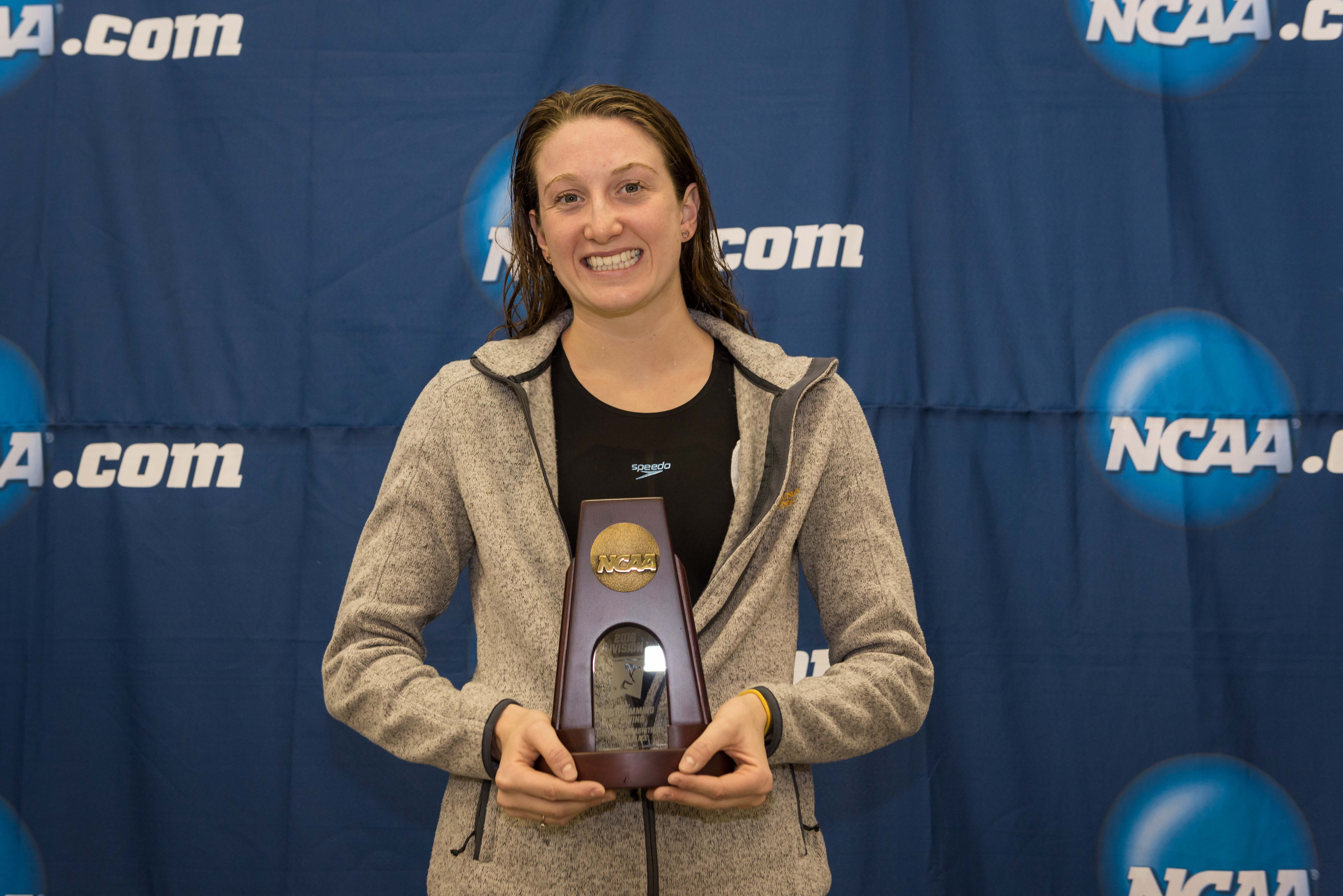
UMBC swimming and diving standout Emily Escobedo ’17, psychology, won bronze in the 200m breaststroke at the NCAA finals on Saturday, becoming the first Retriever to earn All-American status in the pool.

“This weekend was amazing because of Emily.  She never let the competition get to her… She can step up in any situation and give her best,” said head coach Chad Cradock.

Escobedo earned a spot in the A finals after finishing in a tie for second in the prelims, touching the wall in a time of 2:06.82. In the finals she finished with a time of 2:06.43 to earn bronze, scoring enough points to earn All-American recognition, adding to her Honorable Mention All-American status from competing in the 100m breaststroke.

2016.03.19 2016 Womens NCAA Swimming Championships_Lunn-52

SwimSwam.com called Escobedo’s 200m performance “one of the best swims we have seen from a mid-major swimmer this year.”

Before swimming in the final, Escobedo spoke with Swimming World Magazine and credited her strong performance at the meet to her supportive team and the UMBC community cheering her on. When Emily’s teammates learned they weren’t able to join her at the meet, they sent her a 12-minute pump-up video full of encouragement.

The All-American honors add to Escobedo’s growing list of accomplishments, which include earning America East Rookie of the Year and Swimmer of the Year twice, earning multiple trips to the NCAA Championships, and becoming the first Retriever to score at the national meet.

“Emily helped our program rise to a new level,” said Cradock. “We are becoming more and more respected in the swimming world.”

Escobedo finished with a total of 18 points, placing UMBC 29th on the final team results, ahead of Arizona State, Northwestern, Auburn, the Air Force Academy, and Harvard.

Escobedo’s swim concludes a memorable season for the Retrievers, with the UMBC women’s swimming and diving team winning its second straight America East championship and the men’s swimming and diving team winning the 2016 Coastal Collegiate Sports Associate Championship, posting 24 new all-time top-10 swims during the meet.

Cradock ’97, psychology, a member of UMBC’s Athletic Hall of Fame who has coached the team since 2001, was named Men’s Swimming Coach of the Year at the CCSA championships.

In sharing his final thoughts for the season with UMBC Athletics, Cradock said, “I would like to thank our swimmers and divers for giving us the best of themselves each and every day.” He noted his excitement going into the Olympics this year, where UMBC will be represented in the pool, and concluded, “this is just the next step of our journey…We are looking forward to continuing our dedication to move forward together.”

Images: Emily Escobedo earns bronze in the 200m breaststroke of the NCAA swimming finals, 2016. Top image by Tim Binning, The Swim Pictures; second image by Reagan Lunn.

Congressman Elijah Cummings discusses UMBC’s research leadership and commitment to Baltimore during campus visit

Congressman Elijah Cummings visited UMBC this month to speak with faculty, staff, and students from across the university about UMBC’s national leadership as a research university and commitment to growing Baltimore through long-term partnerships in local communities.

The morning focused on several major UMBC research centers and labs. Joining Congressman Cummings were Belay Demoz, director of the Joint Center for Earth Systems Technology (JCET); Jan Merka, director of the Goddard Planetary Heliophysics Institute (GPHI); Jane Turner, associate director of the Center for Research and Exploration in Space Science and Technology (CRESST); Gymama Slaughter, assistant professor of computer science and electrical engineering and director of the Bioelectronics Laboratory; and Lee Boot, associate director of the Imaging Research Center (IRC).

Tyson King-Meadows, incoming associate dean of the College of Arts, Humanities and Social Sciences and Karl V. Steiner, vice president for research, also offered their perspectives on UMBC’s well-rounded research portfolio, beyond the conversation’s focus on research strengths in physics, geosciences, space science, and bioengineering.

After a brief campus tour, Congressman Cummings met with several leaders among UMBC staff whose work focuses on students’ academic success, including Renetta Tull, associate vice provost for graduate student development; Keith Harmon, director of the Meyerhoff Scholars Program, and others.

The congressman also spoke at length with scholars from UMBC’s three colleges: Sheniqua Brown ’15, M.S. chemical engineering; Marina Congedo ’17, physics and ancient studies; Ciara Davis ’17, mechanical engineering; Joseph Hunter ’16, biological sciences; Da’Kuawn Johnson ’17, biochemistry; Naomi Mburu ’17, chemical engineering; Larry Morton ’16, biological sciences; Alexis O’Malley ’16, psychology and mathematical sciences; Andreas Seas ’16, mechanical engineering; and Manisha Vepa ’18, economics and global studies.

These students represented the Sherman STEM Teacher Scholars Program, Meyerhoff Scholars Program, and UMBC Honors College. They are pursuing a range of PhD and MD/PhD programs and the most prestigious national and internships and fellowships available. They also spoke of their experiences with and deep personal commitments to community engagement in Baltimore, supporting local groups from refugee communities to elementary school students.

Cummings_UMBC2016-0726 (1)

Images: Congressman Elijah Cummings visits UMBC on March 10, 2016. Photo by Marlayna Demond ’11 for UMBC.

UMBC women’s basketball defeats Fairfield to win first postseason game

The UMBC women’s basketball team won their first postseason game on Thursday, March 17, after defeating Fairfield 61-49 in round one of the Women’s Basketball Invitational (WBI) Tournament. UMBC came into the competition as the No. 3 seed, and Fairfield as No. 8.

It was a great evening for both Pandora Wilson ’17, health administration and public policy, and Taylor McCarley ’17, psychology. Wilson scored 26 points to ago along with eight rebounds and McCarley scored 18 points and six rebounds in the win, with UMBC Athletics noting, “she helped spark the run that distanced the Retrievers from the Stags.”

Prior to her impressive performance at Thursday’s game, Wilson said, “Playing in the WBI will give us the opportunity to end the season on a high note, leaving us with great hope for next season.”

Wilson has already earned a spot on the America East All-Conference Second Team and McCarley has garnered All-Conference First Team and All-Defensive Team honors.

Going into the tournament UMBC Director of Athletics Tim Hall shared, “I am excited for our women’s basketball student-athletes and coaching staff on their selection to the WBI. This honor speaks to the dedication they have had throughout this season.”

Head coach Phil Stern remarked, “I’m thrilled for our players and especially our seniors to continue our season.”

The WBI includes 16 NCAA Division 1 teams and is now in its seventh season. WBI Tournament selection was announced on Monday, March 14, and the final championship round of competition will conclude on Sunday, March 27, with all games being played on campus courts.

UMBC will face Youngstown State in the WBI quarterfinals on Saturday, March 20, with tip-off at 2 p.m. on the Youngstown campus in Ohio.

See the UMBC Women’s Basketball website for more details on the team and 2015-16 season, the UMBC Athletics’s “Postseason Bound” press release for general information on the Retrievers’ participation in the WBI Tournament, and the UMBC Athletics story on Thursday’s game for a full recap of the win over Fairfield.

Image: UMBC Women’s Basketball player Taylor McCarley, photo courtesy of UMBC Athletic Communications.

Retrievers host first round of Women’s Basketball Invitational Tournament

The UMBC women’s basketball team will head to a postseason tournament for the third time in program history, competing in the Women’s Basketball Invitational (WBI) Tournament. UMBC, the No. 3 seed, will host No. 6 Fairfield on Thursday, March 17 at the Retriever Athletics Center (RAC).

“I am excited for our women’s basketball student-athletes and coaching staff on their selection to the WBI,” says UMBC Director of Athletics Tim Hall. “This honor speaks to the dedication they have had throughout this season.”

“I’m thrilled for our players and especially our seniors to continue our season,” said head coach Phil Stern, about the team’s selection into the tournament. Assistant coaches include Rich Conover, Carlee Cassidy, and Chelsea Barker.

The WBI includes 16 NCAA Division 1 teams and is now in its seventh season. WBI Tournament selection was announced on Monday, March 14, and the final championship round of competition will conclude on Sunday, March 27, with all games being played on campus courts.

Prior to the WBI Tournament, UMBC Womens Basketball competed in postseason at the 2011 Women’s National Invitational Tournament and in 2007, when UMBC took the America East Tournament crown and battled top-ranked UConn in the first round of the NCAA Tournament.

UMBC has a 17-13 record entering the WBI Tournament. Although UMBC fell to Binghamton in the America East Tournament quarterfinal, Pandora Wilson ’17, health administration and public policy, scored an impressive 19 points and Taylor McCarley ’17, psychology, chipped in 13. Wilson earned a spot on the America East All-Conference Second Team. McCarley garnered All-Conference First Team and All-Defensive Team honors.

“This is a true testament to both our accomplishments and struggles that we’ve overcome throughout the season,” says Wilson. “Playing in the WBI will give us the opportunity to end the season on a high note, leaving us with great hope for next season.”

Emily Russo ’17, biology, shares, “The WBI is another chance for us to finish off the season on a positive note, and we want to give our seniors some great memories to carry with them forever.”

UMBC and Fairfield will tip-off at 7 p.m. in the RAC.

See the UMBC Women’s Basketball website for more details on the team and 2015-16 season, and UMBC Athletics’s “Postseason Bound” press release for information on the Retrievers’ participation in the WBI Tournament.

Image: UMBC Women’s Basketball player Taylor McCarley, photo courtesy of UMBC Athletic Communications.

Duke and MIT presidents highlight UMBC as a national model of inclusive excellence

When UMBC President Freeman Hrabowski spoke at Duke University on February 23, 2016, about supporting minority students in STEM fields, he began by asking UMBC alumni in the audience to stand. A dozen graduate students and emerging leaders on the Duke faculty rose to a round of applause.

The alumni included powerhouse innovators like Kafui Dzirasa ‘01, chemical engineering, recently named a recipient of the prestigious Presidential Early Career Award for Scientists and Engineers (PECASE).

“While so many universities struggle to attract underrepresented minorities into the sciences and engineering,” notes Duke Today, “[UMBC’s] record of success is astonishing.”

Introducing Pres. Hrabowski, Duke President Richard H. Brodhead shared that UMBC’s success in supporting diverse students who go on to medical and natural science careers has yielded tremendous results. In addition to UMBC alumni bringing their talents to top universities around the country, UMBC itself has become a formidable research university and, Broadhead noted, a “vital economic engine for the city of Baltimore.”

More than 6,200 viewers tuned in to the live broadcast of Pres. Hrabowski’s lecture, sponsored by the Duke Initiative of Science and Society as part of its Distinguished Speaker Series.

Pres. Hrabowski emphasized the need to rethink science education to remove existing barriers and boost inclusion, through redesigning first-year gateway courses, improving connections between research and teaching, and making learning a more collaborative experience. He also highlighted the importance of interdisciplinarity, particularly how essential the humanities are to understanding problems in STEM fields.

In reporting on Pres. Hrabowski’s talk, the Duke Chronicle wrote, “Solutions—including smaller class sizes, team-based learning and less emphasis on ‘weed-out’ courses—have broad benefits.”

Pres. Hrabowski also recently spoke at MIT, where President L. Rafael Reif emphasized how UMBC’s inclusive excellence initiatives have become “models for colleges and universities across the country.” These models “so impressed” MIT that they were inspired to create their own version of the Meyerhoff Scholars Program, called Interphase EDGE.

“[W]e have Freeman to thank for the model and the inspiration,” said Reif. “As our diverse community seeks a path that combines the highest levels of intellectual achievement with a warm sense of welcome and inclusion for all, we could not ask for a better guide and friend than this morning’s speaker.”

Learn more about UMBC’s work to develop “a leading national model for diversifying America’s scientific and engineering workforce” on the GovInnovator podcast. The podcast highlights UMBC’s focus on combining access to opportunity, a supportive community, and high expectations for student achievement.

As Pres. Hrabowski shares on the program:

We’re talking about the notion of grit. That it’s not about ‘one kid is smarter than another,’ but about what grit means. Our Chesapeake Bay Retriever is the mascot and his name is True Grit, and we call UMBC the House of Grit.

Image: UMBC campus during Homecoming 2015, photo by Marlayna Demond.

UMBC swimming and diving teams win back-to-back championships

For the second year in a row, both the UMBC men’s and women’s swimming and diving teams have earned conference championship titles, setting dozens of school and league records on their paths to victory. These major wins on back-to-back weekends, in back-to-back years, solidify UMBC as a home of top scholar-athletes in this highly competitive arena.

UMBC News reported last week on the UMBC women’s swimming and diving America East Championship title, earned on February 14, 2016, through high-energy, record-setting performances. At that meet, Emily Escobedo ’17, psychology, received her third straight Most Outstanding Swimmer award and was named College Swimming’s National Athlete of the Week. With the fastest 200 breaststroke time in all of the NCAA this season, Escobedo (pictured below) has qualified for the NCAA Championship in March.

The men’s team won the 2016 Coastal Collegiate Sports Association Championship title on February 20 at the University of Georgia, finishing with 1,502 points, 221 points ahead of the second place finisher. UMBC posted 24 new all-time top 10 swims during the meet.

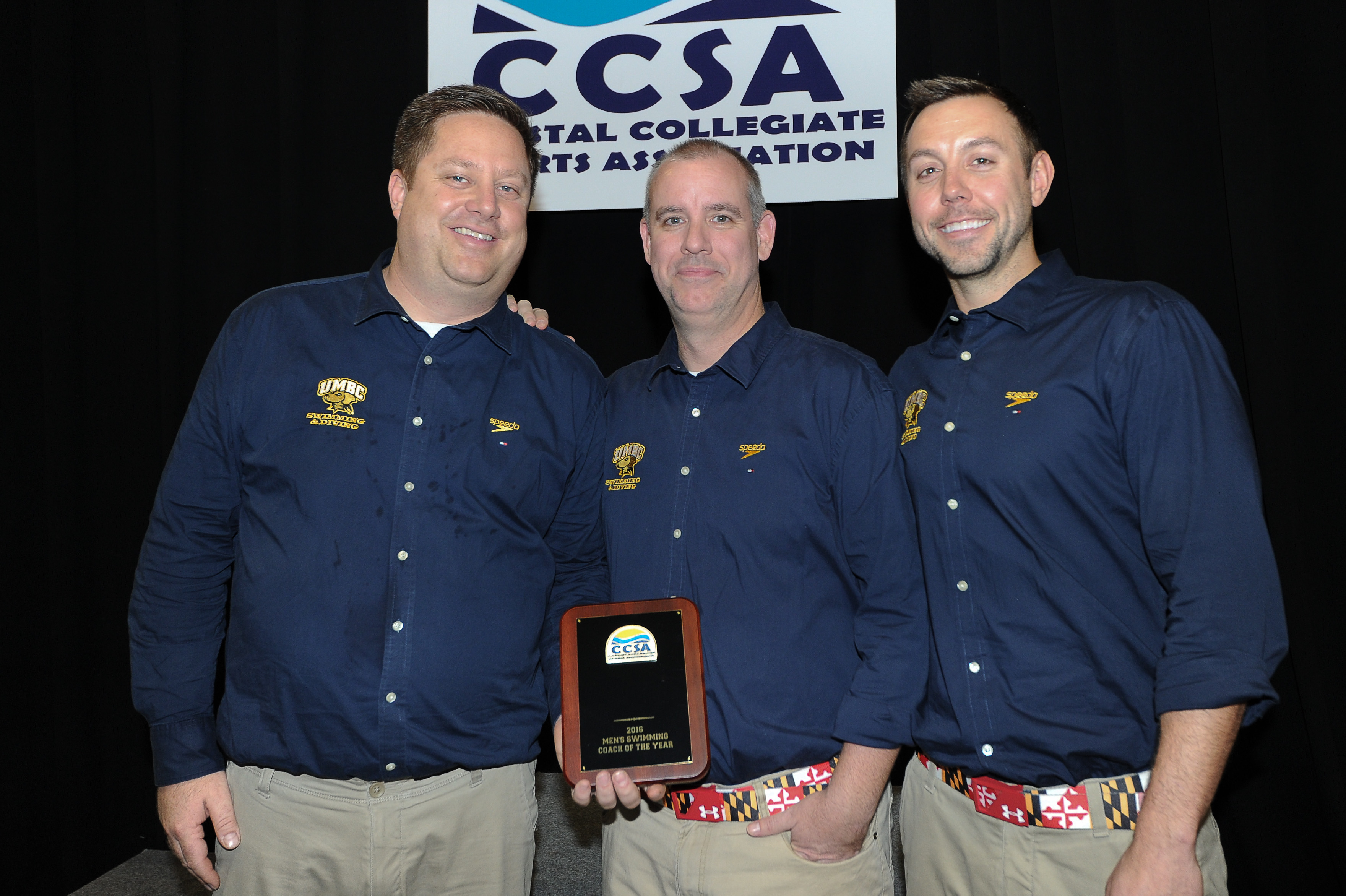
Head Coach Chad Cradock ’97, psychology, a member of UMBC’s Athletic Hall of Fame who has coached the team since 2001, was named Men’s Swimming Coach of the Year at the CCSA championships.

ccsaD4-1360

“Our men pulled through in a very competitive meet, ” says Cradock (pictured above, at left). “We needed everyone to compete at their best and they did.  As a staff we could not be more proud.”

Ahmed Wahby ’19, engineering, earned gold in the 200 backstroke, finishing in a time of 1:46.81. Leo Endres ’16, biological sciences, earned a gold in the 200 breaststroke with a time of 1:58.99 and broke the UMBC record in the 100 breaststroke with a first-place time of 54.27, breaking his previous record of 54.53. Nikola Trajkovic ’18, economics, won silver in the 200 individual medley.

Gregor Spoerlein ’17, environmental science, won the 200 freestyle with a time of 1:37.63 and was a second place finisher in the 100 freestyle, touching the wall in a time of 43.90. He also broke UMBC’s 50-yard freestyle record with a time of 20.05, beating his record-setting swim at last-year’s championship (20.26) and finishing first in the B finals.

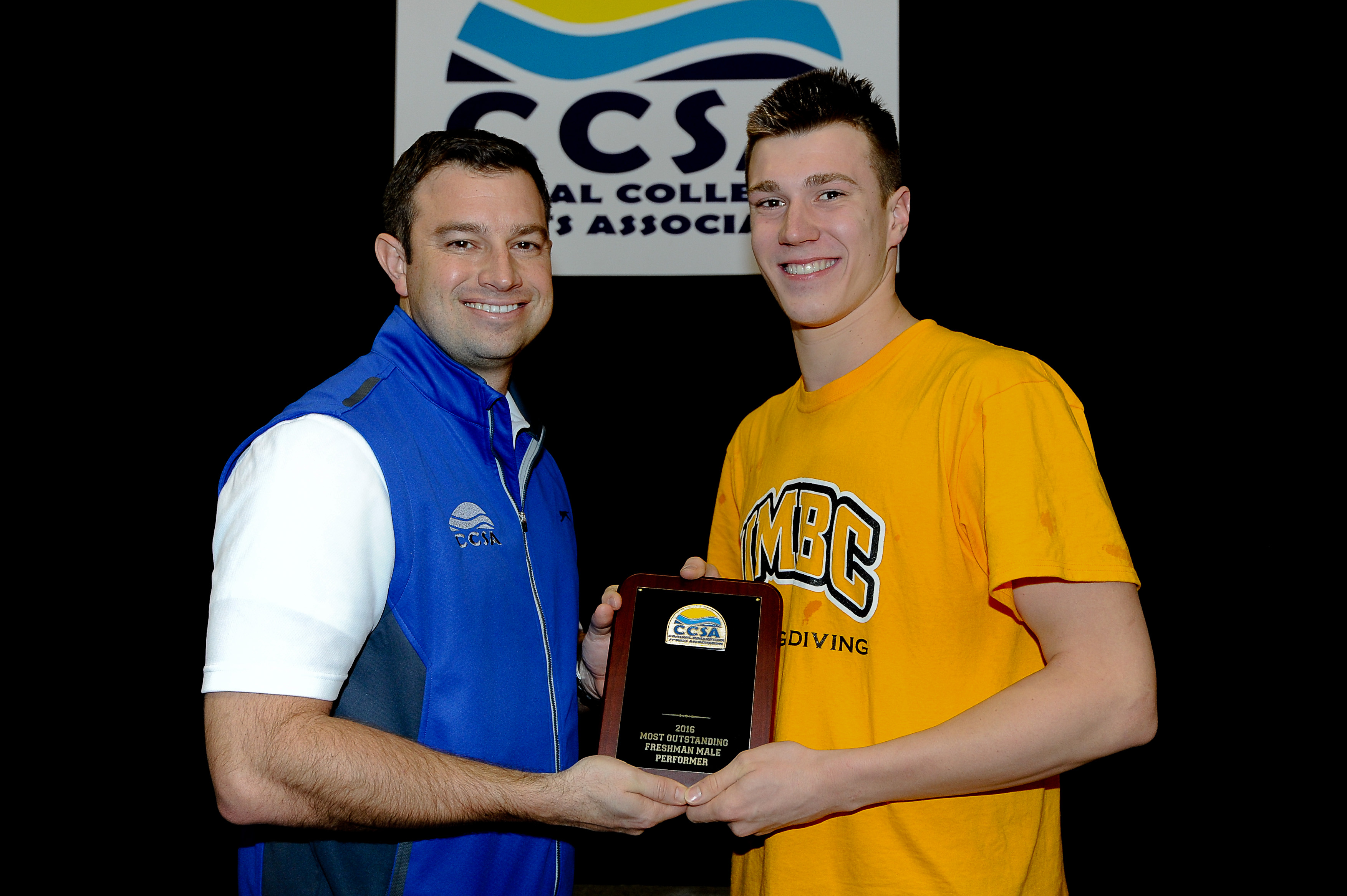
Rookie Felix Richtsfeld ’19, engineering, won a silver medal in the 1,650 free with a time of 15:38.13. UMBC Athletics reports that Richtsfeld (pictured below) earned Freshman of the Meet honors, after claiming first in the 500-yard freestyle preliminary, placing second in the 500-yard freestyle, finishing second in the 1650-yard freestyle, and participating on UMBC’s 800-yard freestyle relay team, which won silver.

ccsaD4-1279

“Every day our men and women give their best in practice to bring UMBC a championship trophy and they did just that,” Cradock says.

The Retrievers will next compete February 26-28 at the the Eastern Collegiate Athletic Conference Championships in Annapolis.

Images 1, 3 and 4: UMBC men’s swimming and diving team wins CCSA championship, February 2016. Full team (1), coaches (3), and Freshman of the Meet winner Felix Richtsfeld (4). Photos by Todd Drexler, SE Sports Media.

Image 2: UMBC swimmer Emily Escobedo ’17 at America East championship. Photo by Greg M. Cooper, America East.

UMBC named one of nation’s top public universities in Business First ranking

Business First has named UMBC one of the nation’s top public universities in a ranking released on February 23, 2016.

Baltimore Business Journal reports that UMBC is one of three Maryland institutions to appear in the top 100 of 477 four-year public colleges included in the ranking. The other leading colleges include the University of Maryland, College Park, and St. Mary’s College of Maryland.

Business First uses data from the National Center for Education Statistics and American Community Survey, and takes into account college rankings in Forbes, Kiplinger’s, and U.S. News and World Report, which have recognized UMBC as a leader in teaching, innovation, and affordability.

The rankings announcement notes that Business First utilized a 20-part formula “to identify the public universities and colleges that offer the best educational experiences to their students,” giving high marks for “selective admissions processes, strong retention and graduation rates, prestigious reputations, generous resources, affordable tuitions and housing costs, diverse faculties and student bodies, and economically robust communities.”

UMBC has also been recently recognized by Business Insider rankings and in Princeton Review’s 2016 Colleges that Pay You Back, which notes:

Arguably the “best public college in Maryland,” UMBC is an “extremely diverse school” that manages to maintain a “small community feel.” And from the moment you set foot on campus it’s evident that the university is focused on “providing exceptional education and research opportunities for students.”