All posts by: Dinah Winnick


Seeing Science: UMBC project explores how photographs shape and further science

“I’m fascinated with the ways images and technology are transforming our lives today. And looking back, I realized that photography and the sciences have always worked hand in hand to redefine each other and culture-at-large, too,” says Marvin Heiferman, curator of the new Seeing Science project at UMBC.

“Images are essential in the work scientists do and make their work more accessible to the public,” Heiferman shares. “Seeing Science grew out of my desire to explore that.”

A year-long project, Seeing Science: Photography, Science and Visual Culture, will explore the central role photographic images play in defining, shaping, promoting, and furthering science, and how photographic images made in and about the sciences impact public opinion and health, policy and funding, science education, as well as visual and popular culture.

The project’s diverse components include a website, exhibitions, online salon, film series, publications, and an active social media presence. The Seeing Science website, the cornerstone of the project, will continually expand with weekly mini-exhibitions of historical and contemporary images, thematic looks at science-related images in visual culture, newly commissioned short essays, links to breaking news stories that chart the use and impact of imaging in and on science, a timeline that tracks the historical inter-relationships of science and photographic imaging, an interactive map of science images made and used on UMBC’s campus, and downloadable PDFs of materials generated through the project.

Last spring, UMBC’s Library Gallery hosted an exhibition, The Glass Knife, curated by visual arts faculty Stephen Bradley and Kathy Marmor, that explored the pioneering imaging work of biologist Keith Porter.

This fall, an online salon, co-produced with Reading the Pictures, a visual and media literacy group, will be held on October 20, exploring science images in the media. A Seeing Science Film Festival begins presentations in September featuring films from 1966: “Fantastic Voyage,” “Fahrenheit 451,” and “Daleks–Invasion Earth: 2150 A.D.” A series of public conversations between Heiferman and other scholars will take place at the School of Visual Arts in New York City beginning in October. A book, Seeing Science: Photography, Science and Visual Culture, will be published in 2017 featuring content developed in the course of the project and exploring the evolving relationships of photographic imaging and the sciences, social sciences, and the arts.

“While researching and developing Seeing Science, I realized that most photography and science exhibitions in the past tended to document 19th and 20th century imaging advances and then celebrate how artists respond to them,” adds Heiferman. “I want Seeing Science to do that, and much more. That’s why the project is multi-faceted and primarily web-based. It invites viewers and participants to explore how science images also impact the news, public policy, popular culture and, most importantly, radically change the ways we see, understand, and live in the world.”

Marvin Heiferman, a visiting scholar at UMBC’s Center for Art, Design & Visual Culture (CADVC), has organized projects about photography and visual culture for the Museum of Modern Art, Smithsonian Institution, International Center of Photography, Whitney Museum of American Art, Carnegie Museum of Art, and the New Museum. He has written for The New York Times, Art in America, Gagosian Gallery, CNN, Artforum, Design Observer, Aperture, and BOMB. Heiferman is the author, editor, and packager of more than two dozen books on photography and visual culture, including Photography Changes Everything (Aperture, 2012).

Kelley Bell, associate professor of graphic design at UMBC, is the art director of Seeing Science. Bell has worked with clients including MTV Networks, The Walt Disney Company, and Baltimore-D.C. area non-profits, and her public art works have been featured in numerous events.

Complete information about Seeing Science: Photography, Science and Visual Culture can be found on the UMBC Arts & Culture Calendar.

Seeing Science is produced by the CADVC in collaboration with the Office of the Vice President of Research. A grant from the Alfred P. Sloan Foundation was instrumental in the development of the project’s website.

Image: Detail of Carl Strüwe, Archetype of Individuality (1933). Courtesy Steven Kasher Gallery, New York.
UMBC named one of the nation’s top universities in 2017 Princeton Review guide

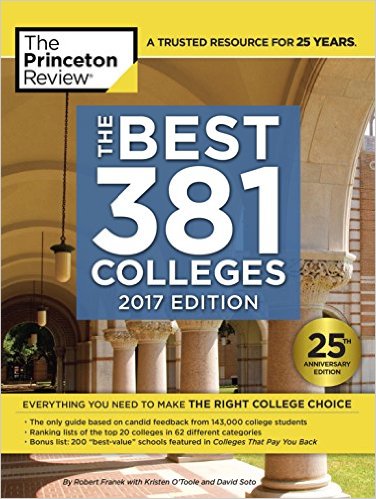
51SbZekZtbL._SX374_BO1,204,203,200_Princeton Review has again selected UMBC as one of the nation’s top universities for undergraduate education, featured in its flagship guide, The Best 381 Colleges.

“UMBC’s outstanding academics are the chief reason we chose it for this book and we strongly recommend it to applicants,” says Robert Franek, Princeton Review’s senior VP-publisher. The 2017 guide includes the top 15% of U.S. colleges and universities, judged through administrator and student surveys across eight categories.

Princeton Review’s UMBC profile highlights the strength of a UMBC education and the university’s commitment to student success. “UMBC wants to see every student succeed—they provide you with the tools, people, and resources to make sure you get where you want to go in life,” one student shared. Others remarked that UMBC has “extremely intelligent professors that have a knack for inspiring the students” and “this is a university where teaching comes first.”

UMBC’s proximity to Baltimore and Washington DC earned high marks, with one student noting, “The location of UMBC is true brilliance.”

The university community itself was recognized as a welcoming environment that values inclusive excellence. “UMBC is a place where it is cool to be smart, and everything about the campus, including the students, exudes ‘nerd-chic,'” said one student. “The school has a strong reputation for diversity,” the profile notes, quoting one student’s comment that students feel diversity “enriches our school.”

At UMBC, the Princeton Review writes, the student experience is about finding your passion and exploring issues that matter, in the classroom and the community. “People fit in by being intellectually creative and finding a community with which to discuss important issues,” one student says. Another shares that in addition to a commitment to doing well academically, “almost every student at UMBC is involved with at least a couple of extracurricular activities, which connect them to the campus.”

The Princeton Review’s final verdict: At UMBC “students are happy,” “career services are great,” and “the school is well run.”

Earlier this year, UMBC was also featured in Princeton Review’s 2016 edition of Colleges That Pay You Back, among the nation’s best colleges for students seeking an exceptional education with great career preparation at an affordable price. That publication’s profile of UMBC noted:

Arguably the “best public college in Maryland,” UMBC is an “extremely diverse school” that manages to maintain a “small community feel.” And from the moment you set foot on campus it’s evident that the university is focused on “providing exceptional education and research opportunities for students.”

For more information, see UMBC’s page on the Princeton Review website.

Header image: UMBC library. Photo by Marlayna Demond ’11 for UMBC.

University compliance with Title IX requirements under review

On August 16, 2016, UMBC’s Office of Human Relations shared a message with the UMBC community regarding a review of university compliance with Title IX requirements:

UMBC has been notified by the Office for Civil Rights of the U.S. Department of Education that the university is being investigated regarding compliance with Title IX requirements following a complaint filed by a student. The investigation requires a thorough review of our policies and procedures related to cases of sexual misconduct, which includes sexual assault, sexual harassment, and other non-consensual sexual conduct.
 
UMBC is committed to fostering an inclusive, welcoming, and safe learning community for all students. Sexual assault incidents are a deeply troubling challenge for colleges and universities throughout the country, including UMBC, and we are committed to both preventing sexual assault and responding effectively to allegations of misconduct. We welcome this opportunity to take an even closer look at our current processes.
 
Providing a safe, supportive learning community has always been our priority. This ethic of care for students has guided both UMBC policies and procedures that address the reporting and investigation of sexual misconduct and the education and support we provide around issues like consent. We have consistently updated our policies, procedures, and resources to reflect our campus culture, University System of Maryland guidelines, and national best practices. These updates have been in accordance with guidance issued by the U.S. Department of Education in 2011 and most recently in 2014.
 
UMBC cannot comment on the specifics of individual cases of reported sexual misconduct. Office for Civil Rights investigations also are confidential and typically take several years to complete, at which point public findings are issued.
 
To report a sexual assault, contact University Police at 410-455-5555 at any time to make a report to the police. You can also call the UMBC Title IX Coordinator Bobbie L. Hoye at 410-455-1606 to make a report with the university.
 
For more information about the Title IX investigation process, please visit this FAQ.
 
For more information about UMBC’s sexual misconduct policies and resources for individuals, please visit the UMBC Amended Policy on Prohibited Sexual Misconduct.


Image: UMBC campus. Photo by Marlayna Demond ’11 for UMBC.

The Daily Record on UMBC at 50: A national leader in teaching and innovation

UMBC began with 750 students walking to class on paths of wooden planks connecting three buildings. There were no dorms. Most of the professors were fresh out of graduate school, and, like their students, brimming with enthusiasm and potential. The Commons, the telescope, green roofs, and the Performing Arts & Humanities Building hadn’t yet been envisioned.

A new article by The Daily Record’s Dan Leaderman traces the history of UMBC, from its roots as a university community defying definition to a “research powerhouse” known as a national leader in teaching and innovation.

“In the life of universities, 50 years is not that long, but UMBC has done a remarkable job emerging as a first-class research university,” USM Chancellor Robert Caret told the The Daily Record, noting that today UMBC is also a major player in the region’s economic development.

Drawing comparisons with a young MIT, the article dives into success of the bwtech@UMBC Research and Technology park and of UMBC alumni becoming academic and research leaders worldwide, including as faculty at Harvard and director of the Johns Hopkins University Applied Physics Lab.

Engineers Week_1
A companion interview with UMBC President Freeman Hrabowski also highlights UMBC as a hub for teaching and research in emerging fields, like cybersecurity; a dedicated partner to institutions like the University of Maryland, Baltimore; and a community committed to student success. This includes asking tough questions and testing novel approaches to see what will yield the best results for students.

“At UMBC,” Hrabowski said, “we have been rethinking the teaching and learning process across disciplines, from science and engineering to the arts and humanities and social sciences.”

Lakeland-5412
Michael Summers, Robert E. Meyerhoff Chair for Excellence in Research and Mentoring and University Distinguished Professor of chemistry and biochemistry, and member of the National Academy of Sciences, told The Daily Record that it goes back to the passion and dedication of UMBC students.

“I’ve come back [after] the university was shut down for snow storms and gotten in to work and the undergraduates had their sleeping bags here because they didn’t want to get trapped away from their experiments,” he shared.

UMBC_Summers_Lab-9549

As those students move on to promising careers, UMBC is preparing to welcome in a new class of Retrievers who have only known the university as the “powerhouse” of today.

Read “At age 50, UMBC just getting started” and the “Newsmakers” interview with President Hrabowski in The Daily Record [subscription required].

Images (top-bottom): (1) UMBC campus; (2) UMBC student during an Engineer’s Week event in the Commons; (3) UMBC Sherman Scholars working with students at Lakeland Elementary/Middle School; (4) Prof. Michael Summers (at left) with his students. Photos by Marlayna Demond ’11 for UMBC.

Savoy Magazine honors UMBC’s national leadership in inclusive excellence

Savoy Magazine’s new “Power 300” summer issue highlights UMBC’s “inclusive excellence and STEM innovation at 50” in a vivid five-page education feature. UMBC is “a campus deeply committed to pushing America to change the culture of STEM to be more inclusive,” notes writer Meta Mereday, who describes how, over the past 50 years, UMBC has become “an innovation hub for STEM education and entrepreneurship” in the U.S.

As UMBC President Freeman Hrabowski describes in the article, UMBC’s commitment to inclusive excellence can be felt across the university. “We are a national model that shows how people of all races can work together and solve problems of humankind,” he shares. “Students of all backgrounds here at UMBC work together to address global challenges — from economic development and environmental research to cybersecurity and health disparities.”

Educational opportunity, high expectations, and the supports to reach those expectations are core to the UMBC vision, Pres. Hrabowski explains. He told Savoy:

If you aren’t giving all people an opportunity to participate, to grow, and to share their knowledge and perspectives, you’re missing out on what they can offer. It’s both a moral issue of access and an issue of having the range of perspectives we need to tackle society’s biggest challenges.

Simmons_college_visit-2796 (3)
 
Savoy
highlights a broad range of successful UMBC programs, including the Meyerhoff Scholars and Graduate Fellows programs, STEM BUILD at UMBC, STEM Transfer Student Success Initiative, Center for Women in Technology Scholars program, and Cyber Scholars program.

“While we are a hotbed of innovation and economic development, we are also stressing the importance of integrating science and technology with arts and humanities,” Pres. Hrabowski notes. “We want broadly educated people. We are teaching students to work collaboratively with others from other backgrounds. That is the essence of UMBC.”

Simmons_college_visit-2826
 
The feature goes on to highlight the experiences of new UMBC alumni Ayushi Aggarwal ’16, biochemistry and molecular biology; Randi Williams ’16, computer engineering; Markus Proctor ’16, interdisciplinary studies; and Travis Ward ’16, computer engineering. It also features emerging leaders at bwtech@UMBC, UMBC’s 71-acre research and technology community, including Amethyst Technologies CEO Kimberly Brown and Fearless Solutions CEO Delali Dzirasa ’04, computer engineering.

The magazine also recognizes Pres. Hrabowski as one of its “Most Influential Black Corporate Directors” for 2016. On what motivates him day in and day out, Pres. Hrabowski told Savoy about the sense of drive and inspiration he gets from UMBC students. He shares, “I have seen the obstacles they have overcome. From challenges growing up to having cancer while in college, I have watched them press on regardless of the obstacles.”

UMBC will celebrate its 50th anniversary September 16-19, 2016.

Images: Pres. Hrabowski with UMBC students in the Commons (header) and in the Retriever Learning Center of the Albin O. Kuhn Library. Photos by Marlayna Demond ’11 for UMBC.

MONEY magazine recognizes UMBC as a top public university with an “impressive record”

Less than a week after FORBES named UMBC one of the nation’s top 100 public universities, MONEY magazine has confirmed it, describing UMBC as an academic powerhouse and a solid value for students and their families.

“University of Maryland-Baltimore County is a young school, but it has built an impressive record since its founding in 1966,” the MONEY College Planner notes.

In addition to recognizing UMBC as one of the top 100 public universities in the United States, the new MONEY list ranks UMBC among the top three public universities in Maryland (also including University of Maryland, College Park, and St. Mary’s College of Maryland).

MONEY highlights the wide variety of academic offerings available at UMBC. Beyond popular programs in biology, computer science, psychology, and other social sciences, the publication notes Asian studies, aging services, game development, and medieval and early modern studies as intriguing UMBC programs not found at many other universities. MONEY also notes UMBC’s graduate programs in human-centered computing, atmospheric physics, and language, literacy, and culture.

One student describes academics as an area “where this school shines,” telling MONEY, “The professors are absolutely great…friendly, approachable, and helpful. The variety of courses here is unbelievable.”

Another student told MONEY:

Professors at UMBC are truly passionate about what they teach and make it a point to help the students understand each and every topic. They take questions from students even in big crowded lecture halls because they care about the individual’s problems and make it a priority to help them. The quality of courses is excellent…”

A third UMBC student shared:

This university is very academically focused, however it can also be a lot of fun. The brightest students in the area come to this school, which is great because you can have meaningful dialogue with people here. The professors are fantastic and very eager to help students succeed, overall.

MONEY’s college ranking measures educational quality, affordability, and career success. This year the publication judged colleges on 24 factors, such as graduation rates, borrowing, and alumni income. Also included in each college’s profile is a sense of campus life and student experience. On this point, MONEY notes:

UMBC prides itself on its diverse campus and student body, and student housing includes 10 living-learning communities centered on themes such as women in technology, visual and performing arts, and humanities. Even the school’s mascot is a bit of a standout: It’s a Chesapeake Bay retriever, who shows up to cheer on UMBC athletic teams—the Retrievers.

More UMBC rankings are available through UMBC News.

Image: True Grit retriever statue in the Administration Plaza, spring 2016. Photo by Marlayna Demond ’11 for UMBC.

Forbes recognizes UMBC as one of the nation’s top 100 public universities

The 9th annual FORBES Top Colleges list recognizes UMBC as one of the nation’s top 100 public colleges and universities.

UMBC ranks #6 among mid-sized public colleges in the northeast, a list led by the U.S. Military Academy and U.S. Naval Academy, and #126 of all leading northeast colleges, including both public and private institutions. FORBES has also named UMBC #134 on its list of top research universities nationwide.

The Top Colleges ranking “is our answer to the debate over whether higher education is worth it,” writes Caroline Howard for FORBES. She says, “For these outstanding institutions, we give a resounding yes.”

This ranking includes 660 top U.S. colleges and universities, and focuses specifically on what students are getting out of college. It includes measures of post-graduate success, student debt, student satisfaction, graduation rate, and academic success.

Several prominent rankings have featured UMBC in 2016, including Time Higher Education naming UMBC one of the world’s top universities for the fifth time in April 2016.

UMBC has also been featured this year in Princeton Review’s 2016 “Colleges that Pay You Back” and the 2017 Fiske Guide to Colleges. Describing what makes UMBC distinctive, the Fiske Guide notes: “Students here are given access to academic and social resources usually reserved for those attending mammoth public institutions or pricey private colleges.”

Image: View of UMBC campus by Marlayna Demond ’11 for UMBC.

2017 Fiske Guide to Colleges recognizes UMBC for top academics, supportive community

What’s the essence of UMBC? According to one UMBC junior, in the latest edition of the Fiske Guide to Colleges, “We’re focused on doing big things and being influential people.”

FiskeFeature_1_300“At the University of Maryland, Baltimore County, you can be king or queen of your academic world,” notes the 2017 Fiske Guide to Colleges, in UMBC’s chess-filled university profile. “Students here are given access to academic and social resources usually reserved for those attending mammoth public institutions or pricey private colleges.”

The Fiske Guide to Colleges is one of the most well-regarded resources for college-bound students seeking an inside look at top colleges and universities in the United States, Canada, and Great Britain. The annual guide profiles each selected university in detail, examining academic offerings, cost, social climate and extracurricular opportunities.

What do insiders says about UMBC? It’s all about community.

“UMBC encourages exploration and expects students to support one another and the community at large,” writes Fiske. One English major shares, “The academic climate is more collaborative than competitive, but intense.”

The Fiske Guide highlights numerous UMBC academic departments and programs, including biology, information systems, visual arts, psychology, engineering, interdisciplinary studies, Asian studies, Africana studies, and global studies. It also notes the strengths of UMBC’s Alex. Brown Center for Entrepreneurship, Shriver Center, Career Center, study abroad opportunities and support for undergraduate research and creative achievement.

“Students here tend to be on the nerdy end of the spectrum,” writes one senior, “but we embrace it.”

Fiske notes that UMBC capitalizes on its status as a medium-sized national research university “by providing students with intimate learning communities, solid academics, and ample resources on a manageable scale.”

With UMBC now approaching its 50th anniversary year, one junior shared, “I would say that UMBC is a school just coming into its own.”

The Fiske Guide to Colleges was created by Edward B. Fiske, an expert on college admissions who served for 17 years as education editor of The New York Times.

UMBC community gathers to remember victims of Orlando shooting

“Love—that is what brought us here today, the hope that we can all live freely, without judgement, without discrimination, and without fear.”

Jessica Hammond, senior associate athletic director, shared these words as she welcomed the UMBC community to a special gathering in remembrance of the 49 victims killed in the tragic June 12 shooting at the Pulse nightclub in Orlando.

UMBC Athletics, Student Life, and LGBTQ Faculty and Staff Association (LGBTQ FSA) hosted the memorial on June 27 in UMBC’s Administration Plaza, inviting members of the campus community to speak as well as attend.

President Freeman Hrabowski began the program with a reflection on the multiple meanings of silence.

“We must take a moment of silence to remember,” Pres. Hrabowksi said, “but then we must break the silence to say, ‘Unacceptable. Not what we will live with.’ That our values tell us we cannot allow hatred and violence against the LGBTQ community and other communities.” He continued, “We are Orlando, too. We are connected.”

Speaker Esther Karimu ’18, health administration and public policy (HAPP) presented an original poem of remembrance, followed by student athlete Pandora Wilson ’17, HAPP, who read the name of each victim and led all gathered in a moment of silence.

Abbey Viado ’17, social work, president of the Social Work Student Association and the SAFE initiative at the Universities at Shady Grove, shared personal reflections:

…as we all mourn the loss of those who perished in the Pulse nightclub in Orlando, we must remind ourselves that hate is not the answer to hate. […] America was built on the foundation of having many differences. It is important to remember that these differences are what make us unique and these differences are what make us the United States. […] I would like to ask and encourage all of you for your support to be united…in the LGBTQ community’s fight for respect, love, and dignity.

Anne Brodsky, professor of psychology, associate dean of the College of Arts, Humanities & Social Sciences, and member of the LGBTQ FSA, also reflected on the Orlando tragedy, in the context of ongoing acts of violence in the U.S. and around the world. These acts, she noted, disproportionately impact people of color, economically disadvantaged communities, and LGBTQ+ people.

That this tragedy occurred in June, the month that the gay community celebrates the historic fight of the gay rights movement in the U.S., and all the advances that we’ve made in this country and around the world, is particularly heartbreaking. Unfortunately, despite our many advances, fear, hatred, social and political backlash, and violence are not just a part of our history, but continue to be a part of the everyday experience of many in our community.

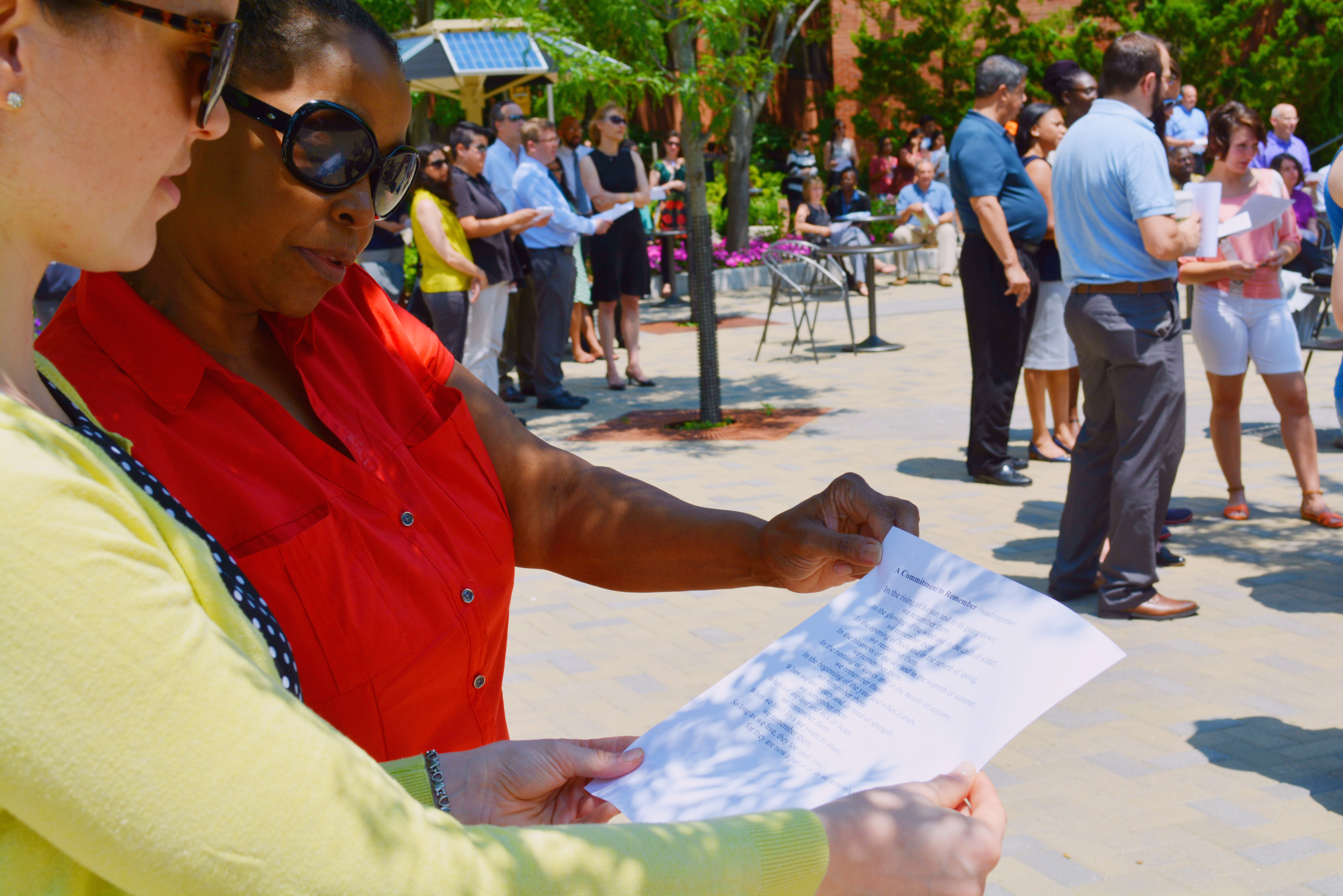
Lori Hardesty, assistant director of service learning, K-16 partnerships, at the Shriver Center, led a community reading of “We Remember Them,” a poem by Sylvan Kamens and Rabbi Jack Riemer, also known as “A Litany of Remembrance” and “Commitment to Remember.”

Orlando1 (edited)

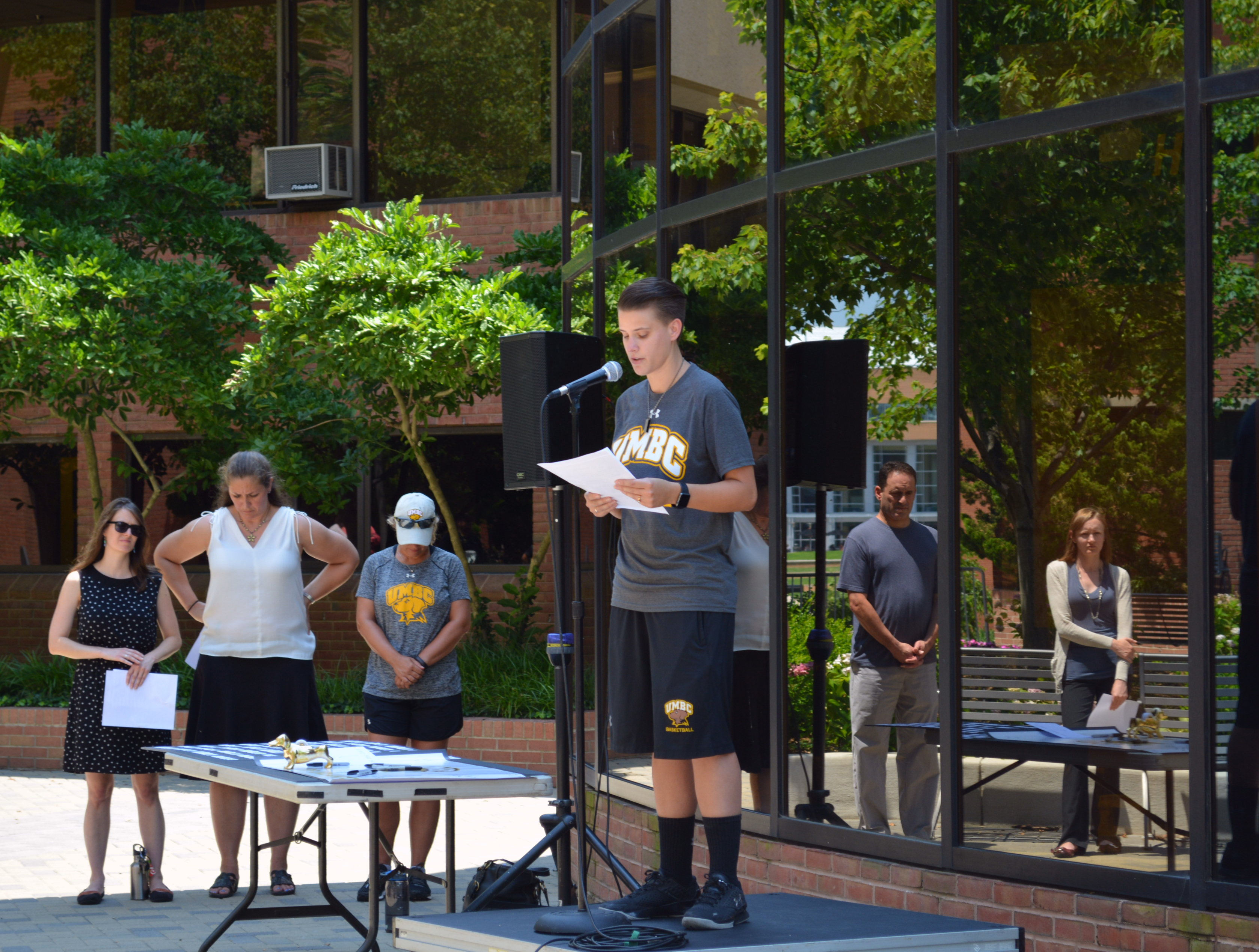
Before inviting participants to read biographies of the victims and to sign a community banner of remembrance, event organizer Chelsea Barker ’11, assistant women’s basketball coach and LGBTQ FSA member, shared her own thoughts:

The recent attack in Orlando was horrific and has filled us all with an unspeakable sadness. So many LGBTQ people, myself included, go to clubs like Pulse to feel safe, to feel accepted, so processing what happened has been really difficult. Innocent lives were lost in a senseless and hateful way. We have fought together to secure dignity for the LGBTQ community and this hateful act reminds us that the fight continues, and we need to stick together through every obstacle.

Orlando2 (edited)

To read initial statements following the Orlando shooting from Pres. Hrabowski and Provost Philip Rous, as well as UMBC’s LGBTQ FSA, and for a list of available support resources on campus, see “UMBC leaders share messages of solidarity following Orlando tragedy.”

Photos by Dinah Winnick for UMBC.

UMBC leaders share messages of solidarity following Orlando tragedy

In response to horrific news of a mass shooting at the Pulse nightclub in Orlando on June 12, 2016, President Freeman Hrabowski and Provost Philip Rous shared this message with the campus community:

We are deeply saddened by the senseless and appalling act of terror and hatred that took so many innocent lives early Sunday morning in Orlando. On behalf of the UMBC community, we express sympathy for the families and friends of the victims, the people of Orlando, the LGBTQ community, and all victims of terrorist acts across the globe.


This horrific act of violence and intolerance impacts our own UMBC community. We remain committed to ensuring a safe environment for our students, faculty, and staff, and we value the contributions every individual makes to our campus. We are reminded of how important it is to support one another, across boundaries of race, ethnicity, gender, religion, and sexual orientation, and we hope that our culture of inclusiveness and acceptance at UMBC will be a source of strength as we stand together to uphold our collective values.


As we consider the difference the UMBC community can make during this challenging time, we encourage students, faculty, and staff to take advantage of the following campus resources:


Our thoughts are with the individuals and families affected by this tragedy.

UMBC’s LGBTQ Faculty and Staff Association has also issued a statement. “It is very clear,” the group writes, “we must continue to fight for the lives and dignity of all members of our community.” Read the full statement on the group’s website.

Image: Flags and students in the UMBC Commons. Photo by Marlayna Demond ’11 for UMBC.

Chris Geddes solves common problem in medical testing with DNA chopping biotech invention

Chris D. Geddes, professor of chemistry and biochemistry and director of UMBC’s Institute of Fluorescence, is no stranger to entrepreneurship. He has numerous patents and commercialized products under his belt and has founded multiple startups. But he thinks this one, a new technology for breaking open cells and chopping up their DNA quickly and at low cost, is going to be big.

In 2007, Geddes’s team invented a new fluorescence-based test to detect anthrax that only takes 30 seconds—a major advance. However, the sample preparation for that test, which required breaking the cell open or “lysing” it, still took hours. He took that as a challenge: invent a faster technique for lysing cells. “If you solve that problem, you’re gangbusters,” says Geddes.

That’s exactly what he’s done with his new technology and new company, called Lyse-it™.

The device includes a sample preparation chamber, about the size of a deck of cards, and single-use slides. A pack of ten slides costs less than $100, whereas traditional mechanical lysing techniques cost upwards of $10,000. Energy from a standard household microwave powers the process. The microwaves heat up the water inside cells, causing it to expand. Eventually, the cell membrane can’t take the pressure and bursts. “Think of it like popcorn,” Geddes explains.

The microwave energy also chops up the DNA inside cells. “When we realized the microwaves could do all of it, that was a significant breakthrough,” Geddes says.

The team has calibrated the system, so they know how much energy is required to result in DNA fragments of about a certain size. That’s important, because different follow-up procedures might only work with fragments of certain lengths. For example, polymerase chain reaction (PCR), a ubiquitous lab technique, typically works with fragments between 200 and 500 base pairs long.

Another advantage of the new technology is that it works on all kinds of cells, including bacteria, algae, and human, so there are numerous potential applications. Testing for the presence of disease is one, and an ongoing 1,800-patient clinical trial is assessing the technique’s effectiveness for detecting gonorrhea and chlamydia with Johns Hopkins University and the University of Cincinnati children’s hospital. Each sample test costs around just $1.

The biofuels industry could also take advantage of the Lyse-it technology. Algae produce lipids (oils) that are converted into fuel. Extracting the lipids from the algal cells typically involves several complex steps and some harsh chemicals. Geddes says his new device can potentially do the job in fewer steps and more safely. The research team has proven the new technique works; the question now is whether they can scale it up to make it commercially competitive.

“Starting a company from scratch is a tremendous amount of fun,” says Geddes, but, as a startup veteran, he knows there will inevitably be times when he’ll have to move past major challenges. Still, “Don’t give up the dream,” he urges new entrepreneurs.

More practically, Geddes recommends faculty entrepreneurs seek out advice early, starting with their university’s technology transfer office and connecting with more experienced entrepreneurs, who can help to determine which ideas are most likely to be commercially viable and identify opportunities to grow ideas into commercial ventures. Lyse-it, for example, received $100,000 from a Maryland Innovation Initiative (MII) grant funded through TEDCO to support a proof-of-concept phase for the technology, which concluded in January 2016.

The good news is, “We live in a biotech corridor that is pretty hot for investing,” Geddes says.

Perhaps his most important advice is the simplest: Don’t expect there to be one moment where a new company turns the corner and arrives. It’s a constant process of growth and change, says Geddes, so “enjoy the journey.”

Image: Chris Geddes. Photo by Marlayna Demond ’11 for UMBC.

Eight bwtech@UMBC companies named 2016 Maryland Incubator Company of the Year finalists

The bwtech@UMBC Research & Technology Park is home to more than a third of all finalists for the 2016 Maryland Incubator Company of the Year Awards (ICOY). These eight (of 22) ICOY finalists include: Airphoton LLC, Blue Wave Semiconductors, Inc., Bricata, Grip Boost Inc., Huntress Labs, Phoenix Operations Group, LLC, Plant Sensory Systems, and Sparks Dynamics.

Combined, bwtech North and bwtech South cover 71 acres and offer 525,000 square feet of office and lab space. Housing more than 120 companies in various stages of development, bwtech@UMBC’s estimated economic impact on the state is $500 million annually. The research park includes incubator programs for cybersecurity, life sciences, and clean energy technology companies. All incubator companies have access to entrepreneurs in residence, experienced business professionals who help with aspects of owning a company that are new to many researchers.

“It’s a financial benefit, but also an educational benefit,” to be part of the incubator, says Lorraine Remer, research professor of physics at UMBC and CEO and co-founder of AirPhoton, a company that designs and produces custom equipment for earth and climate scientists. In addition to the entrepreneurs in residence, Remer appreciates that the incubator connects companies with an excellent network of professionals, such as lawyers and accountants, whom they know they can trust.

“From the monthly E2E [executive to executive] roundtables to the always available hands-on mentorship, bwtech@UMBC has created a fantastic environment for local startups,” says Chanda Arya, COO and co-founder of Grip Boost, Inc., which sells a product to restore grip-ability to football gloves.

Kathy Turano, founder and president of Plant Sensory Systems, an incubator graduate company, agrees. “Plant Sensory Systems has benefited greatly from the entrepreneurial training and support services provided by bwtech@UMBC,” she says. “We are honored to be a finalist for the Incubator Company of the Year Award and to have our achievements recognized by the Maryland business community.”

One of Plant Sensory Systems’ projects produces plant seeds that contain nutrients typically absent in plants, but that are required for fish like salmon and tuna. The seeds can be used in plant-based fish feed, reducing demand for wild-caught small fish traditionally used in fish feed, which are currently harvested at unsustainable levels.

For Remer, being part of the incubator is about more than producing a product: it’s about giving back. She and the other AirPhoton leaders enjoy building “a structure that creates employment,” she explains. Incubator companies create jobs in Maryland and keep top talent, including UMBC alumni, in the state.

Jennifer Reynolds, bwtech@UMBC’s director of venture creation, shares, “The entire bwtech@UMBC community is extremely proud and excited to have eight finalists in this year’s Maryland Incubator Company of the Year award competition. The selected companies represent a wide array of industries, products and stages of maturity, and thus are excellent representatives of the diverse and dynamic entrepreneurial community we have built and support here at bwtech. It is so rewarding to see these innovative and promising companies achieve commercial success, and to see ICOY recognize their tremendous growth.”

Award winners will be announced at an event on June 21 at the American Visionary Art Museum in Baltimore.

Image: Lorraine Remer, research professor of physics. Photo by Marlayna Demond ’11 for UMBC.