

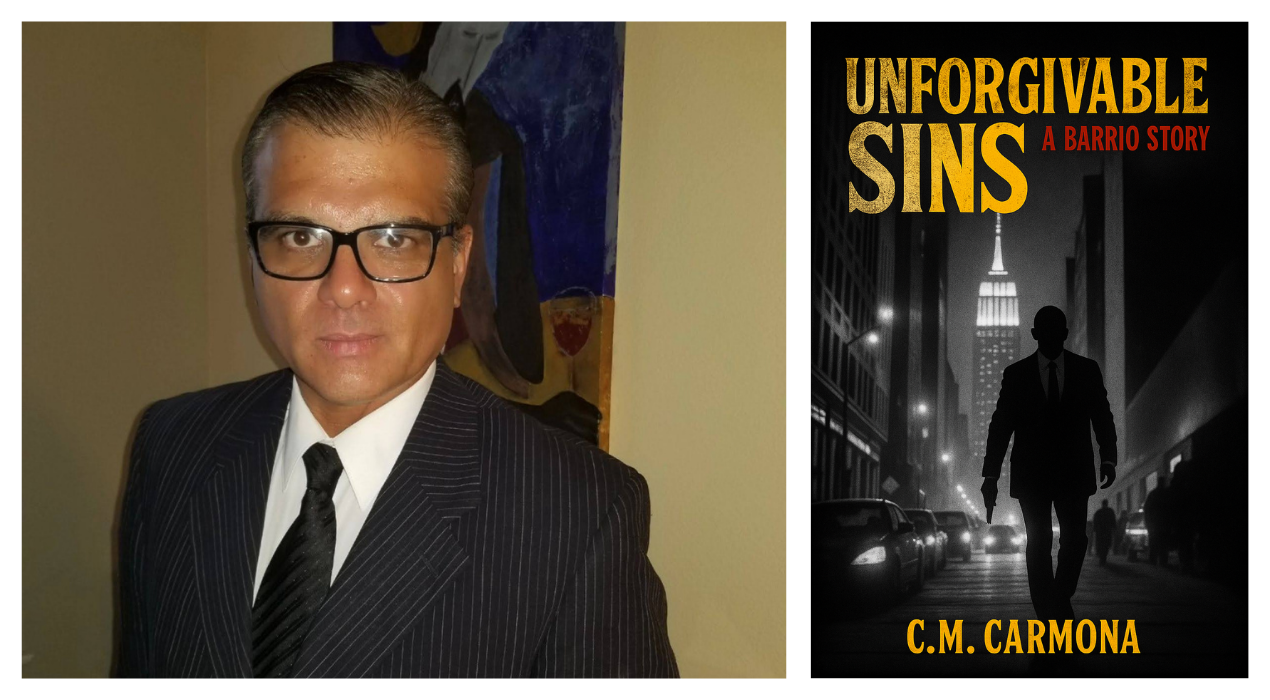
Meet Carlos Carmona ’88, economics. After UMBC, Carlos built a long career in retail and commercial banking before retiring in 2020. Now, Carlos enjoys traveling the world with his wife, Maritza de Jesús, and exploring one of his early passions—storytelling. In 2025, Carlos realized a lifelong dream, becoming a published author with the launch of his debut novel, Unforgivable Sins: A Barrio Story. Take it away, Carlos!
Q: What initially brought you to UMBC?
A: Growing up in Baltimore City in the early ’80s was challenging. The closure of Bethlehem Steel had devastated the city and its economy, and for many young people, the path forward was unclear. The University System of Maryland offered something aspirational at a time when everything around us seemed uncertain.
At UMBC, I was exposed to people from different backgrounds, new ways of thinking, and possibilities beyond Baltimore City’s despair and anxiety. To this very day, I maintain close friendships from those years. In fact, I recently had dinner with Jim Zerr ’89 and his wife. My time at UMBC didn’t just educate me; it gave me lifelong relationships and a broader vision of what my life could eventually become.
Q: What’s the one thing you’d want someone who hasn’t joined the UMBC community to know about the support you find here?
Every journey is different, and I would never presume to define anyone else’s path. What I can share is that UMBC and its professors fostered an environment of openness and understanding. They recognized that academic success rarely follows a single route, and in that understanding, I found the confidence to keep moving forward. They reminded me that what matters most is not how you arrive, but that you keep going.
What has stayed with me most from my time at UMBC is the generosity of my fellow students. People shared their experiences, offered advice, exchanged resources, and opened doors for one another. Friendship and support seemed to appear wherever I turned. Looking back, I realize how fortunate I was to be part of a community that valued collaboration over competition. It is an experience for which I remain deeply grateful.
“To those who welcomed me, encouraged me, and treated me as a friend, thank you.
When I look back on my life, I do not see absence. I see family, friendship, opportunity, and countless people who helped shape the person I became. In the end, I was never without. If anything, I was blessed with more than I recognized at the time.
Q: Who in the UMBC community has inspired you or supported you?
A: As an undergraduate, Professor Sarah Voight was a guiding light. Though she taught in the Spanish Department and I majored in economics, our shared Puerto Rican heritage gave me something to hold on to, something familiar and relatable in a place that often wasn’t. Her advice and guidance were crucial in helping me continue my studies and ultimately graduate.
Q: Tell us about what you loved about your academic program or an organization you were involved in at UMBC.
A: I loved studying economics, finance, and accounting. I found the subjects as exciting as they were challenging. At the same time, I explored several liberal arts and language courses, which gave me a well-rounded foundation that has served me throughout my life. For many years, I was a financial advisor to Catholic parishes, a role I stepped back from due to serious health issues, though I aspire to return when I’m able.
Q: Can you tell us about your work as an author?
A: I never planned on becoming a writer. I was a banker, a man who lived by numbers, memos, and proposals, not by scenes or plotlines. Stories belonged to other people. At least that is what I believed until life forced me to reconsider what mattered. Cancer did that. Two rounds of chemo. A fight I barely survived. And somewhere in the middle of that darkness, when my world narrowed, something in me shifted. Ideas I had buried decades earlier began to surface. Words I never thought I could write spilled onto the page. It was as if the part of me I had ignored finally demanded to be heard.
That is how Unforgivable Sins was born, a book that split itself into two stories, A Barrio Story and The Rise of Charlie Green. I self‑published them because no one in the industry was waiting for stories like mine. I knew the audience would be small. I knew the road would be impossibly long. Editors have never shown interest in Latino urban crime fiction, not because the stories lack power, but because the gatekeepers have never known what to do with them. But I also knew these stories were missing from today’s literature. They were missing in 1986 when the idea first came to me at UMBC, and they are still missing in 2026. The absence never changed. I simply reached a point in my life where I refused to let that absence continue.
What I didn’t expect was what came next. The moment I finished those books; a third story consumed me. Legacy of Sins arrived like a storm, pulling both earlier stories forward. Instead of continued editing, marketing, polishing what I had just created, I found myself chasing the next chapter, the next revelation, the next plot twist. Some scenes took forever to finish in all three stories. Not because I lacked the words, but because the memories behind them were too painful. This is all fiction, yes, but parts of it were my life experience. Parts of it still are and will forever be.
Pictured right: The potential book cover for “Legacy of Sins: A Barrio Story” by author Carlos Carmona.
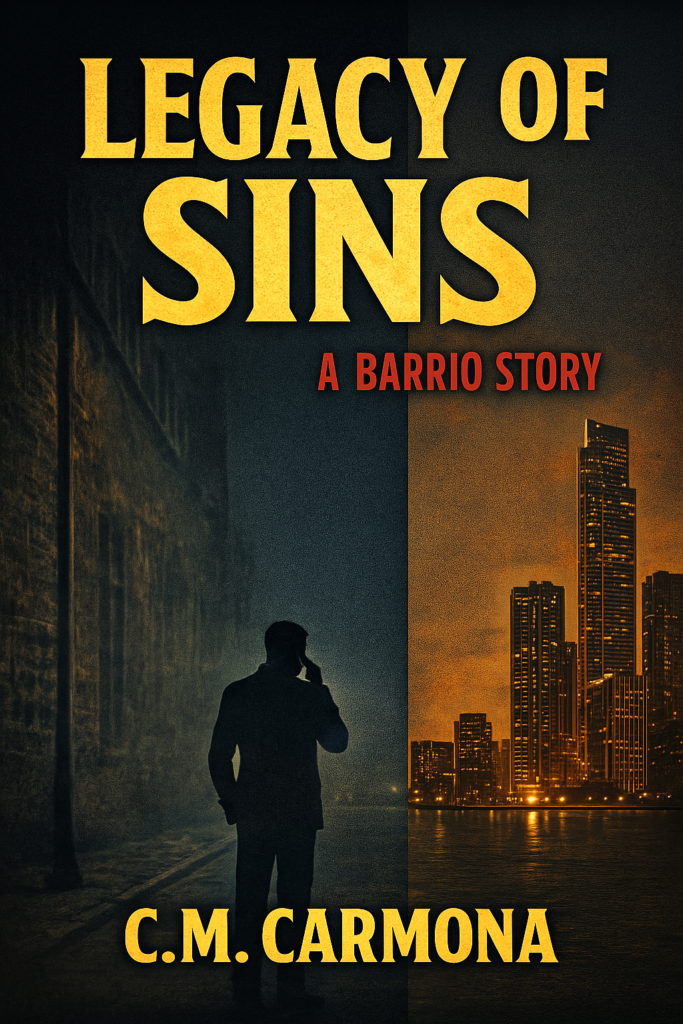
Now the story is almost complete. I’m editing, refining, shaping it the best someone with only their passion can. For no publishing company would. With the lessons learned from the first one, the never‑ending process of self‑publishing. I expect Legacy of Sins to be ready this summer or early fall.
I write because these stories once brought to life refused to let me go. I write because they were missing. I write because survival gave me a second chance, and I refuse to waste it.
* * * * *
UMBC’s greatest strength is its people. When people meet Retrievers and hear about the passion they bring, the relationships they create, the ways they support each other, and the commitment they have to inclusive excellence, they truly get a sense of our community. That’s what “Meet a Retriever” is all about.