All posts by: Magazine Editor


The Martinican bèlè dance – a celebration of land, spirit and liberation

Camee Maddox-Wingfield, Assistant Professor of Sociology, Anthropology, and Public Health, UMBC

On May 22 each year, when the eastern Caribbean island of Martinique observes Emancipation Day, drums beat from sunrise until the break of dawn the next day.

Participants at open-air, starlit gatherings dance, sing, play drums and feast for ancestors who fought to break the chains of bondage. The uprising that eventually led to the abolition of slavery on the island in 1848 was sparked by the arrest of Romain, an enslaved man who refused to comply with his master’s ban on beating drums.

Today, drums are still a symbol of rebellion and freedom. The traditional dances that span the island each May 22, at performances called “swaré bèlè,” are filled with an electrifying aura of reverence and honor.

But the bèlè is not only a genre of ancestral Afro-Caribbean drum-dance practices. Rather, it is “an mannyè viv:” a lifestyle and worldview through which many people find healing and empowerment for themselves and their communities.

My first encounter with bèlè occurred when I was a graduate student in anthropology, conducting fieldwork in Martinique. As a former dancer, I was drawn to how bèlè drummers, dancers and singers experience spiritual and cultural freedom. Performers tell me their participation feels transformative, sacred and otherworldly.

Bèlè linò

Martinique is an overseas region of France in the Lesser Antilles islands. Most of the 400,000 people living there are descended from Africans brought to the islands by the slave trade, whose traditions have left a deep imprint on Martinican culture.

Centuries of history have given bèlè a complex set of symbols, only understood by those deeply immersed in the practice.

Swaré bèlè gatherings typically begin with a few matches of “ladja/danmyé,” a martial art tradition between two combatants in the center of a circle, which warms up the energy of the space as guests are arriving.

The remainder of the event involves an improvised rotation of performers playing and dancing sets from the “Bèlè Linò” repertoire. These square dances use the quadrille configuration, with four pairs of female and male dancers. After the opening sequences, each pair takes turns dancing in a playful exchange in the center of the circle, then dances toward the drummers to salute them.

Bèlè traditions use the “tanbou,” a goat-skinned conical drum. There is also the “tibwa”: two wooden sticks beaten on the side of the drum with a steady tempo.

The ensemble of dancers, drummers and singers is normally encircled by a crowd of spectators who clap their hands, sway their bodies and join in the song’s refrain.

All dancers master the base repertoire. Yet the order and style of interactions between partners is improvised – making it remarkable that the drummers can match their rhythm to the dancers’ intricate footwork.

In the playful, flirtatious and at times competitive game of certain bèlè styles, the woman is the object of her male partner’s pursuit, and she ultimately decides if she will welcome his affections. This aspect of bèlè performance, whereby women are admired and praised for their sensual dance prowess, brings female performers a sense of affirmation.

Repressed, then embraced

Martinique has been under French control since 1635. Even during the post-colonial era, many Black Martinican folk traditions faced repression, as leaders imposed mainland French culture on the population. For example, bèlè practices were often denigrated as “bagay vyé nèg,” “bagay djab” and “bagay ki ja pasé”: primitive, indecent and outdated, in the Martinican Creole language. To many in the church, traditional drumming and dance symbolized heathenism. In a country where the vast majority of people belong to the church, it was difficult for devout Catholics to support bèlè.

Many practitioners see bèlè as a dance of the earth that reinforces human connections with the land, divine spirits and ideals of freedom. Touted as a fertility ritual for both humans and the land, the dance reflects sensuality between partners. Other symbolism suggests sacred connections with the soil, vegetation and water on which Martinicans’ enslaved ancestors labored and survived. Many dance movements represent agricultural labor.

A woman in a bright floral outfit does a traditional dance.
The history of folk dances in Martinique stretches back centuries. Sylvain Grandadam/Gamma-Rapho via Getty Images

During the 1980s, student activists and youth groups led initiatives to revive traditions that had nearly dissolved as a result of French pressure to assimilate. Today an ever-growing community has embraced bèlè as they challenge the legacy of colonialism and racism in Martinique.

Bèlè performance is increasingly visible in the Catholic Church. “Bèlè légliz” or “Church bèlè” fuses the liturgy with references to Martinicans’ African and diasporic heritage.

Some bèlè activists weave in symbols of ancestor reverence and land stewardship, which are also found in Caribbean religious traditions such as Haitian Vodou, Cuban Santería, Brazilian Candomblé and Quimbois, Martinique’s tradition of folk healing.

An increasing number of practitioners assert that bèlè is a “secular spirituality,” viewing it as a form of social healing from subjugation. Many of the people I have interviewed speak about bèlè as an “otherworldly” experience with unique energy that helps them cope with their society’s shadows of colonialism and slavery, and the post-colonial transition.

Solidarity and hope

The bèlè drum and its associated dances have become the rallying cry around which many bèlè cultural activists organize daily life, such as by teaching classes and participating in mutual aid projects.

Swaré bèlè gatherings are often associated with community, and have become key opportunities for attendees to express cultural pride, political solidarity and hopes for change. These events often pay homage to historical figures who made contributions to struggles for Black liberation, such as poet and politician Aimé Césaire and philosopher Frantz Fanon.

Over the last 13 years, my research has probed how traditional dance expresses resistance, emotions, spirituality and even feelings of transcendence. I have also explored how bèlè complicates black-and-white ideas about what is “sacred” versus what is “secular.”

Bèlè dances on the line between the two, reflecting the complex legacy of colonialism that continues to shape life in the Caribbean.

* * * * *

Camee Maddox-Wingfield, Assistant Professor of Sociology, Anthropology, and Public Health, University of Maryland, Baltimore County

This article is republished from The Conversation under a Creative Commons license. Read the original article.

Milestones and Momentum 1992 – 2022

​​UMBC has grown in so many ways thanks to the leadership of President Freeman Hrabowski and the drive of our RetriEVER Empowered community near and far. Writers Charis Lawson ’20 and Anna Lee ’22 walk us through some key points of Retriever pride from the last three decades.

1. We focus on inclusive excellence for ALL students.

The establishment of scholarship programs like Meyerhoff, Sherman, Linehan, Sondheim, Humanities, and Center for Women in Technology Scholars has helped talented students from all backgrounds realize their fullest potential. And at the same time, UMBC has made it a priority from early on to provide similar high-level experiences and support for all students—a commitment to truly inclusive excellence. 

As a new member of the University Innovation Alliance, we are using a data-driven approach to eliminate disparities in educational outcomes based on race and ethnicity.

In 1997, after a rigorous process, UMBC wins approval to launch its Phi Beta Kappa chapter.

2. We exemplify GRIT on and off the court.

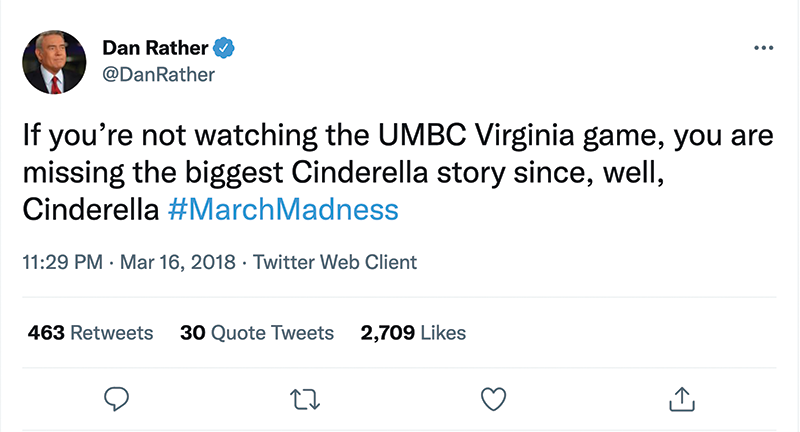
At UMBC, we’re used to surprising outsiders with our grit. When the rest of the nation was shocked by the 2018 NCAA men’s basketball upset, Retrievers took special pleasure in celebrating the victory against number 1 seed University of Virginia. We’re used to overcoming the odds on the court… and, in court, as well. In 2021, the UMBC Mock Trial faced off against Yale in the American Mock Trial Association National Championship, taking home the number 1 spot. But as President Hrabowski always says, “Success is never final.” What will Retrievers do next to surprise the world? 

Students cheer at an athletic event.

In 2009, the UMBC Chess team captured the national record for the most wins (five) in the Pan American Intercollegiate Chess Championship, also known as the “World Series of College Chess.”

3. We provide space and support for entrepreneurial seeds to take root.

UMBC is home to inquiring minds looking to make a difference. When entrepreneurial students wanted to turn their class project for a community-driven coffee shop into a reality, the university partnered to open OCA Mocha. And just across Pig Pen Pond you’ll find collaborations with more than 130 companies at our research and tech park, bwtech, including quite a few run by alumni!

The founders of OCA Mocha stand in their coffee shop
Deep Patel ’19 and Michael Berardi ’19, founders of OCA Mocha.

A $2 million Kauffman Grant for Entrepreneurship opened the door for the creation of an entrepreneurship minor in 2011 that has already served over 650 students.

In 2020, bwtech@UMBC, the state’s first university research park, wins a $1.3M grant from the U.S. Department of Commerce’s Economic Development Administration to create the Maryland New Venture Fellowship for Cybersecurity. Over the last three decades, bwtech@UMBC has brought more than 1,800 jobs to Baltimore County and generated 4,500 direct and indirect jobs and $700 million in labor income and business sales for the state, according to an assessment by the Sage Policy Group in 2019.

​​4. Our Retriever alumni are CHANGING the world.

“An organization is more than buildings and rooms. Rather it is the people who animate its mission and purpose,” says Michael Hassett, M.P.P. ’17, Ph.D. ’19. Hassett is living the UMBC mission every day in his work as a budget analyst who also runs a non-profit to spread literacy in Tonga. And the same is true of so many of UMBC’s alumni, who are proudly spreading their Retriever spirit everywhere they go. In politics, the arts, healthcare, higher education, philanthropy, and the sciences, Retrievers are leading the way. And their stories are creating new paths for students to follow in their footsteps.

In 2016, UMBC’s 50th anniversary brought thousands of Retrievers back to campus, including members of our “Founding Four,” who are working on a book about UMBC’s formative years.

5. We <3 our surrounding communities.

UMBC strives to create reciprocal and equitable partnerships with neighboring communities. The Shriver Center and The Choice Program are hubs for community engagement, addressing critical social challenges by bridging campus and community through engaged scholarship and applied learning. And through programs like the Baltimore Field School—made possible by a $125,000 grant from the Andrew W. Mellon Foundation—UMBC is strengthening community engagement with projects aimed at social justice issues and collaborations with partners in Baltimore.

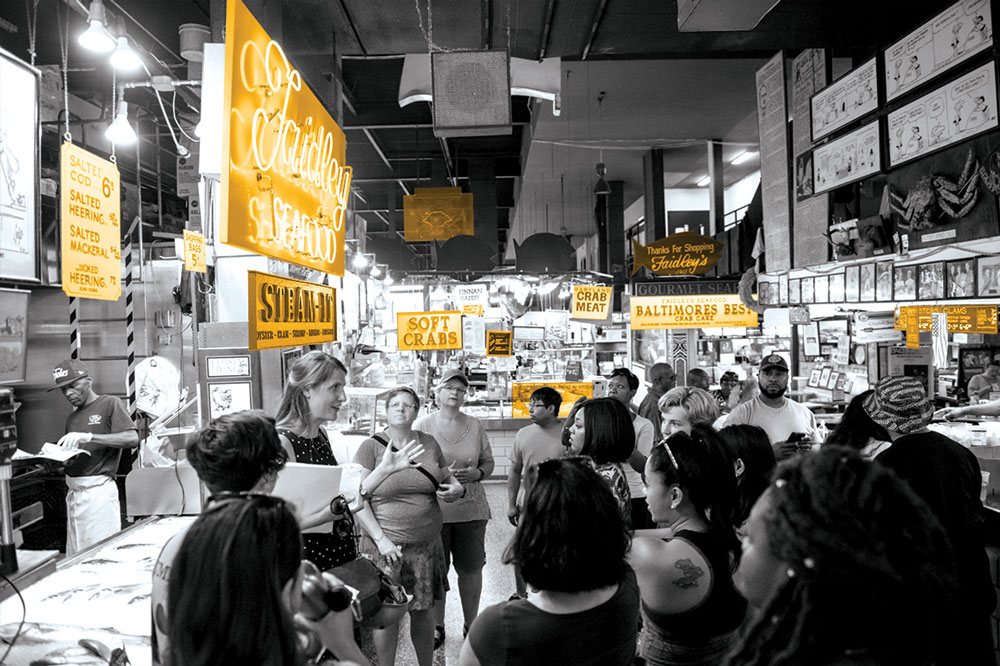
A UMBC walking tour inside of Lexington Market in Baltimore
A UMBC walking tour visits Lexington Market in Baltimore.
PARTNERING WITH BALTIMORE CITY SCHOOLS
  • In the last five years, the proportion of Sherman Scholar alumni who teach in Baltimore City schools in their first year increased from 13% to 58%.
  • In partnership with UMBC, Mary Rodman Elementary saw PARCC scores increase by 14.6% in just one year. Over two years, Lakeland Elementary/Middle School’s scores improved by 11.7%. 
  • Through Reach Together Tutoring Program nearly 100 UMBC students have provided 7,146 hours of tutoring to 355 2nd-8th grade students in the past semester.

In 2020, the Carnegie Foundation for the Advancement of Teaching honored UMBC with its distinguished Carnegie Community Engagement Classification, acknowledging our deep commitment to strengthening the bonds between campus and community. 

6. We believe in PUBLIC research for PUBLIC good.

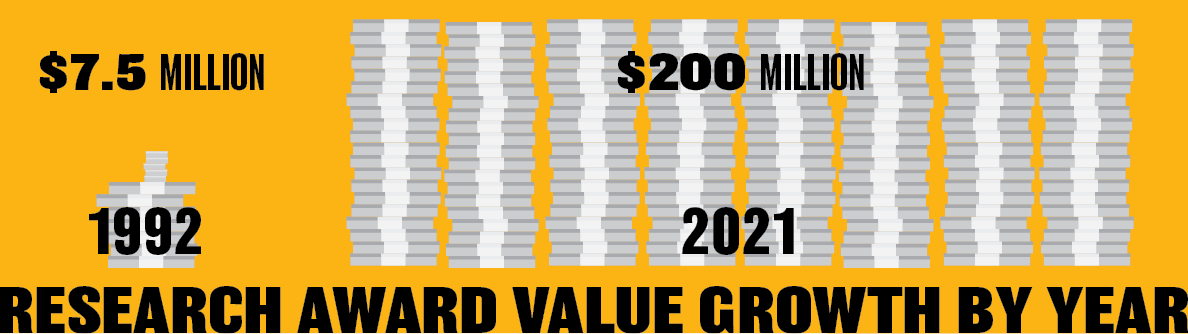
In February 2022, UMBC reached Research 1 status, the nation’s highest level of research performance. Driven by a desire to better understand the world, faculty, graduate, and undergraduate students study everything from quantum computing and spider silk, to public history engagement and building a “toolbox for global thinking.” These projects and so many more allow UMBC to touch countless neighborhoods, universities, and organizations and to strengthen local, national, and global communities. 

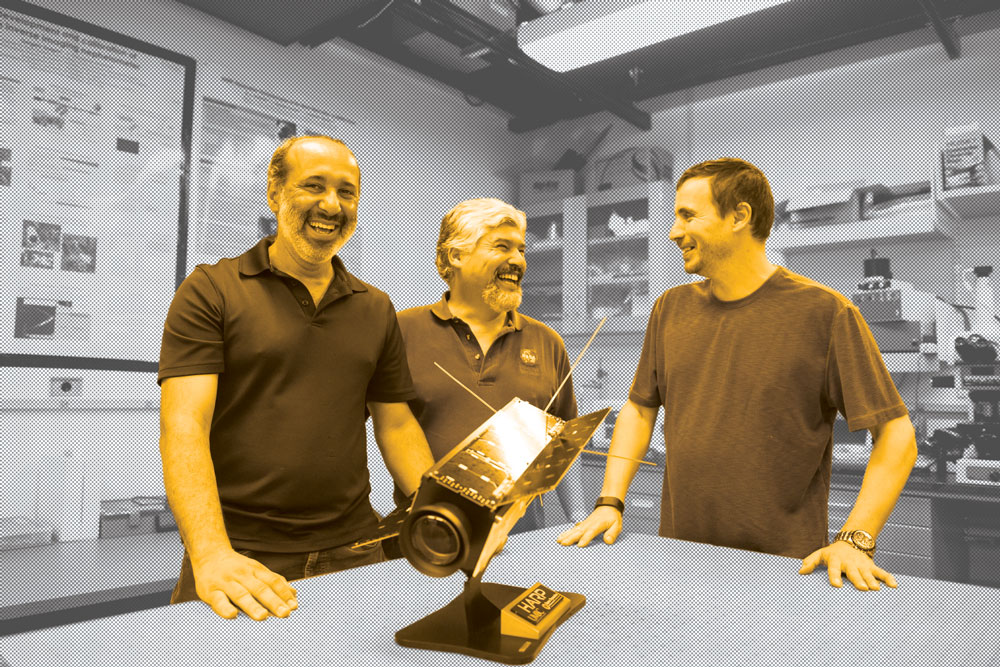
In 2020, after years in development, a UMBC-designed satellite—the Hyper-Angular Rainbow Polarimeter (HARP)—was launched into space. The satellite’s sensors are collecting new kinds of information about clouds and tiny particles in Earth’s atmosphere, such as wildfire smoke, desert dust, and human-generated pollutants. 

Team members stand with the Hyper-Angular Rainbow Polarimeter.

7. We’re growing by LEAPS and BOUNDS.

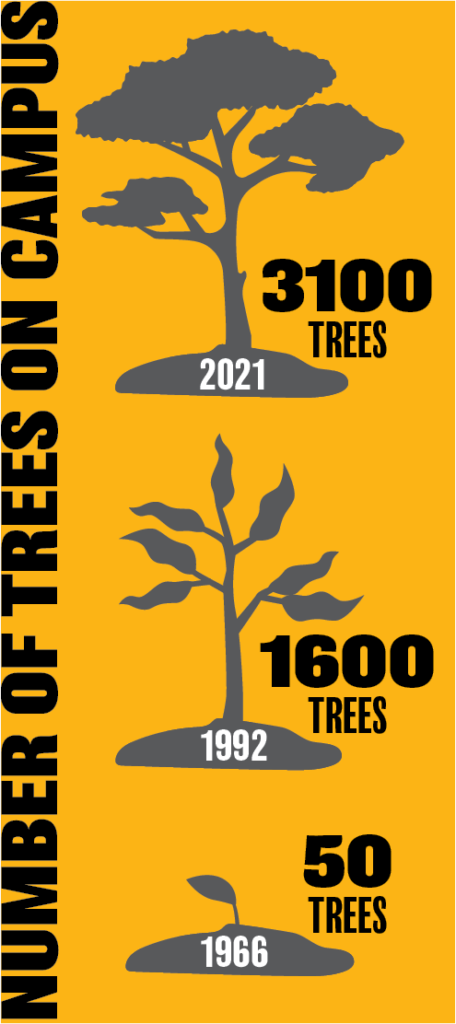
What started as a scrappy campus inside Hilltop Circle has now gone global. At the Catonsville campus, new and renovated buildings such as the Center for Well-Being, the Retriever Activities Center, the Performing Arts and Humanities Building, the Chesapeake Employers Insurance Arena, and the Interdisciplinary Life Sciences Building have brought new excitement to Retriever life. Since 1992, we’ve grown from 59 to 76 buildings! Just down I-95 in Rockville, UMBC’s programs at the Universities at Shady Grove speak to specific areas of job growth in and around the region. Add to that our growing numbers online and around the world, and the Retriever reach continues to grow.

In 2021, UMBC welcomed its largest undergrad class in history in Fall 2021, with students representing 96 countries.

Up on the Roof

In his final months at UMBC, Freeman Hrabowski has been hitting the road visiting alumni and friends in a variety of cities as part of the RetriEVER Grateful Tour. Sharing a moment in his office this March, Hrabowski talked a bit about what the tour and his last semester as president have been like and what excites him about the future of UMBC.

UMBC Magazine: You were just in Annapolis for the first stop of the RetriEVER Grateful Tour last night, with quite a few more stops around the country to come, and you’ve also been sharing the UMBC story with state legislators. What has it been like reconnecting with these folks in your final months as president?

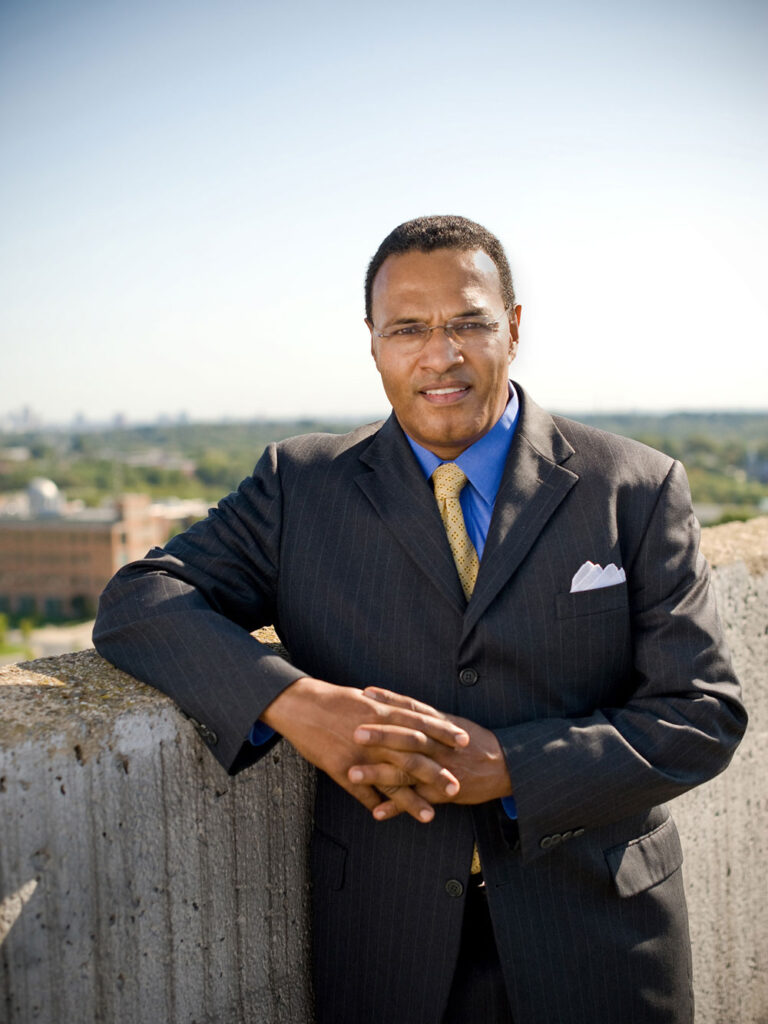
Freeman Hrabowski stands on the roof of Admin
Freeman A. Hrabowski, III

Freeman Hrabowski: It’s been like a special dream. People have been so wonderful. I was seeing people from the Founding Four [the first four years of UMBC graduates], and there were also alumni who are working in state government, including Adrienne Jones [’76, psychology], the speaker of the House of Delegates, and Delegate Mark Chang [’99, psychology], and Senator Charles Sydnor, III [M.P.R. ’00]… and so many other friends and colleagues. And we belonged there. We belonged in Annapolis, telling our story so that people know how UMBC matters in Maryland, and in the country.

UMBC Magazine: You’re also seeing quite a few honors from pretty amazing organizations recently, from your induction into the National Academy of Engineering to the exciting awarding of Carnegie Research 1 status. What a time for all of us!

Hrabowski: It is wonderful, and the point I really want to make is that whenever an award comes to me, it is really for UMBC and the contribution that the university is making to society. It’s really about the body of work of the university. And what it shows is that, as we anticipate the arrival of a wonderful new leader, the people of UMBC know who we are. We know our values. We are so proud of this R1 status. Especially because we have continued to focus on the importance of students, undergrad and grad, and of teaching and learning. And, make no mistake, this new classification speaks volumes about the strength of our research across the disciplines, from the humanities to the sciences.

UMBC Magazine: Can you tell us a little bit about what lies ahead for you? What are you most excited about? Do you have a bucket list?

Hrabowski: I am very excited about working with national agencies, foundations, and universities on those issues of particular interest to me, including academic success of students, of all students, addressing the issue of underrepresentation in STEM, and the importance of enlightened leadership in higher education. And so, I will be working even more closely with Harvard’s leadership programs. I’ll be in that space and working with universities.

So, I don’t have a bucket list. You never know if you’re gonna get a chance to retire—that’s life, right? So you need to just do it. When I leave, you can say ‘He felt so good about his life.’ I have been loved. I have loved deeply, and I love UMBC. So, the bucket list is finished. The cake is baked, and this is about the icing on the cake. This is the time when members of the UMBC community, and our alumni, and our supporters are reflecting on just how far we’ve come in 55 years. And it’s been my honor to have spent 35 of those years with UMBC. I am a blessed man, and that is the truth.

Learn more about the RetriEVER Grateful Tour and upcoming events to celebrate Dr.  Hrabowski’s leadership.

Because She Can: Jackie Hrabowski’s Service to Students

By Susan Thornton Hobby

The first question on the Jacqueline C. Hrabowski Endowment scholarship application is “How did you develop such a passion for service?”

Jackie Hrabowski answers that one easily: Her parents.

Growing up in rural Virginia, Hrabowski remembers her parents constantly serving others. For years, young Jackie accompanied her parents as they filled out forms, calculated taxes, built brick walls, or repaired houses for her parents’ combined 28 siblings or for the rest of the town. As a teenager, she once pouted, “Why does it always have to be us that helps everyone?”

Her father answered simply, “Because we can.”

“Those are the role models that I saw,” Hrabowski said. “You grow up with that in your DNA. And that’s been the thing that has moved me forward throughout my entire life.”

Hrabowski is a former vice president of community involvement at T. Rowe Price, a passionate advocate for child welfare, and the wife of Freeman. She has been mentoring the recipients of her endowment’s scholarship for 20 years. Because she can.

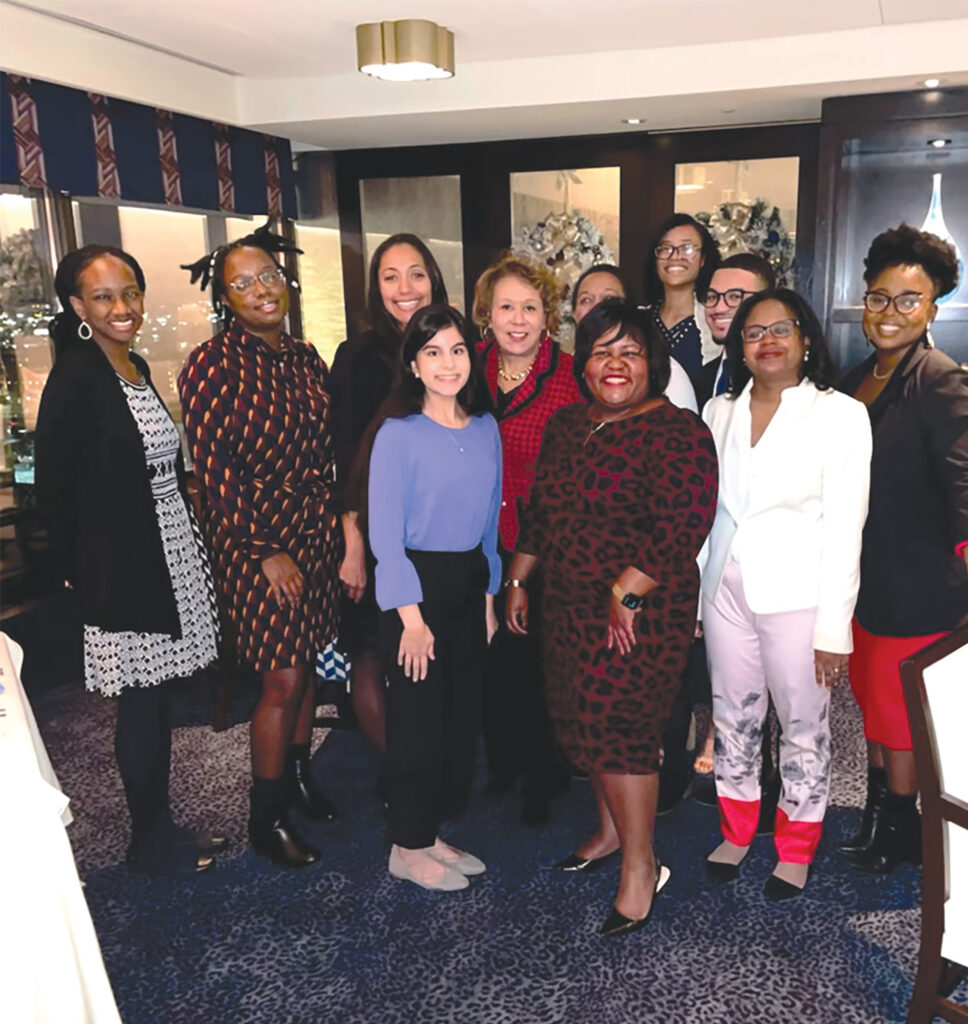
Hrabowski, center, with some of her scholars and alumni in 2022. Photo courtesy of Alicia Wilson ’04.

One of Hrabowski’s mentees, Nia Hampton ’13, media and communications studies, struggled with expectations at the internship that Hrabowski found for her. After Hampton’s rough first day with the company, Hrabowski responded by buying Hampton clothes, getting her hair done, and counseling her on professional behavior.

Now a freelance journalist, multimedia artist, and still a self-proclaimed “rebel,” Hampton recently texted Hrabowski, thanking her for her support. 

“Mrs. Hrabowski was really good at connecting me with people who could see me and understand me. I kinda knew I would be something she may not know what to do with,” Hampton said, but Hrabowski didn’t give up, instead connecting Hampton to UMBC Vice Provost and mentor Yvette Mozie-Ross ’88, healthy science and policy. To help mentees toward success, Hampton said, “sometimes it takes all kinds of people.”

Thomas Southerland ’22, economics, met Hrabowski at the scholarship recipients’ cohort dinner she gave at Baltimore’s Center Club.

“She was very supportive and very wise,” he said, and he and many of the scholars took notes while they chatted with their mentor. The connections he made will serve him well in his career in finance after graduation, he said.

You Can’t Be What You Can’t See

Hrabowski excelled at math, even beating her future husband Freeman on their calculus test scores. But she majored in psychology at Hampton University, because a role model, a Fisk University graduate who taught Sunday School at her church, was also a psychology major.

She often quotes the saying posted in her husband’s office: “You Can’t Be What You Can’t See.”

“Role modeling means having to see actual images of what it looks like to be what you want to be,” said Hrabowski, who taught educational psychology and early childhood education at UMBC in the 1980s. “You can sit and talk until you’re blue in the face about what you need to do and how you need to behave. Words alone aren’t enough. They’ve got to see it.”

Alicia Wilson ’04, political science, Hrabowski’s first mentee, agrees.

“Jackie was one of the first Black women I’d ever met in corporate America at the highest level,” said Wilson, now the vice president for economic development at Johns Hopkins University and Health System. “She’s a wonderful mentor—she imparts her knowledge and her experience in a spirit of love and caring and support.”

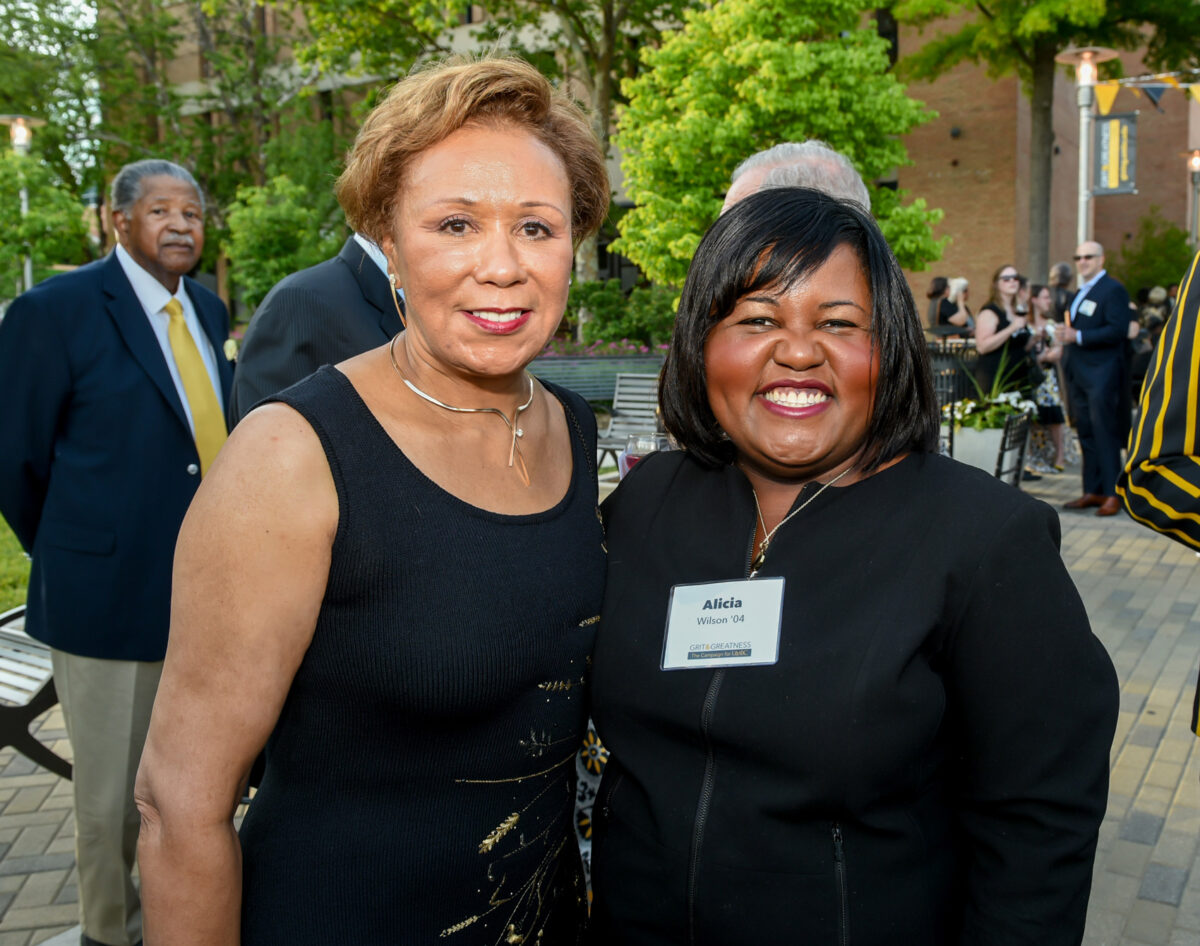
Jackie Hrabowski and Alicia Wilson in 2017, courtesy of Jay Baker.

Now Wilson is mentoring seven Retrievers, making sure she “meets students where they are,” at the UMBC dining hall or outside their dorms.

Wilson, and so many others, clearly learned lessons from Hrabowski.

“You use the talents that you have, not so much for your own purpose, but to make life better for others,” Hrabowski said. “Because when you do that, your universe expands in a positive way as well.”

Read more about the Hrabowskis’ philosophy of mentorship in the Equation of Change.

Equation of Change

By: Susan Thornton Hobby     Illustrations by: Marissa Clayton ’21

At the start of second grade, Freeman Hrabowski’s textbook, wrapped neatly in brown paper, arrived on his desk. His teacher warned the class to keep the book covers in place. But little Freeman was always curious. He peeled off a strip of paper, then another scrap, and another, until he could see the battered cover and a stamp inside, showing that the book had been used by children in the White school nearby.

Freeman marched up to his teacher’s desk. “Why’d they give us their hand-me-down books?” he asked. His teacher’s face, Hrabowski remembered, showed both embarrassment and anger.

“What do you tell a child who’s been told by the world that the child is second class?” Hrabowski recalled. 

“She said, ‘You just remember this: You are a child of God. You are first class. The book may not be new, but the knowledge is worth getting. Just get the knowledge and you will be okay.’ So that wonderful teacher was telling me to believe in myself.”

While the hand-me-down books outraged Hrabowski, his teacher’s advice was treasured and passed along to those he has mentored: Believe in yourself. Hrabowski’s legacy is defined by mentoring, both by the parents and educators who guided him and by his hundreds of mentees. Hrabowski’s mentees are legion, whether they arrive from UMBC’s Meyerhoff Scholarship Program, or as the student body president, or just students he’s met on his walks around campus who then ask for his guidance.

It’s simple math. Hrabowski mentors hundreds. Those hundreds mentor thousands. Those thousands mentor hundreds of thousands. The result is Hrabowski’s exponential equation of change.

During the pandemic, Kafui Dzirasa ’01, M8, chemical engineering, texted Hrabowski, the mentor he calls Doc. “I said, ‘Your mentees are literally leading the coronavirus response, one as the U.S. surgeon general [Jerome Adams ’97, M4, biochemistry & molecular biology and psychology]. And the other one’s making a vaccine [Kizzmekia Corbett ’08, M16, biological sciences and sociology]. Your mentoring is literally going to save millions of lives. The end. That’s mentoring.’”

A Nickel and The Hard Truth 

Hrabowski’s first mentors were his parents, a college-educated pair of teachers who supported and challenged him. “From my daddy, my father, I learned the importance of remaining calm in challenging times and giving yourself the time to think through the best approach to use in attacking a problem,” Hrabowski said. “From my mother, the importance of connecting right and left brain thinking… In both cases, they were teaching me how to learn, and think, and approach the world.”

By the time he reached high school, Hrabowski was always the one who tried to solve the math problems his principal would write on the chalkboard. He would bring his solutions to the principal’s office and earn a nickel to spend on Tootsie Rolls if they were right. If his equations weren’t correct, his principal would chastise him for carelessness. Both the nickels and the hard truths stuck with him, Hrabowski said, and he uses that tough love to mentor others.    

“I’m first working with my mentees to build trust so that the mentee knows I care deeply,” Hrabowski said. “Then if I say something that is not comfortable, or something that maybe she doesn’t want to hear, I’m saying it out of love. I’m, perhaps, saying what others are thinking and won’t say. And I believe that effective mentors want to help students and their mentees to develop tough skin, to want to get constructive and honest feedback, because we can all improve.”

Kate Tracy, M.A. ’01, Ph.D. ’03, psychology, shadowed Hrabowski and was mentored by him as an American Council on Education Fellow. Hrabowski introduced her, connected her, and guided her for the 2019 to 2020 academic year. Never before, she laughed, had she given out a complete box of 500 business cards. 

“As a mentor, Freeman is continuously available…he has an amazing amount of energy and he has an incredibly generous heart,” said Tracy, who serves as a professor in the University of Maryland School of Medicine’s Department of Epidemiology and Public Health and advises the University System of Maryland on COVID-19.

Hrabowski can offer hard truths, she said, because he demonstrates how deeply he cares. He often quotes Emily Dickinson: “Tell all the truth but tell it slant.” He recently gave her a “truth bomb,” Tracy said, and she thought, “he’s saying this for my own good, and if he’s willing to say it, I need to hear it.”

She was touched, Tracy said, when later in the day Hrabowski texted her, telling her how proud he was of her, and how hard it must have been to hear what he had to say.

“When you build a trusting relationship and you put relationships at the center of it, people can hear the hard truth because they know you’re doing it for their greatest good and because you believe in them,” Tracy said.

Chelsea Pinnix ’99, M7, biochemistry and molecular biology, said she learned the primacy of honesty from Hrabowski.

“It’s important to be vulnerable to your mentee,” said Pinnix, who is now the residency program director and associate professor in the Department of Radiation Oncology at Anderson Cancer Center. “Being honest about the mistakes you’ve made, about things that you wish you’d done differently. They are learning from your mistakes, but they’re also recognizing that you have these vulnerabilities and that you make mistakes. So then it’s okay for them to make mistakes, too.”

Telling Yourself a Story

Hrabowski’s early life bolstered his eager mind. When young Hrabowski received straight A’s, the entire congregation of his Birmingham church would rise for a 4.0 standing ovation. Starting at age 15, Hrabowski followed the advice of a mentor and started greeting himself in the mirror as “Dr. Hrabowski.”

At monthly family meetings for the Meyerhoff Scholars, Hrabowski instituted both ovations for good grades and the advice to address yourself in the mirror as your goal self. Have high expectations, Hrabowski said, and students will rise to them.

Dzirasa, an associate professor of psychiatry and behavioral sciences at Duke University who was recently elected to the National Academy of Medicine, thought the mirror exercise was “weird,” he said, laughing. “And yet, we did it. It wasn’t until I became a psychiatrist that I was like, wow, there’s an incredible power to self-reinforcement. Despite all the adversity that comes later, if you tell yourself a story, you will believe it.”

The Meyerhoff story began when Robert Embry, former Baltimore City councilman and longtime president of the Abell Foundation, which works to improve the quality of life in Baltimore, met Hrabowski as a young dean at Coppin State College. Embry was impressed by Hrabowski’s intellect, energy, and high expectations.

Embry eventually connected Hrabowski with philanthropist Robert Meyerhoff, who wanted to help Black science scholars. The Meyerhoff Scholars Program emerged. Years later, Hrabowski recruited Embry to join the board at UMBC.

“It didn’t take much,” Embry said. “Anything I could do to help him and to be identified with him and his success.”

The Meyerhoff Scholars Program, with its nationally recognized success in increasing diversity in the sciences, is one of the places Hrabowski practices what he preaches about mentorship.  

In the Meyerhoff Program, Pinnix learned Hrabowski’s “superpower,” she said. “He has this profound ability to inspire. And he’s able to convince people of the things that they can accomplish before they even recognize that they can.”

“Focus, focus, focus,” Annica Wayman’99, M6, mechanical engineering, remembers Hrabowski often saying to Meyerhoff Scholars. Offered a Meyerhoff Scholarship on the spot after she introduced Hrabowski at her high school, Wayman later earned her doctorate at Georgia Tech. She worked for nearly a decade at USAID before returning to UMBC in 2018 as the College of Natural and Mathematical Sciences’ associate dean for Shady Grove affairs. As she leads programs like the Translational Life Science Technology bachelor’s degree, Wayman now mentors students herself, offering them support and hard truth, and telling them to focus, focus, focus.

Master the Self

In 1987, Michael Hooker, then the president of UMBC, recruited Hrabowski to the campus and became his mentor. Hrabowski said he learned a piece of wisdom from Hooker: “The hardest task any human being has is to master self.”

Many mentees need to hear that message, Hrabowski said.

Dzirasa, now a Howard Hughes Medical Institute investigator and a neuroscientist researching how genetics interact with environmental stress to affect the brain’s functioning, recalled when he was at his lowest.

After breezing through undergrad as an engineer at UMBC, he arrived at Duke Medical School thinking he didn’t need to memorize things. Or study. He began to fail classes. Then someone stole his identity and charged $40,000 to his credit. He went to see an advisor, who told him he wasn’t used to being a small fish in a big pond. 

Feeling restless and despondent, Dzirasa started driving. He hit the Virginia state line. Then Maryland’s. Dzirasa ended up on Hrabowski’s porch, weeping and ready to drop out of medical school. Hrabowski comforted him, told him whatever choice he made would be okay. But maybe, Dzirasa recalls Doc telling him, he could drive back to Duke and try one more time.

A good mentor, Dzirasa said, dusts you off and urges you to persist, then keeps after you. Hrabowski, Dzirasa said with a laugh, loves to commend him, but then say, “you know…” and proceed to critique a portion of his performance.

Now Dzirasa returns to UMBC once a month as part of his appointment at Duke, to mentor students and to recruit Meyerhoff Scholars for his research lab.

“I basically give those kids all of myself, and in a hoodie and sweatpants,” Dzirasa said. “I look exactly like them, I talk exactly like them, I sat in exactly their chair, and I was probably more trouble than they are. It makes people’s dreams so tangible.”

Touching Eternity

Hrabowski remembers what Walter Sondheim, the Baltimore businessman and public servant, used to tell him: “Live life seriously, but don’t take it seriously.”

He thinks of that advice often. “His point was, it’s never quite as bad as you think it is, and don’t ever think you’re quite as important as people want to make you seem.… The human experience is that we leave, and others replace us, and if we’re lucky, we are connected to those people.”

Connections are vital to Hrabowski, and he still mentors current students. Sometimes though, students end up teaching the president.

Landry Digeon, M.A. ’09, intercultural communications, Ph.D. ’20, language, literacy, and culture, remembers meeting Hrabowski at the campus television studio, where he worked on videos Hrabowski was taping. The president wanted to learn Digeon’s native French. “Push me,” he told Digeon three times, before Digeon decided to take him up on it in 2014.

Ever since, Hrabowski has studied French with Digeon, who admires Hrabowski’s humility to be tutored by a student. They speak in French nearly every day, about poetry and culture, sometimes arguing about the different countries’ values.

“I learn more from him than he has learned from me,” Digeon said. “When he has a goal, he doesn’t let go. And I learn by watching how to treat people—you can be a great man, a  renowned man, and be kind. And I’ve changed Freeman’s mind occasionally. I want to be like that—open-minded.”

When Hrabowski turns in his homework, usually late at night, the president ends his emails with, “Bonne nuit, mon professeur.”

The perfect conjugation of French verbs and his connections to scientists and leaders around the world aren’t the only benefits mentorship offers Hrabowski.

“There’s a great gratification when you see people evolving, and developing, and doing well, and seeing how they overcome challenges. It inspires me to want to be better,” Hrabowski said.

Wayman believes inspiring mentorship is the first element in the equation of change.

“Saving the world is first transforming the thinking of people, to think critically, to be more open-minded,” Wayman said.

 Hrabowski, who still receives notes from people his mother taught 70 years ago, often remembers what his mother said in her dying days: “Teachers touch eternity through their students.”   

“Those of us in education, we live through our students,” Hrabowski said. “We live through the people we help because we are paying it forward. We live through them and their actions.”

Read more about Jackie Hrabowski’s approach to mentorship in Because She Can.

Leaders Among Us

By Margaret Moffett

​​For La Jerne Terry Cornish, Ph.D. ’05, language, literacy, and culture, an already remarkable day was about to become unforgettable. There she stood in front of a big crowd at UMBC, accepting the 2019 Outstanding Alumna in the Humanities award. Even better, she was getting the chance to chronicle her journey from high school English teacher to college professor to provost and vice president of Ithaca College in New York. 

“I’ve spent the last 21 years trying to be the change I wanted to see,” she told the audience—channeling the wisdom of her role model, who just happened to be sitting behind her on the stage.

Her speech complete, Cornish had returned to her chair when the role model in question leaned toward her. “You’re going to be a college president someday,” he whispered, his eyes no doubt twinkling with delight.  “If you say so,” Cornish responded with a nervous laugh, bewildered by his faith in her.

Fast forward three years to March 2022, when Cornish was named Ithaca College’s 10th president. Dr. Freeman Hrabowski was right. Again. 

At the 2019 Alumni Award ceremony, from left to right: Dr. Hrabowski, Dean Kimberly Moffitt, La Jerne Terry Cornish, and former president of the Alumni Association, John Becker ’01. Photo by Marlayna Demond ’11.

As Hrabowski prepares for his retirement as UMBC’s president, mentees like Cornish are reminding the higher education community of one of his legacies. No, not UMBC’s transformation from a young state university to U.S. News & World Report’s No. 1 “Up and Coming University” in the nation. That one’s been well documented. And no, not how he helped UMBC become a powerhouse in STEM education and the alma mater for thousands of engineers and scientists of color. That also has prompted some chatter. 

This legacy involves his impact on other chancellors and presidents, along with those who aspire to these roles. In his 30 years as UMBC president, Hrabowski has counseled scores of his peers, including Sylvia Burwell, president of American University; Paula Johnson, president of Wellesley College; and Wendy Raymond, president of Haverford College. He also has taught for 18 years at the week-long Harvard Seminar for New Presidents, which provides a crash course in higher education leadership. And he has mentored countless college and university heads—officially, unofficially, and sometimes without him even knowing it.

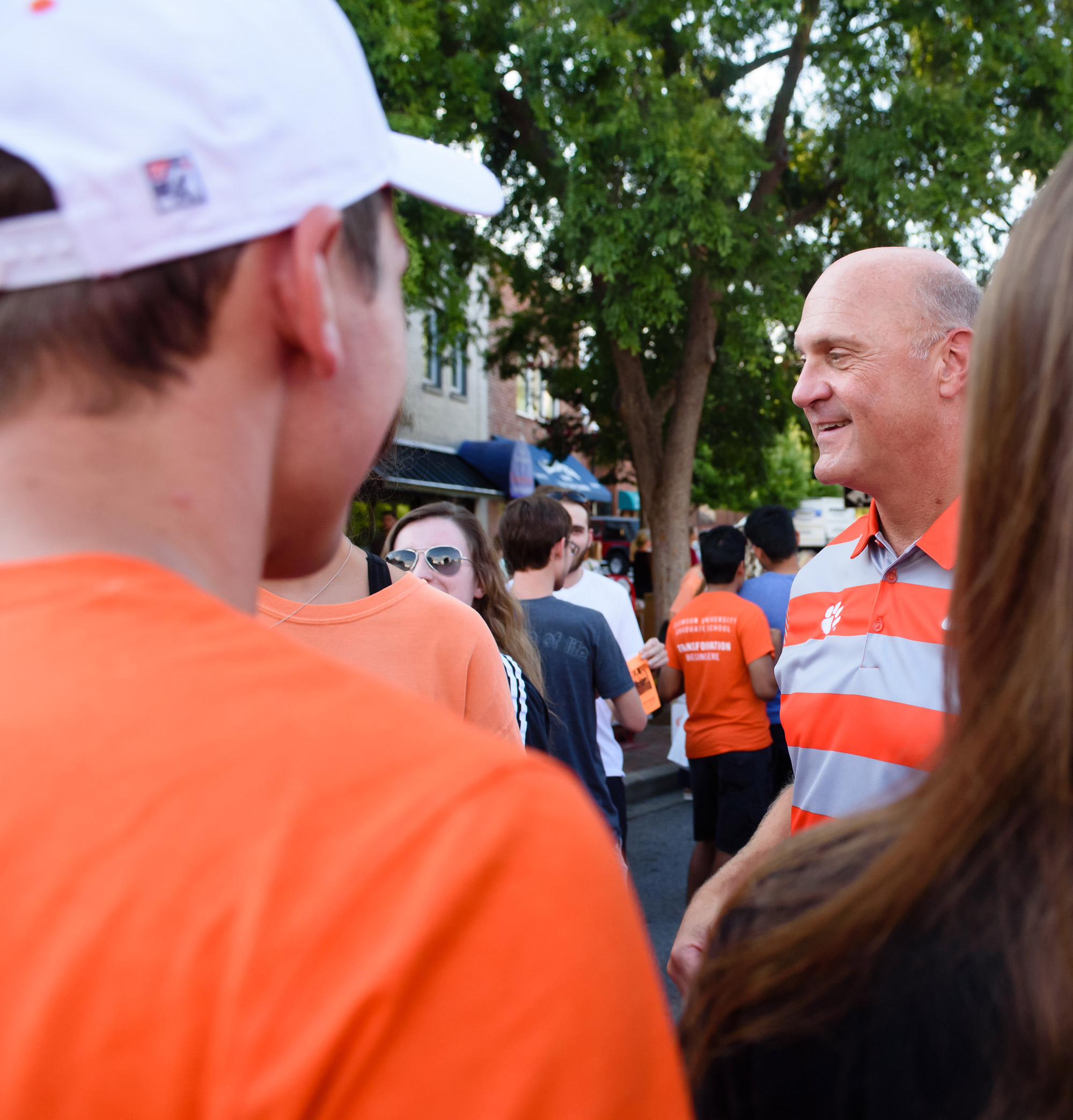
James Clements ’85, M.S. ’91, Ph.D. ’93, serves as president of Clemson University. Photo courtesy of Clemson University.

Hrabowski gave Cornish his cell phone number—along with the promise that she could use it at any time—within weeks of her appointment as interim president at Ithaca in August 2021. She hasn’t needed to use it. But knowing that it’s in her phone gives her a sense of comfort.  “He has always been a relational president,” she said. “That’s the one thing about him that stands out for me. I want to be that kind of relational leader—dare I say that kind of servant leader, because that’s what I see in him.”

“I would not be a president if not for him,” said James P. Clements ’85, computer science, M.S. ’91, Ph.D. ’93, operations analysis, who has led Clemson University since 2013. “I have modeled my career after him.” 

Had Hrabowski been a fly on the wall during those conversations, he would have brushed aside the accolades, then launched into a speech-slash-sermon about how everyone is capable of greatness, how it’s about the students, not the leader. “He would say that he isn’t that rare,” Cornish said. “He would say that there are other people who, given the opportunity and access, could accomplish just as much as he has and more.”

His imagined protestations notwithstanding, though, it does raise an interesting question: Can a college president learn to lead like Freeman Hrabowski? Are such talents innate or are they teachable?

Said Clements bluntly: “He’s special. Everybody who interacts with him knows it.”

“There is only one Freeman and you can’t be him or become him,” said James Honan, senior lecturer in the Harvard Graduate School of Education. “But when you hear him speak, when he answers your questions, when you watch his role modeling, you can incorporate some practices into your leadership that will help you make your institution better.”

No. 1: Take care of yourself.
No. 2: Be authentic.
No. 3: Own your mistakes.

College and university presidents come to Hrabowski so often for advice that the words come tripping off his tongue when he’s asked to recreate what he tells them. In his mind, they’re just things he has learned over the years—sometimes by watching others, sometimes through trial and error. Part of it, he believes, came from his time as a child leader in the civil rights movement in Birmingham, Alabama. One of his role models then was a preacher renowned for his ability to galvanize support and inspire a revolution: the Rev. Martin Luther King Jr.

“I was very fortunate to have experiences that gave me the chance to lead,” said Hrabowski, who was arrested for his participation in the Children’s Crusade march at age 12. “Each of us is a product of our childhood and young experiences, and those experiences shape who we are, what we like, what we don’t like, how we adjust to change, how we address challenges, how we act in the storm.” 

Hrabowski practices what he preaches to the leaders he advises. He follows rule No. 1—taking care of himself—by meditating via the Calm app every day with his wife, Jacqueline Coleman Hrabowski. No. 2, being authentic, just comes naturally to him. And he may take No. 3, owning his mistakes, more seriously than any college president in the world.

Consider, for instance, this story from 2018—26 years into Hrabowski’s tenure as president. At an event honoring several high academic achievers, it seems he spent a little too much time bragging about UMBC’s first Rhodes Scholar, Naomi Mburu ’18, M26, chemical engineering, who is now at Oxford University working on heat transfer applications for nuclear fusion reactors. The others on stage felt slighted by his fawning words for Mburu.

Mburu with Dr. Gymama Slaughter in her lab at UMBC in 2018. Marlayna Demond ’11.

How does he know this? Because Mburu came to his office and told him so, an act that required her to summon both justice and mercy. Hrabowski was alarmed by her words, which he recognized were true the moment he heard her speak them. He had indeed failed to give enough attention to all the scholars on stage. “I’ve always taken great pride in working to let every person know how much I appreciate them, that they matter,” he said. “And there I was, without even realizing it, not holding up to my own standard.”

So he called each one, apologized, and asked to hear their stories. According to Hrabowski: “It was a lesson for me: Don’t allow my excitement about one person to take away from helping each [honoree] feel her best.”

That may be Hrabowski’s lesson learned. But the larger one for leaders of higher education institutions is the importance of being open to constructive feedback and criticism, especially if it comes from a student. Leaders who reflect on their failures more than their successes are the ones who experience real growth, said Honan. 

“Leadership is a practice,” he said. “It doesn’t always work out. One makes mistakes. There are failures. And I think Freeman can help people see that through his own self-reflection in a very powerful way. And when it comes from a distinguished president, that’s even more powerful.” 

Perhaps he took Mburu’s feedback more seriously because she was a student. When Clements was a young faculty member at nearby Towson University, he would often find himself at events where Hrabowski was speaking. It was clear that students were his priority, Clements said. “I listened to his words. I watched his heart. And I saw how he cared so much about making a difference in people’s lives,” he said. “He is driven by helping other people succeed by giving them a better life, by giving them a better path.” 

Hrabowski has but one non-negotiable tenet for leading a college or university: Students come first. “I don’t think there’s any role we have as educators that’s more important than connecting meaningfully to our students and to each other,” he said. “We prepare them not simply to work on biochemistry but to decide who they are, what’s important to them. What are their habits of mind? How do they think about different issues? How do they approach problems? How do they think about the world? About their place in the world?”

Teachable Moments

Over the years, though, Hrabowski has found himself dealing with the less romantic side of higher education, as college presidents invariably do. Those situations also create teachable moments for his peers—including one that became a case study for Harvard’s Graduate School of Education.

During a state funding crisis in the 1990s, leaders at UMBC and other state-run universities in Maryland had to find creative ways to offset the losses. Hrabowski turned to the then little-known UMBC Board of Visitors, a sleepy advisory committee that met sporadically and whose membership had dwindled to just three. He revitalized the board by appointing 20 prominent leaders in Baltimore, each of whom received a firsthand look at the momentum building at the university. They also got a close-up look at the young, dynamic president who was promising great things for UMBC and its students. 

The board—dubbed “Friends of Freeman” by Sheldon Caplis, then the vice president of Institutional Advancement—became a link to millions in private dollars, which helped refill the coffers during brutal times financially. “You’ve got to build relationships, and it’s even more critical when you don’t come from a private school with wealthy trustees or wealthy alumni when you’re really building from the ground up,” said Caplis, who taught alongside Hrabowski at Harvard’s Institute for Management and Leadership in Education for several years. Caplis said that as the pair recounted the “Friends of Freeman” story to the group, much head shaking and laughter would ensue—as though it were some magic trick that only Freeman Hrabowski could pull off. 

“These were new presidents, so a lot of them didn’t have any fundraising experience,” Caplis said. “So they really wanted to know, ‘Well, how do you interact?’” 

Again, it raises the question of whether you can teach someone to lead like Freeman A. Hrabowski, III. But at the end of the day, it really doesn’t matter whether it’s nature or nurture, this amalgam of personality traits allowed him to reinvent UMBC and go down in history as one of higher education’s best leaders. Forums like the new presidents seminar are simply a way to “peel back the onion a little bit,” said Greg Simmons, M.P.P. ’04, the current vice president of Institutional Advancement and Hrabowski’s most recent teaching partner at the Harvard seminar. The same goes for college presidents like Cornish, Clements, and others who are fortunate enough to receive his mentoring.

“They don’t have to be Freeman,” Simmons said. “They’ve just got to know how to work with other people in a really effective, genuine, human kind of way. That’s Freeman’s real gift.” 

Clements said he has met people across the country who consider Hrabowski their mentor. And that, he said, has a multiplying effect that defies calculation.

“We’re trying to make a difference like he did,” Clements said. “It amplifies his impact because of how he’s helped so many other leaders and how he’s shown us how to lead. It allows us to change more lives based on what we saw him do. It goes way beyond UMBC.”

I’m a Black sociologist, and a mom – by listening to other Black mothers, I’ve learned about their pandemic struggles and strengths

By Loren Henderson, associate professor, Sociology, UMBC

I spent the 2020 spring break week setting up to teach my college courses online while helping to care for my 14-month-old grandchild, whose daycare had closed. At the same time, I couldn’t help thinking, being the sociologist I am, of the devastating consequences of COVID-19 I saw for women like me, Black mothers, whom I have studied for over a decade.

Social science research can influence policy. Sharing Black mothers’ stories in their own voices may ultimately lead to more compassionate policies. My work is part of a small body of descriptive research, mostly by researchers of color, countering negativity and victim-blaming in earlier studies of Black families.

My research partner, sociologist BarBara Scott, lives in Chicago, where I grew up. In our studies of Black mothers there, we’ve explored parenting in violent communities and living with inadequate health care. In 2019, before COVID-19 hit, we were preparing to study parenting practices.

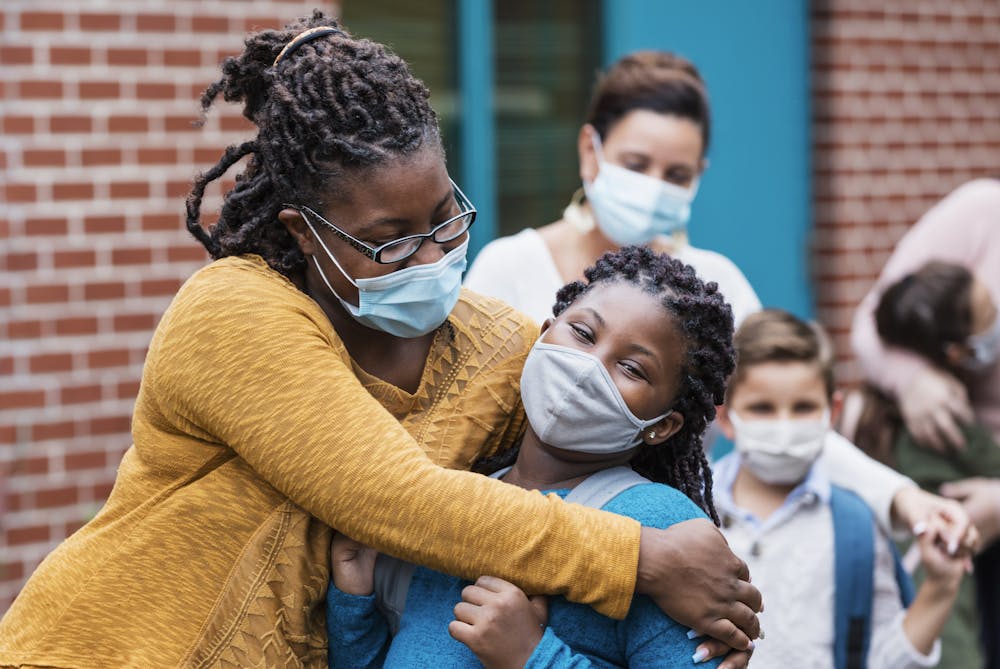
masked Black woman hugs masked elementary school girl
Parenting didn’t stop when the pandemic started. kali9/E+ via Getty Images

But when lab conditions change, scientists need to reorganize their work. I am a social scientist and society is my lab, where the pandemic dramatically altered the conditions of my research.

We adjusted, preparing to interview remotely instead of in person. We added new questions to investigate, like: How were Black mothers coping with pandemic conditions? How did the murder of George Floyd and the resulting protests affect them? Our research would now include the pandemic and the country’s racial upheaval, highly unusual factors complicating Black mothers’ already challenging lives.

Researching with rapport

The first challenge was finding participants. We put up fliers in and around schools, churches, the YWCA and other places Black moms go when not at work. Even in the best of times, though, they face practical barriers to joining a research project. Child care responsibilities might be theirs alone. Taking time off from work means their paychecks take a hit not nearly covered by the $25 gift cards we offered.

But they called. Some just wanted to sign up after looking me up on their phones. Others, who may have known that the federal government oversees studies involving people, asked why I was studying them and what I would do with their information. I knew that if any of the women thought talking with me might bring embarrassment or other trouble, they might be less forthcoming or decide not to participate. My findings would be much less credible.

I assured the moms that I would keep their responses confidential and that they had a right to leave the study whenever they wanted to.

None of them did. We signed up enough moms for two focus groups of five to seven participants each. I ran group meetings and conducted 12 one-on-one interviews via video conferencing.

To start our 60- to 90-minute sessions, I introduced myself and got the mothers talking with an ice breaker question like, “What is the farthest place from your current neighborhood that you’ve been?”

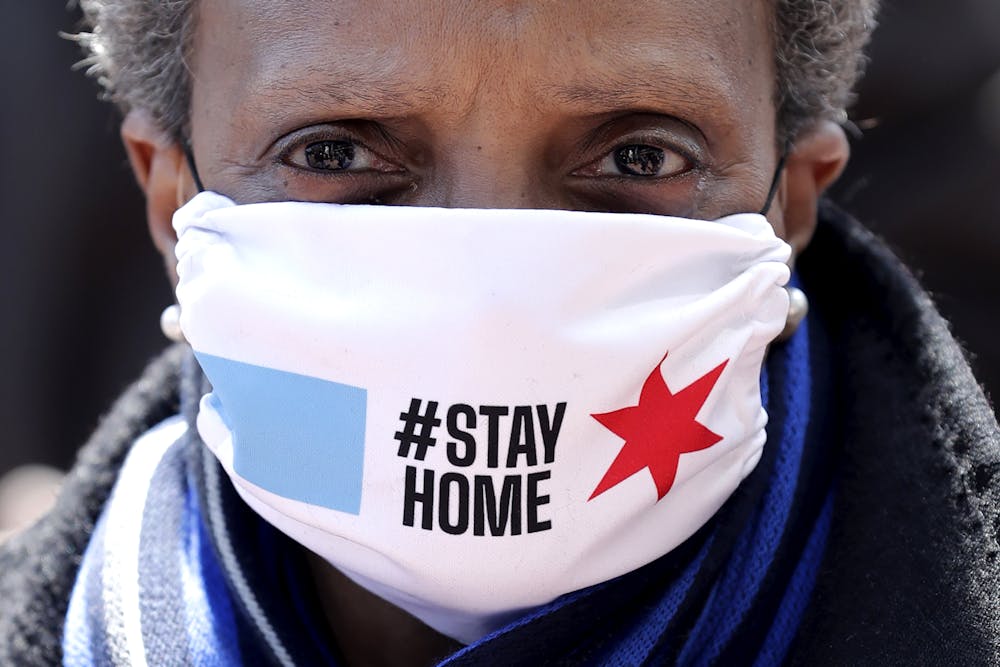
Black woman wearing a mask marked #StayHome
Many Black mothers were front-line workers who couldn’t heed the message on Chicago Mayor Lori Lightfoot’s mask in the early days of the pandemic. AP Photo/Nam Y. Huh

I also tell them that I have a Black mom, and that I am one. And then, because my skin tone is fair, I mention that I have an Italian father. I didn’t want to be mistaken for white; the moms might feel less comfortable discussing certain topics with me. But after realizing that I’m Black too, a few of them said things like, “I knew there was something about you!”

I share my belief in centering – and that’s the word I use – Black mothers’ lived experiences and exploring their parenting from a strength perspective. That’s when I got a lot of smiling and nodding.

No time for racism

Black mothers don’t need a pandemic to face impossible choices. But it took a pandemic for others to see that. As nearly everyone else stayed home to stop the spread of COVID-19, it became obvious that Black women were more likely than any one else to be essential workers in front-line jobs. And despite risking COVID-19 infection to keep their jobs, Black workers were more likely to lose them anyway during the pandemic.

I asked the mothers about the pandemic’s effect on their lives. They talked about the trickiness of trying to isolate or distance in small or crowded homes. They hated being unable to get masks and hand sanitizer when stores closed during the George Floyd protests, which none of them attended.

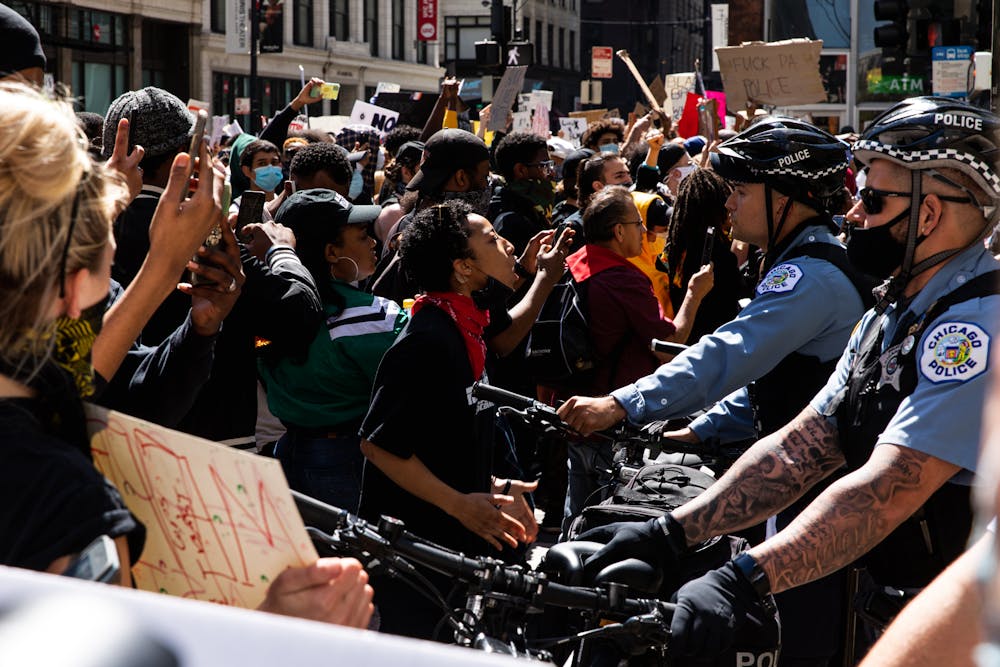
A crowd of people including some holding signs and some shouting, face police officers on bicycles at a large protest.
None of the Black moms in the study went to the protests George Floyd’s death spurred in 2020. Natasha Moustache/Getty Images News via Getty Images

I asked why they didn’t go, given their stated frustrations with racism affecting their lives. Some didn’t want to risk getting sick. But most of these Black mothers told me they don’t dwell on racism, saying things like, “Yeah, racism is bad, but I got things to do.”

And so they did those things. While at work, they sent their kids text reminders to go to remote school if it was available, or if it was not, to study. The moms came home from long shifts and helped with homework, worrying about their kids falling behind academically. The mothers worried about getting COVID-19 and losing custody of kids if they became too sick to parent well.

Keeping the conversation flowing

The qualitative research I do is about words and meanings, not just numbers and statistics. It allows me to explore the lives of Black moms in depth.

In my interviews, I don’t ask closed-ended questions – the kind where the answer is simply yes or no, true or false, or limited to a set of multiple-choice answers. For example, if a participant can only respond to the question, “How safe is your community?” with the options “very safe,” “somewhat safe,” or “not safe,” that’s a closed-ended question.

In qualitative research, however, questions are often open-ended. Participants decide what a question means to them, then answer in any way they choose. I’ve been asking the Black mothers questions like: “How do you feel about Chicago as a place to live and raise your children? How do you feel about working and raising your children during the COVID-19 pandemic?”

Reading the transcribed interviews later, I look for general thoughts, or themes, in the mothers’ collective responses. For example, when I asked about violence, the overall sentiment was that it was around, but avoidable. One participant told me, “You have to know where [to go] and where not to go, when to go and when not to go.” And she called Chicago “a great place,” with “great opportunities” for anyone who wanted to be there.

This response was common: The moms know that Chicago can be violent, but many focus on the positive aspects of the city. My theory is that this is their conscious or unconscious way of explaining why they stay in a violent community. That question has come often enough – usually from those with far more options – to hang over the heads of these Black moms, even if no one asks them directly.

A related sentiment the moms had was that moving away is pointless since violence “is everywhere.” They may simply want to stay close to the generations of family and community ties they have. But it’s also true that moving isn’t affordable for many of these mothers.

Identifying these themes helps me present a picture of Black mothers’ lives as a corrective to the earlier research. Documenting their experiences as the center of my research gives them a voice and validates their lives as worthy of exploration.

******

Header image: When schools shut down to prevent the spread of COVID-19, moms took on the burden of supporting students at home. AP Photo/Shafkat Anowar

Loren Henderson, Associate Professor of Sociology, University of Maryland, Baltimore County

This article is republished from The Conversation under a Creative Commons license. Read the original article.
How to be a Retriever!

By Charis Lawson ’20 and Randianne Leyshon ’09

Although still a young university, UMBC has unique long-standing traditions, made especially dear to students and alumni because so many of them were conceived and implemented by students themselves. The engaged student body and alumni eager to reconnect with their alma mater have worked to co-create a community culture that celebrates all Retrievers. Yes, there’s a lot of black and gold involved…but that’s only the tip of the iceberg on how to be a Retriever!

Free Hour

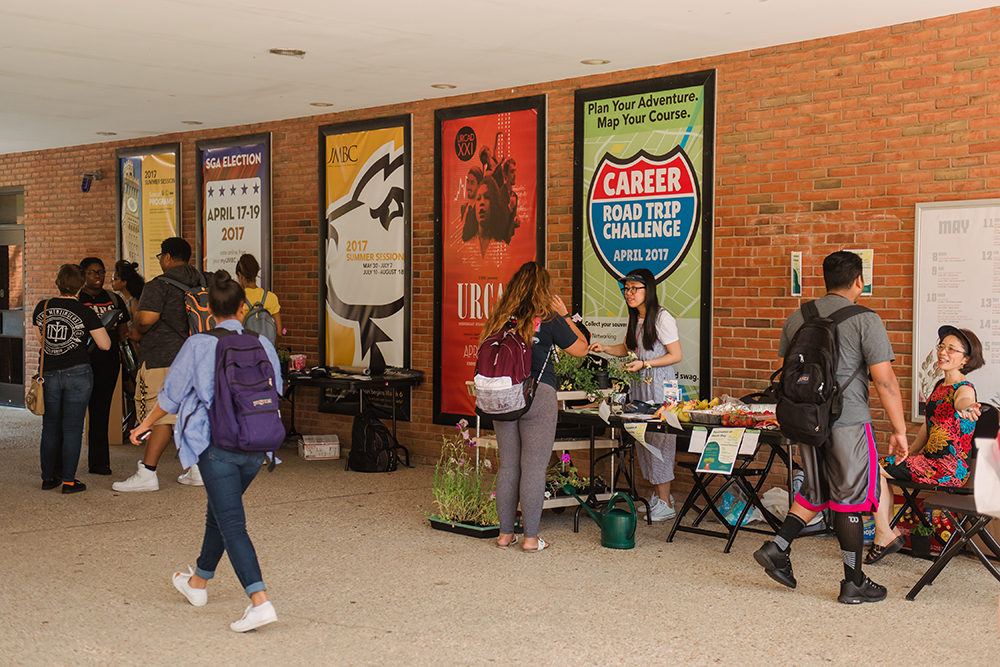
On Mondays, Wednesdays, and Fridays from 12-1 pm not a single class is in session. However, it would completely miss the mark to assume that nothing happens during this “Free Hour.” These three hour-long blocks are time for community, relaxation, and opportunity. Commuting students, who might not have a chance to engage in campus activities throughout the day, visit clubs. Busy students with hectic schedules might take some time to grab food or rest their eyes. Student organizations use this time to promote their upcoming events and put on attention-grabbing displays in the breezeway. 

Student groups take the most of Free Hour in the breezeway.

“Free Hour” has been a constant fixture in the UMBC academic calendars since 1970. It came into being after the Student Union made the case for the fixed schedule to the Faculty Senate. Despite having to move classes around and the increased lack of classroom space, this has remained an important tradition that gives time for advising opportunities, learning outside the classroom, and self-care. 

Rubbing True Grit’s Nose

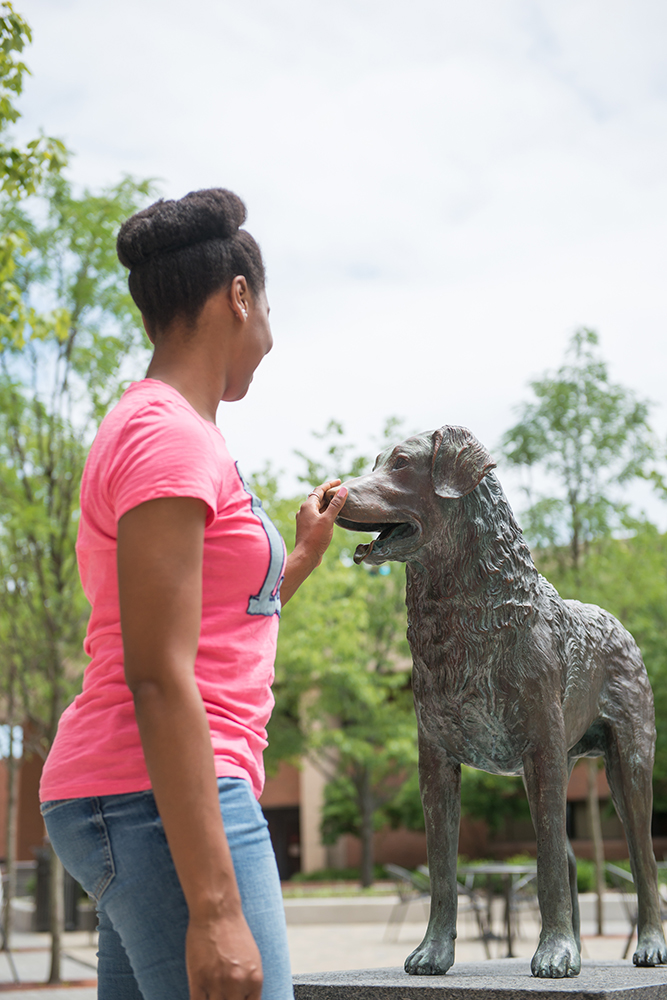
While True Grit’s face might be splashed across campus, perhaps the most prominent representation of the university’s mascot is a 500-pound bronze cast sculpture which graces the plaza between the Administration Building and the Retriever Athletic Center. True Grit has a storied history that current students and alumni connect with by rubbing the pup’s now golden nose—often they’ll visit the Chesapeake Bay Retriever statue after Convocation when their academic journeys begin or after Commencement as they enter a new chapter in their lives. His nose also gets a lot of attention during finals, when students make sure to touch him for good luck.

UMBC commissioned artist and alumna Paulette Raye ’87, philosophy, to create the sculpture. Raye modeled her creation after Nitty Gritty, a local champion Chesapeake Bay Retriever. But as for how True Grit got his name? It was the model’s father, True Grit, who offered up a strong and bold moniker that UMBC students felt described their own pluck.

Homecoming

There are few UMBC traditions that encapsulate the Retriever spirit as holistically as Homecoming. Since 1976, Homecoming has been an annual multi-day event with an array of different community-building activities. Throughout the week, the student events board (seb) invites a comedian, a carnival takes place on Erickson field, everyone stops to watch the puppy parade, and fans gather to cheer on our athletic teams. As students, alumni, staff, and their families gather for the “Big Game” there are fun activities like face painting, Retriever-themed freebies, and tailgating on Lot 17 (now known as the Stadium Lot.) 

As the student body evolves, so does Homecoming. In 2005, Thomas Locastro ’12, biological sciences, suggested and organized a community bonfire—which is now a centerpiece event of Homecoming. 

Quadmania

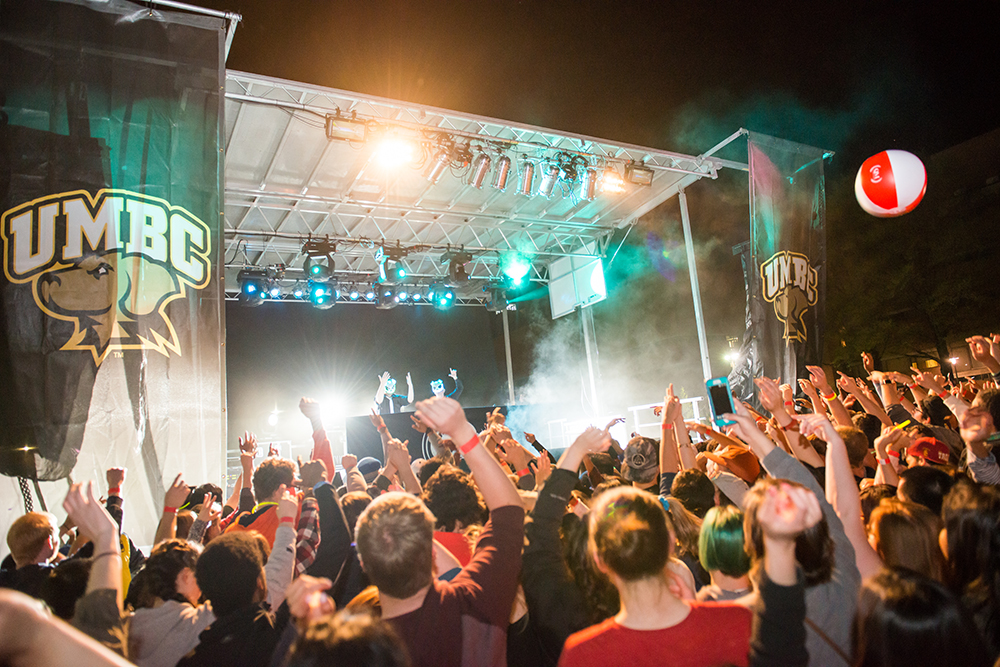
What better way to celebrate the nearing end of the academic year than with a spring fling weekend of fun activities. Hosted entirely by seb, Quadmania features live music (including a major headliner), an outdoor festival, free food, games, and fantastic fun times all weekend long.

Students with hands in the air at a concert held on the Quad, a signature event for Quadmania.

Quadmania began in 1981 as a musical concert with food and games on the Quad outside of what is now The Commons—it quickly became a cornerstone UMBC social event for students, alumni, and the surrounding community.

Pangea is another homegrown musical tradition at UMBC. Established in 2015, the Welcome Week event allows cultural student organizations to showcase what they do during the year and recruit new members.

Mysteries about the tunnels 

John Zahor—director of operations and maintenance, who oversees the plumbing, electrical, painting, and architecture shops at UMBC—and Craig Goodwin, director of design and construction, in the tunnels.

Winding below campus lays an intricate maze of tunnels. As a freshman, the existence of these tunnels is most likely unknown. However, as time passes and familiarity with the campus grows, so do conversations about the tunnels. Students who have had the opportunity to go down there proudly trade stories cementing the tunnels into Retriever lore. Just as there are hidden entrances into the tunnels in nearly every building, the ways in which you get to go down there are equally diverse and mysterious. 

While the primary use for the tunnels is practical things like fresh airflow to the buildings, there are many other uses that give students an opportunity to explore the expansive halls. Carrying props for a performance happening in PAHB, transporting cumbersome materials needed for an engineering project, or moving all of the necessary materials for a program like Alternative Spring Break may be options to get access to the tunnels. After finally checking the underground tunnels of the to-do list, the only logical next step is to find a way to get invited to the Admin Roof. 

Alma Mater

UMBC’s alma mater debuted in 2006 in conjunction with the 40th anniversary festivities. The tune is American Hymn by Matthias Keller, and the lyrics and arrangement are by Jari Villanueva, former director of UMBC’s pep band. Sung with gusto at Convocation and Commencement, this newer tradition helps create solidarity among current students and alumni.

Alma Mater

Hail alma mater! OUR UMBC,

Boldly bearing your colors, the whole world to see,

Striving together in true unity,

Black, gold forever we’re reminded of thee,

Proudly we hail to thee, OUR UMBC!

Throughout the ages, OUR UMBC,

Songs and memories still echo with true clarity,

Knowledge and wisdom and truth we found here,

Friendships we treasure that will last through the years,

Proudly we hail to thee, OUR UMBC!

Midnight breakfast

Right before finals, students step away from their work, push aside their mounting stress, and file towards D-hall (the True Grits dining hall). While D-hall is usually full, nothing compares to the crowds present during Midnight Breakfast. For once, no one seems to mind the winding lines, as students use the time to connect with friends and appreciate the free, all-you-can-eat breakfast. Friends group up to take pictures in the photo booth, tables are cleared to make room for the DJ and a dance floor, individuals draw on the posters covering the tables as they eat. 

Student Welcome Week leaders pose in front of True Grit’s.

Midnight Breakfast, put on by the Residential Student Association usually takes place from 10 pm -2 am. It’s been a tradition valued by students as a time to relieve stress as the semester concludes. Many lucky students even get their hands on a free T-shirt, a staple of many UMBC events. 

Election Extravaganza 

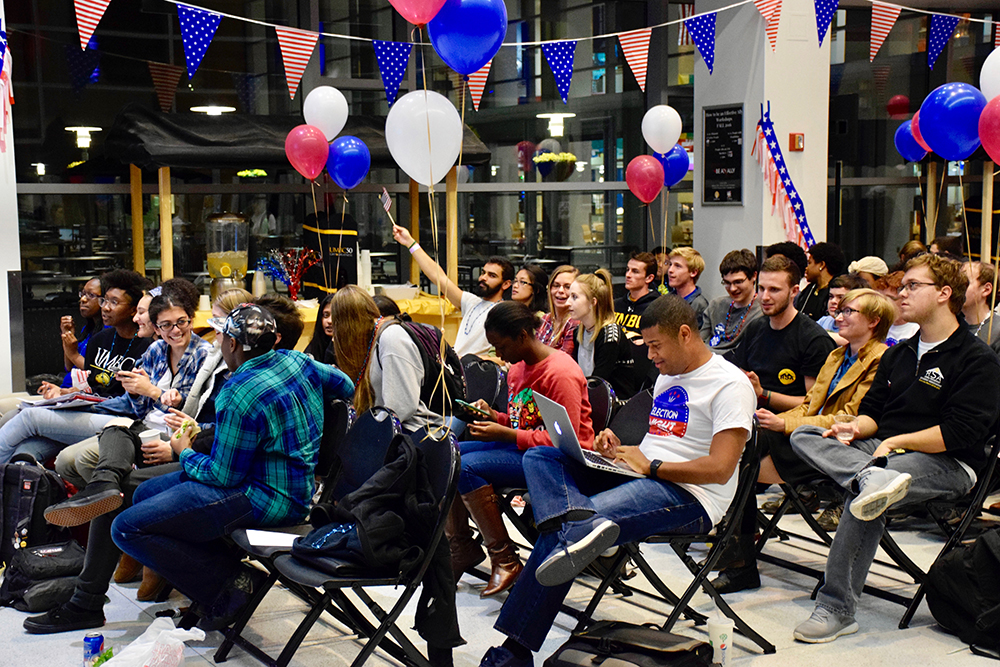
As a school that is known for embracing its “nerdy” culture, it comes as no surprise that UMBC has a tradition surrounding elections. As presidential elections roll around, The Commons is filled with events taking place on all three floors. During Election Night Extravaganza, there are games, stress-relieving activities, a watch party, food, prizes. UMBC pulls out all of the stops to celebrate democracy and civic engagement. 

Students watch for election returns during Election Night Extravaganza, photo courtesy of SGA.

The Center for Democracy and Civic Life, Student Government Association, and Graduate Student Association all come together to host a  night of community during something that can feel isolating or divisive. Since 2004, through the Election Night Extravaganza, UMBC has been making space for students to get more politically informed, engage in discussions, or simply relax with their friends. 

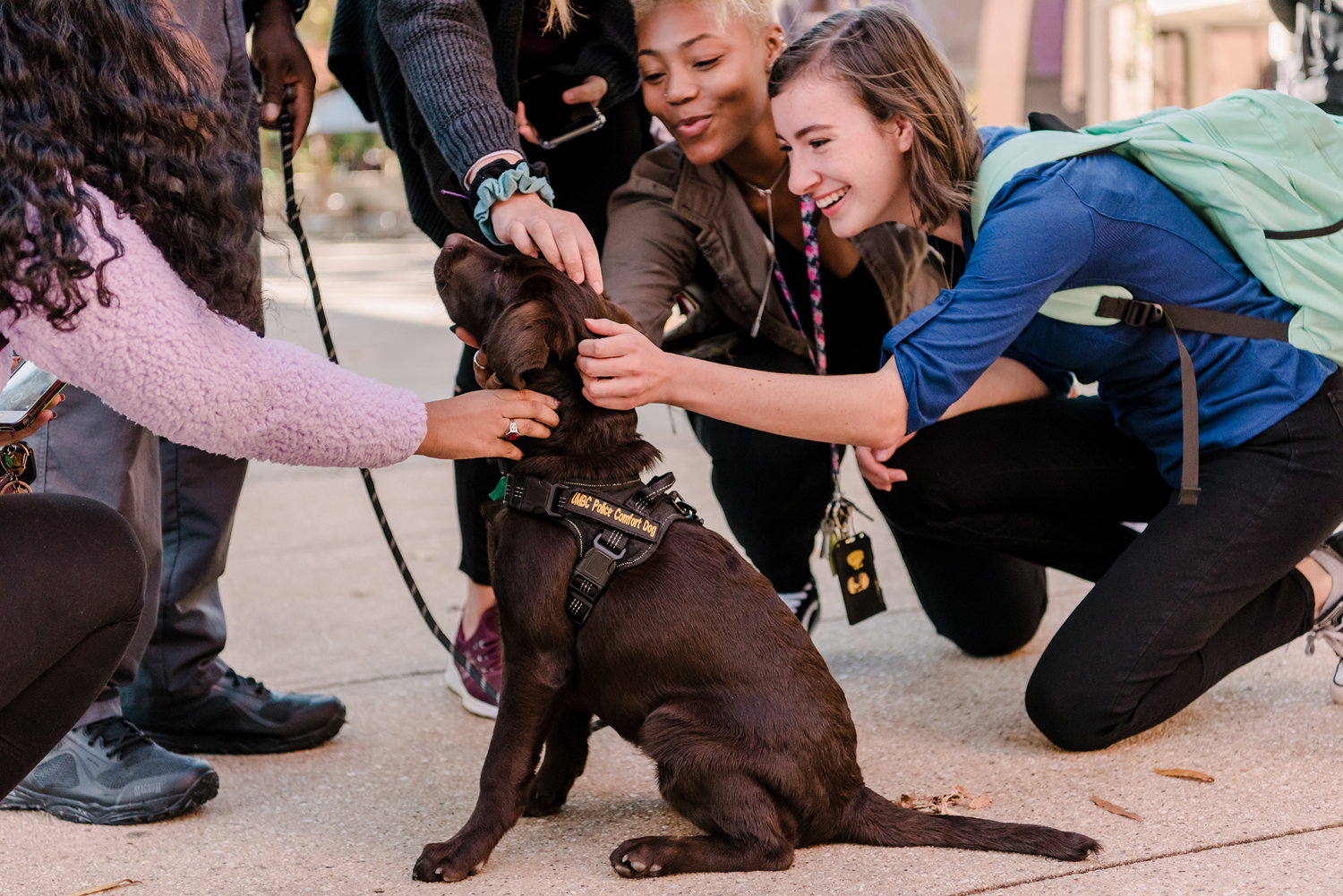
Officer Chip 

Nothing stops the flow of foot traffic on Academic Row like Officer Chip. With a love for belly rubs, Chip is unlike most campus officials. This pup (in reality a brown lab, and not a Chesapeake Bay Retriever—we don’t hold it against her) was welcomed to campus in 2019 as the 4th university comfort dog in the nation. Officially, her duties include accompanying Sgt. Jamie Cheatem to crisis situations to provide comfort and support. She attends wellness events like lunchtime walks in the RAC and provides stress relief at various finals events. She’s also part of the campus police ride along program.

Every time Officer Chip walks down Academic Row, she draws an adoring crowd.

Although she’s still somewhat new to campus, she’s stolen all our hearts. She’s popular on social media and in person, and has done more than her part to help UMBC maintain community, creating a cozy sense of place on her walks about campus and providing a much needed relief from the stress of living in a pandemic.

*****

All photos by Marlayna Demond ’11, unless otherwise noted.

Diaper Need Emerges as Health Indicator During Pandemic

By Lauren A. Clay, associate professor, Emergency Health Services, UMBC and Emily Belarmino, University of Vermont

The Research Brief is a short take about interesting academic work.

The big idea

During the first year of the COVID-19 pandemic, more than a third of Massachusetts households with a child under 5 didn’t have enough diapers to change their child as often as needed, according to our survey. A baby without enough diapers might have more doctor visits for diaper rash and urinary tract infections. But we also found a link between diaper need and other concerns, like depression and chronic illness, that are less obvious and seemingly unrelated.

Our data for this study came from an online survey of Massachusetts residents led by The Greater Boston Food Bank from October 2020 and to January 2021. To compile, analyze and interpret the data, we had help from former food bank volunteer and Harvard biostatistics student Nick Birk, along with the food bank’s epidemiologist, Rachel Zack.

We looked at more than 3,000 responses from participants in the food bank’s survey. Of those, we selected the 353 respondents who reported having a child age 4 or under using diapers. We then asked them specifically, “If you have children in diapers, do you ever feel that you do not have enough diapers to change them as often as you would like?”

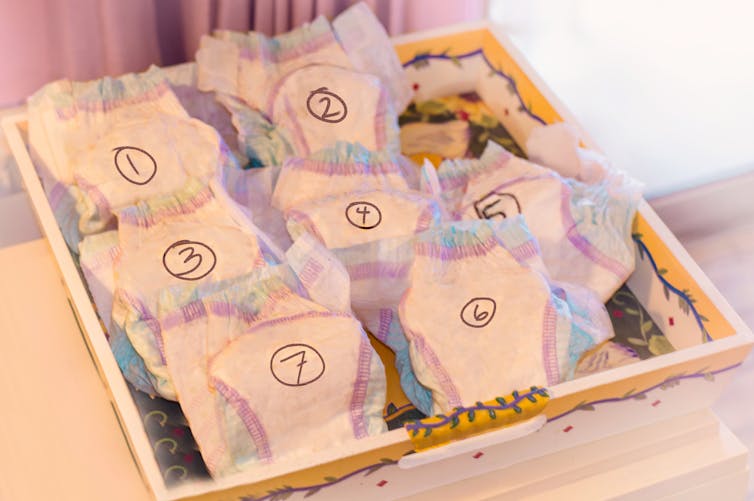
Seven disposable white baby diapers with colorful trim are grouped in a tray with numbers drawn on them in marker.
Homes without enough diapers were also more likely to have depression and chronic illness among family members. MZiello/iStock via Getty Images Plus

We found that 36% of families with young children went without enough diapers during the pandemic.

But diaper need is about more than bare baby bottoms. We found that in households with the greatest diaper need there is also a greater likelihood of other significant concerns. For example, we found that people who reported diaper need were also more likely to report symptoms of depression or living in a home where someone had a chronic illness.

Previous research has highlighted the stress of needing but being unable to get diapers for a baby. The link between diaper need and chronic illness adds substantial evidence that households dealing with health issues are more likely to struggle with other hardships like food insecurity and unmet medical needs.

Among those at greater risk of not having enough diapers are parents or caregivers under 26 years of age, Latino parents or caregivers and people with less than a high school education. This might be related to the relatively limited resources these parents and caregivers have to draw upon to meet their daily needs.

Why it matters

Diapers are an essential child care need and a significant expense for families with young children. The National Diaper Bank Network defines “diaper need” as “lacking a sufficient supply of diapers to keep an infant or child clean, dry and healthy.” The group estimates that the average cost of a month’s supply of diapers is US$80-$100. Public aid programs for families with low incomes generally do not provide diapers.

We had previously identified links between diaper need and food-related hardship. Our newer study sheds light on the situation during the COVID-19 pandemic and brings more income-related findings, such as the fact that diaper need is more common in households where someone lost a job. We also found more need for diapers in households with a 2019 income of less than $50,000 than in those with higher incomes. Speaking of income, our findings show that pandemic diaper need persisted despite most U.S. households’ receiving federal economic stimulus payments and diaper banks’ expanding distribution. Without these factors, there might have been more families in the state without enough diapers.

What still isn’t known

We used mathematical weighting to get data representing the Massachusetts population. But we haven’t yet looked into diaper need in other states or nationally.

It’s also not yet clear what the most effective solutions are for families lacking enough diapers for their babies. We have not measured the effectiveness of diaper banks or other diaper distribution models. Legislation proposed in Massachusetts would create a diaper distribution program or give qualifying families $30 to purchase diapers each month.

Congress also has considered creating federal funding for diaper distribution programs, in 2019 and again in 2021. And in February, lawmakers proposed allowing families to cover the cost of diapers with health savings or flexible spending accounts. If these programs become reality, studying their impact and effectiveness could prove useful.

Previous research already has found, however, that providing diapers to families needing them has benefits beyond the obvious. In a 2017 study of families with low incomes, life in their households improved when they received diapers from a local diaper bank. Parents reported more positive moods, along with improved health and happiness of their children. Diaper distribution increased family members’ attendance at school, work and child care centers. And families were also able to divert household finances toward other basic needs, including utilities and medical care.

*****

Emily Belarmino, Assistant Professor of Public Health Nutrition, University of Vermont and Lauren A. Clay, Associate Professor of Emergency Health Services, University of Maryland, Baltimore County

Header image: Thirty-six percent of surveyed families with young children said they did not have enough diapers during the pandemic. Tony Arruzza/Corbis Documentary via Getty Images

This article is republished from The Conversation under a Creative Commons license. Read the original article.

We are RetriEVER Grateful

With the conclusion of the Grit & Greatness campaign and three decades of leadership from retiring President Freeman A. Hrabowski, III, UMBC has many reasons to feel grateful. Alumni from all across the nation are gathering to celebrate our community, the impact we’ve made together, and the spirit of inclusive excellence that will drive our work for years to come.

Here are some highlights from the RetriEVER Grateful Tour. Learn more and sign up for upcoming dates here.

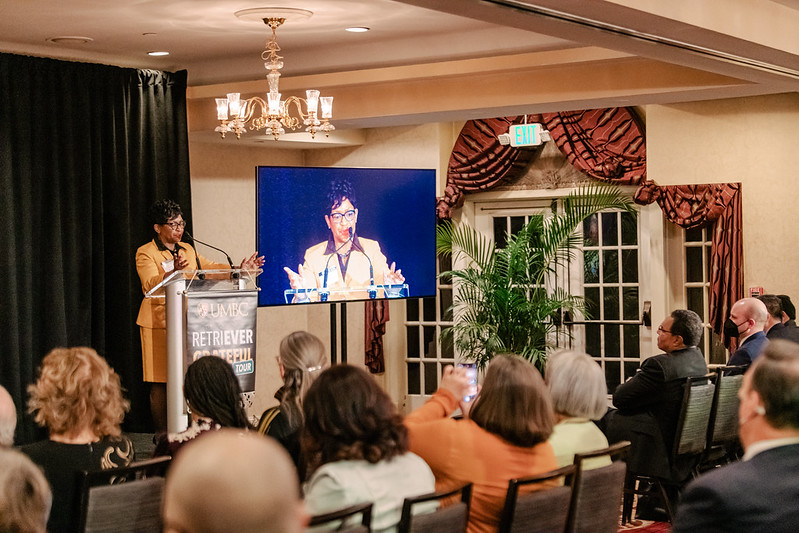
Annapolis Reception

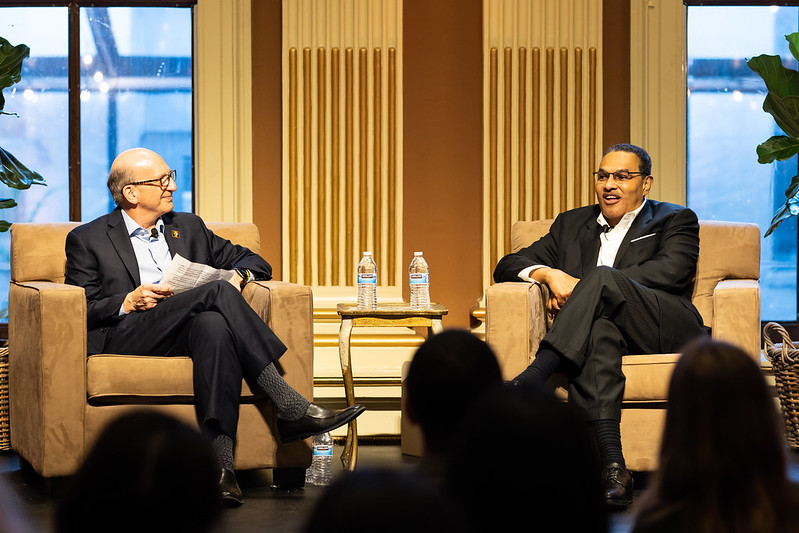
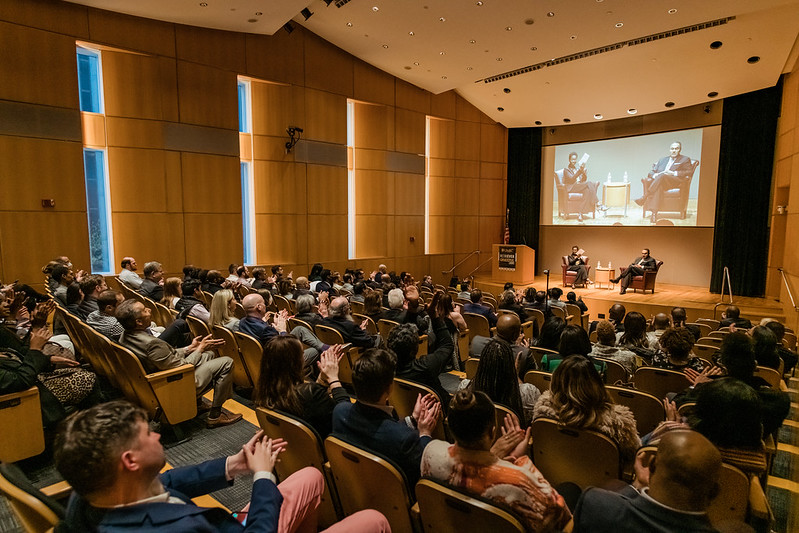
The RetriEVER Grateful Tour kicked off on Thursday, March 3, 2022. UMBC alumni and friends gathered at Governor Calvert House in Annapolis, Maryland where Dr. Hrabowski was joined on stage by Dr. Kimberly Moffitt, Dean of the College of Arts, Humanities, and Social Sciences, for an intimate conversation.

Maryland Speaker of the House Adrienne A. Jones ’76, psychology, addresses guests at the Annapolis reception. Photo by Marlayna Demond ’11.
gold page divider

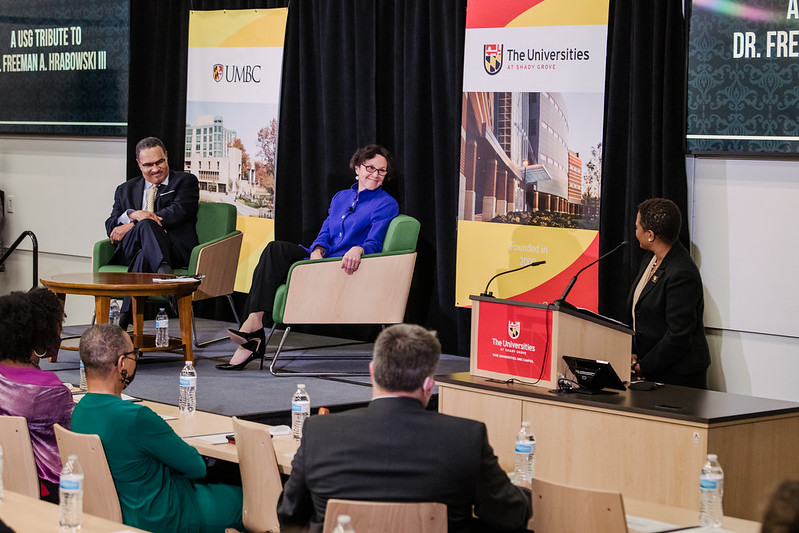
The Universities at Shady Grove (Rockville) Reception

On Monday, March 7, 2022, the Universities at Shady Grove community paid tribute to Dr. Hrabowski. Click here for a copy of the program with the speaker lineup.

Anne Khademian (center), executive director of the Universities at Shady Grove, and Anika Wayman ’99, M6, mechanical engineering (right), associate dean for Shady Grove affairs in CNMS, talk with President Hrabowski at the USG event. Photo by Marlayna Demond ’11.
gold page divider

Hidden Waters Reception

On Thursday, March 10, 2022, Dr. Hrabowski met with local community leaders at an intimate reception at Hidden Waters, the estate of the Chancellor of the University of Maryland.

Guests enjoy the Hidden Waters reception. Photo by Marlayna Demond ’11.
gold page divider

San Francisco Reception

On Wednesday, March 16, 2022, the RetriEVER Grateful Tour made its way west to join UMBC alumni and friends in San Francisco, California. A conversation between Dr. Hrabowski and Jack Suess ’81, M.S. ’94, Vice President of Information Technology and CIO, highlighted the evening’s program.

Jack Suess ’81, mathematics, and M.S. ’95, information systems, vice president of Information Technology and CIO, talks with President Hrabowski. Photo by Barak Shrama.
gold page divider

Seattle Reception

On Thursday, March 17, 2022, the RetriEVER Grateful Tour hit its second West Coast venue, the Museum of History & Industry in Seattle, Washington. Once again, the program featured a conversation between Dr. Hrabowski and CIO Jack Seuss.

Guests enjoy the conversation at the Seattle stop of the RetriEVER Grateful Tour. Photo by Nata Worry Photography (Renata Steiner).
gold page divider

Raleigh-Durham Reception

On Thursday, March 31, the RetriEVER Grateful Tour headed south to Raleigh-Durham. The reception featured a virtual Q&A between Dr. Hrabowski and Keith Harmon, director of the Meyerhoff Scholars Program.

Guests enjoy the Hidden Waters reception. Photo by Marlayna Demond ’11.
gold page divider

Washington, DC, Reception

On Thursday, April 7, the RetriEVER Grateful Tour made its way to our nation’s capital, Washington, DC, and the American Association for the Advancement of Science. The program featured a conversation between Dr. Hrabowski and Dr. Yvette Mozie-Ross ’88, vice provost for Enrollment Management and Planning.

UMBC alumni and friends joined Pres. Hrabowski and Dr. Yvette Mozie-Ross ’88, vice provost for Enrollment Management and Planning in Washington, DC, at the American Association for the Advancement of Science. Photo by Marlayna Demond ’11.
gold page divider

Philadelphia Reception

UMBC alumni and friends flocked to Philadelphia on Monday, April 11 for the last leg of the RetriEVER Grateful Tour. The program featured a conversation between Dr. Hrabowski and Dr. Pat McDermott, Vice Provost for Faculty Affairs.

Sharing a moment with Philadelphia-area alumni and friends.
gold page divider

New York City Reception

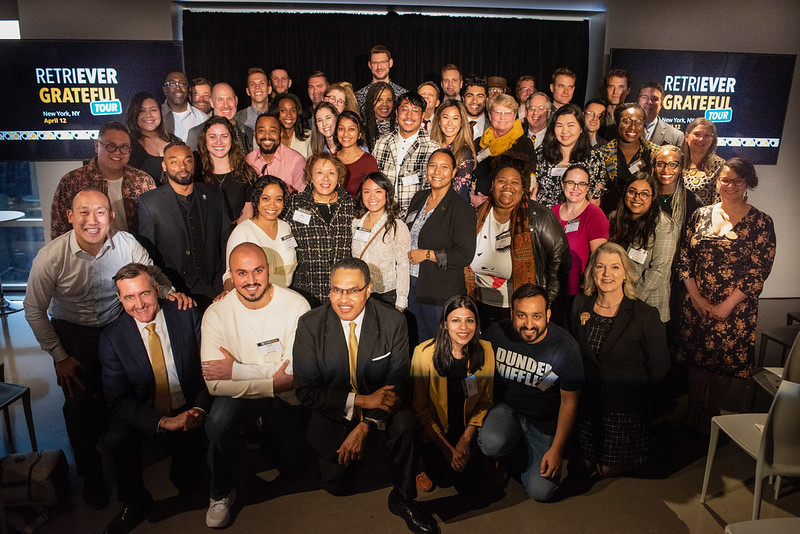
The RetriEVER Grateful Tour concluded with a stop at Glasshouse Chelsea in New York City on Tuesday, April 12. The program featured a conversation between Dr. Hrabowski and Greg Simmons, M.P.P. ’04, Vice President of Institutional Advancement.

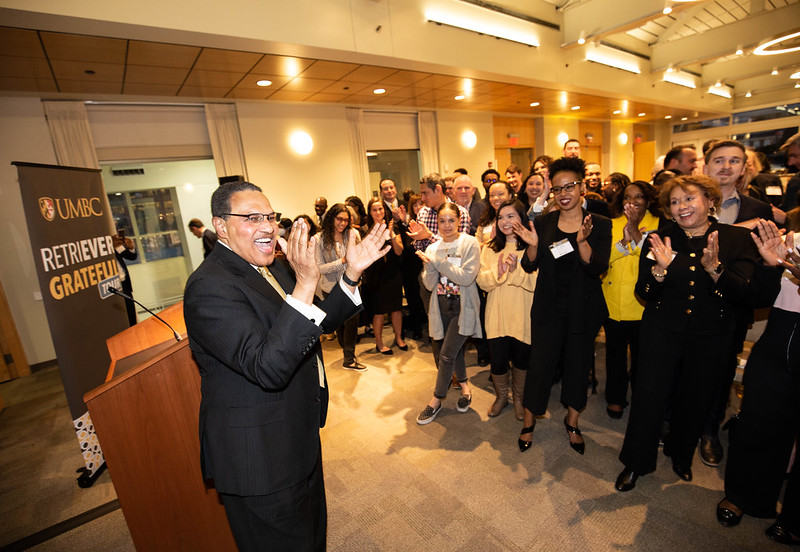
Retrievers from all over the New York area gathered to wish Dr. Hrabowski well.

* * * * *

Stay tuned for highlights from more stops on the RetriEVER Grateful Tour!

Header image: Guests enjoy the Hidden Waters reception. Photo by Marlayna Demond ’11.

Local governments are attractive targets for hackers and are ill-prepared

By Richard Forno, principal lecturer, Computer Science and Electrical Engineering, UMBC

President Joe Biden on March 21, 2022, warned that Russian cyberattacks on U.S. targets are likely, though the government has not identified a specific threat. Biden urged the private sector: “Harden your cyber defenses immediately.”

It is a costly fact of modern life that organizations from pipelines and shipping companies to hospitals and any number of private companies are vulnerable to cyberattacks, and the threat of cyberattacks from Russia and other nations makes a bad situation worse. Individuals, too, are at risk from the current threat.

Local governments, like schools and hospitals, are particularly enticing “soft targets” – organizations that lack the resources to defend themselves against routine cyberattacks, let alone a lengthy cyber conflict. For those attacking such targets, the goal is not necessarily financial reward but disrupting society at the local level.

From issuing business licenses and building permits and collecting taxes to providing emergency services, clean water and waste disposal, the services provided by local governments entail an intimate and ongoing daily relationship with citizens and businesses alike. Disrupting their operations disrupts the heart of U.S. society by shaking confidence in local government and potentially endangering citizens.

In the crosshairs

Local governments have suffered successful cyberattacks in recent years. These include attacks on targets ranging from 911 call centers to public school systems. The consequences of a successful cyberattack against local government can be devastating.

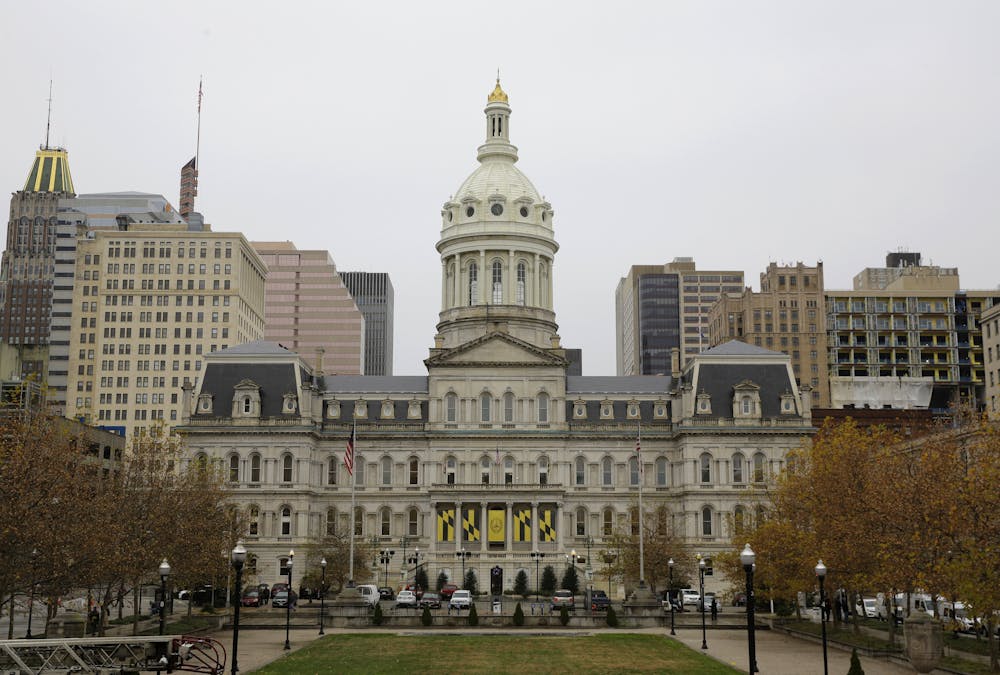
an ornate 19th-century building topped with a dome in a big city downtown
A cyberattack on the city of Baltimore disrupted municipal services for weeks in 2019. AP Photo/Patrick Semansky

I and other researchers at University of Maryland, Baltimore County have studied the cybersecurity preparedness of the United States’ over 90,000 local government entities. As part of our analysis, working with the International City/County Management Association, we polled local government chief security officers about their cybersecurity preparedness. The results are both expected and alarming.

Among other things, the survey revealed that nearly one-third of U.S. local governments would be unable to tell if they were under attack in cyberspace. This is unsettling; nearly one-third of local governments that did know whether they were under attack reported being attacked hourly, and nearly half at least daily.

Ill-equipped

Lack of sound IT practices, let alone effective cybersecurity measures, can make successful cyberattacks even more debilitating. Almost half of U.S. local governments reported that their IT policies and procedures were not in line with industry best practices.

In many ways, local governments are no different from private companies in terms of the cybersecurity threats, vulnerabilities and management problems they face. In addition to those shared cybersecurity challenges, where local governments particularly struggle is in hiring and retaining the necessary numbers of qualified IT and cybersecurity staff with wages and workplace cultures that can compare with those of the private sector or federal government.

Additionally, unlike private companies, local governments by their nature are limited by the need to comply with state policies, the political considerations of elected officials and the usual perils of government bureaucracy such as balancing public safety with the community’s needs and corporate interests. Challenges like these can hamper effective preparation for, and responses to, cybersecurity problems – especially when it comes to funding. In addition, much of the technology local communities rely on, such as power and water distribution, are subject to the dictates of the private sector, which has its own set of sometimes competing interests.

Large local governments are better positioned to address cybersecurity concerns than smaller local governments. Unfortunately, like other soft targets in cyberspace, small local governments are much more constrained. This places them at greater risk of successful cyberattacks, including attacks that otherwise might have been prevented. But the necessary, best-practice cybersecurity improvements that smaller cities and towns need often compete with the many other demands on a local community’s limited funds and staff attention.

Getting the basics right

Whether they are victimized by a war on the other side of the world, a hacktivist group promoting its message or a criminal group trying to extort payment, local governments in the U.S. are enticing targets. Artificial intelligence hacking tools and vulnerabilities introduced by the spread of smart devices and the growing interest in creating “smart cities” put local governments even more at risk.

There’s no quick or foolproof fix to eliminate all cybersecurity problems, but one of the most important steps local governments can take is clear: Implement basic cybersecurity. Emulating the National Institute of Standards and Technology’s national cybersecurity framework or other industry accepted best practices is a good start.

I believe government officials, especially at the local level, should develop and apply the necessary resources and innovative technologies and practices to manage their cybersecurity risks effectively. Otherwise, they should be prepared to face the technical, financial and political consequences of failing to do so.

*****

Header image: Hackers can disrupt local government services, like this library in Willmar, Texas. The town suffered a cyberattack in August 2019. AP Photo/Tony Gutierrez

Richard Forno, Principal Lecturer in Computer Science and Electrical Engineering, University of Maryland, Baltimore County

This article is republished from The Conversation under a Creative Commons license. Read the original article.

Older Americans are given the wrong idea about online safety – here’s how to help them help themselves

By Helena M. Mentis, professor, Information Systems, UMBC and Nora McDonald, assistant professor, Information Technology, University of Cincinnati

Recently, the U.S. Social Security Administration sent out an email to subscribers of its official blog explaining how to access social security statements online. Most people know to be suspicious of seemingly official emails with links to websites asking for credentials.

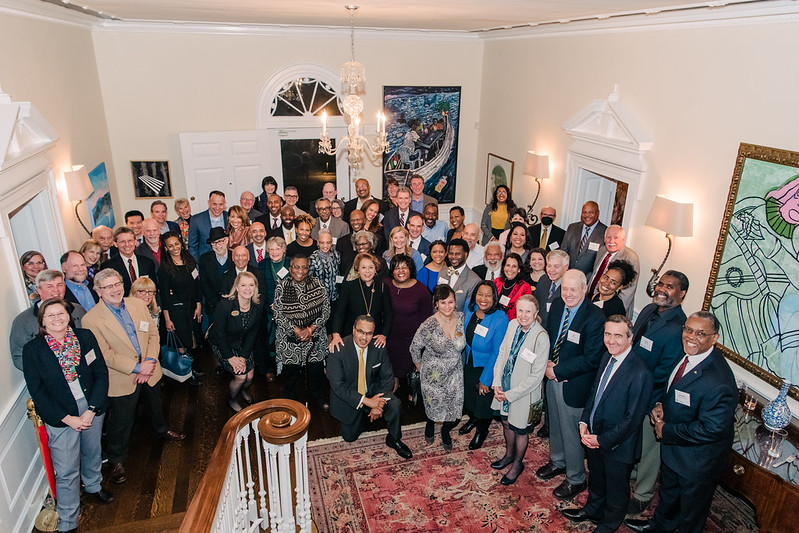
But for older adults who are wary of the prevalence of scams targeting their demographic, such an email can be particularly alarming since they have been told that the SSA never sends emails. From our research designing cybersecurity safeguards for older adults, we believe there is legitimate cause for alarm.

This population has been schooled in a tactical approach to online safety grounded in fear and mistrust – even of themselves – and focused on specific threats rather than developing strategies that enable them to be online safely. Elders have been taught this approach by organizations they tend to trust, including nonprofits that teach older adults how to use technology.

These organizations promote a view of older adults as highly vulnerable while also encouraging them to take gratuitous risks in defending themselves. As information technology researchers, we believe it doesn’t need to be this way.

Older adults and online safety

Older adults may be at heightened risk of cybersecurity breaches and fraudulent behavior because they lack experience with internet technology and represent a financially attractive target. Older adults may also be more susceptible because they struggle with their confidence in using technology even as they recognize its benefits.

We have been developing technology tools that help aging Americans maintain their own online safety no matter what challenges they may face, including cognitive decline. To do so, we needed to understand what and how the people we study are learning about cybersecurity threats and what strategies they are being taught to reduce their vulnerabilities.

We have found that older adults attempt to draw on personal experience to develop strategies to reduce privacy violations and security threats. For the most part, they are successful at detecting threats by being on the lookout for activities they did not initiate — for example, an account they do not have. However, outside experts have an inordinate amount of influence on those with less perceived ability or experience with technology.

What ‘experts’ are telling older Americans

Unfortunately, the guidance that older adults are getting from those who presumably have authority on the matter is less than ideal.

Perhaps the loudest of those voices is the AARP, a U.S. advocacy group that has been carrying out a mission to “empower” individuals as they age for over six decades. In that time, it has established a commanding print and online presence. Its magazine reached over 38 million mailboxes in 2017, and it is an effective advocacy group.

What we found was that the AARP communiqués on cybersecurity use storytelling to create cartoonish folktales of internet deception. A regularly featured diet of sensational titles like “Grandparent Gotchas,” “Sweepstakes Swindles” and “Devilish Diagnoses” depict current and emerging threats.

a man wearing a hooded sweatshirt and sunglasses types on a laptop computer
Much of the cybersecurity advice given to elders fosters the cartoonish misconception that flesh-and-blood scam artists lurk in their midst. 5m3photos/Moment via Getty Images

These scenarios appeal to readers the way crime shows have historically appealed to TV audiences: by using narrative devices to alarm and thrill. Ultimately they also delude viewers by leaving them with the misconception that they can use what they’ve learned in those stories to defend themselves against criminal threats.

Folktales and foibles

One job of folktales is to spell out the hazards that a culture wants its members to learn in childhood. But by presenting cyber-risk as a set of ever-evolving stories that focuses on particular risks, the AARP shifts attention away from basic principles to anecdotes. This requires its members to compare their online experiences with specific stories.

Readers are implicitly encouraged to assess the plausibility of particular scenarios with questions like, Is it possible that I have any unpaid back taxes? And, Do I actually have an extended warranty? It requires people to catalogue each of these stories and then work out for themselves each time whether an unsolicited message is a real threat based on its content, rather than the person’s circumstances.

No, it’s not personal

Through this inventory of stories and characters, we also found that the AARP was personalizing what is, at root, a set of structural threats, impersonal by nature. The stories often characterize scammers as people in the reader’s very midst who use local news to manipulate older adults.

Real threats are not “sweepstake swindlers” or “Facebook unfriendlies,” with a live scam artist sensitive to the needs and foibles of each intended victim. There is rarely a human relationship between the cyber-scammer and the victim — no con artists behind the notorious “grandparents scam.” The AARP bulletins and advisories imply that there is — or, at least, implicitly foster that old-fashioned view of a direct relationship between swindler and victim.

Don’t engage

Perhaps even more worrisome, AARP advisories appear to encourage investigation into scenarios, when engagement of any sort puts people at risk.

In one post alerting people to “8 Military-Themed Imposter Scams,” they discuss “prices too good to be true,” when the very concept of buying a car on Craigslist, or an “active-duty service member” urgently selling a car, should be a red flag discouraging any form of engagement.

Internet users of any age, but especially more vulnerable populations, should be urged to withdraw from threats, not be cast as sleuths in their own suspense stories.

Protecting older adults in the age of surveillance capitalism

In order to reduce everyone’s risk while online, we believe it’s important to provide a set of well-curated principles rather than presenting people with a set of stories to learn. Everyone exposed to threats online, but especially those most at risk, needs a checklist of cautions and strong rules against engagement whenever there is doubt.

In short, the best strategy is to simply ignore unsolicited outreach altogether, particularly from organizations you don’t do business with. People need to be reminded that their own context, behaviors and relationships are all that matter.

Because, in the end, it’s not just about tools, it’s about worldview. Ultimately, for everyone to make effective, consistent use of security tools, people need a theory of the online world that educates them about the rudiments of surveillance capitalism.

We believe people should be taught to see their online selves as reconstructions made out of data, as unreal as bots. This is admittedly a difficult idea because people have a hard time imagining themselves as separate from the data they generate, and recognizing that their online lives are affected by algorithms that analyze and act on that data.

But it is an important concept — and one that we see older adults embracing in our research when they tell us that while they are frustrated with receiving spam, they are learning to ignore the communications that reflect “selves” they don’t identify with.

*****

Nora McDonald, Assistant Professor of Information Technology, University of Cincinnati and Helena M. Mentis, Professor of Information Systems, University of Maryland, Baltimore County

Header image: Telling elders scary stories about online scammers is not the best way to keep them safe. Olga Gavrilenko/EyeEm via Getty.

This article is republished from The Conversation under a Creative Commons license. Read the original article.