We use cookies for analytics and, unless you opt out, advertising.
You can opt out of advertising at any time.UMBC uses essential cookies to run this site. With your permission we would also use analytics cookies (to understand how the site is used) and advertising cookies (to measure and target our ads on other platforms). Nothing else loads unless you accept. You can change your choice any time from Cookie Settings in the footer.Privacy Policy
EssentialRequired for the site to work (login, security, your cookie choice). Always on.
Meet Sharon Johnson, a dedicated member of the Meyerhoff Scholars Program staff for more than 17 years. Now retired, Sharon has chosen to continue to support UMBC with a planned gift that will focus on the program and students she loves so dearly. Thanks for sharing your story, Sharon…take it away!
Q: What brought you to UMBC in the first place?
A: I was hired as the business manager for the Meyerhoff Scholars Program after previously working at NASA. Many of my colleagues at NASA thought this would be a good fit for me and my skillset, and encouraged me to apply. I was very interested in diversity and the STEM pipeline and wanted to work with gifted and talented students.
Q: What was it like working with the Meyerhoff Program for so long?
A: I loved working with the Meyerhoff students, alumni, parents, faculty, staff, and UMBC colleagues and administrators. Meyerhoff staff members were committed and dedicated as we carried out our duties, and guided and inspired scholars. We worked closely together and I enjoyed our camaraderie. It was wonderful to see the scholars grow and achieve their aspirations. The relationships continued after graduation from UMBC. I was a part of something truly special that was changing the world!I made many friends with whom I am still in contact.
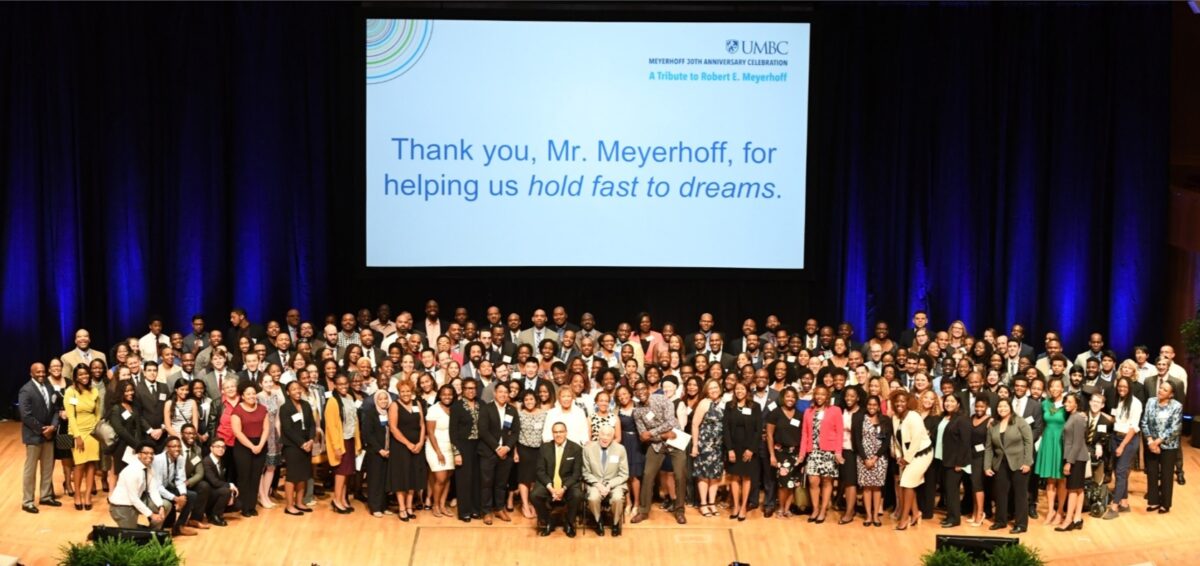
A moment from the Meyerhoff Scholars Program’s 30th anniversary celebration in 2019. Photo by Jim Burger.
Q: Tell us about someone who really made a difference in your life while you were at UMBC.
A: I’d like to mention two people. [President Emeritus] Dr. [Freeman] Hrabowski supported me and the Meyerhoff Scholars program. He co-founded an awesome program that has been replicated across the country, and he inspired me and other donors to financially support UMBC.
And LaMont Toliver, former Program Director and my supervisor, was dedicated to the program. His belief in the model, program, and students inspired me. Working for the program was a life-changing opportunity.
“
I thought back to my undergraduate years and I felt compelled to help provide funding to scholars experiencing financial hardships and to impact future generations of Meyerhoff scholars. My hope is that I will be able to help future scholars achieve their academic goals and dreams.
Sharon Johnson
Retired staff, Meyerhoff Scholars Program
Q: You recently decided to make a planned gift in support of the Meyerhoff Scholars Program. What motivated you to do that?
A: I experienced financial hardships and challenges firsthand during my childhood and in completing my bachelor’s degree. I believe in the Meyerhoff Scholars Program’s vision and mission and am proud of the program’s success. Many scholars had shortfalls between their expenses and aid/scholarships and were seeking other funding sources to close their gaps. Many also faced personal/family circumstances that kept them from graduating on schedule and achieving their academic dreams. I thought back to my undergraduate years and I felt compelled to help provide funding to scholars experiencing financial hardships and to impact future generations of Meyerhoff Scholars. My hope is that I will be able to help future scholars achieve their academic goals and dreams.
* * * * *
UMBC’s greatest strength is its people. When people meet Retrievers and hear about the passion they bring, the relationships they create, the ways they support each other, and the commitment they have to inclusive excellence, they truly get a sense of our community. That’s what “Meet a Retriever” is all about.
Meet Emily Faber, M.S. ’21, atmospheric physics, who is currently pursuing her doctorate in the same at UMBC. Emily is a first-generation college student who is also very involved as a student leader in the College of Natural and Mathematical Sciences. Take it away, Emily!
Q: What brought you to UMBC in the first place?
A: I came to UMBC for the department I am in. I knew I wanted to study Earth Science and I had a physics background so Atmospheric Physics is where I thought I could do the most good in the world. UMBC is also really well connected with the NASA and NOAA centers in the DMV area and I knew that is where I want to work, so it was a perfect match!
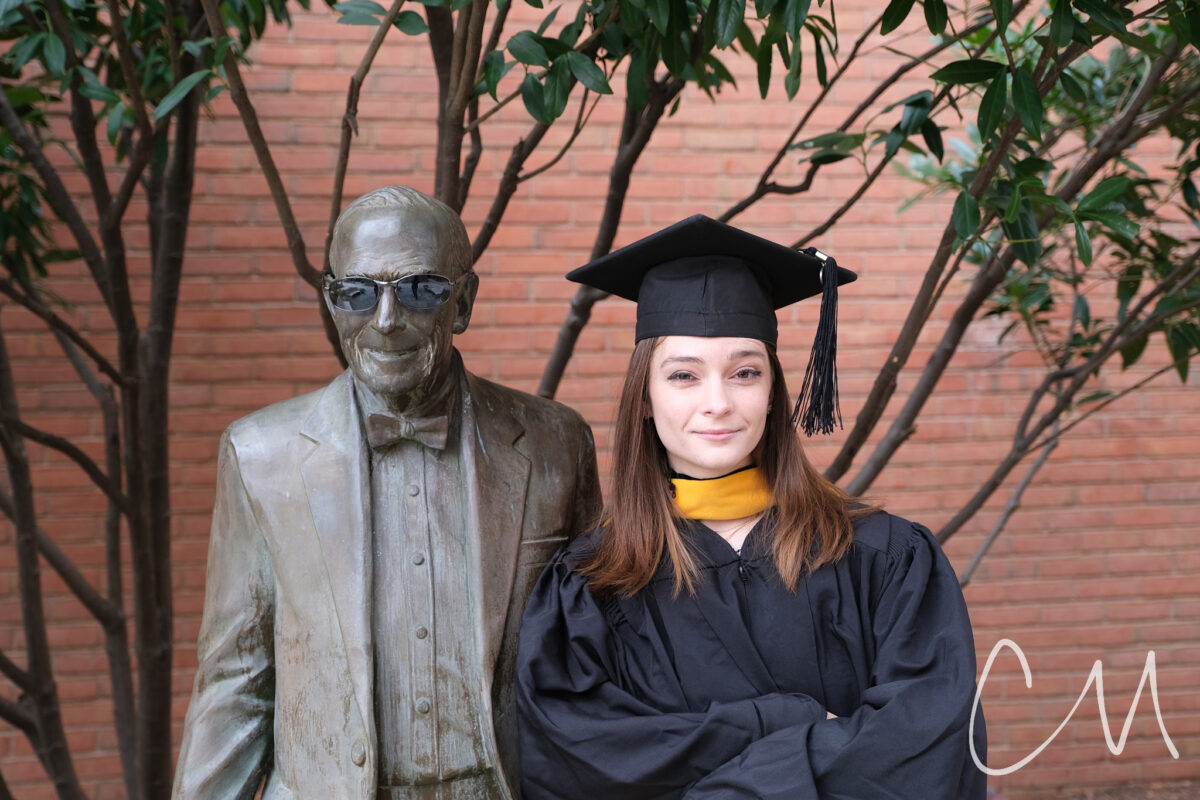
Faber poses with UMBC’s statue of Baltimore changemaker Walter Sondheim while celebrating the completion of her master’s degree in atmospheric physics. Photo courtesy of Faber.
Q: What’s the one thing you’d want someone who hasn’t joined the UMBC community to know about the support you find here?
A: It’s here! sometimes it seems hidden but there are people here that I’ve found that would do whatever they could to help me if I needed it. And I’ve seen them pull off some pretty amazing things for other students too! PROMISE, GSA (Graduate Student Association), individual faculty, and the deans are all great and supportive people!
“
“I knew I wanted to study Earth Science and I had a physics background so Atmospheric Physics is where I thought I could do the most good in the world. UMBC is also really well connected with the NASA and NOAA centers in the DMV area and I knew that is where I want to work, so it was a perfect match!”
Emily Faber, M.S. '21, atmospheric physics
Q: Tell us about someone in the community who has inspired you or supported you, and how they did it.
A: I know, cheesy, but my advisor, Dr. Adriana Rocha Lima is a really great supporter of mine. They say you should find a mentor, a sponsor, and a coach, and Dr. Rocha Lima is really great at being all three for me! She explains things when I don’t understand without judgment, connects me with people and conferences in our field, and gives me advice when I need it. Find a great advisor; they are out there!
Faber shares an Instagram selfie from when she planned and hosted the first international Earth Day Symposium with the UMBC atmospheric physics department.
Q: Tell us about what you love about the atmospheric physics program or an organization you’re involved in.
A: I love how my program works with outside researchers and is really committed to Earth science as a whole. We routinely work with people from national lab offices that will hire our students one day and it really makes an impact in the skill sets we as students learn!
Q: What clubs and orgs are you a part of and why?
A: I’m a Graduate Student Association senator and Graduate Student Success Committee (GSSC) co-chair. I also help run the Graduate Gender-minorities in Physics group. In both of these I get to help people through their graduate school experience and help lift the graduate community up! I love seeing students succeed and hate seeing them struggle because they don’t find a resource that they need. These roles help me plug people in when they need help and that is incredibly rewarding for me!
* * * * *
UMBC’s greatest strength is its people. When people meet Retrievers and hear about the passion they bring, the relationships they create, the ways they support each other, and the commitment they have to inclusive excellence, they truly get a sense of our community. That’s what “Meet a Retriever” is all about.
In an interview with CBS’s “60 Minutes” on Sept. 18, 2022, Biden vowed to protect the island in the face of any attack. Pressed if that meant the U.S. getting “involved militarily,” the president replied: “Yes.”
Meredith Oyen, an expert on U.S.-China relations at the University of Maryland, Baltimore County, helps explain the background to Biden’s comments and untangles what should be read into his remarks – and what shouldn’t.
What did Biden say and why was it significant?
In an exchange on “60 Minutes,” Biden was asked directly if the U.S. would “come to Taiwan’s defense” if it were attacked by China. He replied: “Yes, we have a commitment to do that.” He also confirmed that U.S. intervention would be military.
By my count, this is the fourth time Biden as president has suggested that the U.S. will come to Taiwan’s aid militarily if the island is attacked. In 2021 he made similar remarks in an interview with ABC News and then again while taking part in a CNN town hall event. And earlier this year he said something similar while in Japan, marking the first time he has made the assertion while in Asia.
On each occasion he has made such a comment, it has been followed quite quickly by the White House’s walking back the remarks, by issuing statements along the lines of “what the president actually means is …” and stressing that this isn’t a shift away from the official U.S. policy on China or Taiwan.
But I think that with each incident it is harder to prevaricate about Biden’s comments being an accident, or suggest that he in some way misspoke. I think it is clear at this point that Biden’s interpretation of the Taiwan Relations Act – which since 1979 has set out the parameters of U.S. policy on the island – is that it allows for a U.S. military response should China invade. And despite White House claims to the contrary, I believe that does represent a departure from the long-standing policy of “strategic ambiguity” on Taiwan.
What does ‘strategic ambiguity’ mean?
Strategic ambiguity has long been the U.S. policy toward Taiwan – really since the 1950s, but certainly from 1979 onward. While it does not explicitly commit the U.S. to defending Taiwan in every circumstance, it does leave open the option of American defensive support to Taiwan in the event of an unprovoked attack by China.
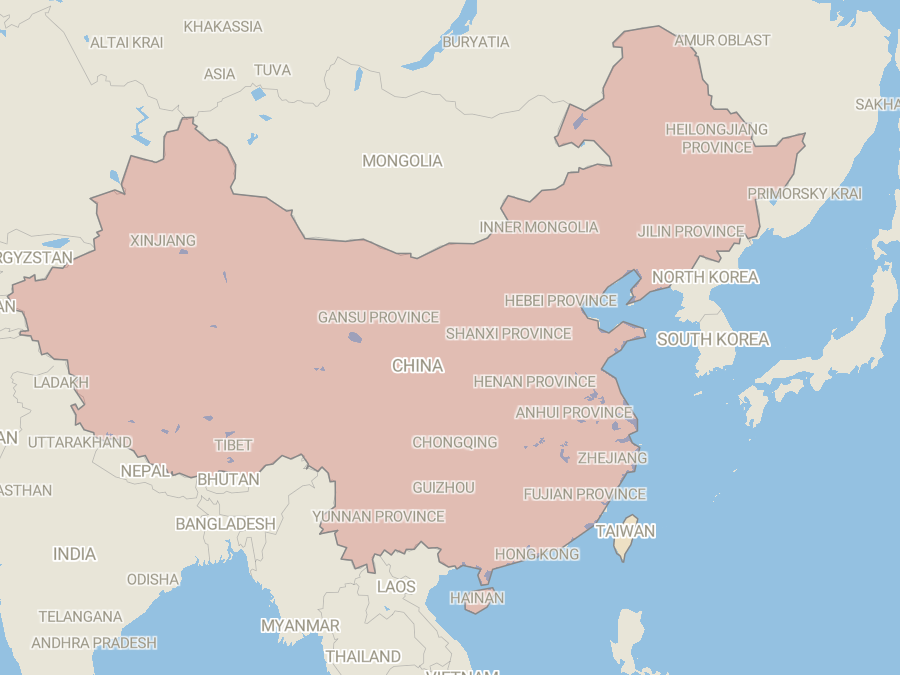
Map: The Conversation, CC-BY-ND @OpenStreetMap contributors.
Crucially, the U.S. hasn’t really said what it will do – so does this support mean economic aid, supply of weapons or U.S. boots on the ground? China and Taiwan are left guessing if – and to what extent – the U.S. will be involved in any China-Taiwan conflict.
By leaving the answer to that question ambiguous, the U.S. holds a threat over China: Invade Taiwan and find out if you face the U.S. as well.
Traditionally, this has been a useful policy for the U.S., but things have changed since it was first rolled out. It was certainly effective when the U.S. was in a much stronger position militarily compared with China. But it might be less effective as a threat now that China’s military is catching up with the U.S.
Leading voices from U.S. allies in Asia, such as Japan, believe that “strategic clarity” might be a better option now – with the U.S. stating outright that it would defend Taiwan if the island were attacked.
What is the history of US relations with Taiwan?
After the victory of the Chinese Communist Party in 1949, the defeated Republic of China government withdrew to the island of Taiwan, located just 100 miles off the shore of Fujian province. And until the 1970s, the U.S. recognized only this exiled Republic of China on Taiwan as the government of China.
But in 1971, the United Nations shifted recognition to the People’s Republic of China on the mainland. In 1972, President Richard Nixon made a now-famous trip to China to announce a rapprochement and sign the Shanghai Communique, a joint statement from Communist China and the U.S. signaling a commitment to pursue formal diplomatic relations. A critical section of that document stated: “The United States acknowledges that all Chinese on either side of the Taiwan Strait maintain there is but one China and that Taiwan is a part of China. The United States Government does not challenge that position.”
The wording was crucial: The U.S. was not formally committing to a position on whether Taiwan was part of the China nation. Instead, it was acknowledging what the governments of either territory asserted – that there is “one China.”
Where does US commitment of military support for Taiwan come from?
After establishing formal diplomatic relations with China in 1979, the U.S. built an informal relationship with the ROC on Taiwan. In part to push back against President Jimmy Carter’s decision to recognize Communist China, U.S. lawmakers passed the Taiwan Relations Act in 1979. That act outlined a plan to maintain close ties between the U.S. and Taiwan and included provisions for the U.S. to sell military items to help the island maintain its defense – setting the path for the policy of strategic ambiguity.
Beijing has become more aggressive of late in asserting that Taiwan must be “returned to China.” Domestic politics plays a role in this. At times of internal instability in China, Beijing has sounded a more belligerent tone on relations between the two entities separated by the Taiwan Strait. We have seen this over the past year with Beijing sending military aircraft into Taiwan’s Air Defense Zone.
He also didn’t overturn the Taiwan Travel Act passed under the the previous administration of Donald Trump. This legislation allows U.S. officials to visit Taiwan in an official capacity.
Meanwhile, for the second time, Biden in his “60 Minutes” interview indicated a belief that it was up to Taiwan to decide its future, departing slightly from the usual line that the U.S. doesn’t support changes to the status quo. However, Biden has also said he does not support a unilateral declaration of independence from Taiwan.
So there has been a shift to a degree. But the White House is keen not to overstate any change. At heart, there is a desire by the U.S. to not stray from the Shanghai Communique.
So is an invasion of Taiwan likely?
The current rhetoric from the U.S. and response from China do raise the risk of conflict, but I don’t think we are at that point yet. Any invasion across the Taiwan Strait would be militarily complex. It also comes with risks of backlash from the international community. Taiwan would receive support from not only the U.S. – in an unclear capacity, given Biden’s remarks – but also Japan and likely other countries in the region.
Meanwhile, China maintains that it wants to see reintegration through peaceful means. As long as Taiwan doesn’t force the issue and declare independence unilaterally, I think there is tolerance in Beijing to wait it out. And despite some commentary to the contrary, I don’t think the invasion of Ukraine has raised the prospects of a similar move on Taiwan. In fact, given that Russia is now bogged down in a monthslong conflict that has hit its military credibility and economy, the Ukraine invasion may actually serve as a warning to Beijing.
Ian Anson, Associate Professor of Political Science, UMBC
As statewide primaries continue through the summer, many Americans are beginning to think about which candidates they will support in the 2022 general election.
Voters must navigate angry, emotion-laden conversations about politics when trying to sort out whom to vote for. Americans are more likely than ever to view politics in moral terms, meaning their political conversations sometimes feel like epic battles between good and evil.
But political conversations are also shaped by, obviously, what Americans know – and, less obviously, what they think they know – about politics.
In recent research, I studied how Americans’ perceptions of their own political knowledge shape their political attitudes. My results show that many Americans think they know much more about politics than they really do.
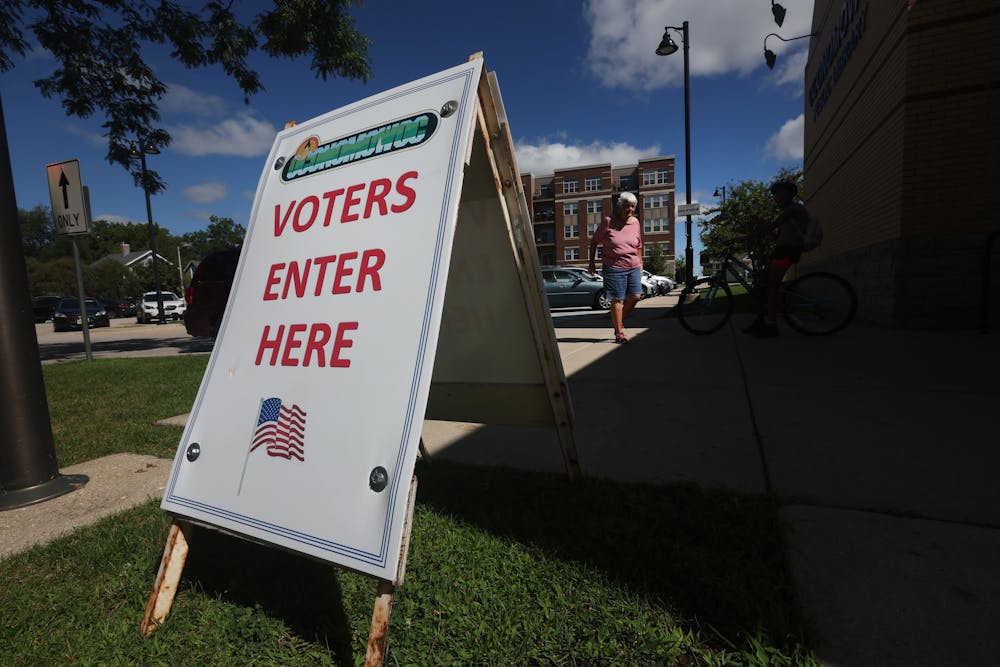
Voters arrive to cast their primary ballots at a polling place on Aug. 9, 2022, in Oconomowoc, Wisconsin. Scott Olson/Getty Images
Knowledge deficit, confidence surplus
Over the past five years, I have studied the phenomenon of what I call “political overconfidence.” My work, in tandem with other researchers’ studies, reveals the ways it thwarts democratic politics.
Political overconfidence can make people more defensive of factually wrong beliefs about politics. It also causes Americans to underestimate the political skill of their peers. And those who believe themselves to be political experts often dismiss the guidance of real experts.
Political overconfidence also interacts with political partisanship, making partisans less willing to listen to peers across the aisle.
The result is a breakdown in the ability to learn from one another about political issues and events.
A ‘reality check’ experiment
In my most recent study on the subject, I tried to find out what would happen when politically overconfident people found out they were mistaken about political facts.
To do this, I recruited a sample of Americans to participate in a survey experiment via the Lucid recruitment platform. In the experiment, some respondents were shown a series of statements that taught them to avoid common political falsehoods. For instance, one statement explained that while many people believe that Social Security will soon run out of money, the reality is less dire than it seems.
My hypothesis was that most people would learn from the statements, and become more wary of repeating common political falsehoods. However, as I have found in my previous studies, a problem quickly emerged.
The problem
First, I asked respondents a series of basic questions about American politics. This quiz included topics like which party controls the House of Representatives – the Democrats – and who the current Secretary of Energy is – Jennifer Granholm. Then, I asked them how well they thought they did on the quiz.
Many respondents who believed they were top performers were actually among those who scored the worst. Much akin to the results of a famous study by Dunning and Kruger, the poorest performers did not generally realize that they lagged behind their peers.
Of the 1,209 people who participated, around 70% were overconfident about their knowledge of politics. But this basic pattern was not the most worrying part of the results.
The overconfident respondents failed to change their attitudes in response to my warnings about political falsehoods. My investigation showed that they did read the statements, and could report details about what they said. But their attitudes toward falsehoods remained inflexible, likely because they – wrongly – considered themselves political experts.
But if I could make overconfident respondents more humble, would they actually take my warnings about political falsehoods to heart?
Poor self-assessment
My experiment sought to examine what happens when overconfident people are told their political knowledge is lacking. To do this, I randomly assigned respondents to receive one of three experimental treatments after taking the political knowledge quiz. These were as follows:
Respondents received statements teaching them to avoid political falsehoods.
Respondents did not receive the statements.
Respondents received both the statements and a “reality check” treatment. The reality check showed how respondents fared on the political quiz they took at the beginning of the survey. Along with their raw score, the report showed how respondents ranked among 1,000 of their peers.
For example, respondents who thought they had aced the quiz might have learned that they got one out of five questions right, and that they scored worse than 82% of their peers. For many overconfident respondents, this “reality check” treatment brought them down to earth. They reported much less overconfidence on average when I followed up with them.
Finally, I asked all the respondents in the study to report their levels of skepticism toward five statements. These statements are all common political falsehoods. One statement, for example, asserted that violent crime had risen over the prior decade – it hadn’t. Another claimed the U.S. spent 18% of the federal budget on foreign aid – the real number was less than 1%.
I expected most respondents who had received my cautionary statements to become more skeptical of these misinformed statements. On average, they did. But did overconfident respondents learn this lesson too?
Those who believe themselves to be political experts often dismiss the guidance of real experts. IvelinRadkov/iStock/Getty Images
Reality check: Mission accomplished
The results of the study showed that overconfident respondents began to take political falsehoods seriously only if they had experienced my “reality check” treatment first.
While overconfident respondents in other conditions showed no reaction, the humbling nature of the “reality check,” when they realized how wrong they had been, led overconfident participants in that condition to revise their beliefs. They increased their skepticism of political falsehoods by a statistically significant margin.
Overall, this “reality check” experiment was a success. But it reveals that outside of the experiment, political overconfidence stands in the way of many Americans’ ability to accurately perceive political reality.
The problem of political overconfidence
What, if anything, can be done about the widespread phenomenon of political overconfidence?
While my research cannot determine whether political overconfidence is increasing over time, it makes intuitive sense that this problem would be growing in importance in an era of online political discourse. In the online realm, it is often difficult to appraise the credibility of anonymous users. This means that false claims are easily spread by uninformed people who merely sound confident.
To combat this problem, social media companies and opinion leaders could seek ways to promote discourse that emphasizes humility and self-correction. Because confident, mistaken self-expression can easily drown out more credible voices in the online realm, social media apps could consider promoting humility by reminding posters to reconsider the “stance,” or assertiveness, of their posts.
While this may seem far-fetched, recent developments show that small nudges can lead to powerful shifts in social media users’ online behavior.
For example, Twitter’s recent inclusion of a pop-up message that asks would-be posters of news articles to “read before tweeting” caused users to rethink their willingness to share potentially misleading content.
A gentle reminder to avoid posting bold claims without evidence is just one possible way that social media companies could encourage good online behavior. With another election season soon upon us, such a corrective is urgently needed.
By Richard Forno, Principal Lecturer,Computer Science and Electrical Engineering, UMBC
Twitter’s former security chief, Peiter “Mudge” Zatko, filed a whistleblower complaint with the Securities and Exchange Commission in July 2022, accusing the microblogging platform company of serious security failings. The accusations amplified the ongoing drama of Twitter’s potential sale to Elon Musk.
Zatko spent decades as an ethical hacker, private researcher, government adviser and executive at some of the most prominent internet companies and government offices. He is practically a legend in the cybersecurity industry. Because of his reputation, when he speaks, people and governments normally listen – which underscores the seriousness of his complaint against Twitter.
As a former cybersecurity industry practitioner and current cybersecurity researcher, I believe that Zatko’s most damning accusations center around Twitter’s alleged failure to have a solid cybersecurity plan to protect user data, deploy internal controls to guard against insider threats and ensure the company’s systems were current and properly updated.
Zatko also alleged that Twitter executives were less than forthcoming about cybersecurity incidents on the platform when briefing both regulators and the company’s board of directors. He claimed that Twitter prioritized user growth over reducing spam and other unwanted content that poisoned the platform and detracted from the user experience. His complaint also expressed concerns about the company’s business practices.
Zatko’s allegations paint a disturbing picture of not only the state of Twitter’s cybersecurity as a social media platform, but also the security consciousness of Twitter as a company. Both points are relevant given Twitter’s position in global communications and the ongoing struggle against online extremism and disinformation.
Perhaps the most significant of Zatko’s allegations is his claim that nearly half of Twitter’s employees have direct access to user data and Twitter’s source code. Time-tested cybersecurity practices don’t allow so many people with this level of “root” or “privileged” permission to access sensitive systems and data. If true, this means that Twitter could be ripe for exploitation either from within or by outside adversaries assisted by people on the inside who may not have been properly vetted.
Zatko also alleges that Twitter’s data centers may not be as secure, resilient or reliable as the company claims. He estimated that nearly half of Twitter’s 500,000 servers around the world lack basic security controls such as running up-to-date and vendor-supported software or encrypting the user data stored on them. He also noted that the company’s lack of a robust business continuity plan means that should several of its data centers fail due to a cyber incident or other disaster, it could lead to an “existential company ending event.”
These are just some of the claims made in Zatko’s complaint. If his allegations are true, Twitter has failed Cybersecurity 101.
Concerns over foreign government interference
Zatko’s allegations might also present a national security concern. Twitter has been used to spread disinformation and propaganda in recent years during global events like the pandemic and national elections.
For example, Zatko’s report stated that the Indian government forced Twitter to hire government agents, who would have access to vast amounts of Twitter’s sensitive data. In response, India’s at-times hostile neighbor Pakistan accused India of trying to infiltrate the security system of Twitter “in an effort to curb fundamental freedoms.”
Given Twitter’s global footprint as a communications platform, other nations such as Russia and China could require the company to hire its own government agents as a condition of allowing the company to operate in their country. Zatko’s allegations about Twitter’s internal security raise the possibility of criminals, activists, hostile governments or their supporters seeking to exploit Twitter’s systems and user data by recruiting or blackmailing its employees may well present a national security concern.
Worse, Twitter’s own information about its users, their interests and who they follow and interact with on the platform could facilitate targeting for disinformation campaigns, blackmail or other nefarious purposes. Such foreign targeting of prominent companies and their employees has been a major counterintelligence worry in the national security community for decades.
Opposition party members in India protest Twitter’s temporary ban of their leader. The whistleblower’s allegations include Twitter acquiescing to Indian government demands that the company employ government agents. Anadolu Agency (Getty Images)
Fallout
Whatever the outcome of Zatko’s complaint in Congress, the SEC or other federal agencies, it already is part of Musk’s latest legal filings as he tries to back out of his purchase of Twitter.
Ideally, in light of these disclosures, Twitter will take corrective action to improve the company’s cybersecurity systems and practices. A good first step the company could take is reviewing and limiting who has root access to its systems, source code and user data to the minimum number necessary. The company should also ensure that its production systems are kept current and that it is effectively prepared to contend with any type of emergency situation without significantly disrupting its global operations.
From a broader perspective, Zatko’s complaint underscores the critical and sometimes uncomfortable role cybersecurity plays in modern organizations. Cybersecurity professionals like Zatko understand that no company or government agency likes publicity for cybersecurity problems. They tend to think long and hard about whether and how to raise cybersecurity concerns like these – and what the potential ramifications might be. In this case, Zatko says his disclosures reflect “the job he was hired to do” as head of security for a social media platform that he says “is critical to democracy.”
For companies like Twitter, bad cybersecurity news often results in a public relations nightmare that could affect share price and their standing in the marketplace, not to mention attract the interest of regulators and lawmakers. For governments, such revelations can lead to a lack of trust in the institutions created to serve society, in addition to potentially creating distracting political noise.
Unfortunately, how cybersecurity problems are discovered, disclosed and handled remains a difficult and sometimes controversial process, with no easy solution both for cybersecurity professionals and today’s organizations.
U.S. House Speaker Nancy Pelosi hasn’t confirmed when – or even if – she is to visit Taiwan. Yet such is the sensitivity over the island’s status that reports of her possible trip have resulted in a warning by China of “serious consequences” and a suggestion by President Joe Biden that the visit was “not a good idea.” Amid the rhetoric and heightened tensions, Taiwan is conducting military drills.
The comments follow a report by the Financial Times that Pelosi planned to take a delegation to Taiwan in August. The outlet based its report on six people “familiar with the situation”; Pelosi’s spokesperson has said she could neither confirm not deny the reported trip.
As someone who has long studied the U.S.‘s delicate diplomatic dance over Taiwan, I understand why this reported trip has sparked reaction in both Washington and Beijing, given the current tensions in the region. It also marks the continuation of a process that has seen growing U.S. political engagement with Taiwan – much to China’s annoyance.
Cutting diplomatic ties
The controversy over reports of Pelosi’s potential visit stems from the “one China” policy – the diplomatic stance under which the U.S. recognizes China and acknowledges Beijing’s position that Taiwan is part of China. The policy has governed U.S. relations with Taiwan for the last 40-plus years.
In 1979, the U.S. abandoned its previous policy of recognizing the government of Taiwan as that of all of China, instead shifting recognition to the government on the mainland.
As part of this change, the U.S. cut off formal diplomatic ties with Taiwan, with the U.S. embassy in Taiwan replaced by a nongovernmental entity called the American Institute in Taiwan.
As the government in Taiwan pursued democracy – starting from the lifting of martial law in 1987 through the first fully democratic elections in 1996 – it shifted away from the assumption once held by governments in both China and Taiwan of eventual reunification with the mainland. The government in China, however, has never abandoned the idea of “one China” and rejects the legitimacy of Taiwanese self-government. That has made direct contact between Taiwan and U.S. representatives contentious to Chinese officials.
Indeed, in 1995, when Lee Teng-hui, Taiwan’s first democratically elected president, touched down in Hawaii en route to Central America, he didn’t even set foot on the tarmac. The U.S. State Department had already warned that the president would be refused an entry visa to the U.S., but had allowed for a brief, low-level reception in the airport lounge during refueling. Apparently feeling snubbed, Lee refused to leave the airplane.
Similarly to the possible Pelosi visit, the one by Gingrich annoyed Beijing. But it was easier for the White House to distance itself from Gingrich – he was a Republican politician visiting Taiwan in his own capacity, and clearly not on behalf of then-President Bill Clinton.
Pelosi’s possible visit could be different, because she is a member of the same party as President Joe Biden, and China may assume she has Biden’s blessing, despite his comments to the contrary.
Asked on July 20 about his views on the potential Pelosi trip, Biden responded that the “military thinks it’s not a good idea right now.”
The comment echoes the White House’s earlier handling of a comment by Biden in which he suggested in May 2022 that the U.S. would intervene “militarily” should China invade Taiwan. Officials in the Biden administration rolled back the comment, which would have broken a long-standing policy of ambiguity over what the U.S. would do if China tried to take Taiwan by force.
Similarly with Pelosi, the White House is distancing itself from a position that suggests a shift in U.S.-Taiwanese relations following a period in which the U.S. had already been trying to rethink how it interacts with Taiwan.
Shifting policy?
In 2018, Congress passed the bipartisan Taiwan Travel Act. This departed from previous policy in that it allowed bilateral official visits between the U.S. and Taiwan, although they are still considered to be subdiplomatic.
In the wake of that act, Donald Trump’s Health and Human Services secretary, Alex Azar, became the highest-ranking U.S. official to visit Taiwan since 1979. Then in 2020, Keith Krach, undersecretary for economic growth, energy and the environment, visited Taiwan.
Each of these visits has provoked angry statements from Beijing.
A high-profile visit – even one without the public backing of the White House – would signal support to the island at a time when the invasion of Ukraine by Russia has raised questions over the international community’s commitment to protect smaller states from more powerful neighbors.
Meanwhile, the erosion of democracy in Hong Kong has undermined China’s commitment to the idea of “one nation, two systems.” The principle, which allowed Hong Kong to maintain its economic, political and social systems while returning to the mainland after the end of British rule, had been cited as a model for reunification with Taiwan. The Chinese Communist Party also plans to hold its 20th congress in the coming months, making the timing sensitive for a Taiwan visit from a high-profile U.S. political figure such as Pelosi.
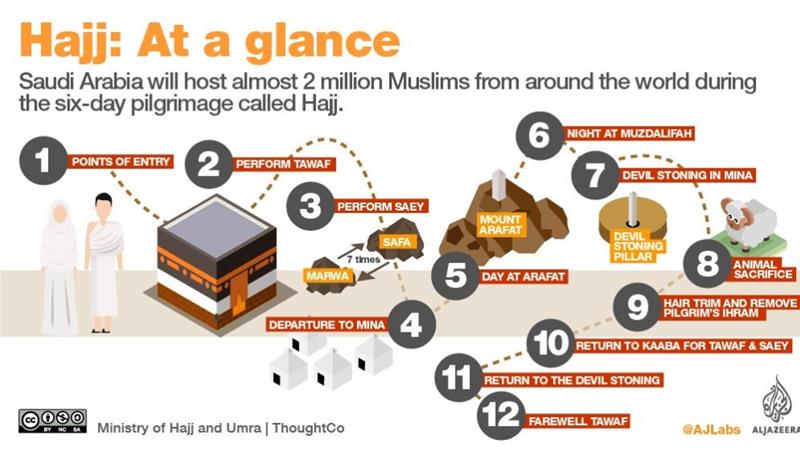
This year, an estimated 1 million people will perform the hajj, which is considered one of the five pillars in Islam. Under the lottery, only 50,000 permits were allowed from these 50 countries, compared with 25,000 for U.K. Muslims alone in previous years.
In the past, too, the commercial, technological and secular aspects of the hajj have been a topic of much debate about whether they change the spiritual nature of the pilgrimage. As a scholar of pilgrimage, ritual and Islam, I know that the focus on commerce and profits has been part of the long history of the hajj.
Early roots of trade and commerce
Across religious traditions, pilgrimages have always had a commercial component. From pilgrimage caravans and markets that grow around religious sites to the gifting of relics and souvenirs, religion and commerce have been deeply linked.
The hajj is no different. As F.E. Peters, an eminent scholar of Islamic studies, noted in his 1994 significant study on the hajj, the Quran itself acknowledges that Muslims were permitted to indulge in commerce around the pilgrimage: Verse 2:198 in the Quran says, “There is no blame on you for seeking the bounty of your Lord during this journey.” Quranic commentaries have explained this verse to mean that Islam allows commercial activity before and after the days of hajj rituals.
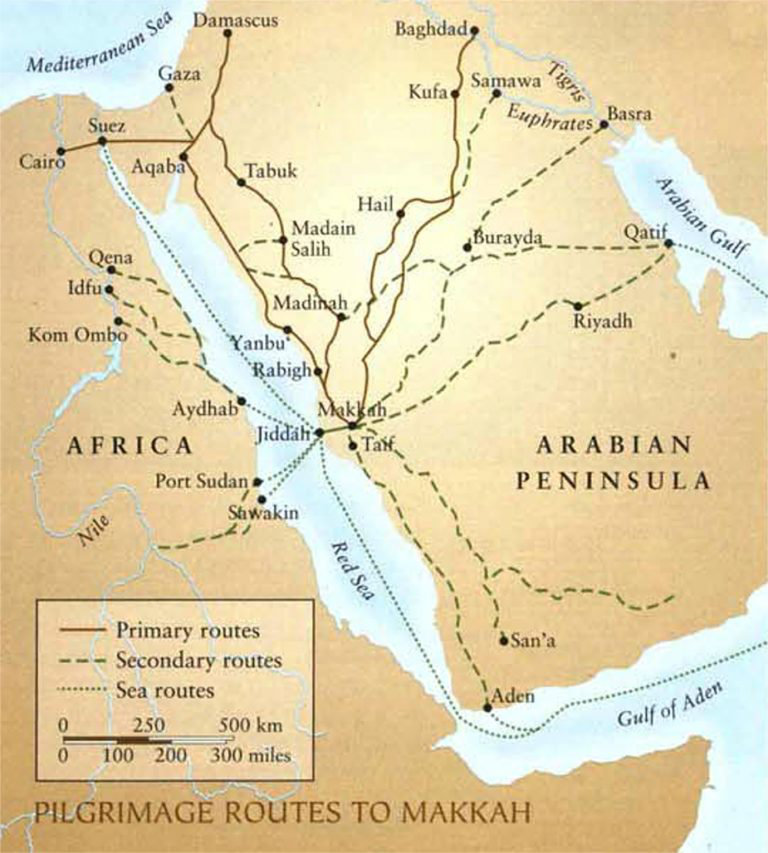
As Islam spread, so did the commerce. While the narrow set of ritual acts of hajj remained, the total pilgrimage experience was shaped by business. For centuries, major overland caravan routes traveled through Damascus, Cairo and Baghdad, with merchants attaching themselves to these caravans.
Traders targeted the pilgrims as consumers, and many pilgrims themselves engaged in trade to pay their way. As traveling overland for the hajj journey could take up to two years, pilgrims traded fruits, wines, silk, carpets and other items. They purchased goods such as coffee and pearls for their return journey.
A changing world, a changing hajj
The evolution of technology and means of travel inevitably brought new economic considerations into the organization of the hajj. The invention of the steamship was central to the development of mass pilgrimage to Mecca in the 19th century – the total number of pilgrims per year rose from an estimated 112,000 participants in 1831 to some 300,000 in 1910.
European liner companies controlled major pilgrim sea routes, linking hajj to imperial business opportunities. In 1886, the British government called in the famed Thomas Cook & Son, the original package holiday entrepreneurs, to become official travel agents of the hajj.
The use of a for-profit tourism company to regulate the hajj may have seemed a new development, but agents and intermediaries had been central to the process for centuries. The “mutawwifin,” the hereditary guilds of pilgrimage guides, provided pilgrims with guidance in carrying out the rituals of the hajj and were central to Mecca’s government and its economy.
Over the centuries, these local guides would develop contacts in foreign lands, encouraging Muslims to perform the pilgrimage. In addition to linguistic and ritual guidance, the mutawwifin would also arrange meals, lodgings and tents – acting in ways that were similar to modern-day tour operators.
The modern era
The steamship was just one technological innovation that altered the hajj landscape into a more commercial venture. At the turn of the 20th century, Sultan Abdul Hamid II of the Ottoman Empire was an adamant promoter of the construction of the Hejaz Railway, meant to establish a connection between Istanbul, the capital of the Ottoman Empire, and the holy cities of Mecca and Medina.
The establishment of the Kingdom of Saudi Arabia in 1932 and the eventual replacement of shipping and rail with air transport transformed the nature of the hajj further. The new Saudi state adhered to the doctrine of Wahhabism, an Islamic reform movement originating in the 1700s that rejected all forms of innovations outside of the Quran and the traditions of the Prophet Muhammad in his time.
Yet despite this condemnation of innovation, the Saudi government has overseen decades of commercial development of the hajj, encouraging the tourism atmosphere and deriving significant profits from the obligatory pilgrimage.
Commerce or politics?
Muslim pilgrims pray on a rocky hill called the Mountain of Mercy near the holy city of Mecca, Saudi Arabia, in 2013. AP Photo/Amr Nabil
While the hajj has historically been linked to commerce, pilgrims of late have expressed dissatisfaction with the overt emphasis on the touristic experience and the sense that it is now diminishing the spiritual nature of the pilgrimage.
Indeed, commercial revenues from the hajj remain a contested and even a political topic. In 2018, Yusuf al Qaradawi, a prominent Muslim Brotherhood cleric based in Qatar, issued a fatwa calling for limiting spending on pilgrimage. “Seeing Muslims feeding the hungry, treating the sick and sheltering the homeless are better viewed by Allah than spending money on the hajj and umrah every year,” he declared. This statement was viewed as an attempt to undermine Saudi Arabia by discouraging Muslims from performing the pilgrimage, as the revenues go to the government.
Al Qaradawi’s fatwa drew ire from certain circles, as all Muslims who are financially and physically capable must attempt to complete the hajj, regardless of any geopolitical sentiment toward Saudi Arabia. Yet there is no doubt that the current hajj has refocused attention on whether the business of hajj remains in line with the original allowance to “seek bounty” during the pilgrimage to Islam’s holiest sites.
The anti-abortion movement is often criticized as caring little about these matters. But as a political scientist who has studied the intersections of abortion and social welfare issues, I became intrigued by a large but little-known subset of anti-abortion activists who claimed to support women during pregnancy and after childbirth.
My 2020 book on this “pregnancy help” work indicates that the anti-abortion movement does provide support to low-income families, even if not in the way its critics might prefer.
The ‘pregnancy help’ movement
This work mostly occurs within the anti-abortion movement’s own charitable organizations. Participants in this “pregnancy help movement,” according to Margaret Hartshorn, the former president of one such organization, strive to make abortion “unwanted now and unthinkable in future generations” by ensuring “that no woman ever feels forced to have an abortion because of lack of support or practical alternatives.”
People in the movement run maternity homes, adoption and social service agencies, charitable medical practices, hotlines, support groups and aid networks. However, the core institutions of their movement are pregnancy centers. Pregnancy centerstypically offer free pregnancy tests, sonograms, counseling and promises of material support in the hopes of persuading women to carry unintended pregnancies to term.
The first ones began to open in the U.S. in the late 1960s. They outnumbered abortion providers at least as early as 2013. A July 2018 directory listed 2,740 U.S. pregnancy centers. Lehigh University sociologist Ziad Munson writes that such outreach involves more people, volunteer hours and organizations than any other type of anti-abortion activism.
Based on my interviews of pregnancy center leaders and review of various movement communications, these organizations are mostly funded by individual donations, commonly raised through banquets, walks, races or church-based collections of money and goods. Some anti-abortion groups like Focus on the Family and the Knights of Columbus give them grants.
Pregnancy centers typically aren’t affiliated with specific churches, though they often frame themselves as ministries modeled on Jesus Christ’s love for people who are hurting and marginalized.
In 13 states as of 2021, pregnancy centers could apply for funding from state-run Alternatives to Abortion programs. As of March 2022, as many as 19 states may have directed a proportion of “Choose Life” license plate proceeds to pregnancy centers. An Associated Press investigation of fiscal 2022 state budgets found that 12 states funded pregnancy centers, providing US$89 million.
Centers can also apply for select federal grants. According to a report on U.S. pregnancy center services by the Charlotte Lozier Institute, an anti-abortion think tank, 17% of U.S. centers received some public money in 2019.
By comparison, the Planned Parenthood Federation of America, which provides abortions and other reproductive health care services, reported receiving about $618 million – or 38% of its revenue – in government grants and payments for services in the fiscal year ending June 30, 2020.
U.S. pregnancy centers in 2019, also according to the Lozier Institute, performed more than 730,000 pregnancy tests and met with nearly 1 million new clients.
For perspective, the U.S. recorded 3.75 million live births that year. In 2017, the most recent data available, just over 860,000 abortions were performed. A new peer-reviewed study of pregnant women who were searching online for an abortion provider – suggesting they may be more internet-savvy, older and more socioeconomically advantaged than U.S. abortion-seekers generally – found that at least 13% of them visited a pregnancy center.
My research did not attempt to assess the quality of counseling provided by the centers. Rather, I focused on broadly understanding and describing the movement and measuring the extent of help they provide to needy families.
Similar to data I collected in 2012, a 2019 report by the Lozier Institute claimed that 94% of centers provided material aid. The report credited U.S. pregnancy centers with distributing about 1.3 million packages of diapers, 690,000 packages of wipes, 2 million baby outfits, 30,000 new car seats and 20,000 strollers. They valued these goods at nearly $27 million. I also found pregnancy centers provided personalized help in navigating community resources for housing, health care, creditor mediation and domestic violence recovery.
Activists told me that helping families meet their material needs was integral to their missions, greatly needed, and simply “Christian” or “pro-life.” Available data suggests that the women who use these centers tend to be under 30 and unmarried.
My research also noted that pregnancy centers were increasingly tying material aid to participation in their parenting programs.
Another trending service they offer is ultrasound imaging. Leaders I interviewed felt that offering a medical service could increase centers’ credibility and that viewing an image of their fetus would inspire clients to “choose life.” Trained nurses overseen by an often off-site physician “medical director” usually perform the scans, but otherwise, critics correctly assert that most pregnancy center staff lack medical training.
Interviews of 21 pregnancy center clients over a period between 2015 and 2017 led medical sociologist Katrina Kimport of the University of California, San Francisco to conclude that “low-income women can find these centers to be meaningful and appreciated sources of free emotional support, pregnancy-related services and material goods,” even if the women ultimately needed more economic resources than centers could provide and sometimes struggled with program requirements.
Kimport continued: “Although these centers have been rightly criticized for disseminating scientifically inaccurate materials and employing potentially deceptive practices, the policy debate about their legitimacy needs to be more nuanced.”
Pregnancy help in a post-Roe America
Pregnancy center volunteers and employees I surveyed in 2012 overwhelmingly agreed that pregnancy centers would remain needed if the federal right to abortion was overturned. Centers are already most numerous, my statistical analysis of location data found, where public opposition to abortion is highest, abortion rates are lowest and abortion providers are the most scarce. Some anti-abortion leaders are calling the movement to follow the fall of Roe with increased aid to low-income people, some of which would flow through pregnancy centers.
The kind of aid pregnancy help groups offer won’t begin to cover all costs of childbearing, or solve larger socioeconomic problems. Many women inclined toward abortion likely don’t see anti-abortion pregnancy centers as desirable service providers.
Still, they attract anti-abortion activists who appear to take seriously what one interviewee called the “consequences to a choice for life.” In my view, they could potentially participate constructively in a conversation about poverty and childbearing in a post-Roe America.
Danyelle Ireland, Associate Director of the Center for Women in Technology, and Research Assistant Professor in the Engineering and Computing Education Program, UMBC
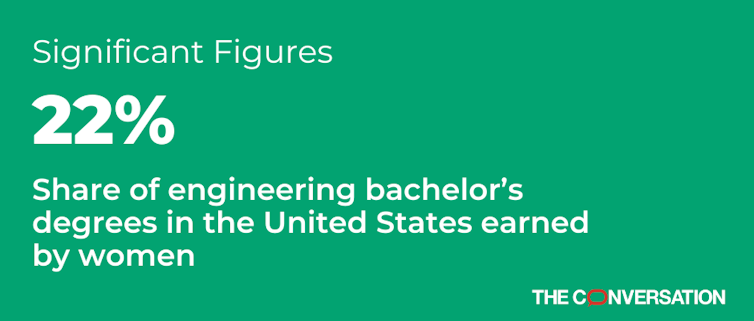
Despite various efforts to encourage more women to study STEM fields in college, the percentage of engineering bachelor’s degrees earned by women in the United States hasn’t increased much in the 21st century. Specifically, it has risen from 18% in 1998 to 22% in 2018.
Of all the fields in STEM – or science, technology, engineering and mathematics – the engineering workforce has the lowest proportion of women, at 14%.
That low participation matters for several reasons. Women are not only being left out of some of the highest-paying jobs in STEM, but companies are losing out as well. Research shows that gender-diverse teams make better business decisions than teams that are all-male.
So why aren’t women going into engineering? And what, if anything, can be done to help women who decide to study engineering stay the course? The Society of Women Engineers reports that over 32% of female STEM majors switch to another major. Research shows this rate is typically higher than the rate at which men leave engineering. Of those women who leave the engineering profession, 30% cite the workplace environment as the reason, the society reports. A 2017 study of over 5,000 women who earned bachelor’s degrees in engineering found that 10% never entered the field and 27% left the profession.
Colleges intervene
These are all issues I’ve been researching as associate director of the Center for Women in Technology at the University of Maryland, Baltimore County, or UMBC. In 2018, several colleagues and I found that computing and engineering students who are supported by the center graduate within four years at a rate of 61.2% – a than students who are not supported by the center. The center supports students through scholarships and extensive academic and social support; in the 2021-22 academic year, 73% of students supported were women. And recently two alumnae of the center – one in 2019 and one in 2022 – have become Fulbright Scholars.
The program at UMBC is by no means the only campus-based program in the nation that supports female students in their plans to enter engineering and computer science – two areas in which women are persistently underrepresented. Through my research, I have discovered that there are more than two dozen such programs or initiatives at colleges and universities throughout the nation. They include, for example, the Women in Engineering Program at University of Delaware, the Women in Science and Engineering program at North Carolina State University and the Advancing Women in Engineering program at the University of Pennsylvania.
It doesn’t have to be that way. Research shows that when female engineering students are mentored by female peers, they feel less anxious about their ability, have more positive academic experiences and are more likely to stick with STEM as a major. Peer-based tutoring has also been shown to help students get their grades up.
With support from an approximately $233,000 grant from the National Science Foundation, I have also been looking at what kinds of academic experiences and supports help female engineering students stay the course.
Based on my analysis of 356 female engineering students at UMBC from 2007 to 2016, what follows are preliminary findings from my National Science Foundation research:
1. High school math and grades make a difference
Starting college in a higher level of college math and having a higher high school GPA both help. Specifically, starting college at a higher level of college math – such as Advanced Calculus or Differential Equations – increases the likelihood of graduating with an engineering degree within five years by 8% over those who start at lower levels of college math. Having a higher high school GPA increases the likelihood even more.
To boost the number of women who earn engineering degrees, educators must help girls get on track at the high school level. This means establishing a strong record of success in their high school math and science courses.
2. Gateway engineering courses matter
By “gateway” courses, I mean classes that are required to officially declare the engineering major and that faculty identified as critical for success. In other words, classes that make or break an engineer. This would include courses such as Principles of Digital Design in computer engineering, Statics in mechanical engineering and Chemical Process Thermodynamics in chemical engineering.
I found that women who took more gateway engineering courses were less likely to leave their intended engineering major.
3. Freshman and sophomore years in college are critical
For those who eventually left engineering, making it through the first four semesters is critical. Among women students who left engineering, 59% – or about three out of five – did so during the first four semesters.
This points toward the need for colleges and universities to provide very deliberate academic and social supports – such as tutoring and mentoring – for female engineering students at the very start of their college careers.
If only 1 in 5 bachelor’s degrees in engineering are awarded to women, it may take these efforts and more to get the number anywhere close to being on par with the proportion that are awarded to men.
Ian Anson, Associate Professor of Political Science, UMBC.
Over the past few months, many journalists and pundits have credited the power of Donald Trump’s endorsements with determining the winners of Republican primaries.
Trump has made 203 candidate endorsements in the 2022 election cycle so far, targeting state, congressional, gubernatorial and even local races.
Based on the numbers alone, receiving a “Trump bump” seems like a surefire way to win an election. So far, 94% of Trump’s favored candidates have won their Republican primaries.
But as a political scientist who studies voting and public opinion, I have my doubts about the true power of Trump’s endorsements. Instead, it is more likely that most of the candidates Trump has chosen to endorse were already on track to win their respective races.
This is because endorsements are not made in a vacuum. Much like the endorsements of interest groups and political parties, the so-called “Trump bump” is mostly a reflection of the attributes a candidate already had before the endorsement.
For this reason, Trump’s endorsements are an excellent lesson in what scholars call “reverse causality.” This is what happens when people mistake a phenomenon’s effects for its cause, like thinking that people holding umbrellas have caused it to rain. In this case, reverse causality implies that Trump’s favorite candidates are not more likely to win because of his endorsement.
To be sure, candidate endorsements can act as valuable cues for voters seeking to make informed decisions. Voters might think to themselves, “If this person, whom I trust and like, supports a candidate, then I should trust and like the candidate too.” This is especially true in elections in which little is known about the contenders.
Trump endorsed former Sen. David Purdue, seen here, in the 2022 GOP primary for governor in Georgia. But the incumbent, Brian Kemp, won the nomination. AP Photo/John Bazemore
Such mental shortcuts allow voters with limited knowledge of the candidates to vote according to their preferences. But in most cases, endorsements do little to persuade voters to shift their support from one candidate to another.
The real sources of the ‘Trump bump’
There are at least three other reasons that many of Trump’s favored candidates are finding success in 2022.
First, most of Trump’s endorsed candidates already hold office. This gives them a distinct electoral advantage. Only one of the congressional incumbents whom Trump endorsed lost in the primary. That candidate, Rep. Madison Cawthorn in North Carolina, chose to run in a new congressional district, partially scuttling his incumbency advantage.
The stellar performance of Trump-backed incumbents is unsurprising, because incumbents already have a nearly 100% chance of winning primaries. The rare primary upset of an incumbent, like the one that elected New York Democratic Rep. Alexandria Ocasio-Cortez in 2018, normally sends shock waves through the political landscape.
Of course, Trump has also endorsed some challengers. Research shows that challengers raise more money if they receive high-profile endorsements. Trump’s endorsement might have had a similar effect.
But longtime incumbents often have even deeper pockets, making them difficult for challengers to defeat. The record reflects this reality: Of the nine Trump-endorsed challengers who have gone up against incumbents in primaries thus far, only three have managed to win.
Trump endorsements are also likely determined by a candidate’s quality, which can be defined as the extent to which a candidate possesses the skills, reputation and resources – including money – to win elections. High-quality candidates normally contest only those elections they know they can win. Key endorsers like Trump stake their reputation on their support for candidates, meaning they are probably choosy about whom to endorse. This helps to explain why not all vocally pro-Trump candidates have received his official blessing.
Finally, a candidate’s ideology plays an important role in determining winners, losers and support from endorsers. Trump is likely to endorse conservative candidates who align with his policy preferences – though not always. Successful conservative candidates run in districts and states with many conservative voters. Trump’s endorsement will merely clarify these voters’ affinity for the candidate, while reaffirming others’ decision to vote for someone else.
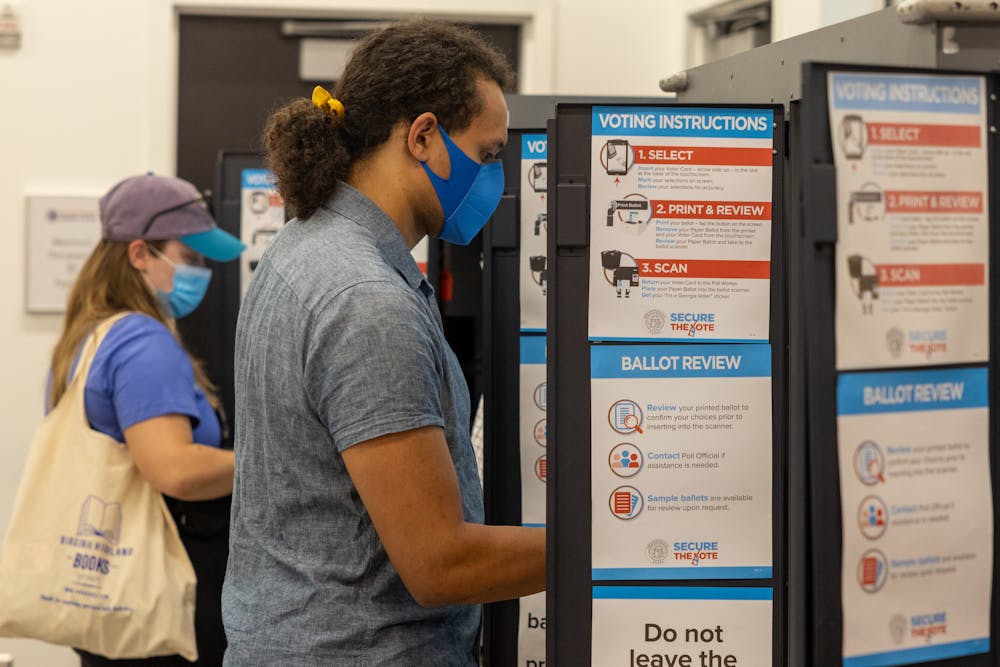
Many elements influence how a person votes, and an endorsement is not usually decisive. Here, voters in Atlanta, Ga., on primary election day, May 24, 2022. Nathan Posner/Anadolu Agency via Getty Images
No endorsement, no problem for Republicans in ‘22
Before assigning Trump the credit for boosting candidates in the upcoming 2022 general election, observers should recognize the notorious difficulty of proving causation in the realm of electoral politics. 2022 is primed to be a banner year for Republican candidates, whether they receive a nod from Trump or not.
Midterm election years are almost always tough contests for the party of the incumbent president. Voters associate candidates down the ballot with the president’s performance in office. After an early honeymoon phase, presidential approval often slumps as midterm elections near, damaging the chances of congressional candidates.
These factors combine to heavily favor Republican candidates this year. Trump’s endorsements are far less important for voting behavior than the political and economic context of this year’s elections.
Hopefully, when it comes time to discuss the reasons that some candidates won and others lost, commentators will keep these lessons from voting behavior research in mind.
John Rennie Short, Professor, School of Public Policy, UMBC
The COVID-19 pandemic has generated mind-numbing statistics over the past two years: half a billion cases, 6 million deaths, 1 million in the U.S. alone. But another, less-publicized global scourge preceded it and is likely to outlast it: traffic deaths and injuries.
Around 1.35 million people die each year on the world’s roads, and another 20 million to 50 million are seriously injured. Half of these deaths and many of the injuries involve pedestrians, cyclists and motorcyclists – the most vulnerable users of roads and streets.
Around the world, someone dies from a road accident every 25 seconds. The head of the United Nations Road Safety Fund has called road deaths and injuries a “silent epidemic on wheels”.
It may seem like hyperbole to talk about road deaths as equivalent to pandemic diseases, but the numbers make the case. Road fatalities are now the top cause of death for children and young adults worldwide between the ages of 5 and 29, and the seventh-leading cause of death overall in low-income countries.
Crashes cause serious economic harm to victims and their families, as well as to the broader society. A 2019 study estimated that between 2015 and 2030, road injuries will cost the global economy almost $1.8 trillion.
Richer nations have had mass automobile traffic longer than lower-income countries, so they have had more time to develop strategies and tactics to reduce accidents and fatalities. For example, in 1937 – in an era when traffic death in the streets of cities like New York was considered a routine part of metropolitan life – the U.S. road death rate was 31 per 100,000. That’s about the same as today’s rate in the Democratic Republic of the Congo.
Lower-income countries tend to have vehicles that are less safe; poorer roads; more vulnerable road users, such as pedestrians and cyclists, sharing urban space with vehicles; and poorer medical care, which means injury can more easily lead to death. These nations also have less ability to introduce or enforce traffic laws.
Traffic in Manila, Philippines. John Rennie Short, CC BY-ND
Traffic incidents in higher-income counties often only involve one or two people. In lower-income countries, incidents tend to involve multiple passengers.
For example, in 2021 in the Democratic Republic of the Congo, a fuel truck collided with a crowded bus 110 miles outside the capital of Kinshasa, killing 33 people. Deadly road incidents are frequent in the DRC, where the roads are poor, there are many unsafe older vehicles, many drivers are not properly trained and drinking and driving is common.
For many middle-income countries, the challenge is a very rapid increase in vehicular traffic as the population becomes more urban and more people earn enough money to buy motorcycles and cars. This quick rise can overwhelm the carrying capacity of urban roads.
In the US, less regulation and more deaths
There also are differences among richer countries. In 1994, Europe and the United States had the same traffic death rates, but by 2020 Americans were over three times more likely to die on the road than Europeans. https://www.youtube.com/embed/jLMm83I4dqc?wmode=transparent&start=0 Traffic deaths in the U.S. rose by more than 10% from 2020 to 2021.
Today, 12 people are killed in traffic per 100,000 annually in the U.S., compared to 4 per 100,000 in the Netherlands and Germany, and only 2 per 100,000 in Norway. The difference reflects more aggressive programs across Europe to reduce speeds, greater investment in mass transit and stricter drunk driving enforcement.
The U.S. doesn’t just lag behind other rich countries in promoting road safety. In recent years, traffic deaths in the U.S. have increased. After a gradual reduction over 50 years, fatalities soared to a 16-year high in 2021 when almost 43,000 people died. Pedestrian deaths hit a 40-year high at 7,500.
Cyclist and pedestrian traffic deaths were rising even before the pandemic, as cities encouraged walking and biking without providing adequate infrastructure. Painting a white line on a busy street is not a substitute for providing a fully protected, designated bicycle lane.
Two harmful narratives about traffic safety
Two narratives often cloud discussions of traffic fatalities. First, calling these events “accidents” normalizes what I view as a slaughter of innocents. It is part of the cult of automobility and the primacy that the U.S. affords to fast-moving vehicular traffic.
Automobility has created a special form of space – roads and highways – where deaths and injuries are considered “accidents.” In my view, this is an extreme form of environmental injustice. Historically disadvantaged groups and poorer communities are overrepresented in traffic deaths and injuries.
The second misleading narrative holds that nearly all road deaths and injuries are caused by human error. Public officials regularly blame poor drivers, distracted pedestrians and aggressive bicyclists for street deaths.
People do take too many risks. In recent years, AAA’s annual traffic safety culture survey has found that a majority of drivers view unsafe driving behaviors, such as texting while driving or speeding on highways, as extremely or very dangerous. But significant numbers of drivers report engaging in those behaviors anyway.
But as urban studies expert David Zipper has pointed out, a persistent myth often cited by government agencies and the media asserts that 94% of accidents in the U.S. are caused by individual drivers. This bloated figure has successfully shifted responsibility away from other factors such as car design, traffic infrastructure and the need for more effective public policies. https://www.youtube.com/embed/vTRPg6wqjn4?wmode=transparent&start=0 Former New York City transportation commissioner Janette Sadik-Khan visits a street in Queens that was closed to cars during the COVID-19 pandemic. Advocates are campaigning to make the closure permanent.
Governments have the tools
As I see it, road traffic deaths and injuries are not accidents. They are incidents that can be prevented and reduced. Doing that will require governments and urban planners to reimagine transportation systems not just for speed and efficiency, but also for safety and livability.
That will mean protecting motorcyclists, bicyclists and pedestrians from vehicular traffic and reducing traffic speed on urban roads. It also will require better road design, enforcement of traffic laws that make the roads safer, and more effective and enforceable measures that promote safety devices like seat belts, child restraints, and helmets for bikers and motorcyclists.
Unlike the COVID-19 pandemic, making streets safer doesn’t require designing new solutions in laboratories. What’s needed is the will to apply tools that have been shown to work.
Meredith Oyen, Associate Professor of History and Asian Studies, UMBC
The White House has been left scrambling a little after President Joe Biden suggested on May 23, 2022, that the U.S. would intervene militarily should China attempt an invasion of Taiwan.
The comment, which Biden made during a trip to Japan, was taken by some observers as a deviation from the official U.S. line on Taiwan, in place for decades. But officials in Washington walked back that interpretation, saying instead that it only referred to military assistance.
Meredith Oyen, an expert on U.S.-China relations at the University of Maryland, Baltimore County, helps explain the background to Biden’s recent comments and untangles what should be read into his remarks – and what shouldn’t.
What did Biden say and why was it significant?
Asked if the U.S. was willing to get involved “militarily” in the event of an invasion of Taiwan, Biden replied, “yes.” A follow-up question saw the U.S. president add: “That’s the commitment we have made.”
By my count, this is the third time Biden has as president suggested that the U.S. will come to Taiwan’s aid militarily if the island is attacked. In 2021 he made similar remarks in an interview with ABC News and then again while taking part in a CNN town hall event.
But it is significant that this is the first time he has made the assertion while in Asia.
An important thing to note is that on each occasion he has made such a comment, it has been followed quite quickly by the White House walking back the remarks, by issuing statements along the lines of “what the president actually means is…” and stressing that this isn’t a shift away from the official U.S. policy on China or Taiwan.
However, the remarks and the clarifications have increased doubt over whether Biden is continuing the policy of “strategic ambiguity” on Taiwan.
What does ‘strategic ambiguity’ mean?
Strategic ambiguity has long been the U.S. policy toward Taiwan – really since the 1950s but certainly from 1979 onward. While it does not explicitly commit the U.S. to defending Taiwan in every circumstance, it does leaves open the option of American defensive support to Taiwan in the event of an unprovoked attack by China.
Crucially, the U.S. hasn’t really said what it will do – so does this support mean economic aid, supply of weapons or U.S. boots on the ground? China and Taiwan are left guessing if – and to what extent – the U.S. will be involved in any China-Taiwan conflict.
By leaving the answer to that question ambiguous, the U.S. holds a threat over China: Invade Taiwan and find out if you face the U.S. as well.
Traditionally, this has been a useful policy for the U.S., but things have changed since it was first rolled out. It was certainly effective when the U.S. was in a much stronger position militarily compared to China. But it might be less effective as a threat now that China’s military is catching up with the U.S.
Leading voices from U.S. allies in Asia, such as Japan, believe that “strategic clarity” might be a better option now – with the U.S. stating outright that it would defend Taiwan if the island is attacked.
So Biden’s comments could hint at this shift?
There does seem to be a pattern: Biden says something seemingly very clear on defending Taiwan, and that then gets walked back. If no one in Washington was walking back the comments then it would seem like an intentional shift in policy by the Biden administration.
But the fact that the White House has always been quick to clarify the comments suggests to me that it isn’t necessarily intentional. It seems like Biden is simply trying to signal more support for Taiwan, and perhaps reassure U.S. allies in Asia.
But I’m a historian, not a strategist. It could be that this is some advanced chess game that I can’t figure out.
What is the history of US relations with Taiwan?
After the victory of the Chinese Communist Party in 1949, the defeated Republic of China government withdrew to the island of Taiwan, located just 100 miles off the shore of Fujian province. And until the 1970s, the U.S. recognized only this exiled Republic of China on Taiwan as the government of China.
But in 1971, the United Nations shifted recognition to the People’s Republic of China on the mainland. In 1972, President Richard Nixon made a now-famous trip to China to announce a rapprochement and sign the Shanghai Communique, a joint statement from communist China and the U.S. signaling a commitment to pursue formal diplomatic relations. A critical section of that document stated: “The United States acknowledges that all Chinese on either side of the Taiwan Strait maintain there is but one China and that Taiwan is a part of China. The United States Government does not challenge that position.”
The wording was crucial: the U.S. was not formally committing to a position on whether Taiwan was part of the China nation. Instead, it was acknowledging what the governments of either territory asserted – that there is “one China.”
Where does US commitment of military support for Taiwan come from?
After establishing formal diplomatic relations with China in 1979, the U.S. built an informal relationship with the ROC on Taiwan. In part to push back against President Jimmy Carter’s decision to recognize communist China, U.S. lawmakers passed the Taiwan Relations Act in 1979. That act outlined a plan to maintain close ties between the U.S. and Taiwan and included provisions for the U.S. to sell military items to help the island maintain its defense – setting the path for the policy of strategic ambiguity.
Beijing has become more aggressive of late in asserting that Taiwan must be “returned to China.” Domestic politics plays a role in this. At times of internal instability in China, Beijing has sounded a more belligerent tone on relations between the two entities separated by the Taiwan Strait. We have seen this over the last year with Beijing sending military aircraft into Taiwan’s Air Defense Zone.
He also didn’t overturn the Taiwan Travel Act passed under the the previous administration of Donald Trump. This legislation allows U.S. officials to visit Taiwan in an official capacity.
So there has been a shift to a degree. But the White House is keen not to overstate any change. At heart, there is a desire by the U.S. to not stray from the Shanghai Communique.
So is an invasion of Taiwan likely?
I don’t think we are anywhere near that yet. Any invasion across the Taiwan Strait would be militarily complex. It also comes with risks of backlash from the international community. Taiwan would receive support from not only the U.S. – in an unclear capacity, given Biden’s remarks – but also Japan and likely other countries in the region.
Meanwhile, China maintains that it wants to see reintegration through peaceful means. As long as Taiwan doesn’t force the issue and declare independence unilaterally, I think there is tolerance in Beijing to wait it out. And despite some commentary to the contrary, I don’t think the invasion of Ukraine has raised the prospects of a similar move on Taiwan. In fact, given that Russia is now bogged down in a months-long conflict that has hit its military credibility and economy, the Ukraine invasion may actually serve as a warning to Beijing.