All posts by: Sarah Hansen, M.S. '15


UMBC statistician selected to work with Addis Ababa University in Ethiopia

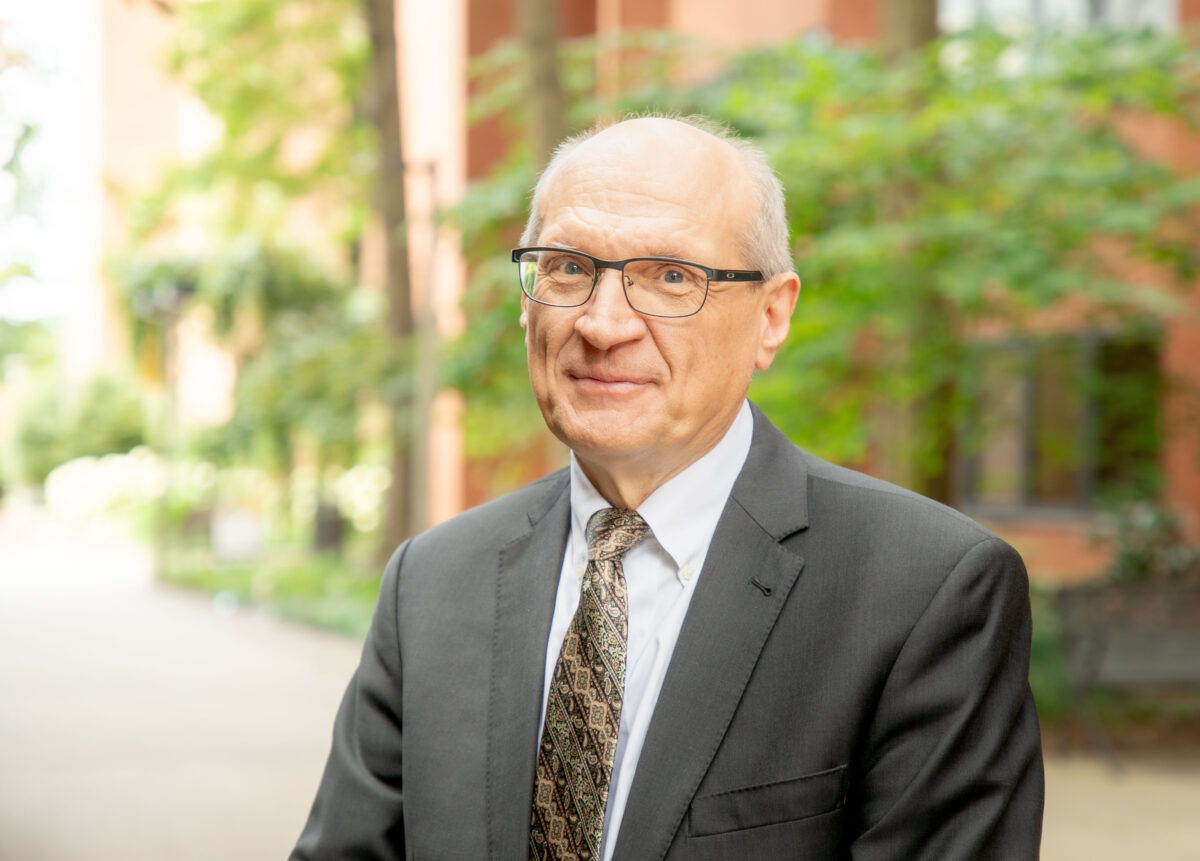
Yehenew Kifle, assistant professor of statistics at UMBC, has been awarded a fellowship by the Carnegie African Diaspora Fellowship Program (CADFP). Kifle will travel to Addis Ababa University (AAU) in Ethiopia to work with the Department of Epidemiology and Biostatistics. There, he will work with colleagues to enhance teaching and mentoring and grow research collaborations to support Ph.D. training in biostatistics.

man standing in front of a brick wall, white lettering on wall reads "...rican ...tical ...iat...)
Yehenew Kifle visited the American Statistical Association in April 2024, around the signing of the agreement between the ASA and UMBC related to the African International Conference on Statistics. (Courtesy of Kifle)

Kifle will spend three months in Ethiopia this summer, working with his African host, Zeytu Gashaw Asfaw, associate professor of biostatistics at AAU. In addition to producing collaborative research, during his stay Kifle plans to conduct short-term training sessions and workshops on advanced software-aided statistical techniques for junior statisticians, graduate students, and medical professionals within the school of public health at AAU. He will also assist in crafting grant proposals aimed at increasing research collaborations in biostatistics between UMBC and AAU.

The Carnegie African Diaspora Fellowship Program, now in its 10th year, is designed to strengthen capacity for graduate education at host institutions and develop long-term, mutually beneficial collaborations between universities in Africa and the United States and Canada. It is funded by Carnegie Corporation of New York and managed by the Institute of International Education (IIE) in collaboration with the Association of African Universities. Nearly 650 fellowships have been awarded since the CADFP’s inception in 2013.

“I’m grateful for the opportunity to represent the University of Maryland, Baltimore County in its international outreach endeavors, highlighting the importance of CADFP,” Kifle says, adding, “I’m looking forward to sharing my expertise in teaching biostatistics graduate courses, offering mentorship, and supervising doctoral dissertations.” Additionally, Kifle plans to conduct seminars on his recent research findings and offer insights into improving graduate programs in biostatistics.

Building on international connections

Before arriving at UMBC, Kifle was a professor of statistics at the University of Limpopo in South Africa. UMBC signed a collaborative agreement with University of Limpopo in 2018, initiated by Kifle while he was a visiting faculty member from Limpopo at UMBC. Kifle first encountered UMBC’s strength in statistics at the 2015 African International Conference (AIC) on Statistics, a UMBC-led conference held in a different African country annually since 2014. 

Since then, Kifle has been a leader in organizing the AIC, which recently received a pledge for support from the American Statistical Association. The Carnegie fellowship builds further on Kifle’s commitment to forging partnerships with African universities for the mutual benefit of scholars at UMBC and in Africa.

two men shake hands, one holding a large folder, while another looks on between them
Bimal Sinha (left), professor of statistics at UMBC, and Yehenew Kifle (center), assistant professor of statistics at UMBC, with N.M. Mokgalongs, president of University of Limpopo, at the 4th Annual African International Conference on Statistics. (Courtesy of Kifle)

Kifle’s work in Ethiopia is one of 60 new projects supported by the CADFP that pair African diaspora scholars with higher education institutions and collaborators in Africa to work together on curriculum development, research, graduate training, and mentoring activities in 2024.

“This is indeed exciting news for all of us in the department and at UMBC,” shared Bimal Sinha, professor of statistics at UMBC. “We are thrilled to know that Dr. Kifle will represent UMBC in this extraordinary outreach effort to offer seminars and training courses and possibly to jointly supervise doctoral dissertations. There is no doubt that many statistics departments in Ethiopia will benefit from Dr. Kifle’s vast teaching and research experiences.”

CNMS Awards and Recognition Day honors students, faculty, and staff

The College of Natural and Mathematical Sciences (CNMS) held its annual CNMS Awards and Recognition Day on May 10. Nearly 270 UMBC community members and friends attended the event in the University Center Ballroom. The department chairs presented 45 awards established by donors in support of students, faculty, and staff, such as the Carl S. Weber Award for Excellence in Teaching, awarded this year to Tamra Mendelson, professor of biological sciences. 

“I would like to thank the members of the UMBC community—alumni, parents, faculty, staff, and friends—who have made possible many of the awards we are presenting here today. These are not just names on a page—they are stories of gratitude and giving, honoring loved ones and families,” shared William R. LaCourse, CNMS dean. “You are fueling the academic success of our students, helping us recruit and retain top-notch faculty, ensuring support for programs and people across the university, and inspiring others to give. On behalf of UMBC, thank you!”

The recognition day also honored eight CNMS faculty at all levels with Faculty Excellence Awards for research and teaching designated by the college, awarded college-level Staff Excellence Awards for outstanding service, and distributed departmental awards for undergraduate and graduate students recognizing academic excellence, research, and teaching. 

person standing at podium on stage, eight people seated on the same stage are clapping and smiling; a few tables visible in foreground
Dean LaCourse, at the podium, introduced the awards ceremony, and individual chairs or their designees presented the awards to members of their departments. From left to right: Commander Christopher Boehm, naval science; Captain John Howrey, naval science; Yonathan Zohar, professor and chair, marine biotechnology; Annica Wayman ’99, mechanical engineering, associate dean for Shady Grove affairs; Jason Kestner, associate professor and associate chair, physics; Bradford Peercy, professor, mathematics; Brian Cullum, professor and chair, chemistry and biochemistry; Michelle Starz-Gaiano, professor and chair, biological sciences. (Melissa Penley Cormier, M.F.A. ’17/UMBC)

CNMS also celebrated students who had been inducted into national honor societies, including Sigma Pi Sigma, the physics and astronomy honor society; Pi Mu Epsilon, the national mathematics honor society; Mu Sigma Rho, the national statistics honorary society; and the Phi Beta Kappa Society, which recognizes overall academic excellence. 

LaCourse closed the ceremony by recognizing students in scholars programs within the college. The CNMS Scholars program supports students interested in the advancement of women in STEM fields where they are still underrepresented, and the Beckman Scholars program, funded by the Arnold and Mabel Beckman Foundation, supports students desiring to pursue doctoral study in the biological and chemical sciences.

“Students who have been recognized at this ceremony have met UMBC’s academic requirements and have excelled at high levels in their academics and/or service to their departments, college, and university,” LaCourse shared. “These honorees are poised to become scientists, physicians, mathematicians, teachers, and leaders in their chosen fields. These students are our leaders of the future, and we are fortunate to have the opportunity to help provide the critical foundations for their promising futures.”

The full event program, including additional remarks from Dean LaCourse and a complete list of awardees and award descriptions, is available here

Max Hartley ’24: Enthusiastic quantum thermodynamics researcher

Maxfield Hartley ’24, physics, is an “exceptionally talented student with a truly inquisitive mind,” according to his mentor, Associate Professor Sebastian Deffner. Max’s undergraduate research applying thermodynamic principles to music bends the mind, but leaves one wanting to know more—and his enthusiasm is contagious. Later this summer, Max is headed to an interdisciplinary and international doctoral program at the Okinawa Institute of Science and Technology in Okinawa, Japan.

Q: How did you connect with your mentor, physics professor Sebastian Deffner?

A: I took his thermodynamics class. It was one of the most interesting classes I’ve taken. I had been told that it was the hardest class in the physics major, and I just asked a ton of questions. Sometimes after class, I would have more questions, so I would follow him to his office and then to the dining hall—that was just how many questions I had. Over lunch, we’d talk about physics, or we’d talk about careers—because at this point I wasn’t really sure I wanted to be a physicist.

One of the things that made me feel more comfortable doing this was that in the second week of the semester he asked me to come to his office after class. And I was like, “Oh no. What have I done? He’s going to give me a talking to.” Which made what happened even more surprising. I sat down across from him and he said, “Max, you’re a very talented student.” And I said, “Thank you!” And he said, “No, it’s not a compliment, just an observation,” in the most German way you can possibly imagine. 

It meant a lot. So even though I wasn’t necessarily awash in my own self-generated confidence, having him say that made me think, “Well, maybe he’s right. Maybe there’s something to this.” So I felt more confident after that. It was a big moment for me.

Then, I officially joined Dr. Deffner’s research group and got started on a really interesting project.

professor and student facing the camera, each with an arm around the other's shoulders; greenery and campus buildings in background
Hartley (right) and Deffner have grown close since Hartley joined Deffner’s research group. (Marlayna Demond ’11/UMBC)

Q: Tell me about the project. 

A: It’s essentially a data analysis project, where we apply an analysis that is usually reserved for physical particle trajectories to musical melodies. In the same way that the particle trajectory is a series of positions, we think of a melody as a series of pitches.

Our central quantity is the entropy, which increases in an irreversible physical process. Irreversible means that it is vanishingly unlikely for the process to happen in reverse. In our analysis of music, we are interested in seeing if the “musical entropy” that we calculate increases over time, indicating irreversibility or directionality in music.

In general, I have always been interested in creating objectively defined quantities that can be used to analyze why music sounds the way it does to us. The possibility of creating a modern music theory which borrows ideas from thermodynamics is very cool to me. Then, we would be able to describe certain sounds as “hotter,” “colder,” “higher energy,” or “more entropic.” We could also go the other way, thinking of certain thermodynamic processes as more “consonant” or “dissonant.” 

From our results so far, it looks like overall music does have some level of irreversible directionality that is similar to what we see in thermodynamics. We’re running some additional analyses now, such as controlling for the music’s key signature and comparing the results from music in different genres, and then we plan to submit our findings to a physics journal. 

Q: How has Deffner supported you and your growth as a researcher?

A: Dr. Deffner has pushed me to have experiences in the physics department I might not have otherwise had. For example, he recruited me to volunteer with the Science Olympiad held for high school students at UMBC, and that experience was quite rewarding and fun. Dr. Deffner also answers all of the random physics questions I come up with, and he has assigned his postdoc, Emery Doucet, to help me with my project. I’ve had many useful conversations with Emery, and his generous guidance has helped me understand a lot better how to organize and scope a research project.

four people, two seated and two standing, discuss thermodynamics equations on a wall whiteboard nearby.
Deffner’s large research group includes postdoctoral fellows, graduate students, and undergraduates. (Marlayna Demond ’11/UMBC)

Q: What advice would you give to someone who’s uncertain about their major?

A: First, it’s hard to make big decisions. That’s what I struggle with. So I actually came into UMBC undeclared. I knew I wanted to do something in STEM, and I took as many classes as I could that would apply to all of the majors related to my wide-ranging interests. 

I was considering computer science or computer engineering, and in my sophomore year, I sat down with my mom and told her I needed to decide what I wanted to do. I looked at physics, and everything—from the introductory courses to the 400-level classes—looked really cool. And I thought, well, that’s a good sign. Decision-making is still something I find difficult, though. Ask me about that one when I’m older!

My best advice for getting inspired is to knock on people’s doors and talk to them! Find a professor who’s studying something you think you’d possibly be interested in and have a conversation. Most professors will be quite happy to do this. Also, ask a lot of questions in class! It’s difficult, because the more questions you ask, the more chances you have to come off as a fool, but my advice is to embrace the experience of coming off as a fool. Over time it won’t bother you as much. Also, a majority of the time you’ll actually ask a question that somebody else was wondering about.

Q: Now that you’ve chosen physics, what would you say drives your passion for it?

A: First, I find thermodynamics in general interesting because it is more of an approach to physics than simply a branch of physics. In thermodynamics, we’re modeling a system about which we only have macroscopic information. The actual microscopic dynamics of the many molecules in a glass of water are incredibly complicated, but we cannot directly observe them, and we don’t actually care all that much.

Instead, we model properties we can observe, like heat and work, and we can still learn a lot about the glass of water. We dump everything we don’t know about what’s happening at the microscopic level into one variable, which we call the entropy. This act of encoding our ignorance in one variable, and developing a coherent theory around the quantities which we can measure, is very appealing to me.

What is the concept of “work” in physics? Work is what happens when force is applied to an object and the object moves in the direction of the force.

Second, I believe that using this type of thinking, thermodynamic thinking, is one of—if not the most—powerful tools in our quest to really understand what’s going on in the quantum world. What I mean by “really understand” is to answer questions such as: Why do quantum systems behave differently when we are measuring them? What precisely constitutes a measurement for that matter? Why do the weird quantum properties go away when we assemble many quantum objects (i.e. atoms) into a larger non-quantum object (i.e. my desk)? 

Why do I think that thermodynamic thinking in particular is well suited to this? Well, it gets back to the ignorance aspect. Quantum mechanics is built on uncertainty: Certain quantities cannot be known precisely at the same time, and measuring a quantum system always changes the system in a very noticeable way. In these aspects, quantum theory is full of things we cannot know, and this is just begging to be treated through a phenomenological, thermodynamic lens. 

Q: What’s next for you?

A: I looked at a lot of grad schools, and I found one that stood out among the rest: the Okinawa Institute of Science and Technology in Okinawa, Japan. I was accepted and will be leaving for Japan in August. The Institute seems amazing for several reasons. Most importantly, the people there are studying very interesting things, including a research group focusing on thermodynamics and quantum systems and another on information theory and space time. They’re ultimately trying to figure out quantum gravity, which is sort of the big thing in physics today, and they’re doing it through information theory.

One of the very unique things about the institute is that they don’t have academic departments. They only have research groups—they call them units—and they’re encouraged to work together. They try to break down the walls and just be a community of people learning stuff. In the buildings, they put people of different disciplines next to each other, so there’s lots of opportunities for interaction and collaboration.

I’ve never been to Asia at all, but I’ve always wanted to go to Japan. The entire program is taught in English, and it’s very international. You have students from different countries, with only a few graduate students there from each. They even provide housing and cover students’ travel to Japan. I’m super excited to start this next chapter and see where it leads me. 

Month of Earth Day events culminates with 8th Annual Earth Day Symposium

UMBC’s strength in environmental research spans all three colleges and the university’s NASA-partnered centers, and Earth Day is always a special time on campus. This year, UMBC partnered with the Environmental Protection Agency (EPA) to host more events than ever before. A committee led at UMBC by Rhonda Plofkin, a Ph.D. student in geography and environmental systems (GES), organized 18 events throughout the month of April.

Volunteers led by enthusiastic students and Office of Sustainability staff removed invasive plants on campus; a panel at the AOK Library & Gallery discussed how various disciplines, including the arts, can engage with environmental conservation; the UMBC community watched a partial solar eclipse on campus; and much more.

The month of festivities culminated with the 8th Annual Earth Day Symposium on April 29, organized by graduate students in atmospheric physics and geography and environmental systems (GES). Nearly 150 attendees from at least six universities and five federal agencies gave talks, participated in panel discussions, presented 26 research posters, and even went on a hike through UMBC’s Conservation and Environmental Research Area on an unseasonably warm day. 

“A tradition we are really proud of is that this event is 100 percent planned and implemented by our graduate students,” shared Zhibo Zhang, professor of physics at UMBC. He noted the event not only benefits the attendees, but also the planning team. “I’ve seen their confidence grow every day as the event came together,” Zhang says.

“It has been a great experience for us to invite such a wide range of people with shared enthusiasm for Earth science to UMBC,” shares Kamal Aryal, Ph.D. student in atmospheric physics and the lead organizer for the Earth Day Symposium. “Having students, early career scientists, and university professors from many universities and from NASA’s PACE mission, including the lead project scientist for PACE, attend our symposium creates great opportunities for networking and professional development.”

group photo of 10 people - the Earth Day Symposium planning committee - on a stage in front of a screen. The top portion of the screen is visible and reads "Earth Month."
Planning committee members for the Earth Day Symposium and other Earth Day events with President Valerie Sheares Ashby. Left to right: Sharad Pandey, Adeleke Segun Ademakinwa, Kamal Aryal, Tony La Luna, Roshan Mishra, Rhonda Plofkin, Valerie Sheares Ashby, Tolulope Ale, Erin Hamner, and Maurice Roots. (Image by Zhibo Zhang)

Monitoring the environment—from above Earth’s atmosphere to underwater

First organized in 2017, the Earth Day Symposium has grown in stature, size, and scope every year. This year’s theme was “monitoring planetary health,” a nod to the recently-launched NASA PACE mission carrying HARP2, a polarimeter designed and built at UMBC. HARP2 will improve our understanding of the roles various particles in the atmosphere—like dust, water vapor, and pollutants—play in climate and health. Previous symposium themes have included the environmental impacts of COVID-19, the synergy of scientific disciplines, and equity and environmental justice. 

Vanderlei Martins, professor of physics at UMBC and the HARP2 team lead, gave the first presentation, which was followed later in the morning by a panel discussion including PACE scientists from UMBC, NASA, and Morgan State University. 

The three main instruments on PACE have complementary roles. Each sees Earth a little differently, and will provide important data on plankton populations in the ocean, the role of clouds in Earth’s energy balance, and much more. “Each of these instruments is unique, and together, they are amazing,” Martins says. HARP2 “has capabilities we’ve never had before,” he adds. “I cannot even imagine everything we are going to learn.” 

Between Martins’ talk and the panel, Vanessa Vargas-Nguyen, a researcher with the University of Maryland Center for Environmental Science (UMCES), discussed her work on monitoring the health of the Chesapeake Bay watershed. UMCES produces one of several report cards for the Chesapeake Bay, collecting data on everything from populations of bottom-dwelling critters to concentrations of elements like phosphorus and nitrogen, which are commonly found in fertilizers. Now Vargas-Nguyen is expanding her group’s work to look at the entire watershed more holistically, including adding social factors like economic activity, governance structures, and population density. 

five people sit at a table with microphones in front of them; a large screen behind them shows a satellite image of the Arabian Peninsula and surrounding ocean with different colors representing different plankton communities in the ocean.
Panelists discussed the PACE mission. From left to right: Ivona Cetinic, senior research scientist with Morgan State University through the Goddard Earth Science and Technology Research Center (GESTAR) II; Susanne Craig, scientist with UMBC through GESTAR II; Kirk Knobelspiesse, researcher at NASA Goddard Space Flight Center; Pengwang Zhai, professor of physics at UMBC; and Jeremy Werdell, project scientist for the PACE mission at NASA. (Photo by Kamal Aryal)

A hub for environmental action 

After the post-lunch hike, a poster session featured student and faculty research from UMBC, NASA, and the National Oceanic and Atmospheric Administration. Jing Wei, from the University of Maryland, College Park, discussed remote sensing methods for monitoring air pollution, and Robert Foster, from the U.S. Naval Research Laboratory, explained his work on monitoring microplastics in the ocean. Kandis Boyd, from the EPA, emphasized the importance of interdisciplinary and cross-sector partnerships.

Throughout the day, the ballroom buzzed with energy as students, UMBC faculty, and researchers from around the region shared their science and connected with each other. A shared sense of purpose guided the event, grounded in UMBC’s commitment to promoting a sustainable future. 

As Charles Ichoku, director of the Goddard Earth Science and Technology Research Center II, one of UMBC’s NASA partnerships, and a professor of GES, put it, “UMBC is a young university that does great things.”

Whether taking immediate action to improve the campus landscape, conducting research on global climate, or training the next generation of Earth scientists, the month of Earth Day events demonstrates how UMBC has positioned itself as a hub for environmental action.  

Ph.D. student Jonas Miller receives USM Student Excellence Scholarship

Jonas Miller, Ph.D. candidate in the marine, estuarine, and environmental science graduate program, has received the 2024 University System of Maryland Board of Regents Student Excellence Scholarship for Academics, Scholarship, and Research. Only four graduate students across the system receive Student Excellence Scholarships—one each in four categories.

Miller has been conducting research under the mentorship of Yonathan Zohar, professor of marine biotechnology at UMBC, at the Institute of Marine and Environmental Technology (IMET) since January 2022. Miller’s work is central to enhancing sustainable land-based aquaculture of Atlantic salmon, an area in which Zohar is a world leader. Specifically, Miller is searching for genetic biomarkers in female salmon that predict the timing of spawning and the quality of the spawned eggs.

The end goal is to promote a consistent supply of domestic salmon for consumers by generating populations of fish that spawn at staggered times throughout the year, triggered by different light and temperature conditions in land-based facilities. 

Jonas Miller stands wearing a safety yellow jacket, blue waterproof pants, and gloves next to a tray scale that holds a large fish. He is in a large research area with numerous tanks, bins, and pipes at IMET

“Receiving the Board of Regents scholarship has provided me with the motivation to propel my research to the next level on my quest to find new predictive biomarkers pertaining to Atlantic salmon reproductive endocrinology,” Miller says. 

“Jonas is a talented student able to formulate hypotheses and test them, methodically designing and carrying out experiments using the most advanced methods of genomics and endocrinology,” Zohar wrote in his letter recommending Miller for the scholarship. “His multi-year studies have already generated innovative findings, and his ongoing work will undoubtedly result in much more data and lead to scientific advances and, potentially, economic development opportunities.”

Left: Jonas Miller stands with a fish raised in the Aquaculture Research Center, the main laboratory for aquaculture research at IMET. (Courtesy of Miller)

Ongoing ripples of impact

Jonas Miller, foreground, in a traditional wet lab with three smiling students behind him
Jonas Miller mentors numerous students who participate in marine research. (Courtesy of Miller)

Miller’s contributions have gone far beyond the impact of his research. He served as IMET’s Graduate Student Association president for the 2022 – 2023 academic year, teaches weekly English classes to Chinese graduate students at IMET, and has mentored three high school students volunteering in Zohar’s research group. Miller also authored an 80-page white paper for the National Oceanic and Atmospheric Administration on the potential for tuna aquaculture in the United States. 

“His understanding of the aquaculture field and the relevant literature, as well as his personal experience working on bluefin tuna in Japan, is of great benefit to his colleagues,” Zohar adds. Those colleagues include not only researchers at IMET, but also collaborators at the U.S. Department of Agriculture, University of Maine, University of Wisconsin-Stevens Point, and University of Maryland, College Park. Researchers at these institutions and others are involved in various projects led by Zohar, including a $10 million effort funded by the USDA to address specific challenges in the aquaculture industry. 

When the personal propels the professional

Miller expressed gratitude to Zohar for the opportunity to work with him, and to his collaborators, “who have all made my experience as a Ph.D. student both fruitful and exciting.” 

Miller’s accomplishments have not come without adversity, however. “I’d like to dedicate this scholarship to my best friend David Pardo Hernandez, and to my mom, Sheila Mann Miller, both of whom tragically and unexpectedly passed away during my first year as a Ph.D. student at UMBC in 2022,” Miller shares. “Finally, thanks to my dad for encouraging me to study fish biology and for constantly motivating me to study harder.”

“I am grateful to all of my friends at IMET who have given me support,” Miller adds. “I wish my mom and best friend were here to experience this. They would both be really proud of this accomplishment. They motivated me to work hard and I hope that I made them proud.”

First CNMS GradFest fosters interdepartmental interaction among grads, postdocs

On April 12, more than 150 students, staff, and faculty attended the first College of Natural and Mathematical Sciences (CNMS) GradFest in the University Center Ballroom. The event was the result of listening sessions held with CNMS graduate students last summer, and it addressed their desire for more opportunities to forge interdepartmental connections and present their research.

“Every day, I hear about the great work being done by graduate students and postdocs in CNMS departments,” William R. LaCourse, CNMS dean, shared in his opening remarks. “Today is my chance to meet all of the graduate students the faculty are always bragging about.” 

The event began with six “lightning talks,” where Ph.D. students were challenged to present the big idea of their thesis projects in only five minutes. Naghmeh Akhavan, mathematics, led off, presenting her project on cell migration in fruit fly development. She is co-mentored by Brad Peercy in mathematics and Michelle Starz-Gaiano in biological sciences. Misti Cartwright, chemistry and biochemistry, discussed her work with Aaron Smith on a post-translation protein modification called arginylation. 

Sandra Cheng, physics, talked about her work with Todd Pittman in quantum computing, and Manju Ojha, chemistry and biochemistry, explained her work on RNA-based plant viruses with Deepak Koirala. Ji Li, statistics, described a protocol he developed under the mentorship of Yi Huang to improve data sets for randomized controlled trials. And Prableen Chowdhary, biological sciences, explained her work with Rachel Brewster on zebrafish development.

group of nine people stands in front of a beige curtain
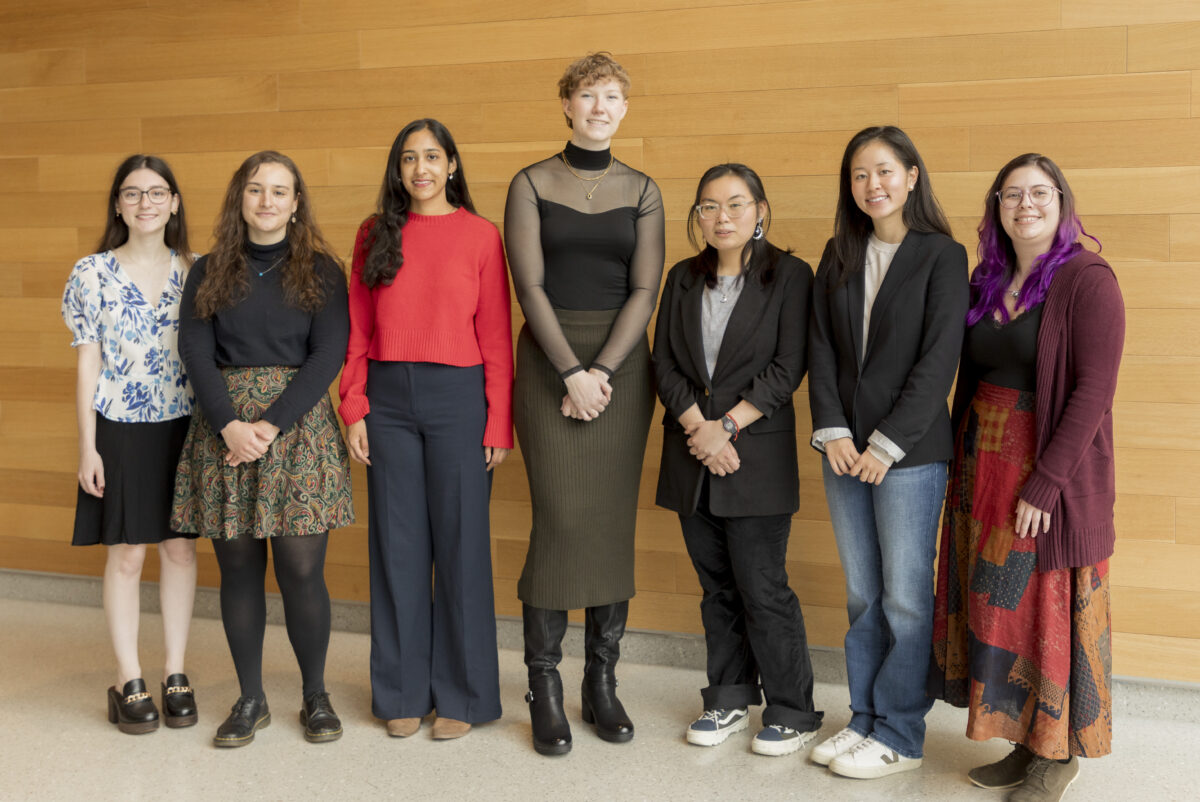
GradFest lightning talk presenters and the planning committee, from left to right: Ronita Sequeira, Ally Kido, Ji Li, Sandra Cheng, Misti Cartwright, Manju Ojha, Prableen Chowdhary, Naghmeh Akhavan, and Ayokunnumi Ogunsanya. (Image by Melissa Penley Cormier, M.F.A. ’17)

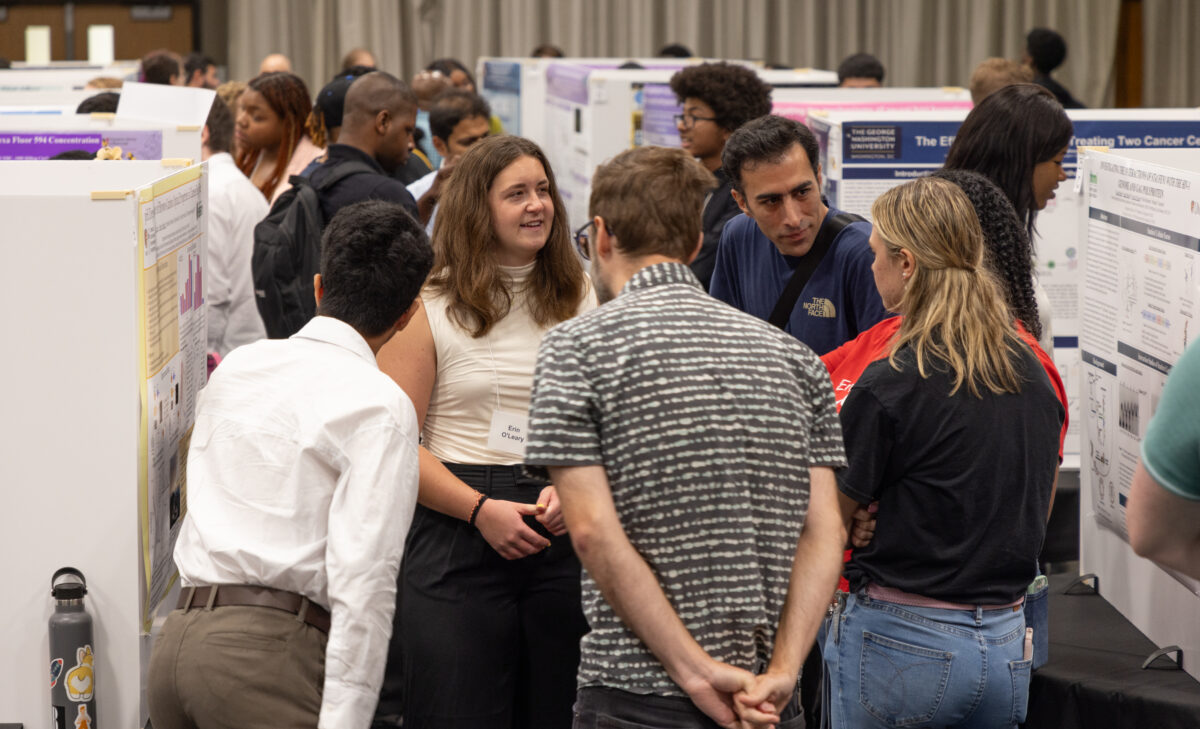
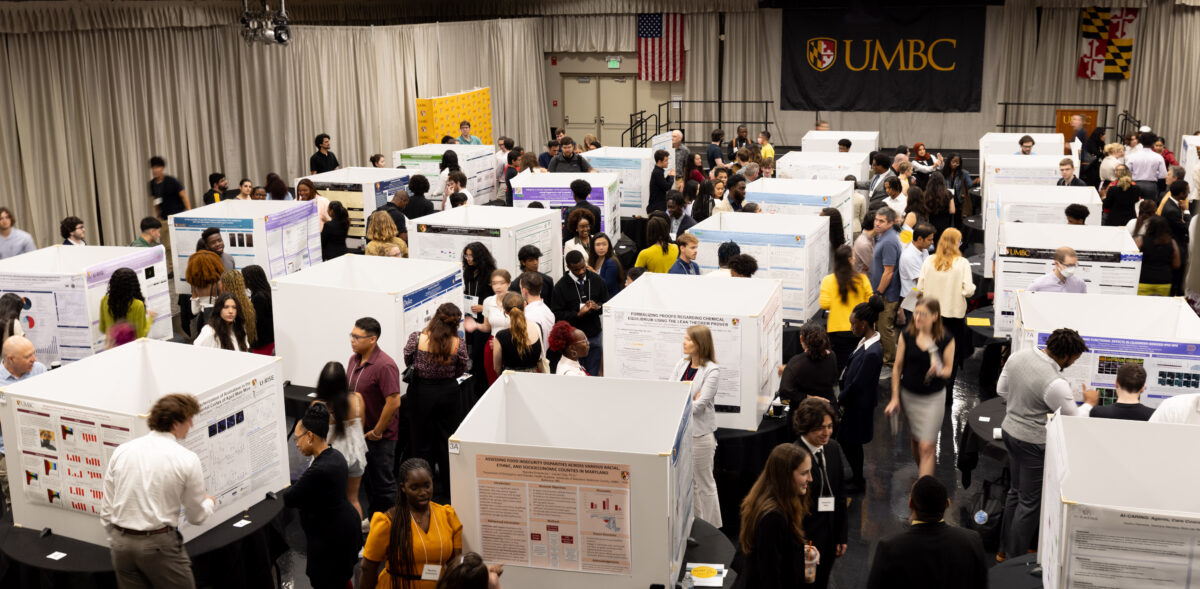
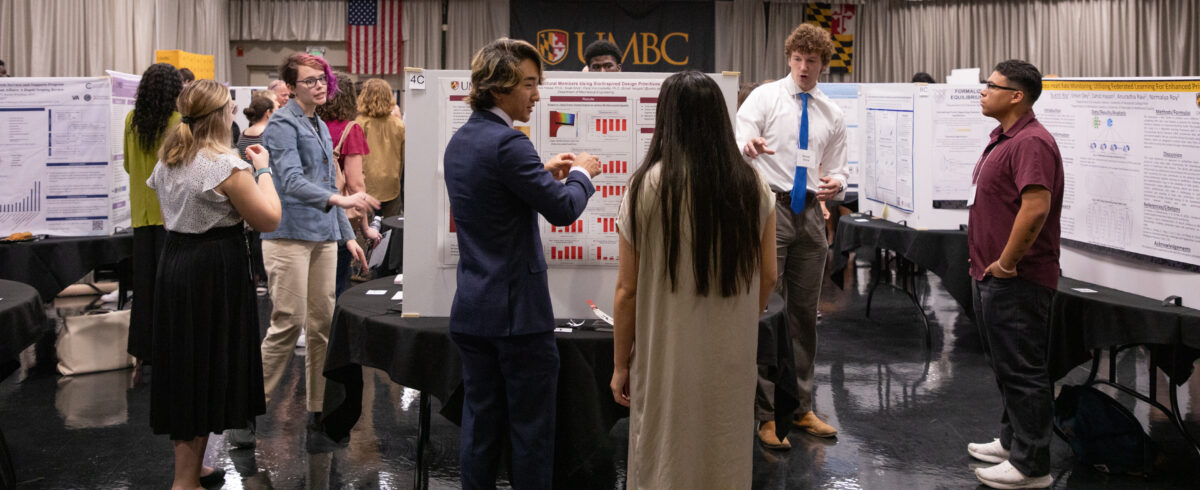
After the talks, two sessions featuring 46 posters allowed attendees to learn about the presenters’ research, ask questions, and make suggestions. A novel arrangement of posters in the ballroom facilitated interaction: Placing four posters each on round tables allowed guests to meander among the posters in many directions, unimpeded by long, linear poster displays.

Tasty mocktails, hors d’oeuvres, and desserts rounded out a successful event that brought graduate students and postdocs—collectively, the research engine of UMBC—together to socialize, practice presenting, and learn about each other’s work. 

UMBC partners with American Statistical Association to organize annual African International Conference on Statistics

The eighth iteration of the African International Conference on Statistics (AIC), scheduled for June 2024 in Tunis, Tunisia, will mark a new era for the conference. Originally championed by Bimal Sinha, UMBC professor of statistics, the first AIC took place in 2014 in Senegal. Each conference since has been held in a different African country in collaboration with local institutions. 

In 2018, relationships that grew out of the conference led UMBC to sign a collaborative agreement with the University of Limpopo in South Africa to foster academic exchange. At that time, Yehenew Kifle, assistant professor of statistics, was a visiting professor at UMBC and a faculty member at the University of Limpopo. Today he has taken the helm of the AIC from the soon-to-retire Sinha, who remains a core member of the planning committee. 

two men facing the camera, more people mingling in the background
Bimal Sinha and Barry Nussbaum, former president of the American Statistical Association and current member of the AIC planning committee, at UMBC’s Probability and Statistics Day event in 2016. (Photo by Ricardo Moura)

This April, Kifle signed an agreement with the American Statistical Association (ASA) on behalf of UMBC that pledges financial support from the ASA for the conference for at least the next two years, with the possibility for an extended partnership. 

“Through the African International Conference on Statistics, we achieved a significant milestone in 2018 by signing the first UMBC memorandum of understanding with an African university, which supports training for African students on a short- and long-term basis,” Kifle says. “Now we stand as partners with the world’s largest statistical association, the American Statistical Association. This partnership with ASA lays the foundation for great optimism about a promising future for the AIC.”

two people sitting at a table pass a folder between them; two others look on in the background
Jesika Singh, University of Limpopo (center left), and Antonio Moreira, vice provost for academic affairs at UMBC (center right), sign the agreement between UMBC and the University of Limpopo in 2018.

The theme of the 2024 AIC is “Empowering Innovation: Advanced Statistics and Data Science for Sustainable Development in Africa.” The theme speaks to the power of statistics to support progress in areas like agriculture, economic development, and environmental conservation that are relevant to people all over the world.

“ASA is delighted to partner with UMBC on the African International Conference on Statistics,” shares Ronald Wasserstein, executive director of ASA. “The AIC has established itself as an important contributor to advancing statistical science in Africa. We hope ASA’s support will provide the opportunity for the creative and enthusiastic minds at UMBC to take the conference to still higher levels.”

Inaugural CNMS Science Discovery Series hits the mark with community audience

The College of Natural and Mathematical Sciences (CNMS) hosted its first CNMS Science Discovery Series event on March 27. In this public series, CNMS faculty members present talks on a variety of scientific topics. The goal of the series is to give back to the community by offering an opportunity for non-experts to learn about the research happening in their backyards. 

“I grew up with the Apollo moon landings and Carl Sagan’s Cosmos. They inspired me and countless others to dream of being a scientist, to ask questions, to explore the unknown and discover new knowledge,” shares CNMS Dean William R. LaCourse. “As a public university, I believe it is part of our mission to share our knowledge and passion for science with our community to inspire others to dream of a better and brighter future.”

More than 80 attendees came out to the Fine Arts Recital Hall on a rainy night to learn about “Life, But Not As We Know It” from the inaugural speaker, Stephen Freeland, professor of biological sciences. Freeland drew in the audience as he discussed how the 20 amino acids we call our “amino acid alphabet” here on Earth evolved. He also explained how his current research could help discover alternative amino acid alphabets that might exist elsewhere in the universe.

stack of quartercards on a table with headshot of Freeland, short description of the event and talk, and a QR code to the event evaluation form.

Audience members included families who had heard about the event through Catonsville Middle School, Mt. St. Joseph High School, and other local school and community organizations, as well as members of the UMBC community, including faculty, staff, and members of the UMBC Astronomy Club. 

In the event evaluation form, one middle school teacher commented, “I loved the content and learned new things I hope to bring to my classroom.” Another attendee shared that the event “grew my curiosity. I plan to read more about amino acids and DNA.” Yet another said, “Great job taking such complex concepts and making them accessible.” Attendees also reported appreciating having access to CNMS faculty ambassadors during the reception, who were happy to answer their questions on a range of topics. 

The college is already starting to plan the next CNMS Science Discovery Series event for fall 2024, incorporating feedback from the first attendees. The topic will be completely different, but the goal will be the same: connecting with the community by offering a free gift of knowledge to anyone interested in learning something new. 

Stitching it all together, or how Ephraim Ruttenberg ’25 got hooked on math and crochet

In the back of a classroom, at a desk strewn with a colorful palette of commingled notebooks and skeins of yarn, sits Ephraim Ruttenberg ’25, mathematics. His fingers nimbly and nearly subconsciously manipulate a crochet hook while his ears eagerly take in a lecture on differential equations—one of his favorite subjects. Ruttenberg loves unraveling the principles behind complex theorems, and he’s eagerly extended that passion from mathematics to crochet. 

Ruttenberg’s first love is math—he only picked up crochet in 2023 after seeing a math YouTuber explaining concepts with crocheted models of mathematical forms. But Ruttenberg’s math-themed crochet, where he creates intricate 3D shapes that bring abstract ideas into the physical world, has quickly become an important part of his life.

“Anything creative and artistic very much appeals to me, and I’m very inspired by what other people can make. Art seems to be a core part of the human experience,” Ruttenberg says. In particular, he says, “I like visual art. And this is the most fun and success I’ve had with making visual art.”  

Ephraim Ruttenberg holds up a crochet creation that is roughly an open triangle, with three distinct sections in green, red, and blue; he is backed by a chalkboard with equations
One of Ruttenberg’s creations is three Klein bottles stitched together. (Marlayna Demond ’11/UMBC)

Klein bottles and sea slugs

Although Ruttenberg’s primary motivation for pursuing crochet is as a hobby distinct from mathematics, as something to do with his hands while his mind chews on other things and simply as a way to create beautiful physical objects, he couldn’t help weaving in some math. He relies on a shape’s mathematical properties and reference images to translate them into crochet.

The shapes Ruttenberg creates include Klein bottles, single-sided surfaces reminiscent of Möbius strips closed up on themselves. Ruttenberg created a Klein bottle that can be worn as a hat, and another creation stitches three Klein bottles together. He’s also constructed dozens of what are called saddle surfaces, which are examples of “curved space” and look a lot like a brain coral or a sea slug with all of their folds and convolutions. Ruttenberg used three complete skeins of yarn—that’s nine football fields in length—to stitch the largest of these, and the surface’s curvaceous outer edge measures 50 feet despite it only being about a foot across.

a crocheted piece of layered curves in three concentric shades of green
This saddle surface is Ruttenberg’s largest. Each shade of green required the same length of yarn, demonstrating how much the curvature adds length as you approach the perimeter of the piece. (Marlayna Demond ’11/UMBC)

Through his creations, Ruttenberg is hoping to investigate some mathematical concepts “that haven’t been explored in physical reality,” he says. “Also, I would like to do some math about crochet,” he says, such as how the physical properties of a crocheted object influence or define the pattern that describes it. In addition to the math, though, crochet for Ruttenberg is also “a creative, artistic pursuit.”  

The beauty of patterns

pink, purple, and orange curvy crochet creations on a wooden table

Ruttenberg doesn’t use traditional crochet patterns for his work, choosing instead to invent his own shorthand notation for various stitches. “Because I like to make it up as I go along, it’s a little more satisfying to me,” he says. In fact, the symbols for stitches in crochet patterns echo the symbols and patterns in mathematics that he enjoys. “I was always interested in the aesthetics and visuals of math; all the symbols and things were sort of fascinating to me,” he shares.

This eye for patterns extends to Ruttenberg’s other interests and hobbies, like word games and juggling. “I love English spelling. I think the confluence of different languages is super cool. It makes patterns that I find very aesthetically pleasing,” he says. Ruttenberg is a Scrabble aficionado and typically has an online game going with friends.

Even mathematics has its own language to absorb. While the discipline’s lingo may puzzle non-mathematicians, “Something that I love about mathematics is all the different words, and all the jargon,” Ruttenberg says. “I love that math co-opts all these normal words for very technical things,” he says, like “ring” or “flag.”

With juggling, “There’s some math in there if you get into complicated patterns,” he says. “It’s all about permutations, and ‘How long does this ball stay in the air?’, and all that.”

Threading math joy throughout life

Ruttenberg is selling a few of his creations on Etsy, and he takes time to share his passion for mathematics in other ways. He tutors students from elementary school through college. 

“I like the puzzle of teaching someone something, especially if they already have a misconception of the material that’s not serving them,” Ruttenberg says. “That, I find, is a cool puzzle—what’s the core of the misunderstanding here, and how can we give them a better way of thinking about it?”

Justin Webster, associate professor of mathematics and Ruttenberg’s academic advisor, quickly noted his mathematical talent and willingness to help others when Ruttenberg was in one of his courses. Ruttenberg is the president of UMBC’s chapter of Pi Mu Epsilon, the national mathematics honor society, which serves as UMBC’s math club. Pi Mu Epsilon hosts events for students and participates in outreach at local middle and high schools.

portrait of Justin Webster in front of a whiteboard with equations
Justin Webster serves as Ruttenberg’s academic advisor and the faculty advisor to UMBC’s chapter of Pi Mu Epsilon, the national mathematics honor society.

At these events, “Ephraim’s crochet work always steals the show,” Webster says. “The students are perplexed and engaged by his work. It is wonderful to have something which is both visual and tactile to engage the younger students.”

In part as a result of Webster’s mentoring, Ruttenberg plans to pursue a Ph.D. after graduating from UMBC. Exactly what he’ll study is uncertain. “Ephraim’s interests are very broad. And, like him, they are unique,” Webster says. “There is a certain amount of intellectual confidence that he has, which is rare.”

Ruttenberg will carry that confidence paired with generosity as he moves forward, melding his artistic and mathematical instincts in the world as he perceives it—a world where abstract theorems collide with soft fibers, and the geometry of a sphere meets the warmth of scarves. His work proves that equations need not be confined to dusty textbooks; they can be stitched into existence, one loop at a time.

First data from UMBC’s HARP2 instrument on NASA PACE mission goes public

Data from NASA’s newest Earth-observing satellite, which will provide insight into ocean health, air quality, and the effects of a changing climate, are now available. The Plankton, Aerosol, Cloud, ocean Ecosystem (PACE) satellite launched on February 8, and after several subsequent weeks of testing of the spacecraft and instruments, the mission is gathering data that the public can access.

PACE includes three instruments: The Ocean Color Instrument (OCI), built at NASA Goddard Space Flight Center, observes the ocean, land, and atmosphere across more than 200 unique wavelengths spanning ultraviolet, visible, and near infrared light. It is particularly suited to identifying phytoplankton communities in the ocean. 

HARP2, designed and built by UMBC scientists and engineers, and SPEXOne, built at the Netherlands Institute for Space Research (SRON) and Airbus Netherlands B.V., are both polarimeters, which measure light that has reflected off clouds and particles in the atmosphere. These particles, known as aerosols, can range from dust to smoke to sea spray and more.

“First light,” as the first data received from satellites in orbit is known, is a key milestone in the progression of any scientific instrument destined for space.

“When I look at the first light PACE images, I feel like I have put on magical eye glasses and am seeing the true characteristics of aerosol plumes from a satellite for the first time.”

Lorraine Remer

UMBC Climate Scientist

“To me, first light means the conclusion of all the engineering work to develop HARP2 and the beginning of our science quest exploring and understanding the data from PACE,” shares Vanderlei Martins, professor of physics at UMBC and lead of the HARP2 team.  “First light means  ‘It is working!’ and the question right after first light is, ‘What does it mean?’”

Answering big questions about Earth’s interrelated systems

With data from PACE’s polarimeters, scientists will be able to measure cloud properties and monitor, analyze, and identify atmospheric aerosols to better inform the public about air quality. Scientists will also be able to learn how aerosols interact with clouds and impact cloud formation, which is essential to creating accurate climate models.

The HARP2 team will focus on air pollution, the effect of aerosols produced by humans on cloud formation, and the energy balance of the planet, Martins says. “We will learn about the type of aerosols in Earth’s atmosphere: What they look like in terms of size and shape matters in terms of their health effects,” he says. “The way they absorb and scatter light affects how they interact with solar radiation and influence the energy balance of the planet: Do they produce heating or cooling of the planet, and in which circumstances?”

“I have plans to use PACE aerosol and ocean products to better understand how nutrient-rich aerosols are deposited into the global ocean and how ocean plankton communities respond to this nutrient source,” adds Lorraine Remer, a UMBC climate researcher affiliated with the Goddard Earth Science Technology and Research Center II, one of UMBC’s NASA-partnered research centers.

First, though, “We will spend the next weeks and months tuning our parameters to coax out the most and best possible information on aerosols and clouds,” Remer says. “Then, the next step is to compare PACE’s output with established sensors on the ground.” A validation experiment in September 2024 called PACE-PAX will enable and encourage those comparisons.

The top right corner of the image shows a nearly quarter-circle shaped piece of land, which is a brown-orange color. There are speckles of clouds covering the top right-most corner of the land. The rest of the image is taken up by ocean, showing the coast of the ocean where it meets the land. The ocean is split up into three segments, each colored differently, with the middle section the largest. The section to the left shows the ocean in true color. There are white wispy clouds covering parts of the ocean from top
The Ocean Color Instrument (OCI) has the unique ability to detect light that allows scientists to differentiate among communities of phytoplankton. This first image released from OCI identifies two different communities of these microscopic marine organisms in the ocean off the coast of South Africa on February 28, 2024. The central panel shows Synechococcus in pink and picoeukaryotes in green. The left panel shows a natural color view of the ocean, and the right panel displays the concentration of chlorophyll-a, a photosynthetic pigment used to identify the presence of phytoplankton. (Image by NASA)

PACE lets scientists put on “magical eye glasses”

Because of the power and unique capabilities of the instruments on PACE, “We see confident atmospheric parameters that have never been seen from any previous NASA mission,” Remer says. And because the data will be completely public, the benefits will go far beyond work that current PACE scientists will do.

“PACE data will be free for everyone around the globe and will be useful for decades to come,” Martins says. “Events on Earth will come and go, and they will be recorded forever by the PACE sensors. Beyond our own science studying aerosols, clouds, and the energy balance of the planet, this data will be explored by students and scientists for all sorts of applications that I can’t even imagine.” 

Martins expects UMBC scientists to write proposals to analyze PACE data for many years, and many of these projects will involve opportunities for students at all levels to gain experience with research. For now, PACE scientists are still relishing the successful launch and return of first light from the PACE instruments.

“When I look at the first light PACE images,” Remer says, “I feel like I have put on magical eye glasses and am seeing the true characteristics of aerosol plumes from a satellite for the first time.”

Jeremy Werdell, PACE project scientist, shepherded the project from start to finish, beginning when Martins pitched him the idea of including a HARP2-like instrument on board. “We’ve been dreaming of PACE-like imagery for over two decades. It’s surreal to finally see the real thing,” he says. “The data from all three instruments is of such high quality that we can start distributing it publicly less than two months from launch, and I’m proud of our team for making that happen.”

‘Your work is so important,’ White House environmental justice leader tells UMBC ICARE trainees

UMBC’s Interdisciplinary Consortium for Applied Research in the Environment (ICARE) program, a cohort-based master’s program focused on local environmental research, held its first annual ICARE CoNavigator Day on Friday, February 23, in the University Center Ballroom. The all-day event consisted of research planning activities for ICARE trainees, poster sessions highlighting the trainees’ research, and a keynote address given by Jalonne White-Newsome, senior director for environmental justice in the White House Council for Environmental Quality. The Maryland deputy and assistant secretaries of the environment and representatives from the League of Conservation Voters also attended.

“ICARE is a unique training model in which master’s students in the environmental sciences and engineering are co-mentored by UMBC faculty mentors, professional scientists or engineers, and community leaders. This day brought together all the trainees and their mentors to conceptualize their research through CoNavigator and present their research in well-attended poster sessions,” shares Tamra Mendelson, ICARE director and professor of biological sciences. 

CoNavigator is a unique three-dimensional concept mapping protocol the ICARE trainees and their thesis committees used to brainstorm. The structured format encouraged creative thinking about their projects’ goals and implementation.

Danish researchers created CoNavigator in 2015, and “UMBC was a big part of the genesis of this,” shared Katrine Lindvig, one of CoNavigator’s founders who facilitated the ICARE session. UMBC was one of the first institutions to apply the unique protocol, Lindvig said.

White-Newsome said in her keynote that addressing environmental problems “takes multiple perspectives; it takes creativity; it takes ensuring that those folks who are most impacted are part of and given the space to implement and co-solve and create solutions that will benefit us all.” 

She also encouraged the ICARE trainees: “To read about the questions you’re asking, and the way you’re going about answering them— your work is so important.”

Learn more about ICARE.

A black round table with white tiles arranged on it; tiles have writing on them and some have colorful tokens placed on them. People sit around the table; a hand is pointing at one of the tiles.
CoNavigator concept mapping in action (Image by Sarah Hansen, M.S. ’15/UMBC)

William Gao, mentee of UMBC statistician Yi Huang, named finalist in Regeneron Talent Search

William Gao, a senior at Centennial High School in Howard County, Maryland, has been selected as one of 40 finalists in the 2024 Regeneron Science Talent Search. Yi Huang, associate professor of mathematics and statistics, has served as his research mentor for the past three years.

The Regeneron competition is one of the oldest and most prestigious youth science competitions in the country, and past finalists now include 13 Nobel Prize winners and 22 MacArthur Fellows. Judges select finalists whose projects demonstrate scientific rigor and who they believe have the potential to become world-changing scientific leaders. The 2024 finalists were selected from among nearly 2,000 entrants nationwide, and each received $25,000 to be used for their education. 

Gao and Huang’s research led to the development of a mobile diagnostic system to identify cancerous regions in tumor samples, which they hope will eventually benefit patients in remote areas. The system applies modern data science technology, including artificial intelligence, to a prominent healthcare challenge. The findings were published in Cancer Informatics.

“I am beyond humbled and grateful to be a finalist in Regeneron’s Science Talent Search this year. I have always loved all things science and technology, and I have felt enormously lucky to grow as a young researcher under the guidance of Dr. Yi Huang,” Gao shares. “In the future, I plan to pursue a career that bridges my interests in technological innovation, research, and policy. Wherever I land, I hope to emulate Dr. Huang’s passion as a mentor and pay it forward.”

The finalists will participate in a week-long competition in March in Washington, D.C., where they will compete for more than $1.8 million in awards. The comprehensive judging process will not only test the students’ knowledge of their own projects, but also the depth of their understanding across multiple scientific disciplines.

“Serving the community and helping talented minds from various backgrounds get a boost from research early on has always been a core part of my career in education,” Huang says. “Since the start of his research journey in 2020, William has not only shown an impressive intellectual curiosity and resilience, and maturity in dealing with research challenges, but has also demonstrated exceptional initiative and independence. What sets William apart is his ability to bridge technological innovation with real-world problem solving, always considering the ethical and humanistic implications and the broad social impact of his research in the healthcare system.”