All posts by: Sarah Hansen, M.S. '15


NOAA funds UMBC to train minority students in remote sensing and atmospheric sciences

UMBC’s demonstrated strength in supporting students from underrepresented groups on their path to success in STEM fields has earned the university another round of funding for STEM education. The National Oceanic and Atmospheric Administration (NOAA) just renewed its support for UMBC through the Educational Partnership Program with Minority Serving Institutions (EPP/MSI) for the third time since the program’s inception in 2001.

The EPP/MSI funds four cooperative science centers, each consisting of several institutions and focusing on one of NOAA’s four core research areas. UMBC has been a member of the NOAA Center for Remote Sensing Science and Technologies, led by the City University of New York, since 2001. This year Howard University, which heads the NOAA Center for Atmospheric Sciences and Meteorology, recruited UMBC to join its team as well.

“Our main goal is to educate and train underrepresented minority students to become the next NOAA workforce,” says Ruben Delgado, the lead on UMBC’s remote sensing EPP/MSI grant since 2011 and research scientist at UMBC’s Joint Center for Earth Systems Technology (JCET).

Delgado is proud of the interdisciplinary nature of the program, which currently supports undergraduate and graduate students in physics, geography and environmental systems, computer science, mechanical engineering, biological sciences, and chemical engineering. The program, he says, bridges the gap between scientists and engineers and promotes a feeling of unity among diverse individuals, “because they’re all talking science and engineering.”

NOAA provides $11.9 million per year across all four cooperative centers, each of which includes several schools. UMBC receives approximately $330,000 per year through the NOAA grant. Almost 70 percent of it goes directly toward student stipends and costs associated with presenting research at conferences, like travel and registration.

NOAA-funded students at UMBC tackle research topics in areas such as weather forecasting, wind energy, and air quality. The cooperative center structure allows students and faculty to collaborate across institutions and share resources such as instrumentation, data, and expertise.

For example, with remote sensing equipment, “We can monitor the long-range transport of pollution,” says Delgado. That includes smoke from fires in Alaska and Canada or dust coming from China or the Sahara Desert. Students learn to interpret the remote sensing data, and those also involved in his group’s Smog Blog project learn how to explain their findings to non-scientists.

“The program allows our students to be at the forefront of what NOAA is doing,” says Delgado, so when they graduate, “they are on the right track for professional careers at places like NOAA.”

But the program goes deeper than that. Delgado works hard to provide his students “opportunities to strengthen their weaknesses and build on their strengths.” He empowers them to make a real difference as researchers, with the goal that they carry that attitude beyond UMBC.

“You don’t come here to do glasswork and clean the lab,” Delgado explains. “From day one you are conducting cutting edge science and engineering.”

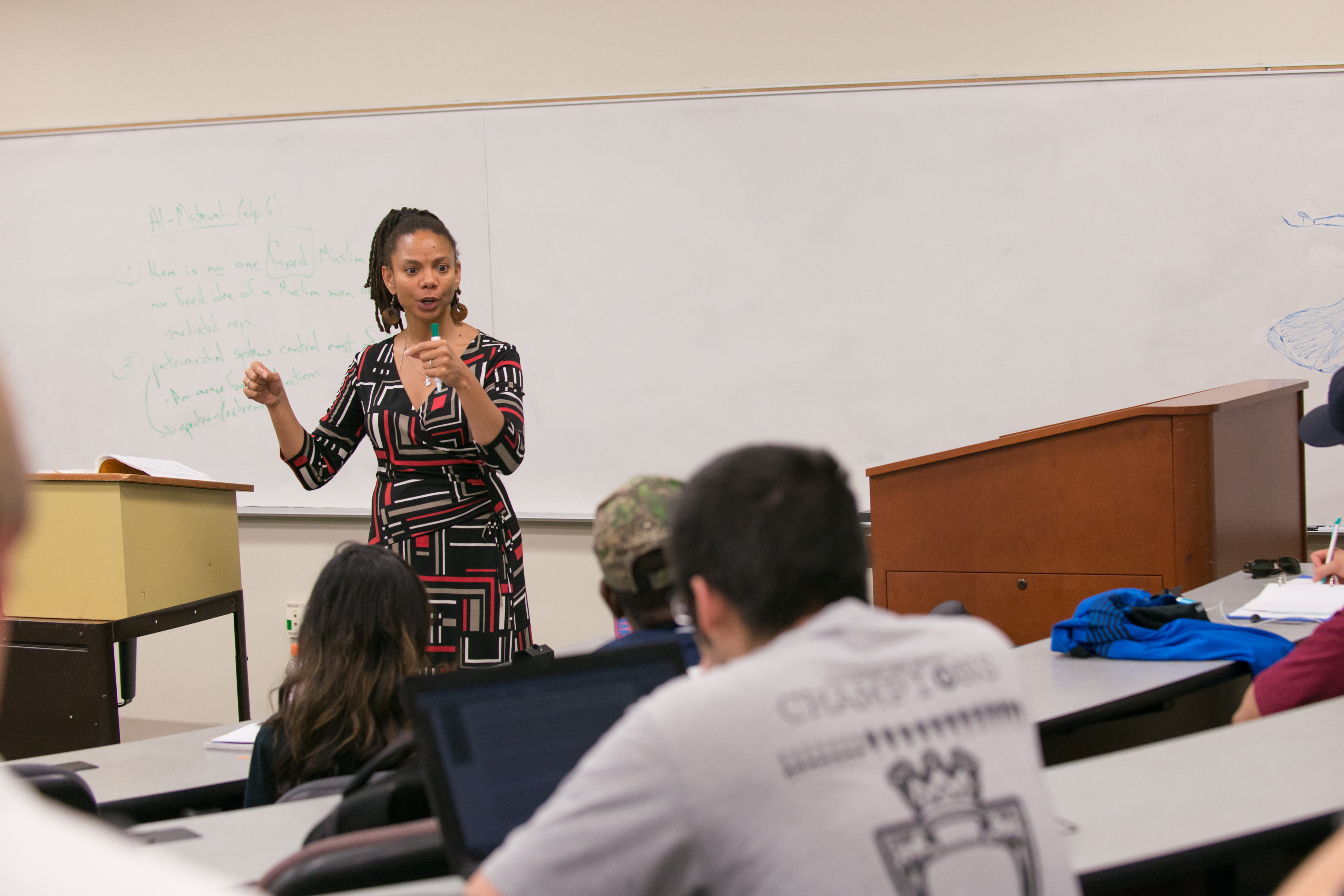
Image: Ruben Delgado; photo by Marlayna Demond ’11 for UMBC.
Christy Chapin explains the evolution of the U.S. healthcare system

In a new article in The Conversation, Christy Chapin analyzes the history of healthcare in the United States and traces the steps that lead to the insurance company model and the adoption of the Affordable Care Act.

Chapin, an assistant professor of history, is author of Ensuring America’s Health: The Public Creation of the Corporate Health Care System (Cambridge University Press 2015), which explains how private and public interests merged to place insurance companies at the center of the U.S. healthcare system. In her article “Why your insurance companies control your medical care,” Chapin draws on research in her book to illustrate how we arrived at the current healthcare debate heading into the 2016 election next month.

Before insurance companies, Chapin explains that prepaid physician groups, comprised of doctors from different specialties, were the dominant model for healthcare between the 1900s and 1940s.

“Many health care reformers, including those behind President Truman’s failed 1948 universal care proposal, hoped to develop the medical economy around prepaid groups. Progressives believed that by federally funding prepaid groups, they could efficiently supply the entire population with comprehensive care,” she writes in the article.

But Chapin explains that the American Medical Association opposed these measures because it feared it might lead to a “corporate medicine” culture and mode of healthcare, which led the to insurance company model.

“AMA leaders decided that rather than allowing doctors to insure patients, only insurance companies would be permitted to offer medical coverage,” explains Chapin.

When Medicare adopted the insurance company model in the 1960s, Chapin writes that health costs skyrocketed which led to the implementation of cost control measures.

“While the flaws of the insurance company model have become more evident, reforming the system has proven extremely difficult. Just look at the Affordable Care Act.”

Read the full article and additional coverage below.

Why insurance companies control your medical care (The Conversation)
How did health insurance get to be such a mess? (Houston Chronicle) 
Why insurance companies control your medical care (SF Gate)
Christy Chapin on the centrality of insurance companies to American health care (Who Makes Cents Podcast)  

Image: Christy Chapin presents a talk on her book at UMBC. Photo by Marlayna Demond ’11 for UMBC. 

NSF provides $5 million to UMBC-led LSAMP program to support students from underrepresented groups in STEM

UMBC is the lead institution on a $5 million National Science Foundation (NSF) grant that provides additional funds for the University System of Maryland Louis Stokes Alliance for Minority Participation (USM LSAMP). Universities will use the renewed funding to support students from underrepresented groups in STEM. The funding boost also allows for expanded support for transfer students and new programming focused on performance in mathematics.

“This funding for expanded programs indicates that we are able to continue the legacy of inclusive excellence that UMBC celebrates,” explains Renetta Tull, associate vice provost for graduate student development and postdoctoral affairs.

Through LSAMP, Tull says, “Programming that prepares students for graduate school in STEM fields will be available to any student at UMBC who wants to participate,” complementing gold-standard cohort-based models like the Meyerhoff Scholars Program and MARC U*STAR Program at UMBC. Some LSAMP funds will also support these well-established programs.

The USM LSAMP program has four key focus areas: participation (supporting students as they transition from high school or community college), performance (reinforcing mathematics knowledge and improving performance in math courses), preparation (getting students ready for research experiences by offering opportunities for training), and presentation (providing opportunities for students to present their work publicly).

Of the $5 million in funding, UMBC will disburse $1 million to University of Maryland, College Park and $750,000 to University of Maryland Eastern Shore, the other two member universities of the Louis Stokes Alliance. Towson University and Frostburg University are associate alliance members, and community college collaborators include Prince George’s Community College, Anne Arundel Community College, and Community College of Baltimore County. Tull explains, “The tiered structure allows current partners to mentor associate members and collaborating community colleges.” 

UMBC has received NSF funding for LSAMP for 20 years. The new boost in funding will make more initiatives possible, including transition seminars for transfer students, a bridging conference for incoming first-year students, and a system-wide Winter Mathematics Institute. The institute, co-sponsored by the Diversity Committee of NSF’s Mathematical Sciences Institutes, is modeled on the successful Meyerhoff Summer Bridge program.  

In addition, LSAMP will develop relationships with other programs on campus, such as STEM BUILD at UMBC, a support program seeking to enhance success of undergraduates in STEM, and the STEM Transfer Student Success Initiative (t-STEM), which supports transfer students from Maryland community colleges, with initial funding from the Bill & Melinda Gates Foundation.

“The success of students at UMBC is underpinned by support initiatives like STEM BUILD and t-STEM,” shares Bill LaCourse, dean of the College of Natural and Mathematical Sciences. “Collaboration with the LSAMP program is a welcome addition, in that it broadens and deepens UMBC’s ability to attract and retain students from underrepresented group in STEM disciplines.”

UMBC is also home to a “Bridge to the Doctorate” program, funding for which is only available to institutions that have had LSAMP programs for at least 10 years. This program financially supports graduate students who participated in LSAMP programs as undergrads at any university in the U.S.

“We are delighted to build on our existing partnership with NSF,” said President Freeman Hrabowski. “UMBC strives to create an environment where students from all backgrounds can succeed in any field, and this funding enables us to expand that critical work.”

Image: Chemistry professor Michael Summers (left), known for his dedicated mentoring of students of all backgrounds in addition to his research, works with students in the lab. Photo by Marlayna Demond ’11 for UMBC.

UMBC faculty win four new Maryland Innovation Initiative grants, bringing total MII awards to $2.4M

Tech transfer is growing rapidly at UMBC, fueled in part by the university’s notable success in securing Maryland Innovation Initiative (MII) grants designed to promote the commercialization of research.

“UMBC’s success in the MII program has been consistently growing over the course of the 3.5 years since the program started,” says Jennifer Hammaker, MII director at Maryland Technology Development Corporation (TEDCO). In that time, UMBC researchers have received $2.38 million to develop their ideas into commercial applications, with an impressive success rate of 50 percent (50 applications yielding 25 awards).

The MII program is a powerful collaboration between the state of Maryland and five Maryland institutions: Johns Hopkins University; University of Maryland, Baltimore; University of Maryland, College Park; Morgan State University and UMBC.  UMBC has one of the highest success rates for MII awards among these institutions. The most recent round of grants for UMBC includes projects in four distinct areas: interactive arts performances, biomedical technology, space weather forecasting, and biofuel production.

The Awards

Linda Dusman, professor of music, and Eric Smallwood, assistant professor of visual arts, will use their phase III award to scale up a prototype of their mobile app, Octava, to make it available to a larger slice of the public. Octava provides real-time program notes during performances such as classical music, dance, and theatre, offering audiences details about the artists and other information that can enrich their experience of the performance and, as Dusman put it, “do real-time education.”

Previous MII grants helped Dusman and Smallwood generate the prototype and conduct a market research study. The phase III grant will enable the team to respond to feedback from phase II, including connecting the app to social media.

Chris Geddes, professor of chemistry and biochemistry and director of the Institute of Fluorescence, won a phase III award in this round for Lyse-it, a company that produces a low-cost portable device that breaks open cells and chops up their DNA to prescribed fragment sizes, a step required in many sample-preparation procedures in the biomedical research and health care industries. The phase III funding will facilitate production of a large inventory of the Lyse-it product and support development of a rapid marketing strategy.

Neel Savani, a researcher at UMBC’s Goddard Planetary Heliophysics Institute (GPHI), is developing a system that can forecast solar storms up to 24 hours in advance, a huge improvement over the current ability to give a one-hour warning. His team’s phase I MII grant will allow them to “get a handle and statistical understanding of how good of an improvement this forecast will be,” Savani explains, “If I can validate how much the improvement will be, then I can convert that into a sales pitch.”

“It’s great to see the state of MD take the lead in supporting space technology,” Savani adds, “I’m seeing venture capitalists looking to invest in the space industry.”

Jeffrey Gardner, assistant professor of biological sciences, received a phase I award for a technology that will support the biofuels industry. His group “will develop a set of small porous filters that enables real-time measurement of microbial growth during biofuel production,” he explains. Bacterial cells used for biofuel production break down large molecules to obtain nutrients, and then use those nutrients to either grow more cells or produce biofuel. By measuring how many cells are growing in real time, researchers can tell if the bacterial cells are “spending more energy than they should making more cells instead of making biofuel.”

Learning Curve

The MII grant process can be a huge learning opportunity for research faculty, many of whom have never tackled a business venture. David Fink, a “site miner” at UMBC, seeks out faculty research that could lead to successful commercial products and supports faculty through the process from start to finish. Don Engel, assistant vice president for research, also encourages faculty to pursue commercialization when he thinks their work is a good fit.

Smallwood shares, “Dave [Fink] has been indispensable, helping us understand the program and shape our ideas.” As UMBC’s first MII team in the arts, and only the second team of artists to receive an MII grant, he says, “We were coming from a different field than most of the applicants, so we had to reorient our brains to how we navigate this new world.”

For Dusman, a business venture “is like an octopus.” She often finds herself asking, “What do you mean there’s one more leg?”

UMBC resources also aided Savani as he grew his business skills. “As somebody who comes from a very research-centric background, I don’t necessarily know the correct lingo for commercialization,” he admits, “That was a tricky component for me to learn, with a steep learning curve.” He thanks Fink and Engel, as well as Paola Buitron and Wendy Martin in UMBC’s Office of Technology Development and Margo Young at GPHI, for his success with the MII program. “They were an absolute tremendous help. They were very patient and supportive.”

“This program is asking questions of faculty that most of them have never been asked,” says Hammaker. “It’s forcing them to think differently.”

She credits UMBC’s success receiving a particularly large number of grants to a combination of support from high-level administrators as well as site miners like Fink. She cites Dusman and Smallwood as an example of what that kind of support makes possible. “They’re closing sales all over the country,” Hammaker says, “That doesn’t happen without a support system.”

Some companies formed by UMBC faculty, as well as alumni and university partners, choose to create a home base at bwtech@UMBC, adjacent to campus. Ellen Hemmerly, executive director of bwtech@UMBC, explains that the research and technology park “provides a range of incubator services to help the companies grow and be successful.”

Geddes, one of the phase III grant recipients, is a veteran entrepreneur attuned to the business landscape. “We are seeing an increased amount of funding available to faculty to explore their ideas and inventions with regard to commercialization,” he says, “With more funding and opportunities materializing, we should expect to see many more companies being spun out from UMBC in the coming years.”

That fits with the culture of UMBC, says Karl V. Steiner, vice president for research. “When we talk about research at UMBC, we frequently use the phrase ‘Innovation that Matters’ to reflect the fact that many of our faculty and students are working on our current, most pressing issues,” he shares. “Our success with the TEDCO MII program is rooted deeply in this research culture of making a difference.”

Hammaker sees UMBC as an exemplar in this regard: “Exactly what’s happening at UMBC is what we’re looking for. UMBC is doing a great job of working with the faculty and getting them prepared to come through the program.” She says, “UMBC has a lot to be excited about.”

Image: Colleagues gather to sign UMBC technology patents into the new Lyse-it company. From left to right: Paola Buitron, Mildred Homa, Wendy Martin, Chris Geddes, Russell Hill, Dean Drake, Rosemary Jagus, David Fink. Photo by Mary Larkin.

Sarah Shin publishes new book on English language teaching as a second career

After conducting in-depth interviews and observations of students in a teaching English to speakers of other languages (TESOL) graduate program, Sarah Shin, professor of education and special assistant to the provost for academic initiatives, has published a new book that examines TESOL as a second career.

The book, titled English Language Teaching as a Second Career (Multilingual Matters 2016), explores the challenges and successes that professionals ages 45-73 go through as they develop as teachers and launch their second careers.

Sarah Shin bookIn the book, Shin explains that many adults are transitioning into new professions and working later into what has traditionally been retirement age. She explains how the students she interviewed think of TESOL as it relates to their overall life goals and achievements and how they want to improve the quality of life in their communities through education.

“A welcome addition to the growing literature on teacher development, this book will be an important resource for teacher trainers and anyone working in TESOL,” the publisher states on the book’s back cover.

The text has received many favorable reviews for its ethnographic approach to reflecting on teacher experiences as they begin second careers in the context of growing demand for K-12 English language teachers in the United States.

“Sarah Shin makes a compelling case for the demographic changes in education and the accompanying challenges and opportunities for training a new breed of ESL teachers who bring profound real world experiences to their classrooms. A ‘must read’ for teacher trainers and for baby boomers contemplating how the next chapter in their life story will be written,” shared G. Richard Tucker, Carnegie Mellon University, in a review.

Shin is an expert in bilingualism, heritage language education, and TESOL teacher training. She is the author of two previous books Bilingualism in Schools and Society (Routledge) and Developing in Two Languages (Multilingual Matters). Earlier this year, Shin was selected for inaugural class of the American Association of State Colleges and Universities (AASCU) emerging leaders program. Read more about her work and research on the education department website.

Image: Sarah Shin. Photo by Marlayna Demond ’11 for UMBC.  
Kimberly Moffitt analyzes the first presidential debate on WYPR and WEAA

Following the first presidential debate on September 26, Kimberly Moffitt was a guest on WYPR’s Midday program and WEAA’s The Marc Steiner Show to provide analysis and outline what the candidates need to do going forward to sway voters.

On WYPR, Moffitt, an associate professor of American studies, joined Liz Copeland, founder of the Urban Conservative project, and talked about how the tone and content of the debate changed after the first thirty minutes and offered her perspective on the strategy behind Hillary Clinton’s approach.

“This was not hands down a clear win for Hillary Clinton, but I do believe that she performed better than Donald Trump when I look at the entire 90 minutes,” explained Moffitt. “What I do think was different and savvy for her to do this time versus what I’ve seen her do in other settings…is that she decided not to play Trump’s game.”

Moffitt also said she thinks at this stage in the campaign, the candidates didn’t do much to sway voters’ opinions during the first debate. “I think folks are exactly where they were when they started this debate,” she explained.

On The Marc Steiner Show, Moffitt joined Richard Vatz, professor of rhetoric and communication at Towson University, and Mark Green, host of the nationally syndicated radio show Both Sides Now, to cover a range of issues during the debate. Among them, Moffitt commented on the moderating style of Lester Holt and the strategies that both candidates used to attempt to appeal to undecided voters.

To listen to the complete segments, click below.

Big takeaways from the presidential debate (WYPR’s Midday) 
Election roundtable: First debate (The Marc Steiner Show) 

Image: Kimberly Moffitt in her office. Photo by Marlayna Demond ’11 for UMBC.
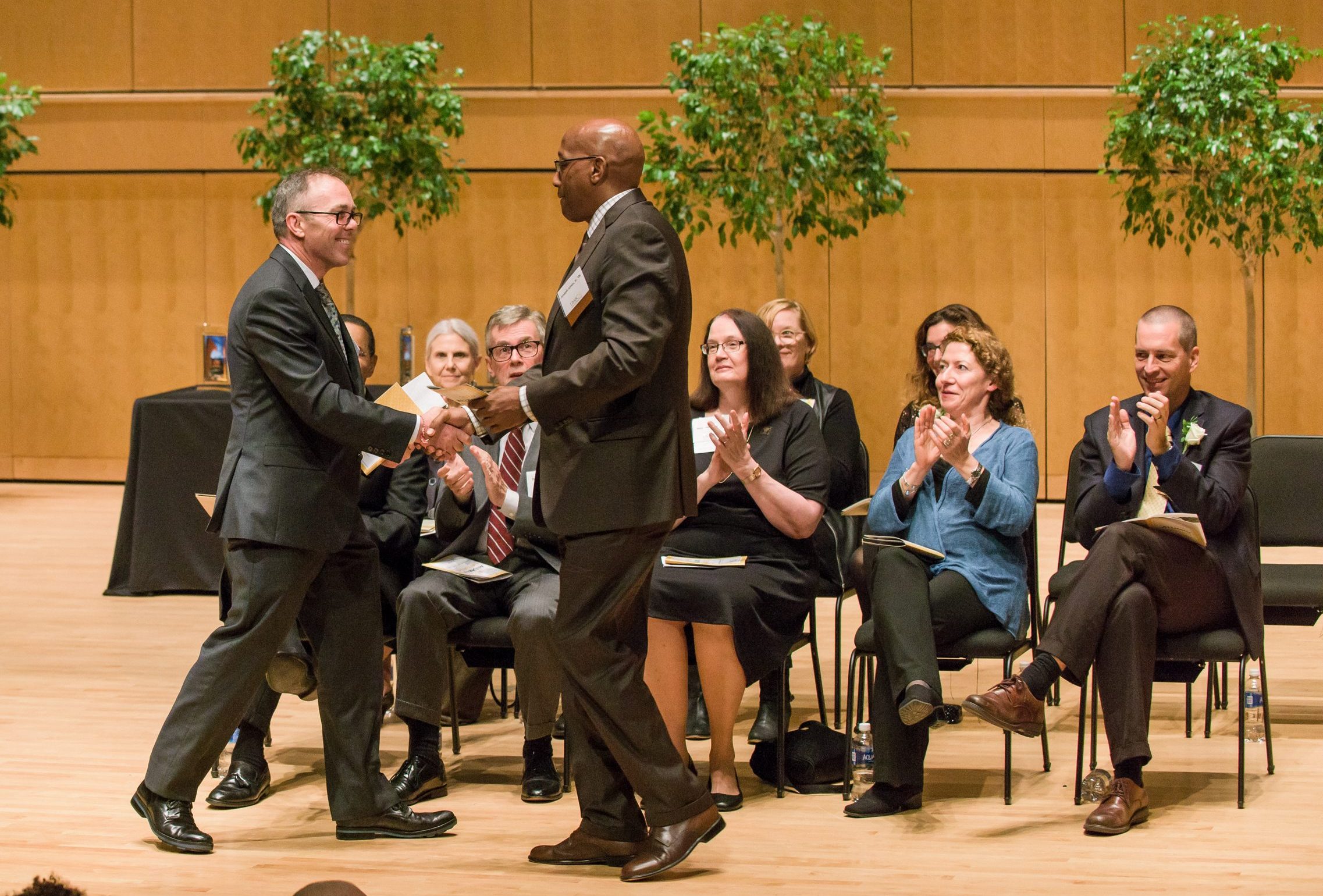
UMBC community gathers to reflect on campus culture over the last 50 years

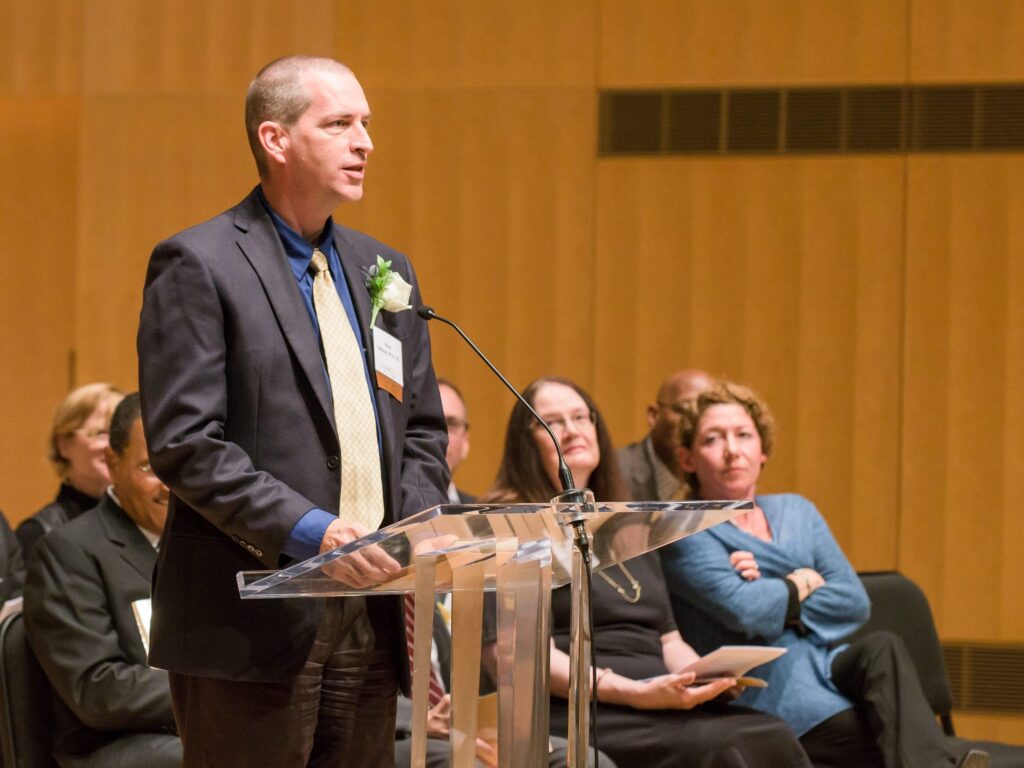
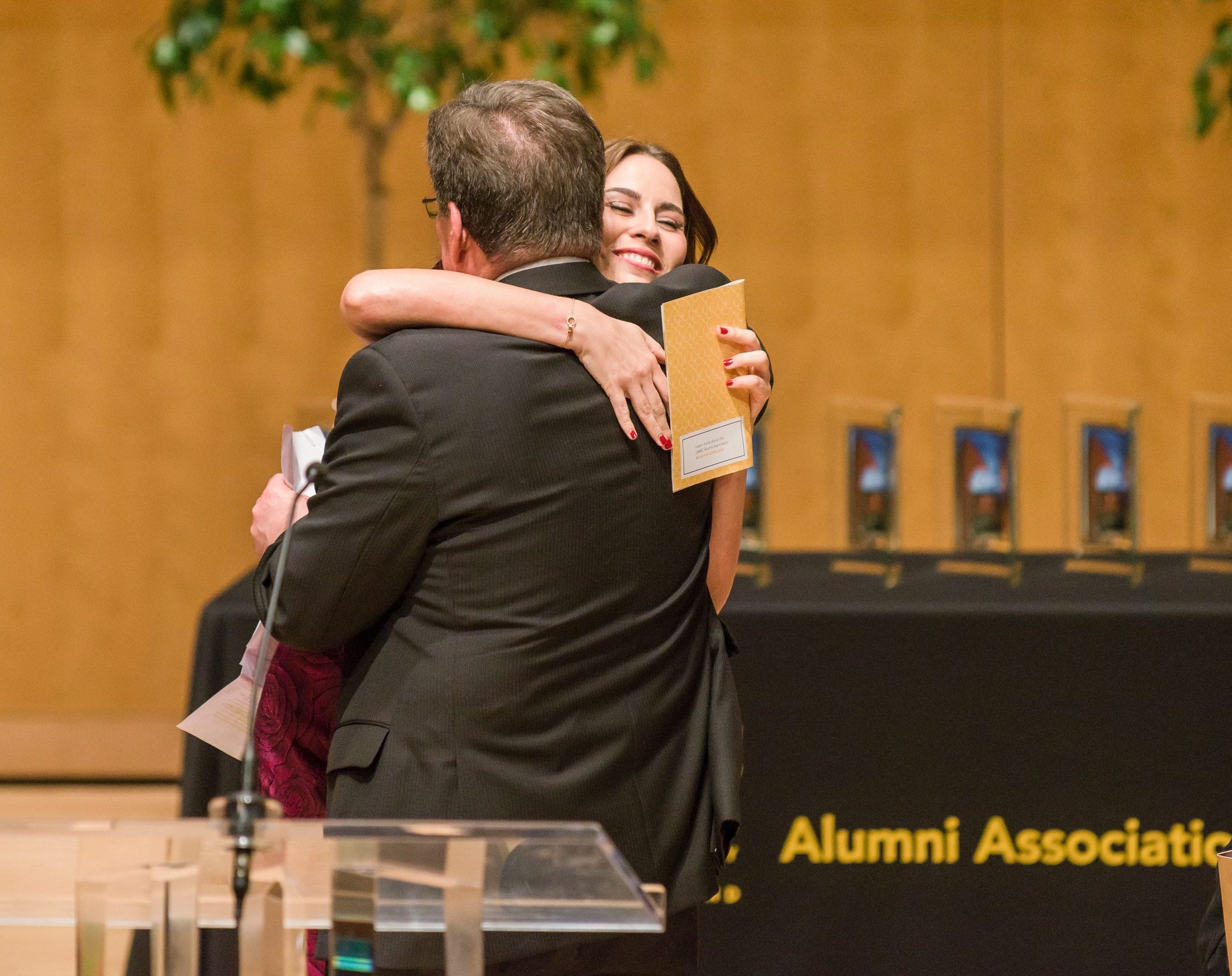
During UMBC’s 50th anniversary celebration weekend, alumni, faculty, staff, and students gathered for a lighthearted event to reflect on the student experience over the years at the university. The panel discussion, led by George Derek Musgove ’97, history, associate professor of history, looked at how campus culture has evolved since UMBC was founded in 1966.

The event, titled “An Unofficial, Totally Tongue-in-Cheek, Slightly Zany History of Campus Culture at UMBC,” featured alumni Steven Fedder ‘72, American studies; Shari Elliker ‘83, interdisciplinary studies; and Oliver Myers (M1) ‘94, M.S. ‘96, Ph.D. ‘07, mechanical engineering, who all shared memories of their time as students.

“UMBC students, faculty, and administrators have exercised creativity, intelligence, and often a good deal of reckless abandon in their efforts to fashion the campus culture here out of whole cloth,” shared Musgrove at the beginning of the event, setting the stage for the discussion. “The story of their efforts is inspiring.”

Campus culture panel 2

Steven Fedder talked about his experience being part of one of the first classes at UMBC when he arrived on campus in 1969 and reflected on how students in the late sixties and early seventies helped lay the foundation and shape the campus culture at the university.

Shari Elliker explained how she became involved with the campus radio station, eventually becoming the station manager, which helped sparked her interest in her career.

Campus culture panel 3

As a member of the first cohort of the Meyerhoff Scholars Program, Oliver Myers talked about his moving experience when he met President Hrabowski for the first time and how it inspired him to work even harder as a student.

“[Dr. Hrabowski] has some form of connection with just about all of us that relates to us on an individual level,” explained Myers.

Myers explained how the Meyerhoff Scholars would frequently gather for study sessions to talk through homework assignments and described how the students would always engage with scientists and other professors when doing site visits at laboratories.

“We were asking serious questions about developing cures for cancer and how we use composite materials in the mechanical engineering lab. We were asking questions to national laboratories about rocket development and robotics,” shared Myers.

As a Meyerhoff Scholar, Myers said he frequently had the opportunity to meet with top officials when they visited campus, which offered him unparalleled opportunities to connect with world leaders in science and government.

Following the panel presentation, several alumni in the audience engaged with the panelists in a lighthearted discussion about their student experiences over the years at UMBC. To watch the complete event, click below.

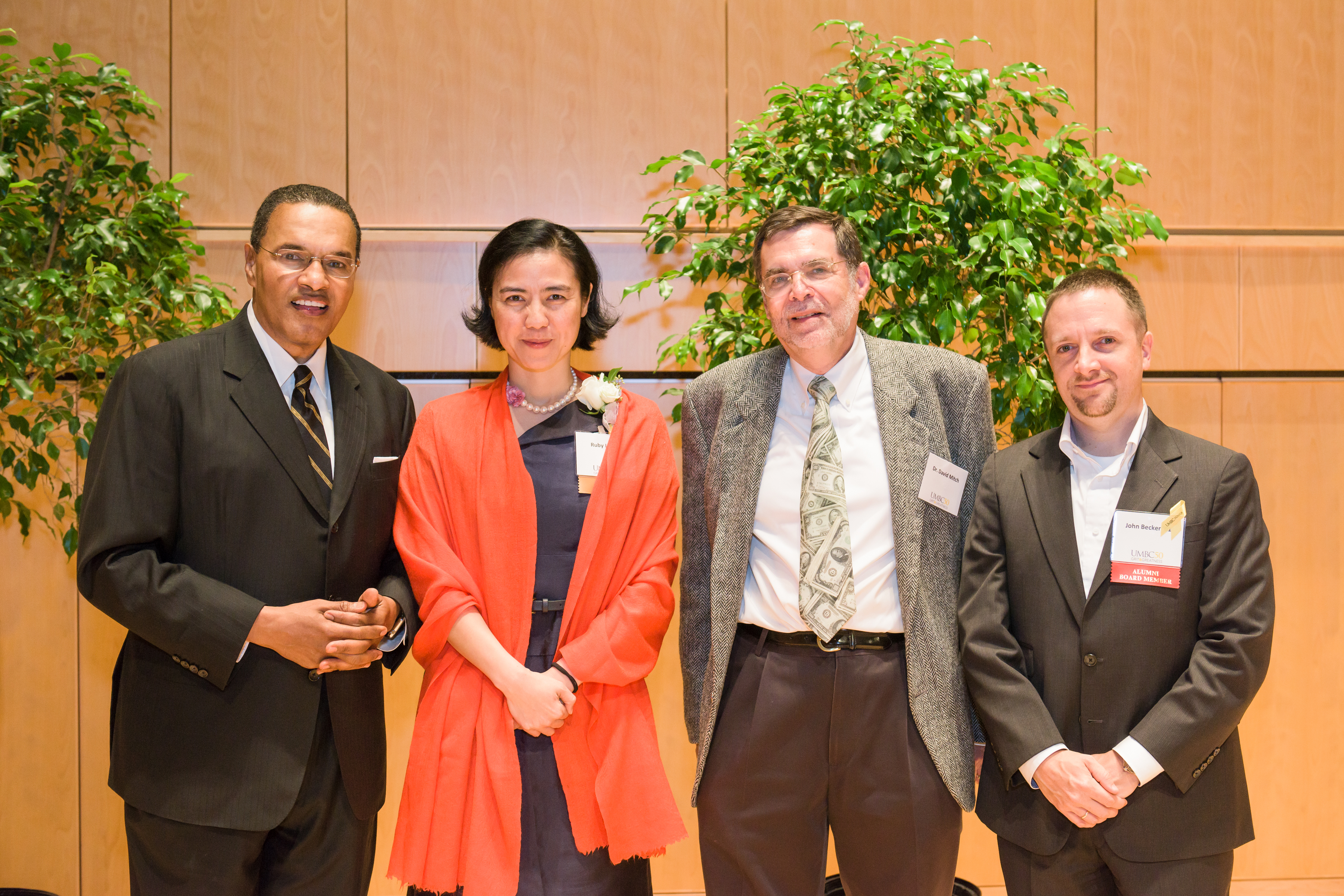
Images: Top: Oliver Myers speaks during the event; Middle: Steven Fedder talks about his experience as a student. All photos by Jay Baker.  

Tamra Mendelson advocates using human psychology framework to understand animal cognition

How animals choose when to migrate, with whom to mate, or what to eat can have a huge impact on their ability to survive and reproduce, and thus, the evolution of their species. That’s why evolutionary biologists like Tamra Mendelson, associate professor of biological sciences at UMBC, want to learn more about decision-making processes in animals. But the existing literature doesn’t make it easy to compare studies or unravel the many steps between input and action.

Researchers use “a mish-mash of terms to describe cognition,” says Mendelson. One research team might say that a female fish can “discriminate” between green and red male fish, meaning she can detect a difference. Another team might report that an insect “discriminates” by choosing a mate who offers her a larger morsel of food. In that case, the “discrimination” is the choice that follows the detection of difference. Inconsistencies in terminology like this can lead to confusion and discourage collaboration across research areas.

Because most evolutionary biologists are not trained in the language of psychology, “We come up with our own language,” explains Mendelson, “We say, ‘We know what we mean,’ but do we?”

In her new opinion paper, published in Trends in Ecology and Evolution and funded by the National Evolutionary Synthesis Center, Mendelson and colleagues propose a solution to the imprecision of language in their field. They argue adopting it would improve communication between research teams and also our understanding of how animals make decisions. The team recommends employing the Judgment and Decision Making (JDM) Framework, a lexicon that psychologists have used for decades to describe the steps involved in human decision-making.

The framework differentiates between “judgments,” the process of gaining knowledge about the world, and “decisions,” the process of choosing what to do with that knowledge, and it precisely defines terms associated with each stage. Terms like “discrimination” and “recognition” are associated with judgment, while “preference” and “choice” are decision-related terms.

The JDM Framework emphasizes the actual components of cognition (how animals think) rather than the behavioral outcome (what they do after thinking). Breaking down the process of decision-making into its components opens up a whole new world of possible research questions. Using the framework could reveal previously undiscovered complexities in animal thought, and eventually guide researchers to the specific genes that contribute to different components of cognitive processes.

Better understanding how animals think could have important implications for how humans work with animals, such as informing wildlife conservation efforts. As Mendelson points out, “An animal’s first defense against climate change is behavior.” Based on how they think, some species may be better than others at adapting to a changing climate. The species that have more trouble adapting may need more of our attention.

Mendelson acknowledges understanding the animal mind is an uphill battle. “It’s cognition,” she says, “It’s very complicated.” But adopting a consistent vocabulary could speed research progress. The terms the field needs are out there, she says, “It’s a matter of matching them to consistent, precise meanings to improve communication in the field and across disciplines.”

Image: Mendelson at a research field site; courtesy Tamra Mendelson.

Astrophysicist Robin Corbet discovers rare, high-energy binary star system beyond the Milky Way

Until recently, humans had only detected five binary star systems—pairs of stars orbiting each other—that emit extremely high-energy gamma rays. Robin Corbet, an astrophysicist at UMBC’s Center for Space Sciences and Technology (CSST), just discovered the sixth, and most luminous, and this one is special. Instead of being in our Milky Way galaxy, it’s located in the Large Magellanic Cloud, our next-door neighbor galaxy, 163,000 light years away.

This marks Corbet’s second gamma ray binary discovery, following his initial detection of such a system through the Fermi gamma-ray space telescope five years ago. After that initial find in 2011, he thought more would follow quickly, but the systems proved elusive. The fact that he found the sixth known gamma ray binary outside of the Milky Way came as quite a surprise. At first, he shares, “I didn’t believe it.”

In order to emit gamma rays, which contain one million times the energy of visible light waves, one of the “stars” in the binary system must be a black hole or neutron star, a star that has collapsed in on itself. “These are more massive than our own Sun but squeezed down to something about the size of Washington, DC,” explains Corbet. Hundreds of these binary systems have been found that emit X-rays, but only a handful emit even higher-energy gamma rays.

Corbet detected the system by analyzing variations in gamma rays coming from about 3,000 known gamma ray sources. In a gamma ray binary system, the intensity of the gamma rays as they strike the telescope varies depending on the relative position of the stars as they orbit each other. Because the gamma ray sources are so far away, only a small percentage of the rays ever reach the telescope. That means it can take a long time to collect enough data to detect a pattern.

Once the Fermi satellite collected enough data, Corbet ran analyses on a 12-core computer for a few months. Looking at gamma rays from all 3,000 sources, the analyses identified two stars orbiting each other every 10.3 days—a new binary system. Then Corbet requested data sets from colleagues around the world that included X-ray, radio wave, and visible light wave data. He hoped the additional information would corroborate the gamma ray signal and confirm the orbital period, which it did. The visible light data also supported the idea that the system contains a neutron star, but there’s still a small chance it could be a black hole.

Binary systems can only generate the energy required to emit gamma rays when the neutron star is rotating very fast. The fact that only six of these systems have ever been discovered suggests that very few neutron stars rotate that quickly, and there may be more slowly-rotating neutron stars than scientists thought.

Calculations suggest the neutron star in the system Corbet just discovered rotates around its axis in less than 39 milliseconds, compared to Earth’s 24-hour rotation. As a star rotates, it flings particles away from its surface, creating a “stellar wind.” With one star in a binary rotating so fast, interactions between particles in the stellar wind from each star can be intense, which is what creates the gamma rays. “It’s like having a particle accelerator in space,” says Corbet.

Next steps for the research include confirming that one star in the system is indeed a neutron star by making observations to directly detect its rotation period, although this is very difficult. Corbet is also interested in tracking the two stars’ orbits, to see if they are truly circular or more elliptical. Because there are so few of these systems, and this is the only one outside the Milky Way, anything learned will inform future research goals and theories about extreme binary star systems.

Read the full paper in The Astrophysical Journal here: A luminous gamma-ray binary in the Large Magellanic Cloud

Image: Yellow circle indicates the gamma-ray binary discovered by Robin Corbet in the Large Magellanic Cloud; photo courtesy NASA Goddard.