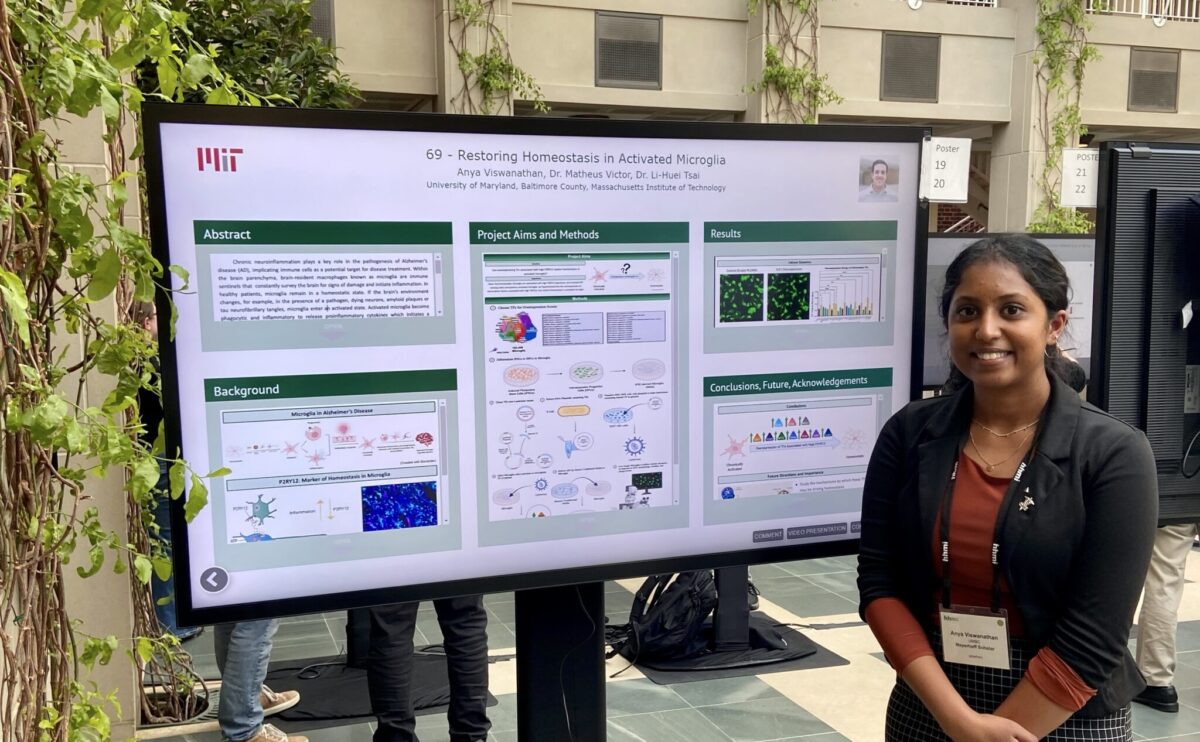
All posts by: Sarah Hansen, M.S. '15


5 steps for success as a student in the natural sciences

Having trouble settling into your major? Wishing you had some useful tips to rely on as you navigate your science classes on campus? We asked five experts in the College of Natural and Mathematical Sciences (CNMS) for their best tips to succeed in majors in CNMS. We took notes, so you don’t have to—here is what they said:

1. Ask for help

A common refrain from these experts is to ask for help earlier than you think you need it. Emma Barnaby, a student success coach in the CNMS advising office, says, “Learn how to ask for help when you need it. Use UMBC resources like the tutoring center and drop-in tutoring BEFORE you think you need them!” William R. LaCourse, dean, adds, “You are not alone. If you are feeling overwhelmed, talk to someone and seek help early. Your well-being is important to us.”

David Eisenmann, the biological sciences undergraduate program director, underscores how many options there are for students looking for assistance:If you are struggling, do not be shy about taking advantage of all the resources available to you: TAs, office hours, SI PASS leaders, review sessions, tutoring, and CNMS staff!”

student seated at a table with a laptop in front of her looking at a booklet that reads "summer session" with a staff member who is standing nearby and leaning over pointing to the booklet
Amanda Knapp (right) leads UMBC’s Academic Success Center, which offers a range of supports to students. (Marlayna Demond ’11/UMBC)

2. Take control

Our experts also encouraged students to take measurable steps and track their progress. For example, “If you want to get good at something, commit to spending 30 minutes a day working on it,” Barnaby says. “Give yourself a phone reminder and cross off that day on a calendar when you’ve completed it—it’s super motivating!” 

Eisenmann suggested a few other strategies. “My advice about how to succeed in a STEM course is based on things I have heard from my own students over the years. Students who have succeeded in my courses say they a) do assigned readings ahead of time so they are not clueless walking into lecture, b) take notes during lecture, c) go over their notes afterwards to fill in any areas they were unsure of, and d) work in a study group with other students.”

two students sit across from each other at a table, both looking at a notebook between them, one is pointing to it with a pencil, whiteboards in the background
Students study together in the Retriever Learning Center, a 24-hour study space attached to the Albin O. Kuhn Library & Gallery at UMBC. (Marlayna Demond ’11/UMBC)

3. Build connections

“FIND YOUR PEOPLE!” That’s how Michelle Bulger, director of the Science and Mathematics Advising Resource Team (SMART), sums up her advice. “One of the best resources a student can create for themselves is to form a group of supportive people who can lift each other up when things are difficult and celebrate together when everything is going great,” she says. “If introducing yourself to your neighbors in the residence halls or your classmates in your courses sounds a little daunting, try joining a student organization for an activity or career that you are passionate about. Knowing that the people you are about to meet have an interest in common with you can make those introductions easier!”

group photo of 10 people dressed professionally standing in front of a fountain
CNMS staff Justine Johnson (far left) and Maria Cambraia (second from right) with students in the UMBC STEM BUILD program attending a research conference in 2022. (courtesy of Cambraia)

The same principle applies to your interactions with staff and faculty. “Connect with your instructors, teaching assistants, and older students on campus. Stay after class and ask questions that go beyond the class material,” recommends Maria Cambraia, assistant director for research and international affairs. “Share your interests and goals with them. You’ll be surprised to see how much people at UMBC care about you and are willing to help connect you with opportunities related to your interests once they know what you are looking for.” 

4. Take the initiative

The experts agree: Go for your gold! Don’t be afraid to ask for what you want, and be persistent,” Cambraia says. “Many students are so afraid to try something new, when the worst thing that can happen is receiving a ‘no.’ It can be hard to deal with that at first, but a ‘no’ should not stop you. Keep trying; sometimes, you’ll find something much better than your initial plan.” Eisenmann concurs that taking a risk is worth it—it can also help with step number three, above. “Do not be afraid to ask questions in lecture, after lecture, or in office hours,” he says. “Make yourself known to the professor as an engaged student trying to learn.” 

two students sit at a table, study materials laid out in front of them, one smiles at the other; many other students seated in groups at tables in the background
(Marlayna Demond ’11/UMBC)

5. Find balance

Creating balance in how you spend your time and energy is key, our experts say. “Do not put all your energy into just classes and exams. You need to develop stronger roots, and part of this is finding your community,” Cambraia shares. “Dedicate time and energy to connecting with friends, family, and mentors. A sense of belonging is crucial for happiness and success. Focus on your classes for sure, but also put your energy on yourself, your mental health, staying healthy, and cultivating your hobbies. Finding an initial balance can be challenging, but you will get there!”

For Dean LaCourse, balance means embracing your uniqueness and also respecting input from people with more experience. There is no one right way to go to college. Chart your own path and be yourself. Do not let others define you or distract you from your goals and dreams,” he says. “At the same time, it’s important to listen to your advisors and mentors. They have the experience of numerous students to guide you, and the heart to care about you as an individual.”

Learn more about our experts and what they do on campus:

portrait of woman in winter jacket and scarf, sunlight glowing on her hair
Emma Barnaby

Emma Barnaby, Student Success Coach

Barnaby works with students who are struggling in their STEM courses: She focuses on time management, motivation, and study skills. If you come to her office, she hopes that you leave feeling better than when you arrived!

David Eisenmann, Professor and Undergraduate Program Director (UPD), Biological Sciences

In addition to conducting research here for 25 years, Eisenmann has taught a number of large and small upper-level biology courses. As UPD, he is in charge of making sure the department’s degree programs are rigorous and modern, and that they prepare students for careers and meet their educational goals. Wearing that hat, he also interfaces with the university administration, other departments, and individual students having issues progressing through their major.

portrait of woman
Michelle Bulger (Tim Ford)

Michelle Bulger, Director, Science and Mathematics Advising Resource Team (SMART)

Bulger oversees a group of advisors representing two offices: CNMS Advising/CNMS Student Success (which serves CNMS students) and the Pre-medical and Pre-dental Advising Office (which serves any student who plans to pursue a career in medicine, dentistry, optometry, podiatric medicine, or veterinary medicine). In addition, she works with CNMS departments on class scheduling, with university admissions on recruitment for the college, and on events for the college.

Maria Cambraia, Assistant Director for Research and International Affairs

Cambraia oversees pipeline research training programs, scholarship programs, and science education research initiatives, and she provides support and insight into international affairs within the college. Over the past five years, she’s mentored approximately 100 students on campus, including students in the CNMS Scholars and STEM BUILD programs. Her primary objective is to demonstrate the beauty of science to them and instill confidence in their abilities to become successful undergraduate scientists, allowing them to transition to new research experiences. One of the most rewarding aspects of her role is collaborating with different departments and centers to create more opportunities for UMBC students.

portrait of smiling man wearing suit on walkway, brick buildings and green trees in background
Dean LaCourse (Melissa Penley Cormier, M.F.A. ’17/UMBC)

William R. LaCourse, Dean

The dean’s role is to ensure that the departments under the college have the resources to provide students with both a rigorous education and the support needed to be academically successful. The dean’s office and its staff work to help students avoid common mistakes and overcome personal and academic challenges. Dean LaCourse also teaches an introductory chemistry course for non-chemistry majors, where he empowers students by helping them understand how chemistry affects their everyday lives. 

Quantum photonics expertise earns UMBC spot in DOE Frontiers in Energy Research Center

UMBC has been selected to participate in the Quantum Photonics Integrated Design Center (QuPIDC), which is led by Purdue University and also includes Los Alamos National Laboratory, Stanford University, Northwestern University, the University of Chicago, the University of Oklahoma, and Virginia Tech. The collaboration is one of 10 new Frontiers in Energy Research Centers recently funded by the U.S. Department of Energy. The centers support top-tier interdisciplinary teams as they pursue transformative basic research that will advance energy technologies. The quantum optics center will receive $13.9 million overall, and UMBC will receive $570,000.

QuPIDC aims to develop ways to generate states of light and matter with the property of “entanglement,” a unique phenomenon that was the subject of the 2022 Nobel Prize in Physics. The goal is to simultaneously entangle many photons and/or many electrons, which enables technologies like extremely precise measurement, faster-than-ever communication and computing, and much more. 

UMBC’s partnership in the center leverages the university’s longstanding strength in quantum photonics and quantum information. In particular, Matthew Pelton, professor of physics and UMBC lead for the center, has expertise in developing quantum light sources and integrating them into photonic structures at the nanometer scale. 

In addition, UMBC is well known for including many undergraduates from a wide range of backgrounds in hands-on research. The new center will only increase the number of students who can participate in the groundbreaking field of quantum technology. 

“I’m very excited to have this opportunity to work with some of the world-leading researchers in quantum photonics,” Pelton says, “and I’m especially excited about the collaboration and networking opportunities that the center will provide for UMBC students.”

Inspired by evolutionary biology ‘aha’ moment, Nhi Nguyen ’25 takes action to help children grasp their own worth

On a warm and humid day in January, about 40 children, five teachers, and 10 volunteers spill out of a school bus at the Saigon Zoo and Botanical Garden in Ho Chi Minh City, Vietnam—one big bundle of anticipation, full of chatter and bounce. The children, who live at a home for orphans and rarely get opportunities like this, are especially excited. 

The busload fans out across the zoo in small groups led by enthusiastic college student guides, searching for answers to “challenge questions” that encourage them to learn about the animals. The trip, envisioned and organized by rising senior Nhi Nguyen—an international Vietnamese student at UMBC—is one of her many endeavors to use her talents to serve others. When the groups reconnect over lunch, they share what they learned. Most groups managed to complete the vast majority of the challenges, and the children’s curiosity and imagination inspired even more questions. Finally, exhausted but happy, the group piles back into the bus and heads home. 

Our “presence matters”

headshot of Nhi Nguyen
Nhi Nguyen ’25 dedicates much of her time to service activities. (Photo by Melissa Penley Cormier, M.F.A. ’17)

Nguyen has made it her mission to find ways to improve others’ lives, whether through conducting cancer research in Chuck Bieberich’s lab at UMBC or at the MD Anderson Cancer Center, proposing a winning project to increase the availability of freshwater for agriculture, or supporting Retriever Essentials at UMBC. She also tutors in the Academic Success Center and Chemistry Tutorial Center and serves as the vice president for the Biology Council of Majors. The zoo outing, organized under the auspice of ToTheZoo, a non-profit Nguyen founded, was one of her most ambitious endeavors to date. She hopes to repeat it in the future.

Nguyen’s personal journey has inspired her efforts to serve others: An evolutionary biology class at UMBC helped her overcome depression by opening her eyes to the miracle of every human being. After the class, “I was more thankful to be born as a human with unique value and identity,” she shares, noting the lengthy evolutionary process required to arrive at Homo sapiens and the originality of every human. “I hope people around me will feel the same way I did,” she says, “that their presence matters, and their existence is invaluable.”

Taking children to a zoo—where they could explore the variety of living things found on Earth—was a natural fit. The project satisfied both of Nguyen’s goals: “to make people aware of their wonderful existence through biology knowledge and to inspire people to pursue education.”

A driving force for good

There were plenty of challenges in organizing the event—everything from building trust with the children’s shelters in Vietnam, to recruiting volunteers and fundraising—but Nguyen persevered with the support of mentors at UMBC. Ariel Barbosa, program coordinator for Retriever Essentials, provided guidance for starting up a new organization, grounded in Barbosa’s own experience growing Retriever Essentials at UMBC. Maria Cambraia, assistant director for research and international affairs in the College of Natural and Mathematical Sciences (CNMS), also offered support as Nguyen’s mentor through the CNMS Scholars program.

“As an international student—she moved by herself to the U.S. when she was only in high school!—Nhi’s journey has given her a unique perspective on life,” Cambraia shares. “This experience has instilled in her a strong sense of compassion and a genuine desire to make a positive impact on the lives of others. Her ability to empathize with people from all walks of life is truly remarkable and serves as a driving force behind her endless dedication to helping others.”

group photo of professionally dressed young women
Nhi Nguyen, third from right, is a CNMS Scholar, and her cohort is pictured here. Maria Cambraia coordinates the program. (Photo by Melissa Penley Cormier, M.F.A. ’17)

Making the world brighter

In the future, Nguyen says she would like to organize a similar trip or an in-house science fair for children at The Children’s Home, which is less than two miles from UMBC. As a biochemistry and bioinformatics double major, she is also hoping to pursue an M.D./Ph.D. so that she can continue to contribute to biomedical research and education and inspire the next generation of young people in the sciences. 

As a believer in the butterfly effect, Nguyen says, “I think even my small actions can help light up a person’s day, or I can inspire others to bring positivity into the world.” In the end, her philosophy is simple, and she strives to live it every day: “This world would be brighter if people helped other people a little and appreciated what they have.”

27th Summer Undergraduate Research Fest prepares students for scholarly next steps

In early August, 124 students from seven states and the District of Columbia participated in UMBC’s Summer Undergraduate Research Fest (SURF), sponsored by the College of Natural and Mathematical Sciences (CNMS). The students came from UMBC and other universities, community colleges, and three high schools, and they presented 106 posters and gave six “lightning talks” about research projects they completed over the summer. Almost all participants had completed their research under the mentorship of UMBC faculty.

CNMS Dean William R. LaCourse encouraged the students to carry their experience at UMBC with them after the summer ends. 

“I hope this summer has lit a flame of passion that will drive you to greater undertakings, accomplishments, and accolades. I hope that you did it all with joy and wonderment,” LaCourse said in his opening remarks at SURF. “It has been our privilege to host you here at UMBC—your spirit is an inspiration to us all. We hope that UMBC will always be a part of you.”

A grand scholarly community

SURF included student researchers involved in 14 different programs, such as the Howard Hughes Medical Institute HHMI Scholars Program, Beckman Scholars Program, National Science Foundation-funded Research Experiences for Undergraduates, and National Institutes of Health-funded research opportunities such as the U-RISE program and the National Institute on Drug Abuse internship.

Student projects included research on cancer biology, neuroscience, alternative energy, machine learning, and so much more. In addition to the presenters, their mentors, and members of the UMBC community at large, CNMS invited faculty members at other institutions affiliated with UMBC’s Build a Bridge to STEM Internship program to bring their students to SURF. Prince George’s Community College brought 15 students to observe, learn, and be inspired.

Four people sit at a table with a black tablecloth over it, one stands next to it, in front of a brick wall. All are dressed in black and gold and smiling.
CNMS staff members welcome students to the poster exhibition hall for SURF. Left to right: Alexis O’Malley, Maria Cambraia, Jayda Moorefield, Michelle Bulger, Caitlin Varisco. (Photo by Melissa Penley Cormier, M.F.A. ’17)

The student research on display at SURF impressed Provost Manfred H.M. van Dulmen. “I truly enjoyed learning more about all the research being conducted on campus this summer, including how experimental research with flies can improve people’s lives,” van Dulmen shared after his first experience with SURF. “I loved talking to several students and learning about how their research experience plays a critical role in their education and prepares them for their future journey.”

Preparing students for their next steps is exactly what LaCourse hopes summer research and SURF will accomplish. “This event defines the summer STEM experience, where the focus is on high-quality STEM classes, opportunities for research and applied learning experiences, and building a strong scholarly STEM community,” he says. “By practicing and applying the skills of performing research this summer, you follow in the footsteps of great scientists and researchers—making you part of a grand scholarly community, and a community of support.”

Biotechnology student Parag Shinde gains industry experience through summer pharma role

Parag Shinde knew that in order to get the most out of his summer as a biotechnology master’s student, he needed to find a way to get full-time, hands-on experience in a laboratory. To that end, in spring 2024 he emailed his résumé to dozens of local companies, whether or not they had formal internships posted. The strategy served him well: Shinde landed a role as an analytical chemist at Vici Health Sciences, a pharmaceutical research and development firm in Elkridge, Maryland.

“You can gain knowledge through books, but then you actually go to a company and start doing something, and you feel like you know nothing. So my plan was to work here and get physical experience, as much as possible,” Shinde shares.

As an undergraduate in India, he always enjoyed working in a biology lab setting. So when Shinde, M.P.S. ’25, biotechnology, wanted to advance his career, he looked for a program that aligned with his interests and would prepare him for a role in quality control at a biotechnology company. UMBC’s master’s of professional studies in biotechnology, offered through the College of Natural and Mathematical Sciences at the Universities at Shady Grove, fit the bill. This summer, after his first year in the program, Shinde is putting his passion and hands-on lab skills to the test at Vici Health Sciences.

A worthwhile challenge

Shinde’s role involves testing drug compounds for purity, shelf-life, and many other attributes before they can be formulated into medications or other medical treatments—a crucial step in the drug development process. The role requires extreme precision and attention, from mixing testing solutions to calibrating equipment and meticulously recording every step in logbooks. It is nonstop action in the lab, managing multiple steps of different testing protocols simultaneously. “Even the smallest piece of glass” must be accounted for, Shinde says. “And at the end of the day, I start preparing for the next day. It’s a lot.”

The work is challenging, but it offers exactly the type of experience Shinde was looking for. “My primary goal from this internship was to be around stuff that happens in an industry laboratory. How do they go about it? How do they use this equipment? How do they maintain good manufacturing practices?” he says.

“You can gain knowledge through books, but then you actually go to a company and start doing something, and you feel like you know nothing. So my plan was to work here and get physical experience, as much as possible,” Shinde shares.

Parag Shinde, M.P.S. '25

 Already, Shinde’s confidence and skills continue to increasing. In particular, his ability to keep track of multiple tasks at once and find the most efficient way to carry out a set of steps is improving. “It has even been helpful at home, like with doing chores,” he shares.

In addition to learning new things in the classroom, Shinde is learning to navigate a new city and country as well—he only moved to the United States from Mumbai, India, last summer, to attend UMBC. The transition has gone well, and he’s looking forward to continuing in the biotechnology program this fall. “God has been kind here,” he says.

Shinde is glad he chose Vici, even if it is stressful at times. It’s moving him toward his goals in ways only a role that pushed his limits could. “It’s really challenging,” he says, “which is why I’m learning a lot of things.”

Learn more about UMBC’s biotechnology programs, including undergraduate and graduate level degrees and certificates.

Katherine Carver is helping astronomers analyze James Webb Space Telescope data

Katherine Carver, physics and mathematics, started off her UMBC experience with a big bang—participating in the Johns Hopkins University Applied Physics Laboratory CIRCUIT internship as a first-year student in spring 2023. Carver, now a rising junior, says she took advantage of every opportunity she could, from on-site guest lectures and panel discussions to informally networking with APL employees down the hall.

One of the panelists particularly caught her attention, so Carver approached her afterward—and in the two-hour conversation that followed, Kathleen Hamilton-Campos, an APL researcher, encouraged Carver to apply to the Space Astronomy Summer Program at the Space Telescope Science Institute (STScI) at Johns Hopkins University, which Hamilton-Campos had completed in 2019. Carver received notification that she’d been selected as an intern while attending a Society of Women Engineers conference this spring.

This summer at STScI, Carver, a Meyerhoff Scholar, has been digging into developing open-source software that allows astronomers anywhere to analyze data arriving from the James Webb Space Telescope (JWST), the most powerful space telescope ever launched. 

Mission possible with James Webb

“The whole mission objective for JWST was to see further back into the universe than ever before or possible with the Hubble Telescope or any other type of telescope,” Carver explains. “With how light travels, if you’re looking at something four billion light years away,”—which JWST can—“that means you’re looking at it as it appeared four billion years ago. Which could be very useful for scientists trying to understand how our universe has come to evolve to its current state.” Indeed, Carver continues, JWST can observe light so old that it comes from nearly the beginning of the universe, more than 13 billion years ago—billions of years before Earth even existed. 

The analysis software Carver is working on is called Jdaviz, and it’s written in python. The data files are massive and complex, Carver explains, “so for a scientist who’s interested in only a brief part of the sky, or a particular source, like a star or a galaxy, it can be hard to navigate,” she says, “especially when some of these images have thousands and thousands of sources in them.”

Carver’s contributions are making the data easier to work with, and as a result facilitating scientific discovery in a wide range of research areas. As part of the internship, she also went on a field trip to NASA Goddard Space Flight Center and saw where the Nancy Grace Roman Space Telescope—a telescope whose capabilities will complement JWST’s observations—is being developed. 

screenshot of what looks like a large rectangle of black and white static, punctuated by red and orange dots. Some computer code is seen above the rectangle, and a table identifying each dot is on the right.
Katherine Carver coded a program that is helping scientists home in on light sources detected by JWST that are of interest for their research. The output, where each colored dot represents a source that meets a researcher’s search criteria, is shown here. (Image courtesy of Carver)

“Be persistent”

Through her CIRCUIT and STScI internships, Carver, a rising junior, has already picked up valuable coding skills, including managing interactions between behind-the-scenes code and the user interface, debugging code with errors, navigating code sets that include hundreds of files that all need to talk to each other, and much more. 

The computer science training is likely to come in handy in her future, she says, but she doesn’t expect coding to become her bread and butter. She wants to stay on the science side, using tools like Jdaviz rather than developing them—although her time coding will make her even more grateful for the programmers who do. This fall, Carver is excited to move in that direction by conducting research with UMBC astrophysicist Adi Foord

group photo in front a silver model of a telescope, about the size of a car
Katherine Carver (seventh from right, in rear) visits NASA Goddard Space Flight Center with the other Space Astronomy Summer Program interns. Here they stand in front of a one-sixth model of the Hubble Space Telescope. (Image courtesy of Carver)

Carver has some words of encouragement for students just getting started on their research journey. 

“There’s no hurt in putting your name out there, even if you feel like you will get rejected. Sometimes you might see the final polished picture, like, ‘Oh, she’s done research at APL. She’s done research at STScI. Those are really competitive’—but I also got a lot of rejections,” Carver says. “Shoot for the internships even if you feel like you won’t get them. Be persistent, ask around, talk to your professors. And then once you are there, take maximum advantage of every opportunity.”

New experimental archeology course connects students with premodern craft traditions

Aidan Taylor ’25, history, whittles rush stalks, exposing the spongy pith for use as a candle substitute. Halima Jama ’25, English, works with a mortar and pestle, grinding herbs for a medicinal tincture. Hannah Looman ’26, history, writes with a goose-feather quill and handmade ink, while two faculty instructors troubleshoot at a loom. 

It’s just another day in ARCH 365: Experimental Archeology, a new summer course offered by the ancient studies department at UMBC. A mix of handiwork and historical research into craft traditions of the past, the course teaches students about the daily life of premodern individuals from a range of cultures. Each student then investigates their own research question about historic ways of life for a capstone project.

From left: A visit to the UMBC community garden; grinding herbs with a mortar and pestle; troubleshooting at the loom. (Marlayna Demond ’11/UMBC)

“We’re using art and hands-on activities to research the past,” says Molly Jones-Lewis, senior lecturer of ancient studies and an instructor for Experimental Archeology. “It’s a way of bringing working people’s lives back into the curriculum.” 

“Putting your body through the motions people did hundreds of years ago” is a valuable educational tool, adds Jones-Lewis’ co-instructor, Lindsay Johnson, senior lecturer of music. 

The course exposes students to some of the challenges premodern people faced in everyday life, and the innovative ways they addressed them. “Some things are just mind-blowing,” Looman shares. “The creativity people had to have to think of things to survive is a completely different way of thinking and being in your environment.”

History from the bottom up

The course included experiences foraging on campus, creating musical instruments with found materials, cooking and preserving food, creating natural textiles and dyes, archery, and more. In the final week, the students offered a “community day” near the UMBC Community Garden, where the students demonstrated the skills they’d learned and explained their research projects to a small crowd. 

Sarah Itzel, a returning student in ancient studies, shared her recipes for premodern electrolyte drinks, while Jama explained how she adapted an old family herbal recipe for treating mild illnesses. Looman showed off an embroidery project, and visitors got to taste foraged berries fermented with honey from campus bees. 

Clockwise from top left: Fermented berries soak in a jar; Molly Jones-Lewis works on creating a depression in a piece of wood that will eventually become a ladle; rushes soak in water before being peeled to reveal the pith within; a close-up on the class’s loom; students work with quill pens. (Marlayna Demond ’11/UMBC)

The course invited students to interact with the campus environment in a new way, including involving UMBC grounds maintenance staff and the Office of Sustainability and Environmental Health and Safety. “We found community resources we didn’t know existed,” Jones-Lewis added. “There is a ton of expertise and knowledge among the staff.”

instructor demonstrates use of a bow and arrow to students

Jones-Lewis and Johnson see the course as part of a “history from the bottom up movement,” where the focus is on the lives and contributions of ordinary people throughout history. Overall, the students came away with what the instructors call “heritage skills” while developing a foundation in research methodology that will serve them as they move through the rest of their coursework and into careers.  

Reflecting on the experience of working with one’s hands in the class versus a world mediated through screens, Itzel says, “It’s an old-new way for the brain to work.”

Lindsay Johnson demonstrates how to use a bow. (Marlayna Demond ’11/UMBC)

Three decades of student mentoring earns UMBC chemist Paul Smith the Braude Award

For nearly three decades, Paul Smith has put undergraduate mentorship and the motivation of bettering human health at the forefront of his work. He’s been recognized for his efforts as the most recent recipient of the Braude Award from the Maryland Section of the American Chemical Society (ACS). The annual award recognizes one chemist from Maryland who has demonstrated a long-term commitment to mentoring undergraduate researchers in the chemical and biochemical sciences. Smith will give a scientific talk at the chapter’s October meeting, and the award includes a $4,000 prize to further support undergraduate research.  

Smith has trained more than 70 undergraduates in his laboratory over his 29-year career at UMBC. Many of them have been recognized for their outstanding work at the department and the university level,  as well as by outside organizations such as the ACS and Pfizer. His research group does not always include graduate students or postdoctoral fellows, so “the undergrads learn from me directly, which is fun,” he says.

Despite his many years of experience, Smith continues to approach his work with contagious childlike curiosity and enthusiasm. “I tell the students, I love doing this because I’m going to make a molecule no one has ever made before, and that’s a pretty cool feeling,” he says. “And also, it’s a long shot, but you could discover something that’s really going to be beneficial to human health. It’s motivating.”

Paying mentoring forward

Smith is a synthetic chemist, which he describes as the “bricklayer” of the chemistry world. He and his students coax various molecular structures into existence by carefully facilitating intricate chemical reactions. Throughout his career, Smith has worked on synthesizing molecules with activity against cancer cells, hepatitis C, and influenza. Some of these molecules have also shown a promising ability to reverse antibiotic resistance in some bacteria. Right now, he and his students are working on improving compounds that may help fight influenza and reduce antibiotic resistance. 

Smith conducted research as an undergraduate at SUNY-Brockport and in a summer Research Experience for Undergraduates at the Roswell Park Cancer Center in Buffalo, New York.

four people standing around a chemistry research poster inside a ballroom
Paul Smith enjoys helping prepare his students to present at research conferences, such as UMBC’s Undergraduate Research and Creative Achievement Day, seen here in 2023. (Photo courtesy of Smith)

“Both of those experiences allowed me to immerse myself in research as an undergraduate,” Smith says, “so I think because of that, it’s always been important to me to include undergrads in the research that we do in my lab.”

Brian Cullum, professor and chair of chemistry and biochemistry, nominated Smith for the Braude Award. “Even with the significant potential health and environmental benefits that his ongoing research efforts can address, Dr. Smith continues to be dedicated first and foremost in his career to training undergraduate researchers in preparation for their future roles as independent scientists,” Cullum shares.  

A focus on connections

Many advances in Smith’s career have come from interpersonal connections, both in his department at UMBC and with external researchers. When Duke chemist Kathy Franz discussed compounds to address antibiotic resistance in a seminar at UMBC, Smith recognized that her compounds included a similar structure to the molecules he was investigating for activity against influenza. He spoke to her after the talk, which eventually led to a collaboration and a promising new line of research in his lab. 

student working at a lab bench under a fume good
Lillian Kidd, who has received mentoring from Paul Smith, conducts an experiment in his lab. (Photo courtesy of Smith)

“Serendipity is the word of my career,” Smith jokes, although it’s not just luck. He encourages his students to attend as many seminars as possible, and he leads by example. “You’ll learn something at every talk, even if it’s far outside your field,” Smith says. 

Lillian Kidd ’24, biochemistry and molecular biology, spent two years in Smith’s lab as an undergraduate, and as a result, she says she is dedicated to pursuing a career in designing and synthesizing therapeutic compounds. She will begin graduate school at Brown University this fall. 

“Beyond learning fundamental research techniques in organic chemistry, Dr. Smith pushed me to think critically about every decision I made in the lab. He taught me how to transform core principles from coursework into reality, which has impacted my analysis skills and encouraged my curiosity,” Kidd says. “Dr. Smith’s mentorship emphasizes that success comes with integrity, deep understanding, and the ability to pivot when research does not work the way you thought it would.”

Shauna Kearney ’25, chemistry, has also benefited from Smith’s mentorship. She plans to pursue graduate school in organic chemistry based on her experiences in his lab.

“Being a member of Dr. Smith’s lab has allowed me to take ownership of my own research project as an undergraduate,” Kearney says. “While he helps me solve problems in the lab, he pushes me to think through them first and come up with my own solutions.” 

Shared commitment

Smith’s personal commitment to supporting undergraduate research fits right into the fabric of UMBC. “I love our department, and I love UMBC,” he says. “I think one of our strengths, and what I tell students, is that they have a really good chance of getting into a lab—and my understanding is that’s fairly unique. But here, it’s unusual to find a lab that doesn’t have at least two or three undergrads.”

Smith’s equal dedication to his research and his students is exactly what the Braude Award selection committee looks for in nominees. 

“I cannot imagine another individual more fitting for this prestigious award celebrating a faculty member’s tireless dedication to undergraduate research and training,” Cullum says. “Paul’s lifelong dedication to guiding undergraduate research and teaching his students to apply classroom concepts to solve challenges in their research projects embodies the ideal research mentor.”

Partnership with biotech giant Genentech benefits UMBC graduate students

UMBC doctoral students are reaping the benefits of an innovative partnership between UMBC and biotech leader Genentech. In year three of a five-year program, six students have received financial support and started conducting research with the company through Genentech Fellowships. In addition, many more students have benefited from regular contact with Genentech senior scientists through their on-campus lecture series. 

By supplying training opportunities in industry before graduation—the kind of preparation that has not always been supplied in traditional life science programs—the relationship between UMBC and Genentech is opening doors to a wider range of careers for graduate students in the life sciences. 

Hands-on training at Genentech

woman stands on sandy ground with a few grasses and blue-green water body in the background, located on the Genentech campus
Maki Negesse on the Genentech campus in South San Francisco, California. (Photo courtesy of Negesse)

Each year during the five-year agreement, Genentech fully funds two life science Ph.D. candidates in the Meyerhoff Graduate Fellows Program who are progressing well through their doctoral work and have expressed interest in pursuing a career in industry. Selected students continue their thesis work with their Ph.D. advisors during the academic year; then they spend the summer as research interns at Genentech headquarters in South San Francisco, California.  Alecia Dent ’12, biochemistry and molecular biology, who earned a Ph.D. at University of Maryland, Baltimore as a Meyerhoff Graduate Fellow and today works at Genentech, has generously helped the fellows acclimate to life on the West Coast by offering lodging at her home.

The internship at Genentech “was a great opportunity to grow my network and get hands-on training in a different area of expertise, and a great way to gain some industry experience,” shares Maki Negesse, a biological sciences Ph.D. candidate in Erin Green’s research group at UMBC. 

When fellows return to UMBC, they present their research and experience at Genentech to all of the current Meyerhoff Graduate Fellows—a group that includes more than 100 UMBC and University of Maryland, Baltimore graduate students. In addition, Genentech scientists give multiple seminars at both campuses each year. 

“My experience at Genentech has strengthened my desire to pursue a career in biotech companies,” Negesse adds. “I highly recommend that students pursue at least one internship during graduate school.”

Proactive steps for success

portrait of man standing outdoors in front of green grass, green trees, and red brick building
Michael Summers played a key role in the development of the Meyerhoff Graduate Fellows Program. (Photo by Marlayna Demond ’11/UMBC)

The partnership signals that UMBC is proactively taking steps to ensure its graduate training programs set students up for success in various high-demand roles. Genentech, too, is committed to supporting the next generation of highly qualified biotech workers.    

“Graduate programs in the life sciences are historically geared toward preparing Ph.D. students for academic careers. This partnership fills a gap in graduate education by providing on-site training at a world-class company for students who are interested in careers in the biotechnology industry,” shares Michael Summers, Distinguished University Professor of Chemistry and Biochemistry and co-director of the Meyerhoff Graduate Fellows Program. “It also provides opportunities to diversify the scientific workforce at Genentech, providing a win-win for the company and our students.”

“Hidden” sex differences in neurological reward pathways suggest opportunity for improved psychiatric therapeutics

A new study in the Journal of Neuroscience has discovered underlying sex differences in the molecular pathways that drive reward-related behaviors. In particular, the study found differences and similarities in the ways males and females strengthened connections between two brain regions—the hippocampus and the nucleus accumbens—involved in reward signaling.

two women stand in front of a glass wall, with a laboratory visible behind the wall
Ashley Copenhaver (left) has been working on her Ph.D. with Tara LeGates (right) since 2021. (Photo courtesy of Copenhaver)

Males and females both suffer from disorders involving these pathways, like depression and substance abuse. However, the presentation and prevalence of these conditions can differ between the sexes, and certain standard treatments are more effective on average in males or females. The new paper’s findings encourage further research to determine if the molecular differences the authors discovered may underpin differences in disease progression or medication response, which could eventually lead to more effective treatments for mental health disorders.

Although this is changing, historically, much more research has been done on male subjects (both in humans and animal models), so “we just don’t know a lot about female brains and differences between male and female brains,” says Tara LeGates, assistant professor of biological sciences and senior author on the new paper. She’s seen an increase in the number of research groups considering sex differences, and is hopeful that their work will continue to produce actionable results that lead to improved outcomes for patients.

LeGates’ previous work used optogenetics, which allows researchers to selectively stimulate particular neurons with light, to demonstrate that strengthening connections between two brain regions—the hippocampus and nucleus accumbens—is rewarding for mice. The hippocampus is best known for its roles in memory and learning, as well as emotional responses. The nucleus accumbens is a “key reward center that integrates information from different brain regions to drive goal-oriented behavior,” LeGates explains. 

The hippocampus-nucleus accumbens pathway also exists in humans, and is involved in reward processes in the same way as in mice, LeGates notes, making this research highly translatable to human studies.  

Surprising sex differences

The researchers used electrophysiology, which involves observing how living cells respond to stimulation of other brain regions under a microscope, to reach their conclusions about how males and females strengthen connections between the hippocampus and nucleus accumbens. 

LeGates and lead author Ashley Copenhaver, a Ph.D. candidate in LeGates’ research group, found that mice of both sexes relied on activation of a particular kinase protein, CAMKII, to facilitate reward-related behavior. Neither sex required dopamine activation, which was surprising, because dopamine is commonly involved in reward-related signaling. 

The neurotransmitter receptor NMDA is also commonly involved in reward pathways and strengthening connections between brain regions. The researchers found that male mice were using NMDA receptors to strengthen connections between the hippocampus and nucleus accumbens, but females were not. Instead, the females used a different channel for calcium ions and an estrogen receptor. 

“We were really surprised to find this sex difference,” Copenhaver says. Because the NMDA receptor pathway is so commonly assumed to be at play, “It was just really fascinating to see, not only are males and females using different mechanisms, but one is using this NMDA receptor-dependent mechanism, whereas females are not,” Copenhaver says. “They’re using this other, non-canonical pathway—these alternative calcium ion channels. We weren’t expecting that at all.”

Figure 8 from Copenhaver and LeGates’ paper visually represents the similarities and differences in how males and females strengthen synapses between the nucleus accumbens and hippocampus. The NMDA receptor (gold) is required for transporting calcium into the cell (gray outline) in the male mechanism, whereas females use a different calcium transport receptor (teal) and an adjacent estrogen receptor (magenta).

Revealing these differences and similarities is an important step toward making a real difference in medical care for patients.

“If you want to understand susceptibility and develop better treatments, you have to understand the mechanisms at these synapses,” LeGates says. “You have to understand what’s happening, and you have to understand it in each of the sexes.”

New approaches for better results

Legislation required human studies to include males and females in the early 1990s, but not until 2015 did the National Institutes of Health set policy that animal studies—which are frequently used to justify further human research—must also include both sexes. As a result, there are still many open questions about how male and female physiology differs, and many opportunities to make contributions with significant biomedical impact.  

LeGates became more interested in studying sex differences in brain function during her postdoctoral fellowship at the University of Maryland School of Medicine. “I think that one of the problems with trying to do sex difference research is that you’re trying to use things that have been optimized to work in male animals,” LeGates says, “and then when it doesn’t play out in females, it’s just like, ‘Oh, it’s unreliable.’ But what if it’s that the tests were optimized in males, and that’s why they don’t work in females?”

“I wanted to pursue that and appreciate the male and female differences and not try to force them into the same exact paradigms,” she adds. “Maybe we need to come up with new paradigms and a new way to approach how we study them.”

Ph.D. candidate Emily Faber improving climate modeling with NOAA fellowship

Over the last two years, Emily Faber, Ph.D. candidate in atmospheric physics, painstakingly replicated part of a NASA climate model on UMBC computing systems. She compared the model’s predictions to on-the-ground data collected at meteorological stations run by the National Oceanic and Atmospheric Administration (NOAA)—and she found significant differences between the two.

Specifically, the NASA model predicted wind speeds in some places above the Arabian Peninsula that differed from the observed measurements by two meters per second, even when Faber looked at the average over 20 years. Wind speed in that region, which is mostly desert, influences the presence of dust in the atmosphere, which, in turn, plays a role in everything from the greenhouse effect to nourishing the Amazon rainforest.

“I was really surprised at the magnitude of the differences,” Faber says. “It’s a model miss. We’re not modeling wind speed as well as we could.”

That’s why she created the replicate model—so she could tinker with the parameters, refining the model so it more accurately reflects reality. A publication on her results is under review, and the findings have significant implications for global climate modeling and forecasting. This will also be Faber’s first, first-author paper, which is an important milestone for any graduate student.

Model mentors

Faber’s latest modeling work would not have been possible without the Weather Program Office Innovation for Next Generation Scientists (WINGS) Dissertation Fellowship, sponsored by NOAA. Faber was one of only three fellows selected for the program’s inaugural year. The fellowship, which began in summer 2023, supplies two years of full funding for her dissertation research and provides Faber with a dedicated NOAA mentor. Her mentor, Barry Baker, Ph.D. ’14, atmospheric physics, has always been supportive and responsive to Faber’s probing questions, she says—“which is great, because I have many.”

“Emily is extremely motivated and shows the characteristics for a long and successful career within the science community. I’m excited to be working with her and help guide her through this stage of her education,” Baker says. “Emily’s work through the WINGS Fellowship will end up having direct impacts on the operational forecasts using the Unified Forecast System that NOAA provides to give advance warning of extreme particulate matter pollution caused by wind-driven processes.” 

woman stands barefoot on sand and gestures toward a swirling cloud of dust in the distance
The White Sands National Monument is a great place to observe dust, which is the focus of Emily Faber’s atmospheric research. (Photo courtesy of Faber)

Adriana Rocha Lima, Ph.D. ’15, atmospheric physics, and an assistant professor of physics at UMBC, serves as Faber’s Ph.D. advisor. Faber says she appreciates Rocha Lima’s consistent encouragement and has had many opportunities to mature as a researcher under her mentorship. Faber was full of creative, ambitious research ideas when she approached Rocha Lima about joining her lab—but didn’t yet have a clear understanding of how to implement them, Faber says. “But she didn’t run away from that,” Faber says of Rocha Lima. Instead, Rocha Lima welcomed Faber into the lab and quickly got her started on both modeling and observations-based projects.

Rocha Lima is the rare physicist who has expertise in both modeling and experimental work. “There’s not a challenge I think she couldn’t handle,” Faber says.

Getting up to speed

As Rocha Lima’s first graduate student, Faber found herself in a unique position to help the lab grow from the ground up. That included opportunities to write grants and apply for fellowships, including WINGS, very early in her graduate school career.     

With all that practice, “Now I know how to do it,” Faber says. “I know how to get funding and how to write a scientific statement to fit three years of work into two pages or less.”

“It’s actually helpful to have someone advising me who doesn’t have English as a first language, because if I write something and she doesn’t get it the first time, it’s not clearly communicated,” Faber adds. Rocha Lima is originally from Brazil and is a native speaker of Portuguese.

Faber has also enhanced her scientific acumen since she joined Rocha Lima’s lab in 2021. “In the beginning, she was learning how to run the model, repeating prior analyses,” Rocha Lima says. “Now she’s exploring new territory. That’s the contribution that we want to see from a Ph.D. student.”

Faber feels the shift, too. “The real building that I’ve gone through in this program is to be able to talk to other scientists who are in it and be up to speed,” she says. “I’m just now in the last year or so getting to that point where you can fire off questions and add your own ideas.”

The value of connections

As part of the WINGS fellowship, Faber traveled to the National Center for Atmospheric Research (NCAR) in Boulder, Colorado for a workshop on the United Forecast System (UFS), a huge integrated set of analysis systems that look at everything from ice to dust to vegetation in order to model the Earth as a comprehensive system. 

At the workshop, Faber met some of the key people working with various systems she is interested in at NOAA. And months later, at the national American Meteorological Society conference, she saw many of them again. “Out of several thousand humans, I was like, ‘I know you, I know you, I know you…’ and I wouldn’t have known them without going out to Boulder,” Faber says.

large adobe-colored building on a hillside, backed by similarly colored hills with scrubby vegetation
The Mesa Laboratory of the National Center for Atmospheric Research, located outside Boulder, Colorado, complements the scenic backdrop, which features the iconic Flatirons rock formations. (Photo courtesy of NCAR)

The two other WINGS fellows also attended the workshop, and the three of them have stayed in touch since. “It feels like a tiny cohort,” she says. “We do very different things, but we overlap at some point. We’re all working in the UFS system.” Faber is looking forward to meeting the incoming class of WINGS fellows, too. 

Everyone wins

The WINGS program is a major stepping stone for Faber toward her long-term goal of working at one of the national laboratories, a network of research institutions across the country associated with various federal agencies. 

In particular, “I really vibe with the NOAA mission,” Faber says, and the WINGS program has “turned out to be a really great interface between the national labs and the university.”

The fellowship furthers Faber’s personal career trajectory, and it also supports Rocha Lima’s growing lab by providing funding for Faber’s Ph.D. As a result, Rocha Lima has been able to add an additional graduate student to her group. NOAA and NCAR also benefit from the energy, talent, and fresh ideas coming from the fellows. Although it is new, Faber and her mentors are looking forward to it continuing to support students and the pursuit of atmospheric research.

As Faber says, “It’s a win-win.”

STEM BUILD at UMBC leads to lasting institutional change, benefiting STEM students and beyond

From its outset, UMBC’s STEM BUILD—a 10-year undergraduate success initiative and research study at UMBC funded by the National Institutes of Health—has had a unique vision: To emphasize the inclusive reach of the program, STEM BUILD’s motto is “500, not 50.” 

The program, which is wrapping up its timeline, was created to identify effective interventions that could be implemented at scale to support all science, technology, engineering and math (STEM) students at UMBC, and to find ways to continue those interventions beyond the existence of STEM BUILD.

“Looking back on nearly 10 years of work, STEM BUILD has been nothing short of wildly successful,” said Justine Johnson, executive director of STEM BUILD and assistant dean for inclusive excellence in the College of Natural and Mathematical Sciences (CNMS).

A research study to support budding researchers

STEM BUILD was carefully designed as a controlled research study, where evaluators randomly assigned students accepted into the program into three cohorts: Trainee, Living Learning Community (LLC), and Comparison. 

BUILD Trainees benefited from the most interventions, such as monthly community meetings, intensive monitoring and advising, and multiple group research experiences during “Summer Bridge” programming. Another cohort lived on campus in the STEM Living Learning Community (LLC)—which did not exist prior to STEM BUILD—along with the Trainees, but did not receive additional interventions. A third cohort consisted of similarly qualified students who did not receive targeted interventions or live in the STEM LLC.

According to an analysis by the evaluation team, by the end of their fourth year at UMBC, BUILD Trainees had increased their reported sense of “research self-efficacy,” or their own understanding of their competency as researchers, from 3.50 to 3.87 on a five-point scale, which registered at the highest level of statistical significance. Students in the other two cohorts shifted from 3.66 to 3.61, which was not statistically significant.

Victoria Baskerville ’19, biological sciences, and a BUILD Training program alumna, said the research experiences provided by the program were invaluable.

“They gave me the confidence to navigate in a lab space and gave me the competitive edge I needed to get my position as a technician in a prestigious lab,” said Baskerville, who is currently pursuing her Ph.D. in integrative and biomedical physiology at The Pennsylvania State University. 

“I have often received positive comments regarding the amount of research experience I gathered as an undergraduate during interviews,” Baskerville said.

The percentages tell the story

Victor Omoniyi ’20, biological sciences, a former STEM BUILD Trainee, is currently pursuing a Ph.D. in neuroscience at Johns Hopkins University, in the cellular and molecular medicine program. 

student stands next to a research poster, explaining it to a professor facing him
Victor Omoniyi (left) presents research at the 2019 UMBC Undergraduate Research Symposium.

“BUILD was helpful in starting my scientific journey and exposing me to different areas of research and people to network with, which has contributed significantly to where I am now, pursuing a Ph.D.,” Ominiyi said. 

Ominiyi’s experience is not unique among Trainees. BUILD Trainees reported completing significantly more research experiences than students in the comparison groups: 45.4 percent completed one to three research experiences, 33.7 percent participated in four to six research experiences, and 9.9 percent completed seven or more research experiences. That’s compared to 53.1 percent, 10.6 percent, and 1.9 percent, respectively, in the comparison groups. Those experiences build students’ confidence with research and nurture relationships with mentors, which likely contribute to students choosing to remain in STEM and pursue graduate education.

Outcomes for BUILD Trainees in cohorts one through five, as of fall 2023, were similarly outstanding, with 56 percent of Trainees having completed a bachelor’s degree, 16 percent having completed or being enrolled in a master’s program, 13 percent attending professional school, and 11 percent pursuing Ph.D. or M.D./Ph.D. programs. All together, 96 percent of Trainees completed their undergraduate degrees, and 40 percent are actively pursuing or have completed an advanced degree. 

Bridging the success beyond CNMS

STEM BUILD’s impact goes far beyond its direct benefits to BUILD Trainees. UMBC’s College of Natural and Mathematical Sciences has implemented numerous new programs as part of STEM BUILD that will continue supporting all students after BUILD officially ends—meeting the “500, not 50” goal. 

For example, the Active Learning, Inquiry Teaching (ALIT) certificate program is designed to support faculty in adopting teaching approaches that foster the retention of students in STEM majors and support the development of their students as STEM professionals. Initially required for BUILD faculty mentors, today the program is available to all faculty in CNMS and UMBC’s College of Engineering and Information Technology, and a related program inspired by ALIT now also exists in the College of Arts, Humanities, and Social Sciences.

CNMS also developed new courses and summer programs, initially targeting STEM BUILD students but now open to all, focusing on ethics, communication skills, introductory laboratory skills, and more. 

CNMS hired a success coach, who offers on-demand mentoring for students in skills like time management, exam preparation, and stress reduction. The coach also offers workshops through The Learning Collaboratory (TLC), another new CNMS initiative. A diversity mentoring program matches STEM students with mentors in STEM from underrepresented backgrounds. 

four people at a lab bench facing the camera; two seated, two standing
Michael Mercado (left), Zulekha Karachiwalla (center) and Rahaf Alhabashi (right) participated in the Build a Bridge to STEM Internship; Mercado’s ASL interpreter is at the far right. (Photo by Tim Ford)

BUILD has even benefited students who attend other universities. 

The BUILD a Bridge to STEM Internship has offered students the opportunity to spend the summer at UMBC, learning laboratory skills and then working in small groups to conduct research with UMBC faculty members and present at UMBC’s Summer Undergraduate Research Fest. Students from regional community colleges, Morgan State University, and Gallaudet University all participated, the latter with the full-time support of ASL interpreters.   

Long-lasting, sustainable change

Though STEM BUILD’s 10 years are coming to an end, the institutional change the program has enabled will endure at UMBC. 

portrait of smiling man; walkway, greenery, and brick building in background
Dean William R. LaCourse has led STEM BUILD at UMBC for the last 10 years. (Marlayna Demond ’11/UMBC)

STEM students will have access to more and better training and professional development opportunities, faculty are employing more effective teaching and mentoring strategies, and scaffolded research experiences are available to prepare students for further study, explained William R. LaCourse, CNMS dean.

As the ideator and champion of many STEM BUILD initiatives that will continue, LaCourse is thrilled to see the impact those initiatives are having on students’ experiences and trajectories. 

“It has been my passion and purpose to support all students, especially those who are in the middle of the achievement curve when they arrive at UMBC,” LaCourse said. “The STEM BUILD program showed that every student has the potential to excel as a scholar, if given the opportunity and support. By infusing the interventions developed in STEM BUILD into the four-year curriculum for all students, maybe our motto should have been ‘5,000, not 50.’”