We use cookies for analytics and, unless you opt out, advertising.
You can opt out of advertising at any time.UMBC uses essential cookies to run this site. With your permission we would also use analytics cookies (to understand how the site is used) and advertising cookies (to measure and target our ads on other platforms). Nothing else loads unless you accept. You can change your choice any time from Cookie Settings in the footer.Privacy Policy
EssentialRequired for the site to work (login, security, your cookie choice). Always on.
Cities around the world are emerging from pandemic shutdowns and gradually allowing activities to resume. National leaders are keen to promote economic recovery, with appropriate public health precautions.
I study urban policy and have researched the “informal economy” – activities that are not protected, regulated or often socially valued, including street vending. More than 2 billion people worldwide – over half the planet’s employed population – work in the informal economy, mainly in developing countries. In my view, encouraging street vending as part of COVID-19 recovery makes sense for many reasons.
Street vendors often face official harassment. Days after Chinese Premier Li Kequiang praised street vendors for generating jobs, Beijing officials forced these vendors to disperse.
A long tradition
Hawkers selling almost everything – food, books, household goods, clothes – used to be a common element of U.S. city life. The first pushcart in New York City appeared on Hester Street in 1886. By 1900 there were 25,000 pushcart vendors in the city selling everything from eyewear to mushrooms.
Street vending was a low-cost entry job for recent immigrants. It served as the vital first rung on the ladder of success and still performs this role in many U.S. cities.
But in New York and elsewhere, urban reformers viewed street vendors as nuisances and public health hazards, and tried to evict them or move them to marginal sites. Shopkeepers often complained of unwanted competition. The wealthy looked down on hawkers for being poor, foreign or both. As urban public spaces were regulated and configured to clear the streets of vendors, large-scale retail capitalism came to dominate the shopping experience.
Despite these challenges, street vending still thrives in many cities around the world.
For example, in a 2017 study I analyzed street vending in Cali, Colombia with scholar Lina Martinez. We found a sophisticated operation with multiple levels. They ranged from a well-established sector in the busy downtown, with better working conditions and relatively high incomes, to less-accessible markets that provided a gateway opportunity for the poor and recent rural migrants. We also unearthed significant flows of money, and discovered that street vending often provided higher wages than the formal economy.
Street stall in Cali, Colombia. John Rennie Short, CC BY-ND
Many development programs in low-income countries from the 1950s through the early 2000s sought to eradicate street vending. Local governments often took aggressive actions to remove street vendors from public spaces.
Recently, however, many nations have embraced street commerce as a way to reduce poverty and boost marginal groups, especially poor women from ethnic and racial minorities. As one example, since 2003 it has been illegal to remove street vendors from public spaces in Colombia without offering them compensation or guaranteed participation in income-support programs.
Nor did street vending disappear entirely from cities in wealthy countries. It survived in traditional flea markets and farmer’s markets. These lively urban spaces are now augmented by the motorized version of vendor’s street food: food trucks.
Building on food trucks’ success, more cities now are seeking to promote street vending. Advocates in New York City have campaigned since 2016 to increase the number of permits and licenses for street vending, which has been tightly limited since the early 1980s. And street food has become a tourist draw across the U.S.
Street vending during a pandemic
In my view, street vending offers many pluses for cities restarting after COVID-19 shutdowns. First, it can blunt some of the economic pain of the pandemic. Second, it can be configured to encourage social distancing more easily than the internal spaces of crowded shopping malls. Third, many cities are already being reconfigured and reimagined through steps such as widening sidewalks and creating traffic-free streets. These actions create more opportunities for street commerce.
Initial U.S. economic stimulus measures favored big business and the well-connected. Grants, training programs and low-interest loans, designed to help more street vendors get established, would steer support to Americans who are less wealthy and more ethnically diverse. Encouraging this kind of entrepreneurship, with its low entry cost, is a small but significantly more equitable way to stimulate the economy.
COVID-19 has forced us to rethink city living. I believe we should take the opportunity to reimagine a livelier, more interesting and more equitable post-pandemic city.
Pets, playlists, and pausing for reflection—these are a few elements that go into intentionally creating online communities and classrooms.
Fist-pumping, finger snaps, and words of encouragement abound during a recent web-based McNair Scholars’ research update meeting. The “hype session,” as one student puts it, is business as usual for this group of returning scholars, even as the rest of their routines have changed so drastically. Despite the transition to the online format, these student researchers still took time to pause—sharing emotions in a restorative circle—before delving into work updates.
In the age of social distancing, programs like the McNair Scholars and other cohort model organizations on campus are finding creative ways to encourage community building, relying on equal parts vulnerability and light-hearted fun as the foundational building blocks. And this fall, instructors are leaning in to trauma-informed teaching as well as available technology to create an intentionally connected classroom in lieu of on-campus relationships.
“More engaged, happier students have a more successful college experience,” says Kate Drabinski, principal lecturer in Gender, Women’s, and Sexuality Studies. “And we’re all really committed to doing that.”
A “Deliberate and Holistic” Approach
Successful online teaching requires instructors to combine tech savvy with DIY creativity in conveying their course materials.
For biology professor Sarah Leupen, that meant using her small house critters to make a point in her spring “Physiology of Dinosaurs” course. In what is probably the only time a professor used a hamster to discuss dinosaurs, Leupen says she was struck by her pets’ coat colors and how they were perfect examples of two of the color pigments that would make up the extinct animal coat colors as well.
After pausing to appreciate just how cute hamster brothers Fafner and Mr. Paws were, Leupen’s students were amazed that despite the many millennia and the drastic size separating dinos from hamsters, these similarities could emerge.
Sarah Leupen on campus in 2016. Photo by Marlayna Demond ’11.
“They’re cute, but were also relevant,” says Leupen. The upside of teaching from home, she continues, is that students get to see a glimpse into her everyday life. Despite the many frustrations of being distant from classmates and learning from home—as well as the ongoing health concerns related to COVID-19—a common refrain from students and instructors alike is that possibly the pandemic has allowed us to be more human to each other.
Embracing this vulnerability may be the key to a successful period of online learning, and also pave the way for connections to be established when students and staff inevitably return to campus in the future. Maybe this looks like a professor opening her house to a student with nowhere else to live (as Leupen did for several weeks) or students opening up about their anxiety and health concerns with instructors.
With additional training and preparation, fall courses will be tailored to students’ online experience. The Department of Instructional Technology (DoIT) is helping professors develop their classes in ways that still aim to foster connection and academic excellence. On-campus organizations that typically spend the summer building community within their new cohorts are also turning to technology to create a connected experience. UMBC’s goal with these efforts is to offer a “deliberate and holistic” education, according to DoIT, although maybe not every professor will be using hamsters to achieve that end.
Not Your Average Zoom Meeting
Scholars programs like the Honors College rely on cohort community building as part of their models. In order to build that connection, usually students bond over orientation, ice breakers, shared meals, and living spaces. While distant because of COVID-19, programs are going the extra mile online to make sure students still have opportunities to build relationships with staff and fellow students.
Julie Oakes, assistant director of curriculum and retention in the Honors College and adjunct associate history professor, says that the “magnitude of events” they’ve planned over the summer for incoming students is higher than ever. Trivia nights, movie parties on Netflix, pet show-and-tells, and other engagements allow students to have fun with each other, Oakes emphasizes. Relationships that would happen organically in person now need to be fostered through online platforms.
Hosting classes and events online “forces us to see students more holistically—not just as learners but as family members, breadwinners, caretakers, and more.”
-Michael Stone, Honors College
Honors College Director Simon Stacey is used to telling students that they’re “an alum from day one.” But based on all the summer programming welcoming incoming students distantly, he says he’s recently changed the axiom to “alum from before day one.”
At an online lunch in June, first-year students chatted with current Honors College members as well as staff, showing off their fuzzy and slippery pet companions at home. While cats dominated the screen (Loki, Checkers, Hattie, Harlow, Octavia), Molly the beagle and Pug the pug along with many unnamed fish in a 30-gallon tank joined the video call.
Screen grab from the Honors College’s recent pet show-and-tell lunch.
Incoming Honors College student and Sondheim Scholar Polina Kassir ’24 says that “online meetings serve as a reminder that one day, people will be together again.” Kassir joined in the pet show-and-tell lunch despite not having a pet—she showed off her 5-year-old sister instead. As a first-year student, Kassir still has questions about what classes would be best for her major (she’s interested in biology and English) and how difficult the transition from high school to college level work will be, but she adds, “I haven’t felt ‘forgotten’ by UMBC because of the many online meetings where I have been spoken to by name.”
This intimate setting allows almost more human connections than some on-campus events, says Oakes. Michael Stone, assistant director of recruitment and assessment for the Honors College, adds that hosting classes and events online “forces us to see students more holistically—not just as learners but as family members, breadwinners, caretakers, and more.”
Nothing replaces in-person interactions, says Oakes, who misses the close-knit Honors College office as well as her students, but “we’re doing the best we can to create human connections and sustain that fun spirit.”
Humanizing the Online Experience
For Diane Stonestreet ’22, mechanical engineering, volunteering for the McNair Scholar Program’s online orientation in April as a peer mentor felt like the right move, knowing first-hand the benefits of the McNair support system. It’s a place “I can feel heard and understood,” says Stonestreet, “where all scholars are supporting each other’s work towards the same goal. My McNair family is the backbone in all of my other endeavors.”
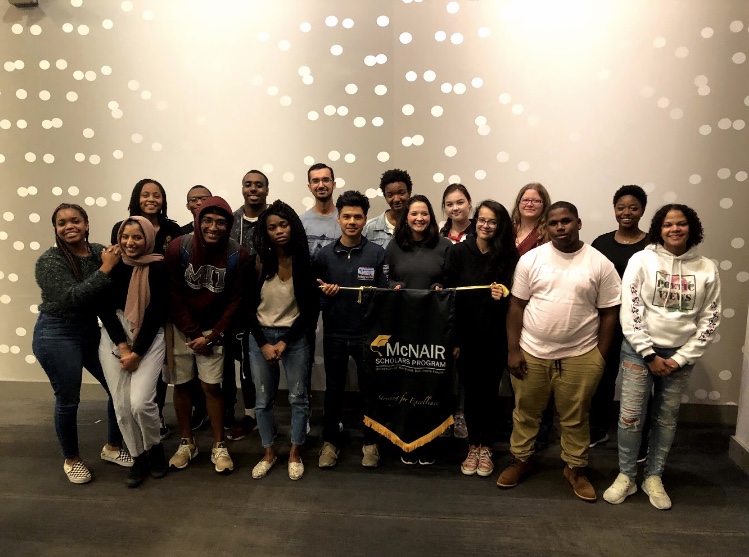
Scholars gather together at the 2019 McNair Family Weekend. Photo courtesy of Stonestreet, third from right, first row.
The goal of the UMBC McNair Scholars Program is to increase the attainment of research-based doctoral degrees by students from underrepresented segments of society, says Michael Hunt ’06, M13, mathematics, program director and doctoral student in Language, Literacy, and Culture. The pandemic’s disruption to business as normal, says Hunt, allowed him to “reevaluate engagement and re-think about how best to reach students. We had to think about connectedness intentionally.”
What this looked like for the online orientation was a full three days of important workshops, interspersed with dance parties, sharing pictures of food, and introducing pets (including one student’s chickens). “It let us humanize the experience,” says Hunt. “It was not just about the work.”
“There’s no way we can adequately do this work and not look at the emotions and feelings that our students are dealing with,” emphasizes Hunt. “This includes not just academically but life—family, spiritual, mental, and financial well-being….They must know that they are not alone and have a community to help them not only think through some things but also to vent to and to just be themselves.”
We had to think about connectedness intentionally.
-Michael Hunt, McNair Scholars program director
Stonestreet, who served as a peer leader during the event, says that all the community building activities had one goal. “It was crucial,” she says, that “leaders and staff were able to be vulnerable with their responses to set the tone for the scholars and promote deep conversation. It is difficult to foster trust, understanding, and a generally familial bond in an online format,” Stonestreet says, “so we tried to create deep and thoughtful experiences where the scholars could relate to each other past the surface level.”
In Stonestreet’s words, “less serious, but equally valuable bonding activities” included creating a shared playlist of favorite songs, hanging out on a joint messaging app, playing online party games on Jackbox, and chatting in smaller groups.
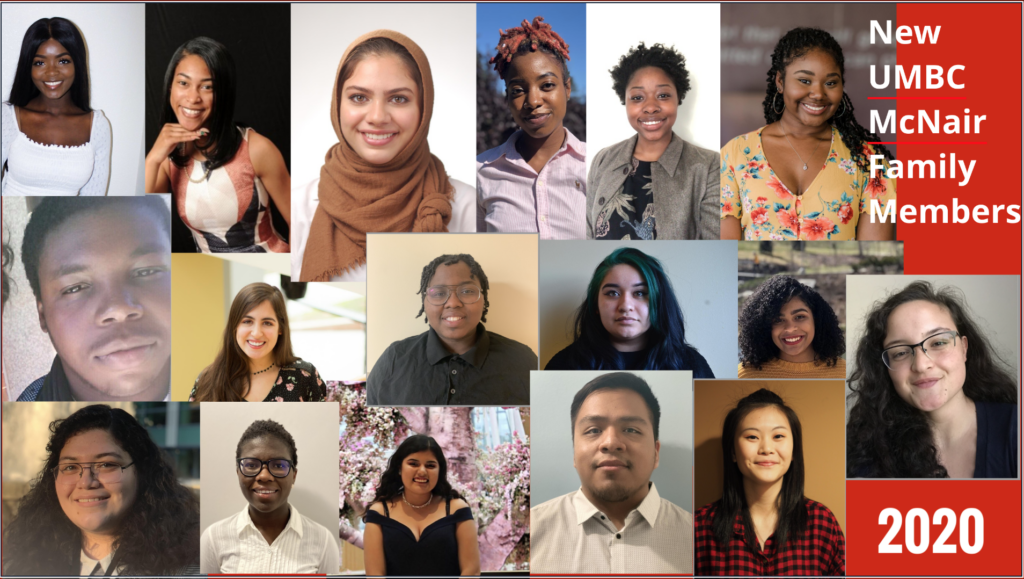
A collage of incoming McNair Scholars. Image courtesy of Corris Davis, director, Academic Opportunity Programs.
“We are just waiting for the day we can come together as a community again,” says Stonestreet. In the meantime, “I believe this cohort is going to continue to bond by navigating McNair Program requirements together, learning from one another’s experiences, and helping to support each other in their journey to graduate school.”
Pivoting Because of the Pandemic
That work of building community extends to classrooms as well. For Gender, Women’s, and Sexuality Studies instructor Drabinski, this means utilizing the technology available to reproduce as close as possible the camaraderie of her discussion-based classes. Drabinski, who’s taught hybrid courses before, says she and other UMBC faculty used the summer to prepare for fully online fall courses. This includes a week or more of training from DoIT with their PIVOT program.
Kate Drabinski leads a Baltimore Walking Tour in 2017. Photo by Marlayna Demond ’11.
Planning Instructional Variety for Online Teaching (PIVOT) aims to give instructors a fluency with online tools to “to take a more deliberate and holistic approach to preparing their courses” for remote instruction, says Sherri Braxton and Mariann Hawken of DoIT’s Instructional Technology team. Faculty facing hurdles engaging their students, conducting lab-based courses, or knowing how to evaluate assignments say that PIVOT has helped their transition to the digital classroom feel purposeful instead of reactionary, like in the spring.
This deliberate approach to online teaching is not new to DoIT. For the past 12 years through their Alternative Delivery Program they’ve guided summer and winter programs to redesign delivery into an online or hybrid format. Drabinski has worked alongside DoIT for the past two years as one of their Blackboard Ambassadors—coordinating trainings and outreach for other faculty members to best utilize the education software.
Common feedback Drabinski hears is that it’s impossible to teach discussion-based classes online. “And that’s absolutely not true,” says Drabinski. “It’s just about learning what tools work, and also teaching students how to best learn online.” In fact, she adds, sometimes the online format works even better for her students, who might not feel comfortable raising their hand in class or just need a little more time to formulate a response.
If I’m being real, I can’t wait to be back in a classroom with students, live, in-person. It’s my favorite thing to do. But this is a global pandemic, so how do we use the tools we have and the innovation UMBC is known for to make the best learning experience possible for our students?
-Kate Drabinski, Women’s, Gender, and Sexuality Studies
Drabinski goes on to list other available resources. Blackboard Collaborate allows synchronous small groups to interact. The VoiceThread platform, which hosted URCAD this year, makes asynchronous interactions as seamless as possible. “It’s not the same as an in-person live discussion,” says Drabinski, “but that means that other kinds of discussion are made possible by the technology.”
In the meantime, Drabinski muses whether online interactions mediated by a machine will somehow allow her to be more human to her students, by giving them a window into her personal world. “It’s weird to think about, but maybe true,” says Drabinski, as one of her cats lounges beside her and her wife prepares lunch in the background of the video call.
Echoing the sentiment of so many, Drabinski adds, “If I’m being real, I can’t wait to be back in a classroom with students, live, in-person. It’s my favorite thing to do. But this is a global pandemic, so how do we use the tools we have and the innovation UMBC is known for to make the best learning experience possible for our students?”
Finding a Community that Cares
Students are also eager to get into the classroom, some for the first time. Dawg Days: Jumpstart is an extended orientation for first-year and transfer students that allows them to take one or two general education classes with their incoming peers. More students than ever signed up to participate this year—135 compared to last year’s 68—says program director Laila Shishineh. The online format removes the barrier of having to come to campus, even if that’s what many of the students are eagerly anticipating.
After meeting new people, respondents to a survey sent out to Dawg Days students said living on campus or taking classes in-person is what they’re looking forward to most. The Retrievers Return Roadmap, released by UMBC’s fall planning committee, emphasizes that the University will move forward with guidelines of decreased capacity, fewer students in dorms and only 10 percent of classes being held in-person. But classes with in-person priority include First Year Seminars to help facilitate community building among new students and let them get to know a few faculty, masked-face-to-masked-face.
Incoming members of UMBC’s class of 2024.
Incoming members of UMBC’s class of 2024.
Incoming members of UMBC’s class of 2024.
Incoming members of UMBC’s class of 2024.
Until then, the Dawg Days summer bridge program will serve as their introduction to campus. “Interestingly enough,” says Shishineh, this year’s online experience will not be that different from the in-person experience. “We offer all of the same opportunities in both formats: weekly skill-building opportunities, office hours, and a chance to connect with other students, plus time with our team. I’m so glad that while it looks different, the core elements are the same.”
“If nothing else, I hope the students will feel a sense of connection and belonging to UMBC after participating in the program,” she concludes.
“What people want is to feel like they’re in a community,” echoes Leupen, the biology professor with hamsters. “We want to help them find—in classes or other aspects of UMBC—connections. We want them not to feel like they’re just alone in their bedroom with their laptop. Students want to know that people care about them, that UMBC still cares about them, and we do.”
* * * * *
Are you one of our newest Retrievers? Introduce yourself!
We’re so exciting that you’re joining our community, and we’re counting down the days until we welcome you to UMBC! In the meantime, we’d like to learn more about you.
Make sure you’re signed into myUMBC, then go to our submission page to upload a video (up to 15 seconds) or a photo letting us know who you are, where you’re from, and what you’re looking forward to as a UMBC student.
When you share your story, you’ll have a chance to be featured on UMBC’s Instagram (@UMBClife), so get creative.
Many things came up to an abrupt end on March 12. At UMBC, students began leaving campus and their dorms for an early start to spring break, student-athletes saw a sudden stop to their season, and employees were figuring out plans to work from home for the foreseeable future.
Stacy Carone, associate athletic director for sports medicine, summed up the Retriever community’s feelings succinctly: “We felt as if our identities were challenged and we…lost a big part of our ‘why.’”
In the wake of so many life-defining activities suddenly curtailed, many other things continued nevertheless—namely the indomitable UMBC spirit showcased in the grit of students whose academic plans now looked dramatically different and by campus decision makers who had to make quick, tough calls to elevate the safety and health of our Retriever Nation.
As many campus activities transitioned to online formats, it’s fair to mourn what was lost: Commencement, final championship games, shaking your professor’s hand at the end of the semester, the last hug with suitemates before move out day, the final nostalgic meal at True Grit’s. Yet, it’s also important to celebrate the folks behind the scenes making these transitions for the community as smooth as possible.
The necessity of being nimble
When it became clear that UMBC would transition to distance learning for at least two weeks after spring break, John Fox, director of Residential Life, and his team immediately started brainstorming how to serve the students who, for a variety of reasons, would not be able to make a trip home. With an exceptions process in place, around 200 students stayed through the first few weeks, and when Maryland Governor Larry Hogan’s stay-at-home order came, 65 students continued to remain on the nearly empty campus.
“Dealing with the unknown as a college student is a unique experience,” says Fox ’91, information systems management. “There’s a lot students have to juggle on a day-to-day basis, so they react well to knowing the knowns and the constants. Right now, we’re trying to guide them through this process as smoothly as we can, but, of course, they have a lot of questions, and we’ve been trying to respond to each student’s needs.”
On a case-by-case basis, this means letting students access their rooms to retrieve medicine or class notes left behind. On a wider scale, it involves considering safe ways to allow the residents to return to collect their belongings without compromising their health. “The important thing for us,” says Fox, “is to be nimble and pivot as information comes down from the governor, to the University System of Maryland, then to individual campuses.”
A small group of students and staff remain living in campus housing during COVID-19.
That flexibility involves reaching out to—and listening to—the students. This outreach Fox sees as vital to serving the student population, but also invaluable as students were pulled from their communities so suddenly. “Residential advisors are still connecting with their floors, trying to give students some closure to an unusual semester,” shares Fox.
Resident advisor for Chester apartments, Rileigh Matson ’21, psychology and visual arts, is checking in with her residents on a weekly basis. “In comparison to the conversations that occurred before COVID-19 closed campus, not much has changed,” says Matson, but the importance of staying connected feels much more weighty. Matson, who hopes she can return as an RA next semester, says that students are coping fairly well by staying busy with pre-pandemic activities, like school and pop culture, although some have taken up new hobbies or make taking walks a bigger priority during this time of isolation.
For Fox’s part, the phone calls and emails with students serve to show him that even during pandemics, UMBC students are still exemplary. “I’m constantly reminded that we have thoughtful, understanding students who ask good questions. It reminds me that UMBC is a place that puts value on the individual and that each student feels attended to and that their individual circumstances matter.”
Provisions in a pandemic
Dining Services staff, like Residential Life, needed essential staff to stay and continue to serve the remaining student population. Tim Dunn, campus executive chef talks through the game plans his team created in discussions with UMBC leadership. “UMBC was incredibly proactive with action plans of all essential associates,” says Dunn. “So early on we worked through potential scenarios, and how we would respond.”
The inside of True Grit’s before the transition to a contact-free food pick-up process.
This included modifying their offerings to comply with the necessary physical distancing, which happened in stages. First, they strongly encouraged taking food in to-go containers; this quickly turned into a total grab-and-go operation. In late April, remaining students and staff on campus select their meals online and pick them up at the door.
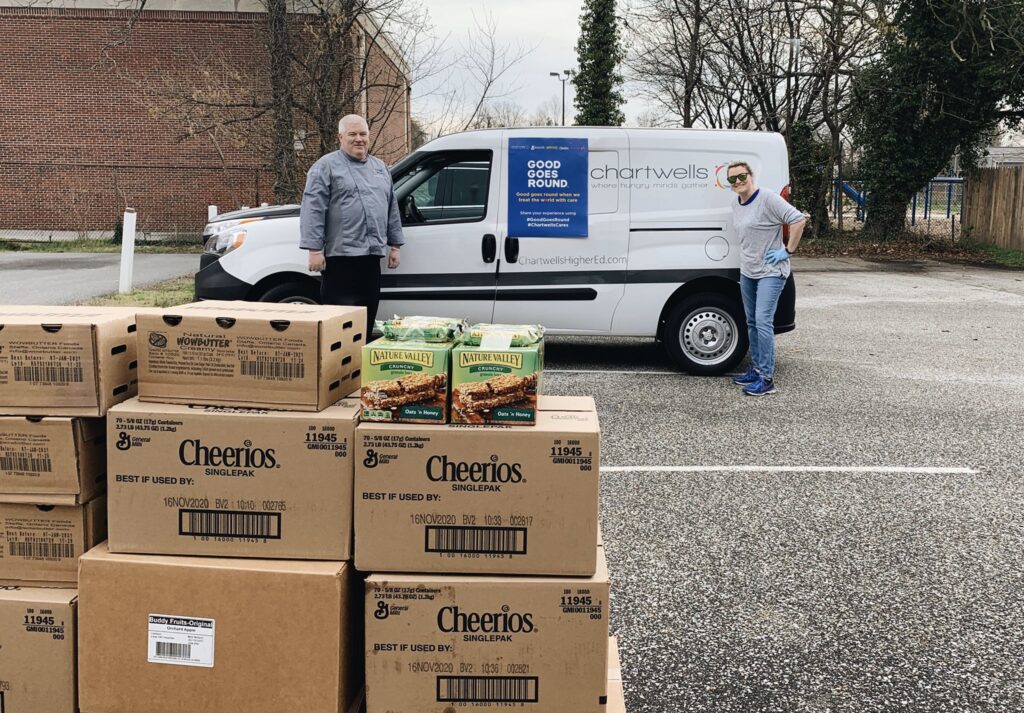
After resolving how to continue feeding the dwindling campus population, Dunn also needed a plan to distribute the semester’s worth of overstocked food. “We found a home for most of our products at St. Agnes Hospital,” he says, “and donated some other perishables and non-perishables to Catonsville Emergency Assistance.”
Tim Dunn, campus executive chef, delivers food to Catonsville Emergency Assistance. Photo courtesy of UMBC Dining.
Despite the unexpected upheaval of COVID-19 to campus operations, Dunn says that their “staff is building even stronger relationships with the students who are remaining on campus.”
Be purposeful in all you do
As a member of UMBC’s Incident Management Team, Carone in Athletics had a sneak peek of what was coming, “but I could not possibly prepare emotionally for that day.” She’s referring to March 12, when Athletic Director Brian Barrio got in front of the students to explain that in order to stall the spread of a lethal virus, spring sport seasons were canceled.
Despite this decision coming at the expense of students’ athletic careers, what Carone remembers “is an overwhelming sense of pride; looking at the faces of our UMBC student athletes as they processed the gravity of what was happening in the world around us; watching them not hang their heads in defeat, but do what Dogs always do, come together, have heart, show grit, and do what is right, not what is easy.”
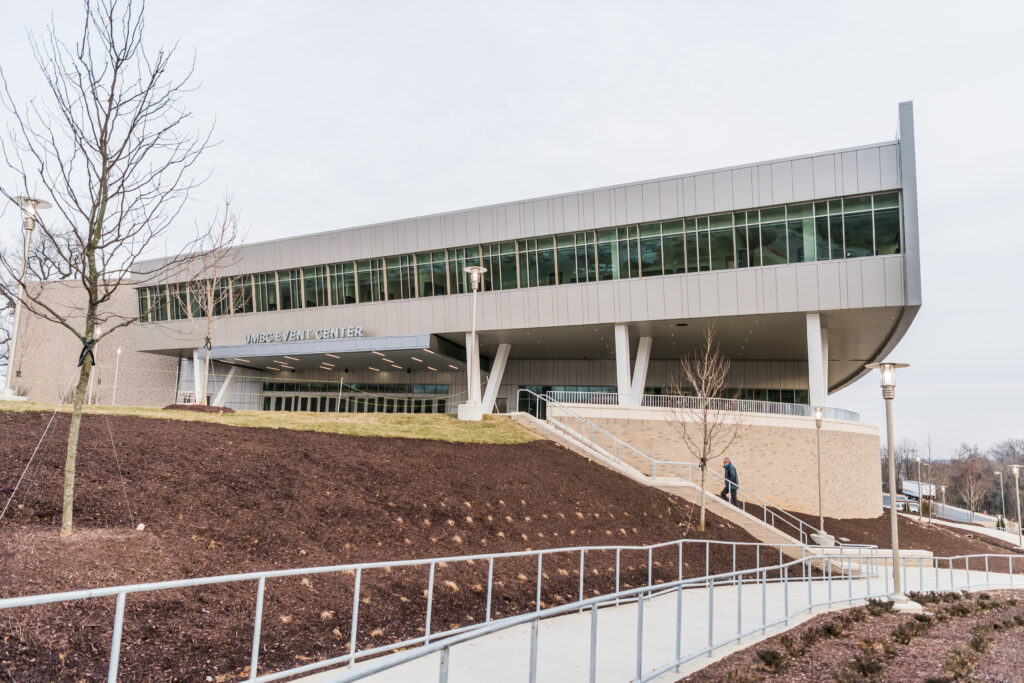
The UMBC Event Center, home to sports teams and Commencement activities, is closed.
Carone, who supervises seven athletic trainers and strength coaches, outlined the resources Athletics would continue to provide via telemedicine and encouraged the students to remain connected to one another and to reach out for help in these unprecedented times.
“We usually interact with student athletes on a daily basis for four hours a day,” says Carone. “Replacing that time with screen time interactions has been challenging.” As a result, Carone and her staff are encouraging the student athletes to find routines. “Their days are usually extremely structured from morning to evening… so they’re trying to adjust to this new normal with lack of structure and without sports, which are usually a huge outlet for them.”
Currently all workouts are completely voluntary for student athletes, according to the NCAA. UMBC coaches are posting training videos mainly as a way to keep in touch with their teams and give the athletes a sense of normalcy that practicing might give them. In response to COVID-19, the NCAA has extended an additional season of eligibility to seniors playing spring sports, and Carone says that at this time, 10 student athletes have committed to returning next year.
Carone’s biggest piece of advice to her staff and students as they adjust to this time away from “normal” is to continue to live life with intention, be purposeful in all they do. As well as engaging in weekly wellness check ups with staff and distance workouts with coaches, Carone suggests students can always use “more time to be slow and still.” Her final piece of advice: “Stay connected as much as possible; be good to yourself and one another.”
Recreating essential in-person resources
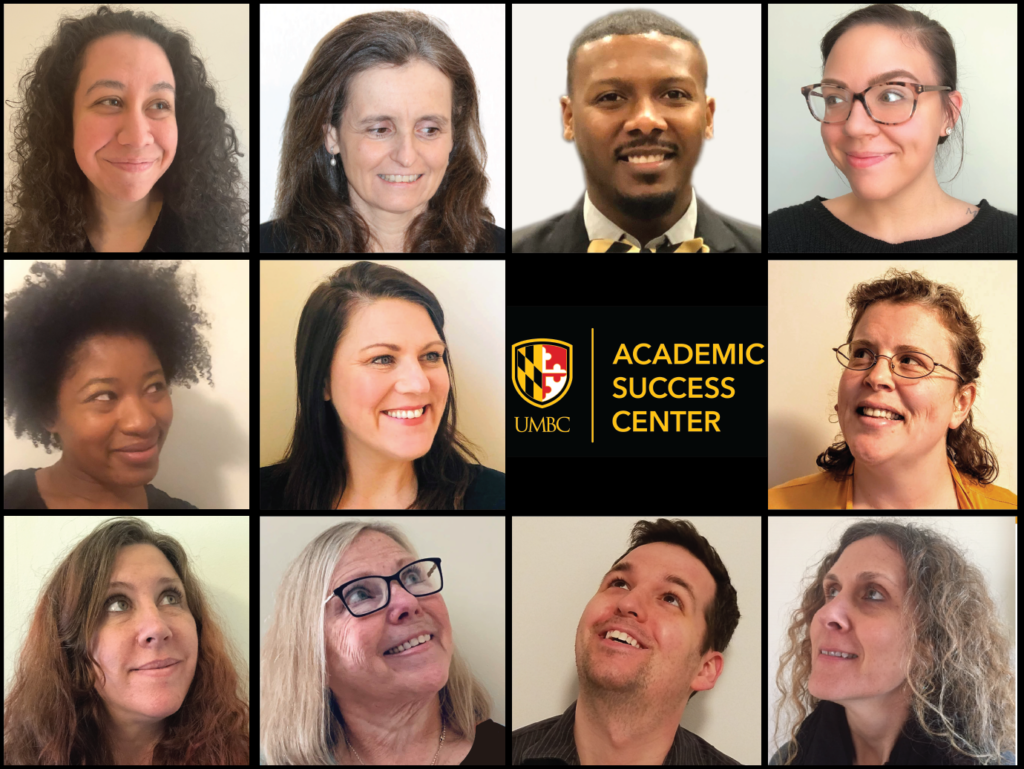
In the Academic Success Center, it was clear that tutoring and supplemental instruction would be more important than ever if UMBC did move to a distant learning model. In early March, preparing for news that could come at any time, Amanda Knapp, associate vice provost and assistant dean, Undergraduate Academic Affairs, and others in ASC began gathering tools to help their staff of nearly 200 student tutors transition to online services.
As a testament to their efforts, says Delana Gregg, director of Academic Learning Resources, Assessment, and Analysis, ASC’s complete catalog of services was available online the day after spring break. To lighten the load on students seeking help and mimic the one-stop-shop of services that ASC offers, a new website compiled the list of available resources and how to access them.
The Academic Success Center has made the most of the University’s transition to remote learning. Photo courtesy of Delana Gregg.
“So far,” shares Gregg, Ph.D. ’19, language, literacy, and culture, “students tell us that having a staff member who they can talk to—who can help them develop a plan for success—makes all of this so much better.”
International Education Services (IES), which serves a population of students uniquely affected by COVID-19, has also seen an increase in webinar attendance and online traffic to their Town Halls and a new website with resources for UMBC’s current and incoming international students.
These resources are the result of a series of surveys IES proactively sent out to international students and scholars before spring break, asking what resources they needed and how IES could best serve their needs during the COVID-19 disruption. International students face strict restrictions when it comes to working and supporting themselves in the United States, says Michelle Massey, associate director of International Student and Scholar Services. With many businesses closing or furloughing employees, international students are increasingly uncertain about their student status, while also carrying the burden of worrying about their families in other countries, some of which have closed their borders.
“It’s very difficult to know that so many of our international students are suffering financially, and not have more solutions to offer,” says Massey. “We encourage students, and each other within our team, to focus first and foremost on taking care of yourself, so we can still do our best work and contribute to the community as best we can.”
Hope on the horizon
One day, campus will reopen. No one knows what that will look like yet, but Michael Pound, director of Environmental Safety and Health and logistics chief for UMBC’s Incident Management team, is excited to think about it. Pound and his team led the charge to safely shut down campus and think through closing buildings where ongoing research occurs.
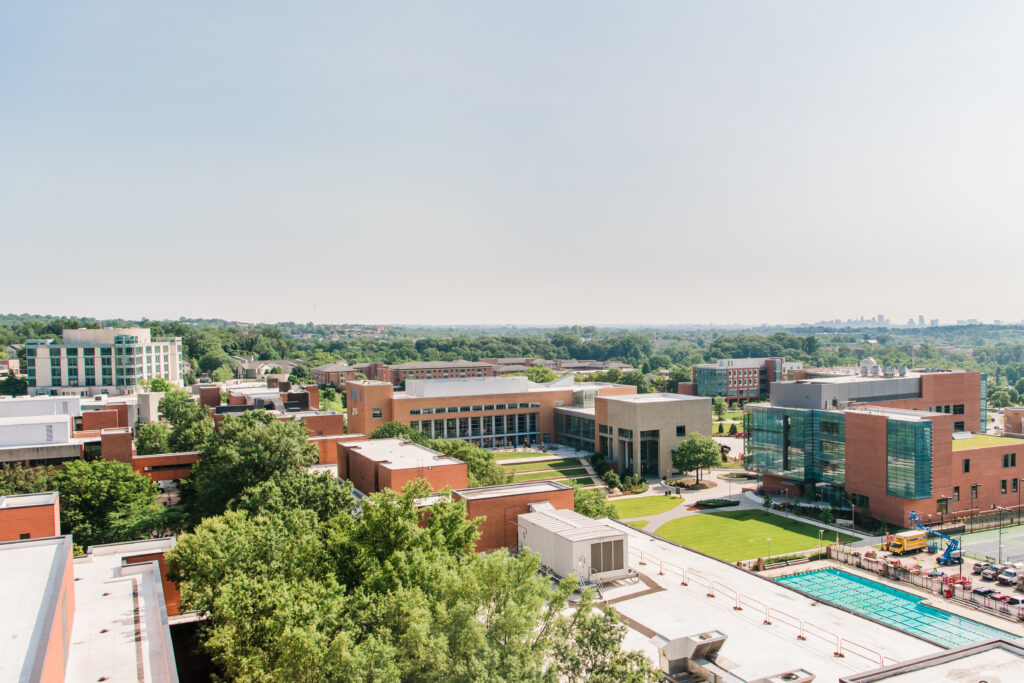
UMBC leaders are working through what step are necessary to eventually re-open campus.
With graduation being the priority, some students were able to complete their experiments in time, others had to find alternative ways to finish. “That was the toughest part,” says Pound. “Telling students about to graduate, who only needed six more experiments to complete their work or graduate students not able to finish their dissertation research, ‘I’m sorry, you can’t keep doing this here.’”
After Pound’s team successfully closed down most campus infrastructure, while providing for the skeleton crew of staff and students remaining, he was relieved to be able to focus on what it will take to gradually re-open campus and bring back high levels of research.
“We know the mission of UMBC,” says Pound. “We’re all here to support students, and we’re excited to think about what that will look like when campus can reopen.”
*****
All photographs, unless otherwise noted, by Marlayna Demond ‘11.
UMBC students are no strangers to ingenuity. When a fire alarm went off during last year’s Undergraduate Research and Creative Achievement Day (URCAD), presenters rolled up their posters and continued discussing their work outside without skipping a beat. This year, due to COVID-19, the 24th annual iteration of URCAD calls for creative dexterity at a whole new level.
Now spanning April 22 – 29, the event has transitioned to a week-long online symposium. (See project sneak peeks here!)
The virtual celebration of undergraduate achievement will allow presenters to showcase their research and interact with UMBC attendees through the VoiceThread (VT) platform. Students’ posters and slides—including art, performances, and video games—will be available all week long for any attendee to enjoy.
“The students have shown an amazing amount of resilience during the transition to moving their presentations online for URCAD,” says April Householder ’95,visual and performing arts, director of undergraduate research and prestigious scholarships.
“This, in itself, is a valuable research skill,” she shares. “One of the benefits of participating in URCAD is students learn that part of the research process is being able to adjust to ever-changing circumstances. Sometimes technologies fail. You lose data. Experiments don’t work. The ability to persevere and adapt is so important.”
New platform, same depth of research
At the virtual event—like every year—viewers can expect robust research spanning a wide range of subjects. VoiceThread will facilitate audience engagement to mirror the in-person presentation experience. Those with a UMBC login will be able to make comments on the projects. And student presenters can receive feedback and respond to questions throughout the week.
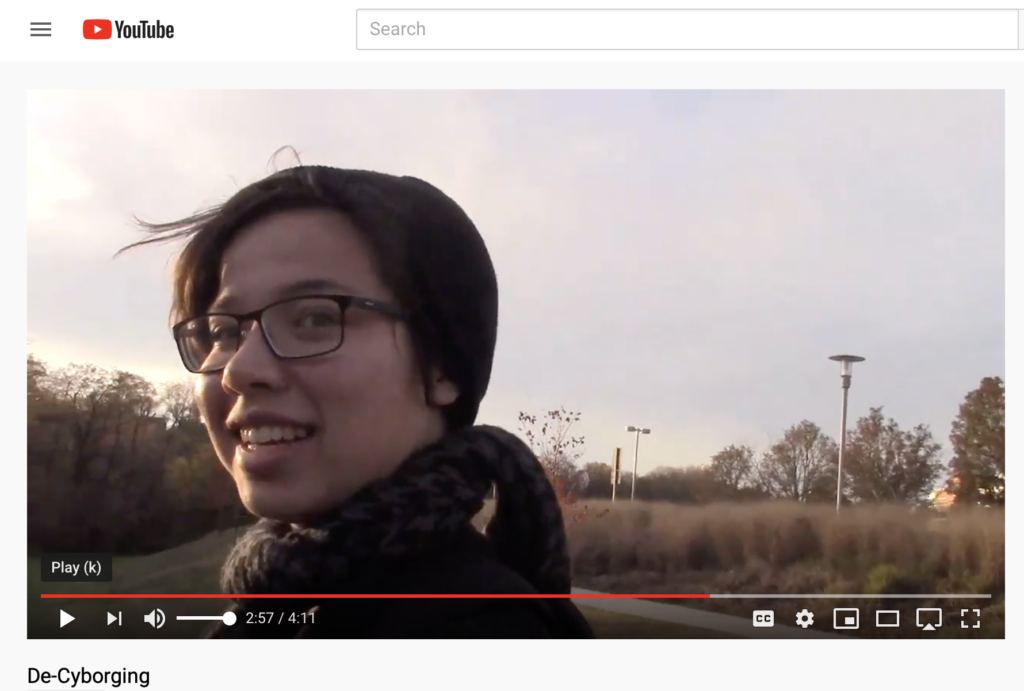
Projects rooted in the humanities and social sciences will cover topics from around the globe, in the present and the past. One project examines South Africa as a case study in supporting a wide array of languages within a society. Others focus on inclusive sexual health education in public high schools and how the New York Times has covered immigration policy over time. One student will discuss “de-cyborging” herself by consciously detaching from her phone for set periods of time.
Screenshot from “De-Cyborging,” by Julia Palmer ’23, global studies. Image courtesy of Palmer.
Some of the research feels especially prescient as UMBC students take on issues in health and medicine. One project enhances and visualizes human disease networks to reduce healthcare costs. Another group of students is working on more effectively treating HIV, with research that could improve therapies targeting the HIV-1 replication cycle.
Other projects work to create technical solutions to real-world needs. Examples include voice-activated assistants for individuals who are blind as well as a design for an autonomous, low-cost, and accessible electric mobility vehicle.
Bypassing technical hurdles
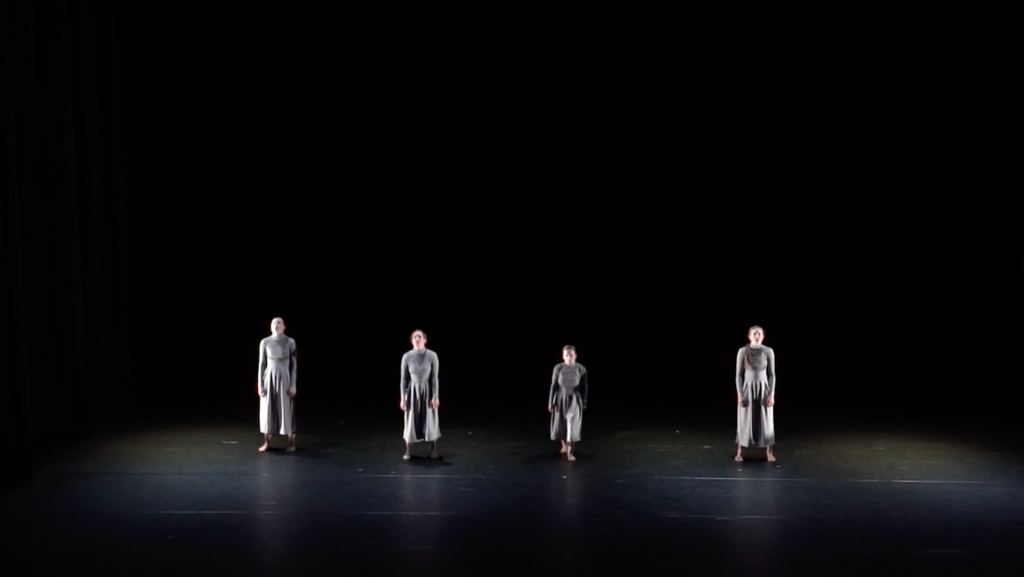
While each discipline faces challenges in adapting to the new format, the visual and performing arts have additional barriers. Some of the showcases, originally meant to be staged as live performances, could not be filmed prior to social distancing.
Now, students are working around the limitations by submitting rehearsal footage or stills in lieu of performances. Others are reimagining their performances in an online environment, using new recording technologies, says Householder.
“terminal,” choreographed by Emily Godfrey ’20, dance. Image courtesy of Godfrey.
Despite the change to a virtual venue, of the original 350 URCAD presenters, 330 still plan to participate in the event. This number nods to UMBC students’ resiliency in the face of this challenging moment.
Preserving the “spirit of URCAD”
Householder is heartened, but not surprised, by the ways UMBC students have risen to meet this challenge. After all, UMBC’s community of inquiring minds is not limited to a specific location.
With the students bringing their all to the event, she’s now working to encourage the UMBC community to join in as well, to appreciate and engage with students’ research and creative work.
“We invite faculty, staff, and students to ask questions, give feedback, and offer constructive criticism,” says Householder. “Our presenters will take those community reflections back to their labs, desks, and studios, to make their work even stronger.”
Featured image: From URCAD 2020 presenter Liam Garrett’s project “The Digital Art Movement: Its Role In Spreading Awareness About Endangered Animals.” Image courtesy of Liam Garrett ‘21, graphic design.
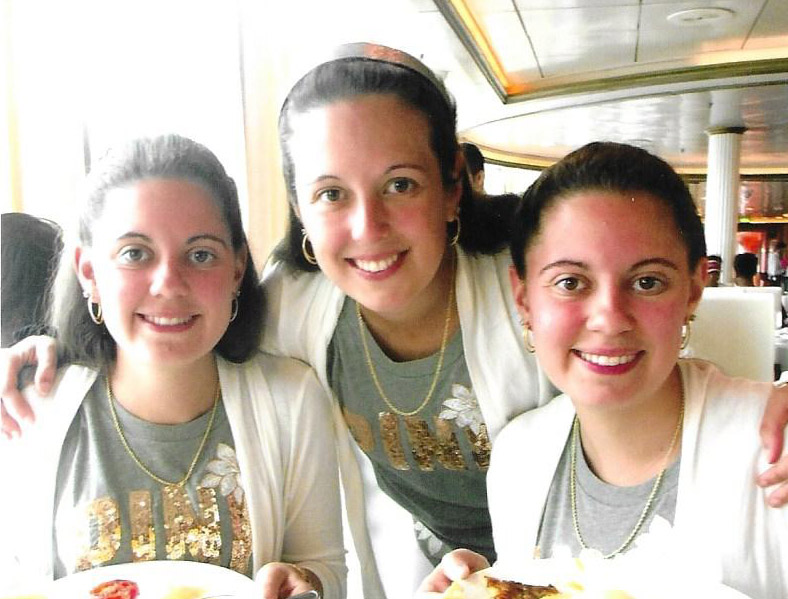
Transferring to a new college often comes with some trepidation about making new friends and finding your crowd. For Michelle, Melissa, and Melanie Biddinger, however, those were the least of their worries when they originally came to UMBC from the Community College of Baltimore County.
The three sisters (Melissa and Melanie are twins) brought their lifelong friendship and communal study habits with them, and their tight-knit family bond propelled them to collectively graduated in 2017 with bachelor’s degrees in psychology. This winter they’ll cross the stage again, having earned their master’s of arts in teaching.
The Biddinger sisters had a common source of inspiration for their shared educational path—their mother. In their formative years, they remember her taking on substitute teaching positions and returning home with stories of students gaining new skills and mastering challenging material. Melissa recalls volunteering in some of her mom’s classrooms and realizing the great responsibility educators have for shaping the next generation of leaders.
Michelle echoes her younger sister’s sentiment about witnessing the influence teachers can have, especially in early education—the sisters’ area of specialty. “These are the years that children learn foundational skills that they will use for the rest of their life and help them achieve higher-level skills.”
Melanie adds that their teaching interests began even before their mother began working in schools. As young children, the sisters would play school and take turns teaching each other. This playacting transformed into dedicated shared studied sessions as the Biddingers pursued higher education together.
Perfect Study Partners
At UMBC, they took all the same classes, navigating quizzes and exams with their built-in structure of support. “It was always comforting knowing that if one of us missed a class announcement, more than likely one of the other two heard and ‘reported back,’” says Melissa. “Preparing for exams was always tolerable given that I had two of my best friends as study partners.”
The Biddingers all identify as having very similar study habits, which was helpful as they progressed through their degrees. “We were equally strong,” Melanie asserts. “If there was a particularly difficult concept we had to understand, we put our heads together to figure it out.”
Their similarities don’t end with their study habits; since childhood, the sisters have chosen to dress identically, planning out their outfits the night before. “This choice is a part of who we are,” Melanie explains, “and in a world where everyone wants to be different, we are being different by wanting to be the same.”
Better Together
Michelle credits UMBC’s early childhood education department for guiding her “to be reflective and create an inclusive classroom.” The sisters, who are all hoping to teach in Baltimore County, say they were influenced by UMBC’s dedication to the surrounding communities where the education program supports and partners with local schools and facilities. Melissa adds, “It is clear that they want their students to succeed and enter the world as role models and citizens that respect and honor diversity.”
As the sisters look for jobs, they’ll be following in their mother’s footsteps and substitute teaching at local schools. Their dream would be to make up an entire grade level team at the same elementary school.
“It has always been a dream of ours to work in the same school,” says Michelle. “Teaching is such a rewarding career. There is no better feeling knowing that you made a difference in someone’s life.”
As a student in Towson High School’s Law and Public Policy program, Randall Ainsworth ’19, history and philosophy, created a peer mentoring program for other young African American men there. In a predominantly white school, Ainsworth envisioned a support system for students who were struggling to succeed as they dealt with violence and poverty at home and then were placed in an environment that expected them to conform. The group sought to overcome their circumstances through mentorship, brotherhood, and community service.Their motto, Ainsworth says, was, “Once you’ve been restored, go back and restore your brother.”
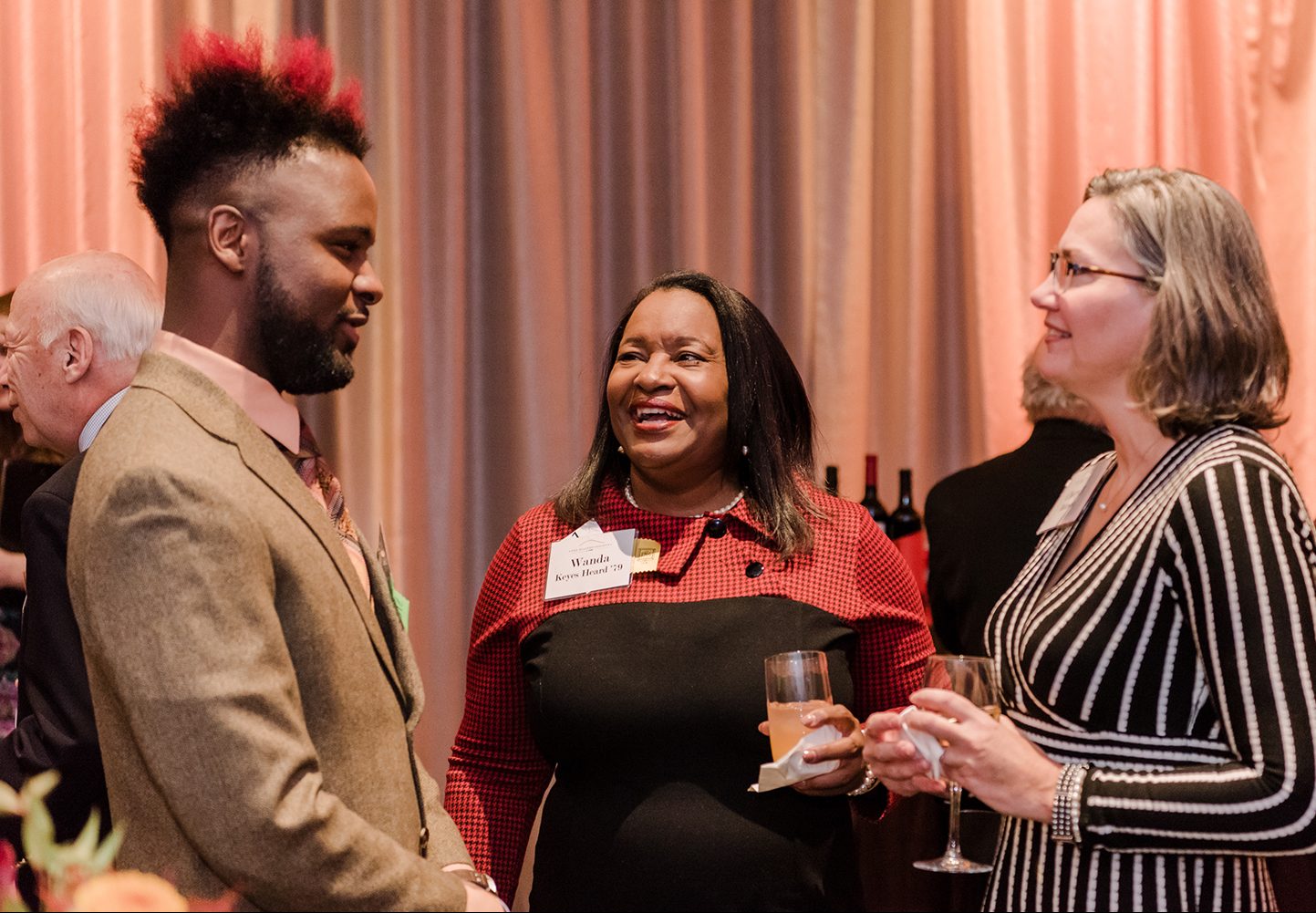
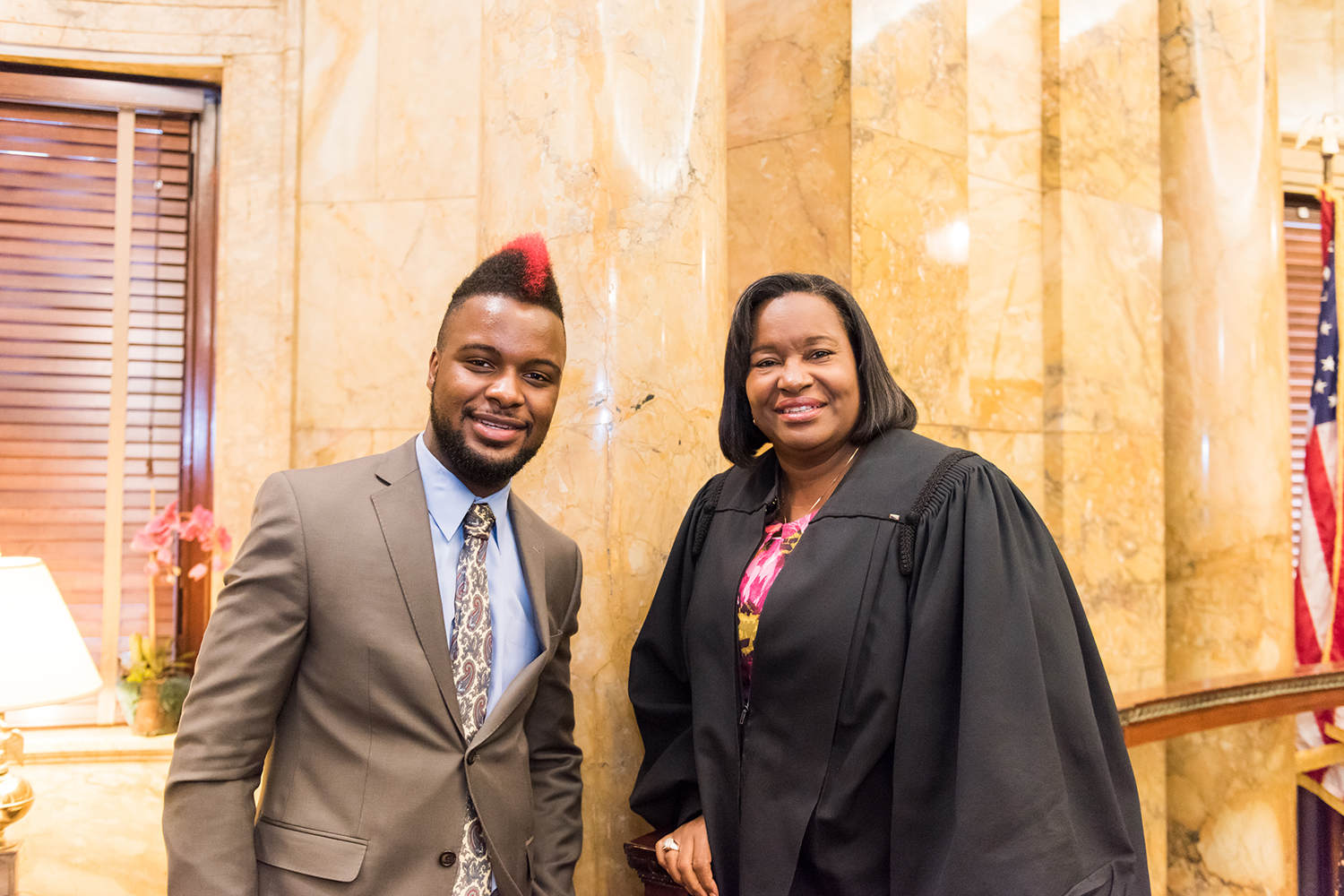
After a four-semester internship with Chief Judge Wanda Keyes Heard ’79, political science, of the Circuit Court for Baltimore City, 8th Judicial Circuit of Maryland, Ainsworth has wrestled with what restoration might look like for each person making their way through the criminal justice system. In his first semester, Heard handed him a thick file for someone in prison. His task was to review a request to have a sentence reduced.
“Just so you know, this is a real person. You have to look through here, see what his record is, and tell me what to do,” the judge told Ainsworth, he recalls.
These types of hands-on tasks with real-life application are par for the course for an internship with Heard. In her 20-year career as a judge, she’s mentored 26 interns from UMBC alone.
Ainsworth says that Heard has been instrumental in holding open the door for the next generation of lawyers and judges. “She has, like, an army of little children, just all over the place, doing good work.”
Getting a foot in the door
The summer before Ainsworth began his studies at UMBC, he met Heard serendipitously at an award ceremony, where he was being honored for his high school mentoring program. Hearing about Ainsworth’s background and his acceptance to UMBC, Heard approached him with her business card and told him to get in touch, despite the fact that he hadn’t even started college yet.
“When I was coming along, the most frustrating thing was not being able to get experience,” says Heard, sitting in her wood paneled office downtown. Her mother was a nurse and her father was an educator. “But there were no lawyers in my family. There were no lawyers around that looked like me—African American and a woman—and I found it very, very difficult to get my foot in the door.”
While Heard was at UMBC in the ’70s, she went to Capitol Hill to search out internships. Discouraged but undeterred by warnings that she wouldn’t be able to secure a position, Heard approach Shirley Chisholm, the first African American in Congress and the first woman and the first African American to seek a presidential nomination from one of the two major political parties. Chisholm’s mentorship was invaluable, says Heard, who learned all the steps for how a bill gets from point A to point B, solicited co-sponsors for Chisholm’s bills, and eventually drafted her own bill—to establish a stipend for interns to receive compensation for their work.
Seeing representation mattered, and Heard has strived to set a similar example for the interns who work in her office but also for younger children, who come into the courthouse with their classmates and recreate mock trials for scenarios like Jack and the Beanstalk. In a recent rendition, Ainsworth participated in the role of Jack, who was on trial for breaking into the giant’s house and stealing his goose that lays the golden eggs, and ultimately attempted murder of the giant by cutting down the stalk that held up his house.
“We bring in kids from the area’s public schools and nonprofits…they are the attorneys, they serve as the judge, they’re the jurors,” says Heard. “And we show them the jobs like the clerk and the sheriff…to encourage them into careers in the law.”
“If I show young people,” continues Heard, “that there’s an alternative to what they see on the street by bringing them to the courthouse and showing them jobs or a female judge, I’m offering them an opportunity that I may not have had. That’s where my mentoring Randall comes in. He comes from a rough background, and a very rough neighborhood, but he’s brilliant. You only need to talk to him. Give him an assignment. And his brilliance shines through.”
Heard, says Ainsworth, has been instrumental in setting him on this path. And from Heard’s perspective, “I truly feel like a mentor, because he’s outgrown my office.”
Legal bootcamp
Working with the judge is like “legal bootcamp,” says Ainsworth. “Basically, she gives you an assignment and then she’s like, ‘Go do it.’ But it’s really a hands-on thing where you’re figuring out the law, you’re also figuring out the circumstances of the case, and then you’re figuring out how it applies.”
Ainsworth has been struck and shaped by the way Heard’s passion for the law translates as a passion for helping people in the system. “She does this whole thing with her probation that’s a little different, where she gives people stipulations, but the stipulations are things like, ‘Leave town. Get a job. Go to school,’ you know? And you’ll see people that you would think are hardcore criminals come in six months, a year later, and they’re completely different people.”
The judge has also taken time with Ainsworth to go through his law school applications, providing a much needed voice of experience. “I always wanted to be an attorney, but no one in my family and no one that’s connected to my family has ever done anything like this before,” says Ainsworth, unconsciously echoing Heard’s own words about her first foray into studying law.
“My relationship with the judge has definitely opened doors to opportunities that I didn’t think were possible,” continues Ainsworth. “Having the opportunity to gain experience with the law and network with leaders in the legal field has made me confident that I can succeed as an attorney.”
Changing the narrative
Other formative experiences shaped Ainsworth’s pursuit of this career. On the way home from volunteering at a nursing home with members of his peer mentoring group, Ainsworth says, someone called the police on the group as they walked into a convenience store. “You know, we’re being orderly,” Ainsworth remembers explaining. “We’re not doing anything. Why are you calling the police?” Ainsworth managed to deescalate the situation, but for him, the experience underscored that “African Americans do not have the same experience with the law and the justice system as other groups of people in America.”
Ainsworth, who after graduating will work as a legislative aide in the Maryland General Assembly and apply for law school, sees his career goal clearly: “I want to help reverse a cycle of historical injustice, create opportunities for others like me, and make it easier for African Americans to have faith that the law will be just and treat them fairly.”
*****
All photos, including header, by Marlayna Demond ’11.
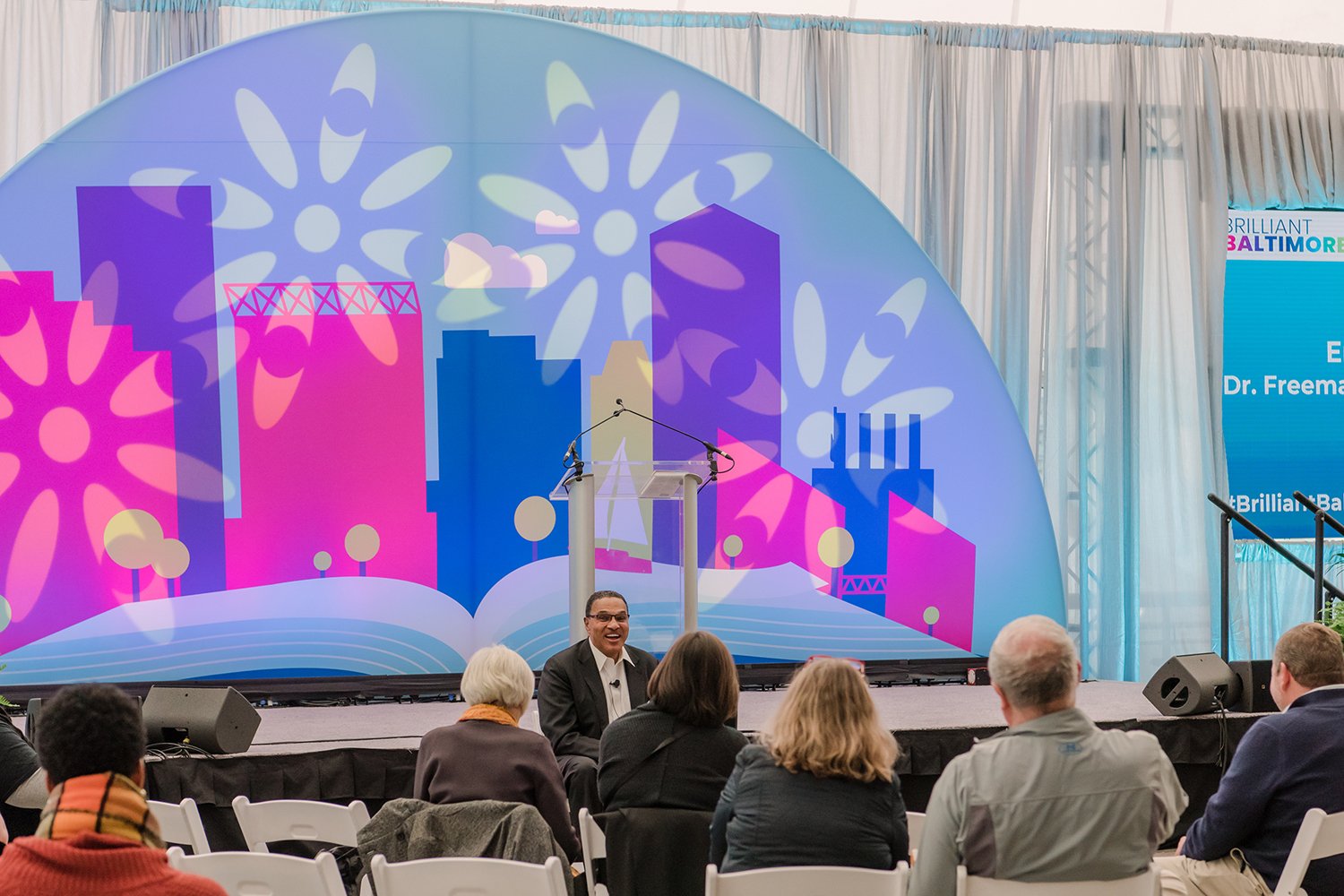
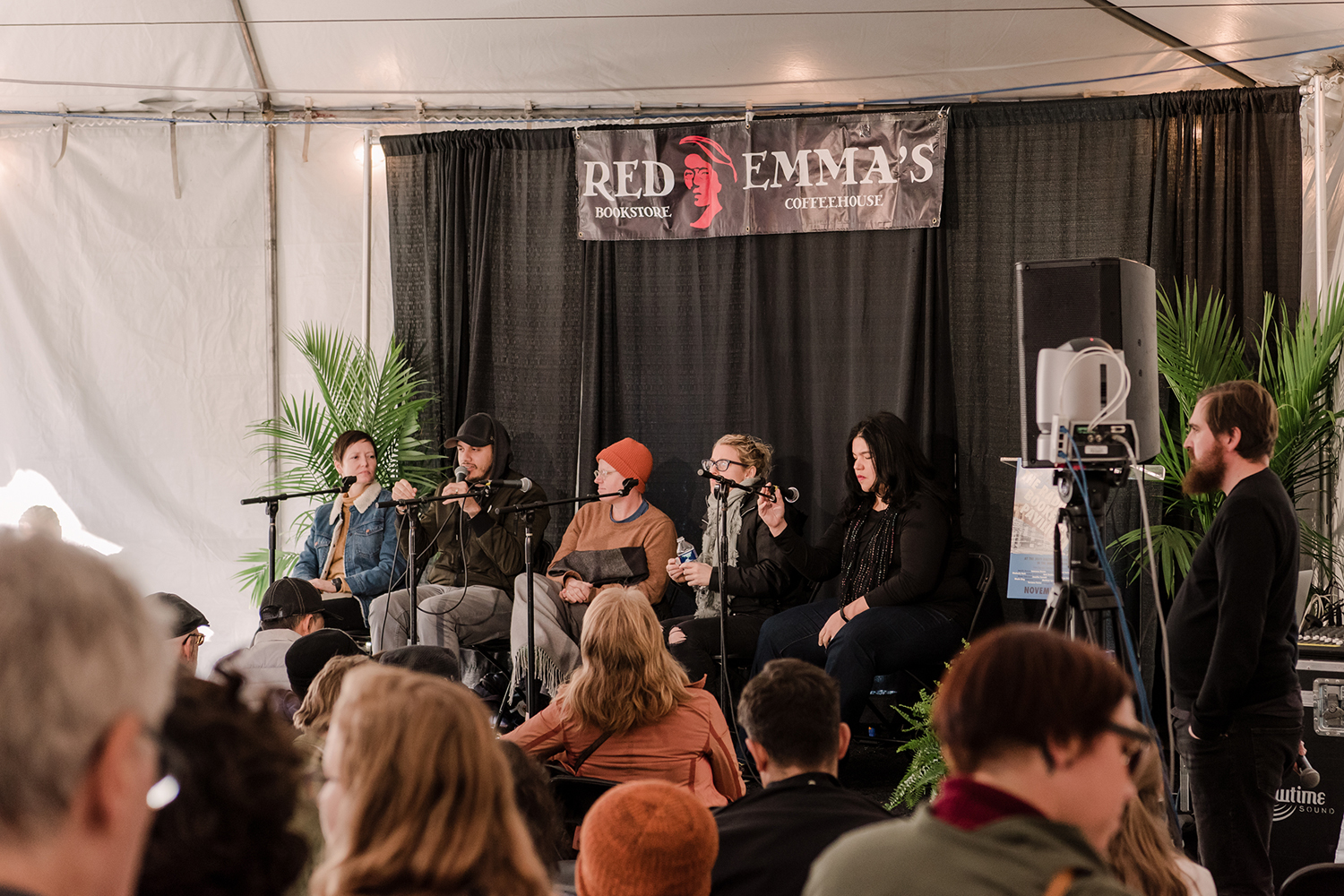
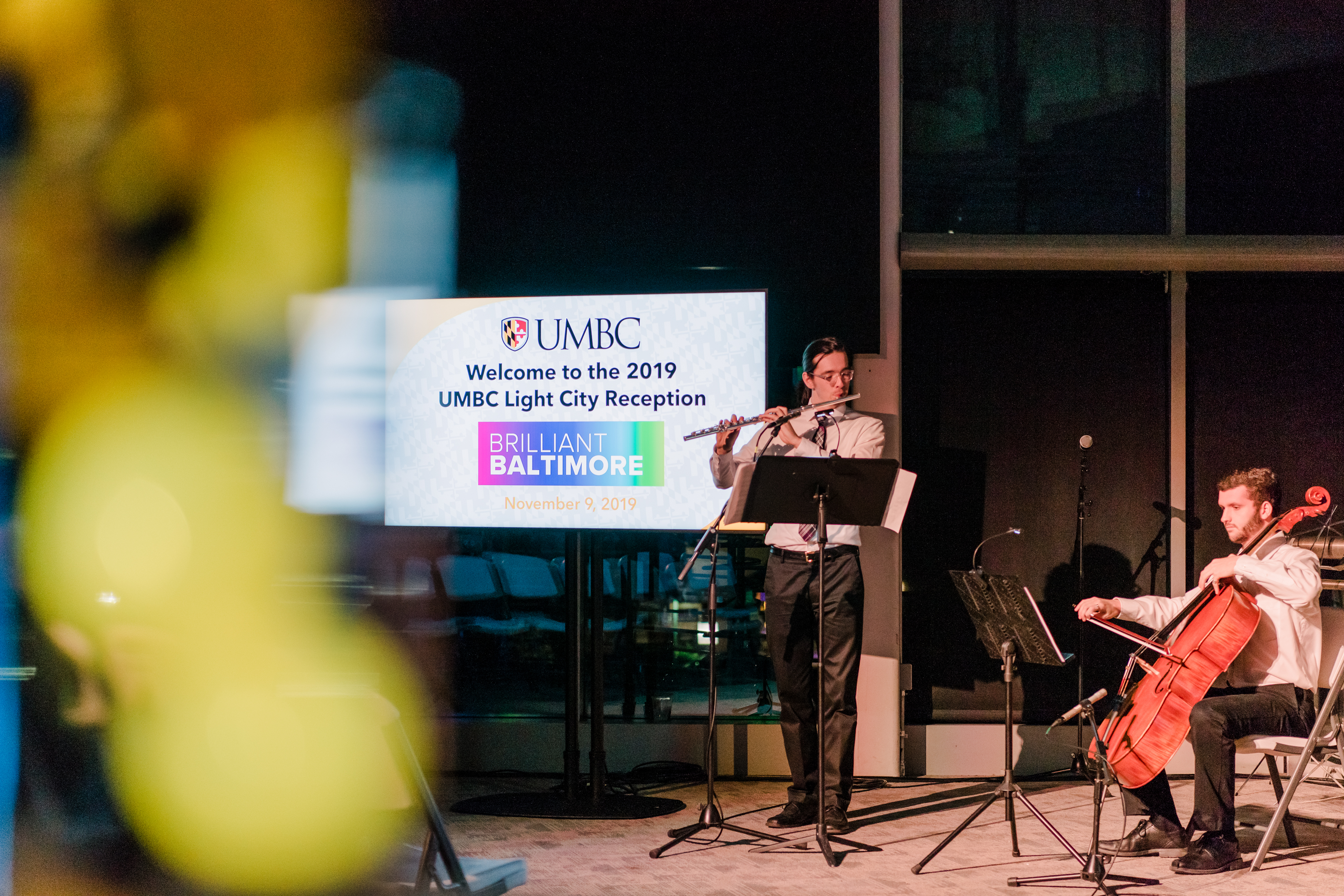
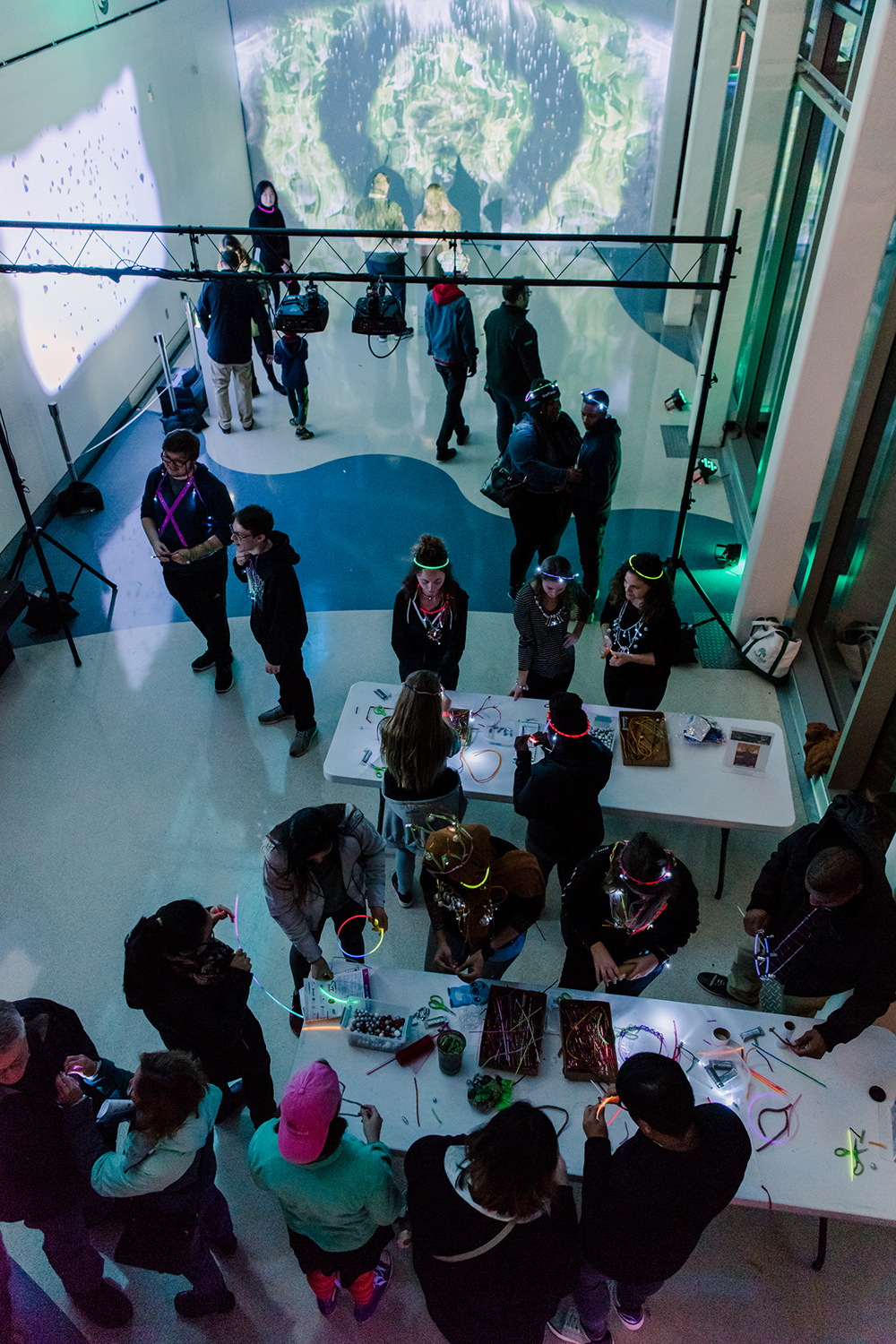
In this first year of Baltimore’s mash-up of eclectic and electric art festival Light City and the annual book festival—a hybrid called Brilliant Baltimore—UMBC shone brightly.
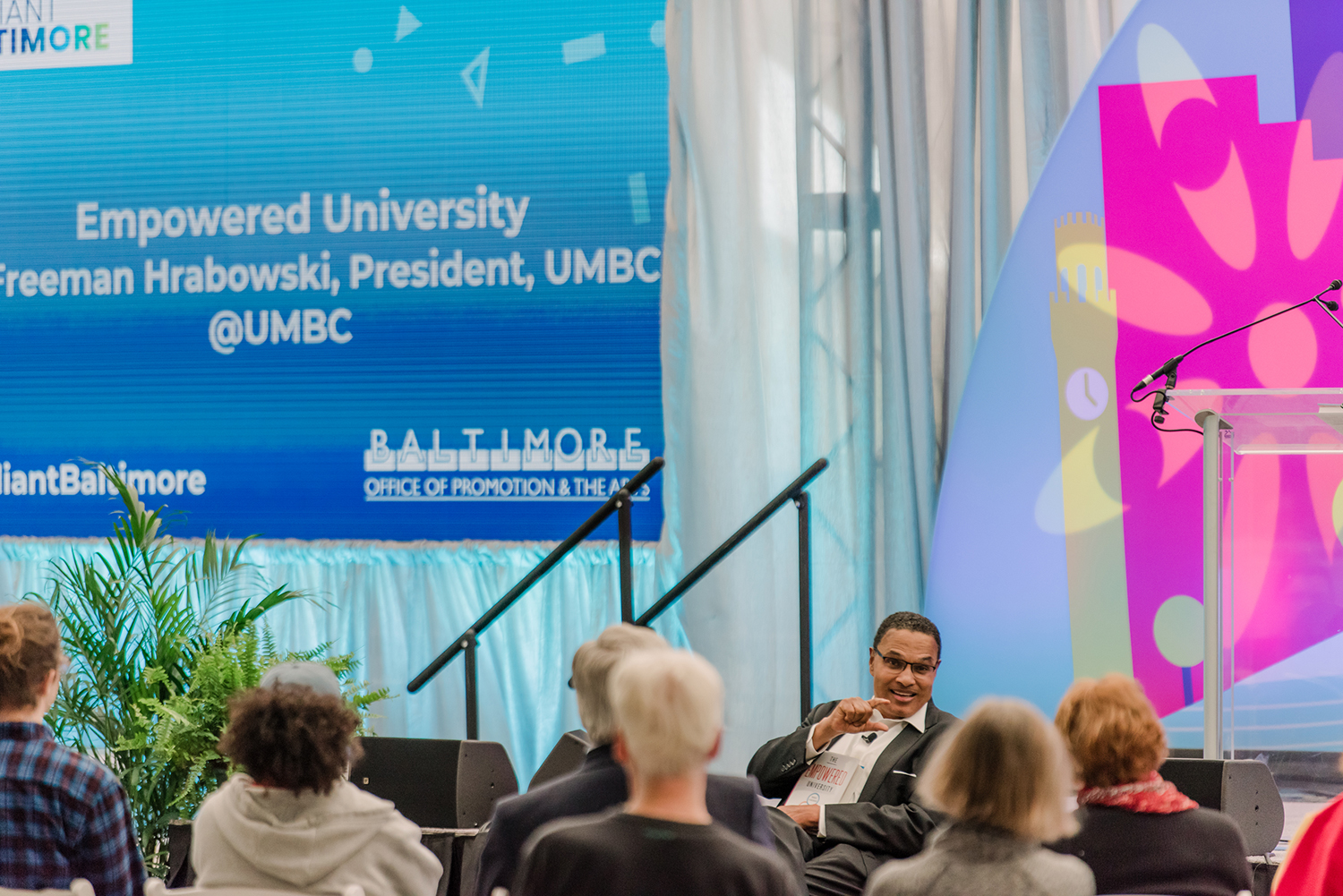
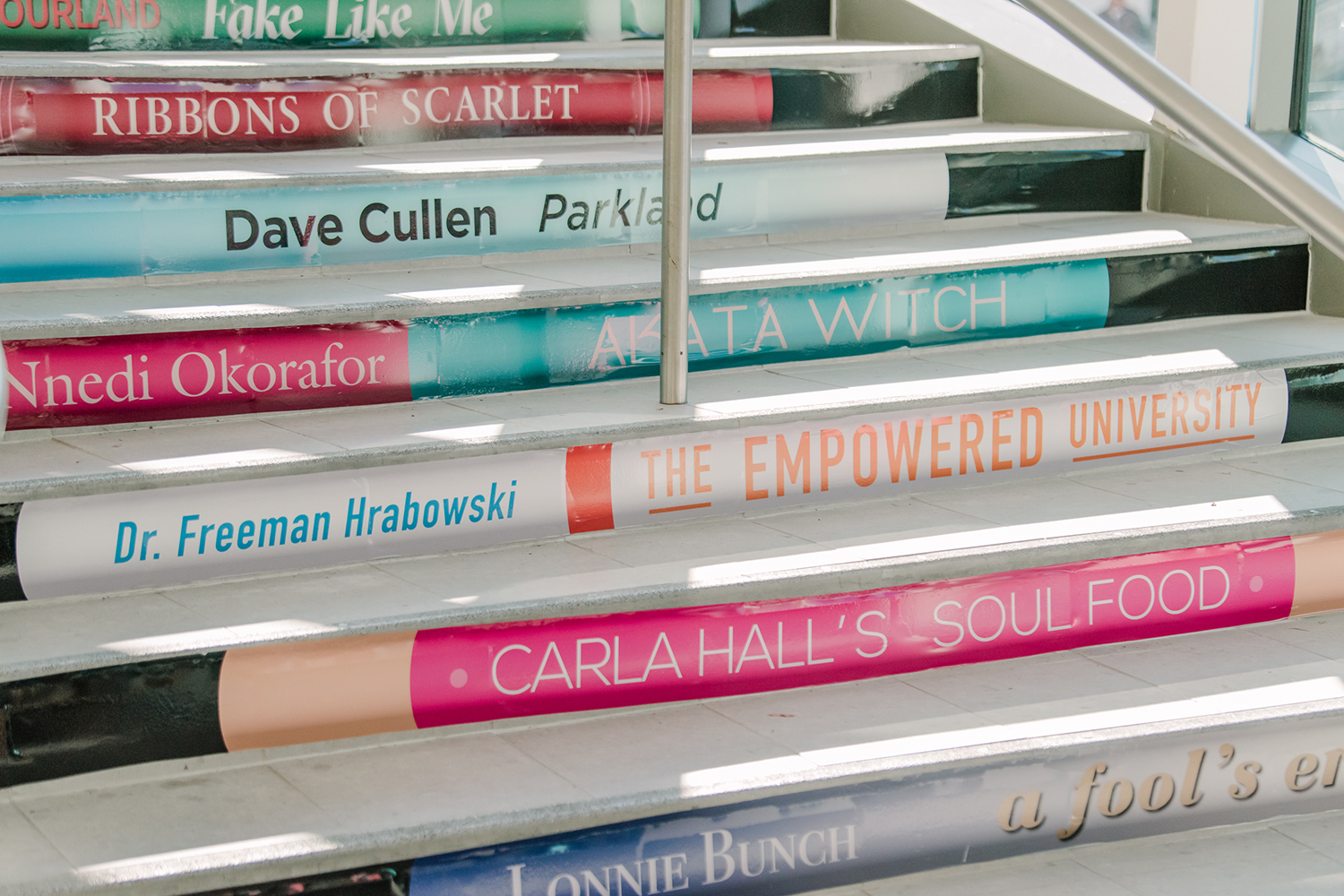
Several UMBC authors took to the stage, including our very own President Freeman Hrabowski, to promote the launch of his newest book. The Empowered University, co-authored with Provost Philip Rous and Peter Henderson, details how the UMBC community has come together to tackle some of higher education’s most intractable challenges and become a national model for inclusive excellence along the way.
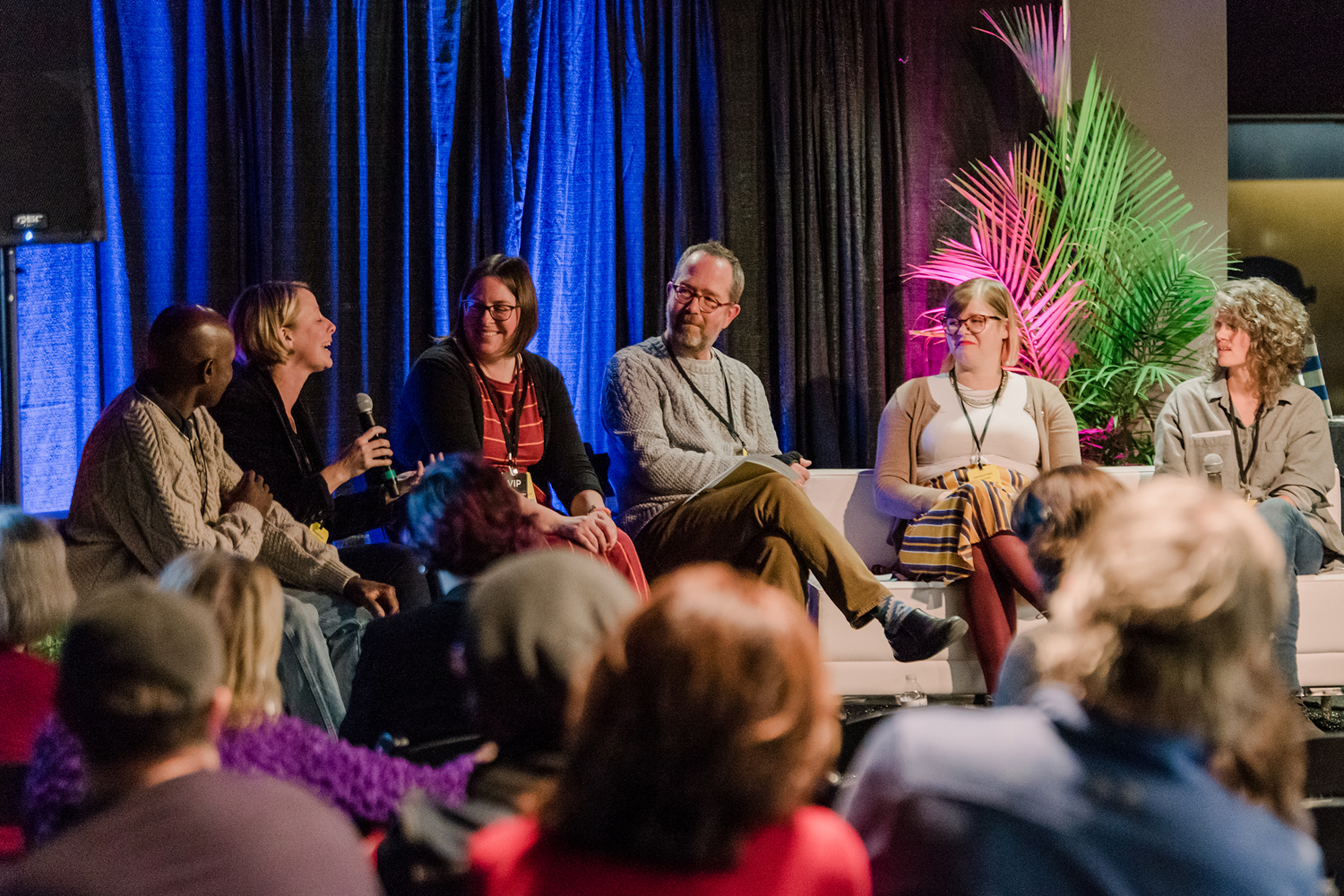
Another literary panel included the editors of Baltimore Revisited: Stories of Inequality and Resistance in a U.S. City, a book of essays that reflects Baltimore’s complex history and efforts to address the city’s pervasive inequalities. In a panel with the editors—Nicole King, associate professor and chair of the Department of American Studies; Kate Drabinksi, lecturer in Gender, Women’s, + Sexuality Studies; along with Joshua Clark Davis, an assistant professor of history at the University of Baltimore—discussion ranged from community health, to the history of development, and protests throughout the years.
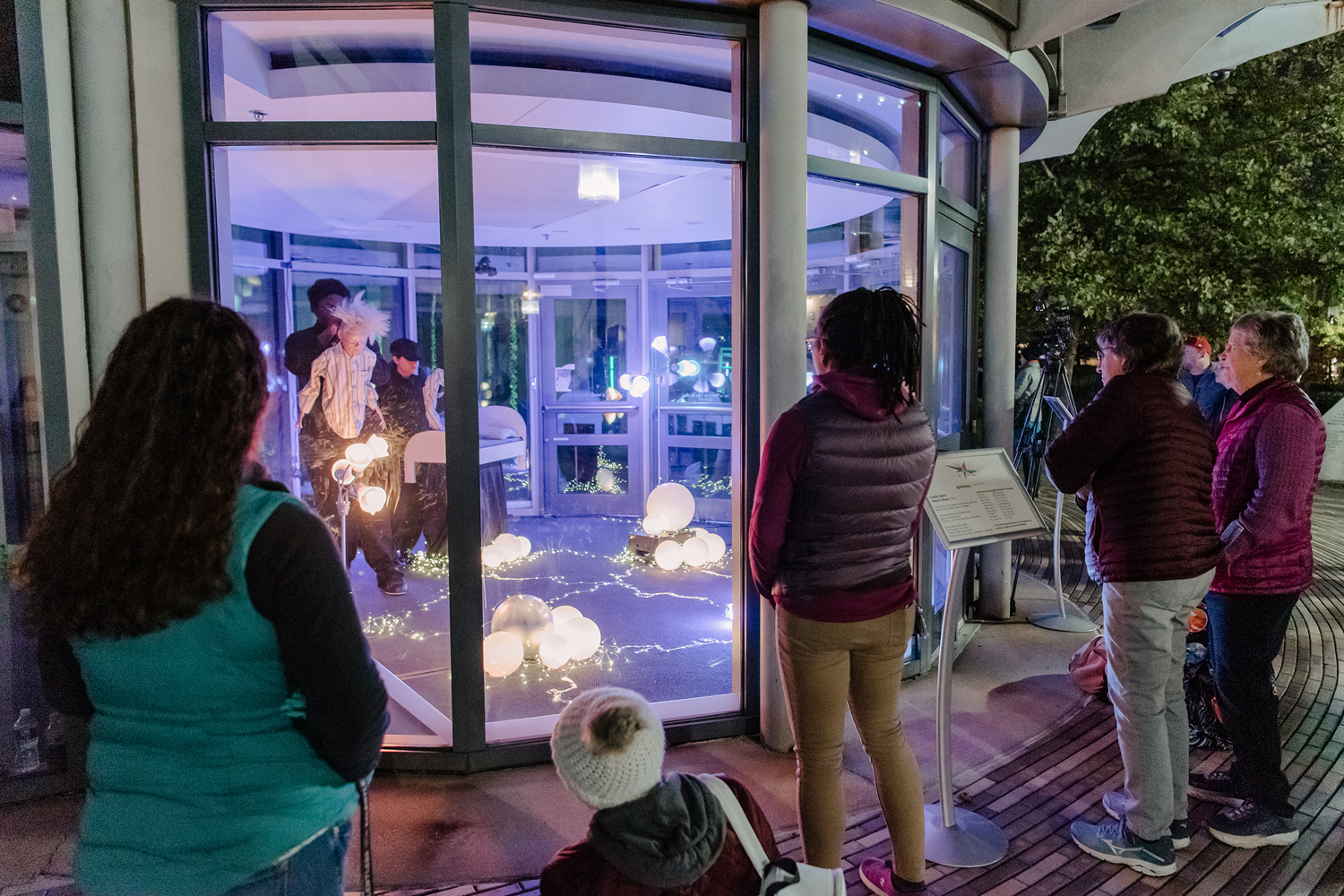
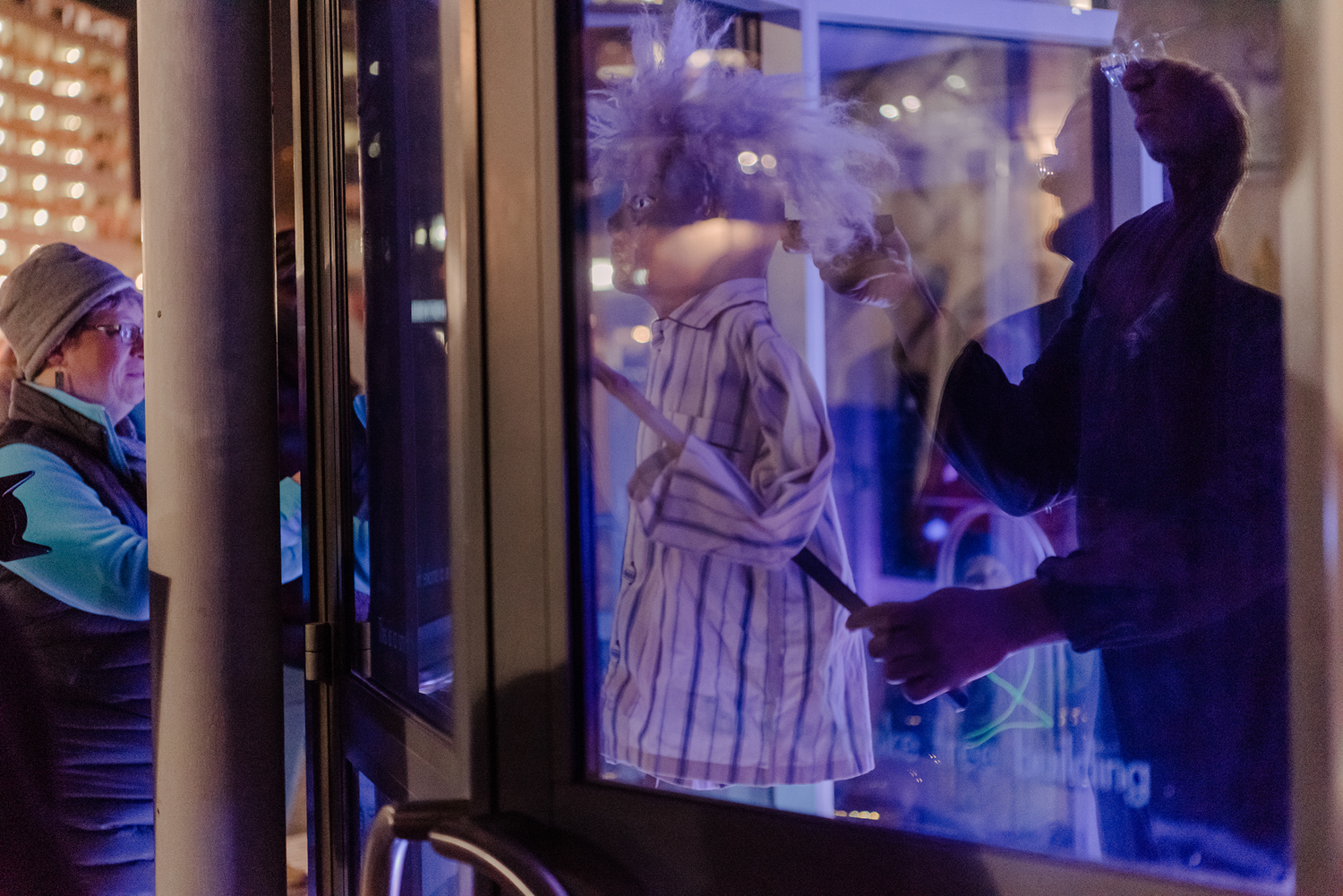
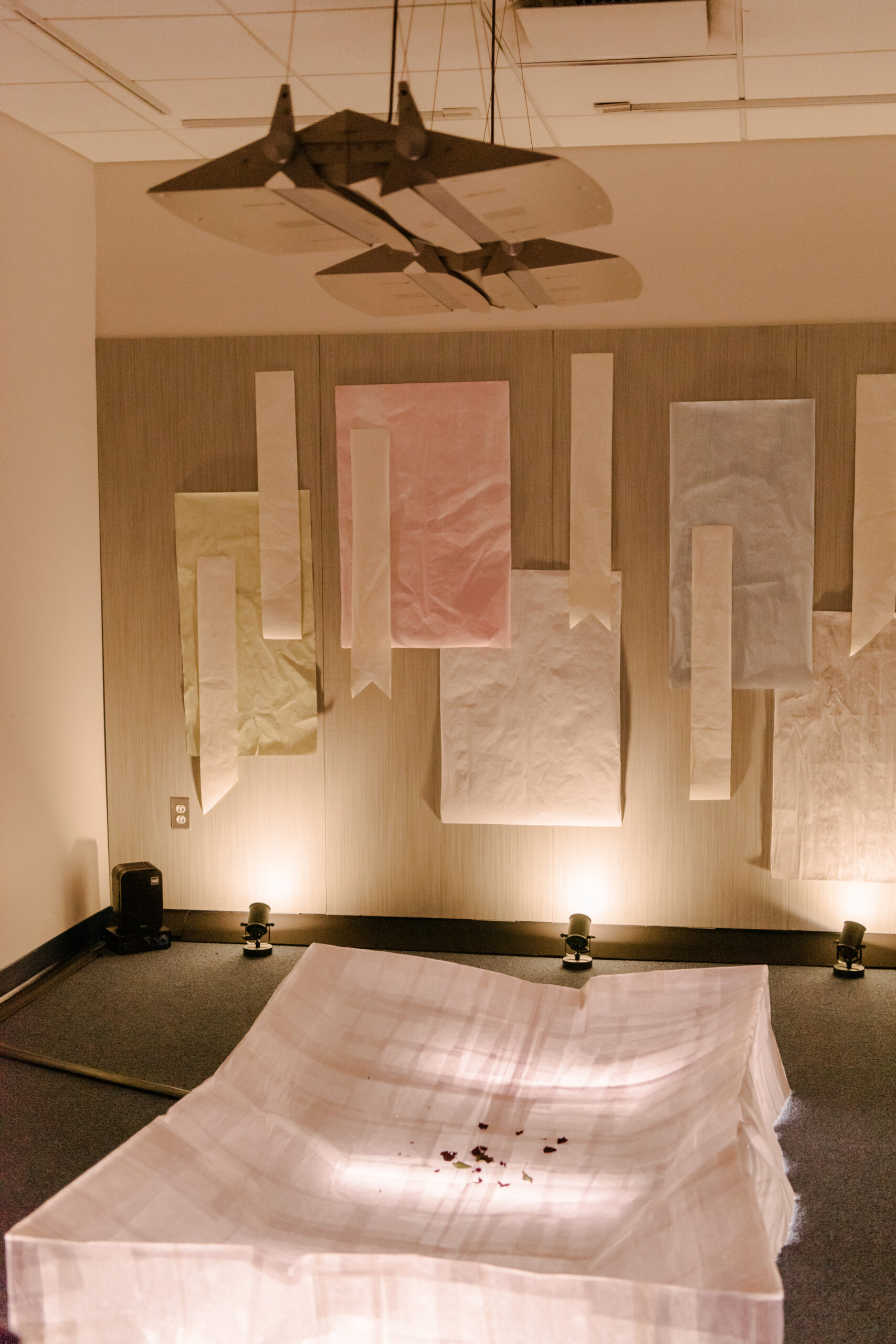
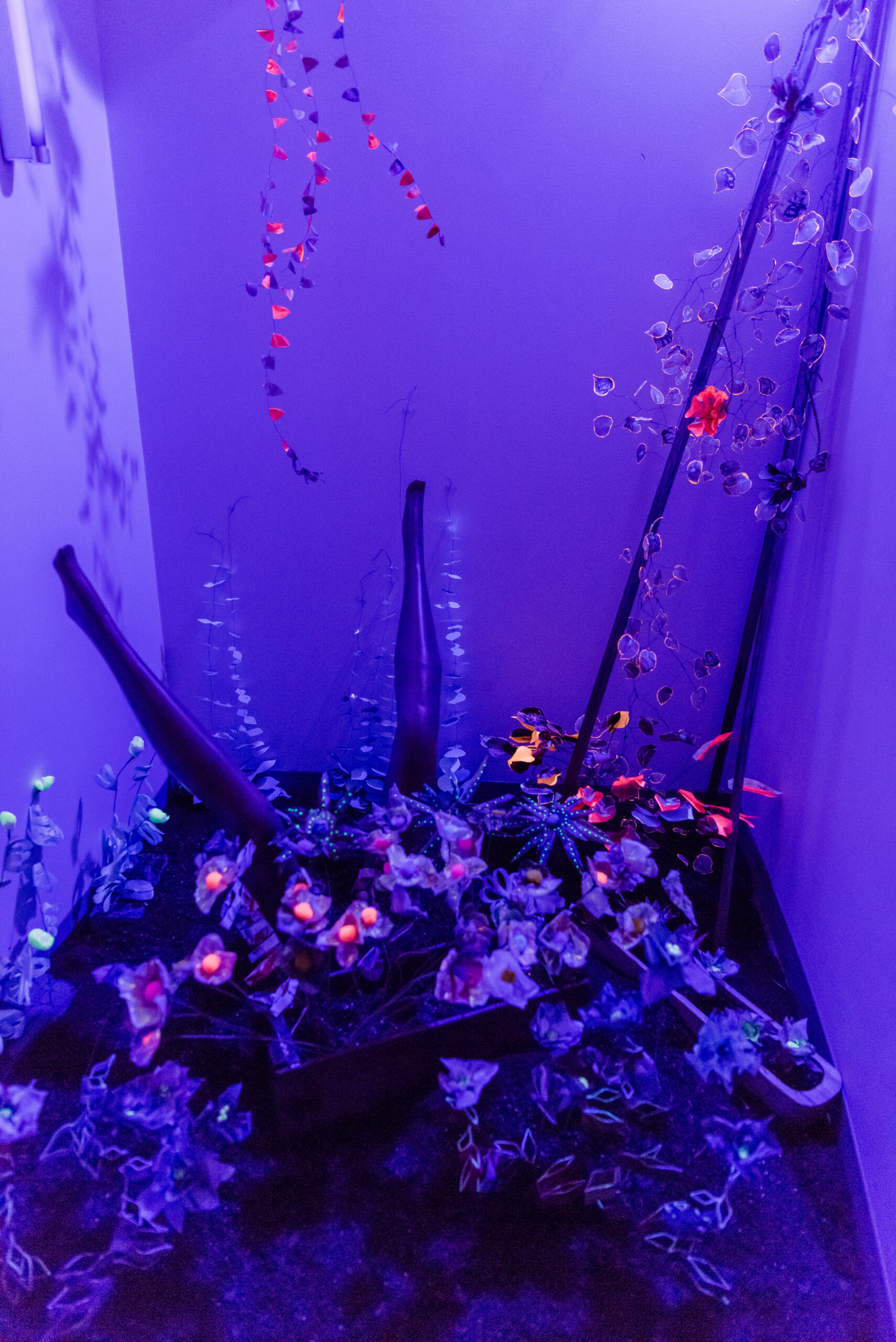
Other UMBC light and literary work was on display at the SPARK Gallery. Curated by UMBC’s Catherine Borg, a Baltimore artist tracing shifting narratives in American culture in photo and video based artworks and installations, the exhibit featured UMBC and Towson artists. A luminous, surreal puppet show, several musical scores, animated short films, and more populated this creative space that encouraged participants to interact with the installations.
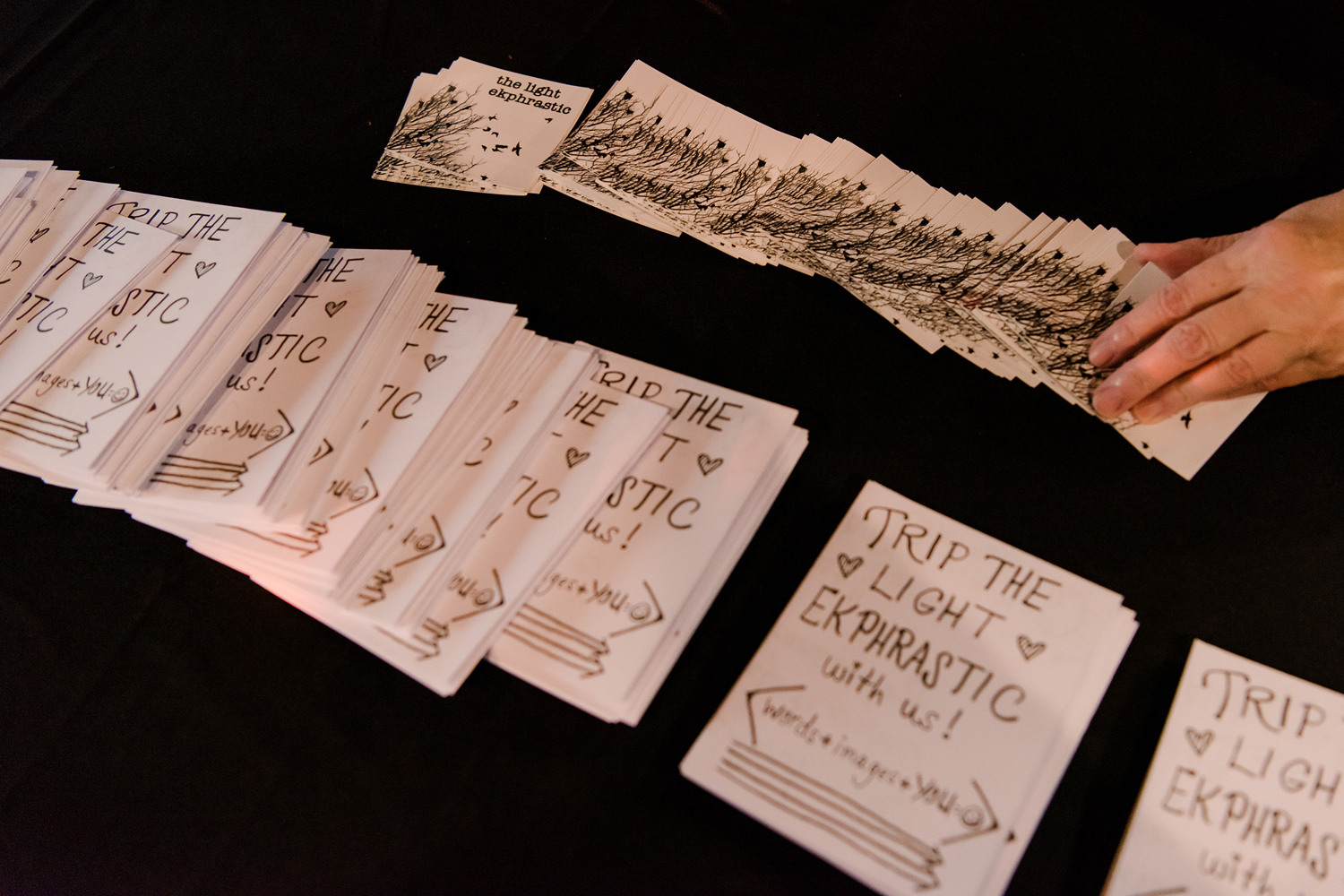
Additional UMBC events included a conversation with artists and writers who’ve collaborated with each other in the past 10 years of The Light Ekphrastic (TLE), a zine published by UMBC Magazine‘s own editor, Jenny O’Grady. Co-hosted with Timothy Nohe, professor visual arts at UMBC, the group discussed the method of responding to existing art to create something new, which is the mission of TLE.
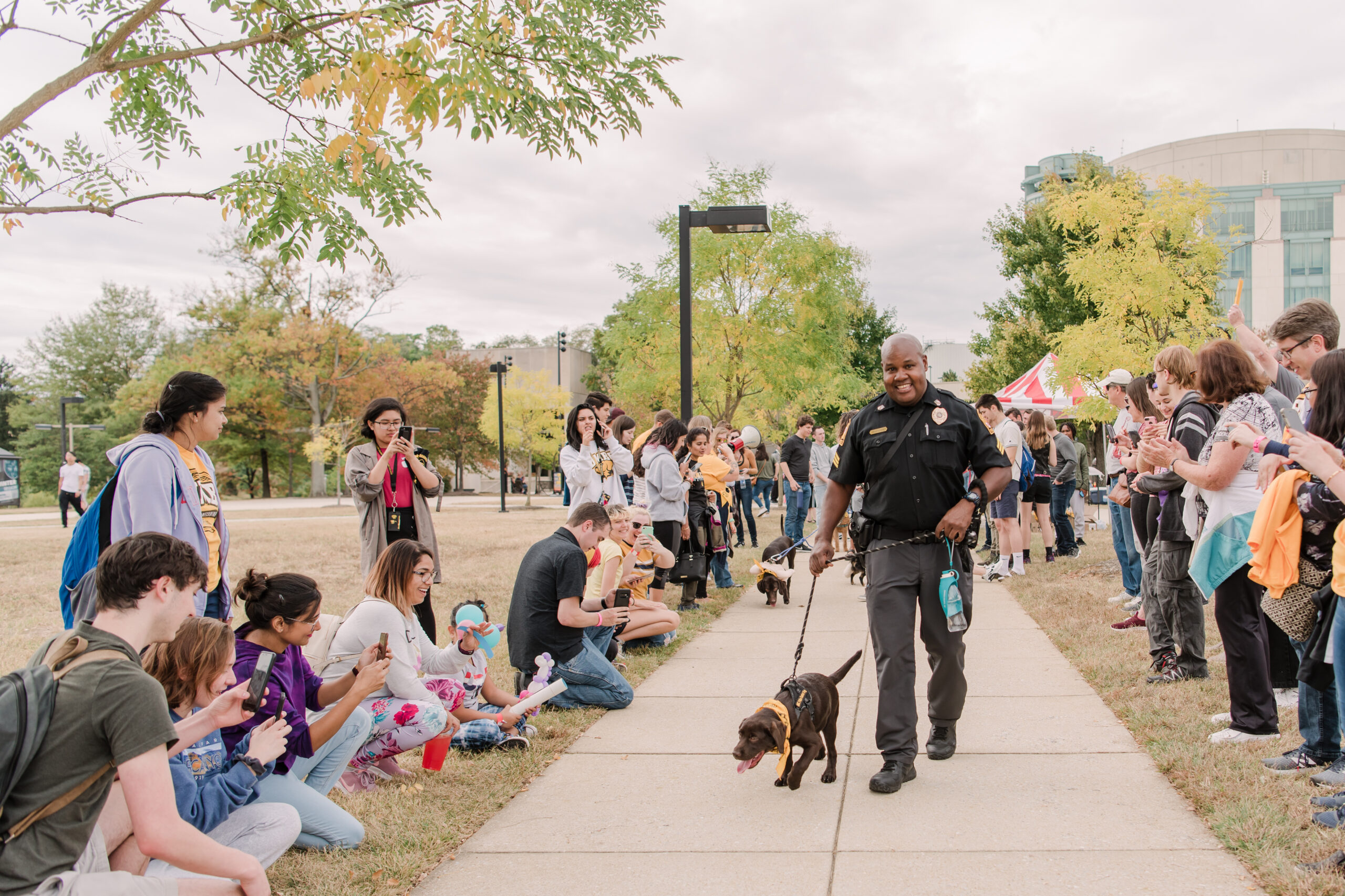
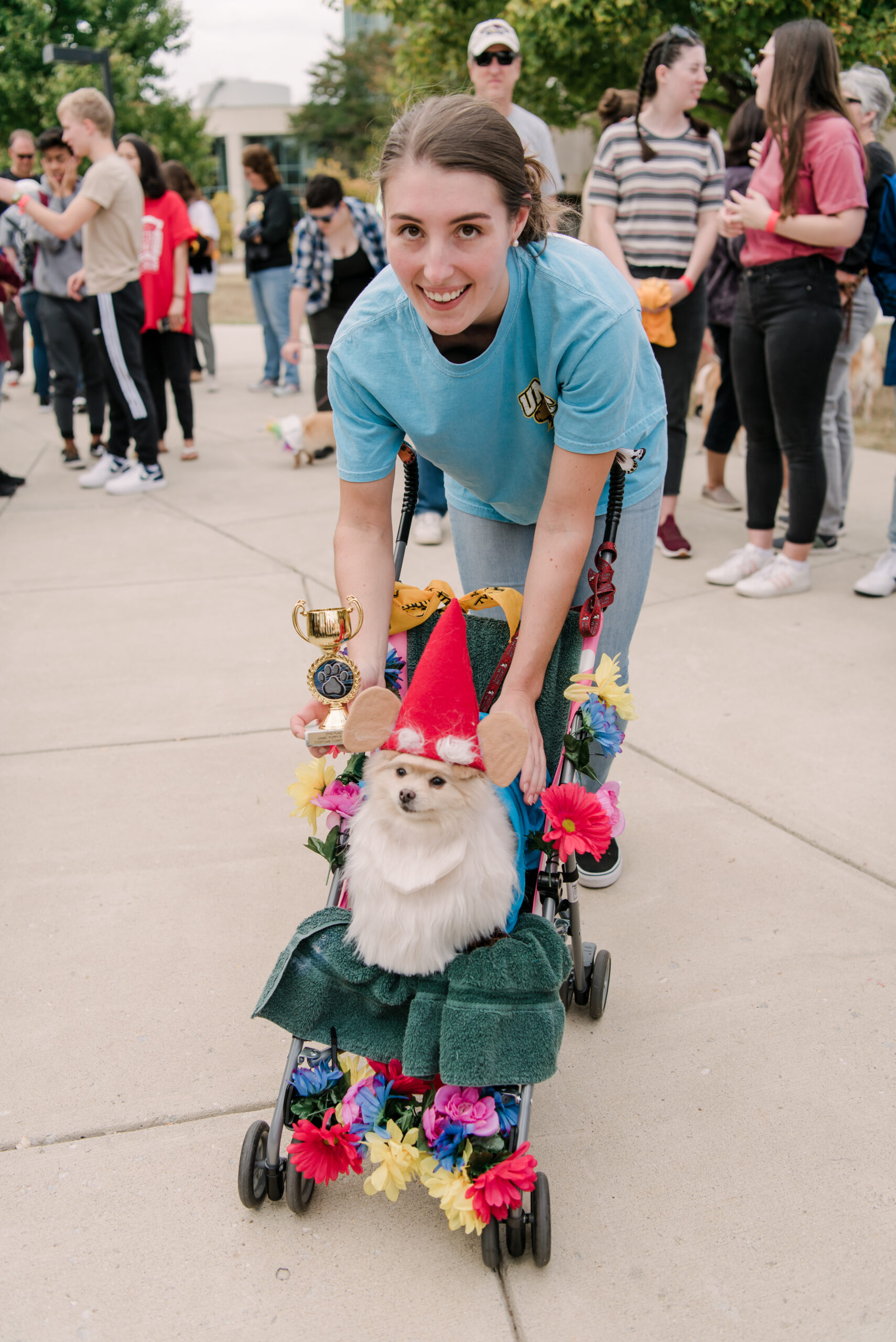
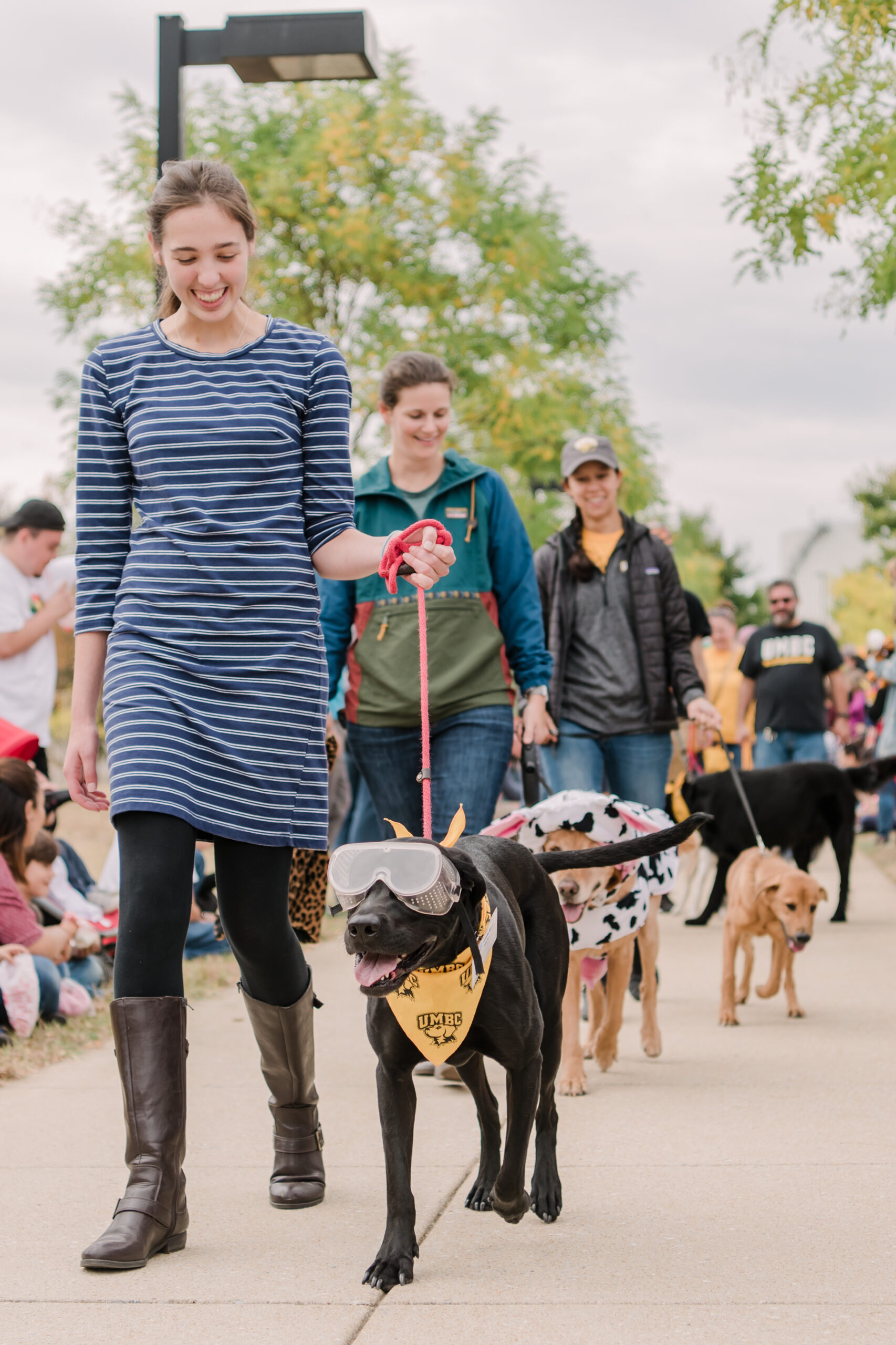
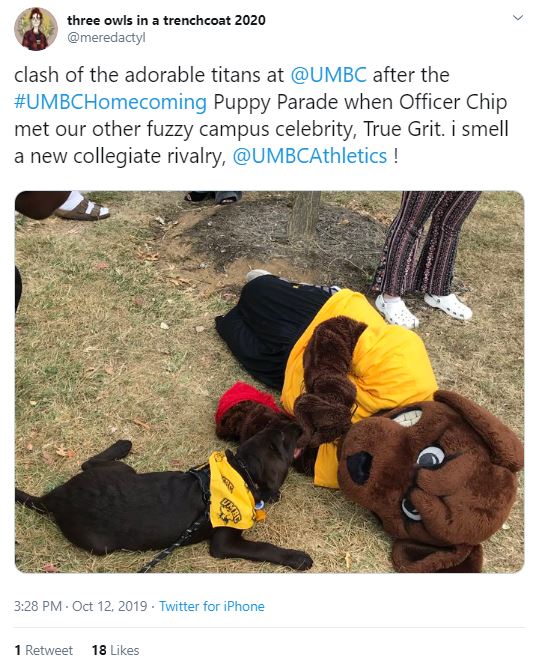
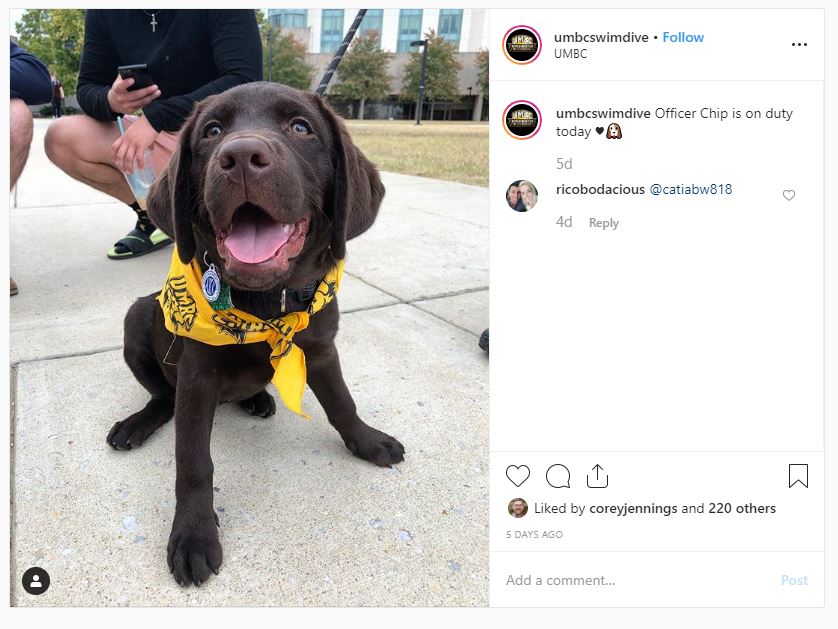
Dogs…carnival rides…dogs…ribbon cutting ceremonies…dogs…Alumni Awards…did we mention dogs? All that means Homecoming season at UMBC!
So grab your pumpkin spiced latte and a nice warm blanket as we dive into the events that make October such a fun month for current, past, and future Retrievers. Since we promised you dogs, we’ll start off with the evergreen puppy parade!
Homecoming is the obvious place for different graduating classes to meet up, but it’s so much more special when that fellow Retriever is your relative! We also love the dedication future Retrievers have years before they even apply.
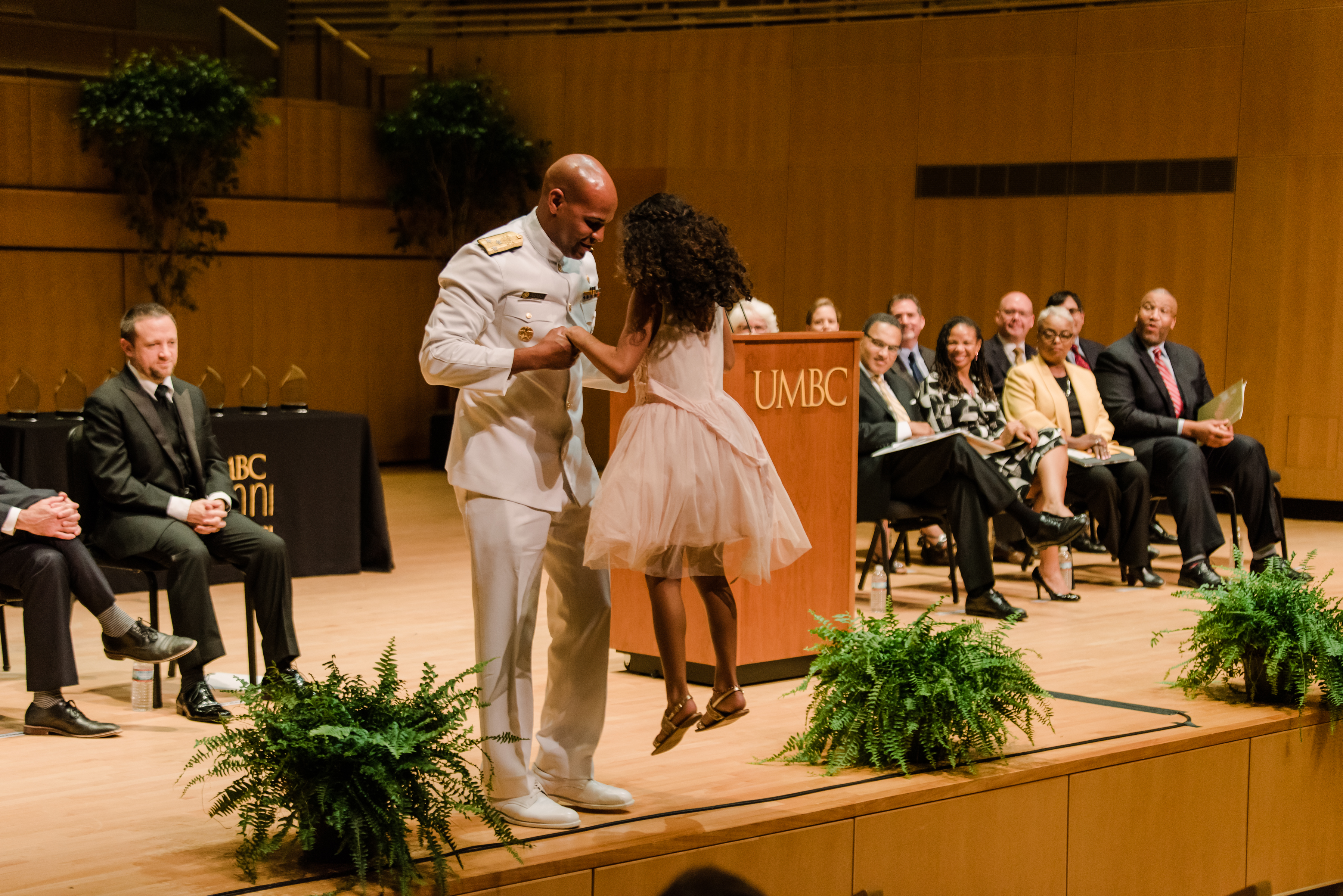
At UMBC, Homecoming isn’t confined to one weekend, we celebrate the festivities with as many events as possible, including our 31st annual Alumni Award ceremony, complete with the Surgeon General, JeromeAdams’97, M4, biochemistry & molecular biology and psychology, lifting his daughter onto the stage in this magical photo.
Another special guest on campus meant that students and alumni spent an evening with Trevor Noah, who brought his usual wit along with a more serious side to talk about about his personal narrative and give advice on how students can best tackle college before taking their next steps.
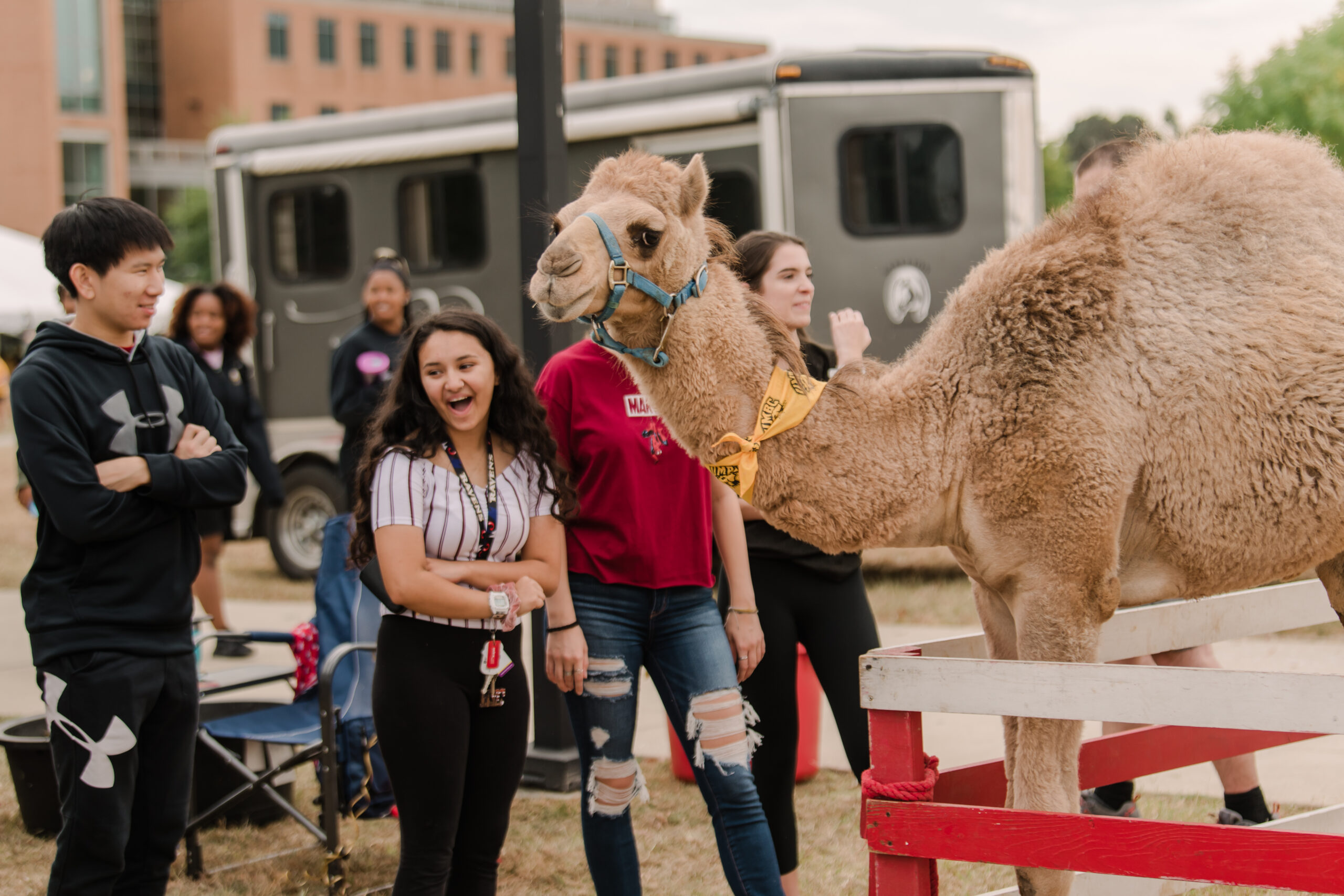
And some more good dogs and other animals, because we know why you’re really here.
The carnival rides Retrievers have come to love and expect took up most of Erickson field, and nearby, alumni-owned businesses set up their wares.
Other notable events we celebrated as a community included the ribbon cutting for the new Interdisciplinary Life Sciences Building, attended by a few familiar faces. After the DNA double helix was cut, people gathered to listen to Grit-X, three engaging talks by some of UMBC’s brightest minds.
The alumni community gathered across campus to reconnect and make new memories. A small collection of photos below showcase the spirit filled days of UMBC Homecoming. See a more comprehensive look at all the events here.
And to close it out, the annual bonfire lit up the night. Rendered here by UMBC’s Commonvision.
Decentering whiteness while working as a doctor abroad has made alumnus Matthew Loftus examine his medical methods and motivations again and again.
If you’re a foreign doctor practicing in an African country, there are important questions to keep asking yourself: How am I allowing my whiteness to shape my perception of my work and life here? Am I using my medical skills to equip the next generation of local doctors? Am I letting local leadership guide my steps?
In fact, if you’re Matthew Loftus ’07, chemistry, you started asking these questions earlier in your life, as a doctor in Baltimore City. They all still applied.
But for Loftus, the questions actually started before the medical license, before the move with his family to South Sudan, before getting displaced by a civil war that made its way to the hospital’s doorsteps, before visiting medical centers across East Africa to find a new location to serve, before spending nine months learning another new language, before his wife—a nurse—and three children settled in to a small house in Kenya, across the street from the hospital where he’s now still asking those questions.
“This is a continuous conversation,” Loftus says, sitting down for an interview over tea during a trip to Kenya’s capital, Nairobi. There is the way things have been done previously in medicine or in mission settings or in low-income American neighborhoods: “A sort of a very top-down, you know, people from outside making all the decisions,” says Loftus. “And that, that is ultimately unsustainable.”
Relocation, redistribution, and reconciliation
Loftus grew up attending a Presbyterian church with his parents and 14 siblings in Bel Air, Maryland. After graduating from UMBC and marrying his wife Maggie, Loftus moved to the Sandtown-Winchester neighborhood of West Baltimore to join another Presbyterian congregation, New Song Community Church—this one founded on the principles laid out by the Christian Community Development Association (CCDA). Author Lawrence Lanahan describes the practice in an article for Al-Jazeera called Downwardly Mobile for Jesus that profiled the Loftus family.
“The CCDA’s model is similar to asset-based community development, which tries to build out from a community’s strengths rather than fix its deficiencies. But the CCDA asks more of its practitioners across the nation: that they have something personally at stake in the development. Leaders at New Song talked to Loftus about the core of the CCDA’s philosophy, the three R’s—relocation, redistribution and reconciliation.”
Those three “R”s—which essentially ask white Christians to question their privilege and seek local leaders of color to work under—would grow to influence and define Loftus’s personal life and medical career.
Retriever roots
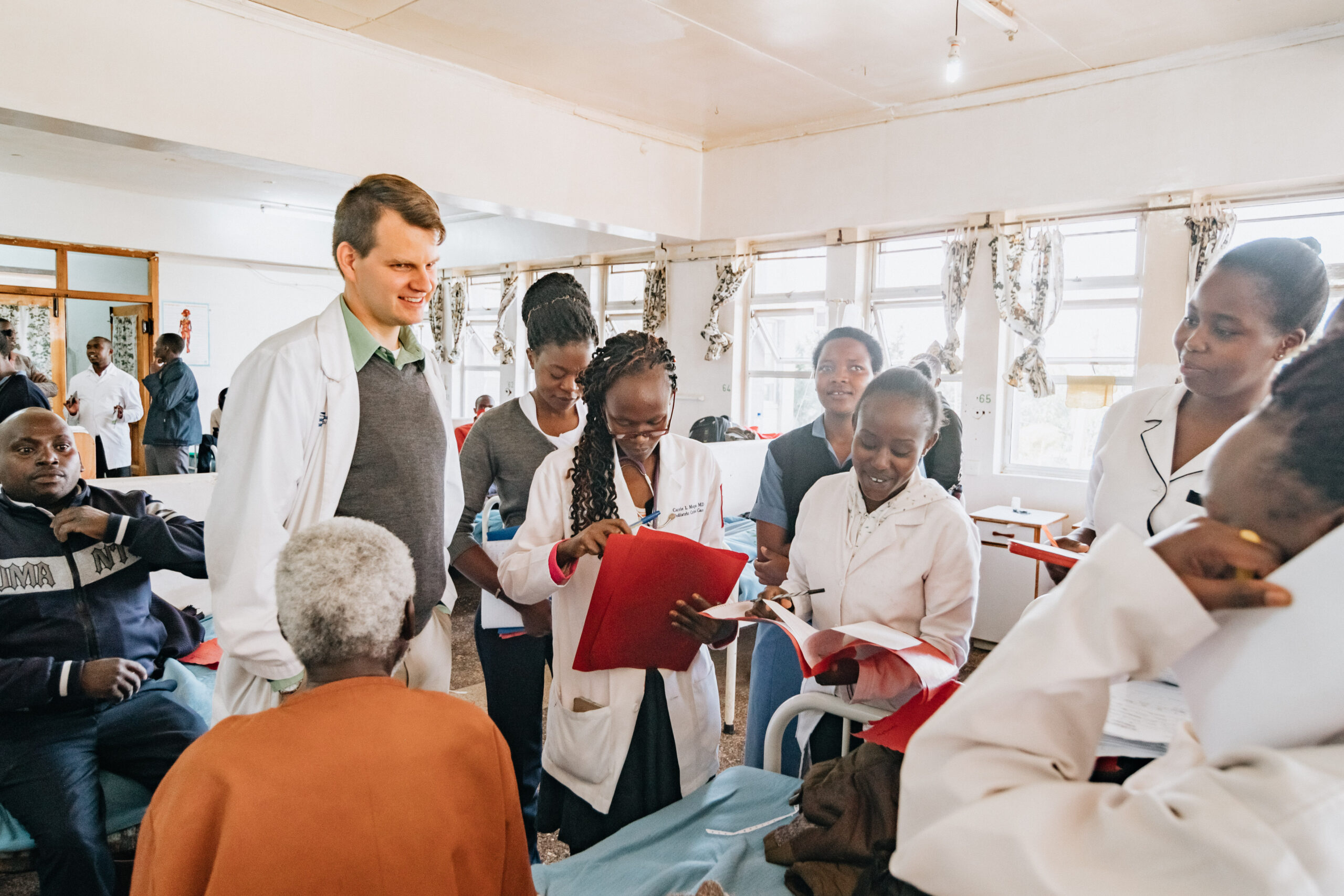
In Litein, Kenya, where he’s the family medicine consultant and program coordinator for the Kabarak University Family Medicine Residency, Loftus specializes in seeing patients with mental health problems and also supervises the medical residents’ time on the wards and in the clinics.
It was his time at UMBC that helped prepare him for many aspects of his life in Kenya, says Loftus. The personal reference letter he got from President Hrabowski for his admission to the University of Maryland School of Medicine didn’t hurt, but more specifically, Loftus points to his Arabic classes and his semester abroad in Egypt that helped in exposing him to new aspects of international life. UMBC’s Office of Pre-Professional advising also played a huge role, he says, in helping him get into medical school and graduate debt-free. His involvement, including a year as vice president, with UMBC’s chapter of InterVarsity Christian Fellowship gave him lasting ties to other Retrievers, but also taught him the importance of spiritual discipleship.
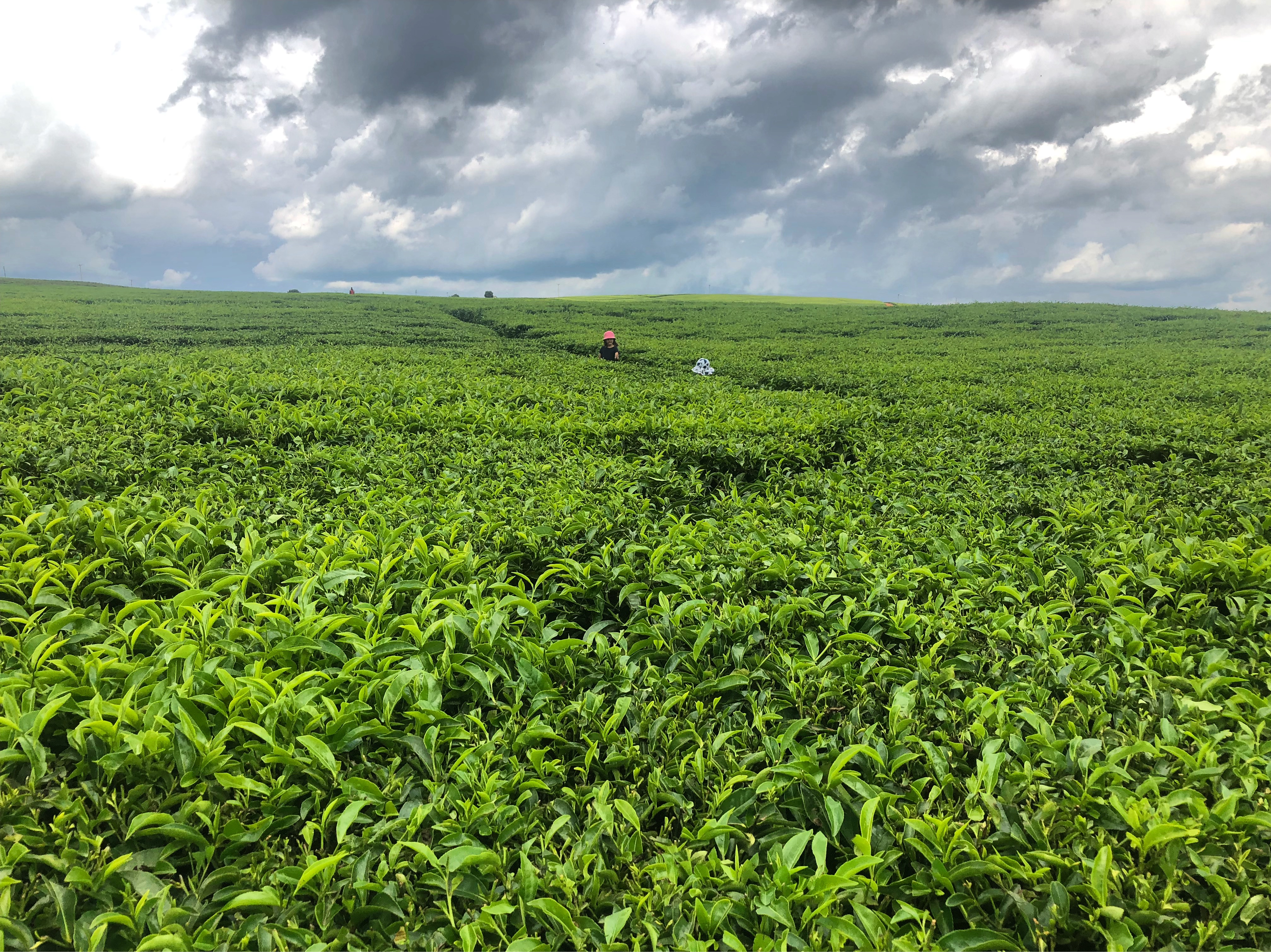
It’s been a year and a half since the Loftus family settled into their life in Litein, a high-altitude town in western Kenya that is most well known for its verdant tea fields. Loftus juggles his resident supervisor role with extended clinic hours, rounds, and spiritual development with the other medical professionals.
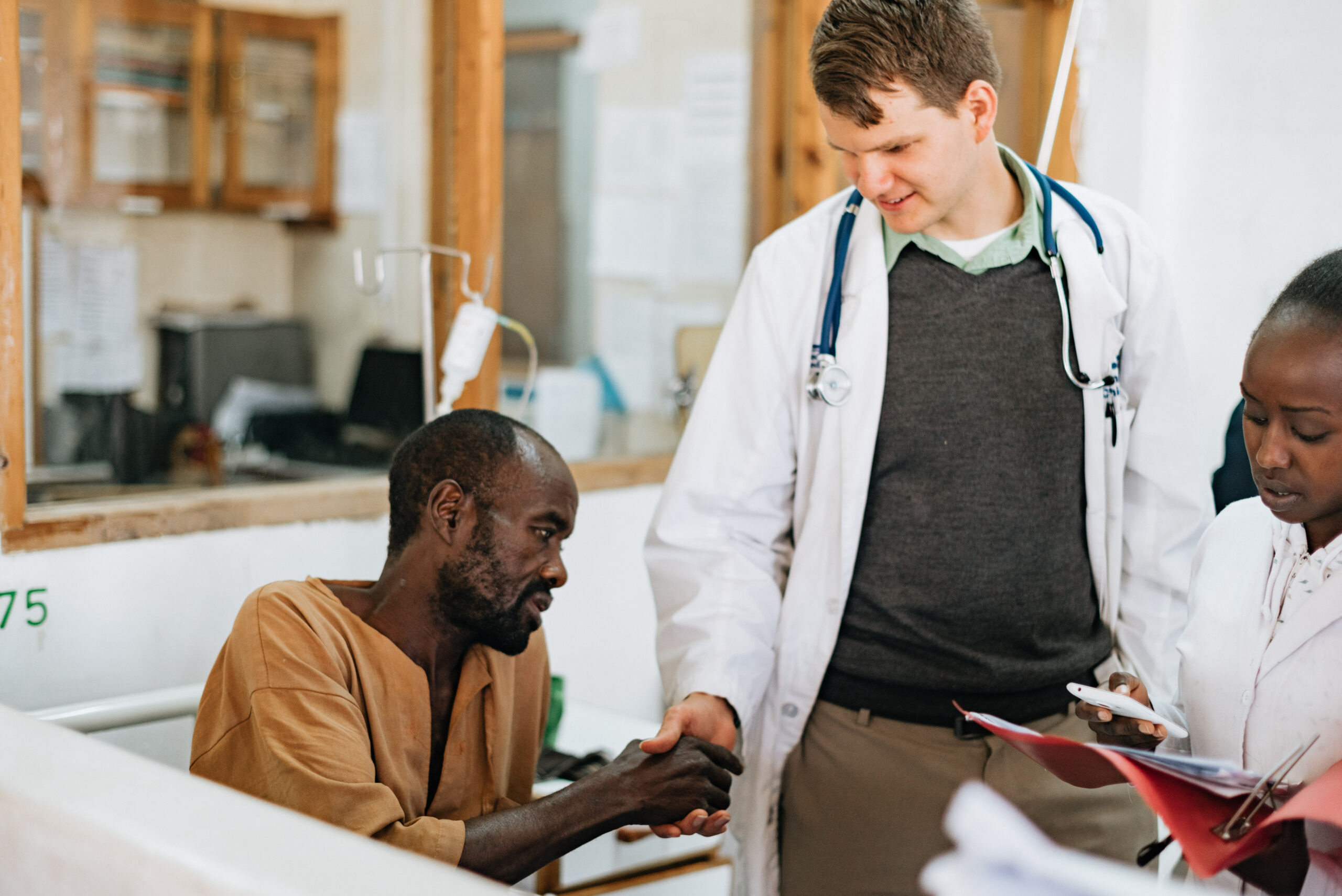
Loftus speaks with a patient on rounds. Photos by Dixie Gaultney.
“When I was at UMBC, I knew I wanted to do medicine. I wanted to serve people through health care,” says Loftus. But over the years, after listening to people who are on the field and learning about what the needs were—there was just too much that any one person could do, he discovered. The answer for him, was then to get involved in health care education.
It was under the guidance of Lisa Kelly in the Department of Chemistry and Biochemistry, “who was very patient with me,” says Loftus, “despite the fact that it was while working in her lab that I realized I was not cut out for a life of research. But I do appreciate all the work that she did on my behalf and helping me move in a good direction.”
While researching where he could join an existing health care education program that had opportunities for his wife, a perinatal nurse, to work and where his children (ages seven, four, and two) could also flourish, Loftus eventually found Litein. There, “health care education was already happening to some degree but they really wanted to ramp it up,” he says.
An additional aspect that appealed to Loftus, was that after supervising the residents for four years, they would then move on to other locations, using their advanced medical skills to treat and train people from all over East Africa.
Attending to growing needs
Phillip Blasto, a general surgeon who works closely with Loftus, grew up in the coastal region of Kenya but has worked at the hospital in Litein for the past four years.
The arrival of Loftus and another set of American doctors (Blasto refers to them as consultants, but in the States, they’re called attendings) has lifted a significant load from Blasto and the other physicians. Sitting at the table in the Loftus’s cozy living room, drinking local tea made sweet with milk and sugar, Blasto shares his thoughts on the addition of the medical missionaries. “He took a lot of weight,” Blasto says, taking care of “patients of mine and patients of the ICU…with Matthew here, the care of patients has improved, particularly in intensive care because he and the other consultants are available. If there was one biggest change, that would be that our intensive care patients now have someone to call and to see them anytime day or night or weekends.”
Ultimately, this elevates the reputation of Litein’s hospital and builds long term trust between the patients and medical practitioners, which has allowed the practice to grow, creating a new set of problems to manage. “We’ve grown in terms of patient numbers and people who trust us, which is significant,” says Blasto. “Nowadays bed space is an issue and theater space is an issue, so depending on some days, we have to put people in the corridors to be seen.”
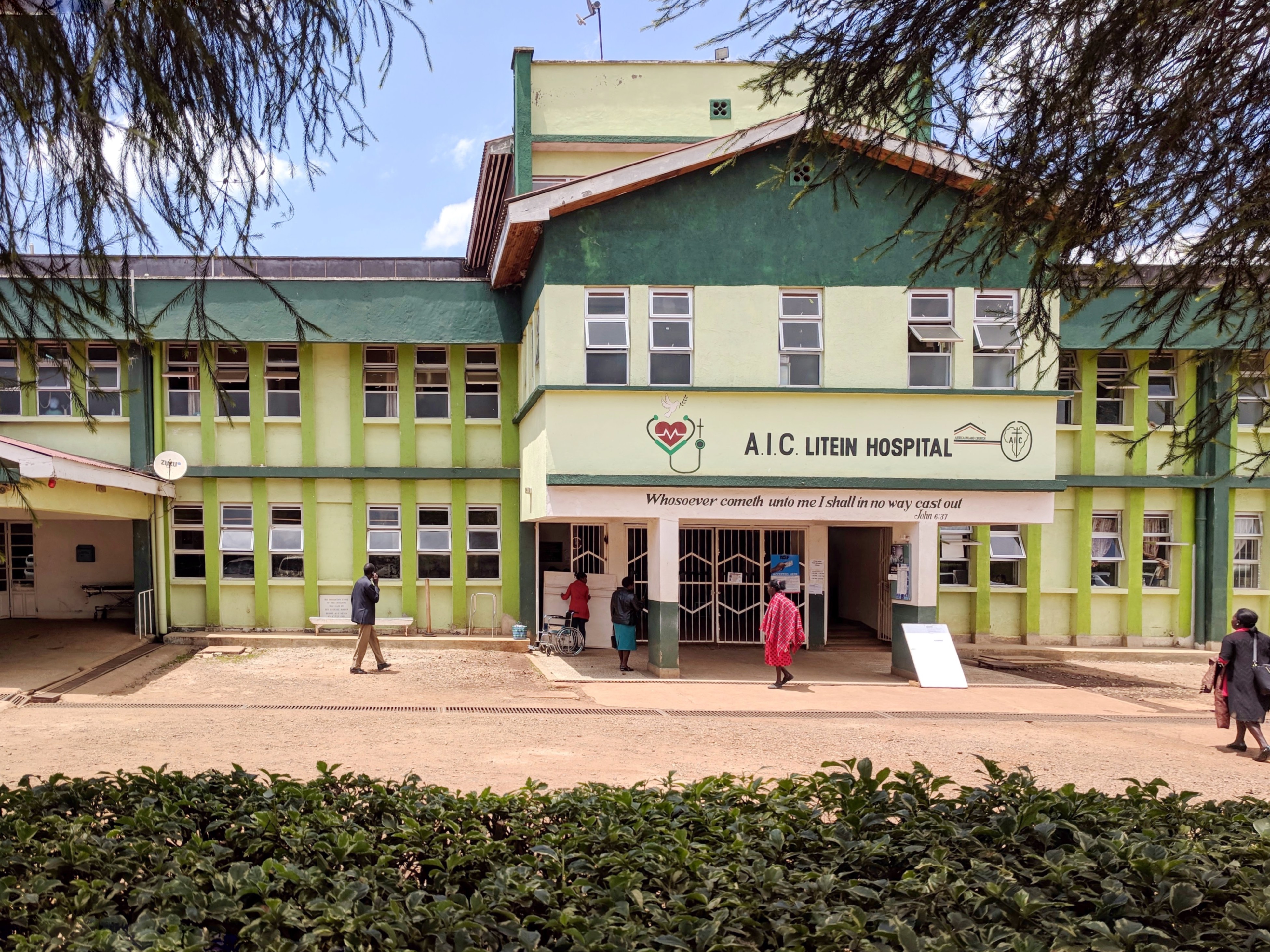
The hospital—a long, bright green building situated on the highest ground in the town of around 2,500 people—is responding to the increased influx of patients by growing as well, increasing the number of respirators, adding new radiology equipment, and eventually expanding the building to include more bed space. The outside attendings have played a significant role in these changes by extending the consulting sessions by several hours each day and by taking turns for overnight on-call shifts. “That availability and the humbleness that people have seen have increased people’s faith in the facility,” Blasto concludes.
Forward progress requires humility
One of the questions Loftus sees as a critical aspect of his “continual conversation” involves asking himself how he can submit to local leadership—a tenet emphasized by CCDA and a foundational element of Loftus’s approach to the mission field. “I think submission is a hard word to think about, in our context, in the West,” says Loftus. “I think it’s such an important part of faith, of Christ’s life in us—of humility—that I think this sort of work is impossible without it.”
Loftus’s word choice of humility resonates with Sarah Fouts, assistant professor of American studies at UMBC. Fouts, whose research centers on accompaniment theory—a methodology for allies that supports movements led by people of color—guides her students to leverage their privilege in helping others navigate systemic barriers. “It’s really hard because you want to make yourself so important, so special. But you need to decenter yourself in those situations, and that’s really challenging,” says Fouts. “So how to create a sustainable project means exactly that, not making everything so reliant on you.”
The Loftus family lives across the street from the hospital. Photo by Dixie Gaultney.
Students and professors often have this I-want-to-do-it-all-mentality, continues Fouts, “but bringing other people into the project, as leaders, helping elevate not just your own research… maybe it takes more time and effort but ultimately, it’s going to be better for everyone involved. You know, it’s humbling.”
A continuous conversation
As a way to get more people involved in conversations about privilege and responsibility, Loftus collaborates with two other UMBC alumni and fellow InterVarsity members, Peter Gaultney ’08, computer science, and Timothy Milligan ’09, computer science, to create a weekly newsletter called Read In Case of Emergency, where they share articles and thoughts on ethics, policy, and society. Loftus has also published extensively, writing articles responding to people asking if it’s dangerous to take your children to live overseas, advocating for more than “good intentions” in thinking about solutions to poverty, and letting local communities speak for themselves in the wake of tragedy.
These articles and dozens more that Loftus has penned while living in West Baltimore and then in East Africa contrast sharply with a 2005 Retriever Weekly article that set the stage early on for how Loftus navigated the waters of being a privileged white doctor in under-resourced communities. As a teenager, Loftus participated in medical missionary trips to Kenya, and UMBC’s student paper wrote about his summers there. The resulting article—not written by Loftus—is, to say the least, not woke.
Correctly so, UMBC’s African Student Association responded strongly to the tone and vocabulary of the piece—it dripped with White Savior-ness. Loftus met with the ASA and listened to their reactions, opening himself up for more in depth dialogue than the article allowed. This experience added another layer to Loftus’s growing conviction that in order for him to continue pursuing a career in medical missionary work overseas, he would have to immerse himself in better ways of approaching his role in a field with a very troubled history of white supremacy and colonialism.
“I think, because there is still a default way that we think and talk about interventions in impoverished communities, oftentimes it does take a moment of ‘oh, I need to be doing it differently than the way that I would normally, as a white privileged, you know, wealthy outsider,’” says Loftus.
“But then once you get to that point, you have to be continuously assessing it and asking yourself and asking the people around you, like, ‘Are we doing this well? Are we involving the people that are, you know, that are most affected by this? Am I working to equip people with the skills that they need to lead themselves, and to serve themselves, to help themselves?’” Loftus trails off as the list of relevant questions mount. “So I think that’s a really big part of it, is the fact that that process is never done.”
*****
Header image: Loftus listens while on rounds with his residents. Photo by Dixie Gaultney.
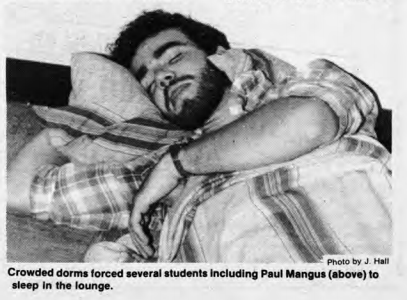
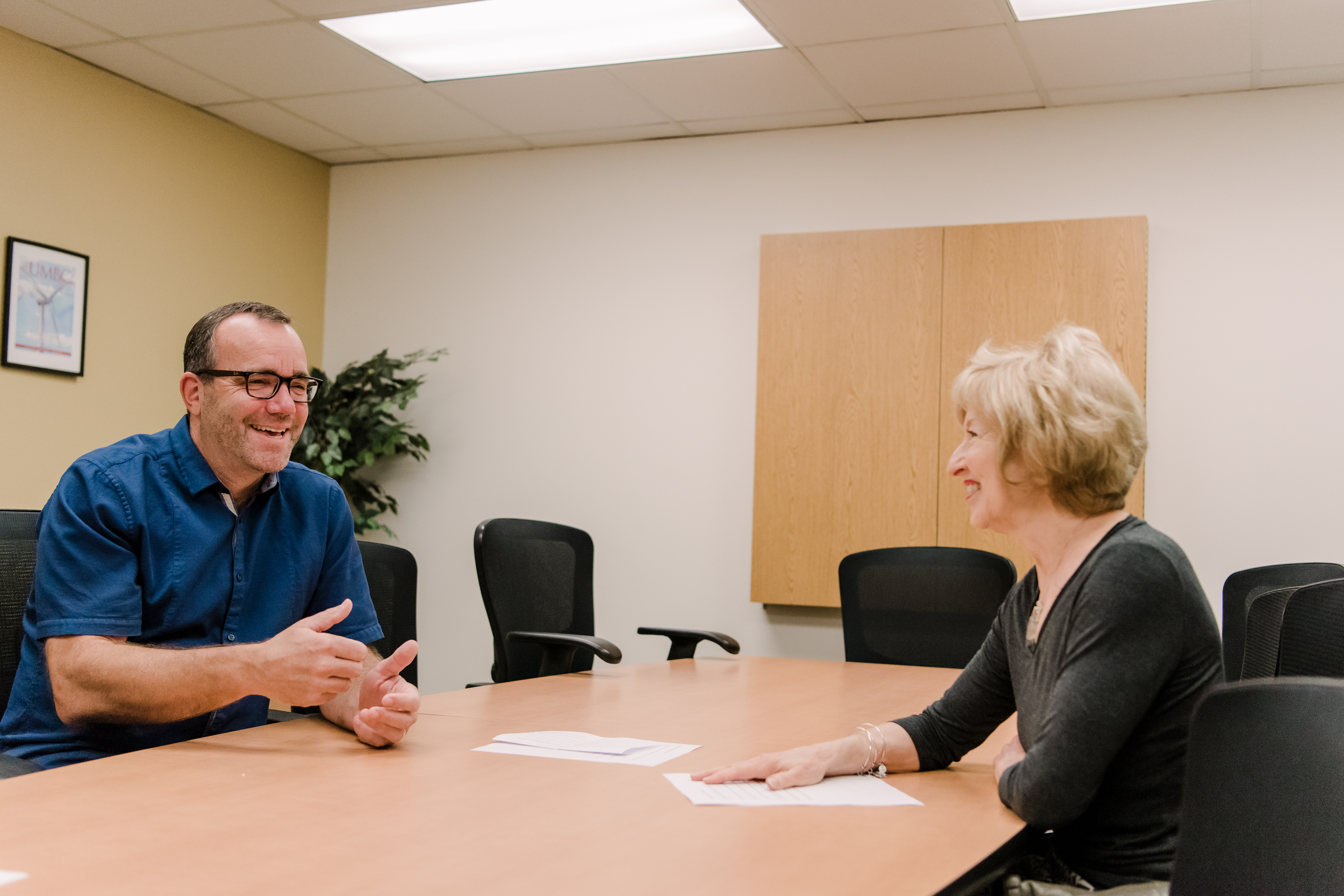
Co-founder and Chairman of the Board of Bart & Associates, Paul Mangus’86, information systems management, has been integral to developing some of the United States’ most critical homeland security systems created over the last 20 years. Winner of the 2019 Outstanding Alumni of the Year Award for Engineering and Information Technology, Mangus came to campus to sit down and chat with UMBC’s director of the Alex. Brown Center for Entrepreneurship, Vivian Armor ’73, American studies.
Vivian Armor: It’s been a while since you graduated from UMBC, but it’s been longer for me. What was it like then, for you as a student?
Paul Mangus:I initially went to community college because I couldn’t get into any colleges because my grades were really bad. I’m dyslexic, so education was very hard for me.
VA: That seems to be common for entrepreneurs.
PM: But when I got into this campus atmosphere, I just flourished. For some odd reason, classwork became a lot easier for me. Maybe because it wasn’t as structured as it was in school, where you had set assignments and set timeframes you had to get things done in, which is very difficult for dyslexic people. So then, I started flourishing.
VA: What about the IT program caught your attention?
PM: I initially wanted to be an accountant because I like numbers. I went to my first accounting class and I just got super, super bored. So then, that’s when I discovered computers and IT, and changed my degree into information systems.
The IT department was a very small group of people, and we got to know each other very quickly. We got along, although there was some competition there. The only computers available to us were in a lab that closed at night, and we’d have to sign up for time slots in advance. I got to know the guy that managed the room, and he would allow me to spend the night in the lab, but the room would be locked after 11 p.m. I would go in with food and whatever I needed, and he would shut me in there to do my work. Then, at 7 in the morning, the door would open and there would be a line of students to get in, and I’d be walking out with all my assignments done.
They got back at me because at the time, you also had to use computer cards—it was before you had CRTs or computers and keyboards—you did everything on these cards. So, when the other students found out that I was going into the computer lab at night, they would chase me down the hallway and tackle me, then 1,000 cards would go everywhere.
VA: Did you always know you’d probably start a company, or not? Was this a surprise even to you?
PM: It was a surprise to me. I guess you could call me an entrepreneur when I was young because I used to always walk around the neighborhood and knock on doors, ask to mow your grass, rake your leaves, shovel your sidewalks, and all that other stuff. I’d collect bottles, turn them in for five cents apiece.
But I never had a vision of running my own company until I started working and realized I’d be better suited to create something of my own.
VA: Then, that major opportunity after 9/11, an unfortunate opportunity.
PM: I so happened to be right where I needed to be after 9/11. Out of tragedy comes opportunities, I guess. It was something we got involved in because the systems our company had built were for identifying drug trafficking, child pornography, people trying to smuggle drugs and people into the United States. After 9/11, the government asked if we had systems in place to monitor people. It so happened that, yes, we had built the system already.
VA: I think of you every time I go through an airport.
PM: It was a great experience for me. I traveled the world, meeting with various airlines on developing interfaces with their systems so we could communicate with the reservation systems to gather all the data we needed. We ingest all of that and do the analytics.
VA: I’ve met a lot of entrepreneurs and they just have this incredible confidence, and they do whatever it takes to start. They take these risks, like starting out with lots of credit card debt. You were one of those entrepreneurs. What gave you the confidence to do that?
PM: I was single. I didn’t have any responsibilities, which is huge. I don’t know if I’d do it again, but I have a wonderful wife and she supports me.
The confidence and credit cards were a necessity because when we started the company, the bank refused to give us a loan. The bank officer wanted to see hard assets, like “Where are your trucks? Where’s your manufacturing equipment?” We didn’t have any of that.
Cash flow is huge. So, out of necessity, one day I was at home and I got an envelope in the mail, and it was the classic thing: open up a credit card today and you could write a check for $3,000. So, I called up my partner, and I was like, “Hey, are you getting these in the mail?” He goes, “Yes.” I was like, “Game on.”
VA: Obviously, it paid off, but it’s a risk.
PM: It paid off because it allowed us to hire people. But, it’s a huge risk, yes.
VA: Paul, I know any time I’ve asked you to do anything, you’ve said yes. You’ve been a speaker for us in a speaker series. You’ve been a judge in our competition. You’ve been a mentor to our teams. You’ve worked with the digital students. Any time I ask you, and you’re incredibly busy, you say yes. What got you involved as an alum with UMBC?
PM: It is because of you.
VA: Is that right?
PM: When I became successful financially, I started donating back. Then, you sent me a polite email saying, “Hey, would you like a tour of the campus?” You brought me on a tour and we ate lunch. You said your goodbye and that was it. I was like, that’s nice.
My wife and I have a pay-it-forward attitude. We’ve been blessed with success. I’m not driven by money, so that was never in the equation—that I want to be a rich man, and be wealthy, and show off wealth—that was never a driving factor.
VA: One of the many things I like about you.
PM: Money actually makes us uncomfortable in some ways. There’s a lot of responsibility associated with money. So, we decided we need to start giving back to the community.
VA: Things obviously have changed so much for entrepreneurs. What would be your advice for students here, who have that entrepreneurial spirit?
PM: Our lives are too short to learn everything we need to learn, so that’s why universities are here, so we can jump-start our understanding by coming to institutions like this to learn from other people’s experience. When you’re an entrepreneur, you leave college, you’re still learning, and you need to find, constantly seeking out those mentors.
It’s constantly maintaining a Rolodex of people that you meet. I wish I had done that earlier in my career because there’s a lot of wonderful people I’ve met early in my career that I’ve lost touch with that would have really helped me to be more successful.
The mentors and the relationships with other professionals… it allows all that noise to dissipate, and you can really focus on why you got into business in the first place.
Health is one of the many things we take for granted until we don’t have it. Like a software glitch, you don’t notice the apparatus providing you a service until it fails to follow a command.
Three of UMBC’s 2019 Alumni Award winners play a role in smoothing out the flaws in health care access—designing apps to create an easier pathway to medical care, serving the United States as the “nation’s doctor,” and on a global scale, improving the medical supply chain for remote locations.
The way they overlap in their missions stems from their shared Retriever roots and a common empathy for the people they serve, ultimately influencing millions of lives at home and abroad.
Design with empathy in mind
Kelsey Krach ’14, anthropology, recipient of the 2019 Rising Star award, leans heavily on her background as a Sondheim Public Affairs scholar when thinking about designing information so that it’s accessible to people—creating a seamless software experience through research, so that users achieve their end goal without frustration. Currently she works for Fearless, a UMBC alumni-founded digital services firm, a job that started with “really loving to understand what people need and want,” she says. As someone in the tech world with an anthropology major, Krach says that her degree allows her “to look at critical problems that people and cultures and societies interact with, and critically think about what it means to approach those problems.”
Krach underwent a personal health crisis shortly before leaving for Spain to pursue her master’s in visual and digital media at IE Business School—one that made her reexamine the American health system with a critical lens. Grappling with the consequences of her health issues, she was left with a question after studying in Madrid: “What are the ethical obligations that we have as designers to ensure that we’re doing good stuff in the world?” When she returned to the States after completing her master’s program, Krach took a position through Baltimore Corps and was able to start addressing that question through her work with the Baltimore City Health Department.
One of her projects included approaching public health challenges in the city using human-centric design methodology—designing information in a way that is accessible to people. This involved partnering with tech companies to create prototypes that would address issues like the opioid epidemic. “Right then, I realized that this is the power that technology has to elevate what’s happening for citizens, to provide better solutions for citizens, provide better services. It was just pure civic tech engagement.”
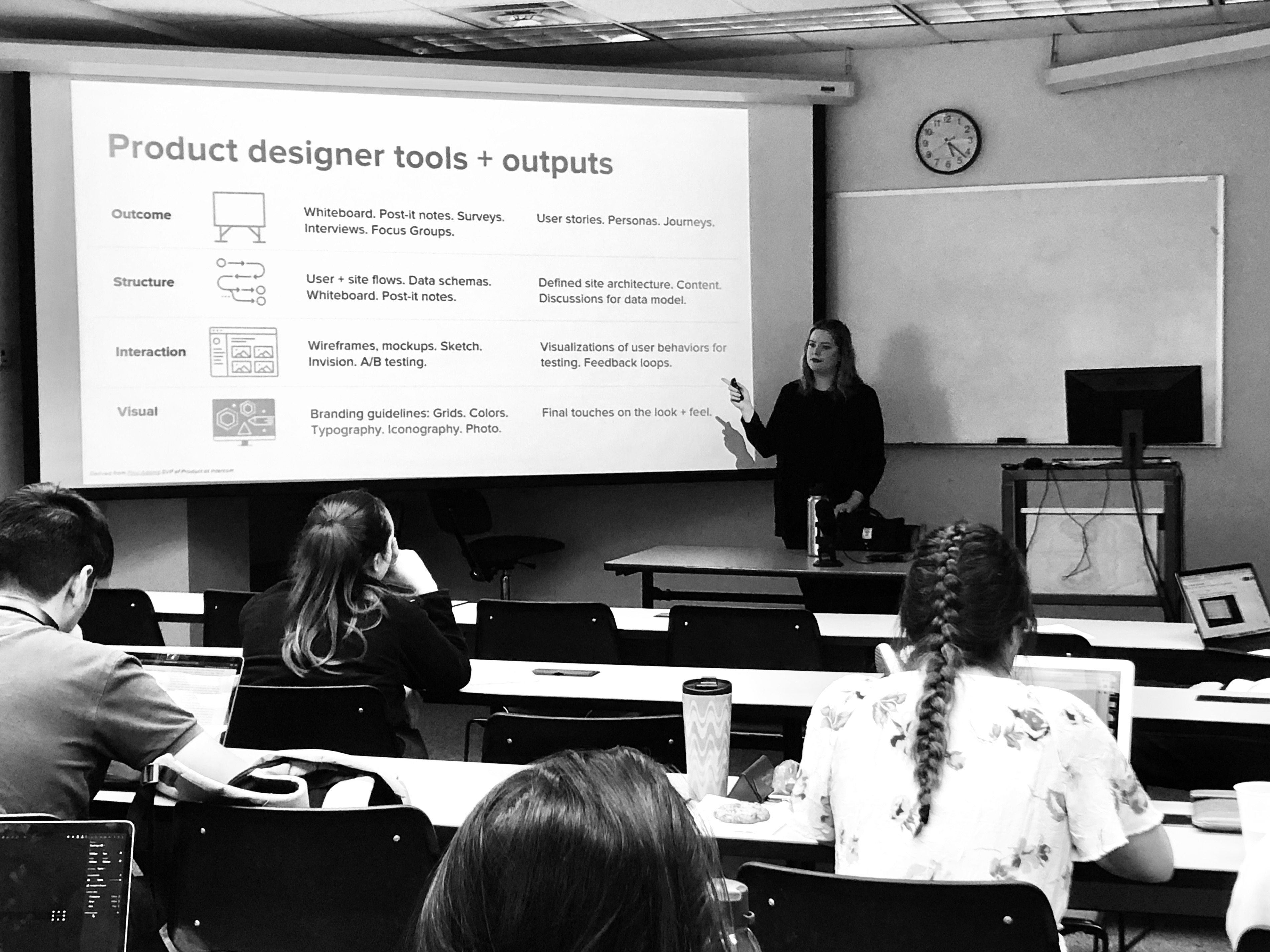
Kelsey Krach guest lecturing on human-centered design at a local university. Photo courtesy of Krach.
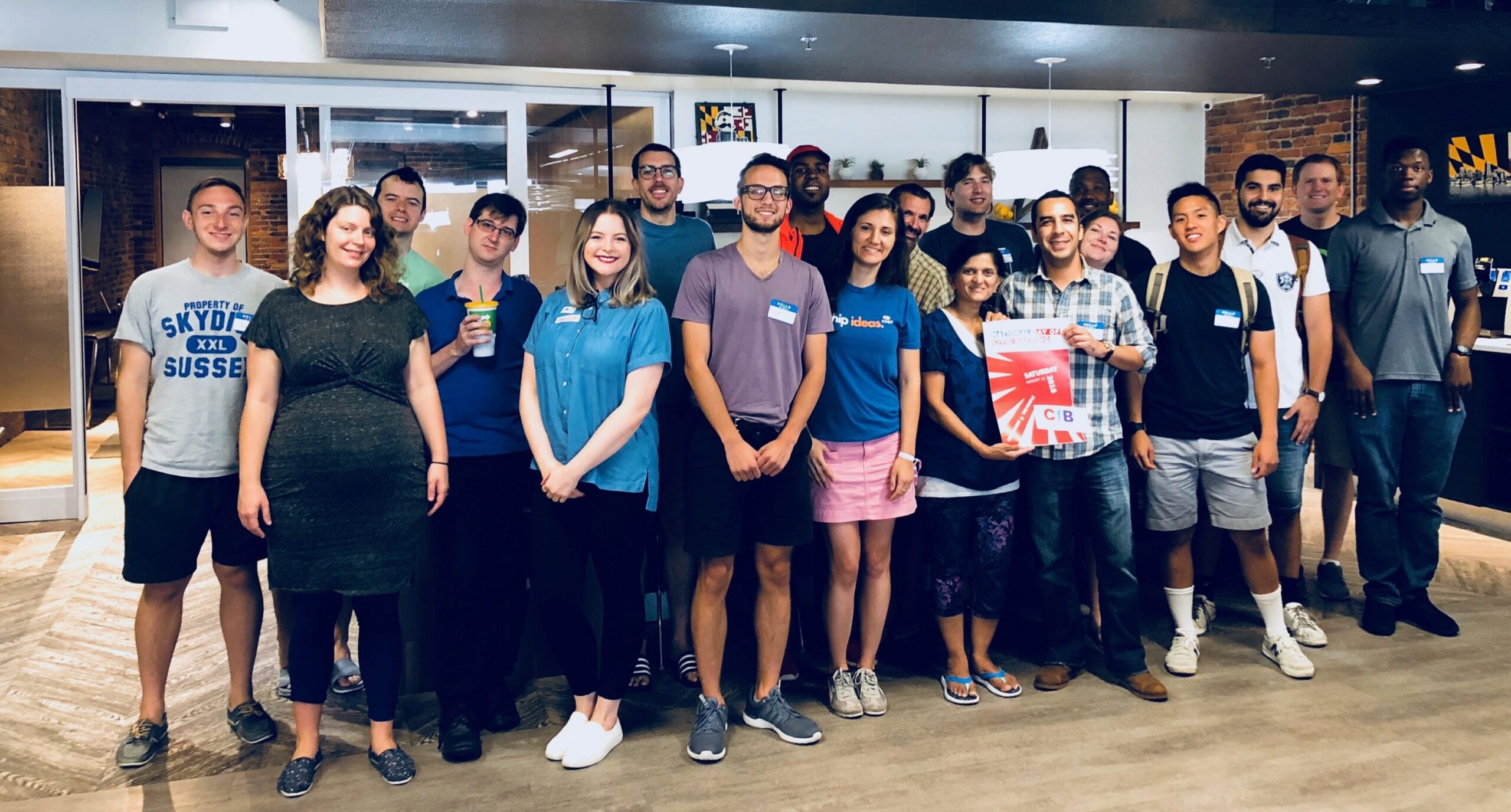
Krach with other members of the group Code for Baltimore. Photo courtesy of Krach.
Subsequently she worked on the launch of an app for LifeBridge Health by researching patient experience, specifically those suffering from heart failure. Krach interviewed more than 40 patients while shadowing doctors and nurses and listening in on emergency room conversation. She says she recognized the fear on the patients’ faces because it mirrored her own fear when her health failed her. “I think at the end of the day, the empathy that a designer needs to have for the people they’re designing for is so powerful.”
Compassion as part of the cure
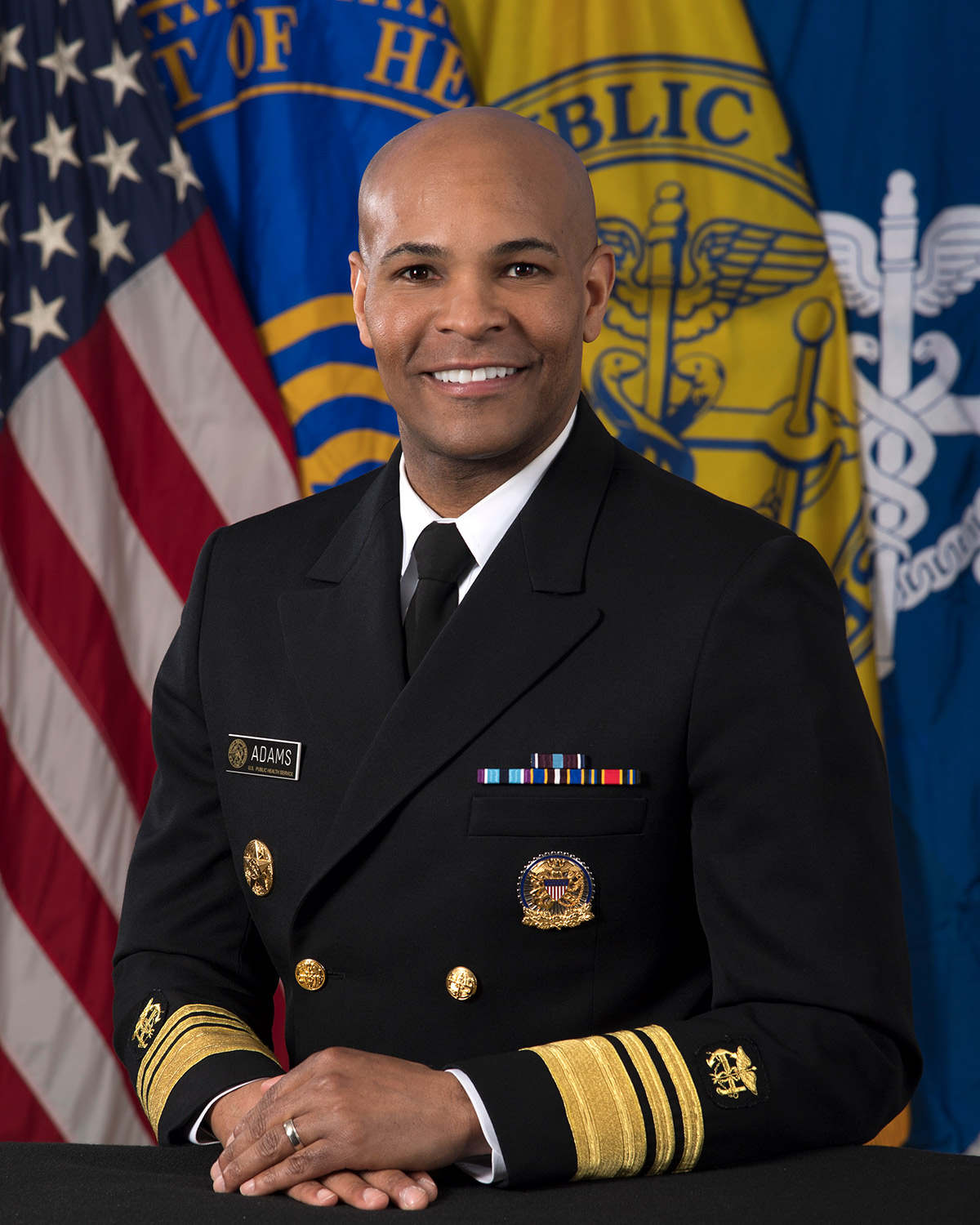
For Jerome Adams ’97, M4, biochemistry and molecular biology and psychology, that empathy also forms the bedrock of his mission as the 20th U.S. Surgeon General. This year’s recipient of the Outstanding Alumni of the Year award for natural and mathematical sciences, Adams has often shared his personal story about his younger brother, who suffers from substance use disorders. “Even as the surgeon general, I’m not immune to this,” Adams says. “I was not able to prevent my family from going down the pathway of addiction.”
Far from just being a political talking point, Adams has plans on how to address the opioid crisis with methods that more effectively reach those suffering from addiction. As a graduate of one of the early Meyerhoff Scholar Program cohorts, Adams intimately knows the benefits and necessity of relying on your community for accountability and support. The mandatory six-week Meyerhoff Summer Bridge program builds close-knit connections between the young scholars through a “we rise together” mentality.
That reliance on one another is a building block of medication-assisted treatment (MAT) programs. Increasing access to this type of treatment is among Adams’ proposed steps toward addressing the opioid crisis in America. MAT combines medication with behavioral support and is often referred to as “whole-patient” treatment. Community organizations like churches are encouraged to step in and build relationships with the participants in the program to further strengthen their ties to the community and available support options. Adams is working to increase the number of MAT programs in the country.
“We know that the only way we’re going to turn this thing around is by everyone owning their part of it and not pointing fingers,” Adams told Mediaplanet. “One of the things I’ve tried to help people understand is that addiction touches all of us. People with opioid use disorder are our friends, our neighbors, our family.”
While compassion is not a cure-all, he says, it’s the right step toward valuing those struggling with substance use disorders.
A good reason to go to work in the morning
Projecting that empathy even further afield is Kim Shelsby ’85, geography. While at UMBC, the 2019 recipient of the Outstanding Alumni of the Year award for social sciences decided that he wanted to travel the world. He just needed a good reason to do so.
Shelsby cycled through several majors before taking a class with Sandy Parker, former chair of the department of geography and environmental systems. “Parker made the first and most lasting impression on me,” says Shelsby. “I recall him describing his work with a tribe in the Amazon, and I was hooked.” And what Shelsby ultimately took away from UMBC is that “geographers study everything from anthropology to zoology but their primary question is about the distribution—why things happen where they happen.”
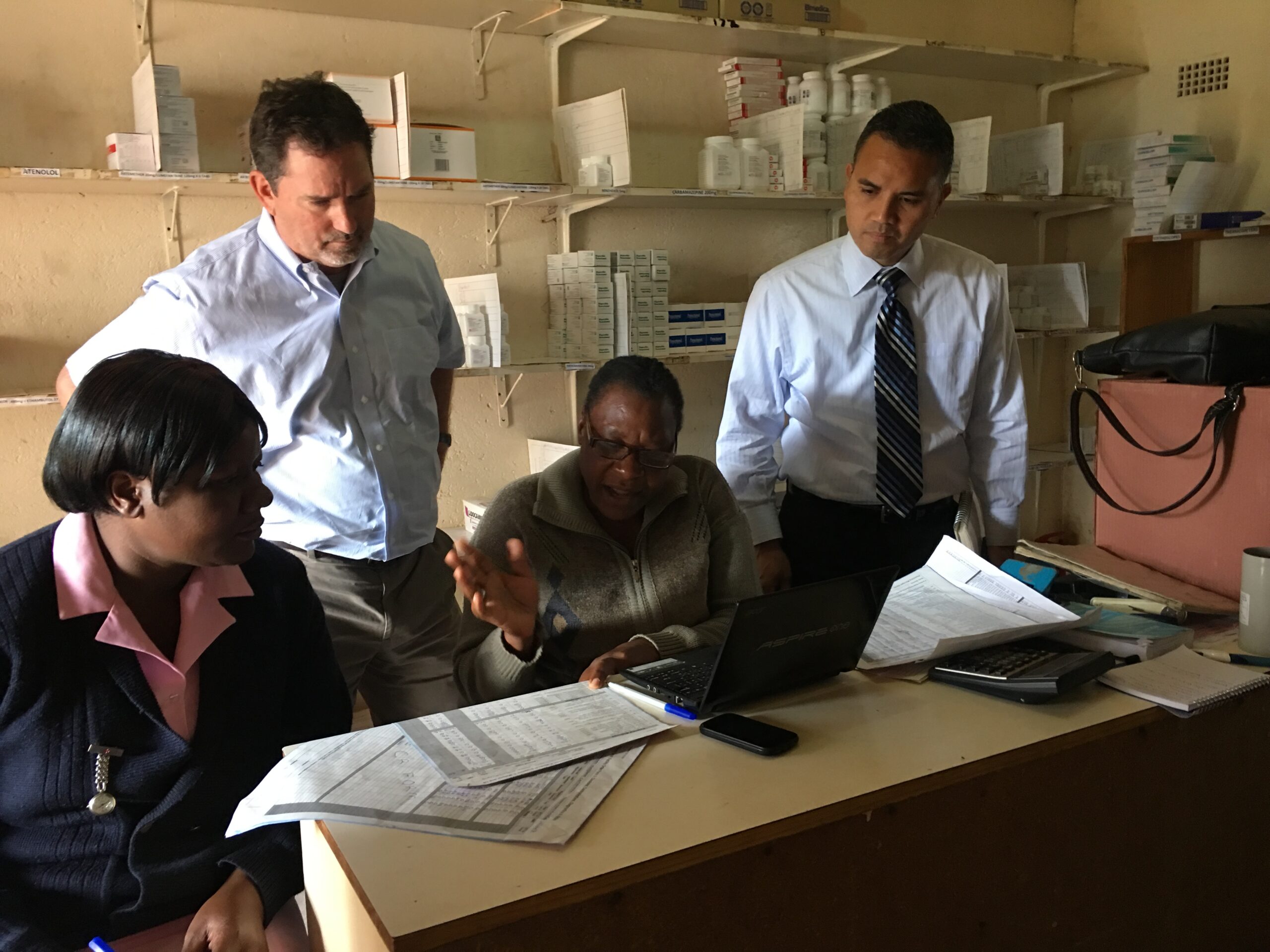
This focus on distribution would shape Shelsby’s career. In his current position with Chemonics International, his team focuses on improving supply chains, mostly for medicine reaching remote health facilities. “Our job is to get the right medicine to the right patient, anywhere in the world, as efficiently as possible.”
Shelsby visits the Central Medical Warehouse in Harare, Zimbabwe. Here, he’s pointing to health commodities that his program supplied. Photo courtesy of Shelsby.
His role in an international development organization has allowed him to fulfill his goal of traveling the world for the right reasons. “My company’s mission is to help people live healthier, more productive and independent lives. That’s a good reason to go to work in the morning.”
As manager director on the largest U.S. Agency for International Development (USAID) project ever—an eight-year, $9.5 billion Global Health Supply Chain Procurement and Supply Management program—Shelsby helped provide medicine and health commodities to more than 60 countries. “It was a massive undertaking,” he put it bluntly. “The first few years were crazy, and it had some rough times, but it is now delivering with about 90 percent on-time delivery.”
Making the mundane meaningful
Shelsby admits that even though traveling abroad for his job is exciting and fulfills many of his wishes as a student, the day-to-day program management can grow humdrum even while producing so many positive health outcomes. And this is where his advice for students who want to change the world comes in: “Even the mundane tasks can be meaningful when it serves a greater purpose.”
Krach builds on that theme for students looking to make a difference through their work. “I really hate saying, ‘make the world a better place,’ because that’s so subjective to everybody—but at least do things in a way that you can analyze and try to work with other people to make their situations better toward the collective betterment for our society.”
Using your voice to promote and protect others’ health is a platform Adams has embraced. After his 2017 appointment to the position of surgeon general, Adams spoke out about the change from being the health commissioner for the state of Indiana to his current role. “I don’t have a lot of programs under me, I don’t have a lot of funding to go out there and fund different grants or programs. What I do have is the bully pulpit.”
Adams has accepted that national microphone through his natural repartee on Twitter as well as through issuing the first Surgeon General’s Advisory in 13 years, urging more Americans to carry naloxone, an FDA-approved medication that can reverse the effects of opioid overdoses.
While there are no quick fixes for most major health problems, the different roles Krach, Adams, and Shelsby play in designing healthier communities make evident that faithful work in service of those suffering from disease and addiction combined with empathy and compassion will be the bedrock of positive changes in the future.
In recognition of their service to others and giving back to UMBC with their time and skills, the UMBC community will honor these alumni and others at an award ceremony on October 2 at 6:30 p.m. Admission is free, but please register in advance.
Now in its 31st year of celebration, UMBC’s annual Alumni Awards honor graduates who have accomplished significant milestones throughout a long career as well as those who inspire us with admirable achievements early on in their fields.
“This outstanding group of award winners are leading the way for others and making an impact on all facets of our society and on the local, national, and global stages,” says Stanyell Odom, director of Alumni Engagement. “They exemplify the best qualities of a UMBC education—they are intellectually curious, creative, entrepreneurial, innovative, committed to making a difference, and passionate and proud of their UMBC.”
On Wednesday, October 2, the UMBC Alumni Association will present awards to honor these alumni for their professional and personal achievements and service to the university. The Association board will also honor a faculty member for extraordinary teaching and overall impact on students and alumni.
“Each year, the selection seems to be a more competitive process,” says Sara Lerma Jones, associate director of Alumni Engagement, “especially as we have more alumni and they grow into their careers. The nominators have done a wonderful job highlighting alumni from various backgrounds.”
Leading up the award ceremony, UMBC Magazine will continue publishing stories about the 2019 cohort.
Beverly Bickel ’94 M.A. Instructional Development Systems, ’05 Ph.D. Language, Literacy, & Culture —Clinical Associate Professor, UMBC, Language, Literacy, & Culture; Affiliate Associate Professor, Gender and Women’s Studies
Register here umbc.edu/alumni/awards/past-winners/ to join the Alumni Association Board of Directors for our alumni awards ceremony to recognize and celebrate the professional personal achievements of this year’s recipients.
* * * * *
For more information about the Alumni Awards, please contact Sara Lerma Jones, Associate Director of Alumni Relations, at 410-455-2276 or via email at slj@umbc.edu.