All posts by: UMBC News Staff


Music To Market

UMBC professors are navigating the startup economy – and finding harmony between research and commerce.

By Elizabeth Heubeck ’91

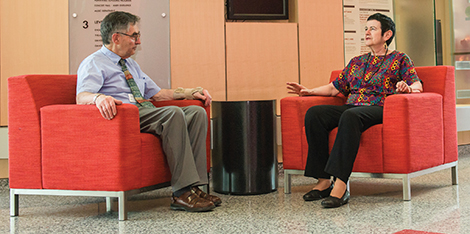
UMBC professor of music Linda Dusman found herself sitting next to UMBC President Freeman A. Hrabowski, III at a UMBC Orchestra concert in 2010. Between movements, she whispered snippets of background information about the music to one of the orchestra’s biggest fans.

Because Dusman is a musical composer with a deeply ingrained respect for the traditions of classical concerts, the experience provided a rare “aha” moment. What if there was a way to convey real-time information about the music and its meaning to audience members in an appealing yet unobtrusive way?

“I was looking at it as a way to give audiences the backstory, a fuller palette of information, so they can re-engage with a symphonic piece,” Dusman explains.

Around the same time, Dusman observed how her adolescent son and his friends quickly became enraptured by Apple’s new iPad, which had just come onto the market: “Watching how the entire existence of my son and his friends began to revolve around screens from school to entertainment made me think there has to be a way to harness this for good.”

Fast forward just six years later. Dusman’s notion to marry technology and an enhanced audience experience is now in beta-testing with professional orchestras.

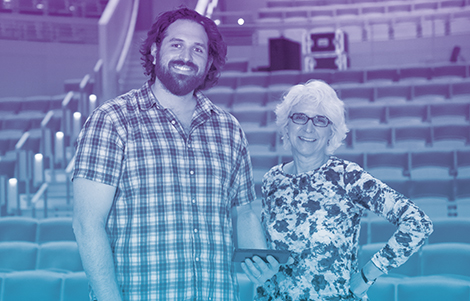
How? Dusman and Eric Smallwood ’03, visual arts, and ’10, MFA, imaging and digital arts, an assistant professor of visual arts, co-founded a startup company called Octava to develop a mobile app that provides smartphone users explanatory text and subtle visual imagery in real time to accompany music at symphony concerts.
Su16-musictomarket-1

Concert goers are usually reminded to turn off their phones. But they might soon be turning on Octava at concerts for a brief text-based explanation of what the composer had in mind when he wrote that dark, moody movement. Background imagery in the app synchronizes with thematic elements of the work as it is performed.

“I look for that nice edge between visuals that adds to the experience without distracting from it,” Smallwood says.

Dusman and Smallwood say that their journey has not always been easy. They were twice passed over for faculty grants, experienced some technological failures, and got negative initial feedback from test audiences. But they credit a $150,000 Maryland Innovation Initiative grant and industry advice they received from experts at UMBC for their app finally hitting its high notes.

The tweaks that the duo made to Octava have won rave reviews from professional symphonies. This summer and fall, they’ll be testing the app at the Baltimore Symphony Orchestra. And Dusman and Smallwood are exploring whether Octava can work in other mediums, including theatre. This summer, they will get feedback from audiences at the Houston Shakespeare Festival.

The Maryland Innovation Initiative and the outreach and advising program (dubbed “site mining”) that aided Octava and its founders are both part of a robust University System of Maryland (USM) initiative to promote faculty entrepreneurship. These efforts – and others – are paying off in a number of research-based startups founded by faculty in offices and laboratories throughout UMBC.

SHIFTING CULTURES

Support for faculty-based entrepreneurship endeavors is rising, especially as funding for traditional research grants has dropped steadily over the past decade or so . Between fiscal years 2003 and 2015, for instance, research grants provided by the National Institutes of Health (NIH) – a key engine of research support – fell by almost 25 percent, primarily due to budget cuts.

Yet this emerging model of encouraging faculty members to find commercial applications for their research as well as publishing it represents a profound shift in academic culture for universities and their research faculty. To accelerate the transition, faculty entrepreneurship is supported by the broad-based Maryland Innovation Initiative launched in 2012 by the USM and run by the Maryland Technology Development Corporation, or TEDCO – an independent organization created by the Maryland state legislature to support the transfer of technology from Maryland’s research universities and laboratories to the marketplace.

The program – budgeted at $5.8 million annually – invests in new technologies developed by faculty members at five of Maryland’s leading academic research institutions: Johns Hopkins University, University of Maryland, College Park, University of Maryland, Baltimore (UMB), Morgan State University, and UMBC.

To date, UMBC faculty members have received more than $1.7 million for a total of twenty projects from the initiative. Out of 21 awards made by the program to UMBC researchers, 13 projects are in a developmental phase (Phase 1) and six projects, including Octava, are in a testing and beta mode (Phase 2).

Two projects have reached Phase 3, in which a company moves from product development toward profitability. One is Tarsier Optics, founded by professor of physics Yanhua Shih, which focuses on development of a high-resolution camera system for surveillance. The other is VakSea, a company in which Vik Vakharia, a professor of marine biotechnology at the Institute of Marine and Environmental Technology (IMET), serves as chief science officer.

Ultimately, the goal behind the initiative is for universities to become a greater piece of Maryland’s economic engine. And UMBC is making great strides toward that goal.

“UMBC is successfully moving technology through the program from the validation phase to company formation,” notes Jennifer Hammaker, director of the Maryland Innovation Initiative. “It doesn’t happen overnight. When you’re changing the culture and educating faculty members, it’s a process.”

MINING FOR POTENTIAL

A key aspect of the initiative is identifying technologies that might be suited to the program and getting the ball rolling. It’s called “site mining” and resources have also been deployed to create opportunities to dig deep into research at UMBC and other schools covered by the initiative.

SU16-musictomarket-2“For years, when faculty members would get tenure, there was no recognition related to commercialization. Everyone focused just on education, research, publications and service. That’s changing,” says David Fink, who is the entrepreneur in residence at the bwtech@UMBC Research & Technology Park. Fink is a site miner at UMBC, and he brings immense experience in founding and working for startup biotech companies to his role as an adviser to the 20 early-stage incubator companies at the university.

Fink also actively seeks out potential entrepreneurial ventures among faculty members at UMBC along with two other dedicated site miners. Once UMBC’s miners identify prospective projects, they serve as mentors to develop the projects, prepare a solid business application, and then act as champions throughout a rigorous review process.

This support is paying off. Fink estimates he’s talked to 60 professors across campus to gauge whether or not their research could be the foundation for a startup.

“We’ve identified about 25 projects we’ve thought were commercially viable,” says Fink. Eight companies have formed with UMBC faculty members as founders, and several more are in development. “That’s probably more than in the university’s entire existence,” he adds.

REALIZING ENTREPRENEURIAL GOALS

When officials at the Maryland Innovation Initiative consider which projects to fund, Hammaker says they weigh the commercial viability and potential marketplace competitiveness of a proposal. She adds that the initiative is also one path for faculty startups to win the support they need to take their project to the next level. “It’s not a one-size-fits-all program,” she observes. “We’re one element of a broader ecosystem that works for some people.”

Indeed, UMBC researchers have found additional resources to pursue entrepreneurship. One resource is Innovation Corps (or I-Corps) – a National Science Foundation-backed program designed to bring university researchers’ discoveries to market.

Mark Marten, a professor of chemical, biochemical and environmental engineering, was recently selected to participate in I-Corps. His startup, MycoInnovation LLC, is working to develop an additive for chicken feed that would be cheaper and safer than antibiotics, which are currently used in the majority of chicken feed to make the animals grow more efficiently. (The startup also received a $100,000 award from the Maryland Innovation Initiative.)

Marten has been at the university for two decades. He describes I-Corps as “entrepreneurial boot camp,” and he credits the program for making it possible for him to even imagine starting a company. “We have a lot to learn,” he adds. “We’re not business people.”

Fink says that the intense, two-month immersion program offered by I-Corps, which draws on the experience of Silicon Valley entrepreneurs, helps professors understand the underpinnings of commercial ventures. “It completely turns around the thinking of academics,” he observes.

The pivot to entrepreneurship in the academy has other effects as well. Faculty who acquire the skills and ability to bring academic knowledge to the marketplace can also shape how students view the role of academic research. And faculty members such as Dusman see a pedagogical aspect to their pursuit of success with projects like Octava.

“I’m now aware of the increasing pressure on higher education to not be an ivory tower,” says Dusman, “and to create, to help students think of themselves as citizens of the world, and to have a positive impact on the world, and to think entrepreneurially.”
Want to be a Pioneer?

Founding UMBC faculty across disciplines reflect on building a new public university.

By Richard Byrne ’86

UMBC opened its doors on September 19, 1966. But as concrete was poured and red bricks were laid, founding chancellor Albin O. Kuhn and founding dean of faculty Homer Schamp were also recruiting faculty members for a new research institution.

In a 1994 oral history interview conducted by Ed Orser, emeritus professor of American studies, Kuhn observed that adventure and ambition were his key selling points to recruits.

“[T]hat was the thing we talked about a lot when we were trying to attract original faculty and staff,” said Kuhn. “’Want to be a pioneer? Come join us. You can develop and help to make it what it will be…. It wasn’t a bad thing to get that kind of person.”

Founding faculty members of UMBC remember that desire to forge new trails and build as a powerful lure.

Su16-pioneer-1

“The thought of coming to a new university was very attractive to me,” says William Rothstein, emeritus professor of sociology, and one of the professors hired for the university’s opening day.

“It was exciting to think about starting a program,” says Walter Sherwin, emeritus professor of ancient studies. “There was no one really over me. It was pretty heady stuff. It was all so exciting that I never thought about the risk.”

And as UMBC grew, it attracted more top-notch young faculty members – many of whom built lengthy careers in research and teaching at what was then the University of Maryland’s newest campus.

“I knew I was coming to a research university,” says Marilyn Demorest, emerita professor of psychology, “because it was the University of Maryland….We were University of Maryland faculty. And we were held to those standards.”

“It Was a Great Experiment”

Kuhn and Schamp initially organized UMBC into clusters: humanities and arts, social sciences, life sciences, and mathematics and physics. It was practicality at work: UMBC was too small to have full-fledged departments.

Finding faculty to meet the demand created by baby boomers also had an impact. Even established universities struggled to fill their professorial ranks in 1966. For many founding professors, UMBC was their first job.

Robert Burchard, emeritus professor of biological sciences, arrived on campus in January 1967, fresh from the Peace Corps, where he had been teaching microbiology in Nigeria and doing research on tsetse flies.

Burchard recalls that creating a new biology curriculum from scratch was invigorating: “It was a great experiment. And we were excited about what we were doing.”

Sherwin recalls that in the early years, offices were assigned by lot, and professors from various disciplines mingled together. “I enjoyed interacting with people outside my area,” he says. “We were in this together, and a lot of the conversation was not specific to discipline, but specific to making things work.”

Charles “Chuck” Peake, emeritus professor of economics, arrived in September 1967. “We had this idea we were going to build something,” he says.

Peake had an office in the “Gray House” that once stood outside Hilltop Circle near today’s athletics fields. He recalls that some classes were held in the Hillcrest Building that overlooked campus. “I remember walking up the hill past apple trees to get to classes,” he says.

The newness of the university, says Rothstein, also meant that “there was nothing to put your feet on. Everything was up for grabs.”

Su16-pioneer-2

That feeling persisted through the university’s early years. “UMBC was an immense contrast to what I was experiencing in graduate school at Harvard,” says Joan Korenman, emerita professor of English and women’s studies, who arrived in 1969. “It was like a breath of fresh air. Everything was wide open and ready for discussion.”

UMBC asked Korenman if she was interested in a lecturer position in English. But at an interview, she indicated an interest in an assistant professor position. That was the position she was offered. Advancement was quick. Like many of her colleagues, Korenman discovered that the freedom to build had other obligations when she was appointed as an area coordinator soon after her arrival.

“Young faculty were expected to take on more administrative responsibilities,” she recalls.

“We Can Do This!”

Kuhn excelled in securing resources from the University of Maryland and state government. And as new students swelled the university’s enrollment, construction of UMBC’s physical campus was matched by an expansion of the faculty orchestrated by Schamp.

“I remember talking to Kuhn,” says Rothstein. “He told me: ‘I bring the money in, and Homer spends it.’”

Faculty took advantage of the opportunities. Jay Freyman, emeritus associate professor of ancient studies, landed at UMBC in 1968 with a Ph.D. in Classical Studies from the University of Pennsylvania. He says that the atmosphere at UMBC “was the same kind of attraction that someone feels when they go to a startup in Silicon Valley. It’s the ground up. There’s nowhere to go but up. You’re going to make something there that wasn’t there before. We could do some things that were offbeat. We could try things.”

Freyman had ideas about where his discipline was headed – and how he and his colleagues needed to adapt. “We recognized that a traditional ‘classics’ program would not survive. Latin and Greek. Those were the departments that were getting dumped,” he says. “We realized that in order to survive, we had to have a broader appeal than just linguistic and literary. So we incorporated history and archaeology. We were one of the first departments in the country to do this.”

Ancient studies faculty members were also at the forefront of another great UMBC tradition: Study abroad. UMBC faculty had already leapt ahead of many other universities in creating a January session (dubbed the “minimester”). But it was Sherwin, Freyman and their colleague Rudolph Storch, emeritus professor of ancient studies, who organized and led trips to Italy and Greece in the first years of the university.

Su16-pioneer-3

For many of the students of that era, it was a mind-blowing adventure. Sherwin got the idea from a Fulbright fellowship he had at the American Academy in Rome that combined lectures and visits to historic sites. “I came back and told my colleagues, ‘We can do this! We will establish a program abroad.”

UMBC professors didn’t stop at curricular innovations. Burchard’s passion for environmentalism and pedagogy intersected when campus planners turned their gaze to Pig Pen Pond – a body of water that remained from the campus’ days as farmland – and planned to pave over half of it.

“The biology folks looked at that as a good teaching resource,” says Burchard. “I raised hell about it.”

Burchard and others succeeded in saving Pig Pen Pond. Today, it is a key element of the Conservation and Environmental Research Areas [CERA] – and it remains as a locus for campus research.

“Pushing for Quality”

UMBC did have growing pains. The administration and the faculty debated which courses should be required for graduation for a number of years. The denial of tenure to some popular professors hired in UMBC’s early years also elicited student protests.

And though UMBC was the first university founded in Maryland in the post-segregation era, racial disparities in enrollment, employment, and curriculum at UMBC quickly became apparent.

In May 1969, a committee created by Kuhn to achieve “significant integration of minority groups at UMBC” offered an array of proposals to the chancellor, including creation of a department of “Black Studies.” A year later, the university’s Black Student Union and a caucus of black faculty and staff pressed the case for change more urgently, and by the end of 1970, UMBC had hired Elechukwu Njaka from Tuskegee Institute to build a program with the rank of a division within UMBC.

Among the faculty who built the program was Daphne Harrison, emerita professor of Africana studies, and founder of UMBC’s Humanities Forum. “I found that UMBC was quite different from many institutions,” she recalls. “The attitude was that you as a professor are important, but the professor also has to work.”

Harrison taught a wide array of courses, but she says that her insistence on rigorous interrogation of notions received from mass culture was at the heart of the endeavor: “Young people were getting a lot of information but they didn’t know how to vet it. That was one of the things I remember doing with them. You have to know whether or not what you’ve got is real. You have to check to see whether it is accurate.”

Su16-pioneer-4

In 1975, UMBC hired Willie Lamousé-Smith from Syracuse University to head the program. A Ghanaian scholar who received his doctorate from the University of Münster, he was lured from a tenured positions in Syracuse’s Afro-American studies program department and as associate director of the East African studies program in its Maxwell School of Citizenship and Public Affairs.

Hiring Lamousé-Smith from a prominent research institution was one signal that UMBC aspired to raise its profile in the humanities. But demanding the best from students and helping them find their place in campus life was equally important to him.

“I do not intend to make people comfortable,” says Lamousé-Smith. “And that is my policy when I am teaching. People have to take their studies seriously. It’s only a short time in the person’s life. And yet the person’s whole future is going to depend and rely upon what that person does in that short period. So if I do not help the person to achieve their highest level, I feel I have not done well.”

Other key academic programs emerged. The late 1960s and 1970s was a busy era in experimental psychology – and psychology quickly became (and remains) one of UMBC’s most popular majors.

Demorest recalls hearing about “that place in Catonsville,” as she finished graduate studies at Johns Hopkins University and post-doctoral work at the University of Pittsburgh. She admits it didn’t sound appealing at first.

In 1972, however, she was recruited by the late Aron Siegman, a professor of psychology at UMBC. She reluctantly came for an interview and was surprised. “I spent two absolutely glorious days,” she recalls, “being passed from one faculty member to another, talking about every different type of psychology…. So I ended up coming to ‘that place in Catonsville’ really excited about being here.”

Su16-pioneer-5

Psychology launched one of UMBC’s first graduate programs: a community clinical psychology master’s program created in 1974.

Demorest says that the burgeoning quality of UMBC’s faculty in that era later helped her, as vice provost, to recruit others to campus to join her. “I would invite [candidates] to look at the credentials. We were recruited from first-rate institutions from Columbia and Chicago and Hopkins….and so we came in with the standards we were held to, and so those were the standards we held our students to. We didn’t know any different.”

“You Can’t Do That with Just Science”

Psychology was not alone in its prominence. Many founding faculty point to the arrival of the late Martin “Marty” Schwartz as the coordinator of the biology division in 1969 as the beginning of UMBC’s ambitious push to make grant-funded research an engine that would propel the university into maturity and excellence.

“The scientists were clearly the most hard-nosed in terms of academic research,” says Rothstein. “And making UMBC have a name for itself as a quality research institution, the sciences were clearly leading the pack.”

Phillip Sokolove, emeritus professor of biology, arrived in 1974 and found himself in the center of a busy hub of research activity spearheaded by Schwartz.

“He was a man with vision,” Sokolove says. “My interaction with him was extremely positive as a young professor. He was quite clear what the nature of the department was, and that we had to become one of the premier research departments on the campus, along with chemistry. Since Swartz was chair of both departments, and of the biochemistry department, he adds, “Schwartz saw them as natural allies.”

Su16-pioneer-6

Sokolove says that Schwartz was driven to get the best from his faculty. “He was able to give his faculty the time to do what they needed to do,” he recalls, “and then pushed them hard to do it. And when somebody came in and couldn’t cut the mustard he was ruthless. Not ruthlessly himself. What he did was turn the faculty into a well-developed jury of peers.”

Lamousé-Smith, who served with Schwartz on UMBC’s Council of Divisional Deans with Schwartz, recalls that he pushed for academic excellence and leadership with equal vigor. Schwartz was a “strong personality” who often played hardball over resources in meetings of academic leadership. “He would chew you up and spit you out and then embrace you and kiss you on the cheek,” Lamousé-Smith says.

“But Marty Schwartz was not just pushing for his own department, but for every department,” Lamousé-Smith continues. “Marty Schwartz, and his impatience, planted the seeds of pushing for excellence at UMBC.”Su16-pioneer-7

UMBC now boasts a strong balance between research and teaching across disciplines. That strength in all areas is part of its founding chancellor’s blueprint. As Kuhn told associate professor of history Joseph Tatarewicz in an oral interview conducted in 2001, UMBC was created at the moment when influential University of California system president Clark Kerr touted America’s universities as a ‘prime instrument of national purpose.”

Kuhn argued that a modern university “can’t do that with just science. You have to do that with understanding people. You have to do it with understanding the real drive that’s involved in the humanities and arts. And when you put it all together, it can be very forceful. Without all of it together, you won’t get there.”

“That place in Catonsville” – as Demorest fondly refers to it now – has come a long way toward fulfilling Kuhn’s vision because of the strength of its founding faculty, and the professors who have followed them to this day.


* * * * *

From the Editor:

The cover of the Summer 2016 issue of UMBC Magazine you may have received in the mail has a significant error for which I would like to personally apologize to our readers.

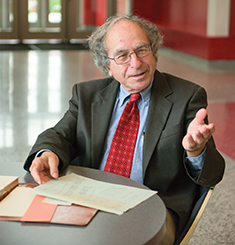
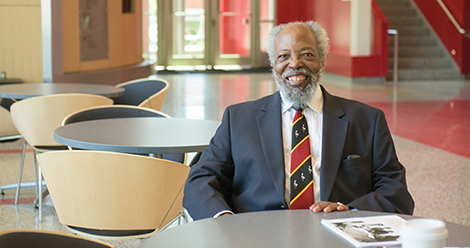
In our image of professors then and now, the magazine cover mistakenly paired a recent photo of Professor Emeritus of Africana Studies Willie Lamousé-Smith with an archival photo of longtime UMBC professor of Africana Studies Jonathan Peters from the Albin O. Kuhn Library’s collection of university photographs.

Our magazine team has redesigned the magazine cover digitally to pair Professor Lamousé-Smith with a correct image – which we have posted on the magazine website, to our Facebook site, and to our wider UMBC Alumni site. But I did not catch the error before the magazine was sent to the printing press and then on to our readers.

As you will discover both in the “Editor’s Note” to this issue and in the story about the founding faculty of the university (“So You Want to Be a Pioneer? – read below this note), Professor Lamousé-Smith’s wisdom and spirit have played a significant role in UMBC’s rising fortunes as a university through the decades. I have reached out to Professor Lamousé-Smith personally to apologize for this error.

The many contributions and achievements of our faculty and staff are a significant part of what we are celebrating this year in UMBC’s 50th anniversary. It has been part of the mission of UMBC Magazine to tell these stories accurately. In this case, we let our readers down. We hope this note serves both to correct the record and express our regret for the error.

Richard Byrne ’86
Editor, UMBC Magazine


Up on the Roof – Summer 2016

UMBC President Freeman A. Hrabowski, III, takes your questions.

The powerful connection between research and teaching has been a foundation to UMBC’s success. Why is this vital link so important to the university community? What makes this relationship special at UMBC?

– Richard Byrne ’86, English

When I talk with students and parents, or with donors, or with legislators about the uniqueness of UMBC, I invariably address the relationship between research and teaching at the university.

People often want to know why research universities expect their faculty to teach fewer courses than faculty at comprehensive institutions or community colleges. Parents often want to know if research faculty actually work with students, and what advantages there are for undergraduates who attend a research university. Even graduate students want to know: If I come to UMBC for a Ph.D. program, will I have not just the skills but the connections to get the job I want in the academy or in a company or a government agency?

This is what I say to them. First, there is the larger aspect of the research university. Faculty who do research – at a research university, or at a fine liberal arts college – are constantly asking good questions. They read the most up-to-date literature in their fields, and they are able to talk comfortably about the most interesting trends in these fields.

The students of these professors have the benefit of being pulled into fascinating conversations about this work. And as a result, students learn how to ask good questions, how to tackle problems, how to work collaboratively in interpreting data or in understanding the problems that we face in our society. We are creating new knowledge that can help in solving a variety of problems.

What makes the experience at UMBC special is that we are an institution that prides itself on undergraduate research as well as our strengths in graduate research. Undergraduate students get to work side by side with faculty in science labs, or with teams in the social sciences, or on projects in the humanities and the arts.

And whether they are undergraduates or graduates, UMBC students have the opportunity to think about their future in research – and how they can use those skills. They are important skills for those who seek academic positions, and also for those who seek positions at companies such as T. Rowe Price, or jobs at the Social Security Administration. That is the connection between the research and the teaching.

Our research faculty is strong at UMBC. From our beginnings, you had a number of faculty members doing first-rate research with students. I remember talking with Michael Hooker, my predecessor as president, about the fact that we had a number of excellent research faculty here. The problem was that many of our students were not able to take advantage of the high quality of research going on.

So we needed to recruit students who could take advantage of what our research faculty had to offer. But we also needed to look at the environment here. We started programs like the Meyerhoff Scholars Program. We used analytics to understand who was succeeding and who was not and to make changes. This gave us the foundation that we could build on. Because you must have students doing well academically in their course work in order to talk about having students involved in research activities.

We have moved to a different place now. In the 1980s, the average student at UMBC was not involved in research. Today you find that thousands of our students are engaged in research. This is happening across disciplines – from our two undergraduate research journals to students working in labs and publishing in academic journals. It’s a very different environment.

Mike Summers, a professor of chemistry and biochemistry, is one of our most noted researchers. He just became a member of the National Academy of Sciences. That is an immense achievement. But he is also a powerful mentor and teacher. In fact, one of his former students, Victoria D’Souza ’02, Ph.D., biochemistry and molecular biology, recently became a full professor at Harvard University.

This is just one example of this very important key to our success in developing the relationship between research and teaching across the disciplines. We have a large number of our research faculty who are also strong mentors and advisers to students in their research and in their careers. Those qualities in our faculty are why we send such a high percentage of our undergraduates to graduate school, and it is why so many of our graduate students go on to successful careers.

To send a question to President Hrabowski, visit Ask the President.

To You – Summer 2016

Richard Byrne

 My favorite part of this job is telling stories. Writing the story of our founding faculty in this issue is among the most enjoyable tales I’ve told so far. Some highlights for me:

* Listening to Robert Burchard, emeritus professor of biology, talk about launching a research lab in the earliest days of the university, with basic equipment at UMBC and the use of more specialized equipment at USDA labs in Beltsville: “The most important thing in my toolkit was a microscope,” he said. “I was asking interesting questions. I adapted.”

* Talking with Marilyn Demorest, emerita professor of psychology, who was delighted by a question about UMBC students. “We had the thrill of working with some really fine undergraduates,” she said, “who self-selected into our research teams and laboratories.”

* Sharing a table with Phillip Sokolove (who took his Ph.D. at Harvard University) at UMBC’s annual commencement dinner, and watching the emeritus professor of biology beam with pride as UMBC President Freeman A. Hrabowski, III introduced Victoria D’Souza ’02, Ph.D., biochemistry and molecular biology as the first UMBC alumna to be tenured at Harvard University.

* Hearing Walter Sherwin and Jay Freyman – emeritus professors of ancient studies – talk about their collaboration with students and staff in 1969 on a musical (Keep the Peace, Baby) based on their joint translation of Aristophanes’ Lysistrata. “The play was funny as all get out,” says Freyman, recalling that Myrrhina’s seduction of her husband Cinesias to entice him to commit to making peace was done as a striptease.

* Talking with Joan Korenman, emerita professor of English and women’s studies, and founder of the Center for Women in Technology (CWIT). “When I think of what was important to me during my career at UMBC,” she told me. “Women’s studies and information technology, The necessity I felt to combine those. At many universities, I don’t think I could have worked in those areas and done what I did. It says something about UMBC that they were open to all of this.”

* Sitting with Willie Lamousé-Smith, emeritus professor of Africana studies, as he spun stories about academic governance past and present. Lamousé-Smith was tremendously eloquent about the difficult road one must traverse to achieve knowledge: “If you want to put the discipline of learning into yourself, or into somebody, you have to cultivate asceticism in yourself. That is what I try to put into my students. Self-cultivated asceticism. So you can focus and do the work. And that is uncomfortable.”

I invite you to tell us your story at Retriever Stories (retrieverstories.umbc.edu) and I also invite you to return to campus to participate in the 50th Anniversary celebration September 16-19, 2016. See page six of this issue for a full guide to the weekend’s festivities – and check out our 50th anniversary website (50.umbc.edu) for all the events associated with this milestone event.

— Richard Byrne ’86

Marjoleine Kars and Kate Brown win prominent European University Institute fellowships

Marjoleine Kars and Kate Brown, both professors in UMBC’s history department, have been awarded prestigious fellowships to study at the European University Institute (EUI) in Italy for fall 2016.

Kars and Brown are recipients of the Fernand Braduel Senior Fellowships, which “provide a framework for established academics with an international reputation to pursue their research at the EUI. Fellowships last for up to ten months in one of the EUI’s four Departments which in turn invite fellows to participate in departmental activities (seminars, workshops, colloquia, etc.),” according to a description on the EUI website.

During her fellowship, Kars will finish her writing her current book project Freedom Marooned: An Atlantic Slave Rebellion in the Early Modern Dutch Caribbean. She is in the midst of finishing a ten-year research project about a little known but immense eighteenth-century slave rebellion in a Dutch colony in South America (now the Republic of Guyana). Kars has previously written a book about a farmers’ rebellion in pre-revolutionary North Carolina: “Breaking Loose Together”: The Regulator Rebellion in Pre-Revolutionary North Carolina (Chapel Hill: University of North Carolina Press, 2002), and she was a Dresher Center fellow in spring 2015. Read more about her work in the EUI’s announcement of her fellowship.

KateBrown-email

For her Fernand Braduel Fellowship, Kate Brown will work on her research project Circumnavigation: History’s Renovation in the Age of the Anthropocene. Brown is currently working on a research project about the communities circling the Chernobyl Zone. Earlier this year, Brown was named a 2016 Andrew Carnegie Fellow and she has received significant recognition for her 2013 book Plutopia: Nuclear Families in Atomic Cities and the Great Soviet and American Plutonium Disasters (Oxford 2013). Read more about Brown’s work and research in the EUI announcement.

As part of their residencies, Kars and Brown will also participate in the EUI’s Summer School in Comparative and Transnational History: Theories, Methodology and Case Studies. Kars will present Caribbean Slave Rebellions, Transnational History, and Nationalism and Brown’s talk is titled Soft Bodies: the child centered communities at ground zero of American and Soviet nuclear complexes. 

Learn more about the European University Institute and its prestigious fellowships and research programs on the EUI website.

Images: Marjoleine Kars and Kate Brown. Photos by Marlayna Demond ’11 for UMBC. 

During Rio games, John Rennie Short argues underestimated costs pose major challenges for Olympic host cities

As the 2016 Summer Olympics opened in Rio, John Rennie Short, professor of public policy, published an evocative commentary in The Conversation outlining challenges Olympic host cities face in organizing such a massive, resource- and infrastructure-intensive event.

In his article “On rocky road to Rio, the biggest loser may be the glory of hosting Olympics,” Short, who is an expert on urban issues, traced the history of the Summer Olympics, which have been held since 1896. He explained that the increasing size of the games and growing global coverage have contributed to the creation of underlying structural problems.

John Rennie Short

“The IOC often touts hosting the Olympics as a force for good, and there are the positive examples of Barcelona and Sydney. But for many cities, hosting the Olympic Games means taking on expensive projects where the costs are always underestimated, the benefits always overestimated and the legacy is obsolete athletic venues,” wrote Short. “Rio presents the worst-case scenario of costly overruns and inadequate infrastructure.”

Professor Short also described the rising costs of hosting the games and that potential host cities have backed out of consideration due to the potential lasting financial impact.

“The IOC maintains this power though the bidding process whereby cities have to compete to host the games. The arrangement favors the IOC as it forces cities to try to outdo each other,” he explained.

Short was also recently interviewed by Slate and The Atlantic about his proposal to establish a permanent host site for the Olympic Games designed to alleviate many of the problems he described in his article in The Conversation. 

For complete media coverage, read below.

On rocky road to Rio, the biggest loser may be the glory of hosting Olympics (The Conversation)
The Olympics should be in Vancouver. Winter and Summer. Every Two Years. Forever. (Slate) 
What if the Olympics were always held in the same city? (The Atlantic)

Images: Olympic Rings at St. Pancras Railway Station, London, 2011. Photo by David Holt, CC by-SA 2.0. John Rennie Short, photo by Marlayna Demond ’11 for UMBC. 

UMBC scientist launches company to commercialize new oral vaccine to save fish industry millions

Every year, millions of fish raised in aquaculture die of nervous necrosis virus (NNV). “The disease affects the brain, and the fish lose their vision and balance,” says Vikram Vakharia, professor of marine biotechnology at UMBC. As a result of damage to the nervous system, “the fish just swim in circles,” Vakharia says. His lab is housed at the Institute of Marine and Environmental Technology (IMET) on Baltimore’s Inner Harbor.

In 2013, the Maryland Innovation Initiative (MII) funded Vakharia to develop a vaccine that protects fish from NNV. He successfully developed an effective vaccine, but it had to be injected into each fish individually—a labor-intensive and costly process. Then BioHealth Innovation, a public-private economic development partnership in Maryland, approached Vakharia to develop a market study and business plan. BHI found that farms would prefer an oral vaccine, because it’s much easier to deliver a vaccine via food pellets. That’s what Vakharia tackled next.

He succeeded in the lab, and, along with BioHealth Innovation, formed a company called VakSea, Inc. to convert the lab success into a commercial product. Recently, VakSea licensed the technology from UMBC and will collaborate with Allotropic Tech, Inc. a bwtech@UMBC company that will produce the vaccine product. It will be mixed with food pellets in large quantities for an upcoming clinical trial as part of an MII phase III grant. This moves Vakharia one giant leap forward in tackling a major obstacle facing the $70 billion farmed-fish industry.

“It will be novel to deliver the vaccine orally. A lot of people will be interested,” says Vakharia. NNV is particularly prevalent in East Asia and countries that border the Mediterranean Sea such as Greece, Italy, and Turkey.

Vakharia is continuing to work on new ways to increase the vaccine’s efficacy, and VakSea submitted a Small Business Innovation Research (SBIR) grant to the National Science Foundation that would support that work.

Even with this major advance to combat NNV on the horizon, there are plenty of other diseases that wreak havoc on fish populations globally. “If this works,” Vakharia says, “it opens the door to use this technique with other pathogens.”

Image: At the VakSea license signing. From left to right: Vikram Vakharia (UMBC), Kurt Herzog (BHI), Wendy Martin (UMBC), Ken Malone (BHI), Bob Balcerzak (Allotropic). Photo by Nick Hammond (IMET).

Manil Suri awarded prestigious residency from The Rockefeller Foundation in Bellagio, Italy

Manil Suri is one of just 15 leading experts worldwide awarded a prestigious academic residency for September 2016 at the The Rockefeller Foundation’s Bellagio Center in Italy. During the upcoming residency, Suri, a professor of mathematics, will work on his current book projectThe Godfather of Numbers.

As an arts and literary arts resident, Suri is now part of a 56-year legacy that includes Nobel laureates, Pulitzer Prize winners, artists, social entrepreneurs, and activists and the selection is recognition of his ability to promote the well-being of humanity around the world.

The residency program is made up of leading academics, artists, thought leaders, policymakers, and practitioners who have been recognized for their bold thinking and promise to further change the world for the better.

“The Foundation’s Bellagio Residency Program has a track record for supporting the generation of important new knowledge addressing some of the most complex issues facing our world, and innovative new works of art that inspire reflection and understanding of global and social issues,” according to a description about the program on the Rockefeller Foundation’s website.

In a short biography announcing September’s Bellagio residents, the foundation states: “Suri’s The Godfather of Numbers is a novel that aims to posit mathematics as the basis of all creation with The Godfather of Numbers as the narrator who initiates a mathematical big bang to create the counting numbers out of nothingness. His foremost objective for the book is to create a compelling piece of fiction and to allow readers an entry into the world of mathematics which does not assume mathematical expertise. While bringing out mathematics’ playful aspects for a wide target audience, he also wants to provide insight into how it works invisibly in so much of the universe. Mathematics is a much-maligned and poorly understood subject, and he hopes the book is a step towards reducing the anxiety surrounding it.”

Read more about residency program on The Rockefeller Foundation’s website. For more on Manil Suri’s previous books, visit his author website and to learn more about his teaching and research, visit his UMBC website.

Image: Manil Suri. Photo by Marlayna Demond ’11 for UMBC. 

Washington Post and WAMU call on Jeffrey Halverson to explain causes of devastating Ellicott City flood

The devastating flash flood that hit Ellicott City, Maryland, last Saturday night was so severe that meteorologists called it a once-in-a-thousand-years event. What conditions colluded to transform a quaint main street into a torrent of water in a matter of minutes? The Washington Post and WAMU radio both turned to Jeffrey Halverson, professor of geography and environmental systems, to explain.

Air currents from across the region converged over Ellicott City “in a manner that would literally squeeze moisture out of the atmosphere,” wrote Halverson in the Post. The extremely high humidity meant there was plenty to squeeze out. But what made it even worse was the large amount of buoyant energy feeding updraft currents. The more energy, “the more water vapor is lofted into the clouds and processed as rain,” says Halverson.

On top of that, a process called “back-building convection” resulted in several storm cells moving through the area, creating a much longer-lasting event than the traditional summer thunderstorm.

Perhaps the scariest part, though, is that even the most sophisticated computer models cannot predict the exact location of these events. “It becomes a ‘now-casting’ exercise,” says Halverson, “and there is almost never any lead time.”

But it’s not only the meteorological conditions that are to blame for the devastation Saturday night. “The flood was as much about the nature of the underlying land surface as it was about the large amount of rain falling from the sky,” Halverson told WAMU. The narrow streets, large amount of pavement, and valley geography of Old Ellicott City make it especially vulnerable to a flash flood.

“Ellicott City happened to be ground zero for a process that had very laser-like focus,” Halverson explained. “Humble rain, often gentle, is life-sustaining, nourishing, and thus benign 99 percent of the time,” he says. “But what we take for granted sometimes quickly turns deadly.”

UMBC President Freeman Hrabowski and Provost Philip Rous reached out to the UMBC community following the storm, expressing condolences to the families of two individuals who lost their lives, one of whom was an employee at University of Baltimore. Pres. Hrabowski also called on campus experts, like Halverson, to “share their knowledge and resources to help address issues to reduce future flood risk in the area.”

Recovery is a major, long-term process, but one that the area’s residents are already supporting through donations and volunteer service. As Pres. Hrabowski shared, “Ellicott City is a part of us.”

Image: Damage in Ellicott City following the July 31 flash flood; Brian Krista, Baltimore Sun Media Group.


Zero tolerance laws contribute to racial disparities in U.S. public schools, research by F. Chris Curran reveals

As students and families are preparing to start the new school year, new research demonstrates that certain school discipline laws may increase racial disparities and suspension rates for minority students and do little to improve the safety and order of schools.

The research, published in Educational Evaluation and Policy Analysis by F. Chris Curran, assistant professor of public policy at UMBC, finds that state mandatory expulsion laws—which mandate expulsion for offenses such as weapons or assault—have led to increased suspensions for all students, but at a much higher rate for Black and Hispanic students than for White students.

Curran wrote about his findings in an article published in The Conversation on July 24. He examined national data collected by the U.S. Department of Education as part of the Civil Rights Data Collection and the Schools and Staffing Survey, and through further research determined several key findings.

“First, the study showed that state laws requiring schools to have zero tolerance policies increased suspension rates for all students. Second, suspension rates increased at a higher rate for African-American students, potentially contributing to racial disparities in discipline. Finally, principals reported few decreases in problem behaviors in schools, suggesting that the laws did not improve the safety and order of schools,” Curran explains in his article.

The research is timely, as states like Michigan are considering passing legislation to curtail zero tolerance discipline policies in public schools. Curran anticipates that states beginning to move away from zero tolerance policies will have an overall positive impact on the education environment.

“Clearly, such zero tolerance laws were meant to improve the safety and order of the school environment,” Curran writes in The Conversation. “However, in recent years, they have been seen as being overly prescriptive and as contributing to racial disparities in school discipline.”

Through his research, Curran also found that zero tolerance laws can have a significant negative impact on the learning environment for all students.

“Principals report few decreases in problem behaviors such as fighting, drug use, or disrespect as a result of these laws,” says Curran.

This suggests that state zero tolerance laws may be resulting in more students, particularly students of color, being excluded from the learning environment while failing to improve the school setting for those students who remain.

More on this research can be found in Curran’s recently published article “Estimating the Effect of State Zero Tolerance Laws on Exclusionary Discipline, Racial Discipline Gaps, and Student Behavior.” Read “Zero tolerance laws increase suspension rates for black students,” in The Conversation.

Professor Curran joined UMBC’s School of Public Policy in August 2015. His research focuses on education policy, early childhood education, school discipline and safety, teacher labor markets, and the politics of education. Last year, he published a Baltimore Sun op-ed about educational opportunity in Baltimore and a column about teacher overtime policy in Education Week. He also recently launched a website with Ann Kellogg, a Ph.D. student in public policy, to track public sentiment on the Every Student Succeeds Act (ESSA).

Image: Chris Curran presents talk at UMBC about his research. Photo by Marlayna Demond ’11 for UMBC. 

Pining for the Past

When he was 30 years old, Neil Beller ’83, interdisciplinary studies, decided to make his mother a special gift for Mother’s Day: an aerial map of the Carney neighborhood where he had grown up, annotated with his favorite memories.  Over time, Beller fleshed out those annotations – and a map grew into a memory quest.

In 2015, Beller published Missing Pine Park – a book based on the project. The book is named after a small public space in Carney that lost its one remaining pine tree during Beller’s youth. Someone cut it down, decorations and all, on Christmas Eve.

These sorts of stories are at the heart of an unabashedly nostalgic memoir of a childhood in Baltimore County in the 1960s and 1970s – an era when, as Beller relates in the book, “you played with whomever was around… I used to get up at 7am on a Saturday and say, ‘See you at dinner,’ as I blew out the front door.”

One of Missing Pine Park’s most poignant themes in the book is another absence – Beller’s memories of a father who died of cancer in 1980, when the author was only 18 years old. Neil Beller, Sr., was a strict disciplinarian who’d stare down his children and breathe deep before meting out a punishment. But Beller also recalls a man who loved to watch thunderstorms on the front porch together with young Neil, and once even flew a kite with him at 7 a.m. on a weekday morning, dressed in his work clothes.

Sports are at the center of Beller’s freewheeling account of his childhood.  “We had softball games with twenty-six players on a side, and everybody batted.” he writes.  “We played in the woods, in backyards, in streets, in streams, and…. strangers’ basements were somewhat allowed.”

Beller carried that love of sports with him to UMBC, where he was the starting catcher and captain of the men’s baseball team in his senior year. He was also sports director for WUMD – the university’s campus radio station. UMBC’s interdisciplinary studies program allowed him to design a major – television production/audio media – that combined his twin passions.

“I thought I was going to be a professional baseball player since I was a kid,” says Beller, “and after you get out of professional sports, some people go into broadcasting – so that’s why I started taking TV and radio.”

Beller did play semi-professional baseball after graduation, but it was his TV and radio career that took off. After a stint editing television commercials and corporate videos for a Baltimore production company, he landed an editor job at WJZ-TV in Baltimore, where he won a local Emmy Award in 1990.

In 1991, Beller tried his luck in Hollywood. His first job was as an extra grip – building and maintaining the equipment that supports cameras – on the military justice thriller, A Few Good Men.  He also worked as an editor on Nickelodeon’s cult classic cartoon series Ren & Stimpy.

Beller returned to Baltimore in 1993, working as a senior editor and post production supervisor on a variety of projects. He was also a co-host on a radio show hosted by UMBC alumna Shari Elliker ’83, interdisciplinary studies on WBAL-AM for three years, winning two Associated Press awards along the way. (Elliker and Beller met when she was WUMD’s station manager, and they have been friends ever since.)

 Eventually Beller founded his own video production companies: Kit+Kaboodle Productions and The Beller Group. He says the preparation required for success in UMBC’s interdisciplinary studies degree – which requires careful advance planning of course requirements – helped him learn to lay firm foundations for his work.

“As someone in TV, that was the perfect training,” says Beller. “You have to be very prepared way ahead of time. If I had just stood in line and grabbed whatever was available, I don’t think I would have had that fortitude.”

Beller’s latest project? Since 1983, he has been answering letters that children write to Santa, and he is now compiling the letters into a book. Every December, he writes the letters from Santa with candles burning and cookies baking. “I got that from my father,” he says. “He loved Christmas… and I wanted to continue that.”

—Caitlin James ’01

Microscope & Meter

Diana Zeiger ’01, biochemistry is an editor and writer for the National Institute of Environmental Health Sciences. She is also a published poet. UMBC Magazine asked her to reflect on the areas in which her two passions overlap.

A poet and a scientist walk into a bar. Sounds like the setup for a terrible joke, doesn’t it?

I can tell you, however, that they’d actually have a lot in common.

Exploring these commonalities has been at the center of my professional life. I took a bachelor’s degree in creative writing at Johns Hopkins University, where my main interest was poetry. After graduating, I worked as an editor at a small poetry press for a few years. I enjoyed my job but eventually began to find it increasingly unfulfilling.

As a child, I was interested in science but set that interest aside as an undergraduate. So I attended UMBC to start on the path to medical school, but the opportunity to do undergraduate research led me to switch directions and pursue a doctorate in oral and craniofacial sciences at the University of California, San Francisco. (Think of it as a Ph.D. from a dental school.)

Even though I chose to pursue a career in science, my interest in writing never disappeared. In fact, my love of research somewhat naturally led me to seek out what the two disciplines share in common.

One thing poetry and science have in common is a love of questions. Specifically, both ask small questions that explore larger, deeper issues.

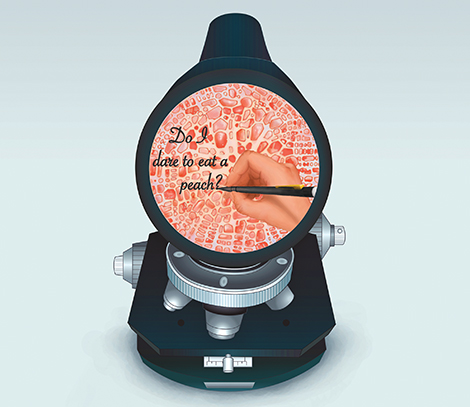
Take one of the most famous questions in modern poetry: “Do I dare to eat a peach?” The narrator of T.S. Eliot’s “The Love Song of J. Alfred Prufrock” isn’t simply pondering his choice of snack. This timid fellow is contemplating the loss of his youth and the inevitable decline of his vitality and questioning whether he is capable of expanding his ever-diminishing world. Similarly, when a biochemist asks whether a particular molecule interrupts a given signaling pathway, the impact of the answer may be as large as: “Can this drug stop the progression of cancer?” Both poetry and science embrace small questions to unlock grander concepts.

Su16-alumnistories-microscope-2Precision is another shared quality of poetry and science. Poetry is nothing if not economical; when writing poetry in forms as exacting as a sonnet or a villanelle, not a syllable can be wasted. Each word must be chosen carefully for qualities of sound and its meaning. Precision is equally essential to any scientific endeavor. Instruments must be used with meticulous care, quantities measured exactly, and actions performed and recorded in such a way that they can be perfectly duplicated. Without precision in the laboratory, science could not advance.

Once I completed my introductory science classes and began performing more advanced research, I became aware of another parallel between poetry and science less obvious to those people outside the laboratory: both disciplines require interpretation.

As early as middle school, students are taught that poems can be appreciated in multiple ways, and that the words and phrases comprising them can have layers of meaning. The language of a poem may be melodious and tell an interesting story, but there is often more to learn by digging a little deeper. Enjoyment of poems can be enhanced by knowing – or even investigating – a poet’s biography or a poem’s historical context. Efforts to identify the “Dark Lady” of Shakespeare’s sonnets has led to seemingly endless hours of debate, yet this investigation has also enriched our knowledge about – and deepened our appreciation of – these extraordinary poems.

Debate is also an important part of doing science, though this aspect is not something taught in most schools at an early stage. In primary and secondary schools, the main thrust of science education is learning facts. Even laboratory classes typically center around tried-and-true experiments where in which the aim is to achieve preordained results. However, this early education is merely intended to lay a foundation, as I found out when I embarked upon my own research career.

Professional researchers gather all the available knowledge on a topic and then interpret it to generate new hypotheses. Once tested, the new information yielded must then be interpreted again in order to evaluate the validity of the hypothesis. Facts are an indispensable part of science, but pursuing the meaning of these facts within the context of what is already known is what truly enables us to move science forward.

Neuroscience researchers have used poetry as a tool to explore how the brain processes language and sounds; the composition of poetry has also been studied in an attempt to discover the source of creativity itself. Conversely, thanks to their complex, often abstract use of words, poems about scientists and science reveal facets of their subjects that the straightforward language of essays and encyclopedias cannot do. Ultimately, it seems that science and poetry not only have a great deal in common, they also can serve to illuminate the best aspects of each other.