All posts by: UMBC News Staff


Thomas Schaller, Political Science, in Governing Magazine

In an article published last week, Governing Magazine explored participation in the Democratic Governors Association (DGA), Republican Governors Association (RGA) and National Governors Association (RGA), and how it is increasingly becoming a proving ground for governors seeking higher office.

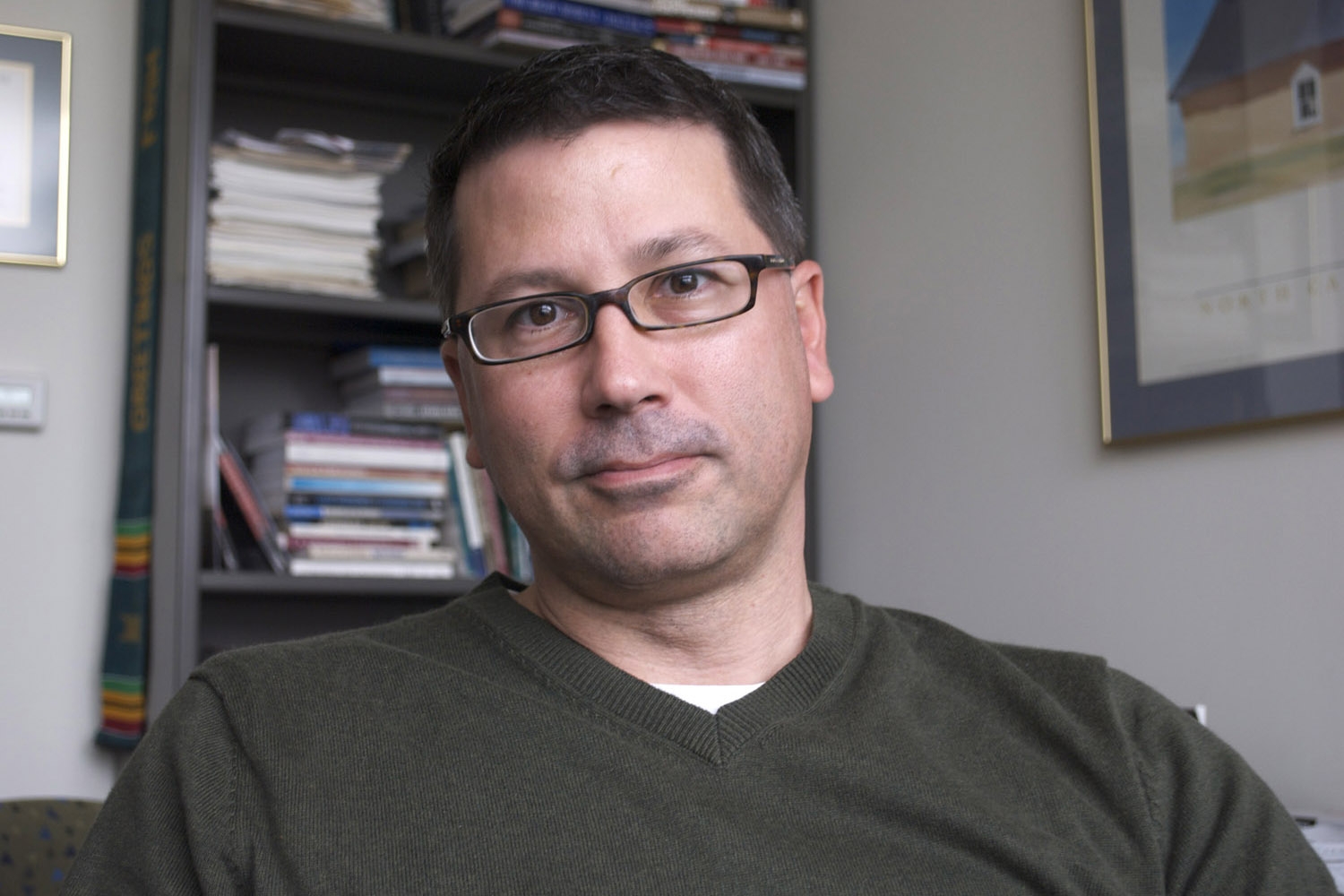
Tom Schaller

Political Science Professor Thomas Schaller is quoted in the article when describing Maryland Governor Martin O’Malley’s leadership role with the DGA. He says O’Malley “used the platform very well,” and “it gave him reason to take positions on national issues, especially inequality and poverty.”  

While leading a governors association can be a good platform to develop a policy portfolio and weigh in on key policy issues, Schaller says success “really depends upon what that chair does with the opportunity.”

You can read the full article in Governing Magazine here. 

Michele Osherow, English, in Folger Theatre Production Diary

Folger Theatre announced on its “Production Diary” blog last week that Richard III has been extended and will now run at the theatre through March 16. English Associate Professor Michele Osherow worked closely on the production of Richard III as dramaturg and sat down for an interview to discuss her role.

Michele Osherow

In a Q&A published on the Folger Theatre blog, Osherow notes the role of dramaturg can vary depending on the production. “In a general sense, the dramaturg is thought of as ‘the scholar in the rehearsal room,’” Osherow said. “The scholarship I’ll bring to a Folger project can range from literary criticism to historical information.”

Osherow further discussed her role as always focusing on what makes the play stronger by discussing concepts with the director, mastering the history of the play and providing materials to help artists involved in the production.

“Listening carefully and being open-minded is very important. At the same time, it’s my job, I think, to ask a lot of questions about choices and concepts, to interrogate how they serve the play,” she added.

You can read the full interview in Folger Theatre’s blog here.

We love our donors!

It’s Valentine’s Day, and love is in the air! For all of us here at UMBC, it’s a great day to tell you, our donors, how much we appreciate you and all that you do for UMBC.

When you give to the University, you make it possible for our students to get the highest quality education. You ensure that our faculty and staff have the resources to do amazing things. You invest in a place that strives for greatness. And though that investment means more to us than words can convey, we still want to say thank you. So we asked a few of our faculty and staff to say thank you to a donor who has made a difference to them:

“We’re so appreciative of the support that Ken Pittman ’80, economics, gives to our university. He is generous with his time through his service on our alumni board, and he and his family regularly contribute to several of our scholarship funds. His willingness to give back helps make UMBC a great place.”

~Stanyell Bruce, Director of Alumni Relations, UMBC

“We are so grateful for Next Century’s support of this software engineering course. Their gift helps students learn about the fundamentals of Software Engineering and the software development lifecycle. The students are getting a great opportunity to work with a ‘real-life’ application, developing a student alert system. Next Century personnel are acting as ‘customers’ for this project, which gives students valuable training in working with real customers. The students are also going to present their project in Next Century’s offices and will get an experience of actual office/industry setting.”

~Karuna Joshi, Research Assistant Professor, UMBC

“Through his work as a student caller with UMBC’s Phonathon, Jordan, class of 2014, has done exceptional work on behalf of UMBC and the Meyerhoff program. He has had hundreds of conversations with alumni and parents, helping to secure many gifts for the  LaMont Toliver Alumni Memorial Scholarship. This fall, Jordan himself made a contribution to the LaMont Toliver Alumni Memorial Scholarship. I was really impressed by his leadership as a student and donor. UMBC’s students often give back of their time and talent, but it’s more rare for students to part with their hard-earned paychecks. Jordan’s commitment to helping future generations of UMBC students excel was a really moving act that leaves a lasting legacy in Mr. Toliver’s name.”

~Dayna Carpenter, Director of Annual Giving

Check out UMBC’s Donor Roll, where we say thank you to everyone who has supported us each year.

Celebrating Retriever Love This Valentine’s Day!

retrieversinlove-2

In the spirit of Valentine’s Day, we’re sharing some pictures of Retrievers who fell in love at UMBC. After all, Retriever Love is a beautiful thing! View the Retriever Love photo album to check out individuals who have met and fallen in love at UMBC.

We also want to wish our alums a very happy Valentine’s Day! Thank you for showing UMBC your love as you support us throughout the year.

If you have your own Retriever Love story, we’d love to hear about it! Please email us your story and a few pictures of you and your special UMBC soul mate at retrievernet@umbc.edu.

Manil Suri, Mathematics, in The Wall Street Journal

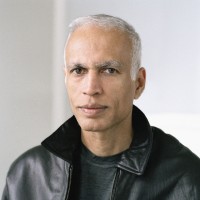
In an interview published February 8 in The Wall Street Journal, Manil Suri, mathematics professor and affiliate professor of Asian studies, commented on a recent Indian Supreme Court ruling that reinstates a 19th-century law criminalizing homosexual acts (Section 377), he commented on gay activism in India, and he described his personal experiences growing up in Mumbai, among other topics. Below is an excerpt from the interview in which Suri described how the gay community has changed over the last several years in Mumbai:

ManilSuriHeadShot

When I was growing up in the 1960s and 1970s, there was no community to speak of. Then, through the years, an underground movement slowly started to peek out—the private parties on the roof decks of suburban hotels, the upstairs bar at Gokul’s (in south Mumbai) which was unofficially colonized, the gay disco scene which became increasingly prominent. What’s most heartening to see is that the emphasis on sex is abating in favour of love—people are entering relationships, trying to create a vibrant gay culture.

You can read the full interview in The Wall Street Journal here.

Suri has also been presenting interdisciplinary talks at other campuses across the country. On Wednesday, February 12, he presented the Arcus Lecture at UC Berkley College of Environmental Design. The lecture examined the intersection of urban studies with diversity issues, particularly LGBTQ diversity and how such intersections are explored in his book, “The City of Devi.” More information can be found here.

On Thursday, March 6, Suri will be presenting the Director’s Visiting Scholar Lecture on math and fiction at Southern Methodist University’s Dedman College of Humanities and Sciences. More information on that event can be found here.

Stephen Freeland, INDS, in WIRED

Most scientist accept the RNA world hypothesis, which states that RNA was the first biological molecule due to its ability to copy itself and pass along genetic traits. However, Nicholas Hud, a chemist at the Georgia Institute of Technology, wasn’t convinced.

A recent article in WIRED, courtesy of Quanta Magazine, discusses Hud’s experiment with the building blocks of RNA. The experiment made a breakthrough with the discovery of a chemical recipe that points to the existence of a molecule that might pre-date RNA.

Quanta interviewed Stephen Freeland, director of UMBC’s interdiscipinary studies program, for the article. “In my opinion, nothing like this has been seen before,” Dr. Freeland said, before going on to say that the experiment leads to conceptual progress, even if it did not use the exact components of the unknown molecule.

Read the entire article at WIRED.com.

Remembering Aron Siegman, Professor Emeritus and Former Chair of the Department of Psychology

FROM: Christopher Murphy, Professor and Chair, Department of Psychology

Aron Siegman, Professor Emeritus of Psychology, passed away in late January. After earning his Ph.D. from Columbia University in 1957, Aron served on the faculty at Bar-Ilan University in Ramat-Gan Israel and then as a Research Associate and Research Professor of Medical Psychology at the University of Maryland School of Medicine.  Aron joined the faculty of UMBC in 1969, before Psychology was an official department.  From 1970 to 1978 he served as discipline coordinator and then Department Chair. Aron was instrumental in launching graduate programs in the Department, and in recruiting many outstanding colleagues to UMBC.  Aron retired in 2001 with his wife Sarah to their home in Beit Shemesh, Israel.

An ordained rabbi and Talmudic scholar, Aron was a highly productive contributor to Psychology. His research interests spanned broad areas of personality, clinical, and health psychology. Among his many early- and mid-career contributions include studies on perceptual defense, cultural aspects of personality, religion and psychodynamics, therapeutic interactions, verbal fluency, and paralinguistic features of communication, During the later years of his research career, Aron made important and sustained contributions to our understanding of the complex influences of anger, antagonism, and hostility on cardiovascular reactivity and coronary heart disease, as exemplified in the books “Anger, Hostility, and the Heart” (co-edited with Timothy Smith) and “In Search of Coronary Prone Behavior: Beyond Type A” (co-edited with Theodore Dembroski).

Colleagues and former students fondly remember lively discussions about history, politics, philosophy, religions, and literature; Aron’s remarkable ability to translate complex psychological concepts into testable scientific hypotheses; his tenacious dedication and advocacy of colleagues, students, the department, and the discipline; and his love and devotion to his wife Sarah, their three sons David, Jonathan, and Eli, and their many grandchildren.

Donald Norris, Public Policy, on WYPR

Maryland State Delegate Heather Mizeur is considered a long shot to win the Democratic nomination for governor. But in a story that aired on WYPR Wednesday, February 12, Mizeur said she’s confident given her strong army of volunteers despite running against two candidates with more name recognition and money.

Donald Norris UMBC

Public Policy Professor and Chair Donald Norris was interviewed for the story and commented on Mizeur’s prospects in the race. He said there is no chance she can win because her campaign doesn’t have the finances or statewide recognition to overcome Lt. Gov. Anthony Brown and Attorney General Douglas Gansler.

“It is impossible in that situation,” Norris said, “going  up against two well known, well-funded candidates for her to win unless both candidates are in a head on collision with each other and they both die.”

You can listen to the full story on WYPR here.

Joan Shin, Education, Receives Ben Warren International House Trust Prize

Education Professor of Practice Joan Shin has received the 2013 Ben Warren International House Trust Prize for her book Teaching Young Learners English (National Geographic Learning/Cengage Learning, 2013). Shin coauthored the book with JoAnn Crandall, Professor Emerita and former Director of the Language, Literacy and Culture Ph.D. program.

Teaching Young Learners English Joan Shin

The prestigious award is given annually to the author or authors of the most outstanding work in the field of language teacher education. The Ben Warren International House Trust was created as a memorial to the work and life of Ben Warren, who was a leader in developing the world’s leading language teaching organization.

Shin’s book was published last year. It teaches English as a foreign language to young children and presents practical suggestions and best practices for teachers to engage young learners.

The award was announced in Barcelona, Spain on Saturday, February 8. You can read more about the announcement here. You can also find more information on Shin’s book series with National Geographic Learning here.

We love our alumni!

We Love Our Donors_giving blog
It’s almost Valentine’s Day, and we want to take a moment to tell you, our UMBC alumni, how much we <3 you! You are a huge part of what makes UMBC such a great place, and we couldn't be happier to be here working for you. Since we weren't able to get a Valentine for each and every one of you, we thought we might show our love by reminding you of some of the great alumni perks you're eligible for: Awesome Discounts: We’re all trying to save a little money, so be sure to take advantage of the great discounts we’ve found for you on things like insurance, car rentals and tuition. Find out more.

Handy Campus Resources: Need a new book to read? Come visit the library. Want to get in shape? Stop by the RAC. Thinking about changing jobs? Check in with the Career Services Center. Those great campus resources you enjoyed as a student are still here for you when you need them. Get all the details.

Interesting Publications: There’s always something going on at UMBC, and we’re bringing you the news through our magazine, blogs and websites. Read on.

Jason Schiffman, Psychology, in The Daily Beast

An article published February 9 in The Daily Beast titled “What Military Base Shootings Reveal about the Mental Health Debate” examines if better mental health screening can prevent future tragedies from occurring.

Jason Schiffman

Psychology Associate Professor Jason Schiffman was interviewed for the story and is currently a staff member at Maryland’s Center for Excellence on Early Intervention for Serious Mental Illness. In the article, he argues early treatment for people experiencing symptoms of psychosis and schizophrenia can help prevent them from causing harm to themselves or others.

“Studies show one in 5 people in their early phases of psychosis will have a suicide attempt, which is a really high number,” Schiffman said. He is working with his team of researchers to identify young people with psychosis in order to help them get on a path towards leading a life they want to live.

“They may not have the full symptoms of psychosis, such as delusions, or beliefs held onto tenaciously despite evidence to the contrary. They may not be hearing voices or believe the FBI has planted a microchip in their tooth,” Schiffman explains. “But a lot of times people who eventually develop psychosis have anxiety symptoms early on. They suffer from distress that they can’t exactly explain.”

In the article, Schiffman also points to other countries such as Norway and Australia which dedicate money and resources to reducing stigma associated with mental illness.

“In Norway, mental health concerns are not considered something you have to hide or something that makes you a bad person,” said Schiffman. “In Australia, they approach young people from a community-oriented perspective. Mental health centers are kind of like YMCAs, where young people are playing pool, talking, not stigmatized into hiding who they are.”

You can read the full article in The Daily Beast here.

UMBC: Making a Mark

Making a Mark

A UMBC mathematician finds the right equation for biologists

Kathleen Hoffman, a professor of mathematics and statistics at UMBC, works in math biology, but she often felt that her biology colleagues didn’t really understand what she was doing.

“The work I did was very foundational in mathematics and it didn’t really help them design an experiment or impact their way of thinking,” Hoffman says. So after she got tenure, Hoffman did something most mathematicians wouldn’t think of doing: she took a sabbatical, got funding from the National Science Foundation and joined a biology lab.

“I called it an immersion program,” says Hoffman, “because what I wanted to do was like learning a new language, where you just go to the country and live there, and that’s what I did.”

Hoffman had done her homework. She knew she wanted to work with Avis Cohen, a professor of biology at the University of Maryland, College Park who researches lampreys – a kind of a jawless fish that sucks the blood out of other fish – and how they swim. Scientists study lamprey locomotion because these fish possess neurons similar to those that power human locomotion, but thousands and thousands of orders of magnitude fewer in number – and thus much easier to study.

Joining Cohen’s lab brought about a fundamental change in Hoffman’s research, introducing her to an interdisciplinary group of mathematicians, biologists, and engineers all working on lampreys. “We had the best meetings,” says Hoffman, “because we were such an interdisciplinary group and it was predominantly women, which is very unusual in mathematics.”

Hoffman’s task was to mathematically model neurons. “The model pushes you in the right direction experimentally,” she explains. In developing the equations for the model, however, Hoffman had to grapple with lamprey biology.

“You don’t know what you’re trying to model if you don’t understand the biology,” she says. “But I wouldn’t say I sit down and understand the biology and then start writing math. It’s a process. I understand a little bit of the biology, and then I do a little bit of the math, and then I go back.”

One colleague says that Hoffman’s work modeling work is critical for the biologists and other researchers on the team to understand locomotion and design their experiments. “The problem of locomotion is difficult to understand without mathematics,” says Tim Kiemel, a research assistant professor in the department kinesiology at the University of Maryland, College Park.

Hoffman eventually needs the power of computing to actually “do” the modeling. But before she dives into programming, she starts out using a pencil and paper to define the problem and pose the right questions.

“Sometimes you just have to sit there and stare at it,” Hoffman says. “Sometimes you have to do a lot of calculation, or sometimes you just have to let it stew.”

(02/07/14)