All posts by: Megan Hanks Mastrola


Ke He extends water safety research through UM School of Medicine postdoc fellowship

Ke He
Ph.D., Chemical, Biochemical and Environmental Engineering
Hometown: Taizhou, Zhejiang, China
Plans: Postdoctoral Fellowship, University of Maryland School of Medicine

As an international student, the diverse and friendly circumstances in UMBC really helped me to settle down in this completely new environment.

Over the six years that Ke He has been a Ph.D. student at UMBC, he has conducted research alongside many passionate peers and faculty who, like him, are committed to improving water safety.

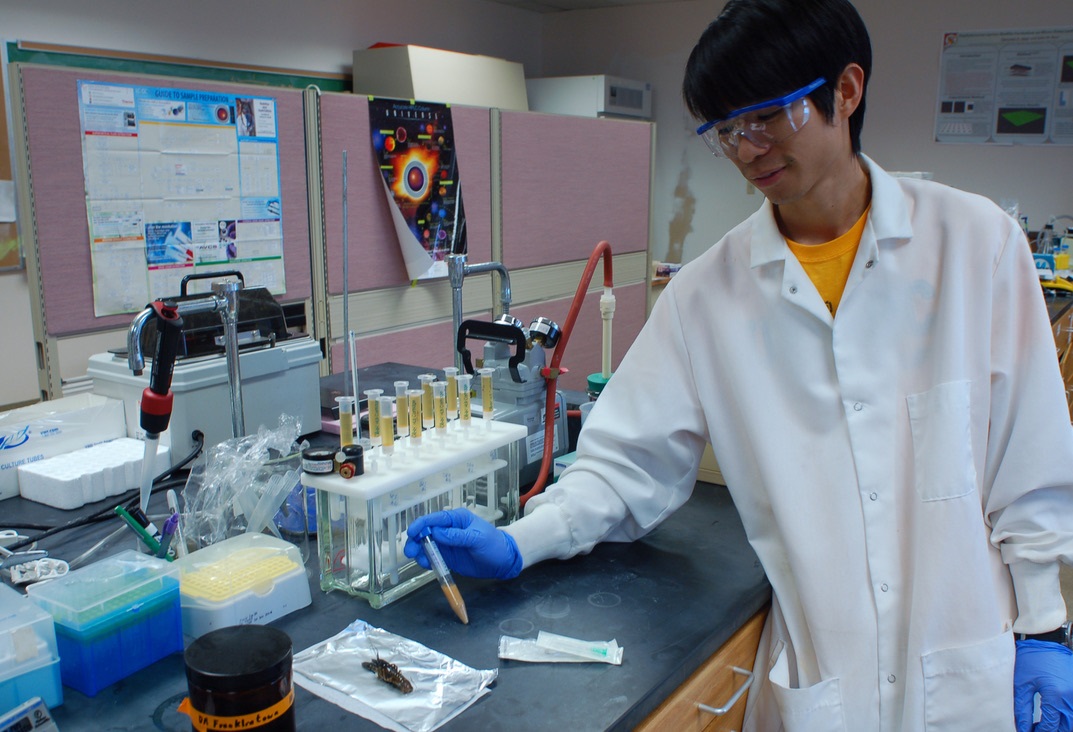
He explains that his faculty advisor Lee Blaney, associate professor of chemical, biochemical and environmental engineering, has had a profound impact on his research. He studied contaminants of emerging concern, such as antibiotics, hormones, and UV-filters, and their effects on the environment. To understand how these substances impact human and ecological health, He examined crayfish collected from a watershed in Baltimore.

The work that He conducted has been featured in media outlets, including an article in The Conversation (republished by CBS News) about commonly-used personal care products that have been found to impact water sources. He traveled to Hawaii to do research, and this work will likely play a role in regulating sunscreens that have been shown to harm coral reefs.

For three years, He served as a senator in the Graduate Student Association (GSA) at UMBC. The GSA recognized He’s distinguished service to the organization by presenting  him with the 2016 Outstanding Senator Award. He also was the chair of the Chinese Student and Scholar Association at UMBC, and served on the Chemical, Biochemical and Environmental Engineering Graduate Student Association’s executive board.

He has received notable awards supporting and recognizing research papers delivered at academic conferences across the United States. In 2017, He received a Travel Award from the National Environmental Monitoring Conference, in recognition of his distinguished presentation. The American Chemical Society’s (ACS) Division of Environmental Chemistry awarded He a Certificate of Merit Award in 2016, a Best Poster Award in 2014, and a Certificate of Merit Award in 2014.

While He has contributed significantly to the university, GSA, and his field in his six years at UMBC, he shares that he is also grateful for the support he has received from the UMBC community in that time, saying, “The research and travel grant from Graduate Student Association and the support from Graduate School for parental leave offered me more opportunities and balanced my life and doing research.” He plans to continue research in environmental engineering through a postdoctoral fellowship at the University of Maryland School of Medicine.

Portrait by Marlayna Demond ‘11 for UMBC.

Kourtney Rutkowski pursues a unique international path in mechanical engineering

Kourtney Rutkowski
B.S., Mechanical Engineering
Minor: Psychology
Cum Laude
Hometown: Bel Air, Maryland
Plans: M.S., mechanical engineering, UMBC

UMBC has also helped to grow my leadership skills, my confidence, and has opened my mind in so many ways.

Kourtney Rutkowski enjoys being the first, particularly when it comes to unique learning experiences. As an engineer with an interest in cross-cultural exchange, she was UMBC’s first student to participate in a semester-long study abroad at the University of Porto in Portugal, and one of the two first students to participate in a winter study abroad at the University of Kassel in Germany, after UMBC initiated research and education partnerships with both institutions.

Home at UMBC, Rutkowski has participated in the Grand Challenge Scholars Program and Center for Women in Technology (CWIT) Scholars Program. She is a member of the Honors College and Tau Beta Pi, the honors society for engineering. She has held leadership positions on the CWIT student council, in Tau Beta Pi, and as a UMBC Eco-Ambassador, and she currently serves as the inaugural student president for the Grand Challenge Scholars Program Student Organization. Additionally, she has worked as a teaching fellow for multiple courses, most recently as a lead teaching fellow for statics.

Rutkowski shares that mentors across campus have provided her with valuable guidance related to research, career options, and pursuing opportunities abroad. She worked most closely with Anne Spence, former professor of practice at UMBC; Jamie Gurganus, associate director for engineering education initiatives; Marc Zupan, associate professor of mechanical engineering; and Neil Rothman, professor of practice in mechanical engineering.

As a student in the integrated B.S./M.S. mechanical engineering program, Rutkowski will remain at UMBC after graduation to complete her graduate degree, before moving on to opportunities in industry and, perhaps, a Ph.D. and mechanical engineering teaching career of her own.

Portrait by Marlayna Demond ’11 for UMBC.

Adrian Davey to research renewable energy and photo-electrochemical synthesis in UC Berkeley Ph.D. program

Adrian Davey
B.S., Chemical Engineering
Magna Cum Laude
Hometown: Frederick, Maryland
Plans: Ph.D., University of California, Berkeley

This institution cultivated my scientific passion and inspired me to poise myself as a rising engineer committed to championing diversity in STEM and adding research-oriented novelty to chemical engineering.

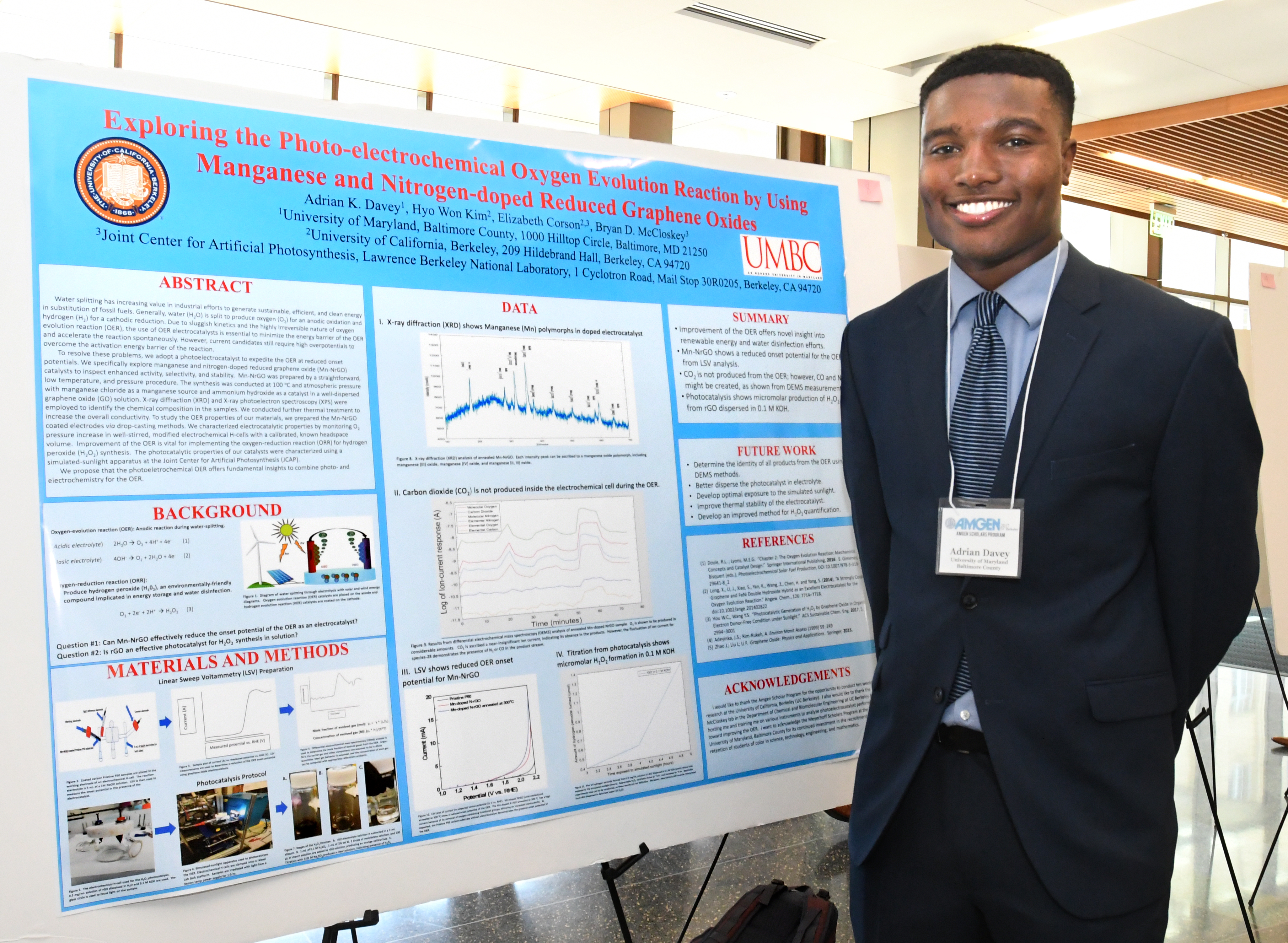
As a Meyerhoff Scholar at UMBC, Adrian Davey has been committed to training as a researcher, and incorporating service into his studies, from day one. He pursued research at the University of Texas at Austin as a Howard Hughes Medical Institute Exceptional Research Opportunities Scholar, and at UC Berkeley as an Amgen Scholar, in addition to his research in the lab of Chris Hennigan, assistant professor of chemical, biochemical, and environmental engineering, at UMBC.

Recognizing his academic and research strengths, Davey was invited to be a part of the Phi Kappa Phi Honor Society, UMBC’s all-discipline honor society, and was named a scholar of the American Chemical Society. He also earned third place in the Technical Research Exhibition at the National Society of Black Engineers (NSBE) Fall Regional Conference in 2017 and is a member of Tau Beta Pi, UMBC’s engineering honors society.

Outside of the lab, Davey has pursued leadership opportunities and mentored high school students through student organizations both on campus and in the local community. He served as president of the UMBC chapter of the NSBE and worked with students at Mount Hebron High School through an SAT preparation and mentorship program.

After graduation, Davey will begin a Ph.D. program in chemical engineering as a Chancellor’s Fellow at UC Berkeley. He will continue to research how to improve oxygen-reduction reactions for more efficient and clean hydrogen peroxide formation. A possible application of this work could support more efficient water decontamination.

Portrait by Marlayna Demond ’11 for UMBC.

Priyanka Ranade heads to career as a cyber software engineer at Northrop Grumman

Priyanka Ranade
B.S., Information Systems
Cum Laude
Hometown: Silver Spring, Maryland
Plans: Cyber Software Engineer, Northrop Grumman Corporation

As a woman minority in technology, I got to immerse myself in a community full of advocates who helped me see the potential I didn’t always see in myself. I learned that as long as a student is willing to work hard and has that drive to take their passion to unimaginable heights, the opportunities will be endless at UMBC.

Priyanka Ranade refers to joining the Cyber Scholars Program, through the Center for Women in Technology (CWIT), as the “greatest turning point in my undergraduate career.” The support and guidance Ranade received as a Cyber Scholar helped her excel in the classroom and as a researcher, and encouraged her growing fascination with cybersecurity issues.

“UMBC has continuously given to me as long as I worked hard,” Ranade said, who recently received the Student Leadership Award for Information Systems. “‘Working hard’ is built into the faculty and student body and it spreads to everyone who steps foot onto this campus. I know that I will always carry the UMBC grit with me with any opportunity I take in the future.”

As a student in UMBC’s accelerated B.S./M.S. program in information systems, Ranade conducted research alongside Anupam Joshi, chair and professor of computer science and electrical engineering. In Joshi’s lab, she studied how advanced computing techniques can be used to more accurately identify cyber threats. She is particularly interested in an aspect of cybersecurity called multilingual representation, which utilizes natural language processing to understand cyber threats in a range of natural languages. She recently presented on this research at URCAD 2018.

Beyond her UMBC research, Ranade worked as a cyber strategy intern at Northrop Grumman in 2017, where she received mentorship from several UMBC alumni. This led to a full-time job offer, which she will begin after graduation.

Looking back at her time at UMBC, Ranade reflects that the UMBC community matched high expectations with strong support, and that combination was invaluable to her. “From an academic standpoint, my passion for cybersecurity grew stronger through all of the interactions I have made with faculty and the technical student body,” she says. “Working to reach my goals became second nature to me when I realized I had help everywhere I looked.”

Portrait by Marlayna Demond ’11 for UMBC.

Soheila Escobar works to connect young people in the U.S. and Colombia with life-changing opportunities

Soheila Escobar
B.S., Information Systems
Cum Laude
Hometown: Riohacha, La Guajira, Colombia
Plans: Business and systems analysis career

I really appreciate the diversity that I have found at UMBC and the support for culture and respect among the students. I have learned that there are more people like me, who have left their countries to pursue a better future for themselves, their community, and their families.

Soheila Escobar came to UMBC with some uncertainties about completing her undergraduate education in English at a U.S. university, but her experiences with the UMBC community quickly confirmed her hopes for her college years. “UMBC has helped me in achieving my goals by promoting a very diverse environment where I do not feel excluded, and I, more than anything, feel welcome,” Escobar says. “I have taken classes with professors from different cultural backgrounds, professors whose first language is not English, and I have felt very supported and encouraged by them to continue the challenge of finishing my education in a second language.”

Escobar has thrived at UMBC, particularly through collaborative research opportunities. Earlier this semester, she presented Tutor On Campus during Undergraduate Research and Creative Achievement Day. The web platform she created with classmates encourages students to help each other succeed by enabling peer connections based on specific courses or disciplines, and providing relevant support resources.

Escobar is passionate about developing educational and career opportunities for young people in her community of indigenous Wayuu people in Colombia. “I have also had the opportunity to take a leadership position within my community in Colombia, where I am working to help young women see that they can rise above their cultural expectations by studying and starting a career in their field of interest,” she explains. “It is a leadership position that I plan to continue and one that I hope will connect my family on a greater scale to the global community, so that they can experience other cultures and share with the world the good things that our culture has to offer.”

Upon graduation, Escobar will apply her business and technical skills to a career in business and systems analysis. She will also pursue a master’s degree in information systems, with the goal of helping people in underserved communities connect with new opportunities through technology.

Portrait by Marlayna Demond ’11 for UMBC.

Bryan Vanek, president of national champion Cyber Dawgs team, heads to computer security career

Bryan Vanek
B.S., Computer Science
Minor: Mathematics
Cum Laude
Hometown: Frederick, Maryland
Plans: Computer Network Operations Development Program, U.S. Department of Defense

If it weren’t for the incredible mentors, teachers, and students at this school, I would not be the security researcher and professional that I am today.

When Bryan Vanek transferred to UMBC from Frederick Community College, he focused on building connections with classmates and professors, which proved incredibly valuable as he developed a passion for computer science and cybersecurity, and sought out new opportunities to grow.

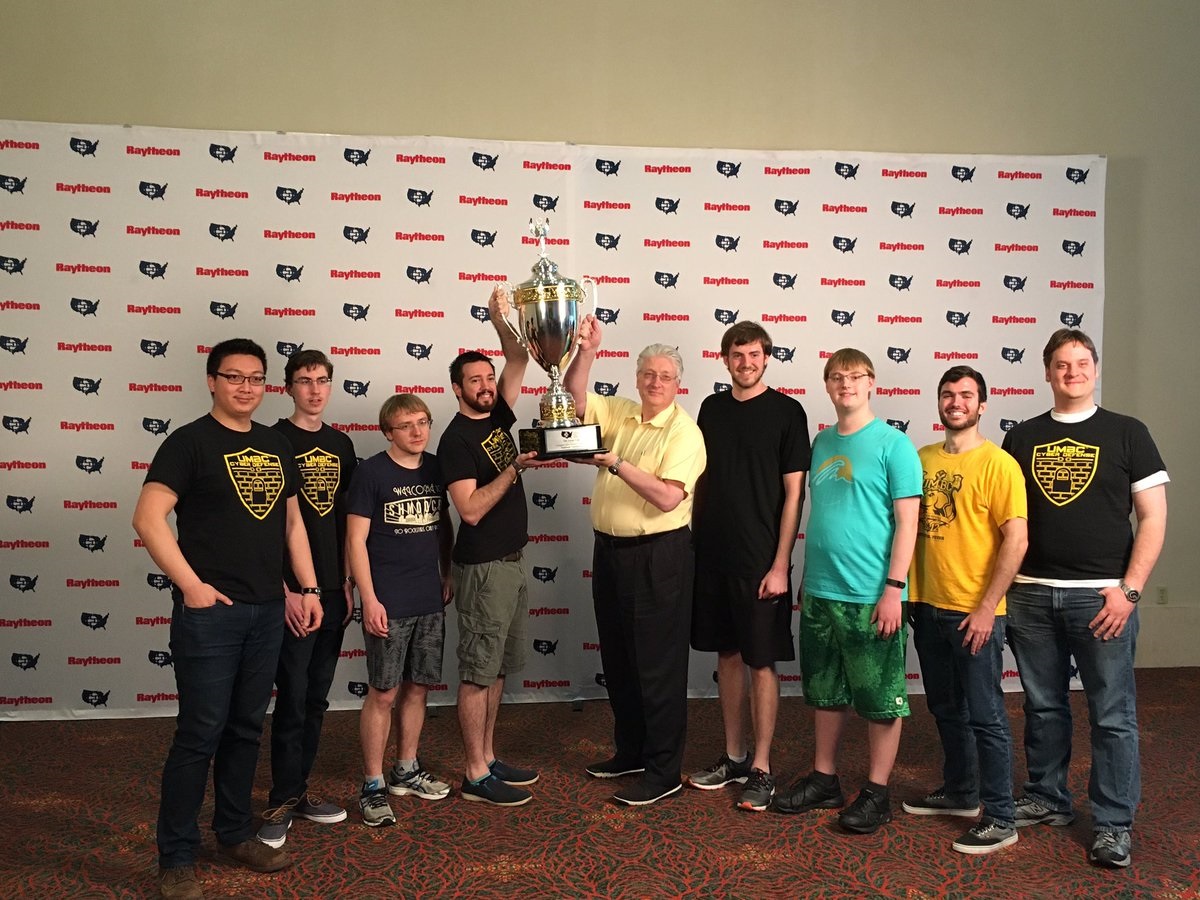
Vanek became president of UMBC’s Cyber Dawgs team, which took first place at the 2017 National Collegiate Cyber Defense Competition. Following that major victory, he has continued to serve as Cyber Dawgs president, while also participating in other cybersecurity competitions, including the Wargames capture the flag event at the international DEFCON conference, where he placed 42nd overall.

The Center for Women in Technology provided mentorship and support to Vanek, who is a Transfer Scholar in Information Technology and Engineering (T-SITE) Scholar. He says that the Cyber Dawgs team and CWIT program have helped him to develop skills necessary for success in a computer science career. Vanek gives back by serving as a mentor in cybersecurity at Exerceo, a nonprofit which provides skill development opportunities to high school students, college students, and young adults.

Vanek also completed two internships at the U.S. Department of Defense (DoD) while at UMBC. These positions led to an exciting job offer for him, as a member of the Computer Network Operations Development Program at the DoD. Vanek credits “professors that continually showed a vested and fervent interest in my success” and UMBC’s connections with a robust networks of employers with empowering him to plan and pursue a cybersecurity career.

Portrait by Marlayna Demond ’11 for UMBC.

SGA President Joshua Massey prepares for a technology-focused teaching career

Joshua Massey
B.S., Computer Engineering
Hometown: Upper Marlboro, Maryland
Plans: Master’s in teaching, UMBC

UMBC’s values and commitments to diversity, education, and social justice allowed me to grow into the interdisciplinary thinker, problem-solver, and leader I am today.

Joshua Massey, president of UMBC’s Student Government Association (SGA), has been recognized across campus and by university partners for his leadership, his enthusiasm for community connections, and his passion for technology in education. 

Massey was one of the first recipients of the Northrop Grumman Scholarship for increasing the number of undergraduate and graduate students in the United States pursuing degrees in computer engineering and electrical engineering. Through the program, Massey had the opportunity to connect with industry leaders and attend mentoring events. Massey is a member of the Meyerhoff Scholars Program, and also received the Meyerhoff National Security Administration Scholarship, which enabled him to connect with industry mentors regularly and to participate in monthly seminars.

In addition to receiving mentorship from faculty and professionals in technical fields, Massey also provided support to others as a peer mentor and a teaching fellow for a course in computational thinking and design.

On campus, Massey is known for his enthusiasm for the UMBC community. He served as a “Woolie”—a Welcome Week student leaderin addition to serving as SGA senator and chief of staff, before being elected SGA president.

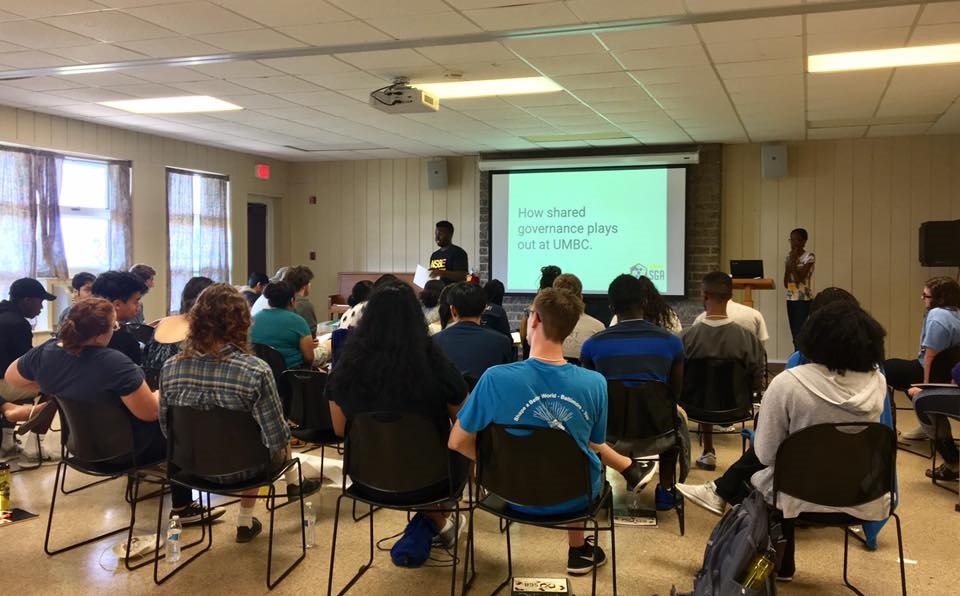
One of Massey’s most memorable SGA moments was the 2017 SGA summer retreat, which he attended as incoming president. “At our annual summer retreat, new and returning students involved in SGA learn about the history and values of UMBC and the SGA, work cooperatively on plans for an upcoming year of campus change, and build relationships with one another as we continually create the story of SGA at UMBC,” Massey explains. He enjoyed facilitating sessions on the important role of students in UMBC governance.

Massey will continue on at UMBC after graduation, pursuing a master’s degree in teaching, with a focus on educating students in tech fields. “Looking forward to a future career in education and advocacy, I am reminded of the strong sense of community and shared ownership that is present at UMBC,” he says. “I look forward to carrying that forward in life.”

Portrait by Marlayna Demond ‘11 for UMBC.

CWIT Scholar Katherine Dillon heads to Google as a software engineer

Katherine Dillon
B.S., Computer Science
Magna Cum Laude
Hometown: Ellicott City, Maryland
Plans: Software Engineer, Google; M.S., computer science, UMBC

The CWIT program has prepared me to be a professional and take on leadership roles, and ultimately helped me get my jobs and internships. The friends I’ve made in CWIT served as such a great support system, and I couldn’t have done it without them.

Katherine Dillon came to UMBC with interest, but not much experience, in computer science, but through the Center for Women in Technology (CWIT) was able to rapidly grow her knowledge of the field. Before long, she was conducting computer science research, taking graduate-level courses in artificial intelligence and machine learning, serving as a teaching assistant in computer science and interactive media, and volunteering through outreach opportunities, to inspire and support future computing students.

Dillon says the support she received from the faculty and staff at UMBC, particularly in CWIT and the Honors College, has been instrumental in enabling her to achieve her goals and continuously set the bar higher for what she would achieve next. Dillon conducted data visualization research under Penny Rheingans, professor of computer science and director of CWIT, and attended the Grace Hopper Celebration of Women in Computing as an Anita Borg Scholar. After the Grace Hopper Celebration, Dillon was offered an internship opportunity at Google in Boston. The following summer she completed another Google internship, this time in Germany.

After graduation, Dillon will work as a software engineer at Google in San Francisco, while also completing her master’s degree in computer science online through UMBC.

Portrait by Marlayna Demond ’11 for UMBC.

IBM-UMBC Day focuses on research collaboration in advanced computing

UMBC welcomed 50 IBM executives and research leaders to campus on Friday, April 6, for a day-long event designed to broaden the robust research relationship between the two organizations and introduce students to emerging career opportunities at IBM. Nearly 250 faculty, staff, students, and partners participated in IBM-UMBC Day.

UMBC’s work with IBM began nearly 25 years ago and has branched across a wide range of topics. The university’s most recent research collaboration with IBM connects artificial intelligence with cybersecurity, explained Keith J. Bowman, dean of UMBC’s College of Engineering and Information Technology. Two new areas of likely future collaboration include quantum computing and blockchain.
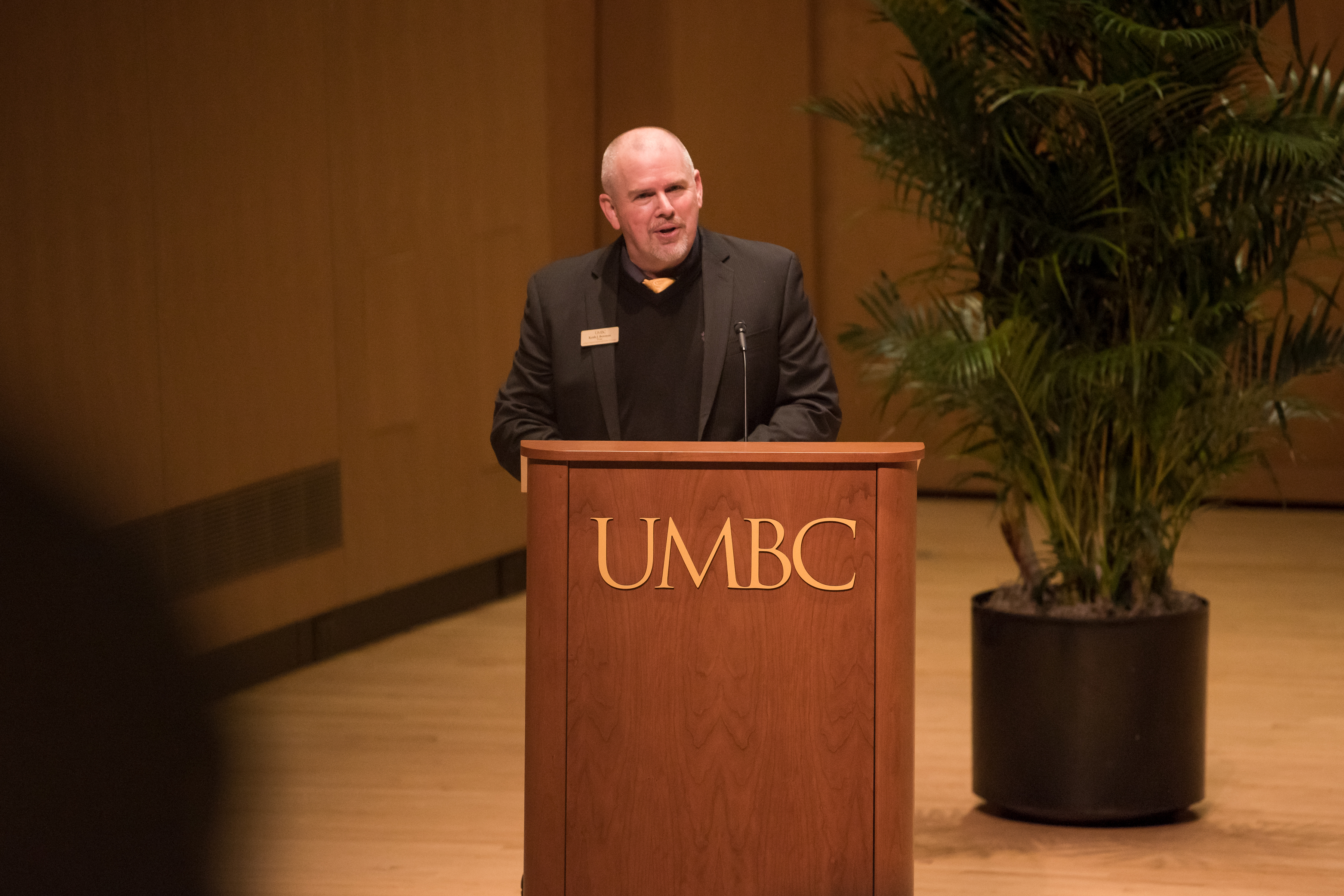
Dave McQueeney, vice president of Corporate Technology and Community and Global University Programs at IBM (and UMBC’s executive champion), gave welcoming remarks for the company. Bowman introduced Anupam Joshi, chair and professor of computer science and electrical engineering (CSEE) at UMBC, who has completed two sabbaticals at IBM. He also welcomed Yelena Yesha, distinguished professor of CSEE, and Andy Rindos, head of IBM’s RTP Center for Advanced Studies, who were instrumental in organizing IBM-UMBC Day. The welcoming speakers set the tone for the event, highlighting a shared commitment to combining diverse perspectives to explore cutting edge research areas in new and exciting ways.

Michelle Browdy, IBM’s senior vice president for legal and regulatory affairs, and general counsel, delivered the keynote talk about the intersection of law, technology, and public policy. “It takes a village,” she said, noting that this phrase is especially important in the science and technology space, where collaboration is crucial.
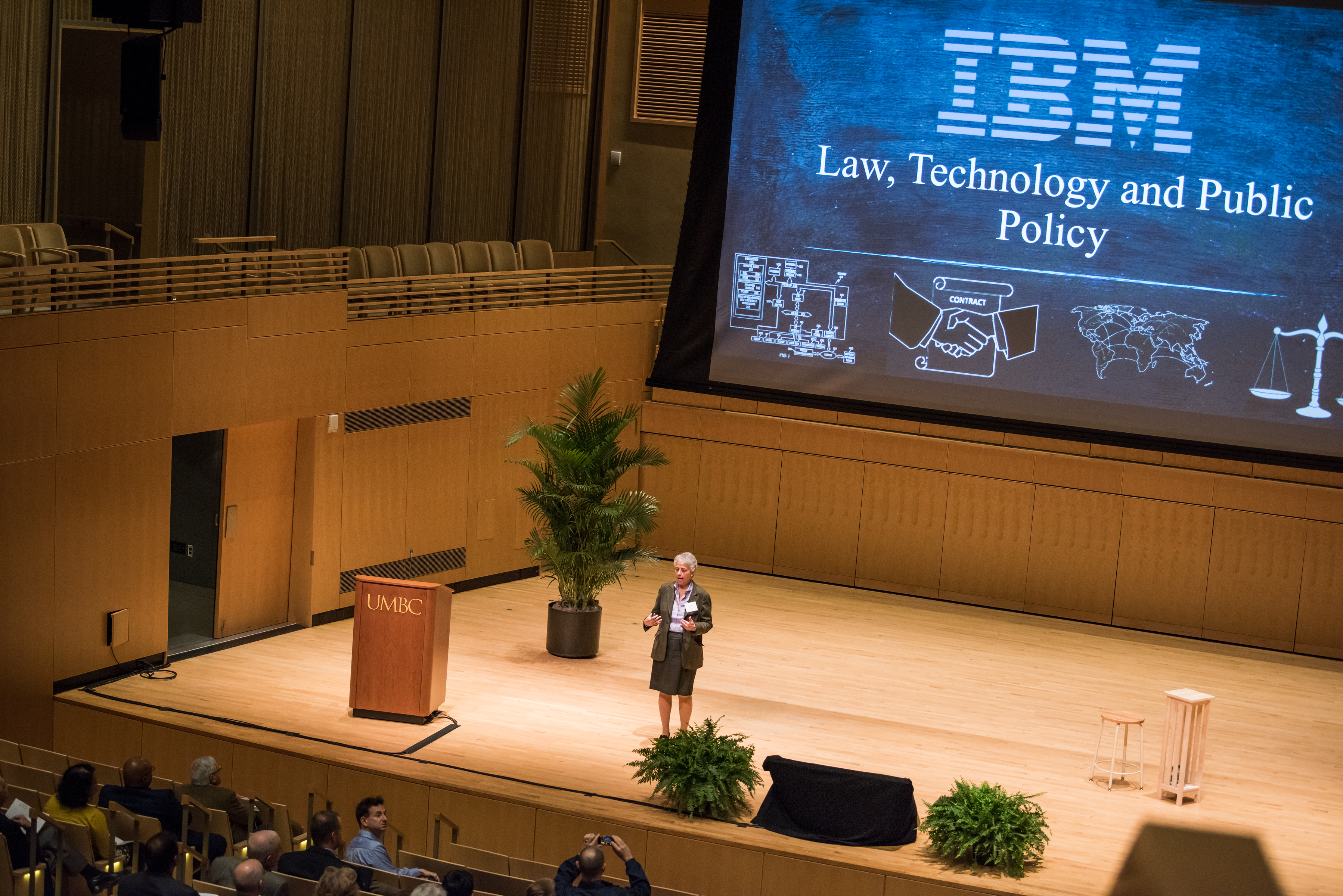
Browdy emphasized that her legal team regularly works with business teams and engineers, particularly when technologies are being moved from the lab to the public. She shared how she sees engineers as developing products for people to use and enjoy, and her legal team as an essential complement, managing everything from patents to ensuring compliance with regulations.

Following the keynote, technical experts from UMBC and IBM gave brief talks on areas such as quantum computing, cybersecurity, artificial intelligence, cloud computing, the internet of things, and blockchain. UMBC professors Todd Pittman, physics, and Sam Lomonaco, CSEE, joined Andrew Wack, Q platform architect at IBM, in the first technical talk of the day, discussing recent developments in quantum computing and how the field is impacting other industries.
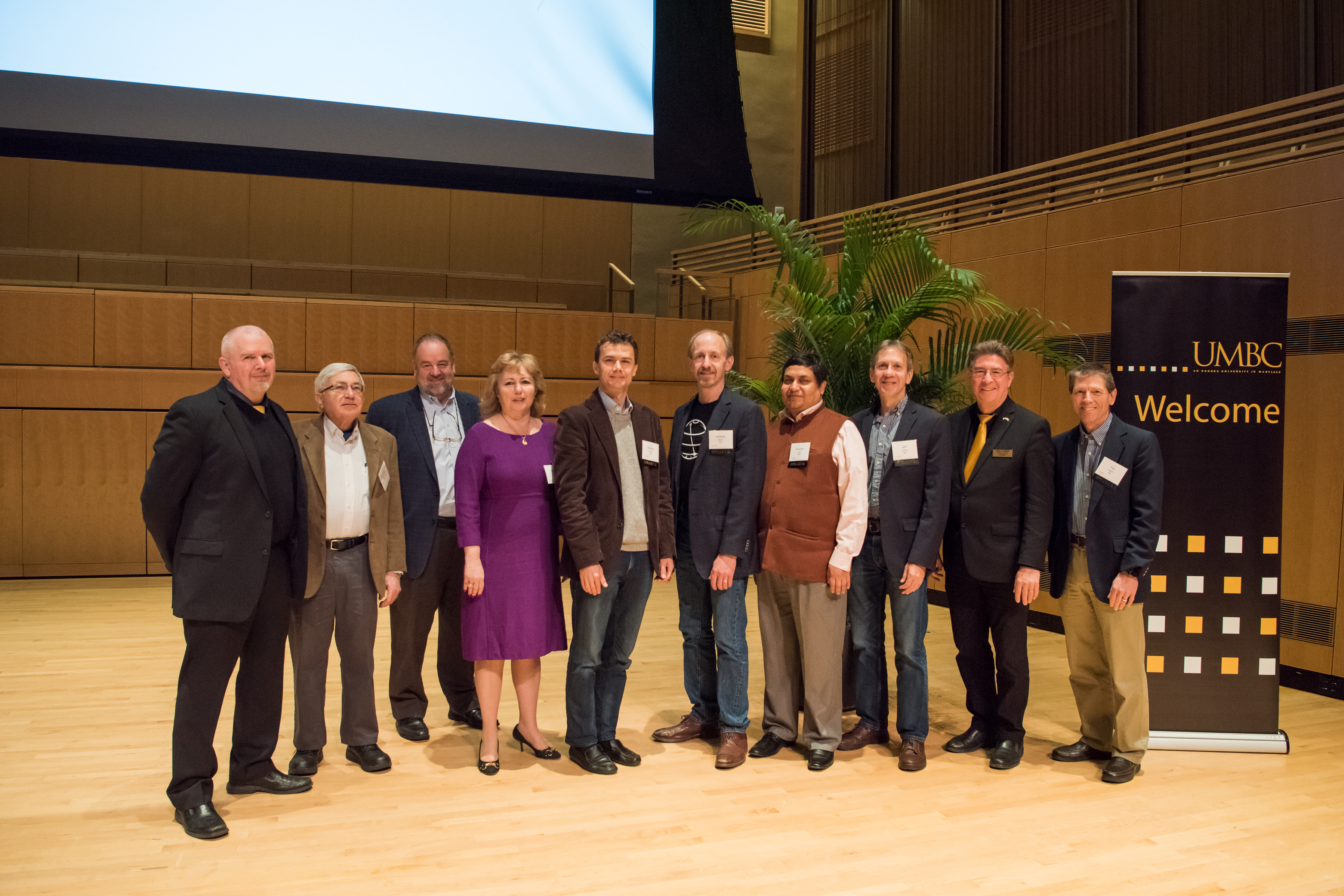
Next, Jeff Crume, distinguished engineer at IBM, and Joshi explored how institutions are making strides in addressing the kinds of cybersecurity concerns that are now making headlines worldwide. Joshi discussed his lab’s work connecting artificial intelligence and cybersecurity, and he also described how combining the expertise of people from different fields is essential to creating effective and lasting solutions to cybersecurity challenges. Speaking in the realm of cyber attack prevention and response, he commented, “We have economists on our faculty who are looking at what the attack costs…and we have public policy colleagues who look at the barriers of adoption of cybersecurity.”

Also highlighted in Crume and Joshi’s talk was the Accelerated Cognitive Cybersecurity Lab, which opened in 2016 as a collaboration between UMBC and IBM. The lab is one of many ways in which UMBC and IBM are continuing to grow their partnership, breaking ground in new research areas by combining the creativity and expertise of UMBC faculty and students with the extraordinary technical capabilities of IBM, and together preparing the next generation of computing professionals.

After a lunch break featuring technical demos, networking opportunities, and student research presentations, participants regrouped for a discussion about the Watson computer system and cloud computing. Presenters included Mac Devine, vice president of IBM Watson and Cloud Platform; Tim Finin, professor of CSEE, an expert on cloud computing; and Yesha, who has worked with IBM on computing research since the 1990s. Yesha is director of the new Center for Accelerated Real Time Analytics, a $3 million NSF partnership. She described how the center will deploy next-generation computing hardware to solve significant infrastructure challenges, such as protecting massive data sets in the cloud.
Nilanjan Banerjee, associate professor of CSEE, next discussed the internet of things and cyber-physical systems, specifically his lab’s work on small sensors. His team’s sensors can be used to monitor whether people operating vehicles are drowsy, and can be used by people with mobility challenges to control devices in their environment. Tim Hahn, distinguished engineer and chief architect of internet of things security at IBM, shared how his team is addressing security issues associated with now-ubiquitous cyber-physical technologies.

Roman Vaculin, IBM research, concluded the technical talks with a discussion of how IBM is developing blockchain solutions that can be used across industries.

Throughout the day, speakers returned time and again to a core idea emphasized at the start of the day: that bringing together different perspectives is key to success in creating new technologies with the potential to change people’s lives. “We need lawyers and we need engineers,” said Browdy, in her keynote address. “We are shaped and we get opportunities to grow by being exposed to people in a lot of different areas.”

Video recordings from IBM-UMBC Day can be found on the UMBC YouTube channel.

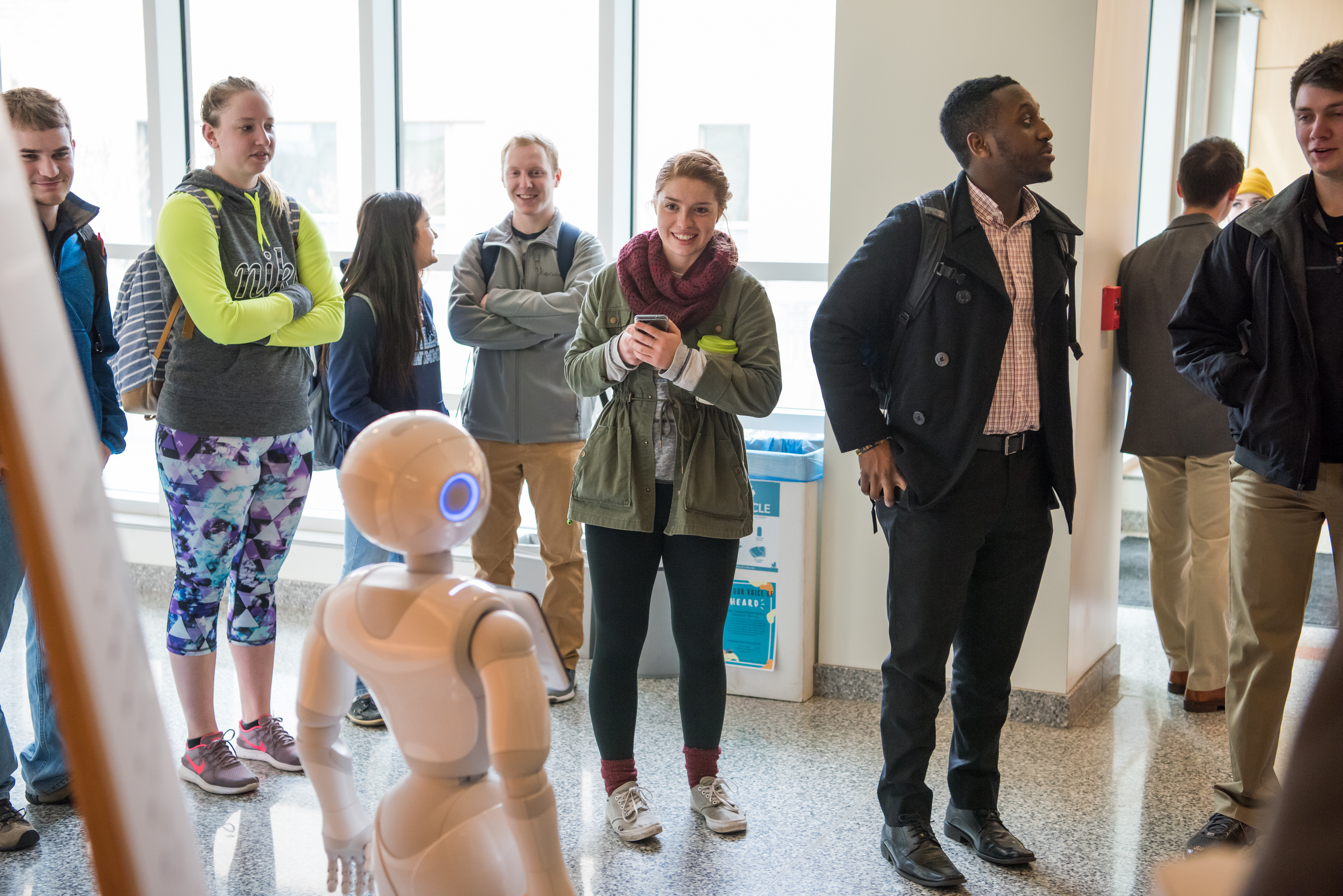
Featured image: A student poses with Pepper, a humanoid robot, at IBM-UMBC Day. All photos by Marlayna Demond ’11 for UMBC.

UMBC researchers launch cybersecurity start-up with TEDCO support

UMBC’s George Karabatis, associate professor of information systems, and Ahmed AlEroud M.S. ‘12, information systems, Ph.D. ‘14, information systems, recently launched the cybersecurity startup Cyves through $150,000 in grant funding from TEDCO, an organization create by the Maryland State Legislature to support tech entrepreneurship, and an investment from InnovativeTech Ventures, led by Gerard Eldering.

With the launch of the company, Karabatis and AlEroud enter phase three of TEDCO’s tech commercialization process, after completing robust market analysis and business planning to ensure a solid launch (in part through AlEroud’s dissertation research). Phase three will focus on commercializing the research, hiring officers and employees to run the company, and refining the technology behind Cyves’s cybersecurity product.

“This work is important because it reveals a new way of identifying incoming cyber attacks and actually stopping them, based on intrinsic features of the attacks and how these features correlate with each other,” says Karabatis. “In addition, this research is capable of identifying not only well-known attacks, but most importantly unknown attacks that have not been identified yet.”

Karabatis explains that the Cyves technology detects cyber attacks by analyzing characteristics of these intrusions at a high level, and comparing them with incoming traffic. By relying on semantic and contextual information, the Cyves technology is able to analyze existing attacks and behaviors and extrapolate findings that can be used to identify patterns and flag future attacks quickly after they occur. This approach to detecting cyber attacks not only identifies possible intrusions, but also reduces the number of false alarms that are raised.

In testing, Karabatis says, the technology accurately identified not only known cyber attacks, but also 90% of unknown (0-day) attacks that previously would have likely gone unnoticed. Identifying such attacks can play a significant role in protecting sensitive information like social security numbers, credit card numbers, and birthdates, stored in vulnerable databases.

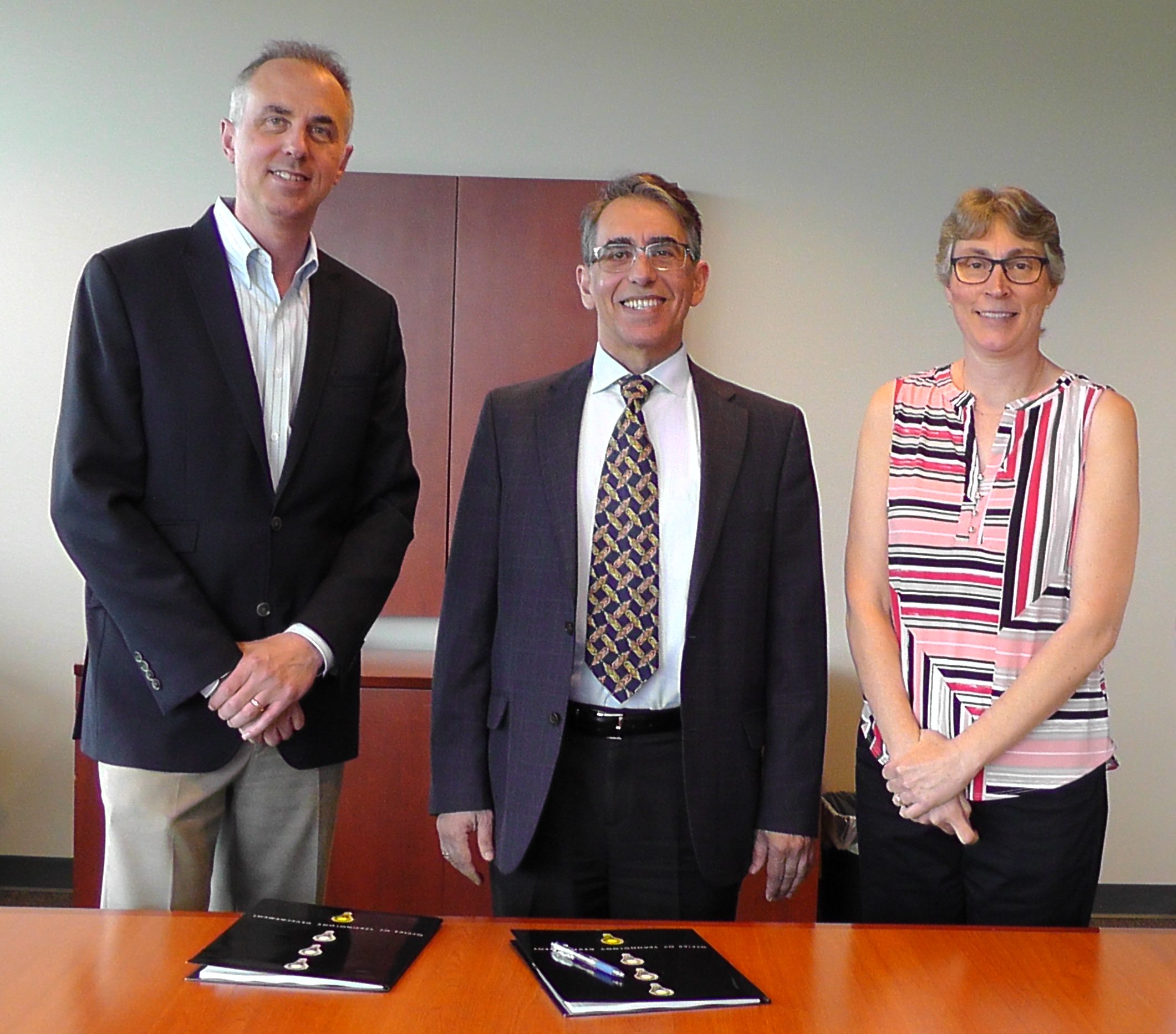
“Technology transfer is just one piece of the continuum of support that is needed to advance new concepts developed by our researchers. Investment in research projects that have commercial potential, assistance in obtaining state proof-of-concept funding, and access to business incubation and mentoring all play a part,” says Wendy Martin, director of the office technology development. “We encourage entrepreneurial researchers, like George Karabatis, to start their own companies, so they can continue their involvement in bringing their innovations to the marketplace.”

Image: The Information and Technology Engineering building. Photo by Marlayna Demond ’11 for UMBC.
UMBC launches Center for Accelerated Real Time Analytics to tackle data-intensive challenges from disease tracking to online privacy

The National Science Foundation (NSF) has selected UMBC to lead a new $3 million research partnership that will deploy next-generation computing hardware to solve major infrastructure challenges. UMBC will launch the Center for Accelerated Real Time Analytics (CARTA) through a five-year grant from the NSF Industry-University Cooperative Research Centers (IUCRC) program, receiving $150,000 in support for each of the next five years. The remaining funds will support collaborative research with partner institutions North Carolina State University; Rutgers University, Newark; and Rutgers University, New Brunswick; and Tel Aviv University. Two affiliated sites at University of California, San Diego, and University of Utah will also participate in the collaboration.

IUCRCs are long-term partnerships among universities, corporations, and government agencies that leverage an initial investment from NSF to catalyze primary support from the public and private sectors. CARTA anticipates the current NSF support will lead to additional public and private sector research funding through agency and industry partners.

Through CARTA, UMBC faculty and students will work on projects tackling concerns of national and global significance. One of the initial projects will integrate massive and diverse data setsfrom peer-reviewed publications to live meteorological data to social media poststo better track the origin and spread of highly infectious diseases worldwide. Another project will focus on cloud data privacy and protection, developing policy-based, semantically-rich approaches that can better ensure that approved users can safely access the data they need, including effectively tracking the provenance of data.

Yelena Yesha, distinguished professor of computer science and electrical engineering, will serve as CARTA director and is the principal investigator on the grant. Yesha will work with UMBC faculty, including Karuna Pande Joshi, assistant professor of information systems, who will serve as the UMBC site director, and Milton Halem, research professor of computer science and electrical engineering, as well as the site directors at the affiliated CARTA institutions.

CARTA will build upon the success of UMBC’s Center for Hybrid Multicore Productivity Research (CHMPR), which was originally established in 2009 to address productivity, performance, and scalability issues in the development of advanced computing technologies applied to concerns of national significance, from genomics to climate change. The new center will expand the scope of the research conducted, while continuing the IUCRC’s mission to grow strong partnerships among academic institutions and corporations.

“CARTA will usher in the era of accelerated real-time analytics by effectively utilizing innovative technologies such as cognitive computing, machine learning, and quantum computing to address our nation’s global competitive challenges in health security, disaster mitigation, and the emerging artificial intelligence revolution,” Yesha explains.

“CARTA brings the talents of students and faculty from seven institutions into a partnership with industry and government agencies that will enable realization of smarter smart systems and more responsive information technologies,” says Keith J. Bowman, dean of UMBC’s College of Engineering and Information Technology. Explaining that this work has the potential to have a dramatic impact, he notes, “Decreasing the barriers to accelerated real-time analytics will foster greater adoption and performance for new data-intensive technologies.”

Photo by Marlayna Demond ’11 for UMBC.

Marie desJardins, new AAAI fellow, advocates for computer science education in K–12 schools

Marie desJardins, associate dean of the College of Engineering and Information Technology and professor of computer science, recently wrote a piece for The Baltimore Sun about the importance of computer science education in K12 schools. She is a leader in the artificial intelligence field and has been nationally recognized for her commitment to mentoring, work increasing diversity in computing, and success expanding computer science education in K12 schools.

In the op-ed, desJardins writes about why it is important to expose K12 students to computer science, for both their benefit (in terms of expanded career options) and the benefit of fields that rely on STEM talent. “The need for computer science and computational thinking skills is becoming pervasive not just in the world of software engineers, but in fields as varied as science, design, marketing, and public policy,” she writes.

desJardins describes in the Sun her work with “CS Matters in Maryland,” an initiative that seeks to ensure all students across the state have access to computer science education as part of their regular curriculum. “Our ‘CS Matters in Maryland’ project has trained high school teachers in all of the state’s school systems, emphasizing equity and inclusion for all student demographics and all school systems,” she says.

While this particular project focuses on the state of Maryland, desJardins has been honored across the U.S. for her work in the field. In the past month alone, she has received the Distinguished Alumni Award in Computer Science from UC Berkeley, her alma mater and was formally recognized as a fellow of the Association for the Advancement of Artificial Intelligence.

“I was absolutely overwhelmed when I learned that I had been named one of UC Berkeley’s two Outstanding Alumni in Computer Science for 2018, joining a group of computer scientists for which I have immense respect and admiration,” desJardins said. “It is hard to put into words how much it meant to me to have received this award in the same week that I was inducted as a Fellow of the Association for the Advancement of Artificial Intelligence, a recognition that only a handful of AI scientists receive each year. It is especially meaningful to me that the citations on both awards refer equally to my research and to my mentoring, teaching, and diversity efforts.”

A recent interview with Iridescent brings together desJardins’s research on “intelligent learning” — how robots can learn to solve complicated tasks in complex settings — with her work with students from diverse backgrounds, across all majors. In describing UMBC’s Grand Challenge Scholars Program, she highlights how technology matters, but can’t stand alone — how combining the perspectives of people from all backgrounds and all fields is essential to solving the world’s problems.

“Getting these students together from really different perspectives and having them talk about some of these hard problems is initially really exciting and also very hard,” she explains. “Then, it gets easier. The initial barrier is often just one of language and perspective.”

desJardins continues to work to bridge those divides through her teaching, advocacy, and research, and is now recognized by both Forbes and TechRepublic as a top artificial intelligence expert to follow online.

Read the entire piece in The Baltimore Sun, “All Kids Should Have a Computer Science Education.