All posts by: Megan Hanks Mastrola


UMBC and Morgan Stanley support students and research in data-intensive computing fields

UMBC and Morgan Stanley have established a new partnership to support students and research in data-intensive computing fields. The collaboration is made possible by Morgan Stanley’s contribution of $125,000 toward several UMBC initiatives, renewable annually for up to four additional years.

The financial services firm will support scholarships for students in UMBC’s computer science programs who are doing research focused on data science related topics, to help meet increasing demand for skilled data professionals in Maryland and across the United States. UMBC’s Center of Accelerated Real Time Analytics will also receive funding from Morgan Stanley to support research addressing major data storage and analytics/machine learning  challenges by using next-generation hardware. Additionally, Morgan Stanley will continue to work with the UMBC Career Center as an employer partner, and leverage UMBC Training Centers for Morgan Stanley leadership and data science course training.

Reflecting on the new scholarship program in particular, Anupam Joshi, UMBC’s chair of computer science and electrical engineering, says, “We are excited to grow our collaboration with Morgan Stanley to prepare talented students for data-focused careers.”

Scholarships will be awarded through the newly established Data Science Scholarship Fund. UMBC faculty and staff will select student recipients based on academic achievement and a desire to do research in data science related areas.

The initial group of selected scholars has four women and four men. “Morgan Stanley already employs so many UMBC graduates and student interns,” says Joshi. “This scholarship fund further supports our shared commitment to developing a diverse talent pool for the future.”

“Training the next generation of data scientists and investing in data science research are both key to advancing technology innovation,” said Michael Wertheimer, Technology Managing Director at Morgan Stanley. “We are thrilled to support UMBC and look forward to welcoming UMBC graduates interested in joining Morgan Stanley.”

Scholarship recipients will also have the opportunity to meet with Morgan Stanley executives to network and learn about career pathways within the company, while taking courses at UMBC in topics such as computing principles, data analysis, machine learning, high performance computing, data management, and ethical and legal issues.

Banner image: Morgan Stanley scholarship recipients with Dr. Joshi in October 2018. From top left, Caroline Kery ’18, computer science and mathematics, and M.S. ’20, computer science; Kasra Darvish, Ph.D. ’24, computer science; and Nitu Choudhary, M.S. ’20, computer science. From middle left, Sandesh Timilsina, M.S. ’20, computer science; Devajit Asem, M.S. ’20, computer science; and Christian Angel Ph.D. ’24, computer science. From bottom left, Prachi Bhalerao, M.S. ’20, computer science, and Rebecca Brennan, M.S. ’20, computer science. Photo by Raquel Hamner ’21, visual arts.
 

UMBC’s Alan Sherman and colleagues receive over $5M in NSF support for cybersecurity education

The National Science Foundation recently awarded Alan Sherman, professor of computer science and electrical engineering (CSEE), and his colleagues, two grants totaling over five million dollars to support students and research at UMBC.

Tools to assess learning

One of the two NSF grants asks the question, what is the most effective way to teach cybersecuritywith competitions, games, hands-on experiences, or other techniques? Through this award, Sherman and colleagues will focus on developing evidence-based tools to assess the effectiveness of various approaches to teaching cybersecurity.

Sherman is working with Dhananjay Phatak, associate professor of CSEE; Linda Oliva, assistant professor of education; and collaborators at the University of Illinois at Urbana-Champaign to create two educational Cybersecurity Assessment Tools (CATS) that assesses a student’s conceptual understanding of cybersecurity. The first tool will be a concept inventory for students in any first course in cybersecurity. The second will be for students graduating from college who will be entering a career in cybersecurity.

Training future cybersecurity professionals

Sherman was awarded more than $4.9 million over five years through NSF’s CyberCorps: Scholarship for Service (SFS) program. The program is designed to increase the number of cybersecurity professionals that are trained to enter careers in government, focused on protecting the nation’s information, communications, and computer systems. Rick Forno, assistant director of UMBC’s Center for Cybersecurity, is co-PI on the new SFS program grant, as well as UMBC’s prior SFS awards.

This funding will allow Sherman to extend the work that he began with support from his previous NSF CyberCorps grant, which ends in August 2019. The Scholarship for Service program at UMBC will support 34 students who are pursuing degrees at the undergraduate and graduate levels in computer science, computer engineering, information systems, cybersecurity, and other cyber-related programs.

The grant funding will also allow Sherman to develop stronger connections with two community colleges in Maryland. Each year, one student graduating from Montgomery College and one student graduating from Prince George’s Community College will be selected to participate in the program beginning in their last year at community college, and continuing through their transfer to UMBC to complete their four-year degree. This collaboration will continue to strengthen the talent pipeline and increase the number of cybersecurity professionals who pursue public service careers.

The scholar experience

The SFS program and other cybersecurity education initiative help students develop their abilities to be prudent, thoughtful, and strategic in “managing trust and information in an adversarial cyber world.” Sherman explains, “Students must also pay careful attention to details and master relevant technical knowledge and skills, such as cryptology, network protocols, system design, and secure programming.”

Each student who receives a scholarship completes a summer internship with a government agency at the local, state, federal, or tribal level. Each recipient is also required to complete government service in a cybersecurity-related position in their field after graduation.

Based on a cohort model, the UMBC program encourages the SFS scholars to learn from each other and to engage in cybersecurity research on campus, such as through Sherman’s Cyber Defense Lab. Each January, the scholars complete a week-long collaborative research project in which they analyze a specific aspect of the security of UMBC’s computer system.

“As we enter the next five years of this grant, UMBC’s SFS program remains a unique, robust opportunity for students to explore the wide range of possibilities in the cybersecurity discipline,” explains Forno. “It allows them to fully prepare for and commit themselves to entering the federal cyber workforce, and make a difference on Day One no matter where they begin their careers in the service of our nation.”

Banner image: Rick Forno, left, and Alan Sherman. Photo by Marlayna Demond ’11 for UMBC.

Alumni startup at bwtech@UMBC earns unique award for artificial intelligence work with UMBC research team

The artificial intelligence startup RedShredcofounded by two UMBC alumni and housed in the bwtech@UMBC incubatorhas received a rare Phase II Small Business Innovation Research Award from the National Science Foundation to expand in a new direction, in collaboration with UMBC faculty and graduate students.

Jeehye Yun ‘97, computer science, and Jim Kukla ‘97, M.S ‘00, computer science, launched RedShred in 2014, with the support of a Phase I Small Business Technology Transfer Award from NSF. For the past four years, RedShred has created software to help universities and other institutions sort through complex government listings in search of opportunities (requests for proposals, or RFPs) that meet their needs and expertise. The new Phase II award will support RedShred as they make their products available to companies in the commercial sector.

“At RedShred our mission is to help people read less and win more,” says Yun. “We’re excited about this Phase II grant, which allows us to commercialize our Phase I research and development, and develop new mechanisms to help people understand increasingly complicated documents.”

UMBC faculty and students have collaborated with RedShred to advance the technologies behind their products. Tim Finin, professor of computer science and electrical engineering, and several graduate students have worked with RedShred to better understand how large documents, such as RFPs, tend to be structured, even when each one is formatted differently and doesn’t follow a template. They describe this process as identifying the document’s semantic DNA.

By defining and identifying the core elements of each RFP, UMBC student researchers have been able to create “at-a-glance” summaries of these highly complex documents that provide all the necessary information and save the client the time of wading through levels of detail.

“Our collaboration with RedShred has given UMBC students great opportunities to participate in both basic and applied research focused on developing an innovative commercial product,” explains Finin. “This has involved both undergraduate and graduate students majoring in computing as well as the arts and humanities. For example, computer science graduate student Muhammad Rahman Ph.D. ‘18, computer science, developed a problem he encountered when working with RedShed into his Ph.D. dissertation, which he completed his summer.”

UMBC students win top prize at Maryland Cyber Challenge

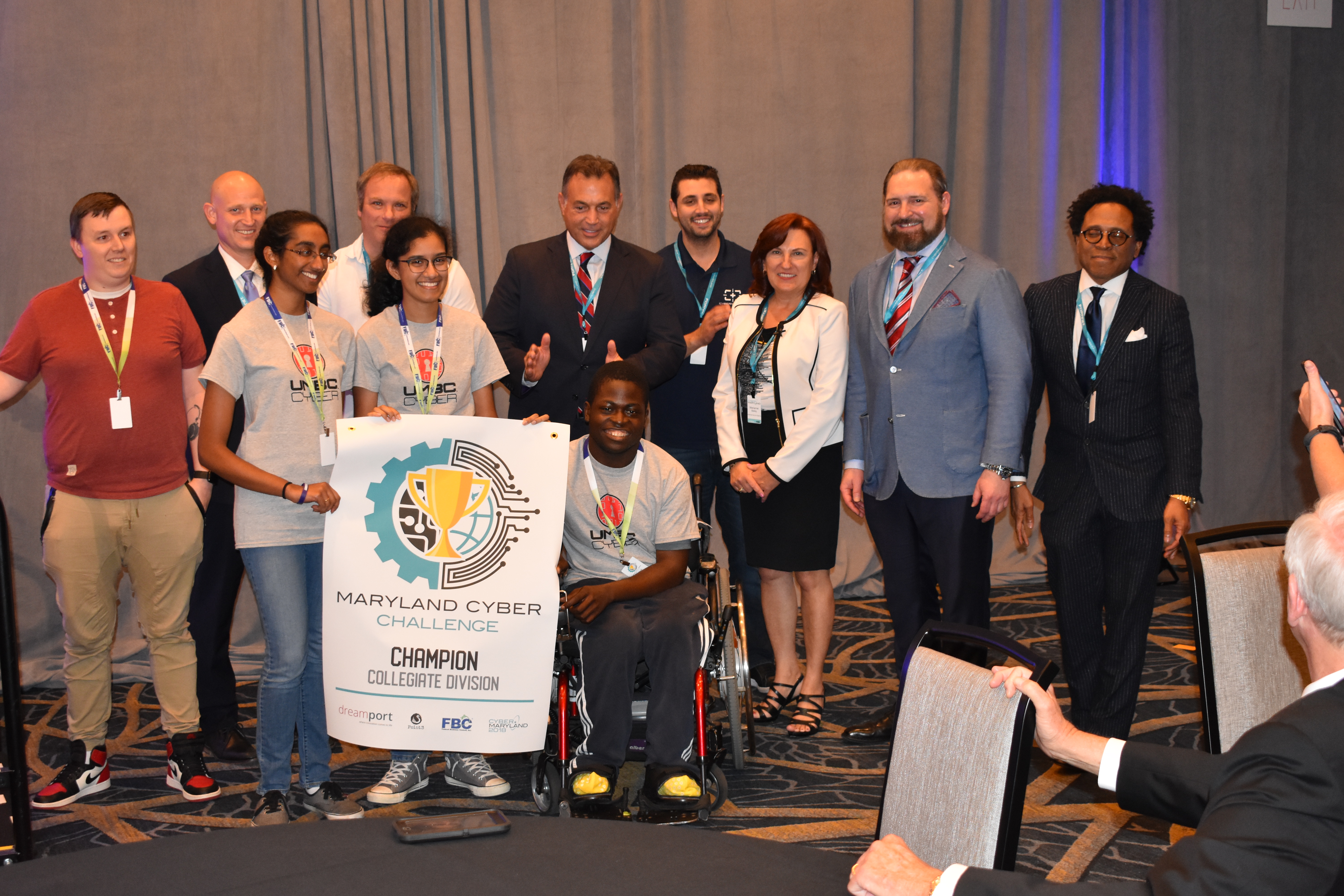
Busy teams of students clustered around laptops in a room overlooking Baltimore’s Inner Harbor on Tuesday, focused on solving as many challenges as possible during a “capture-the-flag” style competition. After hours of intense competition in cyberspace, UMBC’s team emerged victorious, named champions of the college division of the 2018 Maryland Cyber Challenge.

Started in 2011, the competition is part of the annual CyberMaryland Conference. UMBC’s team included Niara Richards ‘22, computer science; Nithya Prakash ‘22, information systems; Josh Mpere ‘19, computer science; Seamus Burke ‘20 computer science; and Swathi Krithivasan ‘22, computer science. They worked together to test their skills in a series of real-world cybersecurity challenges over the course of two virtual qualifying rounds and then the final competition, beating talented teams from the U.S. Air Force Academy and University of Maryland, University College.

“It was my first time competing in the Maryland Cyber Challenge, although I have a pretty extensive competition background,” said Burke. “I am especially proud of my freshman teammates who put in a ton of effort, solved challenges, and didn’t get discouraged when the challenges got more difficult.”

Burke is a Center for Women in Technology (CWIT) Scholar and Mpere is a Cyber affiliate. Richards, Prakash, and Krithivasan all participate in UMBC’s Cyber Scholars Program, which works to prepare the next generation of cybersecurity professionals.

All five members of the winning team will receive a monetary award and an offer to complete a summer internship to continue growing their experience and skills. Additionally, the university will receive new technologies (including software) to support more UMBC students in developing their cybersecurity skills.

“The competition was a fantastic experience and gave me a lot of exposure into topics that I otherwise would not have gained, especially as a freshman,” said Krithivasan. “We had a mix of both upper and underclassmen on our team, which really enabled us to learn and grow from working with each other.”

Banner image: Niara Richards, left, Josh Mpere, and Nithya Prakash. Photo by Marlayna Demond ’11 for UMBC.

UMBC connects thousands of students with top employers, from Google to GM

More than 1,800 students arrived with resumes in hand to connect directly with top global and local companies, government agencies, and nonprofit organizations at UMBC’s Fall Career and Internship Fair. Recruiters from 140 employers were drawn to UMBC’s largest annual recruiting event to share opportunities with students across all colleges and programs. In the days before and after the fair, several organizations—such as Google—also made special pitches to UMBC students.

Google’s visit was part of a larger trend at the university. In the fall semester alone, more than twenty Fortune 500 companies will visit campus through the UMBC Career Center to recruit students for internship and job opportunities. This list includes household names like Google, Facebook, ExxonMobil, Microsoft, Northrop Grumman, Morgan Stanley, Wells Fargo, General Motors, and Goldman Sachs. Strong local employers visiting campus to recruit UMBC talent include McCormick, T. Rowe Price, Legg Mason, Big Huge Games, and the Johns Hopkins University Applied Physics Lab, among others.

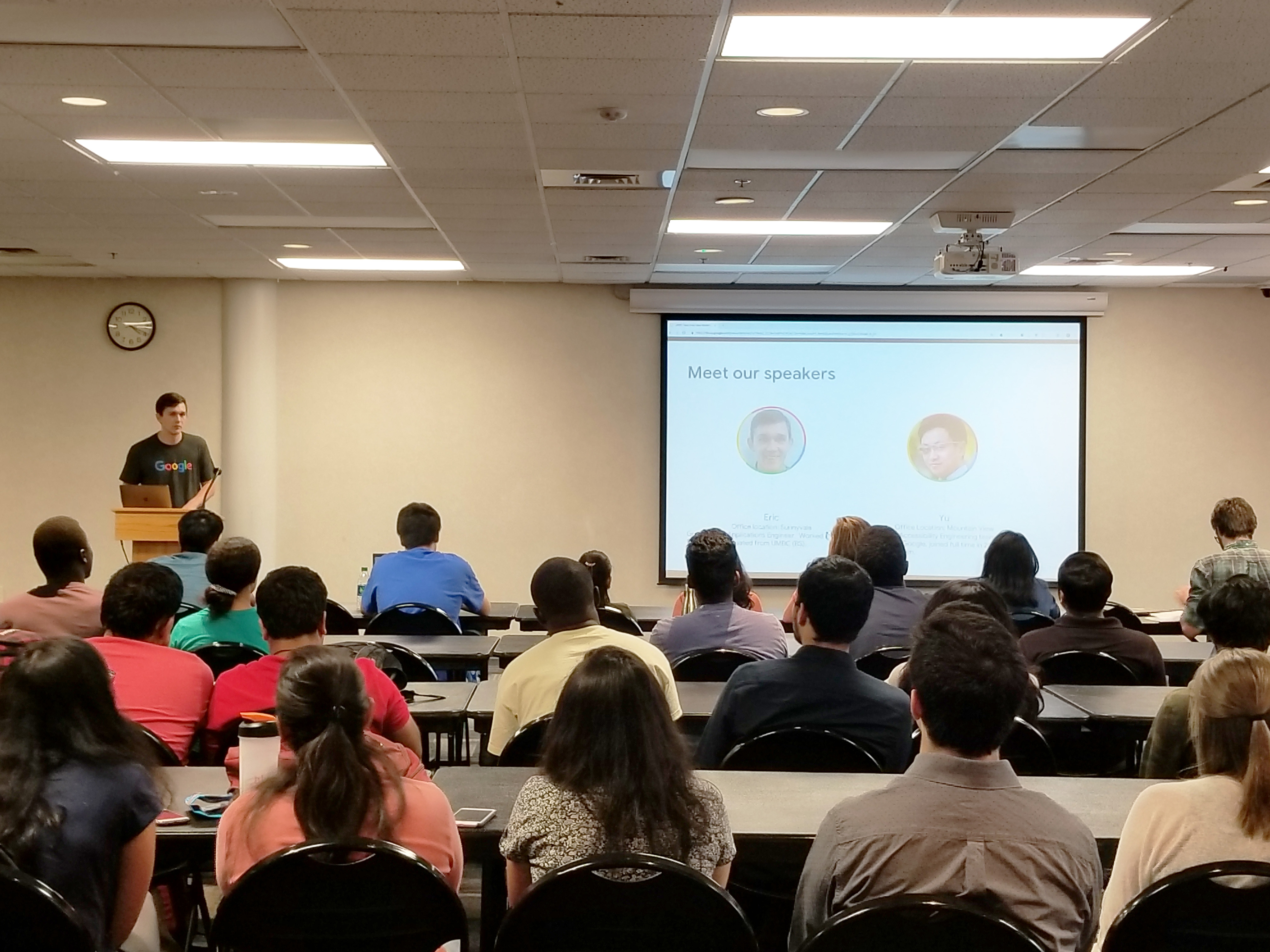
During Google’s campus visit, UMBC students had several opportunities to connect with recruiters from the company. At their information session, Google provided helpful tips on applying for internships and jobs with the company. Later in the week, Google representatives met with students to answer specific questions about working at Google, offered a tech talk, and hosted a coding competition for students.
“Having graduated from UMBC myself, I know firsthand that students here are well prepared for opportunities during and after college,” said Eric Griswold ’13, computer science, an engineer at Google, who led the tech talk on campus. “I am truly inspired by the energy and passion UMBC students have; they are definitely on their way to thriving careers in the tech industry.”

Students filled the room during the tech talk with Google. Photo courtesy of Dustin Eby, program assistant in UMBC’s Career Center.

Several current students completed internships at the company last summer, including William Gao ‘19, computer science; Deepika Rajani ‘19, computer science; and Ashley Copenhaver ‘19, mathematics, who has completed multiple Google internships.

“Over the course of my internships with Google,” Copenhaver says, “the most unique aspect I noticed was that Google promotes a constant learning environment. I collaborated with people not only in my office, but also across the globe, and there was never a meeting that I walked out of without learning something new.” She hopes to intern again with the company in summer 2019.

Gao shared a similar experience, noting, “Google helped me learn from industry professionals and use industry level tools.”

That experience also shaped his approach to learning when back on campus. “After the internship,” he says, “I adjusted my approach in the classroom so that I can start cultivating the skills I know I will need in the work environment.”

Students seeking job and internship opportunities can follow the Career Center through myUMBC, utilize the Handshake jobs database, and can also take advantage of personalized coaching and support provided by UMBC Career Center staff.

Employers interested in recruiting at UMBC can contact careers@umbc.edu for assistance.

Banner image: Students at a Career and Internship Fair in 2017. Photo by Marlayna Demond ’11 for UMBC.

Porta-NERDs: Meet the team changing how people think about waste through EPA-supported research

UMBC’s Lee Blaney is known for his innovative research on water and soil contamination, working to keep people and the environment healthy. His latest project takes that focus in a new direction by developing an innovative system to recover nutrients from an unexpected source: human urine.

Blaney, associate professor of chemical, biochemical, and environmental engineering, received a phase one grant from the Environmental Protection Agency’s People, Prosperity, and the Planet (P3) program to investigate the ability of his Nutrient Extraction and Recovery Device (NERD) technology to recover nutrients from human urine.

This project will advance knowledge about how sustainable resource recovery technologies can be implemented. “Human urine accounts for the majority of nutrients in municipal wastewater, but only a small fraction of the flow,” explains Blaney. “When urine gets diluted into the wastewater system, it makes it more difficult to treat and recover these nutrients. So, we wanted to go to the source — toilets.”

Blaney worked with co-PI Marc Zupan, associate professor of mechanical engineering, and ten UMBC students to develop a system that can recover around 90% of the phosphorus, an ecologically important nutrient, and some of the nitrogen and potassium from collected urine samples. These nutrients can impair water quality by causing the formation of dead zones in places like the Chesapeake Bay and Gulf of Mexico, so developing a low-cost way of removing them from urine could have a major impact.

Once removed, those nutrients can then be used in ways that are beneficial rather than harmful to human and environmental health. “The recovered nutrients can be used as a fertilizer,” says Blaney. “By ‘recycling’ these nutrients, we also avoid the economical and energy costs associated with traditional fertilizers. It’s a win-win for the environment and our wallets.”

All P3 projects are required to include an educational component, to ensure researchers are sharing knowledge about the environment and sustainability. The student role in this particular project is significant.

Both undergraduate and graduate students have worked to develop and institute the NERD technology, which modified portable toilets to collect and process urine samples. In April, several students presented their work at the USA Science and Engineering Festival in Washington, D.C.

“I would say the biggest impact our work had at the USA Science and Engineering Festival was getting people to think differently about ‘waste’ by raising their awareness of nutrient recovery,” says Josh Benoit ‘18, chemical engineering. “Most people had never heard of the term ‘nutrient recovery’ and once they learned about it were excited about the potential of the Porta-NERDS system.”

Charles Portner ‘18, chemical engineering, who worked with Blaney and Benoit, says that presenting their work in Washington D.C. allowed the group to explain the simplicity of the technology and how it can be implemented easily. “Folks could potentially have fixtures operating on this technology installed in their private homes or schools without having to wait for municipal adoption,” Porter says, explaining that the system could decrease the burden on municipal treatment systems and empower “average folks who wanted to do their part.”

In the future, Utsav Shashvatt Ph.D ‘19, environmental engineering, hopes this work will impact communities globally. “I am excited about the potential of bringing these cost-effective portable nutrient recovery technologies to communities around the world.”

And, as Sophia Lopresti ’18, global studies, states “There are so many ways that human waste disposal affects our environment and our future health, yet urine continues to be a ‘taboo’ topic, but not to those who stopped at our table.”

NSF recently produced a video about research being done in Blaney’s lab. The full video can be viewed on the NSF website.

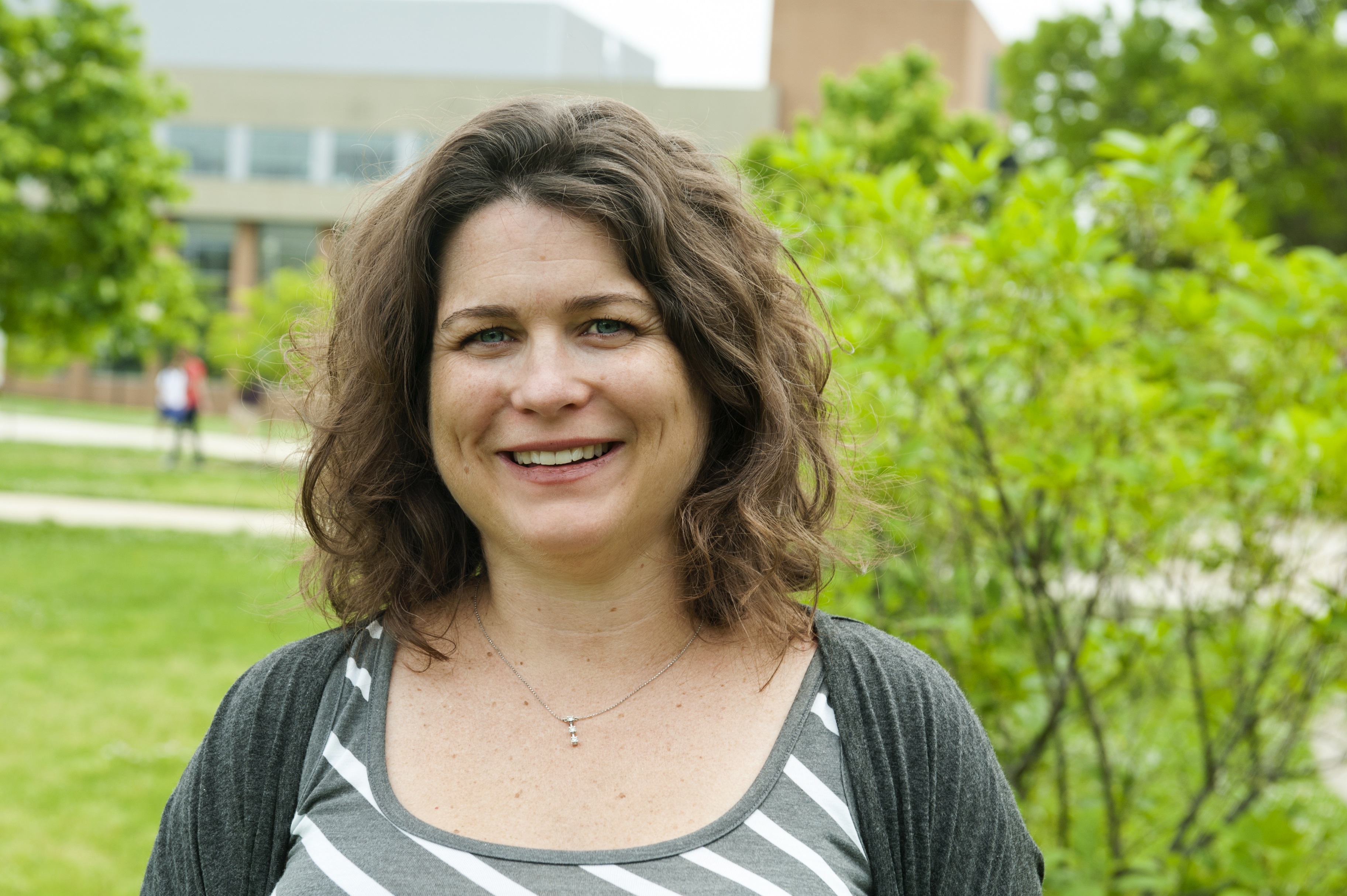
Banner image: Lee Blaney. Photo by Marlayna Demond ’11 for UMBC.

National Security Agency highlights strong partnership with UMBC through Featured School campaign

Over the past two decades, UMBC and the National Security Agency (NSA) have developed a strong relationship, which has led to research, internship, and career opportunities for faculty, students, and alumni. UMBC is the first institution to be highlighted in NSA’s Featured School Series, which launched on September 4.

“UMBC’s long-standing partnership with NSA has provided valuable experiences for our students, faculty, and alumni to pursue internships, careers, and collaborative research opportunities,” said President Freeman Hrabowski. “Through this work we are helping to address the need for well-trained cyber professionals by creating a network of talented people to protect the state, nation, and world.”

More than 1100 NSA employees are UMBC alumni, including Darniet Jennings ‘98, M.S. ‘99, Ph.D. ‘03, information systems. Jennings continued his dissertation research when he took a job at NSA, where he developed a system to manage big data effectively, which was patented in 2010.

The opportunities at NSA include careers in a broad range of disciplines including cybersecurity, engineering, computer science, language, and biological and chemical sciences. Regina Hambleton ‘87, mathematics, has held a number of positions at NSA and is currently the Agency’s deputy director of Engagement and Policy. She began working at NSA while she was a student at UMBC, and participated in a program that allowed her to spend a semester at UMBC taking courses followed by a semester working at NSA.

The partnership between NSA and UMBC also helps prepare an increasing number of graduates for careers in cybersecurity-related fields, to protect the nation from cyber threats.

Charles Nicholas, professor of computer science and electrical engineering, is also highlighted in the Featured School Series campaign. He has spent two sabbaticals at NSA during his time at UMBC, and has mentored students who completed NSA internships, in addition to students who went on to pursue careers at NSA. Nicholas is interested in the intersection of cybersecurity and data science, and the tools that are used to compare malware specimens.

“There are so many opportunities in the intelligence community, including at NSA,” Nicholas says. “It is important for students interested in those careers to develop technical ability, as well as critical and creative thinking, and I enjoy the chance to help them grow those skills.”

For more information about the partnership, and a few UMBC alumni who work at NSA, visit the UMBC page on the NSA website.

Banner image by Marlayna Demond ’11 for UMBC.

UMBC research team awarded grant to innovate anti-malarial drug production

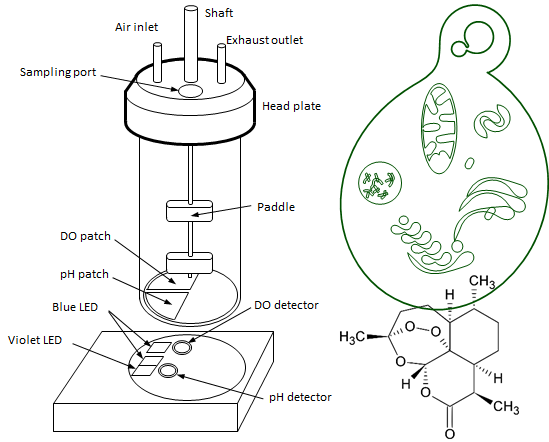
A team of researchers from UMBC’s Center for Advanced Sensor Technology (CAST) and department of chemical, biochemical, and environmental engineering is working to develop a new, low-cost anti-malarial drug to help tackle a disease that causes over 200 million infections and 400,000 deaths annually, according to the World Health Organization (WHO).

Peng Xu, assistant professor; Xudong Ge, research associate professor; and Govind Rao, professor, received $422,623 from the Bill & Melinda Gates Foundation to support the research. Xu and Ge are the co-PIs on the grant, and Rao is the project director.

Therapies that contain artemisinin have shown to be an effective first-line treatment for malaria. Artemisinin is derived from extracts of the wormwood plant. This makes it relatively affordable to produce, but also means the medication supply depends on having an abundant and steady source of the plant.

With the support of the grant, the UMBC research group will develop a scalable and cost-effective production process. Through genetic and process engineering, they will develop an alternative yeast that can be used to more affordably produce artemisinic acid.

“This work builds on CAST’s unique strength in sensor technology and couples it with innovative yeast metabolic engineering,” Rao says. “We are excited to work with the Bill & Melinda Gates Foundation to develop a cost-efficient manufacturing process, and, ultimately, to help eradicate malaria around the world.”

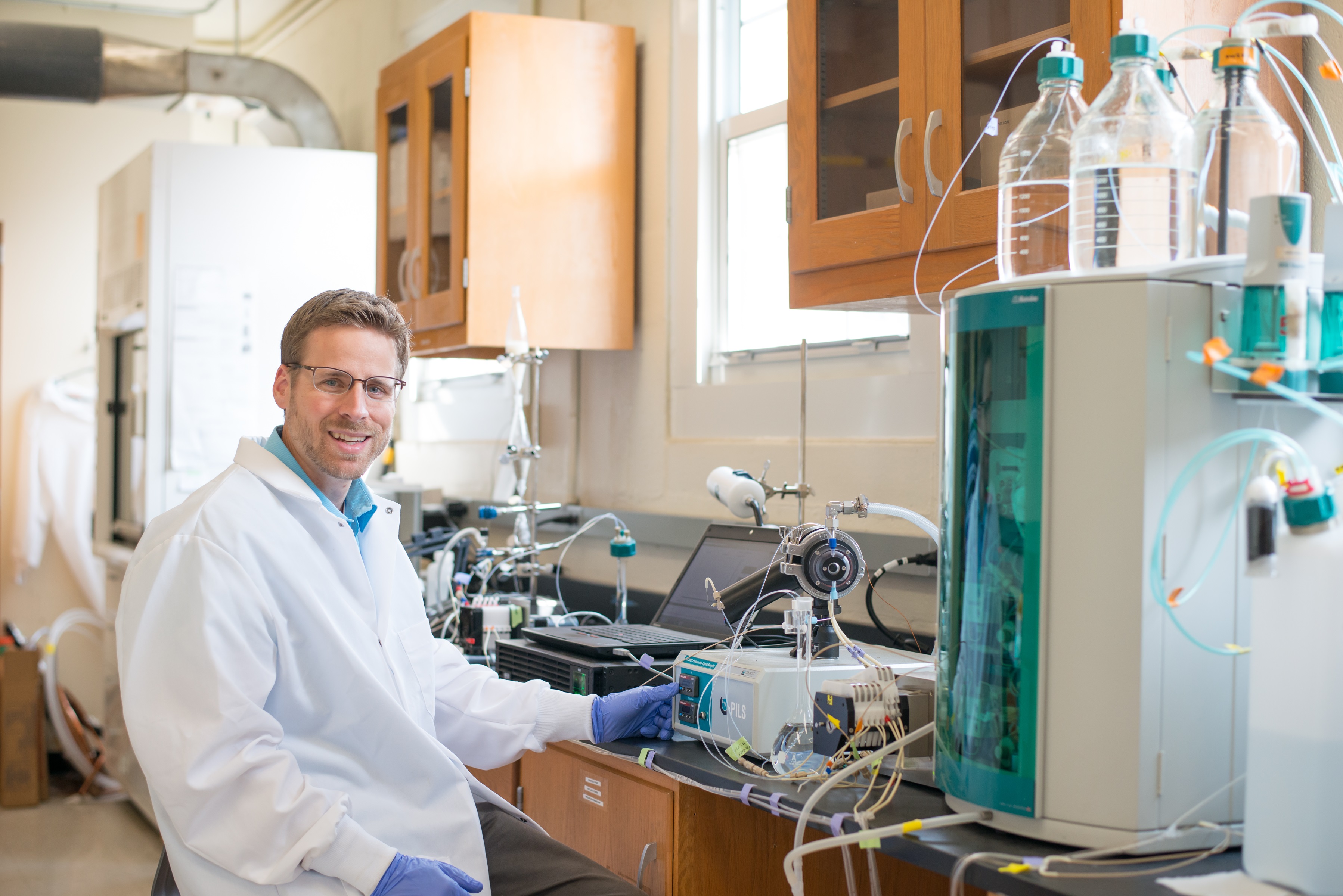
Banner image: Peng Xu, left, and Xudong Ge, right, work with a student to develop an anti-malarial drug. Photo by Marlayna Demond ’11 for UMBC.

UMBC launches infrastructure-focused cybersecurity research collaboration with Japanese and UK partners

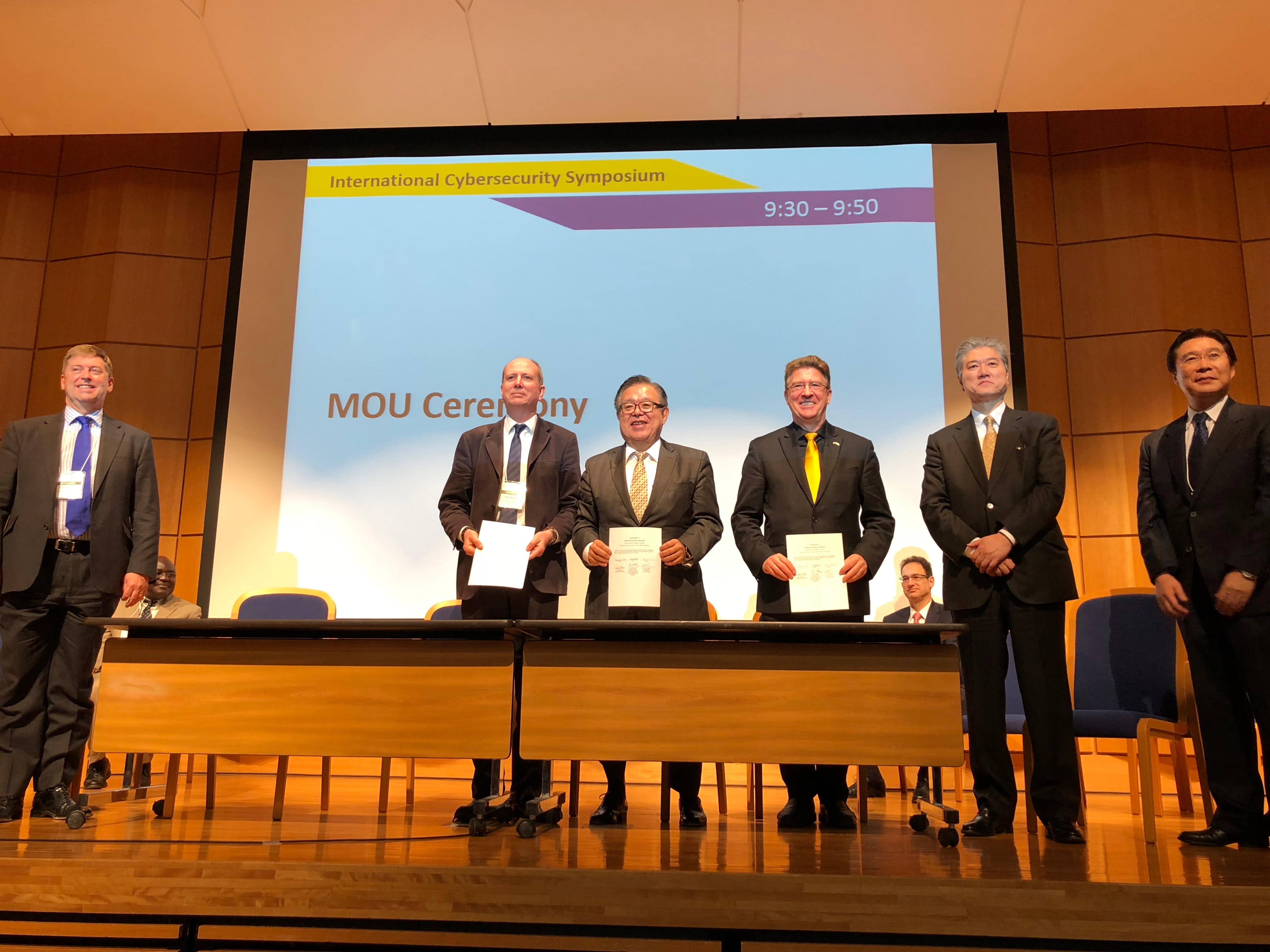
UMBC is one of three leading academic institutions collaborating on a new research initiative that focuses on cybersecurity for critical national infrastructures, including information technology, public transit, and financial services. University leaders signed the three-nation agreement in a ceremony at the sixth International Cybersecurity Symposium in Japan.

UMBC, Keio Research Institute (KRIS) in Japan, and Royal Holloway University of London (RHUL) in the UK will partner to investigate the use of common system simulation tools for modeling critical national infrastructure. This partnership is part of a broader international collaboration, the International Cybersecurity Center of Excellence (INCS-COE). It will also involve Hitachi, an international operator in power systems, telecommunication, railways, and other core infrastructure areas.

Because cybersecurity attacks may not be limited to national borders, this collaboration argues that defense against such attacks should not be siloed either.

“Cybersecurity can no longer be treated as a national issue,” emphasizes Karl V. Steiner, vice president for research at UMBC. “Long-term and productive international collaborations are needed to make significant progress.”

Jun Murai, professor of environment and information studies at Keio University, notes, “We look forward to working with our research colleagues in the UK and U.S. to help address the increasingly challenging cyber threats to the security of our respective critical national infrastructures.”

Working with a common toolset will enable mixed nationality teams to run simulations together. This will help cybersecurity experts learn how to more effectively address human factors, including cultural differences, in predicting how attacks and responses to those attacks might play out across different geographies.

“We are excited to participate in this new research collaboration with our colleagues in Japan and the UK to help us better understand and address some of the key cybersecurity challenges that our nations face from increasingly aggressive international adversaries,” says Anupam Joshi, director of UMBC’s Center for Cybersecurity.

The partners in this research see the modeling of system security as increasingly vital for industry and government, for both training purposes and vulnerability analysis.

“This initiative creates many future opportunities including, for example, the opportunity to address the impact on critical national infrastructure security of the exponential growth of the internet of things, and for potential exchanges of expert staff and students,” explains Keith Mayes, head of the Information Security Group (ISG) at Royal Holloway University.

Steiner shares Mayes’s excitement about expanding opportunities for both established and emerging researchers in this growing field. Thanks to leading academic programs in cybersecurity, the bwtech@UMBC Cyber Incubator, and UMBC’s internationally-known Center for Cybersecurity, he says, “UMBC is uniquely positioned in Maryland to become a major global force for research in cybersecurity.”

“This partnership,” says Steiner, “builds important connections to move this essential work forward.”

Banner image: Computer servers. Photo my Marlayna Demond ’11 for UMBC.

UMBC offers a national model for cyber workforce development, says new report

Cybersecurity is one of the fastest growing industries in the United States and a recent Business-Higher Education Forum report calls Maryland the “epicenter of national cybersecurity.” The report, Building a Diverse Cybersecurity Talent Ecosystem to Address National Security Needs, found that University System of Maryland (USM) efforts to increase the number of students who earn degrees in cyber-related fields has made progress in meeting the needs of the region. It also emphasized that more growth is needed, through programs like those UMBC offers, to meet increasing industry demand for cyber professionals.

In a USM press release, Chancellor Robert L. Caret says, “The University System of Maryland has been committed to growing cybersecurity programs at universities across the state to serve the needs of students and employers in this burgeoning field.” USM highlights programs across the five universities “leading the way” in cybersecurity, including UMBC’s Cyber Scholars program, launched with support from the Northrop Grumman Foundation, and a new cyber apprenticeship program, created through a partnership between UMBC Training Centers, the Maryland Department of Labor, and Gov. Larry Hogan.

In its coverage of the report, The Daily Record focuses on two core findings: the need for students to gain work experience and demand for a diverse cybersecurity workforce. It highlights the work of USM institutions to grow “undergraduate pathways into cybersecurity that attract students with diverse backgrounds and interests, engage them in meaningful learning experiences that reflect the cutting edge of the field and encourage them to stay in the region to build their careers.”

The highlights a UMBC program to explain this idea, noting, “UMBC’s Meyerhoff Scholars program is viewed as a national model for increasing diversity in STEM fields, and the university drew on lessons learned from that model when it launched the Cyber Scholars program in 2013.” As illustration, the report profiles Lauren Mazzoli ’15, computer science and mathematics, M.S. ’17, computer science, a systems engineer in the Future Technical Leaders Program at Northrop Grumman. It showcases her experience as one of UMBC’s first Cyber Scholars and the value she found in UMBC’s Center for Women in Technology and an internship at the Department of Defense.

Graduates from UMBC computing programs continue to have an impact through work with government agencies and top companies in cybersecurity fields. From the Class of 2018, Cyber Scholar Priyanka Ranade ‘18, information systems, is now a cyber software engineer at Northrop Grumman and T-SITE Scholar Bryan Vanek ‘18, computer science is participating in the Computer Network Operations Development Program at the Department of Defense.

Banner image: Mobile technology. Photo by WOCinTechChat, CC BY 2.0.

New UMBC initiative celebrates exceptional faculty dedication to teaching and scholarship

UMBC’s Office of the Provost has launched a university-wide initiative to celebrate faculty who go above and beyond as educators, scholars, and leaders on campus and in their fields. This initiative strives to highlight tenure-track junior faculty, lecturers, and adjunct, research, and clinical faculty whose work is essential to UMBC’s success. The first recipients were announced last month, and represent a broad range of disciplines.

In the College of Engineering and Information Technology, recipients were announced during a special celebration marking the end of the academic year. Chris Hennigan, assistant professor of chemical, biochemical, and environmental engineering, received the Early Career Faculty Excellence Award. Gunes Koru, associate professor of information systems, received the Mid-Career Faculty Excellence Award. Chuck LaBerge, professor of practice of computer science and electrical engineering (CSEE), was awarded the Excellence in Teaching Award.

In the College of Natural and Mathematical Sciences, Pengwang Zhai, assistant professor of physics, received the 2018 Early Career Faculty Excellence Award. Tamra Mendelson, professor of biological sciences, was awarded the Mid-Career Faculty Excellence Award. Tiffany Gierasch, senior lecturer in chemistry and director of the Chemistry Tutorial Center, received the Excellence in Teaching Award.

The College of Arts, Humanities, and Social Sciences also presented awards to three faculty. The Early Career Faculty Excellence Award was presented to Corrie Parks, assistant professor of visual arts. The Mid-Career Faculty Excellence Award was awarded to Susan McDonough, associate professor of history. Andrew Nolan, senior lecturer of history and director of the UMBC history program at the Universities at Shady Grove, received the Excellence in Teaching Award.

UMBC’s Office of the Vice President for Research presented its inaugural  Research Faculty Excellence Award to Milt Halem, research professor of CSEE. Halem came to UMBC following a highly successful career at the NASA Goddard Space Flight Center, serving as founding director of a UMBC center focused on big-data computation and next-generation computing.

UMBC is the academic home to over 180 research faculty who contribute their expertise and personal commitment to making UMBC a destination for cutting-edge research while providing our students with remarkable insights and opportunities,” said Karl Steiner, vice president for research, shared. He noted that Milt Halem’s “energy and expertise have been a major factor in UMBC being recognized as a major contributor to high performance computation and data analytics.”

Banner image: Library pond. All photos by Marlayna Demond ’11 for UMBC.

Three UMBC students access unique study abroad opportunities as Boren and Gilman Scholars

Three UMBC students have been selected to receive prestigious Boren and Gilman scholarships to study abroad this summer. The programs provide recipients with financial support to pursue international travel and immerse themselves in a new culture and language, with an eye toward their future careers.

“We know from research that studying abroad is among the most positive and impactful experiences a student can undertake while in college. Learning to function in an unfamiliar environment, developing an understanding of another culture, and acquiring proficiency in a foreign language all contribute greatly toward academic and career development,” says David Di Maria, associate vice provost for international education.

The Boren Scholarship, a National Security Education Program initiative, provides students with unique opportunities to study languages that are important to national security, but are not commonly taught in schools. Boren Scholars commit to federal government jobs related to national security for at least one year after graduating.

This year, Cody Thomas ‘18, chemical engineering, and modern languages, linguistics and intercultural communication, received the Boren Scholarship for International Study. He will travel to Kazakhstan to study the Russian language at Nazarbayev University, through a program hosted by the University of Arizona.

The Benjamin A. Gilman International Scholarship provides funding to support students studying or completing internships abroad during summer- or semester-long programs, with the goal of “internationalizing their outlook and better preparing them to thrive in the global economy.” The U.S. Department of State’s Bureau of Educational and Cultural Affairs and the Institute of International Education support the Gilman Scholarship.

Sungheum Jo ‘19, biology, and Danielle White ‘19, chemical engineering, are two of about 1,200 students from across the United States who will participate in the Gilman Scholarship Program. Jo will study in Barcelona as part of UMBC’s faculty-led program in Spain, and White will be a participant in UMBC’s faculty-led program in Barranquilla, Colombia.

“The prestigious Boren and Gilman scholarships provide talented students with generous financial awards and unique pathways to rewarding careers with the federal government,” says Di Maria. “We are very proud of this year’s recipients and look forward to following their continued achievements.”

This year’s awards continue UMBC’s strong tradition of connecting students with international learning opportunities through competitive scholarship programs. During the 2016 17 year, UMBC was one of the top institutions of its size in number of Gilman Scholarships awarded. Barellie Thompson ‘17, sociology, traveled to Ghana; Danielle McGrogan ‘17, global studies, traveled to Rwanda; Emily Parks ‘18, English, traveled to India; Selam Kubrom ‘18, global studies, traveled to Costa Rica; and William Early ‘19, information systems, traveled to Japan.

Banner image: The flags in the Commons. All photos by Marlayna Demond ’11 for UMBC.