All posts by: Jenny O'Grady


Challenge Met: UMBC Giving Day 2020 a Resounding Success

Each February, the UMBC community reaches together to support student success with gifts made during one 24-hour Giving Day extravaganza. And every year, our Retriever Nation comes through – sharing news of their gifts and reasons for supporting UMBC far and wide.

This year’s “Black and Gold Rush” on February 27 was no exception. Several hours before the midnight deadline, our Retrievers blew past the original goal of 1,800 donors to reach more than 2,600 donors and $188,500, with more donations still being tallied, that will support everything from academics to athletics to campus organizations. More than a hundred social media ambassadors also shared the love by encouraging friends and colleagues to contribute.

“I am always amazed but never surprised by the generosity of the UMBC community,” said Greg Simmons, MPP ’04, Vice President of Institutional Advancement. “So many students and programs will benefit from the amazing support that we received on Thursday. It makes me proud to be a Retriever.”

During free hour, students and others passing through The Commons wrote thank you notes to donors and celebrated as the donor count passed the halfway mark. And faculty and staff in offices and departments across campus took to social media energizing their networks to support the great work happening in all aspects of the community.

Here is a snapshot of the day, and a thank you to all who contributed!

Header image by Marlayna Demond ’11 for UMBC Magazine.

50-Foot Woman Tells All

If art is life, then Rahne Alexander is living hers as a collage of towering technicolor.

On stage with her bands Santa Librada and 50’ ♀; she conjures her musical muses—think Stevie Nicks or the Wilson sisters from Heart—leaning into the lyrics while shredding her guitar. Her hair glows purple in the spotlight.

In quieter moments, in her studio at UMBC’s Lion Brothers Building downtown, she carefully de-archives her collection of hundreds of decades-old cassette tapes. (Among them is a copy of Billy Idol’s 1981 Don’t Stop she stole from a Woolworths, she says, smiling.)

She works on short films like the Marcel Duchamp/Brett Kavanaugh/Atomic Blondeinspired “Dude Descending a Staircase” that earned her “best creative award” at an international conference of computer-human interaction in China last year. And she never seems to rest.

Portrait of Rahne Alexander by Marlayna Demond '11.

“I maintain a pretty high performance and art schedule, and have for a long time,” says Alexander, who is pursuing an MFA in UMBC’s intermedia and digital arts program as much for the community and the push to produce as anything else. “But I love making work, I love being on stage. It’s exhausting, but this is what I’m here for.”

All along the way—as she has for the last 16 years, at least—Alexander also writes. And nowhere is she quite more herself than in Heretic to Housewife, a collection of essays now in its second run from publisher Neon Hemlock Press. Described as “the trans* Marcel Proust,” by one critic, the 10 collected essays delve into what drives Alexander as an artist.

In the first essay, “A Meditation,” which she originally performed as a sort of love letter to herself at the D.C. Women in Comedy show, and later as the opener when author/actress Amber Tamblyn spoke in Baltimore, Alexander dives deeply into her personal story. In others, she un-buries the echos of traumas experienced throughout her life up to age 50. The doors haven’t always been as open to her, and life has not always been as safe. But, “fear is never revolutionary,” she writes, so she does not give in.

Still from “Dude Descending a Staircase” courtesy of Rahhe Alexander.

But even with the most serious topics, Alexander’s wit and warmth shine through. “It was easier for me to come out as a transsexual lesbian than it was for me to come out as a witch,” she jokes in a monologue about the artist Paulina Peavy. 

“[She] brings a multi-faceted body of work that often touches on artists of the past in ways that mine their works for tips on how to move into the future in more critical and equitable ways,” says Kathy O’Dell, associate professor of visual arts, art history, and museum studies. “And she does so with motivational humormeaning, humor with edges of seriousness that prod us as viewers/participants to make decisions about where we stand on a variety of topics, from humor itself to domesticity, self-care, politics, LGBTQ issues, and many more.”

If her social media followingand the fact that the first run of her book sold out in two weeks—is any indication, Alexander has amassed a dedicated fan base who can’t wait to see what she does next. So, instead of resting, she presses on.

“It’s a lot, but this is why I moved to Baltimore in the first place—to have an art career and to put it all out there,” she says. “So these are all great problems to have.”

*****

Header image by Marlayna Demond ’11.

Leaders in Teaching – Alumni Award Winners Raise the Bar

When La Jerne Terry Cornish first started classes at UMBC, her son was two years old, she was teaching full-time, and she had to drive 45 minutes to get to campus. 

The journey was never easy. But in the seven years it took to finish her Ph.D. in language, literacy, and culture, the discussions hit home and the supportive community around her made all the difference, she says.

“The LLC program allowed me to dream a dream I didn’t dream,” says Cornish, Ph.D. ’05, who now serves as provost and senior vice president of Ithaca College, following a long career in teaching and administration at Goucher College. 

“I never thought I would end up where I am, but the preparation I received as a result of that program, and the support of the faculty, staff, and students prepared me for my next steps.”

This week, Cornish will receive the UMBC Outstanding Alumni Award for the Humanities. Fellow LLC alumna Beverly Bickel, M.A. ’94, instructional development systems, Ph.D. ’05, LLC, will also be honored with the Outstanding Faculty Award for her work as clinical associate professor, UMBC, language, literacy, and culture; affiliate associate professor, gender and women’s studies. (Learn more about the winners and the October 2 ceremony.)

Teaching our teachers

Like Cornish, Bickel found a community she loved dearly at UMBC. And since she has pretty much always wanted to be a teacher herself—she frequently taught her younger siblings during their playtime “school”—working as a professor within the LLC program and in other departments at UMBC just makes sense.

After starting her career in early childhood education and earning her master’s at UMBC, Bickel was teaching at the Community College of Baltimore County when a new position opening at UMBC—director of the English Language Center—caught her eye.

Her husband, David Truscello, Ph.D. ’04, was a member of the first cohort of LLC doctoral students with Cornish, and between that connection and the gentle, but persistent, encouragement from LLC founding director and professor emerita Joann “Jodi” Crandall, Bickel soon was pulled into the program as a student herself as she took on the ELC director position. 

Now, as a professor, Bickel likes to take the time to understand where her students are in their lives. That means creating a comfortable environment where they can be honest about their needs and providing a support system for those who are figuring things out as they navigate their doctoral pathways.

“As my instructor, Bev listened carefully to my interests and ideas, affirmed some of my most adventurous instincts, and shared resources that could help me find my path,” wrote David Hoffman, Ph.D. ’13, LLC, and director of UMBC’s Center for Democracy and Civic Life, in nominating Bickel for this award

“She was unfailingly patient and creative, and above all, responsive to me: truly hearing my hopes, amplifying my curiosity, and helping me to believe in myself as a researcher.”

At home, Bickel and her husband, now retired, have what they call a “lifelong study group.” Her ongoing desire to connect with her students on a personal basis keeps her energized with every semester, where she often starts her classes with a conversation about their days, their lives. Sometimes they listen to a song or read an essay. Many drink tea while they chat.

“We’ve got to connect as humans before we try to think about whatever texts we’ve read,” she says. “I love that about teaching. It might be four- and five-year-olds, or it might be adults, but everybody is coming in with themselves first before engaging in this work we call teaching and learning.”

A special community

Founded in 1998, UMBC’s language, literacy, and culture Ph.D. program was the first of its kind to bring an interdisciplinary approach to a type of research that crosses the humanities, social sciences, and education. Since then, many universities have copied the model, Crandall says. But, breaking new ground at the time meant the first cohorts of students played an important role in making the program what it is today.

Because the program attracted such a variety of students—many of whom taught, had families, and were well along in their careers—it became a true experiment in balance and community. 

Cornish remembers her first class with Crandall. The discussion was so interesting, intense, and fun, she says, it went at least 15 minutes over. 

“I was so taken by that first class,” said Cornish, who laughs as she recalls having to remind Crandall that “‘We have to teach in the morning!’ But, the material was so rich. She challenged us, she made us think. It was wonderful.”

Following graduation, Cornish spent nearly 20 years helping to build the education department at Goucher, where she had previously earned her bachelor’s and master’s degrees. Having spent the last few months settling into her new position at Ithaca, she says she looks forward to re-connecting with LLC faculty on her return visit to campus.

Kimberly Moffitt, chair of the LLC Ph.D., said Cornish represents the best of what their alumni have to offer. “In a program designed to enhance critical thinking skills in areas of culture across disciplinary and methodological boundaries, Dr. Cornish was not only a member of the first cohort of graduates, but she also lent her educational expertise to shape and co-facilitate the curriculum,” she writes.

As Crandall recalls the first years of the program, she emphasizes that Bickel and Cornish were both instrumental in building the LCC into the standard bearer it is today.

“These are two wonderful women who had all the right leadership skills and just such a strong sense of themselves…and a strong sense of social justice,” she says. “I am just so thrilled for them both.”

The Impact of Orange is the New Black

Over the course of seven seasons, the Netflix series Orange Is The New Black (OITNB) has taken viewers—and its characters—on a roller coaster ride within the confines of a fictional minimum security women’s prison. The series has become a favorite of fans and critics alike, garnering numerous award wins while pushing the boundaries of television storytelling, casting, and directing. As the series wraps up its final season, April Householder ‘95, Director of Undergraduate Research and Prestigious Scholarships, and co-editor of Feminist Perspectives on Orange is the New Black, shares some thoughts on the lasting impact of this groundbreaking show.

What was it about OITNB that made you want to pursue a book about it?

In 2013 when the show premiered, I was teaching courses in the UMBC’s Gender and Women’s Studies department such as Gender, Race, and Media, and Queer Representations in Film and Television, and students were excited to discuss the show, so it started showing up on my syllabus. The problem was that there were no academic texts to assign for students to read, so I decided to write a book myself!  I had just published a chapter about the HBO show, Girls, in a book on feminist theory and popular culture, so I reached out to my colleague, Adrienne Trier-Bieniek, who was the editor of that book, and we sent out a call for papers for a feminist collection on OITNB.  We got an overwhelming response, with writers addressing everything from the prison industrial complex to the meaning of the character Pennsatucky’s teeth as they relate to race and class issues.  It was exciting to see that the show struck a nerve with so many pertinent cultural issues, and that it continues to do so today.

What questions and themes does the series bring up that most excite you as a researcher?

I am very interested in the ways in which media and popular culture both reflect and construct ideas, identities, and politics. As a feminist researcher, this show touches on so many important intersectional issues—race, class, gender, sexuality, power and privilege, abuses of the criminal justice system, disability and ableism, queer and transgender representations, immigration/ICE, mental illness, motherhood, rape, drug addiction… The show was nominated for twelve Emmy awards in its first season because it pushed the boundaries of how women have traditionally been represented on television. It develops complex characters, with emotional backstories and narrative arcs that show them as full human beings whose lives intersect with patriarchal institutions in unjust ways. They aren’t just one-dimensional characters who serve as a backdrop for male protagonists, and they don’t fit neatly into stereotypes. The show isn’t without its compromises (the problematic women-in-prison genre has been around for a long time), but in general it challenges mainstream depictions of gender and humanizes female prisoners in a way that is very subversive when it comes to the televisual format. And that’s just in front of the camera!  There is another story to be told about the showrunner, Jenji Kohan, and the mostly female writers (including Piper Kerman, who wrote the memoir on which the show is based, and serves as an executive consultant on the show) and female crew behind the scenes. The show has given a voice (and jobs) to women and proven that there are both critical and popular audiences for these stories. 

How do you feel OITNB has changed the landscape of television most? And the media landscape in general? Why is this sort of storytelling possible now?

It may seem very natural now, but OITNB was one of the first shows to usher in the phenomenon of “binge-watching.” The show has a long list of TV “firsts” but this new way of watching was very ground-breaking. The show is arguably made by, about, and for women—and the binge format shares an addictive quality that ties back to the women’s soap opera and the Victorian novel (cliffhangers, sprawling cast of characters, multiple overlapping serial plots, and high melodrama). So it centralizes women even in its reception practices. Netflix is one of the online formats that has challenged network television and has been able to experiment with their content because they are not beholden to advertisers who could pull their funding if they feel that the show doesn’t align with their company’s image. Pay services like Netflix have opened up the narrative possibilities of televisual programming, and now we see that trickling back into mainstream TV, with shows like Black-ish, Will and Grace, Modern Family, Empire, and the TV domination of Shonda Rhimes. Lots of shows are following in its footsteps, such as Killing Eve, The Handmaid’s Tale, and the reboot of The L Word.

For someone who hasn’t seen OITNB, is there a particular episode you’d recommend as particularly groundbreaking?

Watch the first episode and you will be hooked! The characters are infectious and real. You have to kind of go on the journey with them to fully appreciate the show. The season 3 finale is particularly moving. The inmates spot a hole in a fence and escape to a nearby lake for a symbolic baptism. It’s one of the few moments we see them breaking free and existing outside, in nature. The season 1 episode 9 story is also one of my favorites because it features lesbian sexuality in the prison as a way for characters to feel alive and to buck the system that is essentially trying to slowly kill their humanity. And the series finale will have you in tears!

Your book covers seasons 1-3. Are there topics that have emerged in more recent seasons that you would like to explore?

It amazes me how forward-thinking the writing on this show has been. Season 7 concludes with storylines around the treatment of immigrants at detention facilities, something that was written and filmed before we were having a national conversation about the Trump administration’s border crisis. Episode 3 of the final season is entitled “Brown is the New Orange,” and it highlights the similarities between U.S. immigration facilities and the injustices of the corporate-owned prison industrial complex (“PolyCon Detention Center” in the show.) We see the character Maritza picked up at a nightclub during a raid for not having her ID, and sent back, this time to Litchfield’s ICE facility. Blanca is also there as an undocumented immigrant, and her boyfriend gets deported when he visits her for not having his green card. This is a new definition of “recidivism”—one where incarceration for people of color has nothing to do with their criminality, but rather the policies that target them. We see the struggles of Latinx characters to find legal representation, connect to the outside world, and to live in humane conditions.  At one point, they remark that the detention facility is worse than the prison. This is one narrative arc that shows Kohan’s commitment to making the show more than just about entertainment. She is changing public consciousness in her work.

Any thoughts on the final season?

Look for some cameos from beloved characters, expect some heartbreak, but also know that the show ends with a lot of hope and love. After seven years, the show is still as relevant as ever. 

Check out Householder’s book, Feminist Perspectives on Orange Is The New Black: 13 Critical Essays (McFarland, 2016), here.

Behind the Lens: Photographing UMBC Swimming & Diving

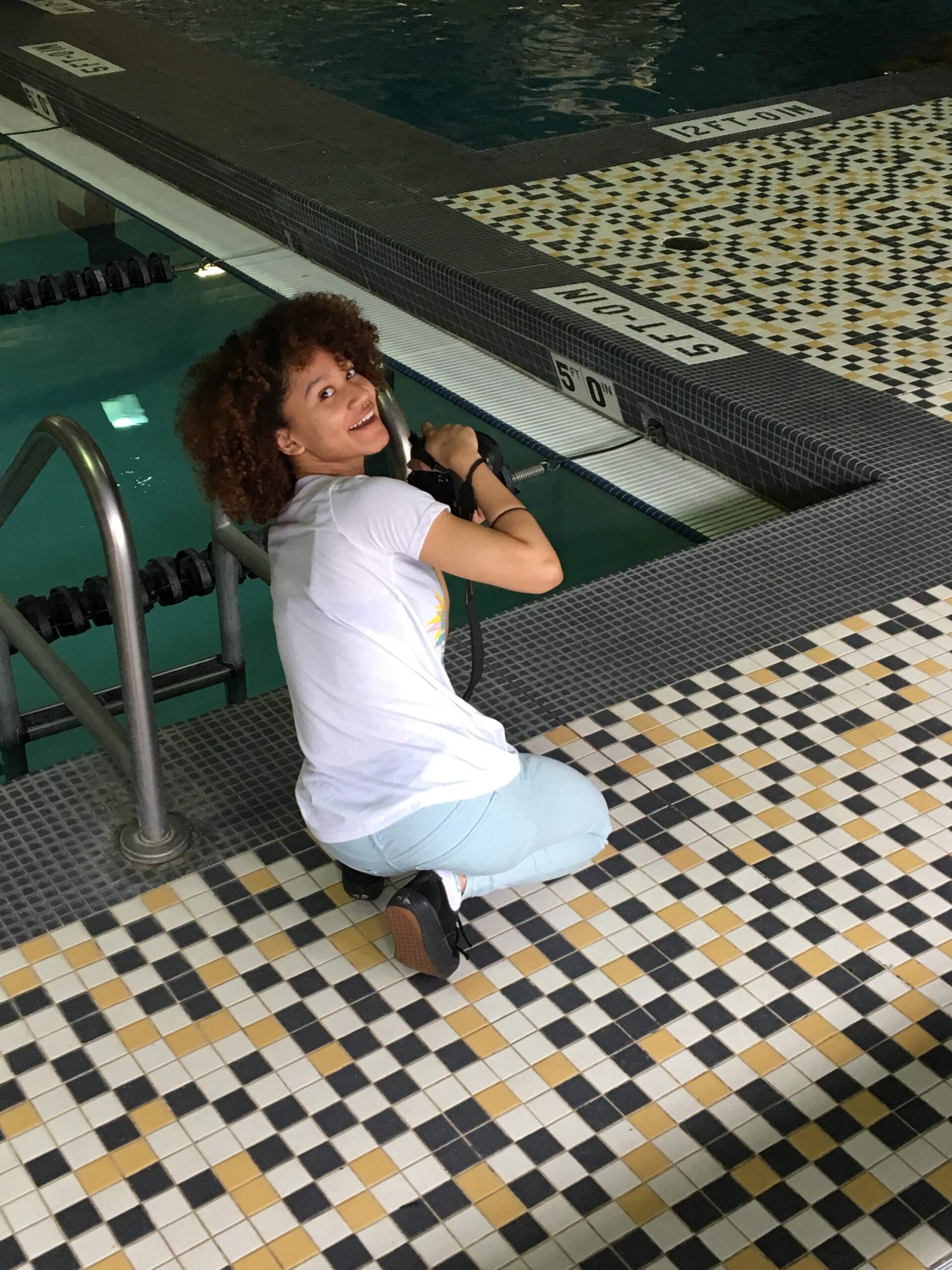
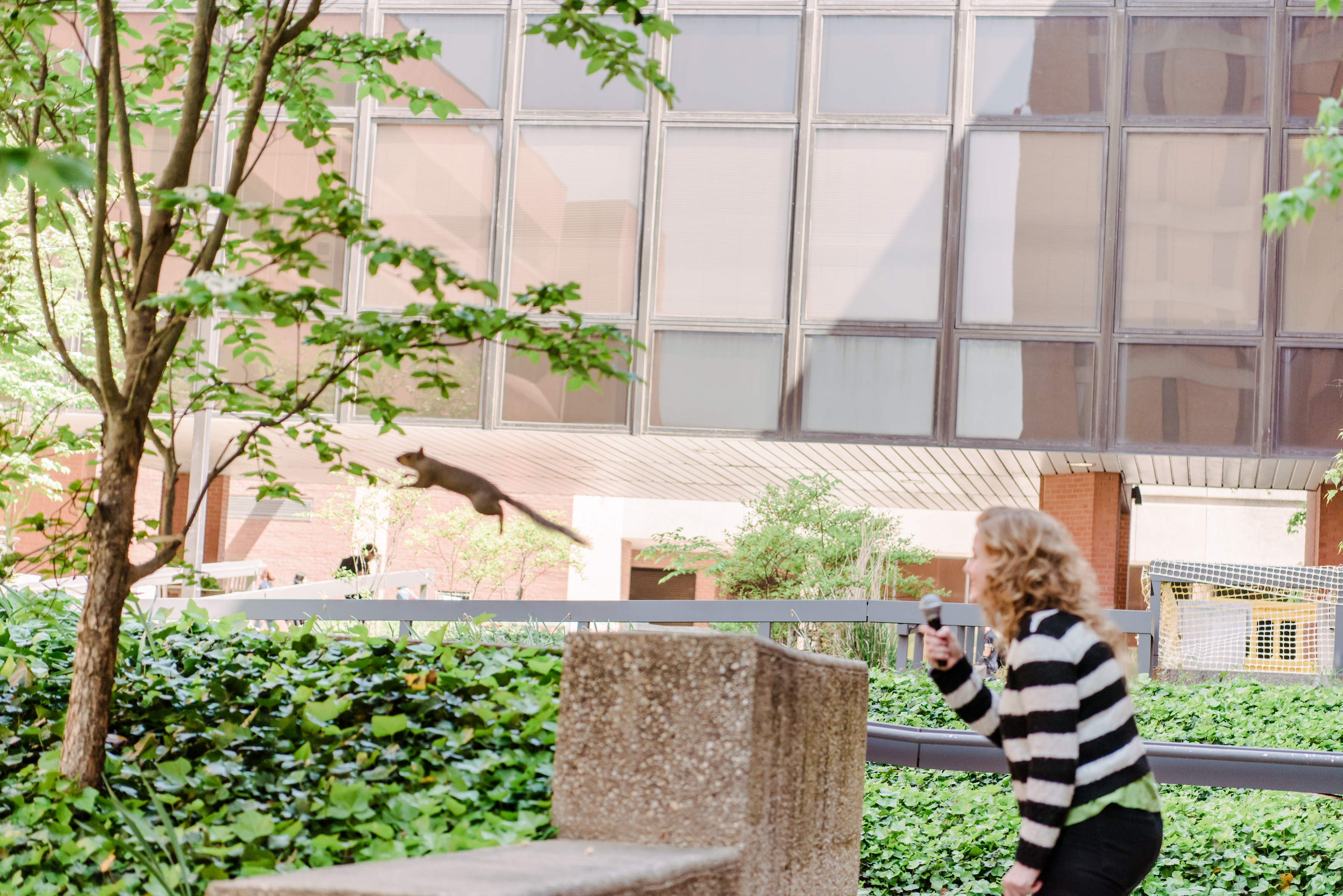
UMBC Magazine‘s longtime photographer Marlayna Demond ’11 is used to going to great lengths to get her shot. A former Linehan Scholar, she climbs on tables and ladders to achieve the right angle. She waits quietly in the cold for the right moment to snap the shutter. (Here’s one example of that.) She takes hundreds—and sometimes thousands—of photos to get the one perfect for print. And who even knows how many squirrel portraits she’s captured over the years, simply because we asked? In short: she’s a true team player.

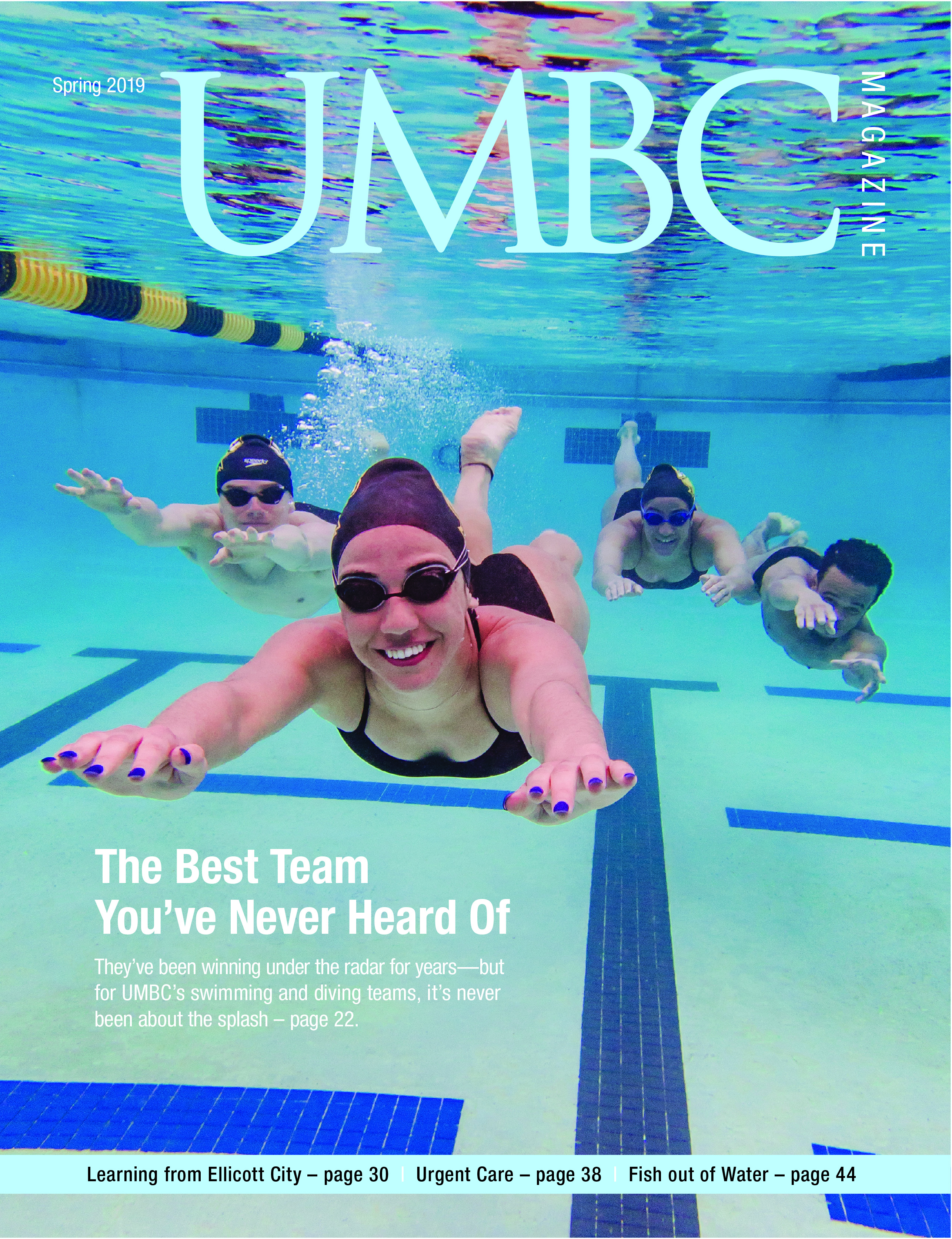
So, when we decided to write a feature on UMBC’s award-winning swimming and diving team, the obvious first question was: “How do we safely get Marlayna (and her camera) under water?” (Read the full story here.)

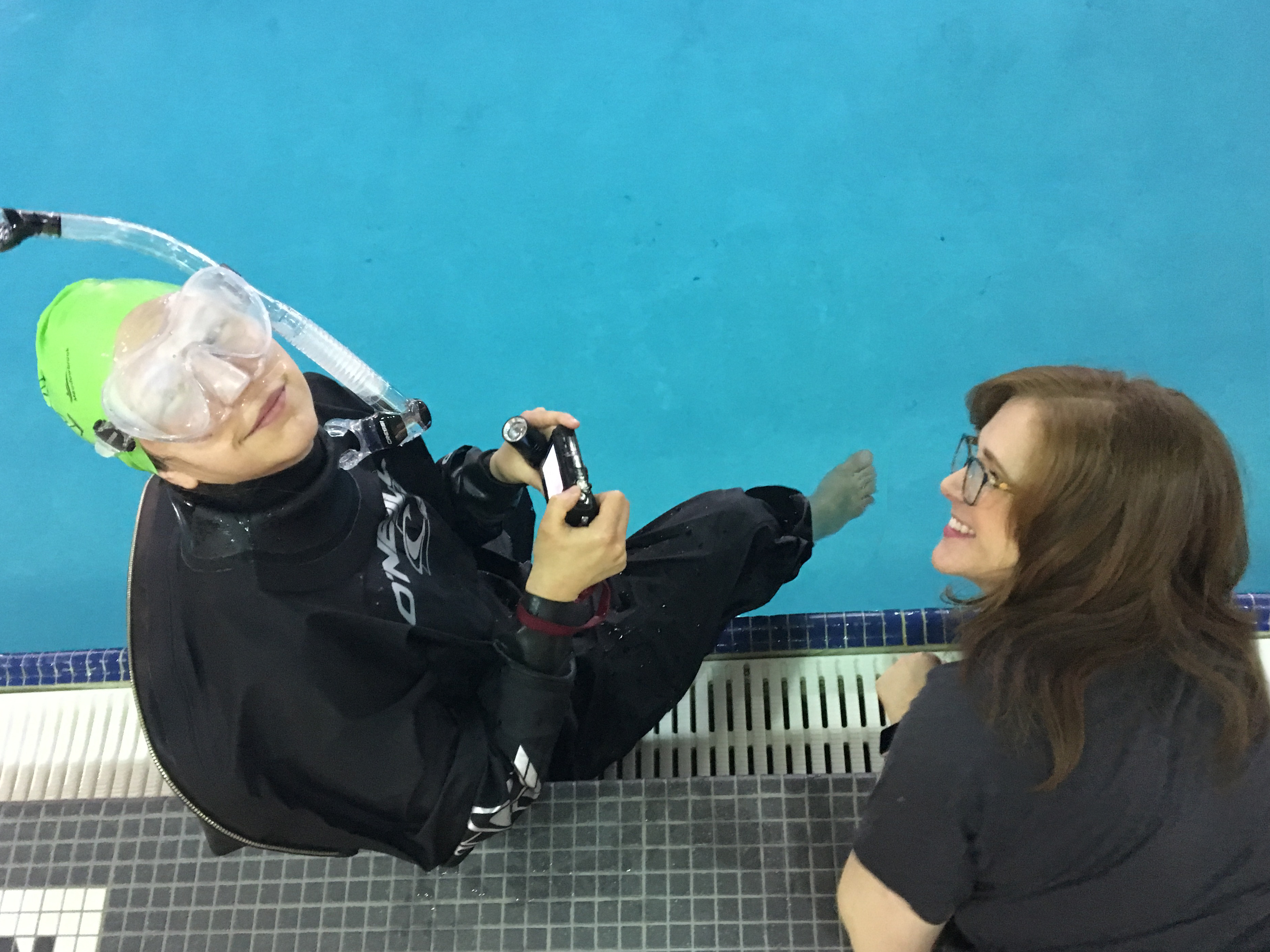
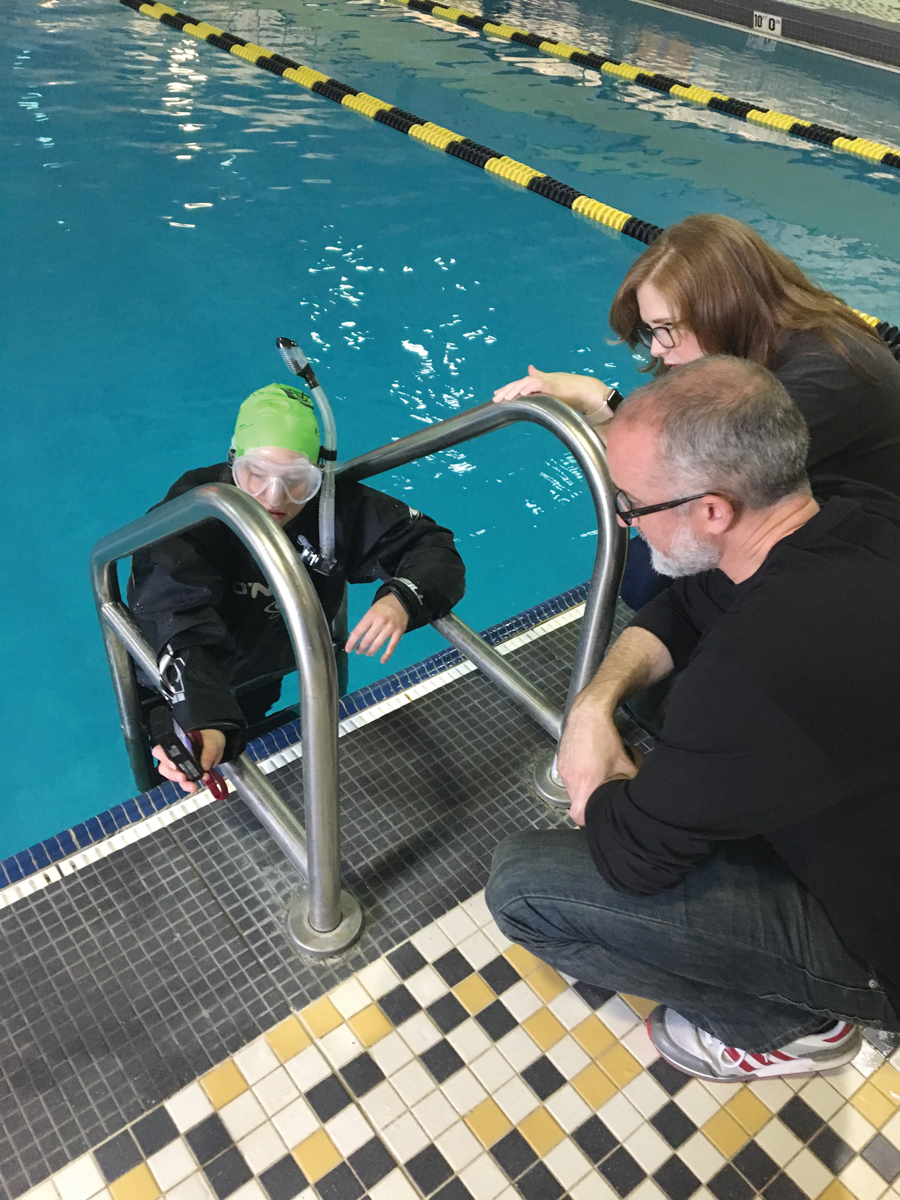
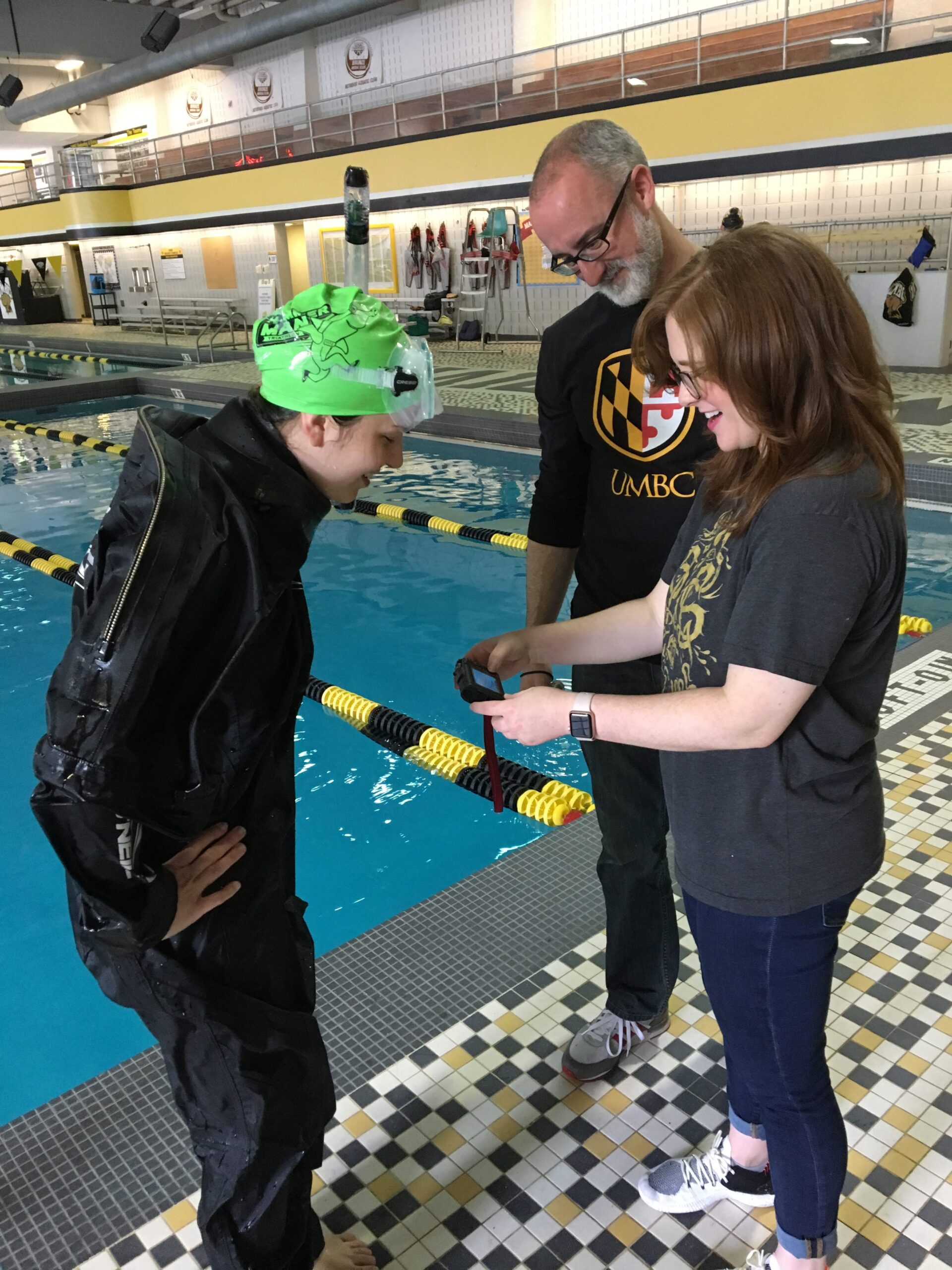
In addition to the challenges of using electronics in and around the waters of the UMBC Natatorium, we also wanted to make sure Marlayna could breathe easily and have as much range of motion underwater as she would on land. Over the course of a month and a half, our team tested out lighting and camera solutions with the guinea pigs—ahem, wonderful student athletes—on the swimming and diving squads. Marlayna borrowed a “dry suit” that allowed her to float and move somewhat gracefully in the water. Some ideas worked right away, others didn’t. In the end, it was a win-win: Marlayna got what she wanted and no one got electrocuted.

Here’s Marlayna’s take:  “When we started planning for this feature, the biggest challenge was how to get the underwater photos safely—both for my safety, and for my equipment’s! After searching a bit, the best solution was to use an underwater camera and a borrowed dry suit (it’s like a wet suit, but can also keep air trapped inside making floating much easier!). With the addition of a scuba mask and breathing tube, I hopped in the water for our test round photo shoot (looking absolutely ridiculous) and quickly found that my nervousness about photographing in such an unusual environment floated away, and my love of being in the water kicked in instead! The shoot day itself had lighting and timing obstacles to figure out, but all in all, the swimmers were fantastic and patient, and this was one of the most fun photo shoots I’ve gotten to be a part of here!”

We’re grateful to UMBC’s swimmers and divers and Coach Chad Cradock ’97 and his team for giving us the time and space to explore these new depths of photography with them. And we hope you enjoy these behind-the-scene peeks of our time in the water.

— Jenny O’Grady, Editor


Getting ready to jump in! With Candace Cage, designer.

Marlayna enjoying her time in the “dry suit.”

Marlayna waited in the water to capture Elijah Wright’s dive in slow motion.

Did we mention how amazing the student athletes were?

Testing out shot ideas with art director Jim Lord ’99 and designer Candace Cage.

* * * *

Read the full story: The Best Team You’ve Never Heard Of

Header image: There’s a strong possibility they’re cheering because it’s the final shot of the day.

Dreams Realized: Celebrating 30 Years of UMBC’s Meyerhoff Scholars Program

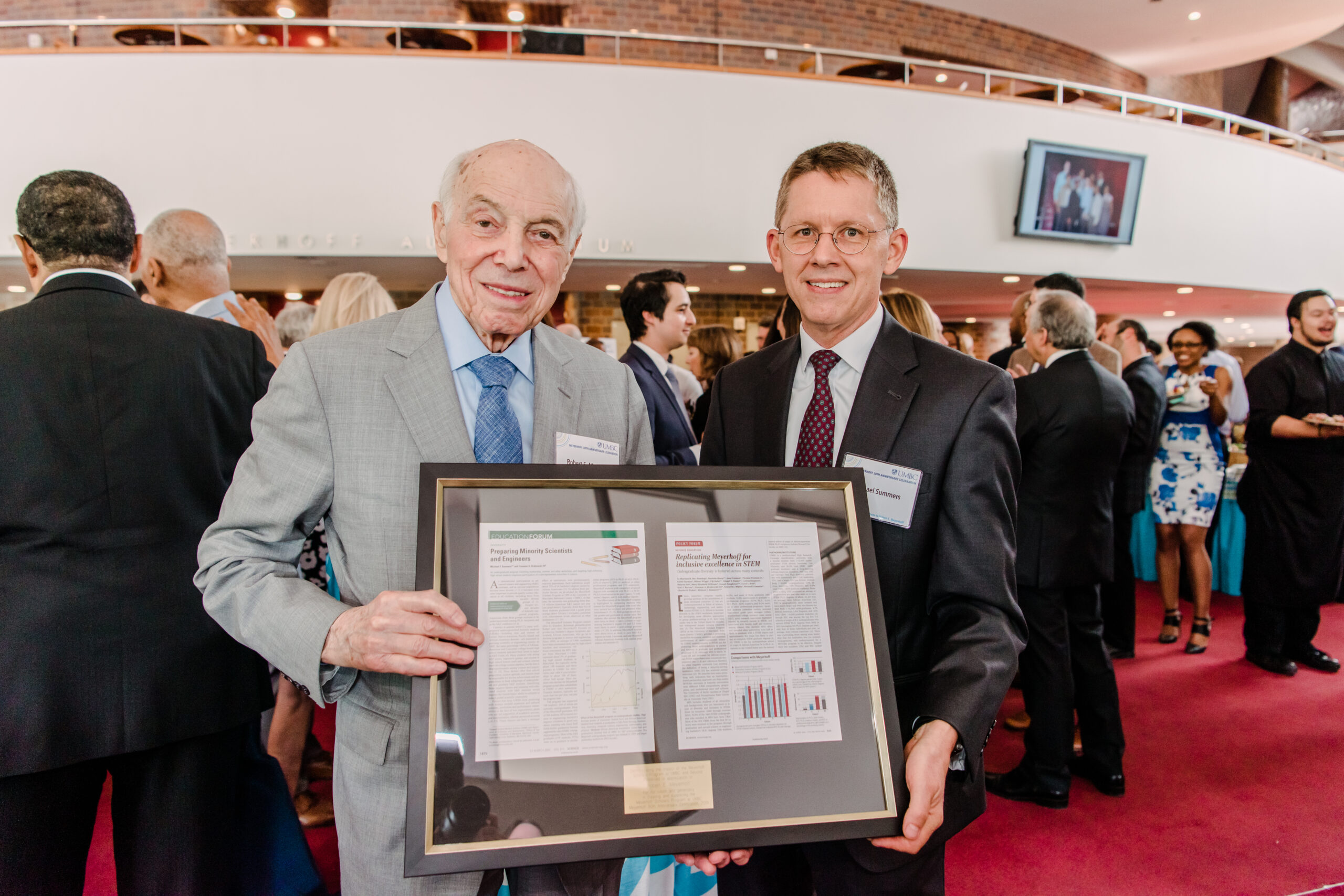
Thirty years ago, Baltimore philanthropist Robert E. Meyerhoff came to then-UMBC vice provost Freeman Hrabowski with the seed of an idea: to create a program that would enable all students, regardless of background, access to the highest levels of science.

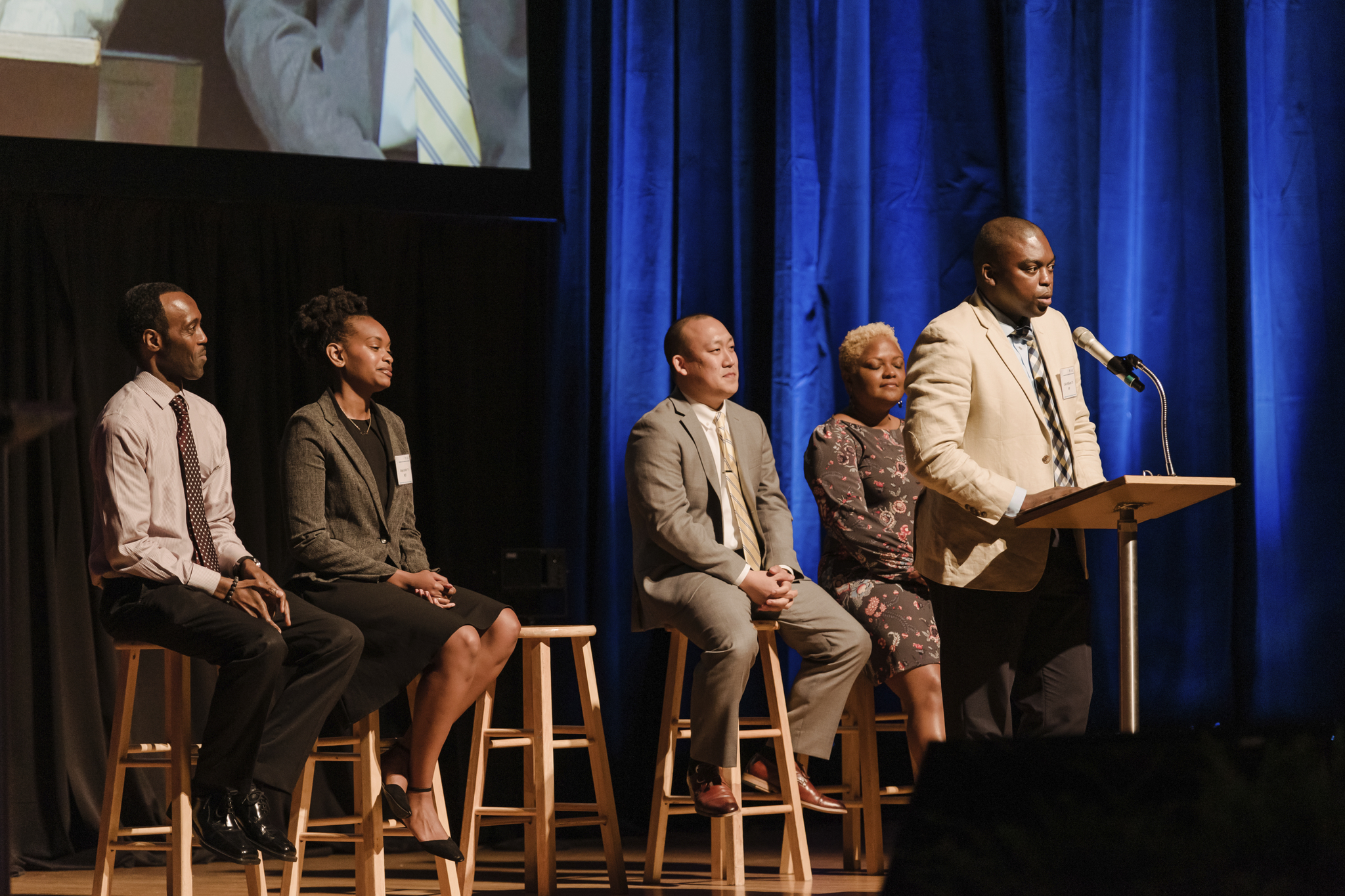
Last week, hundreds of Meyerhoff Scholars Program alumni filled an auditorium stage to thank Meyerhoff for his bold vision. They also came to share their own experiences as proof that he was right to believe in their potential and invest in their futures so many years ago.

Standing on the shoulders of giants

The night of gratitude kicked off an emotional weekend of fellowship and reflection celebrating the Meyerhoff Scholars Program’s 30th anniversary. Over the course of Friday evening, alumni and supporters shared stories of the successes they attribute to a community that believed in them from the start—one that in the words of poet Langston Hughes let them “hold fast to dreams.”

“Meyerhoffs are ‘all in’ types,” said Keith Harmon, director of the program. “Now as alumni, they are distinguishing themselves as STEM professionals, changing the face of the STEM workforce, and showing the world how right Bob Meyerhoff was to believe in them in the first place.”

Setting a national example

The first of its kind in the country, the Meyerhoff Scholars Program launched in 1989 with a small cohort of African American men interested in pursuing graduate degrees in science, engineering, and related fields. In the years that followed, the program expanded to include women and students of all backgrounds who were committed to increasing the representation of minorities in science and engineering.

Today, more than 1,100 Meyerhoff alumni are changing the face of science across the country. The program is a national leader on the forefront of efforts to increase diversity in STEM fields, and UMBC is the nation’s number one producer of African American undergraduates who go on to earn M.D./Ph.D.s.

This spring, the Chan Zuckerberg Initiative awarded $6.9 million to support a unique partnership to replicate UMBC’s program at UC San Diego and UC Berkeley. Earlier replication efforts at Pennsylvania State University and the University of North Carolina at Chapel Hill, supported by the Howard Hughes Medical Institute, have already yielded tremendously impressive results.

Growth thrives in community

As alumni lined up on stage to share their stories, Kamili Jackson Shaw M5, ’97, M.S. ’99, mechanical engineering, talked about her first impressions of the program as an entering student.

“The Meyerhoff Scholars Program was the first time I had ever been around a critical mass of high-achieving African Americans, and it was extremely important to my growth as an individual,” said Shaw. Today, she leads the safety, quality, and management systems division for the NASA Stennis Space Center. “It gave me confidence and humility at the same time,” she says. “For the first time, I was able to simply ‘be.’”

Paying it forward

The night ended with what program alumni called a “Gesture of Gratitude”—the announcement of a $500,000 gift made by alums from across the decades to support the program. As impactful as the gift will be, it was also symbolic, matching Robert Meyerhoff’s original gift to UMBC. And they have no intention of stopping there.

“Sometimes you don’t understand legacy until you see the fruit of it, and 25 years later, I see the magnitude of the program,” says Felicia Sanders M4, ’96, chemical engineering. Sanders, a, leadership-level supporter of the program, says giving back “is a responsibility. It’s a necessity.”

“If someone hadn’t given to us,” she asks, “where would we be?”

Kellie McCants-Price M2, ’95, interdisciplinary studies, was in the first Meyerhoff class that included women, one year after its founding. “I didn’t realize how significant it was until about 10 years out,” says McCants-Price, who holds her Ph.D. in psychology. “I saw how prolific it was—how many women were graduating—and realized that we held the door open for them.”

Alums took to social media to share their memories and thoughts on the celebration, including U.S. Surgeon General Jerome M. Adams M4, ‘97, biochemistry and molecular biology.

The family connection

After Friday’s formal event, alumni gathered in the Event Center on Saturday for a family-style reunion. Many of them brought their children to enjoy a day of food, cohort cluster game competitions, networking, and campus tours. Later that evening, many also enjoyed a dance party hosted by the Meyerhoff Alumni Advisory Board.

Alumni left feeling re-connected as friends, as scholars—and ultimately, as part of a family.

Kafui Dzirasa M8, ’01, chemical engineering, summed up this sentiment as he thanked Robert Meyerhoff on Friday night. “What has increasingly become obvious to us—which you have known all along—is that the power of this community is us, working together as a family.”

Visit meyerhoff.umbc.edu/30th for more photos and information about the program.


How to Be Funny with Christine Ferrera

We all experience levels of humor in our lives. We may giggle at memes on social media, snarf quietly to ourselves when we spy someone make a goof at work, or fall on the floor laughing at the silly things our children say and do. We have “dad jokes” and “potty humor” readily available to us in books and top 10 lists. We know, innately, what works and what doesn’t, and we react accordingly.

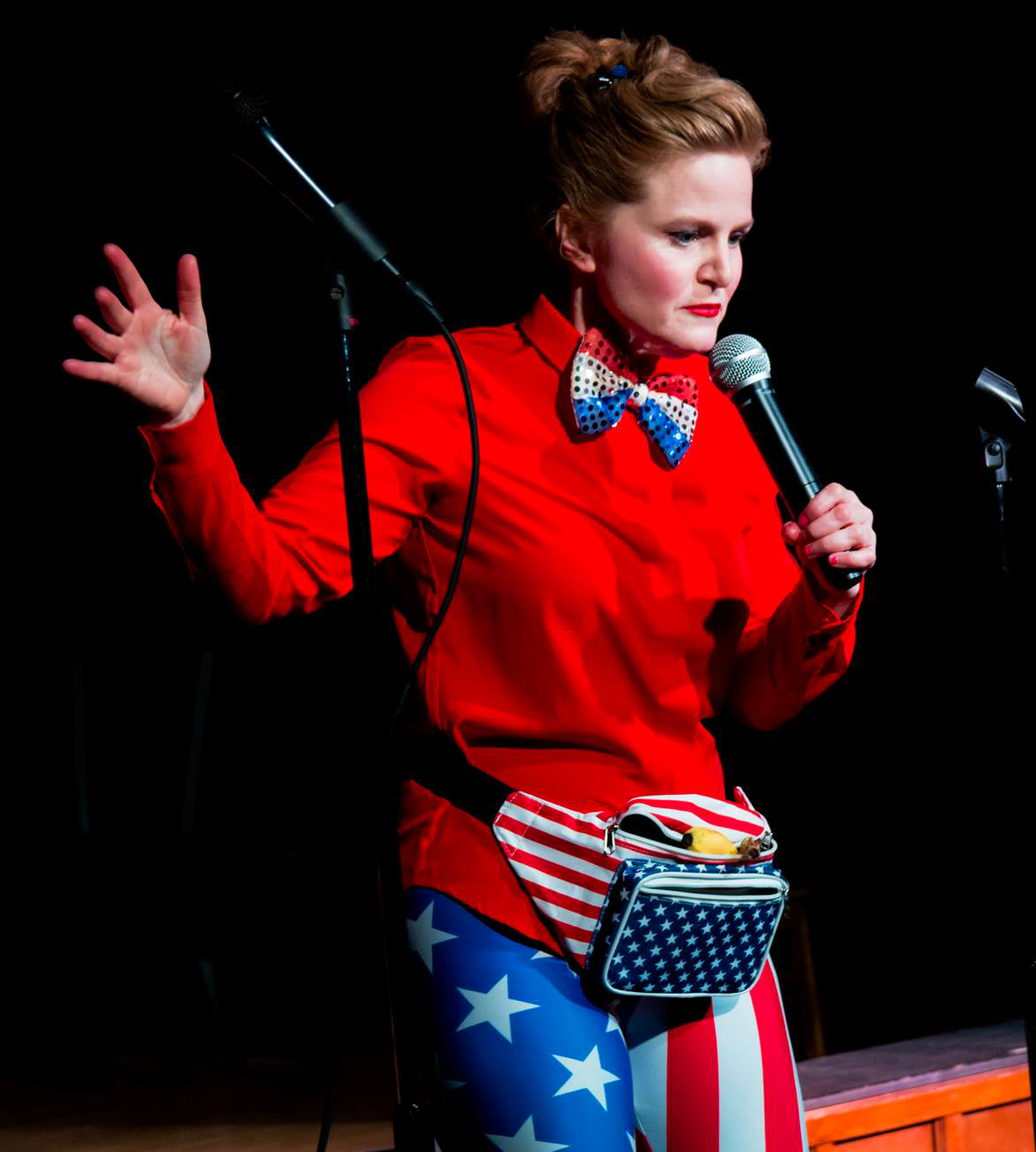
Taking it all up a notch, however, by creating the humor yourself, is another level entirely. And getting up in front of an audience, be it a few friends or a giant concert hall of strangers, to deliver it—well, that takes a certain type of guts this author admittedly does not have. Thankfully, we have Christine Ferrera, M.F.A. ’10, intermedia and digital arts, to help us out. For the last five years, Ferrera—who in addition to working as a video producer at UMBC’s New Media Studio is the author of the Starbux Diary, a collection of witty feedback letters she wrote to corporate coffee—has been hitting open mics and comedy festivals non-stop, learning how to hone her craft one punchline at a time.

Tools of the Trade:  
+ A notebook, always at the ready 
+ A tape recorder for the most honest feedback 
+ Free evenings for hitting the open mics 
+ A healthy attitude toward rejection 
+ The right comedy community for you

STEP 1: Write things down, and don’t censor yourself.

Ferrera honing her humor. Photo by Marlayna Demond '11.You never know when an idea will pop into your head, so, you’ve got to be ready when one comes your way. The best way is to always have a notebook on hand. For Ferrera, it’s a small notebook she acquired at the Red Clay Comedy Festival in Atlanta. Inside are tidbits, observations, and scribbles.

“Some of them are bad or embarrassing, but at this point it doesn’t matter. You never know what will be useful later,” says Ferrera, who keeps the book on her nightstand for midnight musings, and even sometimes asks friends to write ideas down for her in it when she’s driving.

“This isn’t where you’re going to write full jokes. It could be you just thought about something funny, like a phrase or an image or something like that,” she says. “And don’t censor yourself. Later is when you’re going to go in and make something out of it.”

STEP 2: Schedule writing sessions with goals in mind.

Once you have some solid—or vaguely solid—ideas, it’s time to work on writing actual jokes. There are many flavors of comedy out there, and the only way you’ll find yours is to start putting pen to paper.

“I’ll take a notebook and go to a coffee shop and I’ll do a writing session where I’ll set a goal for myself,” says Ferrera. “I’ll say, maybe today I’m going to write three jokes, or five jokes. And then I sit there and pretty much make something out of all those tidbits I’ve been writing down.”

Ferrera also draws inspirationand disciplinefrom comedians she admires, like Gary Gulman, who offers a comedy writing tip each day on social media, and recommends setting time aside each day to write.

“I know how valuable that is,” she says. “When I did Starbux, that was 10 years of writing a small amount every day….the writing sessions are kinda torture, but it’s exciting and fun when you really get rolling, just like any creative art form.”

STEP 3: Get yourself up on that stage.

Photo courtesy of Christine Ferrara.

By now you’re probably watching other comics perform fairly often (if not, it’s time to start!), and you’re beginning to make choices about what you might like to do yourself. Just don’t wait too long to jump into performing yourself, says Ferrera, who hits as many open mics as she can.

“So because it’s pretty much universally daunting to most people to, like, get up and try to tell jokes, just get it over with,” says Ferrera. “Don’t write and write and write until you have the perfect set. Throw some stuff together and get up there with a few minutes of something.”

Over time, as you listen to feedback from the audience, polish your jokes and your delivery.  Ferrera records herself so she can critique herself later and make changes to her repertoire over time. The ultimate first goal: to have a “tight five,” or five solid no-fail minutes of material in your pocket for anytime you need it. You will probably bomb along the way, she says, but that’s part of learning, too.

“It can be excruciating, but you have to do it. You will sound terrible, and you’ll hear yourself going ‘um, uh,’…but then you’ll quit doing those things,” she says. “The more you perform, you’ll find you do it a little differently, and after a lot of times, you’ll say…‘oh, that really worked!’”

STEP 4: Find your voice.

As you feel more comfortable with the rhythm of your words and performance, the next step is to try to make the comedy your own. We’ve all seen the same jokes rehashed by multiple comics, and we’ve all seen performers who draw from common topicspolitics, relationships, etc. So, how do you produce something nobody’s ever seen before?

“What I consider a mistake is when people say, ‘I wanna do comedy,’ and so they’re like ‘Comedy sounds like this. Comedy is talking about dating. Or comedy is making fun of that thing,’” she says. “And that’s so covered already.”

Ferrera likes to draw from her performing arts background, and reminds herself often that her comedy isn’t for everybody. And it doesn’t have to be. Like one of her favorite performers, Maria Bamford, Ferrera wants to stay true to who she is and grow from there.

“Maria Bamford has been out there 30 years sticking to her gut instincts. It’s literally so specific to her, and the way she thinks. That’s what I aspire to,” says Ferrera.

“I would rather bomb or whatever, but be doing stuff that I actually care about saying and doing. Because then, when it’s good, it’s SO good. You can’t beat it.”

Photo by Marlayna Demond '11.


*****

All photos by Marlayna Demond ’11, unless otherwise noted. 

UMBC alumna Adrienne A. Jones makes history as Maryland Speaker of the House

UMBC made history again yesterday as alumna Adrienne A. Jones ‘76, psychology, was unanimously voted Maryland’s next Speaker of the House. Her swearing in was a historic moment for the state. Jones – who has served as Speaker Pro Tem since 2003, and a delegate since 1997 – is both the first African American and the first woman to serve in this role.

The vote followed an intense day of caucusing during which the two Democratic front-runners wound up stepping back to endorse Jones, reported the Baltimore Sun. With the final vote for Jones – 139-0 – and a standing ovation from all, the room burst into applause.

“I think the last time I felt this ecstatic was when UMBC beat UVA,” said Del. Mark Chang ‘99, psychology, who jumped from his seat to second the motion to close nominations before the final vote was made. “It couldn’t have happened to a better person. I’ve always had such respect for Adrienne, especially because she’s a UMBC alum, and a fellow psychology major.”

Jones stepped in to lead the General Assembly several times during this year’s session while former Speaker Michael Busch was in the hospital. When he passed away on April 7, just a day before the end of the legislative session, Jones stepped in yet again to close the session on a somber note. The vote yesterday was conducted in a special session.

“Delegate Jones exemplifies what we want to see in elected office today – leaders who are working hard for the good of all people,” said UMBC President Freeman Hrabowski. “Like so many of our alumni, she is making a real difference in people’s lives. We are so proud of her.”

Fellow UMBC legislators and other members of the Retriever community quickly took to social media to share their excitement about the vote.

“As a UMBC alum, I am incredibly proud today that one of our own has ascended to the Speaker’s position,” said Del. Haven Shoemaker ‘87, political science. “Speaker Jones is a tireless worker, extremely dedicated, and will undoubtedly leave an indelible mark on the State of Maryland. I wish her nothing but the best.”

“This is a big deal,” said Del. Charles Sydnor, III, ’00, policy sciences, noting the historic overtones of Jones’ accomplishment. “I’m extremely excited. She’s the right person for the job.”

Todd Eberly, Ph.D. ’06, public policy, an associate professor at St. Mary’s College, tweeted: “Last week Adrienne Jones was willing to walk away from the Speaker race and now she is the Speaker. A person willing to give up power is precisely the type of person we should entrust with power.”

Jones, who in 2003 was named a UMBC Outstanding Alumna of the Year, discussed the importance of public service at an alumni reception in Annapolis last year.

“Having UMBC alumni in the Senate, House of Delegates, the Governor’s Office, state agencies, advocacy groups and nonprofits is a great asset,” she said.

“As public service professionals, we share the same camaraderie and ‘True Grit’ as we did as UMBC students.”

See additional coverage in The Baltimore Sun.

Featured image: Adrienne A. Jones celebrates UMBC’s 50th anniversary. All photos by Marlayna Demond ‘11 for UMBC.

Teamwork on the Court and in Class

Good luck, Retrievers!

UMBC men’s basketball is officially heading to the America East championship final to defend our title. The Retrievers take on the Vermont Catamounts this Saturday, March 16, 11 a.m., in Burlington.

UMBC men’s basketball advances to the America East final after a gripping semifinal victory

Learn more about ways of watching the game here.

Fan Favorites

This year’s trip to America East evokes memories of last year’s historic season when against all odds, the team beat number one-seeded University of Virginia to become the first-ever no. 16 seed to defeat a no. 1 seed in an NCAA men’s basketball championship tournament. Here’s some history of that exciting week.
Timeline of the Retrievers’ Historic 2018 Run
One Shining Moment — The Shot Heard ‘Round the World
UMBC Athletics

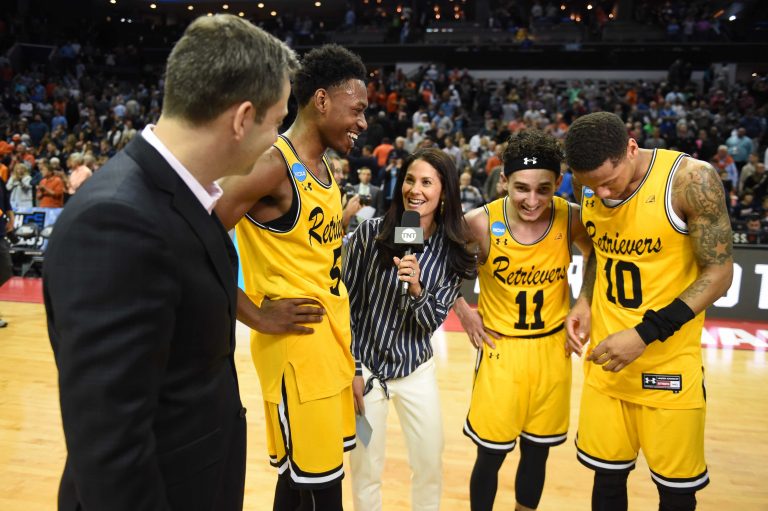
A reporter standing on court with three UMBC basketball players.

Stitching Her Story

Maryland Historical Society to launch year-long display of quilts by Mimi Dietrich ’70, American studies

When Mimi Dietrich sews, the corners of her mouth form a soft, confident smile as she pieces together scraps of the colorful fabric in her lap. On the walls of her Catonsville home hang years of quilting work made during moments like this – intricate swirls and complex geometries of color and texture – that tell her stories and the stories of her hometown, Baltimore.

On the middle finger of her right hand, she wears a tiny silver thimble in the shape of a bee – an apt companion for a woman who for more than 30 years has taught thousands of students and written 17 books about her art, garnering national audiences and acclaim. And the buzz about her quilting continues to grow just as fast as she can stitch.

Mimi Dietrich '70 sewing


This March 23, in celebration of Maryland Day, the Maryland Historical Society will launch a year-long retrospective of Dietrich’s work at its Baltimore headquarters. Titled “Hometown Girl,” the show dives deep into her decades-long quilting career, with an emphasis on her Baltimore album quilts, a style of appliqué quilt made popular in the 1840s and 1850s.

“To me, it’s just so unbelievable,” says Dietrich ‘70, American studies, who in 2013 was named Teacher of the Year by the International Association of Professional Quilters and in 2015 was inducted into the Quilters Hall of Fame. “I’m just so excited.”

INTERPRETING HISTORY

Among Dietrich’s works to be shown are an array of scenes that peek into modern and historic Baltimore life. Some of the more traditional quilts feature baskets, wreaths, and flowers popular to the album quilt style. Yet others push the limits a bit more. Her 1981 Baltimore: Through a Glass Brightly features a rainbow gradient skyline, complete with the Bromo Seltzer tower, the Constellation, the Baltimore Shot Tower, and other buildings framed by the state flower, the Black-Eyed Susan.
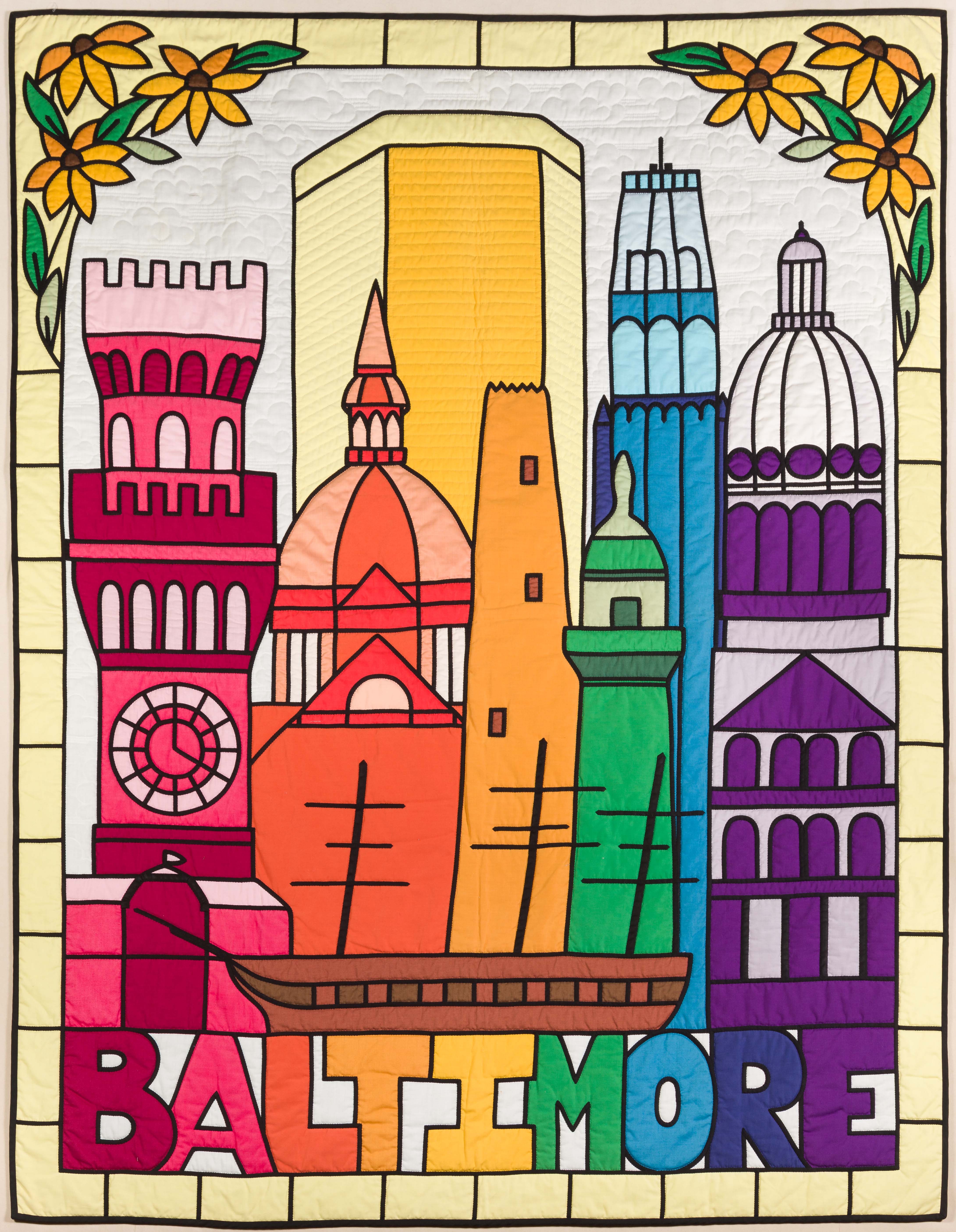
Baltimore: Through a Glass Brightly, 1981, courtesy of Maryland Historical Society.

In another, Baltimore Hon, from 2012, a blonde with a beehive and cat-eye glasses peers from within a scene of flowers, crab cake – that is, a birthday cake with a freshly-steamed crab on top – and a flamingo garnished with shiny pink buttons and three-dimensional fluffy feathering. Beneath her feet, careful script declares: “There’s no place like home, Hon!”

Dietrich’s work was a natural fit for the Maryland Historical Society, where she has volunteered in various capacities over the years.

“Mimi is … one of the finest quilters in the state as well as the nation, and, to me, her work embodies MdHS’s mission to interpret the history of Maryland. She loves Maryland, particularly Baltimore, and stitches that love metaphorically and aesthetically into the quilts she creates,” says Alexandra Deutsch, vice president of Collections and Interpretation at the Maryland Historical Society.

“Her legacy as a teacher is also extraordinary. For more than 30 years, she has been sharing her knowledge, skill, and passion for appliqué with hundreds of quilters from novice to expert.”
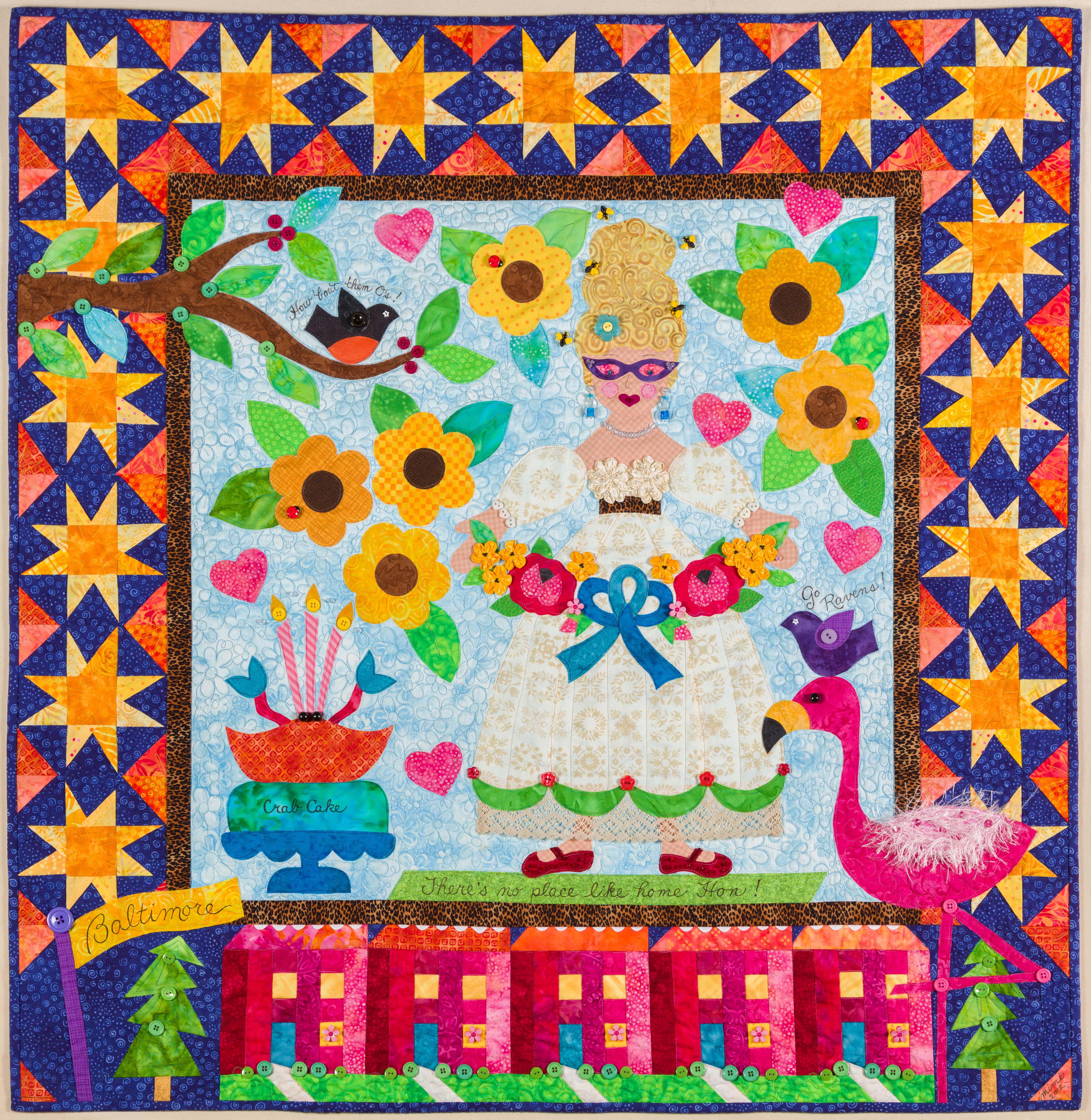
Baltimore Hon, 2012, image courtesy of Maryland Historical Society

LEARNING AND TEACHING

Dietrich made her first quilt in 1974, when she and two friends were pregnant with their first children. (She wound up making a sweet quilt of blue and yellow.)

“I’ve always loved sewing, and I figured if I could sew, I could quilt,” she said. And it was true. As the nation caught Bicentennial fever, the preponderance of flag and celebration imagery – as well as interest in national history – took root in her own work. As she learned to quilt with friends, she quickly became a local expert in the traditional (and Charm City originating) album quilt style.

In 1983, she and fellow alumna Laurie Griffith Gregg ‘95, visual and performing arts, formed their first guild, The Village Quilters. The group, which has grown to more than 120 members, still meets today, bringing artist speakers, antiques dealers, and fellowship to the area’s quilting enthusiasts. They also volunteer their time regularly to groups like the Linus Project and Quilts of Valor, which make quilts for babies and veterans, respectively.

Behind the scenes: Dietrich's work space. We think we spy a Retriever project in the works!

Dietrich has also built a professional life around her art, teaching classes regularly in Maryland and around the world while building a loyal following for her popular instructional books. As a teacher, she’s known for her creative spirit and generosity.

“Mimi wants her students to have fun while learning to quilt,” said Gregg, who met Dietrich in 1972 when they were both working at the former Stretch “n” Sew Fabrics in Catonsville. “She shares everything she knows with her students, while encouraging them to ‘do your own thing.’ … She has a large following of loyal appliqué quilters. Every student in her class, actually every person she meets, considers Mimi their friend. Mimi is as friendly and down to earth as she was at the very beginning of her quilting journey.”

RETRIEVER ROOTS

Considering the tight community she has built among fellow quilters, it’s no surprise that Dietrich also maintains close ties to her alma mater. She and her husband Bob Dietrich ’70, biological sciences, serve as consistent volunteers, leaders, and athletic supporters. Stanyell Odom, director of UMBC’s Office of Alumni Engagement, shared Dietrich’s excitement about her upcoming show.

“I am so happy for her. Mimi has been a dedicated alumni leader for decades,” says Odom. “From her leadership as a founding member of the Fab Four [graduates of the first four classes], to her avid volunteerism for many years with the Alumni Association Board of Directors, to her role in leading up several initiatives in celebration of UMBC’s 25th and 50th anniversaries, Mimi has demonstrated her love and commitment to UMBC.”

In 2018, the Alumni Association recognized Dietrich with the Distinguished Service Award at the 30th Anniversary Alumni Awards. “It was wonderful to celebrate her many contributions to the UMBC community,” says Odom.
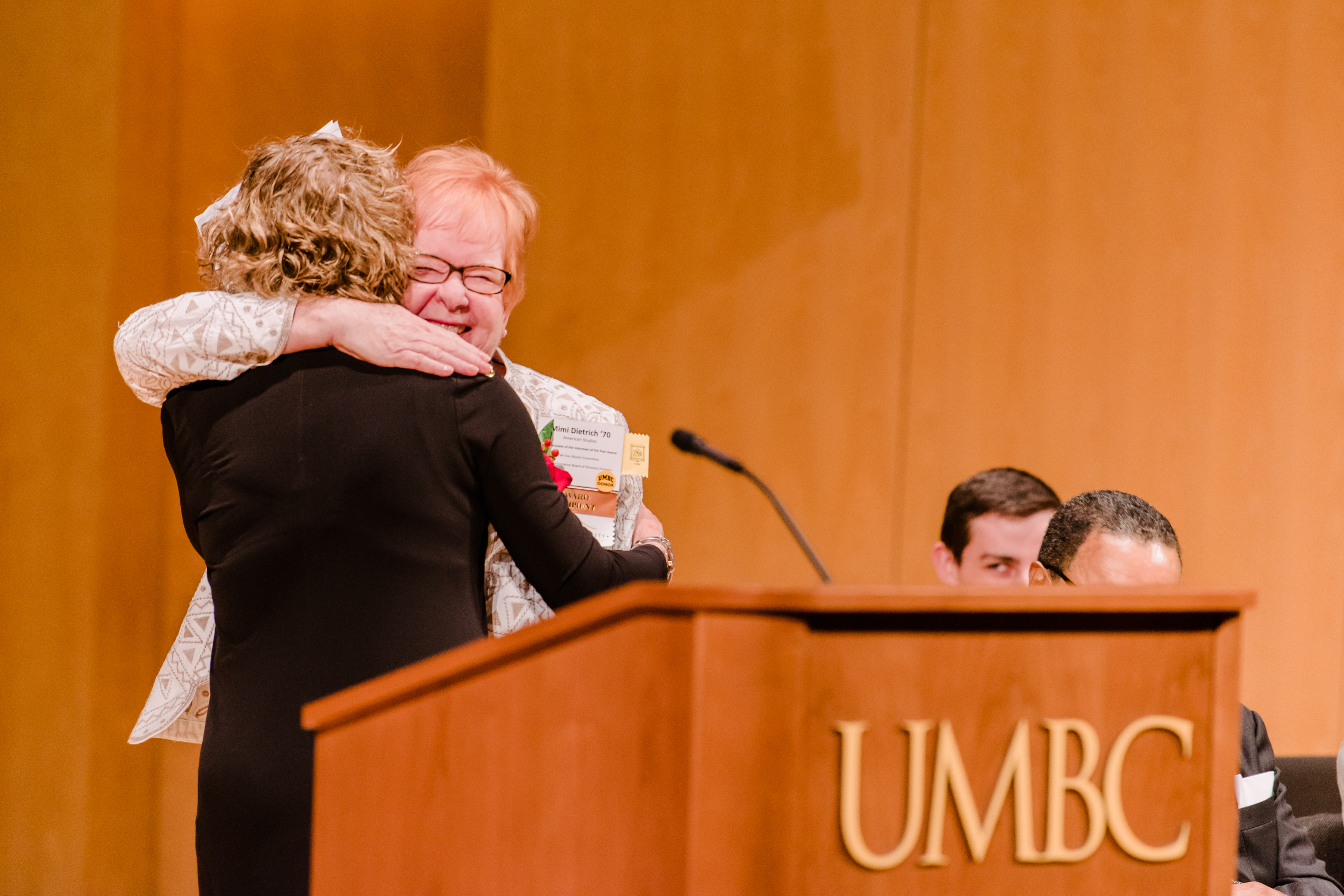
Dietrich hugs Donna Banks Hekler ’70, at the 2018 Alumni Awards ceremony.

As for her successes and her upcoming show, Dietrich is excited but humble. Her friends, however, crow about her whenever they can. Gregg, for one, can’t wait for the world to see Dietrich’s work on display.

It’s about time!” says Gregg. “Seriously, no one deserves this more than Mimi. She is a very proud Baltimorean. Mimi’s love for her hometown is expressed in her quilts… I’m thrilled that so many people will have the opportunity to see her exhibition.”

* * * * *

“Hometown Girl: Contemporary Quilts of Mimi Dietrich,” opens March 23, 2019, at the Maryland Historical Society, 201 West Monument St., Baltimore. A reception for Dietrich’s year-long exhibit will be held Saturday, March 23, 2019, 2-5 p.m. For more information, visit the Maryland Historical Society.

Images by Marlayna Demond ’11 for UMBC Magazine unless otherwise noted.

Roda to Resistance

For Maceo Thomas ‘93 (above, center), the martial art of capoeira is more than just a fun way of staying fit. It’s also a socially conscious art with a fascinating history, fortified by a dedicated community of practitioners, he says. That’s why this weekend, while millions watch the biggest football event of the year, Thomas will combine his love of capoeira into an event that celebrates community and resistance.

At CapoeiraDC’s “Super Roda II” there will be music and demonstrations – as well as a talk by fellow alumnus and UMBC professor George Derek Musgrove ‘97, author of Chocolate City: A History of Race and Democracy in the Nation’s Capital. We took some time to talk with Thomas about his love of capoeira, and why he decided to organize this alternative to the Super Bowl.

* * * * *

Q:  What do you love most about capoeira, and what is the goal of the group?

A:  So, capoeira is so many components: musical instruments, singing, acrobatic movements, dance, fighting. It’s a martial art that was created by enslaved Africans in Brazil. There are songs that go back hundreds of years. The lyrics and names of movements are all in Portuguese. What I love, today, the most about capoeira is the community element that exists inside and outside of the roda (a circle formed by capoieristas). Capoiera is an art practice that requires social interaction.  You can’t learn and get better at capoeira by training on your own in the gym. You need other people with whom to train. The more the better. And it really helps if you have mutual respect and care, because if you knock her out or she knocks you out you are down a training partner. So, we like to take care with our community when we train. And then… we like to socialize together and support each other.


Q:  Tell us about how the “alternative Super Bowl” idea came about. What does the title, “Super Roda II,” mean?

A:   There are a couple words I’ll explain first. In capoiera, we say that we are “playing” capoeira.  Capoeira is considered a game when you have two players playing inside of a “roda” (it’s pronounced hoda in Portuguese).  The roda in capoeira is a circle formed by capoeiristas. There is a group of more advanced capoeiristas who lead the roda with musical instruments and singing. They are the “referees,” for lack of a better equivalent. The music they play determines whether the games we play are fast or slow or low to the ground or standing up with more kicking. The capoeiristas who are not playing maintain the roda with clapping and singing to help energize the games being played.  

As I mentioned earlier, capoeira was created by enslaved African people in Brazil. It was a form of resistance against the oppression that created slavery. When (former San Francisco quarterback) Colin Kaepernick took his knee in the NFL a couple years ago, many classmates in my group agreed not to watch the NFL. So… now you have Super Bowl Sunday roll around, and we needed an alternative to all those events we get invited to. We created Super Roda Sunday. This year will be the second time. We’re sticking with the Roman numerals.

Q:  Can you describe last year’s event and what made it special for you? What does the opposite of a SuperBowl party look like?

A:  Last year’s event was attended mostly by capoeiristas. We made it a potluck event. Along with a basic capoeira class, we had a class led by a capoeirista who is a phenomenal Bollywood dancer. That may have been the highlight, and we’re glad that he is doing the class for us again. We also had a samba class led by one of the students who participates in the Brazilian drumming class that we host in our space. The event was a mix of adults and children and included guests who were interested in what we offer. It was fun, family friendly event that wasn’t focused on football.  

Q:  How do you see fellow alumnus Derek Musgrove’s topics tying in with the “alternative Super Bowl” idea?

A:  I had a chance to hear Derek give a talk on his new book a few months ago and it was amazing. The book explores the racialized history of Washington from pre-colonial times to recent times. I bought a copy…and then five more for family and friends who I know are interested in history and race as it pertains to D.C.

Part of the story of CapoeiraDC is a movement story.  We have had multiple locations throughout our nearly 20 year history across the city. As rent increased, as an artist community, we had to relocate to find affordable space. Derek’s (and co-author Chris Asch) research touches on the movements of people in and out of the city through white flight and gentrification. That part of D.C. history/current events is relevant to the challenges we face as a group and being able to fulfill our mission within the city limits.

George Derek Musgrove and co-author Chris Myers Asch with moderator at the 2017 launch of their book at the the National Museum of African American History and Culture. Photo by Marlayna Demond ’11 for UMBC.

Q:  People might not connect capoeira, football (or the lack thereof), and race and history in Washington, D.C. How would you explain it to someone you just met?

A:  That’s a great question. Capoeira is an art form that purely grew out of resistance;  resistance to what was at the time a European hegemony that is really now known as white supremacy. Just like America, Brazil was economically fueled by slave labor. These enslaved people resisted.

The NFL, as a league, has strongly taken a stance that many, me included, see as opposition to supporting Black healthy lives. They have actively attempted to silence players who have communicated, through silent protests, that Black bodies being killed and maimed should not continue to be the legacy of our country. Yet, white supremacy is being protected by the league as it profits greatly by fighting the resistance of these players and many (former) fans.

D.C. has historically been a political pawn of the U.S.. I know more about it recently, but Derek’s book explores it more in depth. It’s probably not a coincidence that this city of over a half million people hasn’t had voting representation in Congress and it’s been historically a majority Black population.

Race, resistance, anti-racism are all important themes of capoeira, NFL protests, and the history of Washington.

Q:  How can people find out more about Super Roda II?

A:  The event will be held on February 3 starting at 4:30 p.m. at 2008 Rhode Island Ave., NE Washington, DC.  Please follow our Facebook page, Capoeira Malês DC for more information and updates.

* * * * *

Header photo by Koko Lanham.

Tiny Beautiful Things

Beneath the black and gold, and far beyond what might immediately catch your eye, lies a world of wonder. You just need to know where — and how — to look.

By Jenny O’Grady

Campus Microcosmos: Tagide DeCarvalho

Highly magnified organisms collected and photographed at UMBC by Tagide deCarvalho.
Taraxacum pollen (dandelion) collected at UMBC. This image and header image appear courtesy of Tagide deCarvalho.

THE MURKY WATERS of Library Pond. The surface of a dandelion. The moss of a nearby tree. Wherever she looks, Tagide deCarvalho finds specks of wonder — and then amplifies them for all to enjoy.

As research assistant professor for biological sciences and manager of UMBC’s Keith R. Porter Imaging Facility, a center that offer specialized microscopy, deCarvalho has perfected her unique mix of art and science. First she collects fluorescent molecules from organisms that come about it naturally, and then adds them to non-fluorescent organisms to make their natural tones more spectacular when magnified.

The result is a stunning display — Sci-Art, she calls it — of microscopic worlds many of us would never otherwise see or appreciate. Her dandelion spores were recently recognized as an “image of distinction” in Nikon’s annual Small World microphotography competition.

“I used to do field work, and I’ve been to Australia and Hawaii, but until I looked at pond water here, I don’t even know that I’ve felt such wonder,” she says. “You don’t have to go somewhere exotic to find biodiversity and wonder. The inspiration is all here. There’s a whole world here that you just need to learn how to look for.”

Tiny Sand, Tiny Money, Tiny Time:  Corrie Francis Parks

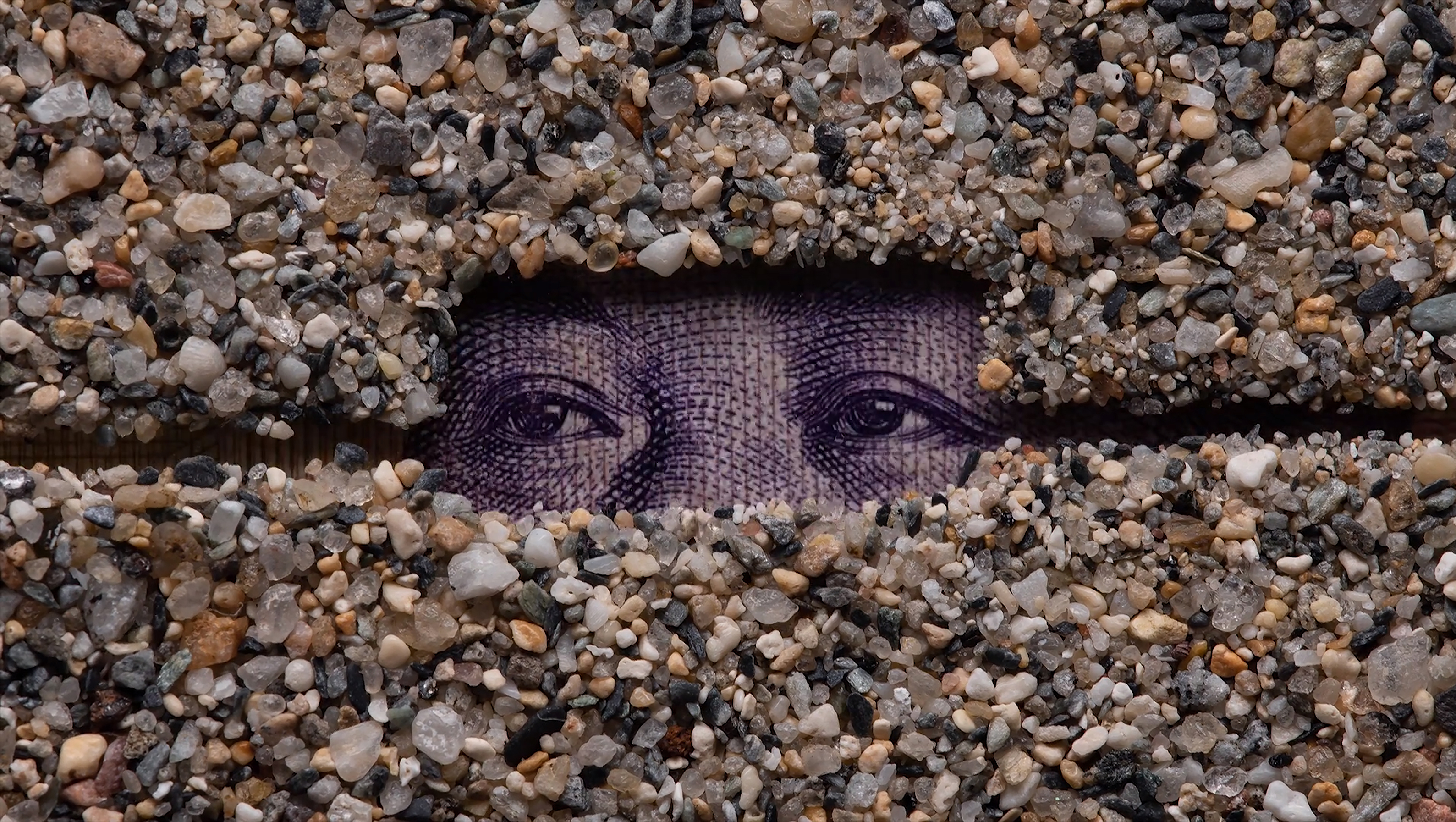
It takes 24 individual frames to fill up one second of film. Pictured: a still from Parks’ Foreign Exchange, featuring multiple currencies and pieces of sand from around the world. Images courtesy of Corrie Francis Parks.

YEARS AGO, AS Corrie Francis Parks began hand animating sand, friends and family started sending her samples from around the world. It came from New Jersey, from Kuwait, from the Moab desert — little baggies and Tupperwares full, of all shapes and sizes and colors.

Later, when Parks, an assistant professor of visual arts, started magnifying paper currencies, she found herself with new supplies arriving in the mail, and new places and economic systems to study and think about.

Her most recent work, “Foreign Exchange,” an animated short about imaginary borders, combines both worlds, with individual pieces of sand journeying across frames dotted with inked winks of paper presidents.

As small as the physical pieces are, they pale in comparison to the tininess of the time captured by the camera; as one second passes, 24 individual frames fly by. Parks invites viewers to make of it what they will, but it’s hard not to ascribe emotion and character to inanimate objects when they’re suddenly huge, dancing around each other.

“I think the really interesting part of what I’m doing right now is this idea of looking closely at things,” she says. “You start to see all of these little details, and I think that it’s a broader metaphor for the way we need to approach social problems, political problems. It’s about looking at the needs of the individual as well as this big, giant generalization.”

Microtechnological Marvel:  Mike Adelstein ’96

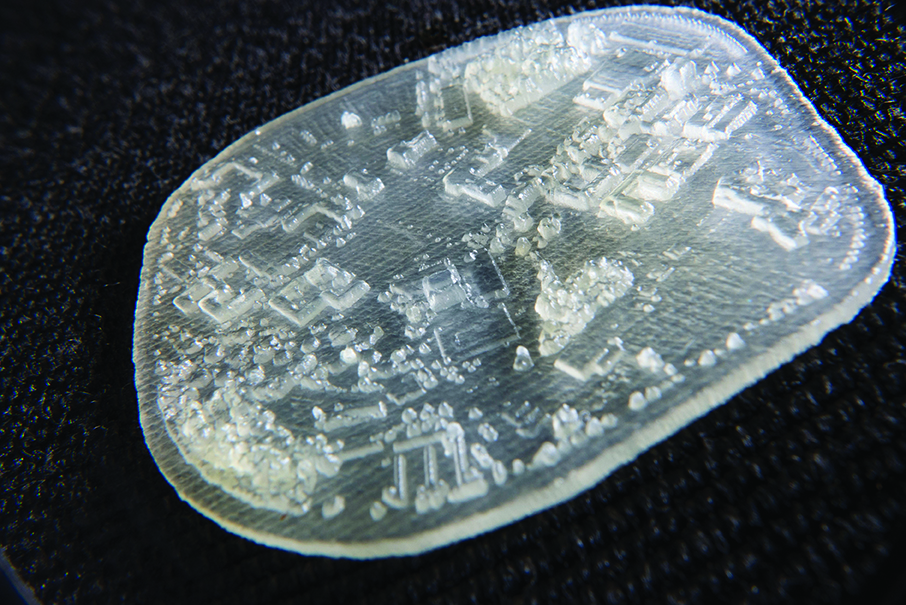
We can only imagine the tiny squirrels flitting about this 3-D printed model of UMBC’s campus, one four thousandth i’s true size. Images by Oscar Matatquin, Potomac Photonics.
We can only imagine the tiny squirrels flitting about this 3-D printed model of UMBC’s campus, one four thousandth its true size. Images by Oscar Matatquin, Potomac Photonics.

UMBC’S CAMPUS IS 512 acres, comprising more than 50 buildings, 3,000 trees, and more than 15,000 people on any given day of the semester.

In the palm of Mike Adelstein’s hand sits a campus 1/4,000th its actual size. His lifelines flow like estuaries beneath the 3-D printed plastic loop. There are no squirrels, nor miniscule french fries to feed them.

“It’s pretty cool, right?” smiles Adelstein ’96, biochemistry, president of Potomac Photonics, which specializes in digital and microfabrication. Whatever his clients need — tiny holes in tiny spaces, micro bonding with lasers, you name it — his team will dream up a way for it to happen.

We can only imagine the tiny squirrels flitting about this 3-D printed model of UMBC’s campus, one four thousandth its true size. Images by Oscar Matatquin, Potomac Photonics.

Several years ago, Adelstein worked with Ecosynth, an open source project at UMBC in which 3D models of terrain are created from photography taken by small radio-controlled aircraft. The main purpose is usually related to ecological study, but Adelstein couldn’t resist creating a model of his beloved alma mater.

And so he keeps it in his pocket, ready to impress visitors. It always does.

“This one’s small, but I can make it smaller,” he says, ready for a challenge. “We’re going to make it smaller.”

Hide and Seek

Can you match these tiny beautiful things to their descriptions? (See the answers at the end of the story.)

#1
#2
close up emulating Saturn's rings in a box
#3
Stem models on background of orange with sun
#4
#5
Tiny Descriptions

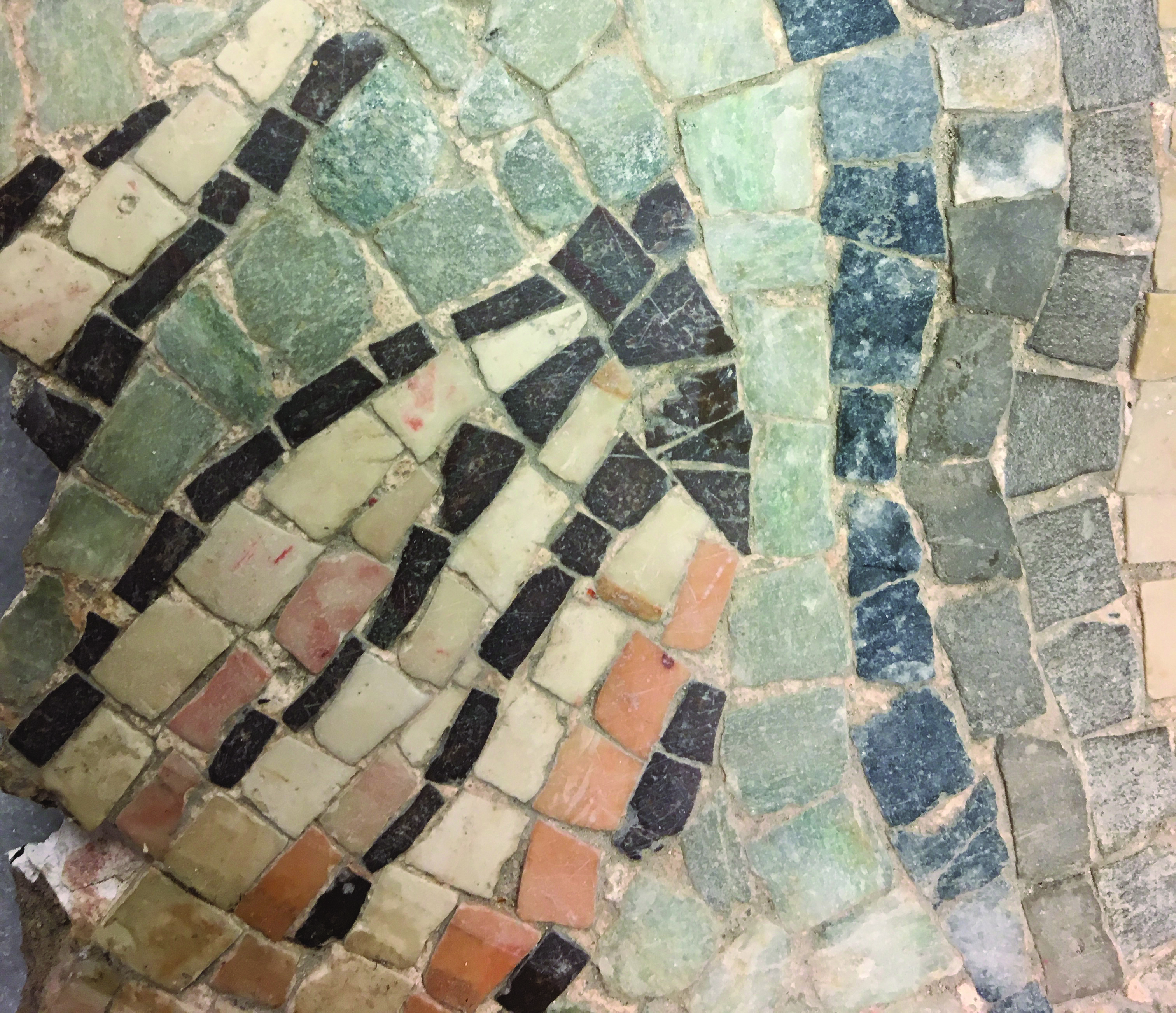
A. Tesserae, or roughly squared pieces of colored stone, make up the edge of a foot or hand in a 5th-6th-century mosaic that likely decorated a synagogue in Caesarea Maritima, Israel. Today, students in UMBC’s Ancient Studies program use artifacts like this from the Spiro Collection in their hands-on study of history.

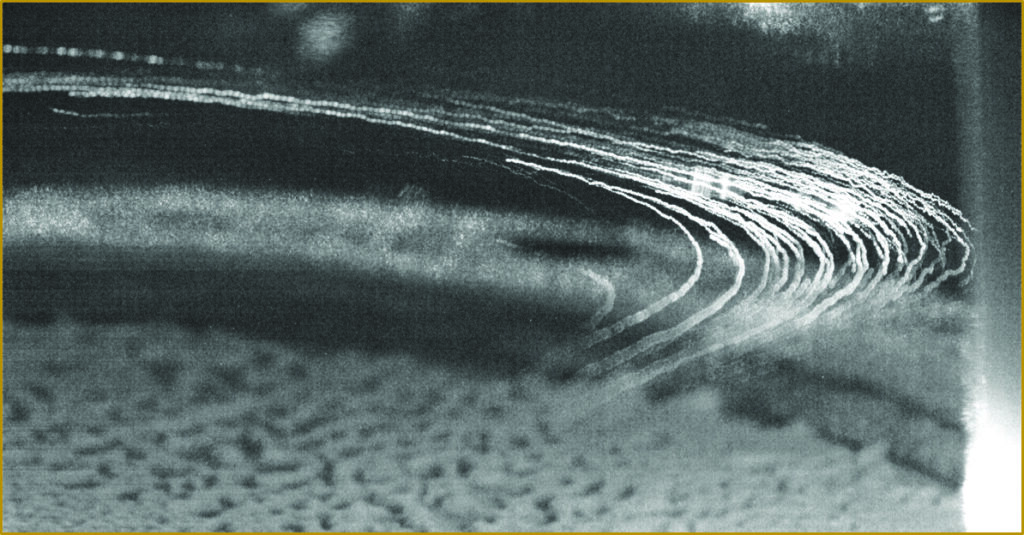
B. Saturn in a box? It may seem like magic, but Carlos Romero-Talamas, assistant professor of mechanical engineering, is using plasma fields to make small particles levitate to simulate the sixth planet’s famous rings right here in his lab.

C. With a diameter ranging from about 0.1 to 0.5 nanometers, the average atom is a million times smaller than the thickest human hair. So, when we say that UMBC physicist Can Ataca is doing big things — developing cheaper ways of creating one-atom-thick materials — in very tiny ways, we really mean it.

D. You might need a stronger pair of reading glasses to understand UMBC’s oldest book, Biblia Sacra, a Vulgate bible from 1484. Interior pages show the original text and hand-painted letters, which you can see in person simply by making an appointment with Special Collections.

E. Can a parking lot ever be good for the Chesapeake Bay? It’s possible, according to senior research scientist Stu Schwartz of UMBC’s Center for Urban Environmental Research and Education (CUERE). The slow sponge-like draining of pervious concrete he studies can help prevent the rapid runoff of rainwater from traditional concrete that carries pollution into our waterways.

Answers: A5, B3, C4, D2, E1

Image #3 courtesy of Carlos Romero-Talamas.  Image #4 courtesy of Can Ataca.