All posts by: Dinah Winnick


U.S. News again names UMBC a national leader in teaching and innovation

U.S. News & World Report rankings announced today affirm that UMBC’s strength in teaching and innovation go hand in hand. UMBC is once again a leader on two closely-watched lists, ranked the #9 most innovative university and #12 top university for undergraduate teaching in the nation. 

“We are encouraged by our success in these rankings,” says UMBC President Freeman Hrabowski. “Our standing reflects the respect that colleagues at universities across the country have for the quality of teaching and innovation at UMBC.”

The university appears on these innovation and teaching lists alongside universities like MIT, Stanford, Carnegie Mellon, Princeton, and Dartmouth. UMBC is the only university in Maryland to appear in the top 20 on either list.

“UMBC’s continued recognition affirms our unwavering commitment to delivering a top-notch education,” says Yvette Mozie-Ross ’88, health science and policy, vice provost of enrollment management and planning.

The UMBC experience

U.S. News also recognized UMBC as the #79 top public university in the nation and one of the country’s Best Value colleges, as well as a top university for ethnic diversity and for veterans. Still, numbers don’t tell the whole story.

“UMBC is unique in that we are pushed to have agency over our own journey throughout our time here,” says Vrinda Deshpande ‘20, biological sciences, president of UMBC’s Student Government Association. 

“I’ve experienced this firsthand in so many aspects of campus,” Deshpande explains. “On the social side, it’s student organizations planning every detail of their events that create our exciting campus life. On the academic side, it’s professors that emphasize the use of peer-led review sessions and group discussions. We, as undergraduates, have the power and autonomy to build the campus around ourselves.”
Katharine H. Cole, vice provost and dean of Undergraduate Academic Affairs, echoes this feeling. “We are delighted that UMBC was recognized for our extraordinary undergraduate educational experience,” she says. “This external recognition reflects our inclusive learning environment, which provides students with broad perspectives and innovative experiences that empower them to shape the future.”

Three dancers leap into the air, looking skyward.

Top engineering programs

In addition to the overall rankings, this year’s publication highlights the nation’s top engineering programs. UMBC appears on the list at #93, tied with the University of Alabama, Tulane, Villanova, and Texas Tech. 

Keith J Bowman, dean of the College of Engineering and Information Technology (COEIT), shares that faculty, staff, and students have been hard at work, making the most of new opportunities brought by the College’s growth. “We have hired twenty-one full-time faculty across the past two years that will help us continue to produce outstanding engineering and computing graduates who help fulfill the workforce and research demands of our region.”
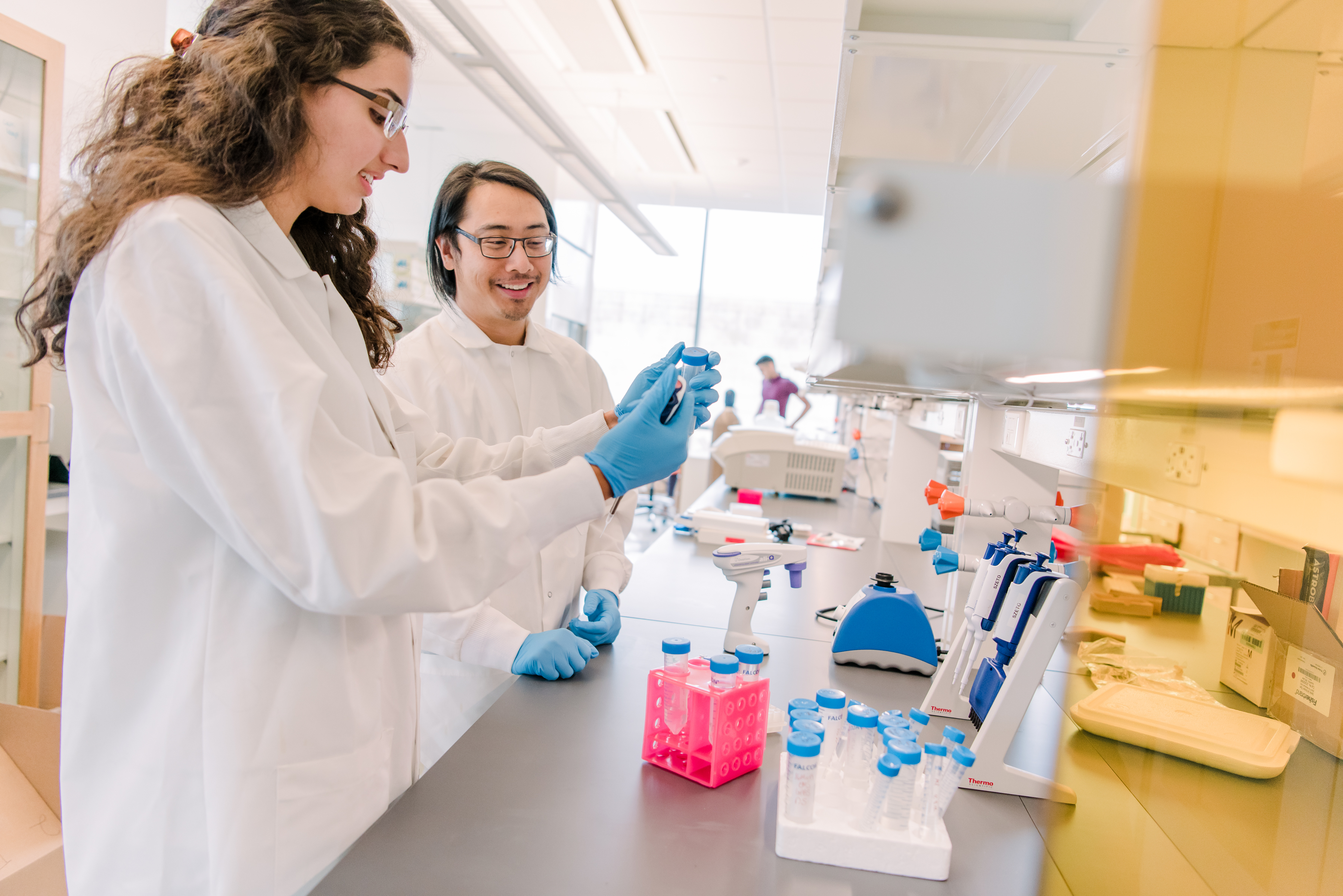
COEIT also continues to grow its connections with UMBC’s College of Natural and Mathematical Science and College of Arts, Humanities, and Social Sciences. Faculty in all three colleges are collaborating on creative and impactful research in UMBC’s brand new Interdisciplinary Life Sciences Building. The facility offers innovative features that set it apart as a space for learning and discovery.

https://www.facebook.com/umbcpage/videos/540465086725943/

Tradition of impact and achievement

For Karl Steiner, vice president for research, the latest U.S. News rankings recognize UMBC’s long tradition of innovation and research with impact.

“At UMBC we take pride in our culture of inclusive excellence,” says Steiner. “Here, undergraduate and graduate students, representing the diversity of the communities we serve, work closely together to address some of today’s most pressing societal and technological issues while creating new economic opportunities in the state. Our research motto ‘Innovation that Matters’ provides exciting opportunities for our students to succeed.”

Beyond U.S. News, the Wall Street Journal/Times Higher Education college rankings also recently recognized UMBC as one of the top 300 universities in the nation. This came just a few months after Times Higher Education’s new impact ranking named UMBC #3 in the nation for achieving social and economic impact.

“It is not surprising that UMBC is ranked so highly as it is this type of societal and economic impact that is at the very core of UMBC’s mission and values,” said Vice Provost Cole, when the news was announced. “This is a place where people are committed to taking on global challenges to make the world a better place.”

Internationally, UMBC was recently ranked in the top 3.3% of universities worldwide by the Center for World University Rankings. Earlier in the summer, Q3 World University Rankings 2020 named UMBC one of the top universities in the world for faculty research

See UMBC’s full profile on the U.S. News website. See additional rankings on UMBC News.

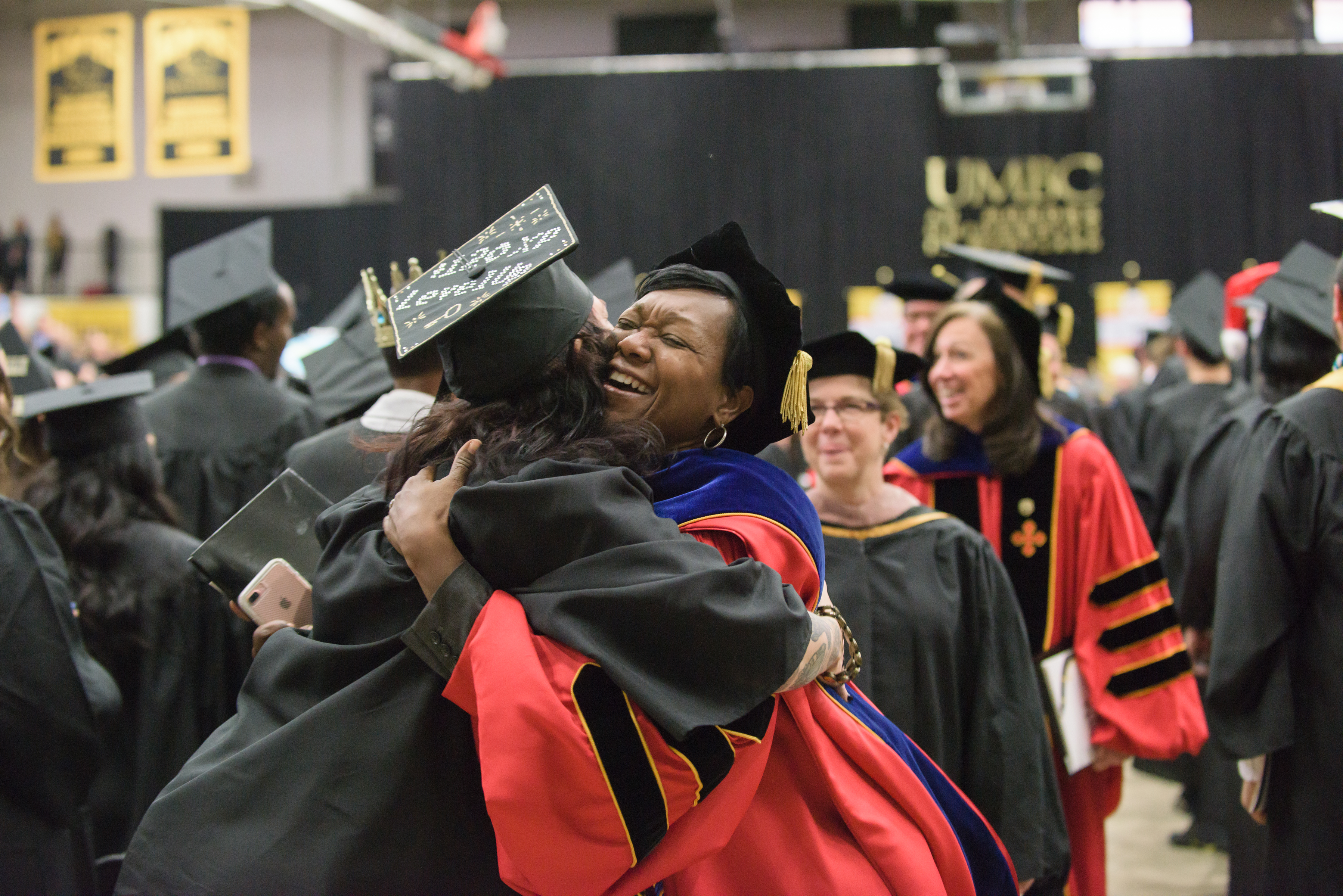
Featured image: Orientation Peer Advisors celebrate the start of a new school year. All photos by Marlayna Demond ’11 for UMBC. 

Video produced by Corey Jennings ’10 for UMBC.

Six Baltimore City Schools in UMBC Math Project partnership see math test score gains

Newly released Maryland PARCC test results reveal that Baltimore City schools partnering with UMBC have seen dramatic growth in student math performance. The Baltimore Sun has called this trend one of the “bright spots” at a challenging moment, when many schools across the state are struggling to move the needle on student learning in math.

Math test scores for the six city schools involved with the UMBC Math Project grew by an average of five percentage points this year. Included are Liberty Elementary School, Mary Rodman Elementary School, James McHenry Elementary/Middle School, Federal Hill Preparatory Elementary School, Lakeland Elementary/Middle School, and Maree G. Farring Elementary/Middle School.

In comparison with this proficiency increase, Baltimore’s overall PARCC math scores remained flat and the state of Maryland experienced a drop of 1.1 percent. This year’s growth also builds on last year’s average increase of 6.9 percentage points at UMBC Math Project partner schools.

UMBC Math Project

To achieve this growth, the UMBC Math Project supports teachers and school leaders in elementary and middle grades through ongoing coaching and professional development. The project has involved 60 educators and supported over 2,000 city school students.

Professional development sessions build teachers’ math content knowledge. They also provide teachers with data analysis techniques to understand where students face challenges, and instructional practices to improve student learning outcomes.

UMBC’s current approach builds on an early partnership with Lakeland Elementary/Middle School supported by the Sherman Family Foundation, with professional development provided by Christopher Rakes of UMBC’s education department. 

Today, UMBC facilitators connect with each school in the project in slightly different ways, based on school structures and needs. For some, support is very hands on. For others, consultation focuses on work with school leaders, who then implement professional development strategies with their teachers. 

Intentional focus on early grades

Joshua Michael ‘10, political science, and a doctoral student studying education policy, serves as assistant director of the Sherman STEM Teacher Scholars Program at UMBC. He meets with educators in each school every two weeks for collaborative planning and professional development sessions.

“Our focus on elementary and middle grades mathematics is intentional,” Michael says. “Over 50 percent of students are performing notably below grade-level by third grade. We must adapt what and how we teach to meet students where they are and set a plan to meet rigorous standards. We know that algebra readiness is a key link to success in high school and beyond.”

Michael, a graduate of the UMBC Sondheim Public Service Scholars Program, taught in city schools earlier in his career, and he enjoys helping educators develop a renewed sense that they can have a measurable impact on student learning.

“Teachers want to do this work, and will go above and beyond when they are empowered as professionals,” Michael says. “Classroom teachers have great insight into what works for students, and when we honor that knowledge and support teachers in developing more tools to do their work, we see students grow.”

Data-informed approach sees results

Michael has found that schools particularly value learning how to use data analysis as a tool to determine what’s working in class, and what they should adjust. As UMBC President Freeman Hrabowski has explained, “We’re bringing more specificity to the work.” And it’s paying off.

From 2016 to 2019, Liberty Elementary School saw an increase from 21.7 to 26 percent in math proficiency. Sara Krauss, assistant principal and math lead at Liberty shares, “Working with the UMBC Math Project has broadened our view on how to attack data. Each teacher now has the tools to make predictions about student growth based on their current math levels using several sources.”

“We use this information to monitor students’ growth, have conversations with students about where they are, and set learning goals,” Krauss explains. “Including students in conversations about their learning is essential.”

Over the same four years, Lakeland Elementary/Middle School saw an increase in math proficiency from 16.7 to 31.8 percent.

From 2017 to 2019, Mary E. Rodman Elementary School has grown from 2.2 to 22.8 proficient in math. “The partnership that our math team formed with UMBC has been transformational,” says third grade teacher Emily Campbell. “The triangulation of data from multiple sources has allowed us to group students in ways which meet their individual needs. It’s taken differentiation to a new level.”

Within that same time frame, Federal Hill Preparatory Academy has also seen incredibly strong results, growing from 17.9 to 43.3 percent. Sara Long, principal of Federal Hill Prep, says, “The partnership provided me with an opportunity to grow as an instructional leader. The planning, collaboration, data analysis, and instructional strategies that we developed allowed our staff to implement differentiated high quality instruction that was individually tailored to meet the needs of all of our students.”

James McHenry Elementary/Middle School has also seen steady growth. Of the partner schools, James McHenry started with the most challenging test results, with just 1.7 percent of students reaching proficiency in math in 2017. Just two years later, that has increased nearly three-fold, to 4.9 percent.

Maree G. Farring Elementary/Middle School is the newest UMBC Math Project partner. Over the past year, the school grew its math test scores from 9.2 to 13.1 percent proficient.

Access for all students

Although the current trends are significant, UMBC Math Project leaders and participants also recognize the importance of expanding partnerships like this to more schools across the city and the state. And the partners are beginning to explore the possibility of summer programs to accelerate student learning.

UMBC’s Susan Sonnenschein, professor of psychology, and a team of graduate students are currently evaluating the UMBC Math Project. This is an essential step to ensure future investments are driven by detailed knowledge about how the program works and how it can have the most impact.

“We approach this work with the mindset that these are our students,” says Michael, “and we design learning experiences that we would expect for our own children.”

“Student engagement has sky-rocketed as more and more students are gaining confidence through accessible instruction and high expectations,” he notes. “This is the education our children deservean experience where they can build on their strengths and grow to their fullest potential.”

Featured photo: Sherman STEM Teacher Scholar Vanessa Gonzalez ’19, American studies, works with Lakeland Elementary/Middle School students. Photo by Marlayna Demond ’11 for UMBC. Photos not by Demond are by Josh Michael for UMBC.
UMBC communications team wins CASE writing award for research news coverage

Silver graphic of a globe with accents and text

UMBC’s communications team has earned an Excellence in News Writing Award for research, medicine, and science news writing from the Council for Advancement and Support of Education (CASE). UMBC was one of just two universities to receive the award in the mid-Atlantic, CASE’s largest district, representing 700 U.S. and Canadian colleges and independent schools.

The UMBC entry, “Big Reach, Big Impact,” focused on how writers in UMBC’s Office of Institutional Advancement collaborate with partners across the university to produce and distribute stories that resonate with broad audiences. While Retriever Nation is a core audience for UMBC News, articles also often reach news media, organizations that support research, and prospective students, faculty, and staff, who are still getting a sense of what UMBC is all about.

Using new tools to understand nature

“Big Reach, Big Impact” included four articles from diverse research fields.

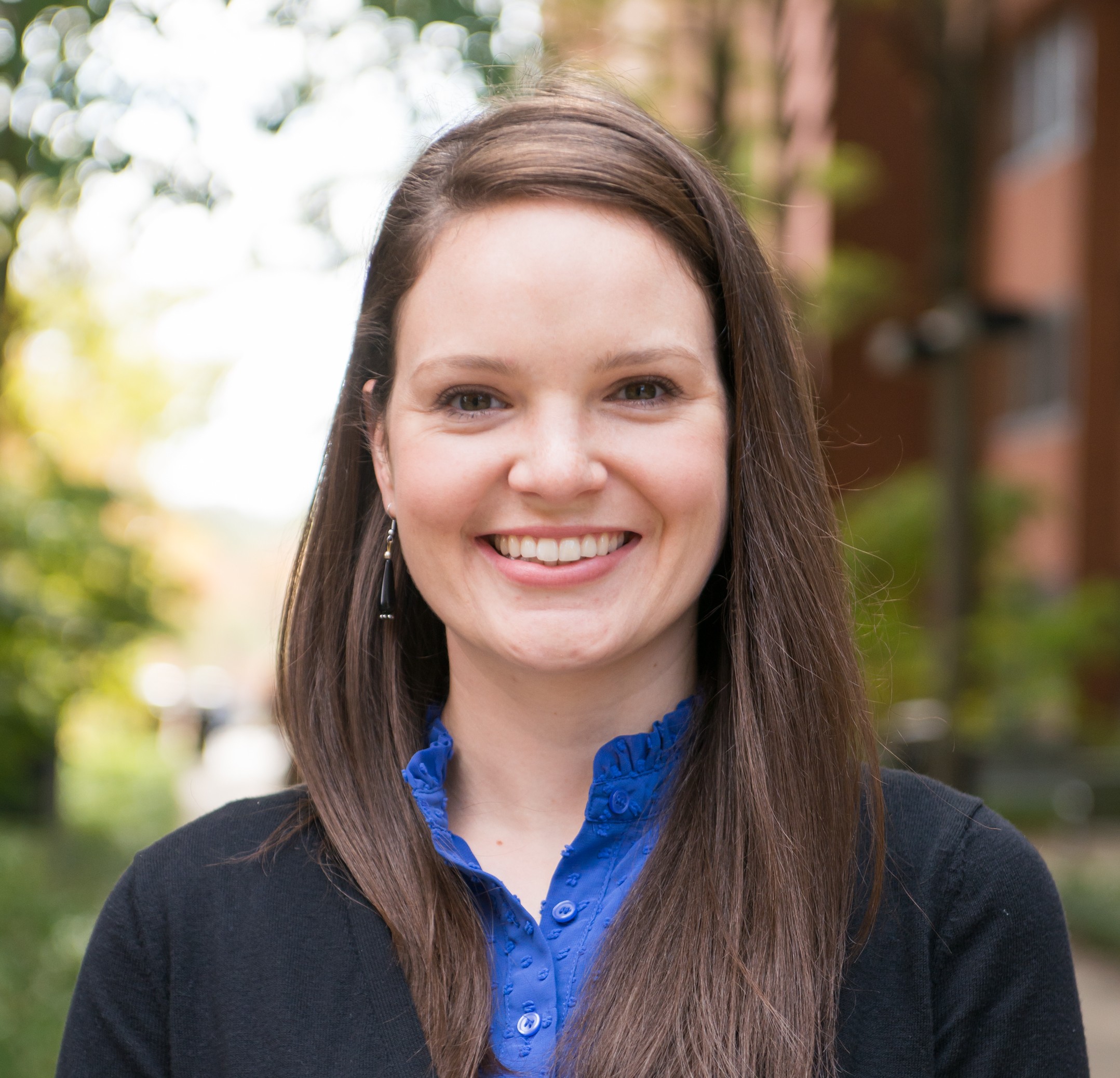
Portrait of smiling woman with long hair, wearing a headband, collared dress shirt, and necklace.
Sarah Hansen

“Two species of ravens nevermore?”, written by Sarah Hansen, M.S. ’15, biological sciences, highlights a groundbreaking study, almost 20 years in the making, on “speciation reversal” in ravens. This term describes two distinct lineages hybridizing and eventually merging into one.

“We examined genomic data from hundreds of ravens collected across North America,” says Anna Kearns, the study’s first author. She’s a former UMBC postdoc who is now at the Smithsonian Center for Conservation Genomics.

Kearns explains that advances in next-generation genomics have made new findings possible, but there are still major hurdles. She shares, “Integrating all of the results across so many individuals, and from such diverse datasets, has been one of the most challenging aspects of this study.”

Two common ravens sit on a branch, preening, with green leaves in the background
Two ravens preening. Photo by John Marzluff.

Joining Kearns in authoring the Nature Communications paper were PI Kevin Omland, professor of biological sciences, and researchers from multiple universities in the U.S. and abroad. In the typical UMBC way, undergraduates played an important role in the research, analyzing mitochondrial DNA. Both Jin Kim ’16, biological sciences, and Hayley Richardson ’17, statistics, are coauthors on the study.

Kevin Omland

“The bottom line is [speciation reversal] is a natural evolutionary process, and it’s probably happened in hundreds or almost certainly thousands of lineages all over the planet,” explains Omland.

He notes, “One of our biggest goals is to just have people aware of this process, so when they see interesting patterns in their data, they won’t say, ‘That must be a mistake,’ or, ‘That’s too complicated to be correct.’”

The Washington Post, The Guardian, National Geographic, Atlas Obscura, Science Magazine, and several other news outlets covered this research.

UMBC’s CASE award entry also included an article by Hansen on how UMBC physicists discovered that African wildfires are impacting climate in unexpected ways. The study was the work of Zhibo Zhang, associate professor of atmospheric physics, Ph.D. students Chamara Rajapakshe and Zhifeng Yang, and collaborators from across the U.S. and China.

The team examined what happens in clouds when smoke from fires in central and southern Africa is swept westward over the Atlantic Ocean. They used data from a LiDAR system on the International Space Station to solve this highly complex puzzle.

View from a data-collecting aircraft over the Atlantic Ocean, where a layer of smoke is visible above the clouds. Photo from NASA/Kirk Knobelspiesse.

Honoring a collaborative community of scholars

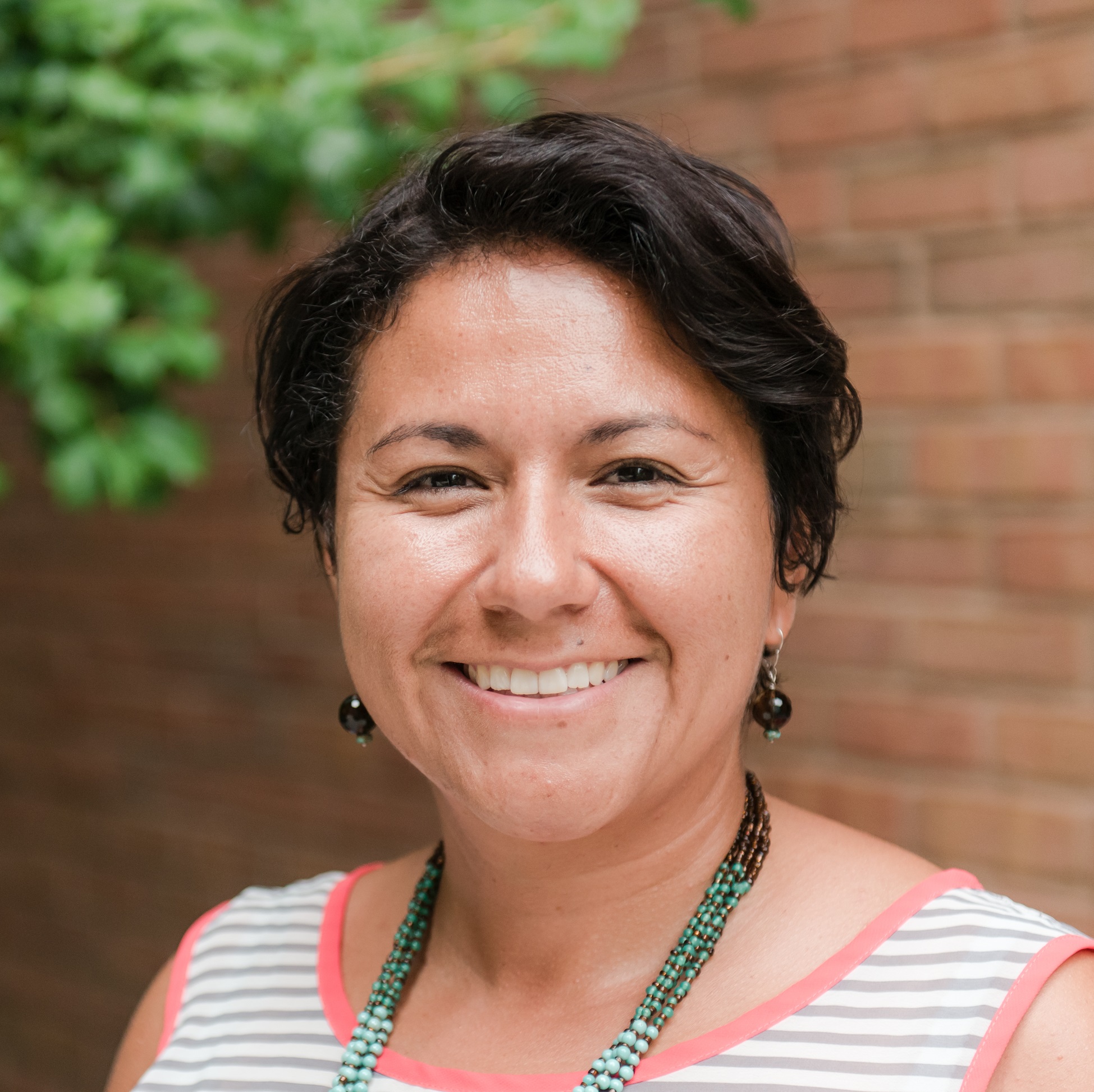
Portrait of a smiling woman with short hair, wearing earrings, a necklace, and striped dress.
Catalina Sofia Dansberger Duque

Another article in UMBC’s winning entry highlights the research achievements of several history faculty. Written by Catalina Sofia Dansberger Duque, the piece opens by introducing Christy Ford Chapin, associate professor and author of Ensuring America’s Health. After writing her in-depth history of the U.S. health insurance system, Ford Chapin received a Kluge Fellowship to immerse herself in the banking and finance collections of the U.S. Library of Congress.

The article describes that Chapin “loves how historians seek answers buried in documents, archives, museums, libraries, basements, attics and forgotten filing cabinets.”

“We have to be like private investigators,” Chapin told Dansberger Duque. “I was really intimidated by the research aspect early on in my graduate career, but then I fell in love with the hunt for primary sources and the process of putting together pieces of the evidence puzzle.”

Women presents a talk from a podium, with laptop in front of her and projector screen behind her.
Christy Ford Chapin presents a talk on her book Ensuring America’s Health at UMBC.

Also featured in the article is Meredith Oyen, associate professor, who held a U.S. Holocaust Memorial Museum Fellowship, studying the resettlement of refugees in China after WWII. Oyen followed a paper trail from Shanghai to Taipei, London, and Washington, DC to gather clues on what occurred.

Meredith Oyen in the UMBC Commons.

Marjoleine Kars, associate professor and chair, and Kate Brown, former professor, who is now at MIT, completed Braudel Senior Fellowships at the European University Institute. While there, Kars worked on her book about one of the largest rebellions of enslaved people in Atlantic history. Brown continued her research on the lasting impacts of the Chernobyl nuclear disaster.

Portrait of woman with short white hair and bright red glasses, in a turtleneck shirt.
Marjoleine Kars. Photo courtesy of Kars.

What made these faculty fellowships possible? Kars shared, “One core aspect of UMBC comes to mind: our collaborative community of scholars. This is what makes it possible for us to explore unique research opportunities around the world, and what draws us back to UMBC each time, to share what we’ve learned.”

Building international cybersecurity connections

Portrait of a smiling woman with long hair, earrings, and a buttoned shirt with cardigan.
Megan Hanks Mastrola

A series of articles on UMBC’s research impact would be incomplete without highlighting the bwtech@UMBC Research and Technology Park. An article by Megan Hanks Mastrola announced UMBC’s new iCyberCenter, designed to help international cybersecurity companies establish a U.S. presence.

Maryland Governor Larry Hogan announced plans for the center during a trade mission to the United Kingdom in 2017. The iCyberCenter later launched with a focus on intensive training for the executives of select international companies seeking to connect with the U.S. market. The Baltimore Sun, Baltimore Business Journal, and Technical.ly Baltimore covered this important news and later developments in UMBC’s cybersecurity collaborations.

A man in suit and tie speaks at a podium in an office meeting space. A crowd of dozens listens in chairs.
UMBC Pres. Freeman Hrabowski announces the launch of UMBC’s iCyberCenter@bwtech.
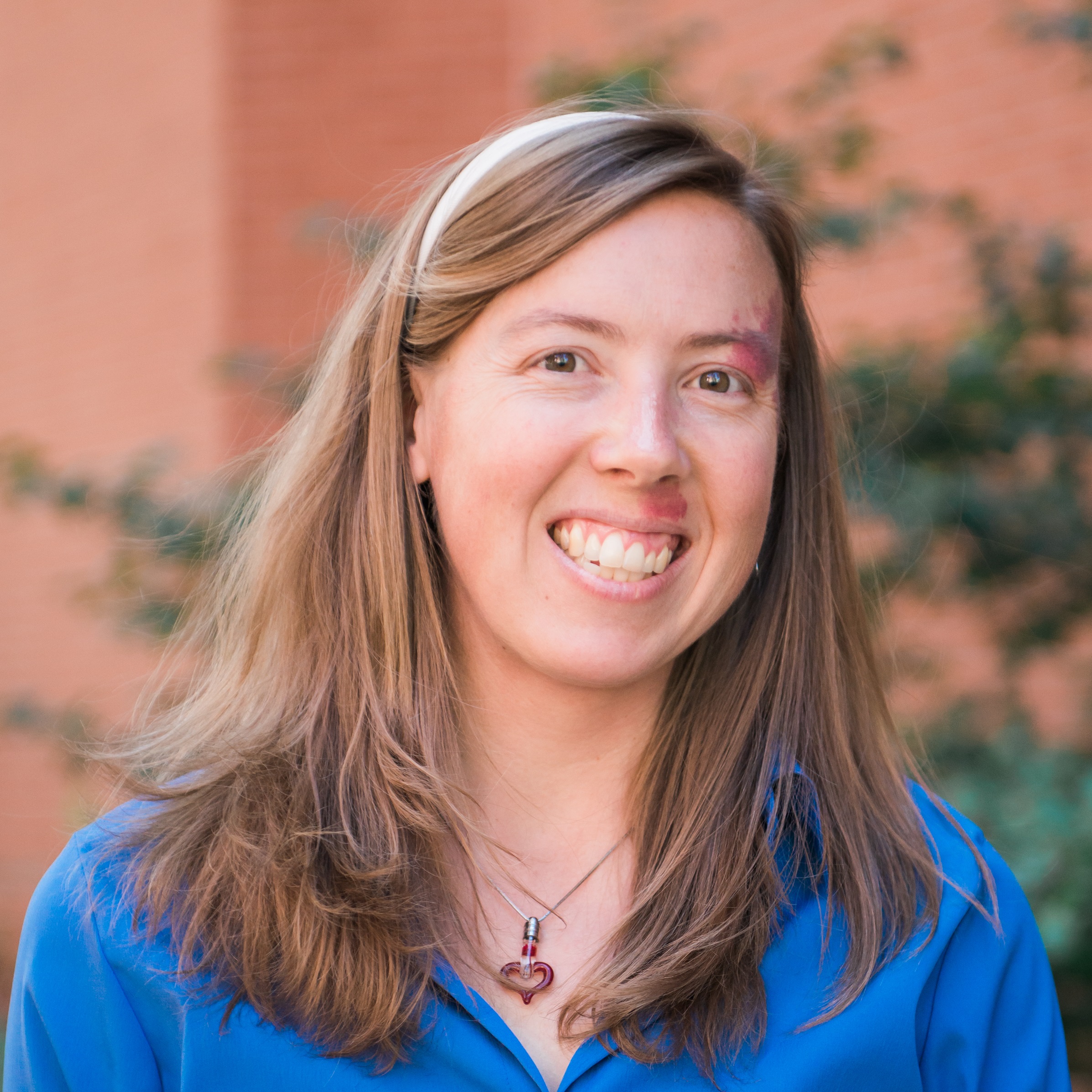
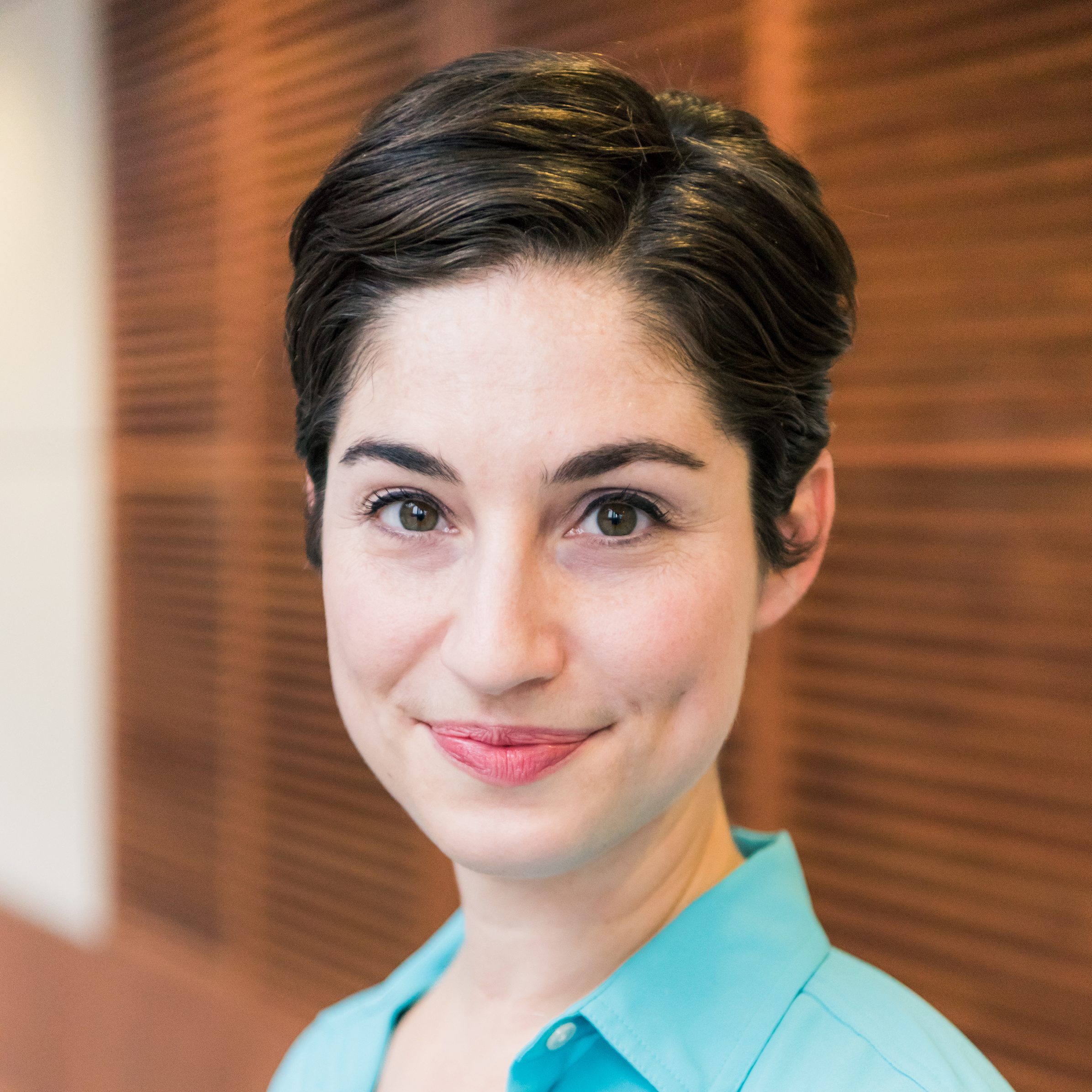
Portrait of a smiling woman with short hair, wearing a collared dress shirt.
Dinah Winnick

Dinah Winnick, director of communications and content strategy and UMBC News editor, accepted the award on behalf of UMBC at the CASE District II conference in Philadelphia earlier this spring. The communications team previously received an Excellence in News Writing Award in 2017 for a series of stories demonstrating UMBC’s joint commitment to research and teaching.

2018 CASE Achievement Awards included articles written through June 2018. Since then, UMBC News and UMBC Magazine have published dozens more articles highlighting a remarkable diversity of UMBC research projects.

Among popular pieces in the last few months are articles on faculty mentors helping undergraduates build their research skills, award-winning aquatic research by Ph.D. students, more inclusive scholarship on medieval women, and laser-based IED detection technology for combat zones.

Sign up on UMBC News to receive UMBC’s weekly Top Stories email.

Featured image: UMBC’s campus in spring 2019. Photos are by Marlayna Demond ’11 for UMBC, unless otherwise noted.

UMBC to face No. 1 seed Penn State in NCAA men’s lacrosse tournament

Just four days after winning the America East men’s lacrosse championship, UMBC defeated Marist to head to the round of 16 in the NCAA tournament. They’ll face No. 1 seed Penn State in University Park, Pennsylvania, at noon on Sunday, May 12.

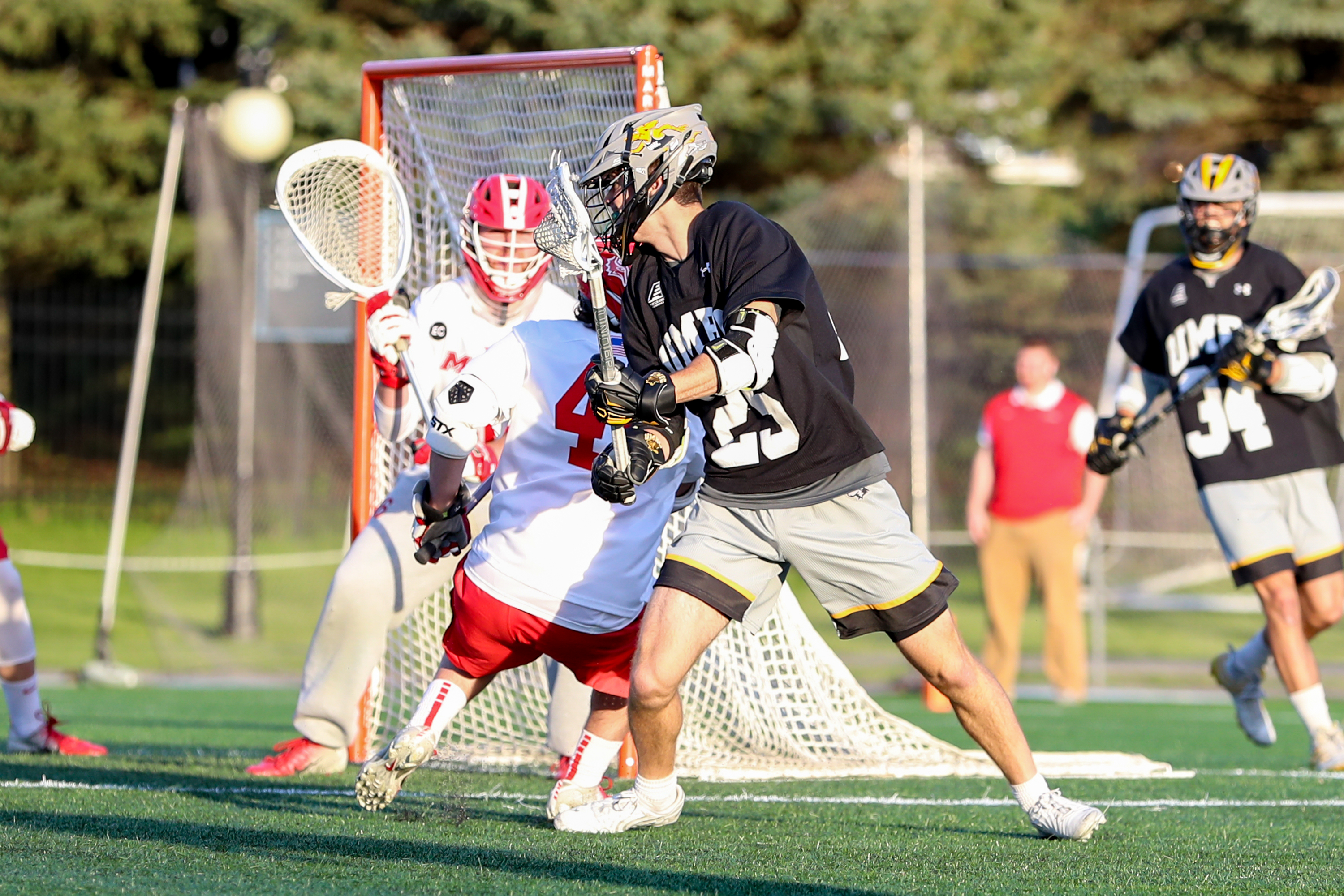
UMBC lacrosse player in black, gold and gray uniform and Marist lacrosse player in red and white uniform, on the field.

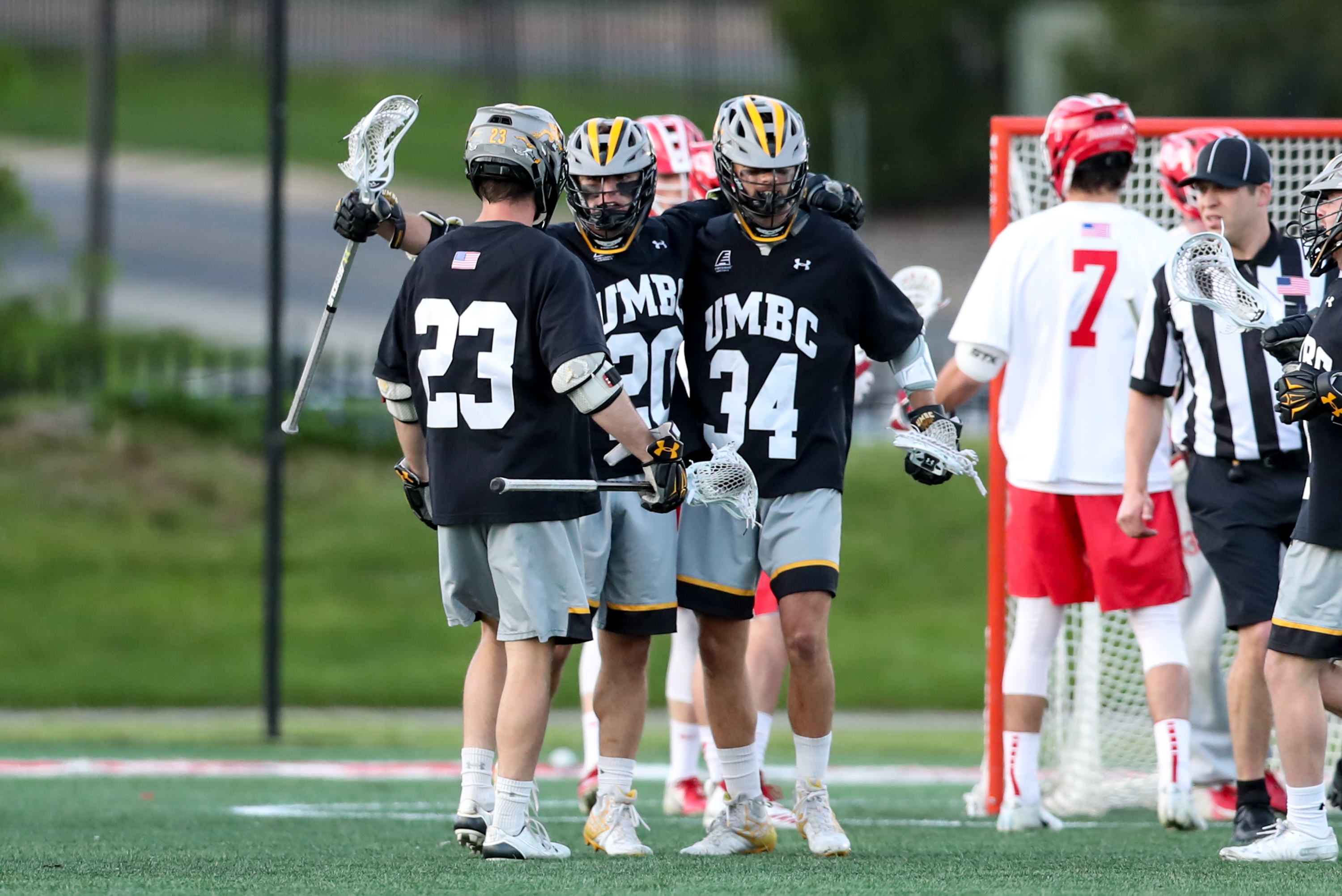
The Retrievers toppled the Red Foxes, 14-8, to win their first NCAA tournament game in 12 years. In 2007, UMBC bested the University of Maryland, College Park, in a 13-9 victory.

Steven Zichelli ‘21, media and communication studies, and Trevor Patschorke ’21 led with three goals and one assist each. Patschorke’s goals pushed him passed the 30-goal mark for the season. Ryan Frawley ‘20, biological sciences, became the tenth Retriever in UMBC men’s lacrosse history to score 40 goals in a season.

UMBC lacrosse player in black, gold and gray uniform and Marist lacrosse player in red and white uniform, on the field.

Looking forward to the game ahead, today’s Baltimore Sun asks, “Can UMBC pull off another upset of No. 1 seed?”

The paper notes, “The first round of the NCAA men’s lacrosse tournament will have an overwhelmingly local flavor to it. With UMBC’s 14-8 opening-round win at Marist on Wednesday, five Baltimore-area teams will compete in first-round action Saturday and Sunday, tied for the second most from the state in tournament history. A record six made the 2007 field, but only the Retrievers and eventual champion Johns Hopkins advanced to the quarterfinals.”

A group of UMBC men's lacrosse players in black, gold, and gray uniforms embraces each other on a field.

For full coverage, visit umbcretrievers.com.

Featured image: Steven Zichelli plays for UMBC. All photos courtesy of John McCreary.

UMBC advances to the NCAA Men’s Lacrosse Championship after America East victory

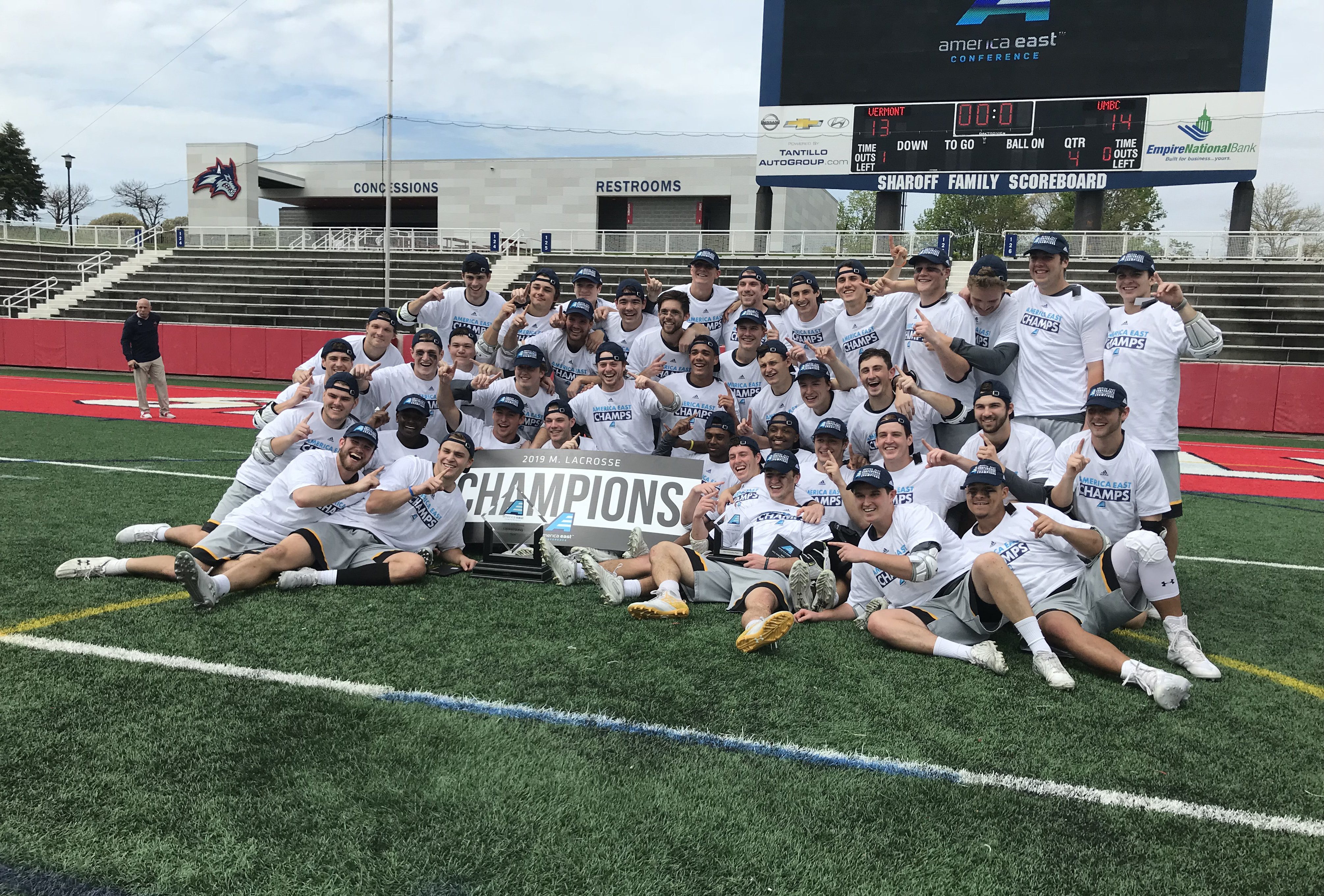
The Retrievers are America East champions again, with UMBC’s men’s lacrosse reclaiming the title for the first time in a decade. Attackman Trevor Patschorke ‘21 scored a game-winning goal for UMBC with just 66 seconds left on the clock. Now, the team is heading to the opening round of the NCAA Men’s Lacrosse Championship, facing MAAC Champion Marist on May 8, 7 p.m., at Tenney Stadium in Poughkeepsie, New York.

“I am really proud of our guys’ resiliency all season,” said head coach Ryan Moran, after the 13-12 victory over Vermont. “I was extremely happy to see them rewarded on the biggest stage.”

UMBC Men's Lacrosse team poses with America East Championship banner on the field

Patschorke was named America East Tournament Most Valuable Player. He and teammates Ryan Frawley ‘20, biological sciences, and Brett MCintyre ‘20, mechanical engineering, each scored four goals during the championship game, and Steven Zichelli ‘21, media and communication studies, scored one.

Billy Nolan ‘19, political science, and Gunnar Schimoler ‘19, economics, joined Frawley and Patschorke on the All-Tournament Team.

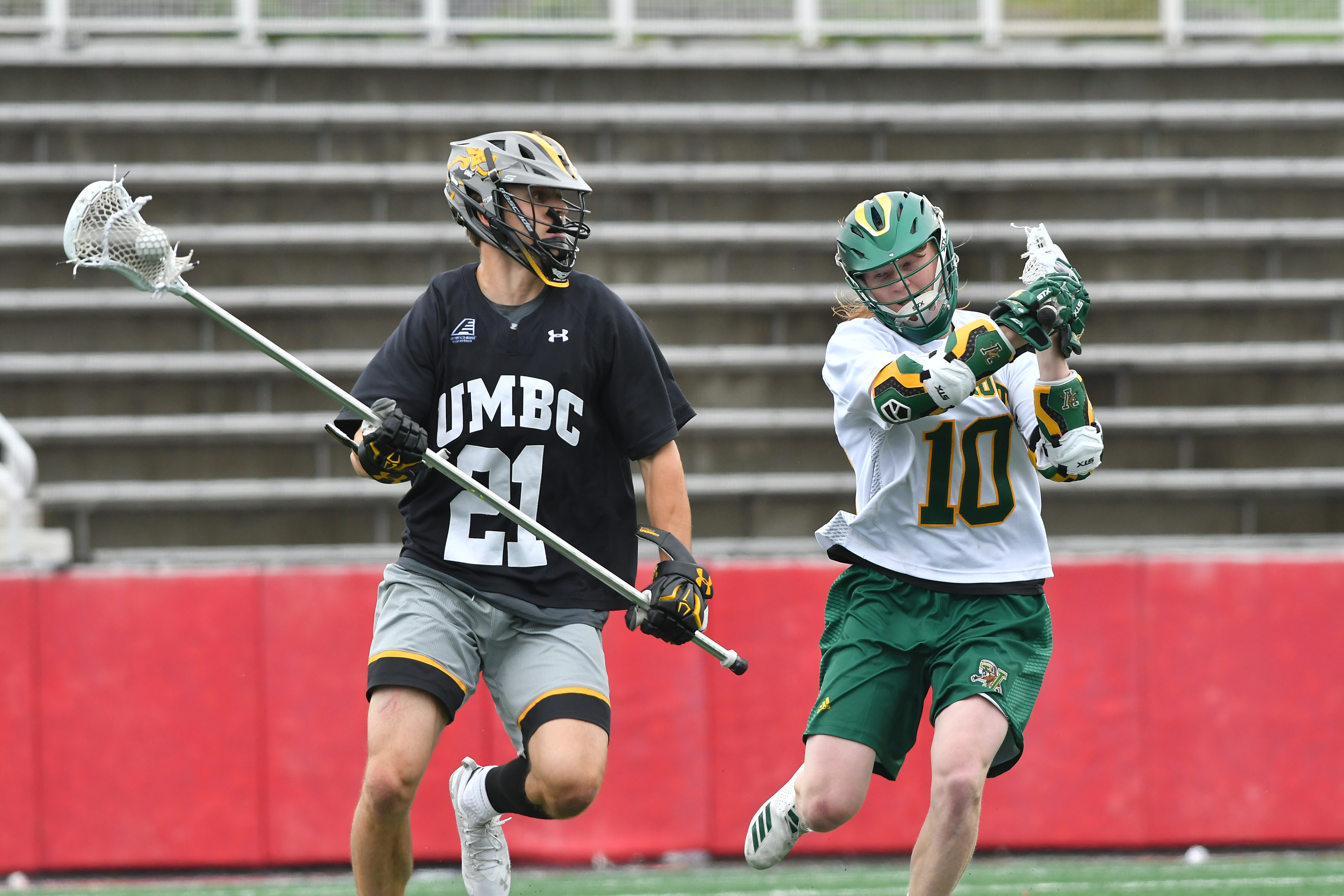
Two men's lacrosse players from different teams face off on the field

Thinking back to that final goal, with the shot clock running down, Patschorke says, “When I had the ball in my stick, I knew my looks from practice and I just executed.” He slipped a sharp-angled shot past Vermont’s goalkeeper to claim UMBC’s victory.

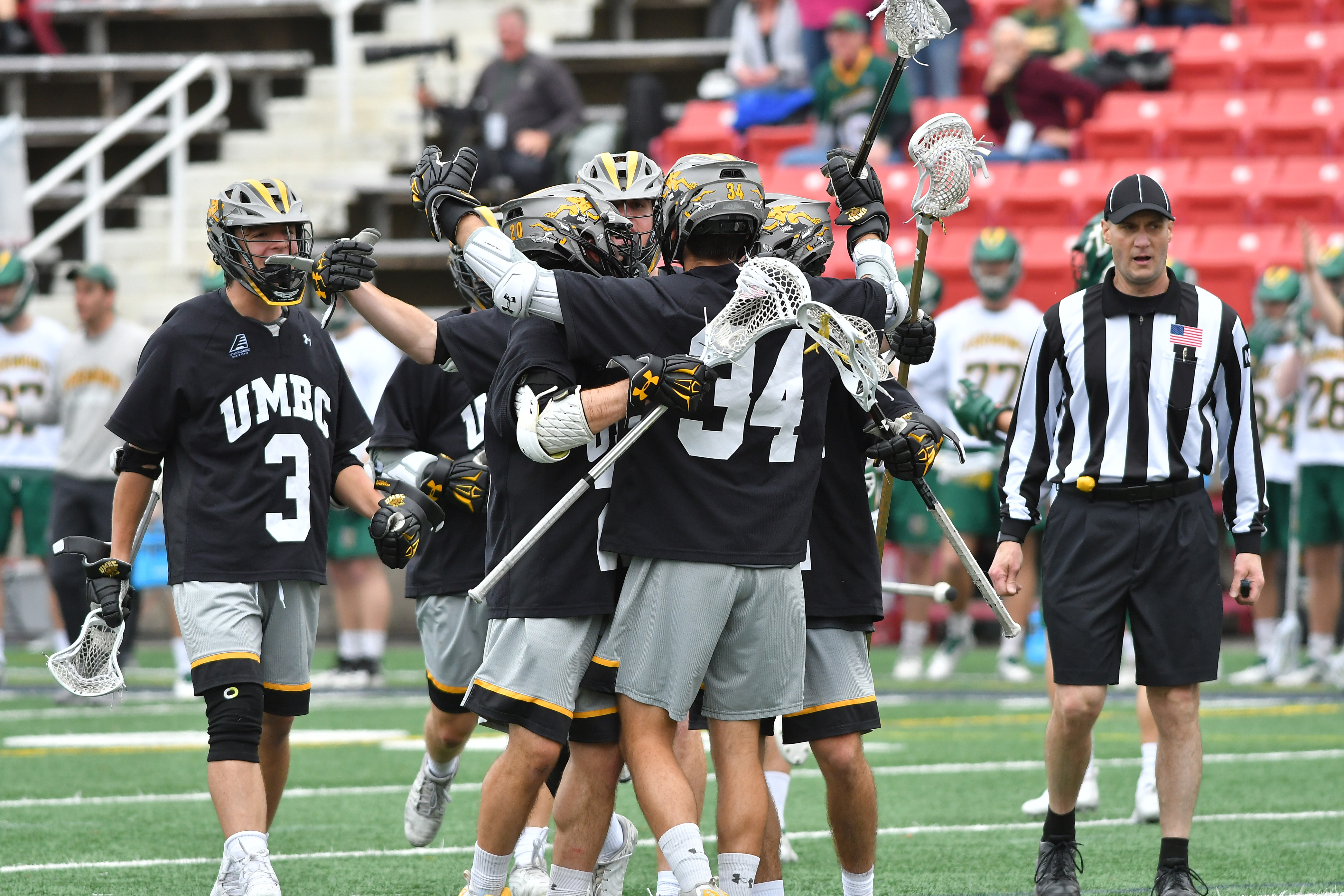
Men's lacrosse players embrace on the field, after a big victory

After the win, the team celebrated at an NCAA Selection Show watch party on campus, May 5.

This is the team’s fourth America East title (2006, 2008, 2009, 2019). Wednesday’s game will mark UMBC’s seventh appearance in the NCAA Men’s Lacrosse Championship.

Learn more about the America East Championship victory and upcoming NCAA opening round game against Marist on umbcretrievers.com.

Featured imaged: Trevor Patschorke plays for UMBC in the America East Men’s Lacrosse Championship game. Photos courtesy of Jim Harrison.

Business First names UMBC one of nation’s best public universities

Business First has named UMBC one of the best U.S. public colleges and universities in a national report issued this month. The publication notes that their study “pinpoints the public universities and colleges that offer the best educational experiences to their students.”

The ranking assesses over 500 four-year higher education institutions based on 22 key indicators. These factors measure a combination of academic excellence, affordability, diversity, and the economic strength of communities.

Three Maryland institutions are featured in the top 70, including UMBC; the University of Maryland, College Park; and St. Mary’s College of Maryland.

Other universities featured prominently include UC Berkeley and UC San Diego, UMBC’s partners for a recently announced $6.9 million replication of UMBC’s gold-standard Meyerhoff Scholars Program. Also highlighted are Penn State and UNC Chapel Hill, UMBC’s partners for the inaugural Meyerhoff replication, whose success was just featured in Science.

A full list of the top 250 ranked public universities is available through Business First.

Featured image: Students walk down the stairs near UMBC’s Albin O. Kuhn library in April 2019. Photo by Marlayna Demond ’11 for UMBC.

UMBC ranks #3 among U.S. universities in global social and economic impact

Times Higher Education has just named UMBC #3 in the nation in achieving social and economic impact. This 2019 University Impact Ranking measures how well universities deliver on UN Sustainable Development Goals, which were adopted in 2015 by all United Nations Member States as a blueprint for global peace and prosperity.

Core values

“The new Times Higher Education impact rankings are distinct from other university rankings in that they are a measure of the difference UMBC is making in the world,” says Katharine H. Cole, vice provost and dean of Undergraduate Academic Affairs. “It is not surprising that UMBC is ranked so highly as it is this type of societal and economic impact that is at the very core of UMBC’s mission and values. This is a place where people are committed to taking on global challenges to make the world a better place.”

The new ranking from the London-based international publication examines university performance in 11 of the 17 Sustainable Development Goals. UMBC led among U.S. universities in several categories, and ranked just after UNC Chapel Hill and Arizona State University overall. In the full global ranking, which includes hundreds of universities from 76 countries, UMBC was recognized as #62 overall.

“UMBC’s highly-recognized emphasis on inclusive excellence is well-aligned with the United Nations’ Sustainable Development Goals recognized by this impact ranking,” says Karl Steiner, vice president of research. “Our position among the top institutions recognizes our focus on social and economic impact across the nation and the world.”

Highlights

UMBC was highlighted as a top university in promoting sustainable cities and communities (#5 in the U.S., #36 in the world). This area extends across a broad range of fields. UMBC’s highlighted strengths range from atmospheric physics research to scholarship that rethinks the relationship between art institutions and the public, to the university’s work to decrease its carbon footprint, even at a time of significant growth.

UMBC’s particularly strong ranking in the area of gender equity (#5 in the U.S., #56 in the world) recognizes the university’s work to support women in STEM at all levels — undergraduate, graduate and postgraduate, and faculty. Highlights include the Center for Women in Technology and its CWIT Scholars Program, as well as UMBC ADVANCE, which supports the development, hiring, and advancement of women faculty in STEM.

Naomi Mburu '18 works in the lab with faculty mentor.

UMBC was also #2 in the U.S. in both work to reduce inequalities (#23 globally) and the development of partnerships for the goals (#47 globally). The University was #3 in the U.S. for climate action (#23 globally) and #5 in the U.S. for promoting decent work and economic growth (#101 globally), and #55 globally for promoting responsible consumption and production.

This new ranking comes on the heels of U.S. News recognizing UMBC’s graduate programs as among the best in the nation, and NSF ranking UMBC as one of the top 150 U.S. universities in federal research funding. With its unique approach, this new measure brings together UMBC’s achievements in teaching, research, and creative achievement, and commitment to serving as a model for inclusive excellence.

Learn more about the full rankings and the methodology behind them.

Featured photo: Chemical and biochemical engineering Ph.D. student Adam Day (left) works with Prof. Erin Lavik (right) in her lab, which focuses on polymer synthesis and processing, drug delivery, and stem cell biology to create new therapies. All photos by Marlayna Demond ’11 for UMBC.


Looking ahead to UMBC Giving Day—shining a spotlight on ways to make a difference

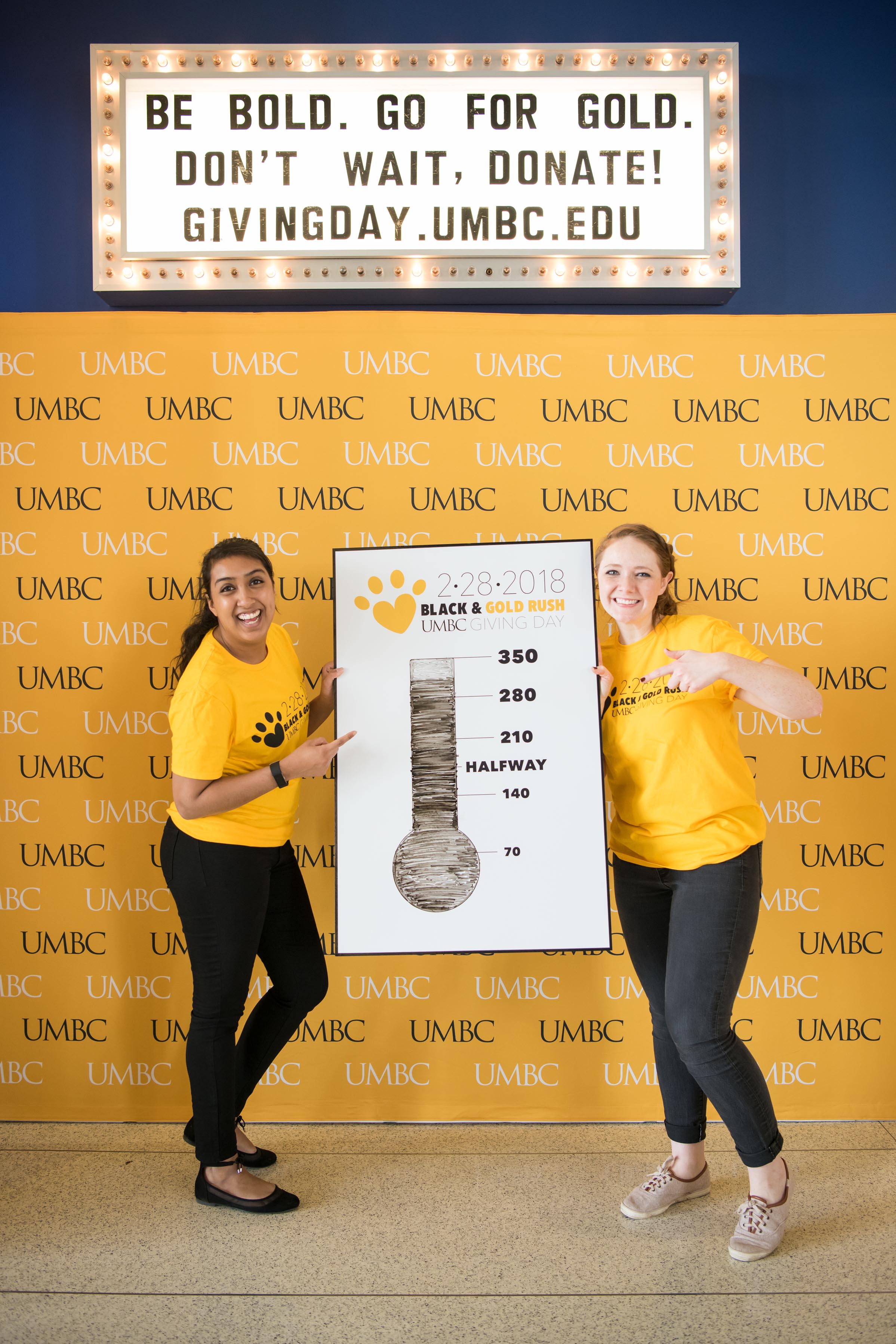
At midnight on Thursday, February 28, UMBC Giving Day will officially begin, kicking off the university’s second annual 24-hour marathon of giving. The goal: for as many UMBC alumni, friends, faculty, staff, and students as possible to make a gift, supporting UMBC students and projects. UMBC is relying on Retriever Nation to make the 1,000 donor goal a reality. “Last year was our very first 24-hour giving day—Black and Gold Rush—and it was simply amazing,” says Joanne Meredith, director of annual giving. “The entire UMBC community came together to support scholarships, athletics, campus life, academics… They gave to what mattered most to them.” Two young women point to a poster they are holding showing a picture of a thermometer to indicate fundraising level. Above them, a sign reads,

Making an impact

For Giving Day 2019, UMBC will shine a spotlight on eighteen funds as key areas for support. The Stay Black and Gold Fund, for example, directly supports students who are facing financial hardship as they seek to finish their degrees. The Retriever Essentials fund supports work to tackle food insecurity in the UMBC community. Donors can also give to other UMBC funds that they choose, beyond the eighteen featured. “This is a special time for UMBC,” said UMBC President Freeman Hrabowski. “We want you to give to whatever it is that you want to give to—whether it’s academics or athletics, scholarships or Student Affairs.” President Hrabowski will once again be taking over UMBC’s Twitter account in the midst of the excitement on UMBC Giving Day 2019.

Joining the festivities

In the spirit of the #blackandgoldrush Giving Day theme, all Retrievers are encouraged to wear black and gold on Thursday, February 28. To help support the cause, the UMBC Bookstore is offering 50 percent off all clearance merchandise from February 25 through March 1. Join in the festivities on Thursday, February 28 by dropping by Giving Day headquarters at Main Street in the Commons, 10 a.m. – 2 p.m. There will be games, live performances, prizes, snacks, and more. The celebration will also be online, where ambassadors are competing to see who can raise the most donors and visibility for Giving Day. Since January, Retrievers have been signing up to serve as social media ambassadors and helping to boost awareness about Giving Day throughout Retriever Nation. On Giving Day, ambassadors will be able to track their progress on a leaderboard, to see who helped generate the most clicks and donations for their UMBC causes. The top individual, department, and student ambassadors will all receive special prizes. “This is such caring community, full of energy and UMBC pride,” says Greg Simmons, M.P.P. ’04, public policy, and vice president of institutional advancement. “To be successful, Giving Day is definitely an all-hands-on deck effort. We are excited to see how support from UMBC alumni, students, parents, faculty, and staff on Giving Day can extend the reach and impact of the work we do together.” Wherever you are on Thursday, February 28, you can follow all of the Giving Day 2019 festivities on UMBC’s Twitter, Facebook, Instagram, and Snapchat (@UMBCLife), and post your own thoughts on why supporting UMBC students is so important using #UMBC and #blackandgoldrush. Featured Image: Thank-you notes from Giving Day 2018. All photos by Marlayna Demond ’11 for UMBC.

The Baltimore Sun again names UMBC one of Baltimore’s top places to work

The Baltimore Sun has named UMBC one of the “Top Workplaces” in the Baltimore region for 2018. UMBC ranked eighth among all large employers in the region—the only university and only government institution featured on the list.

This marks UMBC’s sixth year in a row on the select list. The announcement was made shortly before the New Year, through a special section of the Sunday paper.

The Sun’s “Top Workplaces” ranking reflects the results of a confidential employee survey that measures job satisfaction, employee engagement, and organizational health.

This honor also follows UMBC’s recognition as one of the Chronicle of Higher Education’s 2018 “Great Colleges to Work For.” UMBC was highlighted as a distinguished “honor roll” university for the eighth year in a row, honored in nearly every measured category.

In describing UMBC as a workplace, President Freeman Hrabowski has said:

UMBC is truly a supportive and inclusive community. This is a place where we believe in mutual respect and in achieving great things when we combine our strengths and work together toward our shared vision.

See the full list of 2018 Baltimore Sun Top Workplaces.

Featured image: Gloria Chuku, professor and chair of Africana studies, and numerous UMBC colleagues participate in a group exercise during a retreat in late 2017. Photo by Marlayna Demond ’11 for UMBC.

Times Higher Ed spotlights UMBC as a model in supporting student achievement

This week, Times Higher Education shined a spotlight on UMBC’s advancements in graduating more low-income and minority students in the sciences—what it calls the “holy grail of academia.” “Everybody wants to understand our model,” UMBC President Freeman Hrabowski told reporter Paul Basken.

As Hrabowski explained, lessons learned in one area can inform another, and UMBC’s work to support underrepresented students in STEM fields has led to investments in support programs for students of all backgrounds across UMBC.

“The words I use are ‘inclusive excellence’,” Hrabowski told the London-based publication. “Yes, we are helping kids of color, but we are helping all kids.”

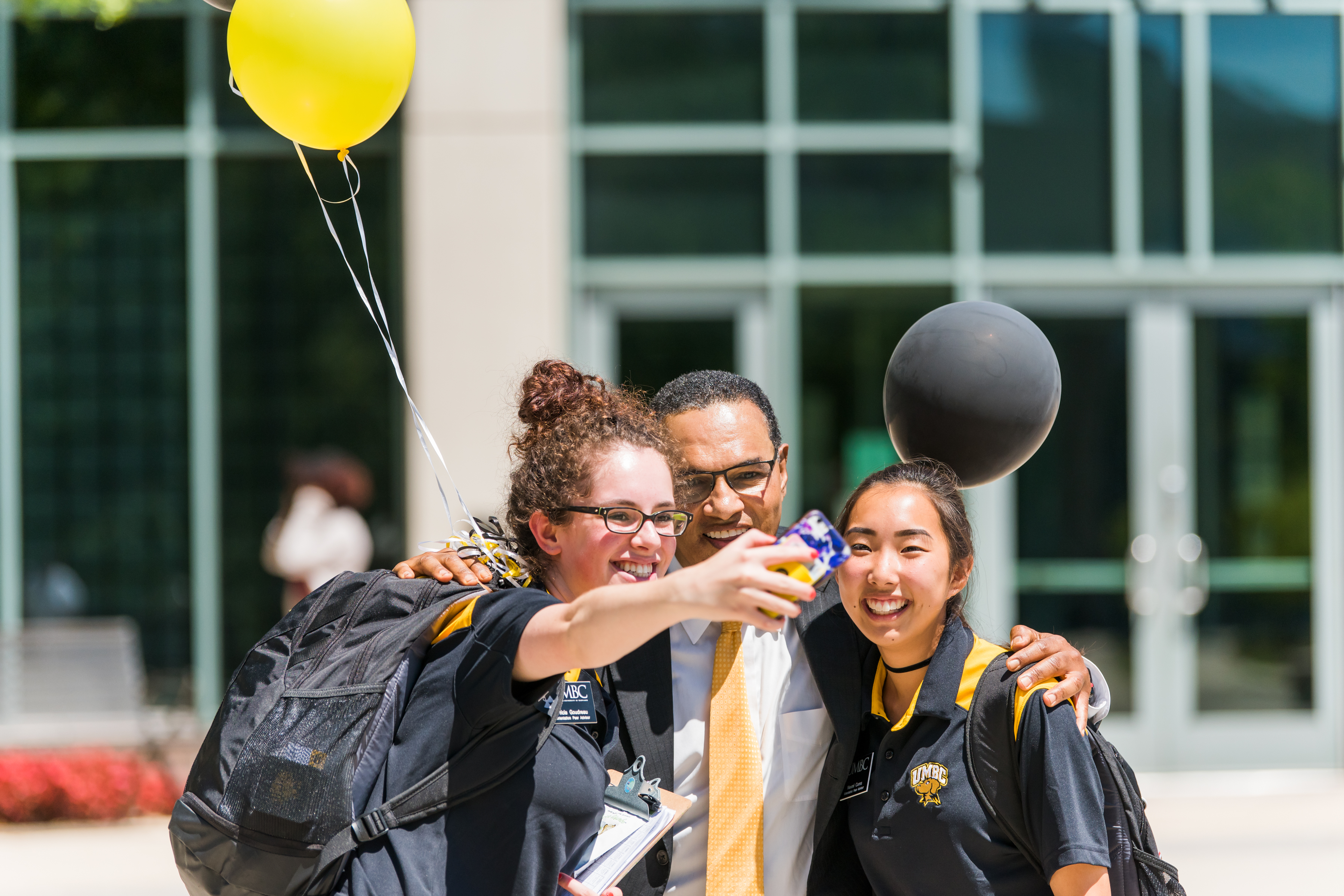
University president in suit poses for a selfie with two student leaders in black t-shirts with UMBC logo.

The article travels across UMBC’s growing campus. Basken takes a stop in the Chemistry Discovery Center, speaking with Diana Hamilton, Ph.D., ’93, lecturer in chemistry and biochemistry, about effective, team-based approaches to active learning. He also speaks with Yvette Mozie-Ross ’88, vice provost for enrollment management, about UMBC’s strategic use of analytics to determine where students are struggling and how to support students and faculty through additional resources.

“Most institutions have a data warehouse,” says Mozie-Ross. “What most institutions don’t have is an analytics tool to use that data on a daily basis, to make informed decisions” as UMBC does, she explains.

As UMBC further expands student support programs across the university, the world is also looking at efforts to replicate UMBC’s Meyerhoff Scholars Program at other institutions, Times Higher Education notes. The Meyerhoff Scholars Program is known as the gold standard in supporting diverse students in STEM fields. UMBC is now the nation’s #1 producer of African American undergraduates who go on to complete M.D./Ph.D. degrees, and #2 nationally for African American undergraduates who complete a Ph.D. in any STEM field.

In 2014, the Howard Hughes Medical Institute made a five-year, $8 million investment in adapting the Meyerhoff program at both Penn State and the University of North Carolina at Chapel Hill. Those efforts are showing strong results, and have sparked interest from other universities across the nation.

Featured image: Associate Professor Laura Hussey congratulates new UMBC graduates during winter commencement, December 2018. All photos by Marlayna Demond ’11 for UMBC.

UMBC launches Center for Democracy and Civic Life at a critical national moment

UMBC’s Division of Student Affairs has announced the launch of the Center for Democracy and Civic Life, led by Director David Hoffman and Assistant Director Romy Hübler. In collaboration with on- and off-campus partners, the center will help students develop knowledge, skills, and approaches for deep and effective community work.

“The Center for Democracy and Civic Life’s launch comes at a critical time for our nation, when our divisions and challenges dominate the news and hope for democracy’s future can seem elusive,” said Nancy Young, vice president for Student Affairs, in a campus message earlier today. She described how the center “will generate, inspire, and share innovations in civic and democratic engagement, and support collaborative activity that helps to build thriving civic cultures at UMBC and in communities involved in the center’s work.”

“Our work builds from the idea that civic life is everywhere: not just in elections or community service opportunities, but in our everyday interactions in nearly every space in which we live and work,” explains Hübler ‘09, modern languages and linguistics, M.A. ‘11, intercultural communication, Ph.D. ‘15, language, literacy and culture.

“That’s a very empowering idea, because it suggests that meaningful social progress is within our reach,” adds Hoffman, Ph.D. ’13, language, literacy, and culture.

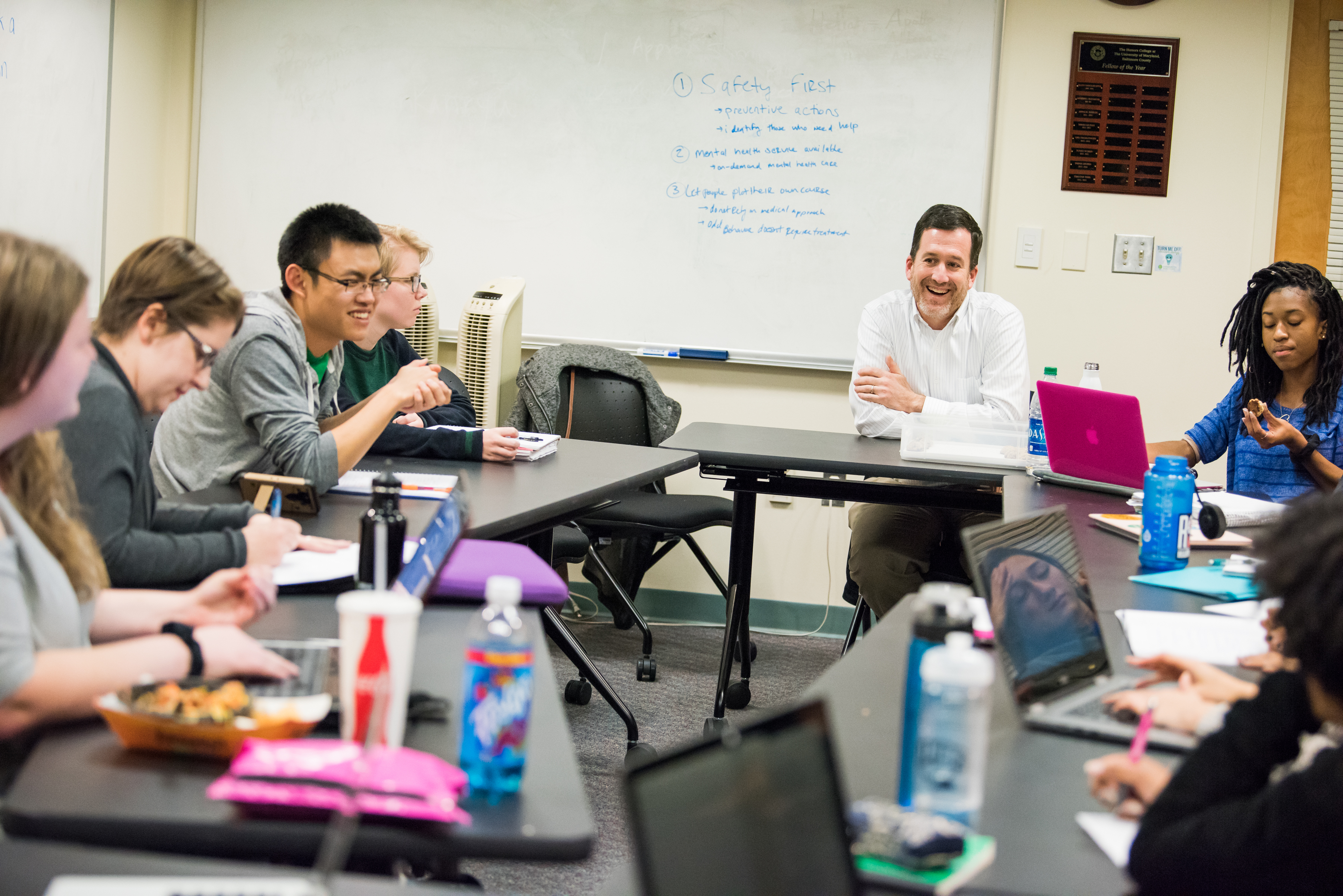
Teacher and a several students sit around tables set in the shape of a circle, eating snacks, typing on laptops, talking and smiling.

Hoffman came to UMBC in 2003. In the past 15 years he has guided student leadership, engagement, and government work, and has led the development and implementation of UMBC’s BreakingGround initiative. Beyond UMBC, Hoffman serves as a national thought leader on democratic engagement and higher education. Hoffman was named an inaugural American Democracy Project Civic Fellow and is a member of the Steering Committee for the American Democracy Project and the National Advisory Board for Imagining America.

Hübler joined the UMBC staff in 2016 as coordinator of campus life for student organizations. She has focused on creating programs to support students’ development as leaders with a meaningful impact on their communities. She has also served as a key strategist for BreakingGround, and has held fellowships with Campus Compact, the International Center on Nonviolent Conflict, and Imagining America.

The scholarship and strategies around civic engagement that Hoffman, Hübler, and their colleagues are developing are already impacting national conversations. Just a few days ago, Bennington College President Mariko Silver highlighted UMBC in Forbes as a model for how universities can align their practices with civic ideals, such as creating democratic classrooms, fostering humane relationships, welcoming dissent, and making engagement with external communities a campus priority.

Democracy scholar Harry Boyte also highlights UMBC as a national model in his new book Awakening Democracy Through Public Work: Pedagogies of Empowerment.

Through the new Center for Democracy and Civic Life, and the partnerships it will help grow, says Hoffman, “We can develop the knowledge, skills, and resourcefulness to work across differences and address challenges together, and to build thriving civic communities. UMBC is the perfect setting for that kind of learning, with so many people and programs already contributing to a vibrant civic culture.”

Featured image: Romy Hübler and David Hoffman in front of The Commons at UMBC. All photos by Marlayna Demond ’11 for UMBC.

UMBC community leaders launch Retriever Courage, a sexual assault prevention and response initiative

UMBC community leaders have announced the Retriever Courage initiative—the next phase in UMBC’s collaborative work to prevent and respond to sexual assault and other forms of sexual misconduct. In a message sent to the campus community yesterday, November 1, President Freeman Hrabowski, Provost Philip Rous, and University Steering Committee representatives from faculty, staff, and student senates noted:

Change requires the courage to speak out, to listen, to learn, and to take action. We must fully live our campus values—inclusive excellence, collaboration, innovation, and impact—to make UMBC a safer, more caring living, learning, and working environment for all.

The university has also just launched a Retriever Courage website to document progress in this long-term work, provide resources, share informative documents (e.g., policies, reports, research), and serve as a space for ongoing updates.

This new website also describes the shared governance and administrative teams moving this work forward:

  • University Steering Committee, serving as an advisory body to the implementation team;
  • Student Advisory Committee, to provide a voice for and share feedback from students, with representation on the procurement advisory group;
  • Faculty/Staff Advisory Team, to provide a voice for and share feedback from faculty and staff, with representation on the procurement advisory group;
  • Evaluation Committee, which will select an external consultant or firm to review all aspects of the university’s sexual misconduct prevention and response policies and practices, and training and awareness programs, to help determine where we can learn from other institutions’ best practices and evidence-based research;
  • Training Implementation Team, to roll out and manage mandatory training; and
  • Implementation Team, to continue addressing immediate, short-term campus needs, such as lighting, signage, and the new campus ID card, and other recommendations from faculty, staff, students, and alumni.

Community members interested in serving on a committee or providing feedback in other ways are encouraged to contact their shared governance representatives or email retrievercourage@umbc.edu.

As the new Retriever Courage website describes, Faculty/Staff and Student Advisory Committees will take recommendations to the University Steering Committee. That group will then work with the Implementation Team to finalize recommendations to submit to UMBC’s vice presidents and deans. After these leaders review and sign off on proposed actions, policies, budget allocations, etc., they will then go the university president for final approval.

“Through continued work together, UMBC will become a stronger community,” yesterday’s university message concluded, “and we know this work will have a lasting impact on campus and beyond.”

Featured image: Retriever Courage description; photo by Marlayna Demond ’11 for UMBC.