All posts by: Dinah Winnick


Baltimore Sun honors Pres. Hrabowski’s leadership through Business and Civic Hall of Fame

The Baltimore Sun is celebrating UMBC President Freeman Hrabowski as a 2020 Business and Civic Hall of Fame honoree. A special feature in The Sun highlights important moments in Hrabowski’s life and career, and his impact as one of the nation’s top higher education leaders. 

“For over 30 years, University of Maryland, Baltimore County President Freeman A. Hrabowski III has walked Academic Row, the main stretch of campus lined by academic buildings, stopping students he knows by name outside of buildings to chat about their studies and lives,” the paper notes, sharing a scene familiar to many in the UMBC community. Hrabowski explained that “getting to know more than just students’ names is part of the human experience, something he learned from his parents who were educators themselves.”
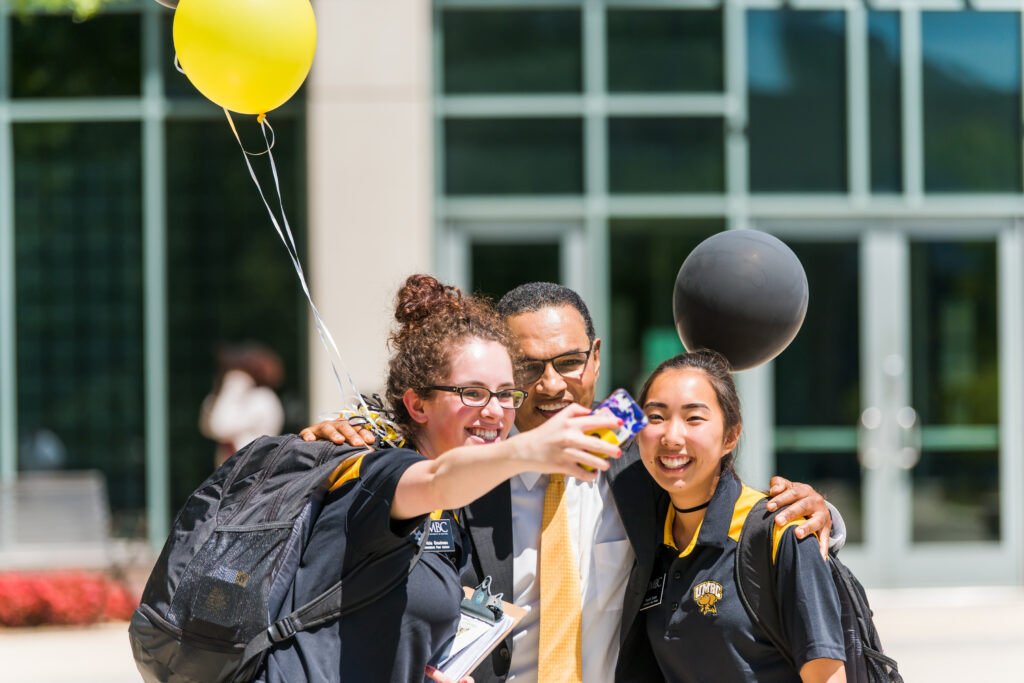
Man in suit poses for a selfie with two student leaders in black t-shirts with UMBC logo.
President Hrabowski with Orientation Peer Advisors, summer 2018.

The publication describes Hrabowski’s involvement in the 1963 Children’s Crusade, his early work in higher education, and his lifelong focus on educational equity. “His civic-minded outlook led him to focus on equity to ensure that UMBC would provide an equal-opportunity education to everyone,” The Sun notes. 

Transformational leaders

This year, the Hall of Fame recognizes 13 leaders “for their transformational efforts to improve our community.” In addition to Hrabowski, several have important connections to UMBC. Marin Alsop, who served as music director for the Baltimore Symphony Orchestra for 14 years, received an honorary doctor of fine arts degree from UMBC in 2019. Mary Ann Scully has volunteered with the Alex. Brown Center for Entrepreneurship and the UMBC Board of Visitors.
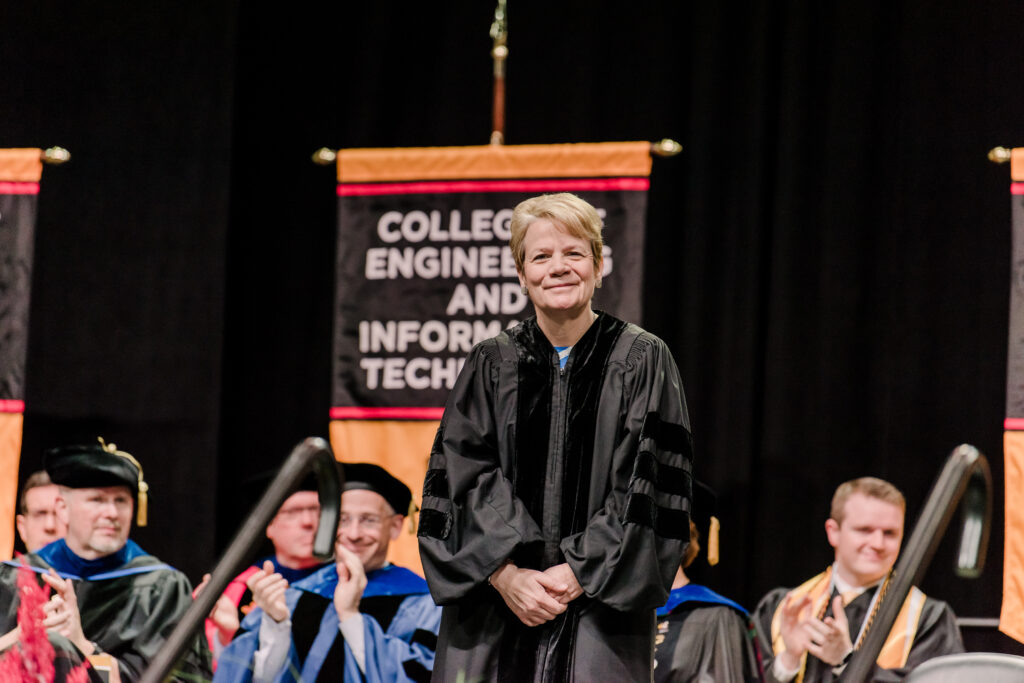
Woman in black academic robe stands to receive an honor at a graduation ceremony. People in the background clap. Sign reads,
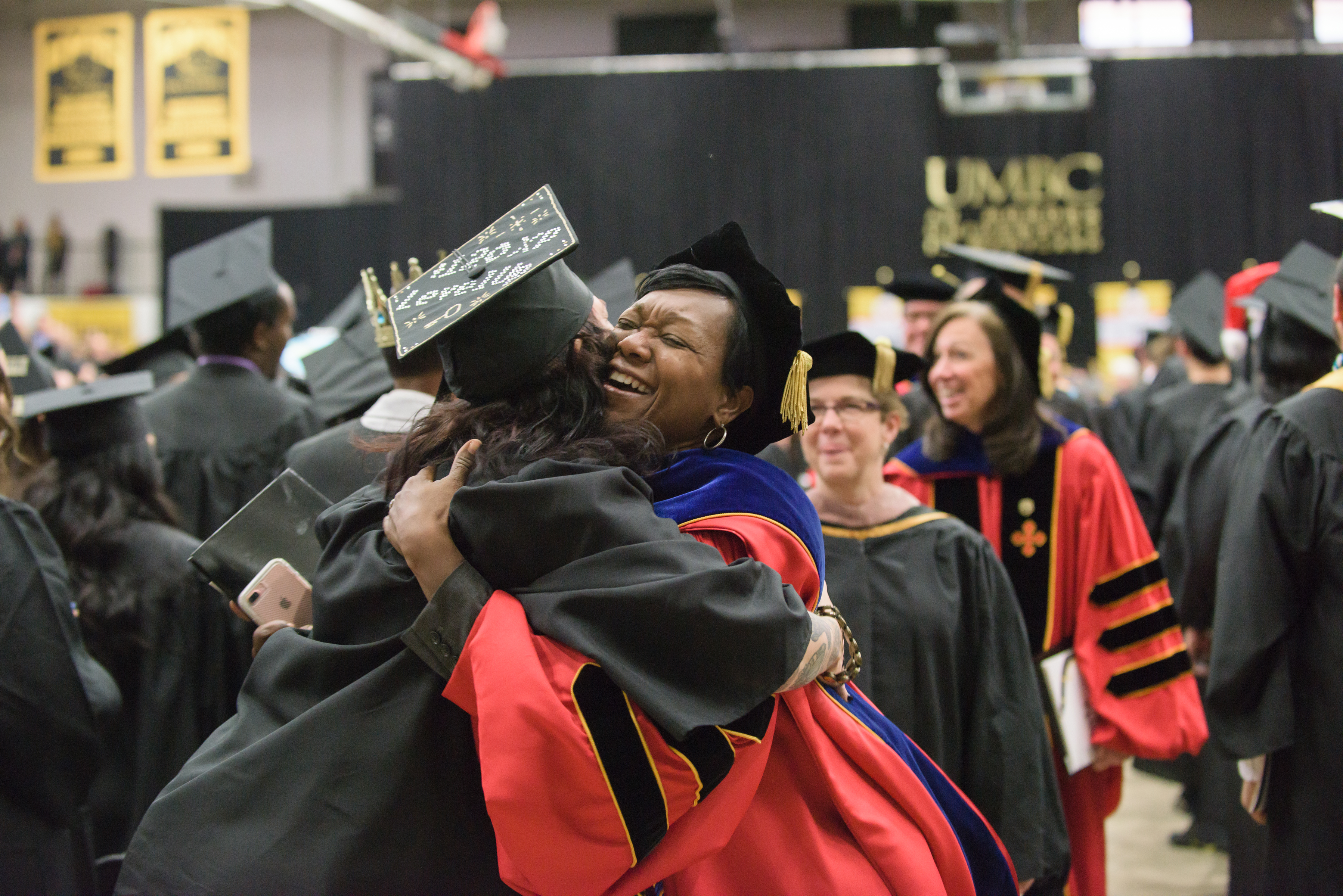
Marin Alsop receives an honorary doctorate at UMBC’s spring 2019 commencement.

Mary-Ann and Walter D. “Wally” Pinkard Jr. are longtime partners of UMBC, primarily through the France-Merrick Foundation, which has supported UMBC France-Merrick Scholars and the UMBC Sondheim Scholars Program. The France-Merrick Foundation also enabled the University to create a green roof on the UMBC Administration Building in support of environmental and sustainability initiatives. 

Hope for the future

The Sun’s Hall of Fame feature highlights comments from numerous state leaders. In Hrabowski’s profile, University System of Maryland Chancellor Jay Perman and Speaker of the Maryland House of Delegate Adrienne Jones ’76, psychology, comment on his confidence and pride in UMBC students and alumni.
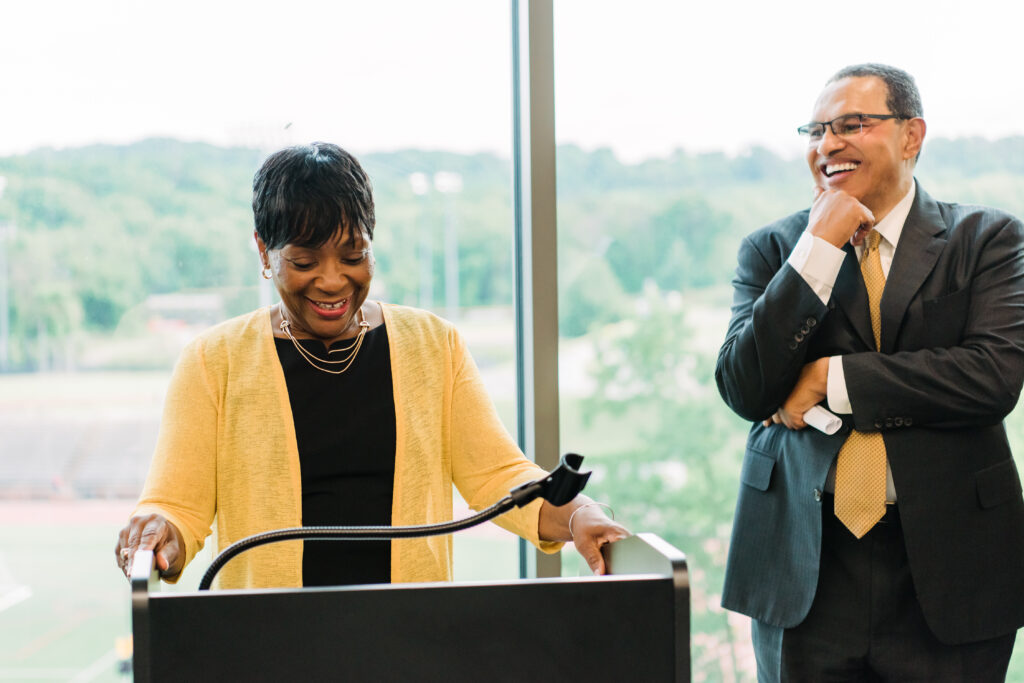
Woman stands at podium, smiling. Man stands to the side, behind her, in a suit, also with a friendly smile.
Speaker of the Maryland House of Delegates Adrienne Jones with President Freeman Hrabowski at a UMBC event honoring her election as speaker, 2019.

“And even now,” at a moment of uncertainty and new challenges, “President Hrabowski proudly talks of hope for the future,” the paper shares. “As an educator, he believes that part of UMBC’s mission is to prepare students to become leaders while also understanding the importance of history, what it means to have a healthy democracy, how to be civically engaged.” 

Most important, Hrabowski told The Sun, is “understanding that our future does not depend on one person, but on all of us.”

The Sun designated The Choice Program at UMBC as its charitable partner this year, and will donate a portion of the Hall of Fame publication proceeds to support the program’s work. The Choice Program provides case management, resources, and empowering opportunities for Maryland youth.

Featured image: President Hrabowski addresses UMBC graduating class of 2018. All photos by Marlayna Demond ’11 for UMBC.


UMBC sees solid enrollment in Fall 2020, celebrating returning students and high-demand graduate programs

UMBC’s reputation for academic excellence and welcoming community has encouraged students to remain focused on progressing toward their degrees in a time of significant global challenges and uncertainty. The University has also seen a notable increase in students returning to UMBC to complete their degrees after years away from higher education.

“Our strong enrollments this fall affirm that, even with the challenges our world is facing, our new and continuing students value the UMBC experience and recognize the importance of staying on track with their degrees,” says Yvette Mozie-Ross ’88, health science and policy, vice provost for enrollment management and planning.

Overall, 13,497 students are enrolled in UMBC this fall. At a time when many campuses across the nation are seeing double-digit enrollment declines, UMBC’s study body is down just 0.8% compared to fall 2019. UMBC’s current undergraduate population is 10,932 strong. The graduate student population has increased by 0.9% to 2,565. 

Fives students sit at tables in a shared meeting and work space in a brightly lit new building.
Undergraduate student researchers gather in a writing and meeting space in UMBC’s new Interdisciplinary Life Sciences Building, 2019.

Proactive advising has played an important role in UMBC students’ continued progress toward their degrees. “Connecting our students with caring and informed members of our University community is essential to help them navigate through these massive changes,” says Kenneth Baron, assistant vice provost for academic advising and student success.

Popular programs

Some new international graduate students have deferred for a semester or year, due to difficulty with travel during the COVID-19 pandemic. At the same time, UMBC has seen very strong enrollment among returning master’s and Ph.D. students and an increase in new domestic graduate students in master’s degree programs.

“The online and hybrid format seems to be an attractive option for master’s students, in particular,” says Janet Rutledge, vice provost and dean of the Graduate School.

Man works on computer in a room filled with flags. His laptop has a sticker with a Retriever and
Working on a laptop in The Commons, 2017. Photo by Marlayna Demond ’11 for UMBC.

“We’ve seen growth in attracting students to UMBC’s excellent graduate programs in education,” notes Christopher Steele, vice provost, Division of Professional Studies. More students have enrolled in UMBC’s master’s programs in teaching, education, and Teaching English to Speakers of Other Languages (TESOL).

“We should also be very proud of how UMBC is showing up in Montgomery County,” says Steele. He’s reflecting on a 13.5% growth in UMBC student enrollment at the Universities at Shady Grove, in part thanks to expanding programs such as data science.

Four students sit at a table with laptops, papers, and coffee, in conversation.
Students study together at UMBC-Shady Grove.

Approaching the Finish Line

Another positive development this year is an increase in students working to complete their degrees through the Finish Line initiative. More than 120 students have returned to UMBC through Finish Line, some after several years away from college. “Their lives may have required that they disrupt their education for a little bit,” says Mozie-Ross, “but we’ve…leveraged this moment in time…when most of our classes are online, and gone out and pulled them back in.”

Five women sit in chairs at an event, wearing name tags
Nia Latimer (left) and Karla Gonzalez (center) at an RWS orientation event. Photo courtesy of the Women’s Center.

For former students now looking at UMBC’s online learning experience and considering the possibilities, Mozie-Ross shares, “It’s never too late to finish that degree.”

“We get it,” she says. “Life gets in the way sometimes…and that’s okay. We still believe that degree has value for you as a lifelong learner…and we want to help you finish.”

Featured image: UMBC in summer 2019. All photos by Marlayna Demond ’11 unless otherwise noted.

UMBC completes pilot COVID-19 testing in preparation for fall semester

UMBC recently completed its first round of pilot COVID-19 testing, in preparation for the Retriever community’s gradual return to campus in the coming weeks and months. The pilot invited participation from faculty, staff, and students who are approved to be on campus this summer. Over the course of two days, July 13 and 14, University Health Services (UHS) completed 325 COVID-19 tests and shared educational material on how to prevent the spread of COVID-19 in our community. 

Of the 321 results received so far, five employees and two students tested positive for COVID-19. This translates to a 2.18 percent positivity rate, compared to the current Maryland state positivity rate of 4.49 percent.

UMBC completed pilot COVID-19 testing on campus July 13 and 14, 2020.

Responding to positive results

In cases where positive results were found, University Health Services asked individuals to self-isolate for 10 days and consult with their primary care physician, even if asymptomatic. UHS also connected with Baltimore County public health officials to complete contact tracing for positive individuals.

Employees who are self-isolating have also been advised that they can access leave through the Families First Coronavirus Response Act (FFCRA) by contacting UMBC Human Resources.

Sign reads,
Face mask signage at UMBC.

Expanding public health measures

As UMBC approaches the fall, COVID-19 testing, daily symptom tracking, and online health and safety training will continue to expand. In the coming weeks, additional employees and students who are approved to work, teach, or live on campus will receive information about these next steps, including how to schedule a free COVID-19 test. 

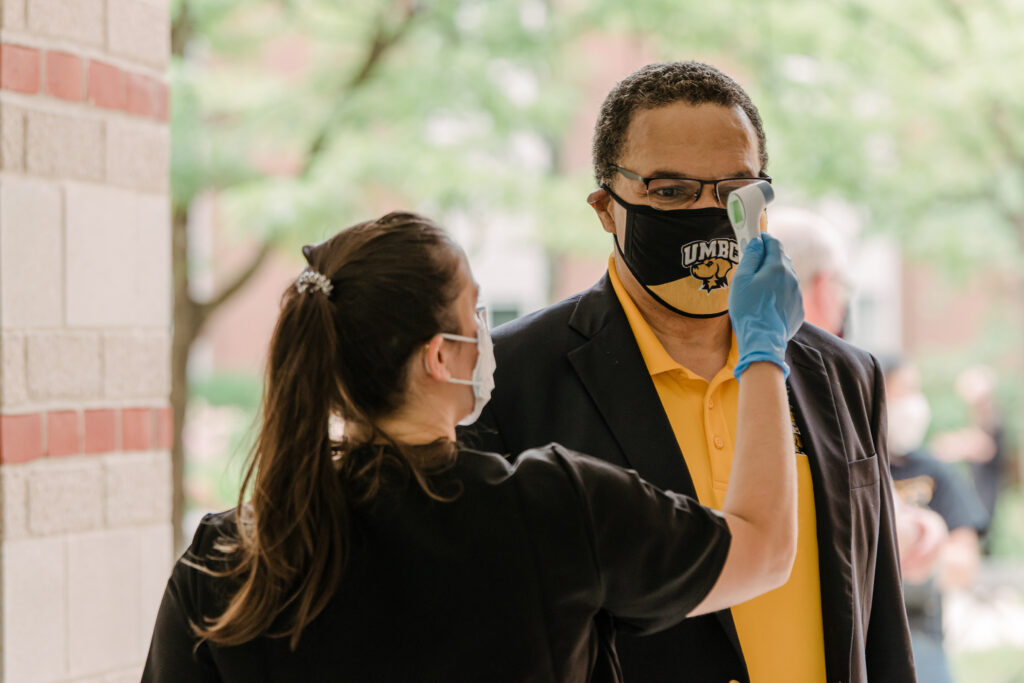
Man in polo shirt and blazer, wearing UMBC face mask, gets temperature taken by medical professional outdoors
President Freeman Hrabowski takes part in pilot COVID-19 testing at UMBC.

The University will not ask students, faculty, and staff who continue to work and study fully remotely to complete COVID-19 tests or to track symptoms. However, UMBC will continue to provide resources to help all UMBC community members stay informed about what the University is doing and what they can do to support everyone’s health, safety, and wellbeing.

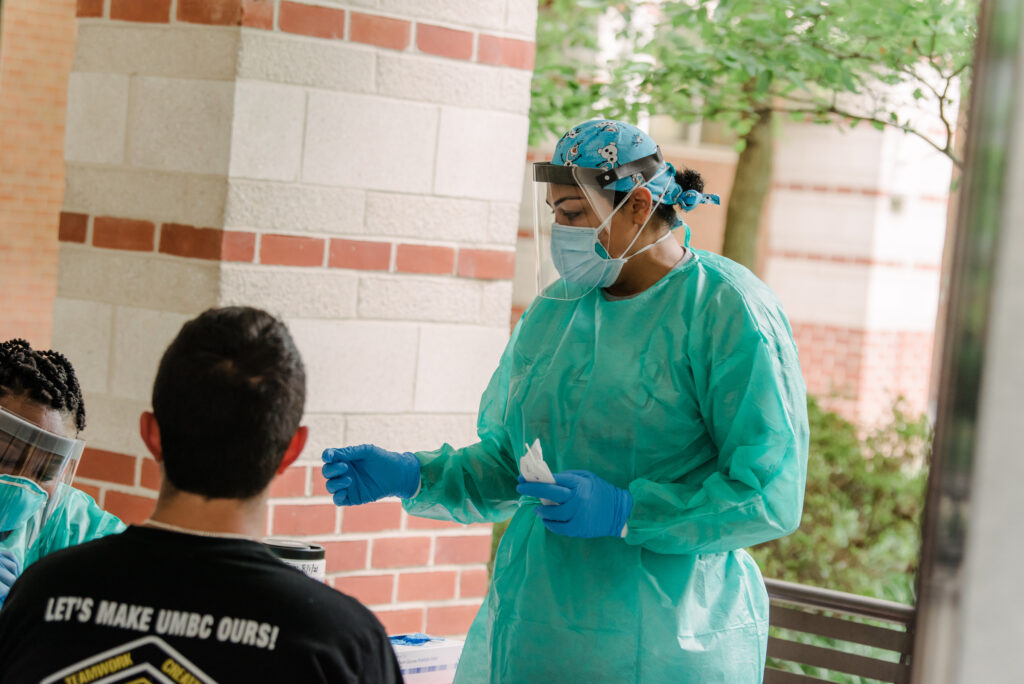
Young person sits near medical professional in protective clothing, awaiting a test, in outdoor area.
SGA President Mehrshad Fahim Devin participates in the COVID-19 testing pilot.

In a recent interview with the Baltimore Business Journal (BBJ), Nancy Young, vice president of student affairs, emphasized the importance of minimizing COVID-19 spread through an array of strategies. These include encouraging community members to practice physical distancing, hand washing, and mask wearing, and creating safety protocols and signage to support those who will be on campus.

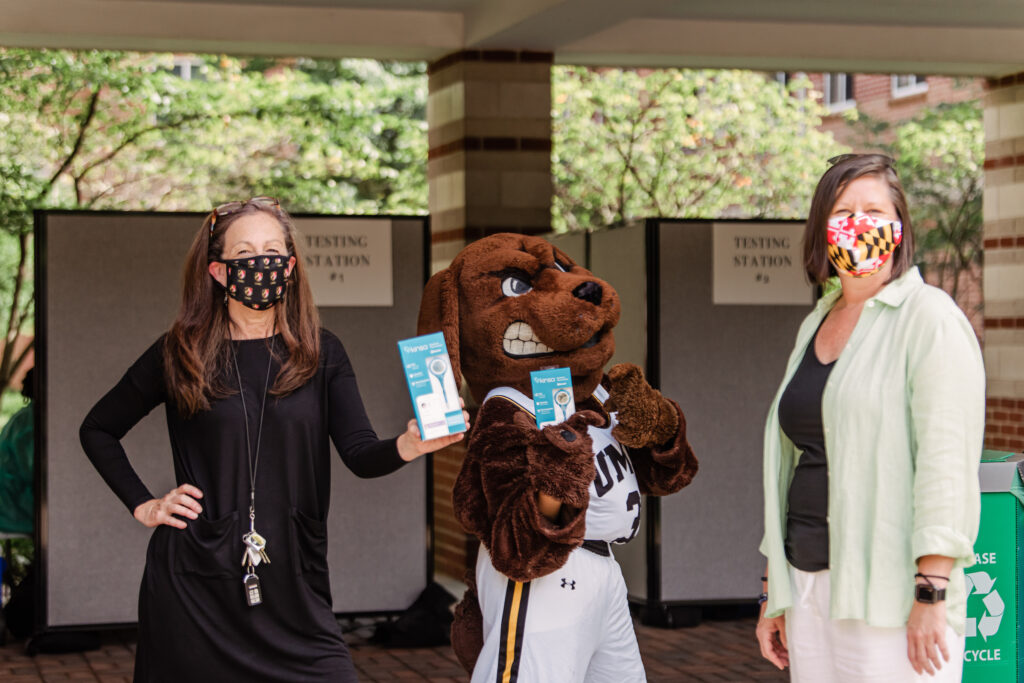
Two women stand on either side of a person dressed in a dog mascot costume. The women wear face masks. One holds up a thermometer in a package.
Nancy Young (left) with True Grit and Kate Tracy (right) at UMBC’s COVID-19 testing pilot, July 13, 2020. Young and True Grit hold thermometers distributed for free at the event.

“We hope testing and tracing will be our last measures of protection,” Young told the BBJ. “They are essential,” she says, “but ultimately part of a much larger community-based strategy.”

Featured image: True Grit in a UMBC face mask. All photos by Marlayna Demond ’11 for UMBC.

Student cost to attend UMBC reduced for Fall 2020 semester

The cost to attend UMBC will decrease 22 percent compared to last fall for in-state undergraduate students registered for courses offered by the main campus. UMBC’s Student Business Services Office notes that student bills will reflect stable tuition rates for undergraduate and graduate, resident and non-resident students, and decreased fees.

Mandatory fees for each full-time undergraduate student enrolled at the main campus will decrease by $1,304 as a result of remote operations during the COVID-19 pandemic. Undergraduates will pay only the technology fee and 50 percent of the University Commons and student activity fees, which support ongoing services and programming for students learning both on campus and off.

“The value of a UMBC degree remains high because of the quality of teaching, research, and support for students,” says UMBC President Freeman Hrabowski. “We understand that many students and families face financial pressures as a result of the pandemic, and we have taken this into consideration in setting costs for the fall semester.”

Mandatory fees for each graduate student will decrease by $101 per credit. All graduate students will only be charged the technology fee and 50 percent of both the University Commons and graduate program fees. These support ongoing activities focused on student success in academics and research.

Mandatory fees for students at UMBC’s Shady Grove campus will include only the Shady Grove auxiliary fee and the technology fee. The facilities fee is not being charged this fall.

Need-based aid

Despite negative financial impacts on the University resulting from the pandemic, need-based aid for eligible students will continue to be a priority, notes Vice President for Administration and Finance Lynne Schaefer. “Need-based financial aid has increased 40 percent over the past five years, allowing an additional 1,000 students to receive support,” she says.

In addition, thanks to private contributions from alumni, faculty, staff, and friends of the University, the Stay Black and Gold Emergency Fund and The Fund for UMBC have generated $150,000 in emergency need-based aid for students. Students with financial concerns are encouraged to contact their financial aid counselor. Financial aid counselors are assigned by a student’s last name; a list is located on the Financial Aid webpage.

Featured image: UMBC’s new Interdisciplinary Life Sciences Building in summer 2020. Photo by Marlayna Demond ’11 for UMBC.

UMBC will be test-optional for Fall 2021 applicants

In light of the COVID-19 pandemic and its impact on high school students’ ability to access standardized admissions tests (SAT/ACT), UMBC’s undergraduate admissions will be test-optional for Fall 2021.

This will provide students the opportunity to apply for undergraduate admission with or without standardized test scores. In both cases, students will receive full consideration for admissions, merit scholarships, and other opportunities.

Sign on a pole reads
Sign on UMBC’s main campus.

UMBC’s holistic admissions program

UMBC’s holistic review of applicants for undergraduate admission considers a number of factors. These include grade point average, academic trend, strength of curriculum, personal statement, letters of recommendation, other achievements, and standardized test scores (if provided). 

The test-optional program for the coming year is “about offering prospective students maximum flexibility,” says Yvette Mozie-Ross ’88, health science and policy, vice provost for enrollment management and planning. “This flexibility ensures that circumstances beyond our prospective students’ control do not present barriers to pursuing a top-notch education.”  

Yette Mozie-Ross with UMBC mascot True Grit and students in 2019
Yvette Mozie-Ross at a 2019 UMBC spirit event.

Resources for applicants

Students considering applying to UMBC are encouraged to explore campus virtually. UMBC’s Instagram, Facebook, and Twitter accounts also give a view into campus life and university news.

UMBC offers Frequently Asked Questions for information on how COVID-19 might impact the application and enrollment process. And students can also reach out to admissions@umbc.edu with any questions.

To be considered for undergraduate admission, students should submit an application and all required documents by November 1 for Early Action and February 1 for Regular Decision. 

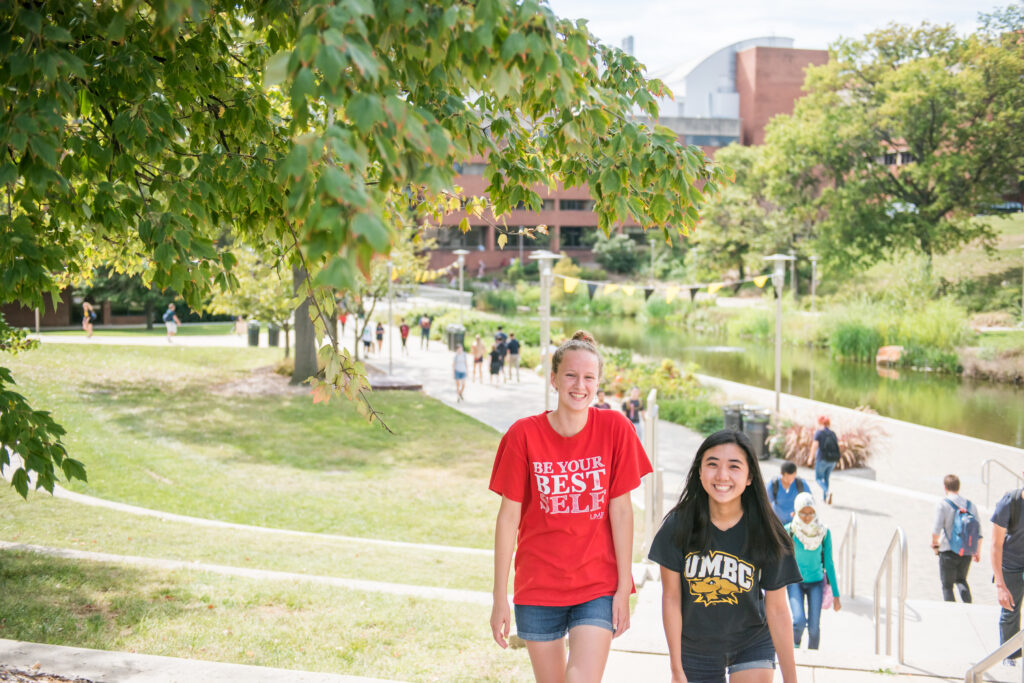
Two students walk near the library pond, one in a red shirt and one in a black shirt with UMBC athletics logo.
UMBC students walk from Academic Row toward UMBC Library.

Header image: UMBC’s Albin O. Kuhn Library. All photos by Marlayna Demond ’11 for UMBC.

UMBC men’s swimming and diving named America East champions, women’s team captures 2nd place

UMBC’s swimming and diving teams celebrated strong performances at the 2020 America East Championships, which concluded on February 16 at Worcester Polytechnic Institute. The men’s team won the four-day meet, while the women’s team finished second to New Hampshire.
The Retriever men have now captured 12 of the 13 championships overall and three in a row since America East reinstituted men’s swimming and diving as a championship sport in the winter of 2018. This year, the team captured 16 of 18 swimming events and amassed 1,051 points, more than 200 points ahead of second-place Binghamton.
“We knew it was one of the deepest men’s squads we have ever had,” said head coach Chad Cradock ‘97, psychology. “They came into the meet with confidence and belief in themselves.”
UMBC also received 2020 America East Men’s Coaching Staff of the Year honors. 

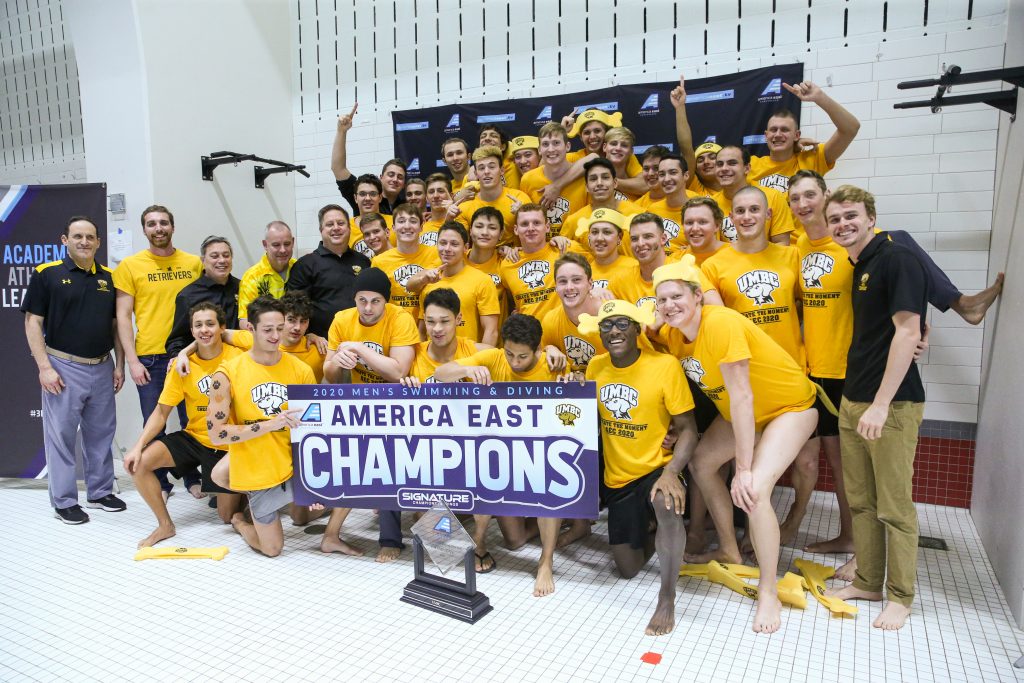
A men's swimming team gathers around a sign reading America East Champions
UMBC men’s swimming and diving team celebrates winning the America East Championships; Feb. 16, 2020; Worcester, Mass. Photo by Brian Foley for America East.

Leading “in every way”

UMBC senior Ilia Rattsev swept the freestyle sprints (50, 100, 200 yards). In doing so, he became the first-ever swimmer in America East history to sweep the freestyle sprints in three consecutive years. He earned the league’s David Alexander Coaches’ Award as the senior with the most points accrued at the meet. 
America East also honored Rattsev with their Elite 18 Award, which is presented to the top-achieving student-athlete at the championships. Rattsev is maintaining a 3.97 GPA in bioinformatics and computational biology.
“Ilia is a leader in every way,” Cradock said. “We are grateful for his trust in all aspects of our program. We are going to miss him and all of the seniors.”
Retriever junior Kai Wisner, mechanical engineering, earned the meet’s Most Outstanding Swimmer Award. Wisner triumphed in the 500 freestyle, 400 individual medley, and 1650 freestyle.
Freshman Niklas Weigelt took home the men’s Most Outstanding Rookie Award. The California native earned golds as part of the 200, 400 and 800 freestyle relays, took silver in the 200 yard freestyle, and earned bronze in the 100 freestyle.
Senior Garrett Wlochowski, financial economics, also captured multiple golds for the Retrievers, winning the 100 and 200 backstroke events. He was also part of the title-winning 200 and 400 medley relay quartets.
In addition to sharing his pride in the success of UMBC’s graduating seniors, Cradock says, “Our freshmen have already made a huge impact and they give us a lot of hope for the future.” He also notes, “Our sophomores and juniors are our future leaders. They bought in more this year and their results showed this weekend that hard work does pay off.”

Success in the pool and the classroom

On the UMBC women’s team, junior Vanessa Esposito, psychology, took home gold in the 1650 freestyle. Sophomore Caroline Sargent, psychology, earned a pair of silvers in the 100 and 200 backstroke events and a bronze in the 200 individual medley.
“We started the year losing close races, but, as the season went on, we built our confidence and were able to find the power to win the close ones and get the job done,” Cradock said.
Junior Natalija Marin earned the women’s Elite 18 award, for academic excellence. The native of Belgrade, Serbia is maintaining a 3.87 grade-point average in mechanical engineering. Marin, a three-time champion in the league championships, took home silver in the 200 butterfly in the final individual event of this year’s meet. 
“On the women’s team, we knew we had big shoes to fill after losing an amazing senior class.” Cradock said. “We found our new and returning athletes to be resilient and tough, and highly competitive. We are so proud of them.”
Cradock is quick to point out the tremendous support that he and his programs receive from the UMBC community, including university and athletics department leadership and staff, alumni, parents, and his own family.
“Your love and support does not go unnoticed by our student-athletes and our coaching staff,” says Cradock. “This family is the best, and one I am sure everyone would dream to be a part of.”
To support UMBC Swimming and Diving during Giving Day on February 27, visit givingday.umbc.edu.
Steve Levy, ‘85, interdisciplinary studies, of UMBC Athletics was the lead author for this article. For more swimming and diving coverage, see the UMBC Retrievers website.
 
Featured image (l-r): UMBC’s Ilia Rattsev, Jeremy Gates, Jack Carlisle, and Jethro Ssengonzi pose with the 2020 America East Championship trophy; Feb. 16, 2020; Worcester, Massachusetts. Photo by Brian Foley for America East.

Baltimore Sun names UMBC a top place to work and Pres. Hrabowski #1 in leadership

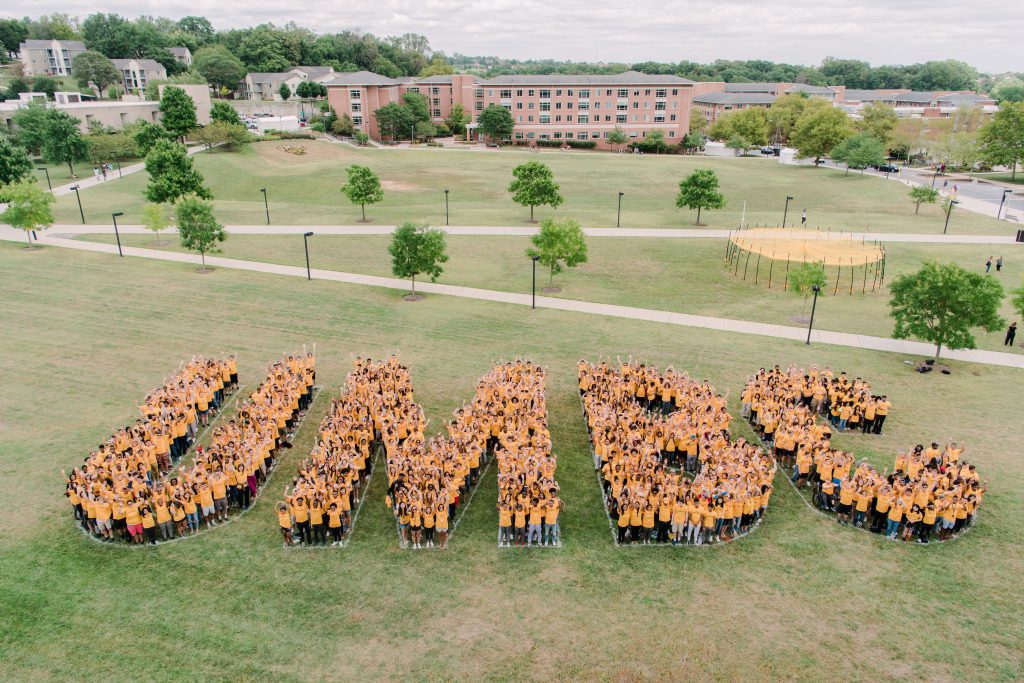
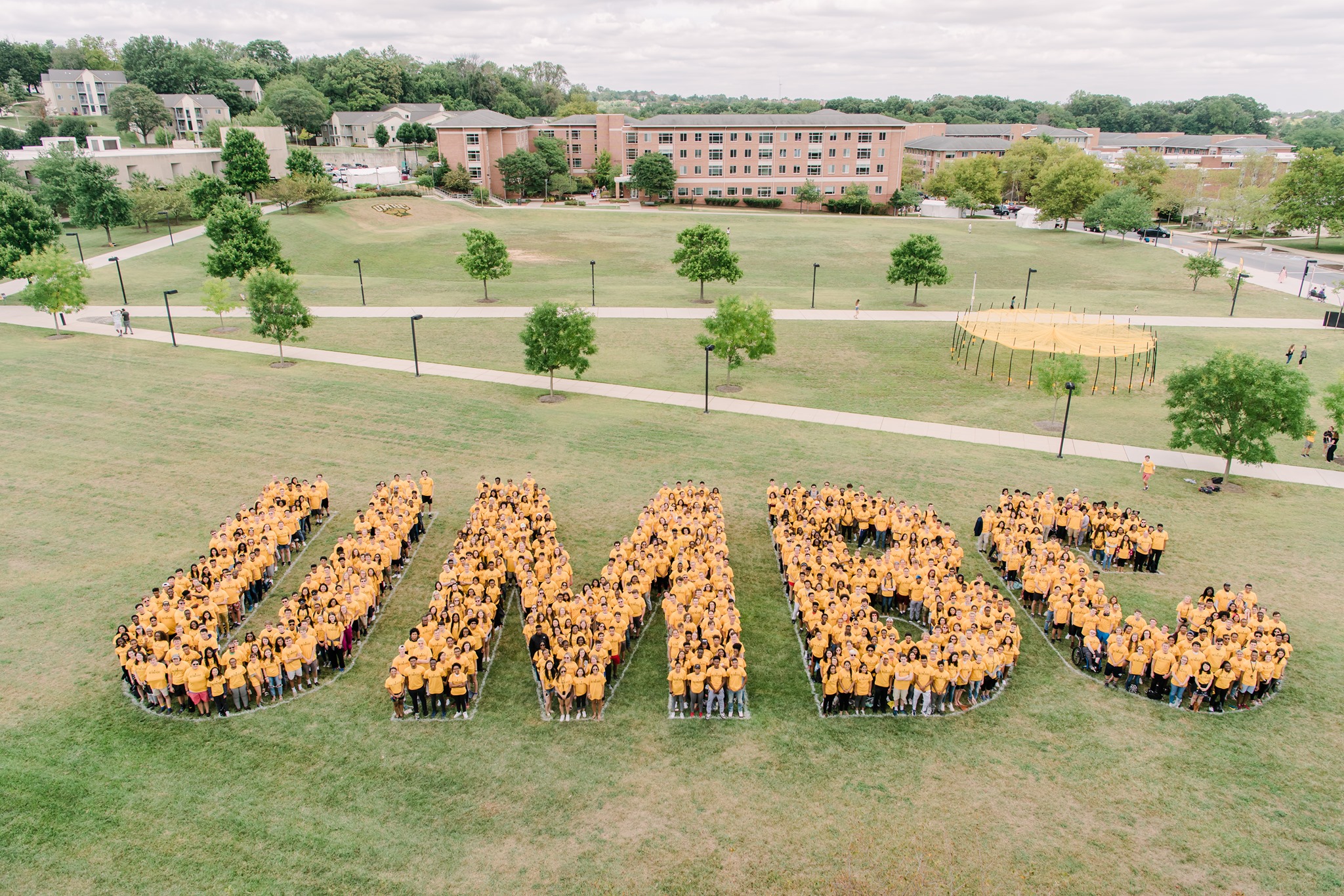
Hundreds of UMBC students gather in a field, standing in groups to spell out the letters "UMBC". They are wearing gold tops with black bottoms to match the school colors.

The Baltimore Sun has again named UMBC one of the “Top Workplaces” in the Baltimore region. UMBC is ranked #12 among all large employers in the area, and is the only university and only government institution featured on the list.

New this year, the Sun named UMBC President Freeman A. Hrabowski the top leader among the region’s large employers (tied for the #1 spot). A profile of President Hrabowski announcing this honor highlights his “focus on the power of education to transform lives.”
In an interview with the Sun, President Hrabowski explained his commitment to a shared leadership approach and to building an inclusive community that values all of its members. “While we have collective and individual goals, and we are committed to moving toward them, we also understand the fundamental truth that nothing is more important than the people who make up the organization,” Hrabowski said.

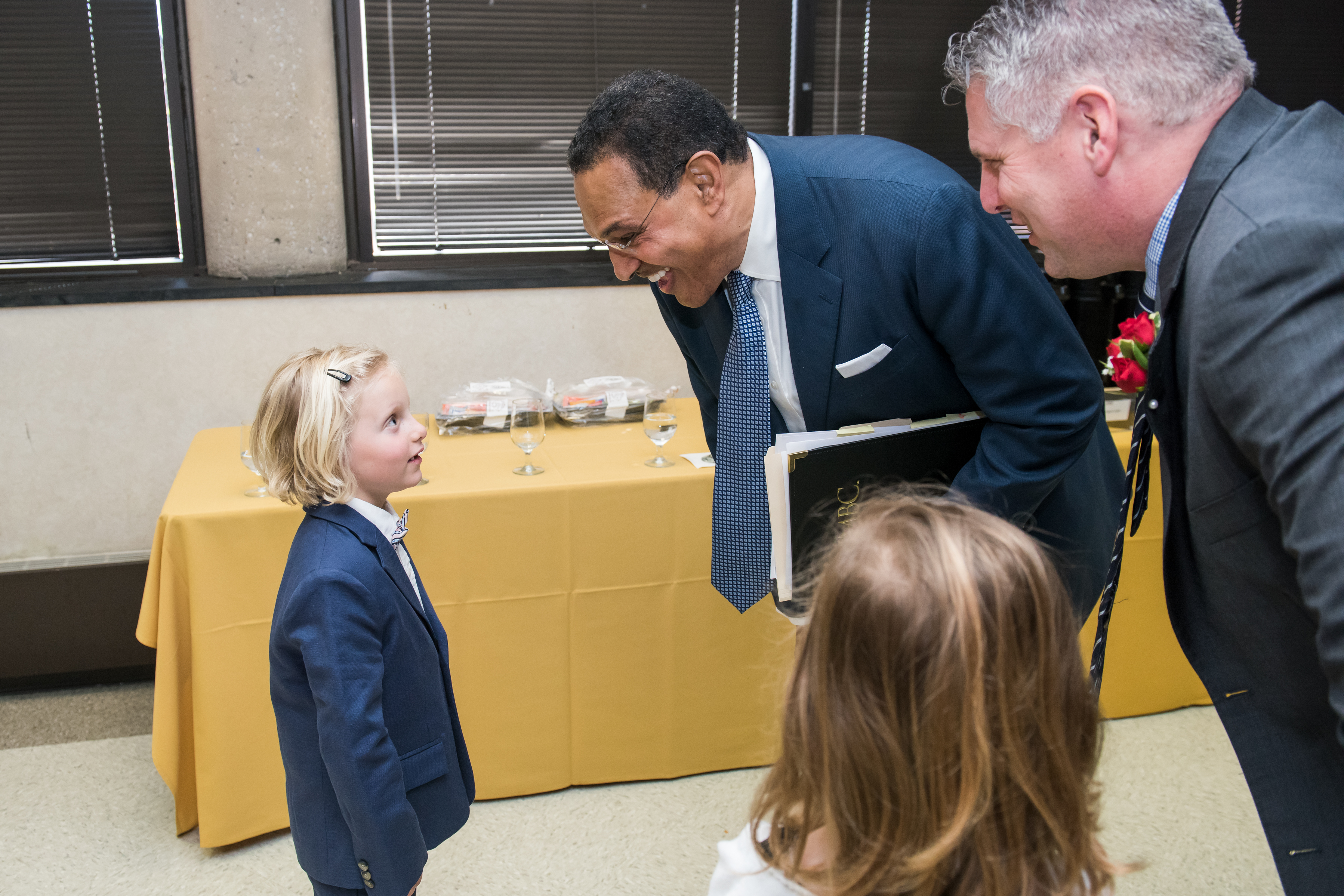
President Hrabowski greets family of Marc Zupan, award winner at UMBCs PFASA 2017
Hrabowski greets family of Marc Zupan, assoc. prof. of mechanical engineering, ahead of the 2017 Presidential Faculty and Staff Awards ceremony where Zupan received the Presidential Teaching Faculty Award.

He continued:

At UMBC, we understand that culture is reflected in the questions we ask, the priorities we set, the achievements we recognize, and so many other aspects of daily life on campus. […] I never think just about my influence on our culture, but instead reflect on the ways that all of us at UMBC — students, faculty and staff — create this culture by supporting and influencing each other. We encourage each other to “be our best selves,” and we also recognize there are times when all of us need support. In this way, we show we are determined to overcome the odds, set high aspirations and dream about the possibilities.

Echoing themes of his book The Empowered University, Hrabowski also noted, “Healthy organizations are made up of people who are empowered to look in the mirror to recognize strengths, and also opportunities for improvement. Effective leaders inspire others to want to be better than they are.”

Hundreds of professionals sit around tables in a room, talking, in groups of 8-10
Faculty, staff, student, and alumni leaders connect at the annual UMBC Retreat.

This honor was announced in December 2019. It follows UMBC’s recognition as one of the Chronicle of Higher Education’s“Great Colleges to Work For” for the tenth year. The Chronicle honored UMBC specifically for confidence in senior leadership and for employees’ sense of respect and appreciation.
Featured image: President Hrabowski with UMBC mascot True Grit, celebrating Selection Sunday, March 2018. All photos by Marlayna Demond ’11 for UMBC.
UMBC welcomes Brian Barrio as director of athletics

UMBC has named Brian Barrio the director of athletics, physical education, and recreation, effective January 2020. He will direct UMBC’s 17-sport NCAA Division I intercollegiate athletics program, all campus recreational programs (including intramurals, club sports, and recreational activities), and the physical education program. 

Commitment to student success

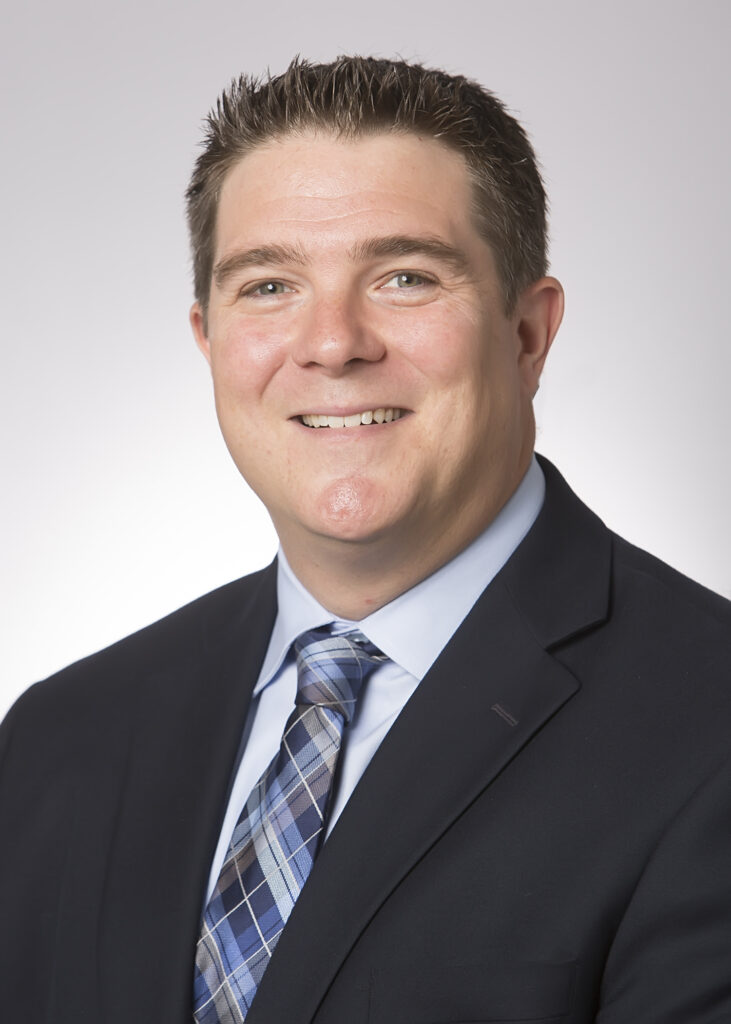
Headshot of middle-aged man, smiling, in jacket and tie.
Brian Barrio. Photo courtesy of Central Connecticut State University.

Barrio comes to UMBC after serving as director of athletics at Central Connecticut State University (CCSU) and in leadership positions at the University of Nevada, Pepperdine University, University of Southern California, and the America East Conference.
In each role, Barrio has developed programs and implemented policies supporting student-athlete success. During his tenure at CCSU, the Blue Devils won seven Northeast Conference titles and the CCSU baseball program won the university’s first-ever NCAA Tournament contest. In just one year, he increased athletics fundraising by 44 percent.
“UMBC has a bold and clear vision for how athletics can move the needle on the university’s strategic goals,” Barrio says. “I am thrilled to be trusted to help execute that vision over the coming years. The tremendous coaches and student-athletes already in place at UMBC will make this an exciting transition for me.”
Barrio also shares, “UMBC has made a strong commitment to intercollegiate and recreational athletics—a commitment that will benefit all UMBC students and will foster a vibrant student life. A university that makes that commitment while remaining steadfast in its support for student-athlete academic success and personal development—that’s the total package for an athletics director.”

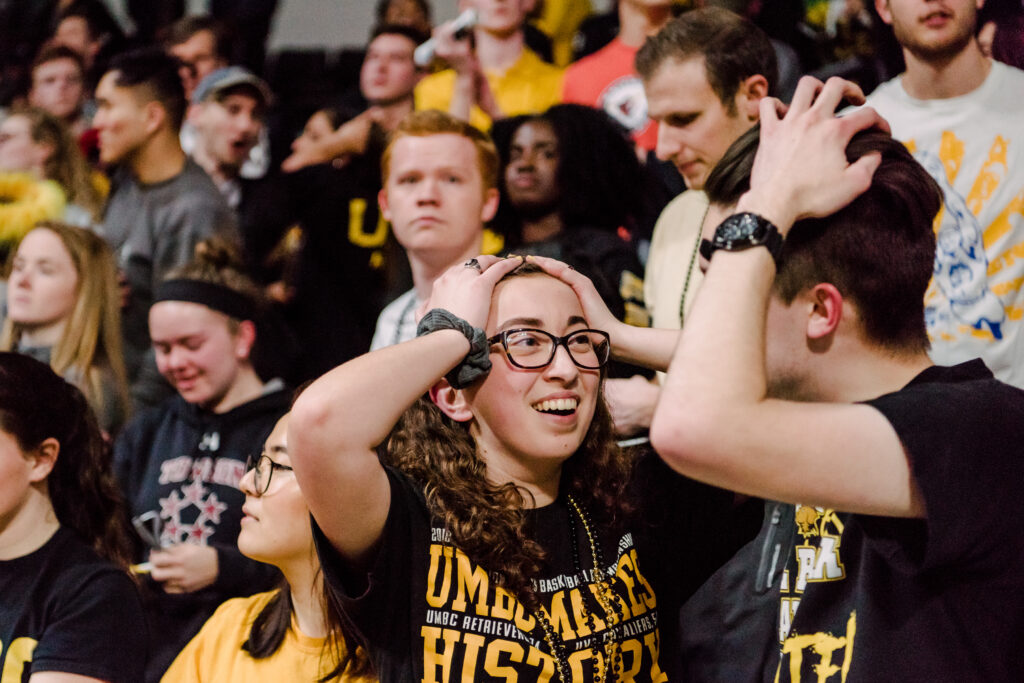
Retriever fans take in the double overtime win.
Retriever fans take in a double overtime win for UMBC men’s basketball over Hartford, which propelled the team to the America East final in March 2019. Photo by Marlayna Demond ’11 for UMBC.

Continuing UMBC’s momentum

Barrio comes to UMBC at a time of sustained athletic and academic success over several years. This includes highlights like the men’s basketball team’s “16-over-1” NCAA victory, swimming and diving programs dominating conference competition, men’s soccer’s numerous America East titles and women’s soccer’s first trip to an NCAA Tournament. Most recently, UMBC’s men’s lacrosse and softball teams overcame challenges to win 2019 America East Championships.

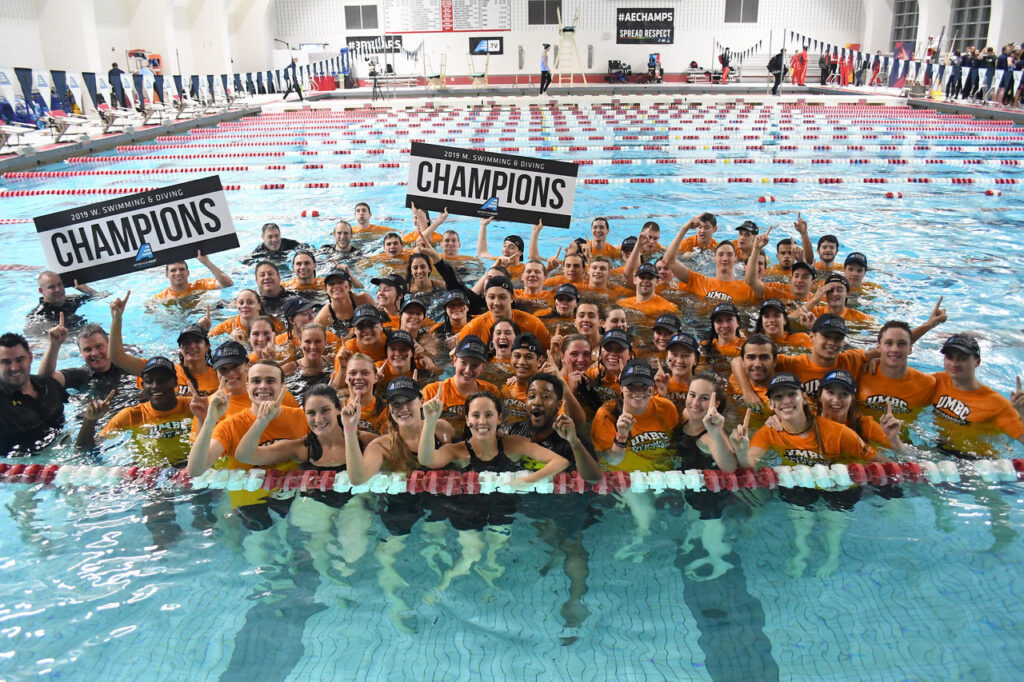
UMBC men’s and women’s swimming and diving teams celebrate their America East victory. Photo courtesy of Colleen Hummel.
UMBC men’s and women’s swimming and diving teams celebrate an America East victory. Photo courtesy of Colleen Hummel.

UMBC student-athletes also continue to excel academically. In fall 2018, they achieved a record grade-point average for the third consecutive semester, posting a mark of 3.14. Over two-thirds of student-athletes posted GPAs of 3.00 or higher.

Welcoming Barrio to Retriever Nation

Barrio earned a bachelor’s degree in communications from Boston College in 1999, where he got his start as a team manager for the men’s basketball team and an intern in the sports information office. He went on to earn his Juris Doctorate from the University of California-Hastings College of the Law.
“I am delighted to welcome Brian Barrio to UMBC,” says UMBC President Freeman Hrabowski. “His values and experience are impressive. He will be an outstanding ambassador for UMBC Athletics and a leader who will make an immediate contribution to the campus.” 

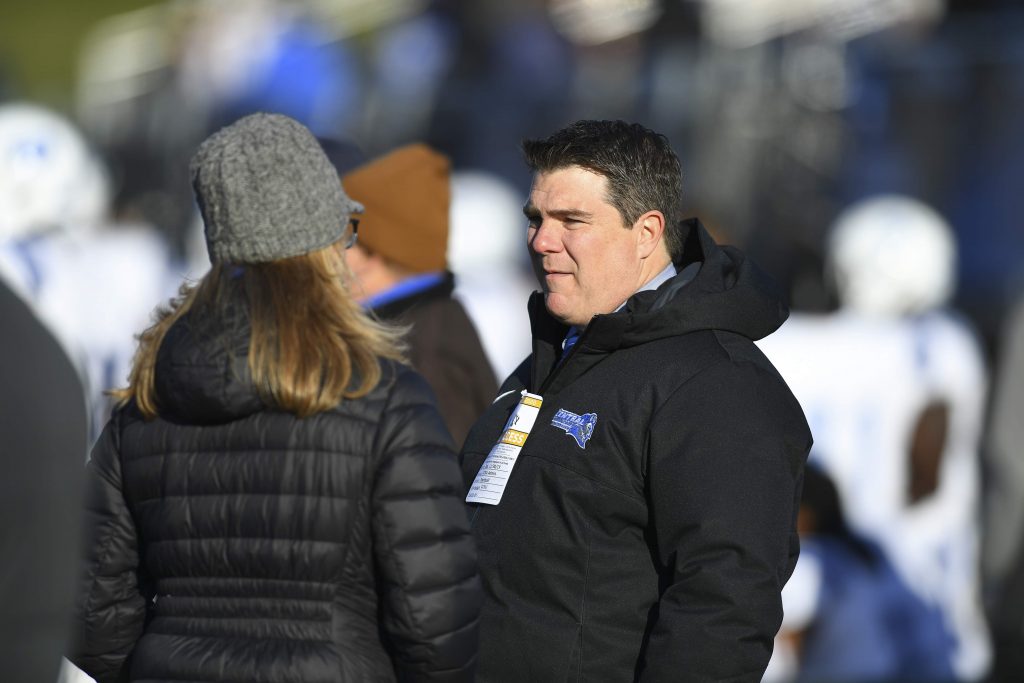
Man in black winter jacket stands outside, speaking with a woman in a black winter jacket and knit cap
Brian Barrio during his time as director of athletics at Central Connecticut State University. Photo by Steve McLaughlin.

“Brian really understands the role athletics and recreation can play in building vibrant campus life, driving enrollment, and helping connect people to the university,” says Greg Simmons, M.P.P. ’04, public policy, vice president for Institutional Advancement, who co-chaired the search committee.
UMBC will hold a welcome event and press conference next week to formally introduce Brian Barrio to the Retriever community. It will be on December 17, 11:30 a.m., in the Retriever Room of the UMBC Event Center.
See UMBC Athletics for more information about Brian Barrio.

Times Higher Education names UMBC a leader in life sciences, physical sciences, psychology

The London-based Times Higher Education (THE) has released subject-area listings for its World University Rankings 2020, recognizing UMBC as among the best in the life sciences, physical sciences, and psychology.

Earlier this fall, before the subject-area rankings were announced, UMBC was included in the broader 2020 THE World University Rankings. UMBC was named among the top 800 universities worldwide — #130 among U.S. universities on that global list.

In April, Times Higher Education also recognized UMBC as #3 as in the nation in achieving social and economic impact. Their University Impact Ranking measured how well universities deliver on United Nations Sustainable Development Goals, a blueprint for global peace and prosperity.

Featured image: Abby Cruz ‘18, biological sciences, a Meyerhoff affiliate and MARC U*STAR Scholar, works in Fernando Vonhoff’s biology lab.

“The Empowered University” brings UMBC’s story to readers nationwide

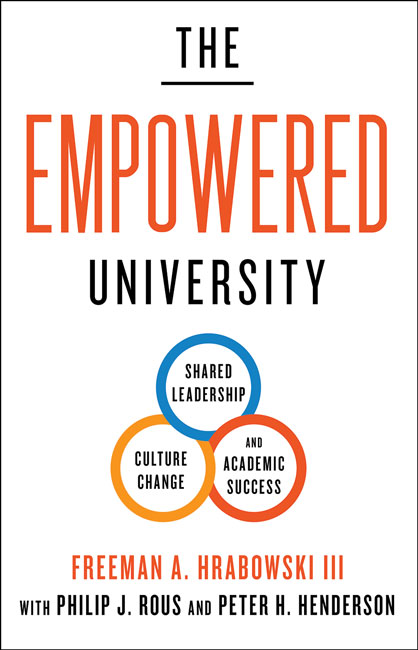
A new read on UMBC’s story is now hitting bookstores across the country. The Empowered University details how the UMBC community has come together to tackle some of higher education’s most intractable challenges, and has become a national model for inclusive excellence along the way. It’s a story of how leaders across administration, faculty, staff, and students have worked to get a full, honest view of UMBC’s strengths and weaknesses, and move the university forward.

Book cover for UMBC President Freeman Hrabowski will speak about The Empowered University at “Brilliant Baltimore” (November 3, 2 p.m., in the Literary Salon at the USM Columbus Center). UMBC colleagues, students, and alumni are encouraged to attend this free, public talk.

The book’s subtitle is telling: Shared Leadership, Culture Change, and Academic Success. Readers hear directly from President Hrabowski, with coauthors Provost Philip Rous and senior advisor Peter Henderson. At the same time, the book is full of insights and experiences from all corners of the UMBC community. 

Taking on the big challenges

How can universities prepare students to be leaders and change-makersnot just for the future, but in their own communities today? How can universities redesign courses to more actively engage students and prepare them for the future? How can universities more actively welcome and include diverse faculty as well as diverse students? 

President Hrabowski narrates the university’s drive to tackle these questions, providing clear and accessible examples from decades of innovation at UMBC. Many of UMBC’s explorations have also been research studies, with program evaluation to determine what works, what doesn’t, and what has the greatest impact for the investment. This means that in addition to boosting student success at UMBC, these innovations can be more readily applied at universities across the country. 

Already, UMBC’s tried and tested approaches to providing holistic student support have been implemented at universities in North Carolina, California, Michigan, Pennsylvania, and more. Still, the authors emphasize that supporting students isn’t all about implementing one strategy or anotherit’s also creating a healthy, supportive campus culture.

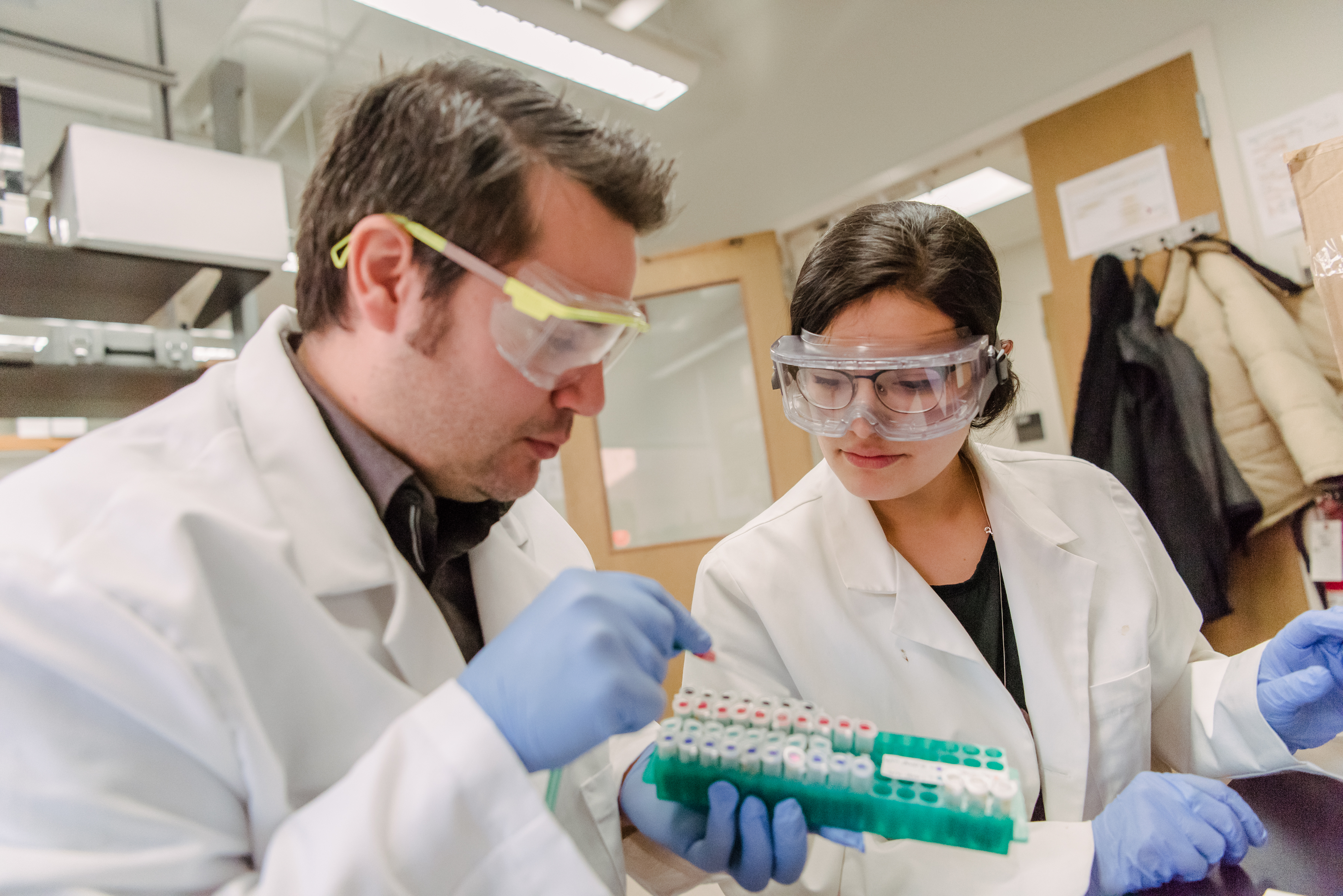
A man and woman wearing lab coats and goggles work in a lab, inspecting samples.

“Culture change is hard as hell”

What does a healthy university community look like? “This quality is expressed in our ability to be reflective; we can look in the mirror and be honest about what we see, good, bad, or challenging,” writes President Hrabowski, in The Empowered University.

And that work takes time. “It is a cliché, but every journey does begin with a single step and a single success that can demonstrate for others what could be. With each success and subsequent success, more and more members of the community began to look at our goals, values, and work in a different way,” President Hrabowski notes. 

Hundreds of professionals sit around tables in a room, talking, in groups of 8-10

“Culture change can be imperceptible at times, yet at other times one can recognize that the institution has reached a tipping point,” he writes. “One day, you realize that your campus has changed, the paradigm has shifted, the culture is now perceptibly different. It was in this manner that our campus transformed itself…to ‘unabashedly aspirational.’”

The Empowered University is available in the UMBC Bookstore, as well as Holding Fast to Dreams (2016) and President Hrabowski’s earlier books.

Update: Read Colleen Flaherty’s review of “The Empowered University” through Inside Higher Education.


Featured image: President Hrabowski with UMBC students on the roof of the Administration Building. All photos by Marlayna Demond ’11 for UMBC.
Retriever Courage one year later: UMBC community listens, learns, and acts

One year ago, the UMBC community spoke out about experiences, urgent concerns, and hopes for change related to sexual and gender-based harassment and violence. This September 18, student, faculty, staff, and administrative leaders of the Retriever Courage initiative hosted an open gathering to update the campus on early progress and next steps toward fostering a campus climate in which all feel a sense of belonging, safety, and support. The event drew about 150 UMBC community members.

“This is an important time in UMBC’s history, and we all must show up in this work,” said Candace Dodson-Reed ‘96, English, chief of staff in the President’s Office. Dodson-Reed will now also serve as executive director of the newly created Office of Equity and Inclusion, which will promote and coordinate the university’s core values of inclusive excellence, equity, and diversity. 

“I am constantly inspired by the students, faculty, and staff who are dedicating their time to Retriever Courage. I tell people that I dropped my daughter off at college this fall, and I want the same level of care for our UMBC students as I want for her.”

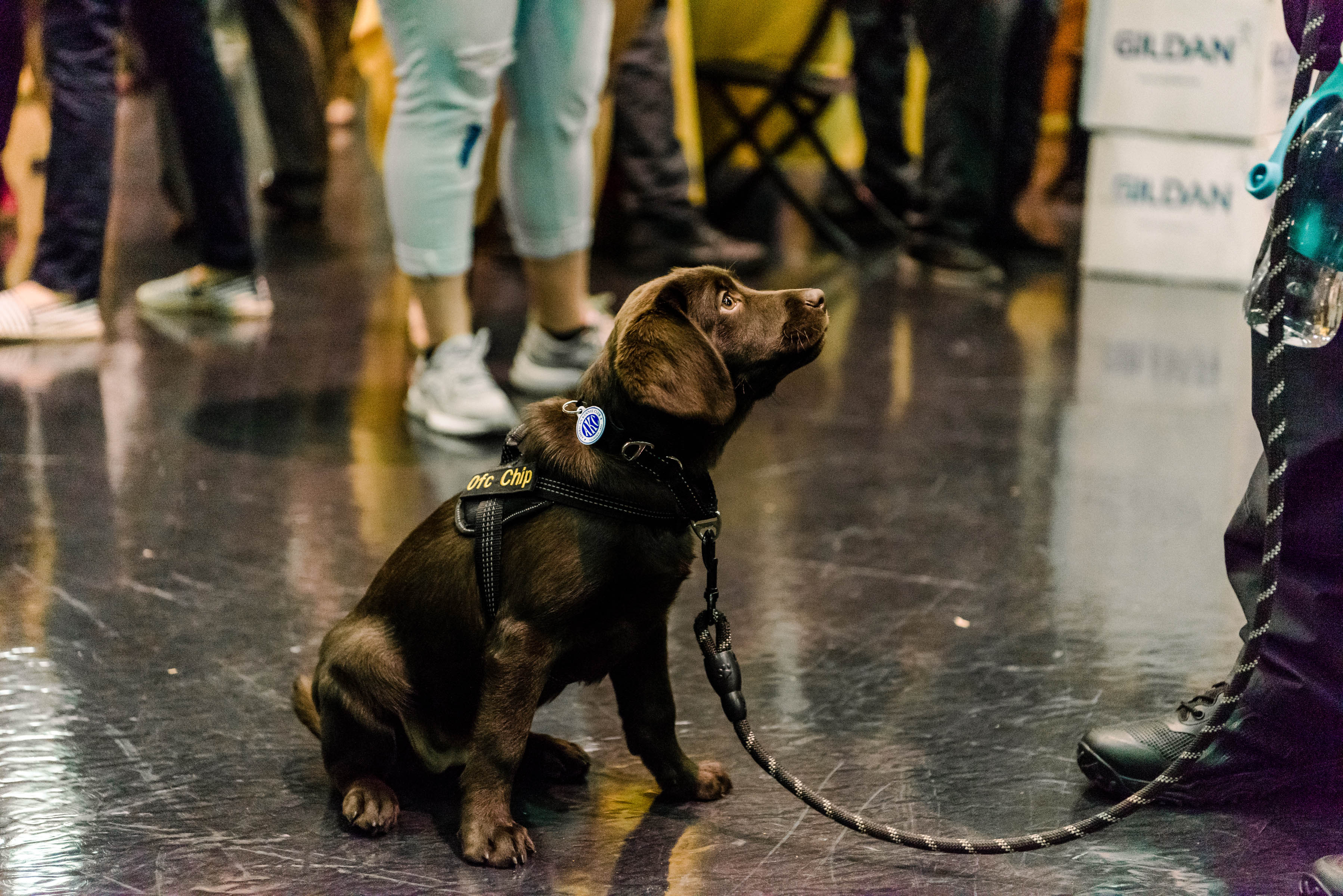
The event began with opportunities for community members to speak one-on-one with representatives of groups that have been implementing change on campus, including the Division of Information Technology, Counseling Center, UMBC Police (including the department’s new comfort dog, Chip), University Health Services, We Believe You, and the Women’s Center

Next, UMBC’s Retriever Courage Implementation Team spoke in a panel discussion. This included a Q&A session with attendees asking questions via notecards and an online submission form.

Facilitated by Dodson-Reed, the panel discussion included members of the Implementation Team. Student Advisory Committee Co-chairs Nadia BenAissa ‘20, gender, women’s, and sexuality studies, and Aliya Webermann, Ph.D. ’21, clinical and community psychology, participated. They were joined by Faculty/Staff Advisory Committee Co-chair Christine Mallinson, director of the Center for Social Science Scholarship and professor of language, literacy, and culture. Faculty/Staff Advisory Committee members Jess Myers, director of the Women’s Center, and Christopher Murphy, professor of psychology, also participated, along with Morgan Thomas ‘13, assistant general counsel. 

Community voices, community action

The discussion included powerful reflections by BenAissa and Webermann, on their feelings of anger and frustration a year ago, and the hard work, difficult conversations, and changes they have seen at UMBC since then.

BenAissa, who also serves as president of We Believe You, described the past year as an emotional time for her and for those involved in this work. “Last year, I was We Believe You’s discussion group leader, and I heard stories of how fellow student survivors were being let down,” she shared. “The University had not done well by our survivor community and something had to change. I can confidently say now that we are doing something, that Retriever Courage shows that the University cares about this issue and is working to make changes.” 

Today, BenAissa also serves as a member of Baltimore County’s Sexual Assault Investigations Task Force, created by County Executive John Olszewski, Jr., Ph.D. ’17.

Webermann, providing a graduate student perspective on the Student Advisory Committee, shares, “I feel we are making significant changes beyond sitting here and saying we are. I’m really excited by it. Students have been a big part of Retriever Courage. We’re not overlooked and ignored, and I appreciate that. We want you to know that change is happening.”

Mallinson spoke to the engagement of faculty, staff, and students over the past year to move forward in a way that truly reflected the experiences, values, and needs of people within the UMBC community. “Student activism really galvanized this initiative, but is has become overwhelmingly community-based,” she said. “The level of commitment by a diverse group of faculty and staff from across the University speaks to how this issue hits home for all of us as we do this work on behalf of all members of the UMBC community.”

“There is more to do”

UMBC President Freeman Hrabowski closed the event by thanking everyone involved in this effort, and specifically crediting the broader gender and women’s studies community and We Believe You students for their guidance. 

“People are…being honest in saying what we are doing well and what we could do better,” he told the group. “We need to continue to be vigilant and make this work part of our DNA at UMBC. Resources matter, and we are determined to be as responsive and supportive as possible. We’ve made considerable progress, but there is more to do.”

Progress shared at the gathering session stems from the spring 2019 release of three reports with recommendations on sexual violence/misconduct prevention and response. These reports were compiled by three groups: the Student Advisory Committee, Faculty/Staff Advisory Committee, and external consultants Jody Shipper, J.D., and Cherie Scricca, Ed.D. of Grand River Solutions, Inc.

In summer 2019, the Retriever Courage Implementation Team created workgroups focusing on core areas highlighted by the three reports. The groups focused on care and support, student training, the Title IX process, and communications. Their goal was to carry forward action items recommended in the reports. 

The UMBC community can learn more about these items and progress to date through a new dashboard, developed by members of the communications workgroup. 

Featured image: “Know About IX” informational poster at the Retriever Courage Gathering Session, Sept. 2019. All photos by Marlayna Demond ’11 for UMBC.
Times Higher Ed and Wall Street Journal again name UMBC a leading global and U.S. university

Just days after U.S. News again recognized UMBC as one of the nation’s top universities for teaching and innovation, the Times Higher Education (THE) World University Rankings have named UMBC a top global university.

In the new 2020 THE World University Rankings, UMBC is listed as among the top 800 universities worldwide, and #130 among U.S. universities on the global list. UMBC performs particularly well on an important measure of faculty research: citation impact. This reflects the visibility of UMBC faculty research on a global stage.

A man and woman wearing lab coats and goggles work in a lab, inspecting samples.

The Wall Street Journal / Times Higher Education College Rankings 2020 were also released earlier this month, with a focus on U.S. institutions. In this ranking, UMBC performs particularly well in student outcomes and learning environment. Outcomes include factors like graduate salary, university reputation, and debt after graduation, as well as graduation rate. Environment includes faculty and student diversity, international students, and student inclusion.

While recognizing that there is so much more to UMBC than rankings, President Freeman Hrabowski recently shared that UMBC’s standing reflects the university’s continued growth and the respect that colleagues at universities across the country and around the world have for UMBC.

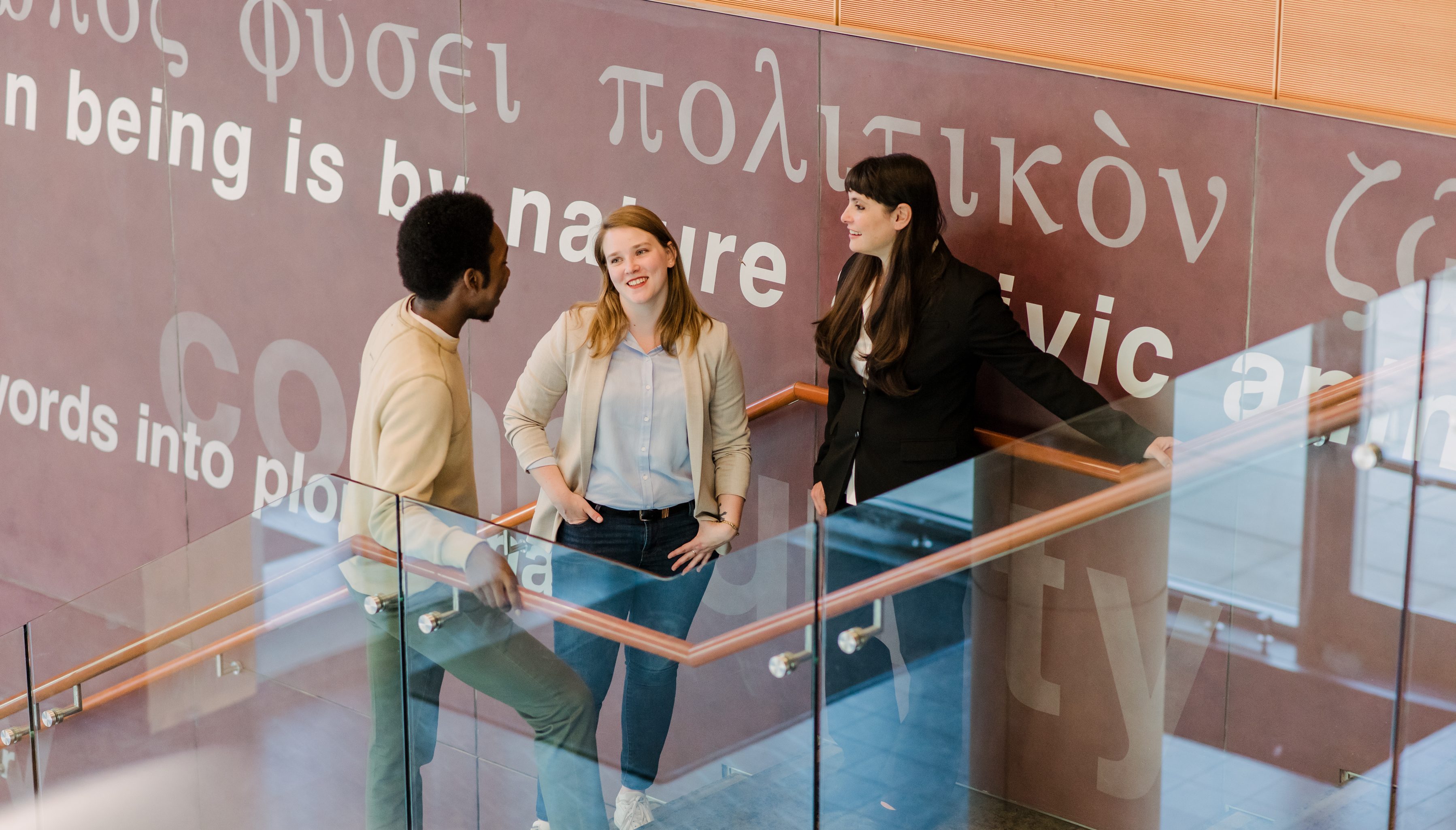
Students and faculty connect in UMBC's public policy building, in front of meaningful quotes in several languages.

Earlier this year, Times Higher Education spotlighted UMBC for advancements in graduating more low-income and minority students in the sciences, referring to this strength as “the holy grail of academia.” As President Hrabowski explained in the article, lessons learned in one area can inform others, and UMBC’s work to support underrepresented students in STEM has led to investments in supports for students of all backgrounds and in a broad array of majors across UMBC.

At UMBC, says Karl Steiner, vice president for research, “We take pride in our culture of inclusive excellence.”

New students spell out

UMBC was also again recognized by The Chronicle of Higher Education as a “Great College to Work For” this month. The University received special honors in two categories: (1) Confidence in Senior Leadership and (2) Respect and Appreciation.

As one employee shared with The Chronicle:

The administration has a real dedication to issues like shared governance and increasing diversity. This isn’t a stance that they take because they think it would help them look better. The university knows these things matter and does everything it can to achieve them. I believe that our university is legitimately a model in these two areas.

UMBC has now appeared on the Great Colleges to Work For list for ten years.

Featured image: Students on the stairs in front of the UMBC library. All photos by Marlayna Demond ’11 for UMBC.
Information about UMBC’s “Great Colleges” ranking went live on Sept. 16, and was added after initial article publication.