


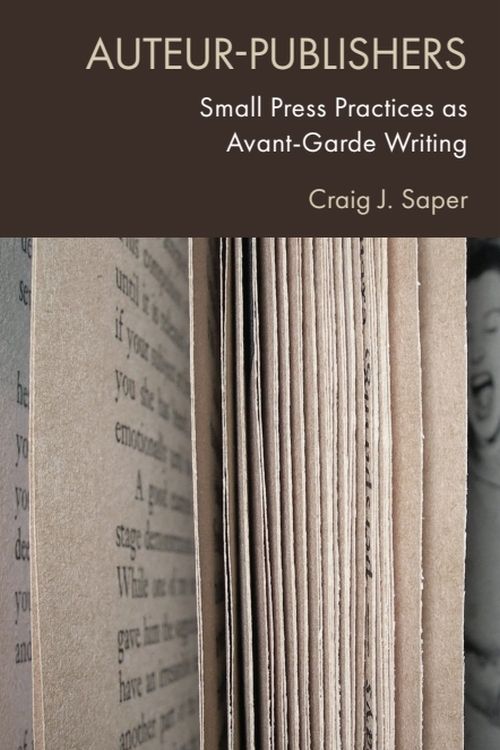
Craig Saper’s new book tells the storied life of small press book publishers and the literary world they created.
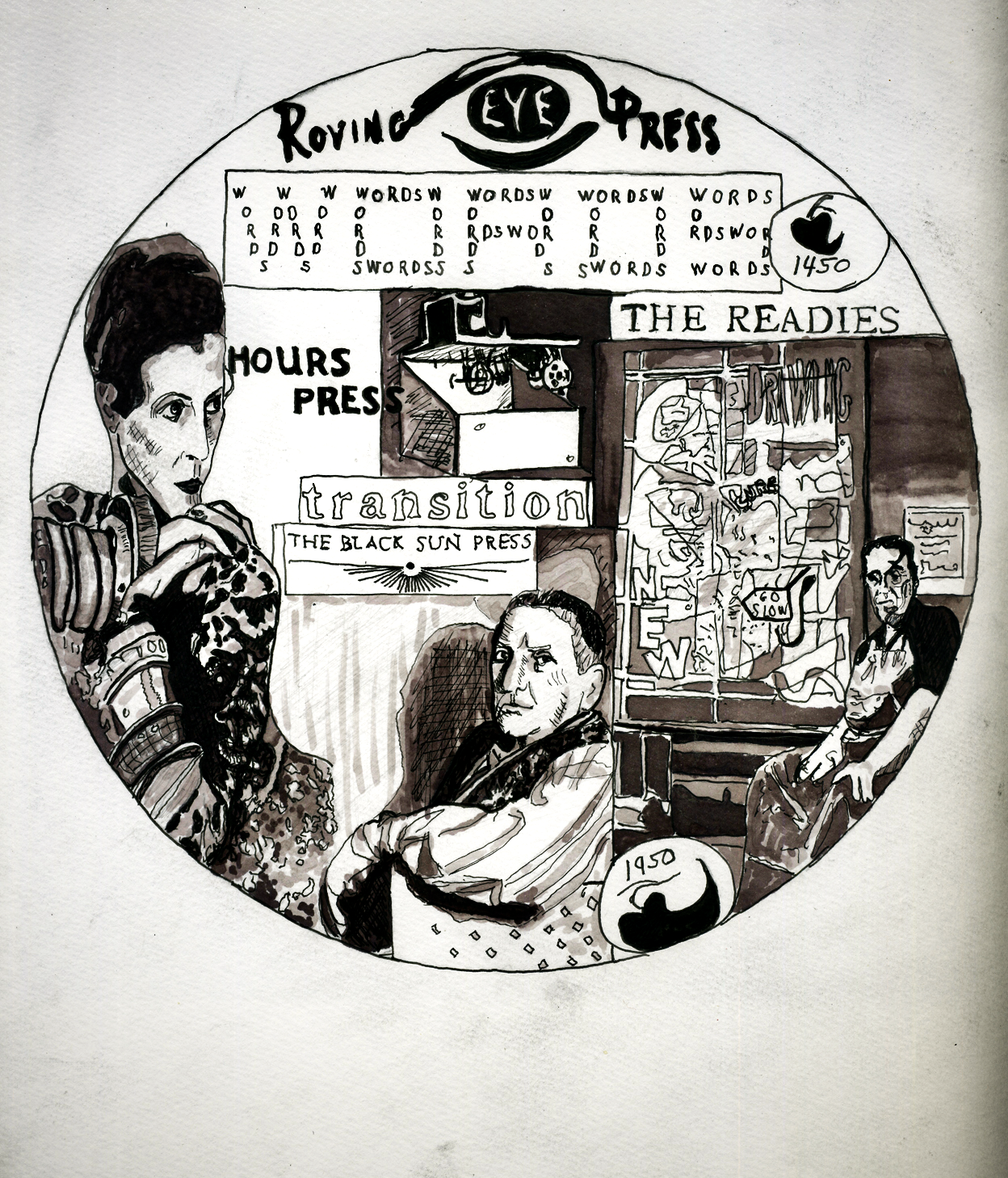
As readers, we tend to associate our favorite books with their authors, some of whom have larger-than-life personalities that extend beyond their published works. Rarely do we think of the people and structures that made the book possible, especially if they are small, lesser-known publishing houses. In his new book Auteur-Publishers: Small Press Practices As Avant-Garde Writing, Craig Saper, professor of language, literacy, and culture, places these small publishing houses and the publishers front and center, showcasing the relationships that literally bind a book. He explores presses launched by artists, writers, and activists from the 1890s to the present, each with intriguing histories and personalities that have left the art and literary world with a rich legacy for artists and aspiring small press publishers to whom the book is dedicated.
“I have a background in media studies and borrow the word auteur, French for author, used in film studies, to suggest that the author of a film is not the writer but the director. It’s about a collective vision beyond the writers,” says Saper, who also authored The Amazing Adventures of Bob Brown (2016), Intimate Bureaucracies (2012), Networked Art (2001), and Artificial Mythologies (1997). “I argue that the author of a book is not simply the writer, but the term also includes the publisher. Like a film director, the small press publisher plays an essential role in shaping, organizing, and ultimately authoring the work.”

Q: What intrigues you about the writer-publisher relationship?
A: Part of the fascination comes from asking a simple question: Who are these people, and why don’t we know anything about publishers? We know so much about the personal lives, relationships, and even sex lives of writers—Hemingway, for example, is someone we have heard more than enough about—but what do we really know about the publishers and editors who helped create their books? Who made those books possible? Who shaped, supported, and even helped invent the writers as the literary figures we now recognize them to be? These questions became an important starting point for the book. I talk about the idea of the smallest details, the beautiful part of the publishing process, and the intimacy of these relationships, looking at the close connections between publishers, editors, writers, and the communities who helped make the work—and the literary world around it—possible.
Q: How can small presses create intimate relationships, and how does that sometimes backfire?
A: The beginning of the book explores the notion of alienation—not only our alienation from our environment, our communities, and our work, but also the possibility of becoming more connected to those things. That is why the idea of intimacy feels so important here. Intimacy does not have to mean only loving relationships. It can also describe the deep connections we form with friends, neighbors, communities, and people whose histories become intertwined with our own.
This is especially evident among the people who create and sustain small presses, where publishing is often built on close friendships, shared histories, and a sense of collective commitment. At the same time, those relationships can be complicated or even fraudulent. The books may demand enormous amounts of labor and devotion, and sometimes the people who helped create them eventually step outside that orbit, leaving behind relationships and communities that once seemed inseparable.
Q: Were there things that surprised you about the people who created these presses?
A: These characters were very colorful. There was something about printing and making books that was erotic for many of these small publishers. Some of the people’s sexuality was what we now call polyamorous and, during their lifetimes, illegal and often illicit.
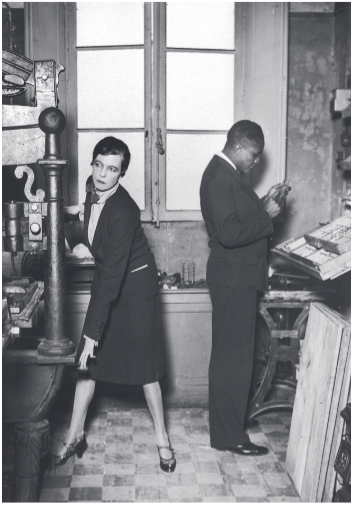
One was the avant-garde artist, writer, fashion icon, and publisher Nancy Cunard, a white British shipping heiress. She left her family and inheritance to join a radical bohemian world of creative geniuses. After learning printing and publishing from Virginia Woolf, she founded the Hours Press, which ran from 1928 to 1931 in Réanville, Normandy, in collaboration with Henry Crowder (1890–1955), an American jazz musician with whom she was in a relationship. Their interracial relationship—Cunard was white and Crowder Black—was not welcomed by her family, nor were her short-cropped hair and antifascist beliefs. Cunard learned about systemic racism from Crowder, and together they gathered a collection of poetry, fiction, and nonfiction about Black life in the United States, the West Indies, South America, Europe, and Africa, titled Negro: An Anthology, including works by W. E. B. Du Bois, Langston Hughes, and Zora Neale Hurston, which Cunard paid to publish in 1934. She died in 1965, penniless, leaving behind monumental achievements in modernist publishing and social justice.
Harlem Renaissance poet, artist, and publisher, Kathleen Tankersley Young, another now almost completely forgotten poet and publisher, was involved in a serious artistic partnership with Charles Henri Ford, who wrote The Young and Evil, the first gay novel. One reason she has been overlooked is that she also published in the Harlem Renaissance publications, including the magazine Opportunity: A Journal of Negro Life, while the journal she created with Ford in 1929, Blues Magazine: A Magazine of New Rhymes, was much better known. She also died tragically and under suspicious circumstances at 30 years old, having published an important series of publications mixing modernist art and poetry.
Q: Did you ever meet any of these publishers?
A: One of the people I write about is Dick Higgins. He was an artist, composer, art theorist, and poet who started Something Else Press. He was also a co-founder of Fluxus, an international, interdisciplinary community of avant-garde artists, composers, and poets active in the 1960s and 1970s who emphasized performance, process, Vaudeville-like humor, and chance over traditional forms of art objects. Something Else Press published work from Fluxus artists.
When I started to write about Fluxus, not knowing anything really about them, I wrote to Dick Higgins. I was a young person; I didn’t know any better. I just wrote to the press and said, “I wanna buy these books,” and I listed off 10 or 15 titles. I got this official-looking memo from Higgins with just one line typed: “I want to meet you.” We did finally meet years later. He was just a really loving person. Higgins passed away shortly after he had actually come and visited me. It led me to think about how artists and writers occupied bureaucratic forms and organizations, and that eventually led me to think about these small press publishers as artists and auteurs.
Q: What do you want students to take away from your research?
A: Students can think about building a small press, a zine, or a small organization as a creative practice, rather than as a logistical exercise with profit margins as the goal, and use this book as a guide.
Build something. Do it and do it better.