



All posts by: Magazine Editor
Meet a Retriever—Nathan Wooddell ’23, graduate student specializing in Russian and cybersecurity
Meet Nathan Wooddell ’23, computer science. Nathan is a member of UMBC’s CyberCorps: Scholarship for Service cohort, and is getting his master’s in cybersecurity as a graduate researcher at the National Nuclear Security Agency. Nathan attributes much of his success to the connections he’s made with the staff and faculty at UMBC who have helped him to discover his true passions. During his time as an undergraduate at UMBC, Nathan also completed a Russian language certificate, and has found a way to combine his interests of both cybersecurity and the Russian language in the professional world. Take it away, Nathan.
Q: What’s one thing you’d want someone to know about the support you find at UMBC?
A: In many classes, casual visits to professors during office hours, polite interactions during class, and expressing interest in the subject matter can go a long way. Such interactions help with all aspects of student life. Too many students fail to take proper advantage of the fantastic support that the university faculty can offer. The best way to do this in my experience is simply to speak with your professors after class or outside of class.
Such interactions help with all aspects of student life. The faculty can offer support in the form of academic resources, scholarship recommendations, professional guidance, and even letters of recommendation for work or graduate programs.
Q: Tell us about someone in the community who has inspired you or supported you, and how they did it.
A: I want to give special thanks to Russian instructor Vira Zhdanovych. Since I first transferred to UMBC, I have taken Russian language courses with Professor Zhdanovych. It was through her guidance that I got my first research experience when she advised me on my 2022 Undergraduate Research and Creative Achievement Day presentation Analyzing the Russian Federation’s Impact on Global Cyber Security. This was also the first time that I was able to merge my interest in cybersecurity and Russian language.
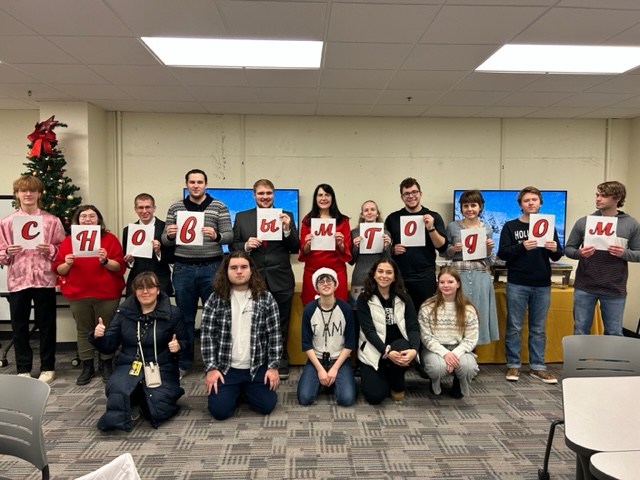
I have worked extensively with Professor Zhdanovych to study and research the impact of the Russian-speaking world on the cybersecurity and intelligence communities—I owe so much of my professional and academic success to her.
Q: Tell us what you love about your academic program or an organization you’re involved in.
A: I am a participant and former officer in UMBC’s Russian Club. The meetings of this club are especially good for learning about contemporary Russian culture, as well as the geopolitical history, which still shapes the diplomacy of the Russo-American relationship.
““Had I known then what I know now about the university’s programs, rigor, faculty, and opportunities, UMBC would have been a shoo-in. Ultimately, I am so grateful that I applied to, and attended UMBC.”
Q: What is your WHY? What brought you to UMBC?
A: I came to UMBC in my sophomore year as a transfer student. Admittedly when I was accepted I toyed around with the idea of going to a variety of different schools, but eventually decided on UMBC for the price, and the relative vicinity to my home in northern Maryland.
Had I known then what I know now about the university’s programs, rigor, faculty, and opportunities, UMBC would have been a shoo-in. Ultimately, I am so grateful that I applied to, and attended UMBC.
Q: Tell us about the people who are helping you grow at UMBC, and why their HOW made such a difference to you.
A: In addition to Professor Zhdanovych’s support with my Russian language and research, Professor RJ Joyce in computer science encouraged me to become invested in cybersecurity. It’s because of him that I’ve become involved in many of the clubs and organizations I am currently enrolled in. Such interest in security was able to earn me recipient status in UMBC’s Scholarship for Service cohort.
Q: What clubs, teams, or organizations are you a part of? What do you love about them?
A: First and foremost, I am a member of UMBC’s National Science Foundation-funded CyberCorps: Scholarship of Service (SFS). This program has allowed me to pursue my interest in security outside of the traditional academic venues. Thanks to SFS, I was able to attend and present at DEFCON 31 in Las Vegas, one of the largest cybersecurity conventions in the world [Photo: Wooddell, left, at DEFCON 31 with a fellow student].
I am also a member of the UMBC Cyberdawgs. I never miss an opportunity to compete in the annual competitions they hold on campus. Beyond this, I attend the bi-weekly Cyber Defense Lab meetings, which allow me to keep up to date with all sorts of security research projects being conducted on campus.
Q: Are you a student leader? Tell us about it!
A: Through SFS, related organizations, and clubs on campus, I have been lucky enough to meet and work with some of the most amazing and intelligent people I have ever met. From these associated labs, clubs, and programs I have met and been influenced by more people than I could ever hope to list here.

I am incredibly honored to have been able to lead these organizations, as they have provided me with opportunities to give back to my university and community.
* * * * *
UMBC’s greatest strength is its people. When people meet Retrievers and hear about the passion they bring, the relationships they create, the ways they support each other, and the commitment they have to inclusive excellence, they truly get a sense of our community. That’s what “Meet a Retriever” is all about.
Turkey will stop sending imams to German mosques – here’s why this matters
Written by Brian Van Wyck, assistant professor of history, UMBC
For decades, the Turkish government has sent imams to work in mosques across Germany. But the German Ministry of the Interior recently announced that it had reached an agreement with the Turkish government to put an end to the practice.
These imams, approximately 1,000 at present, are Turkish civil servants. Imams are sent to Germany on four- to six-year rotations, based on a long-standing agreement between the two governments. They work with Germany’s more than 2.8 million residents with Turkish citizenship or heritage.
The practice had come under intense criticism in Germany in recent years. German politicians have accused Turkish imams of spying on their flocks or abusing their positions to promote support for Turkey’s ruling Justice and Development Party.
The German government described plans to replace “imported imams” with imams trained in Germany as an “important milestone for integration.” On the other hand, some observers have questioned whether it will change anything for Germany’s 5 million Muslims.
As part of my ongoing research into the history of migration between Turkey and Germany, I have investigated the origins of this exchange and the goals both governments pursued by bringing Turkish imams to Germany.
Efforts by both states to intervene in the religious lives of Muslims by selecting which imams can preach in German mosques have a long history – although such efforts might not always achieve the goals of governments.
The ‘strategy’ of sending imams
A 1961 agreement led to Turkish “guest workers” being sent to Germany to meet the labor demands of its booming postwar economy. Many recruited workers and their families chose to settle permanently in Germany. By 1974, a year after labor recruitment ended, at least 1 million Turkish citizens were residing in Germany.
It was only in the 1980s that the Turkish government began sending cohorts of imams abroad, after it had become evident that a large Turkish population was in Germany to stay.
This step was motivated by several goals. One was to use state imams to create an alternative to Islamic groups active in Germany who opposed the secular Turkish state. Another was to use imams to foster continued ties to Turkey among the Turkish diaspora in Germany, encouraging them to continue to invest in Turkey.
In the 1980s, conservative governments made increasing use of Islam to encourage national unity in Turkey by, for example, mandating religious education in schools and revising curricula to emphasize Turkey’s Islamic heritage. Sending imams abroad was an example of this strategy being exported to Turkey’s overseas diaspora.
Only Turkish imams for Germany

In the early 1980s, German authorities, like their Turkish counterparts, had become concerned about Islamic institutions in the country. Historian Alexander Konrad has demonstrated that unsubstantiated reports about corporal punishment and political extremism in courses devoted to learning the Quran achieved wide currency in Germany in the 1970s.
When German diplomats and Turkish officials began to discuss their shared concerns in meetings in Ankara in 1980, they quickly found common ground. As diplomatic cables in the archives of the German Federal Foreign Office reporting on these discussions reveal, Turkish and German officials agreed that having the right imams in German mosques would solve the social and political problems they believed were caused by extremist imams. And they believed that imams employed by the Turkish state were guaranteed to be well-trained and moderate.
Accordingly, as I learned from directives preserved in the State Archive of North Rhine-Westphalia, German policymakers had begun by 1982 to issue entry visas directly to the Turkish government to distribute to those imams it selected to serve in Germany. Already by the end of the 1980s, more than 500 Turkish state imams were active in Germany.
At the same time, entry visas for all other imams were more tightly controlled. This meant that imams from Turkey or anywhere else in the world who wanted to work in Germany but were not employed by the Turkish government faced new hurdles. I learned from legal judgments in the German Federal Archives that some imams who were already working in Germany were forced to leave the country as a result of the new policy.
Limits to the influence of Turkish state imams on German mosques
Both governments assumed that Turkish state imams would be able to reshape German mosques, eliminate perceived extremism and ensure secular Islamic practice in Germany. However, this agreement did not achieve the results the Turkish or German government desired.
There were a few reasons for this. For one, imams often arrived with limited knowledge of German and Germany. Because of that, they relied on members of the local Turkish community, as the sociologist Rauf Ceylan has argued.
Contrary to what German and Turkish officials might have assumed, these imams could not simply assume control over the often long-established mosques to which they were assigned. And that meant that whatever control the Turkish government exercised over German mosques through them was partial and depended on local buy-in.
Furthermore, not all mosques in Germany received Turkish state imams. Turkish-origin migrants and their descendants created Islamic institutions and organized religious life for themselves for decades without Turkish state intervention. Those institutions did not disappear when competition in the form of Turkish state imams arrived. Both now and then, many Muslims with Turkish roots choose to attend mosques with Turkish state imams, but many do not.
Imams trained in Germany?
Over the course of the more than 40 years in which Turkish state imams have been sent to Germany, the German and Turkish governments invested their work with high expectations. And now, as the end of these imam exchanges comes into sight, German officials continue to assume that changing who preaches in mosques will dramatically alter religious life for German Muslims.
In the coming years, imams trained in academies in Germany will replace more and more Turkish state imams as they end their rotations in Germany and return home. According to this plan, the eventual result will be that only domestically trained, German-speaking imams will work in German mosques at some point in the near future. German officials described the new model as “an important milestone for the integration and participation of Muslim communities in Germany.”
Ultimately, as history demonstrates, it is German Muslims themselves, and not the imams who lead them in prayer, who will determine if this is the case.
This article is republished from The Conversation under a Creative Commons license. Read the original article and see more than 250 UMBC articles available in The Conversation.
Meet a Retriever—Monique Cephas ’92, Alumni Association scholarship committee chair
Meet Monique Jones Cephas ‘92, information systems management. Monique is the Deputy Associate Commissioner for the Office of Electronic Services and Systems Integration at the Social Security Administration and the current Scholarship Committee Chair of the UMBC Alumni Association Board of Directors. Monique credits her time at UMBC and participation in the university’s cooperative education program—along with a lot of hard work, perseverance, and dedication—for her career success. “Each one, reach one” is one of Monique’s favorite mantras. This is why she gives back to UMBC as an active member of the Alumni Association. Take it away, Monique!
Q: What’s your favorite part of Retriever Nation?
A. As a member of the UMBC Alumni Association, I enjoy connecting alums with other alums, alums with current students, and enriching our UMBC network. It is imperative to me to help students understand the dynamics of building their network even before graduating from UMBC with hopes of using this network to find a position in their field of study.
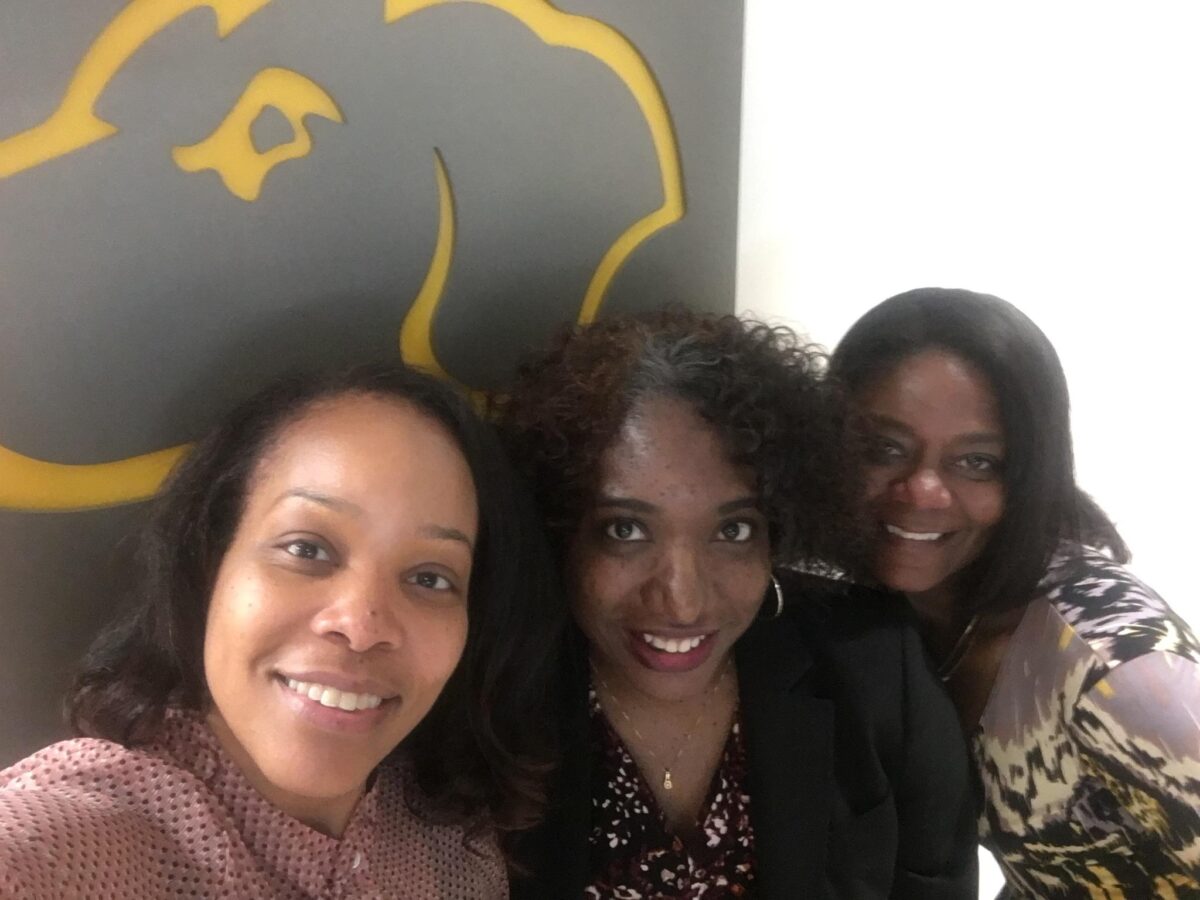
In addition to my service on the alumni board, I was also a founder of the Chapter of Black and LatinX Alumni (CBLA). Founded in 2006, CBLA was formed to create multicultural programming and continue intercultural interactions for the UMBC Black and Latinx community. CBLA is open to all UMBC alumni and in alignment with UMBC’s value of Inclusive Excellence, we want alumni members to join us in building our culturally conscious community.

Q: What do you love about your academic program or an organization you’re involved in?
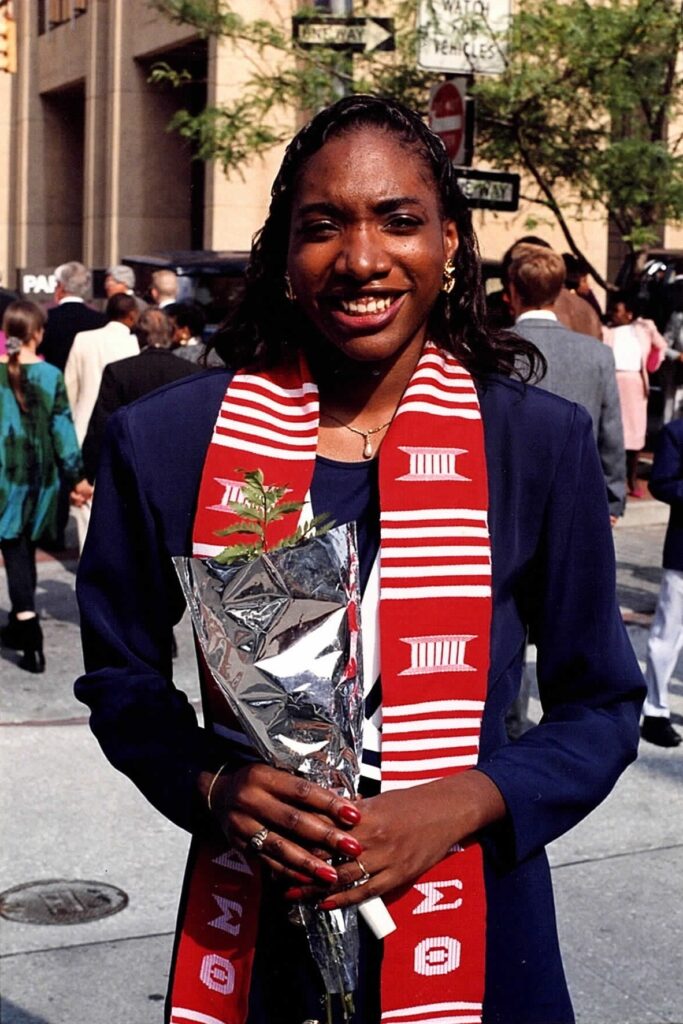
A. I am an avid public servant. In 1990, I was initiated as a member of the Lambda Kappa Chapter of Delta Sigma Theta Sorority, Inc., which is the first Greek letter organization on UMBC’s campus. I love the sisterhood, advocating for justice, and helping young people to achieve their dreams by awarding scholarships. My lifetime commitment to public service and the values that were instilled in me as a leader with the Lambda Kappa chapter have carried over to make me a successful president of the Baltimore County Alumnae Chapter with more than 400 members.
“It is imperative to me to help students understand the dynamics of building their network even before graduating from UMBC with hopes of using this network to find a position in their field of study.
Q: Where did you find support at UMBC?
A. I am extremely grateful for the opportunity to participate in UMBC’s cooperative education program starting in 1991 as this is how I started my career at the Social Security Administration (SSA) as a computer specialist. I have worked at SSA for more than 32 years moving up the career ladder from an IT specialist to a team leader, office director, and now a member of the Senior Executive Service as the Deputy Associate Commissioner for the Office of Electronic Services and Systems Integration.
Q: How have you given back?
A. I love to support the Alumni Endowed Scholarship Fund. As someone who worked their way through college, the mission of that fund is near and dear to my heart. I know that the donations I make will be put to good use by a student in need. This year the board received scholarship applications from 41 qualified students, but we were only able to award $18,000 total to nine students. As chair of the Alumni Association Board of Director’s scholarship committee, I know we can help more deserving students. We hope to award even more scholarships in the future—with your help.
The UMBC Alumni Endowed Scholarship
Through the Alumni Endowed Scholarship, the board of directors strives to make a difference in the lives of deserving students, to help them achieve their dream of receiving a university degree and joining the alumni community.
The board offers a general and legacy scholarship to outstanding undergraduate UMBC students. Eligible students may apply for the general and legacy scholarships each year. The award for the Alumni Association General and Legacy Scholarships for 2023 – 2024 is at least $2,000. These scholarships are partially funded through the generous support of UMBC alumni.
* * * * *
UMBC’s greatest strength is its people. When people meet Retrievers and hear about the passion they bring, the relationships they create, the ways they support each other, and the commitment they have to inclusive excellence, they truly get a sense of our community. That’s what “Meet a Retriever” is all about.
Meet a Retriever—Emily Passera, coordinator for community engagement
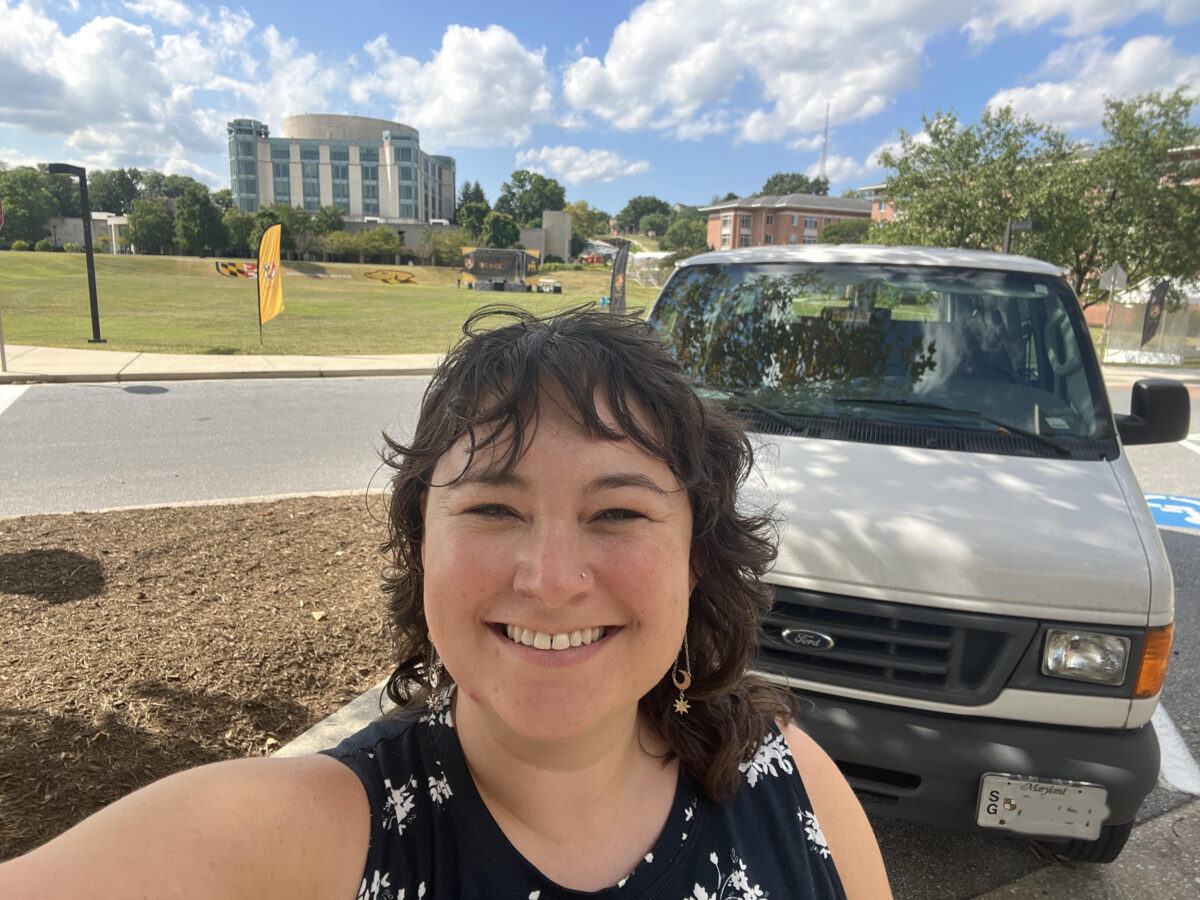
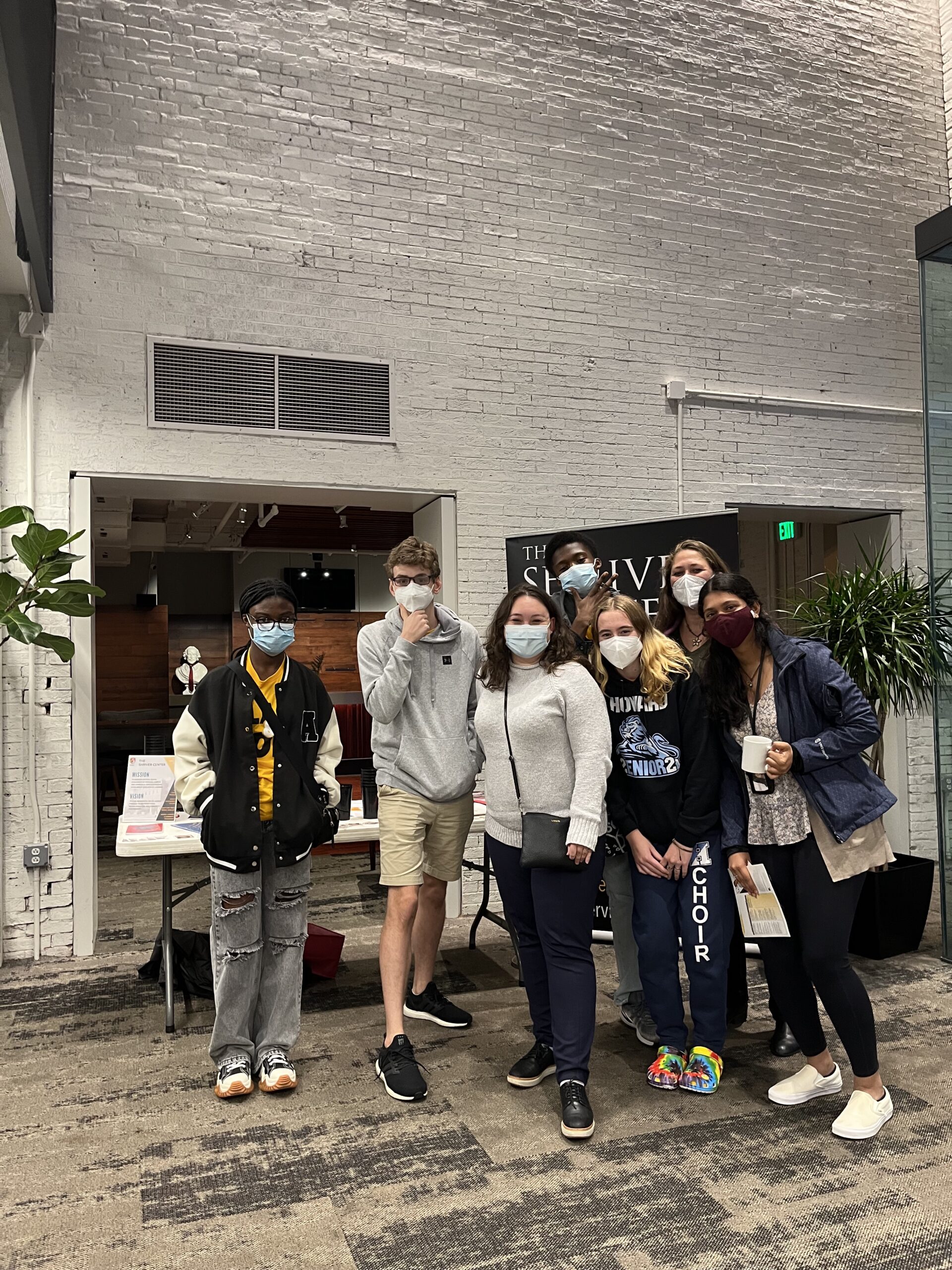
Meet Emily Passera, the program coordinator for service-learning and community engagement in the Shriver Center. In her role, Emily coordinates the student leadership development programs for the residential Shriver Living Learning Community and serves as a member of the Exempt Staff Senate. She also facilitates school, nonprofit, and government agency partnerships with UMBC and coordinates implementation of applied learning courses across campus with a focus on career readiness, experiential learning, and storytelling. Her not-so-secret recipe for bringing joy to her job? Saying “yes” as much as possible! Take it away, Emily.
Q: What’s the one thing you’d want someone to know about the support you find here?
A. Collaboration is such a key value of UMBC. I feel well known and supported across academic and student affairs. I connect weekly with the Center for Democracy and Civic Life, The Honors College, Transfer Student Initiatives, and the three colleges because a student-centered approach is fundamental to collaborative work.
Q: Tell us about someone in the community who has inspired you or supported you, and how they did it.
A. UMBC’s first-year students continue to impress me every year, and it takes a lot of work to help transition these learners into our community. Laila Shishineh and her office (Academic Engagement and Transition Programs) support programming and academic resources to see them succeed. Somehow, Laila also has time to lead my favorite Monday night tradition, Bootcamp in the RAC. As a First-Year Experience instructor and a human who needs exercise for a balanced lifestyle, I feel supported by Laila’s leadership!
Q: Tell us about what you love about your academic program or an organization you’re involved in.
A. I love being a Community Service and Learning Practicum (PRAC 096) instructor. Through the PRAC 096 course, community engagement continues to help UMBC students become more attuned to their local community and interpersonal skills. While serving the Baltimore region weekly, our students reflect on issues such as neighborhood poverty, maternal and mental health, food justice, education access, disability rights, and grassroots social change. I am so impressed how exposure empowers these leaders. They also connect with community members at UMBC from different lived experiences and find similarities and projects to work together on. Our community partners want more UMBC students to engage!
Q: What brought you to UMBC in the first place?
A. “My UMBC Why” is the proximity to enthusiastic non-profits, school programs, and leadership in the community! The arts, humanities, and sciences are all well-represented and employ experts in creating applied learning experiences for all ages of community. UMBC students can explore their classroom learning outside Hilltop Circle.
“Collaboration is such a key value of UMBC. I feel well known and supported across academic and student affairs.
Q: Tell us about the people who have helped you at UMBC, and why their HOW made such a difference to you.
A. “My UMBC How” is the staff mentorship program. I’ve connected with staff who put in countless hours running programs, like creating a restorative practices community. Every professional development opportunity I hear about I invite my mentors. Walking the loop around campus and sitting outside Starbucks with my mentors has created the environment to have deep conversations about UMBC culture, personal mission, and collective support.
Q: Are you involved in any campus organizations?
A. Exempt Staff Senate! I really value a shared governance who listens and advocates for staff representation in the holistic care of the workforce here at UMBC. We work to address issues and leadership transitions as a collective unit.
Q: What part of your job do you enjoy the most and why?
A. Through my role, I support students discovering that it’s safe to explore their interests while at college. While on-boarding students with their campus partners, I ask deep questions about their goals and ideal work environments. I consider their responses and invite them to try something outside their comfort zone. Facilitating reflection on these community engagement experiences better prepares them to put the experience on their résumé, identify leadership skills, and continue to learn in an active environment.
Q: What’s next for you, Emily?
A: I am starting to expand my interests in learning analytics. I think the Ed.D. in Educational Leadership at Frostburg State University will help support my career growth.
Q: What would you tell someone who is considering a career at UMBC?
A. Arbutus is a close neighbor, and OCA Mocha is a great work environment!
* * * * *
UMBC’s greatest strength is its people. When people meet Retrievers and hear about the passion they bring, the relationships they create, the ways they support each other, and the commitment they have to inclusive excellence, they truly get a sense of our community. That’s what “Meet a Retriever” is all about.
Meet a Retriever—Kevin Yang ’07, alumni leader and UMBC donor
Meet Kevin Yang ’07, computer science and financial economics. Kevin is a real estate entrepreneur, alumni leader, and one half of an alumni power couple. Kevin met his wife, Katelyn Niu ’05, biochemistry, when the pair found themselves in the same physics study group as undergrads (because where else do you find love at UMBC?). They both share a passion for UMBC that runs deep. Take it away, Kevin!
Q: What is your WHY? What brought you to UMBC?
A. I grew up in an immigrant family and witnessed the sacrifices that my parents made to give me an opportunity to achieve the American dream. Although they never had the chance to finish high school, my parents firmly believed in the importance of higher education. I came to UMBC for a quality STEM education and found it to be a perfect fit. UMBC offered the resources of a larger university and the individualized attention of a smaller college.
Q: What’s your favorite part of Retriever Nation?
A. I love UMBC’s commitment to inclusive excellence. Retriever Nation welcomes students from diverse backgrounds and provides them with the necessary support to succeed at UMBC and beyond. I am forever grateful for the amazing experience that I had at UMBC! In addition to receiving a quality education, I made many lifelong friends, including my wife. I have stayed engaged since graduation, and I am proud of UMBC’s commitment to inclusive excellence.
Q: Tell us what you love about your academic program or an organization you’re involved in.
A. I had an excellent experience with the computer science program, which offered many opportunities beyond the classroom. As a tutor, teaching assistant, and research assistant in the computer science department, I learned valuable written and verbal communication skills, which was a highlight of my UMBC education.
Today, I am a real estate entrepreneur, the Founder of KRY Properties. As a business owner, I love the ability to chart my own path. I often have to assume multiple roles, which is both challenging and rewarding. The analytical, problem-solving, and communication skills that I developed at UMBC gave me the confidence to pursue entrepreneurship.
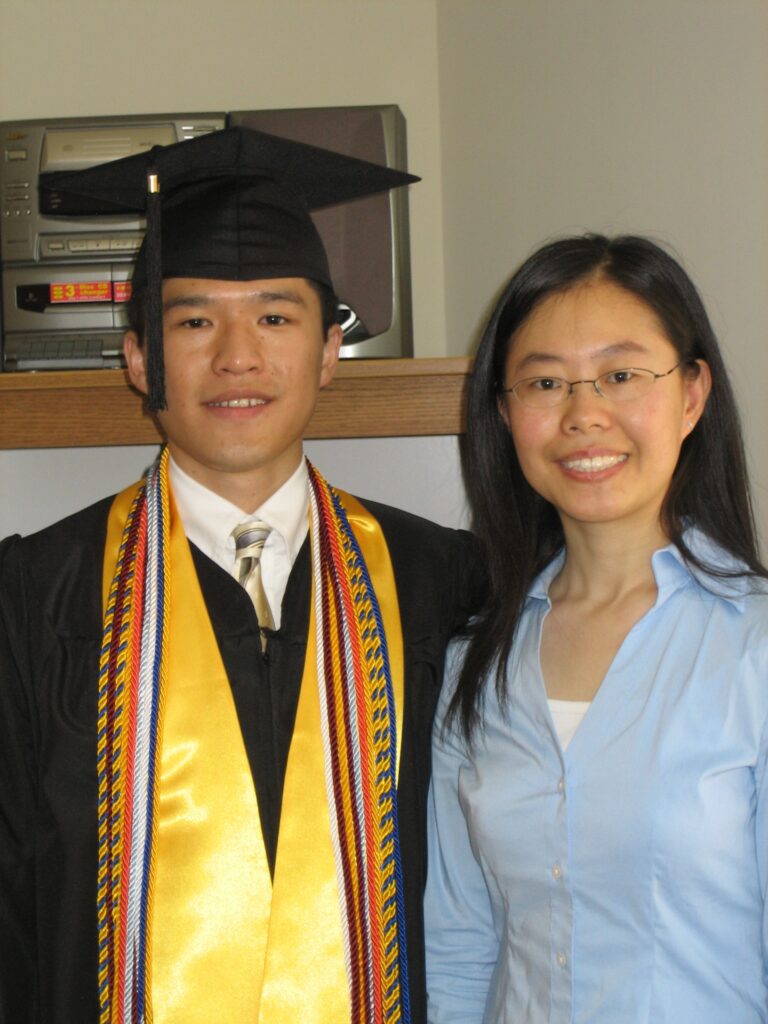
Pictured right: Katelyn and Kevin at his UMBC graduation.
“UMBC community members work together to help our students achieve their academic and professional goals.
Q: Where did you find support?
A. I built meaningful and long-lasting relationships at UMBC. I attribute much of my personal growth and academic achievements to my peers. We struggled together in challenging engineering courses, contemplated our futures from late night into early morning, and celebrated our birthdays at the local Olive Garden. We strengthened our bonds through highs and lows, and I will forever cherish those special memories.
Q: Tell us about someone in the community who has inspired you.
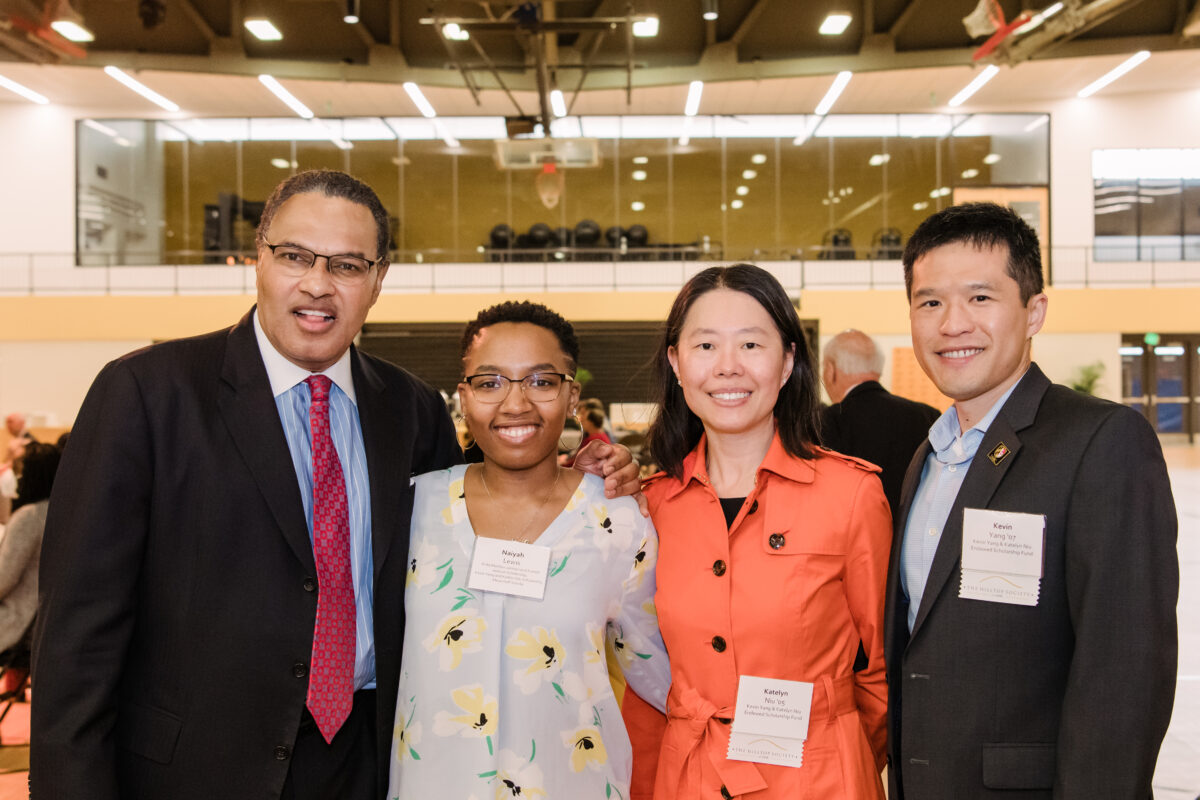
A. I received substantial financial and academic support from the Meyerhoff Scholars Program, which laid the foundation for my personal and professional successes. As a Meyerhoff Scholar, I learned about and took advantage of many incredible opportunities, such as summer internships at Georgia Tech and MIT. The Meyerhoff Scholars Program and its co-founder, Dr. Freeman A. Hrabowski, III, have inspired me to give back to the community that gave me so much.
Q: As alumni, how have you and Katelyn given back?
A. “To whom much is given, much is required.” I have been a donor every year since I graduated in 2007. My support focuses on scholarships, including the Meyerhoff Scholars Program and the Alumni Endowed Scholarship Fund. My wife, Katelyn, and I established an endowed scholarship in 2014 to support undergraduate students. Katelyn and I were fortunate to receive scholarships at UMBC. We are giving back so students who come after us can continue to have the same extraordinary experience that shaped our future.
Q: What’s the one thing you’d want someone who hasn’t joined the UMBC community to know about the support you find here?
A. UMBC community members work together to help our students achieve their academic and professional goals. We are proud of our collaborative culture!
* * * * *
UMBC’s greatest strength is its people. When people meet Retrievers and hear about the passion they bring, the relationships they create, the ways they support each other, and the commitment they have to inclusive excellence, they truly get a sense of our community. That’s what “Meet a Retriever” is all about.
Before 3 amputations, Chandra Smith was already an accessibility-for-all advocate
It’s 4 a.m. on a Wednesday—earlier than most people rise, though a preference for Chandra Smith, M.S. ’21, information systems. After saying her daily devotion, she begins to get ready for the day ahead: brushing her teeth, taking a shower, getting dressed and having some breakfast.
If she’s lucky, the day ahead is one where her employer’s “reasonable accommodations” for her disabilities allow her to work from home rather than having to schedule a Paratransit bus pickup near Baltimore, then get on the Marc train to D.C., then get picked up by another Paratransit bus to take her to work at the Defense Intelligence Agency: a process that takes several hours—each way—assuming the bus even shows up, which doesn’t always happen.
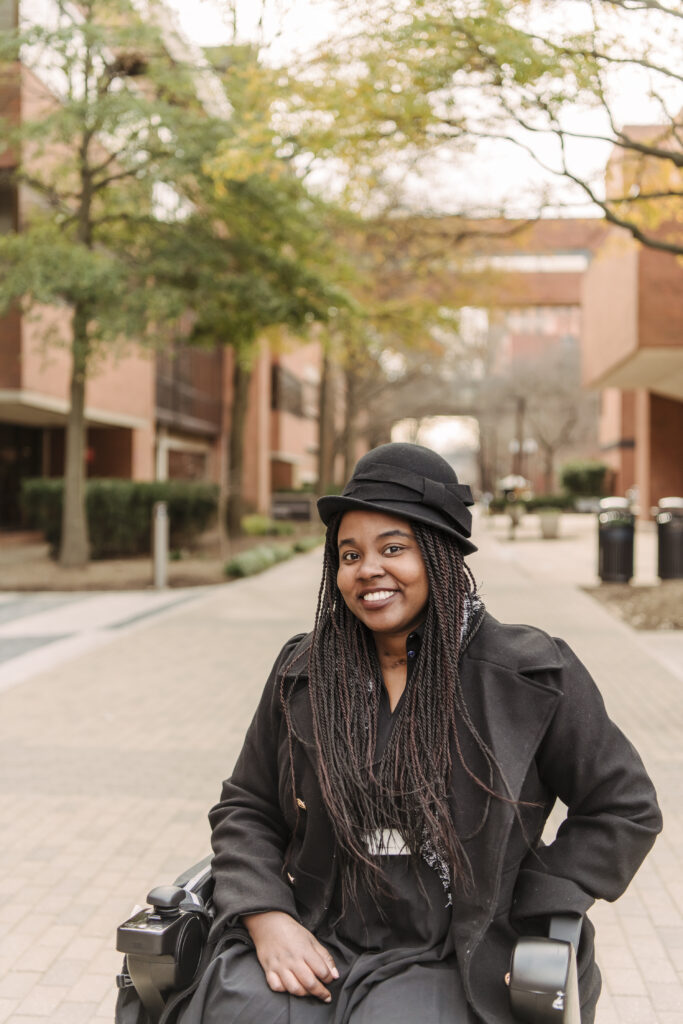
Everything Smith does now, even previously simple tasks such as getting dressed, have become complicated, time-consuming, and in her words, “close to an Olympic sport,” ever since Chandra’s Life As She Knew It screeched to a halt in the fall of 2021 when she fainted after fasting for religious purposes. She was medevaced to Georgetown University Hospital, when her body started shutting down, and then she was pumped with medicines to keep her organs functioning.
While life-saving, the emergency medicine she was given caused blood from her extremities to move to her core, essentially causing medical burns on 25 percent of her body and sepsis, triggering yet another medical emergency.
When a doctor told her she had 10 minutes to decide whether she wanted to live or die—with one small caveat: she’d be a triple amputee—Smith chose life.
She would go on to clock one year and one day from entering the hospital to exiting it, experiencing along the way: a stroke, dialysis, severe liver ketosis, three amputations, 10 painful surgeries (on one foot alone), and a host of other medical issues, procedures, and therapies.
Little did Smith know then, but the master’s degree in information systems she received from UMBC earlier that year would soon position her for a new role, a new voice and, ultimately, a new mission, not just within her job at the Defense Intelligence Agency (DIA), but in life.
“An upfront and center seat”
At age 32, Smith wasn’t looking for the campus-immersion experience she’d had when she was younger. “UMBC’s online masters program was the perfect mix of everything I wanted,” Smith says. Easy access to courses, professors with real-world experience, and fellow students from many walks of life and many parts of the world made picking UMBC an easy choice for Smith.
“I felt like I had an upfront and center seat in the field I was studying, as my professors wove challenges they faced in their jobs into the class instruction,” Smith says. Though, when reflecting on her experience at UMBC, the connections with other students stood out as most memorable to her.
“As I continued in the program, I often found myself in classes with people I’d met and worked with in previous classes,” she says. “To this day, I still come across people I recognize from the program when attending various professional conferences and events.”
A door opens
Long cloaked behind a “national-security exemption,” the nation’s seven intelligence agencies—including Smith’s employer, the DIA—had in recent years started addressing the complications of providing accessible technologies for disabled employees who needed what are called “reasonable accommodations” in order to do their work. This issue was particularly complex for those whose work involved top-clearance activities. For the DIA, a key area of concern was making sure their internal website met federal accessibility standards and requirements for online content.
The agency needed an IT engineer who could review various technologies used by employees—such as a Bluetooth hearing device for deaf or hard-of-hearing employees who need to access sensitive compartmented Information rooms or voice-to-text tools for someone with limited hand mobility. The official could then grant approval to use these technologies in national intelligence and top-secret environments. Smith, with her new degree in information systems, was the only person in her department with the skills to do this work.

“The job just fell in my lap after I graduated,” Smith says, who notes that in this “before” version of her life, she saw the position as important, but it had yet to become personal to her. “As I dove in, I found the field and challenges fascinating in that I had to balance significant national-security concerns with the legitimate and legally compelling needs for people with various disabilities to be given ‘reasonable accommodations’ to do their intelligence-related work.”
And then things became personal
Only several months after earning her master’s degree, Smith experienced her medical trauma and began her year-long hospital stay of surgeries, occupational therapy, and recovery—including six months in the burn unit. But in the midst of this, Smith found time to apply for a higher government position, received the promotion, and came back to the DIA a notch up in her career, with more fire in her than ever and now positioned as a team lead, mentor, and accessibility policy creator.
“It’s one thing to try and think like someone who has various disabilities,” Smith says. “It’s another thing to be that person: to be a triple amputee and someone who, essentially, doesn’t have functioning appendages.” (Her one remaining appendage—her right hand—was rendered near-useless and stiff when she had a stroke in the hospital.) “There are so many more nuances and deeper levels of understanding about universal design and accessible technology I understand now because I have to face these hurdles and challenges myself.”
“At UMBC, I felt like I had an upfront and center seat in the field I was studying, as my professors wove challenges they faced in their jobs into the class instruction.
In her new role, she still advocates for expanded definitions of reasonable accommodation hardware and software for employees, but now Smith gravitates toward policy and agency-wide mandates. And she’s creating change not just at the DIA, but across all the nation’s intelligence agencies. “I’m absolutely and avidly an advocate for universal design and making these technologies available to more people.”
Smith has had to advocate for herself and her own needs, too, including a desk printer she can access from her wheelchair, a sit-to-stand desk, working from home for a significant portion of the week, voice-recognition software, speech-to-text software, and a policy change for the need to provide biodata such as fingerprints. She asks, “How can someone provide a fingerprint if they don’t have a hand?”
There she is …
Of all the things a younger Smith never saw in her future, being crowned Ms. Wheelchair America 2024 was certainly one of them.

But after her medical trauma, she was encouraged to compete in the Ms. Wheelchair Maryland 2023 contest, which she won; and that title allowed her to compete nationally, which she also won. More of a competition about resilience, advocacy, and helping to eliminate architectural and attitudinal barriers people with disabilities experience in the world, Smith’s response was, “I can do that!”
“The contest judges and members of the board were quite taken with Chandra’s presence, the clarity and logic with which she advocates about universal design, her personal story and challenges… and coming out all the stronger,” says Shelly Loose, president of Ms. Wheelchair America.
“Even before I was so personally impacted by these workplace and daily accessibility challenges of being disabled,” says Smith, “I could already see how designing for the few helps the many.”
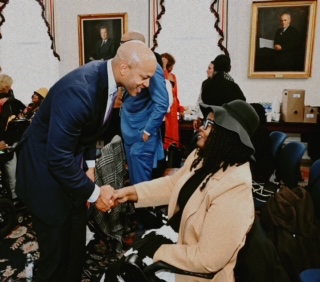
For example, closed captioning of videos for hearing-impaired people helps many others with improved comprehension and retention. Ramps into buildings help people in wheelchairs and parents with strollers. “Universal design is inclusive. It should be the starting point, not an afterthought,” Smith says.
Maryland Governor Wes Moore heard of Smith’s work after she testified for a Prince George’s County universal-access bill. Soon after, he appointed her to a three-year term on the Maryland Commission on Disabilities, where she’s already working on accessibility policy recommendations to support a variety of disabilities. “We just recommended rewriting the MVA manual to a 6th-grade level to accommodate those with learning and reading disabilities,” Smith says. “Disabilities manifest in many ways—seen and unseen.”
Architecture and attitudes toward accessibility
For as much as Smith and others advocate for universal design and reasonable accommodations at work, at the end of the day, people and their attitudes about their peers with disabilities are the biggest hurdle to overcome, she says.
When Smith returned to work after her medical trauma, one coworker said, “If that happened to me, I’d kill myself.” Another one asked, “Do you know you’re missing a leg?”
Eyes rolled but mind set, Smith plows on. “There aren’t many people who look like me in a military-focused work environment, as most people who are disabled or use a wheelchair are discharged and don’t return to their former jobs,” she says.
While Smith has suffered quite a few “slings and arrows of outrageous fortune,” as Shakespeare put it, she knows the way forward is, well, forward. “When I was an able-bodied person, I had some bad days. As a disabled person, I have some incapacitating days. But I’ve come to understand that having difficult days doesn’t make a bad life. I appreciate more things now. I have more gratitude,” Smith says.
“I know it’s cliché and a bit corny, but if I help one employer add voice-to-text software for their employees or one property manager install a ramp for a building, I’ve done my job,” Smith says. “Universal design is a core value; it’s a perspective; it’s a way of seeing the world and making things accessible for all because—and I can speak from experience here—being disabled is a club anyone can join at any moment for any reason.”
Taiwanese election may determine whether Beijing opts to force the issue of reunification
Written by Meredith Oyen, associate professor of history and Asian studies, UMBC
When the votes are being tallied in Taiwan’s presidential election, it won’t be only the 23.6 million inhabitants of the island eagerly awaiting the result of the Taiwanese election – in Beijing and Washington, too, there will be some anxious faces.
The vote of Jan. 13, 2024, is seen as a litmus test for the future of cross-strait relations, coming at a time when the status quo over Taiwan – a territory Beijing claims as an integral part of “one China” – is being challenged. If Taiwan’s incumbent, independence-oriented party stays in power, Chinese leader Xi Jinping might feel he has no choice but to force the issue of reunification.
Conversely, if the opposition – which agrees with Beijing that Taiwan and the mainland are part of “one China” but not about who governs it – wins the election, Beijing might feel it has more space to be patient on the issue.
In the run-up to the vote, Beijing has ramped up military exercises in and around the Taiwan Strait in an apparent warning to Taiwanese voters. On Jan. 6, in one of the most recent incidents, China sent a series of balloons over the island, which the Taiwan government cited as a threat to air travel and an attempt at intimidation.
Meanwhile, in his annual New Year’s address, Xi stated that “China will surely be reunified,” raising fears internationally that he intends to pursue the issue militarily if necessary.
For Washington, too, the outcome of the vote will have implications. The United States has cultivated strong ties with the current leadership of Taiwan. But recent tensions in the strait have raised the risk of war. U.S. actions deemed provocative by Beijing, such as the 2022 visit of then-Speaker of the House Nancy Pelosi to Taiwan, have resulted in China upping its military threats in the strait. And this has raised speculation that China’s patience is growing thin and its timeline for reunification is growing shorter.
Meanwhile, questions about the U.S. capacity to respond to any Chinese aggression over Taiwan have risen; the specter of war in a third region of the world – after Ukraine and Israel – worries national security leadership in Washington.
Independence on the ballot?
The presidential election in Taiwan has come down to a three-way race. The front-runner is current Vice President William Lai,* who is the candidate of the Democratic Progressive Party. The DPP views Taiwan as a sovereign country and does not seek reunification with China.
Lai’s challengers are New Taipei City mayor Hou Yu-ih, of the Kuomintang (KMT), and Ko Wen-je, a former mayor of Taipei running for the center-left Taiwan People’s Party (TPP). The KMT embraces the idea of future reunification with China under a democratic government. The TPP criticizes both DPP and KMT platforms on cross-strait relations as too extreme and seeks a middle ground that maintains the status quo: A Taiwan that is de facto sovereign, but with strong economic and cultural ties with China.

Taiwan law mandates that no polls are published in the 10 days before the election. As of Jan. 3, when the final polls were published, averages had Lai leading with 36%, with Hou at 31% and Ko at 24%.
Lai has consistently led in the polls, prompting the KMT and TPP to earlier consider running on a joint ticket. But the two parties failed to agree on terms, and the coalition attempt imploded.
This may prove crucial, as joining forces may have represented the best chance of a KMT candidate being elected – an outcome that may have cooled tensions with Beijing.
Taiwanese democracy
The island of Taiwan has been governed as the “Republic of China” since 1949, when the KMT lost a civil war to the Chinese Communist Party. The CCP set up the People’s Republic of China on the mainland, and the KMT retreated to Taiwan.
For decades, both the Republic of China and the People’s Republic of China diverged on every possible policy except one: Both governments agreed that there was only one China, and that Taiwan was a part of China. They each sought to unite Taiwan and the mainland – but under their own rule.
Although that remains the goal in Beijing today, for Taiwan the outlook has started to change.
The change began with Taiwanese democratization – a process that began in the early 1990s after decades of autocratic rule. After gradually rolling out direct elections for the legislature, governors and mayors, the island held its first democratic election for president in 1996. Despite Beijing holding military exercises in the Taiwan Strait in an attempt to interfere with the vote, the KMT-affiliated incumbent won against a DPP candidate with strong ties to the Taiwan independence movement.
Four years later, the DPP’s candidate won and started the first of two consecutive terms. In 2008, a KMT candidate returned to power. But since 2016, Taiwan has been led by Tsai Ing-wen of the DPP.
Uneasy consensus
Cross-strait tensions tend to rise when the DPP is in office and calm somewhat when the KMT is in power. This isn’t because the KMT agrees with Beijing over the status of Taiwan – the party has always been clear that unification could happen only under its own government and never under the leadership of the Communist Party in Beijing. But the KMT affirms the idea that eventual unification with China is its goal for Taiwan.
In 1992, representatives of the KMT and the CCP met in Hong Kong and reached the “1992 Consensus.” Despite the name, the two sides do not fully agree on what it meant. The KMT affirmed the idea of one China but noted disagreement on what the government of that China should be; the People’s Republic of China interpreted it as affirming one China under CCP rule.
Still, the 1992 Consensus became the basis of a series of policies strengthening cross-strait ties, and it made KMT-led governments easier for the PRC to tolerate.
Pro-independence sentiment
Though speculation about the geopolitical fallout and China’s reaction to the election has dominated coverage of the vote around the world, for Taiwan voters, independence is one of several critical issues the island faces. The economy frequently rises even above cross-strait issues in importance, with many voters expressing concern over the rapid rise of housing prices, stagnating salaries, slow economic growth and how the incumbent party handled the COVID-19 pandemic.
On the issue of independence itself, Taiwanese polls have shown a creep toward pro-independence sentiment. As of September 2023, nearly half of Taiwanese voters said they preferred independence (48.9%) for the island, while 26.9% sought a continuation of the status quo. A shrinking minority – now just 11.8% – said they hoped for future reunification.
If the DPP remains in power, Beijing may feel the pressure to force the issue of reunification. Xi has called for the Chinese military to be capable of a successful cross-strait invasion by 2027, though a forceful reunification effort might include a combination of economic blockade and military pressure.
If that were to be the case, U.S. commitments to Taiwan – along with U.S. credibility among its Asian allies – could be on the line. President Joe Biden has repeatedly said that he is prepared to defend the island militarily against an attack from mainland China.
Already in 2024, the U.S. is having to contend with two significant conflicts that are demanding its attention. How Taiwanese voters mark their ballot – and how policymakers in Beijing respond – may determine whether a third war is more or less likely.
This article is republished from The Conversation under a Creative Commons license. Read the original article and see more than 250 UMBC articles available in The Conversation.
The US invented shopping malls, but China is writing their next chapter
Written by John Rennie Short, professor emeritus of public policy, UMBC
On a recent research trip to China, I wandered through the Oasis Mall in suburban Shanghai. Like many Chinese shopping malls, this complex was filled with empty stores that reflected the end of China’s 30-year-long economic expansion. But there also were surprises.
Along a stretch of the mall’s interior walkway, a cluster of parents and grandparents sat on chairs. They were looking through a plate glass window, watching a dozen 5- to 7-year-old girls practice ballet steps, carefully following their teacher’s choreography. A space initially designed for retail had been turned into a dance studio.
From 1990 through 2020, large, shiny shopping malls embodied China’s spectacular economic growth. They sprouted in cities large and small to meet consumer demand from an emerging middle class that was keen to express its newfound affluence. These centers look familiar to American eyes, which isn’t surprising: U.S. architectural firms built 170 malls in China during this period.
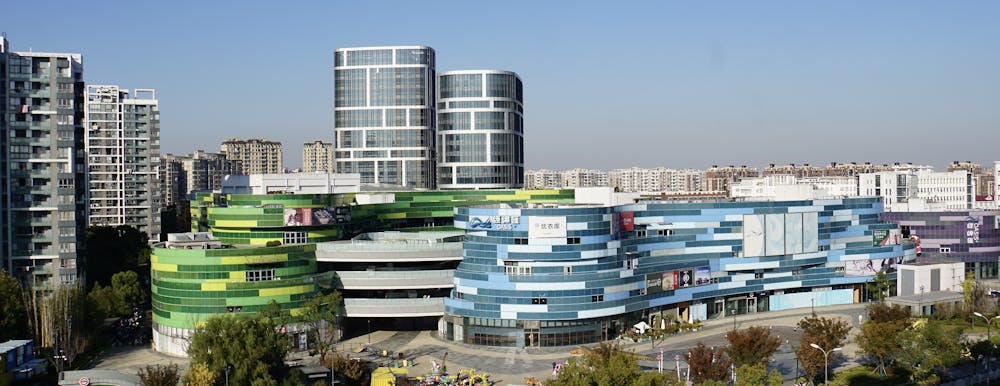
Like their U.S. counterparts, many Chinese malls have fallen on hard times. The COVID-19 pandemic and the rise of online shopping have devastated foot traffic, leaving the nation with a huge overhang of retail space. But many Chinese malls are being re-imagined by owners and users as palaces of experience – civic areas for communities to meet and interact, with new configurations of public and private space.
As a longtime urban policy scholar, I was fascinated by the new uses I saw for malls in China. In my view, these experiments could become models for new, creative uses of retail space in the U.S., where the mall was invented.
Serving a new consumer class
China opened up to foreign trade and investment less than 50 years ago. Since then, it has become the world’s second-largest economy, surpassed only by the U.S.
Rising incomes and a massive population shift from rural areas to cities have created a growing middle class with significant purchasing power. GDP per capita increased from US$293 in 1985 to $12,500 by 2021.
Today, approximately 350 million Chinese – 25% of the total population – can be considered middle class. More recent economic growth has generated growing income inequality that now is equivalent to U.S. levels.
Malls became a motif of modernity during the country’s economic expansion. They offered consumers year-round protection from heat, humidity, cold and frost, as well as from busy streets and polluting traffic. Malls were safe environments where the steadily increasing numbers of more affluent Chinese families could shop and eat, stroll and meet.
Over the past 30 years, China’s malls have faced economic booms and slumps. For example, the New South China Mall in Dongguan – which is twice the size of Minnesota’s Mall of America, its largest U.S. counterpart – opened in 2005. But most of its 2,300 storefronts remained closed for over a decade as China fought off recession after the 2008 world financial crisis. https://www.youtube.com/embed/5zPkm2SU1DM?wmode=transparent&start=0 This 2013 news report takes viewers inside the then-deserted New South China Mall in Dongguan.
China weathered that downturn through aggressive economic stimulus policies, and within a decade it replaced the U.S. as the world’s top driver of economic growth. This expansion buoyed its retail sector, including shopping centers. By 2018, a renovated and modernized New South China Mall was near full occupancy.
Then COVID-19 struck in 2020. The Chinese government adopted a rigid zero-COVID policy, in which local governments could impose lockdowns after detecting just a few cases. Hundreds of millions of people were restricted to their homes for weeks or months at a stretch.
This policy was lifted only in late 2022. China’s economy has yet to fully recover, and many experts argue that it will never again reach its previous rates of growth. An aging population, trade wars with the U.S. and a government focused on centralizing power under the Communist Party are all acting as drags on the economy, and online shopping is drawing consumers away from stores.
As a result, Chinese media reports abound with stories about well-known stores and venerable malls closing. In China, as in the U.S., what scholars once described as the “magic of the mall” has become an “allure of ruins.”
Malls with Chinese characteristics
But the Chinese are making creative use of excess mall space. New users are filling nonretail areas, such as indoor walkways and atriums that now house café tables. Others have become children’s play spaces filled with giant inflatable figures. The Raffles City Mall in Shenzen has a rooftop pet playground, a stage, an art display area and a sun-shaded lawn.
China’s informal economy of food stalls and sidewalk merchants is also filling the void. Although street vending has a long history in China, government officials sought to suppress it in recent years, calling it unsanitary and a throwback to pre-modern times. Now, however, they are encouraging it as a way to reduce growing unemployment, especially among young people, which currently exceeds 20%.
During my trip, I saw small-scale entrepreneurs selling produce, street food and crafts in mall parking lots and around public entrances. The distinction between public and private spaces is being reconfigured as vendors set up stalls in areas that once were open space.
Empty store spaces are also being repurposed. Some have been converted into electric vehicle showrooms, art museums and children’s play centers with dance studios, paddling pools, small skating rinks, gyms and yoga centers. Others have been redesigned as sites for art or cooking classes, or for multiplayer electronic gaming and virtual reality experiences. The Dream Time Mall in Wuhan contains an indoor snow center that offers ski lessons, ice mazes and tubing.
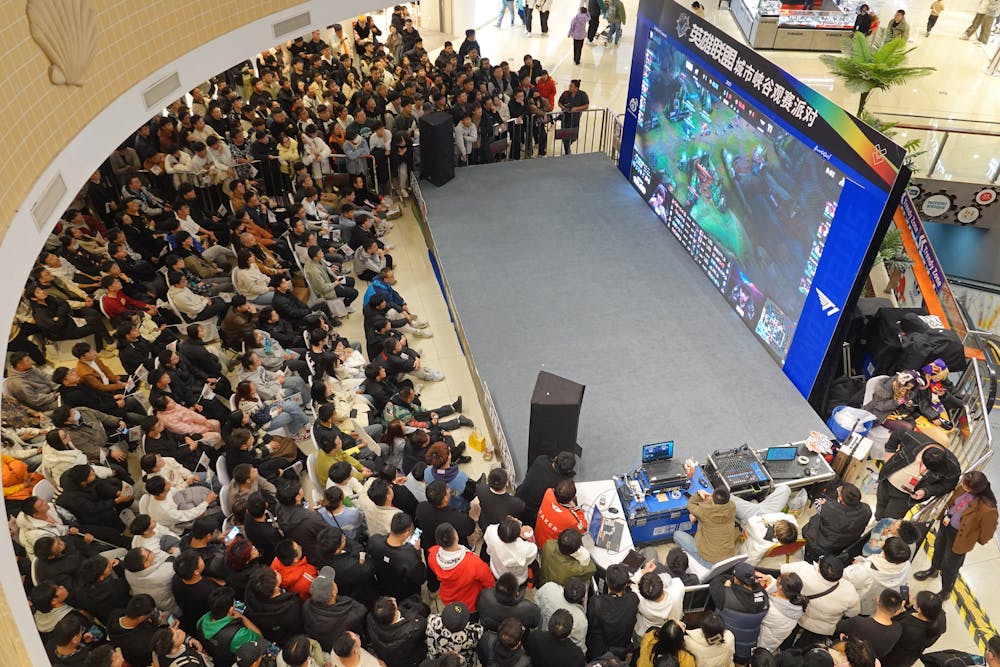
I see these experiments as a shift in the meaning of the mall. What began as a cathedral of retail consumerism is becoming a place where people can connect and enjoy individual and collective experiences that aren’t available online.
Some U.S. malls are moving in this direction, but China is doing it on a much larger scale. Just as former Chinese leader Deng Xiaoping once asserted that his government was pursuing its own version of socialism, with “Chinese characteristics,” the U.S.-designed mall is being rewritten with Chinese characters.
This article is republished from The Conversation under a Creative Commons license. Read the original article and see more than 250 UMBC articles available in The Conversation.
Meet a Retriever—Jennifer Herson ’99, Alumni Association Vice President
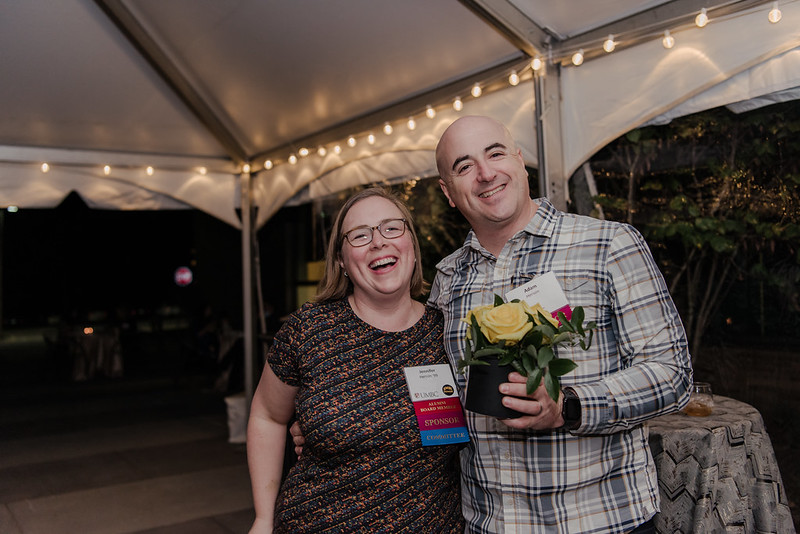
Meet Jennifer Herson ’99, interdisciplinary studies. Jen is an executive at Data Canopy, a data center and cloud company, and the current Vice President of Operations of the UMBC Alumni Association Board of Directors. As a board member, Jen believes deeply in the mission of UMBC and the sense of community and belonging this institution fosters. She helps perpetuate these values through her work on the board and as a donor. Take it away, Jen!
Q: What’s the one thing you’d want someone who hasn’t joined the UMBC community to know about the support you find here?
A: Everyone can find their people here. I wasn’t a traditional student and I didn’t choose a science-focused major, but UMBC was the absolute best choice for me as it allowed me to customize my experience and find what worked for me so that I had the confidence to follow the path that worked for me.
“We’re a community of people with a similar dedication to excellence–and it’s evident everywhere you see us.
Q: What’s one essential thing you’d want another Retriever to know about you?
A: My area of study was interdisciplinary studies with a focus on visual arts, English, and modern language and linguistics. In my role as an executive at Data Canopy, a data center and cloud company, I have touched everything from operations and finance to marketing. I actually use (and have always used) my degree daily. I’m a mom to a ten-year-old, an avid concert-goer/music enthusiast, and, when I’m not cheering on my son at hockey, I like to root for the Baltimore Orioles or Washington Capitals.
Q: What’s your favorite part of being a part of Retriever Nation?
A: Being a part of Retriever Nation is a point of pride. We’re not just a little school from Baltimore County, we’re a community of people with a similar dedication to excellence–and it’s evident everywhere you see us.
“Everyone can find their people here.
Q: What drives you to support the Alumni Endowed Scholarship Fund?
A: I love to support the Alumni Endowed Scholarship Fund. As someone who worked their way through college, the mission of that fund is near and dear to my heart. I know that the donations I make will be put to good use by a student in need.
* * * * *
UMBC’s greatest strength is its people. When people meet Retrievers and hear about the passion they bring, the relationships they create, the ways they support each other, and the commitment they have to inclusive excellence, they truly get a sense of our community. That’s what “Meet a Retriever” is all about.
Step into a dancer’s shoes
University Communications and Marketing social media intern Allison John ’24, psychology, isn’t only interested in Instagram engagement and sharing campus treasures—she’s also passionate about the creative process that brings a dancer’s performance to life. After watching this year’s Fall Dance Showcase, John sat down with one of the senior choreographers to learn more about her art.
When you listen to a song, what immediately comes to your mind? Eva McLaughlin ’24, dance, said this is exactly the story of how her choreography comes to life.
Every senior dance major at UMBC is required to create or perform a final piece to graduate. Two to five student dancers will work with a choreographer to pick a variety of songs to tell a story of their choosing. For McLaughlin, when she hears a song, she immediately begins to imagine a story or sometimes a phrase, and from there, her process starts.
This year was different from others as her piece was centered around research she conducted as part of an Undergraduate Research Award (URA). McLaughlin’s research centered on misophonia, a neurological condition characterized by an intense aversion to certain auditory stimuli. The dance piece was created in order to pull the audience into the reality of people who have misophonia. The dance depicted scenes of panic attacks and the image of a “fight or flight” response.
Transforming on the stage
When a choreographer first hears their music, their mind begins to shift through different visions of how their piece could be interpreted. McLaughlin described her choreography as being about the connections between dancers, and less about the counts or the logistics of a dance.
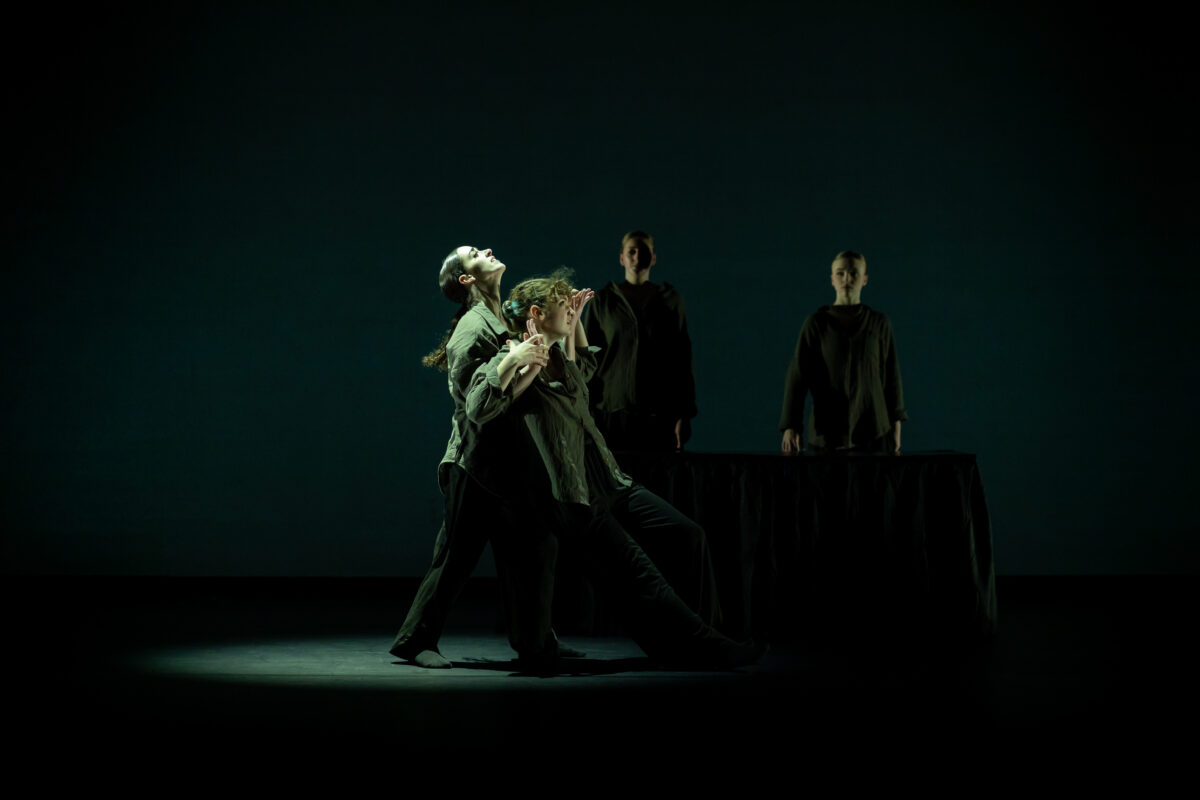
“When I choreograph relationships, I create them based on touch and feelings. It makes their relationship feel more genuine on stage,” she says. Each dance has a story to tell and the responsibility of a choreographer is to guide their dancers in how they want this story to be delivered.
McLaughlin is not only a choreographer, she is also a dancer. Dance is an incredibly intense sport because it requires a dancer to focus on each precise movement. This is not only about their performance on stage, but about what they imagine as they stretch before a performance, the way their facial expressions depict their emotions, and how sharp their movements are. When these dancers walk on stage, they transform—in that moment they are not simply themselves—they are part of this elaborate story. Each audience member understands the story differently, depending on the dancers and how they chose to deliver a piece. McLaughlin describes this feeling as something unlike any other.
Showcasing a different side
When dancing, McLaughlin is telling someone else’s story, and it’s important to remember that story as you dance. As she described her own piece, she said that, “it wasn’t a dance that was meant to be pretty” but instead, she wanted the audience to be brought into the reality of those who live with misophonia.
“When I’m performing, it feels like I’m in a different reality. In that moment, I’m a part of someone else’s story, and I’m able to showcase another side of myself that most people don’t get to see.”
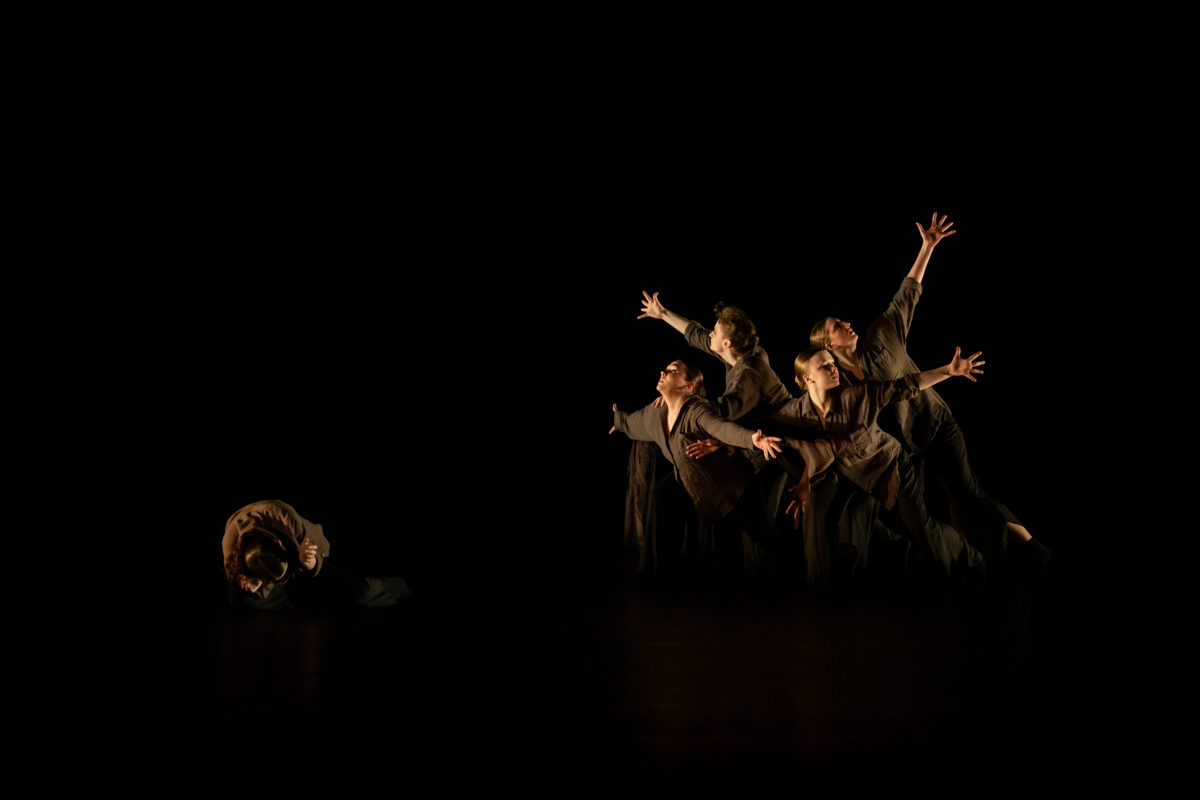
The passion behind every choreographer and dancer is what makes each piece so unique. In the months leading up to the performance, each dancer is in some way intertwined with this story. They carry the responsibility to deliver it to the audience and hope that each person who comes in contact with this piece leaves feeling impacted by it in some way.
Why We Love it Here
What gets you up and out the door each morning? And what makes a job more than a job—or even more than a career? For so many who make UMBC their professional home, the value goes way beyond a paycheck.
Case in point: Employees for the 14th consecutive year rated UMBC as one of ModernThink’s Great Colleges to Work For in all 10 categories, including shared governance, mission and pride, job satisfaction and support, and diversity, equity, and inclusion. Additionally, the Baltimore Sun has once again named UMBC a 2023 Top Workplace winner based on a confidential employee survey conducted earlier this year. This is the 9th time UMBC has earned this designation since 2013.
What does this excellence look like in the day-to-day? We talked to some Retrievers about what they love about their work at UMBC.
Want weekly Top Stories sent to your inbox?
Valuing Our Whole Selves
UMBC is a place that considers the whole person, opening up space for both professional growth and work-life balance. From mentoring programs to embracing our individual stories, when we support each other in our work and lives, we all come out stronger.
Sharing Our Time
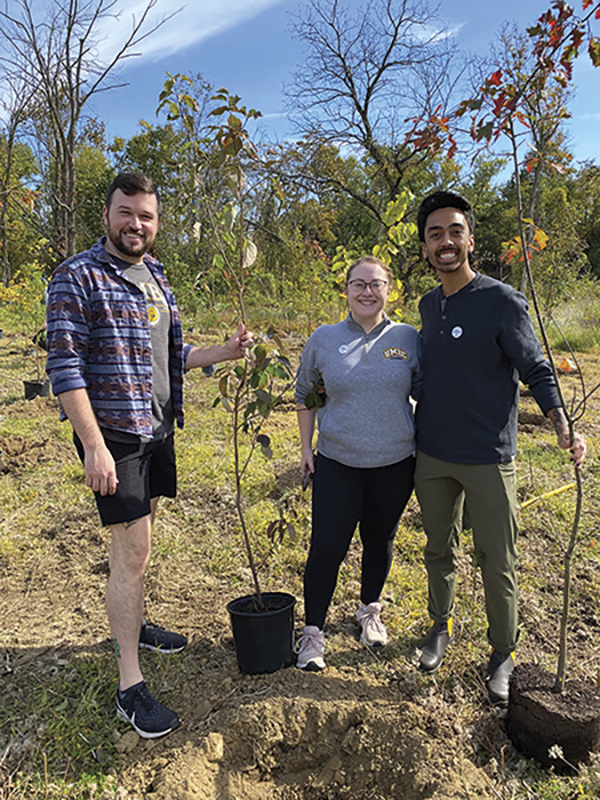
Dozens of Retrievers spent time this fall planting 900 new trees around campus, including those pictured here (L-R): Gavin Gilliland, Abby Hart ’18, and Tim Olivella.
Building bridges across campus
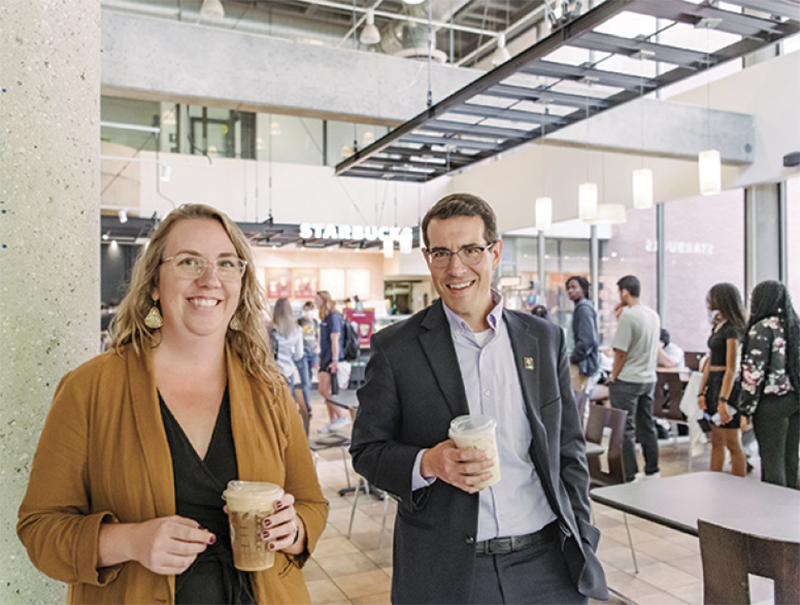
They met so many times at Starbucks, they knew each other’s orders.
Damian Doyle (’99, computer science, M.S. ’16, information systems): tea, Earl Grey, hot. Charlotte Keniston (M.F.A. ’14, intermedia and digital arts): coffee, iced.
Over their caffeine of choice, the two UMBC staff, who work in wildly divergent disciplines, forged connections through the Professional Staff Senate mentorship program—a staple of campus connectedness for the last decade.
Doyle, who works in information technology and has been a staff member at the university for almost 24 years, has served as a mentor for more than five years. Keniston, who started at the Shriver Center five years ago, anticipated a year of opportunity and transition and wanted a mentor to guide her toward balance between a demanding career, family, and finishing her Ph.D. in language, literacy, and culture.
“It was a perfect fit because Damian saw the big picture of the university and explained the campus overarching structures that I had never understood and was really great at advising me on critical points I was at in my career,” Keniston said.
As a mentor to a number of staff over the years, Doyle finds the program rewarding.
“One of the things I loved was getting to know different parts of the university. I get exposed to these different areas of the campus at a deeper level. It confirms for me the kind of driven work that people are doing.”
The mentorship program matches staff through a mentee-first pairing system that includes a speed-dating session and goal analysis for a year-long commitment. Keniston said the mentorship was crucial to her path at UMBC.
“I was at the point where I felt like I couldn’t ask questions, like, ‘Who is this person?’” Keniston said with a laugh. “But being in this mentor/mentee relationship gave me an opportunity to say, ‘Help me understand this.’”
Doyle said that hearing Keniston’s questions and seeing the campus organization through new eyes helped him know what is working and what needs improvement at UMBC. “It’s very educational for me, having to think through what is the right answer, what is the honest answer.”
After a year of meeting about once a month, Doyle has a new mentee, and Keniston has now become a mentor. But they’ll be keeping in touch. Maybe over tea and coffee.
Inner Peace
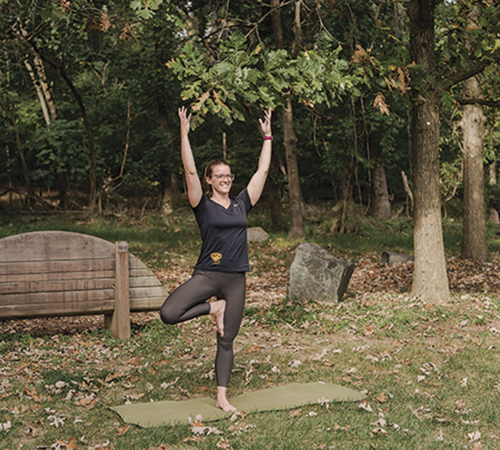
Many of our staff and faculty take advantage of free exercise and wellness classes in the RAC, some of which are taught by Joella Lubaszewski ’10.
Telling her authentic story
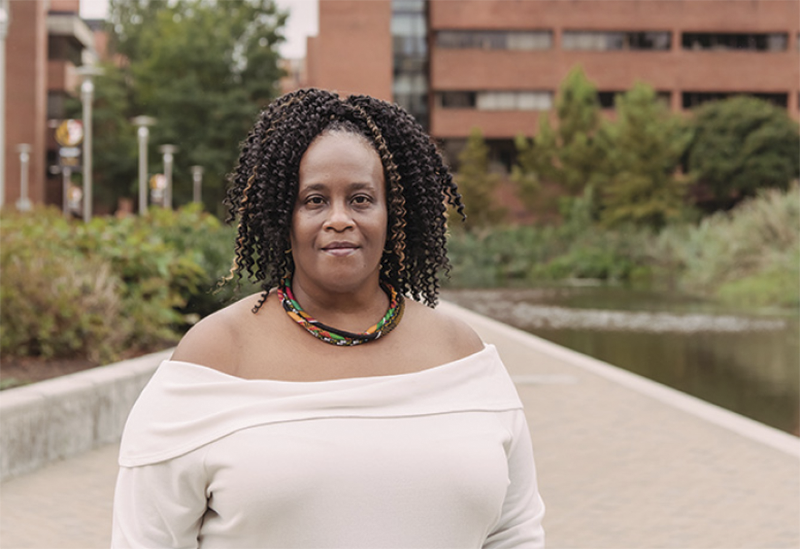
Melessia Jasper’s journey to UMBC was not straight. But something kept pointing her toward UMBC. And toward herself.
“My path to UMBC started before I knew about UMBC,” Jasper said, explaining that after high school in Alabama, she arrived in Maryland only to find that the job she had been promised was locked in a hiring freeze. She started at American University, where she worked with two former UMBC staffers. Then she heard UMBC President Emeritus Freeman Hrabowski at a faculty retreat. “I didn’t realize it at the time, but God was laying the groundwork for where I am today.”
When she moved to Baltimore with her new husband, she applied to UMBC and worked in several different divisions, including Student Affairs and Administration and Finance. In each office, Jasper said, she found acceptance and growth. She now works in the Division of Institutional Equity.
“It was the first university I worked for where you’re applauded for your quirkiness,” Jasper said. “I was so empowered by the resources UMBC offered to me that I then could empower others.”
Last year, she stood on stage to tell her story in a Retriever Talk. For weeks, she and a cohort of other UMBC staff labored with Jill Wardell ’99, interdisciplinary studies, and other strategic talent management and storytelling staff to shape their life tales, a commitment of time and effort on the part of both the storytellers and for UMBC. Jasper said she felt like she was stripping naked. She was reluctant but told herself, “Sometimes, you have to be uncomfortable in order to follow your purpose in life.”
In addition to revealing lifelong intrusive thoughts of inadequacies and imposter syndrome, Jasper also shared—in front of hundreds of people she didn’t know—that in 2000, doctors discovered she had a rare condition called a Chiari malformation, in which part of her brain had grown down into her spine. Her doctor was amazed at what she had achieved, but Jasper knew she was only getting started.
After her Retriever Talk, many students, colleagues, and even strangers have since contacted her to affirm how her story helped them.
“This is something that I have gone through,” Jasper said. “If I can go through it and possibly help you by telling you my story, I want you to have that same freedom…freedom in understanding who I am and accepting who I am.”
A Community That Builds Together
Through our unique commitment to shared governance and a deep appreciation of community, we collectively build UMBC into what we know it should be.
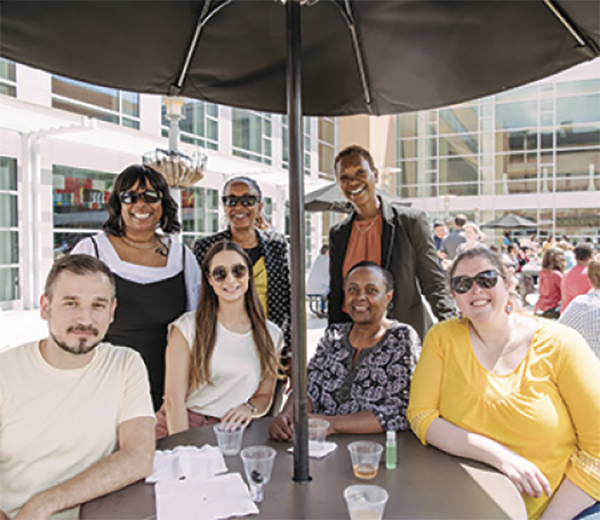
Sharing the Moment
The annual cookout put on by the Professional Staff Senate and Nonexempt Staff Senate brings folks together from all over campus.
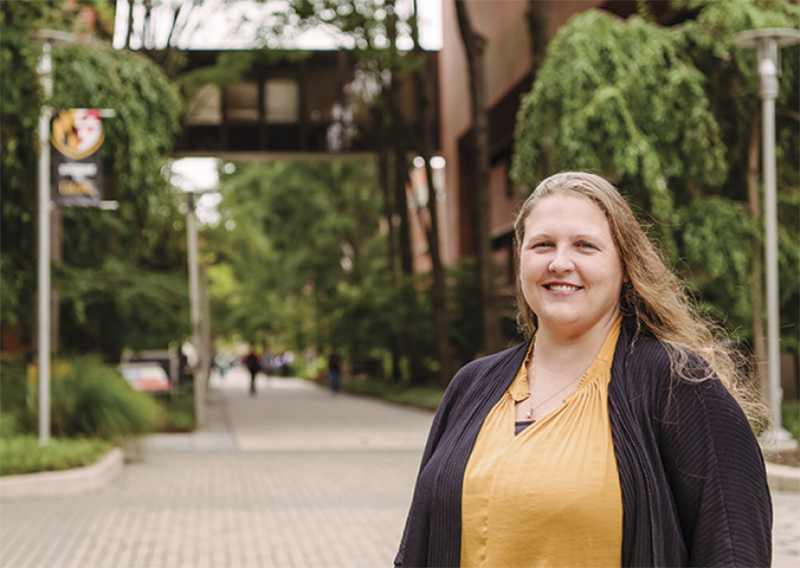
Finding a voice in leadership
There’s a reason the Nonexempt Staff Senate (NESS) carries the name of a democratic body. Alongside other staff and faculty shared governance groups and student government bodies serving their respective constituents, NESS exists to ensure all UMBC nonexempt employees have a voice, the way democracy is supposed to work.
Desiree Stonesifer, serving the second year of her term as president of NESS, and a business services specialist in the financial services department, believes that the shared governance organization builds trust at the university. UMBC offers both staff and faculty shared governance groups, in which all parties work together on the university’s leadership.
“I think it gives people the security of knowing that they’re welcome to speak their mind without it being held against them,” Stonesifer said. “They’re allowed to have thoughts outside the status quo. And a lot of times, those are the kind of thoughts that maybe the administration or other people in the university haven’t thought of. It gives everyone different perspectives and it allows staff the ability to grow more comfortable in their community so that they can be who they are and say what they think.”
NESS helps its members handle issues that are vital to employees: Are job descriptions adequate? Are positions equitably valued? Is professional development available?
Many of the nonexempt senate members aren’t interacting with students as much as other UMBC employees, Stonesifer said, and many of them want to reach out. The NESS, she said, can help members “find ways to get involved in the community.”
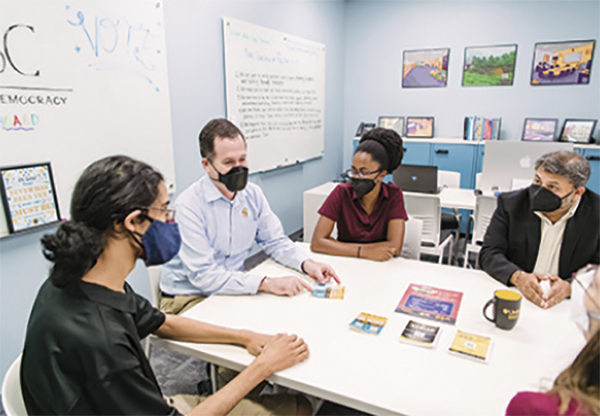
Creating Change
Campus offices like the Center for Democracy and Civic Life work alongside students to engage the community and make a difference.
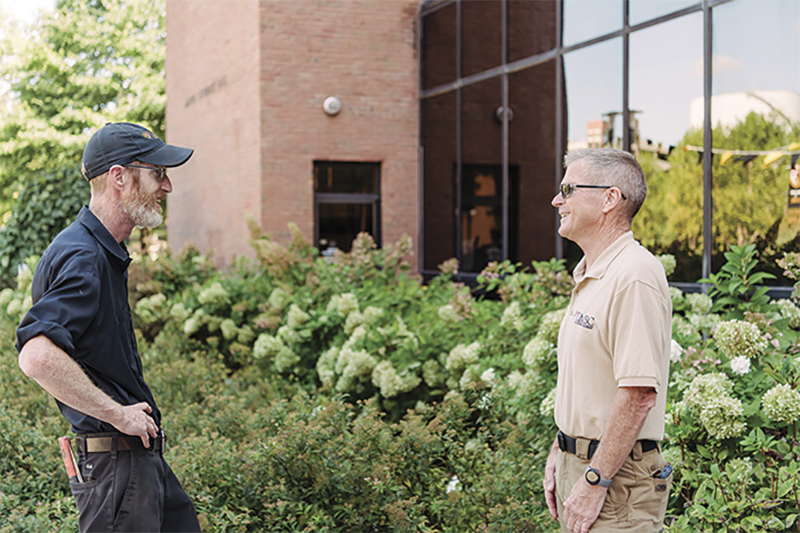
Creating a green space of solace
Charles Hogan, UMBC’s landscape and grounds manager, is comfortable with trees. He grew up climbing them, building forts in them, and “falling out of them,” he said, laughing. For decades, he has run and biked through forests for mile upon mile every week.
As he walks UMBC’s Academic Row in his sturdy boots and cargo pants, Hogan (above, right) admires the trees that have survived years of building renovations, root system compromise by tunnels carrying utilities and water underground, and the hundreds of students who tramp over their soil and tie hammocks to their trunks.
Hogan, who has worked on UMBC’s landscaping for 26 years, likes to construct park-like pockets dotted throughout the campus. Each of those miniature parks is based around trees, whether that’s the pair of oaks in front of the Administration Building that tower over the hydrangeas below or the diminutive weeping redbud that Hogan wanted to top with a tiny hat and sunglasses because it looked so much like Cousin Itt from the Addams Family.
“I’m a tree person,” said Hogan, who is a certified arborist. “Trees should be the focal points. We’re creating a lot of little park environments.”
A campus’ green spaces, Hogan said, make a difference when students and their families are trying to decide where to attend as well as provide succor to everyone making their way through a busy semester. That’s why the grounds staff plants 30,000 summer annuals and 10,000 fall pansies every year. Each area on campus is assigned to a particular gardener, Hogan said, who takes pride in the beauty of the plants under their charge.
Those gardens and the shade of the trees surrounding the buildings offer comfort to the staff, faculty, and students who make the campus their living rooms.
“I never went to college, but I know students are under a lot of stress. They should be able to sit outside, read, study, write a paper,” Hogan said. “Any landscape, whether it’s at your house or on campus, should make you feel good, feel relaxed.”
Living the Mission
At the end of the day, UMBC’s values and mission are what bring us all together. When we work in service of our students and our academic mission of inclusive excellence, it’s hard not to feel connected to the work on another level.
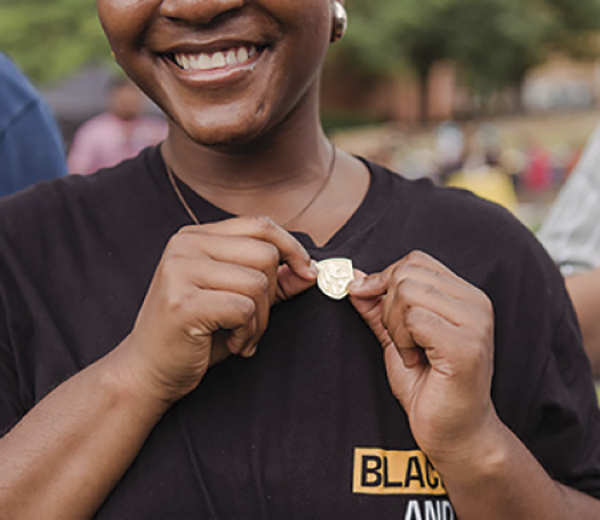
A Student-Centered Community
At the beginning of each school year, our new students are officially welcomed with the Convocation ceremony, where they each receive a special UMBC shield pin.
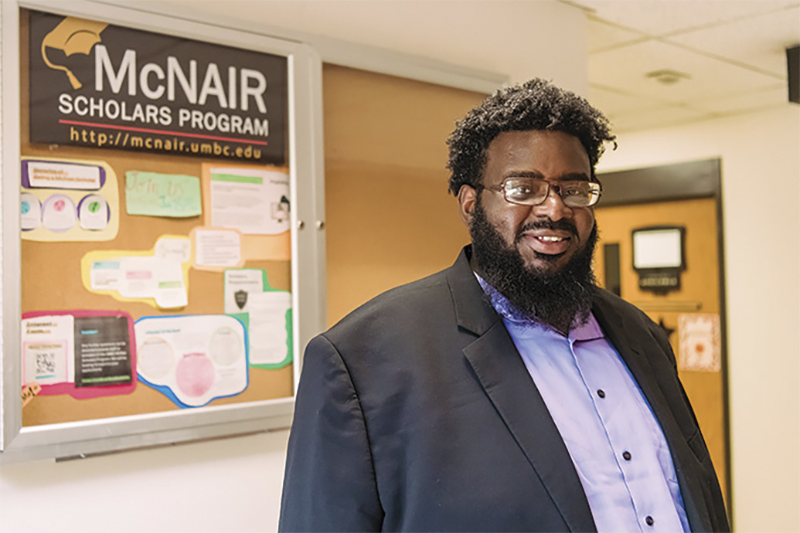
Lifting students to the next level
When he’s deep into extolling the mission and benefits of the McNair Scholars Program he directs, Michael Hunt ’06, computer engineering, needs only a pulpit to become the preacher he trained to be.
When Hunt sees a student achieve, he feels “that parent feeling, that joy that comes to you. Sometimes I’m more excited than they are when they’re telling me. Sometimes it’s a sense of awe in knowing their story, in knowing all that had to happen to get to that space,” said Hunt, who has a masters in theology. “I feel like we’re the mama bird, teaching them all they need before they fly away.”
The federally funded McNair program, with a goal of boosting students from underrepresented segments of society into earning research-based doctoral degrees, has expanded over the six years of Hunt’s directorship.
Every year, the McNair Scholars Program funds 30 slots for students, who meet with mentors, fulfill service obligations, attend cross-cultural events, and receive the help they need to prepare for, apply to, and excel in graduate school.
Hunt, who was a Meyerhoff and McNair scholar, is earning his own interdisciplinary Ph.D. from UMBC. After he became director of the McNair program in 2019, he found himself frustrated when he had to shut some students out of opportunities. So he spearheaded, with the backing of the then-current scholars, staff, and McNair Advisory Council, the creation of the Friends of McNair network, a group of students who reap some of the mentoring, community, and support benefits that McNair Scholars enjoy.
Hunt is exploring ways for the university to expand the support it gives to students not in formal scholar programs. He enthusiastically advocates for the need for holistic critical mentoring (HCM), a network of power-dynamic-flipped, student-centered, reciprocal relationships. HCM is the mentoring framework that uplifts both mentor and mentee while dismantling systems of oppression.
“Because of my heart and because of the work that I do, I don’t want to turn anyone away when I know there are resources to support them. The institution has to rise and say, ‘This is a part of the work of inclusive excellence, and we’re going to fund this to make it happen.’ What I love about my institution is that the more I talk and have these conversations, the more I do see people beginning to question and challenge what we are doing. And so I don’t feel quieted. In other spaces, I know that folks would have been quieted.”
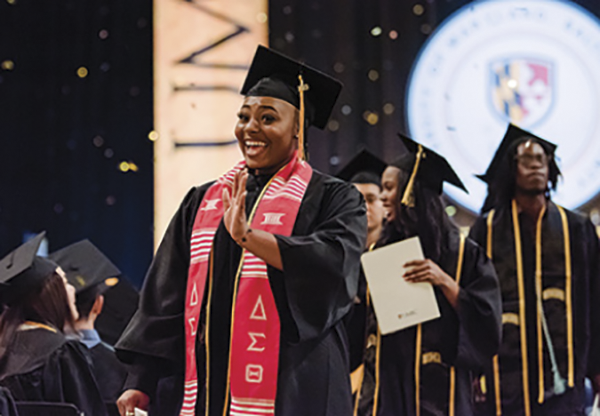
Moments of Joy
There’s simply nothing like the feeling of watching our students cross the stage to get their diplomas.
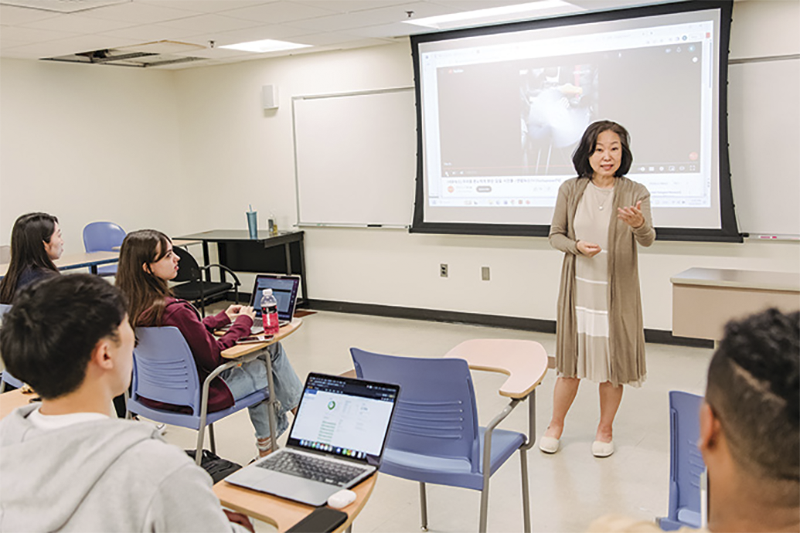
Shaping success in all sizes
At Commencement, Kyung-Eun Yoon likes to sneak out of her academic division’s seating section to hug students in other majors, she confesses. Of course, she gets to hug all the Korean majors when they rise to receive their diplomas, but other students have taken maybe five or six courses or minored in Korean, and she wants to embrace them, too, to recognize that achievement.
Student success, Yoon says, doesn’t come in one shape or size.
“For some students, yes, excelling in every class and getting double degrees and finishing an honors program with a wonderful thesis, going to Korea’s top university as a graduate student, getting a job—that’s a wonderful, wonderful success story,” Yoon said. “But for some students, completing the semester without withdrawing from too many classes, or without failing one or two courses, completing their degree, finally, in five or six years, that’s a wonderful success story for them too.”
Yoon started at UMBC in 2009 as the coordinator of the new Korean program and has grown the program so that students can now major or minor in Korean within the modern languages, linguistics, and intercultural communication department. Over her 14 years, Yoon’s Korean program graduates have gone on to work at the National Security Agency, to pursue graduate schools in various fields including Korean studies and international relations, to teach English in Korea, and more.
But sometimes, she said, success looks like one student whose achievement she particularly treasures. The student had dropped out, withdrawn from many classes, but after six years and many advising sessions with Yoon, last May, she graduated.
“It was not just a mere graduation for her, it was a really, really huge success for her,” Yoon said, and that student’s achievement made Yoon feel proud. “I did this much,” she says, holding up her finger and thumb an inch apart.
Yoon and her colleagues can help students along the path of hard work, but eventually, she says, “you have to have your ownership. We’ll help you, but without your ownership of this time, success cannot be happening.”
And when success happens, Yoon is sure to find that student to give them a hug.
By Susan Thornton Hobby