All posts by: Sarah Hansen, M.S. '15


South Africa to Colorado: Summer research helps UMBC STEM BUILD students chart their course

For an undergraduate getting their start in science, traveling far from home for an immersive research experience can be transformational. Living and working in a completely new environment, with new colleagues, can be intimidating, but it also offers powerful opportunities for growth. Five STEM BUILD students from UMBC took that plunge this summer, and all made lasting memories that will inform their paths forward.

Chad Brown ’19, biological sciences, traveled to South Africa with a research team based at the University of Virginia. Before departing, he spent time on UVA’s campus getting to know his team, practicing key lab techniques, and learning about South African culture.

“Not only are you going to be working in a research lab, but you’re doing it in a setting you’ve never experienced before,” Brown said. “You have to be in the mindset for that—and that’s what they were helping us do.”

Once in Thohoyandou, South Africa, Brown measured the concentration of bacteria in water samples from homes in the region. His efforts contributed to a long-term study designed to detect whether water treatment interventions are reducing bacteria in the water and affecting children’s growth.

Brown entered UMBC planning to pursue medical school, “but I think South Africa kind of flipped the script,” he said. Now he’s more seriously considering a research career. Many factors led to the shift, “but South Africa has been the big one that made the difference.”

Victoria Baskerville ’19, biological sciences, and Kendra Kontchou ’19, biological sciences and psychology, both participated in the University of Maryland School of Pharmacy Internship. Kontchou’s project focused on understanding a molecular pathway in pseudomonas bacteria, which is resistant to some antibiotics and commonly found in hospitals. The ultimate goal is to find a way to shut down the pathway and kill the bacteria.

A BUILD summer program at UMBC last summer helped prepare Kontchou by exposing her to techniques like gel electrophoresis, which she carried out many times at UMB. Baskerville felt similarly prepared for her research experience, where she analyzed data from clinical trials comparing a brand name and generic drug for people suffering from anemia.

“I felt comfortable going into it because a lot of the things that I did…I actually was exposed to in the summer BUILD program,” Baskerville said. She loves the scientific process, because “you get to figure out new things all the time.”

Baskerville has been planning to pursue research since her freshman year at UMBC. As she’s gained more lab experience and confidence through the BUILD program, research has become more central to her career plans.

“I feel as if I have a leg-up,” Kontchou said. “BUILD has laid a path for us and guided us. They help us with our academics, and they motivate us to look for research and other opportunities.”

Amber Thompson ’20, biochemistry and math, spent the summer at Colorado State University. She studied a gene that controls whether yeast cells clump together or not, which has important applications in the biofuels industry.

Her research project ran into roadblocks that required repeating a lengthy set of experiments, but there was a silver lining. “Research is like a big jigsaw puzzle,” Thompson said. “At first, I could only focus on one piece at a time. The second time, I could follow the intricacies and piece it together. Rather than just following a procedure, it was more of an intellectual challenge. You can start to see that trail, that next jigsaw piece that needs to be put together.”

Gabriel Duran ’19, environmental science and biological sciences, knows that he wants to first be a scientist, and then use his political science minor to advocate for environmental policies that benefit indigenous and other marginalized communities.

Duran spent this summer at the Marine Biological Laboratories (MBL) at Woods Hole, MA. There, he analyzed the nitrogen content of water samples from Little Pond, a reservoir in Falmouth, MA. The town is transitioning from septic to sewer systems to help reduce nitrogen pollution in local waterways, which causes harmful algal blooms.

“It gave me a lot of experience with different lab techniques, analyzing data, scientific communication skills, and overall it was just a great experience,” he shared. “I was surrounded by people who are as passionate as I am about environmental science.”

Before this summer, Duran had never before been on a boat, and one of his favorite parts of his time at Woods Hole was embarking on a research vessel to conduct experiments at sea. Away from the light pollution of the cities on land, he saw his first shooting star.

Duran’s summer experience went so well that another researcher at MBL has invited him to spend next summer working on her project—in the Arctic. He was delighted to accept, and he looks forward to another season of scientific discovery.

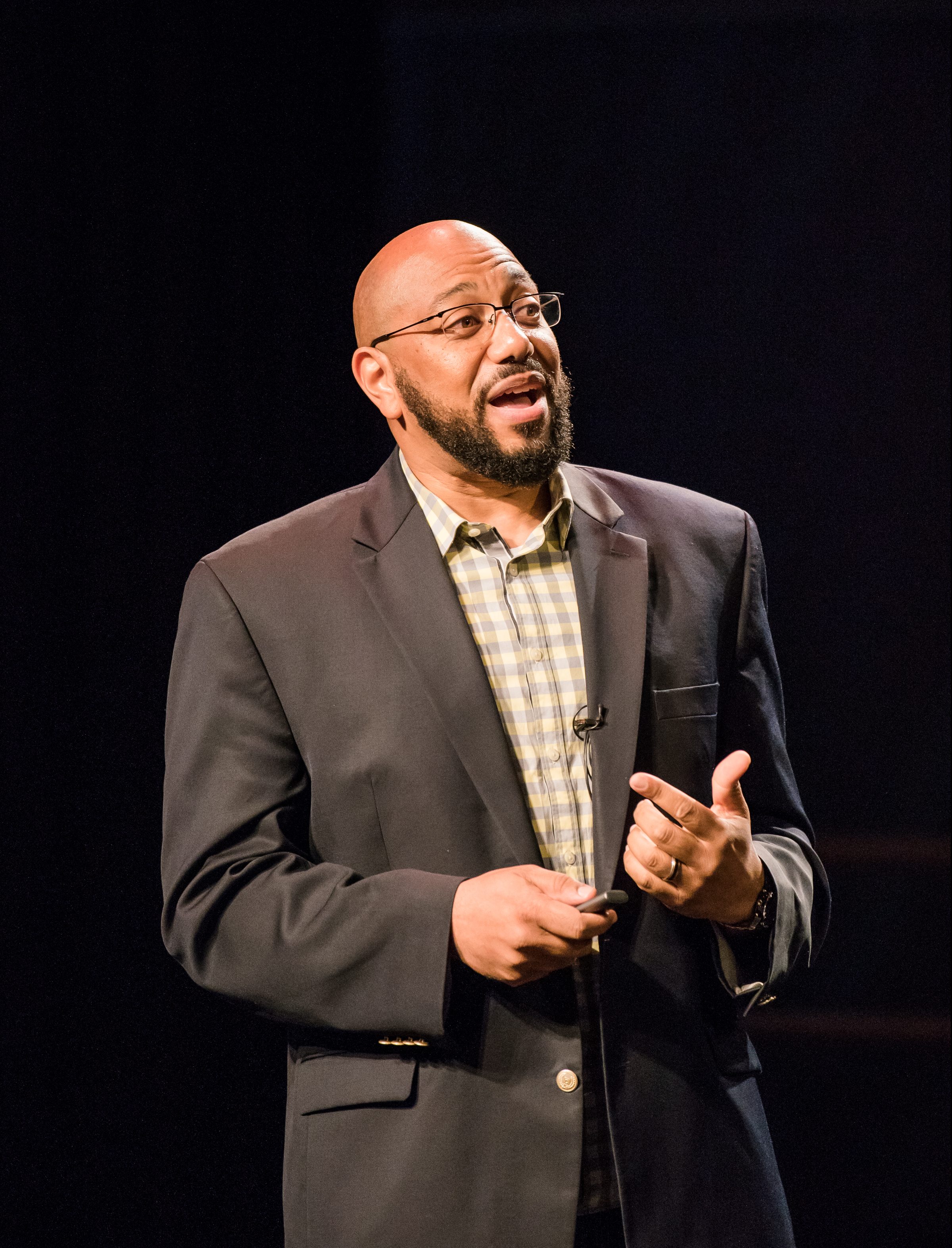
Image: STEM BUILD students on UMBC’s Academic Row. From left to right: Gabriel Duran, Amber Thompson, Kendra Kontchou, Chad Brown. Photo by Tim Ford.

UMBC, NASA, and partners mount intensive Chesapeake Bay air-quality study

This summer, students and faculty from UMBC and three additional universities teamed up with NASA researchers and Maryland’s Department of the Environment to collect huge amounts of data that will provide a snapshot of air quality in the Baltimore-Washington metropolitan area and over the Chesapeake Bay. The study measures factors ranging from wind speed to ozone concentration.

“In trying to understand air quality near the coast, it’s critical to obtain measurements over the water and over the land simultaneously with as wide of a variety of instruments as possible,” says John Sullivan, Ph.D. ’15, atmospheric physics, and the lead NASA researcher on the project.

UMBC serves as the primary land-based site, and equipment placed on remote Hart Miller Island in the Bay collects data over water. “With two sites, you can begin to really answer questions pertaining to differences in air pollution and understand the mechanisms driving these differences,” Sullivan explains.

Ozone in the forecast

This summer’s work is an extension of the Ozone Water-Land Environmental Transition Study (OWLETS), dubbed OWLETS-2, and it is particularly focused on tracking the presence of ozone in coastal cities. Ozone in the upper atmosphere helps maintain Earth’s temperature and absorbs harmful UV rays.

However, near ground level, breathing in ozone causes inflammation in the respiratory system, which can be dangerous for young children, the elderly, and those with asthma or other respiratory conditions. Plants also take up ozone, which can reduce crop yields.

Chemical reactions between sunlight and emissions from vehicles and industry generate smog-like ozone episodes, so one would expect the highest concentrations at midday, when the sun is at its brightest. However, wind over the Bay changes that.

“The Bay breeze is like a wall that doesn’t allow normal west to east airflow to happen,” explains Ruben Delgado, assistant professor at the Joint Center for Earth Systems Technology (a UMBC-NASA partnership) and the lead UMBC OWLETS-2 researcher. That means the midday ozone heading out to sea comes back in during the late afternoon, causing a spike just as local residents are heading home from work and school. Other factors, such as smoke blowing over the city from wildfires in the West, can also have a real impact.

Better understanding how these issues influence the presence of ozone in Baltimore can help improve air quality forecasts and protect sensitive populations from ozone’s ill effects. “The National Weather Service is interested in this kind of data, because it allows them to push their models to a new frontier,” Delgado explains.

Students step up

Working with Delgado are students from UMBC, Howard University, City University of New York, and Hampton University. The students and their home-institution faculty mentors are all members of the NOAA-funded Center for Earth System Sciences and Remote Sensing Technologies and Center for Atmospheric Sciences and Meteorology.

Delgado finds mentoring these emerging researchers to be both personally rewarding and essential to the success of the project. “My favorite part of this project is giving the students hands-on experience,” Delgado says. “They get to contribute to the process from start to finish.”

Kat Ball ’21, chemical engineering, is one of those student researchers, and her experience has been transformative. “I feel so fortunate to have had the opportunity to participate in meaningful scientific research so early on in my academic career,” she shares. “I’ve only just completed my freshman year, and will be one of the authors on the publications that result from all the data we received, which is something I thought I would only be dreaming about for quite some time.”

Ball learned that field and lab research differ in important ways. “Not everything is easy to deal with when you’re miles away from an actual lab where you have all of the necessary parts, chemicals, and even just clean water that you need to deal with problems that arise,” she says.

Working with much more experienced team members, Ball was intimidated at first, but soon felt at home on Hart Miller Island. “Hearing from people with such impressive qualifications that your input on the situation truly matters expanded the confidence I had in myself as a researcher,” she shares.

Paying it forward

John Sullivan, the lead NASA researcher, was once in Ball’s shoes, and now he’s paying it forward. “As I moved toward planning larger-scale campaigns, I knew that I wanted to involve UMBC any way I could,” he says. “It wasn’t until I got to NASA that I realized how much of a leg up I had coming from UMBC, as some of my classes were taught by leading researchers in the atmospheric physics community.”

Under Sullivan and Delgado’s leadership, the participating students all took a very active role in the research. “They have been busy taking LiDAR measurements, launching weather balloons, taking mobile samples of pollution, and outfitting research vessels,” Sullivan says. He adds, “There is something very rewarding about bringing together active and engaged researchers to make a difference in public health, and training the next generation of scientists along the way.”

UMBC’s Matthew Baker teams up with Chesapeake Conservancy to create detailed stream maps

Thousands of waterways, from major rivers like the Potomac and Susquehanna to tiny headwaters, flow through the Chesapeake Bay watershed. Many of them appear on official stream maps produced by the U.S. Geological Survey, but many others go unrecorded.

Because the official maps are incomplete, “if you base management and restoration goals on coarse stream maps, you’re going to miss a big part of the picture,” says Matthew Baker, professor of geography and environmental systems at the University of Maryland Baltimore County (UMBC).

Baker’s partnership with the non-profit Chesapeake Conservancy has been awarded $1.2 million from the Chesapeake Bay Program (CBP) to create a more accurate, updated map for the watershed by applying new stream mapping techniques.

The Chesapeake Bay Program is supporting accurate stream mapping to improve management and implementation of the Chesapeake Bay Total Maximum Daily Load—daily Bay pollution limits set by the U.S. EPA in 2010.

Small streams are often overlooked for restoration activities because they do not show up on the official maps, despite delivering large amounts of nutrient and sediment pollution to the Bay. Updated stream maps will help partners throughout the Chesapeake Bay watershed prioritize restoration efforts and better understand how pollution enters the Bay’s tributaries.

Innovative approaches

This project follows a previous Chesapeake Bay Trust (CBT) award to Baker and his Chesapeake Conservancy colleagues to develop the methods necessary to carry out such a daunting task. With traditional methods, “You need skilled personnel doing very tedious, detail-oriented work over a long period of time,” says Baker. “We look forward to continuing to develop more automated, efficient and cost-effective ways.”

Now, Baker and his team get the chance to take on the challenge of using their new techniques to create the most detailed map of the region’s waterways to date, in a fraction of the time required by previous methods.

To identify previously unmapped stream channels, Baker and his team will analyze data from models of the terrain generated by light detection and ranging (LiDAR). This technology uses lasers emitted from aircraft to measure the relative height of Earth’s surface very precisely. But that’s just the beginning.

Baker’s team will remove inconsistencies and errors inherent to the LiDAR data, such as when the laser beam hits tree leaves or water surfaces instead of the ground. Then the team will find stream channels by creatively applying algorithms that interpret the terrain in the context of the surrounding landscape. The new maps may still not capture every single channel, but Baker hopes to get a lot closer while limiting false-positives.

Connecting the dots

“What the CBP was asking for was not just, ‘How do you find the channels?’, but, ‘How do you link them together in a connected network?’ And, ironically, that’s not a simple thing to do with this sort of detailed terrain information,” Baker says.

“For example, if a stream flows under a road, the road is interpreted as a kind of dam by conventional computer algorithms, even though our eyes and brain naturally connect the channel on either side,” Baker explains. Although such features are intuitive for people, computers need to be taught how to fill in those gaps accurately and appropriately.

Once the team develops a more complete map, they will still have one more crucial step to complete. “A big part of the project is to validate and check the map,” Baker says. “If the stream map isn’t reliable and no one believes it, then it’s not very useful. So that’s what we’re going to spend a lot of time doing.”

He estimates that about two-thirds of the time spent on the six-year project will focus on quality control. “With Chesapeake Conservancy’s assistance and expertise, we will compare the results of the new automated techniques with data collected from aerial imagery or on the ground at sites around the watershed.”

“Chesapeake Conservancy is a great partner in this context,” says Baker. “They’ve developed a lot of experience generating geographic datasets for the watershed.”

Conservation outcomes

Having a complete, reliable map is essential for protecting waterways. “If we want to understand how what we do on the landscape influences stream integrity and downstream health in places like the Chesapeake Bay,” Baker says, “then being able to map the connections between human activities on the land and the circulatory water system that delivers their effects to the Bay is paramount.”

Streams not visible on current official maps have already proven extremely important in research. Early evidence that vegetation alongside streams could reduce discharges of harmful pollutants into the Bay came from research on streams that weren’t on the best USGS maps at the time, Baker notes.

For now, the USGS has identified developing high-resolution stream maps as a national goal, and Baker hopes to contribute to that effort. The updated, verified map will enhance management and protection within the Chesapeake Bay watershed, and the methods Baker and the Chesapeake Conservancy have developed have the potential to improve stream mapping—and to better protect waterways—across the nation and the world.

Image: Matthew Baker at UMBC. Photo by Marlayna Demond ’11 for UMBC.

UMBC’s Summer Undergraduate Research Fest 2018 spotlights talents of emerging scientists

UMBC’s University Center ballroom was standing-room only earlier this week as visitors gathered to learn about new student research on topics from HIV replication to enhancing art conservation through wireless temperature monitoring.

The Summer Undergraduate Research Fest (SURF) presenters were high school students and undergraduates from UMBC and other colleges who chose to spend their summers conducting research at UMBC. In all, 126 students participated in the event, which included two poster sessions and an awards ceremony following the presentations. More than 30 faculty members across five departments and two colleges at UMBC guided the students in their research.

“The experience helped us to think like scientists,” says Olufolake Majekodunmi ’21, biological sciences and psychology. She and her research partner, Avantika Krishna ’21, biochemistry, conducted research for a new project on e-cigarette flavorings with neurobiologist Weihong Lin. As participants in the UMBC STEM BUILD Training Program, they have also received training in writing personal statements, analyzing academic journal articles, constructing their résumés, and more.

“The internship prepared us for giving oral presentations and applying to the workforce or grad school,” says Krishna. Both Krishna and Majekodunmi plan to continue their work with Lin this fall.

For some students, the summer offered a chance to step outside their comfort zones. Sarah Carpe ‘20, environmental science, who transferred to UMBC from Baltimore City Community College, worked with biologist Steve Miller through an NSF Research Experience and Mentoring (REM) award. Her project seeks to enhance algal biofuels by manipulating algae genetics. This stretched her beyond her typical focus areas, but she sees it as very relevant to her passion for the environment because of its potential to help the planet, she says.

Ewnet Sisay ‘20, mechanical engineering, studied zebrafish embryos with developmental biologist Rachel Brewster. “I hope to go for a Ph.D. in biomedical engineering, so I wanted to try biology before committing to a Ph.D,” Sisay says. The result? “I really love it.”

On the other hand, Rakan El-Mayta ‘18, chemical engineering and biological sciences, has been conducting research with biochemical engineer Erin Lavik for two years. This summer, El-Mayta continued work on a project to generate a 3D model of the human colon that will make testing new therapies more efficient. The work has confirmed his enthusiasm for engineering. “Everything is so applicable,” El-Mayta says, “and I get to work with my hands and really think like an engineer.”

Sahle Gebremichael, a student at Baltimore City Community College, spent time in Steve Miller’s lab this summer through the NSF REM program. He intends to transfer to UMBC next year. “I think getting research experience here will help me make the transition to UMBC,” he says.

In addition to sharing the benefits of their experiences, the student also spoke to how research can sometimes be an emotional rollercoaster, peppered with challenges and failures. But by working through those issues, they came to see failures as growth opportunities, rather than setbacks.

“I’ve hit a couple roadblocks along the way,” says Carpe, “which has helped me understand the project better because I have to really think to solve the problem.”

Brett Lucht, a student at Marist College and recipient of an NSF Research Experience for Undergraduates award, also found a way to see the positive in the challenges he faced while working with physical chemist Lisa Kelly. “Failures are a part of research,” he says, “and we’ve learned from them, so they were good failures.”

Bill LaCourse, dean of the College of Natural and Mathematical Sciences, which organized the event, took a moment at the research festival to tell the students that although they are still early in their scientific careers, working to answer questions no one has ever answered before is a noble and exciting challenge. He shared his hope that their time as UMBC researchers “lights a flame of passion that will drive you to greater undertakings…with joy and wonderment.”

“It has been our privilege to host you here at UMBC,” said LaCourse. “Your spirit is an inspiration to us all.”

Image: Students explain their research to attendees at SURF 2017. Photo by Marlayna Demond ’11 for UMBC.

UMBC’s BUILD a Bridge to STEM internship offers students a transformative research experience

For six weeks this summer, 18 students from Baltimore-area community colleges, Gallaudet University, and Morgan State University worked as full-time scientists at UMBC. Their paid summer research experience was part of the BUILD a Bridge to STEM internship, an arm of UMBC’s STEM BUILD initiative funded by the National Institutes of Health under the Diversity Program Consortium.

The students worked in small teams to learn biomedical techniques and tackle real research questions with the guidance of faculty mentors. Like professional scientists, they shared their progress in lab meetings, discussed research papers in a journal club, and formally presented their work at a research symposium.

“I think the greatest thing about this experience was how we were treated as equals,” shares Zulekha Karachiwalla, a sophomore at Howard Community College (HCC). “We really got a feel for what it would be like to have a career in research.”

“Learning to work independently, think about the research problems, and troubleshoot on our own was the hardest thing,” adds Rahaf Alhabashi, also a sophomore at HCC. “It’s been challenging in a way that’s made us better scientists.”

Karachiwalla, Alhabashi, and Michael Mercado, a senior at Gallaudet University, formed a research team that worked with Mercedes Burns, assistant professor of biological sciences at UMBC, to conduct research examining the genetic diversity of harvestmen—commonly known as daddy long legs. The team format epitomizes the BUILD Group Research paradigm, a key component of BUILD at UMBC.

Through their lab experience, the students learned skills like how to keep a lab notebook and conduct experiments safely, which will serve them throughout their careers. “We’ve had to learn hands-on skills related to dissection and using different types of microscopes,” shares Mercado. He is confident those skills will be helpful as he pursues dental school.

Karachiwalla also found the internship to be helpful in thinking through her future career goals, and the best route to get there. After considering several different potential majors, “this internship has definitely shown me that the career path I want is not just biology or computer engineering—it’s putting them together,” she says.

Alhabashi came in with a more defined sense of her path forward, with a plan to pursue graduate school in physical therapy. But after this internship, she says, “I’ve gotten a lot more interested in doing research, too.”

The summer at UMBC also came with benefits beyond learning how to use scientific instruments—benefits from working on a diverse team to solve real challenges in the lab. “This internship has been a great opportunity to interact with many people from different backgrounds,” shares Mercado, who is Deaf and spoke through an ASL interpreter. “At first it was awkward, but we had different conversations about our needs and how we could approach them throughout the internship. I would absolutely recommend that other Deaf students come to this program.”

“This experience gave us more than just the scientific background. It taught us how to learn with people who have a different culture or communication method,” says Karachiwalla, “so I think we were lucky to be put in such a dynamic team. I would definitely choose this group again.”

The team’s diversity contributed to its success, Alhabashi adds. “I love that we all have different ideas that we put together that give us a better way and different ways of seeing and solving problems.”

Team members also shared that their summer research internship would not have been such as success without the support of their faculty mentor. “Dr. Burns not only helped us with the research, but also guided us in our career paths,” shares Karchiwalla. “By actually meeting the people that do the research at UMBC, I learned that they’re very open to helping students.”

“It taught me to take advantage of all the resources that are available to me, wherever I am,” says Alhabashi. Mercado adds, “I would encourage people who are still in college to get involved with as many internships as they can, even if it’s not directly related to their major, because it may change your major or help you gain skills that apply to your future.”

Burns is proud of all the team has accomplished in such a short time period. “They all really hit the ground running,” she shares.

Thinking back to a day the whole group spent in the field, she says, “Seeing a diverse group of students and ASL interpreters having fun collecting arthropods was just awesome.” It may have been a short summer experience, but, she says, the way they collaborated so successfully to progress in their research gave her a feeling of “real pride” and excitement for the future.

Banner image: Michael Mercado (left), Zulekha Karachiwalla (center) and Rahaf Alhabashi (right). Photo by Tim Ford.

UMBC astronomer Kenji Hamaguchi confirms binary star system produces cosmic rays

Eta Carinae is the most massive and luminous star system within 10,000 light years of Earth. New UMBC research published in Nature Astronomy concludes for the first time that the system is emitting cosmic rays, some of which may reach Earth.

Producing cosmic rays, which also happens following a supernova, requires that particles be accelerated nearly to the speed of light. “We found that the accelerated particles are really energetic, which is much more than we expected from this star,” says Kenji Hamaguchi, the lead author on the study. Hamaguchi is a researcher at UMBC’s Center for Space Sciences and Technology, a partnership with NASA. The fourth author is Neetika Sharma, Ph.D. ’16, physics, who worked on the project as a postdoctoral fellow.

The new research takes advantage of NASA’s powerful NuSTAR satellite, which can detect and locate high-energy x-rays with remarkable accuracy. Different instruments have been tracking relatively low-energy x-rays from Eta Carinae for decades, and another instrument suggested Eta Carinae might be the source of the high-energy x-rays and even higher-energy gamma rays. However, those instruments haven’t been powerful enough to conclusively determine the source of the rays that they detect.

“That’s why we proposed the observations with NuSTAR,” says Hamaguchi. “NuSTAR can image x-rays in the high-energy range for the first time. So we can pinpoint the location of high-energy emissions.”

Eta Carinae is a binary star system, meaning two stars are orbiting each other. As they orbit, the stars come within 140 million miles of each other every five and half years. This is about the distance from Mars to the Sun, and very, very close for two stars.

Stars are constantly throwing off particles, creating what is known as the “stellar wind.” Based on their findings, the researchers explain that Eta Carinae generates high-energy x-rays and gamma rays when the two stars’ stellar winds collide. The rays’ intensity depends on the relative position of the two stars. Those cosmic rays then travel through the universe, and some of them may end up near Earth—but until now scientists haven’t been able to clearly identify their source.

Beyond confirming Eta Carinae as a source of cosmic rays, this new research also shows for the first time that a binary system like Eta Carinae is capable of accelerating particles to extreme speeds. Previously, that kind of acceleration had only been proven in the debris resulting from supernovae. This helps expand knowledge of how particles can accelerate in space, which is relevant for studies of the birth of the universe and a variety of other extreme situations in the cosmos.

Hamaguchi is already looking forward to the next new instrument beyond NuSTAR, as he works to increase understanding of how stellar winds interact, accelerate particles, and generate cosmic rays. He is drawn to analyzing complex data about the universe “because we can find something nobody knows,” he says. “Every time you get something new.”

Image: The supermassive star Eta Carinae is at the center of two huge and expanding clouds of dust and other material, the result of an eruption about 150 years ago. Nathan Smith/NASA.

UMBC and partners launch project to provide fresh fish to underserved communities

UMBC researchers at the Institute of Marine and Environmental Technology (IMET) in Baltimore’s Inner Harbor have developed new ways to raise commercially important fish in land-based, sustainable systems through decades of intensive research. Now the Aquaculture Research Center (ARC), where the team grows fish such as bluefin tuna and cobia, is in full operation, and the team is donating much of their harvest to Baltimore communities in need as part of a unique public-private partnership.

UMBC, the University of Maryland Center for Environmental Science (UMCES), United Way of Central Maryland, McCormick’s Flavor for Life® program, and seafood distributor JJ McDonnell joined forces to launch the FISH (Feeding Individuals to Support Health) Project. The goal is to improve the health of Marylanders in underserved communities by providing fresh fish—a healthy source of protein and other nutrients. The partners gathered at Baltimore’s Franciscan Center on June 25 to announce the initiative, and center guests enjoyed bronzini grown at the ARC.

“UMBC is proud to be part of this important collaboration, applying scientific innovation in aquaculture to offer a healthy source of food for our local communities,” said UMBC President Freeman Hrabowski.

The ARC is a one-of-a-kind facility specifically constructed to avoid the pitfalls of other approaches to fish farming and catching wild fish. The environment is highly controlled and fully separate from waterways. This means there’s no risk of external pathogens sickening the fish. It also means there is no risk of fish escape — a concern with outdoor net pens — which can be an ecological nightmare if the fish are non-native species.

This approach to growing fish is also highly efficient. The researchers can create the ideal conditions for fish growth by tuning the salinity, temperature, and other factors. The facility converts solid fish waste to methane, which is then used to partially power the equipment. And there’s no risk of overfishing, as some of the adults are retained as brood stock to produce the next generation. In addition, with the ability to control daylight hours, the team doesn’t have to wait for the natural spawning season and, once the system is perfected, can expect to harvest market-size fish several times per year.

UMBC and UMCES provide the scientific expertise, but the FISH project wouldn’t be possible without leveraging each partner’s strengths. JJ McDonnell will process the fish and distribute it to partner nonprofits that reach underserved communities directly, like the Franciscan Center and Maryland Food Bank. McCormick’s Flavor for Life® program will generate simple, healthy recipes that utilize low-cost ingredients, which community members will receive along with the fresh fish. The United Way of Central Maryland is the lead organizer of the project, bringing all the moving parts together.

“In many of the communities we represent, individuals and families do not have access or the financial means to purchase healthy food, like fish,” said Franklyn Baker, president and CEO of United Way of Central Maryland. He reflects, “this project is a huge step in helping us win this fight,” to help local residents access resources that can help them lead healthy lives and pursue their goals.

More information about the FISH project is available through IMET, as well as press coverage of the launch event in the Baltimore Sun, Baltimore Business Journal, Daily Record, WMAR-TV, and WBAL-TV.

Banner image: A mother and son who have just enjoyed a meal at the Franciscan Center, which included fish raised at IMET. All photos courtesy of Howard Korn Photography.

UMBC and University of Limpopo partner to grow research and exchange opportunities

On June 12, leaders from UMBC and the University of Limpopo in South Africa formalized commitments to collaborate through joint research as well as faculty and student exchanges. UMBC has steadily grown its international partnerships with universities in Germany, Japan, Portugal, Peru, and other nations around the globe. This is the first such agreement between UMBC and a university in Africa.

“It gives us a lot of joy…to be the first African university with which you sign an agreement like this,” shared Jesika Singh, deputy vice chancellor for research, innovation and partnership at University of Limpopo. “There is so much potential that we see.”

A man and woman in business attire, sitting at a table and smiling, exchange gold folders.

This relationship grew out of the African International Conference (AIC) on Statistics, an event organized annually since 2014 by UMBC statistics faculty and international partners. Past conferences have occurred in Senegal, Ethiopia, Cameroon, South Africa, and Botswana, including statisticians from all across Africa as well as a dozen U.S. institutions. The next two conferences will take place in Ethiopia and Morocco.

Yehenew Kifle, associate professor at the University of Limpopo and currently visiting faculty at UMBC, first connected with UMBC during the 2015 AIC at Jimma University in Ethiopia. Inspired to build on the success of the conference, Kifle asked UMBC to partner on a grant from the South African government to support faculty development.

The grant, managed by Professor Kingsley Ayisi, calls for University of Limpopo junior faculty, some of whom do not yet hold doctoral degrees, to travel to UMBC to pursue doctoral-level training in statistics. Through a similar agreement, other Limpopo faculty will travel to Iowa State University for agricultural training.

Three men in suits sit at a conference table. Flags of Maryland, U.S., and South Africa appear on the table.

“This is really a milestone for us,” said Bimal Sinha, professor of statistics at UMBC and a leader in organizing the AIC, at the signing. “I hope that once other African universities see this, they will want to participate as well.”

In addition to Limpopo faculty traveling to UMBC, UMBC faculty will travel to South Africa to provide short training courses in statistical methods. Those courses will specifically focus on how statistics are used in the study of climate and climate change, which is already producing severe effects throughout the African continent.

Maryland, U.S., and South African flags adorn the conference table at the partnership event.

Beyond the statistics training program, the partners also signed an agreement outlining plans to pursue joint research projects, exchange programs for UMBC and Limpopo students, and other collaborations across a wide range of departments and programs.

“The way I see it, all sides have quite a bit to gain from this collaboration,” said Rouben Rostamian, professor and chair of mathematics and statistics at UMBC.

Man in a brown suit jacket and purple tie speaks at a conference table. Another man, in glasses, appears at right.

“This agreement goes far beyond statistics,” said Antonio Moreira, UMBC’s vice provost for academic affairs. “We are using education between our two countries and our two young universities—both less than 60 years old—to truly change the world by educating, training, and cultivating the future.”

William LaCourse, dean of the College of Natural and Mathematical Sciences at UMBC, is equally excited for the partnership. He shared, “We’re very proud to be here on this joint venture and to take this journey with you.”

Singh echoed his feeling. What started as a small gathering of colleagues from two continents, she said, “has very quickly developed into something that we can look forward to for many years to come.”

Photos by Marlayna Demond ’11 for UMBC.

Neurobiologist Weihong Lin receives NIDA grant to investigate the safety of e-cigarette flavorings

UMBC’s Weihong Lin is helping to close a major gap in knowledge about e-cigarettes, with a focus on flavorings. The National Institute for Drug Abuse has awarded Lin, associate professor of biological sciences, a two-year, approximately $400,000 grant to supply much-needed objective data that can help inform regulation of flavorings in electronic cigarettes and protect the consumers of today and tomorrow, especially children and teens.

The dangers of nicotine are fairly well understood, but today’s e-cigarettes also include ingredients that are not well known. “A primary concern about e-cigarettes right now is that they use a huge number of flavoring components,” says Lin. A 2014 study found that 460 e-cigarette brands used 7,760 different flavorings. It also connected “e-juice” flavors—from “cotton candy” to “double chocolate”—to a rise in e-cigarette use by young people.

Researchers work in a lab.

Scents and flavorings “tap into our mood and our motivation,” Lin explains. She also notes that the feelings that come along with scents and flavors can actually pose challenges to doing research on the safety of e-cigarettes.

The positive emotional associations people have with certain aromas and tastes, like eating cotton candy at an amusement park or coming home to the smell of chocolate brownies in the oven, can override the warning sensations caused by high levels of artificial flavorings or nicotine, says Lin. This means that asking people about irritation levels in their mouths and throats after using e-cigarette products with familiar or pleasant tastes may not provide an accurate picture of e-cigarettes’ actual negative effects.

E-cigarettes usually include a heating coil, solvents, nicotine, and flavoring components, all of which reach extremely high temperatures during the device’s vaporization process. Even if flavorings are considered safe for food products, they can be irritating when inhaled at higher levels. Plus, the extreme heat could change the components’ chemical make-up and convert benign substances into toxic ones. “But if you have the flavoring to mask physical irritation,” says Lin, “it becomes a more tolerable or pleasurable experience.”

Researchers work in a lab.

To push past that mask, Lin will go to a deeper sensory level, with the help of sensory systems in mice’s nasal passages, which are responsible for the sense of smell and detecting airway irritation.

Lin’s lab will explore how specific sensory systems that detect irritation respond in the presence of e-cigarette flavorings. “It’s an objective way to measure to what degree the e-juice will activate this system,” explains Lin. “We’re asking, ‘At what level will these flavorings cause an acute, irritating sensation?’”

Lin’s group will study popular flavors used in various electronic cigarette liquid brands. The results could inform future regulations on chemicals used as e-cigarette flavorings. Lin hopes to eventually extend this work to also explore the longer-term effects of low-dose exposure to these chemicals.

As a neurobiologist, Lin says, “I’ve always been curious about how chemicals affect humans’ daily choices,” from the foods we eat to the people we choose to date. But this current research project is also personally meaningful for her, as a teacher of young people.

“You see so many young kids experimenting with e-cigarettes, and they don’t necessarily know the harm,” says Lin. “If we can give them a science-based warning and help protect them from respiratory illnesses and nicotine addition, it’s going to be good for science and for society.”

Banner image from left to right: Kayla Lemons; Avantika Krishna ’21, biological sciences, and a UMBC STEM BUILD Trainee; Abdullah Al-Matrouk; Ashley Majekodunmi; Tatsuya Ogura, research assistant professor in biological sciences; Weihong Lin; Rishit Patel; and Mark Gabriana ’19, biological sciences. All photos by Marlayna Demond ’11 for UMBC.

UMBC’s Eileen Meyer explains how big data is changing astronomy research

UMBC’s Eileen Meyer, assistant professor of physics, argues that recent technological advances in the big data era are changing how astronomers learn about the universe.  In an article published in outlets from Popular Science to Smithsonian Magazine, Meyer describes recent research that discovered thousands of black holes near the center of the Milky Way. The research team found them not with a new telescope, but “by digging through old, long-archived data,” she writes. “Astronomers are gathering an exponentially greater amount of data every day—so much that it will take years to uncover all the hidden signals buried in the archives.”

Over the past several decades, advances in communications have allowed astronomy research to shift away from being conducted largely by individual scientists working with the instruments available at their own institutions. Today, large, international research teams collaborate on projects, often using instruments shared by several institutions across multiple countries.

The research instruments themselves are also vastly more powerful today than in the past. Older instruments could only detect visible light (with wavelengths from about 400 to 700 billionths of a meter). New instruments examine everything from gamma rays (extremely high-energy waves with wavelengths less than a trillionth of a meter) to radio waves (with wavelengths as big as a meter).

Newer equipment can also quickly process more data—a lot more. Meyer writes that the Hubble Space Telescope has made 1.3 million observations since its launch in 1990, and it transmits 20 GB of data per week, “which is impressive for a telescope first designed in the 1970s.” Compare that to the Square Kilometer Array, scheduled for completion in 2020. “In just one year of activity,” Meyer notes, “it will generate more data than the entire internet.”

“These ambitious projects will test scientists’ ability to handle data,” Meyer writes. Archives will need to have capacity to store, and then make accessible, a million times more data than can be stored on a typical 1 terabyte external hard drive.

Although it poses challenges, “the data deluge will make astronomy become a more collaborative and open science than ever before,” Meyer says. Whereas before you had to be “an academic or eccentric rich person with access to a good telescope” to do this kind of research, Meyer says, that’s no longer the case. “Thanks to internet archives, robust learning communities and new outreach initiatives, citizens can now participate in science.”

Meyer has taken advantage of huge, stored data sets in her own work studying the jets of high-speed plasma that spew from black holes. She collected 400 raw images taken over 13 years by Hubble to reveal the structure of these jets for the first time.

“This kind of work was only possible because other observers, for other purposes, just happened to capture images of the source I was interested in, back when I was in kindergarten,” she says. “As astronomical images become larger, higher resolution and ever more sensitive, this kind of research will become the norm.”

Meyer’s article, originally published on The Conversation, has been republished in Salon, Popular Science, Smithsonian Magazine, Chicago Tribune, Space.comRaw Story, Phys.org, and several other outlets, receiving nearly 90,000 views to date.

Image: An artist’s concept of a supermassive black hole. Credit: NASA/JPL-Caltech

Entrepreneurs Rising

Every day, UMBC researchers work tirelessly to make and build upon discoveries in their fields. For many, these successes lead to scientific publications, opportunities for further funding, or both. For some, however, a discovery is also the first step in a long and often winding pathway to entrepreneurship.

Written by Sarah Hansen M.S. ’15
Illustrated by Ruth Chan

Jumping into business can be a risk, but at UMBC, budding faculty entrepreneurs have a support system that includes the Technology Development Corporation (TEDCO) at the state level, which offers Maryland Innovation Initiative (MII) grants to support budding entrepreneurs. UMBC has a remarkable 50 percent acceptance rate for MII proposals. On campus, the Office of Technology Development and bwtech@UMBC research park provide great resources, including “Entrepreneurs in residence” who seek out research that could be a good fit for commercial development and support faculty from start to finish.

“You set the tone,” says Tom Sadowski ’89, political science, and current vice chancellor for economic development for the University System of Maryland, of UMBC’s efforts to support its faculty entrepreneurs. “You set up the model that other institutions are now following.”

From start-up funding sources to access to experienced entrepreneurs and more, the available support lowers the entry barrier to entrepreneurship and creates opportunities for faculty to impact the world in positive ways. “We focus here on innovation that matters,” says Karl Steiner, UMBC vice president for research, “whether it be in the classroom, working with our communities, or creating new solutions to some of today’s most pressing societal challenges.”

Read on to see how professors and their collaborators are using research and new-found entrepreneurial know-how to bring their inventions to life.

3-D Printed Solutions

Jeffrey Gardner, associate professor of biological sciences and one of two Up-and-Coming UMBC Inventor awardees, had a problem. Gardner’s research focuses on “how bacteria eat dead plants,” which has applications from renewable fuels to removing plastics from the ocean to improved composting methods. But the technique for measuring how efficiently different bacteria could digest plant materials was lengthy and labor-intensive.

So, Gardner created a tiny solution — a plastic widget similar to a tea-strainer — that makes his research on bacteria-driven decomposition faster and lower-cost while increasing the accuracy of the results. Gardner collaborated with Tagide deCarvalho, manager of UMBC’s Keith Porter Imaging Facility, to solve the problem “with a little bit of engineering and 3D printing.”

Gardner received a Maryland Innovation Initiative (MII) grant through TEDCO to complete prototype development on the widget and do a market assessment. Now his newly-created company, Gardner Industries, LLC, exists on paper, and a patent is pending on the product. He’s waiting to find out if he’ll receive phase-three funding from MII, which would enable the company to pursue increased production of the widgets and send them to labs around the country for feedback.

Gardner suggests that academics who may be curious about entering the entrepreneurial space simply “find someone who’s done it successfully and talk to them about it. If you try to do it in a vacuum or try to guess, you could end up with a lot of misconceptions or think it’s going to be too hard or too easy.”

For Gardner, that person was Chuck Bieberich, professor of biological sciences and the Herbert Bearman Foundation Chair in Entrepreneurship. Gardner encourages adventurous faculty to take the leap because the available support lowers the barriers to entry.

Saving the Bay — With Bacteria?

Kevin Sowers, professor of marine biotechnology, has been studying anaerobic bacteria (bacteria that don’t require oxygen) for more than 20 years. In that time, he’s discovered a bacterium that can break down polycyclic biphenyls (PCBs) very efficiently. PCBs were considered a “miracle chemical” when they came out in the 1930s, but since then, researchers have identified some potentially hazardous forms as neurotoxins, carcinogens, endocrine disruptors, and more.

Although banned today, because of their ubiquity in their first several decades of existence, PCBs are now common in wetland sediments around the world. Sedimentary invertebrates ingest them, and they make their way up the food chain from there. Now people are searching for ways to get rid of them safely. Current techniques include dredging and “capping” (piling a thick layer of sand on top of the sediment), but, both techniques are devastating to wetland ecosystems.

Sowers and Upal Gosh, professor of chemical, biochemical, and environmental engineering at UMBC, joined forces to come up with an alternative. Funding from an MII phase-one grant allowed them to develop a carbon pellet as a delivery mechanism for the PCB-degrading bacteria. After bonding the bacteria to the pellets, the researchers spray the pellets out over a wetland or under a pier. The pellets are one to two centimeters in diameter, and they spray 25 kg per cubic meter. The pellets sink, and the bacteria do their work in the sediment. Carbon and this bacterium are both found naturally in sediments, but the low bacterial concentration present would take many, many years to remove the unnaturally high level of PCBs.

A new UMBC Catalyst Fund grant supports the duo’s efforts to develop a method to measure the effectiveness of the treatment by comparing the predicted amount of time it would take for the PCBs to degrade naturally versus with treatment.

Sowers and Gosh have patented the product, and in 2017 they formed a company, Rembac. While it’s still somewhat of an experimental procedure, “we’re hoping that we’ll build up a reputation and we’ll be able to show that this is working well in different environments, and it will become more of a mainstream application,” says Sowers.

Bio-Batteries for Green Medicine

Gymama Slaughter’s invention is an outgrowth of her work to develop glucose-based power sources for use in implantable devices, such as pacemakers. By using the body’s own supply of sugars to power the devices, these “bio-batteries” would remove the need for repeat surgeries to replace failing traditional batteries.

“This project is important to me because of all the issues that human beings face. I give a lot of thought to that, and how we as researchers can really touch people in the community,” says Slaughter, professor of chemical engineering and a UMBC Up-and- Coming Inventor.

“Our primary activities are transforming diagnostic tools, reinventing the manufacturing of these tools — and creating the next generation of scientists and engineers. We now get approached by students all over the world who are interested in what we’re doing.”

“This is not just about chemistry, it’s about vision and bringing the right people together to solve a problem,” Slaughter says. The goal is to “benefit the maximum number of people in the world, not just people in our community.”

Classical Music for the Masses

Linda Dusman, professor of music and the UMBC Entrepreneur of the Year, is helping more people make positive connections with classical music via a mobile app called EnCue. The app provides customized information in real time during a performance, which could include facts about the composer, quotes from the performers or conductor, or historical context for the piece. World-class orchestras like the London Symphony are already using EnCue.

Dusman has MII phase-three funding to pursue further business development and fine-tuning of the product, such as allowing orchestras to design their own presentations rather than drawing from a library generated by Dusman and her business partner, Eric Smallwood ’08, interdisciplinary studies, former assistant professor of visual arts at UMBC.

You don’t need a certain kind of education to appreciate classical music, Dusman says. “What kills me is when I see newcomers in the audience and they’re embarrassed about not knowing when to clap, or they leave feeling stupid — that is a tragedy, a tragedy. And EnCue helps make me feel like I’m doing my best so that doesn’t happen. People leave concerts using EnCue excited about what they learned.”

Asked if she would recommend taking the plunge into the business world, she says, “If you believe in what you’re doing, then yes. In a way, I had to do it, if I really believed in this idea of real-time education.” But the process has not been without its challenges and frustrations.

“Anything worth doing, if you had known what it was going to take to get it to work before you did it, you’d probably never do it,” she says. “But if you believe in something, you do what it takes to make it happen. The value is worth the effort.”

Better Sleep With Engineering

Ever wake up feeling groggy and wonder why, because you’re sure you slept through the night? Nilanjan Banerjee, associate professor, and Ryan Robucci ’02, computer engineering, assistant professor of computer science and electrical engineering, have invented a device that may help you answer that question. In collaboration with researchers at Johns Hopkins University, Banerjee and Robucci have developed an anklet users wear at night to monitor “sleep texture” by measuring leg movements in a way that wrist monitors currently can’t.

The device is currently in the FDA approval process as a diagnostic tool for sleep-related disorders such as restless leg syndrome, attention deficit disorder, or iron deficiency. “People usually do this in a sleep lab, with EEG electrodes, and it’s very expensive,” says Banerjee. “We’ve been trying to see if we can move it to the home.”

The research team has received MII phases one through three funding, and is currently seeking larger grants from NIH — but none of this might have happened without the support of entrepreneurs in residence (also known as “site miners”) at bwtech@UMBC. Banerjee and Robucci originally sought to use their motion-sensing technology in assistive devices for people with limited mobility, but Dave Fink, one of UMBC’s site miners, knew a counterpart from Hopkins who had a researcher in need of motion-sensing for sleep monitoring. “They took the steps to help us form the company by understanding what our technology was and pairing it with exactly what the medical need was,” says Robucci.

Entrepreneur in Residence Spotlight: Dave Fink

In conversations with entrepreneurs at UMBC, one name keeps popping up: Dave Fink. He’s an entrepreneur in residence (also known as a “site miner”) at UMBC’s bwtech@UMBC Research and Technology Park. His task? Identify UMBC faculty research projects that have commercialization potential, and then steward the researchers through the entrepreneurship process, from brainstorming initial ideas to applying for start-up funding to seeking patents. Fink and other entrepreneurs in residence are critical to the success of fledgling ideas, but their work goes largely unseen.

For example, it’s not always easy for academic faculty to tell if an invention would be relevant to a wide range of potential customers or if it solves a problem unique to their research. Only in the former case is commercialization worth pursuing. “The site miners are really good at sussing out whether something will work or not,” says Jeffrey Gardner (see “3D-printing solutions”).

Like Gardner, Gymama Slaughter (“Bio-batteries”) has benefited from the support system in place for inventors at UMBC and in Maryland. “I was able to establish a wonderful relationship with David Fink at UMBC and Ken Malone at BioHealth Innovation,” she says. “They did such an amazing job with the logistics of the product and just helping out any way they could.”

Fink also guided Kevin Sowers and Upal Gosh (“Saving the Bay — with bacteria?”) in their entrepreneurship journey. “Dave was very supportive with our MII and with the Catalyst Fund grant. He advised on what to write and what the evaluators would be looking for,” Sowers says. “He’s been very supportive all along the way.”

UMBC ecologist and colleagues expose bias in forest restoration studies

When embarking on a reforestation project, is it better to let an area regenerate on its own, or take active steps like planting trees? Recent high-profile research has suggested that natural regeneration is more effective. However, UMBC’s Matthew Fagan and colleagues have just published their own research in Science Advances suggesting those studies were biased, and advocating for a more nuanced approach to forest restoration.

“This paper takes a more critical look at recent papers that have made a big splash,” says Fagan, assistant professor of geography and environmental systems. “I love this paper because it points out an important flaw in several studies, and also because those studies are really important to understanding how best we should restore the planet’s forests.”

So what was the flaw? Leighton Reid, a Missouri Botanical Garden scientist and first author on the new paper, says the studies were making “an apples to oranges comparison.” All of the sites the studies used to measure the effectiveness of natural regeneration were secondary growth forests, but the sites that used human-aided regeneration ran the gamut from abandoned coal mines to fields compacted by years of cattle-grazing. The natural regeneration sites had a leg up on the sites selected for active regeneration, so it’s no surprise the former came out the winner.

The new paper’s authors are not arguing that tree planting is superior to natural regeneration, however. “We just point out that rather than argue for natural regeneration versus artificial tree planting, it’s often worthwhile to just step back and give natural regeneration a chance for a year or two. It’s free,” Fagan says. “If it fails, then look at your objectives and figure out what sort of interventions you need to do, rather than saying one is better than the other.”

In some cases it makes sense to combine elements from both approaches. For example, planting small clusters of trees, rather than trying to replant an entire site, can sometimes be enough. “Tree planting can be the sparkplug that gets birds coming into a site, that then kickstarts regeneration,” says Fagan.

Around the world right now, countries are committing to restore millions of hectares of forest, explains Fagan, and with limited resources available for such work, it’s important to understand what the most effective techniques will be. There’s no one easy answer, but “if we want to learn more about which of these different types of restoration works better, we need to do more experiments,” says Fagan. To date, there have been very few experiments that actually look at the two methods side by side at the same site, which is what’s needed, he argues.

“The main takeaway from our paper is that natural regeneration isn’t a guaranteed success, even in the tropics. Sites can be so damaged by human management that they take a long time to recover,” says Fagan. “So while natural regeneration can be a useful restoration possibility, we shouldn’t necessarily assume that it’s always better for all objectives.” Those objectives could include pulling carbon out of the atmosphere, preventing erosion, filtering air and water, or building up sustainable agriculture, such as shade-grown coffee. “Contrary to previous scientific arguments, planting trees can be a perfectly viable choice.”

Image: A new artificial reforestation project in Costa Rica. Photo by Matthew Fagan.