All posts by: Sarah Hansen, M.S. '15


Wind, solar, and…flutter? UMBC’s Justin Webster is using math to move this emerging tech forward

When Justin Webster sees a flag rippling in the breeze, he thinks about equations. Webster, assistant professor of mathematics, studies “flutter”—a physical phenomenon caused by interactions between a fluid, such as air or water, and a flexible structure, such as a flag, a sail, or even an airplane wing. A small group of engineers and mathematicians has been working for years on how to extract usable energy from fluttering objects as an alternative means of energy production. Now, they have a chance to take flutter technology to the next level.

“There’s no such thing as free energy, but there are lots of situations where there’s ambient energy available,” like a flapping flag, Webster says. “You just have to find an efficient mechanism for turning it into meaningful, useful energy.”

Currently, prototypes exist for doing just that. You start with a narrow flap of material 50 to 100 cm long and coated with piezoelastic material, which can convert mechanical energy (like flapping) into electrical energy. Next, you attach the flap to a pole in a field that tends to get a lot of wind, and voilá, you can generate electric current. If you can efficiently store that energy, you could potentially help power homes and businesses in remote locales, such as the desert or mountains, which also tend to be windy, Webster says.

Moving the needle

In their current form, these devices are far from optimal. Part of the challenge is that “the mathematical models that we currently have don’t make predictions that are consistent with what engineers see during experiments,” Webster explains. 

Without accurate predictions, it can take many experimental attempts to make progress—and the experiments are often difficult and costly to carry out. With a more accurate model, not only would progress be faster, but more research groups might take up this work.

A new grant from the National Science Foundation will help Webster, Jason Howell at Carnegie Mellon University, and Earl Dowell at Duke University move their field closer to making efficient, fluttering energy-harvesters a reality. 

Webster is an applied mathematician, Howell is a computational mathematician, and Dowell is an engineer and one of the  world’s leading experts on flutter. Over the next three years, they will work together to refine existing mathematical models of “flag” flutter and produce new models that more accurately reflect what engineers like Dowell actually see in their experiments. 

Their new model will need to include elements such as wind speed, how many times an object flaps per second, and how much energy is stored in an hour. Each element must be represented in the model by its own equation, and all those individual equations must somehow be connected to each other mathematically. To succeed, it will take analytical acuity plus a degree of finesse. 

Webster’s goal is a more accurate model that will help engineers ask and answer questions about the materials used to collect energy from flutter. What is the best size and shape for the flaps? What should they be made of? How should the piezoelastic material be arranged on the flap to optimally capture the energy? “All of these are open—and very difficult—questions,” he says.

Problem-solving from every angle

It’s actually fairly unusual for applied mathematicians and engineers to work directly together in this way. Webster explains, “We’re often working on the same problems, but typically from different angles.” 

The opportunity to move the renewable energy field forward through collaboration is what drew him to this project. By learning each others’ languages and debating approaches to tackling such a complex problem, he’s confident their research will achieve more than would be possible for a math or engineering team alone. “There’s a myriad of interesting and challenging problems here, as we’re learning from each other every day,” says Webster of his collaboration.

The team will also benefit from the fresh perspectives of student researchers. “I’m excited that the students in my project, as well as other projects in the department recently funded by NSF, can get involved in some really interesting and difficult mathematics,” Webster shares. 

So, while charging your cell phone with the streamers on your bicycle may be a ways off, Webster, his colleagues, and his students are hoping to get us one step closer.

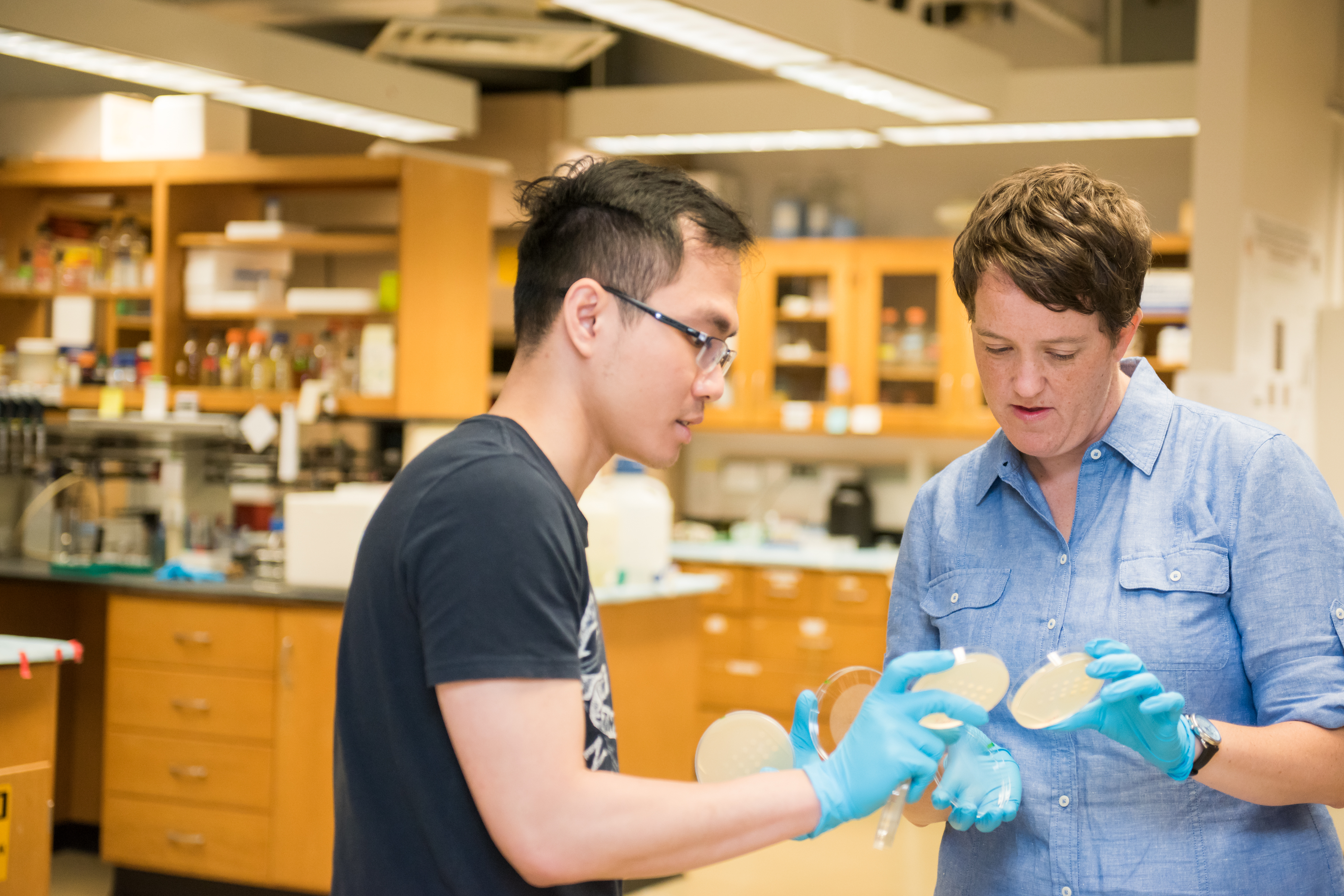
Banner Image: Justin Webster. All photos by Marlayna Demond ’11 for UMBC.

NASA and DoE fund UMBC’s Zhibo Zhang to pursue ambitious atmospheric research

Recently, both the Department of Energy (DoE) and NASA awarded Zhibo Zhang, associate professor of physics, significant grants to pursue projects in atmospheric science. 

Zhang’s lab has established itself as a powerhouse at UMBC since his arrival in 2011. The lab published groundbreaking findings such as the discovery that dust from the Sahara Desert provides critical nutrients to the Amazon Rainforest in Geophysical Research Letters, and the surprising result that smoke from African wildfires may have a cooling effect on climate by reflecting sunlight back into space in Proceedings of the National Academy of Sciences.

Zhang’s Aerosol, Cloud, Radiation, Observation, and Simulation (ACROS) research group focuses on how small particles in the atmospheresuch as dust, smoke, and other pollutantsinteract with clouds and sunlight. His team’s end goal is to better understand how the particles affect global climate and use that information to improve climate models, so we have the best information possible to plan ahead for climate resilience.

Clouds up close

The DoE has awarded Zhang’s group $600,000 over three years to improve how climate models incorporate the effect of clouds. “DoE is very interested in how climate change will influence U.S. and global energy consumption,” Zhang says, and having accurate climate models is critical to that effort. The UMBC project is one of 27 atmospheric research projects the DoE funded with a total of $13 million.

Scientists model the global climate as a grid, with each grid square being 100 to 200 kilometers on a side. “We have all the equations to model the whole system based on these discrete grid boxes and how they interact with each other, but what happens on a more granular level, below that grid size, our models can’t say,” Zhang explains. “That’s 200 km—from here almost to New York—and what happens inside this grid box can be very important.”

“Our whole study is to investigate the sub-grid scale—how clouds change from about 5 to 100 kilometers,” Zhang says. The team plans to analyze data collected by ground-based instruments and research aircraft at the DoE’s site on the Azores islands, about 1500 km west of Portugal, to help “check the model’s assumptions and improve them using observational data.”

The team will investigate, for the first time at high resolution, how the total water content of clouds varies. They’ll also look at the number of individual droplets within grid squares that are measurable from airborne sensors flying near the ground-based instruments. The researchers will also track environmental factors within the grid squares, such as wind, humidity, and the overall density of airborne particles. 

Several members of Zhang’s team are involved in the project, including Olivia Norman ‘21, physics. “We’re depending on her to solve some really tough equations,” Zhang says, “and she’s doing very well.”

Externally, Zhang is collaborating with David Mechem, professor of geography and atmospheric science at the University of Kansas, for this project. “We have a very strong team. We complement each other,” Zhang says. “Also, we’ve been thinking about this problem independently—they from the modeling side and us from the observation side—for a long time.”

Dusting off climate models

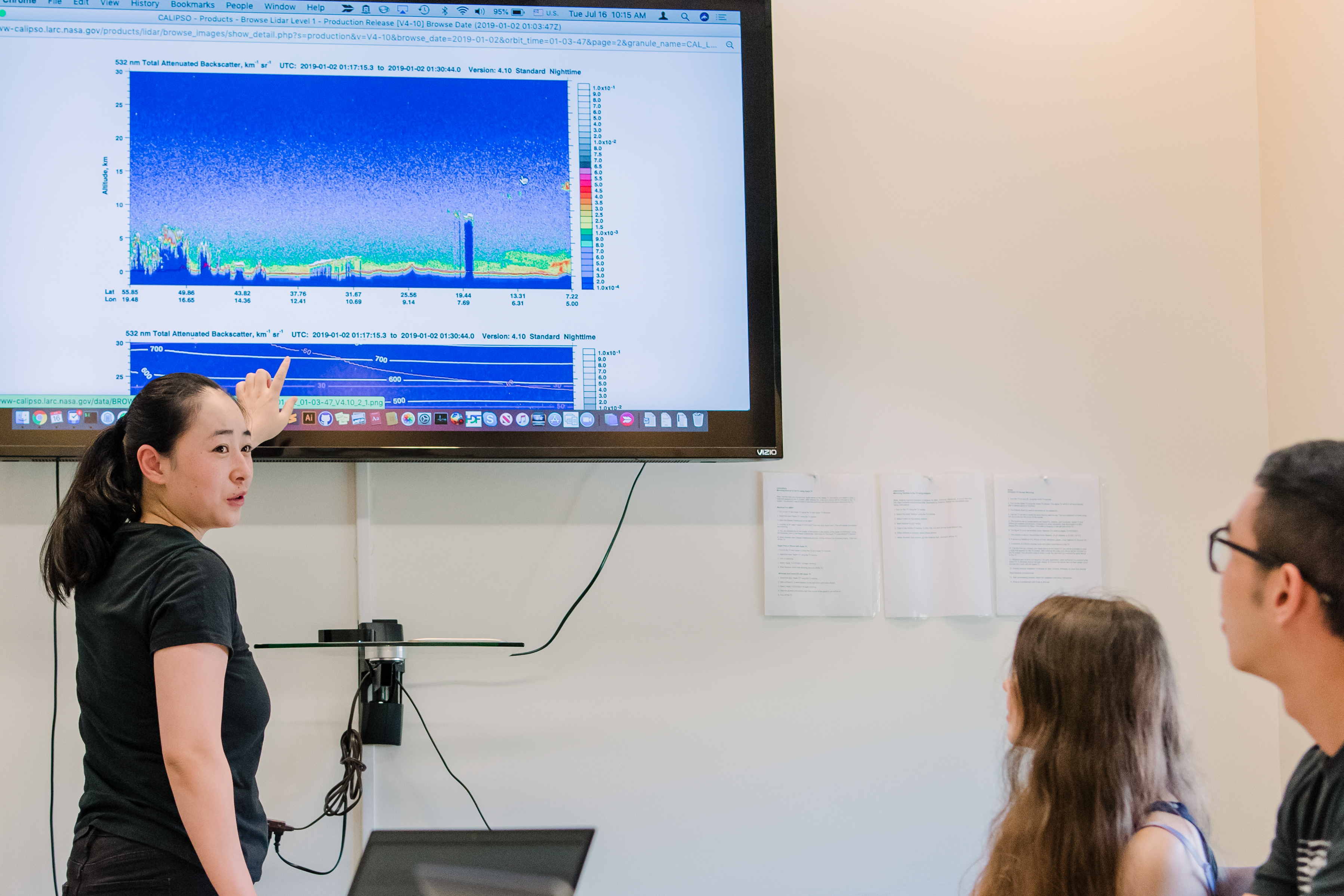
The NASA-funded project will analyze data collected from instruments on aircraft and NASA’s orbiting CALIPSO and MODIS satellites to better understand whether dust in the atmosphere warms or cools the planet overall. Combining information from the different data sources “is like putting a puzzle together,” Zhang says. “Each one provides one piece of the puzzle, so when you put them together you get the larger picture.”

Considerable research has looked at how dust interacts with light in the visible spectrum—light waves that humans can see. Those findings suggest that dust has a slight cooling effect. “What hasn’t been studied in detail is the warming effect of the dust,” Zhang says. It can absorb some of the radiation reflecting off the Earth’s surface—specifically, the infrared radiation with longer wavelengths. “It’s basically a greenhouse effect of the dust.”

Qianqian Song, a Ph.D. student in Zhang’s research group, has led some of the first work looking at the warming effect of dust when it interacts with long-wave infrared radiation. “In our study we found the long-wave warming effect could cancel 30 percent of the cooling effect in the Atlantic region during summer,” she says.

Climate models are valuable, but only as good as the assumptions they make. “You can look at the data and you see discrepancies between the climate models and the observations,” says graduate student Kylie Hoffman. “Some of it we can explain, and some of it we can’t. Identifying the discrepancies and being able to modify the climate models to be more accurate down the road is very important.”

Currently, the effect of infrared radiation is completely absent from models, because so little is known. But, “If our research shows the infrared radiation effects of dust are important, then we can add this effect into climate models,” Zhang says. “Actually, dust is going to change a lot in the future as the climate changes, so it’s important to consider the more comprehensive effects of dust in climate models.”

Moving forward, graduate student Kevin Zheng will take the lead on this work. He’ll develop computer code that can process the years and years of data collected by CALIPSO and MODIS and determine the altitude, thickness, and other properties of dust in the atmosphere, which can be used to determine how much radiation it blocks or lets pass through. In the end, he says, “We’ll have a global map of the dust’s infrared radiation properties in different locations at different times.” 

Chamara Rajapakshe, another Ph.D. student in the lab, emphasizes that the team plans to share its data to support work in other labs around the world. “Everything is archived and available to any scientist,” Rajapakshe says—including not only the raw data, but also the tools for processing it. “That will benefit a lot of other research groups.” The Zhang lab is making it possible for researchers everywhere to help communities tackle the uncertainties of climate changestarting with better climate models.

Banner image: Clockwise from lower left: Qianqian Song, Chamara Rajapakshe, Kevin Zheng, Zhibo Zhang, Olivia Norman. Photo by Marlayna Demond ’11 for UMBC.

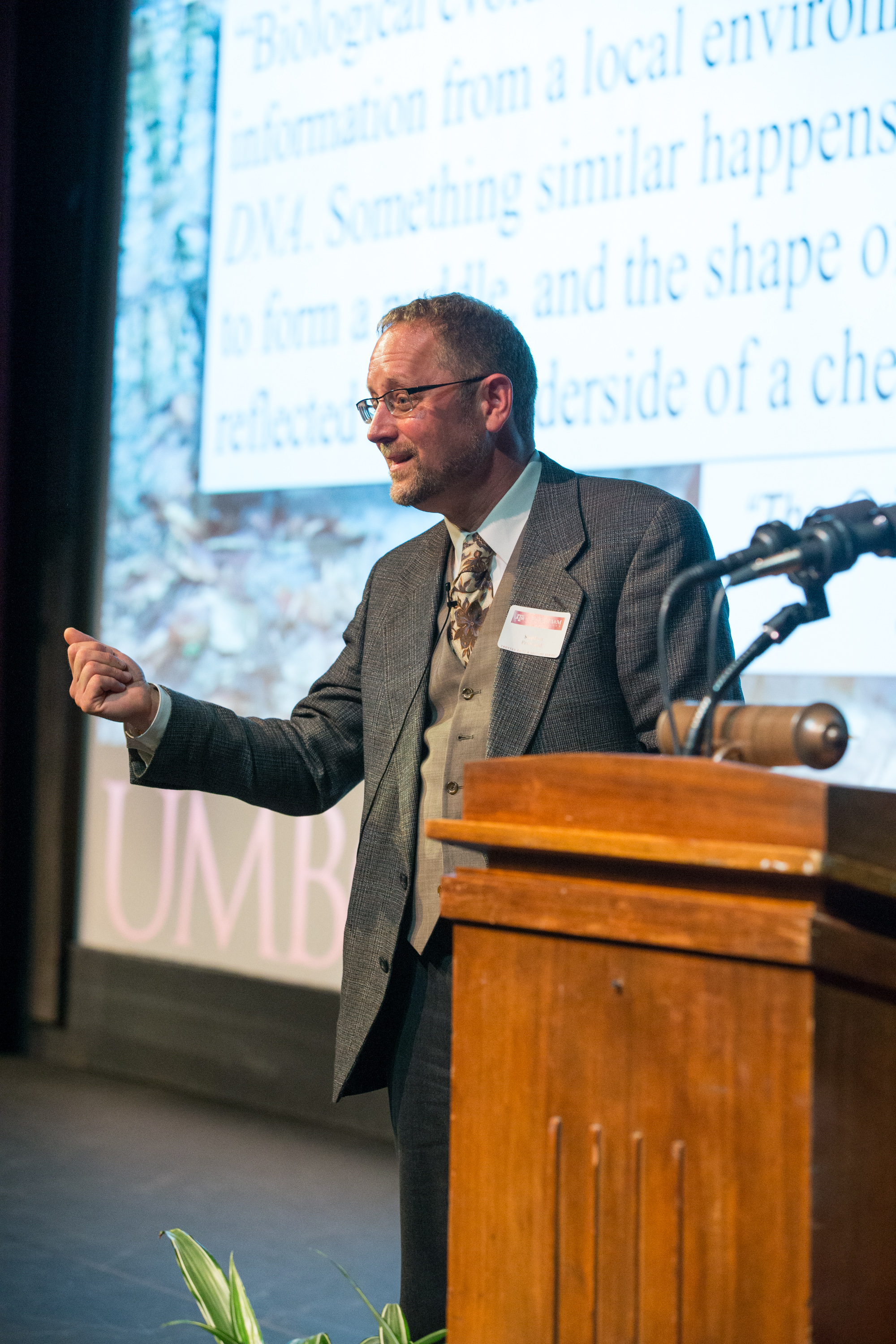
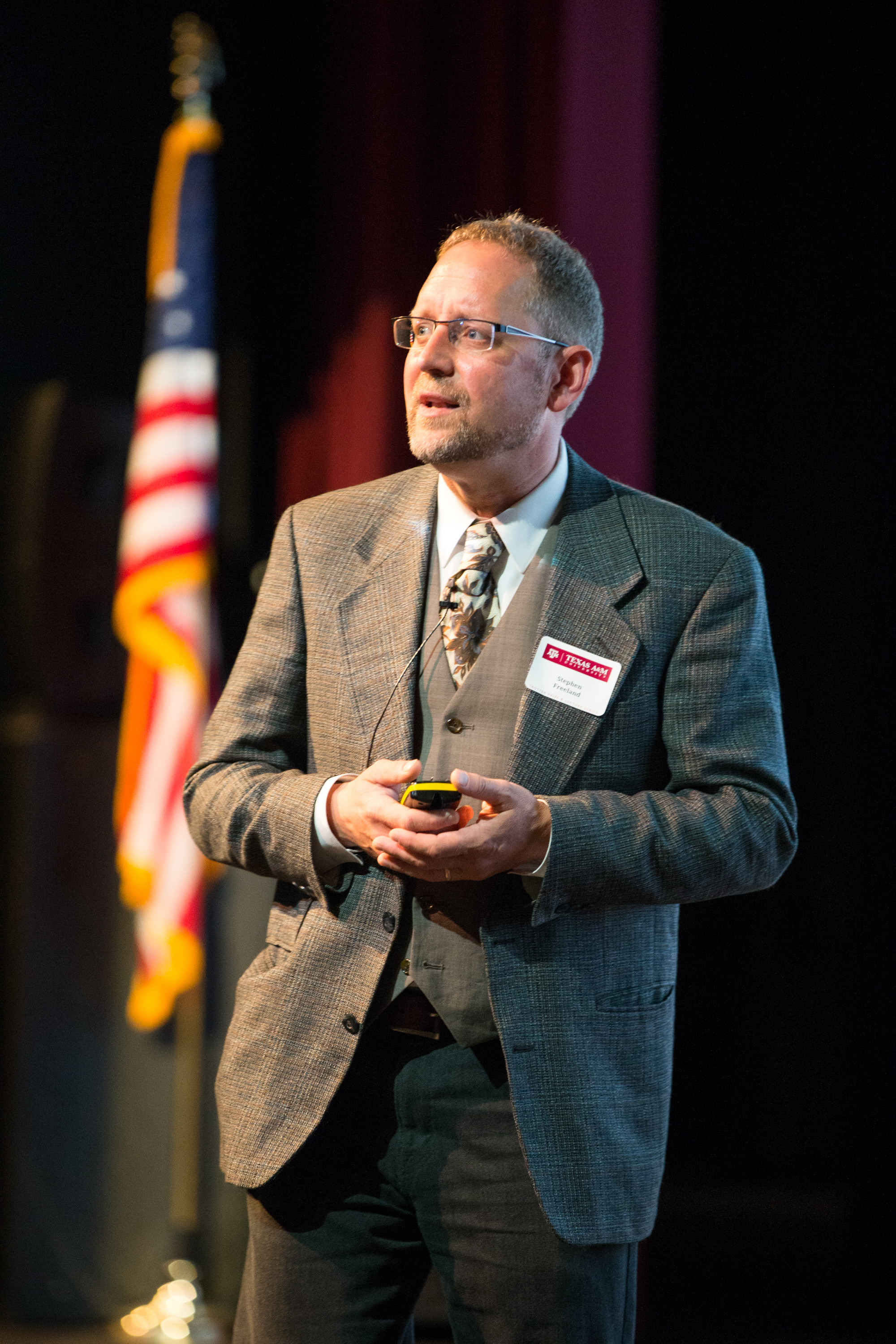
UMBC’s Stephen Freeland receives Trotter Prize for pioneering origins-of-life research

This spring, Stephen Freeland, director of individualized studies and associate professor of biological sciences, received the Texas A&M Trotter Prize in Information, Complexity, and Inference, an endowed lecture series seeking to reveal connections between science and religion. He traveled to Texas A&M University in April to deliver two talks about his research on the origins of life.  

From Freeland’s perspective, the prize creates a space to “honor and debate about where evolution intersects with deeper, multi-dimensional concepts about the purpose of us being here, or what science is telling us about our place in the universe.” While not structured as a formal debate, the prize is given to two winners each year with contrasting views, and they present their talks at the same event.

Freeland’s research has always centered on how and why living things evolved a system of genetic coding, which has taken him from biology to astrobiology and has inevitably led him to grapple with one of the big questions many people ask themselves: “Where do we come from?”

Freeland said he was proud to add UMBC to the list of winners’ institutions, which in the prize’s 17 years has included many renowned bastions of scholarship in the United States and the United Kingdom, including Oxford, Cambridge, MIT, Harvard, Stanford, University of Chicago, UC Berkeley, Princeton, and Cornell.

Specifically, Freeland said he was thrilled to follow in the footsteps of previous winners and scientific giants, such as Francis Collins, former director of the National Institutes of Health and leader in the Human Genome Project, and Francis Crick, co-discoverer of the structure of DNA. “These are people whose names have influenced profoundly my career and thinking,” Freeland says, “and I respect them highly.”

Asking the right question

In his talk, Freeland called on his own research and standard evolutionary theory to argue that information flows from the environment into organisms, resulting in an organism storing information about its environment in its DNA. That makes sense in the context of natural selection: organisms that are more suited to their surroundings (in other words, whose genetic material stores more information about the environment) will be more likely to survive and reproduce, creating more organisms with the same helpful traits.

“That was a very useful point to counter the fundamental claim from intelligent design that evolution requires a degree of complexity that is different from anything science knows how to explain,” Freeland says. “No it doesn’t—organisms absorb information from the environment. That’s what we’ve been saying for 150 years.”

Intelligent design (ID) is a theory outside mainstream science claiming organisms that are strikingly well-tuned to their environment or lifestyle could not have arisen by natural processes alone. Thinking deeply about ID over the last several years has led Freeland to appreciate its usefulness as a foil for evolution.

“Thinking about why my own education and research cause me to disagree with ID’s claims has given me clarity about how that applies to the origin of life,” he says, “and this same deeper thinking has helped advance my own research, and examine how it does or, in some cases, does not, align with  current scientific paradigms.”

One of the most popular paradigms in the origin-of-life field, the “RNA World Hypothesis,” posits that RNA, a slightly different form of genetic material that is present alongside DNA in all organisms, arose before the first living things and eventually made life possible. Based on this hypothesis, many researchers are currently struggling to determine how RNA could have come to exist before life.

However, after a great deal of study, including contemplating the claims of ID, Freeland thinks, “We should be looking for what chemicals information from the environment is flowing into, pre-RNA. What is this curious molecule that preceded RNA, that may look nothing like it? Are we asking the wrong question if we’re trying to make RNA’s existence before the first living things plausible?”

Seeing the truth

Freeland took the stage this year as the orthodox scientist of the winning pair, because he espouses the traditional scientific view of evolution and natural selection. So, the fact that he is also a committed Christian may have taken some listeners by surprise. In fact, efforts at the intersection of science and religion have been a core part of Freeland’s work for decades.

In March, he helped organize UMBC’s events sponsored by the American Association for the Advancement of Science focused on the intersection of science and religion. He also  serves on the advisory board for Biologos, an organization seeking to show Christians that science, and specifically evolution, need not conflict with their worldview. In addition, he has spoken internationally and taught courses on the topic at UMBC for many years, and is excited this summer for the first time to work directly with a Muslim youth organization on an environmental stewardship project, in collaboration with individualized studies instructor Tabassum Majid ’10, interdisciplinary studies, M.A. ’18, management of aging studies.

As a scientist and a Christian, Freeland explains that in his worldview, truth extends beyond science, to frameworks such as spirituality and religion.  Science and religion influence each other over time, and they are not mutually exclusive, he says.

“There are worldviews that shape what we believe, and it’s not clear to me that it’s science that drives those worldviews. Science sometimes catches up to that worldview by saying yes, when we measure by science we do find that truth.” And sometimes, “changing worldviews will revolutionize what truths science is capable of seeing.”

Banner image: Steve Freeland accepts the Trotter Prize. Photo credit: Texas A&M University College of Science.

UMBC’s Qianqian Song receives FINESST Fellowship from NASA for research on dust clouds and climate

UMBC’s Qianqian Song has just received the Future Investigators in NASA Earth and Space Science and Technology (FINESST) Fellowshipone of just 59 such fellowships granted nationwide this year. The award provides $45,000 per year for three years for her to continue her studies at UMBC with Zhibo Zhang, associate professor of physics.

Song, a fourth-year Ph.D. candidate in atmospheric physics, is studying how dust above clouds affects the global climate. Large amounts of dust enter the atmosphere when strong winds blow across dry areas, such as the Sahara Desert. Previous research from the Zhang lab showed that this dust travels thousands of miles and provides critical nutrients to the Amazon rainforest. Other studies have suggested that the dust has an overall cooling effect on climate, by blocking short-wave radiation coming from the sun. “But they were neglecting the long-wave effect,” says Song. This is where her innovative work comes in.

As long-wave radiation rises into the atmosphere from Earth’s surface, dust can block it from exiting the atmosphere, producing a warming effect. “In our research we found that the dust’s long-wave warming effect cancels about 30 percent of the short-wave cooling effect,” Song explains. Incorporating this new understanding into climate models could have a significant impact on the models’ predictions.

Now Song wants to learn more about how the dust interacts with nearby clouds: How does it affect the size of water droplets in the clouds, or how densely the droplets are packed together? Massive amounts of data obtained by NASA satellites and aircraft and powerful computational tools will assist Song as she works on answering these challenging questions.

Embracing change at UMBC

Qianqian has come a long way since her 2014 arrival in the U.S. from China with her husband, who had obtained a student visa to pursue a Ph.D. in electrical engineering at Johns Hopkins University. Coming to the U.S. “was a big change,” she says. For one, “When we came, our English wasn’t good. It was hard. But now it’s much better.”

After a year, Song decided to pursue her own Ph.D. “When I visited UMBC, I felt like everyone knows each other and supports each other in the physics department,” she remembers. “That’s why I chose here.”

Some of Zhibo Zhang’s lab members, clockwise from lower left: Qianqian Song, Chamara Raja, Kevin Zheng, Zhibo Zhang, and Olivia Norman. Photo by Marlayna Demond ’11 for UMBC.

However, the visa process proved challenging, and she thought she would have to postpone her enrollment another year. But physics graduate program director Todd Pittman stepped in. “He talked to the whole department,” Song says, and got department chair Michael Hayden’s support for a special, temporary scholarship for Song to initially join the UMBC community as a part-time student. She dived into her courses and research rotations, and the next semester Song was able to finalize her visa and begin her full-time studies.

A rotation in Zhang’s lab sparked Song’s interest in atmospheric research. “Before I came here, I did my master’s degree in Beijing. The pollution there is very severe,” Song shares. “So since living there, I am interested in atmospheric science. When I did a rotation with Dr. Zhang, I did research on dust aerosols, and I got very interested in learning about their role in climate change.”

Pursuing her dream

Now, Song is excelling. “I think she is rising to become a future leader in our field,” says Zhang. 

Song shares that UMBC’s supportive network has had a major impact on her experience. “Dr. Zhang is an excellent adviser. He teaches us communication skills and helps us a lot in our research,” she says. In this research group everyone helps each other, not only on our research but also in our personal life.”

That’s been important for Song, who recently welcomed her first child. The flexibility to work and participate in meetings from home, when needed, allowed her to continue her research at full speed while she was pregnant and now, as she raises her baby with her husband. “I was in my third trimester when I was writing the fellowship proposal,” she shares.

Song plans to pursue a career in academia after her Ph.D. “That’s my dream,” she says. With the support of the fellowship, her lab group, and her family, Song will pursue it with confidence.

Banner image: Qianqian Song discusses her research findings with her lab team. Photo by Marlayna Demond ’11 for UMBC.

UMBC’s Tom Cronin, mantis shrimp vision expert, receives international Rank Prize for Optoelectronics

Tom Cronin, professor of biological sciences, and his longtime colleague, Justin Marshall, professor at the University of Queensland in Australia, have received the 2020 Rank Prize for Optoelectronics. The prize honors their pioneering discovery of new ways that eyes can perceive color and a rare type of light that has twisted electromagnetic waves, called circular polarization.

Lord Joseph Arthur Rank established the Rank Funds for Nutrition and Optoelectronics in 1972.  Each year, the fund committees designate prize winners in each category from an international pool of nominees. Past winners have included Mike Land of the University of Sussex, who is considered by many to be the top expert on comparative vision internationally, and Jeremy Nathans of Johns Hopkins University, who was the first to determine the DNA sequence for the visual pigments in human eyes. 

Cronin and Marshall’s award includes an unrestricted £40,000 for each recipient and a trip to London for the award ceremony on January 20, 2020. On receiving the prize jointly, Cronin says, “We’re both very glad that both of us were included. It’s been more than 30 years that we’ve been working side by side.”

Cronin and Marshall’s first joint effort, in 1988, resulted in an article that graced the cover of Nature, generally considered to be the most prestigious scientific journal in the world. With such a strong start to their collaboration, the duo decided to keep a good thing going. Since then, “Justin and I have published almost all of our work jointly. There’s very little that we do that hasn’t involved both labs,” Cronin says.

Marshall sees the collaboration as born out of mutual interests that have only grown over the years. “We see ourselves as a couple of guys interested in nature,” he says, “and the way we study it has made us get to know a fair bit of biology, but also other areas of science, like physics and chemistry, and how it all fits together in a discipline called visual ecology.”

The world’s weirdest eyes

The two researchers focus on the visual system of the mantis shrimp, which is “just extraordinarily strange,” Cronin says. He explains, “Justin and I both work to develop understanding of this very complex, extremely unusual, and very dynamic visual system that’s unlike any other that’s ever been described.”

“Basically,” says Marshall, “we got a prize for describing weirdness beyond our wildest dreams.” For example, mantis shrimps have more color channels than any other animal that humans know of. The colorful critters have at least eight, and possibly as many as 16, channels. In comparison, humans have only three. Some channels allow the shrimps to see ultraviolet light, while the large number of channels in the visual light spectrum may allow them to identify colors more quickly.

On top of that, “Mantis shrimps combine this color vision system with a very complicated polarized light vision,” Cronin says. Light can be polarized linearly—that’s why your camera screen looks black when you’re wearing polarized sunglasses. “There’s another kind of polarization that’s far rarer, and optically complex, but that mantis shrimps can see. It’s called circular polarization,” Cronin explains. In fact, mantis shrimp are the only animals known to be able to see circular polarization.

Some mantis shrimps have circularly polarized markings on their bodies, which has led researchers to hypothesize that mantis shrimps may use their circularly polarized vision to identify other individuals as potential mates or competitors. 

Camouflage, cancer, and mantis shrimps?

One might ask what mantis shrimp vision has to do with optoelectronics. The number of scientists doing basic research who are among the Rank Prize winners speaks to the importance of projects that lay the foundation for work on applications, Cronin says. “A common misconception is that if you don’t work in an optoelectronics lab, or if you don’t work with mice and zebrafishes, you’re not going to discover anything important,” he says. “And that’s just not true.”

Cronin and Marshall’s work to understand how mantis shrimps detect polarized light, and specifically circularly polarized light, has a range of applications. A medical technology for guided breast tumor surgery is currently in development, for example. 

Cronin adds, “Circularly polarized light can also be used to ‘see’ objects that are otherwise camouflaged, which is why we get funded by the military.” The unusual light can also assist in navigation that doesn’t require GPS satellites.

Marshall agrees about the value of foundational research. “We did not set out to solve these problems,” he says, “but we found solutions along the way.”

A lifetime of achievement

Mantis shrimps have rocketed to public fame in recent years, in part due to research out of Cronin’s lab and his appearances in media such as the podcast RadioLab. “I think public outreach is very important,” says Cronin, who estimates he’s contacted by at least one media outlet per month. “You need people to be interested in the fact that science is exciting, and it’s a frontier.”

The selection committee, guests of the Rank Funds, and family members and guests of the recipients will attend the celebration in London. Cronin’s colleagues plan to travel from institutions across the globe to attend the event, where he’ll give a brief acceptance speech on his and Marshall’s behalf.

“We make a great team and have been lucky over the years to work with others who also share our passion,” shares Marshall. 

The prize “recognizes a lifetime of achievement and is an exceptional honor,” Cronin says. “It will be exciting to be there with all my colleagues from 40 years of research.”

Image: Peacock mantis shrimp (Odontodactylus scyllarus) with eggs. Photo by Christian Gloor, used under CC BY 2.0

Leadership Montgomery recognizes UMBC’s Annica Wayman and Sunil Dasgupta

Leadership Montgomery has selected Annica Wayman and Sunil Dasgupta, both of UMBC at The Universities at Shady Grove, to join the newest cohort of the Connecting Our Region’s Execs (CORE) program. Wayman ‘99, M6, serves as UMBC’s associate dean for Shady Grove affairs, in the College of Natural and Mathematical Sciences (CNMS), and Dasgupta is UMBC’s program director for political science at Shady Grove.

As CORE participants, Wayman and Dasgupta will take part in monthly interactive sessions, network with other Montgomery County leaders, and visit unique county businesses to learn more about what makes “MoCo,” as it is affectionately known, tick. They are the first members of the UMBC community to be selected since the program’s inception in 1990, an indication of UMBC’s growing presence in Montgomery County through the Universities at Shady Grove.
Supporting Montgomery County

“As UMBC looks to expand in Montgomery County and serve its residents, my participation in Leadership Montgomery will be instrumental,” Wayman says. “Through Leadership Montgomery, I look forward to gaining a deeper knowledge of the issues facing Montgomery County. I will use that knowledge to develop higher education programs at UMBC-Shady Grove that effectively address the county’s workforce needs. I also hope to make lifelong connections with other area leaders, so that together we can better Montgomery County.”

Annica Wayman ’99, M6, mechanical engineering.

Wayman is already taking action toward these goals. She is spearheading the launch of the Translational Life Science Technology Program, a new CNMS bachelor’s degree. This program directly addresses the needs of the region’s thriving biotech sector, and will help local residents access the growing number of jobs in this field. She looks forward to introducing the master’s of professional studies degree in biotechnology to the Shady Grove campus in fall 2019 and developing future programs.

“UMBC-Shady Grove in MoCo plays a critical role in the strategic vision of the college in supporting the Maryland economy and keeping our talent at home,” says CNMS dean Bill LaCourse. “USG is an ideal location for this work due to its proximity to the cluster of biotechnology companies along the I-270 corridor and the high-quality public schools of Montgomery County.”

LaCourse adds, “Dr. Wayman is a talented and experienced professional, and I am delighted that she has been selected as a member of the latest Leadership Montgomery cohort.”

The Universities at Shady Grove.

Serving students from all backgrounds

Dasgupta has committed himself to higher education at UMBC, and at Shady Grove specifically, because of the population of students the campus serves. When he joined UMBC in 2009, he says, “I saw an opportunity to build a program as part of an innovative university known to be at the forefront of what I like to call the democratization of higher education in America. It’s an institution where a large number of students were first-generation college graduates, new immigrants, minorities, and from other groups traditionally not associated with higher education.” Dasgupta shares, “I was excited to be making a difference.”

And he has. For example, in addition to his courses, Dasgupta offers weekly Wednesday Wipeout opportunities for faculty, staff, and students at Shady Grove to gather for discussions of current events. It’s not required for any class, but the room is always packed. It’s a chance for community members from all backgrounds to discuss sometimes controversial issues in a civil format—a valuable skill for everyone. It’s this kind of “above and beyond” effort that sets Dasgupta apart.

Dasgupta has also founded a non-profit, Conexion Escolar, that makes information ordinarily available only to English-speakers more accessible to speakers of Spanish, such as information about K-12 schools in the county. Multilingual college students use their skills to translate the materials. They make connections with families in local communities to help make sure they get the information they need. Conexion Escolar aspires to expand its language offerings in the future.

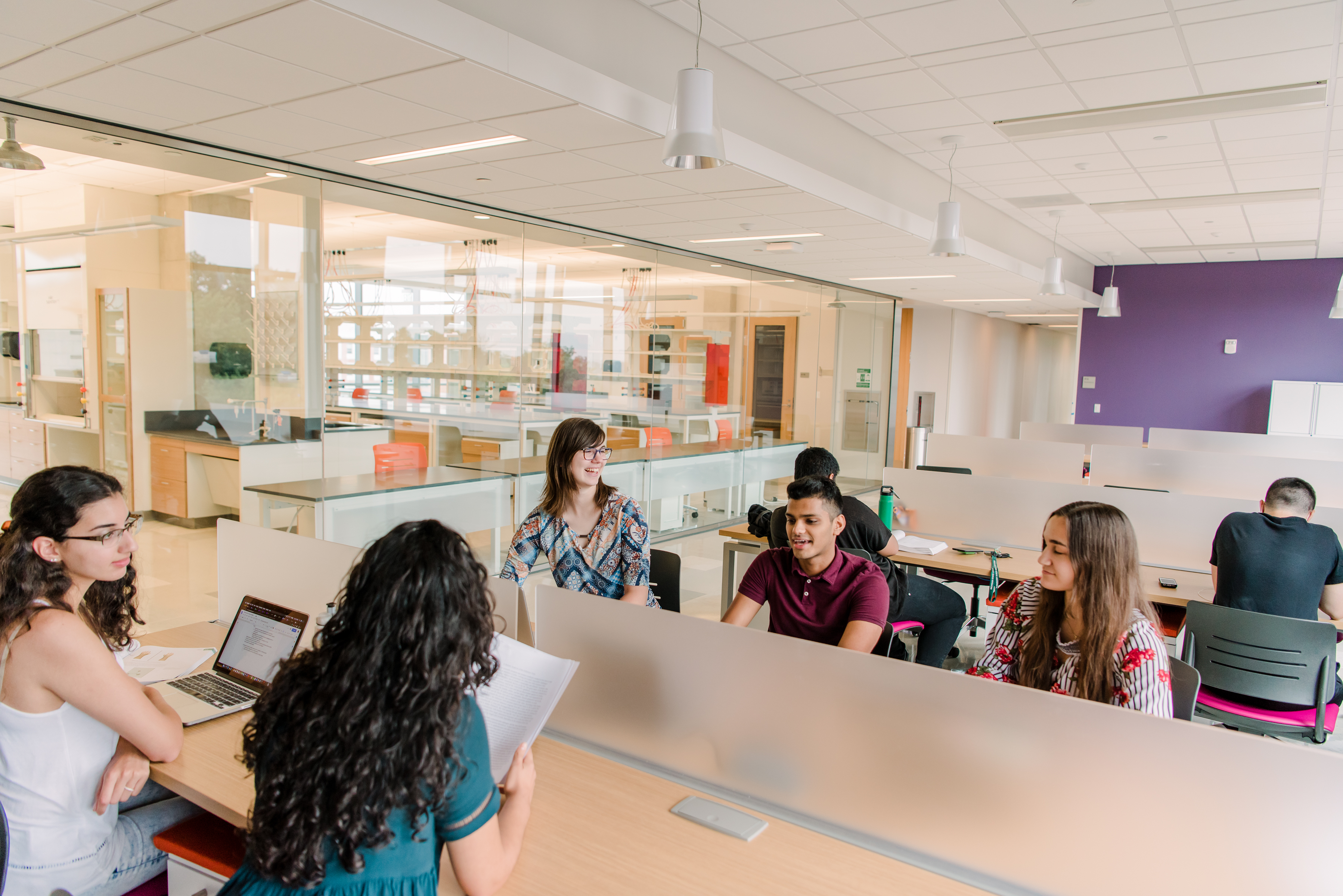
Students study together at UMBC-Shady Grove.
“For many years, Sunil Dasgupta has led our political science program at Shady Grove with inspiration and dedication,” shares College of Arts, Humanities, and Social Sciences Dean Scott Casper. “He will bring wide-ranging experience to the Leadership Montgomery cohort, while developing valuable relationships that enhance our work in Montgomery County.” 

UMBC’s very best

As the cohort kicks off its year of activities, Christopher Steele, vice provost for the division of professional studies, is thrilled for Wayman, Dasgupta, and UMBC. “We are so proud of Dr. Dasgupta and Dr. Wayman for being selected as members of the 2020 Leadership Montgomery CORE cohort program,” he says. “We are hopeful that they are the first of many UMBC colleagues who will participate in this excellent civic leadership program.” 

Steele shares, “These two remarkable leaders perfectly reflect the fact that UMBC offers its very best to Montgomery County.”

Banner image: Sunil Dasgupta, political science, with students at UMBC-Shady Grove. All photos by Marlayna Demond ’11 for UMBC.
Phage Hunters: Popular UMBC research program opens doors to biotech careers

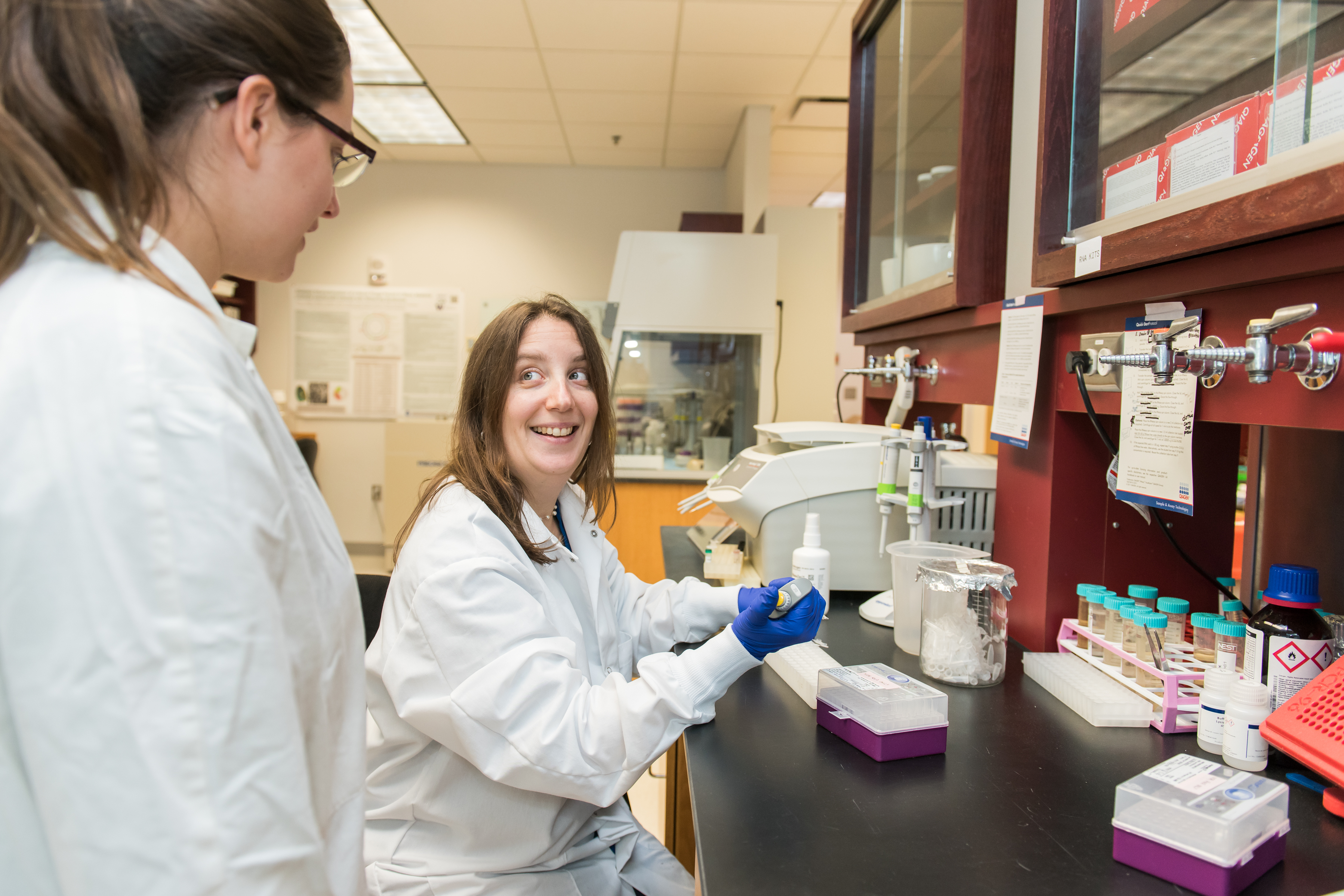
Viet Dang ’18, biological sciences, originally imagined pursuing medical school after UMBC. But when he took the Phage Hunters course to fulfill his genetics requirement, that changed. “The Phage Hunters class really opened my eyes to all the possibilities, and that I could potentially do research,” he says. Today he’s a microbiologist at Adaptive Phage Therapeutics. It’s a biotech company in Gaithersburg, MD that identifies viruses that attack bacterial cells, called phages, that can fight antibiotic-resistant bacteria for patients in need. He works alongside four other recent UMBC alumni, all of whom participated in Phage Hunters.

UMBC’s Phage Hunters program is a two-course series in genetics and bioinformatics. It aims to increase students’ awareness of their life science career options, such as the biotech industry, and give them a taste of investigative research. Launched in 2008 and based on the national SEA-PHAGES program funded by the Howard Hughes Medical Institute, it’s making a difference in helping students see new career choices as real possibilities.

Often, if students realize medical, nursing, dental, or pharmacy school may not be for them, they leave science altogether, says Steven Caruso, senior lecturer in biological sciences and one of the Phage Hunters instructors. But the five alumni now working at APT and others “decided to stay in science,” Caruso says. “We’ve sent them into UMBC’s applied molecular biology master’s program, or into jobs in industry, and I think it’s directly because of this experience.”

Bri'Anna Horne '17 works at Adaptive Phage Therapeutics.
Bri’Anna Horne ’17 works at Adaptive Phage Therapeutics. (Courtesy of Bri’Anna Horne ’17)

Affirming experiences

Unlike Dang, Anna Kawa ’18, biological sciences, was already interested in research when she enrolled in the course. “All you had to do was sign up for the class,” she says, “and you got a spot in a lab doing wet lab work—which was exactly what I was looking for.”

The Phage Hunters experience aligns more closely with a mentored research experience than with a traditional course, as students are given significant freedom to design and complete their projects on their own schedule. The projects involve taking water and soil samples and isolating phages, viruses that infect bacterial cells. Every semester, students find phages that have never been seen before. As the organisms’ discoverers, the students also get to name the phages. At the end of the semester, the class selects a few phages to send out for DNA sequencing.

“The phages become their babies,” says Ivan Erill, professor of biological sciences and the other Phage Hunters instructor. In the bioinformatics course, the students dive into analyzing the genetic sequences resulting from their discoveries in the first semester. They learn more about what genes their critters have, and at the end they submit the full genome to GenBank, a massive online database of genetic information. “I believe it’s kind of cool to be able to go to a party and say you have your very own critter genome published in GenBank,” Erill says.

Building independence

Many of the students who enroll in Phage Hunters don’t have previous research experience. So how do they go from rookies to competent, passionate, independent researchers who spend hours in the lab at a time? It’s all about the support system.

During the lab’s open hours (9 a.m. to 4:30 p.m. every weekday), graduate and undergraduate teaching assistants take shifts to provide guidance. “The TAs really motivated students and provided a safety net for students with questions,” says Marty Lee ’17, biological sciences. Lee later became a TA for the course himself.  

Caruso agrees that the undergraduate TAs are one of the secret ingredients for the program’s success. “The students are much more likely to ask their peer-level TAs questions and get help when they need it. Having them there allows me to interact with more students,” he says.

Viet Dang '18 works in the lab at Adaptive Phage Therapeutics.
Viet Dang ’18 works in the lab at Adaptive Phage Therapeutics. (Courtesy of Bri’Anna Horne ’17)

Beyond learning how to employ common lab techniques used in genetics work, the Phage Hunters students are learning how to ask the right questions, take risks, and troubleshoot: They’re becoming scientists.

“I am convinced that the best thing about the SEA-PHAGES program is the ownership aspect of it,” Caruso says. “The students have to be allowed to carry out their own experiments and fix their own problems. You’re there to help them when they fail, but they have to be allowed to fail.”

One day in the lab stands out for Kawa—a six-hour stretch where she was so captivated by the research, she just kept on working. “It was the happiest day thus far in my college career,” she remembers. “At that point I had thought I wanted to become a researcher and go into biotech, but that day my mind was totally made up, 100 percent. This is what I want to do.”

Collaboration on the cutting edge

With five UMBC alumni at Adaptive Phage Therapeutics, which has a total staff of fewer than 20, “Our UMBC family mentality translated directly into our APT family,” shares Bri’Anna Horne ’17, biological sciences. “Because it’s so small, we work together, and we support each other for every single procedure we’re doing…It’s really great to have a team that you already have a working history with in a professional setting.”

The work itself is as rewarding as the atmosphere. “All the techniques we learned in Phage Hunters directly translate to the work we do in the lab on a daily basis,” says Kawa. And executing those techniques is saving lives. APT is working with the U.S. Navy to create a “phage bank” that can speed up the process of finding phages that can treat antibiotic-resistant bacterial infections in patients who have run out of other options.

“It’s exciting for us, because we’re doing cutting-edge research, and we’re actually saving people’s lives,” says Horne.

Dang feels similarly. “Being on the cutting edge of biotech is really exciting… Just being right there, potentially changing history, is really exciting.”

For Joseph Tewell ’17, biological sciences, the work at APT is more personal. “I got more interested in phages because I’m part Filipino and there are a lot of issues with [access to] medicine in the Philippines,” he shares. “I thought phage therapy might be an interesting way to try to expand medical access in developing countries.”

Joe Tewell '17 uses a chemical hood at Adaptive Phage Therapeutics.
Joe Tewell ’17 uses a chemical hood at Adaptive Phage Therapeutics. (Courtesy of Bri’Anna Horne ’17)
Cool connections

The success of these alumni has resulted in a strong connection between the Phage Hunters program at UMBC and other local biotech companies as well. For example, Julie Norton ’15, biological sciences, M.S. ’16, applied molecular biology, works at Intralytix on Baltimore’s Inner Harbor.

Erill first invited Intralytix staff to give a guest lecture for the Phage Hunters students in 2015. Today, Intralytix and APT both regularly guest lecture and advertise job openings to current students involved with Phage Hunters. Current UMBC alumni employees serve as unofficial recruiters, too.

When she meets with current students in the program, Horne highlights both the career opportunities she’s found in biotech, and the broader range of possibilities in the field. “I really love what I’m doing now,” she says. And that feeling is even more meaningful for Horne knowing that as a highly skilled professional in such a quickly growing technical field, there are now “so many options to explore.”

Learning from Ellicott City

In the aftermath of two “1000-year” floods in three years, can experts, officials, and residents agree on a way to prevent the next big one while preserving this historic town?

By Sarah Hansen M.S. ’15

Ellicott City, Maryland, rests in a steep, narrow valley at the confluence of the Tiber River, its smaller unnamed tributaries, and the much larger Patapsco River. All that water power made it the perfect place to build a mill town—as brothers Jonathan and George Ellicott did beginning in 1772.

The mill town flourished in the 1800s and was the first stop on the Baltimore and Ohio Main Line railroad (the first railroad in the United States) beginning in 1831. Housing and shops quickly sprang up along the winding street to service residents and visitors.

Today, Wilkins Rogers Mills still processes flours and cornmeal on the old site, and the B&O rail station at Ellicott City is the oldest surviving rail station in the United States. It was designated a National Historical Landmark in 1968, and the Main Street area, which retains over 200 historic buildings, was listed on the National Register of Historic Places in 1978.

But while much has stayed the same, much has also changed since Ellicott Mills’ 19th-century heyday. Rather than workaday folk gathering sundries on Main Street, droves of tourists and preservation enthusiasts now stroll the charming byway to patronize boutique shops and cafés.

Or, they used to.

Main Street in Ellicott City is seen from above the day after a flash flood devastated the historic city on the Patapsco River. Photo: Jerry Jackson, permission from Baltimore Sun Media. All rights reserved.

In 2016, and then, extraordinarily, again in the spring of 2018, Historic Ellicott City was ravaged by flash floods that trapped diners in restaurants’ upper stories, saw empty cars and trucks careening down Main Street, destroyed homes and businesses, left debris for miles downstream, and, in total, took three lives.

The events, both dubbed “1000-year floods” in the media, have left residents and business owners with the tough decision to stay or go. The Howard County government is faced with a dilemma, too: Ellicott City is a popular attraction and has been an economic powerhouse in the county for decades. But when storms come, as they inevitably do, it becomes very dangerous, very quickly.

The floods are changing

“Ellicott City was put there for a reason, to take advantage of water power,” says Andrew Miller, professor of geography and environmental systems. “Therefore, nobody should be surprised that water power is a potential hazard.”

Faculty in UMBC’s geography and environmental systems (GES) department have been studying the local watershed for years. Miller has a particular interest in the role floods play in shaping stream channels and the local ecosystem. Matthew Baker studies watershed ecology and has been deeply involved with the removal of a dam just downstream from Ellicott City. Jeffrey Halverson is a regular contributor to The Washington Post, where he explains the mechanics of regional storm systems for the general public.

Miller says the dam project and flooding studies provide unique opportunities to study aspects of stream ecology, such as sediment movement, from interesting angles. “It’s very rare to have a research project that falls into your lap that’s two miles from your office,” he says, “and to have multiple research projects within two miles of your office intersect with each other is even more unusual.”

Flooding in Ellicott City is nothing new. One of the worst floods was in 1972, when Hurricane Agnes caused the Patapsco River to overflow its banks by 14.5 feet and fill the lower end of Ellicott City’s Main Street. This was a flood “from the bottom up,” explains Halverson. Most of the town’s previous flooding events have happened in a similar fashion—a massive rainfall event deluges the entire region, and the river slowly rises until it can no longer contain the water. Crucially, residents have plenty of time to evacuate in these storms.

Flood waters on Main Street in Ellicott City, 1972. Photo from the Howard County Historical Society.

But the 2016 and 2018 floods were different. Rather than heavy rain everywhere over an extended period, forecasters predicted potentially devastating, shorter-term rainfall at a hyper-local level in both storms. “But there was never any attempt to localize the storm down to the county or sub-county level,” wrote Halverson for Weatherwise. Why? “Our ability to do so is practically non-existent.”

As a result, when the deluges hit Ellicott City in 2016 and 2018, “people barely had time to get to the second floor of the restaurant,” Miller says.

[rara_call_to_action title=”” button_text=”Read More” button_url=”https://umbc.edu/a-timeline-of-resilience-in-flood-prone-town/” target=”_blank” button_align=”center”]A Brief History of Major Ellicott City Floods[/rara_call_to_action]

“It’s not just the rain that makes a flash flood, it’s also the terrain and the nature of the landscape,” Halverson wrote. Considering this, other changes since the 19th century come into play. Ellicott City has become a highly desirable place to live, and suburban development now sprawls in all directions from Main Street.

Development means more impervious surfaces—roads, rooftops, driveways, patios—and impervious surfaces make it harder for a landscape to absorb rainfall. So, in the 2018 flood, when the center of the storm was a bit upstream from Ellicott City, Halverson wrote, “the torrent of stormwater runoff cascaded downslope into the topographic bowl of the town, flooding it from the top down.”

The floods are “an example of effectively a small tributary watershed ‘wagging the dog,’ making the entire Patapsco River flood before the rest of the drainage area contributed,” says Baker.

In both floods, “upslope development undoubtedly made things worse,” Miller says, but isn’t fully to blame. These events “would have exceeded any kind of storm water management that you could have put in,” he says.

Because of the way heavy rainfall on a small section of the watershed can cause severe flash flood events, Baker says, “the Patapsco River is now behaving much more like an urban river…than its general land use would suggest.” Why is less clear. It could be increasing development, or it could be changes in rainfall patterns influenced by climate change. More likely, it’s a combination of both as well as other factors.

What to do?

The local government is grappling with what to do with this beloved—and sometimes deadly—section of town. They commissioned the McCormick Taylor Report to provide a menu of options that could keep the town safe in future events similar to 2016 and 2018 while keeping the town as-is. The recommendations included $35 million in immediate improvements, plus $60 to $85 million more for longer-term projects. It’s hard to imagine anyone being willing to spend that much to protect such a small parcel of property. The plans included everything from “pipe farms” underground to store storm water until it could be released more slowly, to tunneling through bedrock to create a pathway for water through town that wouldn’t disturb the street above.
In September 2018, the county government announced a plan that would involve removing up to 10 of the historic buildings to take people out of harm’s way and improve water flow for the next major flood. The public outcry was swift and powerful, and no demolition has occurred.

[rara_call_to_action title=”” button_text=”Read More” button_url=”https://umbc.edu/an-ounce-of-prevention/” target=”_blank” button_align=”center”]UMBC Experts Discuss Preventing Future Floods[/rara_call_to_action]

Most UMBC scientists prefer not to engage in local politics, but based on their work, they can inform conversations on what the county should consider as they’re making decisions. In the days immediately following both storms, Miller and Halverson were in high demand with the news media. One question that kept coming up was whether another storm of this strength could happen again, and when.

Miller is currently working on a paper using evidence to make the case that “it’s an extraordinary event, but it’s not as extraordinary as we think it is. There’s some evidence, although right now it’s not completely conclusive, that we are seeing greater frequency of large floods,” says Miller. “So you cannot assume something like this just won’t happen again.”

Parts of Main Street are returning to life in summer 2019. Many stores remained shuttered. Photo by Marlayna Demond '11.

In its current state, “There’s not enough room for Main Street and the river—that’s why the river flows underneath,” explains Miller. “It’s a pipe dream that you can just make this problem go away.” In fact, dealing with the danger of water is a challenge that will only get worse as climate change leads to more strong storms and rising seas. “This is a microcosm of the much bigger problem that we face on a massive scale in this century,” Miller says.

As a local and a hydrologist, Baker sees both sides of the argument. “I appreciate the historic nature of the community, and I think something would be lost if they tore all those buildings down. At the same time, I can understand why any administrator would want to minimize the risk of loss of life, so that’s totally reasonable as well,” Baker says. “I don’t think there’s a real clear solution here, it’s just a value judgment that people have to decide what is most important in this situation.”

And so, the debate rages on. In the meantime, visitors continue to stroll, shop, and snack at the bright and cheery storefronts along Main Street, albeit in reduced numbers. Some establishments, however, remain shuttered, and storm damage is still visible through dirty windows. The contrast reinforces the fragility of this charming historic oasis, reminding tourists, scientists, and public administrators alike what happened here, and what could happen again.

How the community chooses to proceed is still uncertain, but one hopes the expertise of elected officials, scientists, and the public will all be brought to bear in a way that keeps people safe and allows Ellicott City—in whatever form it eventually takes—to thrive for years to come.

****

Header photo by Mark Baxter @SkySightVIP

CNMS celebrates a year of growth in partnerships to support student success

When Bill LaCourse became dean of UMBC’s College of Natural and Mathematical Sciences (CNMS) in 2012, he had three top priorities in mind: innovate undergraduate science education to boost learning outcomes, forge new partnerships, and develop and support a diverse group of faculty. This year, the college took several steps forward in realizing this vision.

“The college has laid the foundation, and now is really in a strong position for growth,” LaCourse says. “It’s all about paying attention to the people and their needs,” he explains, so faculty, staff, and students can do their best work and create a thriving community together.

Student success at the center

This year, CNMS received a $1.4 million grant from the National Science Foundation for Improving Undergraduate Science Education. Faculty at UMBC and community college partners will use the funding to improve the undergraduate experience in biology—the major of one in six UMBC students. This includes focus areas like enhancing the alignment of curriculum across institutions and making sure advising meets the needs of transfer students, both before and after they come to UMBC.

The CNMS Active Science Teaching and Learning Environment (CASTLE) is a classroom designed for team-based instruction. It has tables to facilitate group work, devices set up for screen sharing with large screens at the front and back of the room, and walls covered with whiteboards.

“We’re building community, trust, and relationships with the community colleges,” LaCourse says, and that has huge benefits for students.

The Active Learning Inquiry Teaching (ALIT) certificate offered to UMBC STEM faculty is another growing partnership focused on supporting students. It includes CNMS, the College of Engineering and Information Technology, the Faculty Development Center, and CNMS’s Building Infrastructure Leading to Diversity (BUILD) program. To earn the ALIT certificate, faculty attend a series of workshops on teaching in an active learning style, which has been shown to more effectively engage students and boost performance. They also participate in a teaching observation and other activities.

Initiatives like the Science and Mathematics Advising Resource Team (SMART) are also coming into full swing now. “The program formalizes the relationship between pre-professional advisors, CNMS advisors, and faculty advisors,” explains SMART director Michelle Bulger. “Everyone knows a little about everything,” so no matter which resource they start with, students get the support they need to find their best path through UMBC and into a career.

Celebrating student pioneers

The UMBC STEM BUILD program reached an exciting milestone this academic year: graduating its first program participant, Alexis Waller, in December 2018. Additional BUILD students earned their degrees in May 2019.

BUILD Trainees Ashley Majekodunmi ’21 (center left) and Avantika Krishna ’21 (center right) work in the lab with their faculty mentor, Weihong Lin (right).

BUILD is a CNMS initiative funded by the National Institutes of Health. It is designed to help UMBC learn best practices for engaging large numbers of students in mentored research and other practices that support student success in STEM. At some institutions, mentored research experiences are reserved for a select few, often in scholars programs. At UMBC, faculty and staff are actively working to make research accessible to all students.

Three students just became the first to complete another new path through UMBC. Just one day after graduating from UMBC, they were commissioned as officers in the U.S. military. CNMS administers UMBC’s Naval science department, which supports the Naval Reserve Officer Training Corps (NROTC) program. UMBC’s NROTC program was the first of its kind in Maryland when it was launched in 2015.

This spring, ENS Ghazi Nazzal ’19, business technology administration, and ENS Ryan Simpson ’19, environmental science, were commissioned as officers in the U.S. Navy. 2nd Lt Benjamin Dunlap, modern languages, linguistics, and intercultural communication, was commissioned as an officer in the U.S. Marine Corps.

“We’re proud to have them on campus,” says LaCourse, who has a family history of Navy service.

Ghazi Nazzal ’19 (right) assists another midshipman in using UMBC’s state-of-the-art virtual reality naval training system.

Connecting every angle

One of the most exciting CNMS partnerships emerging this year—with the potential to significantly impact students and employers in the region—has a complex name: the Translational Life Science Technology (TLST) program. The program focuses on preparing UMBC students at the Universities at Shady Grove for careers in Montgomery County’s rapidly growing biotech industry. TLST is UMBC’s first undergraduate STEM program at Shady Grove, and this year welcomed its first students.

With this program as well as the professional master’s degree in biotechnology, CNMS is pioneering UMBC’s expansion at the Shady Grove campus to serve the over one million people in Montgomery County,” says Annica Wayman ’99, M6, mechanical engineering, the new associate dean for Shady Grove affairs for CNMS.

Dean Bill LaCourse (left), Annica Wayman ’99 (right), and some of the first students in the TLST program.

LaCourse sees the new program as the beginning of “a new way of working with Shady Grove.” He shares, “It puts us in a position to bring applied STEM programs to the doorstep of businesses in Montgomery County.”

Constructing collaboration

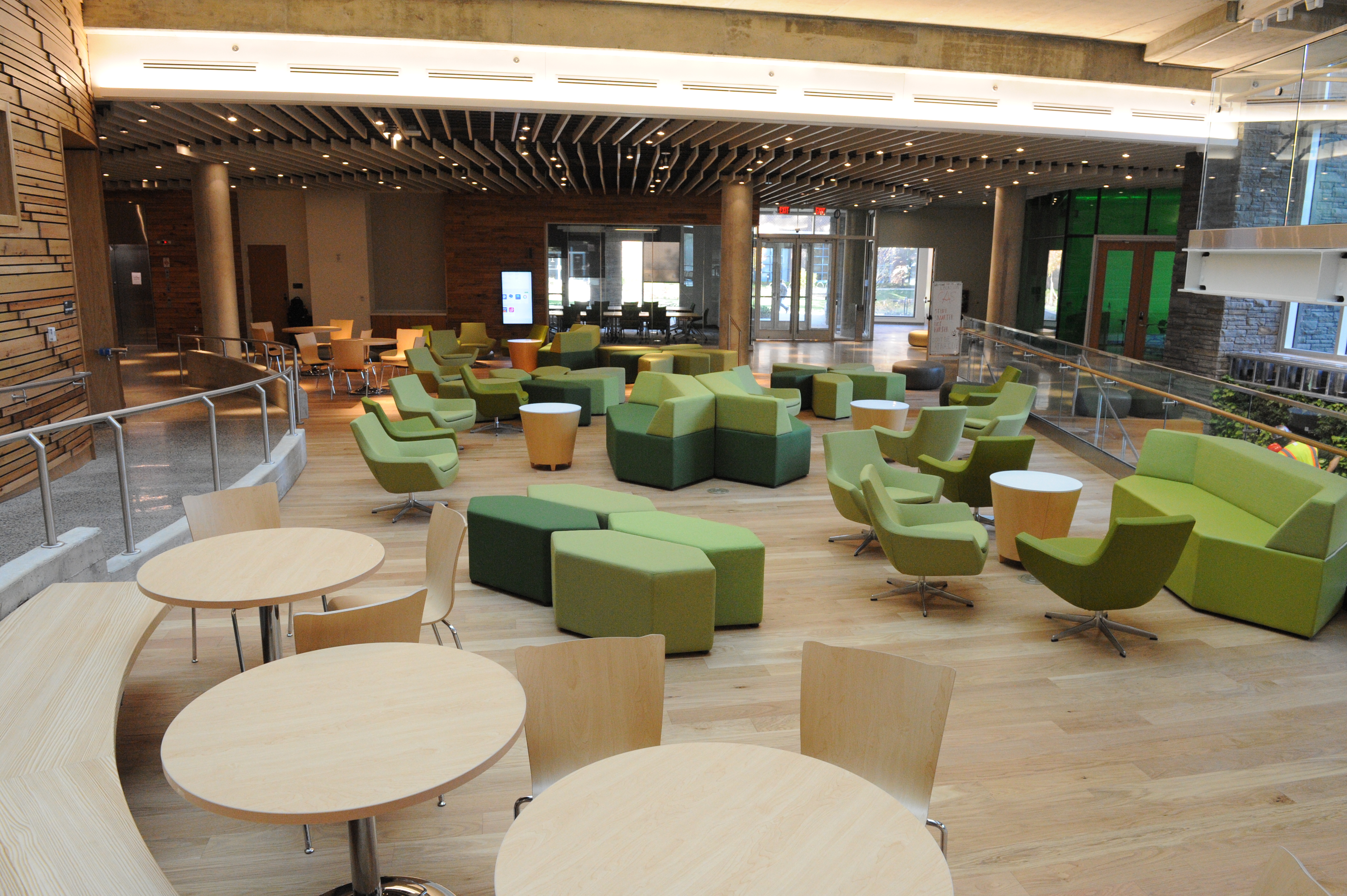
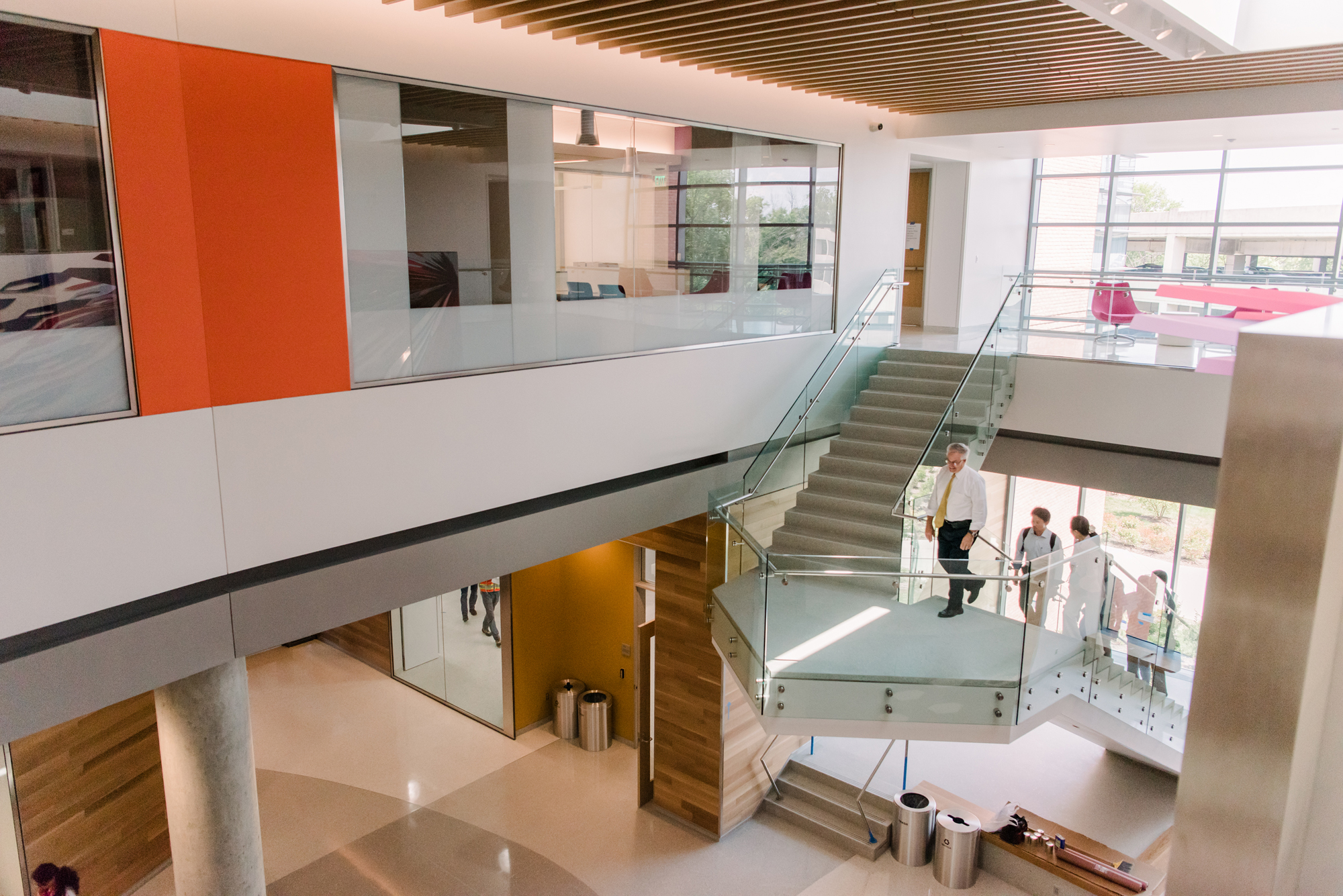
Perhaps the most visible representation of the college’s commitment to forging partnerships is the Interdisciplinary Life Sciences Building (ILSB), now in the final phases of construction. It will open for classes in fall 2019.

The building includes spacious and bright teaching labs, open faculty laboratory space that promotes collaboration, and classrooms designed for active teaching and learning. Unlike other buildings on campus, faculty who wish to conduct research in the ILSB must propose interdisciplinary projects to be completed there, and the lab spaces are designed to facilitate a variety of kinds of work equally well, from genetics to environmental engineering.

An artist’s rendering of the completed Interdisciplinary Life Sciences Building.

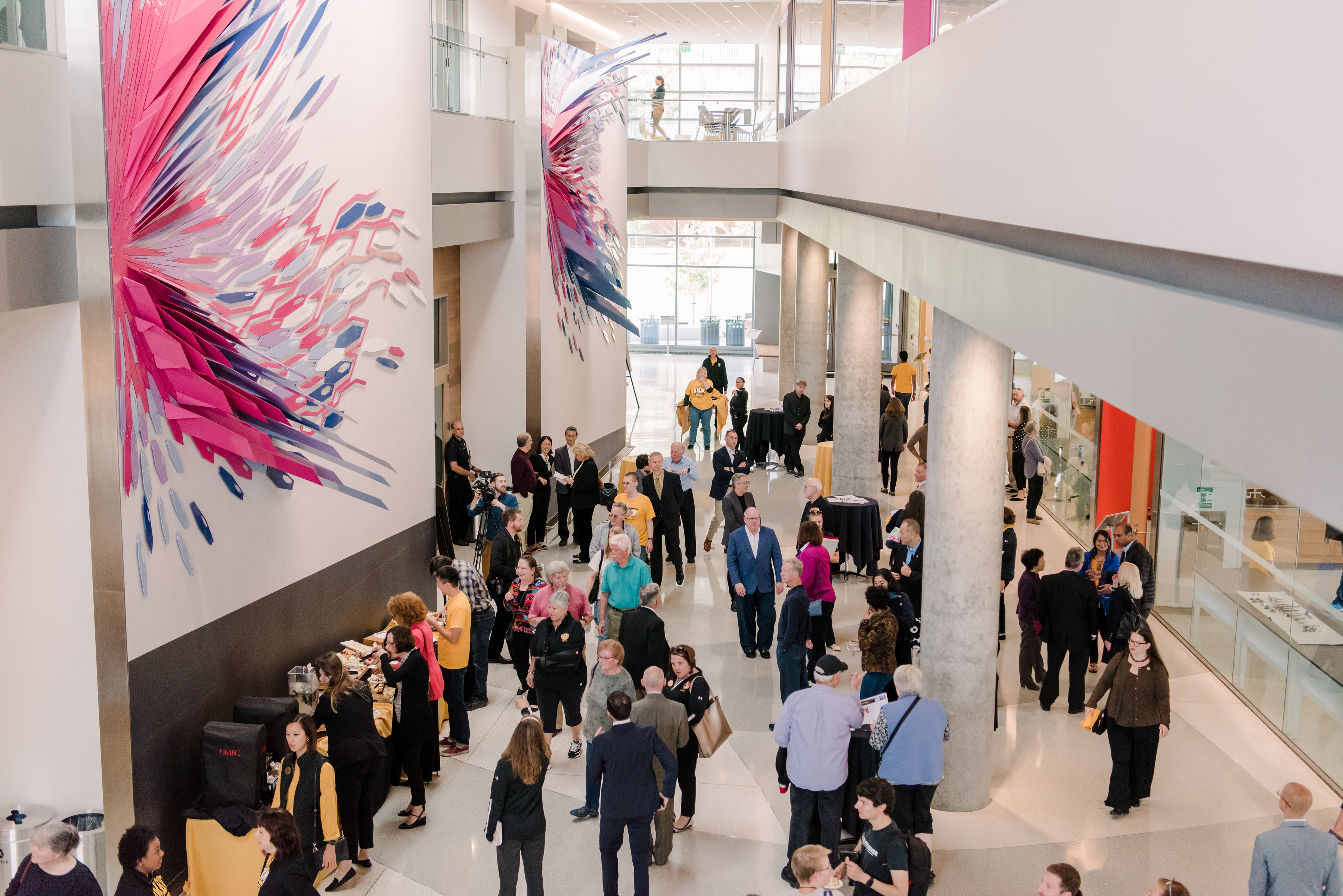
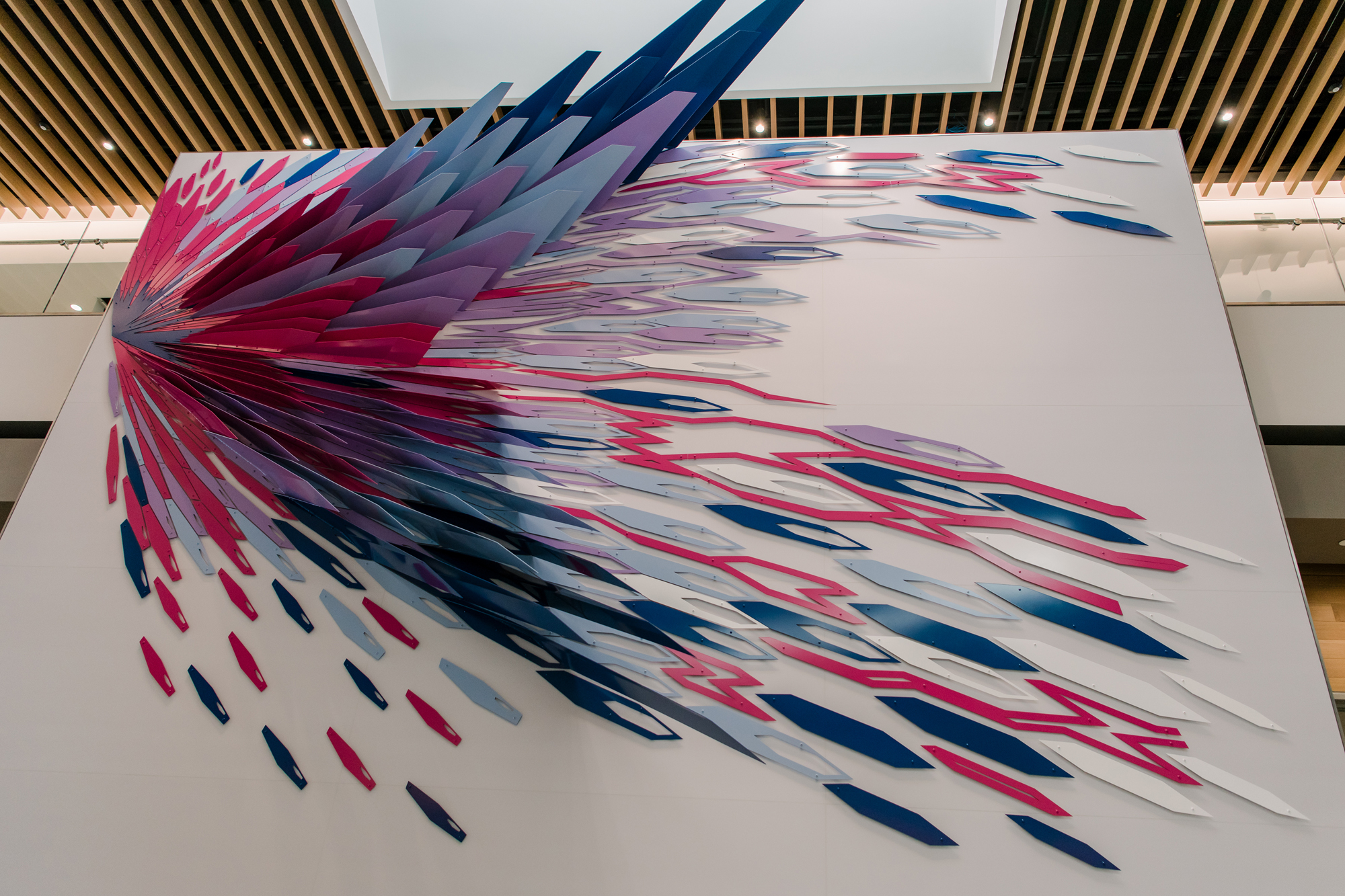
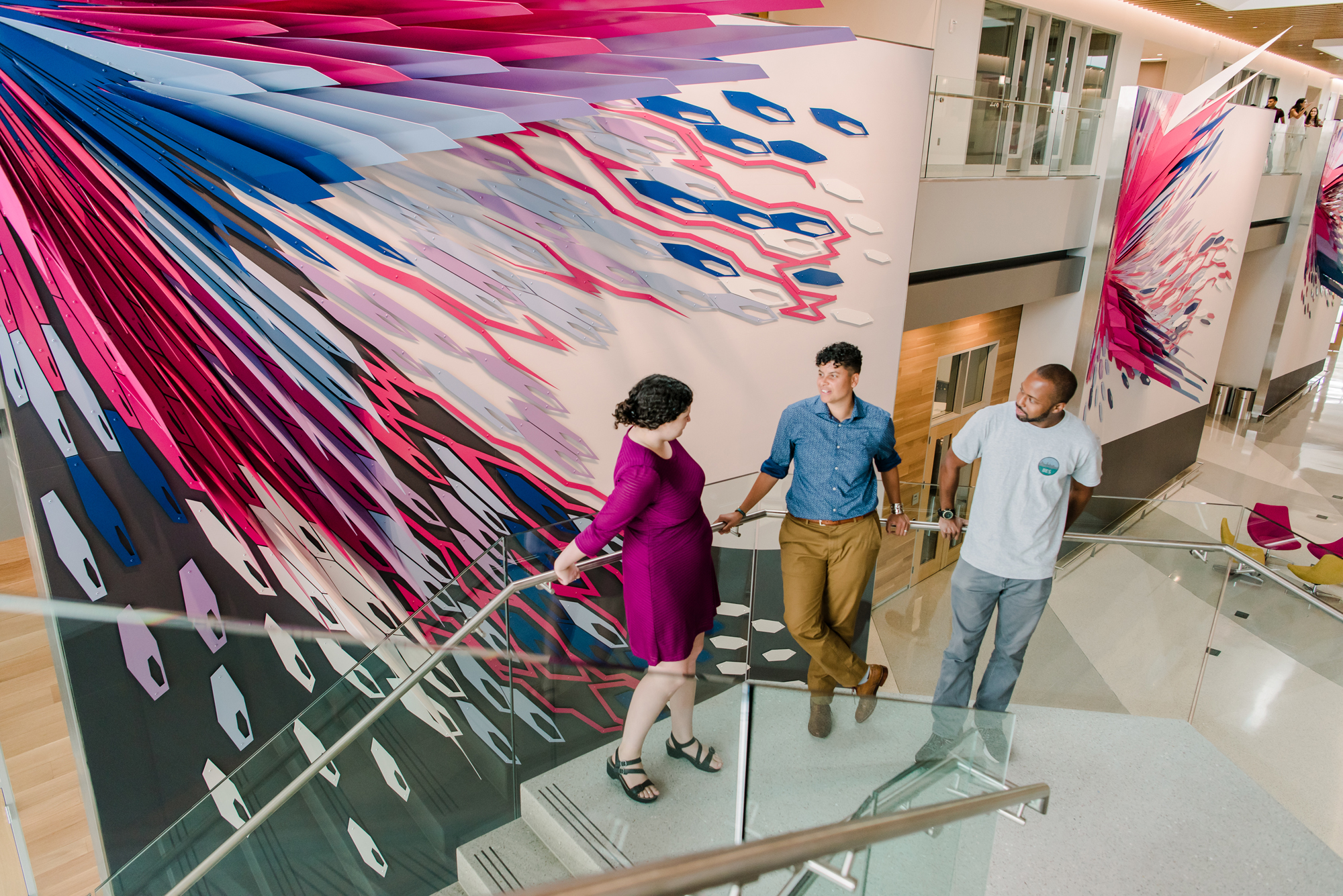
The new building will also house UMBC’s second Maryland Public Art installation: a colorful sculpture that emerges from a large wall and features abstractions of elements found in UMBC research, from bird flight to microscope images of individual cells.

The ILSB is open for use by any department on campus, and is administered by CNMS. “It’s exciting for me to be involved in the operations of the ILSB,” says building manager Dennis Cuddy. “It will be a transformative facility and allow UMBC scientists and students to do important work and cutting edge research in a flexible, state-of-the-art facility.”

Josh Wilhide, manager of UMBC’s Molecular Characterization and Analysis Complex, is particularly excited about new research equipment in the ILSB. One instrument will streamline the process of generating information about the proteins in a sample. It will be “used for drug discovery and genetic exploration for researchers ranging in fields from chemistry to biology to engineering,” Wilhide says. “The ILSB truly is a building designed to drive multi-discipline research.”

Faculty forward

CNMS has also made significant structural changes in the last year to better recruit and support a diverse faculty, and to enhance advancement opportunities and research support for faculty at every level. In addition to Wayman’s new role as associate dean, Kathleen Hoffman, professor of mathematics, now also serves as the CNMS associate dean for faculty advancement. Chuck Bieberich, professor of biological sciences, serves as the associate dean for research.

CNMS Associate Dean for Research Chuck Bieberich

“Our college has a strong history of performing cutting-edge research. However, in recent years, the federal funding climate has created new challenges for even the most seasoned researchers,” Bieberich says. “So one dimension of my role as associate dean is to connect our faculty, both newly hired and long-serving, with resources that can increase the likelihood of funding success.”

Hoffman has been supporting faculty advancement, particularly for women in science, for years. She was a key player in developing UMBC’s ADVANCE program, an initiative funded by an NSF Institutional Transformation Grant in 2003 that has led to a 60 percent increase in the number of women faculty in STEM. At a more granular level, ADVANCE has led to a 75 percent increase in women at the associate professor level and a 140 percent increase at full professor.

CNMS Associate Dean for Faculty Advancement Kathleen Hoffman

As of fall 2018, 24 percent of faculty in STEM at UMBC are women, which shows both how much progress has been made and how much growth is still needed.

“In this position, I will support CNMS faculty through college-wide workshops and initiatives focused on faculty success,” Hoffman says. She adds that she and Bieberich “will ensure that CNMS faculty have the support they need to fulfill their potential as faculty members in their departments, in the college, and as members of the university community.

Diversity drives success

This year, CNMS hired two more pre-professoriate fellows. The fellows program is designed to enhance the diversity of CNMS faculty to better reflect the college’s diverse student body and actively welcome faculty who prioritize the value of diversity. Adriana Lima will join physics, and Joseph Bennett will join chemistry and biochemistry.

The biological sciences department led the way with this program, having previously hired Fernando Vonhoff and assistant professor Mercedes Burns. Mathematics and statistics followed with the hire of Yehenew Kifle, who had previously spent a year at UMBC as a visiting professor. Vonhoff and Kifle will successfully convert to assistant professors in August 2019.

Arachnologist and evolutionary biologist Mercedes Burns (right) and her postdoc, Sarah Stellwagen, transfer a harvestman (commonly known as daddy-long-legs) between them.

“We want to make sure that UMBC can be a good home for faculty from all backgrounds,” says LaCourse. The pre-professoriate program offers incoming faculty two-year appointments as research assistant professors, with structured mentoring and other scaffolds for success. There is the option to convert the fellowship to an assistant professor position.

This year UMBC also partnered in the launch of the PROMISE Academy. This new initiative will draw on the expertise of universities around the nation and evidence-based best practices to recruit and retain a diverse group of faculty members in STEM fields.

With the 15th anniversary of its formation just one year away, “CNMS is coming into its own,” LaCourse says. “We’re ready to move to the next level.”

Banner image: CNMS pre-professoriate fellow Fernando Vonhoff works in the lab with Abby Cruz ’18.

All photos by Marlayna Demond ’11 for UMBC unless otherwise noted.

UMBC’s Jeff Leips receives NIH grant to explore how genes affect immune system function as we age

As we age, our immune systems don’t work as well as they did when we were younger. That phenomenon is called immunosenescence, and it’s not exclusive to humans. The decline of the immune system with age has been found in every organism scientists have tested. But why does it happen? And why do some individuals age more quickly than others? While factors like our diet, exercise level, and the air and water quality where we live play a role in our long-term health, so do our genetics, says UMBC’s Jeff Leips.

With funding from a new National Institutes of Health grant, Leips, professor of biological sciences, is on a mission to identify genes that play a role in the decreasing efficacy of the immune system with age. The fourth-leading cause of hospitalization among the elderly is an infection that their immune system can’t handle on its own, Leips says, and being hospitalized poses its own risks, “so it’s a big problem.”

Leips’s lab uses Drosophila, or fruit flies, to study the genetic basis of aging across a range of traits, from immune system function to walking speed, endurance, and strength. While it may seem strange to use an organism so different from us, “We know many aspects of the innate immune system in Drosophila—a lot of the signaling pathways—are conserved between flies and humans,” he explains. “So the idea would be to identify candidate genes that we could then test for their effects on human immunosenescence.”

The grant will allow Leips and his team of students to compare how quickly 200 different strains of flies, each with a unique genetic makeup, can clear an identical infection. Within each strain, the lab will test at least 20 flies of different ages. All the strains they’ll use have already had their entire genome sequenced, so “we can associate differences at the DNA level with differences in their ability to clear infection,” Leips explains.

With the extensive sequencing and ease of raising flies in the lab, “If you want to know something about basic biology, in an aging context, there’s arguably no species that’s this good.”

Focusing on the first step

Vertebrates, including humans, have a two-stage immune response: innate and adaptive. The adaptive system is the one that “remembers” being infected with a disease, which is what makes vaccines work. Leips is focusing on the innate response, which researchers know less about. The two systems interact in vertebrates, but flies only have an innate system.
“In invertebrates, we can look at effects on the innate system without the complications of the adaptive component feeding back into it,” Leips says. “It’s a simpler system, and maybe more useful.”

The innate immune system also comes in two stages. In the first stage, circulating blood cells engulf bacteria or other invaders and destroy them. If needed, the organism’s innate immune system activates stage two and deploys antimicrobial proteins to tackle the problem. Leips will focus specifically on the first stage, called phagocytosis, “because that’s the first thing that happens,” Leips says. “It’s only if that system is overwhelmed that the antimicrobial proteins respond.”

A tricky technique

Leips and Michelle Starz-Gaiano, associate professor of biological sciences, worked together to develop an imaging technique that allows them to count the number of bacteria swallowed by a fly’s blood cells. Using this method, “We can compare the ability of different genotypes to engulf bacteria across different ages,” Leips explains.

When they found that older flies had more bacteria in their cells, it came as a surprise. But even phagocytosis has multiple stages: the cells must swallow the bacteria, and then digest them. When Leips and Starz-Gaiano injected the flies with microscopic, non-digestible beads, they found that old and young flies had the same number of beads in their cells.

“We think the reason the old cells have many more bacteria in them is because the bacteria are accumulating in the cells, but not being processed,” Leips says. As part of the new grant, they’ll look at genes that might affect how the bacteria are trafficked into the cell and how it digests them.

Thinking big

This work is one of many projects in Leips’s lab. Another involves collaborating with Peter Abadir at Johns Hopkins University to see how flies with different genetic material respond to human medications for high blood pressure.

There’s evidence that some human patients (but, notably, not all) experience improved strength and endurance on these medications in addition to lower blood pressure. Leips and his colleague would like to know if differences in how people respond to these medications are genetically driven. If so, the findings could lead to more precise personalized medicine.

“We’d like to be able to identify genes that would predict if you’re going to respond in a positive, negative, or neutral way to a drug,” Leips says. “We’ve gotten some really cool results.” They found that flies respond to the drug even though they don’t have a circulatory system. They do have the same genes that the drug targets, he says, “which means effects of the drug on these traits might be through some other mechanism.”

With his new NIH grant, Leips says, “Ideally, I want to understand the mechanisms—what goes wrong with age and immunity? Once we know that, the next question is whether we can find ways to try to ameliorate the effects of aging on those traits.”

Leips hopes the research will provide data that will fuel future work on aging and immunity with implications for human health. “Getting sick is one of the worst things that happens to people,” he says. “So if you can minimize that when you’re old, it’s going to improve your quality of life. And that’s really what the lab is all about.”

Banner image: Jeff Leips works in the lab with students at UMBC for summer research through the UMBC STEM BUILD program. From left to right: Moriah Thompson, Anne Arundel Community College; Teiona Sanders, Morgan State University; and Bolutife Baiyewu, Morgan State University. 

All photos by Marlayna Demond ’11 for UMBC.

UMBC’s Hua Lu works to decode plant defense system, with an eye on improving farming and medicine

UMBC’s Hua Lu, professor of biological sciences, and colleagues have found new genetic links between a plant’s circadian rhythm (essentially, an internal clock) and its ability to fend off  diseases and pests. The findings were 10 years in the making and published in Nature Communications this week. The results could eventually lead to plants that are more resistant to disease-causing pathogens and better treatment for human diseases.

“It’s quite cool,” Lu says, “because, in both plants and animals, people are beginning to study the crosstalk between the circadian clock and the immunity system.”

Timing is everything

In response to daily attacks from bacteria, fungi, and other pests, plants have evolved various strategies to protect themselves. Plants may close their stomatasmall openings in the waxy coating on their leavesto prevent entry by some bacteria. They might produce chemicals such as salicylic acid and  jasmonic acid to repel bacteria and insects. They also make a large number of proteins that are important for successful defense.  

Actions like closing stomata, producing salicylic acid, and more happen on a daily schedule, often peaking at the times when certain pathogens and pests are most likely to be active. The rhythmic nature of plant defense suggests plants are coordinating their internal clock with their defense system to increase the effectiveness of their defensive actions.

In this study, Lu and colleagues found for the first time that LUX, a central gene in the plant circadian clock, is important for regulating the opening and closing of the stomata at specific times of day, and also for activating defense mediated by salicylic acid and jasmonic acid.

In a typical plant, the stomata open during the day, to enable exchange of gases required for photosynthesis. Then they close at night, to prevent water loss. The stomata also close in response to daytime pathogen attacks. They respond minimally to an attack at night, because they’re already closed.

However, in plants with a non-functional version of the LUX gene, Lu found that the stomata are open both day and night. During a daytime attack, the stomata stay open wider than normal plants. During a  nighttime attack, though, some of the stomata close. This means that plants lacking a functional LUX gene have less control over when their stomata open, allowing more opportunistic pathogens to get in. This distinction indicates that LUX is critical for the timing of the stomata-driven defense response, tying defense to the circadian clock in a new way.

Lu’s research also dives into the relationship between the LUX gene and the defense chemicals salicylic acid and jasmonic acid. While it was known that the circadian clock can regulate defense responses, this paper shows that the reverse is also true: “A properly tuned circadian clock is important for defense activation. When defense is activated, it then can feed back to regulate the circadian clock,” Lu says.

The research team specifically showed that the presence of LUX is needed for normal jasmonic acid signaling. In turn, jasmonic acid also affects expression of LUX and the circadian clock. This reciprocal regulation between the circadian clock and defense signaling helps plants balance their energy use for normal growth and development and defense responses.

From farms to pharma

Lu is interested in pursuing further research to figure out how timing influences the plant defense system. How does the circadian clock affect multiple aspects of defense responses? What molecules from pathogens and pests interfere with a plant’s circadian clock and subsequently limit its ability to protect itself? Better understanding how clock genes control plant defense and how pathogens interact with plant defense systems could benefit agriculture and beyond.

“Pathogens are everywhere all the time. Often the most active form of a pathogen varies during a day. Also, plants could have different defense strategies at different times of day,” explains Lu. “So, when is the best time to apply pesticides? That could depend on the pathogen, its infection mode, and the behavior of your crop plants. I think that field tests are needed to figure out the best time to apply chemicals to achieve the most efficacy in preventing infection or the spread of infection.”

Less pesticide use overall would reduce runoff of chemicals into waterways and lower costs for farmers. Reduced use of antibiotics could help stem antibiotic resistance, which would benefit humans, too.

Plus, plants aren’t the only ones whose immune system activity fluctuates throughout the day. Animal systems also have daily cycles. So, “similar ideas can be applied to the medical field,” Lu says.

There are similarities between the ways plants and animals interact with their pathogens and pests at the molecular level.  Maybe in the future, your prescription will come with specific timing instructions, or your surgery will be scheduled based on your immune system activity.

Science in action

Lu says all of her research, and this multi-part paper in particular, is driven by her lab members. “It’s great to work with this many dedicated people,” she says. “Without them, I couldn’t do it.”

That includes postdoctoral fellow Chong Zhang, who is now employed by the USDA, and current postdoc Min Gao, who are co-first authors on the new paper. Five undergraduate students and a high school student also contributed to this long-term project. Some of the experiments required testing every four hours over a 24-hour period, which meant someone was sleeping on a couch in the lab when they were underway.

Overall, Lu’s team members are driven by the potential benefits their work could contribute to society. They are excited by the prospect of improving crop yields to feed a growing population, reducing  pollution, or reducing side effects for human medical treatment through improved timing and dosing.

“This field interests me because I can see my work have some practical applications, and I think that’s important,” Lu says. “That should be every scientist’s goal—to use your knowledge in real life.”

Banner image: Jessica Allison, a graduate student in Hua Lu’s lab (left); Linda Wiratan ’19 (center); and Hua Lu. Photos by Marlayna Demond ’11 for UMBC.

UMBC’s Sarah Stellwagen first in world to sequence genes for spider glue

Today in Genes, Genomes, Genetics, UMBC postdoctoral fellow Sarah Stellwagen and co-author Rebecca Renberg at the Army Research Lab published the first-ever complete sequences of two genes that allow spiders to produce glue—a sticky, modified version of spider silk that keeps a spider’s prey stuck in its web.
The innovative method they employed could pave the way for others to sequence more silk and glue genes, which are challenging to sequence because of their length and repetitive structure. Better understanding of these genes could move scientists closer to the next big advance in biomaterials.

Sticky solutions

Spider silk is what spider webs are made of, and it’s been touted for years as the next big thing in biomaterials because of its unusual tensile strength combined with its flexibility. There are more than 45,000 known species of spiders, each of which makes between one and seven types of silk. However, despite many partial sequences, less is known about the full genetic structure of spider silk: Only about 20 complete genes have been sequenced. “Twenty pales in comparison to what’s out there,” Stellwagen says.
Plus, spider silk has proven tough to produce in large amounts. Spiders convert liquid blobs of silk into solid, spindly fibers in a complex process inside their bodies. Scientists can make the liquid, but “we can’t replicate the process of going from liquid to solid on a large industrial scale,” Stellwagen says.

Sarah Stellwagen with her pet baby orange-kneed tarantula.

Spider glue, however, is a liquid both inside and outside the spider. While the glue “does have its own challenges,” Stellwagen says, that difference might make spider glue easier to produce in a lab than silk.
Stellwagen sees great potential for spider glue applications as organic pest control. After all, she says, “This stuff evolved to capture insect prey.”
For example, farmers could spray the glue along a barn wall to protect their livestock from insects that bite or cause disease, and then could rinse it off without worrying about polluting waterways with dangerous pesticides. They could use glue similarly to protect crops from pests. It could also be applied in areas where mosquito-borne illnesses are prevalent. “It could also just be fun to play with,” Stellwagen says.

A “behemoth of a gene”

Before Stellwagen and Renberg’s work, which was funded by the Army Research Lab, the longest silk gene sequenced was about 20,000 base pairs. When she started this project, Stellwagen was expecting to sequence the glue genes quickly and then move on, building on what she learned from the sequence. Instead, it took her and Renberg two years just to finalize the sequence.

Ph.D. student Tyler Brown and his (and Stellwagen's) advisor Mercedes Burns, assistant professor of biological sciences, conduct genetic testing on harvestmen DNA. Harvestmen (often called "daddy-long-legs") are close relatives of spiders.
Ph.D. student Tyler Brown and his (and Stellwagen’s) advisor Mercedes Burns, assistant professor of biological sciences, conduct genetic testing on harvestmen DNA. Harvestmen (often called “daddy-long-legs”) are close relatives of spiders.

“It ended up being this behemoth of a gene that’s more than twice as large as the previous largest silk gene,” Stellwagen says. It was a long, hard road to the day she found Renberg in the lab and said, “I think our gene is 42,000 bases long. I think we finished it.” And in the end, it was taking a risk on a cutting-edge technique that finally yielded the complete sequence.
Not only was the gene exceptionally long, but, like spider silk genes, it has many repetitions of the same sequence of bases—A, T, G, and C—in the middle. Modern sequencing techniques (called “next generation sequencing”) work by generating DNA sequences for all of an organism’s genes, but chopped up in little pieces. Then, like solving a puzzle, scientists must match up the overlapping ends of the short sections to determine the entire sequence.
However, if your gene is repetitive, you need a single sequence, or “read,” that extends from before the repetitious region to beyond the end to know how many repetitions there are. If your repetitious section is long, as it is in the glue genes Stellwagen and Renberg studied, the chance that you would get the read you need with next-generation methods is slim.

Sarah Stellwagen discusses spider biology with Tyler Montgomery '20, biochemistry and biological sciences, and Genevieve Ahearn '19, biological sciences and environmental science.
Sarah Stellwagen discusses spider biology with Tyler Montgomery ’20, biochemistry and biological sciences, and Genevieve Ahearn ’19, biological sciences and environmental science.

Fortunately, “third-generation” sequencing techniques are now available. Third-generation sequencing produces longer reads, but fewer of them. Only by repeating the experiment several times do you have a chance of getting the reads you need to determine the number of repetitions and finally define the gene’s entire sequence. “It’s challenging,” says Stellwagen. “You’re picking a needle from a haystack.”
But it worked. After two years of going to the computer and not seeing positive results, Stellwagen and Renberg finally got the reads they needed to define the entire gene’s sequence.
Stellwagen is already thinking ahead to what comes next. “Now that we have a protocol for discovering full-length silk genes, what do silks from other species look like?” she asks.
“I’m super excited that I was able to finally figure out the puzzle, because it was just so hard,” Stellwagen says. While it was a much bigger challenge than she expected, “Ultimately we learned a lot, and I am happy to put that out there for the next person who is trying to solve some ridiculous gene.”
Banner image: Sarah Stellwagen (left) and her postdoctoral advisor Mercedes Burns work together in the lab. All photos by Marlayna Demond ’11 for UMBC.
Read the complete article in G3: Genes, Genomes, Genetics.