All posts by: Sarah Hansen, M.S. '15


UMBC faculty on a mission to prepare robust, high-quality online classes for fall semester

In mid-March, UMBC faculty members converted from in-person classes to remote instruction in a matter of days. With virtually zero lead time and, for many, little experience with online teaching, the switch took a heroic effort. However, instructors are well aware that students will be expecting more come fall.

Faculty members are also expecting much more of themselves, and they have demonstrated it by showing up in droves for a variety of programs offered through UMBC’s Faculty Development Center (FDC), Division of Information Technology (DoIT), and the colleges and academic departments. Since May, more than half of all faculty have participated in training activities associated with online teaching, not including the faculty members serving as mentors and instructors for these trainings. 

Each of the three UMBC colleges has taken its own approach to getting faculty members ready, but common threads run through all of their initiatives. 

“I think anybody’s goal, in any sort of class, is to provide the highest-quality, most optimal experience to our students,” says Jamie Gurganus, associate director of engineering education initiatives in the College of Engineering and IT (COEIT).

Translating teaching instincts online

Of course, providing a high-quality educational experience in an online environment looks different than it does in an in-person class. That means reimagining class activities, assignments, and assessments. Perhaps especially, it means thinking deliberately about how to build community across space and time.

“These are all things that our faculty are good at face-to-face, because that’s what they’re experienced with,” says John Stolle-McAllister, associate dean for student success and curricular affairs in the College of Arts, Humanities and Social Sciences (CAHSS), “but they’re trying to take their good teaching instincts and experience and put that into a new format, which is more than just learning some tech tools. It’s thinking about what makes sense online.”

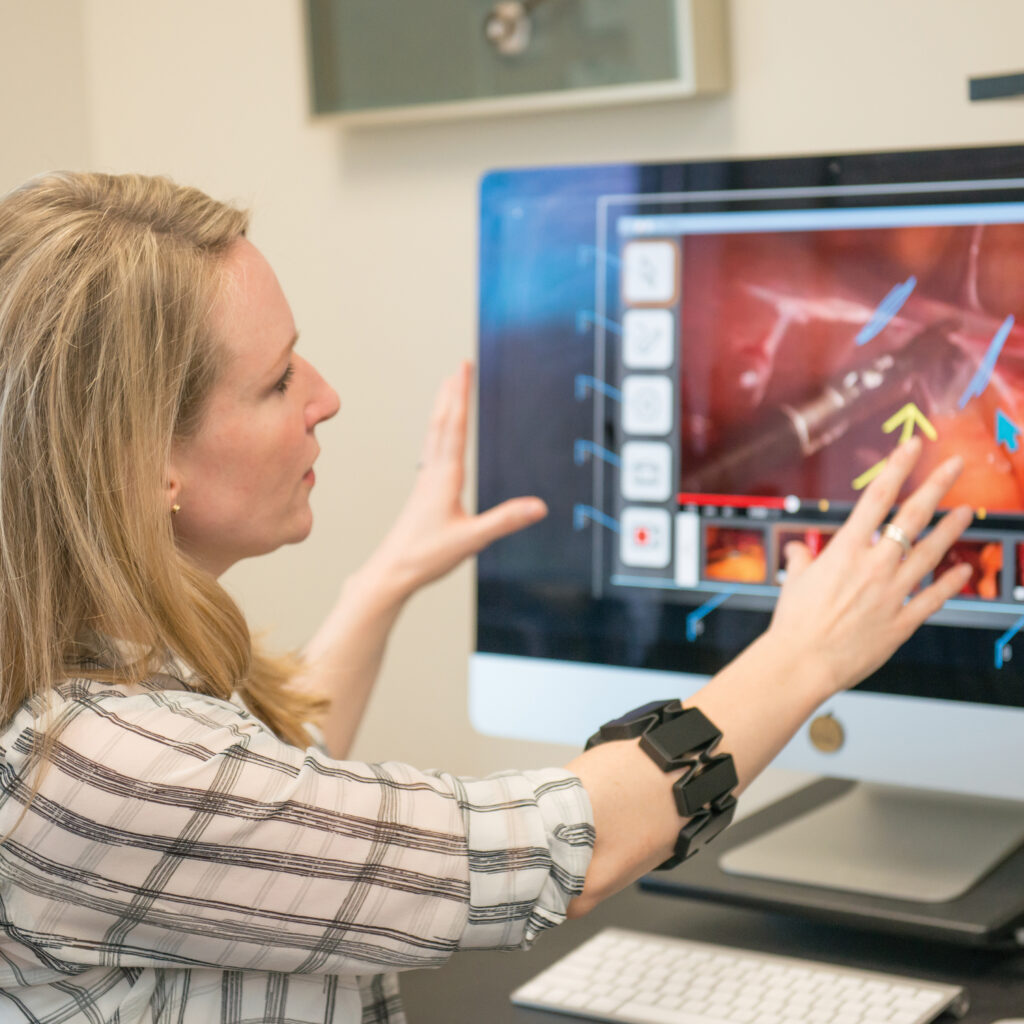
Kathleen Hoffman, professor of mathematics and associate dean for faculty advancement in the College of Natural and Mathematical Sciences. Photo courtesy Kathleen Hoffman.

The challenges to effective online teaching also differ drastically from discipline to discipline. Kathleen Hoffman is associate dean for faculty advancement in the College of Natural and Mathematical Sciences (CNMS). “Recognizing that every course has different needs, I wanted to create a flexible program so that the faculty could take advantage of it from many different perspectives,” she shares.  

A quick PIVOT

These three college leads—Gurganus, Stolle-McAllister, and Hoffman—have collaborated with colleagues in their own units, DoIT, and the FDC to create summer training that will help faculty give their students “safe, thriving online environments” for their courses in the fall, as Gurganus describes it.  

All of the colleges’ efforts hinge on the Planning Instructional Variety for Online Teaching (PIVOT) program developed by DoIT staff. This program comes in several flavors. A starter pack of five, one-hour webinars focuses on the basics of how to design an online course and the tools available at UMBC. It has already been offered twice and will be offered once more before the semester begins. Two different two-week PIVOT+ programs, one tailored for CAHSS faculty (offered twice) and another for COEIT and CNMS, are more comprehensive. By the end of the PIVOT+ program, faculty members will already have done much of the work to prepare an online course.

“All of these initiatives focus on teaching faculty effective practices for teaching online and showing them how to create student-centered learning experiences,” says Sherri Braxton, senior director of instructional technology, and one of the leads organizing the offerings. “Through a program like PIVOT, faculty contribute to a growing community in which they can share their experiences designing courses and teaching online,” she adds. In addition to PIVOT, DoIT is also offering a number of tool-specific trainings this summer. 

Sherri Braxton, senior director of instructional technology, leads the instructional technology team at UMBC that conceived of and implemented the PIVOT program.

In addition to DoIT programs, the FDC has also been busy this summer. Their programming is usually concentrated during the academic year, but not anymore. FDC staff, led by associate vice provost for faculty affairs and director Linda Hodges, have been offering at least weekly programs through the Center. Their workshops create opportunities for faculty to discuss best pedagogical practices for online instruction, including ideas for building community and motivating students online.

Boot camp

In addition to PIVOT and PIVOT+, CNMS has created affinity groups for instructors of large classes, one for lab classes, and one for adjunct faculty members, who may have different concerns. “The affinity groups facilitate a grassroots effort to support the faculty in these particularly challenging aspects of online teaching,” Hoffman says. “And they’re off and running.” Faculty peer mentors who are already well-versed in online teaching lead the affinity groups.

CNMS full-time faculty who participate in 10 hours of UMBC-offered training for online instruction will be considered CNMS Fellows in Online Instruction and receive a Hrabowski Award, which comes with a small stipend.

Student outdoors working on a laptop.
Online learning can happen anywhere.

Rather than group faculty by class format, CAHSS faculty expressed the desire to be grouped by subject area. These cohorts will meet outside the formal PIVOT+ programming to provide additional support and accountability. All CAHSS faculty can earn a Hrabowski Award by participating in PIVOT+ and developing a blueprint for an online class.

“Some of the departments got really excited about supporting each other in this and doing it as a boot camp,” Stolle-McAllister says. “The demand was tremendous. They really wanted to get into, ‘How do I apply and practice this? What does it mean for my class?’”

COEIT is offering a menu of discipline-specific workshops in addition to PIVOT+. Gurganus’s committee selected the topics based on a survey of faculty members’ needs. In order to earn the Hrabowski Award, COEIT faculty must participate in PIVOT+, attend three additional workshops of their choice, and upload an online lesson to a forum for feedback.

An interesting COEIT twist is that Undergraduate Teaching Fellows will also be involved in the work. These rising UMBC juniors and seniors will participate in the workshops and offer feedback on the uploaded lessons. “Students bring a really important perspective,” Gurganus says. “In the end, we’re doing all of this for them.”

Helena Mentis, associate professor of information systems, is also supporting COEIT’s efforts to help faculty transition online. She is leading a committee focused on developing solutions for lab-based courses.

By the numbers

Offering tons of programming is one thing. Faculty members must also participate with the sincere desire to improve their teaching practice. The good news is that the UMBC community is rising to the occasion, from the most experienced online educators offering their willing support to colleagues, to the uninitiated dipping their toes in the online teaching world for the first time—and working hard to swim in the deep end.

Based on data from PIVOT sessions that have already occurred, “Conservatively, I’d estimate about 400 participants in various iterations of PIVOT to date,” says John Fritz, associate vice president for instructional technology and new media. “Given that UMBC has 538 full-time and 292 part-time faculty, I am so impressed by how many faculty are investing their time and energy in re-thinking and re-designing their courses for this upcoming year.”

The FDC has seen similar participation levels for their programs: 277 faculty participated in programs focused on strategies for effective online instruction, and nearly one-third of those faculty members attended three or more sessions.

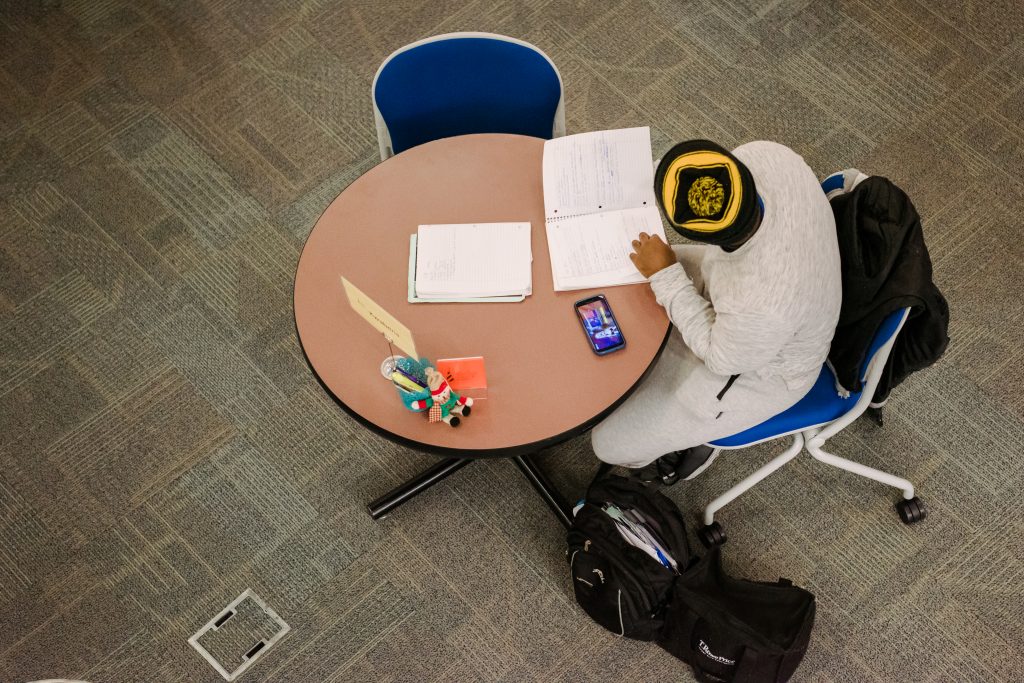
Bird's-eye-view of a student studying at a round table.
A UMBC student studies on campus.

Opening minds

And all this is happening during the summer, when faculty members typically focus on making strong progress in their research programs. “They want to do a good job for our students, so a lot of them are just putting that aside for this summer,” Stolle-McAllister says. “I’m not surprised, but so impressed that so many of our faculty are taking advantage of this. It just reminds me how many people we have here who care a lot about what they’re doing.”

Gurganus agrees. “We really are coming together as a community from all of the disciplines,” she says. “The instructors truly care. They want the students to succeed.”

It’s a challenging, but also exciting, time. Beyond reconsidering lessons and online tools, faculty are also thinking about how to be deliberate and thoughtful about helping students learn the best they can. They’re also learning themselves how to be even more open, flexible, and compassionate, in order to support students who are experiencing a wide range of realities during the pandemic. These shifts in mindset and approach could reverberate long after the pandemic, Gurganus argues.

“I think that this process is going to lead to more open-mindedness. Even when we get back to in-person, face-to-face classes, faculty are going to say, you know what? These issues are important in any context, and I should keep them at the forefront of my thoughts.”

Learn more about how UMBC is preparing for the unique fall semester ahead by deliberately creating community in online spaces and planning for a hybrid model of course delivery.

Banner image: A student studies at a picnic table above the UMBC Library Pond. All photos by Marlayna Demond ’11 for UMBC unless otherwise noted.

Groundbreaking fish research by UMBC’s Yonathan Zohar spawns partnership with AquaCon on $1 billion Maryland aquaculture project

More and more U.S. states, from Texas to Maine, are increasing their capacity to produce fish for human consumption in land-based facilities. These operations are less susceptible to disease and result in fresher fish for locals. They also remove the risk of releasing waste or farmed fish to the environment, and reduce costs and the carbon footprint associated with shipping. Plus, they create jobs and help decrease American reliance on seafood imports.

Decades of research led by Yonathan Zohar, UMBC professor of marine biotechnology, have led the way for these paradigm-shifting developments. For example, he is the lead on a large grant from the National Oceanic and Atmospheric Association (NOAA) National Sea Grant program designed to build capacity for land-based Atlantic salmon aquaculture in the U.S. The effort, known as the Recirculating Aquaculture Salmon Network (RAS-N), is a public-private partnership that includes academic research institutions, federal labs, and industry partners from across the country.

Zohar conducts his work in the Aquaculture Research Center (ARC) at the Institute of Marine and Environmental Technology (IMET) on Baltimore’s Inner Harbor. Work at the ARC pioneered many of the land-based aquaculture techniques now used around the country and the world.

Now, that work is coming back home.

A new take on “buy local”

AquaCon, a company led by Norwegian aquaculture leaders, is currently marshaling funds for a massive land-based Atlantic salmon aquaculture project based on Maryland’s Eastern Shore. In phase one, the company will invest $300 million, and the facility will produce 15,000 metric tons of fish. By phase three, the investment and output will triple. And that’s just for the aquaculture operation itself. The facility will also support job creation and economic development through affiliated industries, like seafood processing and distribution.

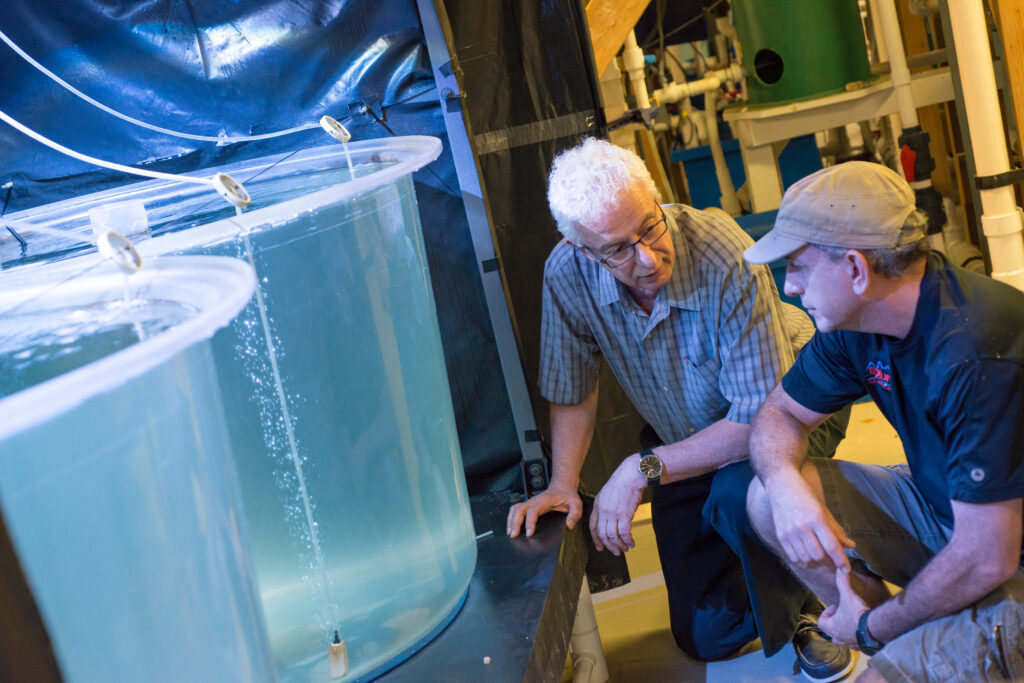
Two people kneeling next to fish tanks
Yoni Zohar (left) and Jorge Gomezjurado (right), faculty research assistant at IMET, at the Aquaculture Research Center. Photo by Marlayna Demond ’11 for UMBC.

AquaCon executives visited IMET and the ARC in November 2019 and again in February 2020, and were struck by the many ways that UMBC, IMET, and AquaCon could work together to make the venture a success for everyone. When they toured the ARC, “They were very excited about our innovative aquaculture platforms,” Zohar says, enthusiastic to see every feature. “Now I regularly communicate with the group to help them develop the design and biological planning for the Eastern Shore operation.” 

UMBC and IMET executed an memorandum of understanding with AquaCon, stating their intentions to collaborate and how they will work together. In a recent announcement about the company’s aquaculture vision, AquaCon specifically stated that UMBC and IMET were one major reason for their decision to select Maryland for their aquaculture operations. 

Staying on the forefront

“For a company like AquaCon, there is a huge amount of competition,” Zohar says, “and the companies who are going to succeed are those who are at the forefront of the technology.” That’s another reason for AquaCon to choose UMBC as a strategic partner. “IMET will be in the new operation’s backyard, so we can do sponsored research for them to keep them on the forefront of the field,” Zohar says.

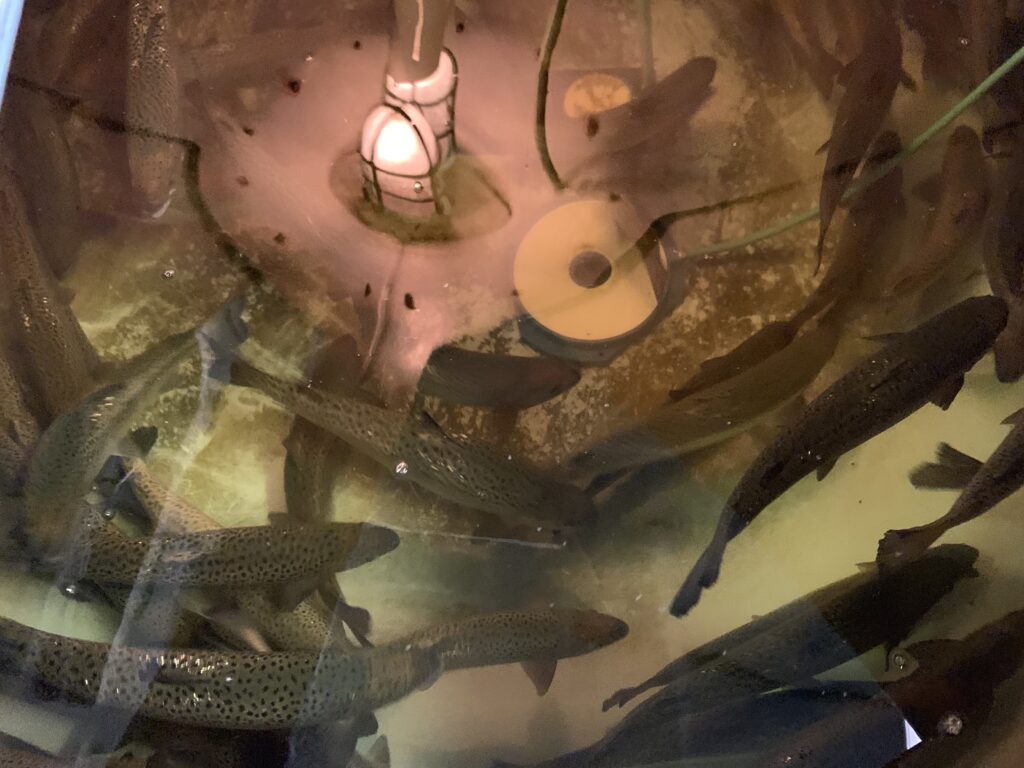
salmon swimming in a tank
Salmon swimming in a tank at the Aquaculture Research Center. Photo courtesy Yonathan Zohar.

Workforce training is another critical element of the relationship. Tom Sadowski ‘89, political science, vice chancellor for economic development for the University System of Maryland, discussed opportunities with the AquaCon executives when they visited IMET. For example, students will likely get the chance to gain hands-on training at the Eastern Shore facility, and AquaCon could fund employees to pursue training and degrees through UMBC at IMET.

“Workforce development for this booming industry is a very important component to the NOAA-funded RAS-N consortium,” Zohar says.

Filling in the missing link

One thing is inevitable in a land-based aquaculture facility, besides lots of fish: lots of fish poop. Kevin Sowers, professor of marine biotechnology, and Zohar have that handled, too. They invented a system to convert organic waste (affectionately known as “sludge”) in the fish tanks to fuel-grade methane. This technology, abundantly tested and optimized at ARC and already scaled up in the Norwegian salmon industry, can generate enough energy to offset about 10 percent of the operation’s energy costs.

The duo formed a company, Silfra BioSytems LLC, that will focus on improving and scaling up the waste conversion technology. They named the company after a pristine Icelandic lake to emphasize the result of the process—clean water. Their invention completes “this missing link for how you responsibly and biologically remove the huge amounts of solid waste,” Zohar says, “And in the process, you generate biofuel.”

Kevin Sowers (right) with Upal Ghosh, professor of chemical, biochemical, and environmental engineering, in Sowers’s IMET lab. Photo by Marlayna Demond ’11 for UMBC.

The right model

On top of these developments in tech transfer, Zohar recently received a substantial National Science Foundation grant for his basic research on fish reproduction. The NSF fully funded the grant, which is for four years and a little over a million dollars. 

Zohar’s basic research will influence the aquaculture industry, because if you can precisely control when fish do and do not reproduce, you can create a system where fish are constantly reaching market size. On top of that, fish that are not preparing to reproduce grow muscle faster and have immune systems that are more robust.  

The research could also have implications for human health. For various reasons, “Fish are one of the best reproductive models for humans,” Zohar says. “You cannot even use rats or mice for this type of research. So it has a lot of interest from that standpoint as well.” A better understanding of the causes of infertility, for example, could be on the horizon.

A perfect storm

For IMET and the ARC facility, “It’s a perfect storm in a good sense, because everything is falling in place now,” says Zohar. “I’ve been working in Maryland for almost 30 years, and we’ve been developing a lot of these technologies. Our mission is research, education, and economic development, and we have been working to create connections between academia and industry to fulfill that mission.” And projects long underway are now bearing fruit.

Land-based aquaculture, in particular, has seen a huge rise in interest of late. “We’ve been working on this for 15 or 20 years. People said we were ahead of our time, but now things are happening,” Zohar says. “Land-based aquaculture has matured. People believe in it, and it’s going to develop at a large scale.”

Banner photo: Yonathan Zohar at the Aquaculture Research Center in the Institute of Marine and Environmental Technology. Photo by Marlayna Demond ’11 for UMBC.

Change Agent Behind #BlackBirdersWeek

Before she graduated from UMBC, Anna Gifty Opoku-Agyeman ’19, M26, mathematics, founded the Sadie Collective. Opoku-Agyeman describes it on her website as, “the first and only organization to date dedicated to addressing the pipeline and pathway problem for Black women in economics and related fields.” Since the Collective’s inception in 2018, membership has expanded to nearly 500 members across 30 states, 120 institutions, and four continents.

This is a woman who is making change.

One of the Collective’s first orders of business was to organize the Sadie Tanner Mossell Alexander Conference for Economics and Related Fields. The conference and the Sadie Collective offer resources, networking, and support to a community—in this case, Black women in economics—that has been historically under-resourced, -networked, and -supported.

As it happens, some members of the Sadie Collective’s leadership team are also birders.

So, when news of a White woman calling 911 on Christian Cooper, a Black birder in Central Park who asked her to follow the rules and leash her dog, made national headlines in May, the Collective leaped into action. Below, Opoku-Agyeman shares how #BlackBirdersWeek (May 31 June 5, 2020) came to be, its extensive impact, and what’s next.

UMBC Magazine: What was your goal in creating #BlackBirdersWeek?

Anna Gifty Opoku-Agyeman: I want to first and foremost share that #BlackBirdersWeek was a joint effort with members of the BlackAFinSTEM Collective. I co-founded the initiative alongside Sheridan Alford, Danielle Belleny, Chelsea Connor, Joseph Saunders, and Tykee James, all wonderful people who, alongside others, stepped up to make the week possible. 

#BlackBirdersWeek was a direct response to Christian Cooper’s unfortunate encounter with a White woman in Central Park. Although I am not a birder, many individuals in the Collective are, and each of them echoed similar experiences to Cooper’s. The conversations sparked an idea in me to amplify and prioritize the voices of Black birders, naturalists, and explorers similar to what I have done alongside my co-founder, Fanta Traore, at the Sadie Collective. 

https://twitter.com/itsafronomics/status/1268935597550428160

UMBC Magazine: Can you describe some of the components of the week’s programming, and how it came together?

Opoku-Agyeman: I suggested a Black Birders Day, and Tykee James suggested a week, as a way to celebrate Black people in the birding space similar to how running was used to celebrate the late Ahmaud Arbery. I did a little bit of brainstorming and came back with a pitch: a potential week-long digital campaign to amplify the experiences and expertise of Black birders, especially those within the group. The Collective loved the idea and offered suggestions to improve how we could roll out the campaign. We have well-known birders and natural scientists within our group, such as Jason Ward and Corina Newsome, and many of us had a couple thousand followers. So we knew that between all of us, this could be huge. 

We were intentional about ensuring that there was a hashtag for each day, which led the wonderful Danielle Belleny, Sheridan Alford, and Chelsea Connor to create these amazing flyers that reflected our vision.

Every day had a theme and corresponding date. A brief description of what we highlighted includes:

●      #BlackinNature—Showcasing Black people in nature. Black people typically don’t get to be in nature because we are viewed as a threat. This part of the campaign was intentional in that it normalized Black people in nature and also encouraged it.

●      #PostABird Challenge—Posting a fun bird picture/fact/etc. This was really a campaign to get people involved regardless of race so that we could get the world talking about birds!

●      #AskABlackBirder—Twitter and Instagram Q&A with Black birders. Folks submitted questions on Twitter and Instagram using the hashtag. It gave Black birders an opportunity to talk more about their own work and research. 

●      #BirdingWhileBlack—Live stream discussions with Christian Cooper (yes, that Christian Cooper) and Drew Laham. I actually co-moderated this session with Tykee James. To date, those streams together drew in over 1 million views. At the time we went live, nearly 60,000 people tuned in. Apparently we broke an average day record or something. 

●      #BlackWomenWhoBird—Amplifying Black women birders and LGBTQ+ birders, who are significantly underrepresented. Many of these individuals had an opportunity to work with national organizations such as the National Aquarium to talk about their work. It was truly awesome.

UMBC Magazine: What was your reaction to the huge response the campaign got?

Opoku-Agyeman: It’s funny, because when I told my mom about this idea, she kept saying we’d go global. It’s actually one of the first things I told the group: “If we do this right, this could go global,” and I am so glad it did. All of the individuals involved with the group have now been featured widely and are still being pursued for opportunities by prominent science organizations such as the National Aquarium and national agencies in the nature space. It was interesting, too, because simultaneously nationwide protests over senseless Black death at the hands of police were happening. 

As a result of the campaign, the National Wildlife Federation launched a fellowship for minorities in the field, specifically with Black people in mind. The movement literally shifted power structures, something that we love to see. 

At the same time, you had Black joy paralleling Black pain, which is oftentimes the experience of Black people in America.We have to balance these incredibly joyous moments with very real and deep-seated pain. While we were celebrating Black birders, our people were also being murdered. It’s a juxtaposition that is our daily lives. 

https://twitter.com/JuitaMartinez/status/1275549212806184961

UMBC Magazine: Do you have any plans to build on the success of #BlackBirdersWeek? Have you organized similar campaigns?

Opoku-Agyeman: We are currently working on building structure around the successful campaign as well as pushing forward our mission to be unapologetically Black in the STEM space. Recent campaigns that have been inspired by us include #BlackinAstro, which highlights Black people in astronomy, and #BlackHikersWeek, which aims to normalize Black people hiking outdoors. The offshoot campaigns are not ones we specifically organized, but we definitely support them!

https://twitter.com/itsafronomics/status/1275415269800841216

UMBC Magazine: How does your work on #BlackBirdersWeek relate to your role as co-founder and CEO of the Sadie Collective?

Opoku-Agyeman: Both initiatives uplift Black people who are often among those marginalized in their space. The strikingly similar under-representation between birding and economics with respect to Black people is just more evidence that campaigns like #BlackBirdersWeek and additional advocacy is needed to push institutional change that allows for diverse voices to break through.

What I love about both initiatives is that they’re disruptive, political, and moving. Many people didn’t see the Sadie Collective coming when we officially announced like they didn’t see #BlackBirdersWeek coming. Both initiatives are led by young Black people who are incredibly passionate about this work, whatever it may be, and by existing in our respective spaces, we are protesting our right to be seen, heard, and celebrated. Quite literally embracing the idea of being unapologetically Black and unapologetically ourselves, encompassing our Blackness.

*****

Header image of Opoku-Agyeman on campus by Marlayna Demond ’11.

UMBC’s Tom Barclay and NASA team discover Neptune-sized planet orbiting young, nearby star

New research published today in Nature reports the discovery of a planet about the size of Neptune orbiting an especially young, nearby star. The planet, named AU Mic b, is orbiting AU Microscopii, which is relatively close to the Milky Way at 31.9 light years away. AU Microscopii is also “only” 20 or 30 million years old—at least 150 times younger than our Sun.

There are only two or three known stars that are both nearby and young, and scientists have been searching for planets orbiting them for at least a decade. This means the new finding creates a major opportunity for breakthrough research into solar system formation dynamics.

“One of the things we want to understand is, ‘When do planets form, and what do they do in their early days?’” says Tom Barclay. He’s an associate research scientist with UMBC’s Center for Space Sciences and Technology, a partnership with the NASA Goddard Space Flight Center in Greenbelt, Maryland. 

Because AU Mic b is so young, Barclay adds, “studying this planet, and hopefully others like it, can give us insight into how our own solar system formed.”

Shining light on a new planet

Barclay primarily works on NASA’s Transiting Exoplanet Survey Satellite (TESS) mission. TESS observes the same section of sky for weeks at a time, collecting data about the brightness of stars in its field of view every two minutes. Thanks to this constant watchfulness, TESS can help detect planets by recording when a star’s brightness temporarily dims. That can sometimes signal a planet crossing in front of the star, or “transiting.”

“My role is to take the brightness data for the star and use that to understand what the size and other properties of the planet are,” says Barclay, who is second author on the new paper. Peter Plavchan of George Mason University leads the project. “Dips in brightness tell you about the size of the planet, and measuring how regularly spaced the transits are tells us how long it takes the planet to go around the star,” Barclay explains. 

TESS detected two transits of AU Mic b, but the research team needed a third to “be confident that what we’d seen wasn’t something else in the data trying to fool us,” Barclay says. So they called on additional data collected by NASA’s Spitzer satellite and ground-based instruments in Hawaii and Chile. 

Barclay analyzed the combined information and was able to confirm that AU Mic b has a mass of no more than 58 Earths and completes an orbit of AU Microscopii every 8.5 days. An orbit that short indicates that the planet is extremely close to the star.

Realistic image of outer space: a star surrounded by a floating disk of debris.
A rendering of the system where researchers found the new planet, AU Mic b. The star AU Microscopii, which AU Mic b orbits at very close range, is at the center. A disk of dust and debris surrounds the star. Image courtesy NASA’s Goddard Space Flight Center/Chris Smith (Universities Space Research Association)

Discovery dominoes  

Next, Barclay and his colleagues want to learn more about the atmosphere of the new planet. Because it only recently formed, “it may well be losing its atmosphere at a rate that we can see,” Barclay says. “It might even appear somewhat teardrop-shaped, as the planet is moving and leaving some of its atmosphere behind. So we’re going to go and look for that.”  

In addition to the rate of atmosphere loss, careful observations can also help determine what the planet’s atmosphere is made of. Determining the atmosphere’s components could help the team figure out where the planet formed, because certain substances can only exist at a known distance from the star. 

Knowing where the planet formed would provide clues about how it had moved since it first came into being. And knowing that would get scientists closer to understanding more generally how planets form and migrate in a new solar system.

Planet migration puzzle

AU Mic b is likely primarily comprised of gases. “This star probably hasn’t had time to form small, rocky planets yet,” Barclay says. “It gives us a chance to get a picture of what might have happened before our own terrestrial planets like Earth and Venus formed.”

But the work is not easy. “Understanding the migration of planets is a really difficult problem. One of the fun things and one of the most frustrating things about studying stars is that we can never go to them,” Barclay says. “So this discovery is just one more puzzle piece in trying to understand what’s going on.”

Banner image: An interpretation of the appearance of AU Mic b (green) and its star, Microscopii. Image courtesy NASA’s Goddard Space Flight Center/Chris Smith (Universities Space Research Association)

How the darter got its stripes: New UMBC research expands on sexual selection theory to explain complicated animal patterns

Samuel Hulse, Ph.D. candidate in biological sciences, has spent a lot of time in waders over the last two years. He has traipsed from stream to stream across the eastern U.S., carefully collecting live specimens of small, colorful freshwater fish known as darters and taking photos of their habitats. Then he’s brought them back to the lab to capture high-quality images of their coloration patterns.

Hulse developed a precise, quantitative analysis of those visual patterns, such as stripes, spots, and various mottled looks. His work shows, for the first time, a strong correlation between the complicated patterns on male fish and the fishes’ highly variable environments. The results were published today in Nature Communications.

These findings represent a major expansion of a theory in sexual selection known as “sensory drive,” which emphasizes how an animal’s environment can influence what sexual signals—like visual patterns—are selected for over time.

watercolor drawings of five colorful darter fish
“Gaudy Darters” by Kate Feller, Ph.D. ’14, biological sciences. Watercolor and ink. These are realistic renderings of darters in the genus Etheostoma.

Driving progress

So far, sensory drive has successfully explained examples such as coloration in cichlids, a group of freshwater fish in Africa. Hulse was working to expand on this research.

Different species of cichlids live at different depths, and which colors the fish can easily see changes as you go deeper and there is less light. Why does this matter? The idea of sensory drive is that animals perceive visual signals, like colors, as more attractive when they are easier for their brains to process. And which signals are easier to process is dependent on the environment. When male fish are perceived as more attractive, they are more likely to reproduce, and their colors are more likely to be passed to the next generation of fish. So, if the theory of sensory drive is true, eventually, most male fish will have colors that are easy for mates to perceive in their particular environment. 

In the cichlid fish, “you see this depth-dependent change in the male colors as you go deeper,” Hulse says. With the new work, “we were able to expand on this theory to explain more complicated traits, such as visual patterns,” like stripes and spots.  

Two grad students seine fishing for darters to study.
Sam Hulse with Natalie Roberts, Ph.D. ’19, biological sciences, collecting darters. During their time together in the Mendelson lab, Hulse says, “It was really great having Natalie as a peer, because I could help her out with more of the computational aspects and she could help me out with some of the more biological questions.” Photo courtesy Tamra Mendelson.

Using math to understand biology

Hulse, who is also taking courses toward an M.S. in mathematics at UMBC, brought his quantitative skills to bear on this research. He used a measure called Fourier analysis to examine his fish images, looking at variations in color contrast. 

For example, if you were to look at a photo of a grassy hill under a bright blue sky, the greatest contrast in brightness would be between the large areas above and below the horizon line. That contrast is on a larger scale than the differences in brightness between, say, tiny blades of grass. The differences between each blade are small, but occur frequently across the image.  

Fourier analysis can translate the contrast patterns in an image into a representative set of mathematical sine and cosine waves. The low-frequency waves, which only swoop up and down once or twice across the entire image, represent large-scale differences, like above and below the horizon. High-frequency waves swoop up and down many times across an image and represent small-scale differences, like between blades of grass.

Researchers can look at the relationships between those waves—how much high-frequency versus low-frequency contrast there is in the image. Hulse’s work looked at that measure to examine the visual relationship between a habitat and the fish that lived in it. And sure enough, his calculations revealed a strong correlation, providing evidence of sensory drive  in male darters.

Man takes photo in a stream
Samuel Hulse takes a photo of darter habitat for analysis. He captured fish and habitat photos of three distinct populations each of 10 different darter species. Photo courtesy Tamra Mendelson.

Moving past “wishy-washy terminology”

One argument against the idea that these patterns are attractive to females is the idea of camouflage. Wouldn’t it make sense for animals to match the visual patterns of their environment to avoid getting eaten, rather than to attract females? Darters are under strong predation pressure, so, Hulse says, it’s a valid point. 

However, the fact that he found that only male fish (not female fish) match their environment is a strong argument in favor of sensory drive. Predators don’t discriminate between males and females, so you would expect females to also match their environment if camouflage was the reason.

“Quantitatively describing visual patterns is a big challenge, and there’s not one easy way to do that, so being able to use tools like Fourier analysis is wonderful,” Hulse says. “That actually lets us quantify some of these things that have historically been very hard to describe other than with wishy-washy terminology.”

Perfect timing

Tamra Mendelson, professor of biological sciences, is Hulse’s advisor and a co-author on the new paper. She had just begun formulating the ideas for this research with visual ecologist Julien Renoult, a colleague at Centre National de la Recherche Scientifique (CNRS) in Montpellier, France and a co-author, when Hulse joined her laboratory in 2016.

“Julien had inspired me to take concepts from a field called human empirical aesthetics, which is the mathematical and biological basis of human appreciation of art, and apply them to animals’ appreciation of other animals,” Mendelson says. “I was super excited about it, but I didn’t have the mathematical chops to really take it as far as it could go.” 

Tamra Mendelson at a research field site, courtesy Tamra Mendelson.

So, when Hulse arrived, “It was a perfect match. Sam is the ideal student to be doing this project.”

And for Hulse, Mendelson was the ideal mentor. “I think she strikes a really good balance of not being too hands on, but always being there when I am confused with something,” he says. “I feel like her mentorship style allowed me to develop on my own, and at the same time, I’ve never felt like there isn’t help there.”

Hulse also spent several months in France working with Renoult to iron out some of the statistical challenges of the work—which were many. “The data analysis became a lot more complicated than we thought, and there were a lot of technical snags,” Hulse says. “So it was really great to be able to be there working directly with Julien, who has a lot of background with these sorts of methods.”

Bringing it all together

Hulse was drawn to this work by the unique blend of skills it requires. “I love the interdisciplinary nature of it. We’re bringing together field biology, sensory biology, a little bit of neurobiology, and image analysis,” he says. “That’s one of the most attractive things about this project for me—how much I get to learn and how much I get to take little pieces from so many different areas.”

Now, Hulse, Mendelson, and Renoult are excited to see where their new work leads. “There’s not a lot of theory in sexual selection that can be used to explain why you see one pattern evolve in one animal where you see a different one evolve in a closely related species,” Hulse says. 

The new findings open the door to much more exploration with different species, including animals that live on land. In any group of animals that relies on vision, has visually distinct environments, and where the animals have distinct habitat preferences, Hulse argues, “this theory should hold.”

Banner image: Samuel Hulse (right) and Julien Renoult collect darters in a stream. Photo courtesy Tamra Mendelson.

Support comes full circle: When students become mentors

In 2015, Cherie Tebah’s dream of providing dental care in marginalized communities was shattered when she sustained injuries while in the U.S. military. Tebah, who is originally from Ghana, had nurtured her dream for years as a dental assistant stationed in Japan. But with the guidance of her medical team, she had to accept that her disability would make achieving that dream impossible. 

Tebah had just completed an associates degree at Montgomery College, and at first, she struggled to move on. But after three years of deep reflection, working with a psychologist and social worker, and starting her own business, Tebah found a new path. 

The support she received from her own social worker, and shadowing a social worker who had graduated from UMBC, helped her decide to apply to UMBC’s social work program at The Universities at Shady Grove (USG). Visiting campus and finding a tight-knit, diverse community so close to home sealed the deal.

This spring, Tebah will graduate from UMBC with a double major in social work and psychology. Now, she has big plans to channel her passion for serving others into a social work career.

Resources for success

Going back to school wasn’t easy. “As a student with a disability, I had trouble getting my tasks done on time. There were days when it was really hard for me to even walk,” Tebah says. “But my professors worked with me, empowered me, and supported me through everything.” Even when she struggled, “they were there to encourage me to carry on.”

The support Tebah received from her faculty mentors and other resources on campus helped her persist through challenges. The Macklin Center for Academic Success helped her improve her writing. Librarians helped her find sources for assignments. Retriever Essentials provided food when times were especially tough. Counseling services supported her mental health. Zumba classes helped her blow off steam.

The Veteran’s Lounge was most important. “When it was too much for me to handle, I would go to the Veteran’s Lounge,” she says. “There I would connect with other veterans and learn about other resources they had used.” 

“At UMBC,” Tebah says, “I’ve gained confidence and learned appropriate ways to advocate for myself.”

Spreading the love

Once she became familiar with campus resources and realized how much they had helped her, Tebah decided to pay it forward. “I love to help people succeed, so for me, if others have put time into my career and my future, I feel that it’s only right to reciprocate that love to other students,” she says. 

Tebah joined the Peer Advisory Team, which staffs orientation and conducts monthly check-ins with students. She also became a leader in the Social Work Student Association. “Connecting students with resources that can help them has been very fulfilling for me,” she says.

a white woman with blonde hair and glasses in a maroon dress shirt and sweater
Nicole Belfiore, clinical instructor of social work at USG, is one of Cherie Tebah’s mentors.

In August, Tebah will begin her master’s degree in social work at University of Maryland, Baltimore. She’s asked Nicole Belfiore, a clinical instructor in social work at USG, to continue serving as her mentor. “At USG we’re like a family,” Tebah says. And family members stick with each other.

Chasing his potential

Brian Carroll ‘14, physics, Ph.D. ’20, atmospheric physics, has also already begun to pay forward the mentorship he received while pursuing both of his UMBC degrees. 

As an undergrad, he joined the Atmospheric Lidar Group, led by Ruben Delgado and Belay Demoz. He then chose to continue in the group for his Ph.D. Both Delgado, assistant research scientist in the Joint Center for Earth Systems Technology (JCET), and Demoz, JCET director, have been key mentors and role models for Carroll.

“Ruben does a great job of pushing you to chase your own potential and offering you opportunities to excel,” Carroll says. “And Belay is especially good at giving professional advice…he offers a lot of what you can’t get in a classroom.”

From them, and others, he’s learned how to support younger students in his field.

Finding the edge

Throughout Carroll’s Ph.D., he’s had many opportunities to mentor undergraduates, and his approach has shifted over the years. He’s learned that rather than explaining everything in detail up front, the best mentors “get someone to the edge of their understanding, and then let them wander for a bit,” he says. 

Brian Carroll (center, blue shirt), Ruben Delgado (third from left), Belay Demoz (third from right in front row) and other members of the Atmospheric Lidar Group gather in front of the rooftop telescope at UMBC.

If they get stuck in the dark, “then you kind of light up the area around them. They keep wandering until they get to the edge of the light again, and then push beyond it until they need some more help.”

This summer Carroll will begin a postdoctoral fellowship at NASA Langley in Hampton, Virginia. As he continues his career, “I want to carry on a lot of what Ruben and Belay have taught me and to try to provide that push and help people realize their potential,” Carroll says.

It’s especially important to him to support students from underrepresented backgrounds in atmospheric science, as Delgado and Demoz have modeled so well. “I really want to reach out to as many students as possible,” Carroll says, “especially…from populations that may not have as many opportunities, and help make their success a reality.”

New beginnings

STEM BUILD at UMBC is a program designed to do just that. The College of Natural and Mathematical Sciences (CNMS) runs the multi-pronged, NIH-funded program, which is designed to enhance diversity in the biomedical workforce. In 2018, as a non-traditional student at Montgomery College, Shehar Yar Awan ’20, biological sciences, became a BUILD a Bridge to STEM intern. Little did he know how much the experience would affect his future.

Shehar Yar Awan ’20 gives a presentation on the research he did during the 2018 BUILD a Bridge to STEM internship.

As an intern, Awan conducted research with Erin Green, assistant professor of biological sciences, and presented his work at UMBC’s Summer Undergraduate Research Fest. Because he had such a positive summer experience, Awan decided to transfer to UMBC and apply to be a STEM BUILD Trainee, another arm of the BUILD program. He was accepted.

Spot-on advice

Awan started his STEM BUILD experience as a Retriever with a summer bridge program designed to kick-start his time at UMBC. He shares that program leaders like Lucie Blauvelt, assistant director of student engagement initiatives in CNMS, and Laura Ott, director of the CNMS Science Education Research Unit, made an impact right away. 

“It was really great to have someone showing you around campus, introducing you to people, and giving you insight on what it was going to be like and what you needed to do to be successful—and their advice was spot on,” Awan says.

STEM BUILD Trainees, including Shehar Yar Awan (back row, second from left) with advisors Lucie Blauvelt (far right, front) and Laura Ott (far left, front). Photo courtesy Shehar Yar Awan.

“Lucie always gave us the confidence to succeed. She always said if we were ever in trouble, we could reach out to her for help.” 

In his first semester at UMBC, Awan was taking a challenging course load and started to flounder. Blauvelt kept her promise and helped him connect with a physics tutor, while also offering emotional support. By the end of the semester, Awan “blew physics out of the water.”

Caitlin Kowalewski, assistant director for undergraduate initiatives, also influenced Awan’s experience. In his first full semester at UMBC, he participated in the Undergraduate Research Symposium in Chemical and Biological Sciences. “I won first place because of the way that Ms. K. mentored us on our presentations and our posters,” Awan says.

Honored to give back

In his second semester at UMBC, Awan resumed research with Green. The following summer, he served as a mentor to three new BUILD a Bridge to STEM interns in Green’s lab. The trio of interns he supported worked on some of the same techniques he initially struggled with, such as molecular cloning.

“It feels great to be able to give back. Research was something I was completely new to, and it really gave me an appreciation for science that I never had before,” he says. “And now, being able to give that back to other people and show them what it’s all about… It’s amazing and it’s an honor.” 

group photo on a balcony
Shehar Yar Awan (far right, back row) with Erin Green (third from right, back row) and the rest of the lab group at a summer’s end party in 2019 to celebrate the team’s accomplishments. Photo courtesy Shehar Yar Awan.

In addition to supporting the interns, as an older student, many of Awan’s fellow BUILD trainees look to him for guidance. “I try to help everyone as much as I can,” he says. 

Awan credits STEM BUILD with reshaping his path forward, a sentiment he also shared with the news outlet Open Campus. He now plans to pursue dental school. He also hopes to continue doing research. 

“I never knew that I wanted to do research. It’s something that developed in me over my entire undergraduate career at UMBC,” he says. “STEM BUILD helped me discover this part of myself that I never knew about. I’ll never forget the gratitude I have for people in the program that have opened my eyes along the way. It’s been wonderful.”

Banner image: Brian Carroll (far right) with Belay Demoz (second from left) and other members of the Atmospheric Lidar Group on the rooftop of the UMBC Physics Building.

All photos by Marlayna Demond ’11 for UMBC unless otherwise noted.

Where math and medicine meet: Jeremy Rubin is one of UMBC’s nine new NSF Graduate Research Fellows

When he was 16, Jeremy Rubin ’20, M28, mathematics and statistics, tagged along to one of his sister’s doctor appointments. Six years his senior and a 2014 UMBC alumna, she was recovering from a complete spinal fusion to treat her scoliosis. Doctors had been monitoring her condition for years before the surgery, and she had worn a brace for 18 months in preparation. At the appointment, Rubin’s mother suggested the doctor examine his back as well, just in case.

“And then, right there in the doctor’s office, they said I should have the same surgery in a month,” Rubin recalls. “What’s really fascinating, I think, is that we both needed the surgery, yet we had very different diagnosis and pre-treatment experiences. So it made me think, how can I use my interest in statistics to help the field of precision medicine? How can we tailor diagnoses and treatments to the individual?”

The contrast between Rubin’s and his sister’s experiences with scoliosis, and his skill and passion for statistics, have driven Rubin to success in his UMBC coursework and in several research experiences on and off campus. This year, he applied for the National Science Foundation (NSF) Graduate Research Fellowship, which he, Danilo Symonette ’20, computer science, and seven UMBC alumni received this year. These prestigious fellowships offer full funding for three years of graduate study at any accredited institution in the U.S.

Piecing it together

Rubin began his research career during his first year at UMBC with Bradford Peercy, professor of mathematics and statistics. They used math to better model cell migration in fruit flies. “That was really exciting,” Rubin says, “because it gave me my first hands-on experience using theoretical math techniques, but applying it to a real-world biological situation.”

Group photo. Decorations and table of snacks for a celebration.
The Green lab is a family. Here, they celebrate a birthday. Erin Green is at the far left; Jeremy Rubin is second from right in the back row.

That summer, he pursued an internship at the National Institute of Standards and Technology. There, he worked to develop better methods to process images generated by virtual reality environments. 

Back at UMBC the next fall, he contributed to efforts using statistical techniques to analyze genetic data related to the structure of DNA. The project was a collaboration between Erin Green, assistant professor of biological sciences, and DoHwan Park, assistant professor of mathematics and statistics.

All of these experiences led Rubin to a project at the University of Pennsylvania’s Perleman School of Medicine in 2018. The project combines his mathematical skill, desire to use math to address biological questions, and image processing background. He’s still working on it today, and plans to continue to pursue it as a Ph.D. student at Penn’s Perleman School this fall. 

“We’re interested in seeing if we can make an association between certain brain regions and the onset of mild cognitive impairment in patients with Alzheimer’s. That’s the end goal,” Rubin says. “It’s a really nice combination of my previous work with imaging and also looking at biological data.”

Support from every angle

Rubin attributes his success, especially in obtaining research opportunities such as the NSF fellowship, in part to the incredible support he’s received from the Meyerhoff and MARC U*STAR Scholars programs.

Large group photo.
Jeremy Rubin (back row, light gray t-shirt) with the MARC U*STAR 2019 – 2020 cohort in front of the UMBC Interdisciplinary Life Sciences Building.

“Maybe the single greatest thing I’m thankful for is the individual coaching,” Rubin says. As an example, he was in the Meyerhoff office when he found out that he would have a graduate school interview in less than 72 hours. When he told Jackie King, associate director of the MARC U*STAR program, she gave him a mock interview on the spot. 

The intensive peer mentoring offered through the programs has also had a major impact on Rubin. “I like that I can now pay it forward,” Rubin says, by advising two younger Meyerhoff Scholars.

As his career progresses, Rubin plans to stay connected to teaching and advising. “I really want to combine my passion for teaching with doing research,” he says. As a result, he plans to pursue a path in academia. “I think an academic setting would best balance the ability to teach and mentor students while also doing research.”

Contributions across the country

Even once he’s in Philadelphia, Rubin plans to stay connected to UMBC. “The MARC and Meyerhoff programs encourage you to not just be a good student, but also be an academic leader in any way you can—to give back to your community, and really show excellence in all aspects of your career,” Rubin says.

After four years at UMBC, “I feel well-equipped to go to Penn,” Rubin says. At the same time, his advisor, Elizabeth Stanwyck, senior lecturer in mathematics and statistics, suggested he might give a department seminar back at UMBC sometime during his graduate study. “I want to stay connected and tell the students anything I can to help them out for the future,” he says.

Group photo, all with smoothie cups in hand.
Jeremy Rubin (seated) makes smoothies with his Math 390 students.

While Rubin is at Penn, UMBC’s other Graduate Research Fellowship recipients will be earning doctorates across the country, including two other alumni at Penn’s Perelman School: Maya Hale ’18, biological sciences and psychology, and Sam Giannakoulias ’18, biochemistry and molecular biology and mathematics. 

The other recipients are also conducting research as Ph.D. students at top-tier institutions. Stephanie Korenic ’12, media and communication studies and psychology, is working to improve the way neuroimaging is used in the study of psychosis at Temple University. Jason Hughes ’18, M26, chemical engineering, and Ann Cirincione ‘18, M26, bioinformatics and computational biology, are studying biological systems using big data. Hughes is pursuing his Ph.D. at Vanderbilt University, and Cirincione is at Princeton. Shannon Clancy ‘19, mechanical engineering, is focusing on internal combustion engines at the University of Michigan, and Fatima Touma ’09, anthropology, is at University of North Carolina at Chapel Hill, studying health disparities with a focus on immigrant communities

Whether examining biological systems or human-designed machines, UMBC alumni are making important contributions everywhere they go. Their new NSF Graduate Research Fellowships will help them do even more and go even farther. 

Banner image: Jeremy Rubin with the Penn Statistics in Imaging and Visualization Endeavor (PennSIVE) lab group during his summer internship there in 2018. This fall, he’ll embark on a Ph.D. with the same team.

All photos courtesy of Jeremy Rubin.

Graduating CNMS Scholars carry on a commitment to support women in STEM

UMBC has made great strides in increasing its number of women faculty members in STEM through the ADVANCE program. Now, through the CNMS Scholars Program, these women are serving as mentors to the next generation of scientists and engineers committed to the advancement of women in STEM. The CNMS Scholars program is specifically designed to boost the representation of women in STEM fields that haven’t reached gender parity, from physics and bioinformatics to chemical engineering.

This spring, five women will graduate from UMBC as CNMS Scholars, including Olivia Norman ’20, physics, and Jada Damond ’20, chemical engineering. The financial support, mentorship, and sense of community the program offered created an environment that helped them thrive. Importantly, “CNMS Scholars are paired with our most experienced faculty, who go beyond mentoring to act as champions of these promising future leaders,” says Bill LaCourse, dean of the College of Natural and Mathematical Sciences (CNMS). 

Norman’s CNMS Scholars mentor was Theodosia Gougousi, professor of physics and a member of UMBC’s Women in Science and Engineering (WISE) group, affiliated with the ADVANCE program. Damond worked with Jennie Leach, an associate professor of chemical, biochemical, and environmental engineering (CBEE), and a member of UMBC’s 4th ADVANCE cohort.

A nudge in the right direction

The coming weeks will hold excitement for new beginnings and also poignant goodbyes for Olivia Norman, as she prepares to leave UMBC and Maryland. After graduation, she will head to a Ph.D. program in atmospheric science at MIT—a goal realized through research opportunities during her time as a Retriever. 

Norman chose to transfer to UMBC as a sophomore specifically to access UMBC’s unique research opportunities. She has been working with Zhibo Zhang, associate professor of physics, on a project involving “polluted dust”—dust particles mixed with pollutants in the atmosphere. They are working to understand how this dust affects cloud formation and climate.

Lab group meets in a conference room with a large screen displaying satellite data on the wall.
Olivia Norman ’20 (center, rear) participates in a lab group meeting with Zhibo Zhang (far right) and other lab members.

Zhang and Norman have found their work together rewarding. “He always pushes you to ask questions and seek out things that you’re interested in to inform your research, while also helping nudge you in the right direction if you are feeling a little lost,” Norman shares. 

Zhang suggested that Norman join the lab when he noticed her performing exceptionally well in one of his courses. Since then she has made significant contributions to the group’s progress. Now she is participating in the NSF-funded Cyber Training program, which brings together researchers from data science, atmospheric physics, and high-performance computing—a program initially designed for graduate students and early-career faculty.

While it is bittersweet for Zhang to see Norman leave UMBC for her graduate studies, “I have no doubt that Olivia will soon rise as a young star in my field who will lead us to new and exciting scientific discoveries,” he says.

Growth and discovery

CNMS Scholar Jada Damond is also heading to an exceptional Ph.D. program—UMBC’s program in environmental engineering. This offers her a chance to continue research she is committed to moving forward. 

Through the CNMS Scholars program, Damond realized the value of mentorship and a community of support. “I gained a really powerful network, and I learned a lot more about the opportunities the campus has to offer,” she shares. In particular, she’s grateful to her program mentor, Jennie Leach, who has offered her both professional and personal support. 

“Dr. Leach facilitated my transition to UMBC’s Ph.D. program by offering advice about the program and sharing her own experiences with getting a Ph.D.,” Damond says.

Female professor works with a student at a fume hood.
Jennie Leach works with a student in her lab.

“It’s been really fun to know Jada first as a sophomore, new to engineering, and now, as a senior entering graduate school,” Leach says. “I am so excited to witness all the great things she will accomplish in her career ahead.”

Damond looks forward to continuing research with Upal Ghosh, professor of CBEE, and collaborators at the Smithsonian Environmental Research Center on methods for better measuring mercury levels in water. She’s passionate about the work, she explains, because measuring mercury is a difficult problem and also an important one to solve to protect human health. 

She’s also grateful for Ghosh’s ongoing support. At the numerous national and regional conferences Damond has attended with the lab, “Dr. Ghosh always makes sure to introduce his students to other professionals in the field relevant to the specific work that they do, so I have been able to broaden my network,” she says. 

Jada Damond ’20, chemical engineering, introduces herself at the CNMS Scholars opening reception in 2017.

On the academic side, Ghosh “is always making sure his students are on track in their studies,” she says. “He was eager to spend time reviewing concepts that were new to me, and would give me resources to point me in the right direction.”

Damond’s goal is to pursue environmental consulting work. She enjoyed tutoring chemical engineering courses and mentoring younger CNMS Scholars so much that she also hopes to find a way to teach throughout her career.

“Tutoring helped to improve my communication skills, as I had to explain concepts in a way that the students would understand, while making sure that they could replicate those explanations,” she says. “It was very rewarding when they left a tutoring session feeling more confident about the subject than they did going in.”

Upal Ghosh (right) and Kevin Sowers, professor of marine biotechnology, at the Institute of Marine and Environmental Technology.

Building a network

In addition to supporting young women on their way toward success in STEM fields, the CNMS Scholars program is also all about building a community among the scholars. Caitlin Kowalewski, assistant director of undergraduate initiatives in CNMS, coordinates regular activities for the group. This helps the scholars build relationships with each other and with others members of the UMBC community, such as potential research mentors, leading administrators, and alumni in STEM careers.

“I think the main thing I’ve gained from being a CNMS Scholar was this ability to build a network with people in different levels of their education and professional careers, both in and outside of my department,” Norman shares. “That has been a major plus of being in the program.”

Regular lunches and informal activities like craft projects with just the scholars “allowed us to connect with each other over shared experiences,” Damond says. “Caitlin was really good about getting us together,” adds Norman. “It gave us that opportunity to reach out to other people in a low-key setting.”

Representation in STEM

Both Norman and Damond feel strongly that the program has shaped their futures. Damond wasn’t sure about pursuing a Ph.D. until Leach helped her see the career options the degree could offer her, even if academia is not her goal. For Norman, the program has made her want to do more than make advances in atmospheric science.

Caitlin Kowalewski, center, at the launch event for the CNMS Scholars program in 2017.

“Being a CNMS Scholar has made me interested in not just doing research, but making sure that where I do research and how I do research is reflective of the scholars program itself,” Norman shares. “I want where I am to have an ongoing conversation about progress being made toward fair representation in STEM.”

Kowalewski is confident Norman and the other scholars will make a difference wherever they go. “I could not be more proud of all that these bright, engaging young women have accomplished during their time at UMBC,” she says. “I have no doubt they will help to pave a stronger path for the advancement of women in STEM in their future careers.”

Additional graduating CNMS Scholars include Ashley Mitchell ’20, biochemistry and molecular biology; Alida Hartwell ’20, bioinformatics and computational biology; and Laina Colony ’20, chemical engineering. To support UMBC’s CNMS Scholars program visit giving.umbc.edu.

Banner image: Olivia Norman ’20 (left of center) relaxes with Zhibo Zhang (center) and other members of the lab group. All photos by Marlayna Demond ’11 for UMBC.

First Light—UMBC-Developed Satellite Successfully Launches

AFTER YEARS IN DEVELOPMENT, AND MONTHS OF WAITING, A UMBC-DEVELOPED MINI SATELLITE LAUNCHED INTO SPACE STUDIES CLIMATE AND AIR QUALITY, PROVING PERSISTENCE PAYS OFF.

In the early morning hours of Saturday, November 2, 2019, a few hundred guests at the NASA Wallops Flight Facility gathered at the VIP launch viewing site—a grassy pad near a large tent. Sitting on metal bleachers and in camping chairs, they gazed upward. The NASA Antares rocket and the Northrop Grumman Cygnus capsule stared back at them from two miles away, more than 14 stories high and loaded with supplies for the International Space Station (ISS). Also on board were more than 30 “cubesats”—small satellites no bigger than large loaves of bread—all of them containing scientific instruments their makers hoped would contribute to a better understanding of our world.

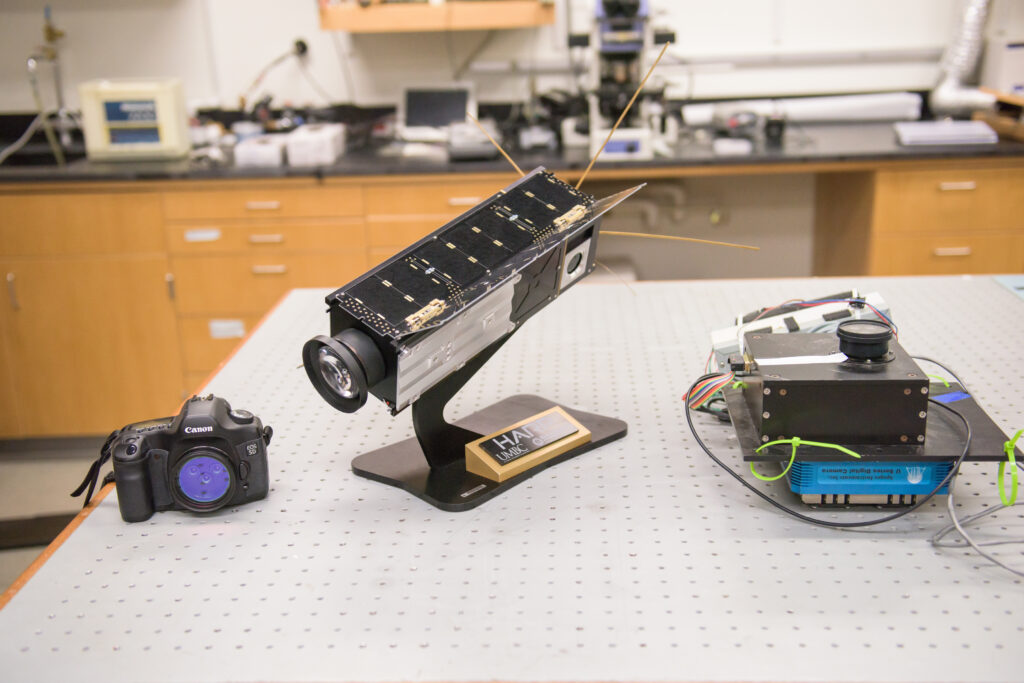
One cubesat, the Hyper-Angular Rainbow Polarimeter (HARP), has been a labor of love for a small group of dedicated UMBC scientists and engineers for the last five years. There were times when they weren’t sure if HARP would ever get to space, but the big moment had finally arrived. Today, HARP was headed up. Way up.

Around 9:55 a.m., the crowd quieted. Their thoughtful silence spoke to years of late nights, early mornings, sighs and tears, hugs and high-fives. They thought back to team meetings with frantic napkin scribbling, spacecraft models made of children’s toys when an idea struck at home, and big dreams.

UMBC’s Roberto Borda, one of the core engineers for HARP, stood at the front of the viewing area, his arms around his wife. “It’s happening, it’s happening!” he whispered excitedly in her ear. Other team members stood nearby with their spouses, children, and friends.

The crowd collectively held its breath and squinted across open fields at the rocket, which was backed almost directly by the low morning sun. And then, finally, it got loud. Really loud. The silent guests watched as Antares and Cygnus roared to life, 440,000 pounds of oxygen fueling eight massive explosions generating upwards of a million pounds of thrust.

The Antares rocket, with Cygnus resupply spacecraft onboard, launches from NASA’s Wallops Flight Facility. Photo Credit: (NASA/Bill Ingalls)

At exactly 9:59:37, right on schedule, the rocket burst from its restraints and bolted upward into the sky. Cheers erupted, and the nervous tension dissipated as the rocket rose ever higher. Within four minutes, it was 100 miles above the Earth, headed to the space station at 17,000 miles per hour.

A few minutes later, champagne bottles popped and the celebration began.

Observing particles in Earth’s atmosphere

The HARP satellite’s unique sensors will collect new kinds of information about clouds and tiny particles in Earth’s atmosphere, such as wildfire smoke, desert dust, and human-generated pollutants. These particles, collectively known as aerosols, have a multitude of effects on the global climate and the health of organisms. For example, rain droplets condense around the particles, so they play a role in global precipitation. The particles can also reflect light away from Earth as well as trap energy inside Earth’s atmosphere, which both affect climate. And pollutants can lead to various respiratory ailments in humans and other animals.

With its innovative design, HARP is able to observe the particles from many angles at once to give scientists a more comprehensive view of what’s going on in the atmosphere. The new data will equip scientists with information they need to better understand climate and air quality concerns. 

“HARP is really a technology demonstration mission,” explains Vanderlei Martins, the lead researcher on HARP and director of UMBC’s Earth and Space Institute, “but our goal is to also do some science with the data.”

The team includes engineers, physicists, and mathematicians from UMBC and Space Dynamics Laboratory (SDL) in Utah—which designed the exterior parts of the satellite that would carry the UMBC instrument into space. “As an engineer, I’m looking to develop technology that can make the science happen,” says Dominik Cieslak, an assistant research scientist with the Joint Center for Earth Systems Technology (JCET), a UMBC partnership with NASA. 

Other UMBC team members are developing algorithms to effectively analyze the data that will eventually be arriving in huge quantities. Cieslak notes that the data could be used in new ways for years to come as researchers develop new algorithms and computing power continues to grow.

Awaiting “first light”

“We’re going to celebrate every step,” Martins said on the morning of the rocket launch. He was careful to note that the launch was just one step—a particularly exciting one—in a lengthy sequence. Only when the satellite was safely orbiting Earth and sending back data would he and his team know whether HARP was working the way they intended.

Despite the additional steps to come, the launch was “a big milestone,” said Brent McBride ’14, physics, a current Ph.D. student in atmospheric physics. With the setbacks the project had experienced over five years, to arrive at launch day was “a wonderful thing.”

Roberto Borda, one of the core engineers on the HARP project, anticipates the launch with his wife, Carolina Napp Avelli. Photo by Sarah Hansen, M.S. ’15.

Cieslak acknowledged that going forward, “there are many ways for things to go wrong—but there is only one way for everything to go right.”

To increase the likelihood of things going right, before the rocket launch the team tested HARP many times on two different kinds of aircraft that fly at high and low altitudes, to ensure the instrument was working properly. But still, says Borda, “It’s a different beast going in a plane versus going to space.”

If every step in HARP’s journey went perfectly, it would be sending back images from space—the first of which the team calls “first light”—within a few months. “I’ll really, really celebrate when we get the first light,” Martins said.

A hero’s journey

Two days after it launched from Wallops, on Monday, November 4, the Cygnus capsule made it safely to the ISS—another step completed. Then, the team waited with anticipation until astronauts were available to release it into orbit. Finally, after multiple delays, on February 19, 2020, UMBC community members gathered in the Physics Building to watch a live stream of the release.

“We are 55 seconds from jettison,” came the voice over the internet. Once again, the crowd fell silent as the clock ticked down. At the prescribed moment, the group witnessed a small blob silently exit the launch tube and float slowly into space. HARP was the 100th cubesat ever launched by NASA. The successful ISS release was another necessary step—if less dramatic than the rocket launch—along HARP’s journey.

Then, more waiting. Even if HARP was collecting data, if it couldn’t send that data back to scientists on Earth, all would have been for naught. Thankfully, a little over a week after HARP’s release, Earth-bound instrumentation at Wallops successfully established a connection with the satellite. 

Vanderlei Martins, Roberto Borda, and Dominik Cieslak with HARP at UMBC. Photo by Marlayna Demond ’11.

Still, the team didn’t know then if HARP was actually working. Under normal circumstances, the team would have gotten an answer to that question within a few more weeks, by mid-March. But that was just as COVID-19 began to wreak widespread havoc in the United States. So, more waiting for the HARP team. NASA, UMBC, and Space Dynamics Laboratory employees scrambled to figure out how to operate the satellite from their homes, and competition for data transfer time on ground-based instruments became ever steeper, as NASA’s capacity dwindled.

Finally, on April 15, 2020, a full nine weeks after HARP’s release from the ISS, almost six months after its launch on the Antares rocket, and nine months since anyone on the HARP team had actually laid hands on the instrument—not to mention the years and years of research, design, and construction of HARP itself—it came. First light. And it was perfect.

Moment of Truth

A week later, Martins perused the first fully-processed image, which happened to be of the Mediterranean region. The outline of Italy was clearly visible. He started out as any scientist would, making careful, objective observations: “There are no defects. So far, there are zero issues with the UMBC payload. It is working as designed, and so far, it has exactly the same performance as we had in the lab.” 

Slowly, it started to sink in. Every setback, every time he and his team had put off celebrating, every time he had tempered his enthusiasm in anticipation of first light… Well, here it was. First light. Then, it came out in a rush:

“You know, the last time we touched the sensor was last September. It has been shipped, it has been transported, it was launched in a rocket to the space station, it was released from the space station…All those things happened and we had no idea how people were treating it… is it contaminated? Is it broken? And so far… everything is perfect.” His smile grew broader.

“Now, it is operating in space. HARP is a demonstration of a new technology that was completely developed at UMBC, and it is now operating in space. It’s working, it’s performing, it’s showing everything we expected and that we’ve been working toward for the last 10 years…So it’s fantastic.”   

True Teamwork

Karl Steiner, UMBC’s vice president for research, was thrilled to witness his first NASA rocket launch as HARP leapt into the sky on November 2. “To have seen Vanderlei and his team work on this as long as I’ve known them, and know the amount of work and sacrifice they’ve put in, the chance to be with them on this important day…” He trailed off, brimming with emotion. “It’s a very special day for the team and for UMBC.”

Steiner’s pride only grew as HARP continued its journey. “This successful launch of the HARP CubeSat is the latest achievement in a long string of impactful scientific and technical milestones from UMBC and its Earth and Space Institute,” he shared. “We can’t wait to explore the scientific data that HARP will make accessible.”

Even though they couldn’t get VIP passes for the special launch viewing area, a number of Martins’ undergraduates came along to Virginia for the experience. Photo by Sarah Hansen, M.S. ’15.

No team deserves this success more than Martins’. After every setback, they never gave up. Even when the instrument was damaged during testing, Cieslak brought it back to UMBC from Space Dynamics Laboratory in Utah, completely deconstructed it, cleaned it, and put it back together. “It turned out that after that operation, the instrument was working better than before,” Martins said. “To me, that’s a testament to my team.” Always rising to the occasion. Always coming back stronger. 

Persistence pays off

Yet, even after achieving first light, and proving that this technology—which is unlike any ever deployed in space—can work, the team isn’t resting on its laurels. HARP2 is well underway, and is scheduled for launch on NASA’s PACE mission in 2021. HARP2 will have bigger scientific goals, and even better optical, electrical, and mechanical systems.

Much of HARP2’s infrastructure is being designed by UMBC students, who have dubbed themselves “the space coders.” The HARP2 team includes three Ph.D. students, one master’s student, and eight undergraduate students—seven from UMBC and one from Towson University. The HARP team also included two high school students.

The team toasts the successful launch with bottles of Harp. Photo courtesy of Sarah Hansen, M.S., ’15.

All this looking forward provides powerful motivation for a dedicated team. But looking back is important, too. At a pizza party after the rocket launch, the team members reminisced about the time they’ve spent together—some as many as 15 years on other projects and five years on HARP.

“Life can surprise you. Even five years ago I couldn’t have imagined I’d be here today. So keep dreaming,” said Cieslak. “Keep dreaming.”

******

Header image designed by Dusten Wolff ’13.

UMBC researchers receive a Fast Grant to study antivirals’ effectiveness against COVID-19

Katherine Seley-Radtke, professor of chemistry and biochemistry, has received a six-month Fast Grant to test antiviral compounds developed in her lab for effectiveness against COVID-19. Collaborators on the grant include Chuck Bieberich, professor of biological sciences at UMBC, and colleagues at Johns Hopkins University and Cornell University.

“A normal NIH grant takes almost a year from submission to receiving the money, and in this time of crisis, we don’t have that luxury,” Seley-Radtke says. “The Fast Grants program awards funding in days, thus allowing us to get critical results immediately.” The Fast Grants are funded by a consortium of entrepreneurs, investors, and innovators, and applications are judged by a panel of biomedical experts. 

The grants have only been given to the most promising projects that can return results quickly. Many have gone to some of the most prestigious research institutions in the world, including Stanford University, MIT, and Columbia University. “We are honored to be included in such company,” Seley-Radtke says.

Chuck Bieberich, professor of biological sciences, has expertise in animal trials and will collaborate with Seley-Radtke on the antiviral research.

A flexible approach

Seley-Radtke’s research has already shown that her compounds act powerfully against viruses such as Ebola, MERS, SARS, Zika, Dengue, and other human coronaviruses that cause cold symptoms. The compounds work similarly to Remdesivir, another antiviral compound undergoing trials for its efficacy against COVID-19. Seley-Radtke’s compounds are distinctive in that their structure allows them to adopt different shapes, affording them several advantages over Remdesivir.

These “fleximers,” as Seley-Radtke has named them, interfere with two different viral enzymes that the virus needs to replicate; Remdesivir interferes with just one. The fleximers stop the viral enzymes without harming very similar human ones, which is critical to making the compounds safe, Seley-Radtke explains.

The fleximers can also avoid being rendered inactive by a coronavirus defense mechanism. Coronaviruses have a special enzyme that seeks out and removes unnatural compounds that the virus has mistakenly incorporated into its replication process. The fleximers’ ability to take on different shapes protects them from this defense. The compounds’ flexibility also helps them maintain potency in the face of viral resistance.

“Given that recent reports suggest more than 40 different strains of SARS CoV-2 are currently circulating, the ability to avoid resistant mechanisms will be critical for developing a clinically relevant antiviral,” Seley-Radtke says.

Nia’mani Robinson ’21 conducts research in Katherine Seley-Radtke’s lab.

Gathering crucial data

These compounds have already shown activity against SARS COV-2 in test tubes, but there are still many steps in the journey toward an approved drug for human use, including studies in animals and then human trials.

“Our efforts for the Fast Grant award will be focused on obtaining the critical animal data needed to move these potent compounds toward clinical trials,” Seley-Radtke says. “Although we have been working on SARS, MERS, and human coronaviruses for a number of years, the awarding of these funds is indeed validation of the importance of our work. And it is particularly important given the urgency due to the ongoing pandemic.”

Seley-Radtke has also been active in sharing her expertise in the media, including writing articles for The Conversation that have garnered nearly 800,000 reads. She has also spoken with news outlets such as the BBC, Washington Post, NPR, Washington Examiner, and many more.

Banner image: Katherine Seley-Radtke. Photo by Matt Radtke.

Other photos by Marlayna Demond ’11 for UMBC.

UMBC to receive $7.7 M for U-RISE, a research training program focused on STEM leadership

Since it launched at UMBC in 1997, the MARC U*STAR Program has connected nearly 500 hundred UMBC students with research opportunities and invaluable support. After years of remarkable results, the program is now at an important moment of transition.

MARC U*STAR stands for Maximizing Access to Research Careers Undergraduate Student Training in Academic Research. The NIH program was founded on three key elements that are proven to increase students’ persistence and success in research careers, especially for students from underrepresented groups in biomedical sciences. These elements include recognizing and recruiting outstanding, passionate students; offering excellent research mentorship; and providing strong administrative support and advising.

A striking 95 percent of UMBC’s MARC U*STAR Scholars have graduated with STEM degrees, around double the national rate for students who begin STEM programs. And 87 percent have continued their education in graduate programs, with 79 percent pursuing Ph.D., M.D./Ph.D., or M.D. degrees. UMBC’s MARC U*STAR graduates have been almost five times more likely to attend graduate school than their academically comparable peers.

MARC U*STAR Scholar Robin Bailey ’20, biological sciences, with her research poster at UMBC’s Undergraduate Research and Creative Achievement Day (URCAD) in 2018. Photo by Phyllis Robinson.

“If I was not a part of the MARC program, I would not be where I am today,” says Robin Bailey ’20, biological sciences. Today, she is about to graduate from UMBC having presented her research at national conferences and written two academic papers. She spent a summer researching at Harvard, and now has committed to pursuing her Ph.D. in cellular and molecular biology at the University of Pennsylvania’s Perelman School of Medicine.

Bailey’s experience is a familiar one in UMBC’s MARC U*STAR program. This unequivocal, long-term success is not an accident. 

Growth mindset

As the final year of the current MARC U*STAR grant comes to a close this May, UMBC has received a new five-year grant from the NIH. This new grant is part of the Undergraduate Research Training Initiative for Student Enhancement (U-RISE). It will build on the strong legacy of MARC U*STAR at UMBC, providing $7.7 million over five years to support the same activities offered by MARC U*STAR, plus a few more.

“The MARC grant is 23 years old, and it’s had great success,” says Phyllis Robinson, program director for MARC U*STAR at UMBC and lead on the new U-RISE grant. “So we’re going to take all the good things, and then add a few new things.”

MARC U*STAR provides students intensive academic advising and funding for conference travel and toward tuition. Advising includes traditional guidance on course selection, as well as support in preparing for and obtaining research positions and help with the graduate school application process. Monthly lectures from external STEM professionals connect the scholars with experts in various fields and give them opportunities to network.

MARC U*STAR Scholar Andreas Seas ’17, biochemical engineering, gives a presentation at URCAD 2016.

Nurturing student passion

Perhaps most importantly, the MARC program helps create a sense of community among the scholars. “Being a part of the MARC family is advantageous not only because you’re getting extra support to go to conferences, but you’re surrounded by all these people that are interested in science and want to improve people’s lives with science,” reflects Andreas Seas ’17, biochemical engineering.

Seas particularly notes the support of Lasse Lindahl, Robinson’s predecessor; Jackie King, associate director of the MARC U*STAR program at UMBC; and his peers and research mentors. Today, Seas is pursuing an M.D./Ph.D. degree at Duke University.

“The MARC program solidified my love for research and science,” adds Erwin Cabrera ’10, biological sciences. “It provided me with the mentoring and one-on-one advising that was pivotal in my success at UMBC.” Cabrera is paying that mentorship forward in his current role as director of the Research Aligned Mentorship Program at Farmingdale State College in New York.

Erwin Cabrera
MARC U*STAR Scholar Erwin Cabrera ’10, biological sciences. Photo courtesy Erwin Cabrera.

 Resilience on the rise

The new U-RISE funding will offer all of the same programming as MARC for up to 35 students per year. On top of that, U-RISE Scholars will participate in two training workshops. One will examine rigor and reproducibility in research. The other will focus on how to work with big data, which has become ubiquitous in so many research fields. U-RISE will also fund training for faculty mentors in how to best support their diverse mentees. 

Current MARC Scholars will be able to continue with the program through graduation.

Phyllis Robinson (center) with Paula Johnson, president of Wellesley College (left), and UMBC valedictorian and MARC U*STAR Scholar Eudorah Vital ’18, biochemistry and molecular biology, at Commencement.

This is all heartening news for Bailey. “The MARC program has provided me with countless opportunities to improve my skills in the laboratory and develop a scientific mind. The program also pushes MARC Scholars to show proof of these skills at scientific conferences,” she says. “Where I once lacked confidence in my ability to think critically and present publicly, I now have a resilient drive to overcome obstacles.”

Until now, “for students who want to pursue a research career in biomedical sciences, the MARC program has been the place to be,” Bailey says. Now, that place will be U-RISE.

While the name will be new after 2020, the work and commitment of faculty mentors and advising staff will hold steady. Under Robinson’s leadership, they’ll continue to help UMBC students see themselves as future leading scientists and find their paths to research careers.

Banner image: Academic Row at UMBC in springtime. All photos by Marlayna Demond ’11 for UMBC unless otherwise noted.

UMBC team makes breakthrough discovery in HIV research, opening path to new, better therapies

New research on the structure of the human immunodeficiency virus (HIV) has revealed a promising novel drug target for treating HIV infection, which affects more than 1 million Americans and 40 million people worldwide. The findings, published today in Science, show that the virus’s genetic code can be read in two different ways by the cells the virus has infected. The result is that infected cells make two different forms of the virus’s RNA.

“This functional diversity is essential for the virus to replicate in the body. So the virus has to have a proper balance between the two forms of RNA,” says Joshua Brown, Ph.D. ’18, biochemistry, and lead author on the study. “For decades, the scientific community has known that two different structural forms of HIV RNA exist—they just didn’t know what controls that balance. So our discovery that a single nucleotide is having a huge effect is a paradigm shift in understanding how HIV works.”

Crucially, “You can imagine that if you could come up with a drug that would target the genetic code at that one specific spot, and shift it to one conformation only, then it could prevent further infection, theoretically,” Brown says.

A new trajectory

“One of the things we’re working on now is testing different molecules that could shift the equilibrium between the two forms, so that it could potentially be used as a treatment for HIV,” says Issac Chaudry ’21, biochemistry and molecular biology, another author on the paper.

This exciting work comes from a research group led by Michael Summers, Robert E. Meyerhoff Chair for Excellence in Research and Mentoring and Distinguished University Professor at UMBC. Summers has been conducting groundbreaking research on HIV for decades. Typically, the group’s focus is on basic science.

“Drug discovery isn’t the direction that the Summers lab usually goes, but this was such an impactful finding in a very attractive area, we took the initiative to start looking into it,” Brown says. “But we’re still in the very early stages.”

Professor Michael Summers has been conducting groundbreaking research on HIV for decades. He is also well-known for his long-standing efforts to train researchers from all backgrounds, and to involve researchers at all stages in their careers in the highest-level science projects.

More effective treatments for more patients

Thanks to significant research on HIV over the last few decades, today AIDS is a manageable disease. Still, therapies can come with side effects, medication regimens can be complex, and treatment options can be limited for patients with other conditions, such as liver or kidney problems.

Many therapies, even if they come in the form of a single pill, contain several drugs targeting different parts of the virus’s replication cycle. That’s necessary because the HIV genetic code, which is made of RNA, mutates rapidly. This allows the virus to adapt and become resistant to current HIV therapies. If a drug targets an area that has mutated in a given patient, the drug may no longer work for them. By using several drugs at once, it’s more likely that the regimen will continue to work for longer.

But the area of the HIV RNA genome that this new research focuses on is “highly conserved.” This means the rate of mutation is less than other places in the genome, explains Ghazal Becker ’19, biological sciences and an author on the paper. The result is “there’s more chance of a drug that targets that region being effective for longer,” she says.

It might also mean that one drug would be enough, rather than patients needing several drugs to get the job done. “If you’re targeting a conserved region, you can potentially come up with a treatment plan that uses only one drug,” says Aishwarya Iyer ’18, M26, biochemistry and molecular biology, and an author on the paper. “It might have fewer side effects and could offer more treatment options to people with different health conditions.”

Expanding the research horizon

This new research opens up a range of opportunities for Brown’s research group and others. “We’re very interested to see how other labs will interpret our results, expand upon them, and possibly find other applications for this type of RNA function,” Brown says.

Those future results and any new therapies they enable could have a major impact. “Every time we get a new drug in HIV, we exponentially improve the chances of individuals finding a drug that works for them, where resistance is a little less likely,” says Hannah Carter ’17, biochemistry and molecular biology, and an author on the paper. “Every time a new drug can get on the scene, that’s a significant improvement for the lives of HIV patients.”

The research could have effects beyond HIV, too. “Some HIV research has laid the groundwork in how we understand coronaviruses,” Carter adds. “All basic science in HIV ends up having a ripple effect throughout all of virology.”

The ripple effect might go even farther. “The idea that a single nucleotide difference is changing the structure and function of RNA that is thousands of nucleotides long could open up a whole new aspect of cell biology,” Chaudry says. “It could be possible that there are mammalian genes that operate in a similar manner, and the entire mechanism might be something that’s applicable to other human genes as well. I think that whole paradigm could provide a new perspective for RNA biology.”

Joshua Brown, Ph.D. ’18, biochemistry, mentors a student in the lab.

Carrying it forward

While these findings sound straightforward as described in the new Science paper, they represent a very large number of experiments completed by a dedicated team. “‘I’m very fortunate to have such a great group of students, because without them and their effort this definitely would not have been possible,” Brown says. The undergraduates on the team “were just as invested in this project as I was,” Brown says. “I really feel like they should get a Ph.D. out of this, too.”

Publishing in Science, arguably the most prestigious scientific journal in the world, is a big deal for any researcher. It’s very rare to have undergraduate authors on papers of this caliber; the new paper has 15 undergraduates and two Maryland high school student co-authors. All of them met the strict requirements for authorship: making a significant intellectual contribution to the research. Having such an accomplishment on their resumes will certainly help propel their research careers forward. 

“Everyone in the group felt the project was ours, and I think that really came out in our work ethic and the time we were willing to put into it,” Chaudry says. “Josh is really good about asking us what we think and bringing us into the experimental design process, so the undergrads and high school students actively participated in a lot of the problem solving and critical thinking that went into this paper.”

“Josh had really high expectations for us, which gave us really high expectations for ourselves,” Iyer adds. “That’s something I think all of us continue to carry when it comes to other lab experiences.”

These students, and the additional 11 authors who were undergraduates at the time they contributed, are all still working in labs. Brown completed his Ph.D. at UMBC in 2018, and just finished his M.D. at the University of Maryland School of Medicine. He’s continuing to work in the Summers lab until he begins his residency this summer, unless he’s called up early to serve during the COVID-19 pandemic. Iyer is in the M.D./Ph.D. program at the University of Maryland School of Medicine. Becker is preparing to apply to medical school. Chaudry is beginning to apply for M.D./Ph.D. programs while finishing his bachelor’s degree at UMBC. Carter is in an M.D./Ph.D. program at the University of Michigan.

So, to Brown’s comment about earning a Ph.D. through this research, Carter says with a smile, “We’re working on it.”

Banner image: Joshua Brown, Ph.D. ’18, in the lab. All photos by Marlayna Demond ’11 for UMBC.