All posts by: Sarah Hansen, M.S. '15


UMBC’s Tara LeGates is first runner-up for prestigious international neurobiology prize

Tara LeGates, assistant professor of biological sciences, has been named first runner-up for the prestigious, international Eppendorf and Science Prize for Neurobiology, a competition for researchers under 35 that recognizes outstanding neurobiology research. Science published her winning essay today, which describes LeGates’s research for a 2018 paper published in Nature.

Experiments for her work took more than four years and resulted in groundbreaking discoveries about the neurological basis for reward-seeking behavior. LeGates’s work may pave the way for new, more targeted treatments for mental health disorders including depression and addiction.

“I’m really interested in how the brain integrates a lot of different kinds of information to regulate complex behaviors, such as seeking rewards,” LeGates says. “A number of different processes all have to come together to successfully obtain rewards, which requires that different brain regions communicate with each other.”

A new approach to more targeted treatments

LeGates’s 2018 paper explored the details of a specific communication pathway between two brain regions: the hippocampus and the nucleus accumbens. She found that this particular synapse (a connection between the two) is pivotal to reward-seeking behavior in mice. This mechanism is highly conserved across species, including in humans. 

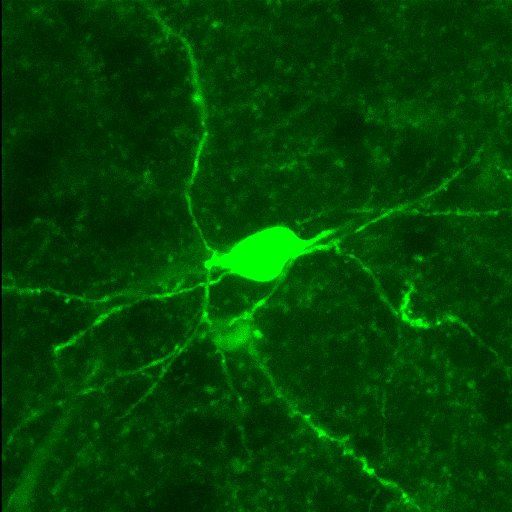
Microscope image: Neon green blob on black background
A neuron in the nucleus accumbens, from LeGates’s research. Image courtesy Tara LeGates.

When reward-seeking behavior goes into overdrive, addiction can occur—where an individual continually seeks a particular reward, even if there are harmful consequences. If reward-seeking behavior is inhibited, however, depressive symptoms can result. That can manifest as someone no longer enjoying activities they used to find rewarding, such as spending time with friends or exercising.  

The most common treatments for depression rely on drugs that indirectly target neurons involved in reward seeking, LeGates explains. Because they work indirectly, these drugs often take weeks to show any effect. They can also upset the chemical balance elsewhere in the brain in undesirable ways. 

A better understanding of the specific brain regions and synapses involved in reward seeking could make feasible much more direct forms of treatment, such as targeted deep brain stimulation or, eventually, new medications. That kind of advance could bring relief to more people, more quickly, and avoid some of the most dangerous side effects of current treatments.     

“There’s this increasingly popular hypothesis in the field that the strength of synapses, like ones between the hippocampus and the nucleus accumbens, are really what underlies depression,” LeGates says. “In depression, you have a weakening of these synapses, and antidepressants currently on the market act indirectly to restore them. By identifying the specific synapse involved, it would allow for a more targeted approach to treating disorders like depression.”

Peeling back the layers

Moving forward, LeGates would like to further explore the way the brain works to regulate reward-seeking behavior. Her Nature paper found that several things have to go right for a mouse to find something rewarding, remember where it experienced the reward, and then seek it out again, but the relationships between the components of the rewards-seeking process are still a bit murky.

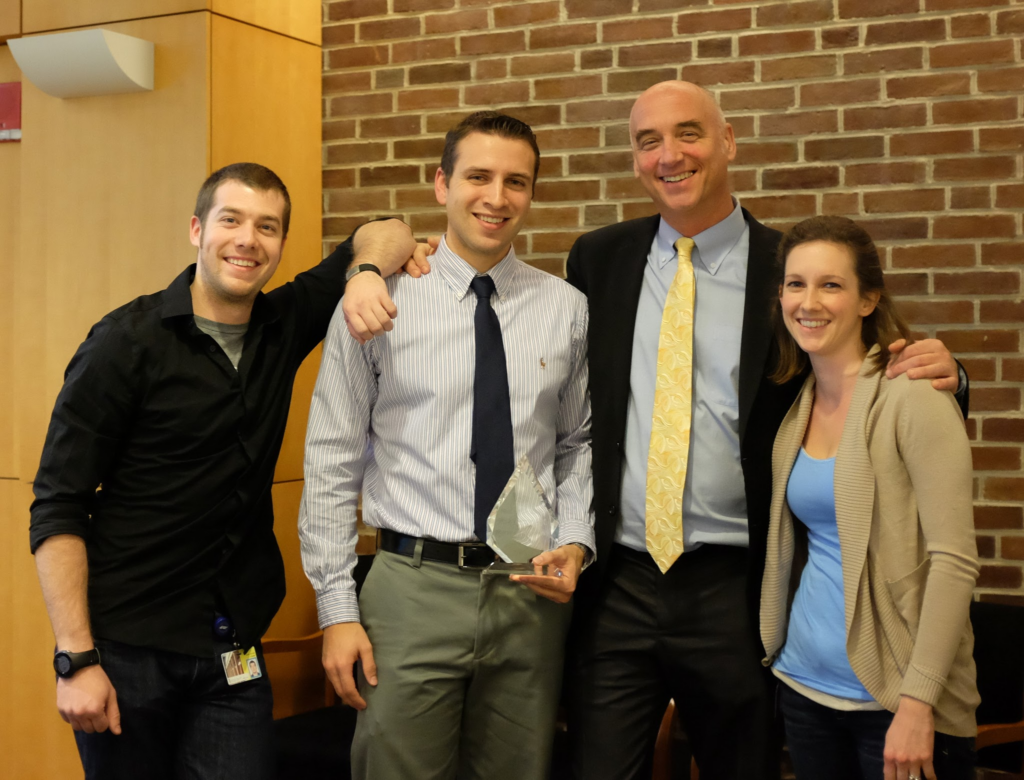
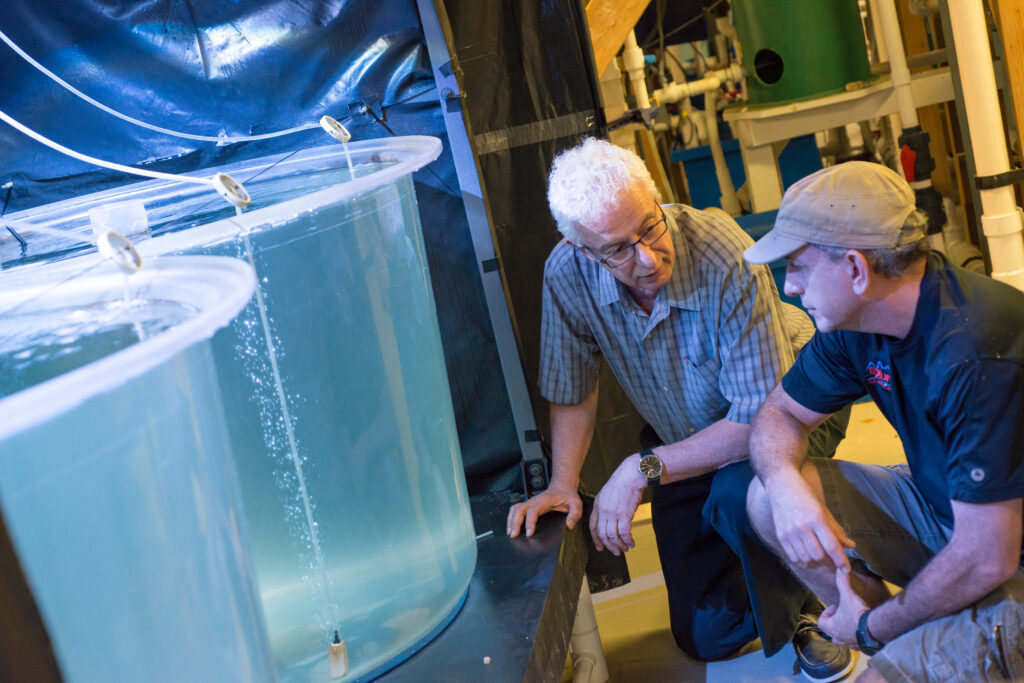
From right: Tara LeGates with her postdoctoral advisor, Scott Thompson; co-author Mark Kvarta; and lab member Adam Van Dyke. Photo courtesy Tara LeGates.

For example, a stimulus such as the company of a fellow mouse may be rewarding in the moment. If the connection between the nucleus accumbens and the hippocampus is blocked during the interaction, however, the mouse won’t remember where it had that rewarding experience. On the other hand, if that brain connection is stimulated even without the presence of a physical reward, the mouse will prefer the location where the brain stimulation occurred.

“The nucleus accumbens receives input from the hippocampus, and that’s important for conveying those contextual cues,” LeGates says. Her further work will continue to tease out the complexities of reward seeking.

Helping students flourish

In addition to her contributions to neurobiology, LeGates is committed to creating an inclusive lab environment for UMBC students.

“I’m working on building a really strong research program where students are flourishing,” she says. Her work as a researcher and educator focuses on “not only making significant scientific contributions, but building young, independent scientists” who can both have a positive experience and achieve their goals.

LeGates joined the UMBC faculty in 2019. “Overall, UMBC, and especially the biological sciences department, has been incredibly supportive ,” she says. “I am truly grateful to work in such a wonderful environment amongst amazing colleagues and brilliant students.”

One of those colleagues, Phyllis Robinson, professor of biological sciences, is a champion for LeGates and is confident she will continue to make a major impact in her field. “UMBC is fortunate to have such a rising star in the field of neuroscience. Tara did groundbreaking work as a graduate student at Johns Hopkins University and as a postdoc at the University of Maryland School of Medicine,” Robinson says. “I am certain she will bring the same intelligence and insight to her own lab at UMBC.”

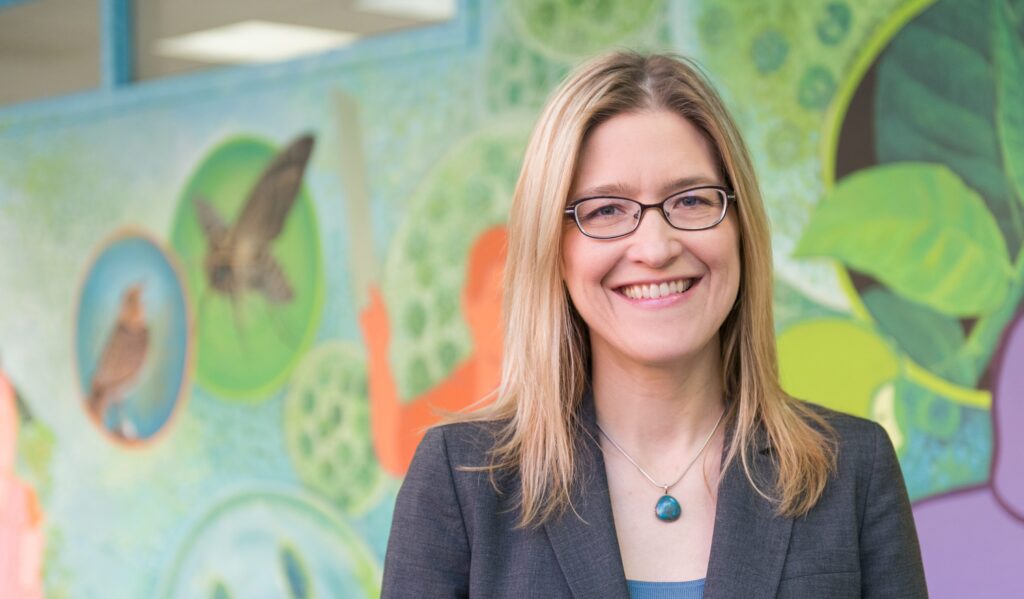
Banner image: Tara LeGates in the UMBC Interdisciplinary Life Sciences Building. Photo by Melissa Penley-Cormier.

UMBC engages Howard Community College students with environmental science—online and in their own backyards

It’s a mere hour after sunrise, and Wajhee Zaidi, a student at Howard Community College (HCC), is out in his neighborhood, looking for birds, insects, and whatever other critters he can spot. “Never would I have thought that I would go out at 7 a.m. just to look for different species of animals,” he says. “It got me out of my comfort zone.”

Zaidi’s early morning birding and bug-hunting was part of a three-week program collaboratively organized by HCC and UMBC. The practicum immersed HCC students in an authentic environmental science research experience and helped them connect with UMBC faculty.

Orioles and orb weavers

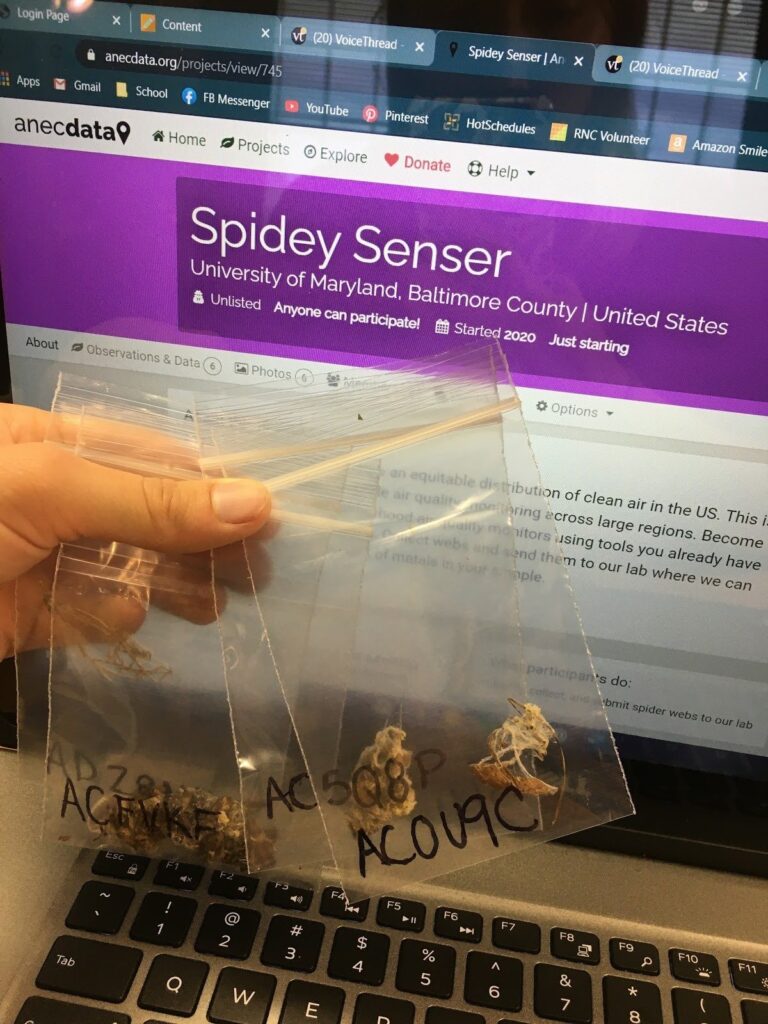
Each morning, Kevin Omland, professor of biological sciences, and Chris Hawn, assistant professor of geography and environmental systems, guided the students through activities like analyzing data on Caribbean orioles, collecting spider webs for air quality monitoring, and safely seeking out and documenting local creatures.

The students gained foundational research skills like observation, data collection, and collaboration. They also made real contributions to research and service projects. “They participated in three ongoing scientific research projects, all from their living rooms,” Hawn says.

hand holding ziploc bags containing spider webs in front of computer screen
The students collected spider webs as part of Chris Hawn’s Spidey Senser project. Photo courtesy Mary Lenahan.

As part of a service-learning project for Baltimore Green Space, the students created tutorials about how to use the iNaturalist platform. And Omland shared their analysis of the interactions between the endangered Bahama Oriole and the parasitic Shiny Cowbird, which lays its eggs in other birds’ nests, with his lab’s research partners at the Bahamas National Trust.

Hawn also asked the students to test protocols for a program designed to help communities take greater control of their air quality. Hawn has found that analyzing the chemistry of spider webs works well as a proxy to measure hyper-local air quality, and they’re launching the program in Baltimore and Portland, Oregon in partnership with a non-profit. This project also introduced the students to the importance of citizen science.

“My goal for the students was to capture what I think is the most important part of scientific research—curiosity through observation,” Hawn says. By training their eyes and learning to see in new ways, Hawn says, “People were making discoveries literally inside their houses, or on a walk, or in their yard. It was really wonderful to see that transformation.” 

“It was great to have this real, authentic experience,” shares Mary Lenahan, an environmental science major at HCC and an aspiring reptile field researcher. “I didn’t realize I’d be able to learn this much in just three weeks,” she added, a feeling echoed by the other participants.

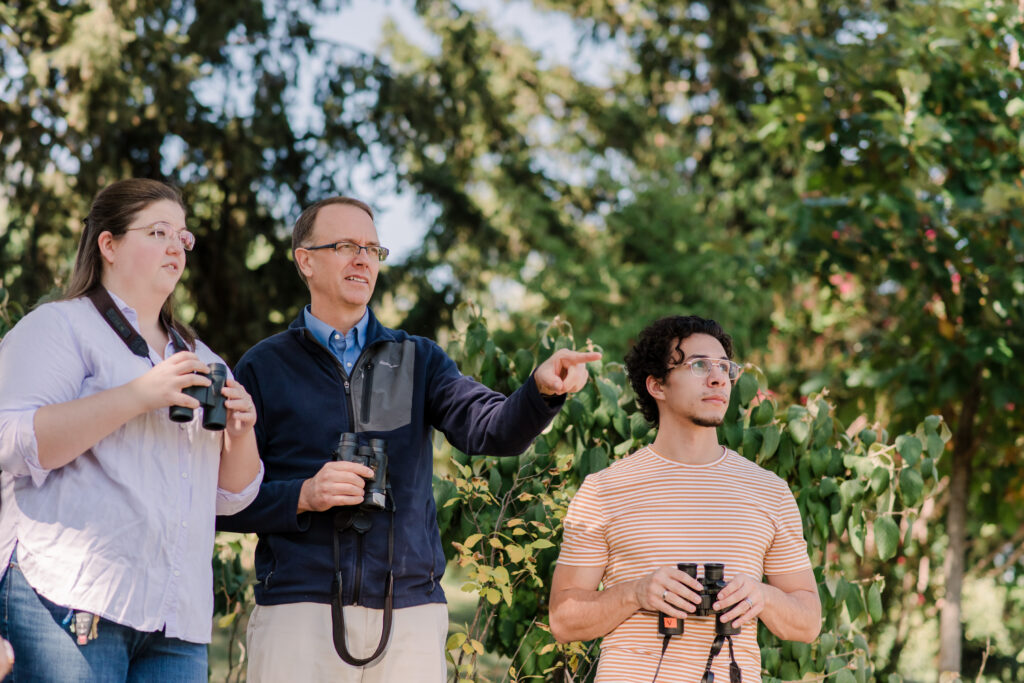
three people outdoors with binoculars
Kevin Omland (center) goes bird watching with students im 2019. Photo by Marlayna Demond ’11 for UMBC.
A broader view

“This experience has broadened my view of research,” says Oluwasemilore Oluwagbenro, a general studies major at HCC who wants to be a doctor. “Researchers aren’t just either looking at the internet and books or confined within the four walls of a laboratory—research can also be walking in your backyard.”

Beyond expanding their perspective on what research can be, the summer experience offered new insight shaping how the students imagine their future careers.

Pilar Thomas, a life science and nutrition major at HCC, says, “This research experience helped me get to know this whole sector of biology that I hadn’t really looked at at all, because my biology classes focused on human biology and physiology.”

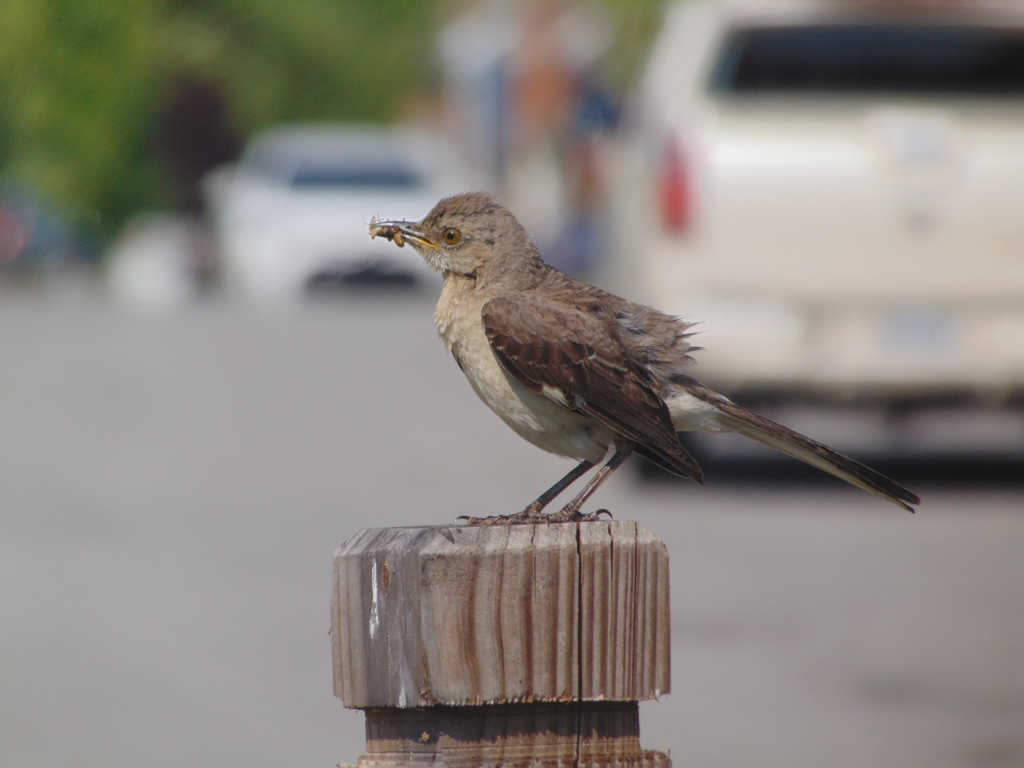
gray and white bird perched on a fence post.
A juvenile Northern Mockingbird spotted by Oluwasemilore Oluwagbenro perches on a fence post. Photo courtesy Oluwasemilore Oluwagbenro.

Zaidi, who also plans to pursue medicine, agrees. “Understanding all life and species plays a big part in medicine, so I think this definitely helped me toward my career goal by offering some insight and background knowledge.”

Oluwagbenro put it simply: “In the end, who is a good medical doctor without understanding the environment?”

Digital fluency

In addition to learning quite a bit about birds, spiders, and the scientific process, the students gained digital skills. They became proficient in Blackboard, UMBC’s learning management system, and learned how to use various online tools for their culminating project, a digital story.

Thomas was excited and surprised to learn more than science. “Prior to this research collaboration I could barely take a video on my phone,” she says, “so it was so cool to go through the process of making a final digital story, using screenshot slideshows, screen recordings, and everything. I would never have thought I would gain those types of skills in three weeks, so it helped me learn more about myself as a student, too.”

Enthusiasm “right through the screen”

The students and their instructors were surprised by the strong connections they were able to forge online. Hawn and Omland set the tone for a collegial, challenging, and fun experience. “I like to say that I throw them in the deep end and then cheer really hard and give them good advice,” Omland says with a smile. With Omland and Hawn’s coaching, the students learned to swim quickly.

three people outdoors with binoculars
Kevin Omland (center) goes bird watching with students in 2019. Photo by Marlayna Demond ’11 for UMBC.

“They expected a lot from us, and they also answered any questions we had. We had a lot of fun moments,” Thomas shares, “and with Dr. Hawn and Dr. Omland, I definitely felt connected.” Lenahan agreed, saying that working with the faculty was “like talking to a colleague.”

As colleagues, the group worked on solving problems together. “Like real research, there were problems. We had to figure out different ways of doing things,” Omland says, from teaching the students how to identify birds, to collaboratively working to find the best way to display their data, all without being together in person. “I gave them plenty of responsibility, and they came up with great solutions,” Omland says.

Omland and Hawn’s excitement for their work also made a powerful impression on the students. “We got to know them as people, and to know why they were passionate about this and what drove that fascination,” Thomas says. “You could just feel their enthusiasm through the screen.”

For example, “I was telling Dr. Hawn about this spider that I found with this really awesome web, and they started telling me all about it,” Lenahan says, “and you could really see the joy that they had knowing that I experienced the same sense of awe that they had about these creatures.”

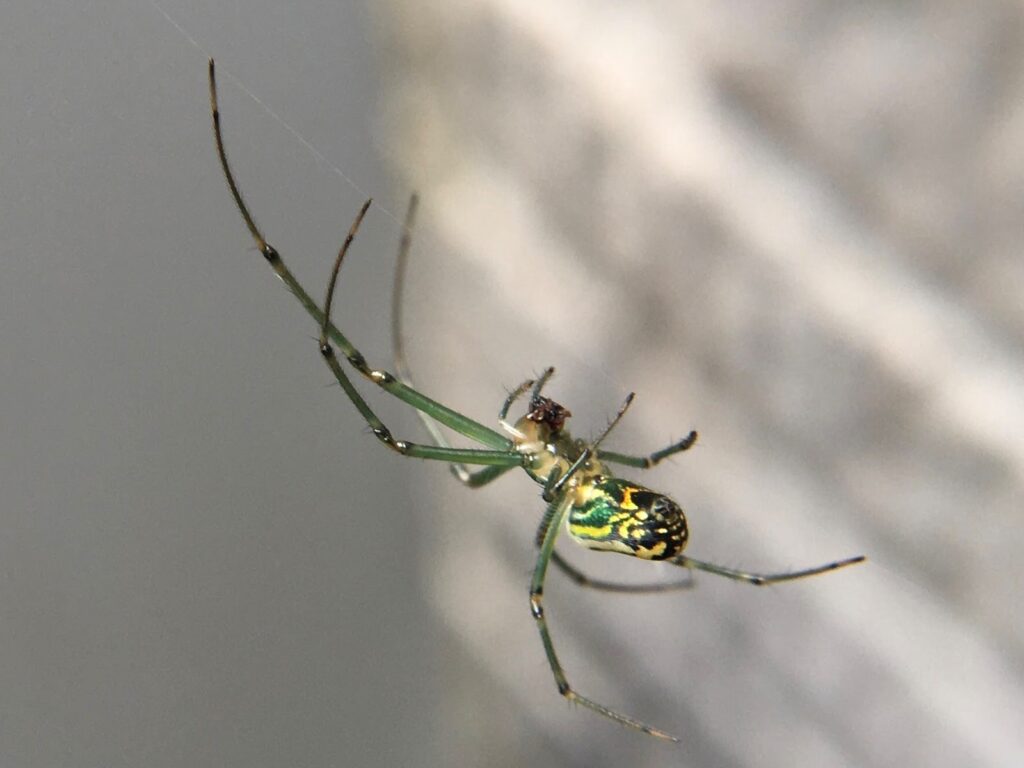
black and green spider
A basilica orb weaver, a common spider species that Mary Lenahan noticed for the first time during the summer program. Photo courtesy Mary Lenahan (HCC).

A VIP view

Even though the students weren’t physically on campus, the summer program gave them plenty of chances to get to know UMBC. Each afternoon, a panel discussion with staff and faculty from different departments introduced the group to a different aspect of the university.

Scholars programs, service learning, academic support opportunities like the Writing Center and advising, financial aid, and admissions all made an appearance. So did the Initiatives for Identity, Inclusion, and Belonging, which includes the Interfaith Center, Pride Center, and Mosaic Center; and resources for transfer and commuting students, like the Transfer Student Network and Off-Campus Student Services.

Learning about the transfer process “made everything smoother, because you’ve met all the right people already,” Oluwagbenro shares. Thomas adds, “The transfer department talked to us about everything, like financial aid, and applying, and how to get involved early with the Transfer Student Alliance. That really helped solidify everything.”

The panels were even tailored to the particular students participating this year, several of whom are interested in medical careers. By getting to ask questions about academic preparation for health professions and learn about research opportunities with faculty in different departments, “We got a VIP view of UMBC, which was really cool,” Oluwagbenro says.

Student outdoors carrying binoculars
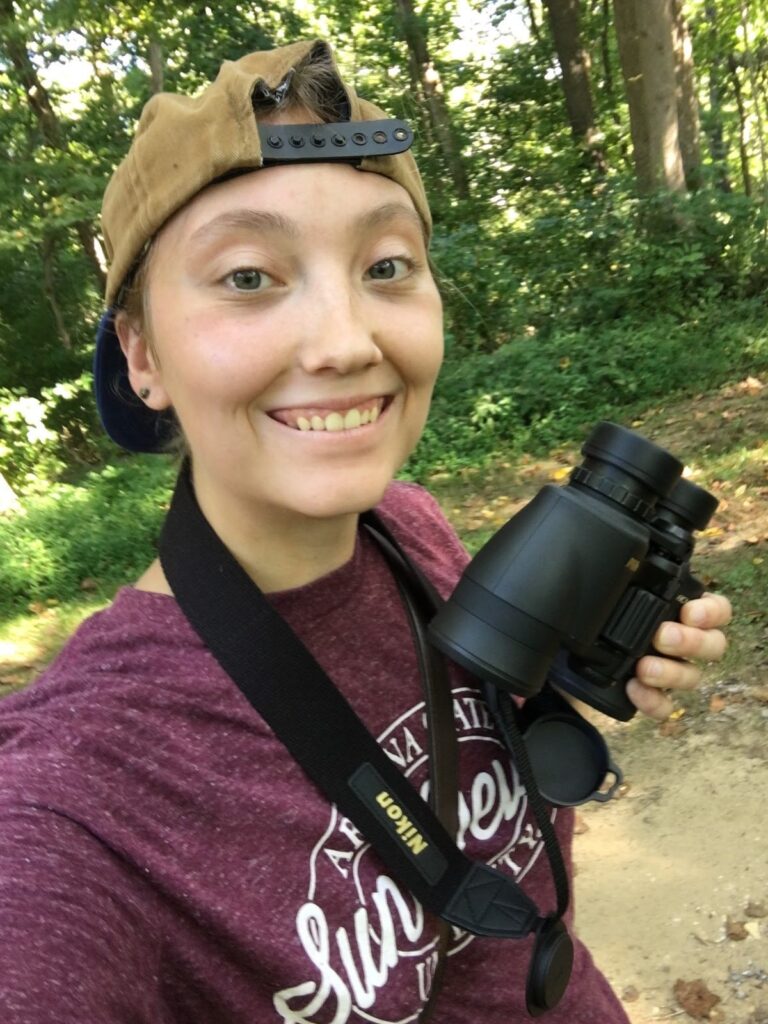
Mary Lenahan is prepared for bird watching. Photo courtesy Mary Lenahan.

Collaborative creation

All the elements of the program worked together to help prepare students for transfer—to UMBC or another institution. “We want to give students lots of opportunities to think deeply about their educational goals and trajectories,” Sarah Jewett says, “but also to build the skills, knowledge, and connections that will really help them to transfer more successfully.”

Jewett, director of innovations in transfer research and practice, designed the summer program in collaboration with Hawn and Omland, as well as Charlotte Keniston, Kasey Venn, and Emily Passera at the UMBC Shriver Center. Jewett learned about birds and spiders alongside the students, and the students appreciated her engagement throughout the experience. 

As with last year’s program in Baltimore’s urban forest patches, Patricia Turner, Dean of Science, Engineering and Technology at HCC was a critical partner in the summer program. She recruited the students and provided the field supplies for their investigations.

Expanding and evolving 

The program, funded by the UMBC provost’s office, has so far focused on environmental science research themes. Now, Jewett is brainstorming ways for it to evolve. This year’s model, with multiple, one-week sessions on thematically connected topics, could translate well to other disciplines. “What might that look like in history, or in art, for example?” Jewett asks. She’s already been meeting with UMBC faculty in other departments to explore options.

The program’s format might also evolve to meet more students’ and instructors’ needs. “Last year, we were completely outside for eight weeks, and now we’ve been completely online for three weeks,” Jewett reflects, “So now, where do we mix those pieces together? What would a hybrid model look like for next year?” 

For now, at least these four students have found new opportunities, new ways to think about science—and even new neighbors in their own local environments. Lenahan, for example, spotted a basilica orb weaver and its dome-shaped web near her house for the first time.

“I love nature and going out and exploring, so the fact that there was this common spider in my backyard that I had never noticed before was so weird to think about.” Lenehan’s orb weaver is much like UMBC to many students at the region’s community colleges—compelling and right in their backyard, yet sometimes not on their radar. Thanks to this summer’s UMBC-HCC partnership, these students are seeing the possibilities.

Banner image: An American Goldfinch perches at a bird feeder. Photo by Jim McGlone. Used under CC BY-NC 2.0

UMBC’s Daniel Lobo receives $1.9 million NIH grant to explore genetic control of development and regeneration

Salamanders regenerate their tails. Sea stars regenerate their arms. Most species of planaria, a type of flatworm, can regenerate everything from their heads (complete with brain) to their digestive organs. But if you lose part of a finger in a shop class accident, or while chopping vegetables for dinner, you’re out of luck—for now.

“Why can the worm do it, and we cannot?” asks Daniel Lobo, assistant professor of biological sciences. That’s not really the question, though, he explains.

“We were able to generate ourselves when we were embryos. So we have all the information of how to generate a new hand, for example,” Lobo points out. “The genes are there. You have the same information in your cells.” So why can’t humans generate body parts after that early stage of development? 

“Actually, we could,” Lobo argues, if we could somehow reactivate the same genes that enabled us to develop in the womb. So, “Can we reactivate them?” he asks. That’s the real question, which he is working to answer with a five-year, $1.9 million grant from the National Institutes of Health.

Faculty member and three students gathered around a computer showing figures of planaria worms.
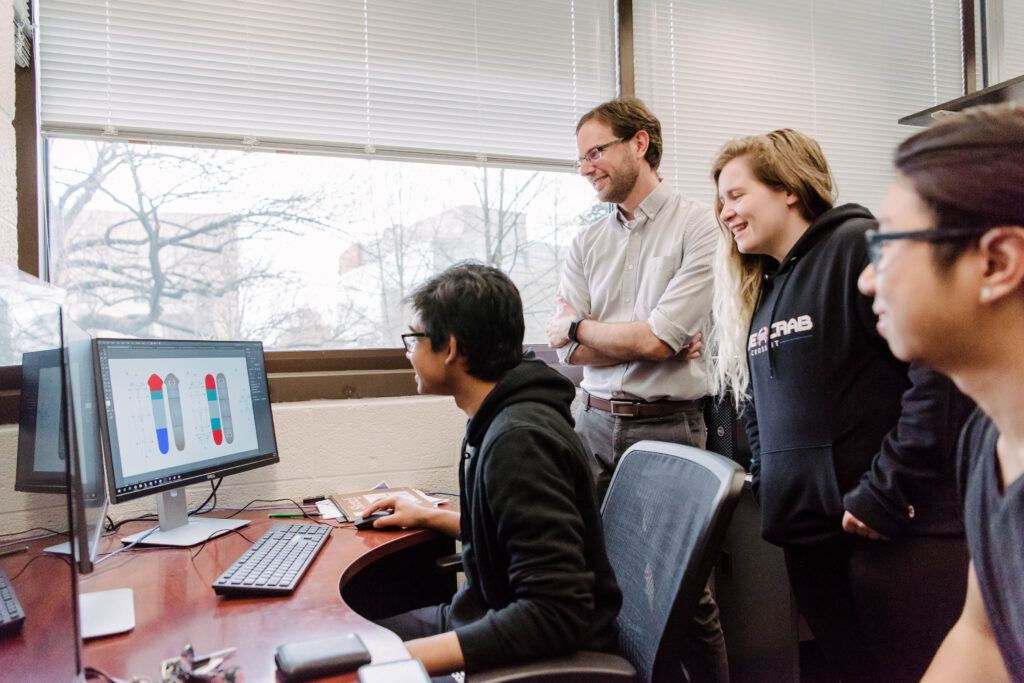
Left to right: Joy Roy ’19, bioinformatics and mathematics; Daniel Lobo; Caroline Larkin ’18, M26, bioinformatics; and Eric Cheung ’19, biochemistry and molecular biology. They’re looking at computational models of planaria. Photo by Marlayna Demond ’11 for UMBC.

Restoring independence

Lobo is tackling this question through a unique combination of techniques: wet lab experiments with planaria, and machine learning approaches that use computers to help deduce genetic regulatory networks. Previous work successfully restored the regeneration capacity of a species of planaria that had lost that ability. While still a long way from growing a human finger back, it’s a sign that the promise of reclaiming regeneration is not so far-fetched.  

This line of research could eventually make it possible for people with limb loss, such as injured veterans, to regrow lost body parts. By increasing understanding of genetic regulation, Lobo’s work might also enhance knowledge of development and developmental diseases, and how cancerous tumors work around regulatory networks to grow unchecked.

The right worm for the job

Lobo uses an approach known as systems biology to tackle these big ideas. “We mix the fields of math, computer science, and biology,” he says. “We use computational techniques to extract knowledge from biological data sets.” The result is mathematical models that can explain observations the team makes in the lab. The models can also make predictions, which researchers can test in the lab.

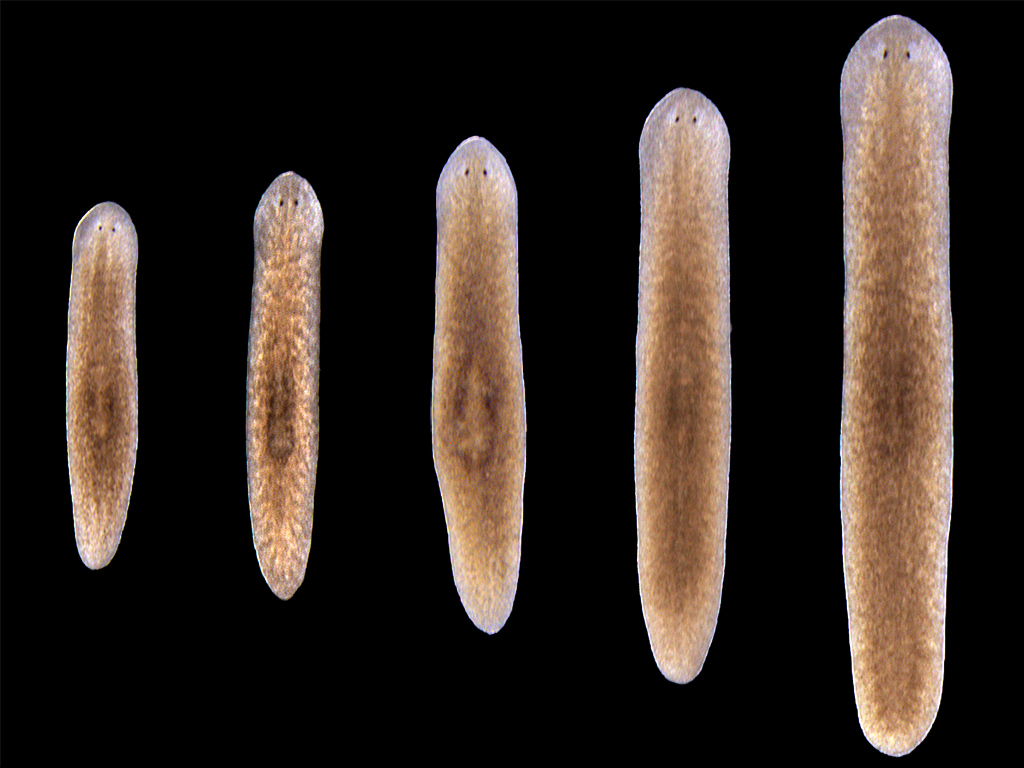
Planaria are the ideal model organism for lab work, because of their astonishing ability to regenerate. Even a worm in eight pieces will grow back into eight complete worms with proper proportions. Like mammals, the worms also grow when they have enough to eat. However, when hungry, rather than simply getting thinner, their whole bodies shrink to maintain proper proportions. So, beyond regeneration, “The general idea is to understand how gene regulation works to specify shapes and forms in biology,” Lobo says.

Five flatworms of all sizes lined up
Planaria can grow and shrink their bodies and organs. Photo courtesy Daniel Lobo.

Teamwork and flexibility

“This program is too hard to do with just wet lab or just computational approaches,” Lobo says. “You need both.” 

Because the work requires such a range of techniques, it also requires team members with a range of skills. Lobo’s lab includes undergraduate and graduate students in math, computer science, bioinformatics, and biology. The new grant will also allow him to bring on two new postdoctoral fellows, one on the wet lab side and one computational.

“We will be able to create that synergy and get people trained in both fields in the same lab,” says Lobo. He describes the interactions between lab members from different fields as essential to the success of the research.

Rather than fund a specific project, Lobo’s new Outstanding Investigator Grant will fund the lab as a whole. “It gives you a lot of freedom to adapt to whatever discoveries you make,” he says. “You have the flexibility to pursue the details that you need to.”

Teaching computers so they can teach us

The computers the team uses are powerful, but for now, they still benefit from some human guidance. To give the computers a head start on figuring out the genetic regulatory networks, the team inputs certain rules before they add loads of data from their own experiments and other labs’ work. That also ensures the computers don’t come up with a solution that is biologically impossible.  

“We know that genes generally interact in certain fashions, and those interactions can be represented in different ways mathematically,” Lobo explains. “So we can tell the computer what kinds of interactions a gene can have. And then it is free to put those interactions together in ways that make sense.”

Lobo compares it to working with Lego blocks. “How many structures can you make with Legos? Unlimited, right?” he asks. “So the computer also has an unlimited space to search, but only with things that can be put together. You cannot make a perfectly round Lego ball, for example, if you only have square blocks.”

Faculty member and two students chatting, viewed through a bookcase
Daniel Lobo, right, takes a break with Joy Roy (center) and Eric Cheung in the lab. Photo by Marlayna Demond ’11 for UMBC.
Speeding up the science

Combining wet lab and computational approaches will drastically increase the pace of discovery. A high performance cluster of computers can come up with a probable solution by testing more than a billion possible models of a regulatory network in a few days—a task that would take infinitely long for a team of humans.

Using computers to come up with plausible models, testing the models’ predictions in the lab, and then feeding the new data back into the computers to refine the model will bring researchers ever closer to understanding how different biological systems work. Research teams can apply the same investigative process to any number of biological questions, from regeneration to metastasis.

Some biologists may shy away from programming, but as Lobo says, “Biology is more and more computational. We are reaching a point that without a computer to process the data you cannot do almost any experimental work in biology.” 

He argues that interdisciplinary teams like his are the future—that diverse groups of researchers will increasingly combine multiple approaches to answer the big questions, to speed up scientific progress in ways that will have real, positive impact.

Banner image: Daniel Lobo in front of the Biological Sciences Building mural. Photo by Marlayna Demond ’11 for UMBC.
Bedrock to treetops: NSF awards $4.8M to urban environment study led by UMBC’s Claire Welty

There is an essential resource constantly flowing beneath our feet: groundwater. Urban denizens may not think about it often, or at all, because they don’t rely on wells, “but it’s still there,” says hydrologist Claire Welty, and it’s critical to understanding the health of urban ecosystems. 

Welty is director of UMBC’s Center for Urban Environmental Research and Education (CUERE) and a professor of chemical, biochemical, and environmental engineering. Groundwater is just one piece of a complicated puzzle that she and her team will work to put together over the next five years. A $4.8 million Critical Zone Collaborative Network grant from the National Science Foundation will make the large-scale project possible. The grant will support researchers at UMBC and eight other institutions that are part of the UMBC-led Urban Critical Zone Cluster.

Welty’s team will explore Earth’s critical zone, which extends from the tops of trees to the base of weathered bedrock, in urban centers along the Eastern Seaboard. In particular, they’re interested in how natural, geological processes occurring below the Earth’s surface and human-driven processes interact. Human influences include road salt application, polluted stormwater runoff, and soil-disturbing construction. These factors can all significantly influence urban water quality, water chemistry, and weathering processes. 

Most Critical Zone grants are for work in more pristine wilderness areas, because the added effects of urban processes make the research more complicated. But, Welty says, “that’s the most interesting part.”

The Earth’s critical zone extends from the treetops down to bedrock below ground. Image by the National Science Foundation.

Focus on the Fall Zone

The research will take place in four East Coast cities: Philadelphia, Baltimore, Washington, and Raleigh. The researchers strategically selected these urban centers because they align in a north-to-south corridor along what geologists call the “Fall Zone.” The Fall Zone exists at the transition from the Piedmont to the Coastal Plain, and is an area of intense interest for geologists.

“We think of this landscape as ancient, but recent research has led to a different understanding about how the Fall Zone in our region has evolved,” says geomorphologist Andrew Miller, UMBC professor of geography and environmental systems and a collaborator on the new grant. Glaciers to the region’s north played a role, and “human activity has also caused profound changes,” Miller says. “All of this forms the background for the work we are planning to do on this project.”

Two researchers stand below a concrete bridge, behind them is a giant green shrubbery and infront of them is sand and water.
Miller (left) and Welty in Catonsville at one of their research field sites. Photo by Victor Fulda.

Philadelphia to Raleigh: An urban corridor

The Fall Zone’s unique topography made it a natural place for some of the first American cities to emerge. Dramatic elevation changes characterize the Fall Zone, “so that’s where waterfalls formed, providing hydropower, so mills were set up,” Welty explains. Population centers grew up around the mills. Elevation changes at the Fall Zone boundary also limited water transport further inland, making it the natural place to build port cities. Today’s I-95 corridor links these urban centers.

The north-south corridor also gives the researchers an opportunity to examine how climate affects the movement of substances, such as sediment and dissolved materials, through the natural and built environments. Natural and human-introduced substances can affect everything from water quality to how quickly the bedrock wears away over time.  

Of the four cities, Raleigh is distinct in ways that offer unique opportunities. As a younger city, it’s laid out differently. It may also have newer water, sewer, and other systems that could affect its underground properties in ways that differ from older, industrial cities like Baltimore and Philadelphia.

The U.S. Northeast and mid-Atlantic at night, showing the urban corridor. Image courtesy NASA Earth Observatory, by Joshua Stevens.

Long-term legacy

Baltimore, in particular, is well-suited to host this research, because scientists have collected environmental data on the region for over twenty years through the Baltimore Ecosystem Study Long-Term Ecological Research Project (BES). The BES team has installed scientific instruments all over the region. Students, faculty, and sensors have been recording data consistently for decades, painting a picture of Baltimore’s watershed, ecology, and social issues related to the environment.  

However, “the subsurface has for the most part been ignored,” Welty says. With funding from other sources, she and her field assistants have drilled 35 monitoring  wells—but there’s more to be learned. 

“We’ve got all this incredible science that’s been going on for 20 years of the BES,” Welty says. With the Critical Zone grant, “Now we want to look at the subsurface to complement all the data and information and instrumentation—you name it, we have it,” Welty says. “We think it’s really important to marry these two together.”

In addition to adding more and different data to an already huge archive, the Baltimore-based team also plans to leverage their existing data in new ways. “We’re going to use stream chemistry as a window into the subsurface,” Welty says. The researchers will also examine land use patterns and analyze bedrock and soil cores. Tools that act like an x-ray or MRI will enable them to visualize the structure and properties of the subsurface that are impossible to observe directly.

Baltimore skyline. Photo by Adam Lindquist, used under CC-BY-NC 2.0.

Putting science into practice

Urban groundwater processes fascinate Welty. She’s driven by a fundamental desire to better understand what’s going on underneath cities in the Fall Zone. And there are practical reasons why this work is important, too.  

“At UMBC, we’re always interested in informing policy with the scientific projects we do,” she says. “We have strong relationships with partners in Baltimore, and folks in the other cities do as well. They pay attention to what we do.” 

Those relationships work in both directions. Sometimes the research informs new policies around development, water treatment, or salt use. Other times, questions from regional leaders inspire additional research, including student projects.

Some public concerns have involved hazards to the urban drinking water supply and salinization of streams, which could be detrimental to wildlife. “We’re making connections and providing a foundation of knowledge,” Welty says, so policymakers can make decisions grounded in science.   

In addition, Alan Berkowitz from the Cary Institute is on the team to help bring these important ideas to K-12 students. Berkowitz will work with the researchers to develop an Earth science module for local schools, which will eventually be available to educators nationwide. Berkowitz will also work with the team to develop a citizen science program focused on the urban critical zone theme. 

“Alan has his ear to the ground on what the schools are interested in, and he knows how to make that translation from the scientific project to this kind of outreach,” Welty says. This work will bring the project full circle, inspiring another generation of minds to explore the world beneath their feet.

Banner image: Claire Welty (left) and Andrew Miller at a field research site in Catonsville. The site is a buried stream that doubles as a storm drain and is part of a restoration project. Photo by Victor Fulda, an engineering technician in UMBC’s chemical, biochemical, and environmental engineering department.

UMBC STEM BUILD students conduct and present viral research in reimagined summer program

The 19 members of UMBC’s STEM BUILD Cohort 5 and their instructors had been looking forward to a summer wet lab experience. When that wasn’t possible due to the COVID-19 pandemic, they worked together to convert their eight-week, in-person program into a successful online learning experience unlike anything they’d tried before.

“It was different,” says Maria Cambraia, postdoctoral teaching fellow in the STEM BUILD program and one of the instructors, “but we kept the main goal. We wanted to offer them an authentic research experience, and we did.”

Independent exploration

This year, BUILD Trainees worked in groups to analyze the genomes of bacteriophages, viruses that infect bacterial cells. They also viewed and analyzed phages that previous UMBC students had isolated, including some that were unknown to science before the students discovered them. After some initial analysis, each group came up with its own research question to explore using bioinformatics tools.

“Students gain exposure to research techniques in the Bioanalytical Phage Module, but the larger benefit is their experience in self-directed research without predefined results,” says Steven Caruso, principal lecturer of biological sciences. “Because participants are engaging in real research, the experience is different every year.”

Caroline Moore ’23 (left, offset) presents her team’s research at SURF. (Screenshot from the SURF website)

Caruso has been teaching the Phage Hunters lab to UMBC students since 2008, and he adapted the full-length course for STEM BUILD five years ago. “This experience prepares them for their next step, working with an individual mentor in their own lab,” he says. “It also allows them additional opportunity for productive collaboration with their peers, and for scientific communication during lab meetings and poster presentations.”   

Feedback for success

At the end of the eight weeks, the students presented their findings at UMBC’s virtual Summer Undergraduate Research Fest (SURF). The VoiceThread platform allowed students to give and receive feedback in written, audio, and video format, all in real time.

“Leading up to SURF we practiced using VoiceThread and got tons of helpful feedback from our instructors,” shares Caroline Moore ’23, biological sciences. Even though the online format made some things more difficult, she adds, “I think having such a supportive cohort and instructors helped me push through and end up creating an amazing presentation.”

In addition to practicing with the platform, students presented updates on their work every week throughout the summer and got support with designing their posters. “Dr. Cambraia gave detailed feedback, which allowed us to develop skills for creating the abstracts and posters,” shares Angela Kim ’23, chemical engineering.

“We needed to teach them not just how to present, but instead, ‘This is how you present, and this is how you make it effective online,’” Cambraia says.

Portrait outdoors.
Steven Caruso. Photo by Marlayna Demond ’11 for UMBC.
The students also received helpful feedback at SURF itself. “The questions our group received made me think about what can be improved in our research and gave me some ideas for future research as well,” Kim says. Sharath Velliyamattam ‘23, biological sciences, adds, “I learned from this experience to give visual cues, how to engage my audience, and I learned to interact with different types of people, from faculty to students.”

A new field and new confidence

The Bioanalytical Phage Module introduced many of the students to bioinformatics—and bioinformatics tools—for the first time. “The online bioinformatic work with our phage genomes was really interesting,” says Kevin Gibbons ’23, biological sciences. “I never thought I’d be interested in computational or bioinformatic work, but I feel like I gained a lot of skills that will be helpful no matter what type of research I do in the future.”

For Grace Tugado ’23, chemical engineering, the experience sparked a powerful interest in phages. “Whenever I went out with my family on hikes, I brought up phages and what we learned in lecture,” she says.

Overall, “I think this research opportunity has helped me become more confident in my ability to communicate in a research group and has made me better prepared to work collaboratively,” Moore says.

Angela Kim ’23 (left, offset) presents her research at SURF. (Screenshot from the SURF website)

Building connections

In addition to collaborating with their groups, Cohort 5 students had the opportunity to interact with previous BUILD classes. Cohorts 4 and 5 spent more than two hours discussing their experiences in a virtual meeting. Cohort 6, entering as first-year students this fall, also commented substantially on Cohort 5’s SURF posters.

Through those exchanges, “We really got a behind-the-scenes view of undergraduate research at UMBC,” Velliyamattam says. Throughout the summer, they also became part of it. 

These students faced an unusual challenge: conducting independent research, in groups, all online. By the end of the summer, the students improved their presentation skills, learned about a new area of life science, and conquered new online analytical tools. They also bonded more closely as a group—strengthening relationships that will see them through challenges long after the pandemic is over.   

Banner image: UMBC’s Biological Sciences Building along Academic Row, where STEM BUILD students would have traditionally completed their summer research experience. Photo by Marlayna Demond ’11 for UMBC.
UMBC study reveals gender bias in bird song research and impact of women on science

A revolutionary group of scientists has been rethinking for two decades how we understand bird song, with women leading the way. Several of these scientists are from UMBC, and their latest research has revealed findings not just about birds, but about bird researchers.

Elaborate bird song had been considered mostly a male trait for centuries, famously discussed by Charles Darwin. But Karan Odom, Ph.D. ’16, biological sciences, published a landmark paper on female bird song in 2014 that helped change that viewpoint. Odom’s study found that as many as 70 percent of female birds sing. Her extensive research also established firmly that both sexes almost certainly sang in the common ancestor of all bird species—a radical idea in ornithology.

woman in outdoor gear holding a bird
Karan Odom, Ph.D. ’16, with a Troupial Oriole, a species where both sexes sing. Photo by Kevin Omland.

Odom conducted research at UMBC with Kevin Omland, professor of biological sciences, whose lab has led much of the research in this area. Now, a new paper led by Casey Haines ’19, biological sciences, has documented what the Omland group and others have suspected all along: Women are more likely than men to be authors, and even more likely to be first authors (research leads), on papers about female bird song. Therefore, it is largely women who have reshaped this classical field of study. 

The findings, published this week in Animal Behaviour, suggest that a diverse group of researchers is critical for scientific innovation. Diversity could also help build a more accurate and complete understanding of bird biology and other fields.

A fresh perspective

Haines and Omland completed the research with co-authors Odom and another Omland lab member, Evangeline Rose, Ph.D. ’20, biological sciences. They examined 59 bird song papers published between 1997 and 2016. 

two women outdoors, one holding a bird
Casey Haines ’19 (left) and Evangeline Rose, Ph.D. ’20, banding birds, such as this Eastern Bluebird, at a field research site in Maryland. Photo courtesy Casey Haines.

The researchers found that women made up 56 percent of all authors on female bird song papers, compared with only 40 percent of authors of general bird song papers. Women held 68 percent of first-author positions on female bird song papers, but only 44 percent of first-author positions on general bird song papers. This means men were 24 percentage points less likely than women to lead a study on female bird song, and 16 percent less likely to contribute to a female song study in any way, compared with their contributions to general bird song papers.

“I believe this paper is a great example of how diversity expands the type of research scientists are doing,” Haines says. “Female bird song research has been underrepresented in the literature until only recently. A diverse pool of researchers may result in new questions being asked and new approaches to answering those questions. I would love to see this type of research applied in other areas of STEM.”

Kevin Omland discusses the importance of diversity in science, using his lab’s bird song research as a case study, at UMBC’s GRIT-X 2019.

Other research cited in the new paper has found that women are more likely to study female animals (including humans), which have been historically understudied, as well as species that have gotten less attention in research. Female authors also publish more often with women co-authors, opening doors to greater funding and opportunities for more women in science. 

More generally, research has shown that diversity among scientists leads to greater creativity in questions, ideas, and methods.

A starting point

Omland acknowledges that this kind of study is outside his lab’s avian evolution wheelhouse, but he hopes it will spark further conversations. “We’re able to add an important data point to these discussions,” he says. And while the new paper has been in the works for some time, “In this moment, this research seems to have gained an increased weight.”

Haines and colleagues acknowledge that their study is imperfect. For example, “Our data represent gender in a binary framework, which is not reflective of society, potentially resulting in mis-gendering authors who are non-binary or gender minorities,” the paper states. “Gender minority authors make important contributions to science and are a vital part of increasing diversity. We recommend that more-detailed future studies provide opportunities for authors to self-identify their gender to avoid the possibility of mis-gendering.”

undergraduate outdoors holding bird
Casey Haines ’19 with an Eastern Bluebird at a field site in Maryland. Photo courtesy Casey Haines.

Even with its limitations, the paper provides an important glimpse into gender dynamics in ornithology. For an emerging researcher like Haines, it was an eye-opening experience. 

“Personally, it was amazing to find that the percentage of women who hold first-author positions on female bird song has increased so much within the last 20 years,” Haines says. “I think it speaks volumes on how far both female bird song and women in science have come.”

Creating space for new leaders

Haines herself is on a path to pursue graduate study in animal behavior based on her experience in the Omland lab. “Working with Dr. Omland, Evangeline, and the rest of the Omland lab was definitely the most memorable and enjoyable part of my time at UMBC,” she says.

Omland has a history of nurturing undergraduate researchers. In fact, Haines’s paper is the tenth peer-reviewed journal article published with an undergraduate first author from his lab. “Undergraduate researchers have really influenced the trajectory of our lab’s research by making consistent, significant contributions,” Omland says.

“It’s essential that we continue to build environments where researchers from all backgrounds are encouraged to explore new ideas and ask new questions,” Omland says. “Not only will this enable them to reach their potential as scientists, but it is also essential to expanding our knowledge of the world around us.”

Banner image: Kevin Omland, rear, goes birdwatching on campus with a few of his students. Photo by Marlayna Demond ’11 for UMBC.
Small satellite, big ambitions: UMBC’s HARP named SmallSat Mission of the Year

UMBC’s Hyper-Angular Rainbow Polarimeter (HARP) Satellite, which began in Vanderlei Martins’s imagination more than a decade ago, has been flying in low-Earth orbit since February 19. It contains new technology that can collect detailed information about tiny particles in the atmosphere—previously unmeasurable data that will inform climate studies for years to come. The HARP team, including a large number of students, overcame obstacles at every step of the satellite’s journey to space, and its success is already being recognized.

On August 6, the American Institute of Aeronautics and Astronautics (AIAA) named HARP the Small Satellite Mission of the Year. To qualify as a “smallsat,” satellites must weigh less than 150 kg (330 lbs.). To win, a smallsat must demonstrate significant improvement in the capability of small satellites. That could mean advances in their structural design, scientific instrumentation, communications ability, or other factors.  

A popular vote informed the AAIA SmallSat Technical Committee’s final decision. After voters selected HARP as a finalist, the smallsat went up against nine other finalists, including teams from the U.S., Guatemala, Singapore, and France. Votes for HARP poured in from all over the world, including ballots from 40 states and countries on six continents. In the end, HARP emerged as the winner.

The UMBC HARP satellite team with their families and colleagues from Space Dynamics Lab on the morning of the rocket launch (November 2, 2019). Photo by Sarah Hansen, M.S. ’15.

A moment of joy

“I would like to thank the HARP team as a whole, because HARP is really the result of the perseverance of the team over many years,” said Martins, director of UMBC’s Earth and Space Institute, as he accepted the award. “There has been no shortage of problems, but we have always worked together to overcome them.”

HARP’s innovative design and ability to collect new kinds of data that will be crucial for future research sealed the win. The HARP instrument, designed and built by a UMBC team and funded by the NASA Earth Science Technology Office, is smaller than a loaf of bread. Yet, its pioneering polarimeter (the first ever in orbit) can measure certain properties of particles in the atmosphere for the first time, offering a new look at the properties of clouds and tiny particles in the atmosphere called aerosols. The first observation from HARP arrived back on Earth on April 16, and it’s been collecting data continuously since. 

The small spacecraft developed by UMBC’s partners at Space Dynamics Lab (SDL) carried HARP to space, and the SDL team manages the satellite while it is in orbit. The whole satellite (instrument plus spacecraft) is the size of a large loaf of bread and only weighs about 6 kg (13 lbs.). UMBC shares the award with Space Dynamics Lab, which is affiliated with Utah State University.

“All of us at UMBC are so very proud of the efforts and the impact of Vanderlei Martins and the Earth & Space Institute,” says Karl Steiner, UMBC’s vice president for research. “Looking back at the launch of the HARP satellite at Wallops Island this past November, I know that today’s recognition as SmallSat Mission of the Year brings a much-needed moment of joy and encouragement to our campus community during a very different time.”

The HARP instrument (center) at the UMBC Earth and Space Institute. Photo by Marlayna Demond ’11 for UMBC.
Student-driven success

The AIAA also gave out a People’s Choice Award (PCA) at the ceremony. The awards committee selects a PCA when a project has made substantial, unique contributions, but doesn’t necessarily meet the requirements for Mission of the Year. This year, Quetzal 1, Guatemala’s first-ever satellite, received the People’s Choice Award. Quetzal 1 has “opened the whole field of space science and technology in Guatemala,” shared Emily Clemens, awards committee chair.

Guatemala currently has no engineering graduate school programs and no space agency, noted Luis Zea, one of Quetzal 1’s co-directors, “but the students here accomplished something that I think is a good example of what young people can do when they set their minds to solving problems.”

Students are at the root of HARP, as well. The team has included scientists and engineers at every level. High school students, undergraduates, and graduate students all made important contributions in collaboration with faculty researchers.

“HARP is a small satellite, but we always had very big ambitions,” Martins says. At long last, those ambitions are bearing fruit. Some of the students who worked on HARP, and some new ones, are now at work on HARP2, which will build on technology developed for HARP. HARP2 will travel on the major NASA PACE mission, scheduled to launch in 2023. HARP2 will collect data that will inform studies of air quality, clouds, precipitation, and climate.  

With only a tinge of disbelief, and a big smile, Martins says, “And that’s all due to this small satellite.”  

Banner image: Core HARP team members Vanderlei Martins (left); Roberto Borda, assistant research scientist with UMBC’s Joint Center for Earth Systems Technology (JCET); and Dominik Cieslak, assistant research scientist with JCET. Photo by Marlayna Demond ’11 for UMBC.
Alumna Leads Team to Breakthrough Coronavirus Vaccine Results

Clinical trials seeking a vaccine to prevent COVID-19 are galloping forward around the world, and Kizzmekia Corbett and Barney Graham’s research team at the National Institute of Allergy and Infectious Diseases (NIAID) continues to lead the pack.

In a study of non-human primates published in the prestigious New England Journal of Medicine last week, the team became the first to demonstrate that their vaccine successfully stopped viral replication in both the lungs and nose. The findings were a significant advance compared to previous studies, which only showed protection in the lungs. The day after Corbett’s results were published, Johnson & Johnson published similar results for their vaccine, although the animals in the Johnson & Johnson trial were exposed to a lower amount of the virus.

“Protection in the upper airway is something that’s hard to come by, so it’s a big deal,” says Corbett ’08, M16, biological sciences and sociology, scientific lead for the Coronavirus Vaccines Team at the NIAID Vaccine Research Center. “We were very excited when we saw it.”

Next steps

The next step is a phase III human trial, which began with 30,000 participants on July 27. The participants will either receive the vaccine or a placebo, “and then they will go live their lives, and either be exposed to the coronavirus or not,” Corbett says. Over time, enough of the participants will be exposed so that researchers can measure the efficacy of the vaccine. 

Biotech company Moderna is orchestrating the human trial using data generated by Corbett’s team. Many people are laser-focused on the human trials, which are necessary to determine whether the vaccine is safe and effective at protecting people from the coronavirus that causes COVID-19. However, Corbett says, “There are still important questions we can answer with animal models.” 

For example, they can measure different immune responses, like the presence of antibodies or different kinds of immune cells, when animals receive different doses of the vaccine. They can also measure how long those responses last.

“We were adamant about testing sub-protective doses,” Corbett says. Testing doses below the level necessary for full protection might seem counterintuitive. However, looking at the immune responses and outcomes in animals that contract the disease at different doses can provide useful information.  Scientists can look at the results to figure out which kinds of immune responses are necessary for complete protection, and how strong those responses must be. “You can’t really comprehensively understand the immunity if you don’t test wide dose ranges,” Corbett explains.

The new normal

Many of these additional studies are happening now, some in Corbett’s lab at NIAID. Although at one point it felt like their lives might go back to normal after the phase III trial began, it’s become clear to Corbett that “normal” is still a year or two away. “This work is never going to be over for us,” she says. “We’re still extremely busy, and everyone’s working extremely hard.” 

Corbett, Olubukola Abiona ’17, and team at NIH.

Between meetings to organize the team, interpreting data, writing papers and grants, working in the lab, and more, Corbett is consistently putting in 10-plus-hour days, six days a week—and having one day of rest is only a recent development. Even on a Sunday, the day we spoke, she said two or three of her teammates were working in the lab.

“There is such a necessity to see at least one vaccine through, that I would just feel like I didn’t do my part if I gave up, or burned out, or got too tired. So the necessity, the need for a vaccine now, is keeping me going.”

So much to know

Although COVID-19 is driving the rapid progress and increase in funding for this kind of research, for Corbett her work is about much more than the current pandemic. “It’s not just about mRNA 1273,” the name of the critical molecule in her team’s vaccine. “It’s about understanding what protective immunity looks like for coronaviruses,” she says. “This large, broad pipeline of vaccines for coronavirus really is going to inform future coronavirus vaccine development.”

The pandemic has created much greater visibility for her team, which includes Olubukola Abiona ’17, M25, biochemistry and molecular biology. That’s been a boon for all of their work. In addition to the global need for a vaccine, “I’m motivated by the unknown. There’s just so much to know,” Corbett says. “And now, a lot of the questions that we’ve always wanted to answer, we can.”

Corbett (third from left) with a group of fellow Meyerhoff alumni in 2017.

*****
Header image: Corbett with Meyerhoff alumni Akanksha Lewis ’10, M17, chemical engineering, (left) and Nnamdi Osia ’09, M17, computer engineering, (right) following Meyerhoff Scholars Program selection interviews in 2017. Photo courtesy of Keith Harmon, director, Meyerhoff Scholars Program.

UMBC’s Meghan Grenier receives top NROTC teaching honor from the U.S. Navy

U.S. Navy Lieutenant Meghan Grenier joined the UMBC faculty as a clinical assistant professor in the Naval Reserve Officer Training Corps (NROTC) program in 2018. In two years, she has already left her mark on the program and its students. Now, she’s received national recognition for work with UMBC’s NROTC midshipmen.

“With her unlimited enthusiasm, upbeat attitude, expertise, and strong dedication to the Naval ROTC mission, she is an ideal role model for her students and peers alike,” says U.S. Navy Captain Troy Mong, professor of naval science and the commanding officer for UMBC NROTC. “Her superb mentorship and very involved academic advising of our midshipmen has enabled our students to excel in their leadership development and academic performance.”

U.S. Navy Lieutenant Meghan Grenier. Photo courtesy Meghan Grenier.

Mong isn’t the only one who noticed Grenier’s commitment to the Navy and her students. This spring, the Naval Education and Training Command selected Grenier as the NROTC Instructor of the Year out of all NROTC instructors across the U.S.

In further recognition of Grenier’s leadership skill and potential, she recently took on a competitive flag aide position for Rear Admiral Doug Vermissimo, the commander of Carrier Strike Group Nine, a group of naval vessels stationed out of San Diego, CA. Flag aides work directly with an admiral and help manage their affairs while becoming more familiar with the leadership structure and duties in the Navy. These challenging positions are designed for junior officers with outstanding performance records.  

Meghan Grenier teaches a class. Photo courtesy Meghan Grenier.

Training the Navy’s next leaders

The UMBC NROTC program was founded in 2015 as the first in the state of Maryland. It is part of the Maryland NROTC consortium, which also includes the University of Maryland, College Park. The program graduated its first students in May 2019, and they were commissioned as officers in the U.S. Navy the day after commencement.

“I am very appreciative of the opportunity to instruct the future Navy and Marine Corps officers here at the Maryland NROTC program. They are an impressive group of individuals who will go on to serve as excellent Navy and Marine Corps officers,” Grenier says. “I hope what they have learned from me and the NROTC program will enable them to find success out in the fleet and prepare them for the challenges of leadership in our Navy.”

Mong is certain she will accomplish just that. “Megan has had a significant impact in training and developing our midshipmen into the next generation of future naval officers who will lead well from their first days in the fleet.”

Banner image: UMBC NROTC inductees in 2016 with UMBC President Freeman Hrabowski (center), Rear Admiral Stephen Evans (center right), and UMBC NROTC faculty members Captain Troy Mong (center left), Lieutenant John O’Brien (third to left from center), Commander Stew Wennersten (front row, third from center on right), and Lieutenant Michael Tenaglia (front row, far left). Photo by Marlayna Demond ’11 for UMBC.
UMBC develops future STEM teachers, researchers through pilot program pairing high school and college students

This fall, Kimani Reed will enter UMBC as a new student in the pre-nursing program, but she’s already a member of the UMBC community. Through a partnership between UMBC and Cristo Rey Jesuit High School in Baltimore, Reed worked on campus one day a week throughout her high school career, gaining experience in several UMBC offices.

“From freshman year all the way through senior year, I met new people at UMBC who always supported me,” Reed says. When she worked in the UMBC Shriver Center, she shares, “The warm welcome I felt when I walked through the doors on the first day already made UMBC feel like home.”

Reed’s connection to The Shriver Center will continue this fall. She has chosen to participate in the Shriver Living Learning Community, a residential community for students committed to pursuing service-learning and community engagement.

Championing student success

Knowing she had her eye on a medical career, Reed’s UMBC mentors frequently pointed her toward programming that would help her reach her goal. So when her supervisor at the Shriver Center, Lori Hardesty, associate director of applied learning and engagement, found out about a special pilot program in the life sciences, she immediately recommended it to Reed.

Hua Lu, professor of biological sciences, led the pilot, and Reed jumped at the chance to work with her. She and Shaojie Chen ’21, chemistry, made up one of four student teams, each with one UMBC student and one local high school student. 

Each team participated in a weeklong program in the summer of 2019 funded by the National Science Foundation and organized by Lu. The Research Training for Future Science Teachers and High School Students (RTTS) program has two goals: to create early research opportunities for high school students interested in STEM and to better prepare the next generation of STEM educators. 

Kimani Reed (left) and Shaojie Chen work together in Hua Lu’s lab during the summer program in 2019.

Transformative experiences

That’s how Reed found herself spending her 17th birthday, on a Friday in June last summer, in Hua Lu’s plant genetics lab at UMBC. She arrived by 8:30 a.m. to add the finishing touches to her presentation with Chen on CDF3, a protein found in arabidopsis plants. 

Chen and the other UMBC participants were Sherman STEM Teacher Scholars. The Sherman program prepares undergraduates to be culturally responsive and compassionate educators, and many scholars work in Baltimore City. Their partners were all high school students, with the other three (beyond Reed) coming from Baltimore City College High School.

When Lu looks at Reed, Chen, and the other program participants, she sees the future of STEM teaching and learning. “I think we need to provide early, discipline-specific training for our future teachers,” she says. And for the high school participants, “It’s a lot of work, but when you see you can provide this many students with a hands-on experience, it’s definitely worth it.”

Lu is learning from these students’ experiences as she prepares for the program’s next iteration. The pandemic prevented her from running the program in person in 2020, but she is excited for it to relaunch in 2021.

Digging deeper

Based on Reed’s recent study of genetics in high school biology, sometimes she mentored Chen, rather than the other way around. The pair spent the week exploring the structure and function of CDF3 through hands-on laboratory work and research in scientific online databases.

Ben Lockwood (right) and Youssef Maroud work together during the summer program in 2019. Photo by Hua Lu.

“I learned that molecules do so many different things. I knew they were complex, but looking at them up close through the different databases and digging deeper, I learned so much more,” Reed says. “This experience further confirmed my desire to pursue a medical-related career.” Reed has chosen nursing, after giving the biology major her full consideration thanks to her experience with “Mama Lu,” the students’ nickname for Lu based on her supportive attitude.

Whether a student ends up pursuing research or not, Lu says, an experience like this summer program can be a useful eye-opener about what a research career would be like.

Research for teachers

Ben Lockwood ’20, biological sciences, came at the experience from a different angle—he’s long known he wanted to pursue a teaching career. He was initially skeptical of a research experience, but thanks to the program’s team-based approach, he found it rewarding.

“I definitely feel like I gained from this research experience. And I think it was because I got to do it alongside a high school student,” Lockwood says. “It furthered my understanding of the science content, but it also helped grow my teaching skills, and pair them together, which I hadn’t experienced before.”

Working together with his partner, Youssef Maroud, got Lockwood thinking about “how I would approach labs and experimentation in the classroom,” he says. For example, he began to consider how he might partner with local labs and universities “to provide an upper-level lab environment that offers access to things the high school students wouldn’t normally do.”

Both the high school and UMBC students learned quite a bit about how important it is to use equipment correctly and carefully, and to record results thoroughly and accurately. A technique like pipetting is fairly simple, but also essential, they learned, especially when working with expensive or rare chemicals.

As a result, “Practicing professionalism in the lab is something that I hope to teach my students,” Lockwood says. “And I definitely know from this experience that I have to first provide students with a technical foundation. How can they come up with a procedure if they don’t know the capabilities of each piece of equipment? And how can they carry it out if they don’t know how to use the equipment?”

If Lockwood is any example, “This program is developing better teachers for society,” Lu says, “which will have a positive impact on future students and STEM professionals.”

Hua Lu. Photo by Marlayna Demond ’11 for UMBC.
Lasting bonds

The experience in Lu’s lab was a win for everyone in the pilot program. “The high school students brought so much energy to the lab,” Lu says. “They showed a passion for biology, and you’d see those lightbulb moments.”

The relationships the pairs formed were also a meaningful part of the experience. “I still text with my partner from time to time,” Lockwood says. Building their relationship was “easy, natural, and fun,” he adds. One of the reasons Lockwood wants to teach is to mentor students who may be struggling to find their way, so “being able to establish that relationship with Youssef was very affirming. And I look forward to being a mentor to many more students in the future.”

That’s exactly what Lu hopes students get out of the program: an understanding of not just how to do lab research, but also of how important relationships are to learning and discovery in science. 

As Reed begins her UMBC career, she’s excited to extend the relationships she’s already formed at UMBC and to create new ones. “It meant a lot to me to be part of this, because I still got to stay where I felt at home—because I consider UMBC a home away from home—but I also got to make new family with the people I met,” Reed says. “Now I have a really large family and support system through UMBC, and I am so excited to see what I can do with all of them helping me grow.” 

Banner image: Summer program participants and other members of Hua Lu’s lab enjoy lunch together on campus in summer 2019. From left to right: Ben Lockwood ’20; Malaysia McGinnis ’20; Min Gao, postdocotoral fellow; Hua Lu; Cora Bainum, Baltimore City College High School; Jessica Allison, Ph.D. student; Allen Stallings, Baltimore City College High School; Shaojie Chen ’21; Kimani Reed, Cristo Rey Jesuit High School; Riki Egoshi ’20 (front); Youssef Maroud, Baltimore City College High School. Photo courtesy Hua Lu.

Mantis shrimp eyes get even wilder: UMBC team finds twice the expected number of light-detecting proteins

Mantis shrimps have earned wide acclaim in popular culture for their punching limbs, bright colors, and, perhaps most of all, their unusual eyes. “Everybody knows about them now,” says Tom Cronin, professor of biological sciences and a world leader in mantis shrimp vision research. “These things are memes.”

However, despite the increase in public awareness and a wealth of research on this diverse group of crustaceans, it turns out mantis shrimp still have a few tricks up their antennae.

It’s well understood that mantis shrimps’ eyes are extreme. For example, human eyes have three types of color receptors, which detect red, blue, and green light, respectively. Human eyes also have three different proteins called opsins, which are generally involved in light detection. One opsin is at work in each kind of color receptor. Mantis shrimp, on the other hand, have 16 receptor types (the most known in any animal species). The UMBC team, led by postdoctoral researcher Megan Porter, predicted that mantis shrimps would also have a one-to-one ratio of color receptors to opsins. Accordingly, they expected to find 16 opsins in their shrimp.

Instead, the shrimp offered up more surprises. After more than a decade of painstaking experiments, Porter, Cronin and colleagues have found that instead of the expected 16 opsins, mantis shrimp eyes have  at least 33 types of opsins. The relationships between opsins and color receptors were completely different from what they expected, too. They published their findings in Proceedings of the National Academy of Sciences in June.

“One of the reasons I love science is that we took this animal with an exceptional visual system, and it’s become even more complex,” Porter says. “Every level that we look at adds another layer of complexity to how the visual system is working.”

Neogonodactylus oerstedii, the mantis shrimp species that the team studied for the opsin research. Photo by Rickesh Patel.

New tech enables new science

The surprising finding in mantis shrimp is part of a trend in vision science. “We thought we understood how animal vision works,” Porter says. “Then people started looking at the molecules involved as techniques became more available, and it turns out we don’t understand as much as we thought we did.”

For example, other teams have reported upwards of 40 opsins in deep-sea fish, who seemingly have little reason to invest in elaborate vision systems. Still other groups have found large numbers of opsins in dragonflies and other insects.

Advances in genetic sequencing technology have enabled this boom in vision science. Partway through Porter’s project, cutting-edge methods for sequencing genetic material came on the market. While the newest techniques were still prohibitively expensive for most labs, the previous generation of sequencing—still much better than standard techniques—suddenly became affordable.

As a result, Porter and teammates Michael Bok, Ph.D. ’13, biological sciences, and former postdoctoral fellow Hiroko Awata were able to sequence essentially all of the RNA found in the mantis shrimp eye. This collection of RNA is called the “transcriptome,” because it represents the DNA that has been transcribed, or converted from DNA to RNA. 

The cell uses these transcripts as instructions to build essentially all the proteins in the cell. From what the team already knew about opsin sequences, they were able to identify the transcripts that gave instructions specifically for opsin proteins.

Tom Cronin (left) with lab members and collaborators at the airport on Lizard Island, Australia, one of the team’s field research sites, in 2014. Megan Porter in center (green shirt) and co-author Michael Bok at far right. Photo courtesy Tom Cronin.

“Historically, these kinds of studies wouldn’t have been possible,” Porter says. “These techniques have made it possible to investigate a much broader range of animals, and to find out so many amazing things.”

Sticking with it

The transcriptome results were so shocking that it took several more years for the team to gather enough data to confirm them with full confidence. “We just kept amassing data, and the story kept getting more complicated,” Cronin says. Porter adds, “First we had to convince ourselves, then we had to convince the rest of the scientific world.”

Cronin credits Porter for persevering, even when journals rebuffed initial attempts at publishing about the work because it departed so drastically from established knowledge. “Megan is very tough and very able to stick with a problem,” he says. “She kept sticking with it, and she filled in all the little holes in the data set one by one.”

For her part, Porter felt buoyed by Cronin’s guidance. “He pushes you to be a rigorous scientist, challenges you to think deeply about your work, and is really just a wonderful mentor and collaborator,” she says. “And if you look at the up-and-coming people in this field today, a large percentage of them came out of his lab. He’s had a really big influence.”

Co-authors Michael Bok (left), Megan Porter (center) and Tom Cronin at a celebration in London in January, 2020, where Cronin received the international Rank Prize in Optoelectronics. Photo courtesy Megan Porter.

Enticing clues about what opsins do

Part of the UMBC team’s validation work involved figuring out where in the eye, and in which cell types, different opsins were present. Those experiments resulted in some enticing clues about the function of some of the opsins.

For example, the team found a few opsins toward the top of the eye that they believe are sensitive to blue light. That placement is reminiscent of blue-light-sensitive opsins found in insects. Insects use the opsins to detect patterns of polarized light in the sky, which could be important for navigation. 

“No one has characterized that in a marine organism before,” Porter says. “And because of differences in the way that light behaves in air versus water, no one expected to see that in a marine organism.”

Rickesh Patel, Ph.D. ’21, biological sciences, was thrilled by the findings, but not completely surprised. He recently published research with Cronin that indicated mantis shrimp use polarization patterns for navigation. “I think it’s really cool that we can use molecular tools to give us insight into the function of the eye that we’ve missed,” Porter says.

A female peacock mantis shrimp, one of the most colorful species, carrying her eggs. Photo by Christian Gloor, used under CC-BY-2.0.

The golden egg

Next up for this research is looking at the proteins themselves, rather than the transcripts that hold their instructions. “I expect that as we continue to look at every level that we will continue to find unexpected and fascinating complexities,” Porter says. “My joke hypothesis is that opsins are everywhere, doing everything. But I do think their functions are much more diverse than anyone had guessed.”

As Cronin puts it, mantis shrimp “are like the goose with the golden eggs. Just when you think they’ve run out, there’s another one that pops out.”

And on top of the surprises that keep turning up in mantis shrimp vision specifically, Porter wonders what established scientific paradigms might be the next to fall as our ability to examine the natural world continues to advance.

“What is the next thing that’s going to totally revolutionize our understanding of things we thought we had figured out?” she asks. Technology can’t do the research by itself, though. It will take creative and determined scientists like Porter, Bok, and Awata, and supportive mentors like Cronin, to change the way we understand the world.

Banner image: Co-authors Porter, Cronin, and Bok with other former and current Cronin lab members at the 2019 International Congress on Invertebrate Vision at Backaskog Castle, Kristianstad, Sweden. From left to right: Alice Chou, current Ph.D. student; Kate Feller, Ph.D. ’14; Alex Kingston, Ph.D. ’15; Tom Cronin; Megan Porter; Michael Bok, Ph.D. ’13; Rickesh Patel, current Ph.D. student; and Chan Lin, current postdoctoral fellow. Photo courtesy Tom Cronin.

UMBC mathematician Kathleen Hoffman receives new grants to improve HIV modeling

Kathleen Hoffman, professor of mathematics and statistics, thrives on solving puzzles. She has spent her career working to create and refine mathematical models of notoriously complex biological systems. For the last decade, she and colleague Katharine Gurski at Howard University have been working together to model the spread of HIV. Now, the pair has received two new grants to support their work.

Funding from the National Science Foundation (NSF) will support their efforts to improve the model of how HIV spreads between people. A grant from the Center for Undergraduate Research in Mathematics (CURM) will support work to model how HIV infects cells in the body and develops resistance to drug treatments.

Pieces of the puzzle

The CURM grant will support undergraduates in Hoffman and Gurski’s labs to model how HIV behaves inside the body. In particular, they want to know how it responds to a common treatment known as highly-active anti-retroviral treatment (HAART). 

“Some strains of HIV are less likely to respond to treatment,” Hoffman says, “and when patients don’t follow the treatment regimen carefully, that can also lead to resistance.” If a person’s HIV becomes resistant to their current treatment, they can more easily pass the infection to others. So a better understanding of the presence of drug resistance in the population is critical to building accurate population-based models of HIV spread. 

Kathleen Hoffman. Photo by Jessica Hoffman and Lisa Comfort.

Hoffman enjoys working with undergraduates to give them exposure to research. Rebecca Laws ’21, mathematics, and Michael Klos ’21, mathematics, will work with her on this project. 

“How can you expect people to enjoy research, if they don’t know what it is?” Hoffman asks. She says being accountable to students and their projects also helps keep her own research on track. “It accomplishes small but meaningful things toward my research that I might not do if I wasn’t working with a student,” she says. “They each contribute their own piece of the puzzle.”

Refining the model

Hoffman and Gurski’s previous collaboration on an HIV-transmission model included factors like demographic information and sexual behavior. Through their new NSF grant they will make the model more precise by incorporating two more major factors. They will account for the role of long-term relationships and usage of PrEP, a drug that reduces one’s risk of contracting HIV when taken every day. Hoffman’s Ph.D. student, Sylvia Gutowska, is taking the lead on the PrEP modeling.

Classical models of disease spread treat people “basically like molecules in a gas, where they’re moving all over the place, and there’s some probability that they will touch each other. And then, if they touch each other, there’s some probability that one will pass the infection to the other,” Hoffman says. “That’s the underlying assumption of all of these models.”

But the analogy between people and molecules breaks down when you start looking at complex human behaviors. For example, long-term partnerships dramatically reduce the likelihood of risky encounters between individuals. 

Using PrEP adds more complexity. When taken regularly, PrEP reduces the likelihood of a person passing the disease to someone else. But research shows that if someone is taking PrEP, they are also more likely to behave in riskier ways. And if they forget to take their daily dose, they’re at higher risk again temporarily.

Yellow, blue, and green stained microscope image of cells.
HIV (yellow) attacks a human T-cell (blue). Image by ZEISS Microscopy, used under CC BY-NC-ND 2.0

These factors “make the modeling way more complicated from a mathematical perspective,” Hoffman says. Incorporating those two parameters will be the primary work of the NSF grant.

Hoffman and Gurski also want to validate the new model they develop. To do that, they’ll give the model real data from 2005 on disease rates, and then see how well it is able to predict disease rates a few years later (e.g. 2010 and 2015). Because these data already exist, they’ll be able to compare the real data to the model’s predictions.

Informing disease prevention

Once they have an upgraded model, the researchers can test individual parameters in the model to see which would have the biggest effects on the level of disease in a population. This can then inform public health decisions.

“By measuring the sensitivity of the parameters, it’s kind of like looking for the biggest bang for your buck in terms of resource allocation,” Hoffman explains. “For instance, if you have money to put toward an education campaign, should you put it toward making sure people take PrEP diligently? Or will it have more of an impact if you put it toward promoting condom use? Which will have a bigger impact on decreasing the amount of disease in society? That’s the kind of question this kind of work can usually answer, if the model is accurate.”

But even figuring out what the parameters are to begin with can be very difficult. The work goes way beyond math into HIV biology and even the sociology and psychology behind people’s behavior and relationships.

It’s hard, “but what I like about science and research is the fact that I’m not constrained by siloes. Sometimes I have to go read literature in the psychology and sociology fields, and I have to read biology papers that I struggle through,” Hoffman says. “That’s why I like it, because I never know what I’m going to need to learn next.”

Banner image: UMBC Biological Sciences Building. Photo by Marlayna Demond ’11 for UMBC.