All posts by: UMBC News Staff


Answering the call of duty

Here at UMBC we often like to take the time to recognize those alums that have gone above and beyond the call of duty. This week we are featuring Lieutenant Colonel Raymond J. Placiente of the Marine Corps ’92, computer science and Staff Sergeant Martin Mann ’15, social work of the U.S. Army Reserve who have made invaluable strides for our country while doing the name of UMBC proud.
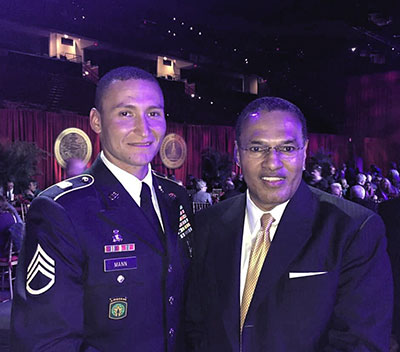
Martin MannMartin Mann ’15, social work, shares about his experience as a student at UMBC’s Shady Grove campus and his military career at Chancellor Kirwan’s retirement celebration. Staff Sergeant Mann spoke before an audience at Chancellor Kirwan’s retirement where he tells his story of the challenges that being a non-traditional student has had on his education but also the empowerment and support he has received from the Universities at Shady Grove, UMBC. He says that choosing to attend UMBC at Shady Grove was one of the best decisions he has ever made.
View his speech.


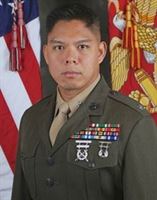
PlacienteRaymond J. Placiente ’92, computer science, discusses the transformation of the Low Altitude Air Defense Command in the Marines. Lieutenant Colonel Placiente talks about how supporting the infantry is a key component to achieve success within LAAD and the need to invoke change by the introduction of new technologies in order to combat threats made against the country.

Read the full article.

Have a story of your own to share? Tell us about it in a class note.


Round Up: UMBC In the News

One of the things that makes UMBC great is how wonderful our alumni, students, faculty, and staff are. Because of these amazing people, UMBC often finds itself “in the news,” so each week, we’ll be sharing with you a round-up of the most newsworthy achievements from our community.

Read more at UMBC Insights!

Robert Provine, Psychology, Explains Why We Yawn in Wired Magazine

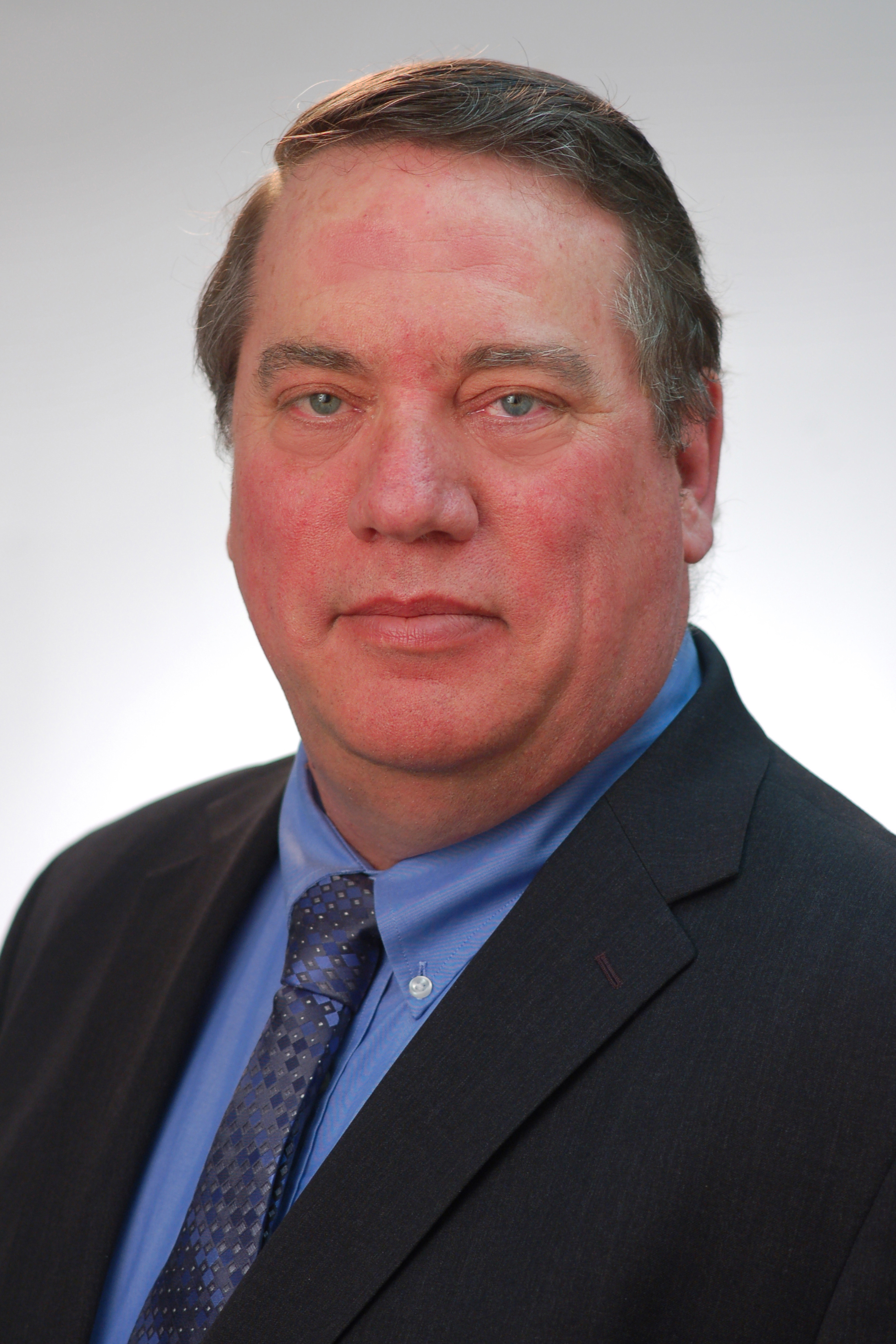
In a Wired article published on June 23, Psychology Research Professor and Professor Emeritus Robert Provine shared insight into why humans yawn when they do. Provine has done extensive research on the topic and is author of Curious Behavior: Yawning, Laughing, Hiccupping, and Beyond.

Robert ProvineIn the article, Provine noted that we tend to yawn when we are tired: “Right after waking and before bedtime,” he said, “which is consistent with yawning’s role in facilitating state changes: sleep to wakefulness, wakefulness to sleep, arousal to de-arousal, or vice versa.”

When further examining the reasons for yawning beyond physiological state changes, Provine shared that, “Nervous people will definitely yawn more, but there haven’t been a lot of formal studies investigating why.”

The article also stated that: “Some psychologists, including Provine, suggest that anxious yawning could be an example of what’s known as a displacement activity—i.e., behavior that results from an uncomfortable or stressful situation and that seems out of context. Examples in humans include scratching one’s head, stroking a non-existent beard, or repeatedly tugging on an earlobe. Animals do it too. Ever see a cat go after a bird, miss, and then immediately start grooming itself? That’s not some awkward attempt to play it cool. It’s a displacement behavior.”

To read the full article “Big Question: Why Do I Yawn When I’m Nervous or Stressed?” click here.

Flying Fruit Fantasy Turns 35 (7/2)

FFF15002-35th Flyer-page-001The Choice Program’s Flying Fruit Fantasy Fruit Shake stand is turn 35 on July 2. To celebrate, they will be giving away prizes like Orioles tickets, gift cards, and a year of free fruit shakes. Enjoy a fruit shake or smoothie on July 2 from 12-2 p.m. to be automatically eligible to win.

Flying Fruit Fantasy is located in the Inner Harbor, next to the Maryland Science Center in the Inner Harbor Promenade. The stand is the on-the-job training site for The Choice Program’s Ready By 21 and Jobs initiatives.

Rebecca Adelman, Media and Communication Studies, Questions Assumptions Surrounding Shark Attacks in Discovery

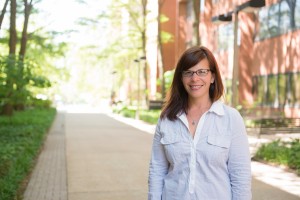
Rebecca Adelman, an assistant professor of media and communication studies, was recently interviewed for a story in Discovery about the narratives and sensational news headlines surrounding shark attacks. In the article, Adelman said that common language describing such attacks can often minimize the role of humans.
“It neatly erases any kind of human culpability for the shark bite while underscoring the notion that humans […] ought to be able to roam freely and safely anywhere on the planet, regardless of what other creatures might have preceded them there by millions of years,” she explained.
“Yet it also makes a kind of sense out of the event of a shark biting a hapless child, swimmer, surfer, or fisherman by attributing a kind of malevolent agency to the offending creature. It deflects the question of whether the human might have made a mistake by being in that part of the ocean at that time (or might have made a faulty calculation about the risk associated with their actions), but also provides a defense against the terrifying idea that bad things just happen,” she added. The full article can be accessed here.   

Kimberly Moffitt, American Studies, on Midday with Dan Rodricks and WBAL-TV

Following the shooting at Emanuel African Methodist Episcopal Church in Charleston, South Carolina last week, Kimberly Moffitt, an associate professor of American studies, was a guest on WYPR’s Midday with Dan Rodricks to share her thoughts and perspective.

Kimberly MoffittMoffitt said that she is largely focusing her energy on what she is teaching in her classes: “I try to talk to my students and educate them on what the power structures are that exist in American society that are implicitly embedded in ways where we carry out certain actions in life that impact other groups of people in very negative ways,” she said.

“We can talk about housing policies, public education, a wide range of issues…the legal and judicial system and how that inadvertently or negatively affects people of color in this country. Those are the issues that I think students in particular who are young need to have access to and to see in order to understand how problematic the actual structure is.”

The following day on WYPR, Moffitt covered Maryland Governor Larry Hogan’s announcement that he has advanced non-Hodgkins lymphoma and other local and national news topics. Earlier in the week, Moffitt appeared on WBAL-TV to discuss Baltimore Collegiate School for Boys, a charter school opening in the fall in which she is a co-founder. To listen to and watch all of the segments, click below:

Baltimore Collegiate School for Boys (WBAL-TV)
Talking about Charleston (Midday with Dan Rodricks)
Midday Politics (Midday with Dan Rodricks)

Manil Suri, Mathematics, Writes New York Times Op-ed on The Politics of Yoga in India

In light of the International Day of Yoga, Mathematics Professor and New York Times Contributing Opinion Writer Manil Suri wrote about the viewpoints surrounding Indian Prime Minister Narendra Modi’s plans to promote it within the country: “Some Muslim preachers and opposition politicians have accused Mr. Modi of using the day to foist Hinduism on religious minorities under the guise of yoga.”

manil suriHowever, Suri explains in his column that, “Yoga is big business, estimated at $10 billion a year in the United States alone, and India needs to be associated with it — not just to attract tourists to yoga retreats, but also to assert its intellectual rights. The country has been fighting attempts by Western gurus to patent yoga poses, assembling a repository of over 1,500 asanas to keep them free.”

He added: “Within India, the goal is different. Those on the Hindu right have always harbored the vision of returning to India’s greatness as an ancient civilization. A practice with Vedic origins that has nevertheless attained such secular popularity is the perfect vehicle to create a shared national consciousness. The physical engagement, mental discipline and sublimation of desire enshrined in yoga meld seamlessly, yet discreetly, with the more militaristic tenets of organizations like Rashtriya Swayamsevak Sangh.”

To read the full column titled “India and the Politics of Yoga,” click here. Suri also appeared live on CNN International on Sunday, June 21 to discuss his column.

Joan Shin, Education, Writes about the International Children’s Song Approach in The Conversation

Joan ShinJoan Shin, education professor of practice, recently published an article in The Conversation that examined the power of using children’s songs to introduce children to different cultures and the world around them. “Without realizing it, children learn language and content simultaneously. Songs build skills that help children distinguish the sounds of a language, and connect sound to script and assist with vocabulary building,” Shin wrote.

Shin discussed the teaching approach she developed that combines her song research and search for cultural materials to teach English as a global language. Shin’s “international children’s song approach” uses songs from around the world as a method of teaching English to young children.

“Whether children are learning English as a second language, or even a third or fourth language, they are being exposed to it at earlier and earlier ages worldwide. Using international children’s songs from around the world is an effective approach for teaching English as a global language to kids. Language is a carrier of culture, and English is uniquely positioned to communicate across cultures around the world. Materials to teach it should embrace all cultures,” Shin described.

To read the full article “How should kids learn English: through Old MacDonald’s farm or Ali Baba’s farm?” click here.

Meyerhoff Scholars Program Featured in NSTA Reports

The National Science Teachers Association (NSTA) recently released its Summer 2015 edition of NSTA Reports, which included a feature on UMBC’s Meyerhoff Scholars Program (MSP). NSTA Reports is an organizational newspaper which covers national science education news.

Meyerhoff labThe article, titled “Creating Communities of STEM Scholars,” describes the different components of the Meyerhoff program and how it has inspired similar programs around the country. “The Meyerhoff program is a community of scholars, and students are working to support one another,” MSP director Keith Harmon told NSTA Reports. “What we try to convey is the idea that working together, you can do much more than you could working alone…science and engineering have become so collaborative and interdisciplinary that you have to learn how to work and communicate well with other people.”

14183752111_9164e1423f_zHarmon also spoke about how the program encourages and supports student participation in research, conferences, and internships. “After two to three years of working in a research group on campus, several summers away for internships, the majority of scholars leave UMBC with solid research training and a strong scientific identity and commitment to a STEM career,” he said.

The article also explored other initiatives inspired by the Meyerhoff model. “The University of Michigan is among several schools around the country that have adapted elements of the MSP. Its M-STEM Academies aim to increase, strengthen, and diversity the number of undergraduates pursuing bachelor’s degrees in STEM fields,” it stated. The M-STEM Academies offer students a supportive community, academic coaching, and summer programs. However, unlike the Meyerhoff model, M-STEM Academies are two-year programs without full financial benefits. Still, the initiative is seeing progress. “In the very first year, the M-STEM student does have a higher GPA compared to the student that didn’t [participate],” an academic director of the University of Michigan reported. She continued, “We give them a sense of community that gives them the confidence to go forth and really become leaders in whatever they really feel passionate about. I really think that’s the ‘secret sauce.'”

Jump into Summer Fitness

Have you got the urge jump into the pool? Dance your way into better health? Say no more, UMBC is here to help you stay in shape with fitness classes and pool access that help you fight those lazy summer days.

The Retriever Athletic Center provides UMBC alums with the perfect opportunity to keep you moving. As a fellow dawg, you can take advantage of several fitness perks this summer. Break out a few dance moves in Cardio Party, balance your energy in Yoga, or practice your breaststroke in the pool. Since classes are offered throughout the day and evening, Monday through Friday, every retriever can be a believer and train to tackle the everyday stress of life.

Classes are free with membership! Alumni can purchase a year-round membership for $250, or enjoy a 6-month, 3-month, or 1-month subscription at a discounted rate. Membership includes full access to all of the UMBC facilities, including recreational access to the pool (check out the pool schedule), as well as the use of locker rooms and lockers. If you are still on the fence, stop by and take a tour!

Submit your membership form today!


Stanley Jackson Named Assistant Director of Office of Sponsored Programs

From: Karl V. Steiner, Vice President for Research

I am pleased to announce that Stanley Jackson, Grants & Contracts Manager in UMBC’s Office of Sponsored Programs (OSP) has been promoted to Assistant Director of OSP, effective May 17, 2015.

Stan brings a considerable amount of experience to this new position. He is a Certified Research Administrator (CRA) with a Graduate Certificate in Biotechnology and a Master’s Certificate in Government Contracting. Stan has over 20 years of experience across three University System of Maryland institutions, including almost six years with UMBC. His experience includes contract and grant accounting, departmental administration and central management in sponsored programs.
With Stan assuming this important position, we are confident to assure continuity of the high level of service and expertise provided by OSP. As part of a broader re-organization of the office, we have also started the process of looking to fill two additional positions, a Grants & Contracts Specialist and a Data Analyst, to support the current and future needs of the UMBC community.

Dean Drake, Associate Vice President for Research, will assume some of the former OSP Director responsibilities.

Please join me in congratulating Stan on his new position as Assistant Director.

Hrabowski and alumni entrepreneurs featured in SmartCEO

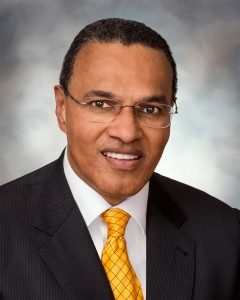
HRABOWSKISmartCEO has published a feature-length profile on UMBC President Dr. Freeman Hrabowski. In addition to an overview of the President’s career in academia and his approach to education, the article dedicates much of its length to Dr. Hrabowski’s role in the bwtech research park and his encouragement of alumni entrepreneurship.

Several UMBC alumni now either work for companies based in the research park or run them, and the ones interviewed for this article point to their UMBC experience and connection with Dr. Hrabowski as positives in their entrepreneurial journey. According to the article, companies “[draw on] help from UMBC faculty and doctoral students to help in solving complex problems,” and many alumni who have gone on to start their own firms cite Dr. Hrabowski as a mentor.

“I literally don’t make any major life decision without checking in with him first,” says Delali Dzirasa ‘04, computer engineering, CEO of the software company Fearless Solutions.

SmartCEO also had some UMBC alumni working behind the scenes on the article. Mitro Hood ’89, visual and performing arts (photography), photographed the President for the feature, and Erica Wood ’00, visual and performing arts, art directed the piece.

In a separate article for SmartCEO, Dr. Hrabowski contributed his own thoughts on Baltimore’s present and future to the #CEOsLoveBaltimore initiative, which began in the wake of civil unrest over the death of Freddie Gray:

What gives me hope is the honest look we are all taking at our city’s most pressing problems — from academic achievement gaps to health disparities — and our willingness to embrace these struggles. We understand that business development and community development are inextricably linked, and we know we have the brainpower and the passion to build a better future for all Baltimore residents. We are all Baltimore.

Learn more about Dr. Hrabowski’s involvement with and contributions to the university.