All posts by: UMBC News Staff


Alumni Awards 2015: Allan Kittleman ’81, Political Science

In the weeks leading up to the Alumni Awards Ceremony, we’ll be profiling each of this year’s honorees in detail here on the blog. Our last winner, in the Distinguished Service category, is Howard County Executive and former Maryland State Senator Allan Kittleman ’81, political science.

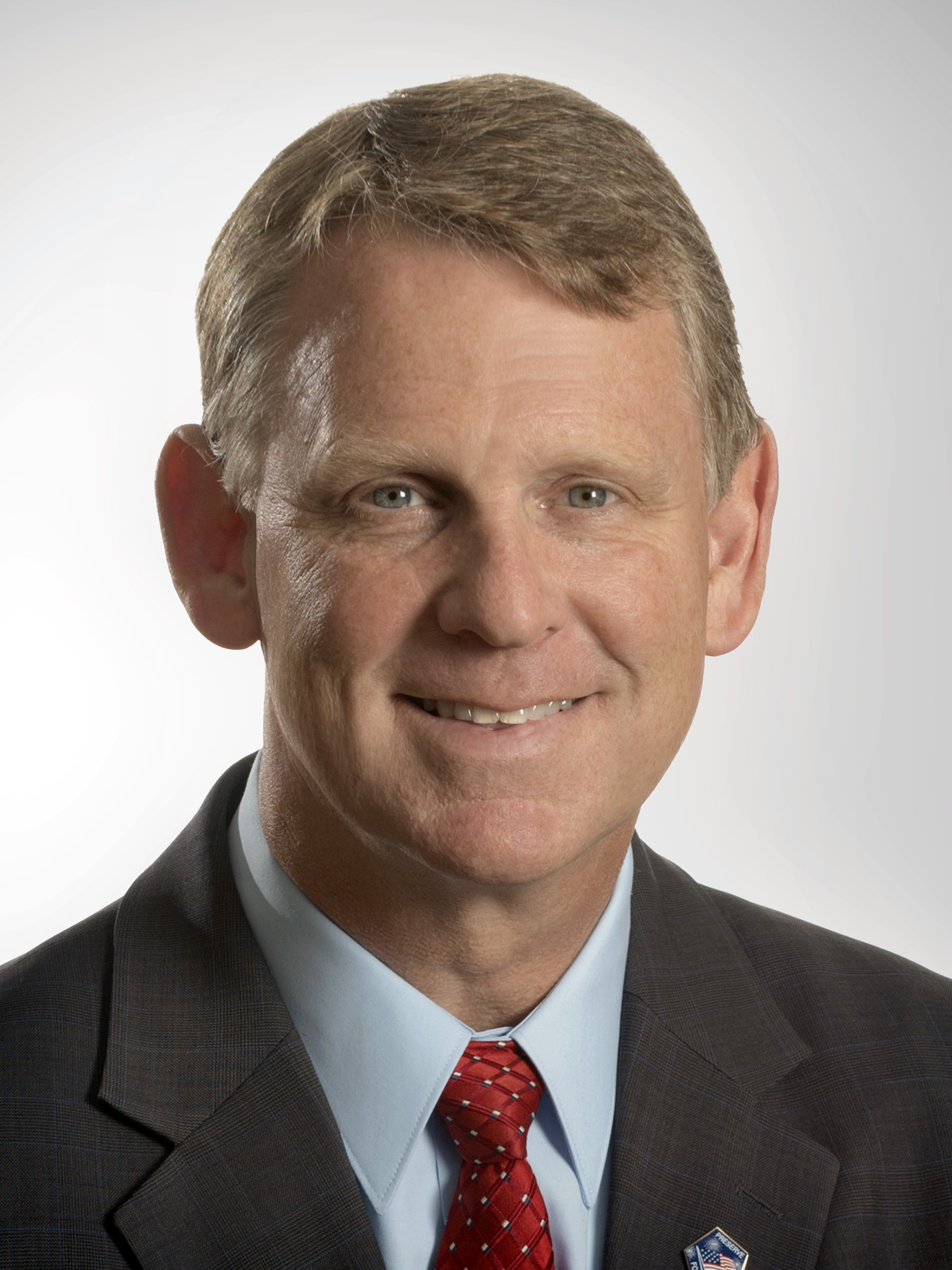
KittlemanAllan Kittleman was elected Howard County Executive in 2014. Prior to that, he had served as Minority Leader in the Maryland State Senate, on the Howard County Council, and as an attorney on workers’ compensation cases. He grew up in Howard County, working on his family’s farm in West Friendship and commuting to UMBC to earn his political science degree. After graduating, he received a J.D. from the University of Maryland Carey School of Law. His father Bob Kittleman served in the State Senate from 1982 until his death in 2004. Allan was appointed to succeed him that year, and won election in his own right in 2006 and 2010, becoming minority leader in 2008. He stepped down after publicly expressing his support for marriage equality, and ran for Howard County Executive in the 2014 election cycle.

The Alumni Awards Ceremony is tomorrow, October 8. There’s still time to register!

Workshop examines diversity in STEM graduate education

Facilitating underrepresented STEM graduate student and postdoctoral professional development with an eye toward establishing pathways to careers has been at the core of the PROMISE AGEP mission since its inception more than a decade ago. The University System of Maryland (USM)-wide effort is funded by the National Science Foundation and focuses on increasing graduate student recruitment and retention, Ph.D. completion and career preparation, programs for postdoctoral scholars, and programs to enhance faculty understanding of diversity issues in graduate and postdoctoral education.

Graduate deans and STEM deans from across the University System of Maryland (USM) recently gathered at UMBC for a workshop to analyze current diversity issues and to develop tools and ideas for what can most be effective in supporting the goals of PROMISE moving forward. The event, held on September 11, 2015 in the Albin O. Kuhn Library, recognized 12 USM PROMISE AGEP Outstanding Faculty Mentors for 2015-2016 and brought together members of the PROMISE AGEP-T External Advisory Board.

“I think you all understand it takes commitment and hard work to engage in the issues we are going to be discussing today,” UMBC Provost Philip Rous told the group in his opening remarks at the event. “And while we all understand that this workshop is perhaps a smaller part of all of your efforts in this arena, it represents a commitment to understanding and using that understanding to make meaningful and sustainable change.”

Following Dr. Rous’ remarks, Dr. Daryl Chubin, an independent consultant and Senior Fellow with the Georgia Center for Educational Renewal, provided a detailed presentation about understanding interventions that broaden participation in science careers. His talk focused on how higher education institutions can improve academic success and career advancement and it closely analyzed minority participation in STEM fields.

“What this program is about is really changing values as it changes lives,” Chubin said when describing PROMISE.

During the workshop, the 12 PROMISE Outstanding Faculty Mentors were honored for their ongoing work in mentoring diverse groups of students. The honorees were selected by underrepresented graduate students in STEM disciplines and leaders of STEM diversity programs for their inclusion efforts and actions, involvement in STEM diversity conversations, participation in PROMISE activities, and conducting research that broadens the participation of underrepresented STEM scholars.

In addition, several invited faculty members were recognized for their contributions toward efforts for faculty diversity and setting standards of excellence in their work on which the PROMISE Mentors program is based.

Renetta Tull, founding director and co-PI of PROMISE, and UMBC’s associate vice provost for graduate student development and postdoctoral affairs, noted that successful programs that broaden participation need the investment and engagement of full campus communities: administrators, faculty, staff, and students. She said that the campuses within the University System of Maryland are modeling success in the area of graduate student and postdoctoral diversity and inclusion in STEM, and that faculty support and involvement are key to that success.

The faculty who were honored include the following from UMBC, the University of Maryland College Park (UMCP), and the University of Maryland Baltimore (UMB):

UMB:
Dr. Joseph Stains – physiology
Dr. Eileen Barry – microbiology and immunology
Dr. Denise Orwig – epidemiology
Dr. Jacques Ravel – genomics

UM College Park:
Dr. Jeffrey Herrmann – mechanical engineering
Dr. Hugh Bruck – mechanical engineering
Dr. Jeffrey Klauda – chemical and biomolecular engineering
Dr. Sreeramurthy Ankem – materials science and engineering

UMBC:
Dr. Kathleen Hoffman – mathematics
Dr. Stephen Miller – biological sciences
Dr. Ravi Kuber – information systems
Dr. Carlos Romero-Talamas  – mechanical engineering

Additional faculty who have engaged in work on diversity and were also invited to be recognized and contribute to the conversation included:
Dr. Michael Summers (biochemistry, UMBC)
Dr. Tim Oates (computer science and electrical engineering, UMBC)
Dr. Shawn Bediako (psychology, UMBC)
Dr. David Tilley (environmental sciences and technology, UMCP)
Dr. Siddhartha Das (mechanical engineering, UMCP)
Dr. Bret Hassel (microbiology & immunology, UMB)
Dr. Eduardo Davila (microbiology & immunology, UMB)
Dr. Greg Carey (microbiology & immunology, UMB).

The group photo includes a subset of the outstanding STEM faculty mentors and invited faculty who were recognized by PROMISE for their diversity efforts at the graduate student level.

Image: Photo by Marlayna Demond ’11 for UMBC. 

Career Q&A: Lauren Bucca ’13, English

Every so often, we’ll chat with an alum about what they do and how they got there. Today we catch up with Lauren Bucca ’13, English, who, after an internship in the Medieval Manuscripts Library at the Walters Art Museum and graduate studies at the University of Durham, now works for the Rowman & Littlefield publishing company.

Name: Lauren Bucca
Job Title: Publicity Assistant, Rowman & Littlefield
Major/Minor: English, double minor in History and Medieval and Early Modern Studies
Grad Year: 2013

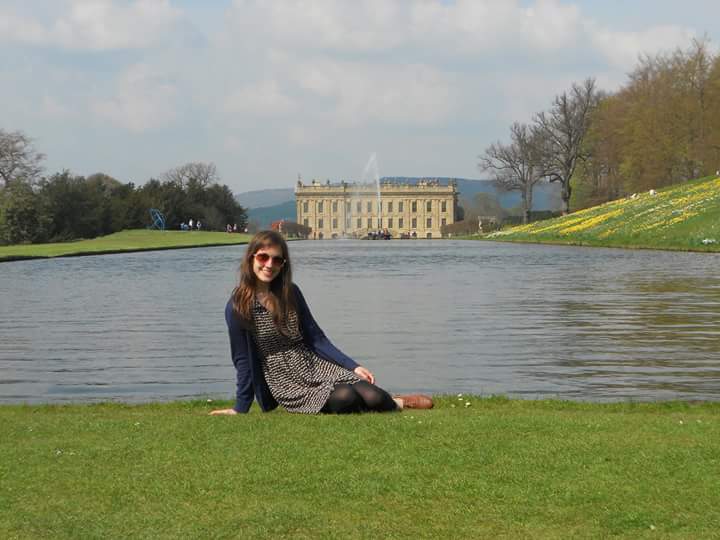
FB_IMG_1444088617770What led you down the path to publishing?

The world of publishing is a kind of haven for someone with deep literary inclinations. I have always been interested in book publishing, having been intrigued by the way a manuscript becomes a finished product. But I didn’t think I could get into publishing, since I had always heard that it was competitive and had never before interned with a publishing company. I applied to many publishing jobs before I obtained an interview with Rowman & Littlefield, and was fortunate to get the job; I believe that my library and archival experience made me a suitable candidate. Academic publishing seems like the perfect fit for me since it combines my love of learning, writing, and communicating with diverse people.

You went to graduate school at the University of Durham in England. What was that like?

I loved my experience in Durham, England, mostly because it was the ideal location for studying medieval history and literature. Durham is situated on a peninsula, and is an idyllic medieval city with a castle, cathedral, and winding cobblestone streets. The university also provided a unique experience, since it is separated into different colleges which were essentially hubs for social events (including Harry Potter-like dinners, complete with black robe attire). I even joined the graduate rowing team of my college as a coxswain, which was a challenging experience as I attempted to steer the boat away from Durham’s many bridges.  I greatly enjoyed living with people from my college, as most of them were from other countries[,] which gave me the opportunity to learn about other cultures and to make life-long friends. In my Masters course, I had the chance to study medieval manuscripts, catalogue 14th century charters, and discover the historic locations in and surrounding Durham. Overall, the academic community and beautiful city (especially the cathedral) provided for an exceptional opportunity to immerse myself in researching the early medieval period.

What stands out to you the most about your UMBC experience?

The academic support from my English and Honors College professors stands out the most to me, besides making wonderful friends and spending three years working at the library. At UMBC, I was never “spoon-fed” information, but [rather] encouraged to ask questions and find the answers through my own research. I was able to do an independent honors study with Dr. Gail Orgelfinger from the English department (she’s amazing), which later turned into [an undergraduate research] project in the UK. This project, supported also by funding and advice from Dr. Simon Stacey at the Honors College, helped me develop into a scholar and gave me the confidence to continue my research at the masters’ level.

Knowing what you know now, what advice would you give an incoming UMBC student?

Besides having fun and not stressing yourself out, this is a great time to take advantage of your professors’ knowledge and
advice. Try to see how your current academic plan can transfer to a job. Also, make sure you have at least one internship, because it is way easier to get a job after graduation if you have some work experience. I am grateful that my advisor, Dr. Kathryn McKinley, provided me with an opportunity to intern at the Walters Art Museum. I worked with the manuscripts and rare books, and loved it so much that I continued volunteering there after graduation. Though my career isn’t in an archive or a museum, the skills I obtained there transferred well into my current job.

Alumni Awards 2015: Andre Gudger ’99, Information Systems

In the weeks leading up to the Alumni Awards Ceremony, we’ll be profiling each of this year’s honorees in detail here on the blog. Today we introduce our Engineering and Information Technology award winner, Andre Gudger ’99, information systems.

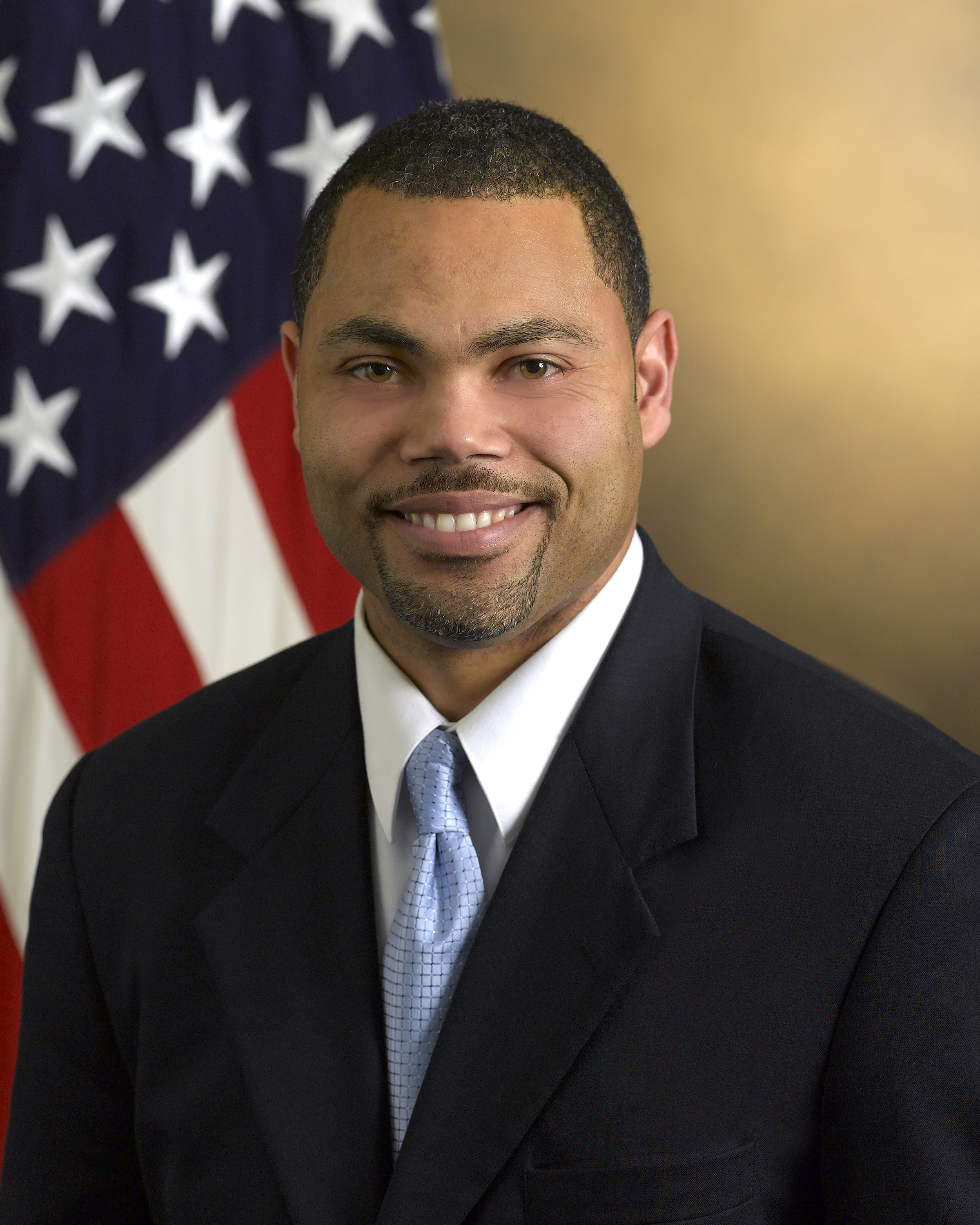
Gudger,AndreAndre Gudger serves in the Obama administration as Acting Deputy Assistant Secretary of Defense for Manufacturing and Industrial Base Policy at the Department of Defense. In his current role, he provides analysis and advice to the government on the workings of the industrial supply chain as it relates to our national defense. He is also the DoD lead for President Obama’s National Network of Manufacturing Innovation, and has spearheaded several initiatives to study new defense manufacturing technologies. He previously headed the Office of Small Business Programs at the DoD, where he advised the Secretary of Defense on matters related to small businesses and helped the department meet both its small business prime contracting and Service Disabled Veteran Owned goals for the first time in history. Mr. Gudger came to the DoD with a lengthy resume in the defense, intelligence, and investment banking industries, the most notable entry being his tenure as Chairman and CEO of Solvern Innovations. In eight years, he grew the company’s ranks to 1,300, and worked with the University of Maryland’s Human Computer Interaction Lab to develop data visualization and executive dashboard technologies. After the company was acquired by TeleCommunication Systems in 2009, he served as the Senior Vice President of that company’s Cyber Security Group. In addition to his bachelor’s from UMBC, Mr. Gudger holds an M.B.A. from the University of North Carolina at Chapel Hill, and has studied in Hong Kong, the Netherlands, Mexico, Brazil, and Poland. He counts UMBC’s President’s Advisory Council as one of many boards he has served on, and continues to drive for innovation as a leader within the federal government.

The Alumni Awards Ceremony is this Thursday, October 8. Don’t forget to register!

Alumni Awards 2015: Andre Gudger '99, Information Systems

In the weeks leading up to the Alumni Awards Ceremony, we’ll be profiling each of this year’s honorees in detail here on the blog. Today we introduce our Engineering and Information Technology award winner, Andre Gudger ’99, information systems.
Gudger,AndreAndre Gudger serves in the Obama administration as Acting Deputy Assistant Secretary of Defense for Manufacturing and Industrial Base Policy at the Department of Defense. In his current role, he provides analysis and advice to the government on the workings of the industrial supply chain as it relates to our national defense. He is also the DoD lead for President Obama’s National Network of Manufacturing Innovation, and has spearheaded several initiatives to study new defense manufacturing technologies. He previously headed the Office of Small Business Programs at the DoD, where he advised the Secretary of Defense on matters related to small businesses and helped the department meet both its small business prime contracting and Service Disabled Veteran Owned goals for the first time in history. Mr. Gudger came to the DoD with a lengthy resume in the defense, intelligence, and investment banking industries, the most notable entry being his tenure as Chairman and CEO of Solvern Innovations. In eight years, he grew the company’s ranks to 1,300, and worked with the University of Maryland’s Human Computer Interaction Lab to develop data visualization and executive dashboard technologies. After the company was acquired by TeleCommunication Systems in 2009, he served as the Senior Vice President of that company’s Cyber Security Group. In addition to his bachelor’s from UMBC, Mr. Gudger holds an M.B.A. from the University of North Carolina at Chapel Hill, and has studied in Hong Kong, the Netherlands, Mexico, Brazil, and Poland. He counts UMBC’s President’s Advisory Council as one of many boards he has served on, and continues to drive for innovation as a leader within the federal government.

The Alumni Awards Ceremony is this Thursday, October 8. Don’t forget to register!

Alumni Awards 2015: Bryan Kelly ’92, Economics

In the weeks leading up to the Alumni Awards Ceremony, we’ll be profiling each of this year’s honorees in detail here on the blog. Today we’re featuring our Social and Behavioral Sciences award winner, Bryan Kelly ’92, economics.

KellyBryan Kelly is a managing partner and co-founder of The Kelly Group, a “boutique wealth management firm” based in Bel Air, Maryland. Originally a computer science and mathematics major at UMBC, he was inspired by Dr. Charles “Chuck” Peake to switch his focus to economics and finance, where he found his passion: financial planning. He worked for Fidelity Investments during and after his undergraduate studies before establishing The Kelly Group with his uncle, Bill Kelly, in 1997. In the years since its inception, The Kelly Group has grown to nearly 20 employees, and has established a company culture based on the idea of “[the] Norman Rockwell Hometown Doctor of Finance,” taking a community-based approach to hiring and development. Mr. Kelly, a 2007 departmental Alumni Award honoree in Economics, holds a Certified Financial Planning Designation from the CFP Board of Standards and an M.S. in Financial Planning from the College for Financial Planning. He lives in Harford County with his wife Katherine, whom he met at UMBC, and their two children.

Register now for the Alumni Awards Ceremony on Thursday, October 8!

Amy Bhatt featured in PBS documentary on 1965 Immigration Act

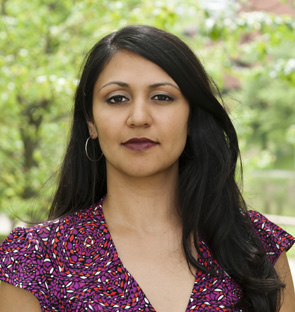
Amy BhattIn a short documentary produced by KCTS, the PBS affiliate in Seattle, examining the 1965 Immigration and Nationality Act and its impact on the Pacific Northwest and the rest of the country’s population, Amy Bhatt described the economic environment that early immigrants in the Northwest encountered.

“The Pacific Northwest has a very unique place in American history, because it did offer many of these early South Asians a way to both situate themselves and become economically productive very early on,” Bhatt said in the documentary. “Now, this was also a period in time when we saw a lot of restriction of immigration from Asia.”

Bhatt, an assistant professor of gender and women’s studies, also described the aftermath of the Immigration Act in the documentary: “There was a great deal of opposition to this act in 1965, and, in fact, when it was passed, Lyndon B. Johnson, in a very famous speech, says that this is a moment that we’re opening the doors but it’s not going to fundamentally change the fabric of American society. We know now that that was pretty radically wrong, and instead what we see is that the United States fundamentally does change as a result of this.”

Bhatt is author of Roots and Reflections: South Asians in the Pacific Northwest. Read more about her work on the gender and women’s studies website.

Bryce Peake examines aural dimensions of debate over Confederate flag

Bryce Peake, a new assistant professor of media and communication studies, recently published an ethnographic study he conducted with a colleague at Central Washington University on the September pro-Confederate flag rally in Washington, D.C. The article “Viral Landscapes in the Public Square: the Confederate Flag visits the U.S. Capitol,” was published on the Centre for Imaginative Ethnography’s website.

Bryce PeakeAs part of the study, Peake and his colleague Mark Auslander spent time interviewing participants on both sides of the protests and edited the audio interviews down to a five minute sequence of overlapping voices: “Reviewing the audio, we noted that it is often difficult to tease out which side is being represented in speeches or interviews, without access to the visual framing devices of flags and protest signs. For all their deep political divides, the competing participants share a deep distrust of the state, and are all profoundly critical of mainstream representations of American history,” they wrote.

Further analyzing the audio they collected, the authors noted that “the pro-Confederate demonstrators understand themselves as coming to the nation’s capital and its house of government to petition for redress. In contrast, the anti-flag forces aren’t framing things in national terms as such. For them, they are defending their city against outsiders. ‘Leave our city. Take that flag and run! Take your evil hatred and go home!'”

Peake hopes the audioscape will be a resource for classroom discussions about readings on political theory and democratic dialog. Peake specializes in international communication, research methodologies, gender politics, and science and technology studies. Read more about his work on the media and communication studies department website.

Thomas Schaller reflects on John Boehner’s tenure as House speaker

Following John Boehner’s retirement announcement on September 25, Thomas Schaller, professor and chair of political science, wrote that the House Speaker’s time in office will be more defined by the political environment he inherited than some of the decisions he made while in office. Schaller’s column, “House of Shards,” was published in The American Prospect soon after Boehner’s announcement.

“To appreciate Boehner’s fraught tenure, it’s important to recall the years preceding Boehner’s 2011 ascension,” Schaller wrote, before describing the Wall Street bailout vote in 2008 and the rise of the Tea Party movement in 2010.

“So it was that in January 2011 Boehner became the first Republican speaker in GOP history to lead without the benefit of a companion Senate Republican majority. By his second term as speaker, his caucus was comprised two-thirds of members elected in 2006 or later, with half of the caucus elected in 2010 and 2012 elections alone. Forget his barkeeper father’s Republican Party: This wasn’t even his own Republican Party,” Schaller added.

Schaller also mentioned that the 2011 debt ceiling negotiations and the 2013 government shutdown when Boehner was heavily involved should be taken into account when reflecting on his tenure as House Speaker, but they should be balanced with his successes, including helping to avert two recent government shutdowns.

“No matter how many deal-with-the-devil accommodations Boehner made with members of his unruly House coalition to hang onto power, remember the shining moments when he pushed back.”

Schaller is an expert in American politics and political institutions. His most recent book is The Stronghold: How Republicans Captured Congress but Surrendered the White House.

Imagining America receives Phi Beta Kappa Key of Excellence

On Thursday, October 1 during the Imagining America National Conference, the Phi Beta Kappa Society presented the capstone Key of Excellence Award and its $10,000 prize during a reception at the Baltimore Museum of Art. The ceremony featured remarks from Johnnetta Betsch Cole, director of the Smithsonian National Museum of African Art.

In a press release announcing the award, Imagining America stated that “The Phi Beta Kappa Society created the Key of Excellence Awards to energize support for the arts and sciences because of their value to the nation. ‘The Key of Excellence showcases innovative programs that demonstrate the excellence, range, and relevance of the arts and sciences to their communities,’ said Phi Beta Kappa President Katherine Soule. ‘We aim to show decision makers that the arts and sciences develop both inventive employees and thoughtful citizens. They are vital to a vibrant culture and democracy.’” Read more on the Imagining America website.

UMBC is hosting the Imagining America National Conference in Baltimore this week. MICA and Morgan State University are cosponsors of the event, in partnership with Towson University. Read more about UMBC’s role in Imagining America and why it was selected to host the conference.

Roundup: UMBC in the News

One of the things that makes UMBC great is how wonderful our alumni, students, faculty, and staff are. Because of these amazing people, UMBC often finds itself “in the news,” so each week, we’ll be sharing with you a round-up of the most newsworthy achievements from our community.

UMBC hosts Imagining America 2015 with local partners

Educators, cultural leaders, and activists from across the country will convene in Baltimore this week for the Imagining America National Conference, hosted by UMBC. This groundbreaking four-day gathering asks how, in the wake of the Baltimore Uprising, the arts, humanities, and design can help our city heal and grow.

At its core, Imagining America emphasizes the power of many voices coming together to envision our nation’s future, engaging with topics like race, inequality, and community-based approaches to spur collective action. UMBC was selected as host thanks to a track record of powerful civic work and commitment to fostering innovative, engaged scholarship, where excellence and inclusion go hand-in-hand.

The Maryland Institute College of Art (MICA) and Morgan State University are co-sponsoring the conference. Dozens of arts, culture, and community organizations have also been immersed in the planning process from the beginning. Unlike traditional academic conferences, many events will engage local residents, and partnerships formed through the event are expected to continue far into the future.

“The process of planning the conference has been deeply collaborative, reflecting a UMBC culture that embraces diversity and authentic connections,” shares David Hoffman, assistant director of student life for civic agency.

Much of the conference will take place in the heart of downtown Baltimore with sessions hosted by community organizations involved in creative social justice work.

“At their core, the arts, humanities, and design allow for ambiguity, and deal with human culture and the way human beings interact with their world and one another,” reflects Lee Boot, associate research professor and associate director of the Imaging Research Center. “Because at this time in our history, the challenges we face can also be traced to those interactions, those disciplines have elevated promise, if their practitioners rise to the occasion.”

Imagining America is designed to be deeply interactive, with a strong emphasis on workshops, collaboration, and relationship-building.

“Public universities have a responsibility to foster honest, open conversations about the tough issues,” explains Scott Casper, dean of UMBC’s College of Arts, Humanities, and Social Sciences. “We have an ability and opportunity to convene people broadly, perhaps more than many smaller organizations can. So we contribute by convening and participating in the conversations, and by lending our expertise and experience, while also listening to and learning from the expertise and experiences of others at the table.”

Conference highlights include an opening plenary session with UMBC President Freeman Hrabowski; Scott Casper; Joe Jones ’06, social work, founder and CEO of the Center for Urban Families; and Rebecca Alban Hoffberger, founder and director of American Visionary Art Museum (AVAM), to address innovative approaches to significant challenges facing the country. UMBC student Manisha Vepa ’18, financial economics, will lead a closing plenary session discussing final reflections and thoughts on sustaining meaningful partnerships.

Site-specific workshops on October 1 and 2 are the result of almost a year of organizing meetings around the city that engaged more than 150 community members, many representing local groups. With Imagining America recognizing the essential contributions of these community members and the importance of having these conversations in a public forum, the workshops are free and open to the public.

“I think we’re going to be dazzled by the collaborative civic work that will emerge in the months to come,” says Hoffman.

A complete conference schedule with details on each session is available on the Imagining America website.

Image: Baltimore skyline. Photo by Marlayna Demond ’11.