All posts by: UMBC News Staff


School of Public Policy hosts forum on cybersecurity concerns in local governments

Cybersecurity concerns continue to make headlines, including the recent attacks at MedStar Health and fraudulent tax returns being filed for Baltimore City employees. In response to this, many local governments, like their counterparts in the private sector, are taking steps to protect their websites and information.  

UMBC’s School of Public Policy hosted a forum on “Cybersecurity Concerns in Local Governments” on Friday, April 15 to present research on cybersecurity initiatives in local governments in Maryland and to highlight the policy implications of these initiatives. The event was sponsored by the UMBC School of Public Policy, bwtech@UMBC Cyber Incubator, and the UMBC Center for Cybersecurity. 

Public_Policy-Cyber-Forum16-7256Speakers included School of Public Policy Professor and Director Donald Norris, Anupam Joshi, professor and chair of computer science and electrical engineering (CSEE) and director of UMBC’s Center for Cybersecurity, Rob O’Connor, chief technology officer for Baltimore County, and Gayle Guilford, chief information security officer for Baltimore City.

Norris discussed cybersecurity challenges in local governments across the country based on his research. In 2013, along with Joshi, he convened a focus group of technology officers from around Maryland to identify challenges and what governments are doing to help prevent cyber attacks.

“It was fascinating, because in part, we went in thinking cybersecurity is a technology problem and that the technology would fix itself,” Norris explained. “But people, policy, and process in government and large organizations are almost always the problem.”

Norris found that technology professionals in government identified people as the weakest link in cybersecurity threats because of phishing emails, lack of user training, under enforced and inefficient policies, and lack of funding to deal with cybersecurity threats.

To further research constantly evolving cybersecurity challenges in local government, Norris and his colleagues developed a questionnaire which will be conducted through the International City and County Management Association (ICMA) for city and county governments with populations greater than 50,000 around the country. They anticipate receiving the results this summer.

“We want to find out what local governments across the nation say are their biggest cybersecurity problems and the barriers that they face in addressing cybersecurity,” Norris said.

Joshi discussed various policies that are needed to keep computer and data systems secure, and said that policies should ideally be written in terms that both people and computers can easily interpret. “We need shared ontology that many systems can understand,” he explained. Computer systems can use policies to better understand the computer system’s actions and behaviors and identify issues and cybersecurity threats as they arise.

To regulate access to information, Joshi recommends having adjustable responses and a “need to know versus need to share” framework that can determine who has access to what levels of information. For example, he said that a general question, such as a person’s location, can be answered generally or very specifically. Sharing the state where the a person is located is less helpful than knowing what city they are in, and sharing GPS coordinates is the most helpful information. This method can be applied to providing access to information and data that needs to be kept secure and confidential.

He says that it is increasingly difficult to walk away from a cyber attack, especially if the cyber attack is in progress. “Technology evolves so quickly that hacks also have to evolve rapidly,” Joshi said.

Gayle B. Guilford, chief information security officer for the City of Baltimore, pointed out that the “new ransomware does not require human interaction,” so education about maintaining security on computers needs to change. “It used to be ‘don’t click,’ now you don’t even have to click,” she said, adding that the users should be the biggest group identifying oddities and suspicions.

“End users are the biggest vulnerability, but need to be the biggest defense,” said Rob O’Connor, chief technology officer for Baltimore County.

Note: On the same day as the forum, Norris and Richard Forno, assistant director of UMBC’s Center for Cybersecurity, were quoted in a Baltimore Sun article about fraudulent tax returns being filed for Baltimore City employees. Read “Federal, state authorities investigating source of data used to steal city employees’ tax returns” on the Baltimore Sun website, and “Investigation into Baltimore City Employees’ Stolen Tax Returns Underway” in Government Technology.

Forno also was quoted in “Maryland National Guard steps up role in cyberspace” on the Baltimore Sun website, and Why haven’t hackers taken down the power grid?”in Parallax.

Image: Cybersecurity Forum Speakers (from left to right): Donald Norris, Gayle Guilford, Anupam Joshi, and Rob O’Connor. Photo by Marlayna Demond ’11 for UMBC. 

Undergraduate researchers win support for international fieldwork on endangered bird species

Four UMBC undergraduates in Kevin Omland’s biological sciences lab have won Youth Activity Fund Grants from the Explorers Club to support team-based field research on the critically endangered, and largely unstudied, Bahama oriole (Icterus northropi). This species only lives on the remote Andros Island in the Bahamas.

The Omland lab is internationally known for expertise on oriole genetics and evolution. A major goal of this new research project is to increase awareness of the rare Bahama oriole and promote conservation of endangered wildlife in the Caribbean broadly. Omland’s hope is to not only help the bird population, but also to support sustainable economic development for the island’s residents.

The project is multifaceted, and the four grant winners reflect the interdisciplinary nature of the research. They include Alexis Scarselletta ’16 and Michael Rowley ’18, biological sciences; Jennifer Christhilf ’18, geography and environmental systems; and Daniel Stonko ’16, chemistry and biochemistry.Omland grant winners 1“Having such a broad range of expertise…will allow us to collect and analyze data from a wider range of resources,” says Rowley. “We all will…learn from each other’s perspectives,” he notes, reflecting that the diverse team-based approach “will really add to the value we take away from the experience as people and as researchers.”

Rowley also shares that having this opportunity for an intensive undergraduate research experience will have many benefits for his science career. “This experience will make me more desirable to graduate programs,” he says, “but more so, it will allow me to narrow down my understanding of what I want to do with my life.”

Explorer Club grants support international fieldwork for students from across the United States in a variety of scientific fields. Previously, students in Omland’s lab have won Explorer Club grants for research in Puerto Rico and Mexico. The Omland lab also has a $12,500 grant from the MBZ Species Conservation Fund dedicated to Bahama oriole research.

Learn more about activities in the Omland lab at its Facebook page and lab page.

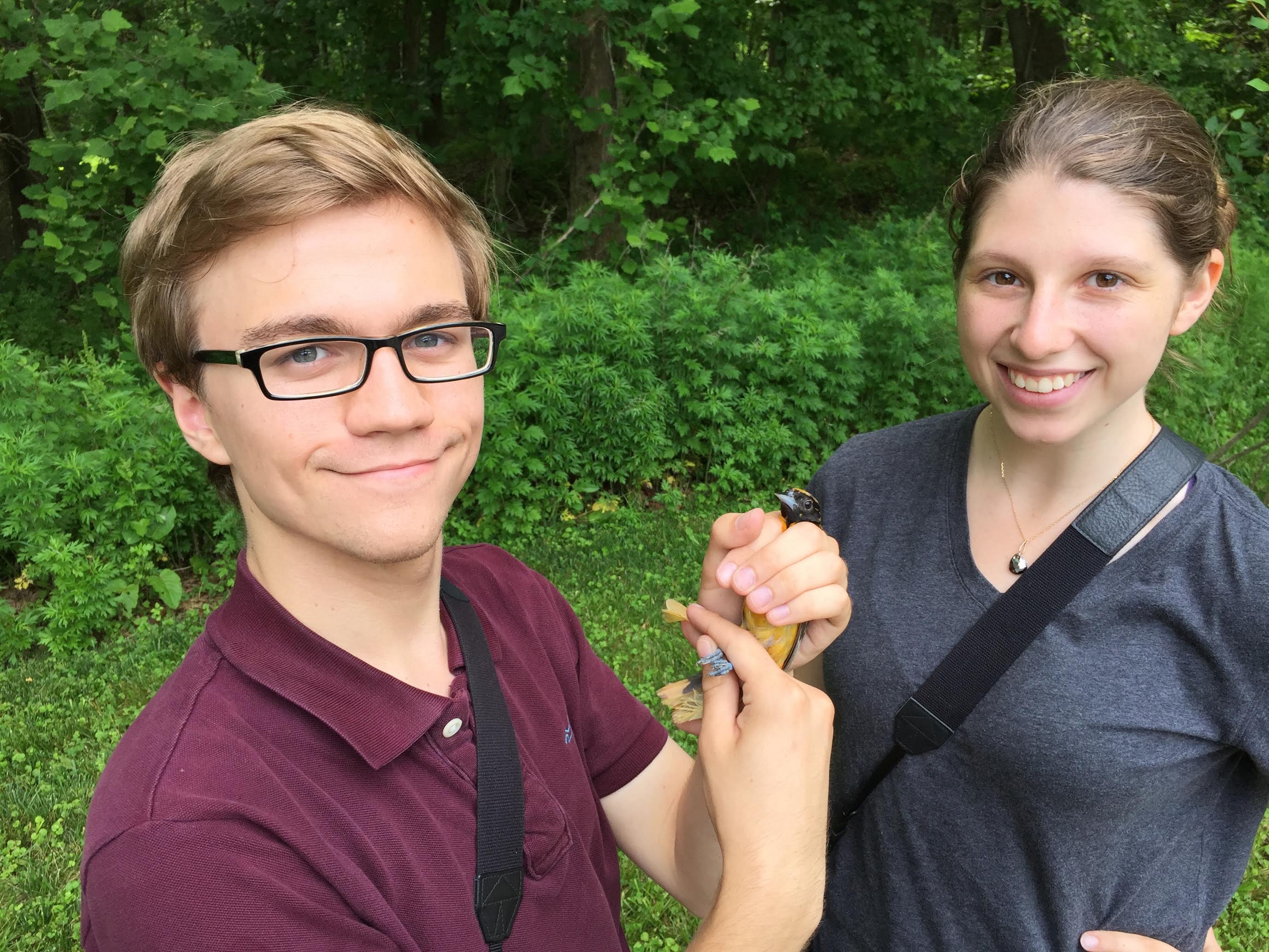
Photo: Bahama oriole, by Lisa McGuire (header image), and Michael Rowley ’18 and Alexis Scarselletta ’16 with a Baltimore oriole at Patapsco Valley State Park in Maryland, by Kevin Omland (second image)

Professor Kate Brown named 2016 Carnegie Fellow for nuclear disaster research

Kate Brown, a professor of history, has received a prestigious research fellowship from the Carnegie Corporation of New York and is one of just 33 scholars nationwide recognized for their significant scholarship in humanities and social sciences as part of the 2016 Andrew Carnegie Fellows Program.

Brown was selected from a nomination process that entailed three levels of review and began with the Corporation seeking recommendations from more than 600 leaders from universities, think tanks, publishers, and nonprofit organizations nationwide. Fellows were selected based on originality, promise, and impact of their research, and each fellow will receive up to $200,000 in research support.

Brown’s proposal, titled, “Chernobyl’s Pale: Health, Controversy, and Science in Determining the Contours of Nuclear Disaster,” is a two-year study that is a continuation of her American Council of Learned Societies (ACLS) fellowship to study the long-term effects of low doses of radiation on human health in the context of the Chernobyl disaster nearly three decades ago. Brown will use the fellowship to conduct a large scale investigation to historically analyze three decades of medical research on Chernobyl.

This year’s Carnegie Fellows class will conduct research aimed at addressing some of the world’s most pressing and urgent challenges, and the program supports established and emerging scholars, journalists, and authors whose work informs leaders in science, law, technology, business, and public policy.

“I’m hopeful that this fellowship will help bring greater visibility and support to the high-level scholarship that exists in the humanities and social sciences not only nationwide, but also here at UMBC,” Brown says. “I’m extremely grateful to my colleagues for their support during this process and to President Hrabowski for his nomination for this fellowship.”

“Our founder, Andrew Carnegie, charged Carnegie Corporation with the task of creating, advancing, and diffusing knowledge in order to enlighten American society and strengthen our democracy,” Carnegie Corporation of New York President Vartan Gregorian said in a news release announcing this year’s fellows. “This outstanding new cohort of 33 Carnegie Fellows is a result of that mandate.”

Brown is an award-winning author of A Biography of No Place: From Ethnic Borderland to Soviet Heartland (Harvard, 2004), Plutopia: Nuclear Families in Atomic Cities and the Great Soviet and American Plutonium Disasters (Oxford, 2013), and Dispatches from Dystopia: Histories of Places not yet Forgotten (University of Chicago, 2015). She received the 2015 University System of Maryland Board of Regents’ Faculty Award for Excellence in Scholarship/Research/Creative Activity. Read more about her work on the history department website.

The anticipated result of each Carnegie Fellowship is the publication of a book or major study.

Susan Hockfield, president emerita of the Massachusetts Institute of Technology (MIT), chaired the panel of jurors responsible for reviewing this year’s proposals, and noted that, “the large number of truly outstanding proposals makes the jury’s task difficult, but it also renews our confidence that social science and humanistic perspectives will- and must- contribute to designing solutions to today’s most complex challenges.”

For news coverage of the announcement, see below:

Announcing the 2016 Andrew Carnegie Fellows (Carnegie Corporation of New York)
Foundation names 33 Andrew Carnegie Fellows winners (New York Times)
Foundation names 33 Andrew Carnegie Fellows winners (ABC News) 
Carnegie fellows (Chronicle of Higher Education- scroll to bottom of page) 

In related news, on April 26, Time published an article by Brown that examined the health effects and attempts to contain radiation after the Chernobyl disaster that happened thirty years ago. Read “Chernobyl at 30: How attempts to contain the radiation failed” in Time. 

Image: Kate Brown. Photo by Marlayna Demond ’11 for UMBC. 

Neuroscientist Robert Provine talks with NPR about laughter and human nature

Robert Provine, psychology research professor and professor emeritus, has spoken with several major national and international news outlets over the last few weeks about his research on crying, tickling, yawning, and sneezing.

During the NCAA basketball tournament, Provine’s research was cited in The Wall Street Journal, providing context for why people were yawning while observing the games. The article noted: “Almost anything related to yawning causes yawning, says Robert Provine…his research shows that 55% of people yawn when they see someone else yawn—which may be why you want to yawn while reading about [basketball player Malcolm Brogdon] yawning.”

In The Washington Post, Provine described how his research on tickling found that most people experience tickling positively and explained why we can’t tickle ourselves. “Tickling involves the neurological program for the generation of self and other,” Provine said.

Provine has also been in the news recently commenting on a new study that may help shed light on whether humans laugh differently when surrounded by friends versus strangers. In the study, published in the Proceedings of the National Academy of Sciences, researchers asked 966 people from 24 societies around the world to listen to brief recordings of pairs of people laughing together for about one second. The researchers state that the results could help explain laughter’s role as a nonverbal communication tool to provide information about status and affiliations of individuals within small groups.

Provine, author of Curious Behavior: Yawning, Laughing, Hiccupping, and Beyond, was not involved in the research, but when speaking about the study to Smithsonian he noted, “laughter may be a simple behavior, but it’s also a powerful tool that provides insight into more complicated and difficult vocalizations, like speech and language.” He later added, “with laughter you’re looking at a human universal, a behavior that’s shared by all members of our species. To make generalizations about laughter, we need information about its use in different cultures so that we can see that laughter doesn’t have one meaning in one society and another in a different society.”

Provine told NPR that it’s significant and impressive that the results were consistent across all societies studied because “that suggests we’re dealing with a very basic aspect of human nature,” adding, “laughter seems to be done by all people and all cultures, but details about what it means require cross-cultural studies. Such research is hard to do and is rarely done.”

A complete list of Provine’s recent media coverage is below.

Why Virginia basketball will make you yawn (Wall Street Journal) 
The surprising reasons why we tickle one another (Washington Post) 
The science of sneezes (Daily Mail) 
A good cry (New Scientist) 
Why do we yawn? (Mental Floss) 
Who’s laughing now? Listeners can tell if laughers are friends or not (Smithsonian) 
The sound of laughter tells more than you think (NPR) 
The sound of your laughter reveals a lot, even to total strangers (Huffington Post) 

Image: Photo by Marlayna Demond ’11 for UMBC. 

Anne Brodsky named American Council on Education Fellow for 2016-17

The American Council on Education (ACE), has announced that Anne Brodsky has been named an ACE fellow for academic year 2016-17. Brodsky, an associate dean of the College of Arts, Humanities, and Social Sciences and professor of psychology, is one of just 33 fellows selected nationwide following a rigorous nomination and application process.

Established in 1965, the ACE Fellows Program is designed to strengthen institutions and leadership in American higher education by identifying and preparing faculty and staff for senior positions in college and university administration.

Nearly 2,000 higher education leaders have participated in the ACE Fellows Program over the past five decades, with more than 80 percent of fellows having served as senior leaders of colleges and universities.

“The ACE Fellows Program cultivates leaders prepared to meet the constantly evolving challenges of today’s higher education landscape,” said ACE President Molly Corbett Broad in a press release announcing this year’s class. “The diverse and talented 2016-17 fellows class demonstrates why the program has been such a vital contributor for more than a half-century to expanding the leadership pipeline for our colleges and universities.”

“I am excited to follow in the footsteps of the UMBC faculty who have participated in this fellowship before me and the ACE fellows who have visited and been hosted by UMBC over the years,” shares Brodsky.

Dr. Brodsky is a community/clinical psychologist and her teaching, research, and practice focus is on resilience, psychological sense of community, and the role of communities in creating and resisting societal risks and oppressions, including violence, poverty, racism, and sexism. Her research was featured in the fall 2014 edition of UMBC Magazineand she was the recipient of the 2014 Society for Community Research and Action (SCRA) Award for Distinguished Contributions to Theory and Research in Community Psychology.

“This fellowship provides me with an excellent opportunity to expand on what I’ve learned during my four years as an associate dean in CAHSS and previous years as associate chair of psychology and director of gender and women’s studies. I look forward to gaining new insights from my placement site, ACE training activities, and my ACE fellowship colleagues and bringing that knowledge back to UMBC,” Brodsky explains, adding, “I am particularly interested in issues of access, inclusion, participation, and retention at all levels of the university, as well as initiatives to promote the co-equal synergy of STEM, the social sciences, and all the liberal arts – a synergy that is necessary to contribute to changes in the real world that serve to enhance the university’s value to the community.”

The ACE Fellows Program combines retreats, interactive learning opportunities, campus visits, and placement at another higher education institution to condense years of on-the-job experience and skills development into a single semester or year. Fellows will focus on an issue of concern to their institution while spending the next academic year working with a college or university president and other senior officers at a host institution.

Throughout their placement, ACE fellows will develop a network of higher education leaders from across the country and abroad through the program’s three retreats on higher education issues organized by ACE. Fellows will also read extensively in the field and engage in interactive learning opportunities to increase their understanding of higher education challenges and opportunities. Read more about the ACE Fellows Program.

Image: Anne Brodsky. Photo by Marlayna Demond ’11 for UMBC. 

Viviana MacManus awarded major national fellowship for social justice research

Viviana MacManus, an assistant professor of gender and women’s studies, has been awarded a Career Enhancement Fellowship for Junior Faculty from the Woodrow Wilson National Fellowship Foundation. The competitive award is funded by the Andrew W. Mellon Foundation and is designed to provide support to junior faculty to pursue scholarly research and writing essential to attaining tenure.

The prestigious Career Enhancement Fellowship aims to increase the presence of minority junior faculty and faculty who are committed to eradicating racial disparities, breaking down stereotypes, and promoting cross-cultural understanding in the arts and sciences.

MacManus will use the sixth-month fellowship to work on her book manuscript We Are Protagonists of This History: Gender, Political Violence, and Testimonies of Resistance in Latin America’s Dirty Wars. The book is largely based on research she conducted in Argentina through a Summer Faculty Fellowship (SFF), and it centers on Latin America’s history of gender and state violence during the “Dirty Wars” of Argentina and Mexico from the 1960s-80s. MacManus conducted extensive interviews and is compiling them into oral histories to examine the gender politics involved in guerrilla movements and unarmed political organizations in Mexico and Argentina.

“I am thrilled to be a recipient of this fellowship, and I plan to make significant progress on my manuscript during this time,” shares MacManus. “I am pleased that there is investment in supporting academic work on social justice scholarship and feminist theory, as my research focuses on critical human rights and gender violence in Latin America.”

Prof. MacManus also says that the UMBC community has been incredibly supportive throughout her research process: “Furthermore, this experience also demonstrated to me the support network and sense of camaraderie that is truly representative of the UMBC community; Dr. Rachel Brubaker, Dr. Carole McCann and Dr. Michelle Scott (a former recipient of this fellowship), all assisted me during the application process. I look forward to also assisting other junior faculty in the future, especially those of underrepresented backgrounds, as these support systems are crucial in helping junior faculty thrive and succeed in their careers at UMBC.”

Dr. MacManus was a member of the inaugural cohort of UMBC’s Postdoctoral Fellows for Faculty Diversity program and has since served as mentor to other program participants. Her research interests include Latin American cultural and literary studies, transnational feminism, critical human rights, oral history, and visual culture. She is deeply committed to dismantling structures of inequality, including working with the National Immigration Law Center, D.C.’s Black Lives Matter chapter, and the School of the Americas Watch, among other organizations, to foster connections between academic scholarship and civic engagement.

Read more about MacManus’s work and research on the gender and women’s studies department website.

Image: Viviana MacManus. Photo by Marlayna Demond ’11 for UMBC.
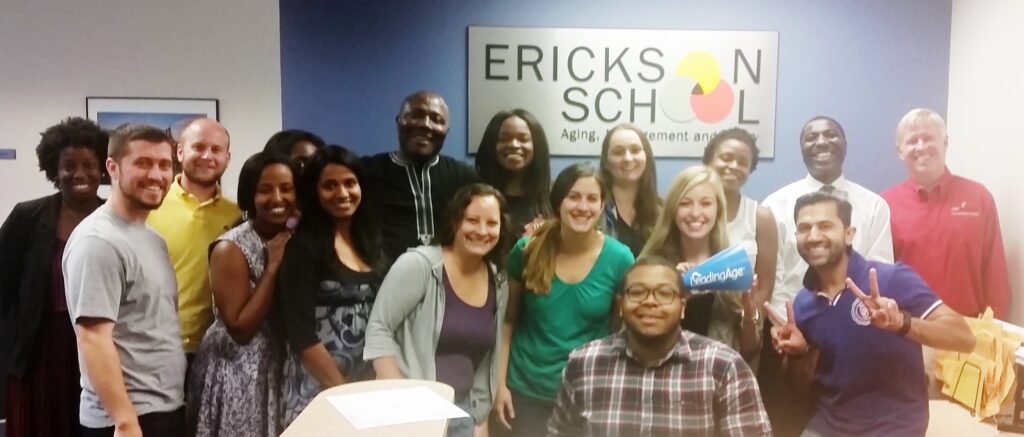
Meet The Staff: Leanna Powell ’08, Assistant Director of Annual Giving

Here in the Office of Institutional Advancement, we are always working hard to support the university and connect our donors with causes they care most about. We would like to introduce our donors — to whom we are so grateful — to the people who help make those things happen. Today, we’ll be hearing from Leanna Powell ’08, English, who has just returned to UMBC as our Assistant Director of Annual Giving. 

Photo by Marlayna Demond ’11.

Name: Leanna Powell

Job Title: Assistant Director of Annual Giving

Focus Area: Student philanthropy, crowdfunding, direct mail

Years at UMBC: .5 as staff, 4 as a student

Grad Year: 2008

Where are you from originally? I grew up in southern Maryland near D.C., but I consider myself a Baltimore gal now after 10+ years in the city.

What do you love most about UMBC? In a city so packed with higher ed institutions, UMBC feels like a well-kept secret. The campus is serene, the people are sweet and low-key, and yet you see student and alumni achievements popping up all over the state in the arts, research sciences, and public policy. Light City is a great example — I’m excited to get to rep for my college at the Inner Harbor.

What’s your favorite thing about your job? I majored in writing, but immediately got swept up by nonprofit work, so I’m glad to have the chance to put all of my professors’ hard work to good use (shoutouts to Chris Corbett, Jody Shipka and Orianne Smith!). I have also spent a lot of time working with student philanthropy on the nonprofit beneficiary side, so I’m glad to get the chance to apply that experience in helping Retrievers fundraise for their own amazing projects through our campus crowdfunding site.

Who do you admire and why? Tina Fey and Amy Poehler are two of my biggest idols. To me, they represent a generation of women who are comfortable being smart, funny, and supportive of one another — and aren’t afraid to speak up or to take criticism.

Have you ever done anything crazy or out of the ordinary? Now that we’re in short-sleeves weather, some of the first things people notice about me are my tattoos. Most of them have a lot of personal significance, but I did get one on impulse one afternoon with a friend — matching dinosaurs, to remind us not to take ourselves too seriously.

Tell us what you loved most about UMBC on Retriever Stories!

UMBC’s psychology department recognized as a top 10 up and coming undergraduate program

UMBC’s undergraduate psychology program has been named the #3 up and coming program in the East in new rankings by BestPsychologyDegrees.com. The rankings considered the presence of graduate degree programs, innovative and cutting-edge methods and resources, recent facility updates, research opportunities, internships, and student organizations and societies.

Best-Psychology-Degrees-Top-Up-and-Coming-ProgramsThe website’s editors recognized the psychology department’s strengths in providing a variety of courses and research opportunities to prepare students for successful careers:

The Psychology program at University of Maryland Baltimore County gives students an excellent foundation in psychology that can be applied in many careers as well as graduate studies. Psychology majors pick a concentration in areas such as Biopsychology and Human Services to gain more in-depth knowledge that can be applied to their desired career. The program’s peer mentor program produces successful students and community through review and group discussion sessions. Internships and research opportunities are available to give interested students a chance to apply their classroom studies to a professional setting. Doctoral students also have the opportunity to get hands-on experience at the UMBC Psychology Training Clinic.

Best Psychology Degrees aims to provide assistance to aspiring psychology professionals in finding degree programs that best meet the needs of each individual. Visit the rankings website to learn more about the ranking system.

Image: UMBC psychology class. Photo by Marlayna Demond ’11 for UMBC. 

Alumna Shalonda Holt named 2016 Washington Post Teacher of the Year

The Washington Post has named UMBC alumna Shalonda Holt its 2016 Teacher of the Year. The recognition comes after Holt was named Howard County Teacher of the Year in February.

Holt ’07, biological sciences, teaching certificate in education, teaches biology at Centennial High School in Ellicott City, where she began her teaching career after graduating from UMBC.  A panel of experts, educators, and parents chose Holt out of 19 finalists from school systems in Maryland, Virginia, and Washington, D.C. for The Washington Post Teacher of the Year honor.

A Post feature story published on April 7 describes Holt’s childhood, when she first developed a passion for education and learning: “She became a dedicated student inside the classroom and out, spending her weekend nights reading books while other kids looked for parties.” In describing her current teaching position, the article notes “her peers consider her a model educator and her students regard her as an ideal mentor.”

“Shalonda has such a powerful impact on her students and fellow teachers,” said HCPSS Superintendent Renee A. Foose in a Howard County Public School System press release announcing the recognition. “She is a dedicated educator who truly cares about her students and strives to improve the education experience. I am extremely proud of her and this accomplishment.”

In a Career Q&A on UMBC’s Alumni Blog, Holt discusses her innovative teaching methods and provides more background about why she decided to enter the education profession. Read more about her work in a Baltimore Sun article announcing her recognition as Howard County Teacher of the Year, and learn more about Holt in a Howard County Public School System “Staff Focus” video below.

Image: Shalonda Holt ’07, named 2016 Washington Post and Howard County Teacher of the Year. Photo by Nicholas Griner, Howard County Public School System. 

Urban policy expert calls for more investment in public transit after D.C. metro shutdown

In a new op-ed published in The Conversation, School of Public Policy Professor John Rennie Short comments on the growing infrastructure gap in the United States and questions why there isn’t more investment in public transportation in major cities.

Short’s op-ed “Why is the U.S. unwilling to pay for good public transportation” came after officials in Washington, D.C. closed the entire Metro system after frayed electrical cables were discovered in 26 locations.

“The quality of a country’s infrastructure is directly linked to its competitiveness because it makes businesses more productive and improves the quality of life. Why has the U.S. let its public transit slip so far?,” explains Short in his article.

Having just visited Switzerland, Short described how many European capitals have more advanced public transportation systems, stating that “our competitors are out-investing us in the vital infrastructure necessary to make our economy efficient and internationally competitive.”

Further analyzing what has contributed to growing public transport issues, Short mentions increased use of cars, investment in the national highway system, and constrained funding for transportation improvements, among other issues, but writes “there is some room for optimism.”

Read the full article in The Conversation. The op-ed has been circulated widely and has been picked up by Slate and Sea Change Radio. Professor Short also wrote a similar article on April 13 for Market Watch titled “Our crumbling infrastructure is hurting U.S. competitiveness.”   

Image: John Rennie Short. Photo by Marlayna Demond ’11 for UMBC. 

Jessica Berman publishes new book that examines Virginia Woolf in global contexts

Jessica Berman, director of the Dresher Center for the Humanities and professor of English, has published a new edited volume of 33 essays by leading scholars on the life, work, and multiple contexts for Virginia Woolf’s writing.

Virginia WoolfThe book, titled A Companion to Virginia Woolf, was published last month by Wiley. It is one of the first to examine Woolf in global contexts with essays on “Reading Woolf in India,” “Woolf in Hispanic Countries,” and “Woolf, the Hogarth Press and Global Print Culture.” It approaches Woolf’s writing from a variety of perspectives, including colonialism, modernism, queer theory, and digital humanities, among other disciplines.

Berman introduces the volume and also writes an essay in the book on Woolf’s Three Guineas.

The work has already received strong praise, including a review from the University of Oxford’s David Bradshaw: “A probing and compendious crow’s nest of a handbook that splendidly epitomises the global reach and indisputable genius of the, full-range of Virginia Woolf’s writings. Diligently up-to-the-minute while equally alert to the deeper histories of her critical heritage, it deserves to become a standard primer for scholars and general readers alike.”

Berman’s teaching and research interests include modernism from a transnational perspective, literature and culture, and feminist and literary theory. Her previous books include Modernist Commitments: Ethics, Politics and Transnational Modernism (Columbia University Press, 2011), and Modernist Fiction, Cosmopolitanism and the Politics of Community (Cambridge University Press, 2001, paper 2006). She is second vice-president of the Modernist Studies Association, to succeed to vice-president (2015-16) and president (2016-17).

Read more about her work on the English department website.

Header image: Jessica Berman speaking at a Dresher Center for the Humanities event. Photo by Marlayna Demond ’11 for UMBC.

Honoring UMBC faculty and staff for exceptional teaching, research, and service

“I’m grateful to be part of a research university where teaching is honored and prized,” said Calla Thompson, associate professor of visual arts, as she received UMBC’s 2016-2019 Presidential Teaching Professor award before hundreds of cheering colleagues and friends.

Thompson’s heartfelt speech was the first of many at UMBC’s 2016 Presidential Faculty and Staff Awards Ceremony focused on both UMBC’s commitment to excellence and the collaborative, caring community that makes excellence possible.

The celebration was held on Wednesday, April 6, 2016, to honor the accomplishments of this year’s campus- and system-wide award recipients. The annual awards ceremony recognizes faculty and staff for their contributions to advancing the mission of UMBC and the State, and for their dedication to teaching, learning and excellence in research and scholarship.

Over the years, the ceremony has grown to include generous endowed awards that recognize faculty and staff who demonstrate a strong commitment to student academic success, professionalism and problem-solving, and faculty career advancement.

The ceremony also formally acknowledges UMBC’s University System of Maryland (USM) award winners. Each year, USM awards faculty and staff across the system in the areas such as teaching, research, public service, mentorship, and effectiveness.

In moving personal remarks throughout the event, awardees shared their appreciation for UMBC’s culture of support and collaboration. “Today is a great day,” said Barbara Ann Smith, administrative assistant II in the Office of Undergraduate Education and receipient of the Wensch Award. Smith reflected that receiving her award provided her an opportunity to thank those who have inspired her to meet new challenges and continue learning throughout her career.

Michele Kimery, executive administrative assistant in human resources and USM Exceptional Contributions to the Mission of UMBC awardee, emphasized the mutual support UMBC community members provide. She thanked the colleagues who have kept her “internal light shining” through the years.

That culture of collaboration extends to research. Kevin Omland, professor of biology and winner of the 2016-2019 Presidential Research Faculty Award, thanked his undergraduate and graduate students, fellow faculty, staff, and research collaborators worldwide for their essential contributions to his work. Upal Ghosh, professor of chemical, biochemical, and environmental engineering and USM Excellence in Research winner, echoed that sentiment, recognizing his colleagues for their vision and hard work to build UMBC’s environmental engineering program.

Others focused the university as advocate: for students and for the growth of knowledge. Rebecca Adelman, associate professor of media and communication studies and USM Excellence in Research awardee, thanked UMBC and USM for honoring interdisciplinary humanities research. Anne Spence, professor of the practice in mechanical engineering and USM Excellence in Public Service awardee, spoke of her team’s work, through Project Lead the Way, to make sure “every kid knows engineers don’t just drive trains.” Sue Plitt, an associate director at the Career Center and Jakubik awardee, focused on the tremendous growth of UMBC’s career services as an essential resource for students.

Visit the Faculty and Staff Awards website to see a complete list of this year’s twelve award winners, including full award titles and biographies chronicling their achievements.

The awards ceremony is also an opportunity to update the campus community on faculty, staff, student, and alumni achievements across the university. President Hrabowski shared major university-wide projects and milestones; facilities and infrastructure planning and improvements; and a brief recap of budgetary decisions from the most recent Maryland General Assembly legislative session. To see a more extensive list of these accomplishments and updates, please view the 2016 Achievements and Mid-Year State of the University Update Report.

In closing the celebration, President Hrabowski pointed to the importance of community recognition for a job well done. “At this campus we care for each other,” he said, “and nothing could be better than that.”