We use cookies for analytics and, unless you opt out, advertising.
You can opt out of advertising at any time.UMBC uses essential cookies to run this site. With your permission we would also use analytics cookies (to understand how the site is used) and advertising cookies (to measure and target our ads on other platforms). Nothing else loads unless you accept. You can change your choice any time from Cookie Settings in the footer.Privacy Policy
EssentialRequired for the site to work (login, security, your cookie choice). Always on.
Sustainable management of common pool resources (CPRs) such as water, forests, clean air, and fisheries is a global concern that’s getting increased attention in the context of climate change. All over the world local communities manage CPRs, and these institutions are especially important in regions where government capacity to protect CPRs is limited. Despite decades of observational studies, it is unclear what features determine successful local CPR governance models. This is because of the challenge of isolating which variables make these models successful. New research has made headway on this challenge.
UMBC’s Maria Bernedo Del Carpio, assistant professor of economics, and colleagues have conducted a field experiment to isolate one feature of local CPR governance: externally supported, technology-facilitated community monitoring. Bernedo Del Carpio has collaborated on the research with Francisco Alpizar, professor and chair of the Environmental and Natural Resource Economics Group at Wageningen University, and Paul J. Ferraro, Bloomberg Distinguished Professor of Human Behavior and Public Policy at Johns Hopkins University.
They initiated their study in Costa Rica, to isolate and test community monitoring, publishing the results in the Proceedings of the National Academy of Sciences (PNAS) earlier this year. Jointly with scholars in the U.S, Canada, the U.K., Kenya, and China, they then implemented the approach in six other countries. The results, also published in PNAS, are promising.
“These studies allow us to directly see how community-based monitoring can support more desirable natural resource management outcomes and to analyze the ways to attain those outcomes,” says Bernedo Del Carpio. “Monitoring a natural resource or an institution can generate valuable information that will improve governance, but it is necessary to engage decision-makers and the community.”
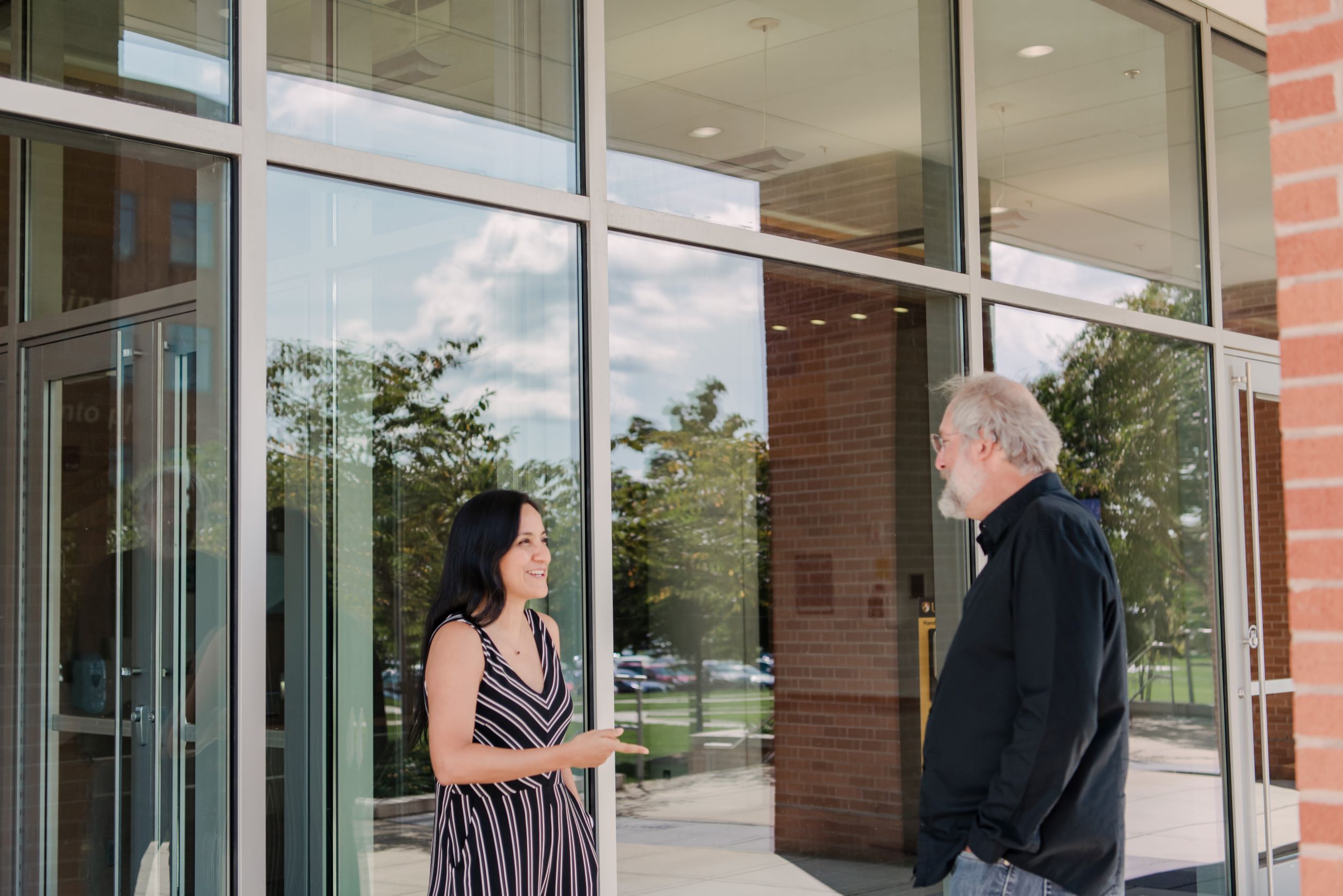
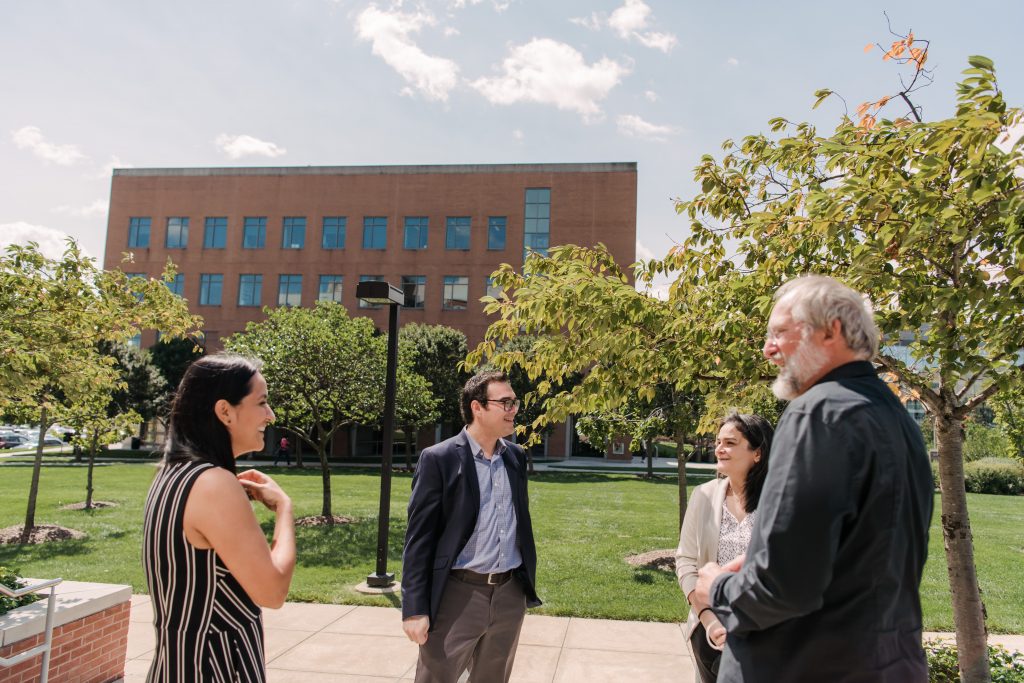
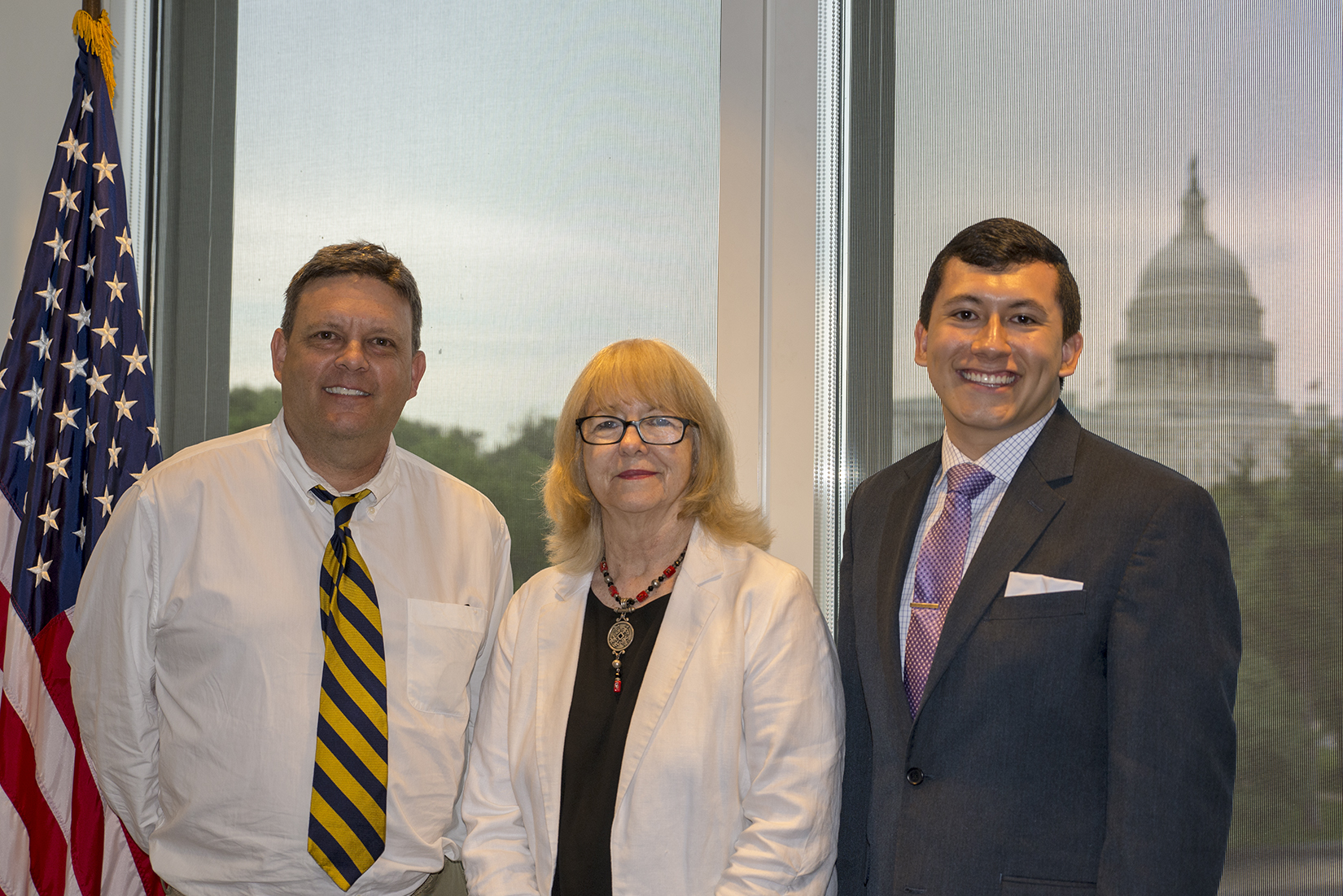
Maria Del Carpio and UMBC’s Tim Gindling, professor of economics.
Community monitoring of CPRs
In Costa Rica, Bernedo Del Carpio, Alpizar, and Ferraro worked with community-based water management organizations (CBWMOs) in 16 communities in the Pacific coast and northern plains regions. These areas have long dry seasons and progressively decreasing water access.
Using SIMA, a water monitoring smartphone app designed by the authors, monitors collected and reported information about residents’ experiences with water service. This included interruptions in fresh water service, water clarity, water’s unusual taste or smell, leaks, unauthorized use of water connections, and land use around water sources.
The app produced weekly summaries that were shared with the CBWMOs and the rest of the community over a period of nine months. After one year, measures of water use showed small effects in the desired directions: reductions in groundwater pumping, better water quality, and more satisfied users.
The team then partnered with scholars from several other universities to implement randomized controlled trials of community monitoring in other contexts. This stage of the research included 747 communities in six countries. The features of the community monitoring programs, the experimental designs, and the outcome variables were harmonized across sites to facilitate comparison of data over time.
With the use of a variety of technologies, monitors collected and reported data on groundwater in arid regions of Brazil; surface water in urban China; and forests in rural Liberia, Peru, and Uganda. For example, community monitors used a well water level sensor in Brazil. In Peru, a smartphone app transmitted monthly remote-sensed early deforestation alerts to monitors.
Community and global impacts
The meta-analysis of the results shows that community monitoring can improve CPR management in different contexts, even when the monitoring is externally-supported.
This research is distinctive in both its ability to isolate the effect of community monitoring and to test it across different contexts. It offers important insights with tangible public impacts. The results provide evidence of the effectiveness of externally-supported community monitoring. They also contribute to an emerging literature that uses multisite trials to study causal effects.
“Understanding how we can make institutions and governance more effective is essential for successfully addressing the most important policy challenges of the twenty-first century,” says Ferraro. “We believe this study is an exemplar of how such an understanding can be more effectively generated by careful field testing using the very best scientific practices.”
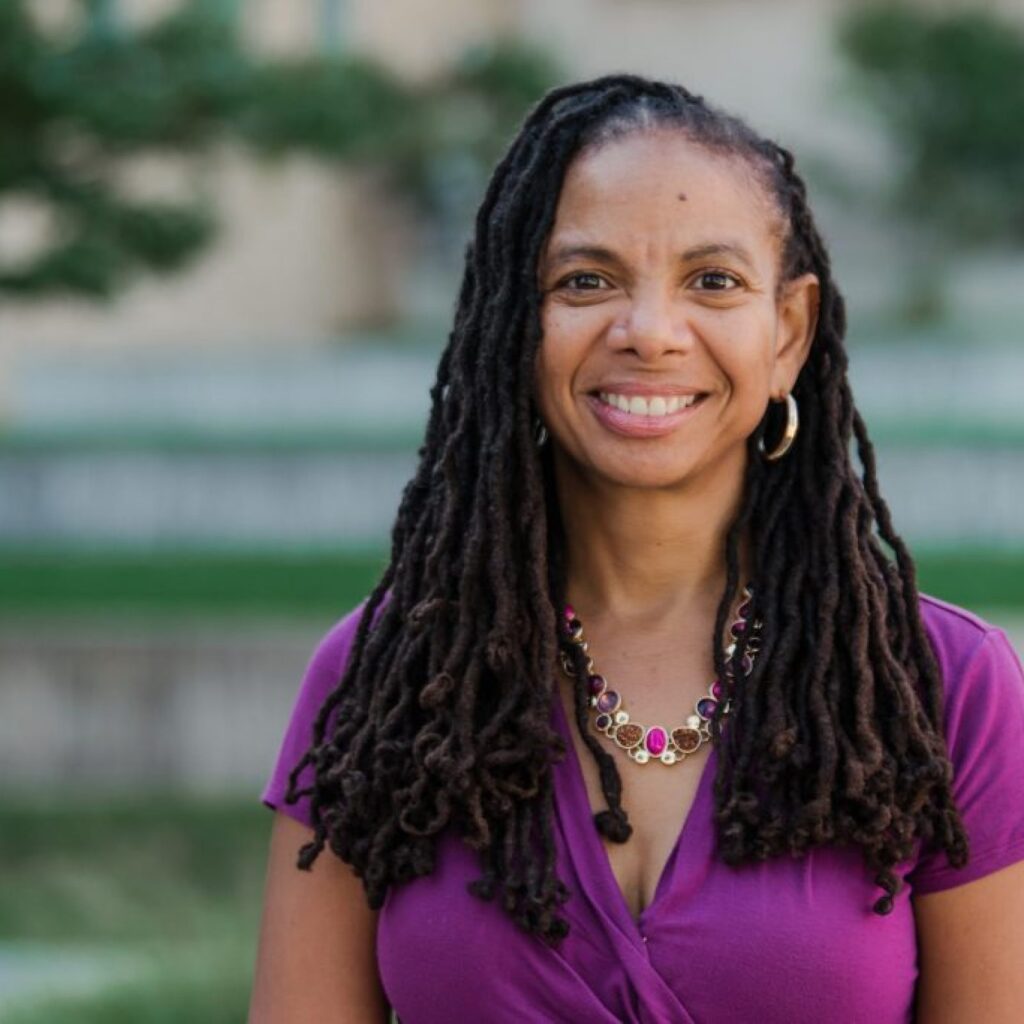
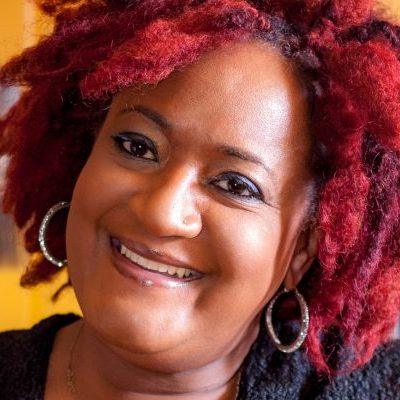
Featured image: Maria Bernedo Del Carpio. All Photos by Marlayna Demond ’11 for UMBC.
“UMBC’s commitment to continue the Postdoctoral Fellowship for Faculty Diversity through the pandemic is one of the reasons I decided to come to UMBC,” says Mercedez Dunn, sociology, anthropology, and public health. Dunn is one of two fellows to join UMBC’s College of Arts, Humanities, and Social Sciences through the high-impact program this fall.
Due to the pandemic, this year’s selection process was entirely virtual for the first time, but interest in the national program was stronger than ever. The fellowship committee received over 500 applications across a range of fields represented at UMBC and was energized by the incredibly talented applicant pool, shares Autumn Reed, assistant vice provost for faculty affairs, who coordinates the program’s application and selection processes.
UMBC’s Executive Committee on the Recruitment, Retention, and Advancement of Underrepresented Minority Faculty launched the program in 2011 to support promising scholars who are committed to diversity and inclusive excellence in the academy and to prepare these scholars for possible tenure-track positions at UMBC. During their two-year term, fellows receive a stipend, benefits, travel funds, office space, teaching and research mentorship, and specialized professional development opportunities. In addition to pursuing their research, fellows teach one course a year in the host department.
Out of the 20 fellows who have been part of the program, 11 have become faculty at UMBC. Another seven are faculty at other colleges and universities across the U.S. And one, Kara N. Hunt, is director of education and outreach at Maryland Commission on Civil Rights.
A researcher’s path
Dunn comes to UMBC with a Ph.D. in sociology from the University of Michigan, but her original career goal was to become a lawyer. Two classes changed her path. In high school, American Minority Relations introduced her to sociology. Later, at Spelman College, she took a course on the sociological imagination that gave her a new way of thinking about social change, equity, and everyday life.
Seeing her enthusiasm, a faculty mentor encouraged her to consider becoming a sociology professor. “I had never seen any Black people with a Ph.D. before I attended Spelman,” shares Dunn. “I didn’t think that was something for me.”
She changed her mind after attending a sociology summer research program where she fell in love with different sociological frameworks, including the theory of intersectionality. “Being in a space for Black women in Spelman was really enlightening,” explains Dunn. “Having students and faculty that understood and cared about me as a person and seeing other Black women that were professors motivated me to pursue a Ph.D. in sociology.”
Structural solutions
As Dunn continued to broaden her skills and define her interests, she began to focus specifically on the entanglements of racism, sexism, heterosexism, and classism in the understanding of HBCU women’s sexual and romantic experiences. She notes that public health practitioners often assume Black college women have higher-risk sexual behavior in comparison to college students as a broader group, and that this perception and labeling are consequences of interlocking systems of oppression.
“It’s important to look at why certain populations are labeled ‘at-risk’ and how those labels reflect racism, heterosexist, and classist practices that impact a person’s sexual choices,” says Dunn.
Limited and inaccurate assumptions about Black women’s sexual practices and sexual health reinforce negative stereotypes of Black women as hypersexual and decontextualize their sexual interactions. Often, they have also historically gone hand-in-hand with recommendations for individual-level behavior change, rather than structural public health solutions.
“Public health is everywhere, and improving health is often broader than we might think,” says Dunn. “It means combatting those larger power structures that set up the conditions in which we live, love, and experience the world. My research, and intersectional work in general, highlights the need for structural solutions for structural problems.”
Illuminating voices
Dunn found critical social theory and a person-centered approach rooted in intersectional Black feminism as the most effective frameworks for her to understand the many systems that support the marginalization of Black and Brown people. “My research centers the experience of traditionally marginalized people and illuminates their voices and stories to understand a collective impact, but also to untangle the issues that affect one person,” says Dunn.
Her research also gave her insights into her hometowns of Valley and Opelika, Alabama, where several family members suffered early deaths due to social factors that impacted their health. The towns, centered around a textile mill, were devastated when the mill closed during the Great Recession. Many workers had mill-specific work skills and limited education, which left them with few employment options after the closure. This, in turn, led to great economic and social challenges that impacted their health.
An intersectional approach helped Dunn gain clarity on how the social determinants of health can impact a community and individuals. “I learned that we don’t just inherit genes,” says Dunn. “We also inherit social conditions.”
Student connections
Dunn is excited to draw more students into sociology and further support those already committed to the field. Working with students is something she enjoys. She wants them to see the world in new ways, just like she did when she learned about critical social theory. “I don’t take lightly that me being a Black woman in the classroom can really be powerful in terms of other students who look like me to imagine those possibilities,” says Dunn.
Her strategy for a successful learning environment is to connect with students on something that is important to them and use that to explain complex concepts. “My approach to teaching is to find what is interesting to students right now and connect with them on that aspect of their lives,” says Dunn. “I then use that connection as a launchpad for students to view sociological theories and concepts.”
“Sociology is about understanding life,” Dunn says, “and it should be an exciting and inspiring process as it was for me.”
Support for career advancement
Dunn looks forward to continuing to grow both her teaching and research through the fellowship, to progress in her academic career. “We are thrilled to have Dr. Dunn as a new colleague. As an applied sociologist with public health training and expertise, her research centers Black women’s racialized, classed, and gendered relationship experiences within an HBCU,” says Dunn’s UMBC faculty mentor Brandy Wallace.
Wallace is associate chair of the department of sociology, anthropology, and public health, and associate professor of sociology. She looks forward to working closely with Dunn and connecting her with additional colleagues and mentors. She’s also excited about Dunn’s future impact on UMBC and higher education more broadly.
“Mercedez’s work incorporates theories of intersectionality, which is appealing to our students at UMBC,” says Wallace. “It also has meaningful implications for promoting equity and inclusion efforts in higher education.”
In addition to the fellowship, Dunn is also receiving support from Maryland’s Alliance for Graduate Education and the Professoriate (AGEP) for her biomedical work on Black women’s sexual health. This University System of Maryland effort led by UMBC received National Science Foundation funding to transform hiring practices and boost the career success of historically underrepresented minority faculty in biomedical fields.
Tahir Hemphill, visual arts, is also a 2021-22 Postdoctoral Fellow for Faculty Diversity, on a new visual arts fellowship track. Read his story here.
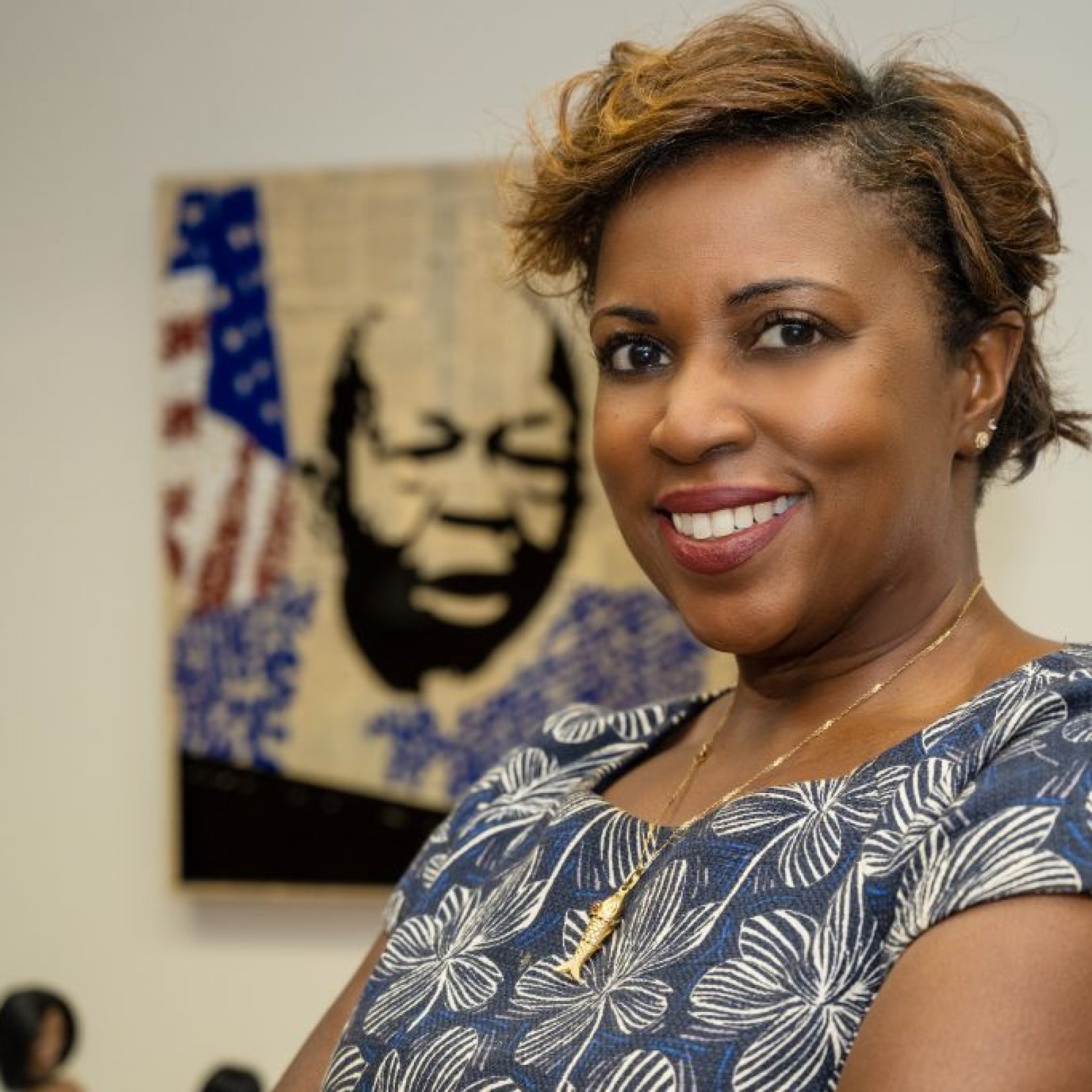
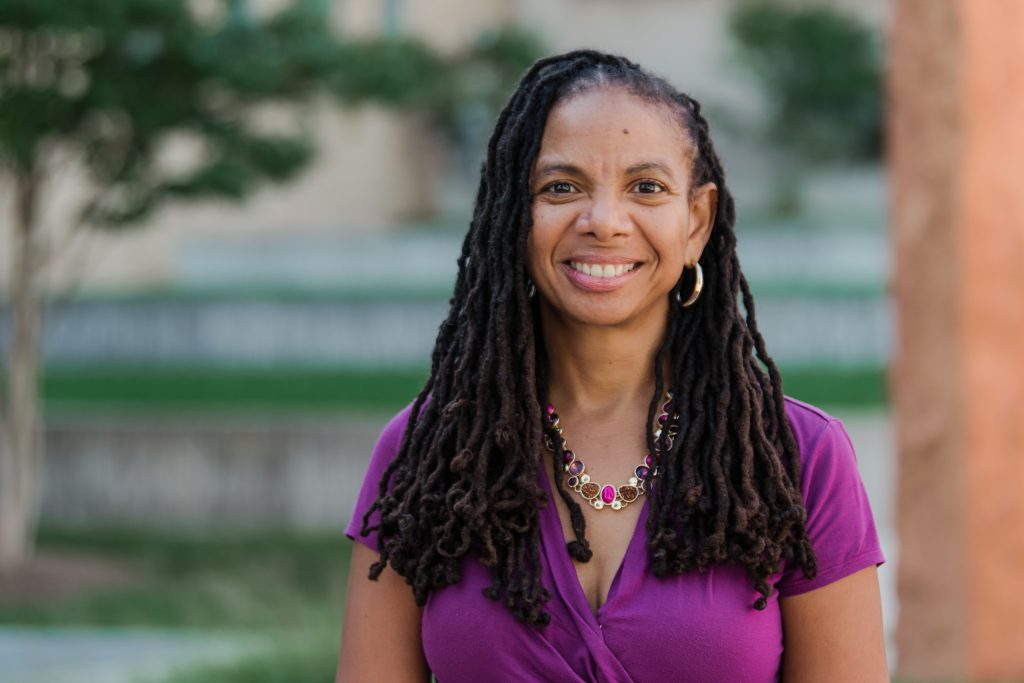
Featured image: Mercedez Dunn, photo by Marlayna Demond ’11 for UMBC.
During the summer of 2021, several months into an uptick in racist violence against Asian Americans during the COVID-19 pandemic, six Asian women were shot and killed in Atlanta, Georgia. Sharon Tran, assistant professor of English, found herself dismayed by public reluctance to denounce these acts of violence as hate crimes. For Tran, the Atlanta shooting was yet another example of anti-Asian racism in the United States and how it intersects with sexism and misogyny—a focus of her research.
The Citizens and Scholars Institute has now recognized Tran’s work through a Career Enhancement Fellowship supporting her new book project, Minor Forms: The Affective and Aesthetic Economies of Asian Girlhood. The book examines how the minor figure of the “Asian girl” can provide a new way of understanding U.S. racism and imperialism.
Asian girlhood
Tran’s research centers the Asian girl, in contrast to current practices in both Asian American studies, which subsumes her within theoretical frameworks of Asian women’s experiences, and girlhood studies, which strongly emphasizes Black-white experiences. Her book provides important explorations of how histories of imperialism, militarism, commodity capitalism, and trans-Pacific migration have shaped Asian girlhood while intersecting with and exacerbating anti-Black racism.
Additionally, Tran explores how the Asian girl, as a minor and dependent figure, can create new feminist paradigms going beyond individualist, adult models of subjectivity and agency privileged in Western liberal politics.
Through this fellowship, the Citizens and Scholars Institute has recognized Tran’s work for its distinctive point of view in the field of English and for fostering diversity and inclusion through scholarship.
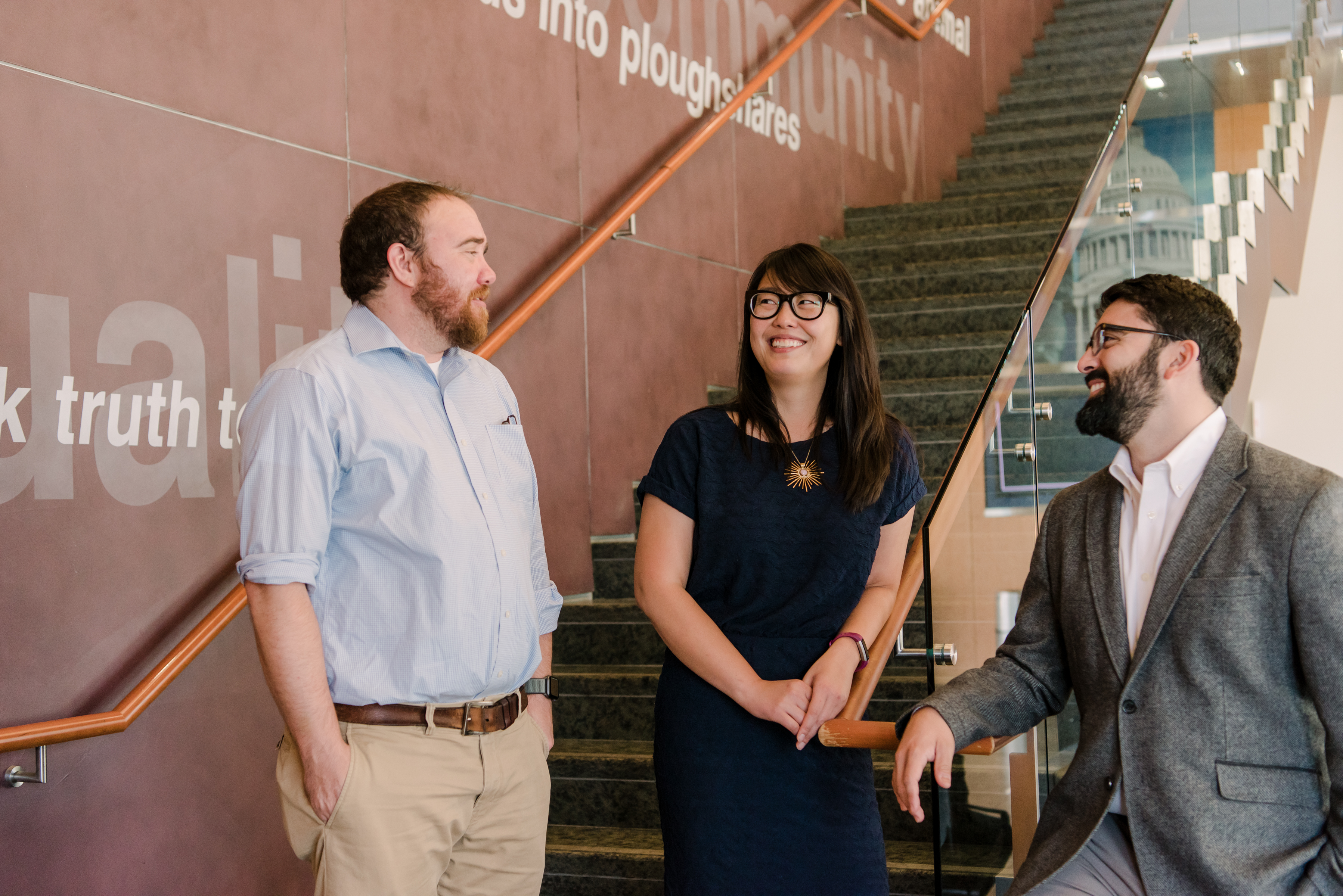
Drew Holladay (l), assistant professor of English, and Tran in UMBC’s Performing Arts & Humanities Building
By studying the narratives of Asian girlhood, Tran plans to further public understanding of the trauma of growing up Asian in the U.S. She will research how these narratives change and vary over time and across contexts. Her goal is to help readers better grasp how racism, racialization, and their negative social, physical, and mental impacts become part of our histories and how we define racism in the U.S.
Research access and support
Funded by the Andrew W. Mellon Foundation, the fellowship seeks to increase the presence of underrepresented junior and other faculty members in the humanities, social sciences, and arts by creating career development opportunities for scholars with promising research. Only 16 junior faculty in the nation have received a 12-month fellowship through the program this year. The award funds will support a one-year sabbatical for Tran to work on her book, as well as research and travel, mentorship, and professional development.
“Across time, literature has often served as a site of protest. Dr. Tran’s work addresses this important aspect of literary studies,” says Jean Fernandez, professor and chair of English. “The English department is proud of the recognition she has garnered with this prestigious award.”
Holladay (l), Tran, and Lindsay DiCuirci (r), associate professor of English.
Tran came to UMBC in 2018 and is the fifth UMBC junior faculty member to receive the Career Enhancement Fellowship. “Fostering more institutional access and support for communities of color is what animates my research and teaching, so it feels wonderful to receive recognition for this work,” says Tran. Her mentor is Laura Hyun Yi Kang, professor of gender and sexuality studies, at the University of California, Irvine.
“I am honored to have been awarded this fellowship because of the organization’s mission to support scholar-teachers committed to eradicating racial disparities in higher education,” says Tran.
Banner image: Sharon Tran. All photos by Marlayna Demond ’11.
Kars appreciates that the awards bring greater attention to the historical events and voices conveyed in her book. “At this moment when studying and teaching the history of African-descended people, and the history of race and racism, is under attack,” she says, “we need stories about Black courage, resilience, and resistance more than ever.”
Cundill History Prize
Cundill History Prize jurors voted unanimously for Blood on the River as the recipient of this year’s top award.
"Kars vividly conveys the pain and violence of enslavement, and illuminates the challenges of undertaking an effort to overthrow a slaveholding regime." pic.twitter.com/fViopfalG7
The annual prize, awarded by McGill University in Montreal, is the largest prize for a work of historical non-fiction in English ($75,000). It recognizes scholars globally for new books on any historical period or subject that have broad appeal, engaging readers outside of academia. Prize guidelines note that winners represent excellence in “the historian’s craft” – utilizing a variety of primary sources to produce “an impeccably-documented and well-argued study.”
“This story has, for so long, gone relatively unexamined,” says Jennifer L. Morgan, juror and professor of social and cultural analysis and history at NYU. “Kars’s skills as a researcher and a writer reposition the lives of these freedom fighters at the heart of our understanding of the Atlantic World.”
Frederick Douglass Book Prize
Just days before the Cundill History Prize announcement, Kars received the prestigious Frederick Douglass Book Prize, awarded by Yale University’s Gilder Lehrman Center for the Study of Slavery, Resistance, and Abolition and the Gilder Lerhman Institute of American History. It honors the most outstanding new non-fiction book in English on the subject of slavery, resistance, and/or abolition.
This “beautifully written book” relies on a “gold mine of an archive to unpack hidden meanings” within events that few historians have written of before, says jury chair Joseph P. Reidy, professor emeritus of history and former provost at Howard University. Among Kars’s archival resources are first-hand accounts of the rebellion by enslaved people, accessed through the National Archives of the Netherlands in the Hague.
Kars shares this prestigious $25,000 award with Vincent Brown, the Charles Warren Professor of American History and professor of African and African American studies at Harvard University. Brown’s book Tacky’s Revolt: The Story of an Atlantic Slave War takes an in-depth look at a rebellion of enslaved people in Jamaica,1760-61. The winning books were selected out of 85 nominees.
“I feel enormously honored to be a winner of this year’s Frederick Douglass Book Prize alongside Professor Vincent Brown,” shares Kars. “The Frederick Douglass Prize is the biggest prize in the field of slavery studies. It is very humbling to win it.”
Rigorous historical research
UMBC’s Amy Froide, professor and chair of history, shares that Kars is a notable example of the rigorous historical research that thrives at UMBC. She notes that Kars’s work has a particularly high impact because she produces meticulously researched and carefully argued scholarship that is beautifully written and accessible to a wide range of audiences. And within the field of history, her work will strongly influence scholars far afield from Berbice.
Kars. Photo courtesy of Kars.
“Historians are especially appreciative of the creativity and unique perspective Dr. Kars has brought to the study of slave rebellions,” says Froide, “in particular her focus on divisions within and among the rebels, and seeing Africans and Indigenous peoples as leaders and participants in complex rather than monolithic resistance movements.”
Support for further research
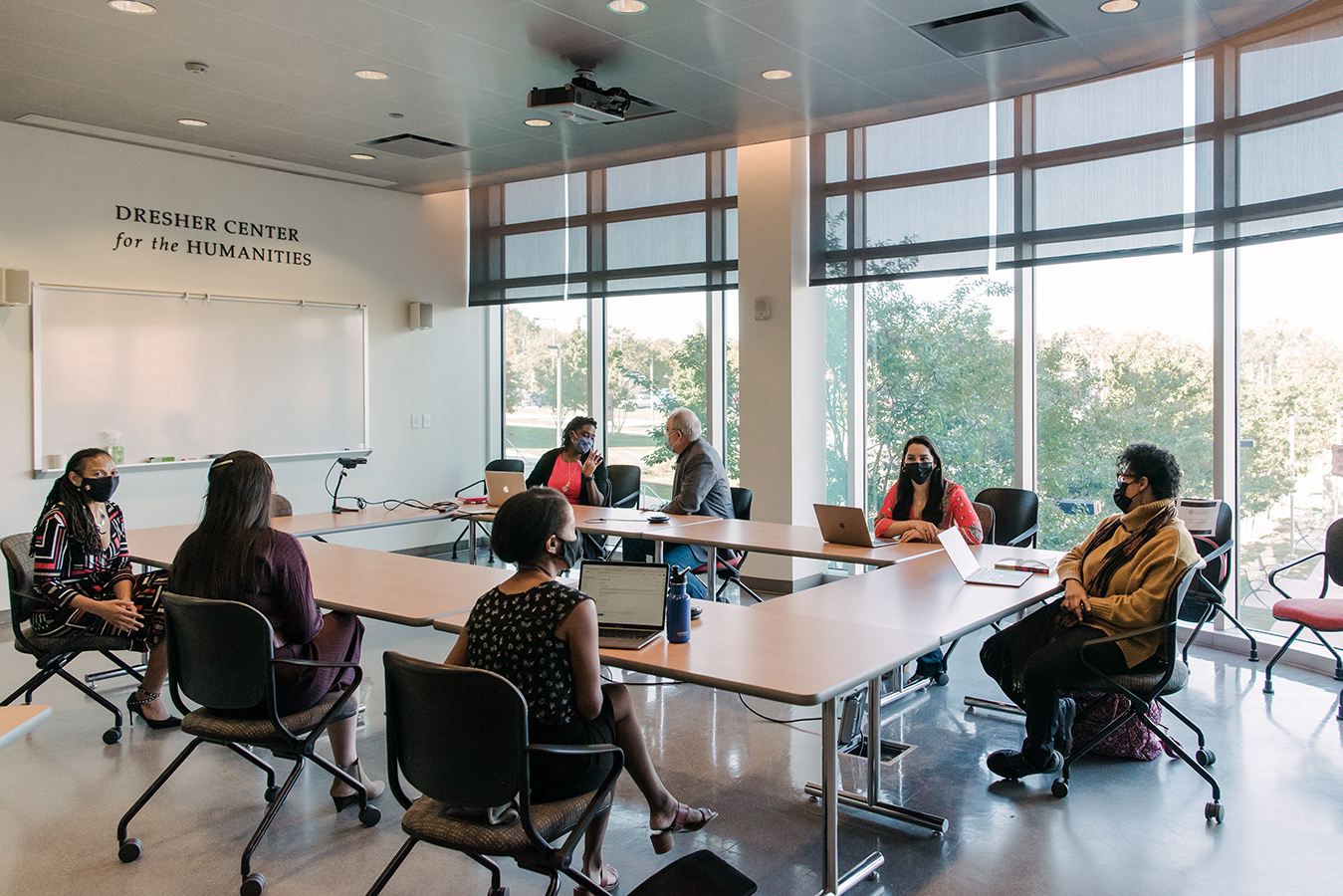
Kars appreciates the support she has received from her department, the CAHSS Dean’s office, and UMBC in general. This includes feedback on her work, seed monies, research funding, help with grant writing, fellowship support, and leave from teaching in order to write. She notes that Rachel Brubaker, assistant director of grants and program development at UMBC’s Dresher Center for the Humanities, has provided invaluable assistance through her vast knowledge of prestigious national and international fellowships.
Since receiving the Cundill History Prize and Frederick Douglass Book Prize, Kars has received two new fellowships supporting her next project, from the National Endowment for the Humanities and the Netherlands Institute of Advanced Studies (NIAS). Her forthcoming research will focus on the complex lives of Accara and Gousarie, two African men who were revolutionary leaders and also involved in Dutch slavery and colonialism. She will begin working on the book Multiple Crossings: The Lives of Two African Men in the Eighteenth-Century Dutch Atlantic in residence at the NIAS in Amsterdam in 2022
“UMBC has created a marvelous infrastructure for research in the arts, humanities and social sciences,” she says. “I am glad these prizes can showcase that.”
Banner image: Marjoleine Kars. Photo by Marlayna Demond ’11 for UMBC.
The Andrew W. Mellon Foundation has granted UMBC, Morgan State University, and the University of Maryland, College Park (UMD) $3 million to launch Breaking the M.O.L.D. (Mellon/Maryland Opportunities for Leadership Development). Many existing faculty leadership programs in higher education focus on leadership in STEM fields, the organizers note. This program will develop a pipeline to higher ed leadership for scholars in the arts and humanities. It will focus on interested faculty members at the rank of associate and full professor, particularly women faculty and Black, Hispanic, and American Indian/Alaska Native faculty.
Breaking the M.O.L.D. is also unique in its design with six women in senior leadership serving as principal investigators (PI), five of whom are Black. UMBC’s Kimberly Moffitt, interim dean of UMBC’s College of Arts, Humanities, and Social Sciences (CAHSS) and professor of language, literacy, and culture, serves as the project’s lead PI. Joining her in leading UMBC’s implementation of Breaking the M.O.L.D. will be Patrice McDermott, vice provost for faculty affairs.
Leading Morgan State’s implementation will be PI Patricia Williams Lessane, associate vice president for Academic Affairs and associate professor of sociology and anthropology, and Co-PI Charlene Chester, assistant dean for the James H. Gilliam College of Liberal Arts (CLA). At UMD, Psyche Williams-Forson, professor and chair of American studies, will serve as PI. Bonnie Thornton Dill, dean of the College of Arts and Humanities (ARHU) and professor in the Harriet Tubman Department of Women, Gender, and Sexuality Studies, will serve as co-PI.
L to R: Moffitt, Lessane (photocourtesy of Morgan State), Psyche Williams-Forson (photocourtesy of UMD)
A structural answer
“The many health, social justice, economic, and political challenges facing our society today place important demands on higher education institutions,” says UMBC’s Kimberly Moffitt.She points out that colleges and universities must shift how they approach engaging with societal problems, which often means reflecting on how higher ed itself works.
“This experienced team of diverse senior leaders has an opportunity to create a structural answer to elevate diverse leaders from the arts and humanities,” says Moffitt. “This will enable faculty to apply distinct knowledge, skills, and perspectives to address our communities’ needs as leaders at their respective institutions.”
Breaking the M.O.L.D.
As a minority-serving institution (MSI), Historically Black College and University (HBCU), and predominantly white institution (PWI), respectively, UMBC, Morgan State, and UMD are uniquely positioned to collaboratively lead this charge.
This ambitious project will include two cohorts of faculty—associate and full professors—guided by senior faculty over a three-year period. Participants will engage in skill-building seminars, learn key leadership skills from experts who hold senior leadership positions at the three universities, and take part in leadership experiences with their faculty mentors. The cohorts will travel to each campus to gain insights on how PWIs, HBCUs, and MSIs create different pathways to senior leadership.
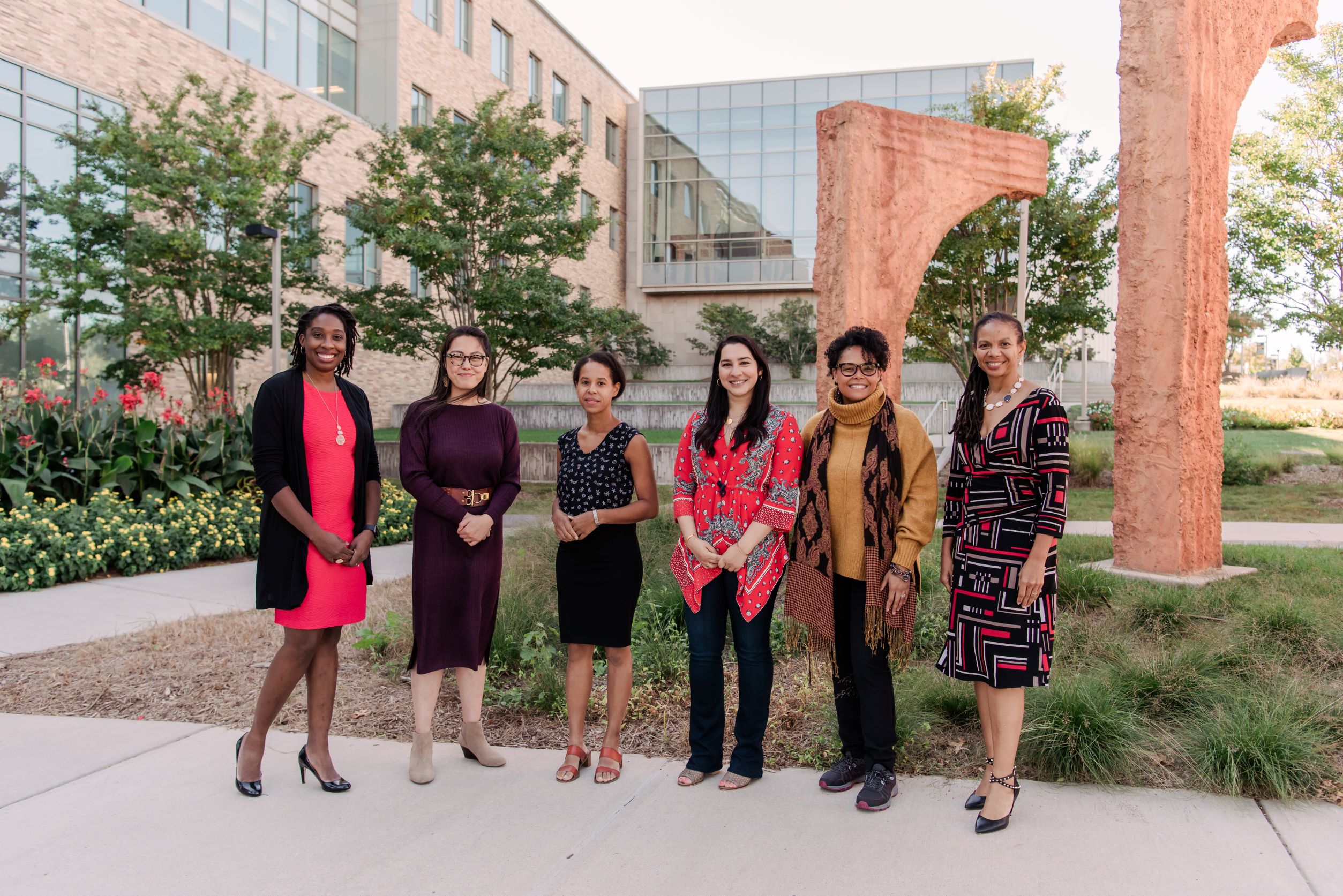
Some of UMBC’s 2015-19 postdoctoral fellows (L to R): Keisha Allen, assistant professor of education; Emily Yoon Perez, English; Lisa Cassell, assistant professor of philosophy; Noor Zaidi, assistant professor of history; Camee Maddox-Wingfield, assistant professor of sociology, anthropology, and public health policy; Moffitt.
This work builds on the success of previous initiatives, such as UMBC’s Postdoctoral Fellows for Diversity program. That program has brought 20 talented postdoctoral fellows to UMBC, in fields ranging from dance to history. It provides extensive mentoring and other support to enable postdocs to transition to faculty positions. Seventeen have already done so, including 11 at UMBC.
It also builds on UMD’s ADVANCE Program, a year-long professional development program that prepares faculty for leadership positions in their department, college, or the university.
2019 postdoctoral fellows (L to R): Blake Francis, philosophy; Perez; Fernando Tormos-Aponte, public policy and political science.
One goal, three approaches
Breaking the M.O.L.D. will offer a flexible model that can be adapted to meet the diversity challenges and needs of individual campuses, while including all faculty from the arts and humanities who are committed to supporting diversity and inclusion in the academy.
UMBC’s CAHSS faculty includes dozens of scholars who identify as Black, Hispanic, American Indian or Alaska Native, but only ten hold the title of full professor. Most are associate professors. And just a handful serve in leadership positions, such as department chair or roles in the dean’s or provost’s office. While women, broadly, are more represented among CAHSS faculty, most women in CAHSS are associate professors.
As a result of these factors, UMBC’s Breaking the M.O.L.D. program will focus on supporting the leadership of Black, Hispanic, American Indian or Alaska Native, and women faculty in the arts and humanities while also being open to others committed to diversifying academic leadership. UMD and Morgan State’s approaches will be similar, but tailored to their institutions.
Investing in and nurturing tomorrow’s leaders
Morgan State will develop and implement a Summer Leadership Academy to address the unique, historical barriers that often impede the ascension of women, Black, Hispanic, and American Indian and Alaska Native faculty in the arts and humanities, with a focus on Black women faculty. The academy will help Morgan State faculty further develop leadership skills, balance research and leadership responsibilities, and navigate the higher education landscape. They will also explore the role of HBCUs in higher education.
“Leaders beget leaders. It is through this model initiative that we are creating the infrastructure and blueprint for our diverse faculty to thrive,” says Lessane. “Humanities scholars are needed in senior executive leadership positions because they understand the value of human-centered education and its impact as a driving force in equitable scientific and technological innovation, business enterprise, and social justice reform during volatile, unprecedented times.”
Diverse voices at the leadership table
UMD’s ARHU faculty will tackle barriers Black women faculty face to access and succeed in leadership positions, as well as support Black, Hispanic, American Indian and Alaska Native faculty more broadly. In ARHU, approximately 15% of the tenured and tenure-track faculty identify with one of the groups above, with the majority at the associate professor rank. Currently, fewer than ten Black women serve in mid-level leadership positions and only two at the senior executive leadership level.
“As a Black woman serving at the senior executive level in a PWI, I’m keenly aware of the importance of having the voices of diverse people at the leadership table,” says Thornton Dill. “I see this project as an opportunity to expose program participants to the knowledge and experiences of other underrepresented minorities in administration as they develop their own strategies and approaches to higher education leadership.”
Bonnie Thornton Dill (Photo courtesy of UMD)
As a recently promoted professor and long-time chair of American studies, Williams-Forson knows the experience of being at the associate professor rank while in mid-level leadership. “Those who advance to administration without research support, mentoring, or networking can find themselves unable to see beyond mid-level leadership positions like chair and director,” she says. “With this project we hope not only to provide greater opportunities for promotion, but also to expose faculty to the myriad senior-level leadership roles across the campus.”
The whole scholar
In addition to developing a network of diverse faculty equipped with the tools and resources to guide and grow universities, Breaking the M.O.L.D will invest in strengthening the links between leadership and scholarship. The intersectionality of the problems that communities face locally, nationally, and globally requires diverse leaders with humanities and arts perspectives who are empowered to create and share knowledge in new, high-impact ways.
UMBC postdoctoral fellows with Moffitt and Tim Gindling, professor of economics.
Often, women, Black, Hispanic, American Indian, and Alaska Native faculty lack access to the social capital, financial resources, or time needed to advance their scholarly work. This program seeks to remove these barriers by providing funding for research, writing, conferences, and projects, and creating opportunities for partnership, innovation, and career development.
All of these elements are key components of leadership pathways, as is mentorship. In Breaking the M.O.L.D., tenured faculty leaders will provide guidance and resources to ensure participants receive the support they need to move their scholarship forward while growing their leadership skills and opportunities.
Reshaping institutions
Beyond working with faculty as future higher ed leaders, this program also seeks to reshape institutional structures. Ultimately, it aims to disrupt systemic practices that have left women, Black, Hispanic, American Indian, and Alaska Native arts and humanities faculty out of university leadership. The partners plan to combine information gathered over the three years of the program with current research on inclusive excellence to design tools that will help universities rethink their recruitment processes for faculty leaders.
Through a variety of leadership presentations and exercises, the three institutions will design a path to develop truly inclusive leadership by disrupting implicit bias and other forms of exclusion present in job descriptions, search and selection processes, hiring, and professional development. The resources they develop will be made available to other universities across Maryland and the nation, and to academic search firms and those who chair leadership searches, who often initiate the vetting process for arts and humanities faculty. By sharing these resources, the partners hope to enhance equity in academic hiring nationwide.
“Universities and colleges are at a crossroad to reimagine academia by cultivating diverse leaders with important leadership skills, such as imagination, compassion, and understanding,” says Moffitt. “These new leaders will become the next generation of stewards leading innovation in teaching and scholarship, and reshaping university structures to go beyond the status quo.”
Senior year ended with a surprising turn of events for Dominique Ross ‘21 and Yianni Karabatis ‘21. Both received prestigious Fulbright U.S. Student Program awards for 2021 – 2022. But, like many Fulbright recipients, their Fulbright experiences were initially stalled due to COVID-19. Now, with immunization and continued mask requirements, international travel is once again possible for Fulbright recipients. Karabatis has safely arrived in Greece and Ross will head to Brazil shortly after graduating in December.
Joining them in UMBC’s Fulbright class of 2021 – 2022 are Elijah Claggett ’21, computer science, Japan, research award; Elliott Eig, M.A. ’21, TESOL, Panama, English teaching assistant; and Bryce Moore ’19, modern languages, linguistics, and intercultural communication, Turkey, English teaching assistant.
The Fulbright Program is the U.S. government’s flagship international exchange program. UMBC was named a Fulbright Top Producing Institution in 2019 – 2020. In the last decade, UMBC has received over 60 Fulbright U.S. Student Program awards for research and teaching placements in Africa, Asia and the Pacific, South America, and Europe.
Answering big questions
Yianni Karabatis loves applying math to answer big questions and saw a natural fit in a computer science major. He found that the most difficult questions needed interdisciplinary answers, leading him to explore the design of neural and sensory systems, which draw from biology, mathematics, and computer science.
As a scholar in UMBC’s Louis Stokes Alliance for Minority Participation program, he learned about computer vision (a field of artificial intelligence) and its potential to help provide faster and more accurate information. In computer vision, computers are trained to recognize and analyze specific objects quickly and precisely.
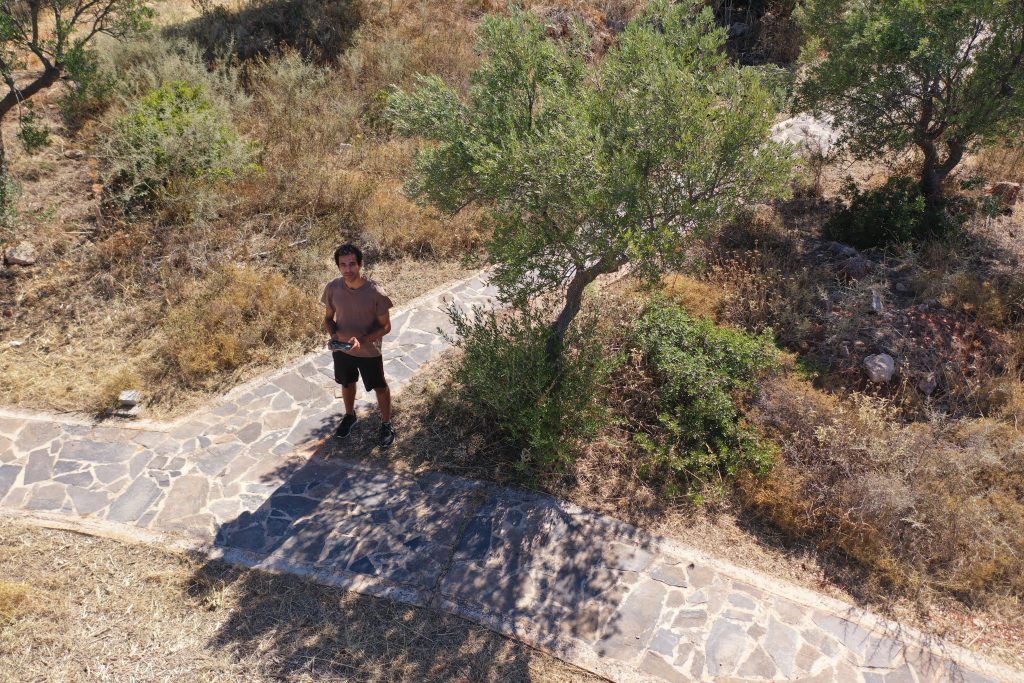
Yianni Karabatis in an olive tree grove in Crete, Greece. Photo courtesy of Karabatis.
Karabatis found himself inspired by the intersection of computer vision and robotics due to the fields’ collaborative potential to have a public impact, addressing large-scale, long-standing global problems.
Saving olive groves through AI
These interests came together a year ago when Karabatis heard concerning news from Greece. “I read in the news that there is a tree-killing bacterial outbreak disrupting the vascular system of olive trees, and causing them to become dehydrated—first in Southern Italy, then Spain—and it is expected to spread to Greece,” he says.
Having traveled to Greece many times to visit family, Karabatis knew that olive trees are an important part of Greece’s economy. Working with researchers at the Technical University of Crete in Chania, Greece, Karabatis is conducting a pilot study to test the ability of drone-based cameras to detect diseased olive groves using advanced computer imagery.
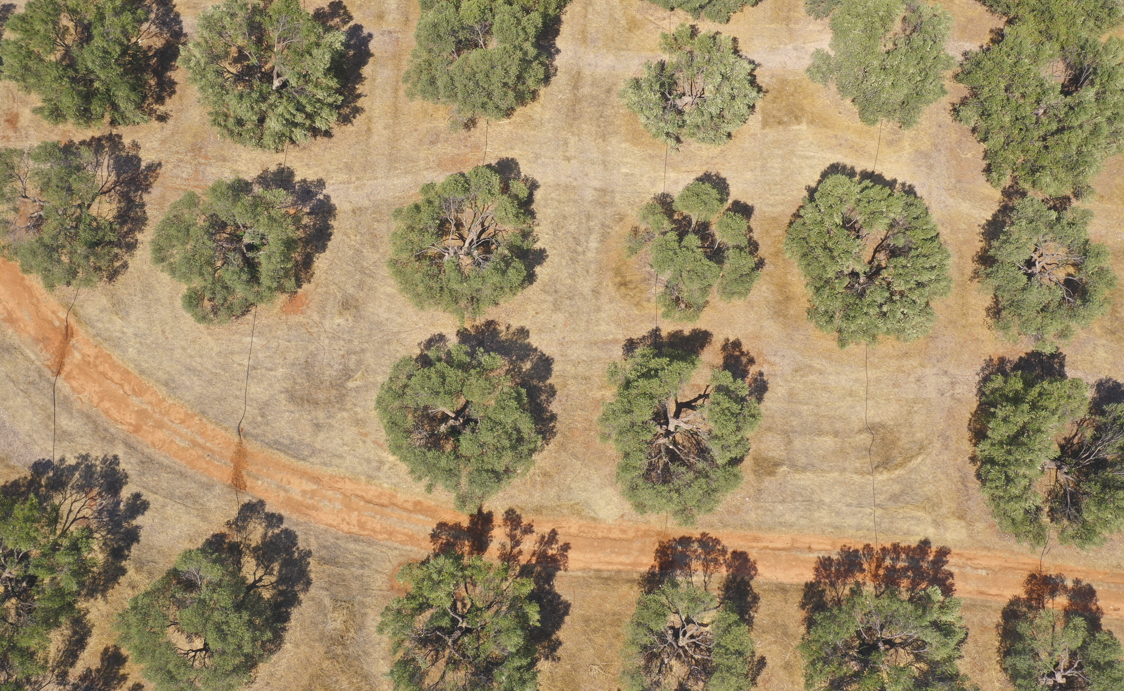
An aerial picture of a healthy olive tree grove in Crete, Greece. Photo courtesy of Karabatis.
“Using computer vision techniques, I will create a set of convolutional neural networks to autonomously predict if certain olive trees from aerial images are healthy or unhealthy,” says Karabatis.
He will compare the accuracy of this information to farmers’ observations. The goal is to create a set of high-accuracy models that farmers all over Greece can use for free to determine the health of their groves from above.
“In some cases, all you can do is cut down the infected tree and the surrounding trees,” explains Karabatis. “Olive trees grow slowly, making it a very expensive solution. We can avoid this with early detection and demystify the use of robotics and computer vision in agriculture, benefiting farmers.”
Expanding access to quality healthcare
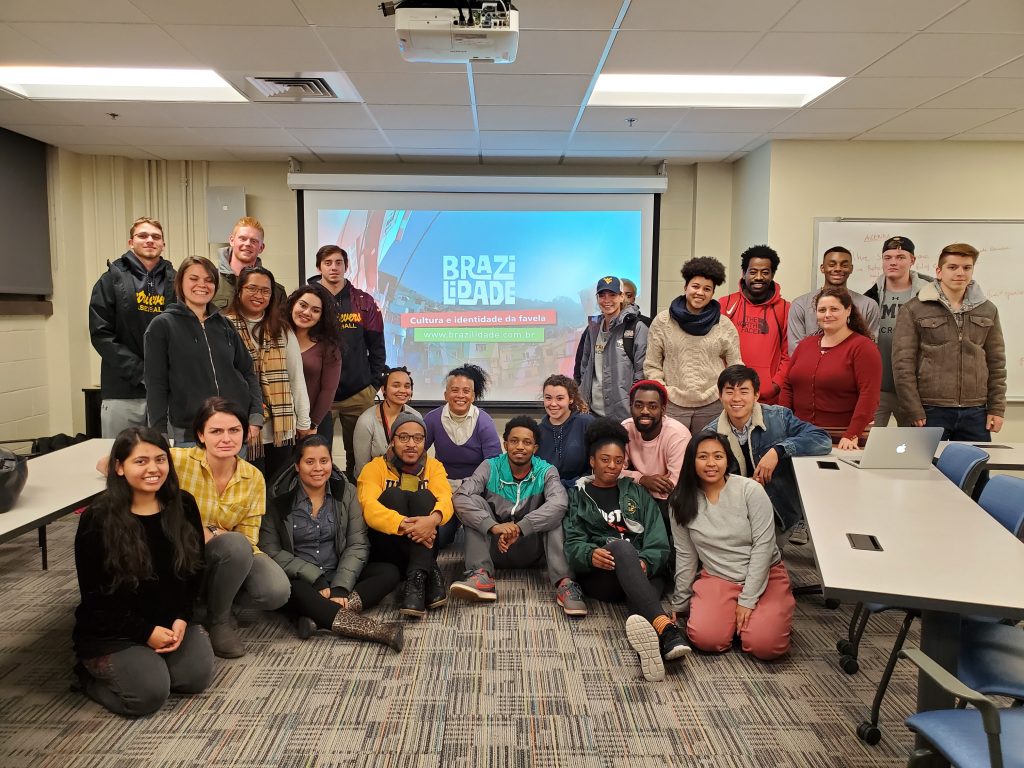
Dominique Ross has dreamed of living and working in Brazil most of her life. Before transferring to UMBC, she studied abroad in Rio de Janeiro, Brazil, and Cape Town, South Africa. In Cape Town, she shadowed doctors at a local clinic in a racially segregated township. In Rio, she worked with Brazilidade, a social impact business in the Santa Marta favela that seeks to deconstruct favela stereotypes through promoting favela culture and pride. These informally developed, underserved neighborhoods offer low-cost housing to predominantly Afro-Brazilian communities that do not have adequate access to public municipal services.
Brazilidade at UMBC visiting an intercultural communication class. Photo courtesy of Ross.
“In both of these cities I noticed the connection between race, health, and power,” says Ross. “I realized how health could be a way to measure and understand the effects of oppression on a community and the body.”
Ross empathized. She shares that, as a Black person, she has also been dismissed by doctors. And she’s seen her grandparents, Haitian refugees who came to the U.S. in the 1960s, face the challenges of navigating the U.S. healthcare system.
Ross (front) with friends on a ferry in Cape Town, South Africa while studying abroad. Photo courtesy of Ross.
“I became acutely aware that health was not just a person’s biology, but also psychosocial wellbeing, impacted by the places where people lived, learned, and worked,” says Ross. “I decided not to study biomedicine because I wanted to be able to impact larger groups of people. Instead, UMBC made it possible for me to design a global health degree plan through the Individualized Study Program.”
Connecting with communities
When Felipe Filomeno, associate professor of political science and global studies and associate director of the Center for Social Science Research, met Dominique she was already fluent in Portuguese and had experience working in Rio. Filomeno helped Dominique stay fluent by holding their meetings in Portuguese to prepare her to join a research team he helped coordinate.
“I am a Fulbright alumnus,” says Filomeno, “and supporting Dominique has been a way for me to give back to Brazil, my home country, which will surely benefit from her research and community service.”
Ross will return to work in the favelas later this winter before her Fulbright experience begins in the spring in the northern border state of Roraima, Brazil. There Ross will continue a research project she began at UMBC. Her work will focus on the healthcare access, pre- and post-COVID, of Venezuelan migrants who fled to Brazil due to economic and political crisis.
“I want to do this work for my family, my community, and anyone who has ever been prevented from living the healthy life they deserve,” says Ross.
Faculty Fulbright in human-centered computing
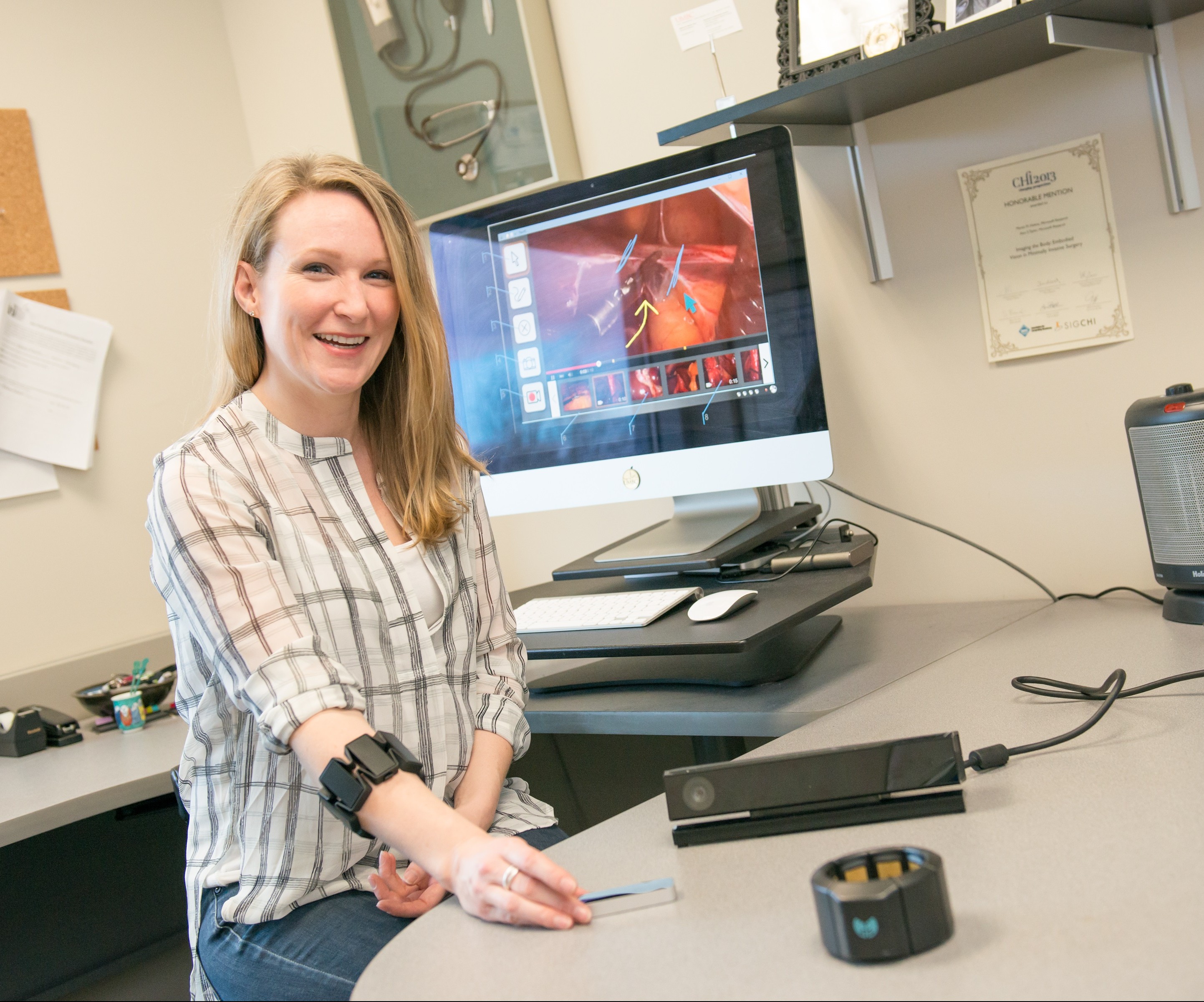
Numerous UMBC faculty have also received Fulbright awards to pursue international research and teaching in recent years. Helena Mentis, professor of information systems and director of the Bodies in Motion Lab, received a 2021 Fulbright U.S. Scholar Award to work in Denmark with the University of Copenhagen’s Human-Centered Computing research group.
Helena Mentis demonstrates gestural tools. Photo by Marlayna Demond ’11 for UMBC.
Mentis arrived in Denmark earlier this fall. She is examining how the profound differences in the public health systems of Denmark and the U.S. shape people’s privacy expectations in using telehealth, including government use of their personal health data. Mentis is working to understand the factors involved in ethical design of communication technology in healthcare. Research data from a very different healthcare system and culture will make her work more generalizable.
“My time in Denmark has been priceless in being able to think about my research in a new cultural context and forge relationships that will be extended to UMBC students in the future,” says Mentis. “This year is also the 75th anniversary of the Fulbright program and 70th anniversary of the program in Denmark. I feel honored to be here during this celebratory time and to reflect on the impact Fulbrighters can have in an intricately connected world.”
Banner image: An aerial photo of an olive grove in Crete, Greece processed to show olive tree health on a red to green scale. Photo courtesy of Yianni Karabatis.
The funding will create the Endowed Pausch Professorship in Economics, with a focus on high-impact student mentoring, teaching, and innovative research. Funds invested will generate income each year for the research program of the Pausch Professor.
“Faculty at UMBC devote themselves to helping students grow and build a strong foundation for their future professional endeavors,” says the donor. “Through this mentoring, faculty are intentionally helping students to broaden leadership and entrepreneurship in the field of economics.”
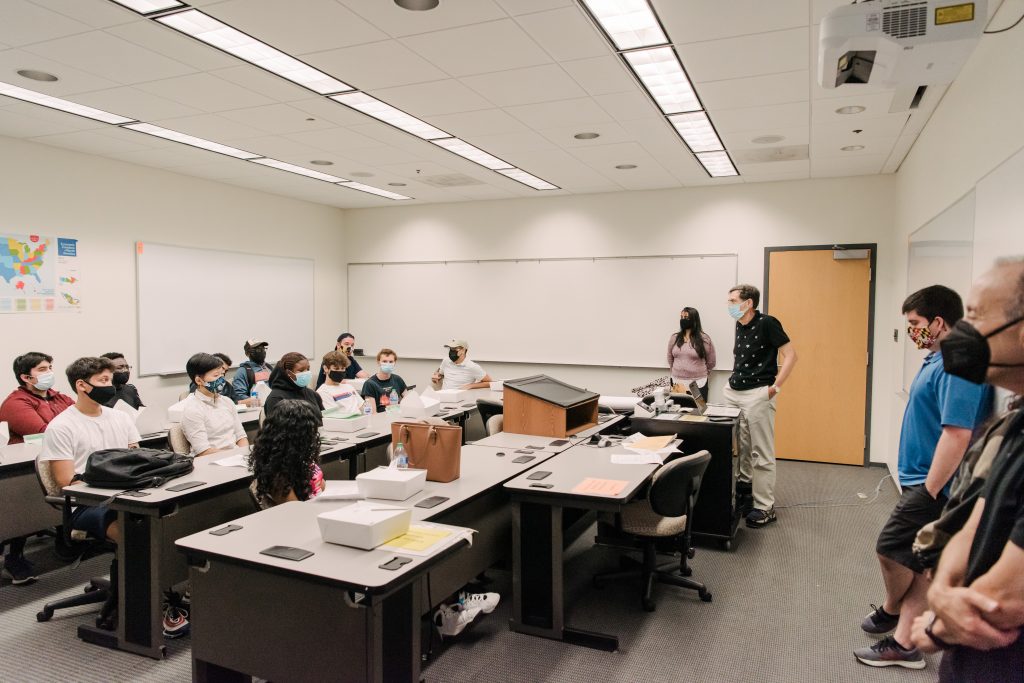
David Mitch, chair and professor of economics, (standing, in a black shirt) welcomes new students to the department.
Supporting communities
The generous spirit of Fred and Virginia Pausch inspired the creation of the Pausch Professorship. The Pausch family has a legacy of giving, and of creating opportunities for people worldwide through education.
Fred and Virginia Pausch were from Baltimore and Virginia, respectively, and founded Up With Kids Inc., a nonprofit based in Columbia, Maryland. They created the organization to help the region’s immigrant children from non-English speaking countries to learn English. In 1998, the nonprofit built a school for girls in Thailand to help more Thai girls access education beyond elementary school.
Fred (R) and Virginia (L) Pausch. Photo courtesy of donor.
“That was a major part of his life,” Mrs. Pausch told The Baltimore Sun when her husband died in 2006. “It was very important to him…to be able to help people figure out how to help themselves.”
Fred Pausch’s interest in the welfare of children also led him to volunteer for and then lead the U.S.-China Educational Ventures program. The program sent American teachers to China for a month each summer to lead professional development for educators in China. The participating Chinese educators would then apply their training to teach English to Chinese children.
Sense of purpose
“The Pausch family had one purpose,” says the UMBC donor, “to help as many people as possible in any way they could.”
Sometimes that meant providing scholarships for education and enrichment trips. Other times it involved traveling the world to partner with schools and organizations in need of financial support to meet the needs of hundreds of children. Often, it meant opening their hearts and home to high-achieving high school and college students eligible for unique learning opportunities in the U.S.
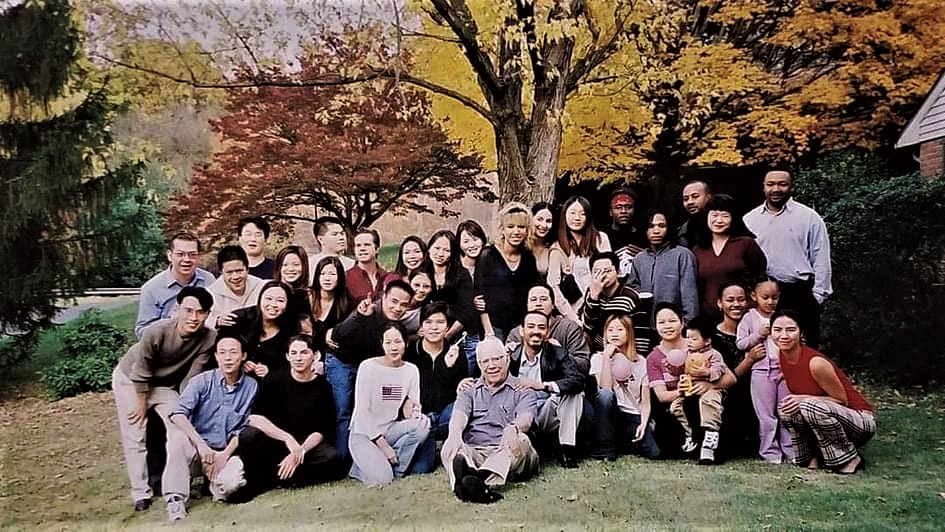
Fred Pausch, front and center, with some of the students he has supported over the years. Photo courtesy of donor.
“Funding this professorship is a way to honor their work and invest in a university that is dedicated to the next generation of leaders,” says the donor.
Kimberly Moffitt, interim dean of UMBC’s College of Arts, Humanities, and Social Sciences (CAHSS) and professor of language, literacy, and culture, notes that designing the professorship has been a collaborative effort including the donor, faculty, staff, and the Maryland Department of Commerce.
Kimberly Moffitt.
The end result meets the donor’s greatest wish: to help support the teaching and learning of economics at UMBC and to foster strong faculty and student relationships. These supportive relationships reflect the donor’s own experience as a student at UMBC, where they connected with faculty who had a positive life-long impact on their career.
“The process of creating this professorship speaks to the power of collaboration within CAHSS and across UMBC,” says Moffitt. “I am excited to partner with donors and other supporters who are so dedicated to building programs that broaden the reach and impact of UMBC’s teaching and research in the arts, humanities, and social sciences.”
(L to R) Maria Bernedo Del Carpio, assistant professor of economics; UMBC international public policy doctoral students Diego Rojas and Catherine Mata M.A. ‘28, economics; and Tim Gindling, professor of economics.
UMBC alumni and community members interested in learning more about giving to support educational opportunities or research at UMBC can visit the giving website or contact the Office of Institutional Advancement at giving@umbc.edu or 410-455-2902.
Banner image: Moffitt with Gindling. All photos by Marlayna Demond ’11 unless otherwise noted.
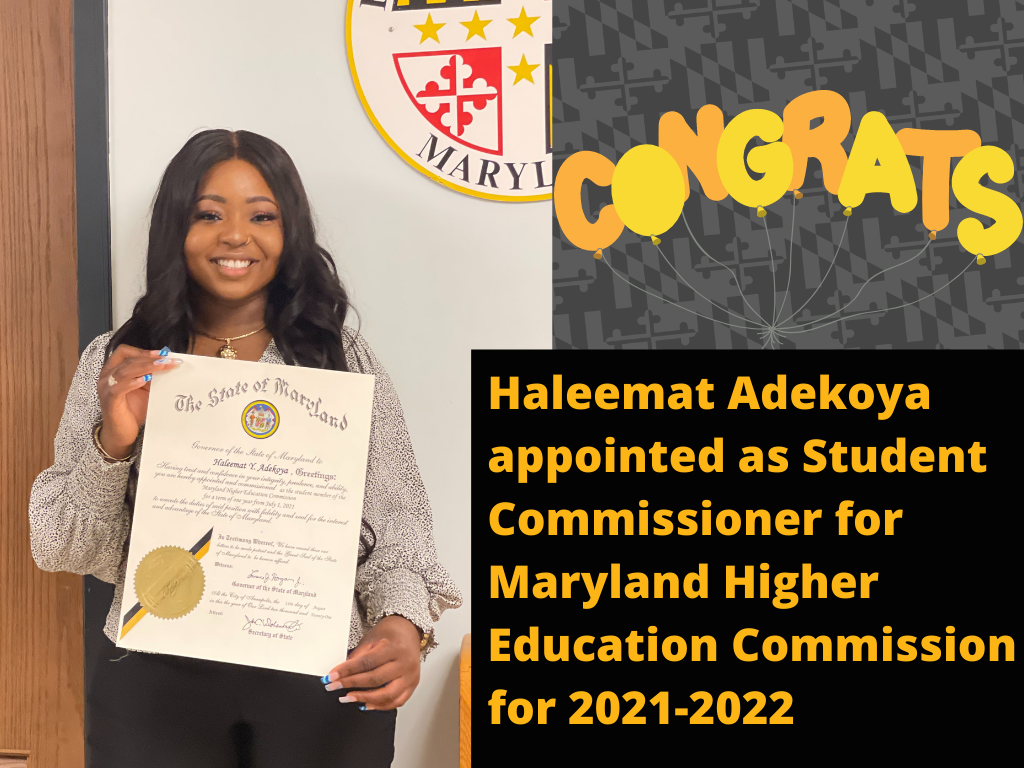
Haleemat Adekoya ‘22, political science, is serving as the 2021–22 student member of the Maryland Higher Education Commission (MHEC). The appointment recognizes Adekoya’s community-engaged work connecting students to resources and leading enrichment and leadership opportunities at both K–12 and university levels.
Adekoya is serving as a voting member of MHEC, which is responsible for establishing policies for public and private colleges and universities across the state of Maryland. She is representing students on MHEC’s Education Policy Committee and Outreach, Grants, and Financial Assistance Committee.
Photo courtesy of UMBC’s department of education.
“Representing Maryland’s students is a responsibility that I take very seriously,” says Adekoya. “This work is not about me—it’s a collaboration with students. It’s about building relationships where I trust them to provide information about their challenges and needs and they trust me to take their concerns to the board and advocate for change.”
Bridging gaps
Prior to becoming MHEC student commissioner, Adekoya served as an intern at the Maryland State Department of Education (MSDE), with the Student, Family, and School Support Committee in 2020–2021. The committee’s work helped implement the state superintendent’s mental health initiative in the Baltimore area. Adekoya informed the design of K–12 programs that enhanced student learning and increased family engagement.
The internship required Adekoya to learn how to listen to and collaborate with teachers, policymakers, community leaders, support service providers, students, and families to meet the needs of Maryland’s public schools—experience she’ll apply to her work with MHEC. She notes that many community members may not be aware of the resources available to them and policymakers may not know the intricacies of schools’ widely variable daily needs. She hopes to help bridge that gap.
“Maryland schools would benefit from the Full-Service Community Schools model to more effectively continue addressing issues of inclusion, equity, and diversity,” Adekoya suggests. “I believe that education is the most powerful tool to change the world.”
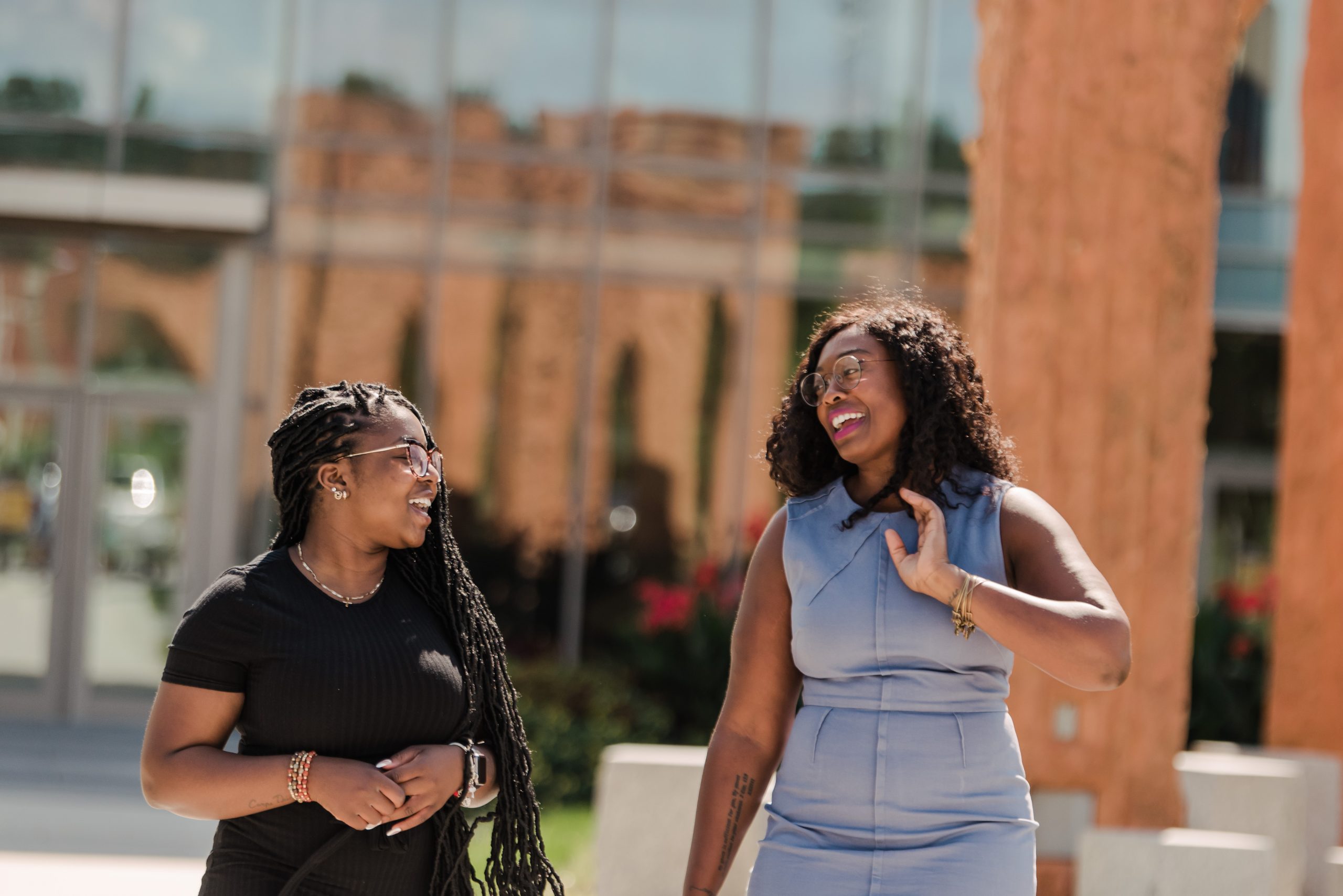
Adeokoya (L) with Lee (R). Photo courtesy of Marlayna Demond ’11.
“Haleemat is such a strong and compassionate leader. One of the things that inspires me most about her is her commitment to others,” shares her mentor Jasmine Lee, director of inclusive excellence in UMBC’s Division of Student Affairs.
“She’s not a leader because she’s ‘ahead of the pack’…but instead because she is concerned about everyone making it,” says Lee. “She seems to move from the front to the back, and throughout the middle, empowering everyone to move at their own pace.”
Mentor mindset
While new to this high level of state leadership, Adekoya for years gained experience as a leader in a range of education-focused organizations. In high school, she co-founded Dare2Be, a non-profit empowerment and mentorship program for Baltimore County and Baltimore City girls ages 9–18. She also served as a student member of the Baltimore County Board of Education.
Celebration of Teaching Reception: Dr. Hrabowski and I discussed the importance of teachers and teachers of color! I had great conversations with Atom Zerfas, math teacher at Pikesville HS; Haleemat Adekoya, UMBC student & former SMOB; Dr. Allen, UMBC Professor & Hampton Alumna. pic.twitter.com/YpN2i1Wy7W
— Dr. Darryl L. Williams (@darryl_dr5) March 5, 2020
Adekoya (bottom left) with Dr. Darryl L. Williams, BCPS superintendent, during UMBC’s Celebration of Teaching event in early March 2020.
Inspired by the impact of her work in these roles, Adekoya came to UMBC determined to expand mentoring opportunities for students, which she sees as a powerful way to support students. She joined UMBC’s African Students Association and began Amowara, which pairs first- and second-year students with third- and fourth-year members who can guide them through the academic, professional, and social life at UMBC.
Adekoya also wanted to continue working with Baltimore City youth. She joined UMBC’s Sherman STEM Teacher Scholars Program. After working as a math tutor and coach at Lakeland Elementary/Middle School, the program selected her as a leader for its virtual summer math initiative.
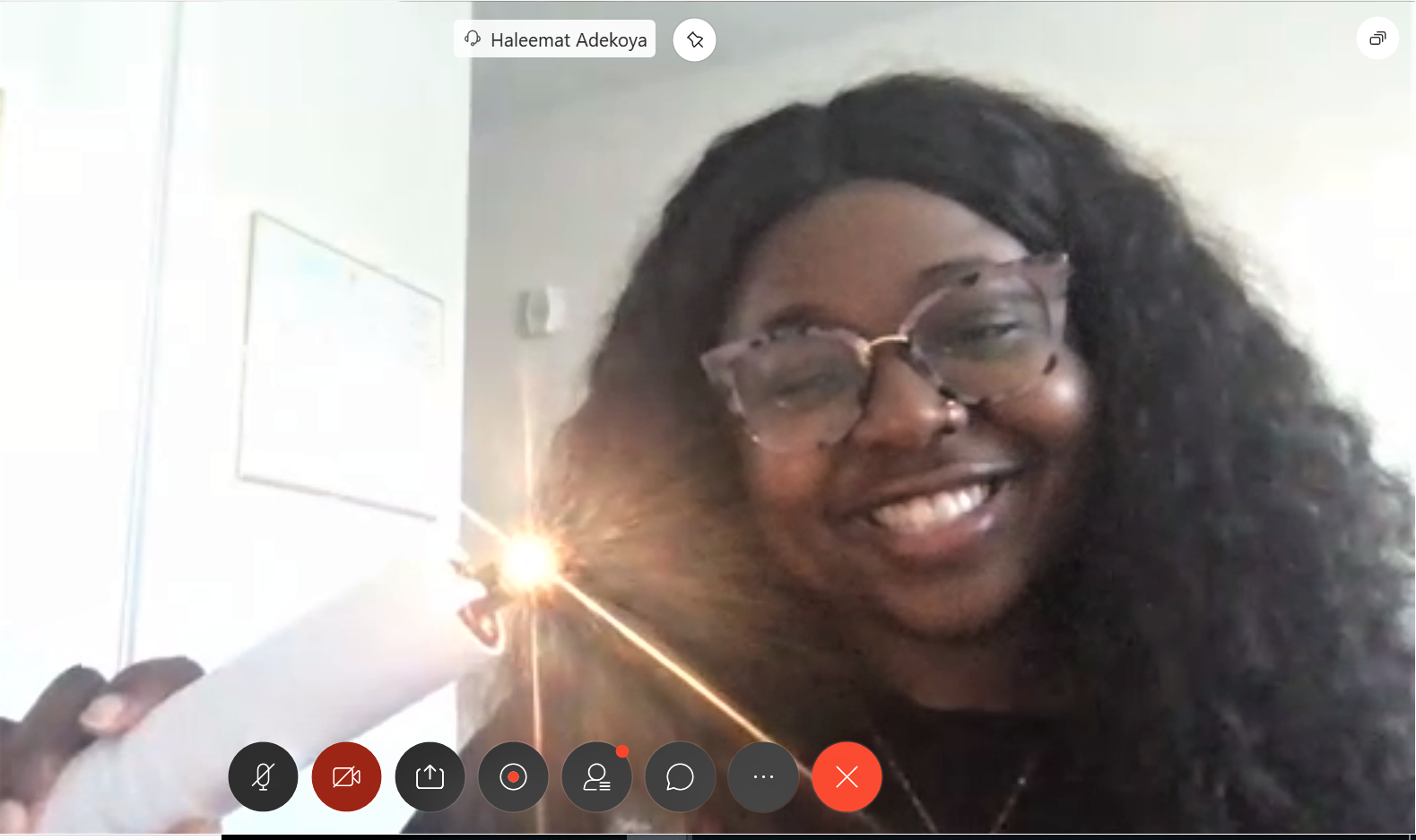
Adekoya teaching virtually during the summer math initiative. Screenshot courtesy of Catalina Dansberger Duque.
She also worked as a leader for Elev8 Baltimore Freedom Schools, an initiative providing middle school students with academic, health, and community support. There, Adekoya helped develop a summer enrichment curriculum for ten Baltimore City Public Schools. She also served as an academic mentor for the Baltimore City Summer Academic Mentorship Program and in various other community-based organizations.
Advocacy and policy
These leadership experiences have helped Adekoya, who is also a Jacqueline C. Hrabowski Scholar, begin moving toward her long-term career goal of becoming an educator and working on education advocacy and policy both in the U.S. and in Nigeria, where she was born. After completing her year as MHEC commissioner and graduating from UMBC, she hopes to begin UMBC’s masters of arts in teaching and continue her work at MSDE and MHEC.
Lee (left) with Adekoya (R). Photo courtesy of Marlayna Demond ’11.
“I see all of my work as a way of helping create a more inclusive and equitable future,” shares Adekoya. “Rather than consider myself someone speaking for all Black people or all students, I see these roles as opportunities to pass around my mic and amplify others’ voices. I want to make space for those coming after me.”
Banner image: Haleemat Adekoya. Photo courtesy of Marlayna Demond ’11 for UMBC.
COVID-19 has fast-forwarded tech innovation, propelling millions of people to shift, nearly overnight, to virtual learning, remote work, and online health care. Patricia Young’s new book, Human Specialization in Design and Technology: The Current Wave for Learning, Culture, Industry, and Beyond (2021, Routledge), traces moments in history that have sparked or dampened innovation in instructional design and technology across industries.
Young, an associate professor of education at UMBC, examines the impact of those innovations on our current political, social, health, economic, and educational climate. She also provides insight on how to move forward more effectively, particularly in the education space.
“COVID has already changed the way we think and approach technology innovation,” says Young. “These are reasons why educational technologies and technology-enhanced learning must keep pace with trends in design and technology.”
Instructional technology
Young’s work over the last seventeen years at UMBC has centered around innovation in instructional technology. Her research integrates her background in media and communications with education to study culture-specific information and communication technologies.
During research for her second book, for example, Young led an instructional design software project in collaboration with UMBC’s Nilanjan Banerjee, professor of computer science and electrical engineering. They mentored fifteen computer science graduate students in developing prototypes for a mobile learning analytics tool, Proticy.
The goal of the software, which is still in its prototype phase, is to provide professors with pedagogical strategies to diminish bias and increase student retention. It also offers measurement tools to reduce bias in faculty evaluations.
In the process of creating prototypes, the students gained knowledge and experience in product design and developing an instructional technology application. The project has also helped them experience the client and designer relationship.
Young (L) and Deborah Kabura Kariuki (R).
Computational thinking
Young’s first book, Instructional Design Frameworks and Intercultural Models (IGI, 2009), outlines the Culture Base Model as a framework for designing information and communication technologies. In the book, Young examines culture through several lenses: anthropological, psychological, and scientific.
Since then, her scholarship has continued to grow, examining the limitations and paradoxes of instructional technologies, and how they can be improved.
“At the same time we are encouraging diverse students to learn, we are also saying, through technology, ‘Your culture and the knowledge that you bring into the classroom is not valid here. There is only one way to learn this skill’,” says Young. “Innovative technology for a socially just world is a critical need in this time in history.”
And this isn’t just about higher education, Young points out. In 2019, she received a Sherman Center for Early Learning in Urban Communities Faculty Research Fellow award along with co-investigator Deborah Kabura Kariuki, clinical instructor of computer science education. Their research project studies how to infuse a culture-based computational thinking curriculum in urban preschools. Young and Kariuki are partnering with the Judith P. Hoyer Center Early Learning Hub at Lakeland Elementary/Middle School and community daycare centers to complete the study this academic year.
(L to R) Kabura Kariuki; Shana Rochester, Sherman Center research associate; Jennifer Mata-McMahon, associate professor of education and director of the Sherman Center; and Young discuss a project.
Kariuki notes the importance of the project. “Students today are digital natives and think about creating, not memorizing,” she says. “Helping students build a computational thinking toolkit means they will be able to choose from a variety of approaches to solve a problem, increasing opportunities for engagement and success.”
“The study is timely and innovative,” says Mavis Sanders, professor of education and prior director of the Sherman Center. “The ability to problem-solve in a thoughtful and systematic way is an invaluable life skill. Dr. Young and Ms. Kariuki’s study explores how best to build this capacity among young learners in culturally responsive ways.”
Looking in the mirror
This year, Young has been promoted to full professor and named the special assistant for strategy and innovation in the College of Arts, Humanities, and Social Sciences (CAHSS). In this role, she will work with CAHSS Interim Dean Kimberly Moffitt, faculty, and staff to design and implement Looking in the Mirror, a year-long faculty-led discussion series focused on strengthening community.
“Patricia will work with me to cultivate a return to a more inclusive community that shows continued progress from the campus we left in March 2020, when COVID required us to shift to remote learning,” shares Moffitt. “I’m excited about her expertise and willingness to guide us through programmatic initiatives, such as Looking in the Mirror.”
The faculty- and staff-led discussion series will consider new approaches to strengthen the CAHSS community, benefiting from Young’s expertise in innovative, culture-based pedagogy.
After two decades of researching the process of innovation, Young is excited for her new role as the special assistant for strategy and innovation. She describes it as an opportunity to create programming that brings personal and institutional culture together for the benefit of all community members.
“Sometimes we are so focused on what is, that we can’t innovate past today,” says Young. “We have to engage everyone for who they are as a whole, not just as an end-user. COVID has shown us that collaborative problem-solving is the only way to create a future where inclusion, access, and equity are the norm from which we innovate.”
Banner image: Patricia Young. All photos by Marlayna Demond ’11 for UMBC.
UMBC has named Tim Gindling, professor of economics, the 2021 – 2022 Lipitz Professor of the College of Arts, Humanities, and Social Sciences (CAHSS). This endowed professorship celebrates, acknowledges, and sponsors cutting-edge research and teaching. This honor recognizes Gindling’s international leadership in research to support the capacity of developing economies to meet populations’ long-term needs. During the award year, he will move forward on collaborative research in Latin America and China.
“This is a prestigious award within the UMBC community,” shares Gindling. “I feel especially honored given the impressive accomplishments of previous Lipitz professors.”
Lipitz professors from the prior three years include Gloria Chuku, chair and professor of Africana Studies (2020-21); Jessica Berman, professor of English and director of the Dresher Center for the Humanities (2019-20); and Dan Bailey, a professor of visual arts who focuses on animation and interactive media (2018-19).
“This professorship will help Tim continue his research in wages, work, poverty, and income distribution in Latin America and East Asia,” says UMBC’s David Mitch, chair and professor of economics. “It brings to the forefront the importance of his research and its impact at an international level, which is in large part due to his ability to foster successful research collaborations.” This includes research partnerships in Costa Rica, El Salvador, Nicaragua, Colombia, Canada, China, and Taiwan.
David Mitch (right) with incoming fall 2021 economics students.
Gindling will work on two main projects during his professorship. First, he will collaborate with the United Nations University World Institute for Development Economics Research (UNU-WIDER) in Helsinki, Finland on a global research project on informal work. Then, in spring 2022, he will return to China to continue a research collaboration on income inequality. There he will work with Linxiang Ye, a professor of economics and dean at the Nanjing University of Economics and Finance.
Transforming informal work
In 2019, Gindling was invited by UNU-WIDER to collaborate with them and Gary Fields from Cornell University to direct the project Transforming Informal Work and Livelihoods. They are gathering research from more than 25 developing economies from every region of the world on how workers who are self-employed, or who work for others as informal employees, access government-sponsored health care benefits and other worker protections. The team will publish a series of peer-reviewed papers on the research. They will also produce an edited volume on their findings, published by Oxford University Press in 2022, and co-edited by Gindling, Fields, and Kunal Sen, director of the UNU-WIDER, and others.
“The pandemic has highlighted the very difficult circumstances that informal workers face in their working lives,” shares Sen. “UNU-WIDER’s project ‘Transforming Informal Work and Livelihoods’ sheds light on the livelihoods of informal workers, and the prospects they have for moving to better jobs.”
Latin American economics
In addition to helping to direct the project, reviewing papers from researchers around the world, and co-editing the book project, Gindling has also co-authored three articles to contribute to the project.
One of the papers, “Heterogeneous informality in Costa Rica and Nicaragua,” has been submitted for publication in a special issue of the Journal of Development Studies. It was co-authored with Enrique Alaniz, an economist and research director at the Fundación Internacional para el Desafío Económico Global in Nicaragua, as well as UMBC international public policy doctoral students Catherine Mata M.A. ‘28, economics and Diego Rojas. Both are former researchers at the Institute of Research in Economic Sciences at the Universidad de Costa Rica.
(L to R) Maria Bernedo Del Carpio, assistant professor of economics, Rojas, Mata, and Gindling. Photo by Marlayna Demond for UMBC.
“This project has been a great vehicle for me to apply what I have learned in my master’s and doctoral programs at UMBC,” says Mata. “I’ve worked closely with a senior researcher and participated in high-level conferences with experts in the field—valuable preparation for my own dissertation and later job search after graduation.”
Mata is also working on education research as a research assistant for Jane Lincove, associate professor of public policy. Rojas is currently a consultant for the Office of the Chief Economist for Latin America and the Caribbean at the World Bank.
Gindling’s work has garnered significant international recognition, which has, in turn, opened doors to more collaborative research opportunities. Gindling has been a non-resident senior research fellow at UNU-WIDER since 2019. For over a decade, he has been a research fellow at the Institute for the Study of Labor in Bonn, Germany. He has also worked at the Institute for Research in Economic Science at the University of Costa Rica for thirty-three years as a non-resident researcher, where he also served as a Fulbright U.S. Scholar in 1992 and again from 2001 to 2003.
In addition to his research and teaching, Gindling has also served as a research consultant to the World Bank, the International Labour Office, the Canadian International Development Research Centre, the United Nations Development Programme, the United States Agency for International Development (USAID), and the governments of Costa Rica and Honduras.
The World Bank published his book Toward More Efficient and Effective Public Social Spending in Central America in 2017. Gindling co-authored itwith World Bank researchers Pablo Acosta, program leader for human development in Brazil; Rita Almeida, lead economist and human development program leader for Central America; and Christine Lao Pena, senior human development economist.
Economic effects of immigration policy
In addition to advancing international development economics, Gindling also studies the relationship between immigrants and education in the United States. As with his international projects, Gindling has joined forces with research partners to better understand the economic effects of U.S. immigration policy.
His policy brief “Private and Government Fiscal Costs and Benefits of the Maryland Dream Act” looked at how the Maryland Dream Act affects in-state tuition rates at Maryland state colleges and universities for undocumented immigrants. He co-authored this study with Marvin Mendel, emeritus professor of public policy and former director of UMBC’s Maryland Institute for Policy Analysis and Research.
Gindling received funding from the Spencer Foundation to expand the research nationally with Lisa Dickson, associate professor of economics at UMBC. He also worked with counselors at Northwest High School in Prince George’s County, Maryland, to assess how immigrant family separation affects students in the classroom. For that project, he partnered with Sara Poggio, associate professor of modern languages, linguistics, and intercultural communications, and founder and co-chair of the International Migration Section of the national Latin American Studies Association.
Advising future innovators
The lessons Gindling has learned through his international research and partnerships directly benefit his UMBC students. He has mentored and advised hundreds of students like Rojas and Mata, helping them build their careers, with a focus on innovatively addressing economic inequalities.
One of these students, Anna Gifty Opoku-Agyeman, M26, ‘19, mathematics, co-founded the first conference for Black women in economics: the Sadie T.M. Alexander Conference for Economics and Related Fields. The conference led her to co-found the Sadie Collective, the first non-profit focused on supporting Black women in economics, finance, data science, and policy at all phases of their careers. In 2020, the UN Convention on the Elimination of All Forms of Discrimination Against Women awarded Opoku-Agyeman a Women’s Rights Award in the Social Justice category. Previous recipients include U.S. Vice President Kamala Harris and Nancy Pelosi, Speaker of the U.S. House of Representatives. Opoku-Agyeman is currently a graduate student at the Harvard Kennedy School.
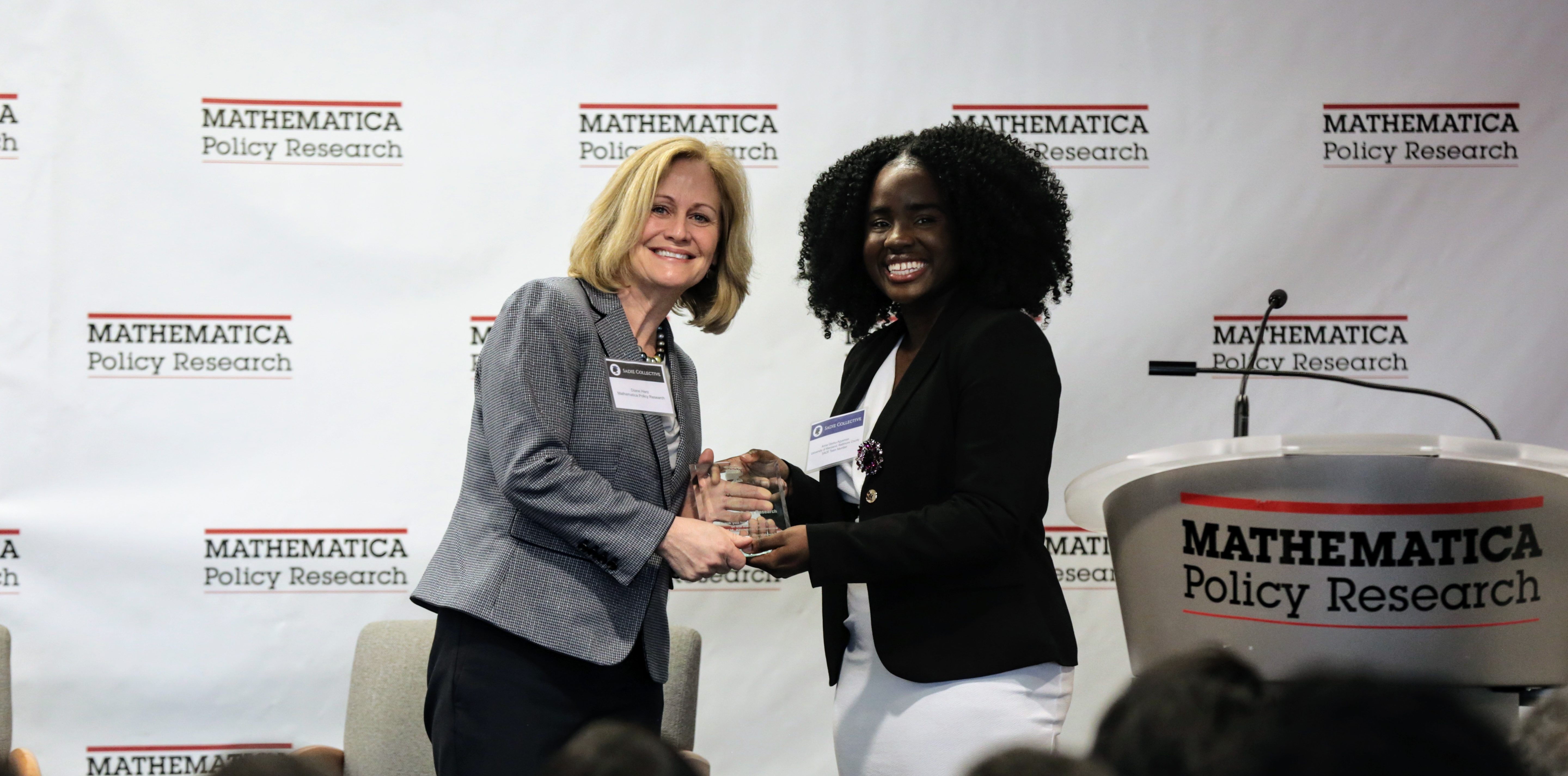
Opoku-Agyeman (right) presenting Diane Herz, vice president, director of human services, and chief diversity officer of Mathematica Policy Research, with a plaque of appreciation for hosting the first Sadie T.M. Alexander Conference.
Gindling has great memories of advising Ruby Lu ‘94, economics and mentoring her as part of UMBC’s first cohort of McNair Summer Research scholars. Lu conducted research on discrimination against women and the wage gap between men and women in Taiwan. “At the time I was also conducting research on Taiwan and I shared my data with her for the project,” says Gindling, who has kept in touch with her since she left UMBC.
Lu earned a master’s degree in international economics at Johns Hopkins. In 2005, she co-founded the Beijing-based venture firm DCM China. In 2019, she started her own firm, Atypical Ventures, to fund “ambitious entrepreneurs who want to build lasting companies that have a positive impact on our society.” Her investment in China’s e-commerce, software, and healthcare industries has helped to grow companies and create over 300,000 skilled jobs.
Impact across UMBC
Since 1988, Gindling has also lent his support and expertise by serving on over twenty-five UMBC committees related to faculty searches and tenure, graduate and undergraduate admissions, and department and program needs in public policy, interdisciplinary studies, Africana studies, and global studies.
“The international scope of Tim’s work brings unique and important lessons in economics research and collaboration for UMBC students,” says Kimberly Moffitt, interim dean of CAHSS. “Students have applied this rigor and passion to create new paths in the field and support measures that can improve economic policy in developing countries through collaborative research. The Lipitz professorship celebrates his decades of dedication and his vision for economics at UMBC.”
Banner image: Tim Gindling. Photo courtesy of Gindling.
UMBC’s Heather Quach ‘23, financial economics, and Victor Li ‘23, financial economics and computer science, have won the 2021 iOme (I Owe Me) Challenge, a national competition that invites students’ ideas for solving financial and retirement challenges.
Their winning essay is titled“Improving Retirement: The Role of Education and Innovation.” It focuses on the three “pillars of retirement”—Social Security, employer-sponsored retirement plans, and individual savings plans—and introduces the fourth pillar of health as heavily influencing retirement options.
Congratulations to the 2021 iOme Challenge Winners, Heather Quach and Victor Li from @UMBC! The team will receive a $5,000 prize and present their ideas at a forum hosted by @WISERwomen on June 17th. Learn more and read the winning essay at https://t.co/cJ70LcbQtwpic.twitter.com/qyxdqyeFR7
Li and Quach found that awareness and access to the four pillars are greater with higher levels of education. Their research proposes innovative financial education solutions designed to shift retirement savings behavior to help people of all ages prepare for retirement.
Victor Li. Photograph courtesy of Li.
“The process was rigorous, with reading dozens of journal articles and compressing all the knowledge into 5,000 words,” explains Li. “I could not believe it after Heather called to inform me that we had won.”
Heather Quach. Photo courtesy of Quach.
This national competition raises awareness among college students about the impact of retirement security on society’s social and economic well-being. Quach and Li both have a longstanding interest in these areas. Quach serves in UMBC’s Volunteer Income Tax Assistance (VITA) program and Li is a member of UMBC’s Investment Club.
Their proposals “lay out a commonsense plan to improve financial education and promote greater personal savings,” shares Cindy Hounsell, president of the Women’s Institute for a Secure Retirement (WISER), the competition sponsor.
Avila went on to receive the distinguished 2019 Harry S. Truman Scholarship. He is currently working for the IRS in the Statistics of Income Division. There he researches topics that rely on income tax data, such as retirement trends, wealth inequality, and interstate migration.
L to R: Doug Lamdin, Cindy Hounsell, Evin Avila. Photo courtesy of WISER.
Douglas Lamdin, professor of economics, mentored Li and Quach, as well as Avila. “I’m thankful for Professor Lamdin’s assistance through the process,” Li shares. “I’m certain that his research and field experience, along with guiding students in the previous years, were crucial to our success.”
The team split a $5,000 prize and presented their paper virtually at this summer’s WISER 2021 iOme Challenge forum, New Perspectives: An Intergenerational Discussion on Retirement Solutions. Lamdin received a $1,000 honorarium from WISER as the mentor of the winning team. With his support, UMBC has become one of just three universities to win the iOme Challenge twice.
Beyond the classroom
Lamdin notes that Li and Quach’s essays stood out in part for their discussion of health as an important component of a rewarding and financially comfortable retirement. He suggests that exploring the role of health in retirement through this research project extended their learning in valuable ways.
Doug Lamdin. Photo courtesy of Lamdin.
“The iOME Challenge is an opportunity for UMBC students to further develop their research, writing, and presentation skills in the context of an important real-world topic,” says Lamdin. “It’s something that can only happen when you go beyond the classroom.”
Banner image: Public Policy building (left) and Physics building (right) at UMBC. Photo by Marlayna Demond ’11.
What if I told you a story? Would you listen? Over the last year and a half, as the world has faced major social justice and environmental issues, many people have questioned their roles in our shared past, present, and future. But, by talking and listening to stories different from our own, we can find a greater understanding of our diverse lives and some answers to challenging issues.
Now in its third year, UMBC’s Interdisciplinary CoLab: Summer Internship has given nine students from a variety of majors an opportunity to have hands-on experience in this type of humanities-based narrative research. Students were divided equally into three public-facing research projects focusing on civil rights, urban forests, and radical literature. Each team created a digital, audio, or print product that fit a specific need of a community or campus partner in real-time. The research was designed to introduce or strengthen students’ ability to collaborate and their story-gathering/telling skills such as archival research, oral histories, and technical writing.
The UMBC Interdisciplinary CoLab program is a partnership between The Provost’s Interdisciplinary Activities Advisory Committee, the Dresher Center for the Humanities, and the Office of Summer, Winter, & Special Programs.
Students gathered for CoLab research training that covered three areas: civil rights, urban forests, and radical literature.
BLM & Civil Rights oral histories
Nancy Kusmaul, associate professor of social work, was excited to hear her students discuss the Black Lives Matter (BLM) movement during the protests about George Floyd’s murder. But something was missing. Students were aware of BLM and the Civil Rights movement but they didn’t seem to see a connection between them. “I knew I had found an opportunity for students to listen to the past to build a link to the present,” shares Kusmaul, who led a CoLab project on these topics. “Because the CoLab experience focuses on our local communities, what better place to start than Baltimore City.”
Deysi Chitic-Amaya ’23, media and communication studies, was drawn to the project because of the focus on the Civil Rights and Black Lives Matter movements in Baltimore. “We can understand the roots of these global movements by learning how they have changed and influenced the lives and work of people in Baltimore’s communities and neighborhoods,” says Chitic-Amaya, who, with other students, spent the summer conducting virtual oral history interviews with community activists.
There were a few roadblocks. Many of the Civil Rights activists had passed away or were not available, but Kusmaul connected with Baltimore County historian Louis S. Diggs, Baltimore radio host Marc Steiner, and members of the grass-roots, member-led Baltimore organization, Organizing Black.
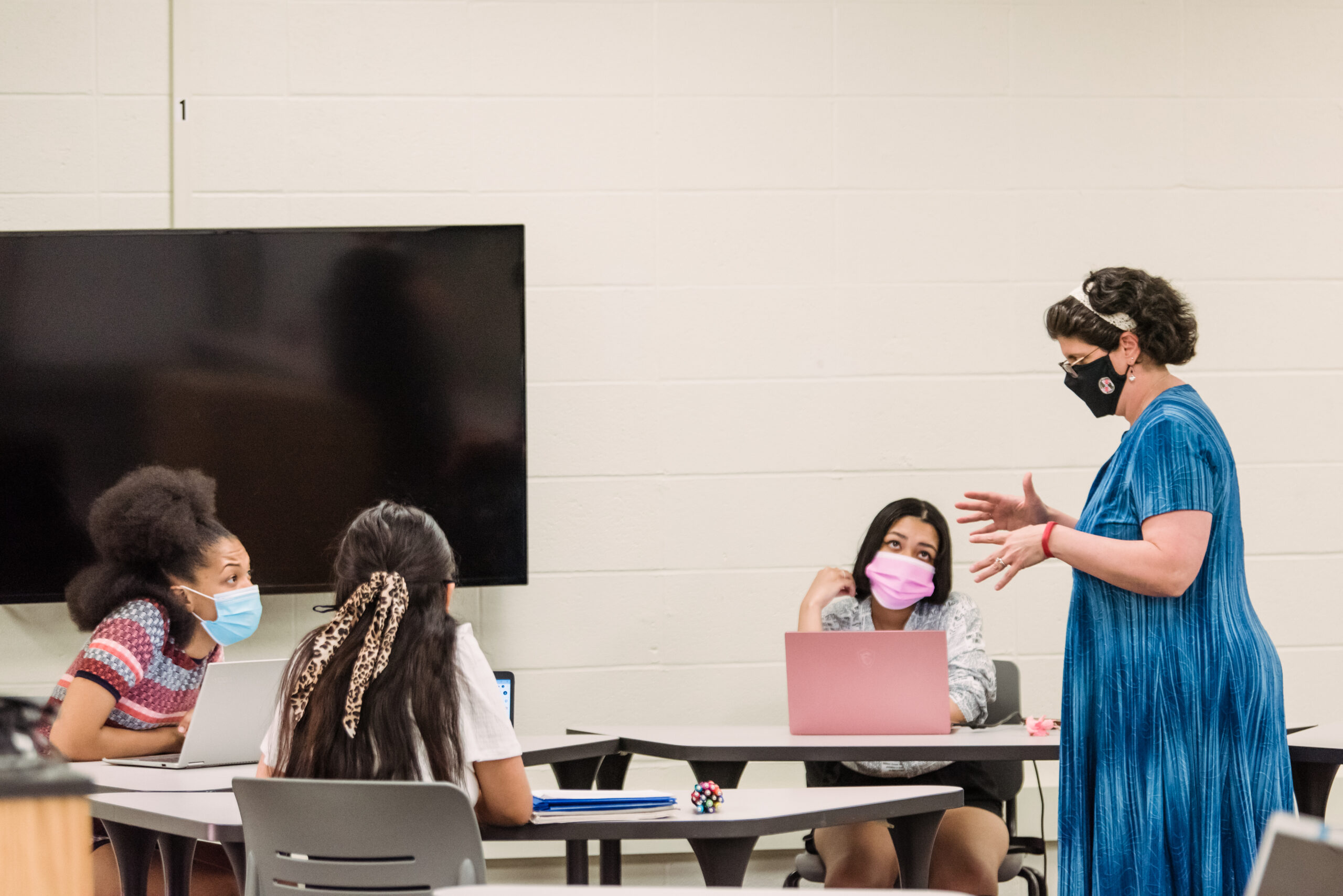
Nancy Kusmaul, far right, works with her student researchers.
The student researchers learned interview skills using humanities-based research methods. These skills showed them how to listen across differences and how to approach sensitive topics and difficult questions. “I’ve learned how to interview individuals who are different from me whether it be race, gender, age, etc.,” shares Chitic-Amaya.
After the virtual interviews were completed the students transcribed them and deciphered the experiences between the two movements. The oral histories will be added to the Albin O. Kuhn Library Digital Collections with an explanatory essay and a podcast.
“I hope to come away with greater skills in humanities research methods,” says Chitic-Amaya of her time in the CoLab. “I want to be able to approach future projects with a more open-minded perspective that may help to produce something new and innovative.”
Urban forest data stories
Baltimore stories are not only about collecting oral histories. They also include the stories of the green spaces—and the data surrounding them—in and around Baltimore and how those stories shape the way people live and recreate in the city. It can be overwhelming to know where and how to begin or how to improve existing conservation efforts, but for citizen conservationists, wherever they might be, help is on its way.
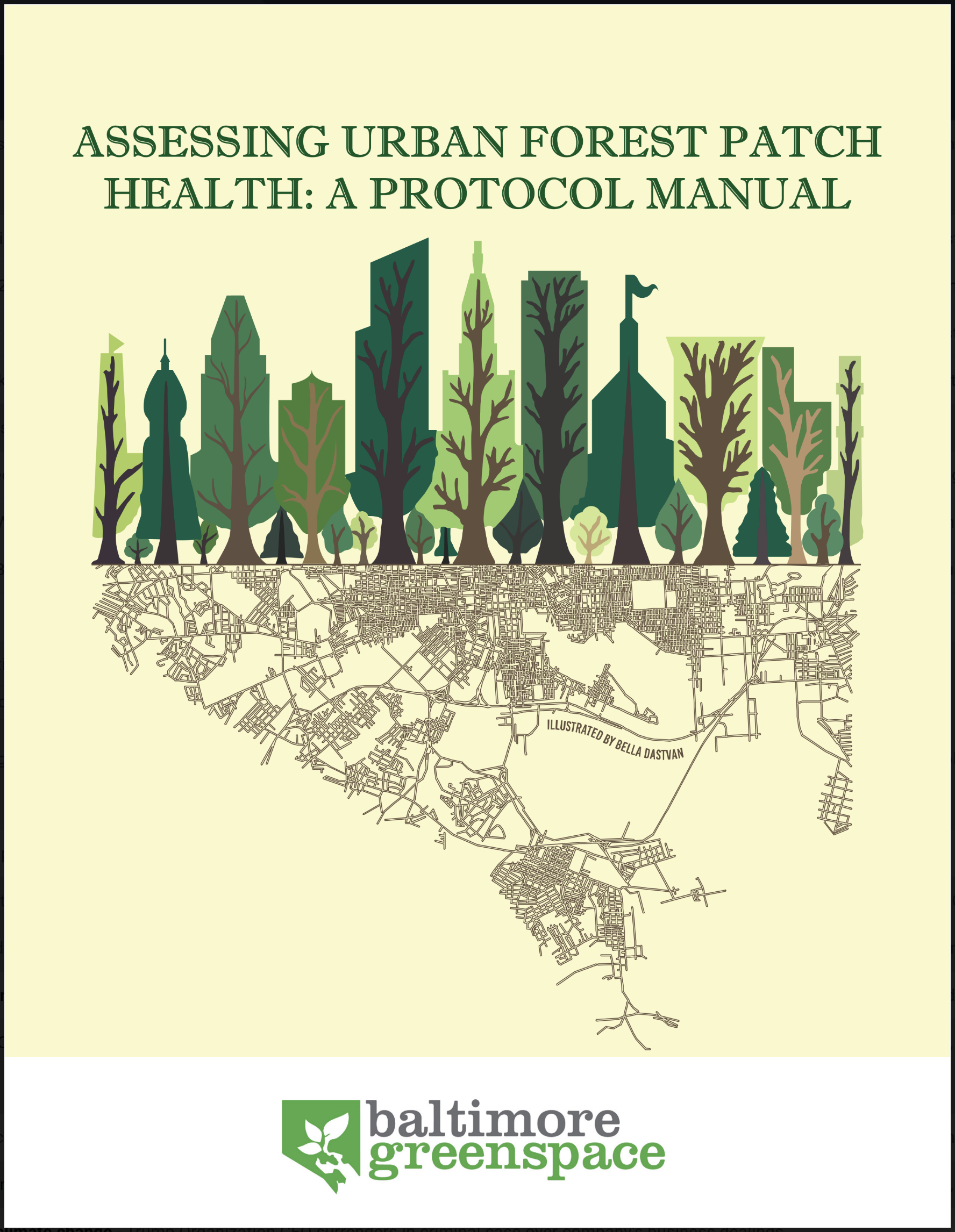
Led by UMBC’s Jennifer Maher, associate professor of English, the CoLab participants worked in collaboration with the Baltimore non-profit organization Baltimore Green Space to develop a digital and print urban forest health research protocol manual. The manual will be used as a tool to train citizen and professional conservationists.
The team jumped right into creating a technical narrative with information about urban forests that was previously gathered by Baltimore Green Space through a collaborative project between Matt Baker, professor of geography and environmental system, the USDA Forest Service, and Johns Hopkins University. Community land stewards, alumni, and current students involved in the Summer Forest Patch Project, a collaborative project between UMBC and Howard County Community College, were also part of the collaboration.
“Technical writing is an occupation that the Bureau of Labor and Statistics identifies as growing faster than average,” explains Maher. “Students were not only helping to foster community-based science and civic engagement in Baltimore and beyond but also gaining marketable skills and professional experience.”
UMBC’s student conservationists learned how to weave data to present a factual and engaging narrative that will train both those already engaged in urban forest health and budding conservationists how to better collect data and share the information with the general public and policymakers. The technical narrative presents the information in a persuasive manner that could encourage more participation in urban health anywhere.
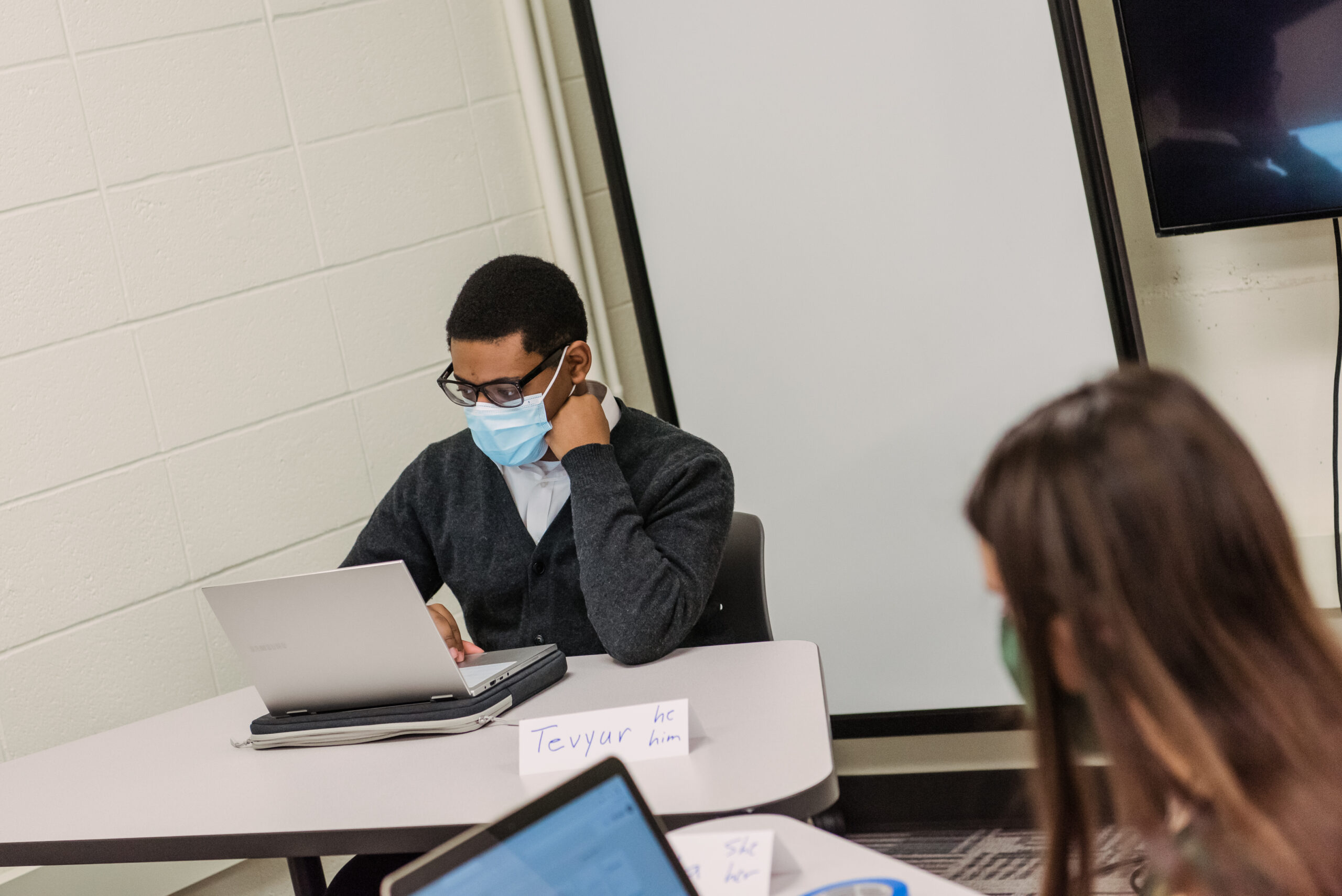
Tevyur Mosely ’22, M30, biological sciences, took part in research based on data from Baltimore Green Space.
Tevyur Mosley ’22, M30, biological sciences, had a big reveal: “I was introduced to the idea that citizens can engage in community-based research that they can then share with their local officials to influence policy.”
Radical literature multimedia exhibition
Unlike the other CoLabs, the students in the Radical Literature in the First Half of the 20th Century group did not interview people. Instead, they learned to uncover stories hidden in the archives of the Albin O. Kuhn Library & Gallery Special Collections department, studying magazines, pamphlets, and essays that narrate the politics and ideas of the socialist movement.
This was a treasure hunt of sorts. Students sifted through and searched scanned documents for key narratives in order to ultimately design an online exhibition that includes a historical timeline, digital stories, research essays, and a video telling the story of the collection. Kate Drabinski, lecturer of gender, women’s, and sexuality studies, who led the group, said that while completing the program virtually had its challenges, seeing the students learn to collaborate from afar was really rewarding.
“As much as we’ve all been working online over the past year, doing this kind of intensive, daily collaboration was a different beast altogether,” she said. “This posed specific challenges, but also opportunities to learn how to work as a team remotely…and how to work with archival documents to do research, and get others excited about using the collection.”
To provide researchers with different perspectives on the socialist movement, “the collection features works of famous authors such as Friedrich Engels and Angela Davis, as well as many niche pieces from small, politically affiliated publishers and both local and national political organizations,” the students explain in their online exhibit. Now curious minds around the world can also discover the breadth and depth of the archive in a more visual and accessible way.
Learning on the job
The summer CoLab internships are not only an opportunity for students across colleges to develop the social and technical skills of working in interdisciplinary teams, but also to explore different fields. CoLab organizers Carole McCann, special assistant to the provost for interdisciplinary activities, and Donald Snyder, lecturer in media and communication studies, designed the program to have a lasting impact on students’ careers. Through public humanities and social science research methods, students are responsible for projects from conception to completion, strengthening their professional communication and project management skills.
“The CoLab experience is about students gaining professional research experience while learning how to appreciate their own skills and that of others,” says McCann. “They learn to meet the expectations of clients and community partners, to tell effective stories for the general public. And doing all of that in real-time.”