

Manil Suri moved to the United States after spending the first 20 years of his life living in a 400-square-foot room in Bombay, India, with his father, Ram, and mother, Prem, to whom he dedicated his latest book, A Room in Bombay. The rest of the apartment was shared between three other families. “In the apartment lived my family, which was Hindu, and three Muslim families. We had a lot of fights, but those fights were really not about religion. They were about the shared bathroom, or the shared kitchen, or resources, or money, or space,” explains Suri, a professor of mathematics at UMBC.
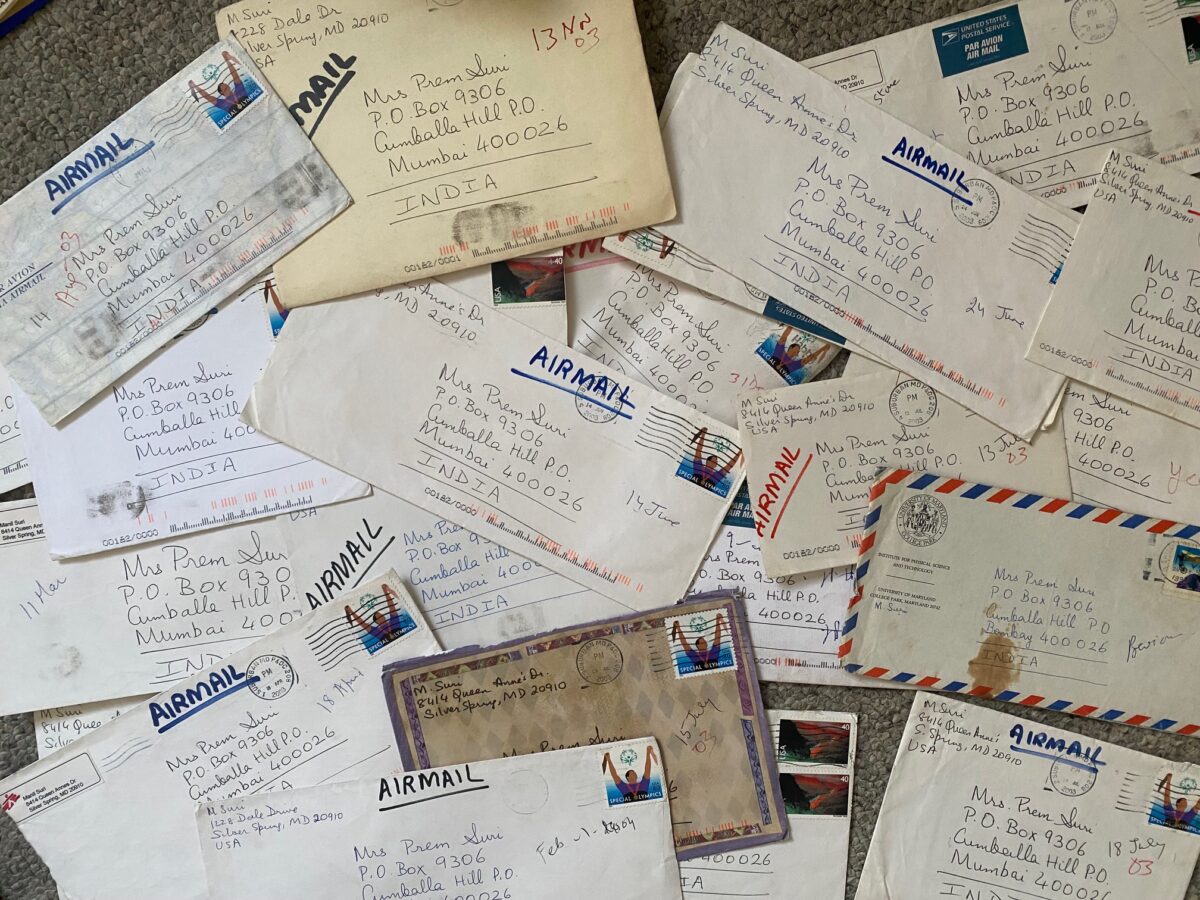
Suri is also an award-winning author of three novels named after Hindu gods: The Death of Vishnu, The Age of Shiva, and The City of Devi. His fourth book, The Big Bang of Numbers: How to Build the Universe Using Only Math, is a humanities-based approach to mathematical concepts. They all paved the way for Suri’s most personal and most recent book. In three parts, Suri shares his life growing up in this room in Bombay and his life in the United States, drawing on more than 2,700 letters he wrote to his mother, which she saved in bundles organized by year, beginning with his time as a graduate student at Carnegie Mellon University. The letters chronicle his life in the U.S., including his relationship with his partner Larry, whom he took twice to meet his parents in the room in Bombay.
Q: Who is your book for?
A: I think it’s a book that, first of all, I want to work as a story. People who like a good narrative will enjoy it. It also ties into a different idea of immigration. You hear drastic tales of how immigrants are being shunned and put into prisons. But there’s another side of immigration, too, a little more subtle, perhaps. People immigrate for all sorts of reasons—including “finding themselves,” as I did.

Also, I’ve already received a few pieces of feedback from people who are taking care of their aging parents. There are a huge number of people in various generations who are doing that. So I think it’ll appeal to them and help them negotiate the very difficult road ahead that many will face.
Q: How did the timing for publishing this memoir come about?
A: I have published three novels and a book on math. I felt I had to write the math book as a public service, since I had one foot in the humanities and one in the sciences—and needed to make something out of it. Once this math book was done, there was this other lingering project [the memoir] that I actually started around 2010.

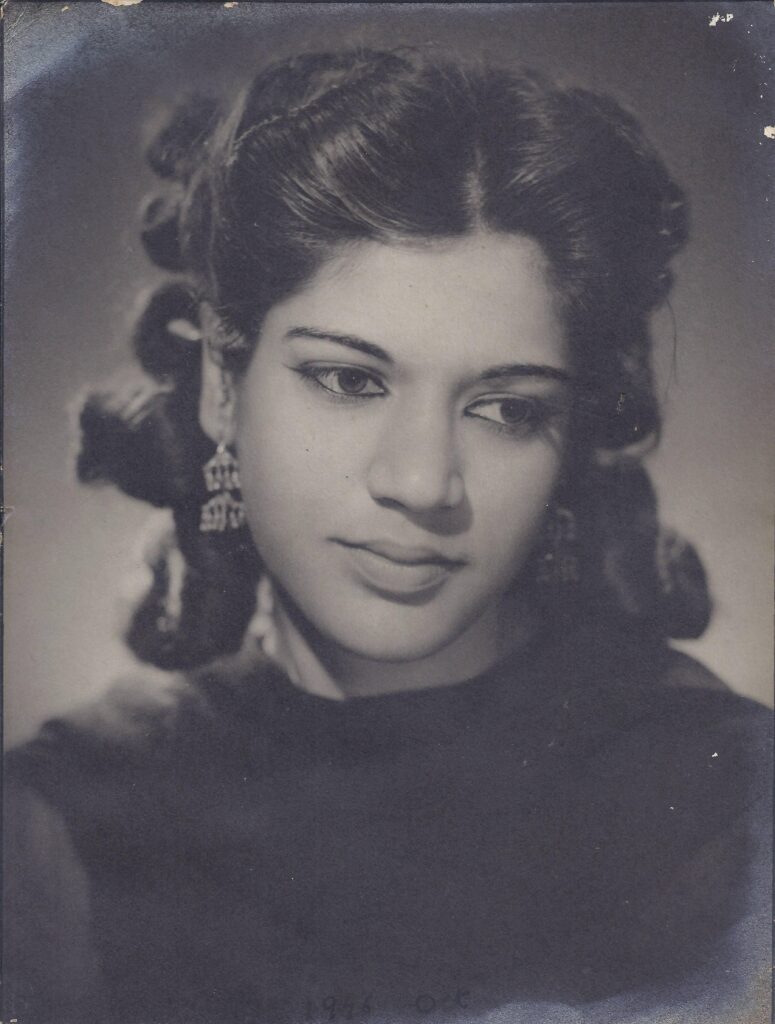

My mother passed away in 2013, and there was a big gap before I really got into writing the memoir. I needed that distance, since it would have been too much to have written it too close to her passing.
Q: Your mom had this intense love for you, which you wrote was sometimes overwhelming. How did that carry on through the room and through the rest of your life?
A: I think what happened with my mother was that my identity almost melded with hers when I was growing up. It’s only once I came to the U.S. that I was able to separate the two a little and move on. She would always say, “The U.S. has made you unemotional.” It was something I learned after coming here, to keep some distance, and move away from that merging of personalities.
Keeping boundaries is always hard, but it also tunes you to being more conscious of them. I don’t have any kids, so I don’t have to worry about that boundary.
Q: How did you feel coming to the United States?
A: When I first came to the U.S., I spent one week with a typical American family, and suddenly I had my own bedroom. That was exhilarating, but also a little weird. After that, I was in a dorm room with a roommate, so that was again a shared room for one year.
But after that year, I moved into an apartment where I had my own room. Since then, I’ve always had my own bedroom. Even though I’m married now, I need my own bedroom.
Q: A Room in Bombay centers around four families with very different backgrounds that often argue and have major disagreements. How does that tie into today’s world?
A: I think the book actually offers a lesson pertinent to our times. Although it was my Hindu family and three Muslim families sharing this apartment, the fights we had—and there were a lot of them—were really not about religion. They were about the shared bathroom, or the shared kitchen, or resources, or money, or space.
The same applies to most of the clashes going on in the world. Even though people try to put a religious spin on them, there are so many other reasons underlying all this strife. It’s property and boundaries, space, and resources.
Very rarely is it really religion. It’s not the cultural differences that are the cause of friction, it’s other things. Look deeper, and you’ll probably find an economic reason.
Q: Why did you choose to write the book as a memoir as opposed to an epistolary novel?
A: First of all, in terms of the letters, what I wrote are not letters to be treasured like Letters Between a Father and Son, a collection of intimate letters between Nobel laureate V.S. Naipaul and his son. Most of my letters are very ordinary and come with no claim of literary value. I was desperately trying to find things to say, and wrote three or four times a week just to keep my parents happy and engaged.
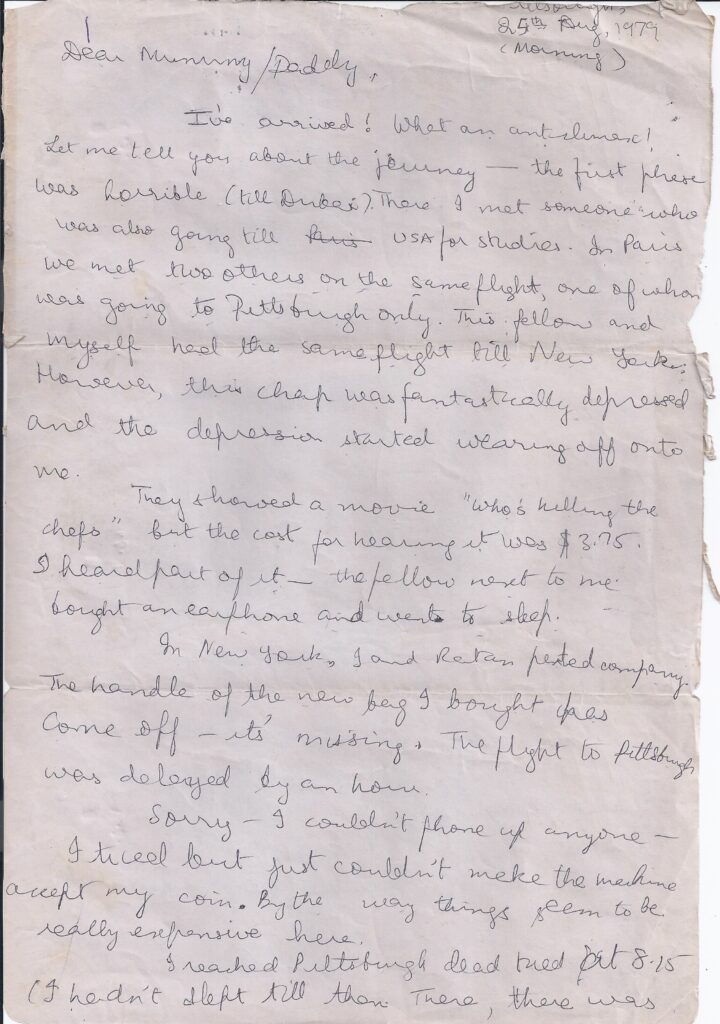
There’s also so much more that happened that is not covered by the letters. I did keep some journals, especially once my mother came to the U.S. In fact, I had too much material. The first draft of this novel was about 50 percent longer, excess that I had to edit out.
Q: How do you choose what parts of the book to keep and what to cut?
A: That can be a painful decision, but fortunately, my editor helped by telling me what could be trimmed or shortened. Eventually, I had to get ruthless enough and ask myself: Is the story coming across? How much do I really need to put in for that? What examples have already been included to illustrate something—if there are two of them, let’s get rid of one.
A lot of nice, entertaining experiences had to be jettisoned in the interest of a story that keeps moving. You know, that’s what they say to writers: Kill your darlings. It’s a hard, murderous task to be a writer.
Q: There is a lot of stigma still in South Asian cultures around coming out. Did you intentionally want to address that?
A: Yes, the South Asian LGBTQ+ community is definitely one of the audiences I aimed for in this book, and in particular, their parents. Because even with my mother, who was so enlightened in many ways, there was this up and down that she went through after I came out to her. I think it really eats away at you if you cannot come out to your parents.
At the end of part two in the book, I talk about coming out to my dad. It happened after he took me to his friend’s house to introduce me to his 19-year-old daughter. Afterwards, my father said, “Well, what did you think of the daughter?” And I said, “You can’t be serious. First of all, she’s like half my age.” I ended up telling him about my relationship with my partner, to which he said, “I didn’t know, I didn’t know.” But then I noticed he was still looking expectantly at me. I realized then that he was still waiting for an answer to his question about whether I wanted to marry his friend’s daughter!
I always wanted to have a long conversation with him, which I thought I would have the next time I went back. But he passed away two months later, so that opportunity never came. I found out from my uncle that he had told all his brothers I was gay, even in that short period. So even though my mother always said, “He won’t be able to handle it. Don’t tell him,” as it turned out, he was fine with it.
As far as creating a supportive atmosphere for coming out in the South Asian LGBTQ+ community goes, I’d love to help in any way I could. It would be a good thing for members to give the book to their parents, “Here is someone else’s experience. It may help you.”
Q: Out of the twelve letters that you kept from the hundreds your mom wrote to you, is there one that really stands out to you?
A: The one that’s at the end of the book. It’s a full letter that really crystallizes a lot of things about how she viewed my coming out and how she was aware of losing some of her faculties in terms of memory and concentration. All those things are in that letter, which is why it’s probably the most poignant.