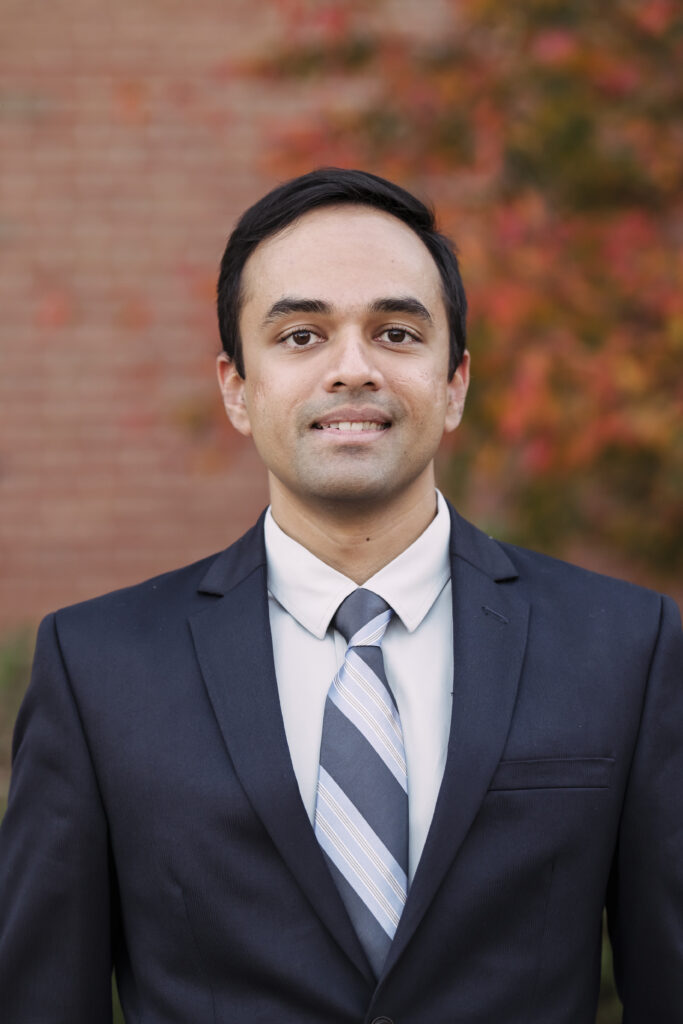
Building on years in archeological trenches in Greece, Robert Barry ’25 will keep digging at the University of Oxford

Robert Barry spent his undergraduate years thinking about the past, not the recent past, but the Minoan Bronze Age civilization of ancient Greece, which existed approximately 1750 to 1050 BC. This was not a passion Barry brought to UMBC. In fact, he had no interest in archeology and had never heard of the Minoan civilization until he chose to learn Greek with Michael Lane, associate professor of ancient studies, during his sophomore year. 

Robert Barry and two archeologists wearing dusty cloths stand on a clearing in Greece with mountains in the background Oxford
(l-r): Michael P. Fischer ’24, ancient studies, Lane, and Barry at the 2024 ancient studies field school. (Michael F. Lane/UMBC)

The language class set off an unexpected domino effect. Barry enjoyed learning from Lane, which piqued his interest in his archeology classes. He soon found himself enrolling in one archeology class after another, eventually preparing him to spend three summers working on an archeological site in mainland Greece. “What caught my eye was the art and architecture of Minoan civilization. I’ve always been interested in material culture with my degree in ancient studies and visual arts, but I became more interested in ancient civilizations,” says Barry. “I wanted to learn more about how people use art and architecture as expressions of individuality and power.”

Having the courage to pursue the unexpected led Barry to two prestigious opportunities that could help launch his career in ancient studies. This spring, Barry received a Fulbright U.S. Student Program award to study archeology at the Hebrew University of Jerusalem and was admitted to the University of Oxford’s Master’s of Philosophy in Classical Archaeology. Barry, who had to choose between the two opportunities, ultimately decided on the program at Oxford, excited at being involved in research with leading experts. 

“One of the reasons I chose Oxford is the network of field archeologists whom I had heard about from peers at Oxford,” says Barry. “I am interested in working with an expert in Aegean palace economies. I decided to accept the offer so that I could work with Lisa Bendall, associate professor in Aegean archeology.”

Barry leaves for Oxford in October, but not without imparting some advice to his fellow Retrievers that inspired him to apply for both opportunities, “Apply to whatever programs you want to pursue. It is better to apply now and get rejected than regret that you never tried later on.”

Learn more about UMBC’s global education opportunities.

UMBC mathematician honored with invitation to Stephen Smale’s 95th birthday conference

Matthew Kvalheim, assistant professor of mathematics, was one of only about 20 scholars who spoke at a conference celebrating the 95th birthday of Stephen Smale, one of the most influential mathematicians alive today. Held July 21 – 22, 2025, at the Simons Institute for the Theory of Computing in Berkeley, California, the invitation to present was an honor for Kvalheim, who joined the UMBC faculty in 2023.

Stephen Smale, a Fields Medalist (an award often likened to a Nobel Prize in mathematics), revolutionized fields like topology and dynamical systems. His groundbreaking work, which Kvalheim uses as a basis for his own research, has shaped modern mathematics. 

Kvalheim’s research explores systems that evolve over time. Specifically, he studies “asymptotically stable” systems—those that naturally settle into a predictable state, like a pendulum coming to rest. Kvalheim’s talk at the conference built on Smale’s foundational discoveries, using them to determine whether certain system behaviors are possible or fundamentally unattainable. 

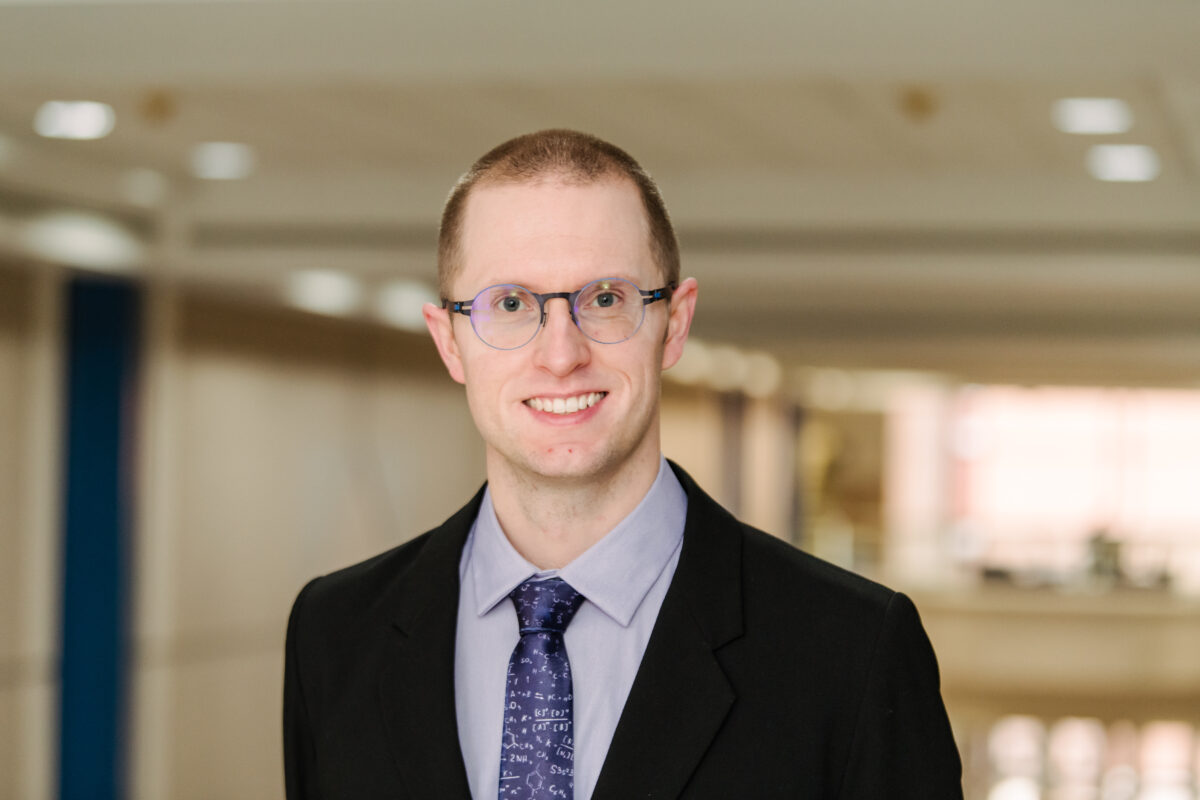
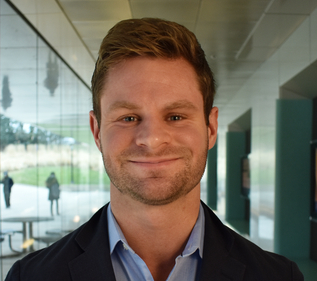
portrait of Matthew Kvalheim, whose work builds off of Stephen Smale's, in front of long hallway with tall windows on one side
Matthew Kvalheim (courtesy of Kvalheim)

“It was a great privilege to speak about Professor Smale’s legacy, and in particular the deep impact his work has had on one of my projects funded by the Air Force Office of Scientific Research,” Kvalheim says. “The result of this project, which relies heavily on Smale’s breakthrough solution of a mathematical puzzle known as the ‘generalized Poincaré conjecture,’ helps us understand limitations in designing stable real-world systems.”

This work has far-reaching implications, from ensuring the safety of autonomous vehicles to optimizing complex robotics. By developing mathematical tools that apply across diverse applications, Kvalheim’s research offers universal insights into what systems can and cannot do, blending creativity with mathematical rigor to tackle fundamental questions with real-world impact. 

Learn more about UMBC’s programs in mathematics and statistics

Yasmine Kotturi named one of nine inaugural Computing Research Association Trustworthy AI Research Fellows

Yasmine Kotturi, an assistant professor of human-centered computing, was selected by the Computing Research Association (CRA) to be part of the inaugural cohort of Trustworthy AI Research Fellows. The fellowship program, sponsored by Microsoft, supports researchers working to integrate ethical and societal considerations into computing research, particularly in the field of AI. The nine inaugural fellows hail from institutions across the U.S. and bring expertise in the social sciences together with computing knowledge. 

“I’m most excited about building connections with fellow scholars who are reimagining what trustworthy AI looks like—especially across institutions and disciplines—to fundamentally shift how we teach and practice computing,” says Kotturi, whose research focuses on designing and building sociotechnical systems that support worker resilience, especially among those navigating precarious employment and entrepreneurship. “At a time when civic participation feels increasingly urgent, I see this work as essential to preparing technologists to engage with both the technical and social realities of their practice,” she says. 

The researchers began their work with a virtual kick-off meeting in July and will attend a four-day, in-person field school in August. Over the course of the 15-month fellowship, they will engage in collaborative research, contribute to the development of a national trustworthy AI lexicon and framework, and help lead initiatives at CRA partner institutions.

“This inaugural cohort brings a remarkable range of expertise, insight, and passion to the challenges of building more trustworthy AI,” says Mary L. Gray, senior principal researcher at Microsoft Research and the chair of the CRA Trustworthy AI Fellowship Advisory Committee, in an announcement of the cohort selection. “I can’t wait to get started and see what they accomplish together.”

UMBC publishes first-of-its-kind tutorial for teaching complex computational chemistry technique 

Joseph Bennett, assistant professor of chemistry and biochemistry, and Mona Layegh, Ph.D. ’25, chemistry, know how hard it can be to teach density functional theory (DFT) to undergraduates. DFT is a computational method for predicting a substances’ properties at the quantum level, such as how they conduct electricity or react with other compounds. Despite its complexity, DFT is a foundational technique that underpins research in fields like renewable energy, pharmaceuticals, and nanotechnology, so it’s critical that students understand it and know how to apply it.

To address the challenge of teaching DFT well, Bennett and Layegh coauthored a tutorial on teaching the technique, which was published in the Journal of Chemical Education. Their paper was the first ever published in the journal’s brand new Tutorial section, which was inspired by their submission and a need to develop more training tools. 

The tutorial, refined over five years of training UMBC students in DFT, is paired with open-source resources on GitHub, including ready-to-use files and visualizations. These allow instructors at community colleges or in areas with limited internet to teach the concepts even without advanced computers.

“If you can erase some of the hurdles to make DFT a little bit more accessible, more students can get into it,” Bennett says.

In sharing these teaching tools, UMBC is leveling the playing field, making it possible for students in all kinds of learning environments to master this core technique. As a result, they’ll be better prepared for careers in growing industries like technology and healthcare, where they may go on to design better batteries, solar panels, life-saving drugs, and more. 

Making STEM courses more inclusive with lab and lecture hall upgrades

This summer UMBC is partnering with the Maryland Department of Disabilities to upgrade nine teaching labs in the Meyerhoff Chemistry Building. The updates will allow students with mobility disabilities to fully participate in critical chemistry and biochemistry lab courses. 

Sinks, lab benches, cabinets, fume hoods, specialized equipment stations, and more will all be constructed that are accessible for wheelchair users. A research lab will be similarly modified to allow students with disabilities to gain research experience.

“These projects are a part of an ongoing campus-wide effort to remove barriers to access throughout our campus buildings,” Celso Guitian, UMBC’s campus planner, says. 

A lecture hall in the Engineering Building is also being renovated this summer. The changes are similar to those made in lecture halls in the Administration, Meyerhoff Chemistry, and Biological Sciences buildings in recent years to create multiple spaces for wheelchair-users with fold-down desk tablets, both at the front and rear of the lecture hall. TV monitors will help students with vision disabilities who may not be able to see the whiteboard or screen at the front of these lecture halls. And seating size variations, including standing-desk options, accommodate students of varied body types and disabilities, including supporting pregnant students and students with orthopedic challenges. Assisted listening technology and an area for sign language interpreters support students who are deaf or hard of hearing.

Other projects under construction this summer include accessibility upgrades in four Biological Sciences Building restrooms and elevator upgrades in several academic buildings.

“The Office of Accessibility & Disability Services greatly values our longstanding partnership with Facilities Management to assist us in the mission of inclusive access and elimination of barriers for all UMBC community members,” says Tawny McManus, assistant vice president for accessibility. “Improving our teaching labs allows increased participation of our students with disabilities and shows them UMBC welcomes everyone here.”

New pollinator garden builds on years of effort to support wildlife on campus

UMBC recently unveiled a new organic pollinator garden at the Center for Well-Being. The new garden builds on years of work to support wildlife on campus, including pollinator gardens, enhanced habitat at the Library Pond, increasing use of native plants in campus flower beds, a major stream restoration of Herbert Run, and a commitment to long-term conservation of The Knoll, a forest patch on campus that includes trees older than the university.

The new pollinator garden qualifies as a National Wildlife Federation Certified Wildlife Habitat and a Monarch Watch Waystation. The garden includes milkweed plants funded by a grant from Monarch Watch and additional species from Chesapeake Natives, a local nonprofit dedicated to supplying plants native to the coastal and Piedmont regions of the Chesapeake Bay Watershed for home and public landscapes. 

The new garden and the UMBC sustainability and grounds teams’ other work to promote ecosystem health on campus also brings UMBC one step closer to achieving the next level in the Green Grounds certification program. 

“I am excited that UMBC continues to invest in native habitats on our campus. I’m inspired by the amount of wildlife activity I encounter when I walk around, and it reminds me we can create flourishing habitats even in small spaces,” shares Taylor Smith, assistant director of sustainability. “The new pollinator garden is already filling in, and our pollinators are loving it!”

A monarch butterfly enjoys a swamp milkweed plant in the new pollinator garden. (Nicole Wolf)

On track to lead—Retriever athlete wins national Arthur Ashe award

UMBC senior track and field student-athlete Anjayooluwa “Jayo” Adegboyo, biochemistry and molecular biology, was named the 2025 Arthur Ashe Jr. Male Sports Scholar of the Year by Diverse: Issues in Higher Education magazine. The publication sponsors the Arthur Ashe Jr. Sports Scholar Awards to honor students of color who have excelled in the classroom and on the athletic field and demonstrate a commitment to community service and student leadership. Adegboyo was chosen from among 700 nominated student-athletes in the country for best exemplifying the standards of scholarship, athleticism, and humanitarianism.

Adegboyo is a sprinter in track and field. He is a member of the bronze-winning 4x400m team that set a new school record during the 2023-2024 season. He also posted the second fastest time in school history in the 400 meters at the America East Conference Championships.

three men run in an indoor track meet
Adegboyo, center, runs at a track meet at the Naval Academy this spring. Photo courtesy of UMBC Athletics.

Off track, he volunteers at the University of Maryland Medical Center’s Trauma Resuscitation Unit and the Howard County Food Bank. He also serves as a mentor to younger peers in the chemistry, biology, and physics departments and conducts research to investigate how metabolic nutrients arrange inside cells to discover markers for cancer cells versus normal cells.

“Since his arrival to UMBC, Jayo has brought his dynamic approach to his athletic and academic experiences,” said UMBC head track and field coach David Bobb ’02. “Jayo’s fun-loving personality disguises his relentless pursuit of excellence, and that combination makes him an obvious asset.”

Research days foster collaboration and showcase research across the College of Engineering and Information Technology

A dynamic research ecosystem was on display in a series of events showcasing existing projects and encouraging new collaborations across the College of Engineering and Information Technology (COEIT) this spring.

On April 11, the second annual COEIT Research Day brought together more than 180 students and faculty from COEIT’s four academic departments, as well as outside speakers and visitors. Attendance increased by around 20 percent from last year’s inaugural Research Day. 

More than 100 researchers presented either talks or posters at the meeting, and several students won awards for their posters and were recognized at the COEIT Awards and Celebration event on May 4.

“A major success of this year’s Research Day was the presence of visitors and speakers from industry, nonprofits, and government,” says Vandana Janeja, the associate dean for research in COEIT. “The event gave these guests an opportunity to visit UMBC and to engage in the vibrant research happening within COEIT, making connections with our research community that we hope to see grow into long-lasting partnerships.”

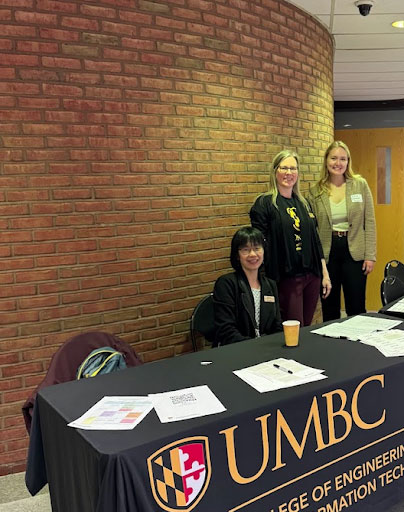
Three people stand near table with UMBC College of Engineering and Information Technology sign
COEIT dean’s office staff Emily Tien, Amy Heckhaus, and Chloe Evered at COEIT Research Day. (Image courtesy of Vandana Janeja)

The college also launched a new call for COEIT Interdisciplinary Proposals. Last year, COEIT funded 11 projects from teams made up of researchers from two or more academic departments. The teams presented their results at this year’s event, on topics ranging from cybersecurity in manufacturing to thermally stable energy-harvesting materials. 

On May 2, the Department of Computer Science and Electrical Engineering also hosted its annual research day, bringing together faculty, staff, and students to highlight the department’s latest advancements in research, from robotics to AI weather forecasting.

UMBC researchers partner with UMB to advance healthcare technology

Dong Li, assistant professor in the Department of Computer Science and Electrical Engineering (CSEE), and Konstantinos Kalpakis, associate professor in CSEE, were recently awarded funding from the University of Maryland, Baltimore’s (UMB) Institute for Clinical and Translational Research to support the development of innovative healthcare technology. Both UMBC researchers are partnering with colleagues at UMB on their projects.

Li’s research aims to develop a reliable method to monitor blood pressure with a smartphone. High blood pressure, or hypertension, affects more than 1.3 billion people globally, and while conventional devices to monitor blood pressure are accurate, they are bulky and impractical in everyday life, Li says. As an affordable and accessible alternative, Li is testing if a smartphone, outfitted with ultrasound sensors to measure blood flow and using the built-in microphone to record heart sounds, could deliver reliable readings. Li’s partnership with UMB will allow the team to conduct clinical trials, with both healthy individuals and those with hypertension, to rigorously evaluate the system’s accuracy and effectiveness.

In a separate project, Kalpakis and his colleagues are developing a new approach to help trauma physicians make better-informed treatment decisions quickly. The team is working on a machine-learning framework that can help ER doctors predict medical outcomes, such as which patients will experience severe complications from trauma such as hemorrhaging, and what their blood transfusion needs may be. Unlike other machine learning models, the new approach can update over time and deliver measures of uncertainty, helping clinicians place more trust in the model’s guidance. 

“These projects highlight how interdisciplinary collaboration between UMBC and the University of Maryland School of Medicine can drive innovations in medical care and improve public health,” Li says. “I’m excited and proud to take this work forward.”

UMBC team leads research into AI tools that can assess the feasibility of scientific claims

A multidisciplinary team of UMBC researchers was recently awarded $3.8 million from the Defense Advanced Research Projects Agency (DARPA) to develop new computational methods for assessing the feasibility of scientific claims. The project is motivated by the speed and volume of new developments in science and the need for tools to help evaluate the soundness of new claims.

“Some scientific claims are peer reviewed by independent experts, but others, such as from company press releases, or papers posted to pre-prints sites, are not,” says Frank Ferraro, an associate professor of computer science and lead researcher on the award. And even when science is peer-reviewed, there can still be errors, Ferraro notes. For example, recent research highlighting the danger of flame retardant chemicals leaching from black plastic into food was widely reported on, before it was discovered that an error in the paper led to a significant overstating of the exposure risk. 

An AI science assistant 

The idea of an AI assistant specifically designed to tackle complex research questions has been catching on recently. OpenAI, the creators of ChatGPT, recently debuted their “DeepResearch” tool, which the company says can use reasoning to synthesize large amounts of online information and complete multi-step research tasks.

Ferraro says the tool he and his colleagues hope to develop should stand-out from other approaches by employing a strongly iterative process, necessary to really take apart and analyze claims. The tool will break down a scientific claim into constituent sub-claims, and apply a wide range of evidence and reasoning approaches to assess the feasibility of each one. 

The team, which includes UMBC faculty Tejas Gokhale, computer science and electrical engineering, and Tyler Josephson, chemical, biochemical, and environmental engineering, as well as colleagues from Stony Brook University, the University of Texas at Austin, and the University of Cambridge, will develop and test the tool on three leading areas of scientific research: materials science, AI, and quantum computing.

“It’s a little meta that the AI will be analyzing AI,” Ferraro says. More than 20 UMBC undergrads, grad students, and post-docs will take part in the project. “They’ll get opportunities to network with peers on a highly relevant topic,” Ferraro says. “They’ll be helping guide the national conversation on these issues.”

TowerCares Foundation makes $300,000 commitment to support UMBC cybersecurity students

The TowerCares Foundation, the philanthropic arm of the Laurel, Maryland-based Tower Federal Credit Union, has partnered with UMBC’s Cybersecurity Institute to create a new scholarship fund for UMBC students studying cybersecurity. The scholarships will support students in the university’s Cyber Scholars Program, a program with a track record of more than 10 years nurturing the next generation of cybersecurity professionals. The program provides financial aid, a welcoming community, unique courses, mentoring, and the chance for students to take part in cybersecurity research and internships early in their academic careers.

 “Our mission is to help our community thrive, and partnering with institutions like UMBC—recognized as a leader in information technology and cybersecurity—is a key part of that effort,” says Allen Brisentine, chairman of the TowerCares Foundation. “The entire Maryland region benefits from UMBC’s renowned and highly regarded cybersecurity program.”

As cyber threats, ransomware, and data breaches have become daily realities in our increasingly digital world, the demand for skilled cybersecurity professionals remains strong. The Cyber Scholars Program has launched the careers of over 100 graduates, many of whom have gone on to jobs safeguarding the digital data of government agencies, businesses, and everyday consumers.

“Last year we celebrated the 10th anniversary of the program, and it was such a great feeling to meet program alumni who have become cybersecurity leaders,” says Anupam Joshi, acting dean of the College of Engineering and Information Technology. “We’re deeply grateful to the TowerCares Foundation for supporting this important work that both helps grow the cybersecurity workforce and makes it more inclusive.”

Students celebrate Engineering and Computing Week with fun and networking

Where can UMBC engineering and computing students mingle with friends and mentors over sweet treats, test their knowledge and design skills in friendly competition, and network with potential employers? If it’s February, the answer is the annual Engineering and Computing Week, a traditional celebration of technology, held each year at UMBC to coincide with National Engineers Week

The UMBC chapter of the engineering honors society Tau Beta Pi, in collaboration with various student engineering organizations on campus, organizes the week of activities each year. This year, the line-up of events featured a mix of social activities, such as painting and crafting, presentations from student organizations, and chances for teams to compete in games testing engineering knowledge and design skills.

UMBC chapters of the Information Systems Security Association, the American Institute of Chemical Engineers, the American Society of Mechanical Engineers, the Society of Women Engineers, Engineers without Borders, and the Institute of Electrical and Electronics Engineers all helped organize sessions. UMBC CyberDawgs, a group of UMBC students who share a common interest in cybersecurity, also participated. 

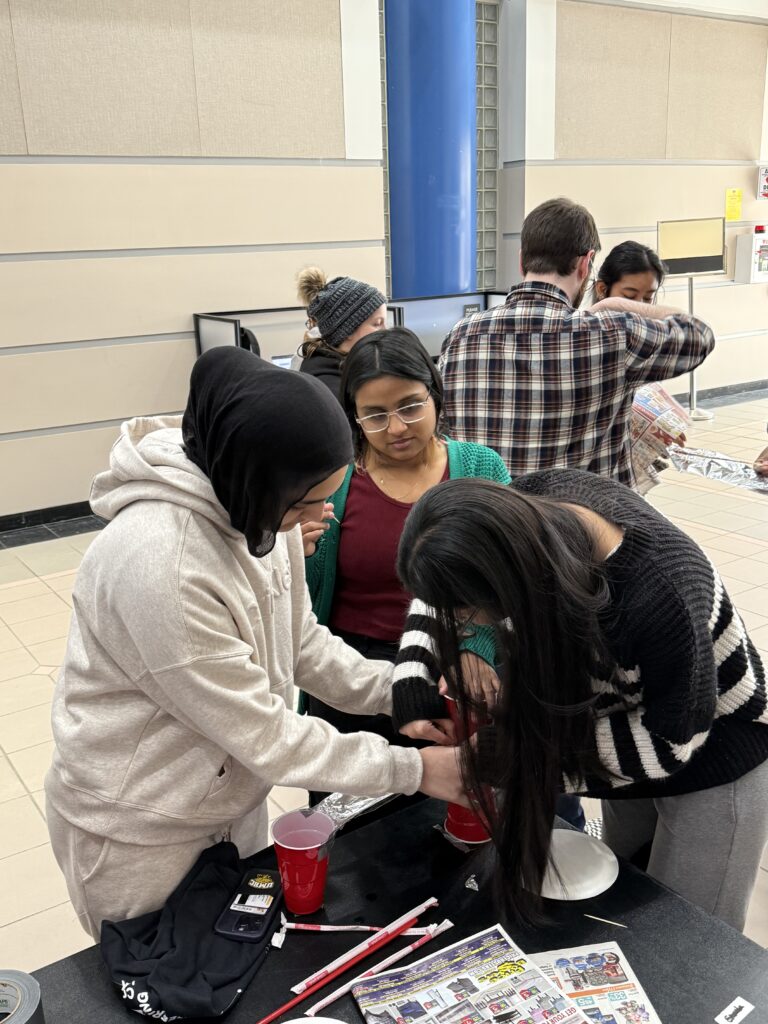
Students work together around a table, building something with plastic cups, tin foil, straws.
Students build devices to direct water flow, during the Engineers Without Borders “Where’s My Water” event. (Image courtesy of August Phelps)

Students could also join faculty, staff, and alumni from the College of Engineering and Information Technology at an evening reception at the Guinness Brewery near UMBC to socialize and network.

“I think the biggest success from the week was the great turnout and engagement we got from the students,” says August Phelps, a mechanical engineering senior and vice president of the UMBC chapter of Tau Beta Pi.

He says the event showcases the wide variety of engineering-focused student organizations at UMBC, which hold events throughout the year and offer great opportunities for students to develop leadership skills and form lasting connections with their peers. 

“I hope attendees left feeling more connected as a community,” he says.