All posts by: Magazine Editor


Following the Game Plan: John Goedeke ’79

During John Goedeke’s first year on the UMBC basketball team, the players lost all but five games. The year was 1975, and all of the players were freshmen and sophomores.

“UMBC wasn’t even ten years old, but it was a challenge and an opportunity, and I welcomed that,” said Goedeke ’79, economics, who had turned down recruiters from big name basketball schools like Ohio State and the University of Maryland, College Park, for a spot on a fledgling team with coaches he really admired.

Over his college years, however, the team made an amazing turn. By the time his senior year rolled around, the Retrievers had advanced to the final eight in NCAA Division II, the university’s first NCAA appearance.

In the wake of UMBC’s recent success in the basketball world, Goedeke is especially proud of his alma mater.

“It’s so great to hear UMBC and NCAA tournament in the same sentence,” said Goedeke, senior vice president of commercial services at Provident Bank. “Randy Monroe has done a tremendous job, and the players that they have… you have to give them all the credit. I couldn’t say anything to diminish their accomplishments. We’re all so proud.”

Then and Now

As a member of UMBC’s first championship basketball team, Goedeke saw how athletic success built school spirit. “The biggest thing was in the stands. By our senior year, people were really coming out,” he said. “Having that success was very gratifying. It was a tremendous sense of accomplishment.”

“We also didn’t have the alumni support like UMBC does now,” he said, reflecting on the crowd that packed the RAC Arena to watch UMBC beat Hartford for the America East title this past March and the more than 500 fans who traveled to Raleigh, North Carolina, to cheer the team on at the NCAA’s.

After graduation, the academic All-American was drafted by the Atlanta Hawks. Although he didn’t make the final cut, he got the chance of a lifetime – to play professional basketball for Team Talbot, a Division I team in England.

“It was such a great experience,” he said. After a year in the UK, Goedeke headed back to Charm City with his wife, Jan, to start his business career at Provident, where he has spent 28 years. After a few years in the workforce, he earned a master’s degree from Johns Hopkins.

As a local UMBC alumnus, Goedeke likes to stay involved in campus activities. He continues to support Retriever athletics and is a member of the Alumni Campaign Cabinet.

“I’m always happy to come back,” said Goedeke, whose son, Kevin, plays defense for the UMBC men’s lacrosse team.

As the father of a student athlete, he can see the positive impact sports can have over a lifetime.

“Sports teaches you very important life lessons,” he said. “You learn to work with others, and you learn to work through difficult times. You learn how to deal with adversity, you learn how to deal with success, and you learn how to deal with a lot of different people.”

Where does Goedeke plan to be next fall when the UMBC basketball season starts up again? You should be able to find him in the RAC, cheering on his Retrievers.

– Melissa Gilden ’10
Originally posted April 2008

Following the Game Plan: John Goedeke '79

During John Goedeke’s first year on the UMBC basketball team, the players lost all but five games. The year was 1975, and all of the players were freshmen and sophomores.
“UMBC wasn’t even ten years old, but it was a challenge and an opportunity, and I welcomed that,” said Goedeke ’79, economics, who had turned down recruiters from big name basketball schools like Ohio State and the University of Maryland, College Park, for a spot on a fledgling team with coaches he really admired.
Over his college years, however, the team made an amazing turn. By the time his senior year rolled around, the Retrievers had advanced to the final eight in NCAA Division II, the university’s first NCAA appearance.
In the wake of UMBC’s recent success in the basketball world, Goedeke is especially proud of his alma mater.
“It’s so great to hear UMBC and NCAA tournament in the same sentence,” said Goedeke, senior vice president of commercial services at Provident Bank. “Randy Monroe has done a tremendous job, and the players that they have… you have to give them all the credit. I couldn’t say anything to diminish their accomplishments. We’re all so proud.”
Then and Now
As a member of UMBC’s first championship basketball team, Goedeke saw how athletic success built school spirit. “The biggest thing was in the stands. By our senior year, people were really coming out,” he said. “Having that success was very gratifying. It was a tremendous sense of accomplishment.”
“We also didn’t have the alumni support like UMBC does now,” he said, reflecting on the crowd that packed the RAC Arena to watch UMBC beat Hartford for the America East title this past March and the more than 500 fans who traveled to Raleigh, North Carolina, to cheer the team on at the NCAA’s.
After graduation, the academic All-American was drafted by the Atlanta Hawks. Although he didn’t make the final cut, he got the chance of a lifetime – to play professional basketball for Team Talbot, a Division I team in England.
“It was such a great experience,” he said. After a year in the UK, Goedeke headed back to Charm City with his wife, Jan, to start his business career at Provident, where he has spent 28 years. After a few years in the workforce, he earned a master’s degree from Johns Hopkins.
As a local UMBC alumnus, Goedeke likes to stay involved in campus activities. He continues to support Retriever athletics and is a member of the Alumni Campaign Cabinet.
“I’m always happy to come back,” said Goedeke, whose son, Kevin, plays defense for the UMBC men’s lacrosse team.
As the father of a student athlete, he can see the positive impact sports can have over a lifetime.
“Sports teaches you very important life lessons,” he said. “You learn to work with others, and you learn to work through difficult times. You learn how to deal with adversity, you learn how to deal with success, and you learn how to deal with a lot of different people.”
Where does Goedeke plan to be next fall when the UMBC basketball season starts up again? You should be able to find him in the RAC, cheering on his Retrievers.
– Melissa Gilden ’10
Originally posted April 2008
The New Language of Software: Loren Siebert ’93

When many people have some extra time to spare, they might think about collecting coins, painting model airplanes, or even trying to write the great American novel.

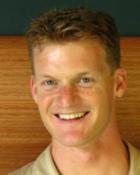
When Loren Siebert ’93, computer science, took up a hobby, though, he decided to learn one of the hardest languages around – Arabic.

The first UMBC graduate to earn the prestigious Marshall Scholarship, Siebert recently developed a software, LinguaStep, that will be used to aid in instruction of the Arabic language programs at over 30 different universities. Indeed, this San Francisco resident has made a very grand entrance into the world of software engineering.

A Model Student

As a high school student, Loren swam with the Retriever Aquatic Club. He also completed some computer science research with a faculty member at UMBC, thus making early ties with the school.

“To go to UMBC just seemed like a natural extension,” he said. “When I got to UMBC, I knew I was going to be doing computer science, so all that was left was finding other stuff to do.”

Aside from being an excellent student, Siebert competed on the swim team, and worked with the Shriver Center’s Choice Program at UMBC, which provides tutoring and mentoring for at-risk children.

The Big Success

Upon Siebert’s graduation in 1993, he was awarded the competitive Marshall Scholarship to complete his graduate studies in the U.K. Loren earned his master’s in computer science at the University of Manchester and did research on technology policy at the London School of Economics. His master’s research earned him a mention in The Economist and in New Scientist in the same week.

“All of a sudden I went from being a 23-year-old doing computer science research to having all these people in the world wanting to talk to me about how interesting my work was,” he said. “It had a very commercial aspect to it.”

And that’s exactly where his education took him. As a software engineer and entrepreneur for more than a dozen years, Siebert has helped develop a variety of software and web sites, including Quote.com, a site that tracks world financial markets.

The LinguaStep Evolution

After breaking his leg while training for a triathalon, Siebert decided he needed a new hobby to sink his teeth into. He always had an affinity for languages, so he decided that would be a natural route to take. He enrolled at UC Berkeley in 2005 to study the famously difficult language.

“If I’m going to learn a language, I want to learn one of the hard ones,” said Siebert, who said he was, at first, overwhelmed by the language, which shares only 15 characters with English.

He had been researching different techniques used in learning languages, and so developed a software to help himself study. The result was LinguaStep, which focuses on helping students accumulate and retain a large vocabulary, but not waste time re-learning already familiar words. Similar to flash cards, students using LinguaStep can learn at their own pace, and test their knowledge of vocabulary as they need it. As students prove they have learned certain words, the software removes those words from the testing cycle.

Within a year, Siebert received an offer from UC Berkeley to teach an Arabic class, however he left after two semesters to work full time on LinguaStep. The software officially launched in fall 2007, and already more than 30 universities have contacted Siebert with interest in using his software in their Arabic language programs. He is currently planning on designing LinguaStep for other languages – including Mandarin, Korean and Japanese – to address a wider population.

“I want to see how far I can take it,” he said. “I’m a really curious person, and I think that’s something that was instilled in me at UMBC. I’ll always have a constant desire to learn and explore new ideas.”

– Melissa Gilden ’10
Originally posted March 2008

The New Language of Software: Loren Siebert '93

When many people have some extra time to spare, they might think about collecting coins, painting model airplanes, or even trying to write the great American novel.
When Loren Siebert ’93, computer science, took up a hobby, though, he decided to learn one of the hardest languages around – Arabic.
The first UMBC graduate to earn the prestigious Marshall Scholarship, Siebert recently developed a software, LinguaStep, that will be used to aid in instruction of the Arabic language programs at over 30 different universities. Indeed, this San Francisco resident has made a very grand entrance into the world of software engineering.
A Model Student
As a high school student, Loren swam with the Retriever Aquatic Club. He also completed some computer science research with a faculty member at UMBC, thus making early ties with the school.
“To go to UMBC just seemed like a natural extension,” he said. “When I got to UMBC, I knew I was going to be doing computer science, so all that was left was finding other stuff to do.”
Aside from being an excellent student, Siebert competed on the swim team, and worked with the Shriver Center’s Choice Program at UMBC, which provides tutoring and mentoring for at-risk children.
The Big Success
Upon Siebert’s graduation in 1993, he was awarded the competitive Marshall Scholarship to complete his graduate studies in the U.K. Loren earned his master’s in computer science at the University of Manchester and did research on technology policy at the London School of Economics. His master’s research earned him a mention in The Economist and in New Scientist in the same week.
“All of a sudden I went from being a 23-year-old doing computer science research to having all these people in the world wanting to talk to me about how interesting my work was,” he said. “It had a very commercial aspect to it.”
And that’s exactly where his education took him. As a software engineer and entrepreneur for more than a dozen years, Siebert has helped develop a variety of software and web sites, including Quote.com, a site that tracks world financial markets.
The LinguaStep Evolution
After breaking his leg while training for a triathalon, Siebert decided he needed a new hobby to sink his teeth into. He always had an affinity for languages, so he decided that would be a natural route to take. He enrolled at UC Berkeley in 2005 to study the famously difficult language.
“If I’m going to learn a language, I want to learn one of the hard ones,” said Siebert, who said he was, at first, overwhelmed by the language, which shares only 15 characters with English.
He had been researching different techniques used in learning languages, and so developed a software to help himself study. The result was LinguaStep, which focuses on helping students accumulate and retain a large vocabulary, but not waste time re-learning already familiar words. Similar to flash cards, students using LinguaStep can learn at their own pace, and test their knowledge of vocabulary as they need it. As students prove they have learned certain words, the software removes those words from the testing cycle.
Within a year, Siebert received an offer from UC Berkeley to teach an Arabic class, however he left after two semesters to work full time on LinguaStep. The software officially launched in fall 2007, and already more than 30 universities have contacted Siebert with interest in using his software in their Arabic language programs. He is currently planning on designing LinguaStep for other languages – including Mandarin, Korean and Japanese – to address a wider population.
“I want to see how far I can take it,” he said. “I’m a really curious person, and I think that’s something that was instilled in me at UMBC. I’ll always have a constant desire to learn and explore new ideas.”
– Melissa Gilden ’10
Originally posted March 2008

A Strong Role Model: Mabrooka Chaudhry ’95

When Mabrooka Chaudhry immigrated to the United States from Pakistan in 1982 at the age of nine, she didn’t speak a word of English.

Twenty-five years later, she exemplifies the American dream. A U.S. history and world religions teacher in Howard County, Chaudhry recently was honored as a recipient of the Milken Family Foundation National Educators Award, which rewards public school teachers who have demonstrated superior educational talent and long-range leadership potential.

“It’s a very humbling thing,” said Chaudhry, who received the honor at the end of last semester in a surprise presentation by state schools superintendent Nancy Grasmick. “It’s hard to figure out: why me?”

Finding her Niche

Although she spoke no English upon her arrival as a fourth-grade student in the Howard County School System, Chaudhry learned it quickly and assimilated seamlessly into American life.

“I think children are very resilient,” she said. “They can adjust much faster than adults.”

From the start, her father encouraged her to pursue whatever career she liked, as long as she made a point of helping others. After graduating from high school, she entered UMBC both for its strong educational reputation and its proximity to her home. With a major in history and a minor in biology, she also remained active on campus, participating in the Commuter Student Association and the Muslim Student Association.

She had no intentions of becoming a teacher; in fact, she had considered going into the sciences, or possibly medical school. However, as time passed, the idea of teaching appealed to her more and more.

“I found teaching because it fit my personality,” said Chaudhry, who earned a degree in secondary social studies education at College Park following her graduation from UMBC, and who has taught at Atholten High School in Columbia for the last 10 years. “I’m definitely a people person.”

Exceeding Expectations

Chaudhry has definitely made a mark at Atholton High. About five years ago, a student approached her about the idea of teaching a course on the topic of the history of world religions, so she wrote up a curriculum that was approved by the school. The elective course has been filled to capacity by upperclassmen every year since.

In addition, during the 2005-2006 school year, 100 percent of Chaudhry’s students earned a score of at least 3 on the Advanced Placement American Government exam.

Chaudhry will receive the monetary award of $25,000 from the Milken Family Foundation sometime this spring. Some of it may go toward her current graduate studies at Loyola College, where she is pursuing her master’s degree in liberal studies.

Originally posted February 2008

A Strong Role Model: Mabrooka Chaudhry '95

When Mabrooka Chaudhry immigrated to the United States from Pakistan in 1982 at the age of nine, she didn’t speak a word of English.
Twenty-five years later, she exemplifies the American dream. A U.S. history and world religions teacher in Howard County, Chaudhry recently was honored as a recipient of the Milken Family Foundation National Educators Award, which rewards public school teachers who have demonstrated superior educational talent and long-range leadership potential.
“It’s a very humbling thing,” said Chaudhry, who received the honor at the end of last semester in a surprise presentation by state schools superintendent Nancy Grasmick. “It’s hard to figure out: why me?”
Finding her Niche
Although she spoke no English upon her arrival as a fourth-grade student in the Howard County School System, Chaudhry learned it quickly and assimilated seamlessly into American life.
“I think children are very resilient,” she said. “They can adjust much faster than adults.”
From the start, her father encouraged her to pursue whatever career she liked, as long as she made a point of helping others. After graduating from high school, she entered UMBC both for its strong educational reputation and its proximity to her home. With a major in history and a minor in biology, she also remained active on campus, participating in the Commuter Student Association and the Muslim Student Association.
She had no intentions of becoming a teacher; in fact, she had considered going into the sciences, or possibly medical school. However, as time passed, the idea of teaching appealed to her more and more.
“I found teaching because it fit my personality,” said Chaudhry, who earned a degree in secondary social studies education at College Park following her graduation from UMBC, and who has taught at Atholten High School in Columbia for the last 10 years. “I’m definitely a people person.”
Exceeding Expectations
Chaudhry has definitely made a mark at Atholton High. About five years ago, a student approached her about the idea of teaching a course on the topic of the history of world religions, so she wrote up a curriculum that was approved by the school. The elective course has been filled to capacity by upperclassmen every year since.
In addition, during the 2005-2006 school year, 100 percent of Chaudhry’s students earned a score of at least 3 on the Advanced Placement American Government exam.
Chaudhry will receive the monetary award of $25,000 from the Milken Family Foundation sometime this spring. Some of it may go toward her current graduate studies at Loyola College, where she is pursuing her master’s degree in liberal studies.
Originally posted February 2008

Adventures for the Cure: Adam Driscoll ’04 and Patrick Blair ’03

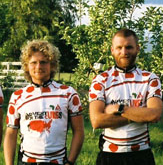
Just outside Jackson Hole, Wyoming, Adam Driscoll ’04 stopped his bike to check his blood sugar levels. His teammate, Patrick Blair ’03 waited patiently to continue their journey. Snowy mountain peaks filled the skyline.

During the summer of 2006, while many people were vacationing, Driscoll, a type 1 diabetic, and former UMBC track team members Blair and Jesse Stump ’06, mechanical engineering, spent their free time riding their bikes across the country to raise money for a school in Africa.

Building on that success, Driscoll and Blair last year founded Adventures for the Cure, raising more than $45,000 for a variety of causes, including the American Diabetes Association, by organizing extreme athletic events. In just a short time, the duo has made a name for their group, even becoming the subject of a documentary film.

Lifelong Teammates

Driscoll and Blair both came to UMBC for the same reason – to get top-notch training in computers, and to eventually get a good job in the IT and computer science field. They were also drawn to UMBC’s excellent reputation in science and math, as well as its proximity to their homes.

“I knew it was a school that wasn’t a joke,” said Blair, a computer science major. “It was a place where I could go and get a good education.”

During his time at UMBC, Blair worked as a research assistant in the computer science department. However, he and Driscoll, an information systems major, never crossed paths in the classroom; instead, they were teammates on the UMBC track team. Both competed all four years of college, and during Blair’s senior year (Driscoll’s junior year), they lived as roommates.

Filling in the Gap

The two remained friends and roommates as they graduated and started their first jobs at the Department of the Treasury and Northrop Grumman, respectively. Although they appreciated their jobs, Driscoll and Blair both felt a void.

“We both had these really great jobs, but we weren’t helping anybody,” Driscoll said.

While at a church retreat, Blair and Driscoll met two individuals who inspired them: a man who had discovered that he could run very long distances to raise money for charity, and the founder of Kupenda, a group that raises money to build boarding schools for African children with disabilities. Blair and Driscoll found both of their stories riveting and, since they enjoyed running and biking long distances, found that they, too, could compete in physical events to raise money for charity.

“We realized we could use the things we already liked doing to help other people,” said Blair.

A Healthy Start

Because of Driscoll’s personal experiences as a diabetic, Blair suggested that they start giving back by raising money for the American Diabetes Association. Ever the extreme athletes, the pair organized a two-day bike ride from Catonsville to Ocean City and back, raising $8,000 for the ADA. Motivated by their success, they decided to move into more extreme events, such as long runs and bike rides, in the name of raising money for charity. They founded Adventures for the Cure, a non-profit organization, shortly thereafter.

Adventures for the Cure is slowly but surely gaining publicity. Most recently, fellow alumnus Philip Knowlton ’03, visual arts, directed, produced, and edited a documentary chronicling their cross-country bike race, which resulted in raising $37,000 for Kupenda. “Adventures for the Cure” premiered in October 2007 at the Senator Theater in Baltimore, and is being shown at independent film festivals throughout the country. Knowlton, Blair, and Driscoll hope to eventually release a DVD of the film.

Their next big event, the Race Across America, will be held in summer 2008. Similar to the summer 2006 bike trip, RAAM will be a cross-country bike relay to keep raising money for charity, starting on the West Coast and ending in Annapolis, MD. At least one more UMBC rider will also be part of the team – Alex Driscoll ’08, environmental science, Adam’s brother.

– by Melissa Gilden ’10
Originally posted December 2007

Adventures for the Cure: Adam Driscoll '04 and Patrick Blair '03

Just outside Jackson Hole, Wyoming, Adam Driscoll ’04 stopped his bike to check his blood sugar levels. His teammate, Patrick Blair ’03 waited patiently to continue their journey. Snowy mountain peaks filled the skyline.
During the summer of 2006, while many people were vacationing, Driscoll, a type 1 diabetic, and former UMBC track team members Blair and Jesse Stump ’06, mechanical engineering, spent their free time riding their bikes across the country to raise money for a school in Africa.
Building on that success, Driscoll and Blair last year founded Adventures for the Cure, raising more than $45,000 for a variety of causes, including the American Diabetes Association, by organizing extreme athletic events. In just a short time, the duo has made a name for their group, even becoming the subject of a documentary film.
Lifelong Teammates
Driscoll and Blair both came to UMBC for the same reason – to get top-notch training in computers, and to eventually get a good job in the IT and computer science field. They were also drawn to UMBC’s excellent reputation in science and math, as well as its proximity to their homes.
“I knew it was a school that wasn’t a joke,” said Blair, a computer science major. “It was a place where I could go and get a good education.”
During his time at UMBC, Blair worked as a research assistant in the computer science department. However, he and Driscoll, an information systems major, never crossed paths in the classroom; instead, they were teammates on the UMBC track team. Both competed all four years of college, and during Blair’s senior year (Driscoll’s junior year), they lived as roommates.
Filling in the Gap
The two remained friends and roommates as they graduated and started their first jobs at the Department of the Treasury and Northrop Grumman, respectively. Although they appreciated their jobs, Driscoll and Blair both felt a void.
“We both had these really great jobs, but we weren’t helping anybody,” Driscoll said.
While at a church retreat, Blair and Driscoll met two individuals who inspired them: a man who had discovered that he could run very long distances to raise money for charity, and the founder of Kupenda, a group that raises money to build boarding schools for African children with disabilities. Blair and Driscoll found both of their stories riveting and, since they enjoyed running and biking long distances, found that they, too, could compete in physical events to raise money for charity.
“We realized we could use the things we already liked doing to help other people,” said Blair.
A Healthy Start
Because of Driscoll’s personal experiences as a diabetic, Blair suggested that they start giving back by raising money for the American Diabetes Association. Ever the extreme athletes, the pair organized a two-day bike ride from Catonsville to Ocean City and back, raising $8,000 for the ADA. Motivated by their success, they decided to move into more extreme events, such as long runs and bike rides, in the name of raising money for charity. They founded Adventures for the Cure, a non-profit organization, shortly thereafter.
Adventures for the Cure is slowly but surely gaining publicity. Most recently, fellow alumnus Philip Knowlton ’03, visual arts, directed, produced, and edited a documentary chronicling their cross-country bike race, which resulted in raising $37,000 for Kupenda. “Adventures for the Cure” premiered in October 2007 at the Senator Theater in Baltimore, and is being shown at independent film festivals throughout the country. Knowlton, Blair, and Driscoll hope to eventually release a DVD of the film.
Their next big event, the Race Across America, will be held in summer 2008. Similar to the summer 2006 bike trip, RAAM will be a cross-country bike relay to keep raising money for charity, starting on the West Coast and ending in Annapolis, MD. At least one more UMBC rider will also be part of the team – Alex Driscoll ’08, environmental science, Adam’s brother.
– by Melissa Gilden ’10
Originally posted December 2007

A Playwright in Bloom: Kara Lee Corthron ’99

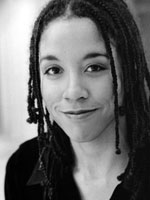
Even as a student at UMBC, Kara Lee Corthron ’99, theatre, looked to the intricacies of human emotion to drive her writing. Now established as one of theatre’s most promising playwrights, Corthron recently returned to UMBC from the stages of New York, Chicago and D.C. to share her love of theater with current students as they performed her new play, Wild Black-Eyed Susans, during UMBC’s Homecoming & Family Celebration weekend. Early Recognition Over the last few years, Corthron has racked up an impressive list of honors for her work. Her new play, Wild Black-Eyed Susans, received the 2007 Helen Merrill Award for Emerging Playwrights. In addition, her play Like a Cow or an Elephant was awarded the 2007 Theodore Ward Prize for African-American Playwrights and was produced at the DePaul Theatre School in Chicago. Corthron was also the winner of the 2006 New Professional Theatre Writer’s Award, is a three-time recipient of Lincoln Center’s Lecomte du Nouy Foundation Award and was a semi-finalist for the 2007 Sundance Theatre Lab and Princess Grace Award. Corthron’s plays have been developed with the Ensemble Studio Theatre, Center Stage (Baltimore), African Continuum Theatre (D.C.) and at the Julliard School. A Strong Start at UMBC Corthron says UMBC’s theatre department helped to prepare her for the challenges of a career in theatre, encouraging her to understand the business of theatre as well as the research and work that goes into a production. Classes in script analysis gave her an appreciation for dramatic literature and helped to inspire her passion for writing. She also believes that taking classes in theatre will benefit non-majors. “Even taking a class in dramatic literature can help you to learn about the human experience,” says Corthron. “You read about people who have to make decisions and work through problems. Or, if you choose to get involved in a production, when you are in character you have to figure out how you will work with that person is going through. In theatre, you learn to understand other perspectives, empathy and compassion.” Sharing the Love of Theatre Lynn Watson, chair of the theatre department, says that current students benefited from working with Corthron’s play. “As I watched the actors in rehearsal and worked with them on the text of Wild Black-Eyed Susans, I was particularly struck by the sophistication of Kara’s writing,” she said. “She has a keen ear for the emotional underpinning of a casual comment. Her characters are believable and identifiable — working class people living in a region where jobs are drying up — yet she imbues their speech with poetic imagery and lyricism. Her ability to intermingle lyricism and rough urgency in the speech of contemporary characters is exceptional. “For our students, the opportunity to play these roles has made for marvelous acting lessons,” adds Watson. “As actors dig into it, the play constantly yields up more and deeper layers. It’s exciting to see Kara’s talents passed on through her play to the development of another generation of UMBC theatre students.” – Melissa Gilden ’10 Originally posted October 2007

A Playwright in Bloom: Kara Lee Corthron '99

Even as a student at UMBC, Kara Lee Corthron ’99, theatre, looked to the intricacies of human emotion to drive her writing. Now established as one of theatre’s most promising playwrights, Corthron recently returned to UMBC from the stages of New York, Chicago and D.C. to share her love of theater with current students as they performed her new play, Wild Black-Eyed Susans, during UMBC’s Homecoming & Family Celebration weekend. Early Recognition Over the last few years, Corthron has racked up an impressive list of honors for her work. Her new play, Wild Black-Eyed Susans, received the 2007 Helen Merrill Award for Emerging Playwrights. In addition, her play Like a Cow or an Elephant was awarded the 2007 Theodore Ward Prize for African-American Playwrights and was produced at the DePaul Theatre School in Chicago. Corthron was also the winner of the 2006 New Professional Theatre Writer’s Award, is a three-time recipient of Lincoln Center’s Lecomte du Nouy Foundation Award and was a semi-finalist for the 2007 Sundance Theatre Lab and Princess Grace Award. Corthron’s plays have been developed with the Ensemble Studio Theatre, Center Stage (Baltimore), African Continuum Theatre (D.C.) and at the Julliard School. A Strong Start at UMBC Corthron says UMBC’s theatre department helped to prepare her for the challenges of a career in theatre, encouraging her to understand the business of theatre as well as the research and work that goes into a production. Classes in script analysis gave her an appreciation for dramatic literature and helped to inspire her passion for writing. She also believes that taking classes in theatre will benefit non-majors. “Even taking a class in dramatic literature can help you to learn about the human experience,” says Corthron. “You read about people who have to make decisions and work through problems. Or, if you choose to get involved in a production, when you are in character you have to figure out how you will work with that person is going through. In theatre, you learn to understand other perspectives, empathy and compassion.” Sharing the Love of Theatre Lynn Watson, chair of the theatre department, says that current students benefited from working with Corthron’s play. “As I watched the actors in rehearsal and worked with them on the text of Wild Black-Eyed Susans, I was particularly struck by the sophistication of Kara’s writing,” she said. “She has a keen ear for the emotional underpinning of a casual comment. Her characters are believable and identifiable — working class people living in a region where jobs are drying up — yet she imbues their speech with poetic imagery and lyricism. Her ability to intermingle lyricism and rough urgency in the speech of contemporary characters is exceptional. “For our students, the opportunity to play these roles has made for marvelous acting lessons,” adds Watson. “As actors dig into it, the play constantly yields up more and deeper layers. It’s exciting to see Kara’s talents passed on through her play to the development of another generation of UMBC theatre students.” – Melissa Gilden ’10 Originally posted October 2007

“Broadminded” and Loving It: Shari Elliker ’83

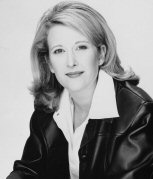
Shari Elliker is one to talk. About true crime. About traffic. About movies and people and beer and whatever new and interesting tidbits pop up on her radar.

And people are listening.

As host of “The Shari Elliker Show” on WBAL morning radio and one of three on “Broadminded,” an XM Radio program described as “Sex & the City Meets the 3 Stooges,” the actress and radio personality has learned to truly enjoy the ups and downs of live broadcasting.

“When you’re live, you’re working without a net,” she said. “You’ve got to hope for the best and hope that whatever mistake you make can be fixed, or that it went by so fast no one noticed.”

Early Beginnings

Elliker started out as a film major at UMBC, but later moved into a specialization in broadcast communications via an interdisciplinary studies major. She served as general manager of the UMBC radio station, and during her freshman year secured an internship at the radio station 98 Rock, which inspired and fostered her interest in radio broadcast.

After college, she worked as a receptionist for several different media companies, hoping to work her way to the top. This route didn’t really pan out, however.

“It never works like that,” said Elliker. “Ever.”

Searching for another outlet for her speaking voice and ebullient personality, she began doing freelance acting and performing voiceovers. She spent seven years as a company member of various political satire troupes, including “Gross National Product,” and secured acting credits in “Homicide,” “America’s Most Wanted” and “Unsolved Mysteries.”

Obstacles on the Radio

In her quest to get into radio broadcasting, Elliker took some bold steps. Listening to the radio one day, it occurred to her how effectively traffic reporters get their name out to people. On a whim, she called the radio station and plainly asked, “How can I be a traffic reporter?” As it happened, the man who answered the phone was the regional manager of the radio station. Through this connection, Shari found her first job in the business as a beach traffic reporter on the Bay Bridge, which she wound up hating.

Elliker later found her way onto the morning show of 99.1 HFS, but it, too, wasn’t all that she expected. She didn’t meet her colleagues until the day before the first airing, and she knew immediately that the chemistry wasn’t there. As she struggled, Elliker started to doubt herself, thinking “this is the biggest mistake of my life. I’ve worked so hard for this, and this is terrible.”

“You have a responsibility to make the show interesting,” she said. “When that wasn’t happening, I felt like I should go back to doing traffic.”

Girl Power

Fortunately, Elliker didn’t stay in a lull for long. When her friend Christine Eads pitched a show called “Broadminded” to XM Radio, a satellite radio station available in the U.S. and Canada, she joined the three-woman show for daily – and sometimes racy – chat about relationships, pop culture, and two of her “true passions” – murder and beer.

“Women have really been under-represented in the radio, it’s really remarkable,” said Elliker. “It’s changing now. You rarely hear three women, hosting a morning show, talking about what they want, just like the men do. I’m very proud of the work that we’ve done.”

“It’s Like Having Your Own Room”

With a couple of years of “Broadminded” under her belt, and some time hosting a Sunday afternoon show on WBAL radio in Baltimore, in September Elliker closed a deal on her own daily talk show on WBAL, replacing long time morning host, Chip Franklin.

“The Shari Elliker Show” features a variety of lifestyle topics and guests, including UMBC alumnus Neil Beller ’83, information systems management, as well as discussion of national and local headlines – the type of flexibility Elliker enjoys. The timeslot allows Shari to do her morning show on WBAL, and then walk into a different studio to do “Broadminded.” She said she is thankful for the support she’s been given by the station.

“I can talk about things that I find interesting and have a passion for,” she said. “If you work with a group of people, there’s this constant compromise… which is fine, but it is kind of nice to have your own show. It’s like having your own room.”

– by Melissa Gilden ’10
Originally published October 2007

“Broadminded” and Loving It: Shari Elliker '83

Shari Elliker is one to talk. About true crime. About traffic. About movies and people and beer and whatever new and interesting tidbits pop up on her radar.
And people are listening.
As host of “The Shari Elliker Show” on WBAL morning radio and one of three on “Broadminded,” an XM Radio program described as “Sex & the City Meets the 3 Stooges,” the actress and radio personality has learned to truly enjoy the ups and downs of live broadcasting.
“When you’re live, you’re working without a net,” she said. “You’ve got to hope for the best and hope that whatever mistake you make can be fixed, or that it went by so fast no one noticed.”
Early Beginnings
Elliker started out as a film major at UMBC, but later moved into a specialization in broadcast communications via an interdisciplinary studies major. She served as general manager of the UMBC radio station, and during her freshman year secured an internship at the radio station 98 Rock, which inspired and fostered her interest in radio broadcast.
After college, she worked as a receptionist for several different media companies, hoping to work her way to the top. This route didn’t really pan out, however.
“It never works like that,” said Elliker. “Ever.”
Searching for another outlet for her speaking voice and ebullient personality, she began doing freelance acting and performing voiceovers. She spent seven years as a company member of various political satire troupes, including “Gross National Product,” and secured acting credits in “Homicide,” “America’s Most Wanted” and “Unsolved Mysteries.”
Obstacles on the Radio
In her quest to get into radio broadcasting, Elliker took some bold steps. Listening to the radio one day, it occurred to her how effectively traffic reporters get their name out to people. On a whim, she called the radio station and plainly asked, “How can I be a traffic reporter?” As it happened, the man who answered the phone was the regional manager of the radio station. Through this connection, Shari found her first job in the business as a beach traffic reporter on the Bay Bridge, which she wound up hating.
Elliker later found her way onto the morning show of 99.1 HFS, but it, too, wasn’t all that she expected. She didn’t meet her colleagues until the day before the first airing, and she knew immediately that the chemistry wasn’t there. As she struggled, Elliker started to doubt herself, thinking “this is the biggest mistake of my life. I’ve worked so hard for this, and this is terrible.”
“You have a responsibility to make the show interesting,” she said. “When that wasn’t happening, I felt like I should go back to doing traffic.”
Girl Power
Fortunately, Elliker didn’t stay in a lull for long. When her friend Christine Eads pitched a show called “Broadminded” to XM Radio, a satellite radio station available in the U.S. and Canada, she joined the three-woman show for daily – and sometimes racy – chat about relationships, pop culture, and two of her “true passions” – murder and beer.
“Women have really been under-represented in the radio, it’s really remarkable,” said Elliker. “It’s changing now. You rarely hear three women, hosting a morning show, talking about what they want, just like the men do. I’m very proud of the work that we’ve done.”
“It’s Like Having Your Own Room”
With a couple of years of “Broadminded” under her belt, and some time hosting a Sunday afternoon show on WBAL radio in Baltimore, in September Elliker closed a deal on her own daily talk show on WBAL, replacing long time morning host, Chip Franklin.
“The Shari Elliker Show” features a variety of lifestyle topics and guests, including UMBC alumnus Neil Beller ’83, information systems management, as well as discussion of national and local headlines – the type of flexibility Elliker enjoys. The timeslot allows Shari to do her morning show on WBAL, and then walk into a different studio to do “Broadminded.” She said she is thankful for the support she’s been given by the station.
“I can talk about things that I find interesting and have a passion for,” she said. “If you work with a group of people, there’s this constant compromise… which is fine, but it is kind of nice to have your own show. It’s like having your own room.”
– by Melissa Gilden ’10
Originally published October 2007