All posts by: Magazine Editor


Massive IT outage spotlights major vulnerabilities in the global information ecosystem

Written by Richard Forno, principal lecturer in computer science and electrical engineering, UMBC

The global information technology outage on July 19, 2024, that paralyzed organizations ranging from airlines to hospitals and even the delivery of uniforms for the Olympic Games represents a growing concern for cybersecurity professionals, businesses and governments.

The outage is emblematic of the way organizational networks, cloud computing services and the internet are interdependent, and the vulnerabilities this creates. In this case, a faulty automatic update to the widely used Falcon cybersecurity software from CrowdStrike caused PCs running Microsoft’s Windows operating system to crash. Unfortunately, many servers and PCs need to be fixed manually, and many of the affected organizations have thousands of them spread around the world.

For Microsoft, the problem was made worse because the company released an update to its Azure cloud computing platform at roughly the same time as the CrowdStrike update. Microsoft, CrowdStrike and other companies like Amazon have issued technical work-arounds for customers willing to take matters into their own hands. But for the vast majority of global users, especially companies, this isn’t going to be a quick fix.

Modern technology incidents, whether cyberattacks or technical problems, continue to paralyze the world in new and interesting ways. Massive incidents like the CrowdStrike update fault not only create chaos in the business world but disrupt global society itself. The economic losses resulting from such incidents – lost productivity, recovery, disruption to business and individual activities – are likely to be extremely high.

As a former cybersecurity professional and current security researcher, I believe that the world may finally be realizing that modern information-based society is based on a very fragile foundation.

A display screen shows numerous rows of text
The outage led to thousands of flight delays on July 19, 2024. AP Photo/Yuki Iwamura

The bigger picture

Interestingly, on June 11, 2024, a post on CrowdStrike’s own blog seemed to predict this very situation – the global computing ecosystem compromised by one vendor’s faulty technology – though they probably didn’t expect that their product would be the cause.

Software supply chains have long been a serious cybersecurity concern and potential single point of failure. Companies like CrowdStrike, Microsoft, Apple and others have direct, trusted access into organizations’ and individuals’ computers. As a result, people have to trust that the companies are not only secure themselves, but that the products and updates they push out are well-tested and robust before they’re applied to customers’ systems. The SolarWinds incident of 2019, which involved hacking the software supply chain, may well be considered a preview of today’s CrowdStrike incident.

CrowdStrike CEO George Kurtz said “this is not a security incident or cyberattack” and that “the issue has been identified, isolated and a fix has been deployed.” While perhaps true from CrowdStrike’s perspective – they were not hacked – it doesn’t mean the effects of this incident won’t create security problems for customers. It’s quite possible that in the short term, organizations may disable some of their internet security devices to try and get ahead of the problem, but in doing so they may have opened themselves up to criminals penetrating their networks.

It’s also likely that people will be targeted by various scams preying on user panic or ignorance regarding the issue. Overwhelmed users might either take offers of faux assistance that lead to identity theft, or throw away money on bogus solutions to this problem.

Transportation Secretary Pete Buttigieg explains the effects of the outage on airlines and other transportation systems.

What to do

Organizations and users will need to wait until a fix is available or try to recover on their own if they have the technical ability. After that, I believe there are several things to do and consider as the world recovers from this incident.

Companies will need to ensure that the products and services they use are trustworthy. This means doing due diligence on the vendors of such products for security and resilience. Large organizations typically test any product upgrades and updates before allowing them to be released to their internal users, but for some routine products like security tools, that may not happen.

Governments and companies alike will need to emphasize resilience in designing networks and systems. This means taking steps to avoid creating single points of failure in infrastructure, software and workflows that an adversary could target or a disaster could make worse. It also means knowing whether any of the products organizations depend on are themselves dependent on certain other products or infrastructures to function.

Organizations will need to renew their commitment to best practices in cybersecurity and general IT management. For example, having a robust backup system in place can make recovery from such incidents easier and minimize data loss. Ensuring appropriate policies, procedures, staffing and technical resources is essential.

Problems in the software supply chain like this make it difficult to follow the standard IT recommendation to always keep your systems patched and current. Unfortunately, the costs of not keeping systems regularly updated now have to be weighed against the risks of a situation like this happening again.

This article is republished from The Conversation under a Creative Commons license. Read the original article and see more than 250 UMBC articles available in The Conversation.

Meet a Retriever—Fritzie Charne-Merriwether, student affairs superstar

Meet Fritzie Charne-Merriwether, associate vice president for administration and chief of staff in the Division of Student Affairs. Fritzie started her career at UMBC as a community director in Residential Life, left to pursue other passions, and came back to serve our Retriever community for the last 14 years. What excites Fritzie so much about her work with students? We’ll let her tell you herself!

Q: What’s one essential thing you’d want another Retriever to know about you?

A: I am a native New Yorker. I have a B.A. in psychology from Roger Williams University and a M.Ed. in student affairs higher education from the University of Vermont. I have over 20 years of professional experience in a variety of leadership positions in student affairs and with the federal government. This includes serving as the contractor installation manager for the Army Career and Alumni Program (ACAP) at Fort Campbell, Kentucky.

In this role I was responsible for overseeing the ACAP Resource Center that provided social work services to Warriors in Transition Soldiers, and disabled veterans/retirees, as well as transitioning service personnel and family members in support of rehabilitation and transition to civilian life. I began my career at UMBC as a community director in Residential Life, and returned to the university in 2010. Currently I serve as the associate vice president for administration and chief of staff for the Division of Student Affairs.

Q: What’s the one thing you’d want someone who hasn’t joined the UMBC community to know about the support you find here?

A: UMBC is such a caring place. We really go above and beyond to support each other. I feel that at all levels and see examples of this daily. If you are looking to join a strong and supportive community, this is the place for you.

Q: What do you love most about your job and why?

A: Working with students and their families. It so rewarding to be able to help a student or family member. I know that I am making a difference and helping prepare our next generation of leaders.

Q: Tell us about someone in the community who has inspired you or supported you, and how they did it.

A: It is really hard to narrow to just one person specifically. I feel like I have been inspired and supported by countless people in the Division of Student Affairs. So I would have to say our whole division. I get to work with amazing people and they give me life. I am consistently inspired by how amazing each person is and how they go above and beyond to support our students. They push me to a higher standard because they are so amazing. So from the VP’s office to our leadership team to each department, they all inspire and support me in some capacity.

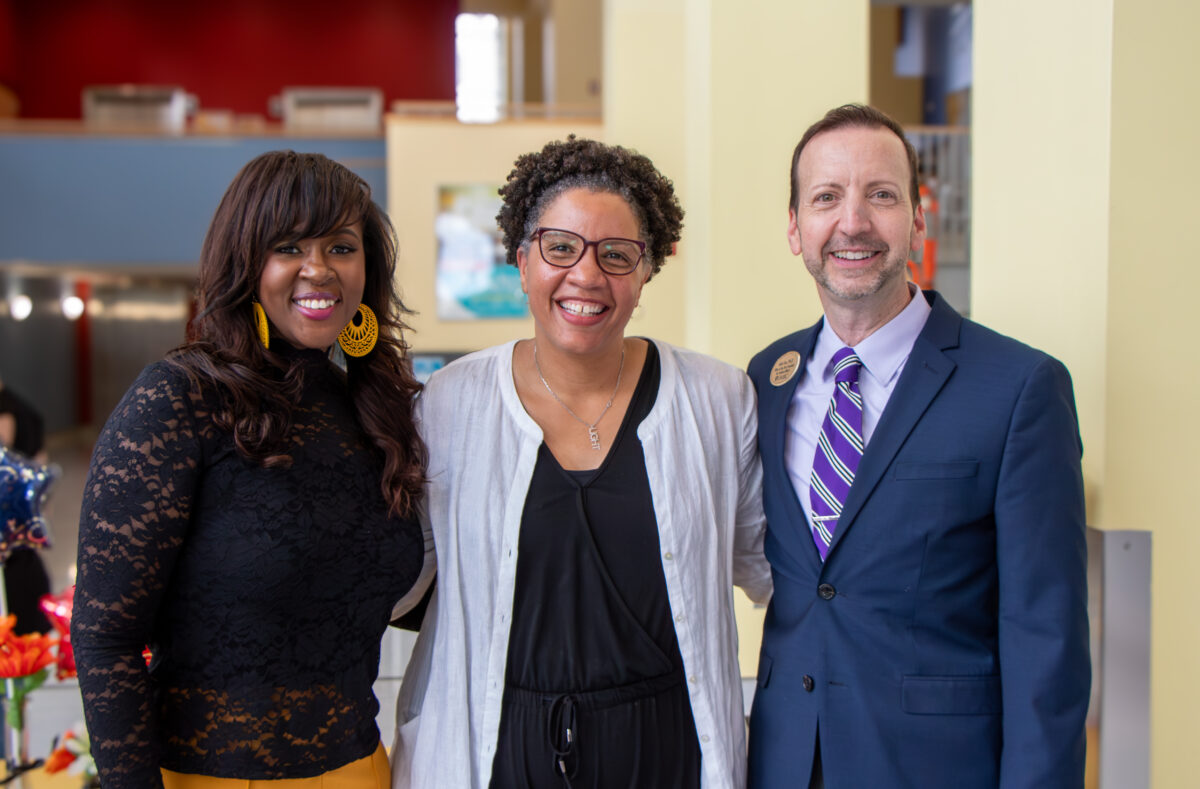
two Black women and a white man pose in work attire
At the Division of Student Affairs BBQ in June (left-right): Fritzie Charne-Merriwether, and Renique Kersh, and John Fox. Photo courtesy of Charne-Merriwether.

Q: Tell us what you love about your department.

A: I laugh a lot with our team. Even when things are really hard we find ways to lift each other and find a sliver of joy. This work can be really difficult at times. I appreciate our team’s humanity and ability to find the light.

Q: Tell us about your primary WHY, and how it led you to UMBC.

A: I originally came to UMBC because I felt I had great opportunities to grow professionally. It seemed like an exciting place that was growing and brimming with potential. I came back to UMBC because of the people. It truly is a special place. Even after being away for a few years, I still felt very much connected to this place and coming back felt like home.

Members of the Family Advisory Board in student affairs enjoy Homecoming & Family Weekend 2022. Photo courtesy of Charne-Merriwether.
I laugh a lot with our team. Even when things are really hard we find ways to lift each other and find a sliver of joy. This work can be really difficult at times. I appreciate our team’s humanity and ability to find the light.

Fritzie Charne-Merriwether

Q: Since you’ve been a part of the UMBC community, how have you found support of your WHY?

A: A great example of support occurred a few years back when my mother passed away. As an only child, my mom and I were really close and losing her rocked my entire foundation. The outpouring of support from our VP and leadership team allowed me to take all the time I needed to grieve and find my new normal. The love and support I received from fellow colleagues got me through some of my most difficult moments. That continues to this day. Our division has gone through significant change recently. During that time, countless individuals have stepped up to support me from all over campus. Our new VP and members of our leadership team have been incredibly supportive as I have stepped into my new role. I feel very fortunate to be part of such a caring community.

A group of adults in black and gold sportswear pose in an events center.
Family Night at a men’s basketball game. Photo courtesy of Charne-Merriwether.

Q: What would you tell someone who is considering a career at UMBC?

A: It is a great community to belong to and depending on your interest you can find ample opportunities to grow and develop.

* * * * *

UMBC’s greatest strength is its people. When people meet Retrievers and hear about the passion they bring, the relationships they create, the ways they support each other, and the commitment they have to inclusive excellence, they truly get a sense of our community. That’s what “Meet a Retriever” is all about.

Learn more about how UMBC can help you achieve your goals.

Social media and political violence – how to break the cycle

Written by Richard Forno, principal lecturer in computer science and electrical engineering, UMBC

The attempted assassination of Donald Trump on July 13, 2024, added more fuel to an already fiery election season. In this case, political violence was carried out against the party that is most often found espousing it. The incident shows how uncontrollable political violence can be – and how dangerous the current times are for America.

Part of the complication is the contentious and adversarial nature of American politics, of course. But technology makes it more difficult for Americans to understand sudden news developments.

Gone are the days when only a handful of media outlets reported the news to broad swaths of society after rigorous fact-checking by professional journalists.

By contrast, anyone today can “report” news online, provide what they claim is “analysis” of events, and combine fact, fiction, speculation and opinion to fit a desired narrative or political perspective.

Then that perspective is potentially made to seem legitimate by virtue of the poster’s official office, net worth, number of social media followers, or attention from mainstream news organizations seeking to fill news cycles.

And that’s before any mention of convincing deepfake audio and video clips, whose lies and misrepresentations can further sow confusion and distrust online and in society.

Today’s internet-based narratives also often involve personal attacks either directly or through inference and suggestion – what experts call “stochastic terrorism” that can motivate people to violence. Political violence is the inevitable result – and has been for years, including attacks on U.S. Rep. Gabby Giffords, former House Speaker Nancy Pelosi’s husband, Paul, the 2017 congressional baseball practice shooting, the Jan. 6, 2021 insurrection, and now the attempted assassination of a former president running for the White House again.

A man with blood on his face holds up a clenched fist while people in suits surround him.
While being evacuated by the Secret Service, Donald Trump paused and held up a clenched fist to the crowd. Rebecca Droke/AFP via Getty Images

When bullets and conspiracies fly

As a security and internet researcher it was entirely predictable to me that within minutes of the attack, right-wing social media exploded with instant-reaction narratives that assigned blame to political rivals, the media, or implied that a sinister “inside job” by the federal government was behind the incident.

But it wasn’t just average internet users or prominent business magnates fanning these flames. Several Republicans issued such statements from their official social media accounts. For instance, less than an hour after the attack, Georgia Congressman Mike Collins accused President Joe Biden of “inciting an assassination” and said Biden “sent the orders.” Ohio Senator J.D. Vance, now Trump’s nominee for vice president, also implied that Biden was responsible for the attack.

The bloodied former president stood up and delayed his Secret Service evacuation for a fist-pumping photo before leaving the rally, and his campaign issued a defiant fundraising email later that evening. This led some Trump critics to suggest the incident was a “false flag” attack staged to earn a sympathetic national spotlight. Others claimed the incident fits into Trump’s ongoing messaging to supporters that he’s the victim of persecution.

From a historical perspective, it’s worth noting former Brazil right-wing President Jair Bolsonaro survived an assassination attempt in 2018 to become the country’s next president in 2019.

A line of red jumps around the world, fixed at particular places by pushpins.
Bad information can race around the world faster than the truth can catch up with it. Richard Drury/Digital Vision via Getty Images

It’s long been known that internet narratives, memes and content can spread around the world like wildfire well before the actual truth becomes known. Unfortunately, those narratives, whether factual or fictional, can get picked up – and thus given a degree of perceived legitimacy and further disseminated – by traditional news organizations.

Many who see such messages, amplified by both social media and traditional news services, often believe them – and some may respond with political violence or terrorism.

Can anything help?

Several threads of research show that there are some ways regular people can help break this dangerous cycle.

In the immediate aftermath of breaking news, it’s important to remember that first reports often are wrong, incomplete or inaccurate. Rather than rushing to repost things during rapidly developing news events, it’s best to avoid retweeting, reposting or otherwise amplifying online content right away. When information has been confirmed by multiple credible sources, ideally across the political spectrum, then it’s likely safe enough to believe and share.

A woman stands in a maze with high walls.
It can be hard to figure out what’s right amid so much competing information. mikkelwilliam/E+ via Getty Images

In the longer term, as a nation and a society, it will be useful to further understand how technology and human tendencies interact. Teaching schoolchildren more about media literacy and critical thinking can help prepare future citizens to separate fact from fiction in a complex world filled with competing information.

Another potential approach is to expand civics and history lessons in school classrooms, to give students the ability to learn from the past and – we can all hope – not repeat its mistakes.

Social media companies are part of the potential solution, too. In recent years, they have disbanded teams meant to monitor content and boost users’ trust in the information available on their platforms. Recent Supreme Court rulings make clear that these companies are free to actively police their platforms for disinformation, misinformation and conspiracy theories if they wish. But companies and purported “free speech absolutists” including X owner Elon Musk, who refuse to remove controversial, though technically legal, internet content from their platforms may well endanger public safety.

Traditional media organizations bear responsibility for objectively informing the public without giving voice to unverified conspiracy theories or misinformation. Ideally, qualified guests invited to news programs will add useful facts and informed opinion to the public discourse instead of speculation. And serious news hosts will avoid the rhetorical technique of “just asking questions” or engaging in “bothsiderism” as ways to move fringe theories – often from the internet – into the news cycle, where they gain traction and amplification.

The public has a role, too.

Responsible citizens could focus on electing officials and supporting political parties that refuse to embrace conspiracy theories and personal attacks as normal strategies. Voters could make clear that they will reward politicians who focus on policy accomplishments, not their media imagery and social media follower counts.

That could, over time, deliver the message that the spectacle of modern internet political narratives generally serve no useful purpose beyond sowing social discord and degrading the ability of government to function – and potentially leading to political violence and terrorism.

Understandably, these are not instant remedies. Many of these efforts will take time – potentially even years – and money and courage to accomplish.

Until then, maybe Americans can revisit the golden rule – doing onto others what we would have them do unto us. Emphasizing facts in the news cycle, integrity in the public square, and media literacy in our schools seem like good places to start as well.

This article is republished from The Conversation under a Creative Commons license. Read the original article and see more than 250 UMBC articles available in The Conversation.
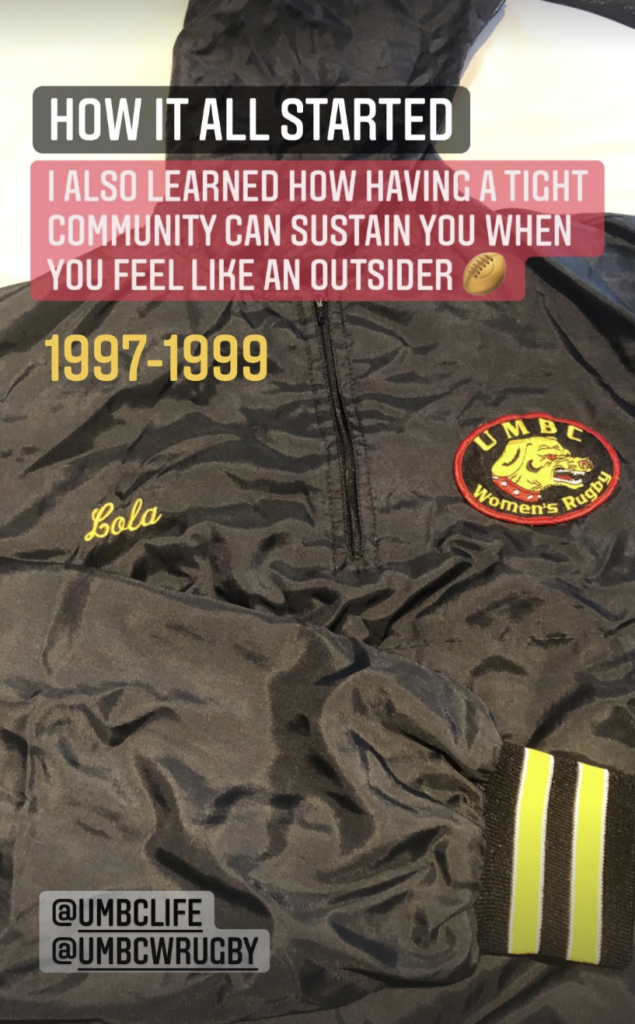
Meet a Retriever—Connie Pierson ’90, M.A. ’92, associate vice provost for institutional research

Meet Connie Pierson ’90, M.A. ’92, a double alum—earning her bachelor’s degree in economics and sociology in 1990 and her M.A. in applied sociology in 1992—and UMBC’s current associate vice provost for Institutional Research. In total, Connie has spent 31 non-consecutive years at UMBC as both a student and staff member. After leaving the university to earn her Ph.D. in sociology from the University of Maryland, College Park, and a short stint at the U.S. Census Bureau, Connie returned to UMBC in 1999 for a job in the Office of Institutional Research, Analysis, and Decision Support where she has been ever since. Take it away, Connie!

Q: Tell us about your current job. What do you like most about it?

A: What I love most about my job as the associate vice provost for Institutional Research, Analysis, and Decision Support is that I get to work with so many different offices and people across campus. Institutional Research reports on and supports almost all aspects of an institution—from reporting how many students are enrolled to how long it takes them to finish and how many classrooms and course sections are needed to get them there. Not to mention the people and services making that education possible, and helping assess whether these are all effective. And the job has its perks.

Early on, I recall getting a boost from being responsible for Faculty Workload reporting and working with past professors to complete their departmental reporting. So much fun to have the tables turned, where I was the one yielding the red correction pen! I also love the opportunity to collaborate with so many different people, bringing our diverse perspectives together to best meet the needs of our students. The sense of community and shared purpose is stimulating and keeps the work interesting.

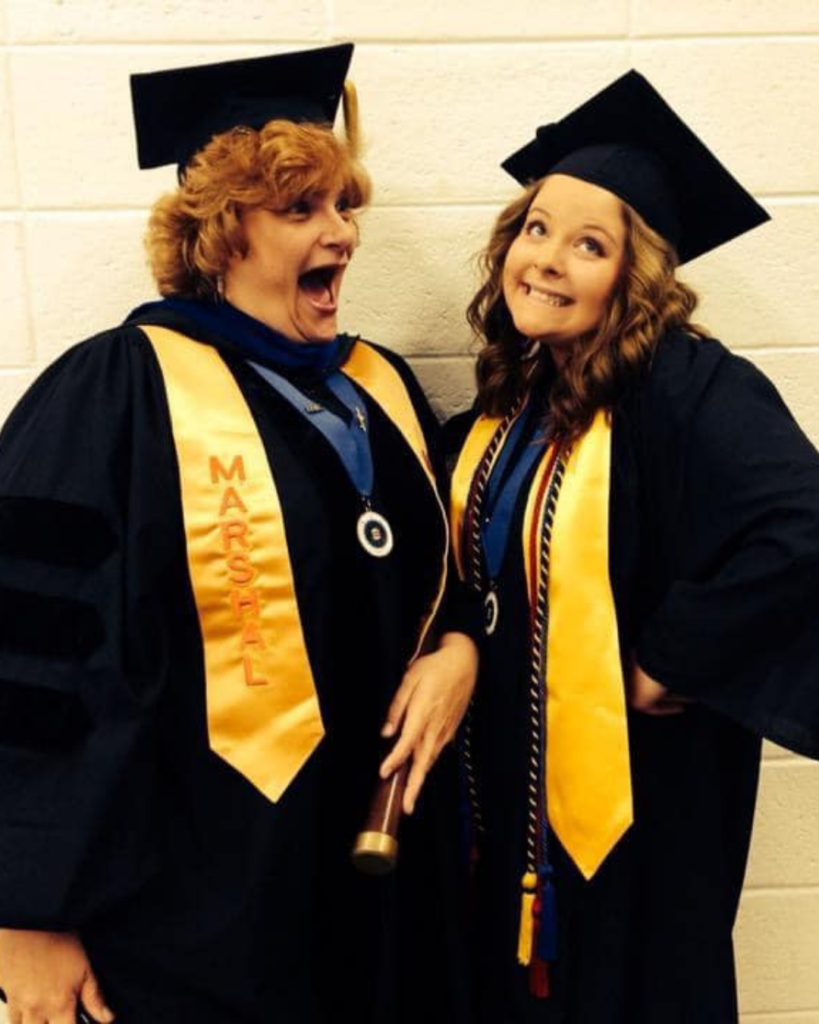
Connie Pierson goofing with her niece, Kelsey Krach '04, anthropology and spanish, a Sondheim Scholar and valedictorian finalist, at graduation where Connie served as the staff marshall

Q: What’s one essential thing you’d want another Retriever to know about you?

A: I think one of the best gifts I received from my parents is a healthy sense of humor. If you don’t typically find humor in situations, it is probably not a good idea to sit by me. The work we do at UMBC is so important, but if you can’t have fun doing it (at least most of the time), what’s the point? Also, I don’t like to back down from a challenge. During the pandemic, a UMBC colleague and I decided to post #BlackAndGoldFriday photos on Facebook. I think she lasted four weeks. I just posted #week223.

Pictured left: Connie Pierson goofing with her niece, Kelsey Krach ’04, anthropology and Spanish, a Sondheim Scholar and valedictorian finalist, at graduation where Connie served as the staff marshall

Q: What do you love about your academic program or an organization you’re involved in?

A: It always comes back to people and relationships. I have had the privilege of working with so many caring and intelligent individuals over the years, both within and outside Institutional Research. IR and UMBC have both undergone a good bit of change over the years, and we’ve had our ups and downs. But I’ve always known that I work with a great group of people who have my back, and they’ve become my UMBC family. 

Q: Tell us about someone in the community who has inspired you or supported you, and how they did it.

A: There are so many people in the UMBC community who’ve influenced my career. Marilyn Demorest, vice provost for Faculty Affairs, was on my search committee, and quickly became a strong supporter and mentor. Marilyn was a great advocate for Institutional Research, and helped pull me into the UMBC community. She was also instrumental in getting me involved in the UMBC chapter of the Phi Kappa Phi honor society, where I’ve served in a leadership role since 2010. But most importantly, Marilyn became a true friend, attending my wedding, family funerals, celebrations, and holiday get-togethers. Honestly, once you’ve belted out “I Will Survive” with someone, I think you are friends for life.

UMBC isn’t a place, really, it’s the people.”

Connie Pierson '90, M.A. '92

I also must acknowledge Antonio Moreira, the late vice provost for Academic Affairs, to whom I had the privilege to report for the past 10 years. Tony was such a kind and compassionate man, a true mentor, and a friend. His recent loss is akin to losing a family member, and he will be sorely missed.

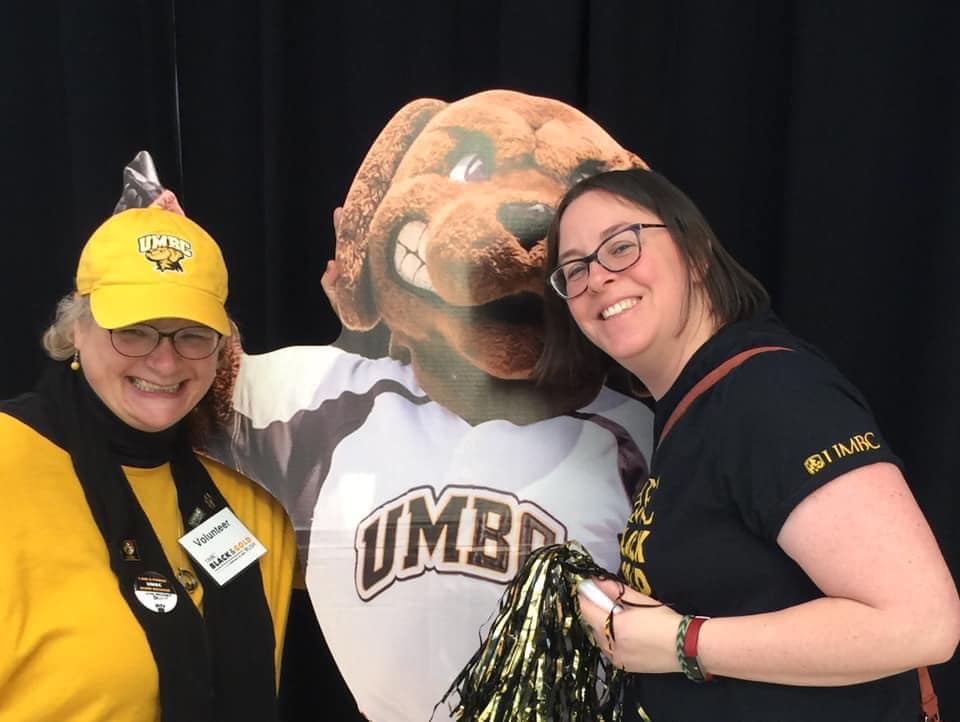
Connie Pierson, Vice President for Institutional Research, and Jennie O'Grady posing with a cardboard cutout of True Grit.
Connie Pierson and Jenny O’Grady, assistant vice president of content strategy and editor of UMBC Magazine, hang out with a cardboard cutout of True Grit.

Q: What is your WHY? What brought you to UMBC?

A: I have to be honest, what originally attracted me to UMBC as an employee was the shorter commute! I saw the position for a research analyst in Institutional Research. I had no idea what Institutional Research was, but I had research skills and I knew SAS and SPSS, both mentioned in the ad. And I knew UMBC from my time as a student. I interviewed for the position and have been in Institutional Research ever since, moving up from research analyst to associate vice provost in my 25 years here. What has kept me at UMBC is the community and a love for the important work we do in supporting the success of our students.

“What has kept me at UMBC is the community and a love for the important work we do in supporting the success of our students.”

Connie Pierson '90, M.A. '92

Q: Where have you found support in the UMBC community?

A: Becoming a part of the UMBC community happens because you get involved with the community. One lesson learned from my parents is that you get out of life what you put into it. You build your network by getting involved and helping others. And you make so many friends along the way.

Connie Pierson posing with the True Grit statue after Convocation.

Q: Are you involved in any campus organizations? Tell us about what you love about them!

A: I’ve tried my best over the years to be involved in different campus organizations. My involvement has definitely waxed and waned given my professional and personal life demands, but I’ve always thought it is important to give back to the community. Over the years, I’ve served as a senator and officer with the Professional Staff Senate, as secretary and president of Chapter 22BC of the national honor society of Phi Kappa Phi, volunteered with the on-campus alumni group, and volunteered at Convocation and Commencement exercises.

I’m also a strong supporter of Retriever Essentials, often choosing them for monetary donations, but also trying to donate grocery items on a fairly regular basis. I’ve also had fun volunteering for Homecoming events over the years. In all of these things, what I love most are the friendships that developed along the way.

Pictured left: Connie takes a selfie with the True Grit statue after Convocation.

Q: What would you tell someone who is considering a career at UMBC?

A: Do it. And get involved. Check out current job opportunities at the university.

Q: What drives you to support UMBC?

A: I believe strongly in the mission and goals of UMBC, and the importance of providing opportunity through higher education. UMBC provided that foundation for me, as well as several of my family members. Supporting UMBC through my work, volunteer time, and monetary donations is just a way of saying “thanks.” 

* * * * *

UMBC’s greatest strength is its people. When people meet Retrievers and hear about the passion they bring, the relationships they create, the ways they support each other, and the commitment they have to inclusive excellence, they truly get a sense of our community. That’s what “Meet a Retriever” is all about.

Learn more about how UMBC can help you achieve your goals.

Meet a Retriever—Mary K. Tilghman ’79, novelist and donor

Meet Mary K. Tilghman, whose original decision to attend UMBC may have started off more pragmatic than fairytale (she could commute with her brother who was attending), but the story ended up having a happy ending. Tilghman ’79, English, is a novelistthe author of half a dozen modern romance and historical novels. She says she finds inspiration in her native Maryland and draws on her bachelor’s degree from 45-plus years ago. According to Tilghman, her classes at UMBC laid the foundation for a prolific and fulfilling writing career. Tell us your story, Mary!

Q: What’s one essential thing you’d want another Retriever to know about you? 

A: Since graduation, I have used my English degree every day of my life. I’ve been a reporter and editor of local newspapers, a freelance magazine writer, a travel writer, and travel blogger. I’ve written six novels, both historical fiction and sweet-as-cotton-candy romance. I’ve edited dozens of school papers for my three now-grown children—Gina who earned her master’s degree at UMBC, Sean and Brigid. I tell everyone: That English degree paved the way for my life.

Q: Tell us about someone in the community who has inspired you or supported you, and how they did it.

A: My English professors, including Professors Robert Glick, Patricia Meszaros and Joan Korenman, taught me to think and write precisely. My favorite political science professor, Dr. Philip Brenner, showed me how to gain perspective from history. My friend and fellow Retriever editor Kathleen Warnock offered me a job writing Frommer’s guides for Maryland and Delaware that I will always be grateful for.

Q: Tell us about what you love about your academic program or an organization you’re involved in.

A: It’s been 45 years since I got my bachelor’s degree but I still remember the books I read—19th-century novels, Russian epics, world literature. They laid the foundation for my writing. I may never reach the writing level of a Tolstoy, Dickens, or Hemingway but, like them, I love language and a well-wrought sentence.

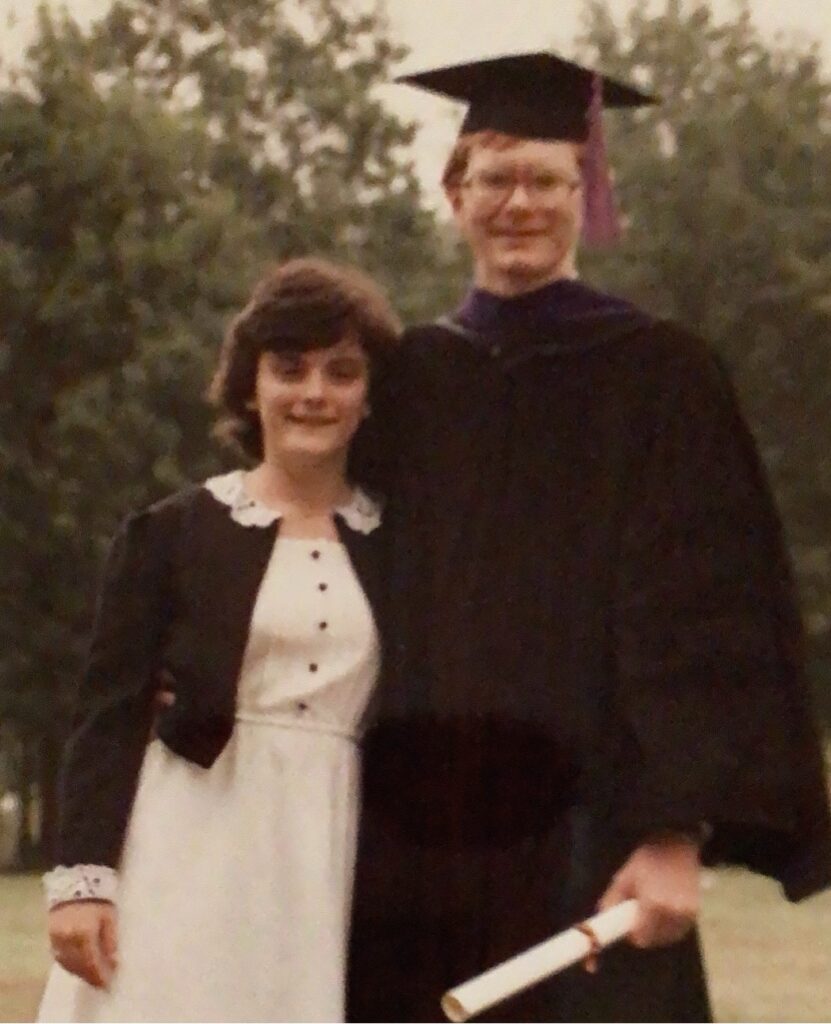
Right: Tilghman’s husband, Raymond Truitt, graduated from Loyola the same year as Tilghman at UMBC. “Ray and I met by blind date when we were juniors. He proposed to me on UMBC’s (now-gone) tennis courts in 1981,” shares Tilghman.

A man and woman stand together, the man is in a graduation gown

Q: If you’re currently working, what’s your title and where do you work? What do you enjoy most about it?

A: I write novels, both historical fiction and romance. I love creating characters, wrecking their lives, and then finding them a happy ending. Best of all, I get to share it with readers.

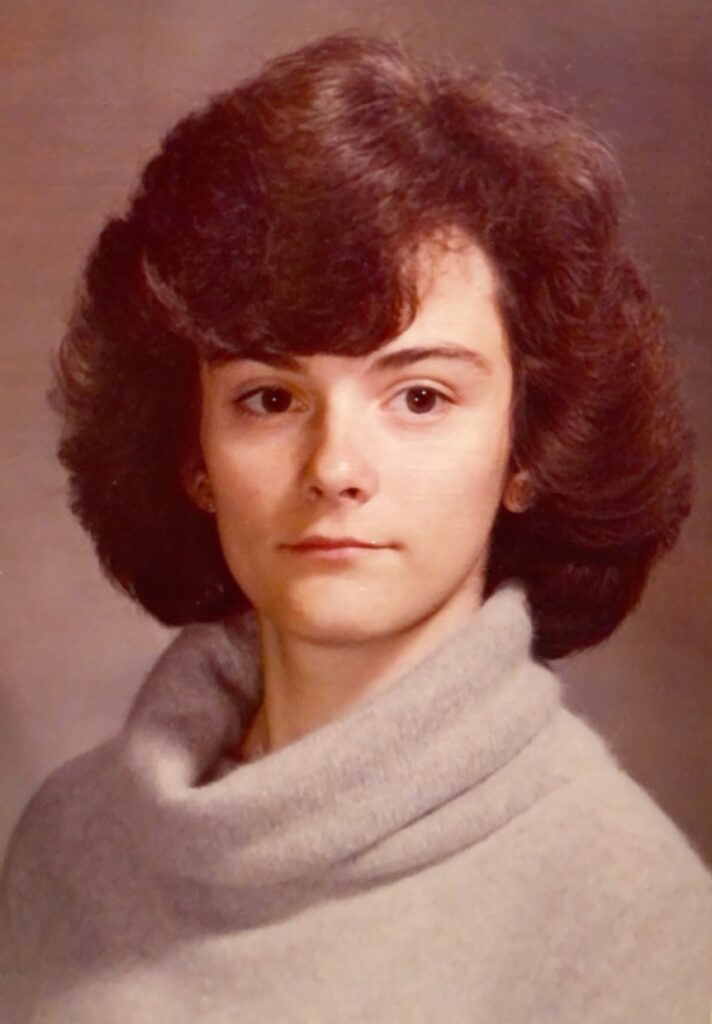
a sepia toned photo of a woman with brown hair and a turtle neck

Q: Tell us about your primary WHY, and how it led you to UMBC.

A: I was a student at another college before coming to UMBC. When my younger brother was accepted to UMBC, my mother suggested I transfer. UMBC was a cost-effective option in 1976, had good English and visual arts departments, and the family car was already coming here. So I became a Retriever. Though I wasn’t happy at first, I was soon hooked. I met great people, was taking classes I couldn’t wait to master, and found professors who were caring and devoted. I learned quickly I was going to get the education that would lead to something great.

Left: Tilghman in her senior photo at UMBC.

Q: Tell us about the people who helped you grow at UMBC, and why their HOW made such a difference to you.

A: I took a journalism class my first semester with Baltimore Sun reporter Jack Dawson. I’ll always be grateful for his classes, his mentoring, and his help in getting a Sun internship. I ultimately had two internships, one on the copy desk of the Sun, and another at the Catonsville Times, where my editor, Loni Ingraham, spent a lot of time helping me learn to write a lede and ask better questions. In addition, I worked long hours on the staff of the university’s newspaper, The Retriever. I learned all about writing, interviewing, editing, setting type (this was pre-digital), writing headlines, and laying out pages. And I gained some great friends among my fellow journalists.

Q: If you’re an alum, what’s your favorite part of being a part of Retriever Nation?

A: UMBC grads go places. I’ve met them in all walks of life but the UMBC tie is strong.

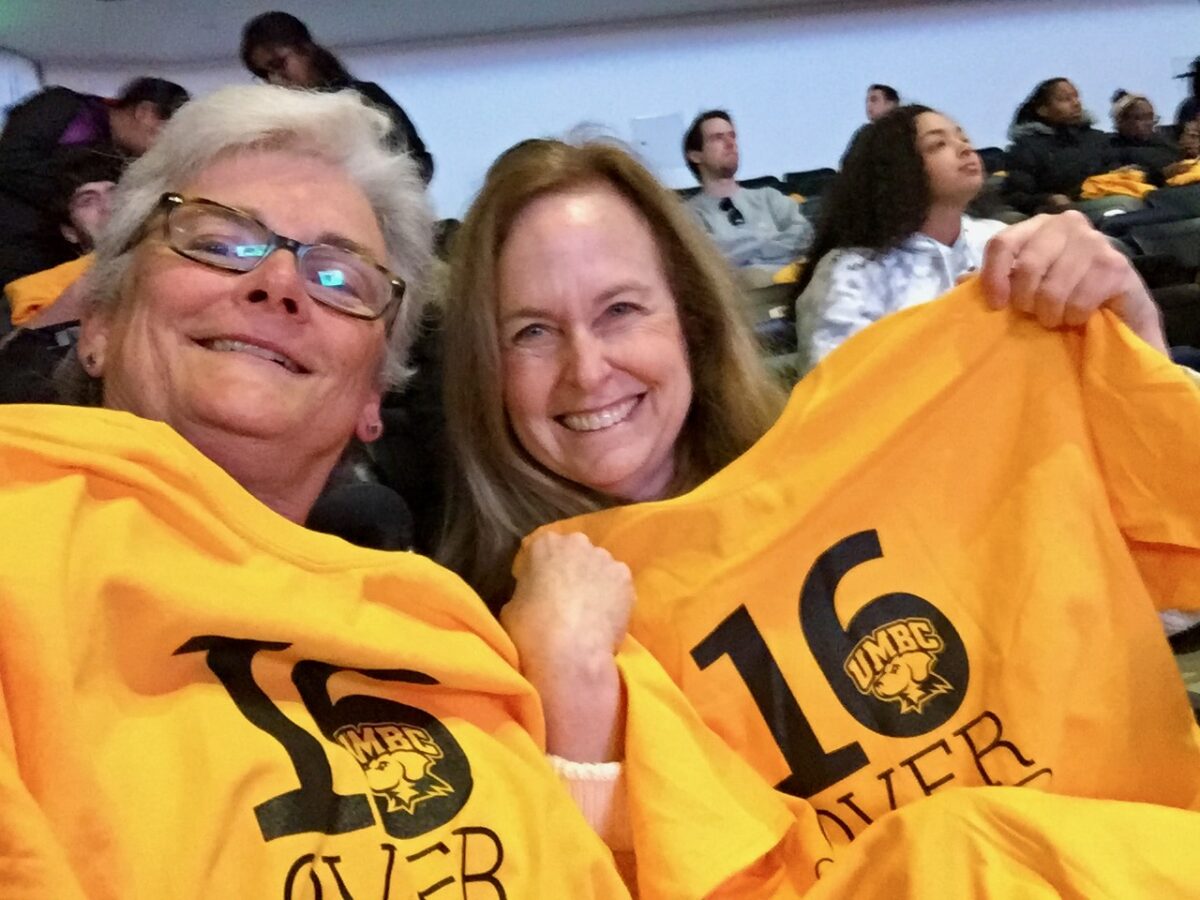
two women hold up shirts commemorating UMBC's mens basketball win over UVA in 2018
Tilghman, left, attended a pep rally with fellow alumna, Jackie Toback Polashuk, after UMBC’s men’s basketball team beat No. 1 seed UVA in the NCAA championships in 2018.

Q: If you’re a donor, what drives you to support UMBC?

A: I won a scholarship in my senior year that allowed me to become a dorm resident. What an experience that was after all that commuting. I want to support future Retrievers.

* * * * *

UMBC’s greatest strength is its people. When people meet Retrievers and hear about the passion they bring, the relationships they create, the ways they support each other, and the commitment they have to inclusive excellence, they truly get a sense of our community. That’s what “Meet a Retriever” is all about.

Learn more about how UMBC can help you achieve your goals.

Meet a Retriever—Karen Woodard ’90, Alumni Association Vice President and co-chair of the Alumni Awards committee

Meet Karen Woodard ‘90, English. Karen is chief of the Employment Litigation Section in the Civil Rights Division of the U.S. Department of Justice and an active member of the UMBC Alumni Association Board of Directors, serving as Vice President of Finance and one of the co-chairs of the Alumni Awards committee. As an undergrad, Karen was heavily involved on campus. She played on the women’s basketball team all four years—serving as team captain her senior year—and was a member of Delta Sigma Theta Sorority, Inc., serving as president also in her senior year. Karen credits her time at UMBC and its nurturing community for preparing her for future success. Tell us all about it, Karen!

Q: What is your WHY? What brought you to UMBC?

A: I came to UMBC because I believed I would receive a first-class education, could continue my athletic career, and would be supported in both pursuits.

Q: Where have you found support in the UMBC community?

A: As a student, I had so many opportunities to develop my leadership skills as an athlete, as part of Greek life, and in the classroom. When I decided to apply to law school, members of the UMBC community, including professors and coaches, encouraged me to aim high. I applied to and was accepted by several top law schools. I ultimately decided to attend Duke. I could not have achieved that goal without the nurturing and support of the UMBC community.

I love the sense of community I find among my basketball teammates, sorority sisters, and other alumni I am connected with.

Karen Woodard '90

Q: What’s one essential thing you’d want another Retriever to know about you?

A: While at UMBC, I was a member of the women’s basketball team, a four-year letter winner, and captain during my senior year. I was honored as the Outstanding Scholar Athlete for the 1989 – 1990 season. I also joined Delta Sigma Theta Sorority, Inc. Lambda Kappa Chapter, serving as president from 1989 – 1990. Additionally, I received the Student Affairs Leadership Award.

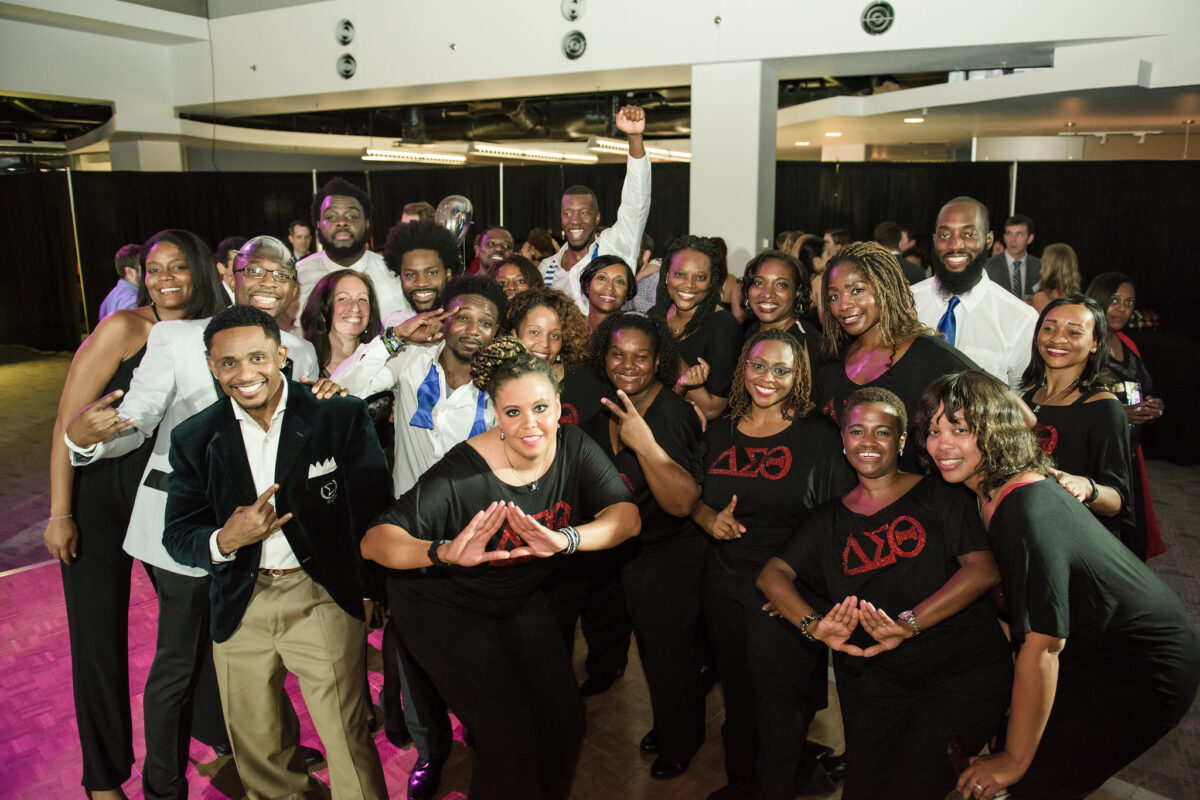
Left: Karen at the 2013 Chapter of Black & Latinx Alumni (CBLA) Homecoming Throwback Party. Right: Karen and others at the 2016 UMBC Grit & Greekness Alumni Reunion.

Q: Tell us about someone in the community who has inspired you or supported you, and how they did it.

A: During my time at UMBC, I was inspired and supported by the upperclass members of the Lambda Kappa Chapter of Delta Sigma Theta, These women were accomplished in the classroom and involved in service to the UMBC campus and Baltimore community, and they modeled how to balance all of these important parts of a student’s life with excellence. They each inspired me to achieve and encouraged and supported me as I worked my way though UMBC, and they continue to do the same even today.

After UMBC, I went on to graduate from Duke University School of Law. Currently, I am chief of the Employment Litigation Section in the Civil Rights Division of the Department of Justice.

Q: Tell us more about your current job. What do you like most about it?

A: As a civil rights attorney, I enjoy bringing cases that vindicate the rights of individuals and classes of people those who have been discriminated against to ensure the unlawful behavior is not repeated and the workplace is left better than what it was when we started our case.

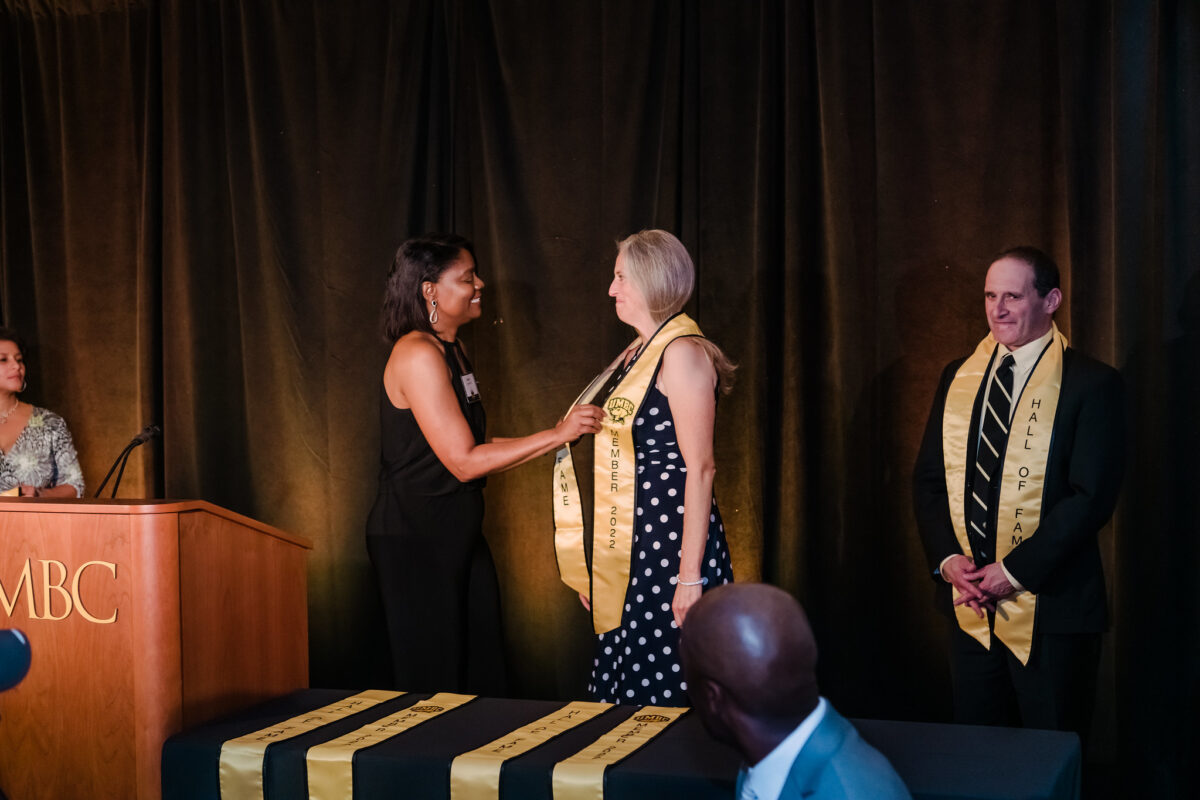
Karen Woodard at the 2022 UMBC Athletics Hall of Fame ceremony placing a commemorative stole around Dana Eberly Keiner, Volleyball, 1993-96.
Karen at the 2022 UMBC Athletics Hall of Fame ceremony placing a commemorative stole around Dana Eberly Keiner, volleyball, 1993 – 96.

Q: How have you stayed connected with the UMBC community?

A: I truly love my work on the Alumni Association Board of Directors, and specifically as co-chair of the Alumni Awards committee. I enjoy working with fellow alumni who love UMBC and are committed to helping get more alumni involved in the Alumni Association and seeing the university continue to thrive. As the co-chair of the awards committee, I look forward to reading about the many accomplished alumni who are nominated. It fills me with a sense of pride to know UMBC produces so many accomplished individuals. I also feel very inspired by my work with the Athletic Department’s Hall of Fame committee.

About the Alumni Awards

Extraordinary UMBC alumni, faculty, and staff are making a difference in the world, and the UMBC Alumni Association Board of Directors holds an annual celebration of their accomplishments. Past winners have included a U.S. Surgeon General, a Lucasfilm sound editor, the New Yorker‘s social media director, chief judges, teachers, and scientists advancing fields such as medicine, chemical engineering, physics, and biology. We also honor outstanding UMBC faculty and staff members for their role in guiding and nurturing students. Five types of awards are given: Outstanding Graduate, Distinguished Service, Rising Star, Outstanding Faculty, and Outstanding Staff.

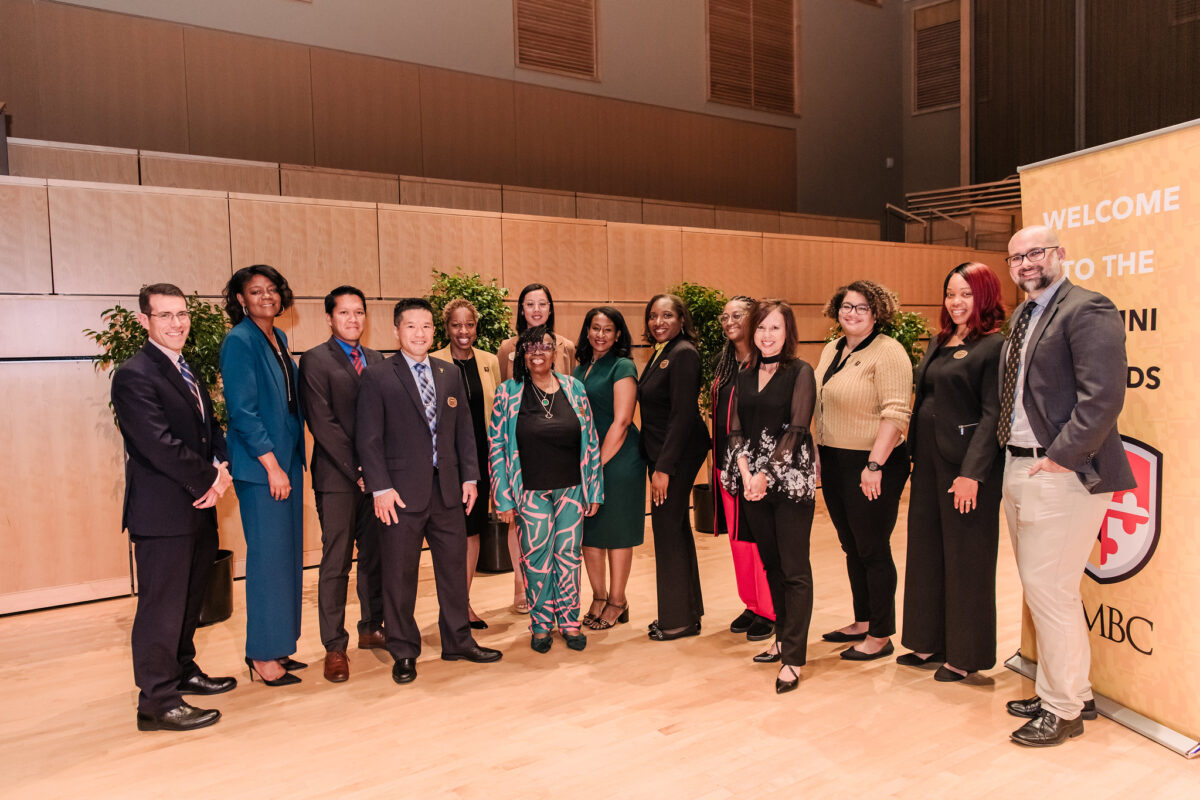
A few board members with President Valerie Sheares Ashby at the 2023 Alumni Awards.
A few board members with President Valerie Sheares Ashby at the 2023 Alumni Awards. Pictured left to right: Damian Doyle ’99, M.S., ’16 , Karen Woodard ’90, Dann Malihom ’10, M.A. ’16, Kevin Yang ’07, Robbin Lee ’13, Anita Turner Wilkins ’79, Leslie Lyles Smith ’91, Monique Cephas ’92, Vanita Murray ‘95, Zozscha Bomhardt ’93, Nancy Chiles Shaffer ‘09, Kisha Watkins Parker ‘00, Bobby Lubaszewski ’10, M.P.S. ’23

Q: What’s the one thing you’d want someone who hasn’t joined the UMBC community to know about the support you find here?

A: As an alum, you will feel supported by all levels of the university, including President Valerie Sheares Ashby—who truly cares about all who are connected to UMBC—the Office of Alumni Engagement, and the many staff members who are dedicated to supporting UMBC alumni.

Q: What drives you to support UMBC?

A: I support the Alumni Endowed Scholarship and the UMBC Athletics Department, women’s basketball program. With my support of the alumni scholarship, I know I am pouring into some of the best and brightest of UMBC’s current students. I also find it important as a women’s basketball alum to give back to the program that helped define me as a student. I learned so much and grew so much as a student and athlete during my four years on the team, and I want to do my part to help the current group of athletes succeed.

* * * * *

UMBC’s greatest strength is its people. When people meet Retrievers and hear about the passion they bring, the relationships they create, the ways they support each other, and the commitment they have to inclusive excellence, they truly get a sense of our community. That’s what “Meet a Retriever” is all about.

Learn more about how UMBC can help you achieve your goals.

Stepping up to the plate to preserve UMBC history

When the Fort McHenry Tunnel opened, drivers could thank Richard “Rock” Soracoe ’71, economics, for helping them see as they drove under the harbor. Soracoe spent 50-plus years in the lighting industry and helped source the original 8,870 8-ft light fixtures that lined the road. In retirement, he’s helping shed a different type of light. Soracoe and other members of the founding four classes at UMBC are putting their collective memories to work to assist in identifying people and events in UMBC’s archival material to help complete our UMBC history. One event—UMBC’s first intercollegiate athletics win—is a story Soracoe loves to tell.

I have the game ball in my hand. The red stitches feel familiar, and the leather sits in my palm like it was made to fit. I’m not on the mound winding up to pitch, however; I’m standing in the basement of the Albin O. Kuhn Library. It’s been 57 years since I last touched this baseball when UMBC won its first intercollegiate victory.

In UMBC's Special Collections, Soracoe holds up the first game-winning baseball with the box score drawn on, a relic of UMBC history
In UMBC’s Special Collections, Soracoe holds up the first game-winning baseball with the box score drawn on.

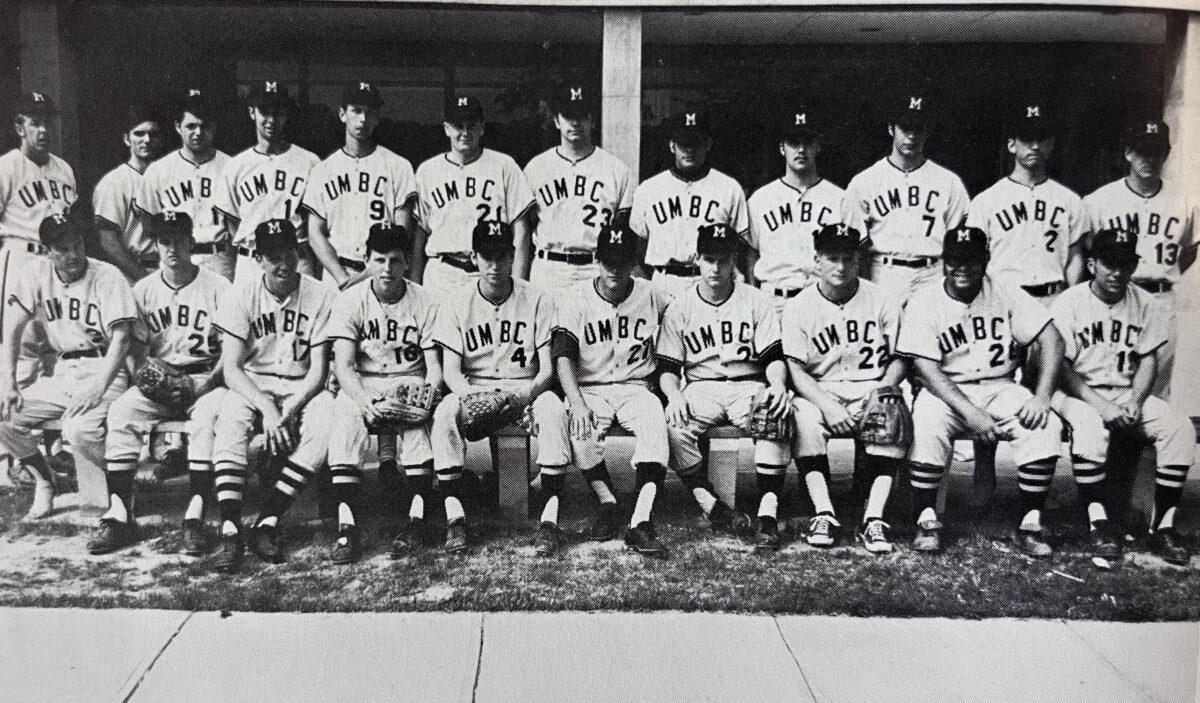
In 1967, UMBC’s inaugural fall sports season, the teams didn’t win a single game (as a member of the UMBC soccer team at the time, I was well aware of this), so it fell to baseball or lacrosse, the spring sports, to come through with the first win. While the details of that ballgame (a 3-2 win) are fuzzy now—all that remains officially is a 28-word write up in the Baltimore Sun archives—the game deserves its place of honor in the relatively short history of our institution. The budding campus newspaper, The Retriever Weekly, didn’t cover the game (although they did cover our loss to the same team the following week) and the box score is immortalized only as pen scratched onto the game ball’s leather.

Despite the lack of thorough archival material, in its own way, the game has certainly gone on to define aspects of my own life. Ken Diehl—the pitcher of the losing team, Catonsville Community College—would go on to transfer to UMBC the next year. We bonded over our shared Retriever spirit and also from our shared memories as roommates on UMBC’s first mini-mester trip to Europe in 1968. But it’s my Founding Four membership that drives me to keep memories like the first intercollegiate win alive.

As graduates of the first four classes at UMBC, we feel excited but also responsible for helping archive and catalog memories that might be unique to us. It’s one of the reasons we wrote This Belongs to Us, and it’s the reason we meet at the library to help the university archivists put appropriate names and metadata on early university yearbooks called Skipjack and other historical materials.

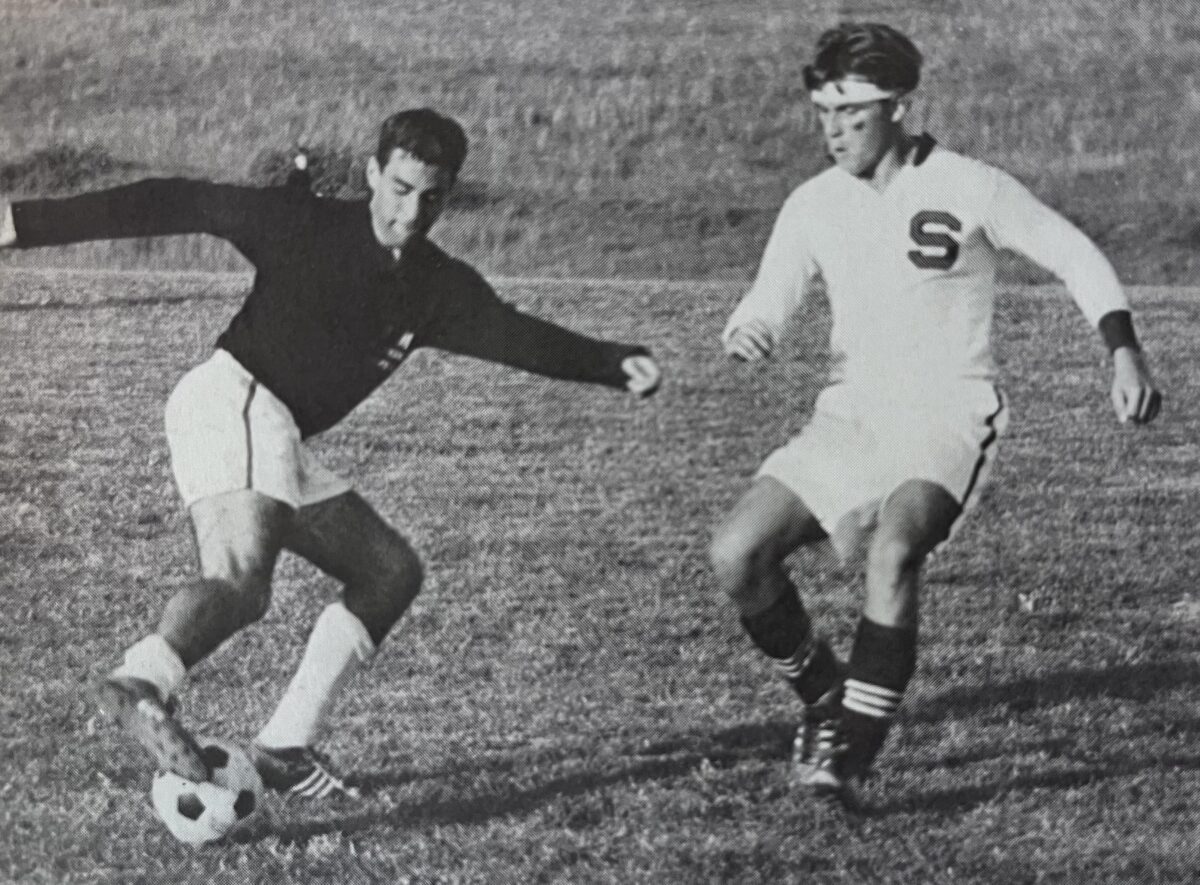
Left, the 1969 baseball team pictured in the 1969 university yearbook, Skipjack. Right, Soracoe in the black jersey also played on UMBC’s men’s soccer team.

When we were students here—walking around on plywood sidewalks on top of muddy construction sites—we weren’t thinking about creating the history of UMBC. We referred to the college as “high school plus one.” So our yearbooks rarely include captions or names and it’s up to us now to identify those people so that they’re not lost to history.

Some things have been lost to history. Louie Sowers [’70, American studies], a fellow classmate and student-athlete, stood up for Retriever women to have equal representation in university sports well before Title IX made it mandatory. She, along with Athletic Director Dick Watts, formed the women’s field hockey, basketball, and volleyball teams for the 1967 – 1968 academic year. Unfortunately, those records have been lost to time, so on paper, officially, women’s varsity sports only started in 1973.

an older man in a black athletic shirt holds a copy of the book This Belongs to Us
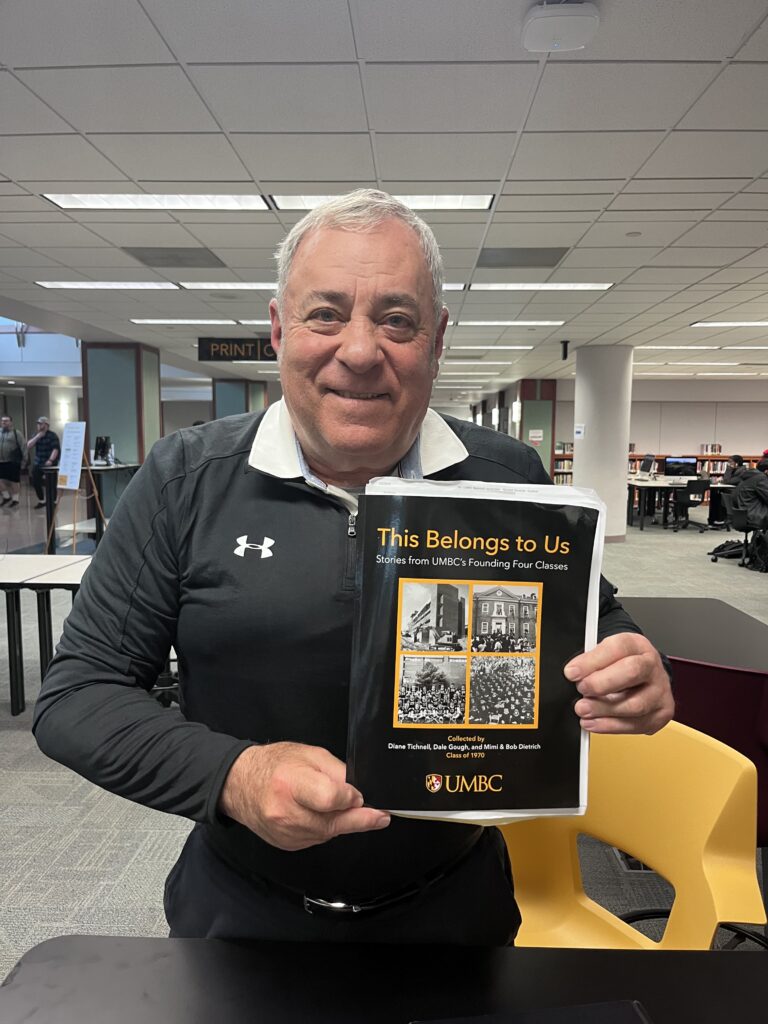
Soracoe holds a copy of This Belongs to Us—the Founding Four’s book about UMBC’s early days.

I reached out to some teammates to see if they could help me fill in the missing blanks of that game in April 1967. We played at Banneker Field in Catonsville (referred to as the “loser’s field” in the Sun write up) because UMBC did not have its own field yet. It was a low-scoring game; CCC got the first two runs in the game in the bottom of the 7th inning. The top of the 8th would be our key to victory. After one runner already came in, my teammate Bill Rust [’71, history] remembers players on second and third. He was at bat, and lined our then-opponent Ken’s pitch into left center field for what would become the game-winning RBIs.

What I remember is pitching the whole game (90 pitches according to Bill’s memory), and being so grateful when Ken [’70, psychology] joined our team the next year as an additional pitcher. And over the years, I’ve grown comfortable with the idea that the individual details don’t matter as much as the whole picture. Stepping back to see the shape of my career, my marriage, and my friends, I can see how they’ve all been defined by my UMBC experience. 

UMBC was as welcoming as you wanted it to be, and still is today. My professors taught me the power of critical thinking and my coaches taught me the power of mental and physical discipline—which helped me in my job and my 36-year career as a high school and college soccer referee. I am very proud to say that I am a UMBC graduate and happy to see the tremendous achievement the university has attained from humble beginnings to worldwide status.

Richard “Rock” Soracoe ’71, economics

China turns to private hackers as it cracks down on online activists on Tiananmen Square anniversary

Written by Christopher K. Tong, associate professor of Asian studies at UMBC

Every year ahead of the June 4 commemoration of the Tiananmen Square massacre, the Chinese government tightens online censorship to suppress domestic discussion of the event.

Critics, dissidents and international groups anticipate an uptick in cyber activity ranging from emails with malicious links to network attacks in the days and weeks leading up to the anniversary.

Much of this cyber activity by Beijing is done covertly. But a recent restructuring of China’s cyber force and a document leak exposing the activities of Chinese tech firm i-Soon have shed some light on how Beijing goes about the business of hacking.

As a China expert and open-source researcher, I believe the latest revelations draw the curtain back on a contractor ecosystem in which government officials and commercial operators are increasingly working together. In short, Beijing is outsourcing its cyber operations to a patchwork army of private-sector hackers who offer their services out of a mix of nationalism and profit.

From censorship to cyberattacks

Chinese authorities restrict the flow of information online by banning search terms, scanning social media for subversive messages and blocking access to foreign media and applications that may host censored content. Control of online activity is particularly stringent around the anniversary of the protests at Tiananmen Square in 1989 that ended with a bloody crackdown on demonstrators by troops on June 4 of that year.

Since then pro-democracy activists have sought to commemorate the massacre on its anniversary – and Beijing has sought to counter mention of the crackdown. Chinese internet users note more restrictions and censorship in the run-up to the anniversary, with more words being banned and even certain emojis – like candles, denoting vigils – disappearing.

In 2020, Chinese authorities ordered Zoom, an American tech firm with a development team in China, to suspend the accounts of U.S.-based activists commemorating June 4 and to cancel online vigils hosted on the platform. Zoom complied, stating that it was following local laws.

Beyond censorship, cyberattacks on dissident groups and Chinese-language media in the diaspora have also occurred on or around the anniversary.

On June 4, 2022, Media Today, a Chinese-language media group in Australia, experienced an unattributed cyberattack against its user accounts. And earlier this year, the U.S. Department of Justice charged seven China-based hackers with sending malicious tracking emails to members of the Inter-Parliamentary Alliance on China, a group set up in 2020 on the anniversary of the Tiananmen Square massacre.

China’s cyber force

The increasing sophistication of online attacks on dissident and international groups comes as China has been restructuring the agencies responsible for its cyber operations.

Today, much of China’s malicious cyber activities are carried out by the Ministry of State Security, or MSS, the country’s main intelligence agency and secret police. But prior to the MSS expanding into this role, the People’s Liberation Army, or PLA, was responsible for the earliest cyberattacks attributed to the Chinese government. In 2015, the PLA dedicated a new service to cyberwarfare and network security, the Strategic Support Force.

But in April 2024, the PLA abruptly announced the Strategic Support Force’s disbandment and the creation of three new forces: the Aerospace Force, the Cyberspace Force and the Information Support Force. They, along with the existing Joint Logistics Support Force, report directly to the Chinese Communist Party.

This restructuring comes at a time of political uncertainty for China’s leadership. In 2023, Defense Minister Li Shangfu was removed just months into his new role, along with Foreign Minister Qin Gang and Li Yuchao, commander of the Rocket Force.

While Beijing has yet to offer details on the military reorganization, its timing appears to send a message. President Xi Jinping personally presided over the inauguration of the Information Support Force, telling members of the force that they must “listen to the party’s orders” and be “absolutely loyal, absolutely pure, absolutely reliable.”

Hackers: Patriots, pirates or profiteers?

The restructuring of China’s cyber forces coincides with a trend that has seen the outsourcing of malicious cyber operations to private sector contractors acting with the state’s explicit or tacit approval.

In February 2024, a document leak exposed an underground network of Chinese cyber contractors hacking for profit.

Cyber experts have long suspected that hackers may collaborate with the Chinese government, but the leak shows how operators working for Chinese firm i-Soon sold services and products to Chinese government entities and state-sponsored threat groups. The company was founded in 2010 by Wu Haibo, a former member of the Green Army, often described as China’s earliest hacker community.

The Green Army was formed in 1997 for hackers to learn and exchange hacking techniques. By 1998, patriotic Chinese hackers began organizing cyberattacks. For example, when riots in Indonesia triggered by the Asian financial crisis gave rise to racial violence against Chinese Indonesians, Chinese hackers targeted Indonesian government websites.

In 1999, Chinese hackers vandalized U.S. government websites following NATO’s accidental bombing of the Chinese embassy in Belgrade. The term “honker,” meaning “red hacker” in Chinese, emerged around this time to designate Chinese hackers motivated by ideology and nationalism.

Yet, Chinese hackers have had an uneasy relationship with the authorities. While they offer cyber skills as well as plausible deniability for the Chinese government, they tend to muddle Beijing’s foreign policy when their actions go too far and draw criticism.

They are also prone to commit cybercrimes such as fraud and theft of intellectual property alongside state-sponsored espionage.

The Chinese government and prominent “patriotic” hackers have previously tried to rein in the community and promote legitimate work such as cybersecurity.

The i-Soon leak, however, documents how Chinese state-sponsored contractors engage in bribery and other illicit activities.

Exploiting security flaws

China’s cyber capabilities have grown through the control and exploitation of cyber professionals, state-sponsored or otherwise. But it’s a complicated relationship.

To phase out the criminal behavior of hackers, Beijing has developed a pipeline to train its cyber workforce. And in part to keep them from sharing expertise with foreigners, Chinese cyber professionals are generally banned from international hacking competitions.

While cybersecurity is improved when security professionals share newly discovered security flaws, Chinese regulations limit the flow of such information. By law, software vulnerabilities discovered in China must be immediately reported to the Chinese government. Experts believe the Ministry of State Security subsequently exploits this data to develop cyber offensive capabilities.

Still, the i-Soon leak points to corruption in at least one corner of China’s growing network of commercial hacking. Internal correspondence shows contractors bribing government officials with money, alcohol and other favors. Messages also show contractors failing to generate sales, delivering subpar work and complaining about their working-class salary.

With local governments in China struggling to pay for basic services in a weak economy, companies such as i-Soon that support Beijing’s cyber operations face not only political but also financial headwinds. Despite Beijing’s intention to implement an online crackdown every year on June 4, the cyber forces it employs to do so face their own issues that invite scrutiny and rectification by the Chinese Communist Party.


This article is republished from The Conversation under a Creative Commons license. Read the original article and see more than 250 UMBC articles available in The Conversation.
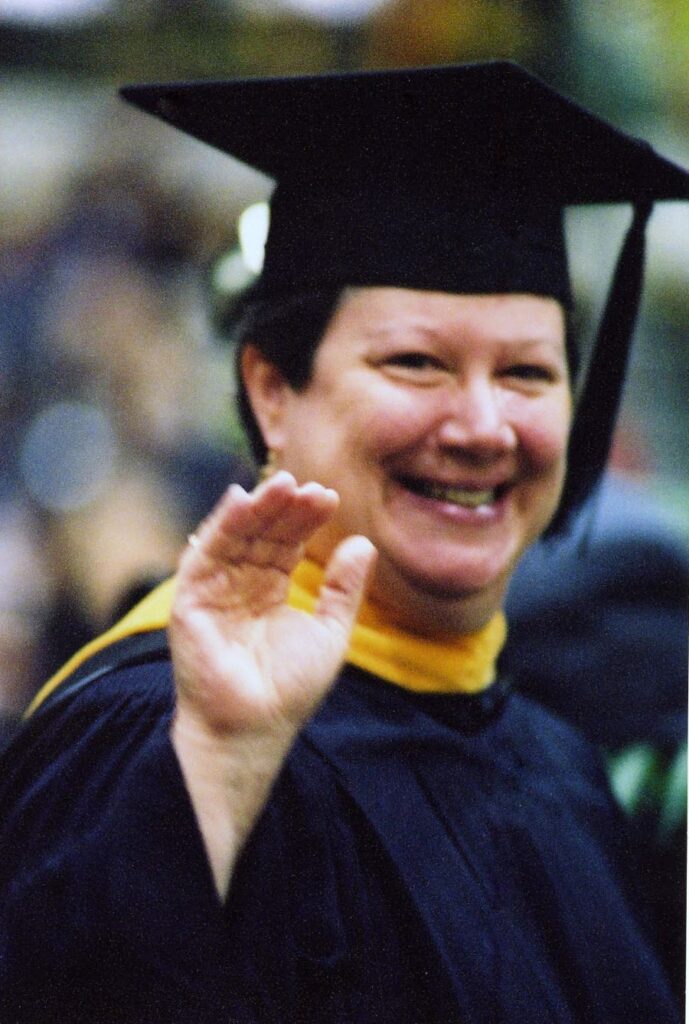
Meet a Retriever—Michelle Jabes Corpora ‘03, young adult author and editor

Meet Michelle Jabes Corpora ’03, English and theatre. Michelle is the author of nine novels, an editor for commercial fiction, and an avid student of Brazilian Jiu-Jitsu. She came to UMBC as a Linehan Artist Scholar in 1999 to study theatre before deciding to double major in English. Michelle has found that her background in theatre has been a helpful tool in her writing. Take it away, Michelle!

Q: What’s one essential thing you’d want another Retriever to know about you?

A: I am a 2003 alumna, a double major in English and theatre. Today, I am the author of nine novels for young readers, and have been an editor of commercial fiction for 17 years for both big publishing companies in New York and a book packaging company based out of London.

My latest novel, Holly Horror: The Longest Night, is scheduled to release on August 13, 2024. It is a young adult horror story and the terrifying sequel to Holly Horror.

The first book in my newest series, a trilogy that was pitched as “Ancient Egyptian Game of Thrones for YA readers,” is slated to be published by Sourcebooks Fire in Summer 2025. Stay tuned!

​Q: What is your WHY? What brought you to UMBC?

A: Initially, I came to UMBC as a Linehan Artist Scholar studying theatre, but once I began my years on campus, I realized I wanted to supplement my studies with a major in English. The experiences I had in both academic departments went on to inform my choice of career in book publishing, and the way that I write novels. Learning about drama helped significantly with my approach to character, plot, and pacing.

Pictured right: Michelle as ‘Cleo’ AKA Fraulein Kost in a 2001 UMBC Theatre production of Cabaret.

Michelle Jabes Corpora in a 2001 UMBC Theatre Production of Cabaret as Cleopatra AKA Fraulein Kost.

Q: Tell us more about your career. What do you like most about writing and editing?

A: I am an author as well as a senior commissioning editor at Working Partners, Ltd. Fiction has always been my passion, so I love working creatively every day and writing books for young readers. But it’s been a long road to get where I am today!

After receiving my bachelor’s degree in English and theatre from UMBC, I went on to earn a master’s degree in Children’s Literature from Hollins University. After that, I did some weird stuff. I was a wedding singer for a while. I also worked with animals in a vet’s office and at a wildlife rehabilitation center. Eventually, I moved to New York and worked as an assistant editor at Greenwillow Books before getting my job with Working Partners. All of these serendipitous events eventually led me to the #AuthorLife.

Author photo for Michelle Jabes Corpora
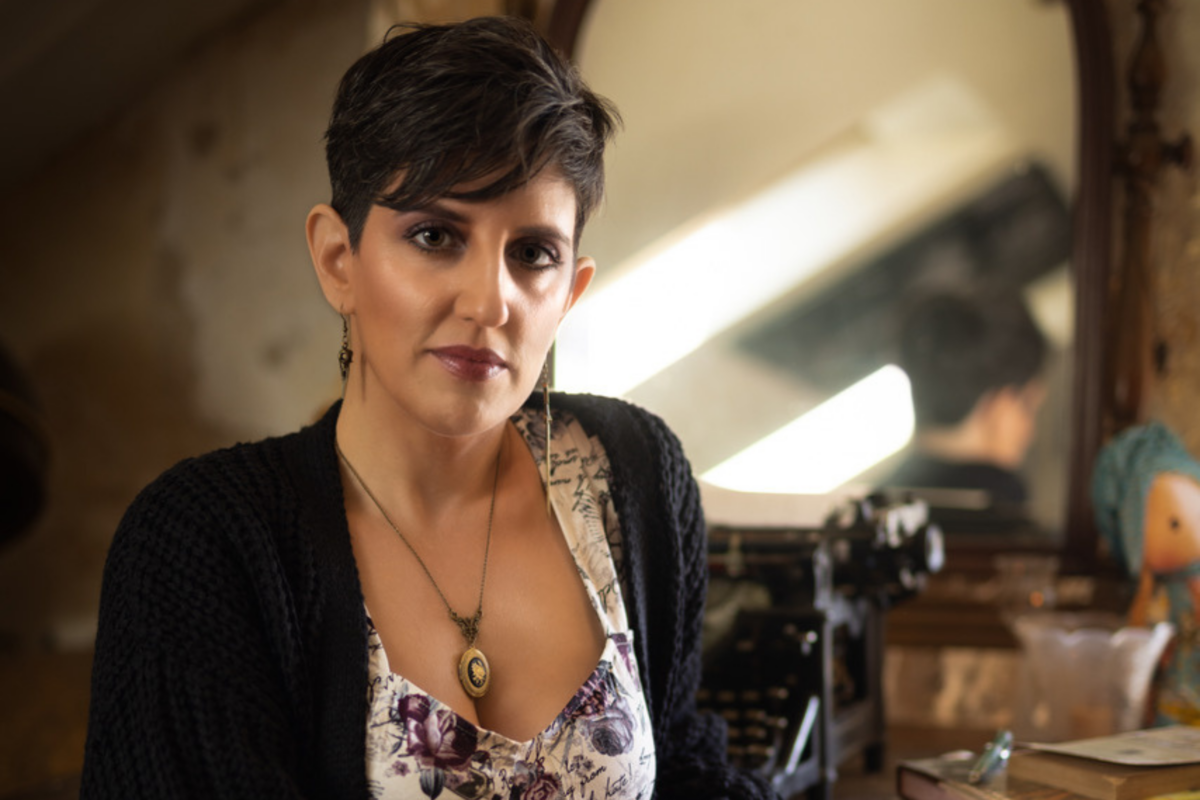
An author photo of Michelle Jabes Corpora (Picturesque Photography).

​Before I wrote books with my name on the cover, I was a ghostwriter for a world-famous middle-grade mystery series. I wrote my first five novels in that series, and enjoyed every minute of it. It was an honor to be a part of a legacy that is cherished by so many. Looking back, all those detours were exactly what I needed. Not only do different experiences help you become a more well-rounded person and writer, they allowed me both to meet people who would become so important in my career, and teach me—through learning to be an editor—what really makes a good book. It also taught me to embrace my “chameleon” self—I’ve always loved many different genres of fiction, and felt that it was somehow a personal failing that I could never choose just one. Today, I’m happy to say that I’ve written mysteries, historical fiction, horror, and fantasy, and I see no reason to stop now.

UMBC is a place that allows people to find their way in the world, even if your journey might take you off the beaten path.

Michelle Jabes Corpora '03

Q: What do you like to do when you’re not writing?

A. I live in Frederick, Maryland, with my dear husband, my two wonderful daughters, two guinea pigs named Fireball and Olive, and a rescue mutt named Charlie. When I’m not writing and editing books, you can usually find me at Crazy 88 MMA, training in the art of Brazilian Jiu-Jitsu. Competing at tournaments and being promoted to blue belt in BJJ were some of the proudest moments of my life. Some people may see videos of me rolling around on the floor and fighting my friends and think that I’m crazy. I can neither confirm nor deny the validity of this statement.

Q: What’s the one thing you’d want someone who hasn’t joined the UMBC community to know about the support you find here?

A: UMBC is a tight-knit community. Even though it’s a public state university, it has a private college feel with big university resources. It’s a place that allows people to find their way in the world, even if your journey might take you off the beaten path.

Q: What’s your favorite part of being a part of Retriever Nation?

A: I meet so many other UMBC alumni out in the world, and we always have great stories to tell about our time on campus. It’s a wonderful shared experience that always feels personal.

* * * * *

UMBC’s greatest strength is its people. When people meet Retrievers and hear about the passion they bring, the relationships they create, the ways they support each other, and the commitment they have to inclusive excellence, they truly get a sense of our community. That’s what “Meet a Retriever” is all about.

Learn more about how UMBC can help you achieve your goals.

Rotting sargassum is choking the Caribbean’s white sand beaches, fueling an economic and public health crisis

Written by Farah Nibbs, assistant professor of emergency and disaster health systems at UMBC

The Caribbean’s sandy beaches, clear turquoise water and vibrant coral reefs filled with an amazing variety of sea creatures have long been the pride of the islands.

The big three – sun, sea and sand – have made this tropical paradise the most tourism-reliant region in the world.

But now, all of that is under threat. The explosive growth of a type of seaweed called sargassum is wreaking havoc on economies, coastal environments and human health across the islands.

I study the intersection of critical infrastructure and disasters, particularly in the Caribbean. The sargassum invasion has worsened since it exploded in the region in 2011. Forecasts and the seaweed already washing up suggest that 2024 will be another alarming year.

A map shows sargassum around many of the eastern Caribbean islands.
Sargassum levels were already high around many eastern Caribbean islands in late May 2024. Forecasters expect increasing sargassum washing up in June on many of the islands and in the Gulf of Mexico. NOAA and University of South Florida

The Sargasso Sea

The Sargasso Sea is often referred to as a golden, floating rainforest for its vast floating sargassum blooms and the wide variety of sea life that it supports.

It is the only sea in the world with no land borders. Instead, it is bounded by four Atlantic Ocean currents: the North Atlantic current, the Gulf Stream, the North Atlantic Equatorial Current and the Canary Current.

A map shows the Sargasso sea in the middle of the Atlantic Ocean, west of Florida and Georgia, and sargassum belt through the Caribbean
The Great Atlantic sargassum belt and Sargasso Sea. JL López Miranda, et al., via Wikimedia, CC BY

Without human interference, and under normal conditions, sargassum is a good thing. It has existed in the Caribbean for centuries, providing habitat and food for ocean wildlife, including threatened and endangered species such as the porbeagle shark and the anguillid eel.

Conditions over the past decade around the Caribbean Sea, North Atlantic and Gulf of Mexico, however, have been anything but normal.

Since 2011, vast mats of sargassum seaweed have been washing up on Caribbean islands. On shore, they pile up into a dead and stinky mass.

An illustration showing sargassum washing ashore and some of the problems it causes, including health effects, inaccessible beaches and clogged water intakes.
(1) Sargassum rafts from a vast bloom known as the sargassum belt are transported to shore by ocean currents. (2) Free-floating sargassum provides food and habitat. (3) But on shore, it rots and clogs water intakes and beaches. NOAA

These sargassum events have been occurring more frequently and are lasting longer, and the amount of algae is increasing.

The situation has gotten so bad that NOAA created a weekly sargassum inundation risk index in collaboration with the University of South Florida. They have predicted that 2024 will be another terrible year for the Caribbean.

Pollution fuels a hazardous algae bloom

So, what is causing the explosive growth of this algae? Studies have pointed to pollution that the Caribbean region itself has done little to contribute to.

Humans are altering the nutrient cycle by releasing fertilizer runoff and industrial wastewater into rivers, which sends phosphates and nitrates down river systems and out into the oceans. These are key nutrients for plant growth.

An underwater photo looking up at a diver with seaweed at the surface above her.
A diver swims below a sargassum mat. Dan Eidsmoe via Flickr, CC BY

A rapid increase in ranching, logging and agriculture along the Amazon River in South America is one source, sending huge amounts of nutrients washing into the river, which terminates in the Caribbean Sea.

Another culprit is the Mississippi River, which carries nutrient-rich effluent from farms and industries into the Gulf of Mexico.

The Congo River in Africa also carries pollutants into the ocean from deforestation, and burning forests can deliver nutrients, such as nitrogen, phosphorus and iron, that further fuel algae growth.

These pollutants are swept up by ocean currents. An increase in phosphate and nitrogen water pollution, combined with warming waters, is believed to have supercharged seaweed normally carried by currents from the Sargasso Sea and created the sargassum belt, which persists across the Caribbean today.

Coasts, fishing industries can’t escape the harm

In small quantities, sargassum plays a role in beach nourishment. But when it inundates coastlines, the rotting seaweed smothers beaches and reduces the amount of oxygen in the water, killing fish and harming fragile coral reefs.

Boats sit among seaweed in an harbor. The beach between the photographer and the central boat in the image is covered with seaweed.
Sargassum can get into boat propellers and make it hard to approach shore. This was Puerto Rico in 2015. AP Photo/Ricardo Arduengo

The massive influx of sargassum has also disrupted fishing operations. Fishers find themselves struggling to maintain their livelihoods as sargassum is diminishing their catch. The seaweed has damaged fishing gear and boat engines and blocked access to harbors and mooring sites.

In addition, sargassum can concentrate arsenic, which poses the risk of contaminating fish and harming people who may eat them.

Sargassum on land is a public health threat

Sargassum rots quickly when stranded. Within 48 hours, it begins to degrade, releasing hydrogen sulphide and ammonia. At certain concentrations, these gases become not only toxic to the marine environment but also to human health.

There have been a growing number of reported cases of neurological, digestive and respiratory disorders associated with the noxious gases being emitted. Guadeloupe’s air-quality monitoring institute Gwad’Air has issued red alerts in recent years because of dangerous levels of hydrogen sulfide gas being emitted from rotting sargassum. https://www.youtube.com/embed/CH7MpiGCdgU?wmode=transparent&start=0 The growing sargassum problem.

The most common symptoms experienced by people living within close proximity to sargassum are headache, dizziness, abdominal pain, cough, rashes, eye disorders and effects on mood. Sargassum odors have led to an increase in nausea and headaches among school-age children. Pregnant women in the region are also being affected, with increasing reported cases of preeclampsia.

Sargassum has also clogged water intake tubes for desalination plants and power plants that use seawater for cooling, causing these units to shut down.

In the British Virgin Islands, sargassum sucked into the main desalination plant in 2023 led to smelly tap water and sporadic water shut-offs. In Virgin Gorda and St. Croix, people have reported smells, a burning sensation and skin rashes from their tap water.

Sargassum blooms also damage economies

Millions of tons of dead and rotting seaweed washing ashore can have widespread economic consequences.

The odor of the rotting seaweed attracts insects, which has been a repellent for some tourists. Cleaning the beaches and disposing of tons of debris, typically in landfills, cost the Caribbean about US$120 million in 2018.

That doesn’t include the economic losses for hotels, fisheries and other businesses.

Small businesses such as Jet Ski rentals that depend on the coast for revenue generation have at times been forced to shut down because of the odorous gases released from the decaying mass.

Is there a solution?

Research and entrepreneurial initiatives are underway to try to deal with the seaweed. Companies have tried turning it into fertilizer, cattle feed and concrete, but so far only at small scale. https://www.youtube.com/embed/5QoGoAWbvEA?wmode=transparent&start=0 Sargassum cleanup in Martinique in 2023.

Governments have made little progress beyond agreeing to some fisheries management rules to protect vulnerable species. A few countries have draft management strategies, but action is typically focused on protecting the tourism industry, with little attention given to fisherfolk and local communities.

The sargassum invasion is fueled by global pollution, and fixing that requires a global response.

The United Nations Environment Program has called for increased international cooperation to understand the causes and impact of sargassum invasions and to find ways to help the countries affected. But so far, the international community has done little to address the pollution at the root of the problem.


This article is republished from The Conversation under a Creative Commons license. Read the original article and see more than 250 UMBC articles available in The Conversation.
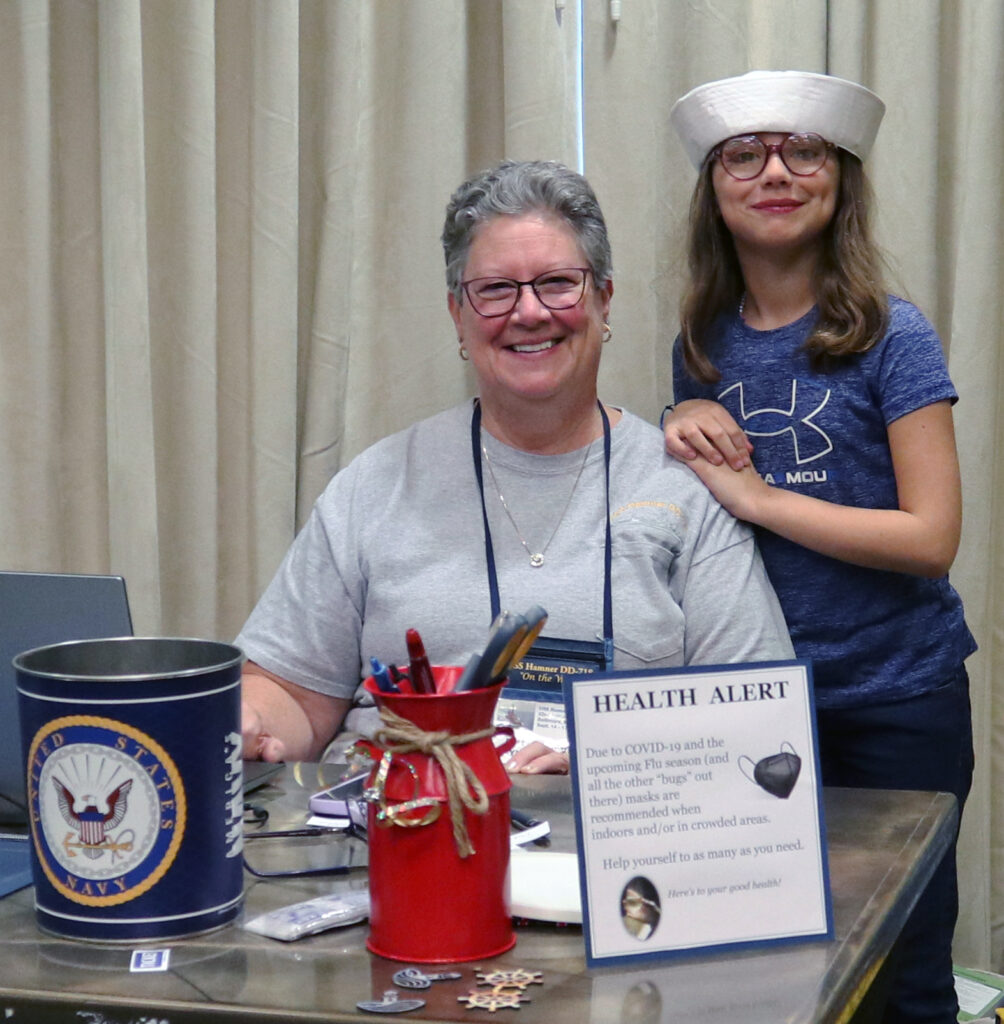
The Senior Class

Retrievers for lifethat’s UMBC’s promise. And a group of residents at Charlestown’s senior living community are keeping their end of the bargain. Located two miles away from UMBC’s Catonsville campus, 60 or so retired and current faculty, staff, alumni, and friends at Charlestown are enjoying the ongoing cultural and educational perks of the two institutions. Several of these “Friends of UMBC” are laying the groundwork for continued exchange and connection—jazz concerts, classes about gender and sexuality, high-profile speakers—leaving a legacy for future generations to follow.

Gold flag graphic reading "retrievers for life"
Art Johnson, professor emeritus, enjoys a jazz concert at Charlestown.

Around the café tables, heads are bobbing in rhythm tonight.

A duo of UMBC jazz students—Henry Smith ’24, on alto saxophone, and Leo Hickman ’27, on electric mandolin—are deep into their own takes on jazz standards. “Caravan,” “Misty,” and “There is No Greater Love” pour jauntily from their instruments.
 
The seniors here at Charlestown Senior Living know those tunes. Every song the UMBC jazz duo played was composed long before the student musicians were born, but just in the sweet spot for the audience. In the café where many have just eaten their crab soup and burgers for dinner, more than 100 Charlestown residents, including at least six who have tight connections to UMBC, clapped for the efforts of the young jazz players. 

After the two finished playing “All of Me,” the crowd erupted in applause. 

“That was ‘All of Me,’” Smith said into the microphone. “I feel like lots of you know that one. We’re having a great time playing for you. This is super fun!”

By 8 p.m. the crowd was stuffing dollar bills and fivers into the musicians’ tip jar by the mic and in paper bags held by volunteers at each exit. Then the seniors headed back to their apartments at the end of long corridors and in different buildings, very much like college dorms for older folks. 

Strengthening Connections

A dedicated group of nearly 60 retired and current faculty and staff, alumni, or relatives have formed to promote connections between UMBC and Charlestown, a sprawling senior community with 2,000 residents. Thanks to their efforts, UMBC professors are teaching classes at the senior living community, Charlestown residents are traveling to UMBC for events, and  helping the senior community’s restaurant staff with scholarship applications, funded by Charlestown residents, to UMBC and other Maryland colleges. 

“That’s what I’m trying to do here, make connections,” said Art Johnson, provost emeritus who retired in 2019 from his position as political science professor and director of the Sondheim Scholars program. He moved to Charlestown in 2022 and since then, like a first-year student in search of college social groups, he has been indefatigably recruiting residents to join the Friends of UMBC at Charlestown.

“It helps maintain my connection to UMBC and lets me brag a little bit about UMBC,” Johnson said, laughing. “I meet people I wouldn’t have met otherwise. As provost, I used to promote UMBC all over. This is just an extension of that.”

Johnson met Lucy McKean on the bocce court, learned one of her kids went to UMBC, and reeled her into the group. 

“Any connection will do,” Johnson said. “That’s how you build a long mailing list.”

Quote reading, “It helps maintain my connection and lets me brag a little bit about UMBC. I meet people I wouldn’t have met otherwise. As provost, I used to promote UMBC all over. This is just an extension of that.” - Art Johnson

Sitting at a dinner table on the Charlestown campus, McKean and Johnson laughed together. Thanks to the Friends of UMBC group, she’s now attending jazz concerts, which she never thought she would do.

The idea for a formal-ish group sprang from a walk that Johnson and Sam Lomonaco, computer science and electrical engineering professor, took around Charlestown in the fall of 2022. They wanted to create a web of connections between UMBC and Charlestown. 

Lomonaco, who has lived at Charlestown for three years, still teaches at UMBC. His commute is nicely short, he said, and having a partnership between UMBC and Charlestown offers “a good chance to do things together. I meet a lot of interesting people I would not have met otherwise. And,” he said with a grin, “I’ve gotten interested in jazz.”

Johnson and Lomonaco started small, with a social for UMBC-connected folks at Charlestown. They’ve grown to arrange trips to programs by UMBC’s arts and culture departments, as well as the Wisdom Institute (the association for retired UMBC faculty and staff), and those monthly jazz concerts. As well, Johnson and others publish a newsletter and are recruiting UMBC faculty to teach courses at Charlestown through ELLIC (Elderhostel’s Lifelong Learning Institute at Charlestown), including classes on galaxies, genes, and gender. 

“Art has been a binder, keeping us together,” said Bernice De Bels ’76, English, the first Black honors graduate at UMBC, who later worked in the foreign language department and now lives at Charlestown. “With UMBC we should explore what we have to offer them and what they have to offer us.”

Keeping Memory Alive

Diane Lee hugs Pamela Morgan, the former director of the Office of Field Experiences and Clinical Practice in UMBC’s education department and a Wisdom Institute Board Member.

Of the many courses offered at Charlestown’s ELLIC program, nine are taught by UMBC faculty. That’s not a coincidence. Though the connections between Charlestown and UMBC have been sporadic, the institutions do have history. 

John Erickson, who founded Erickson Living, which owns Charlestown, has long worked with UMBC to promote the study of getting older. Through joint efforts of Erickson and then-president Freeman Hrabowski, in 2004 the state funded the Erickson School of Aging Studies at UMBC, and Erickson Living donated $5 million for the school’s development.

Jeff Watson, who is on the faculty for the Erickson School of Aging Studies and serves as Erickson’s director of operations, also researches geriatric cognition.

“The literature and growing academic consensus is that whatever is good for the heart is good for the lungs is good for the brain,” Watson said. “Thus a healthy lifestyle, reducing inflammation and injury, while increasing physical and cognitive strength, and engaging in life, builds better brain health.”

Erickson researchers have published a study in the American Journal of Geriatric Psychiatry testing UCLA Longevity Center researchers’ findings about memory fitness on two of Erickson’s campuses, Riderwood and Oak Crest. Watson said they found that “eating wisely, exercising daily, learning consistently, relaxing meaningfully, and connecting socially” is optimal for a healthy lifestyle for seniors.  

The Friends of UMBC are all about learning and socializing while they’re matchmaking between UMBC and Charlestown. For years, Johnson said, UMBC talked about collaborating with Charlestown, but it never really manifested to the extent they envisioned.

“One of our long-term goals is to try to bring the two institutions closer together,” Johnson said. “We could cooperate on issues: sustainability, local transportation, good health care…. We talked about it years ago when I was at UMBC, but it never happened.”

Same Goals, From Different Directions

UMBC’s Wisdom Institute is trying to accomplish the same community-building as the UMBC group at the senior village. But now, they’re working together.

Johnson, who serves on the Wisdom Institute’s board, is the hub, said Diane Lee, director of the UMBC organization for retirees. 

“He brilliantly brought people together,” Lee said. “What a wonderful way to reconnect with these folks.” 

The Wisdom Institute is printing extra copies of its newsletters for distribution at Charlestown, and for a recent event, the institute rented out the Charlestown bus to bring UMBC-curious residents to a lunch and keynote by WJZ-TV anchor Denise Koch. The institute plans to invite Charlestown residents to other events, including observatory tours in UMBC’s Physics Building, monthly lunches, discussions, and concerts. 

“We really want to forge this tie,” Lee said. “We like the idea of reciprocity.”

Quote reading, "We’re trying to capture the spirit, to continue that sense of self and community and the kind of work we did together. UMBC was not just a campus. We talked about one another as family." — Diane Lee

For 30 years, Lee taught at UMBC in the education department and worked in the administration. “I came as a visiting assistant professor with no intention of staying. But it was an exciting place and an exciting time to be there.”

She, like many of the longtime UMBC staff and faculty who now live at Charlestown, helped build UMBC from the ground up into the institution it is today. 

“It’s a wonderful place to be,” Lee said. The work was demanding but energizing, she said. “And people cared. We’re trying to capture the spirit, to continue that sense of self and community and the kind of work we did together. UMBC was not just a campus. We talked about one another as family.”

Dream Students

Donna Martin, Kate Drabinski, and students Marcus Ross, Sage Zoz, and August Wichman
pose together after a class about gender and sexuality through the Enjoy Lifelong Learning in
Charlestown program. Photo courtesy of Drabinski.
Donna Martin, Kate Drabinski, and students Marcus Ross, Sage Zoz, and August Wichman pose together after a class about gender and sexuality through the Enjoy Lifelong Learning in Charlestown program. Photo courtesy of Drabinski.

Kate Drabinski, principal lecturer in gender and women’s and sexuality studies, has visited Charlestown eight times to teach over three years. She jokes that if she teaches two more classes, she’ll earn a punch card for a free meal at Charlestown’s restaurant.

“It’s been some of the most valuable teaching I’ve done,” Drabinski said of the senior students learning through the ELLIC program, Enjoy Lifelong Learning in Charlestown. “They are rapt, they take notes, they ask questions. It’s a dream setup.”

On a spring Tuesday, Drabinski brought UMBC students who identify as gay, transgender, and nonbinary to the senior living community to tell their coming out stories, along with their struggles and joys around gender and sexuality. 

“It’s been really moving for us, and also for the residents, to make these connections,” Drabinski said.

One student, who performs in drag shows, grew up on the same block as one of the residents, Drabinski said. The resident stood up and said she was proud of the student, Drabinski said, “for being brave and sharing her story.”

At least one of the Charlestown residents has a nonbinary grandchild, Drabinski said. “They probably feel uncomfortable asking their grandchild these questions,” she continued, but were curious and asked many questions of the students without the fear of rejection from a family member.

And she asked the students a question in front of the residents: “What do you wish your grandparents had said to you when you told them your coming out story? They said, ‘I want you to be part of my life—I trust you and this is a gift I’m giving.’”

They also discussed the generational misunderstandings, Drabinski said, “hot-button issues.” One resident asked why drag queens were reading stories at libraries. Students were worried about the question, but Drabinski said she maneuvered the fear in the room and, ultimately, they had a “fantastic discussion, the kind of discussion you only have when you have dedicated intergenerational space.”

Drabinski said her students came away from the interaction enriched. “Just because people are old doesn’t mean they are hostile. It was a huge benefit to students to get to practice telling their stories, to build confidence, and to learn from the questions the seniors are asking. It was a really positive experience.”

Familiar Tunes in a New Way

Now that he’s retired, Johnson has time to fulfill the goal of bringing UMBC and Charlestown closer. 

One evening before the jazz concert, Johnson pulled together members of his group of UMBC folks to chat in the atrium of one of Charlestown’s buildings. 

Pat Bettridge, who came to UMBC in 1966 and did graduate work in English, was married to English professor William Bettridge, and remembers UMBC in the 1960s as “a hole in the ground.” Bettridge, who has lived at Charlestown for 11 years, helped bring UMBC artists, dancers and theater productions to the senior living community over the years. 

“It’s a good idea to get us together, to continue what we started 10 years ago,” Bettridge said.

Sebastian Petix, organizer of Charlestown’s jazz club and a friend of the Friends of UMBC, has worked with Matt Belzer, senior lecturer in jazz studies at UMBC, to bring the jazz groups to Charlestown. Petix, who played piano and trumpet and organized concert series before retirement, formed the Charlestown Jazz Club, and quickly signed onto the idea of bringing Retriever musicians onto Charlestown’s campus. 

Art Johnson, Diane Lee, and Denise Koch chat with community members at the Wisdom Institute’s Signature Event in April 2024

“The audiences have really loved them,” Petix said. His jazz club, including some UMBC members, are planning a trip to see the UMBC semester’s final jazz recitals.

Valerie Woolston, whose husband Charles started as UMBC’s admissions director in 1968, helps edit the Friends of UMBC newsletter. She’s attended every jazz concert.

“They’re terrific,” Woolston said, nodding at the duo warming up in front of the crowd. “It’s really great to see how young people develop. They write their own music,” she said, almost as proud as a grandparent.

“I’m really pulled to UMBC,” said Woolston. “I’m really proud of it.”
Then she settled down with friends to watch the students play old, familiar tunes in a new way. 

“I’m really pulled to UMBC,” said Woolston. “I’m really proud of it.”

Then she settled down with friends to watch the students play old, familiar tunes in a new way.

Meet a Retriever—Merryll Kallungal ’24, translational life science technology graduate

Meet Merryll Kallungal, a brand new graduate of the translational life science technology program at UMBC at the Universities at Shady Grove. In this program, students like Merryll learn hands-on skills through biotechnology labs and other applied experiences. We’re excited to hear all about her experience. Take it away, Merryll!

Q: What’s one essential thing you’d want another Retriever to know about you?

A: I majored in translational life science technology (TLST). I mainly attended the USG campus. I was part of the Peer Advisory Team. Outside of classes, I am interested in dancing, reading, and enjoying time with family.

Q: What’s the one thing you’d want someone who hasn’t joined the UMBC community to know about the support you find here?

A: All of the professors have been so wonderful in helping me with any questions i had, whether it be about classes or internship. Your advisors will always be helpful in figuring out what steps you have to take when it comes to registering for classes and also when looking for internships.

four women from UMBC's translational life sciences program in graduation robes pose together outside
Kallungal (second from right) and classmates at UMBC-Shady Grove celebrate their recent graduation. Photo by Godwin Aizenofe ’24, translational life science technology.

Q: What did you love most about the translational life sciences program at UMBC-Shady Grove?

A: What I love about the TLST program is how close the students are with each other since we are smaller major. Also, how I was able to have that one-on-one relationship with my advisor who is also my professor.

Q: What brought you to UMBC in the first place?

A: I came to UMBC at USG because the program that I was interested was only offered at USG. Plus at USG, the smaller classes allowed me to interact with my professor and get any help I need.

Q: Were you a student leader? What did you like most about it? What advice would you give incoming students?

A: Aside from being the Vice President of the Biotech Club, I was also part of the USG student council, and both these leadership experiences have helped me immensely to become a better student and also improve my leadership skills.

Q: Where are you headed from here, now that you’ve graduated?

A: My post graduation plans are to enter the work field and join a biotech company where I was an intern for the past year, then slowly think about joining graduate school for my master’s.

* * * * *

UMBC’s greatest strength is its people. When people meet Retrievers and hear about the passion they bring, the relationships they create, the ways they support each other, and the commitment they have to inclusive excellence, they truly get a sense of our community. That’s what “Meet a Retriever” is all about.

Learn more about how UMBC can help you achieve your goals.