Kaleb Cave’s story is unique among almost all collegiate swimming and diving athletes: When he started college, he was not a strong swimmer.
He is, however, the youngest person ever to perform a standing double backflip. His athletic prowess had also earned him a spot on the USA Gymnastics national team in the Senior Elite Trampoline and Tumbling division.
So how did this mechanical engineering major and gymnast end up on the swimming and diving team? It started on Instagram: Cave’s account (@lub.lub), where he chronicles his athletic feats, has over 140,000 followers.
Junior computer science major Andy Vines, a member of the diving team, messaged Cave when he saw the tumbler was a fellow Retriever. “My mom always told me to find a way to get involved at UMBC, and I thought this might be it,” Cave says. “After reaching out to head dive coach Jeff Fisher, a few months later, I was on the team and in the water.”
From setback to success
While diving and tumbling have many similarities, the transition was anything but smooth water for Cave.
“Learning how to dive was more of a mental than a physical battle for me. With my gymnastics background, the flipping and twisting came naturally. However, I struggled —and still struggle—with my approach and entries into the water,” Cave says. “Landing on my head was definitely weird to get used to, especially when I’ve been landing on my feet all my life. My aerial awareness is pretty good, though. As a gymnast, I’m used to doubles and triples, so when I have to dial it down, my body doesn’t quite understand.”
Cave officially joined the UMBC swimming and diving team as a sophomore. He had a solid rookie campaign, qualifying for the finals in both the one- and three-meter board events at the America East Championships. However, less than a month later, his diving journey suffered a big setback.
Kaleb Cave competes in the qualifying round of the one-meter diving event at the America East Championships in February, 2026.
In March 2025, he ruptured his Achilles tendon at a tumbling national team camp. He had surgery five days later and started physical therapy eight weeks post-operation.
“My physical therapist did an amazing job getting me back to where I need to be, and he is still helping me become stronger,” Cave says. “In the beginning, physical therapy frustrated me—seeing how weak I was and how long it was taking to gain back little bits of strength was taxing on my mental health.”
However, he persisted with rehab and returned to competition in October 2025, just under seven months after the injury—much faster than anyone expected.
“It felt great,” said Cave. “My return didn’t feel rushed at all, just natural and smooth.”
Two for the team
In January 2026, Cave broke a 14-year-old school record en route to winning the three-meter competition at the Towson Diving Invitational. He qualified for NCAA Zones, the preliminary event for the NCAA Diving Championships, in the one- and three-meter events.
Two weeks later, Cave won bronze in both the one- and three-meter events at the America East Championships, helping lead the men’s swimming and diving team to its 15th title.
For Kaleb Cave (left), earning two individual medals was not as meaningful as contributing to the team championship.
Cave’s two medals “contributed to the team winning that title, which means more to me than if I had felt like I didn’t contribute to it. Those were also my first diving-related medals ever, which is special to me,” he adds.
With two full seasons of diving under his belt, Cave feels ready to level up. “Next year, I definitely think I can start pushing the difficulty, now that I’ve cleaned up my form a bit since my very first season.”
Being a student athlete is time-consuming, especially when learning a new sport and alongside a technical major like mechanical engineering, but Cave says UMBC has allowed him to succeed.
“UMBC provides so much support for student-athletes, whether it be a quiet place for us to study or one-on-one tutoring sessions. Teachers are always here to provide help when needed and guide you through the course content.” It seems that Cave has landed on his feet after all.
Meet Manpreet Suri ’14, M.S. ’15, information systems, an entrepreneur, digital solutions problem solver, McNair Scholar, and a member of the Alumni Association Board of Directors. Suri found a community of support during his time at UMBC, and he credits his professors and UMBC Assistant Vice Provost and Assistant Dean Laila Shishineh for challenging him to meet his full potential. In his work, he finds fulfillment in building tools that make someone’s day easier and more efficient.
Q: What brought you to UMBC?
A: I wanted to be in a place where I wouldn’t get lost in the crowd—a place where I could learn, be challenged, and be supported. UMBC offered all of that, plus a community that genuinely cared about who I was becoming.
Q: What would you want another Retriever to know about you?
A: I recently joined Asurion as a group product manager on the Enterprise Client Experience team. At Asurion, I lead product strategy for tools that support the end-to-end experience of Fortune 500 partners and their customers, from digital onboarding to service delivery. I am a two-time master’s graduate, having earned my first degree at UMBC and my second at the University of Florida’s Warrington College of Business while working full time. My journey blends entrepreneurship, real estate, and digital innovation, always with a focus on solving real-world problems through community-driven solutions.
Q: What’s the one thing you’d want someone who hasn’t joined the UMBC community to know about the support you find here?
A: You’re never alone here. Whether it’s faculty, peers, or alumni—someone always shows up for you, challenges you to grow, and reminds you that your ideas and voice matter.
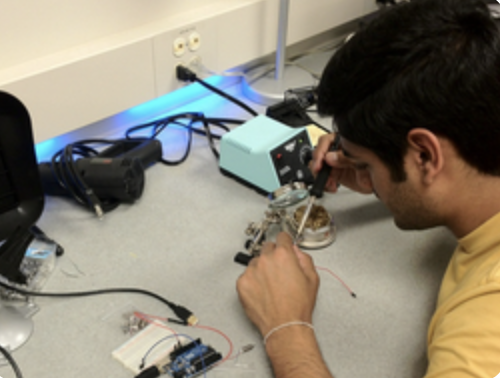
Left: Suri during his McNair Summer Research Fellowship designing a hardware-software prototype: a wearable Braille-based device for the visually impaired.
Q: Tell us about someone in the UMBC community who has inspired you or supported you, and how they did it.
A: Dr. Laila Shishineh encouraged me to merge my technical background with my passion for supporting others. Her mentorship helped me take risks, try new experiences, and believe that innovation can start in the classroom.
Dr. Shishineh was my Summer Bridge mentor and had an enormous influence on both my personal and professional trajectory. She encouraged me to take on extra credits early, accelerating my progress and building my confidence, and pushed me to get involved beyond the classroom—to form meaningful connections, volunteer, and embrace opportunities I otherwise might have overlooked.
With that encouragement, I joined the Refugee Youth Project through the Shriver Center, which eventually helped me connect with recruiters at General Electric. She supported my interest in becoming a resident assistant in the Discovery Scholars Living-Learning Community, and she constantly encouraged me to step into leadership roles, attend retreats like STRiVE, and explore other parts of campus life, including student government and community service.
Suri at the McNair Scholars induction ceremony in 2012.
Her mentorship came at a time when I was navigating unfamiliar territory as a first-generation student. My parents didn’t go to college, so having someone who believed in me, challenged me, and celebrated my wins made an enormous difference. She even supported me in applying to the McNair Scholars Program and helped me think about potential future paths in tech.
In so many ways, Laila was the single most influential person in my college journey—a steady source of humor, enthusiasm, and encouragement. I truly wouldn’t be where I am today without her.
Q: Tell us about what you loved about your academic program at UMBC.
A: The information systems program provided a powerful blend of technical skills and practical application. What I appreciated most was how interdisciplinary it felt—it taught me to think not just about technology itself, but about the people, systems, and structures that surround it. That balance shaped the way I approach product management and innovation today.
“
My professors saw potential I didn’t see in myself. They helped me land my first internships, encouraged me to explore entrepreneurship, and taught me that curiosity and kindness are just as important as credentials.
Manpreet Suri '14, M.S. '15
Q: How did UMBC foster your interest in entrepreneurship?
A: My interest in entrepreneurship definitely sparked while at UMBC. While in Dr. Shaun Kane’s Prototyping and Design Lab I worked on a wearable Braille-based device for users with visual impairments. That was my first real experience with human-centered technology design. That project ultimately became the foundation of my McNair Scholars research and showed me how innovation and empathy can come together to solve real-world problems. It planted the seed for the entrepreneurial mindset I carry with me today.
Q: Since joining the UMBC community, in what ways have you felt supported and experienced personal growth?
A: My professors saw potential I didn’t see in myself. They helped me land my first internships, encouraged me to explore entrepreneurship, and taught me that curiosity and kindness are just as important as credentials.
Dr. Kimberly R. Moffitt remains one of the most memorable and impactful professors I’ve had in any academic setting. Her classes pushed me to consider identity, community, and social systems in ways I never had before. She introduced me to a world of nonfiction that I didn’t realize I’d been missing, and the discussions in her classroom helped balance the technical focus of my information systems coursework.
Her teaching style—thoughtful, engaging, and deeply human—broadened my perspective and made my overall academic experience richer and more holistic. I’m still grateful for the lasting impact her classes had on how I view people and the world.
Q: What’s your favorite thing about being a part of Retriever Nation?
A: Retriever Nation is about hustle, heart, and humility. I love how UMBC fosters change makers who don’t just talk about impact, they do the work and bring others with them.
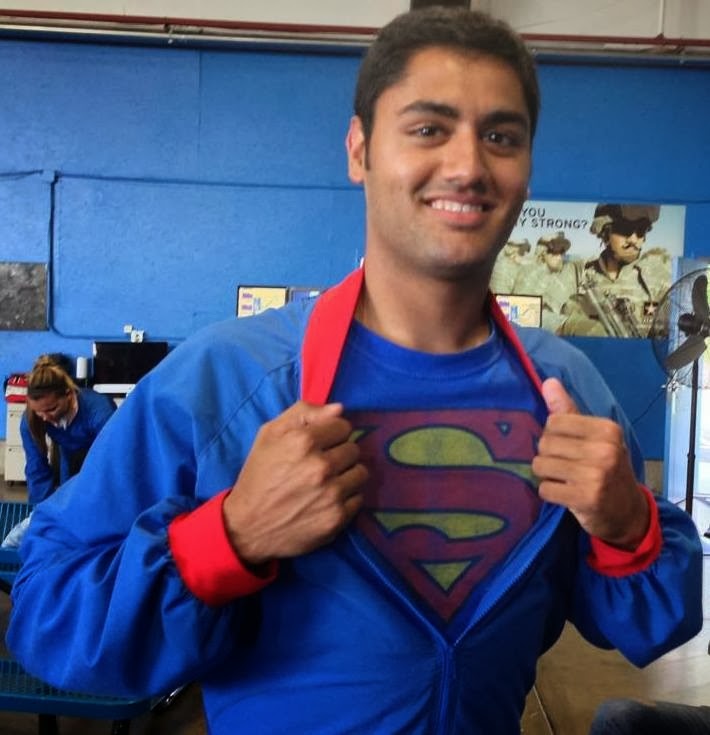
Right: Suri as an undergraduate student at a skydiving experience during his summer internship with GE Aviation.
Q: What drives you to support UMBC?
A: UMBC changed the trajectory of my life. Giving back is my way of paying it forward—especially to programs that support first-generation students and innovators who just need a chance to be seen and supported. I’ll always be proud to support and be part of a community that shows up for people the way UMBC showed up for me.
UMBC’s greatest strength is its people. When people meet Retrievers and hear about the passion they bring, the relationships they create, the ways they support each other, and the commitment they have to inclusive excellence, they truly get a sense of our community. That’s what “Meet a Retriever” is all about.
Corris Davis’98, M.P.P. ’19, Ph.D. ’25, didn’t originally envision such a long career at UMBC or the number of students she would directly impact. As a Meyerhoff Program Scholar, Corris experienced how intentional mentoring and support could lift up students on their UMBC journeys. Now the senior director of the Office of Academic Opportunity Programs—which she founded as a home to UMBC’s five TRIO Programs as well as first-generation student programming—Corris has been at the front lines for first-gen and low-income students for 26 years. By forging cross-departmental connections, Corris has built a network of support and encouragement for UMBC’s growing population of first-gen students. Tell us all about it!
Q: What’s one essential thing you’d want another Retriever to know about you?
A: I’m a three time UMBC alum—undergrad in biological sciences in 1998, M.P.P. ’19, and Ph.D. ’25, public policy—who has recently rekindled a love for Galaga and LEGOs (because everything old is new again).
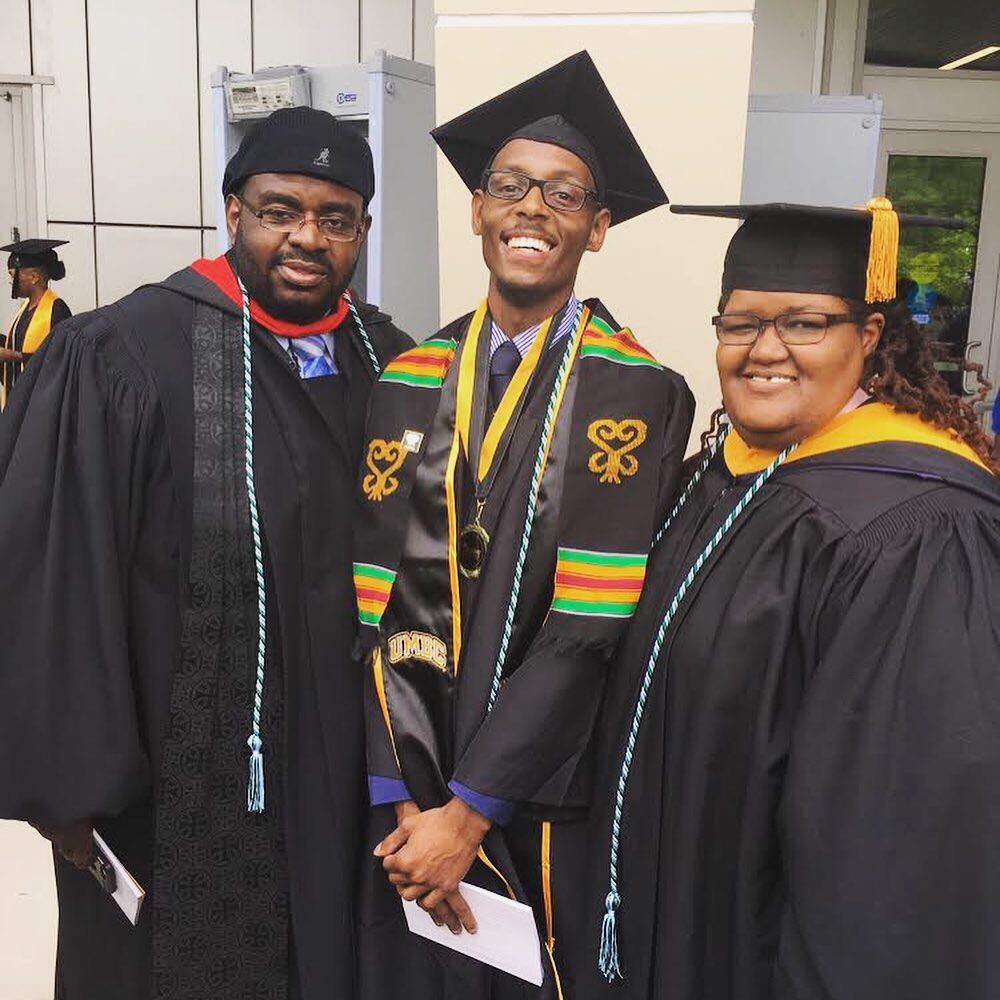
Left: Fellow staff of the Upward Bound Program outside of the Apollo Theatre in New York City during an end of summer field trip. Left to right: Terri Chambers, Christine Harris ’98, Allen Bolden ’99, Karriem Farrakhan ’97, Kerrian McLean ’00, and Corris. Right: At UMBC Commencement 2022, Dr. Michael Hunt, Damarius Johnson ’22 (McNair alum), and Corris.
Q: What’s the one thing you’d want someone to know about the support you find here?
A: “Support” and “community” aren’t just words. People show up for each other because that’s who we are, be it faculty, staff, students, or alumni.
Q: What part of your job do you enjoy the most and why?
A: I support programs that allow students from middle school all the way to undergrad to see what they can be. I have seen students that I met in 8th or 9th grade earn Ph.D.s. I love knowing that while I don’t always work directly with students, the work I do supports them in reaching their goals.
Q: What brought you to UMBC in the first place?
A: I started my professional staff journey as the office coordinator of the TRIO Upward Bound program at UMBC, one of what is now five TRIO programs hosted at UMBC (Upward Bound, Upward Bound Math/Science, Talent Search, McNair Scholars, and now Student Support Services). Since then, I’ve been the assistant director of Upward Bound, and then director. In 2016, I was able to form the Office of Academic Opportunity Programs that houses all of the TRIO Programs as well as first-generation student programming.
After completing my bachelor’s degree, I left UMBC to go to a Ph.D. program in molecular and cellular biology, but about seven months in, I realized that it was not a good fit. I had previously worked with Upward Bound as an undergrad so I essentially came home until I could figure out what my next moves were. I didn’t think that I would still be at UMBC 26 years later.
The reason I stay at UMBC is that I am given the space to help students who are from similar backgrounds to grow and thrive and have great experiences.
Photo: Over the years, many participants have become like family, says Corris. Left side front to back: Prentiss Haney, Gerrod Williamson (Upward Bound alum and current staff member), Corris’s wife, Consuela Lowery; on the right from front to back: Tobias Davis (Upward Bound alum), Dr. Durell Callier ’14, McNair Scholar alum), and Corris.
Q: Tell us about the people who have helped you at UMBC, and why it has made such a difference to you.
A: I must start with the late LaMont Toliver, director of the Meyerhoff Scholars Program. While my initial relationship with him was as a Meyerhoff Scholar, once I became a staff member, he provided even more guidance and support. I use much of what I learned from him in my work in supporting students now, both directly and behind the scenes. I recall him sharing a quote from Harry Truman: “It is amazing what you can accomplish if you do not care who gets the credit.” This has shaped a lot of my work at UMBC. It’s all about advancing our students.
I’ve found support at UMBC in two ways: sometimes by making the ask, and sometimes because people see the vision and step forward on their own. A great example is the creation of the First Generation Network. While it’s not as active as we’d like currently, it’s very existence comes from a group of campus partners, many of whom were first-generation students themselves who understand the importance of the work and volunteering.
“
The quote… “It is amazing what you can accomplish if you do not care who gets the credit.” This has shaped a lot of my work at UMBC. It’s all about advancing our students.
Corris Davis
Senior director of the Office of Academic Opportunity Programs
We’ve been able to honor first-generation graduates with cords for about six years now. Offices like the Academic Success Center, the Career Center, and several Student Affairs departments have regularly stepped up, not just as cord pick-up sites, but as co-creators of programming that supports UMBC’s first-gen students. Support may be handing out graduation cords, or staffing First Gen Week tables, or even redesigning programming and workshops so they tackle the hidden curriculum and the barriers created by higher-ed jargon.
Staff of the various TRIO programs in the Office of Academic Opportunity Programs at the annual regional TRIO conference in Hershey, PA, in Feb 2023. Front, left to right: Tanaj Mogase, Talent Search, Corris, Ting Huang (UMBC and McNair alum), Ahdrianna Boyce (UMBC and Upward Bound alum); back left to right: Jennifer Appleby (former TS coordinator), Dr. Michael Hunt, and Dr. Sunji Jangha ’25
Although my office sits in Academic Affairs, this cross-division collaboration is exactly how things get done at UMBC: People come together to support students. It’s impossible to name everyone who has supported me and this work over the years, but I must acknowledge the incredibly talented staff in AOP. Their commitment, partnership, and care make everything we do not only possible, but even more meaningful.
Q: What would you tell someone who is considering a career at UMBC?
A: UMBC is a place where you can take a dream and run with it. We have a culture of supporting students and supporting each other in that work.
UMBC’s greatest strength is its people. When people meet Retrievers and hear about the passion they bring, the relationships they create, the ways they support each other, and the commitment they have to inclusive excellence, they truly get a sense of our community. That’s what “Meet a Retriever” is all about.
Brick making is an inherently pay-it-forward process, says Marian April Glebes, M.F.A. ’09, a conceptual and mixed-media artist. In the past 10 years of her Mobile Community Brick Factory & Monument project, Glebes has made thousands of bricks and then invited community members to imprint their stories into the clay. Later, the bricks are used in mobile monuments around Baltimore City and beyond. Glebes, who won the 2025 Rubys Alumni Award through the Robert W. Deutsch Foundation for this work, asks: How can we support social and spatial change in order to build a new kind of community-driven monumental public space?
I come to historic preservation by way of my M.F.A. in imaging media and digital arts (IMDA) from UMBC—with an additional masters degree in city and regional planning and historic preservation from the University of Pennsylvania—my home in Baltimore City, and by making bricks as public art. As an artist, a preservation planner, a homeowner, an educator, a gardener, and a community and economic development practitioner, all of my research and methods investigate how we make a place and how a place makes us.
In 2015, I was the inaugural artist-in-residence at the Baltimore Museum of Art’s Patricia and Mark Joseph Education Center. The Robert E. Lee and Stonewall Jackson Confederate monument still stood across from the BMA’s Spring House in Wyman Park Dell in the Charles Village neighborhood of Baltimore. Aligning with and inspired by protest in support of social and civic justice movements, The Mobile Community Brick Factory & Monument operated within these complex intersections.
Glebes’ brick factory set up outside of the Spring House at the Baltimore Museum of Art. (Photo by Marian April Glebes, M.F.A. ’09)
Almost a decade later, my camera was the only familiar thing at Baltimore City’s Department of Transportation facility on a frigid dawn in November 2023. I held it tightly as if it would prove to signify my role in providing archival documentation of a monumental move. The temperature had dropped to a mere 22 degrees, but the top-secret site was teeming with activity while the project was just beginning.
“I like to do an easy one first,” the director of field operations says. But with the removal of any Confederate monuments, these or other “monuments to hate,” there is no easy one.
In the back corner of a DOT storage yard, I watched as the historical record was made and unmade, as preservation theory and practice was suspended and turned on their side, as conservation techniques and concepts were followed to the letter and simultaneously reinvented, starting with the Roger B. Taney statue.
Baltimore’s Confederate monuments in a Department of Transportation storage lot. (Photo by Marian April Glebes, M.F.A. ’09)
Baltimore’s contentious monuments shipped out to a storage facility near St. Louis on their way to Los Angeles for an exhibition at The Brick (formerly LAXart). In Baltimore, I stayed with the problem through a project I started a decade ago—creating a countermonument out of personalized, handmade bricks.
Memory is mutable. Social contexts shift. This is the wicked problem in living heritage and what to do when it dies. I’ve had a unique position with singular access to process and understand this ongoing debate in Baltimore City while unofficial researcher-in-residence at the Commission for Historic and Architectural Preservation (CHAP). Each community is unique in its response on what to do with their Confederate monuments, and Baltimore’s perspective is vital to the discourse. Eric Holcomb, the former director of CHAP, invited me to the conversation, positing that perhaps it could or should be for the arts and artists to influence this unfolding preservation conundrum.
Left: A stack of imprinted bricks waits to be transformed. Right: Glebes holds a brick imprinted with: “I am a monument.”
At UMBC, as M.F.A. candidates, our artwork was considered research—and therefore had to be contextualized and placed within the canon. To work responsibly, we were encouraged to know our audiences and our references and understand our place in time. Inspired by the people and places of Baltimore and by conceptual art’s blurring-of-art-and-life thinking of the 1960s, The Mobile Community Brick Factory & Monument maintains the ethos of rigorous research, material gravitas, and community connection engendered by my IMDA studies. Existing in the contexts of the Baltimore Uprising, the 2017 monument removals, social practice art, and civic engagement, I interrogate our circumscribed understandings of monumentality.
Monuments exist in social contexts that have often changed dramatically since the time they were created. Because of this, their meaning does not come only from the objects themselves—or only from how people view them—but from the shifting relationship between the two. The counter-monument was birthed by artists in Germany after the fall of the Berlin Wall and has not been widely accepted or brought into practice. In 2017, as monuments were being removed from our public spaces, artists again began erecting counter-monuments in protest of white supremacy.
The Mobile Community Brick Factory & Monument is centered in process, people, and making. To date, we have engaged over 15,000 people in Baltimore, made over 2,500 unique bricks, and collected over 1,000 personal stories from Baltimore residents. The Mobile Community Brick Factory & Monument is a new kind of monument, a monument not to the past, but a monument as an act of collective power that anticipates what will come to be.
To date, the project has engaged over 15,000 people in Baltimore, made over 2,500 unique bricks, and collected over 1,000 personal stories from Baltimore residents.
The Mobile Community Brick Factory produces handmade bricks using local hand-processed clay and historic water-struck methods. This means of brickmaking is an inherently pay-it-forward endeavor—the bricks made one day are destined for someone else’s future hands. Participants personalize and inscribe their stories onto these bricks—words and messages about place, power, home, and experience. These story bricks are woodfired and become The Mobile Community Brick Monument, an ongoing series of exhibitions that create shared spaces.
While the bricks become pathways, garden beds, benches—some are embedded in sidewalks in Baltimore—I collect oral histories from brick constituents through ethnographic methods. In Baltimore, over 150,000 people have visited The Mobile Community Brick Monuments, finding connections to stories that are like their own.
At The Mobile Community Brick Factory & Monument, we believe ordinary voices matter, especially those that aren’t usually heard, that public space should be built by the people who use it, that heritage is alive, memory is mutable, and history is ongoing—made by daily lives. Our bricks represent pasts, presents, and futures that would otherwise remain untold and unwitnessed, built, shared, and spoken by urban residents. All are welcome and included in the process—a different kind of monument—a living space that honors the past and is built collectively by the people who live in and use our cities.
Meet Adriana Torres. Adriana is a psychology major who has wanted to be a teacher ever since she was in school at Lakeland Elementary/Middle School. She decided to attend UMBC without ever visiting the campus because of the Sherman Scholars Program, which supports and prepares high-quality teachers for urban schools. In her spare time, Adriana enjoys baking, binge-watching her favorite TV shows, and meeting new people. Take it away, Adriana!
Q: What is your WHY? What brought you to UMBC?
A: I came to UMBC because of the abundant opportunities it provides in terms of educational support, both financially and in tangible classwork support. But beyond that, I believed that UMBC could help me reach my goal—becoming a teacher. I’ve always known that I wanted to be a teacher. I grew up looking up to my teachers because of how much they cared and wanted to help me in whatever way they could, even beyond schoolwork. Both of my parents are also teachers, so that sparked my interest in teaching as well.
What drew me to UMBC specifically was their Sherman Scholars program. I didn’t know much about UMBC when I was first applying here. To be honest, I had never even visited the campus before I decided to come here. However, knowing that there would be a community of people who would support and help me work towards my dreams and aspirations was what motivated me to be here.
“
I believed that UMBC could help me reach my goal—becoming a teacher.
Adriana Torres
psychology major
Q: Where have you found support in the UMBC community?
A: Some of the most influential people during my time at UMBC have been the mentors and leaders of the Sherman Program. With their willingness to help and kind affirmations, I have felt so supported and encouraged to continue on my journey to be a teacher. They have given me more direction in terms of where I want to head in my teacher journey.
Q: What do you love most about the Sherman Scholars program?
A: I love being a Sherman Scholar because it’s bringing me closer to my future goal of being a teacher. It’s also allowing me to gain a deeper understanding of how to interact with students more effectively. One part of my story that is unique is the fact that I actually graduated from Lakeland Elementary/Middle School, which has a close relationship with the Sherman Scholars Program. Lakeland was a great school for me. My mom taught there for all my life, so I grew up in that community. I always felt supported by my teachers, and it eventually solidified my desire to become a teacher.
“
It makes it interesting to see the growth of someone who graduated from Lakeland to someone who is now in the Sherman Scholars Program.
Adriana Torres
psychology major
Throughout high school, I maintained my ambition by attending a school with a pathway to becoming a teacher as well. Finally, I made my way to UMBC, where I again feel incredibly encouraged to work towards my goal of being a teacher.
Q: What’s the one thing you’d want someone who hasn’t joined the UMBC community?
A: One thing that I would want someone to know about the UMBC community is that no matter what, there will always be opportunities here that will push you to be your best and provide appropriate guidance to help you along the way. The most important thing to remember is that you have to be the one reaching out for help.
As an adult, it is always your responsibility to be the one to better yourself, as others around you do not know what you are struggling with. But once you ask for help, staff, faculty, and students will gladly help you whenever possible. A great example of this is the Academic Success Center. Here, a variety of resources are offered, such as tutoring and advising.
Q: Are you part of any clubs?
A: I am on the board of the club Best Buddies. The main goal of this club is to connect people with intellectual or developmental disabilities with people to form lifelong friendships. I truly love this club, not just because of the amazing cause but also because the people who are a part of the club are so warmhearted and caring. I genuinely enjoy every meeting we all have together because of the energy and personalities of the club members.
* * * * *
UMBC’s greatest strength is its people. When people meet Retrievers and hear about the passion they bring, the relationships they create, the ways they support each other, and the commitment they have to inclusive excellence, they truly get a sense of our community. That’s what “Meet a Retriever” is all about.
Meet Sara Krauss, director of Sherman School Partnerships in the George and Betsy Sherman Center. Before coming to UMBC in 2021, Sara served in the Baltimore City Public Schools as a classroom teacher, math lead, and an Assistant Principal. She is a National Board Certified Teacher (NBCT) and also an adjunct professor for teacher preparation programs. Sara is an advocate for educational equity, has a love for developing budding and experienced educators, and aspires to convert everyone she meets into a lover of math. Take it away, Sara!
Q: What is your WHY? What brought you to UMBC?
A: Prior to UMBC, I was an educator and school administrator in Baltimore City Public Schools. I LOVE teaching, I LOVE the energy of a school building and interacting daily with families. However, after 15 years, I was ready to stretch myself in new ways and ready to make a greater impact.
Coming to UMBC and the Sherman Center, I was able to do all the things I loved in one job. I am an adjunct professor, I work in schools by providing academic programs in areas that I love (math and early childhood), and I support new teachers. Through my position, I have found my home living in the K-12 and higher education world, supporting communities and helping to bridge connections with UMBC and the Baltimore community.
“
What I love about UMBC is that they encourage diversity, new ideas, and making new connections in everything they do.
Sara Krauss
Director of Sherman School Partnerships
Q: Where have you found support in the UMBC community?
A: My team at the Sherman Center has supported my why since day one. It’s so special to work among colleagues who have similar whys, but bring different experiences. I feel like we are accepting of each other every day, while we also push each other to be better and encourage each other to think about new ways of approaching the work.
Q: What do you love most about working in the Sherman Center?
A: My colleagues in the Sherman Center are stellar. As a team, we get to elevate students, families, and communities in the greater Baltimore area. I love building relationships with other people and organizations and finding ways to make connections to help strengthen the greater Baltimore ecosystem.
Last year, I had the opportunity to travel to Bulgaria for the International Step by Step Association (ISSA) conference, focused on improving early childhood education and development. I presented on “Why Universities Matter in Communities.” That experience was amazing to share the incredible work that UMBC is doing.
Pictured right: Krauss standing by a digital display announcing her presentation at the 2024 ISSA Conference in Bulgaria, “Why Universities Matter in Communities.”
Q: What would you tell someone who is considering a career at UMBC?
A: UMBC is one of the most diverse places I have ever worked, and what I love specifically about UMBC is that they encourage diversity, new ideas, and making new connections in everything they do.
Learn more about the George and Betsy Sherman Center
We believe that in every community, public schools have an extraordinary and unique capacity to offer opportunity and change lives. Within each school, committed teachers are the most important factor in whether the transformational power of education becomes real for students and families. Surrounding each school, community and family partners are essential for children to thrive, particularly in a child’s formative early years.
What we do:
Support excellent teaching with an emphasis on STEM and Early Childhood;
Build deep and transformative educational partnerships with schools and communities;
Expand community and school capacity to provide strong early childhood experiences;
Support pathways connecting students in partner communities with educational opportunities at UMBC;
Apply engaged research to guide and assess our work.
UMBC’s greatest strength is its people. When people meet Retrievers and hear about the passion they bring, the relationships they create, the ways they support each other, and the commitment they have to inclusive excellence, they truly get a sense of our community. That’s what “Meet a Retriever” is all about.
Meet Corey Carter ’08, M.A.T. ’10, an award-winning educator, lifelong learner, and the director of the Sherman Scholars Program in the George and Betsy Sherman Center. He takes pride in meeting student needs through servant leadership and holistic mentorship that centers on the needs of scholars as developing teachers. Corey’s goals include diversifying the teaching profession, particularly increasing the representation of highly-skilled Black male educators. Outside of his work supporting culturally responsive educators, Corey loves exploring his interests in hip hop, technology, and science. Take it away, Corey!
Q: What is your WHY? What brought you to UMBC?
A: My family was coming home one day, and my dad stopped the car to introduce us all to the new neighbor. When I told LaMont Toliver that I was a high school junior and wanted to major in biology, he told me all about the Meyerhoff Scholars Program at UMBC. I knew I had to apply and was excited about the chance to continue exploring my passion for science amongst so many other brilliant young people. During selection weekend, my parents shared the table with another couple whose daughter was also applying to the program. That night, I met my future wife and best friend, Brittney Carter ’07, psychology.
Pictured right: Corey and Brittney Carter attending the wedding of one of their college friends. The couple has been married for 15 years and have three kids.
Q: Where have you found support in the UMBC community?
A: The support at UMBC has significance for me because it was also a place of consequential challenges. My academic and pre-professional identity was formed, broken down, and reformed over the years as I learned more of my truths. When I first began to accept that I might have a different career calling than a Ph.D. in biology research, it wasn’t without signs. The support I received from mentors, advisors, and tutoring centers helped me get out of the shame and disillusionment. Connecting again with the community in different aspects of my identity (Gospel choir, Meyerhoff Scholars, Sherman Scholars) was the key to me reclaiming my story and writing the next chapters of my life.
Q: Who, in particular, has supported you throughout your journey?
It’s hard to name just one person. I’m fortunate to have known the late Mr. Toliver, as he was my bridge to UMBC and then to the Sherman Scholars Program, which led to my current career. Mr Toliver’s influence on Rehana Shafi, who would serve as a mentor and support for me through teacher preparation, was an anchoring force of courageous truth and unwavering belief in potential. More recently, I’ve stayed connected to Mr. Toliver’s legacy through another pillar, cut from the same cloth, Sunji Jangha, M.P.P ’18, Ph.D. ’25.
“
UMBC is a big community with many intersecting circles. There is not only space for you here, but there is space for the person you have yet to become.
Corey Carter ’08, M.A.T. '10
Q: What do you love most about the Sherman Scholars program?
A: I’ve been involved with the Sherman Program since 2007. I love that we stand for centering students as whole people, that we live the values of social justice through education, and that we do this work with joy, love, and passion.
Q: What part of your job do you enjoy the most
A: I love seeing our Sherman Scholars in the classroom and talking with them about teaching. Connecting with brilliant, passionate educators is so fulfilling because I am always stretched by the conversations. In this job, I’ve continued to grow intellectually, spiritually, and emotionally. I’m grateful for the tears, the laughter, and the righteous anger—it’s all so valuable to me.
Alumni Voices, an annual Sherman Scholars event where current students hear from Sherman Scholars alumni who are current teachers. Corey remembers attending as an alum and sharing his story. Now, he gets to see the scholars he supported come back and speak to current students in the program.
Q: What would you tell someone who is considering a career at UMBC?
A: UMBC is a special place. If you align with the mission and values, I have no doubt there is good work and community for you here!
Learn more about the George and Betsy Sherman Center
We believe that in every community, public schools have an extraordinary and unique capacity to offer opportunity and change lives. Within each school, committed teachers are the most important factor in whether the transformational power of education becomes real for students and families. Surrounding each school, community and family partners are essential for children to thrive, particularly in a child’s formative early years.
What we do:
Support excellent teaching with an emphasis on STEM and Early Childhood;
Build deep and transformative educational partnerships with schools and communities;
Expand community and school capacity to provide strong early childhood experiences;
Support pathways connecting students in partner communities with educational opportunities at UMBC;
Apply engaged research to guide and assess our work.
“There’s a little engineer in all of us. Because the truth is you’re iterating all the time. You’re failing, but you’re learning from those awesome failures.”
Jamie Gurganus ’04, M.S. ’11, Ph.D. ’20, mechanical engineering, doesn’t believe engineers need to be geniuses; she also doesn’t believe failure means it’s the end of the road—so much so that her winding and impressive career over the last twenty years has been a product of taking chances, accepting the small failures, and still marching onwards.
As an undergraduate, Gurganus pursued an opportunity to teach STEM subjects in local middle schools. The experience sparked her interest in engineering education. Her desire to help everyone see that they, too, could become an engineer has driven her professional life ever since. Students praise her for lifting them up when they felt discouraged and always encouraging them to aim high.
Gurganus’ tireless advocacy for students and continual innovation in teaching will be recognized on October 29, when she will receive the 2025 Outstanding Faculty Award from UMBC’s Alumni Association Board of Directors.
Building confidence
Jamie Gurganus (Marlayna Demond ’11/UMBC)
Gurganus says that as a college student, she never expected to end up where she is today: “I didn’t think I’d ever be faculty or get a Ph.D.”
But when she got a National Science Foundation-funded fellowship in 2002 from the Teaching Enhancement Partnership Program at UMBC’s Shriver Center, she found herself enjoying the STEM classes she was teaching at local schools, especially connecting with students who may have assumed their options in life were limited.
“Many of these students came from precarious situations and weren’t thinking about going to college, much less having a STEM career,” Gurganus remembers of the Title I schools, which means they had high percentages of children from low-income families.
Gurganus taught as part of the partnership program for almost three years, and then proceeded to earn a graduate fellowship both through NSF and later NASA, which in turn cultivated a real passion for teaching and research.
Gurganus also became a substitute teacher for the Anne Arundel County public school system, focusing on teaching mathematics. “My goals were fostering engineering awareness in these kids and showing them they, too, could do this—and showing them the real-life applications of it all.”
Breaking down the basics of math and engineering got the kids excited. As they got excited, they became more engaged, and as they became more engaged, their grades began to improve significantly. It might not have been the only reason for the successful outcome, but Gurganus believes being a young college student played a hand in it all. The breadth of knowledge and sense of authority was always present but packaged in a way that the students weren’t familiar with.
While in graduate school at UMBC, Gurganus also helped lead professional development for Project Lead The Way, a national nonprofit organization that provides STEM education programs for PreK-12 students, and Engineering is Elementary, which provides engineering teaching materials. In 2012, she became an instructor in mechanical engineering and assistant director of engineering education initiatives in the College of Engineering and Information Technology at UMBC, transitioning to a faculty role in 2014.
Jamie Gurganus with mentee Shannon Clancy ’19, mechanical engineering, who is now an assistant professor of engineering at Elizabethtown College. (Image courtesy of Gurganus)
Over the years, Guganus’ skills, passions, and love for her students have improved UMBC’s course offerings, reputation, and quality of education. Currently, Gurganus is the associate director for STEMed Research, director for the Center for the Integration for Research, Teaching and Learning in the Graduate School and an assistant teaching professor in the engineering and computing education program. She also serves as a faculty fellow in entrepreneurship for the Alex. Brown Center For Entrepreneurship and Innovation, has mentored around 150 engineering teams under the senior capstone design course (including teaming up with Steve McAlpine to guide the kinetic sculpture team this year), and is an honorary faculty coach for UMBC’s softball team.
Reaching across borders, she has also built international partnerships in Brazil, Portugal, Africa, Australia, the United Kingdom, and Germany, and collaborates widely on STEM education initiatives.
Embracing the journey
If her professional progression comes across as linear and like it unfolded at breakneck speed, Gurganus is here to assure you it did not.
“It’s been an interesting journey,” she says. “I stopped trying to plan my future and just accept (and expect!) the unexpected. I just take it on and see what happens.”
She’s never strayed from that principle, letting the journey—and the experiences it’s unveiled—guide her to new milestones. One of those milestones has been the nurturing of a strong undergraduate teaching fellows network on campus. Remembering her own experiences as a student and then seeing much of the same insecurity in the local middle school students from years ago, Gurganus struck out to find students who could guide other students by relating to the stresses of failure they might feel.
“I had this mission to foster a community of individuals who never thought of themselves as being ‘smart enough’ to teach others in their own technical field,” Gurganus says. If this sounds familiar, that’s because it’s how Gurganus expresses she felt as a student herself.
While the teaching fellows program was started nearly 20 years ago as a tool for undergraduate students to assist faculty, and more importantly their peers, in classes, Gurganus has expanded the program in an organic way.
“These students just became friends and bonded over their common interests or maybe their similar experiences in undergrad,” she says.
Gurganus jokes with engineering teaching fellows. “This captures a joyful moment,” she says. (Photo courtesy of Gurganus)
“The teaching fellow program laid a foundation for growth and confidence-building in the formative stages of my career,” says De’Shaunna Scott ’19, computer engineering, who is now a principal RF integration engineer at Northrop Grumman. “I quickly felt overwhelmed and out of my element, but Dr. Gurganus was the guiding light I could always turn to. There were times, I would just show up after work and sit in Prof’s office unloading all the stresses I endured. Without fail and without question, Prof listened to every one of those complaints and provided words of advice that I still use to this day.”
“Prof G profoundly shaped my life and inspired me to become faculty,” adds Shannon Clancy ’19, mechanical engineering, who is now an assistant professor of engineering at Elizabethtown College. “As her teaching fellow and research assistant, I experienced mentorship rooted in care, unwavering support, and high expectations—even during my most uncertain moments. The teaching fellow program was the catalyst to get my Ph.D. I wanted to teach undergraduate students and build a community in my own way like Prof had.”
The fellows’ connection with each other, as well as the students they teach, has fueled the community’s growth. Gurganus begins naming fellows who are thriving post-UMBC, having gone on to receive master’s degrees, Ph.D.s, research fellowships, and more. It’s an obvious point of pride for her as she recalls the impact of all the work being a two-way street—for both her and the students.
“To teach is to engineer,” she adds. “You try it, you make it better, you bring your own spark, to keep improving with purpose and heart.”
By Nikoletta Gjoni ’09
Mark your calendars for the 2025 Alumni Awards on Wednesday, October 29,at 6 p.m., and consider joining the UMBC community at the Chesapeake Employers Insurance Arena to celebrate Jamie Gurganus and the many remarkable individuals receiving awards. The event will be livestreamed for those unable to join in person. You can learn more at alumni.umbc.edu/alumniawards.
As the United States experiences its latest government shutdown, most of the daily operations of the federal government have ground to a halt. This includes much of the day-to-day work done by federal information technology and cybersecurity employees, including those at the nation’s leading civilian cybersecurity agency, the Cybersecurity and Infrastructure Security Agency.
CISA is among the entities that will see the deepest staffing reductions during the shutdown that began Oct. 1, 2025, according to Department of Homeland Security documentation. Only about one-third of its employees remain on the job after federal employees were furloughed. As if cybersecurity wasn’t challenging enough, fewer CISA employees are being asked to do more and more work protecting American cyberspace during the shutdown. And they’ll be working with the promise of getting paid for their efforts at some date in the future once the shutdown ends.
The current CISA situation is grim, from my vantage point as a cybersecurity researcher and former industry practitioner. The agency was already experiencing deep cuts to its staff and resources before the shutdown. And now, coinciding with the shutdown, a key law that enabled the agency to facilitate information-sharing with the private sector has expired.
Taken together, the cyberdefense agency is being hobbled at a time when the need for its services has never been greater, from the ongoing China-led Salt Typhoon attack on U.S. telecommunications networks to ransomware, data breaches and threats to infrastructure.
CISA was created in 2007 within the Department of Homeland Security. As its name implies, the agency is charged with digital security matters across the federal government. The agency also works with the companies that operate and secure the numerous critical infrastructure sectors of the American economy, such as phone networks, the electric grid and energy pipelines. Additionally, it helps state and local governments across the country secure their vulnerable networks and data.
CISA also publishes threat and vulnerability alerts for the government and cybersecurity community and engages with public and private stakeholders on best practices in response to emerging vulnerabilities. Prior to the recent expiration of the 2015 Cybersecurity Information Sharing Act, the agency also made it easier for organizations to share useful information with the government to help cybersecurity teams better protect their systems.
Shutdown-mandated furloughs at the nation’s cybersecurity agency present an opportunity for malicious hackers.
Political football
The agency takes a nonpartisan approach to cybersecurity matters. However, some politicians have accused the agency of political bias for its work helping states protect their voting infrastructure from cyberattacks and external influence. Specifically, the agency was repeatedly maligned for calling the 2020 election the “most secure” in history. For some in elected office, this work on election security has tarnished CISA’s reputation and perhaps explains recent budgetary actions taken against the agency.
Since the Trump administration took office in January 2025, nearly 1,000 CISA employees have departed the agency through voluntary buyouts or deferred resignations. By the end of May 2025, nearly all of CISA’s senior leadership had resigned or had announced plans to do so.
For 2026, the president’s draft budget proposes to reduce CISA’s head count by nearly one-third, dramatically cutting staff from its risk management and stakeholder engagement divisions. Other cuts will significantly reduce the agency’s collaboration activities and funding for CISA’s various cybersecurity education and training programs.
Making the problem worse, the government shutdown began at the same time that Congress failed to renew the Cybersecurity Information Sharing Act. This law provided a legal shield that allowed companies and infrastructure operators to share timely and often sensitive information with CISA about the cyberattacks, vulnerabilities and incidents that they were encountering.
In the wake of the law’s expiration, prudent companies may consider restricting what information they share with the government. Without the indemnification provided by CISA, many companies will likely have their legal teams review any information to be shared with the government. And that takes time.
Unfortunately, adversaries do not reduce their attacks against the U.S. based on available federal cyber defense funding or the status of cybersecurity laws. In fact, malicious hackers often strike when their target’s guard is down.
Charting a better course
Early in my career I had to work through a prolonged government shutdown. I’ve also participated in and developed assorted public-private information-sharing environments to exchange intelligence and analysis on cyber- and national security matters. And having been in the D.C. area for over 30 years, I’ve seen how government works. So I have a good idea of what’s needed to improve American cybersecurity. The following suggestions are a starting point.
First, Congress could ensure that critical security agencies such as CISA are immune from the threat of recurring federal government shutdowns. If it desired, Congress could set budgets for America’s security agencies on a biennial basis – as 16 states already do for their entire budgets.
In terms of cybersecurity funding, the White House’s proposed 2026 budget reduces research and education on cybersecurity. For example, the nation’s premiere federal cybersecurity scholarship program to recruit, educate and place future federal cybersecurity workers would be reduced by over 60%. Protecting this funding would allow CISA and the federal government to maintain the pipeline for a robust and capable cybersecurity workforce both today and into the future.
Companies could develop new or expand existing nongovernmental information-sharing networks that are not completely dependent on the government to facilitate or fund, such as the Cyber Threat Alliance or the Center for Internet Security. Cybersecurity relies on trust. But right now, the instability of the federal government makes it difficult to rely on any entity under its policy or funding influence, no matter how well time-tested and trusted. Regardless, without legal protections, the information-sharing utility of these services will be limited.
Cybersecurity risks remain even if the federal government shuts down. So this is another reminder that each of us is responsible for our own cybersecurity. Individual users should continue to remain vigilant, follow accepted best practices for cybersecurity and always be mindful about online risks.
It’s ironic that the federal government is shutting down, CISA is being eviscerated and the Cybersecurity Information Sharing Act has expired just as the country begins to observe national Cybersecurity Awareness Month – another collaborative public engagement activity that CISA promotes to help improve cybersecurity for all Americans.
Meet Meagan Wade ’13, psychology, the program coordinator for the Department of Information Systems. Part of Meagan’s job is planning professional development and social events for IS students. She’s organized standing-room-only talks with tech leaders, game nights with pizzas and snacks, resume workshops and job search training, and more. She’s loving it all—and shares why she’s so happy she returned to her alma mater as a staff member.
Q: How did you start working in higher ed?
A: I graduated from UMBC in 2013 with a B.A. in psychology and a minor in social welfare. I then graduated from Towson University with a M.A. in teaching for elementary education in 2016. I worked as an elementary teacher for four years before switching gears and finding a job in higher education.
Q: Tell us about someone in the community who has supported you, and how they did it.
A: Dwayne Butcher, assistant director of marketing for the IS department, has been an awesome supporter of me since I started back in October 2024. He has been a great mentor for the marketing aspects of my job, and an amazing supporter of my career growth, for example, by encouraging me to attend conferences.
I love that the department has essentially given me free reign to plan whatever events for IS students that I think will get them engaged in the community and help to prepare them for their careers post-graduation from UMBC.
Q: What part of your job do you enjoy the most and why?
A: My favorite part of my job has been planning events that students enjoy attending—such as our game night events; and planning events that will help students in their career journeys—such as the Career Talk series I planned this fall. Each week we host a different panel of tech industry professionals, with themes such as women in tech and the gaming industry, and company-specific events with Oracle, The Trevor Project, and more.
Wade organizes student events for the IS department throughout the year, including a Women in Tech Career Talk (left) and the IS department’s Welcome Week (right), complete with a visit from Spot, a robotic dog. (Images courtesy of Wade)
Q: What brought you to UMBC in the first place?
Wade and her dog Baxter at the Homecoming Puppy Parade in 2024. (Image courtesy of Wade)
A: I originally came to UMBC as a starry-eyed 18-year-old, hoping to figure out what I wanted to do with my life and to make great friends along the way. I chose UMBC for a few different reasons: I’m originally from Towson, so UMBC was just the right distance away from home so that I could still easily visit. Also, my dad is a UMBC alum, and my best friend also ended up going to UMBC, so it felt like a “home away from home” for me, which my anxious freshman self needed at the time.
I’m happy to say that UMBC brought so many amazing people into my life, many of whom I am still friends with to this day. I wouldn’t have wanted to be anywhere other than UMBC because of all the happy memories I made here.
Years later, when I ended up working in higher education, I remembered the awesome culture of UMBC that I experienced as a student, and hoped to “come back home” as a staff member. I applied for a number of jobs at UMBC and am so grateful that the information systems department was willing to give me the opportunity to return to UMBC. Now that I am back, I’m so glad that the welcoming culture I experienced as a student is still here, and I hope to now give current students the opportunity to find their way in the world, just like I did years ago.
Q: Are you involved in any campus organizations?
A: Back when I was a student, I was involved with WMBC, UMBC’s radio station. My friend and I had a radio show called “Cuddlecore,” where we would chat and play our favorite music. I remember loving the seemingly infinite amount of CDs back in the WMBC studio that we were encouraged to listen to and write reviews for.
I was also a Resident Assistant, so I was pretty involved with ResLife. I loved the apartment RA family that we created after spending so many hours together, and all the events that we would do together as RAs, including bowling, dinner parties, and late night trips to Double T Diner.
Since returning as a staff member, I’ve resurrected Cuddlecore. It’s on Wednesdays at 5pm! I’ve also attended UMBC Homecoming and participated in the Puppy Parade with my dog Baxter, which was very fun!
Q: How have you found support and community here?
A: As a UMBC student, the main way that I met amazing people was making connections with classmates in my courses, becoming close with roommates and suitemates in the dorms/apartments, and bonding with my fellow Resident Assistants and other ResLife staff when I worked as an RA.
As a UMBC staff member, I’ve been able to help students find their way in the world by planning awesome events for them to meet other people with similar interests. (I had no idea there’d be so many people interested in Super Smash Brothers, specifically!) I’ve also been able to collaborate with other organizations on campus, such as the Information Systems Security Association (ISSA) student chapter and the Career Center, to plan even more meaningful events for IS students. Because UMBC’s culture is so welcoming, it has been surprisingly easy to reach out to other organizations on campus and plan things together to help UMBC students as a whole.
Wade and fellow apartment RAs bowling (left) and at the end-of-year ResLife banquet (right). (Images courtesy of Wade)
Q: What would you tell someone who is considering a career at UMBC?
A: DO IT! I am so happy that I made the switch to UMBC from my prior higher education institution (although I might be a little biased as a UMBC alum).
* * * * *
UMBC’s greatest strength is its people. When people meet Retrievers and hear about the passion they bring, the relationships they create, the ways they support each other, and the commitment they have to inclusive excellence, they truly get a sense of our community. That’s what “Meet a Retriever” is all about.
Meet Ann Tropea, the assistant director for engaged media with the Center for Democracy and Civic Life, and the full-time staff advisor for the Student Media Collective, which includes The Retriever, Bartleby, and WMBC. Ann’s academic background is in mass media communications studies and law. In her spare time, she (separately)hosts a podcast and acts as a doula, helping support families during birth.
Q: Briefly introduce yourself. What’s one essential thing you’d want another Retriever to know about you?
A: I am the assistant director for engaged media with the Center for Democracy and Civic Life and the full time staff advisor for the Student Media Collective (SMC)—the newly chartered student organization for student-run media on campus. I bring many years of professional editorial, communications, and legal expertise to my position. I am a career editor, published author, and podcast producer/co-host.
I am also a licensed attorney in Louisiana and the District of Columbia, and I have represented a variety of individual and multinational clients in both federal and state court litigation. I hold a law degree from Loyola University Chicago School of Law and graduated magna cum laude in mass media communication studies from New York University. I am also a certified doula and enjoy supporting families in their birth and reproductive journeys.
Center for Democracy and Civic Life team meeting
Q: Tell us about someone in the UMBC community who has inspired you or supported you, and how they did it.
A: I joined the UMBC community as a staff member in October 2023 with zero experience working in higher education. There are so many folks who have supported and inspired me from day one, but special thanks are due to Isabel Taylor (former Retriever editor-in-chief), David Hoffman (director, Center for Democracy and Civic Life), and Renique Kersh (VP for Division of Student Affairs) who all saw my potential during the interview process and allowed me to join this incredible campus community.
Q: What’s the one thing you’d want someone who hasn’t joined the UMBC community to know about the support you find here?
A: No matter who you are, or where you’re coming from, you belong at UMBC.
Left to right: October 2024 CMA Conference in New Orleans (Ann, center); SMC final executive board meeting of the year with all outgoing and incoming officers.
Q: What part of your job do you enjoy the most and why?
A: I absolutely love working with the students in all three media groups that form the SMC (The Retriever, WMBC, and Bartleby) that I advise as the primary focus of my work. They are smart, fearless, and creative—I am incredibly lucky to have such amazing student colleagues to work side-by-side with every day.
“
No matter who you are, or where you’re coming from, you belong at UMBC.
Ann Tropea
Assistant Director for Engaged Media with the Center for Democracy and Civic Life
Q: What brought you to UMBC in the first place?
A: I care deeply about making the world a more just and equitable place, where everyone has the opportunity to thrive. I came to UMBC because this is a place where it was clear from day one that I share those values with each and every person on this campus.
Center for Democracy and Civic life team at an escape room
Q: Since you’ve been a part of the UMBC community, how have you found support of your WHY?
A: I grew up in Southern California and feel like that gives me some leeway to lean a bit into the woo-woo…. UMBC is a magical place where community and collaboration are radical acts of love. It’s not just “a” why. It’s the only why.
Q: Are you involved in any campus organizations? Tell us about what you love about them!
A: I’m a new member of the Exempt Staff Senate and am thrilled to serve on the executive board as the incoming communications manager with such a dedicated (and fun!) group of folks from across the university who are dedicated to doing good work.
UMBC’s greatest strength is its people. When people meet Retrievers and hear about the passion they bring, the relationships they create, the ways they support each other, and the commitment they have to inclusive excellence, they truly get a sense of our community. That’s what “Meet a Retriever” is all about.
Meettrack and field student athlete Anjayooluwa “Jayo” Adegboyo ’25, biochemistry and molecular biology, who was named the 2025 Arthur Ashe Jr. Male Sports Scholar of the Year by Diverse: Issues in Higher Education magazine. The publication sponsors the Arthur Ashe Jr. Sports Scholar Awards to honor students of color who have excelled in the classroom and on the athletic field, demonstrating a commitment to community service and student leadership. Jayo is a Meyerhoff Program Scholar and is excited to pursue a career in medicine after being trained in research at UMBC.
Q: What’s one essential thing you’d want another Retriever to know about you?
A: I am a student-athlete who graduated with a biochemistry major and a physics minor in the Honors College. I am interested in pursuing a career in medicine and research to solve problems associated with migraine and autism-related disorders.
Q: Tell us about someone in the community who has inspired you or supported you, and how they did it.
A: An alum and fellow Meyerhoff Scholar from UMBC about 20 years ago, and a notable professor from Duke University, Dr. Kafui Dzirasa ’01, inspired and supported me by investing in my future as a research advisor, motivator for my passions, and connecting me with people who do work related to my career goals.
Q: Tell us about what you love about your academic program or an organization you’re involved in.
A: I am a part of the Meyerhoff Scholars program and U-RISE scholar. I really appreciated how much the programs reached out to us about research opportunities in STEM related to the interests of me and my peers.
Q: What’s the one thing you’d want someone who hasn’t joined the UMBC community to know about the support you find here?
A: All of the support is there, just do not be afraid to ask around. You never know who may have the answer to your question; whether it is a roommate in a different major or a faculty member in one of your gen ed classes!
Q: Tell us about your primary WHY, and how it led you to UMBC
A: I came to UMBC because of the opportunity to pursue both of my passions in track and field competition and scholarship. It also introduced me to the prospect of pursuing a career in research through the Meyerhoff Scholars Program and its affiliations.
Q: Tell us about the people who are helping you grow at UMBC.
A: My support for my WHY came in the form of familial circumstances. My twin brother has autism and is relatively non-verbal, and my dad has migraines that get progressively worse as the days go by. These issues got me interested in medicine. UMBC helped guide me on a path to successfully apply to and get accepted to an M.D./Ph.D. program at Rutgers New Jersey Medical School.
Q: What clubs, teams, or organizations are you a part of? What do you love about them?
A: I was a part of the UMBC track and field team, the NOBCChE e-board, a member of NSBE, and a mentor in the Meyerhoff Scholars Program’s peer mentorship program. I also tutored in the physics and chemistry tutorial centers and the SI-PASS program.
NCAA Indoor Track – 2024 – America East Championships, Track at New balance, Boston, Massachusetts.
Q: What do you enjoy about your scholar program?
A: I love the Meyerhoff Scholars Program because the community is filled with people with similar goals of pursuing research in STEM. It also felt like another family, from the peers who love interacting with one another outside of the classroom to the faculty who always have an intense desire to guide us scholars on the path to realizing and attaining our career goals.
“
Jayo’s fun loving personality disguises his relentless pursuit of excellence, and that combination makes him an obvious asset.
David Bobb ’02
UMBC head track and field coach
Q: Tell us more about being a student-athlete and scholarship recipient. What would you tell others who are in your shoes about UMBC?
A: These dual parts of my life were difficult to get in tuned with during college because I felt some imposter-syndrome in trying to excel athletically and academically, while at the same time as I would see the accomplishments of my peers in each realm.
Eventually, I came to embrace my dual-roles and found harmony in the balance between the two, most especially during my roughest year (3rd year) where I had to balance training and competitions every week with studying for the MCAT (the medical school entrance exam), research, tutoring, and my ongoing classwork. I built so much resilience through these experiences that I would never trade it for anything in the world.
UMBC’s greatest strength is its people. When people meet Retrievers and hear about the passion they bring, the relationships they create, the ways they support each other, and the commitment they have to inclusive excellence, they truly get a sense of our community. That’s what “Meet a Retriever” is all about.